
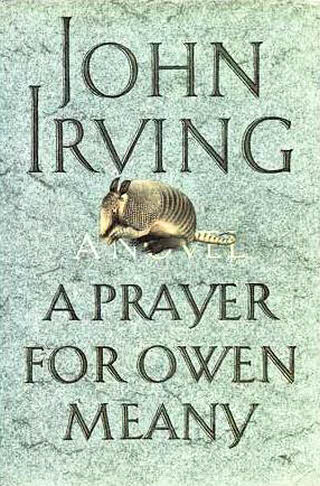
 I’m not really going to review this twenty-seven-year-old book that I’m guessing thousands of professional reviewers have written millions of words about. When I first read it, more than two decades ago, I thought it was one of the best books I had ever encountered. A recent re-read only reinforced that. The re-read was prompted by plans to attend a performance of a play based on the novel. I’m going to say some things about that performance but this really isn’t a review of it either. In fact, I find myself stumped in trying to explain just exactly what this is. Whatever it is, it was triggered by my recent experience with a book and a play.
From the moment I saw that Cincinnati’s Playhouse in the Park would be presenting A Prayer for Owen Meany I wanted to see it. I knew nothing about the play but recalled how much I loved the book. As is often the case, I recalled my love of the book better than I recalled the details of it and decided that reading it again would be a wise move. I reserved a digital copy at the library but the Playhouse’s announcement had obviously given others the same idea. The waiting list was long and it moved slowly. It became apparent that I might not even receive a copy before I saw the play let alone have time to read it. I turned to Amazon where money solved the problem. A little more money provided a new experience.
When I purchased a Kindle version of the book, I was given the option of adding an audio version from Audible for a few dollars more. I bit, thinking that it might help me get through the book before showtime. It did. The two versions were synchronized so that I could listen as I walked to a nearby restaurant, read while I ate, then listen some more as I walked home with Kindle picking up where Audible left off and vice versa. I don’t think it will become my default method of “reading” but it is a very effective way of using all available minutes to move forward.
So I finished the book and made it to the play. I have no illusions that a play or movie can be a complete replacement for a well-written book but I do know that a well-done play or movie can sometimes cut through minutia while preserving a theme and making it more easily accessible to more people. This was not, in my opinion, one of those times.
First, in defense of the production, the Playhouse cast and staff did an admirable job in staging and performing a complex script. Second, in defense of the playwright, the novel itself is certainly complex with loads of characters and locations, multiple time periods, and a narrator whose inner thoughts sort of fuel the whole thing. That this is built atop a doubly volatile core of both politics and religion no doubt makes a stage adaptation quite challenging.
I’ve just one knock on the production. The acting was excellent as was the use of space. The flying, however, wasn’t so good. The script (I assume) calls for Owen Meany to go airborne several times in a Mary Martin/Peter Pan sort of way. The problem was that, before each lift-off, actors spent on-stage time connecting the support apparatus to Owen’s body. The audience was left with a more vivid memory of the preparation than of the “flight”.
That aspects of the novel needed to be eliminated in a stage play goes without question. I don’t even question screenwriter Simon Bent’s choices of what to eliminate. Big stuff from the book that didn’t make it to the stage include John Wheelwright’s three cousins, his lengthy comments on the Iran-Contra affair, and the removal of his finger to avoid the draft. The armadillo that soloed on the cover of the first edition didn’t make it to the stage either. Nor did Owen Meany’s time as The Voice or his conflicts with school administration that cost him scholarships and led to his enrollment in ROTC. I recognize the fact that to include these or some of the many other things eliminated might have complicated things beyond reason. Whether or not the simplification made the play accessible and understandable to anyone unfamiliar with the book is not for me to say.
I expect things to be simplified when a book goes to the stage or screen. Not only must things be eliminated but sometimes things must be simply changed. Changing the armadillo to a ball and glove makes sense. Adding the Lenny Bruce scene as a device to express some inner thoughts is reasonable. But why change the day of Owen’s death? I don’t think it’s particularly important in the book. There it is July 8 and a follow on to Independence Day but is not, as far as I can tell, otherwise significant. If there is a purpose to changing it to March 31 in the play, it’s lost on me. And it’s irritating.
The majority of comments on the Playhouse’s Facebook page are positive. Some are glowing. Only a few are really negative. Some mention language, others the flying apparatus, and some give no reason at all. It would not have surprised me if people who had not read the book found the play hard to follow but that doesn’t seem to be the case. I only spotted a couple of comments suggesting that. More common are comments from people who intend to read the book now that they’ve seen the play. That’s a good thing, I think, because I believe they’ll find that a picture — even a moving picture — isn’t always worth a thousand words.
Added 21-Sep-2016 8:00: A Prayer for Owen Meany begins with the narrator stating “I am a Christian because of Owen Meany.” Questioning then embracing faith is the book’s most basic theme. What I’ve personally questioned is my attraction to a book whose message seems so different from what I believe. Skillful writing and the fact that it makes me think must be the reasons. The following quote from John Irving makes me much more comfortable with my admiration for a book that seems almost an endorsement of Christianity.
I’m not religious. In writing “A Prayer for Owen Meany,” I asked myself a fairly straightforward question — namely, what would it take to make a believer out of me? The answer is that I would have to meet someone like Owen Meany. If I’d had Johnny Wheelwright’s experience in that novel, I would probably be a believer too. But I haven’t had that experience — I only imagined it.
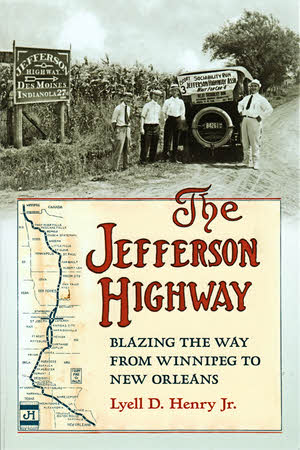 In its preface, Lyell D. Henry Jr. suggests that this book is something of a compromise. The reason is that he once set out to write about every detail of the Jefferson Highway and the association behind it. That’s a lot of details and, especially with no known central source for records or maps, a formidable task. Henry says he “…settled on writing a book that would open with a general accounting of JHA’s early pursuit of the entire highway but then narrow its focus to the highway through Iowa.” The Jefferson Highway: Blazing the Way from Winnipeg to New Orleans is indeed a book of two parts. The first four chapters cover the history of the organization responsible for the entire highway; The last three tell the story and describe the route of the road in Iowa. The scale may be less and the focus may be narrower than what Henry once had in mind but, within that narrowed focus, there is certainly no detectable compromising of accuracy or completeness.
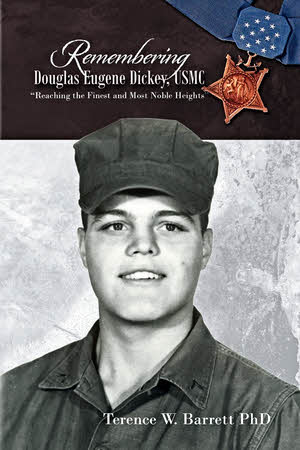 Remembering Douglas Eugene Dickey is something I’ve done for a long time. We were classmates through twelve years of school. We weren’t super close. Not like the teammates on the football squad that broke a thirty-eight game losing streak and not nearly as close as the four other classmates who enlisted in the Marines with him but we were friends. With something like sixty-five students in our graduating class everybody knew everybody. Yes, I’ve been remembering Doug Dickey for a long time.
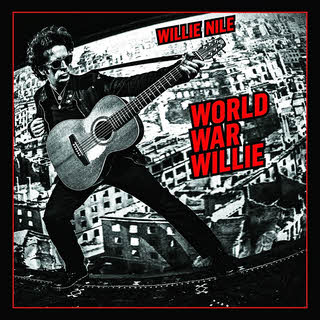
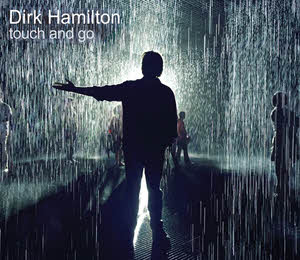 In my view, the last few weeks have been a truly awesome time for new music. A new Willie Nile CD arrived with a few days left in March then, with April barely a week old, this delightful disk appeared. Dirk and Willie share more than an appreciative fan in Ohio and neighboring CD release dates. Both were touched by fame near the three-quarter mark of the last century and both ran away from the business of music for a few years. But both came back because musicians can’t stay away from music and songwriters can’t keep from writing songs.
 I’ve been a serious


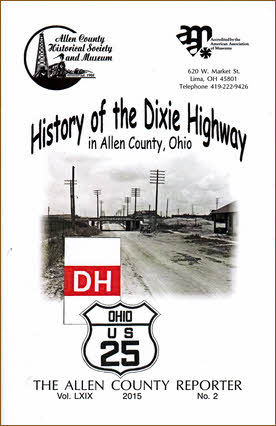 I could have called this a pamphlet review. That’s technically what it is. Or, since one definition of pamphlet is “a small book”, I could have called this a small book review. I decided to leave the title be but, in line with the publication’s size, I’ll try to be brief and do a small small book review.
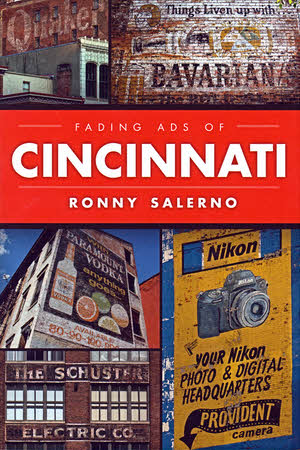 Buying local is a good thing and so is reading local. I was able to combine the two recently. November 30 was the official release date for a new book about Cincinnati and in the early evening its author made the book and his signature available at a downtown location that appears between its covers. The book was Fading Ads of Cincinnati, the author Ronny Salerno, and the location Igby’s Bar inside a building with a fading “TWINE PAPER” painted on its side. Those two dim words are typical of the fading ads that are the book’s subject. How could I not?
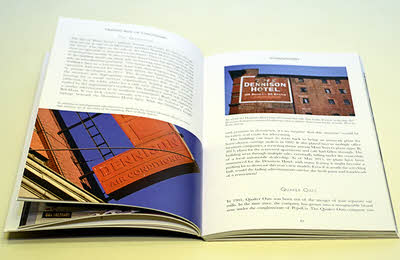 The photos aren’t left to stand alone. Captions describe each of them, of course, and many get multiple paragraphs of attention. Salerno has been successful in digging up many of the signs’ histories with some of the best stories coming from signs identifying local or regional companies that are no longer with us. Names like Shillito’s and Brendamour’s will be recognized by many Cincinnatians and probably some others as well. Out-of-towners might not be familiar with local landmarks like Davis Furniture (“The Friendly Store”) or the Dennison Hotel (“105 Rooms – 60 baths”) but they are exactly what I and some other locals think of when we think of “fading ads” or the more common “ghost signs”.
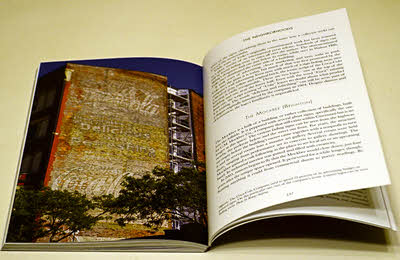 Salerno brings up the phrase “ghost signs” in the introduction and says people often thought he was writing about the supernatural when he used the term. “Fading advertisements”, he says, doesn’t have that problem. Fair enough but it’s just possible that his position also has something to do with the book’s predetermined title. “Ghost sign” slips into the book a time or two and in the final chapter Salerno more or less acknowledges the validity of both. As for me, I’m comfortable and most familiar with the term “ghost signs” (and “ghost bridges” and “ghost towns”) so I’ll just continue to think of Fading Ads of Cincinnati as a book about ghost signs.
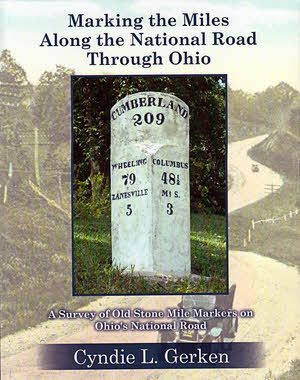 That’s a pretty long book title. There’s a subtitle, too, which makes the whole thing Marking the Miles Along the National Road Through Ohio: A Survey of Old Stone Mile Markers on Ohio’s National Road. It’s long because it, just like the book it identifies, is accurate and precise. The book accurately and precisely locates the 175 mile markers originally set, as accurately and precisely as early nineteenth century technology and local politicians would allow, beside the Ohio portion of the very first federal highway. With all that accuracy and precision you might think this volume would be completely dry and boring but that’s not the case. Stories about the road, the countryside, and even the markers themselves lighten and soften things considerably. Color photos and maps make the book attractive.
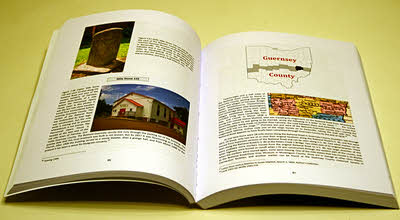 Seven of the ten Ohio counties through which the National Road passed are covered in individual chapters following the introduction. No markers were ever placed in the three westernmost counties on the route as federal funding ended near Springfield in Clark County. Each of these chapters begins with an overview of the county that includes a summary of how many original markers there were, how many remain at their original location, how many exist elsewhere, and how many are lost. Each marker is then addressed individually. With few exceptions there is at least one picture. If a given marker survives, a current photo is included and one or more historical photos are usually presented regardless of whether or not the marker is still around. Understandably, markings on many of the older stones are not exactly legible. Not to worry. Appendix B contains crisp drawings of the inscription of every marker. Markers can often be seen, accidentally perhaps, in old postcards and other photos and many of these appear in the book. Each marker’s history is given and stories about the marker or the area around it frequently add a little fun and background. Placed among the individual marker descriptions are sections of US Geological Survey 7.5 minute topographical maps showing the location of the markers three at a time. Other National Road related landmarks are often shown on the maps as well.
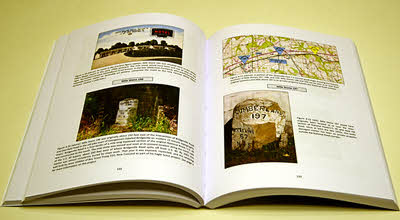 Bringing all of this information together is clearly a major accomplishment but Gerken, a past ONRA president herself, says the information is only a portion of what she has collected on the National Road in Ohio. A well deserved breather follows wrapping up Marking the Miles Along the National Road Through Ohio. Nothing is currently scheduled or promised but the future could see a Gerken penned treatise on bridges or taverns or toll houses or something else. I certainly hope so. I like accuracy and precision and I also like anecdotes and insight. Marking the Miles… provides a pretty good mix.
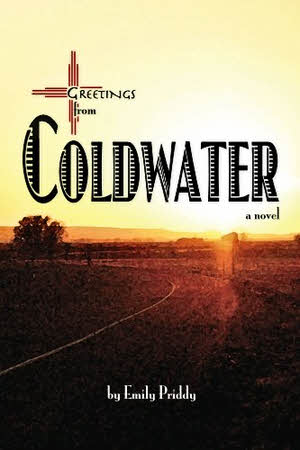 I’m going to admit right up front that defending this post against my About page claim that readers will “not be seeing a review of the latest novel” is pretty much a lost cause. I proclaimed my earlier review of