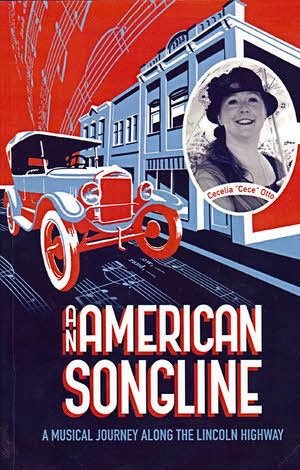
 Cece’s a singer… and a traveler and now a writer. Cece (I know the book cover says Cecelia but few actually call her that.) has been singing since childhood. As an adult, she has spent a goodly amount of time singing professionally as a classically trained mezzo-contralto and there was travel, both in and out of the US, involved. Then, just as the career should have been accelerating, a stumbling economy resulted in it instead being sort of paused. Cece used the time to attend workshops and other activities to help in focusing her future. One workshop involved identifying, in a short amount of time, “…five projects you see yourself doing…” and one item on her hurriedly produced list was “singing travelogue”. No one, including Cece, was quite sure what that meant but it sounded intriguing and, before long, she was on her way to defining a real world project that included a coast-to-coast concert tour, a CD, and this book.
The word “songline” was already part of her vocabulary. Songlines, or dream-tracks, are paths across Australia that indigenous people navigate, and have navigated for centuries, by the singing of songs.The songs are a mix of geography, mythology, and history and that sounds a lot like a “singing travelogue”. Cece chose the Lincoln Highway as the path for her “singing travelogue”. She traveled it during its centennial in 2013 with performances along its entire length. Unlike the Australian songlines, there isn’t really a song or even a set of songs that will guide travelers along the Lincoln Highway but Cece compiled a repertoire of tunes that mention the highway or were performed along it during its 1913-1928 heyday. Some new original Lincoln Highway related songs appeared in her concerts, too.
At one level, the book is a travelogue of that 2013 trip from New York City to San Francisco. Multiple outings are spread over six months. There are descriptions and photos of the same roadside attractions and interesting people and places that folks on vacation might encounter because, when possible, Cece is a tourist enjoying the sights. But sightseeing is definitely secondary. The purpose of the trip is the series of concerts and getting to each of them and being healthy when she gets there is her primary focus. Therefore, the book is also — perhaps mostly — a behind the scenes story of a do-it-yourself solo concert tour. Of course, getting to and performing concerts involves interesting people and places, too.
The book’s organization basically follows the road with states that the Lincoln Highway passes through providing most chapter names. Two notable exceptions are “Loss Along the Lincoln Highway”, which talks about events and thoughts that have absolutely nothing to do with geography, and “Love Along the Lincoln Highway”, in which Cece’s husband, Dan, shares his thoughts on the project that separated the recently wed couple for extended periods. The “singing travelogue” concept is brought to the printed page by beginning each chapter with the description of one of the songs from the tour.
An American Songline has plenty of dates and places and people but it also has emotions. Not only does Cece describe towns and venues, she shares the feeling of singing in those venues when she hasn’t seen her husband in a month and she talks about performing when the recent death of a friend is on her mind and after being surprised by a familiar but unexpected face in the audience. Being behind the scenes sometimes gets personal.
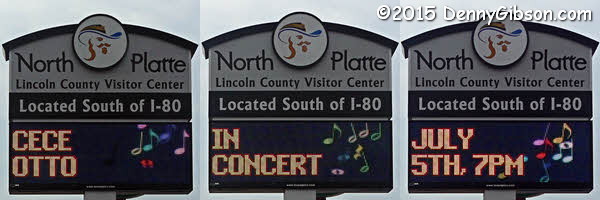
As a sort of “full disclosure”, I’ll mention that I first met Cece at the 2011 Lincoln Highway Association Conference when An American Songline was still a dream. I saw her perform at the concert in Hayseville, Ohio, as well as at other LHA events including the centennial in Kearney, Nebraska. Like Cece, I headed west from Kearney and, although I did not attend the advertised concert, spotted her name in lights along the way. I took some pictures but have never had an opportunity to use them… until now.
An American Songline website.
An American Songline: A Musical Journey Along the Lincoln Highway, Cecelia Otto, CreateSpace Independent Publishing Platform, June 11, 2015, paperback, 8 x 5.2 inches, 318 pages, ISBN 978-1514317822
Available through Amazon.

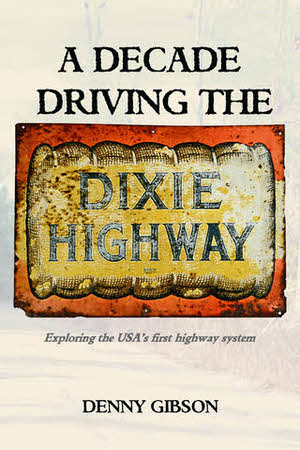 I did it again. I wrote another book. It’s a lot like the other one. It’s an illustrated travelogue and, although there is no old car involved, there is an old man and an old road. That other book, By Mopar to the Golden Gate, told of a single excursion lasting a few weeks. A Decade Driving the Dixie Highway draws on roughly thirty road trips spread over eleven years. Multiple trips were pretty much required since the Dixie Highway was not a straight forward point to point road but a system that connected ten states with nearly 6,000 miles of roadway.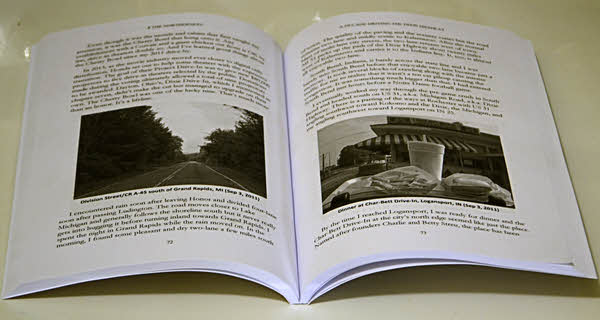
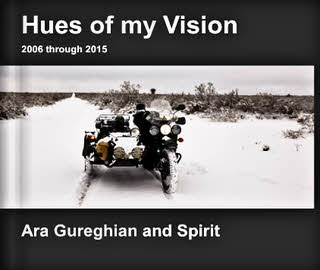 When I previewed this book in April, it was with the hope that a Kickstarter campaign would result in a bargain priced offset printed version. Ara had turned to the crowd funding site to facilitate pre-ordering the book in support of a cost saving bulk order. As noted in a mid-May update to
 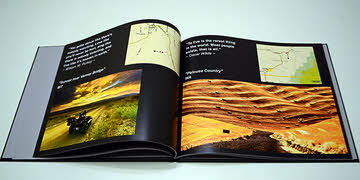 Not surprisingly, many of the photos are of America’s open spaces. Ara has visited and camped in some rather isolated spots and has captured some of their beauty. Canyons, lakes, and improbable shapes carved by wind and water are masterfully recorded and there are many gorgeous sunsets. A quote from Jo Walton really resonated with me:
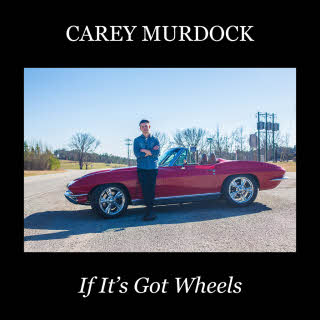 The title song is the opener and I’ll admit I found myself wondering if that was a good thing. “If It’s Got Wheels”, the song, is a V8-powered rocker that heads straight for the horizon like something Springsteen or the Eagles might drive. But then what? Did Murdock pick this tune to lead off and supply the name for his latest album because that’s all there is? The quickly apparent answer is a very loud NO. If It’s Got Wheels, the album, is filled with powerful songs performed by a collection of talented musicians.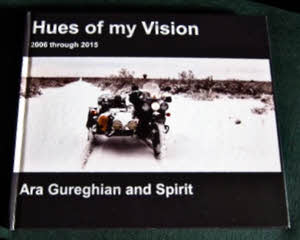
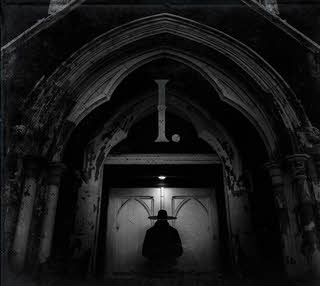 This CD makes me smile. Not laugh. Smile. It’s not funny but it sure is fun. It opens with a scene reminiscent of Michael Jackson walking with his girl in Thriller or Brad and Janet stumbling through the rain in The Rocky Horror Picture Show. Then, instead of dancing ghouls or an invitation to do the Time Warp, the stranded couple encounter the
 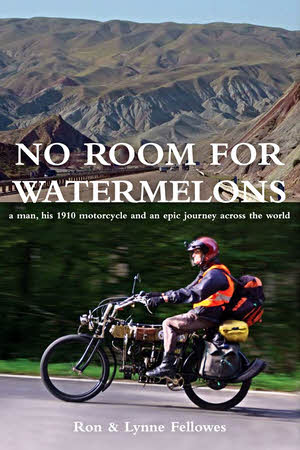 I don’t recall exactly when or even how I first discovered
 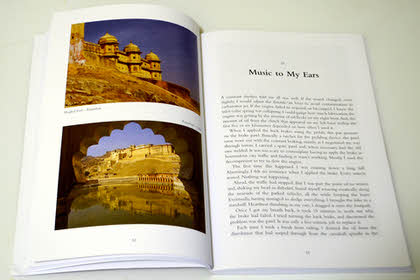 Both paperback and electronic versions of No Room for Watermelons are available through Amazon and I suppose that is the quickest and cheapest way to get a copy of this adventure. On the other hand, if you’d like something a little more personal and meaningful, signed copies can be had directly from the author
 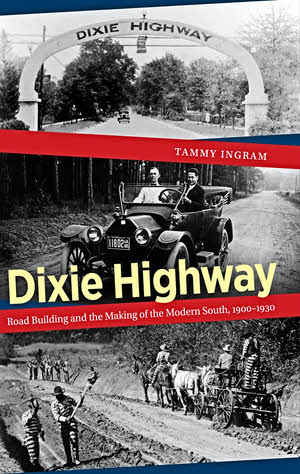 When I first heard about a forthcoming book titled Dixie Highway. I got kind of excited. I looked forward to having all my questions about the historic highway answered and all the blank spots filled in. Then, as details about the book started to emerge, I began to think it would not tell me anything about the Dixie Highway outside of Dixie; maybe nothing outside of Georgia. Reality, of course, is somewhere in between.
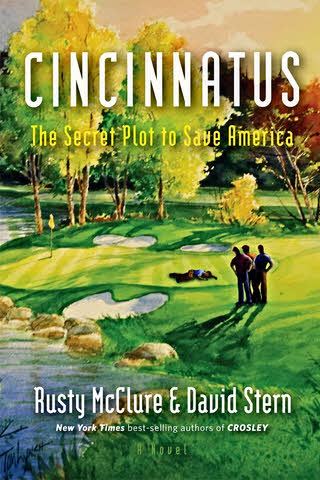 When this blog’s About page mentions reviews, it says they will not include “the latest novel”. When I wrote that, I was probably thinking “any novel”. I don’t read much fiction these days and I did not really expect to be reviewing any. I waited long enough to read this book that it is no longer the latest novel so my claim is still good. So is Cincinnatus.