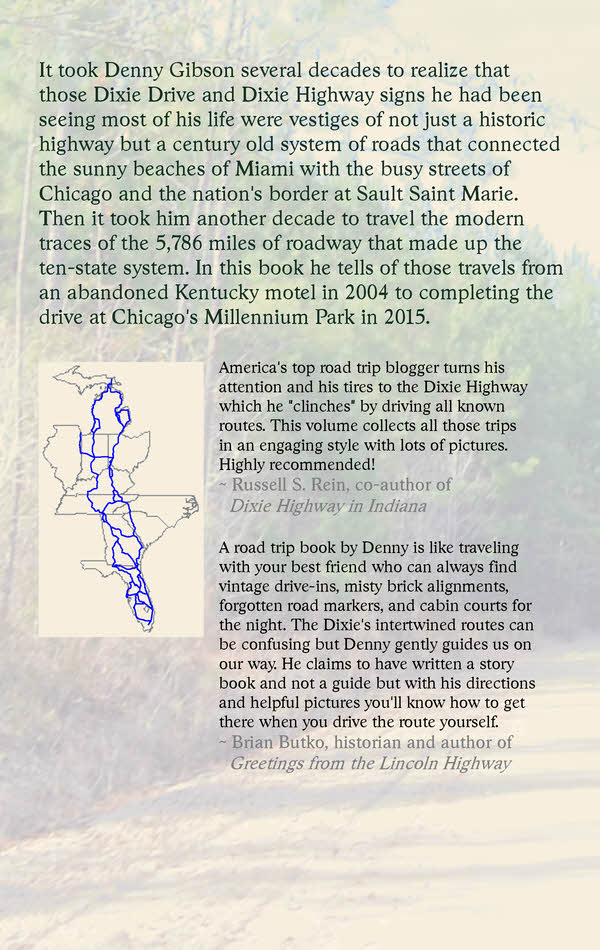
This post first appeared on June 8, 2014. It was done at the request/suggestion of a company called RelayRides. The company has changed its name to Turo and recently contacted me to request an update in the 2014 post. I made the name and URL changes then decided to reuse the post as well. Turo is a peer-to-peer car rental company. I still have not used the service so can no more rate or endorse it now than I could in 2014. What I can say is that the company seemed to honestly appreciate a mention in that original post and, unlike some other outfits, have not pounded me with additional requests since then. The current request is not only reasonable but helpful. I appreciate being given an opportunity to fix things. I will also compliment them on some very good timing.
I had already decided to queue up a “Trip Peek” for this week’s post but after rereading the original “…Essentials” post decided to reuse it instead. I like the post and everything is basically the same now as it was then. So, with only minor corrections, here it is again.
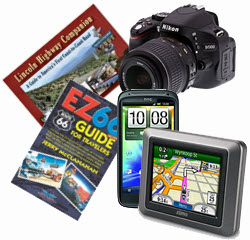 I recently received a request/suggestion for a post on “must have” road trip items. I initially blew it off but returned to it a week or so later. Since I am about to actually head out on a road trip, I need to stockpile some “dateless” (“timeless” almost, but not quite, fits) articles for posting while I travel. You know, the “Trip Peek” or “My Wheels” sort of things that have no connection to what I’m actually doing but can be posted at anytime to meet the blog’s every Sunday schedule. In the middle of generating a couple of “Trip Peeks”, I remembered the email and realized that the suggested “Road Trip Essentials” was as good a topic as any. Of course, it would take more time than a “Trip Peek” but it could be sort of a consolidated “My Gear” and it might be fun. If it also made somebody (the requester) happy, even better.
The request came from RelayRides (now Turo), a peer-to-peer car rental outfit. I’d never heard of them and naming them is not meant to endorse them but I could see that continued references to “the requester” were going to get old. Though the services offered are different, the contact from RelayRides (Turo) reminded me of a recent conversation with some friends about Uber, a person-to-person taxi service. After using Uber on several occasions in a couple of different cities, they were singing its praises. These person-to-person/peer-to-peer businesses are certainly worth keeping an eye on. The RelayRides (Turo) call was for blog posts that could tie into an upcoming “Road Trip Essentials” campaign. There is absolutely nothing in it for me except the possibility of an extra visitor or two but neither are there any restrictions or guidelines. The friendly and conversational request used playlists, caffeine, and frozen grapes as possible essentials so my list may be a little more serious than what they’re thinking. I believe everyone knows, however, that, while I take my road trips seriously, they are rarely serious trips. There was no actual suggestion that I include a collage but the word was used twice and I figured making a small one might be fun. It was.
The camera needs little explanation. If I’m on a full tilt road trip, I need pictures for the daily updates and there are other trips taken with the clear intent of using all or part of the outing in a blog entry. In addition to pictures that, if they’re not too crappy, might appear in a journal or blog entry, I use a camera to take notes. Snapping a photo of a sign or menu is a lot easier and less error prone than trying to write down what I think I might want to know later. Even when there is no advance thought of documenting any part of a trip, l want a camera near by in case some Martians land along the road or Bruce Springsteen’s car breaks down and he needs a ride.
I imagine that almost everyone now considers a GPS unit at least useful on a trip. It can keep you from reaching Tijuana instead of Vancouver and can be a great help in finding gas, food, or lodging. I do use mine to find motels and restaurants and such but I also use it in a manner that makes it truly essential. Many of my trips are on historic (i.e., imaginary) highways. They probably don’t appear on any current map or atlas and there are few, if any, signs to follow. Even if there were, I typically travel alone with no one to constantly read maps or watch for signs. What I do is plot the exact route I want to follow and load it into the GPS unit which then verbally directs me along my chosen path. Yes, it does require a fair amount of advance work and a more capable than average GPS unit.
Even with every turn programmed into the GPS, I pack guide books and maps. The GPS can fail, the situation on the ground might not match the plotted course, or my intentions might simply change. Plus, guidebooks like those in the picture provide valuable information when putting together a journal or blog entry.
The last item pictured, the cell phone, is the electronic Swiss army knife of our age. It is almost essential to everybody everyday just to talk, text, search, and email. In my case, in the context of road trips, it is also essential as a backup camera and as a voice recorder. Not too long ago, I would have included a small voice recorder in my essentials but the phone now serves to make quick notes especially while driving. I still carry a digital recorder for use when appropriate but it no longer rides on the seat beside me.
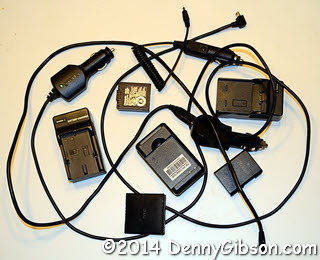 Of course, all of those accessories have their own accessories. For many years, I only bought gear that used AA batteries on the theory that I could always buy power at the corner drug store if required. I believe that happened once. I carried around a bag of nicads and the chargers to fill them in either car or motel. I eventually had to abandon that position but I still cling to the ability to recharge everything whether stopped or on the go. I now carry spare proprietary batteries and AC/DC chargers for two different cameras and a cell phone. I do not carry a spare for the GPS since I seldom operate it on battery power.
I’ll also almost always have my laptop along and some music/podcasts, and maybe, depending on departure time and length of trip, a thermos of coffee and a cooler. The cooler will have water or Gatorade and possibly a beer or two. There will probably be some carrots, or apple slices, or grapes in there, too. Next time, the grapes might even be frozen.
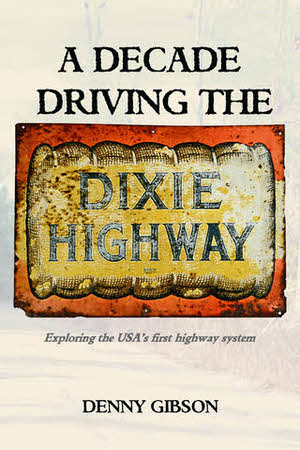 I did it again. I wrote another book. It’s a lot like the other one. It’s an illustrated travelogue and, although there is no old car involved, there is an old man and an old road. That other book,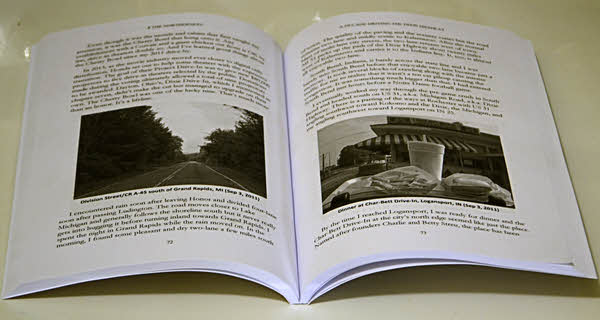
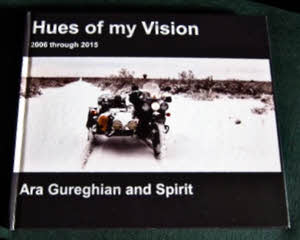
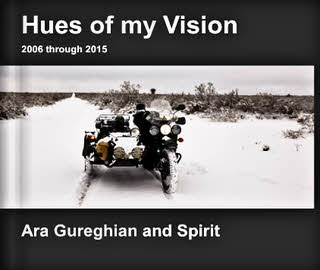 When I previewed this book in April, it was with the hope that a Kickstarter campaign would result in a bargain priced offset printed version. Ara had turned to the crowd funding site to facilitate pre-ordering the book in support of a cost saving bulk order. As noted in a mid-May update to
 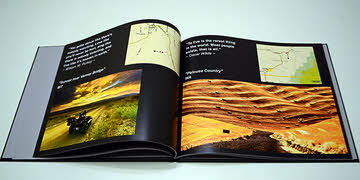 Not surprisingly, many of the photos are of America’s open spaces. Ara has visited and camped in some rather isolated spots and has captured some of their beauty. Canyons, lakes, and improbable shapes carved by wind and water are masterfully recorded and there are many gorgeous sunsets. A quote from Jo Walton really resonated with me:
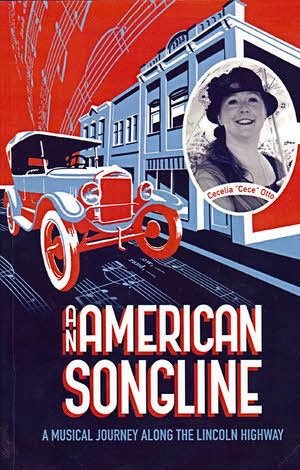 Cece’s a singer… and a traveler and now a writer. Cece (I know the book cover says Cecelia but few actually call her that.) has been singing since childhood. As an adult, she has spent a goodly amount of time singing professionally as a classically trained mezzo-contralto and there was travel, both in and out of the US, involved. Then, just as the career should have been accelerating, a stumbling economy resulted in it instead being sort of paused. Cece used the time to attend workshops and other activities to help in focusing her future. One workshop involved identifying, in a short amount of time, “…five projects you see yourself doing…” and one item on her hurriedly produced list was “singing travelogue”. No one, including Cece, was quite sure what that meant but it sounded intriguing and, before long, she was on her way to defining a real world project that included a coast-to-coast concert tour, a CD, and this book.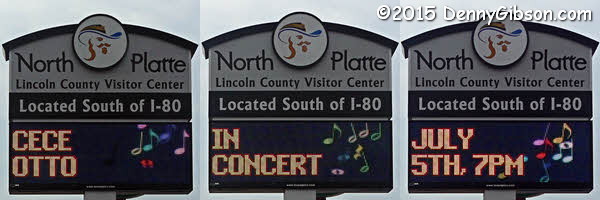
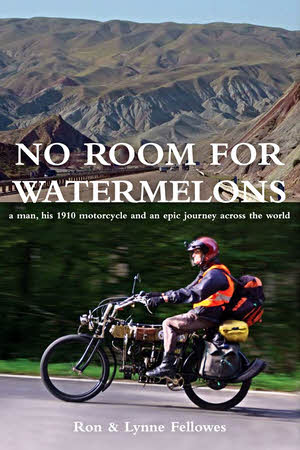 I don’t recall exactly when or even how I first discovered
 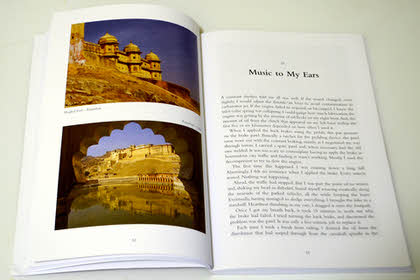 Both paperback and electronic versions of No Room for Watermelons are available through Amazon and I suppose that is the quickest and cheapest way to get a copy of this adventure. On the other hand, if you’d like something a little more personal and meaningful, signed copies can be had directly from the author
 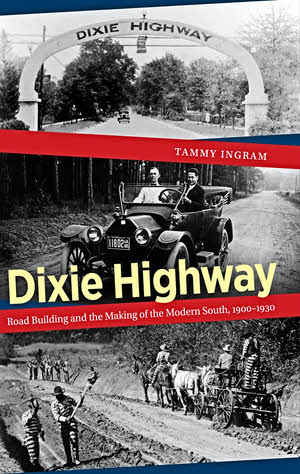 When I first heard about a forthcoming book titled Dixie Highway. I got kind of excited. I looked forward to having all my questions about the historic highway answered and all the blank spots filled in. Then, as details about the book started to emerge, I began to think it would not tell me anything about the Dixie Highway outside of Dixie; maybe nothing outside of Georgia. Reality, of course, is somewhere in between.
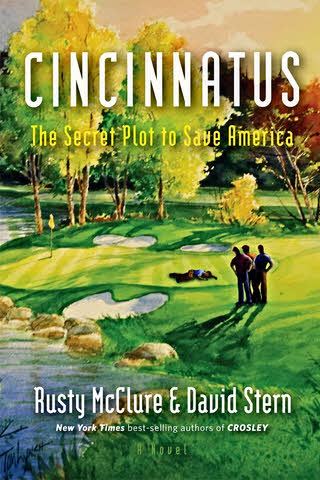 When this blog’s About page mentions reviews, it says they will not include “the latest novel”. When I wrote that, I was probably thinking “any novel”. I don’t read much fiction these days and I did not really expect to be reviewing any. I waited long enough to read this book that it is no longer the latest novel so my claim is still good. So is Cincinnatus.
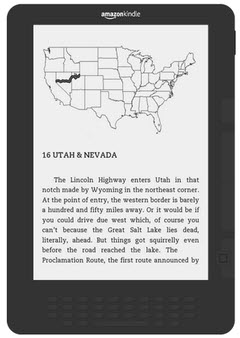 Sometimes hordes of fans demand an e-book version of a publication which prompts the publisher to pull out all the stops and produce one immediately. Sometimes one or two people casually ask about an e-book version and probably forget about it by the time one appears a year or so later. One of these sentences describes my situation perfectly.
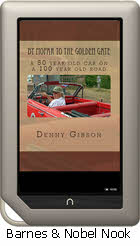
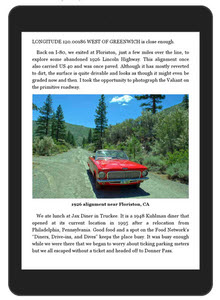 Other than correcting a couple of spelling errors, absolutely no text was changed in generating the e-book. The same pictures are in the e-book as in the paperback with essentially the same dimensions. I did utilize color versions so they ought to look a little prettier on some devices. To make things reflowable, I unhooked the pictures and their captions from fixed positions on the pages and placed them between paragraphs. If you think of the sizing and positioning of a book’s non-text elements within the text as design, then what I did was undesign the book. To be honest, there wasn’t very much “design” in it. I placed pictures where I thought they looked good and I chose sizes to spotlight those I particularly liked or to allow some to be grouped together. Design is too kind a word. At best what I did was layout. I arranged some block images so that they looked alright, appeared near any text that referenced them, and didn’t disrupt that text too much. But other books truly are designed and their designers agonize over scaling and placing elements so that a page — a physical page with fixed dimensions — looks good and works well. That sort of design is no better accommodated in the e-reader world than my clunky picture layouts.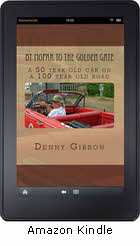
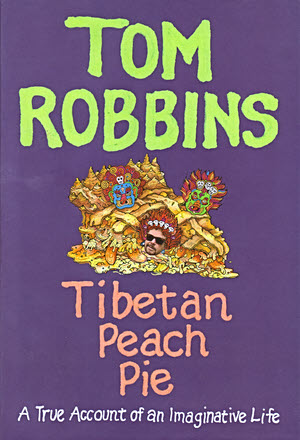 Yes, this is rather mainstream for me. I’m not in the habit of reviewing books that have appeared on the New York Times Best Sellers List. For one thing, it increases the chances of the amateurish nature of my offerings being found out. For another, such reviews are surely unneeded and are destined to have even less value than my reviews of niche releases. But I’ve never let the lack of need deter me from writing and, as for being caught impersonating a reviewer, I’ll take my chances. Just like Tom Robbins did at the Seattle Times.