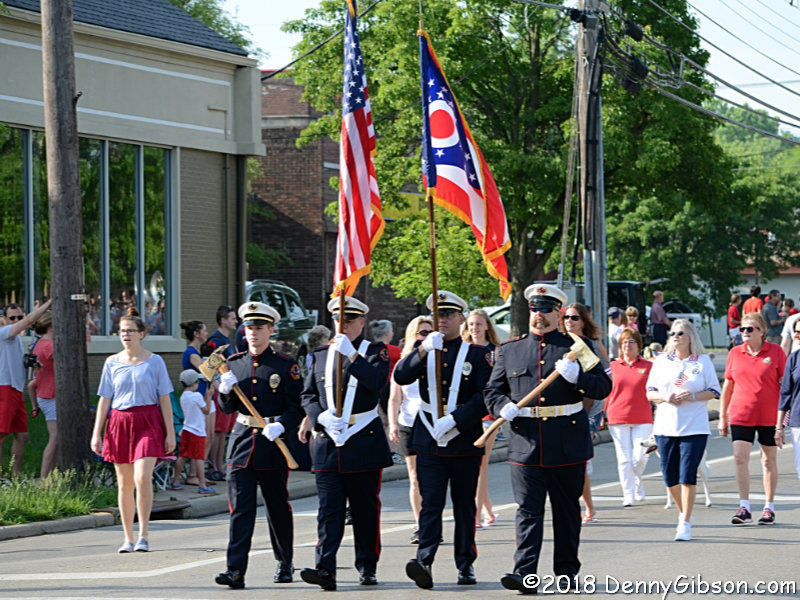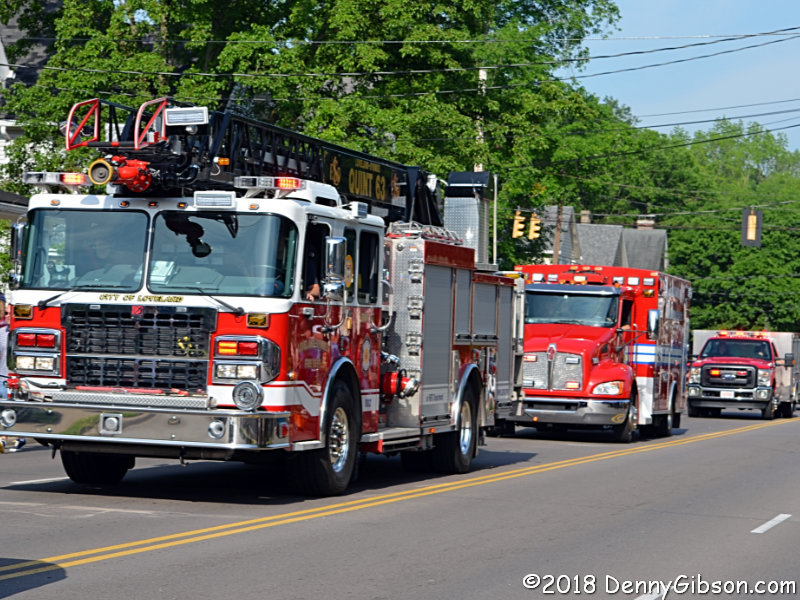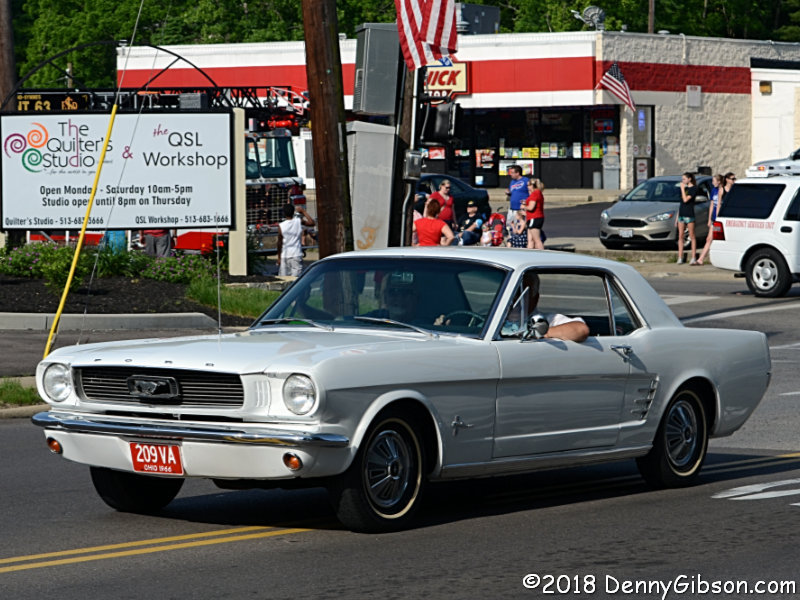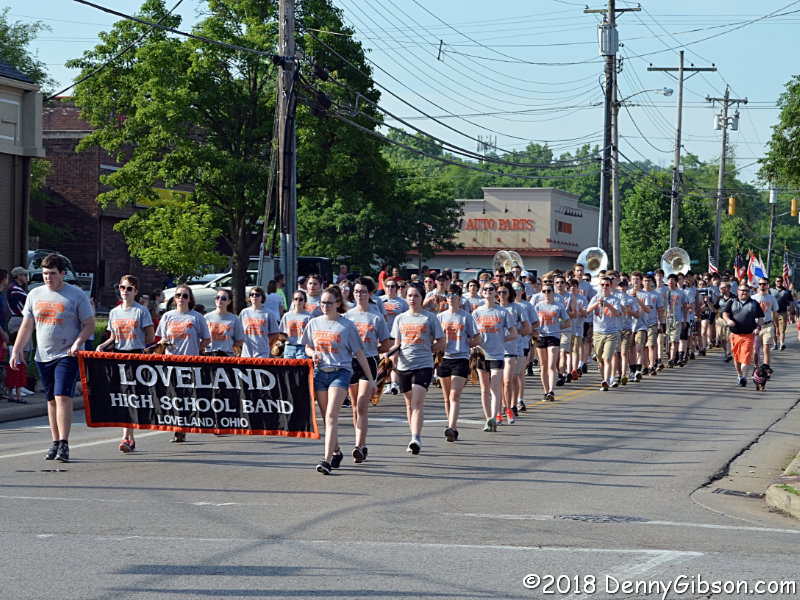
The Mighty Qin… and Friends

I can’t really explain how the word Qin got turned into China, but it did. Some oriental linguistic transformations, such as Peking to Beijiing, are fairly recent but Qin has been China for a very long time. During a period actually called the Warring States Period, Qin was merely one of the states that warred. But it was better at it than most. In 221 BCE, under the leadership of Ying Zheng, Qin conquered the last of those other states to unify Qin/China. Although the Qin Dynasty was short lived (221-206 BCE) it gave the world its most populous country, biggest wall, and most mind boggling tomb.

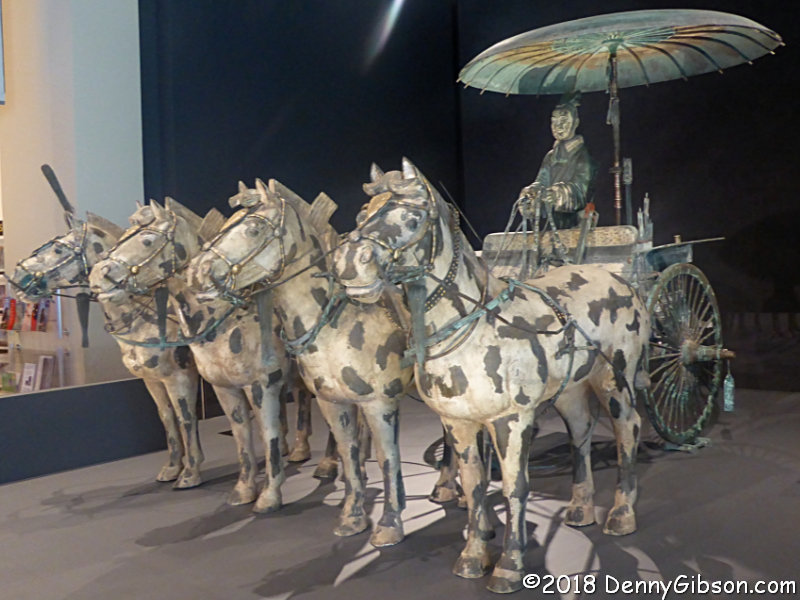
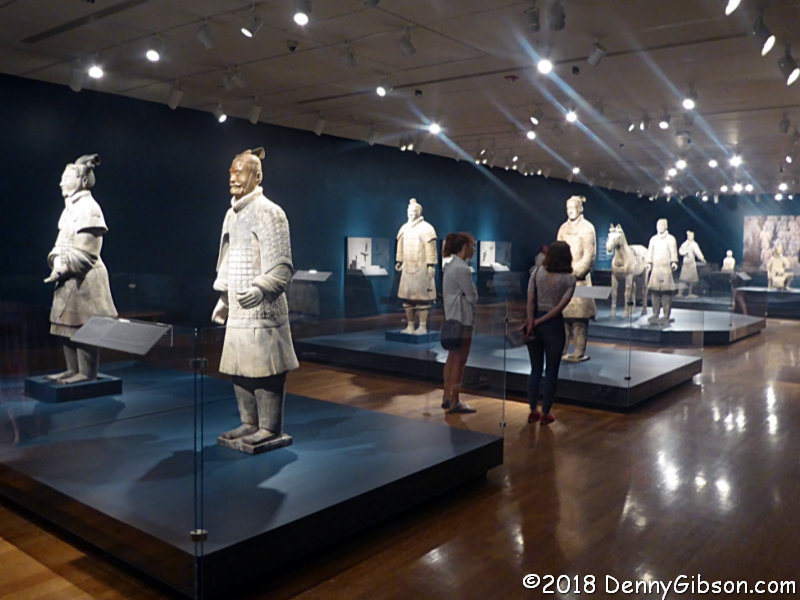
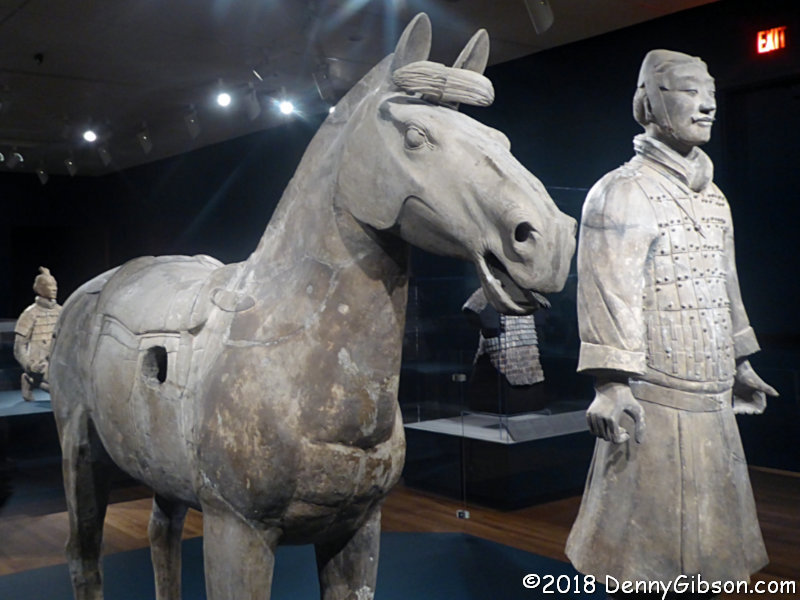
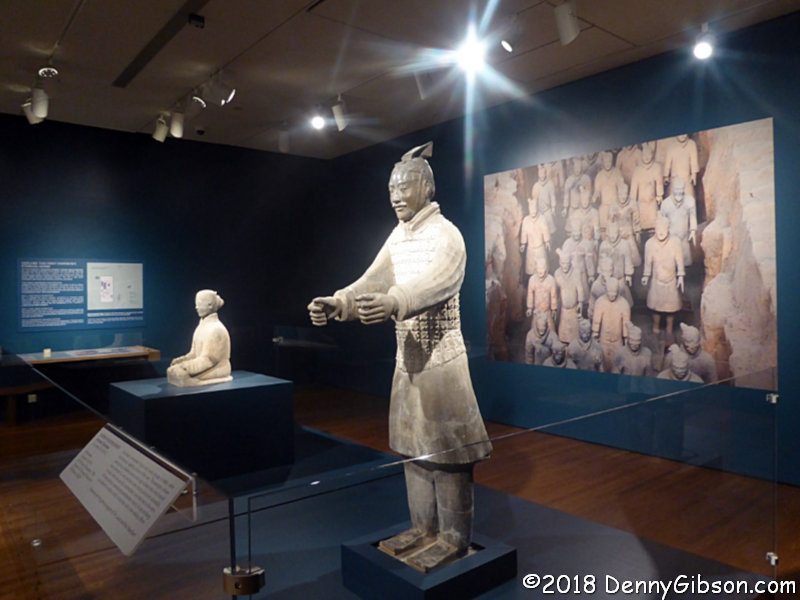
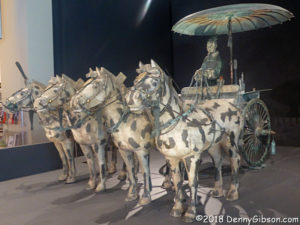
Construction of that tomb, a 38 square mile complex clearly deserving of the name necropolis, began before China’s unification. Ying Zheng launched the project in 246 BCE after becoming ruler of Qin following his father’s death. He was thirteen. One of the best known of the many astounding aspects of the site is the army of nearly 8,000 life sized terracotta figures populating it. Ten of those figures are among the 120 items currently on display at the Cincinnati Art Museum. The chariot in the opening photograph is a replica of one found at the burial site. It is on display near the museum entrance separate from the actual exhibit.
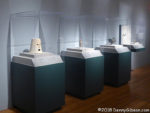
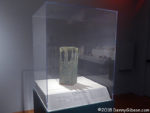
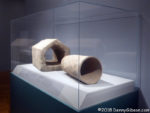
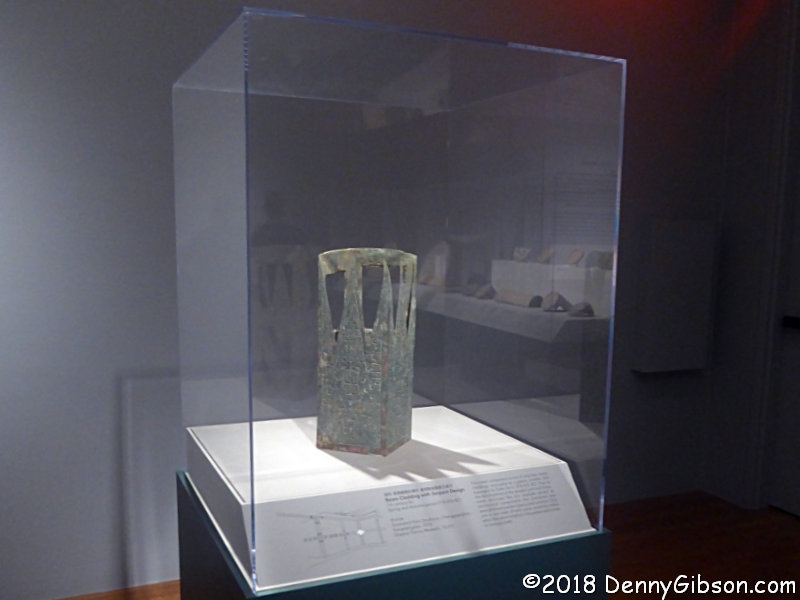
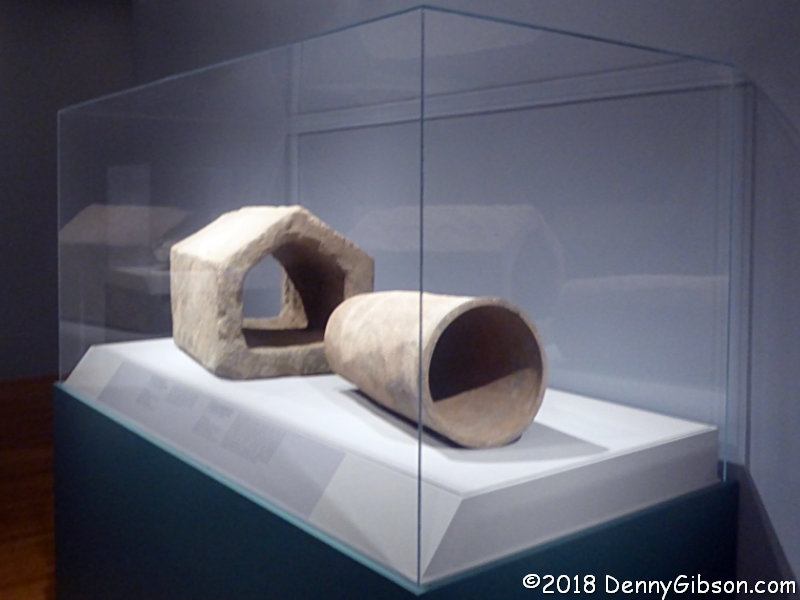
The majority of items in the exhibit are much smaller than those soldiers and some predate the Qin dynasty  Many of the smallest are jewelry or other decorative items. A lot of the mid-sized items are more practical. The earthenware mask, believed to have been used by an exorcist, dates from 4000-3000 BCE. The metal cladding in the second picture was used to join construction timbers. The Chinese have long used ceramic tile for roofs and other construction needs. Both items in the third picture are tiles used in water supply systems.
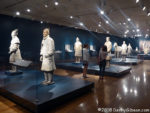
This was the third time I’ve been able to gaze upon some of the twenty-two century old figures. The first was in 1980 at the Field Museum in Chicago; The second just two years later at the 1982 Knoxville World’s Fair. In Chicago, six soldiers and two horses were part of a large “Great Bronze Age of China” exhibit. In Knoxville, two soldiers and a horse accompanied a tiny piece of the Great Wall in China’s first World’s Fair exhibit since 1904. Both were remarkable in that the figures had been discovered just a few years prior in 1976. I find the fact that they were forgotten for more than two millennia as extraordinary as the fact that they existed at all.
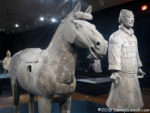
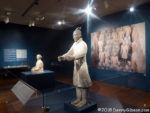
The terracotta army contains a broad range of ranks and duties and every member is unique in some way. This exhibit includes a representative sample ranging from general to stable hand with foot soldiers, a couple of archers, and a charioteer. The cavalryman in the first photo does look like the one whose thumb was broken off in Philadelphia last December by some jerk from Delaware, but it’s not. That set of figures has returned to China. The Cincinnati exhibit was organized by the Cincinnati Art Museum and the Virginia Museum of Fine Arts where it had been displayed until mid-March. Those and other details are found in a press release here.

Terracotta Army: Legacy of the First Emperor of China runs through August 12.


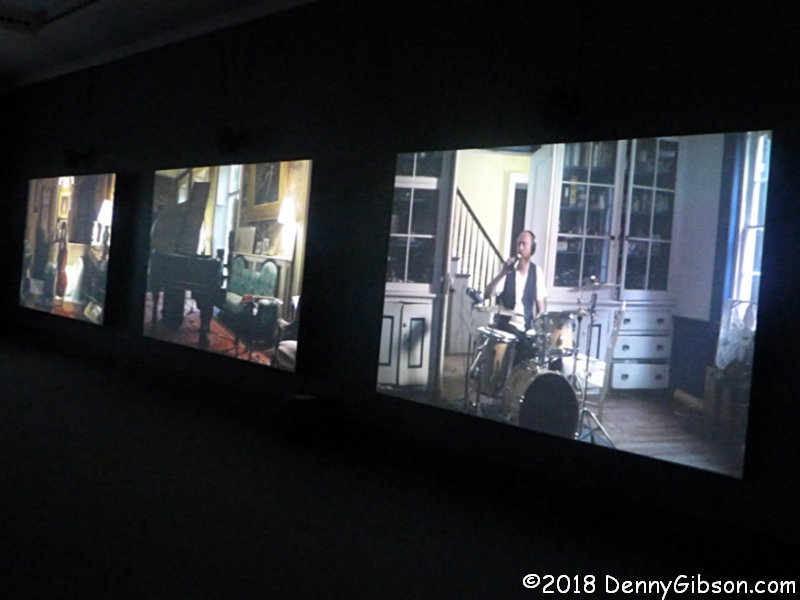
There is another traveling exhibit at the Cincinnati Art Museum currently. It’s one I failed to do any homework on at all and I regret that — maybe. The main part of the exhibit is called The Visitors which is described as a “multi-channel video installation”. It’s the work of Ragnar Kjartansson. His Scenes from Western Culture is also on display. It’s possible to find descriptions of both of these works elsewhere but this is the only place to get a description of how I experienced them. Lucky you.
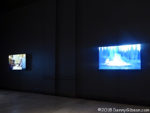
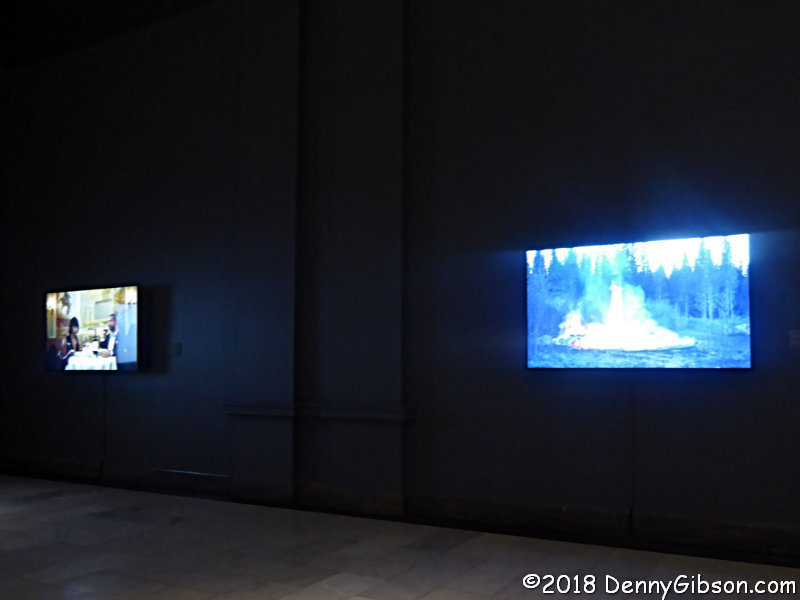
Ragnar Kjartansson’s name was on the entrance to a fairly large room that often holds traveling exhibits with several large video screens on the walls of the approaching hallway. I’d seen the name when visiting the museum website but I hadn’t been interested enough to do any reading and I really had no idea what to expect. I scanned a blurb on the wall about short movies that set a mood rather than telling a story before watching a couple kissing on a dock by a boat and a group of kids playing almost sedately in a park. A screen with a fire burning in what looked like the foundation of a house triggered a memory. I’d recently seen a similarly framed image of a cabin ablaze and realized it must have been on the museum’s website. The blurb next to the screen mentioned a 32 minute running time. I needed to kill some time and the cabin, if that’s what it was, had completely collapsed so maybe it was near the end. I sat down across from the screen to see if it would cycle to the remembered image of a cabin.

I checked email and Facebook and verified that City View Tavern, where I planned to eat, was open. The fire was still going pretty good within the outline of the building, so I decided to go on into the main room. Even bigger screens lined those walls with little activity on any of them. I studied each of them briefly then went back to the hallway to check on the “fire”. The flames didn’t hold my attention very long this time and I soon decided to walk on through the main room and exit. A couple of the screens were now dark but the others showed the same motionless scenes as before. As I paused near one of the screens, a man appeared and walked toward the camera. The screen went black when he presumably switched it off. I waited long enough for the same thing to happen to another screen. The pause gave me time to rethink things and realize that I still had time to kill and doing it here was probably my best option. I returned to my seat near the fire video.

I now noticed a blurb on the side if the door away from the “fire”. I learned that the installation inside, The Visitors, involved musicians, in different rooms of a mansion, playing and singing a song. The fire in the video didn’t seem to be progressing much, so, when I heard voices singing on the other side of the doorway, I went in and, for the first time, considered that Ragnar Kjartansson might not be a full on con-artist.
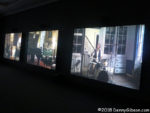
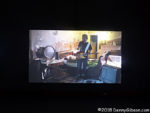
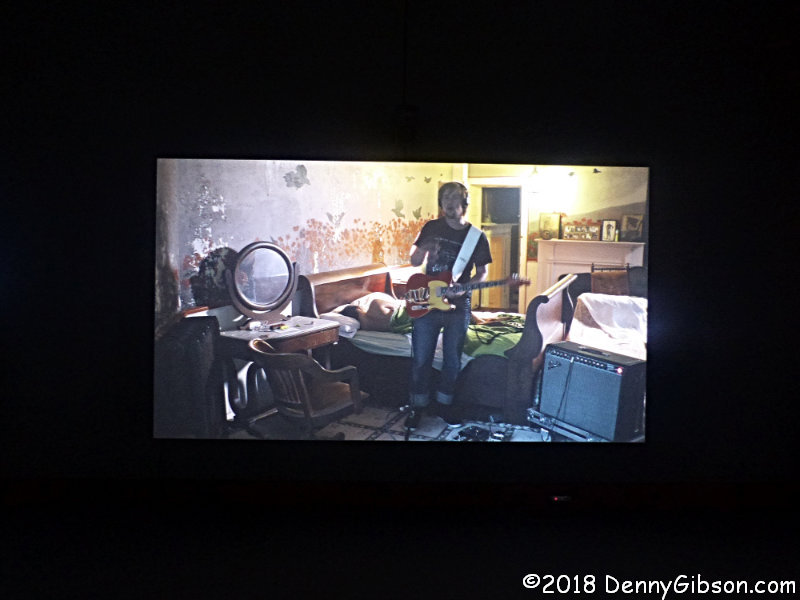
All the screens were lit and all the rooms occupied: a cello, a couple of grand pianos, an accordion, a banjo, several guitars. The show — I mean installation — had become interesting. Though the music wasn’t gripping, it was quite pleasant. It swelled and softened. In some of the mellowest spots, the drummer sipped a beer. After a while I noticed the bare shoulders of a young woman lying in the bed one of the guitarist sat on. The run time was given as 64 minutes, and, as far as I know, she didn’t move for the entire shoot. If so, that’s almost as impressive as her roommate contributing to the performance guided only by earphones.
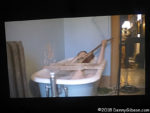
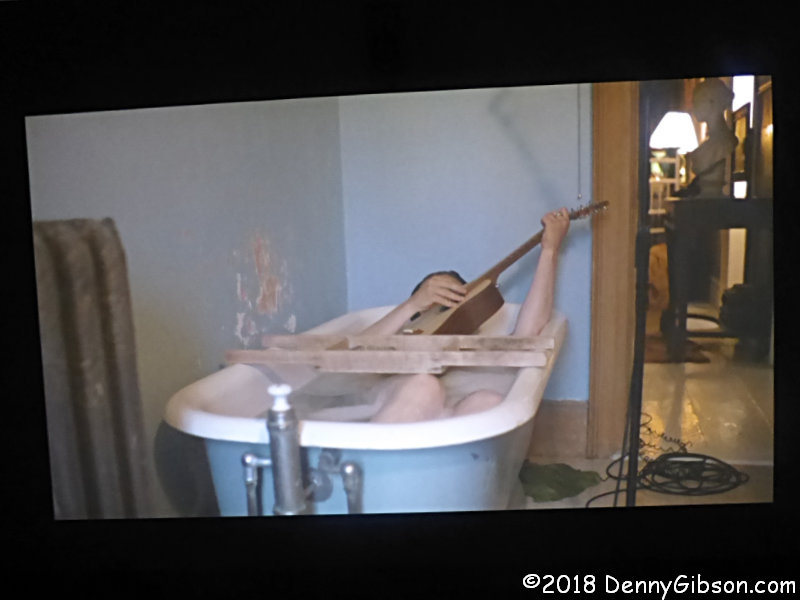
The museum is free and so is this. I’m really thinking of returning to watch the whole thing in the proper sequence now that I know what’s going on. Through some belated homework, I learned that Ragnar’s the guy in the bathtub. A quite remarkable selfie.

The Visitors and Scenes from Western Culture run through June 17.
Cincy’s Belated Opening

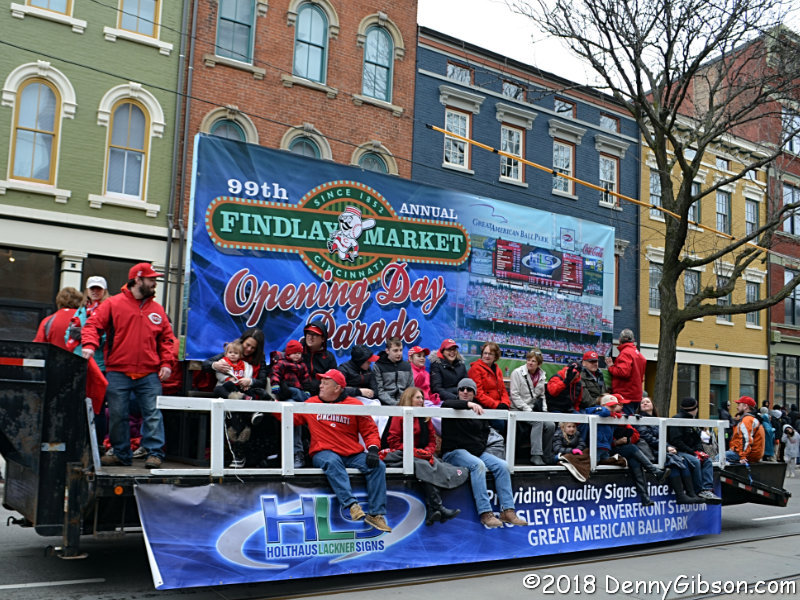
Sometimes the Findlay Market Opening Day Parade marks an opportunity to forget a less than stellar previous season. People braving Monday’s cold temperatures were trying to not only forget last season’ 68-94 finish but this season’s 0-3 start. You see, to avoid interference with crucial pre-Easter sales at the Market, the parade happened, not on Friday before the Reds’ first game of the season, but on Monday before their fourth.

Actually, that first game wasn’t exactly when it was supposed to be, either. Scheduled for Thursday, it was moved to Friday to avoid predicted severe weather.

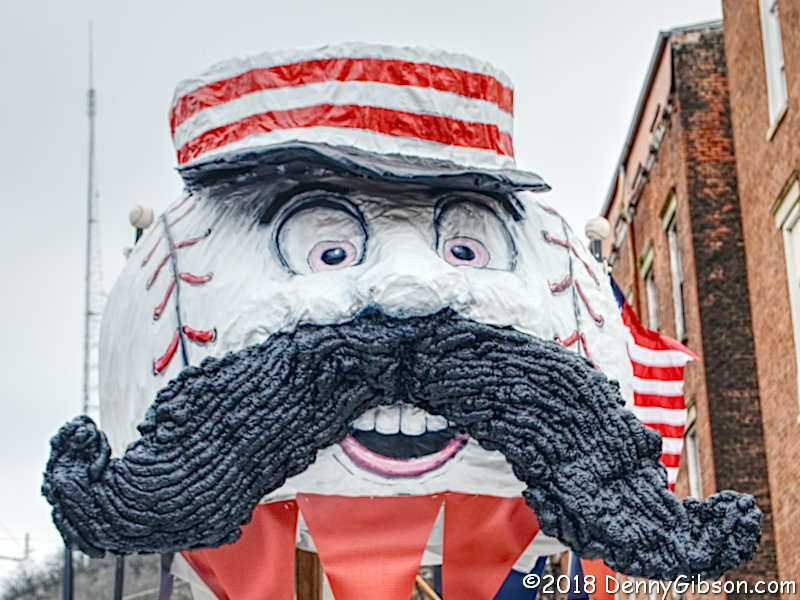
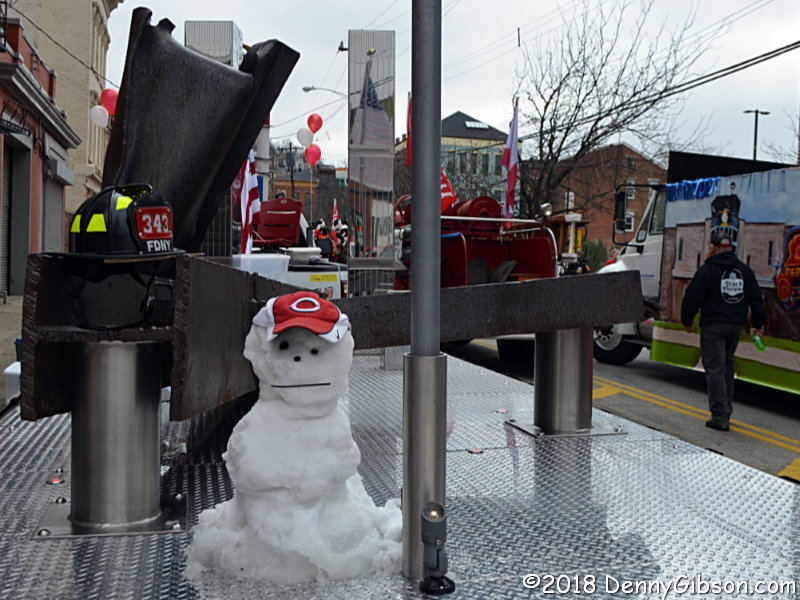
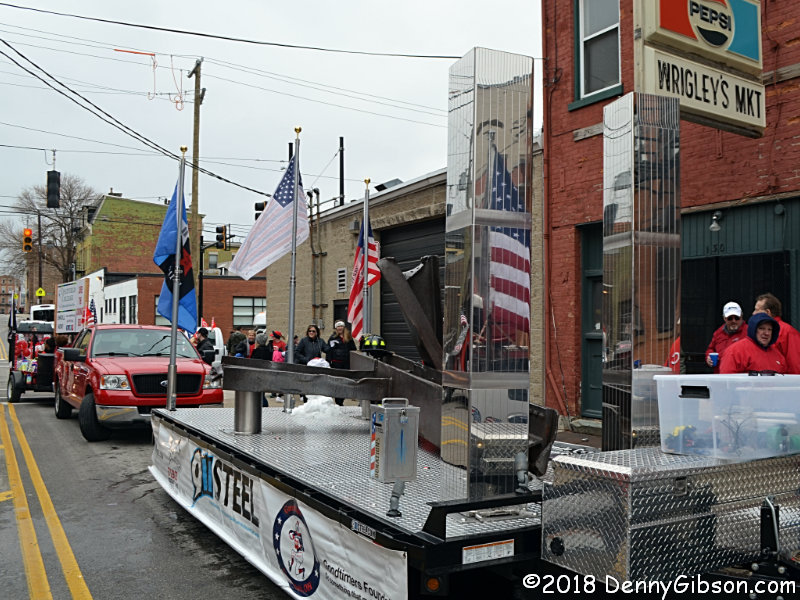
I reached downtown in time to poke around the staging area a little bit before the parade start. The giant Mr. Red at the top of this article belongs to the National Flag Company. The snowman at left, who I believe made it all the way through the parade, is made of real snow. He’s riding on the 911Steel float with a real piece of the World Trade Center and replicas of the twin towers.

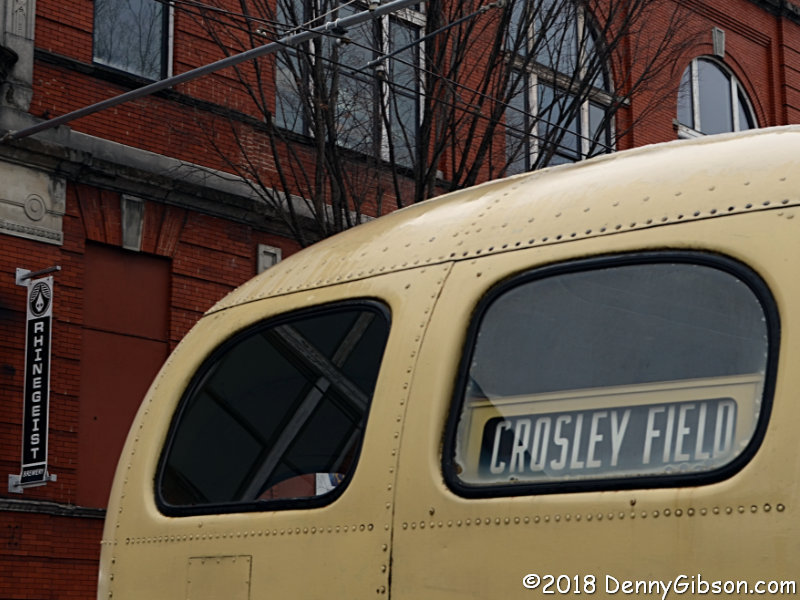
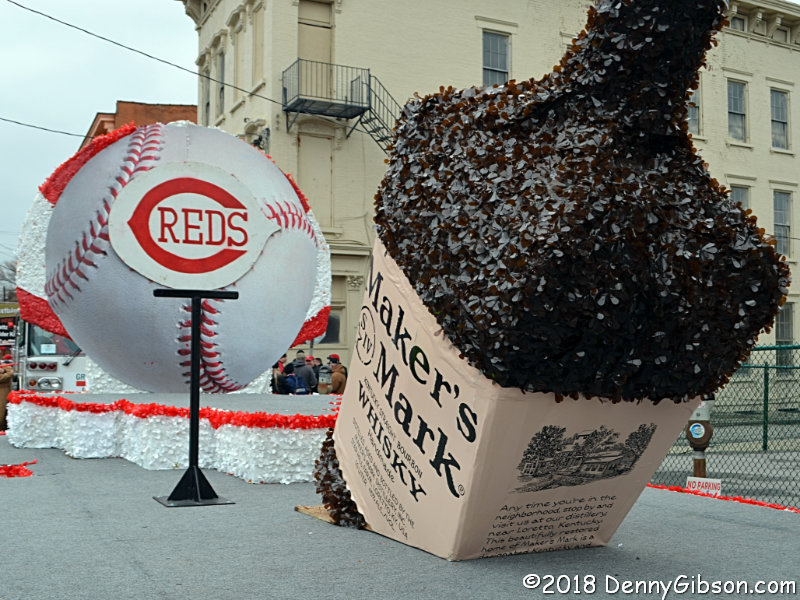
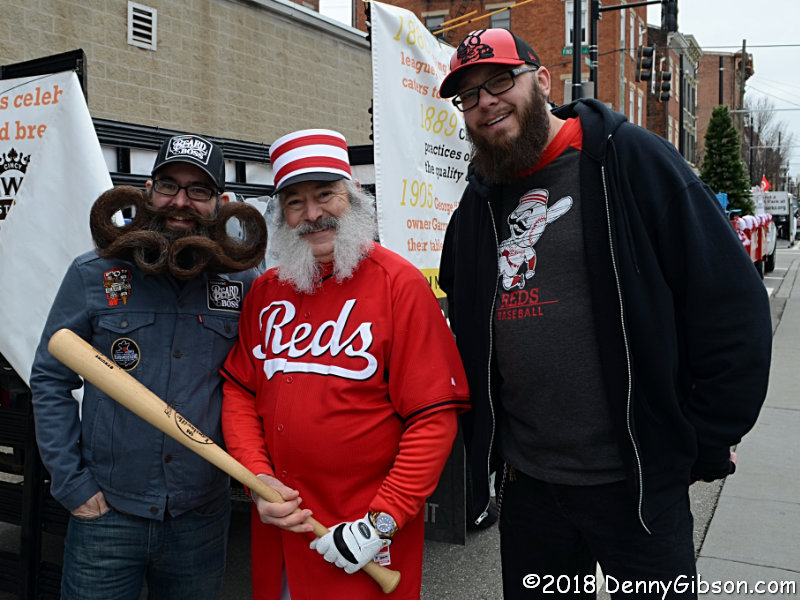
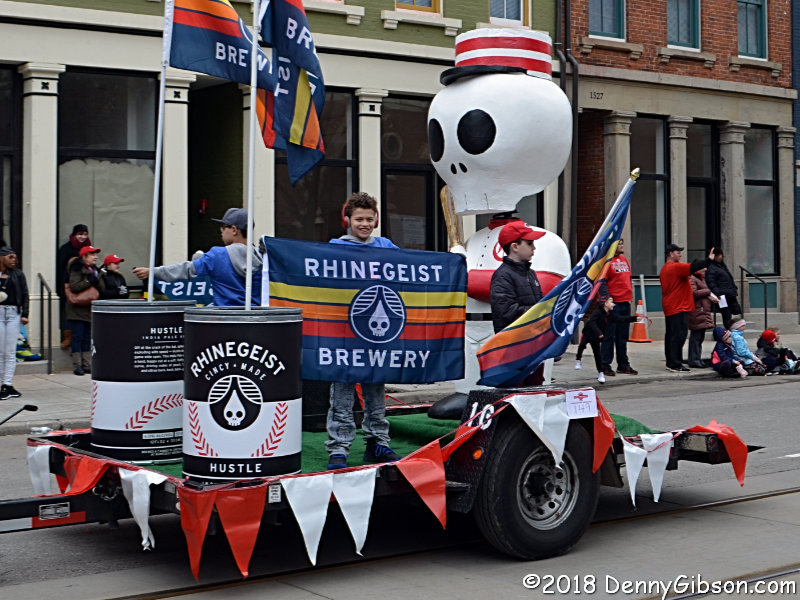
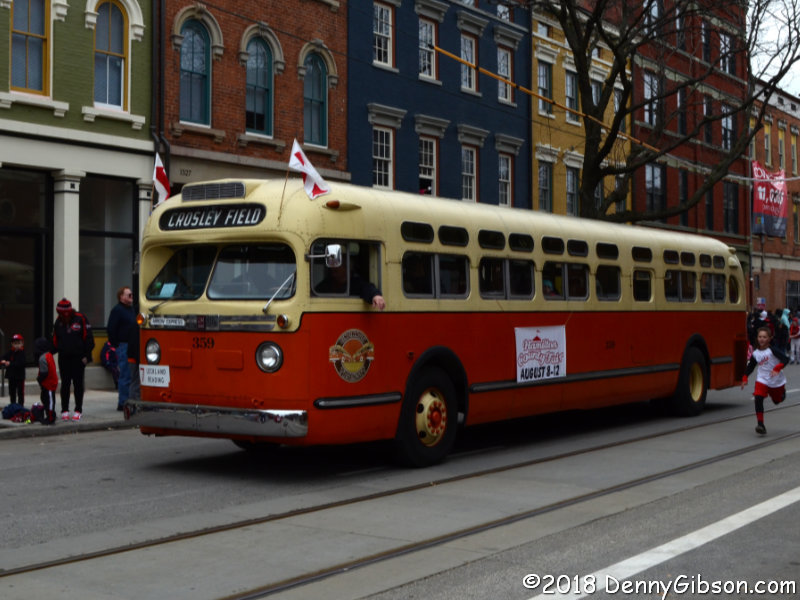
Cincinnati was, and is again becoming, a major brewing center. There are plenty of stories about the city’s pre-prohibition Beer Barons. Beard Barons are a more recent development. Distilling, rather than brewing, is involved in the product shown in the second picture and made a little more than a hundred miles to Cincinnati’s south. Cincinnati brewing does get some notice in the picture of a Crosley Field bound bus in front of Rhinegeist Brewing. Crosley Field was the Reds’ home until 1970.

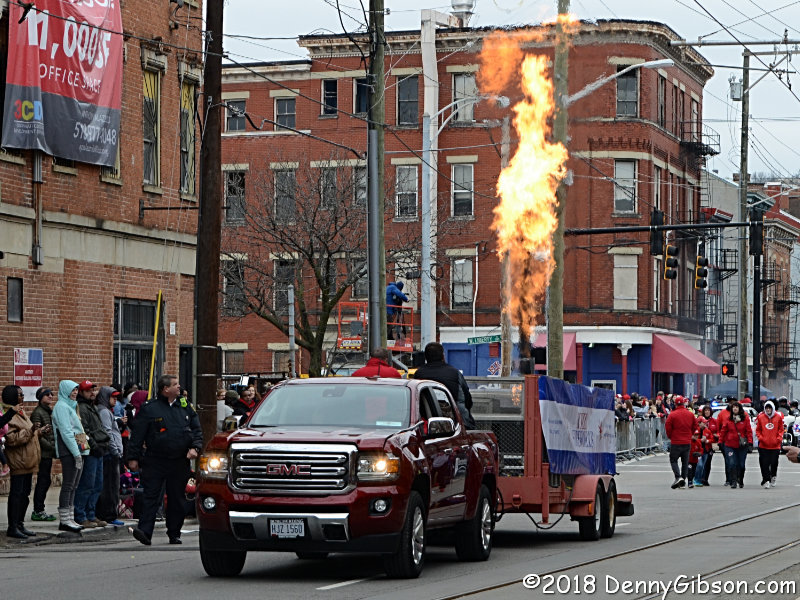
Rozzi Fireworks is certainly capable of starting things off with a bang but they decided on a pillar of fire instead. Maybe they’re saving a big boom for the centennial next year. I guess there’s something pretty cool on the other side of the street because Grand Marshalls Danny Graves and Sam LeCure didn’t look my way even once as they passed.

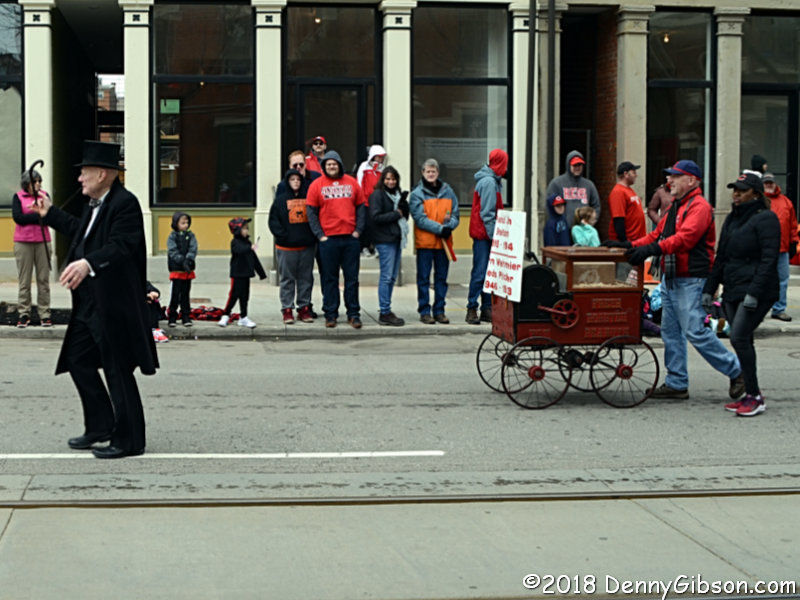
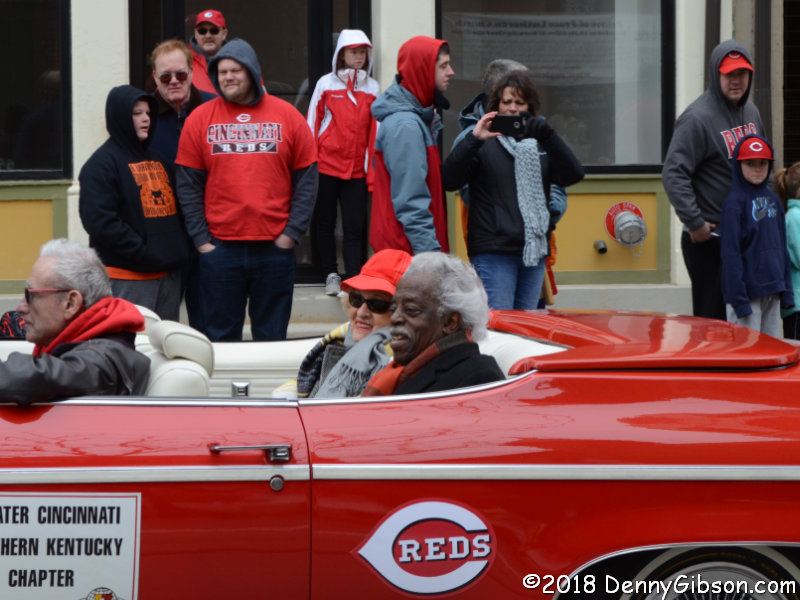
Here are some long time Cincinnati legends. That’s King Records drummer Philip Paul and wife Roberta in the red convertible. The fellow in the top hat is entrepreneur and politician Jim Tarbell dressed as departed legend Peanut Jim Shelton.

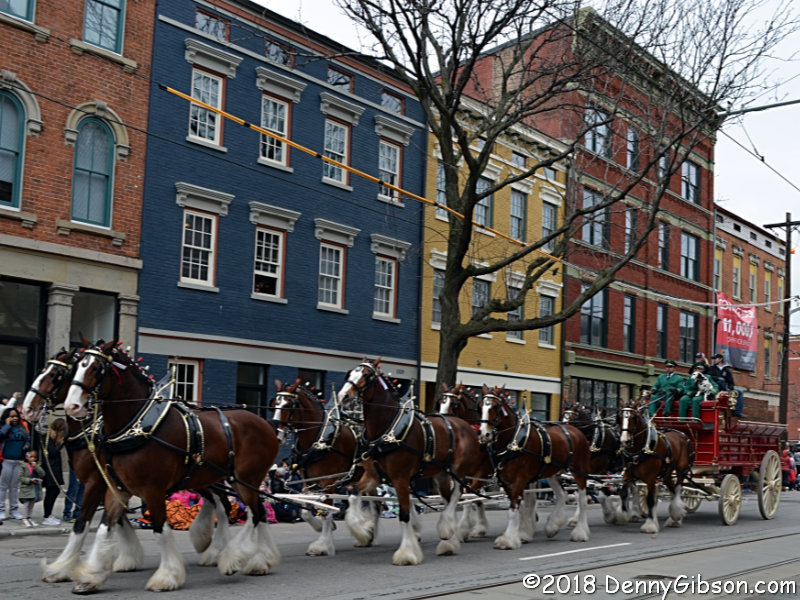
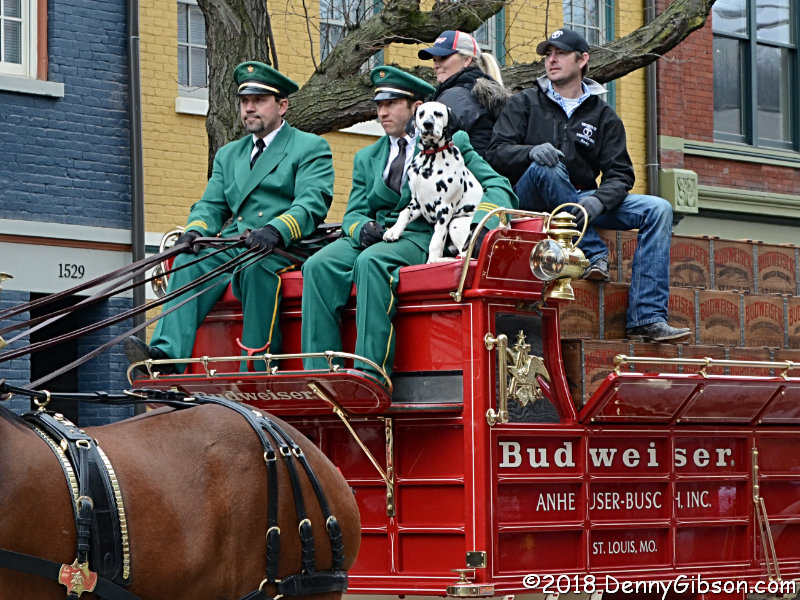
Breaking up all the locals in the parade were some easily recognized out of towners. Budweiser isn’t my favorite beer but these guys are my favorite horses.

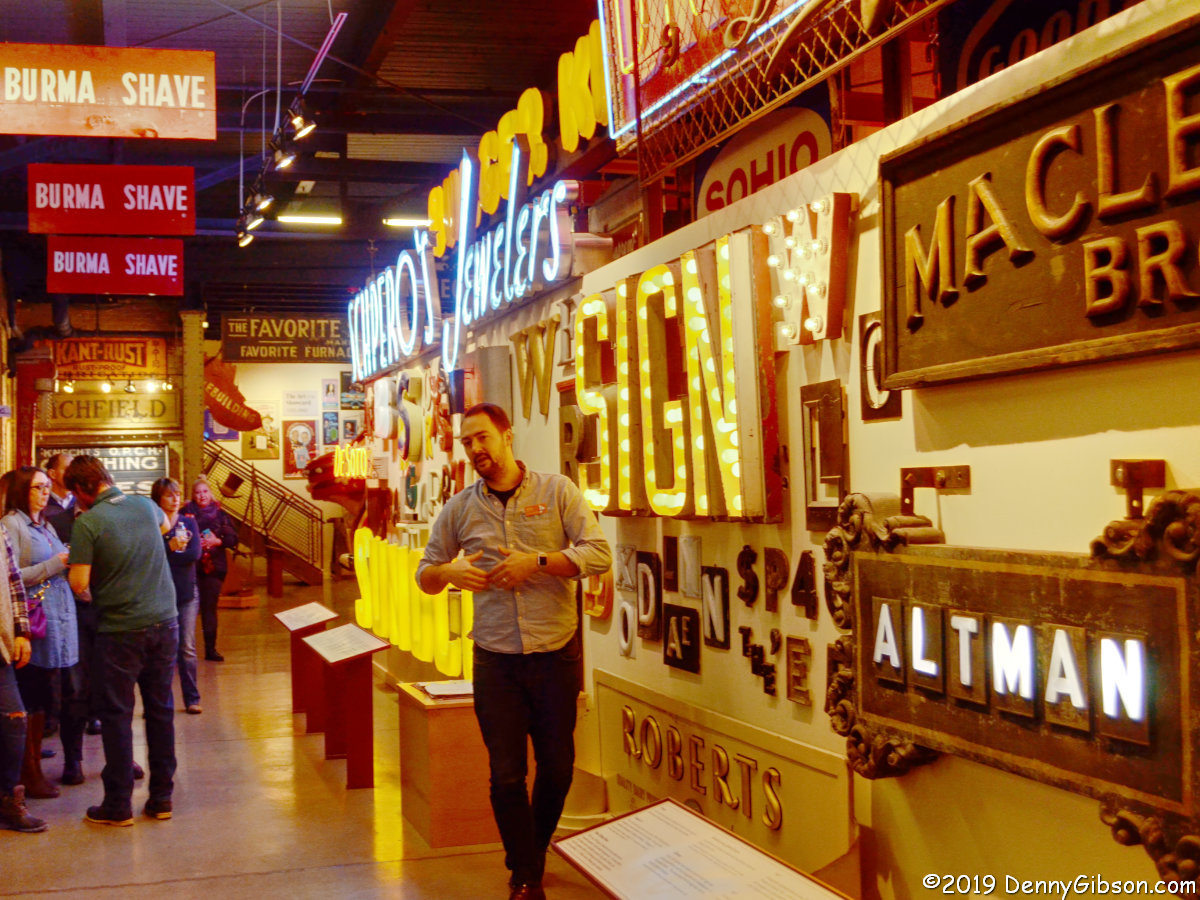
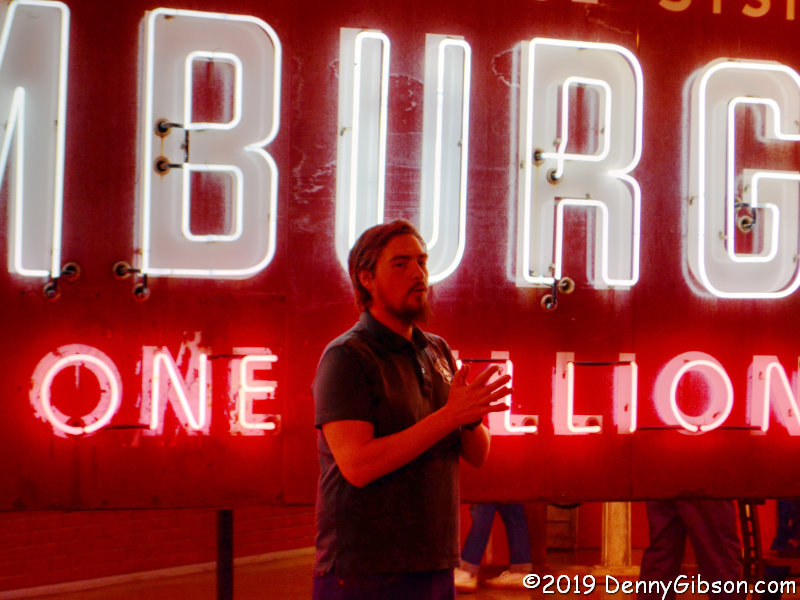
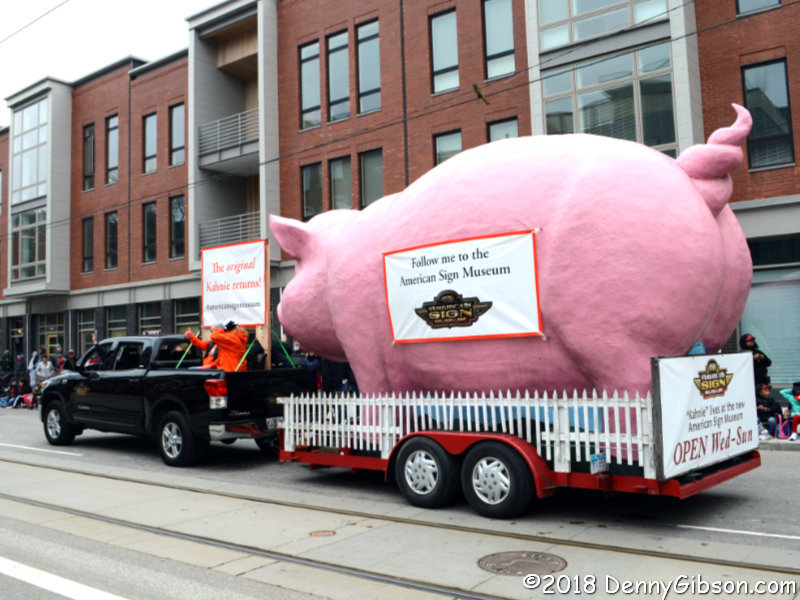
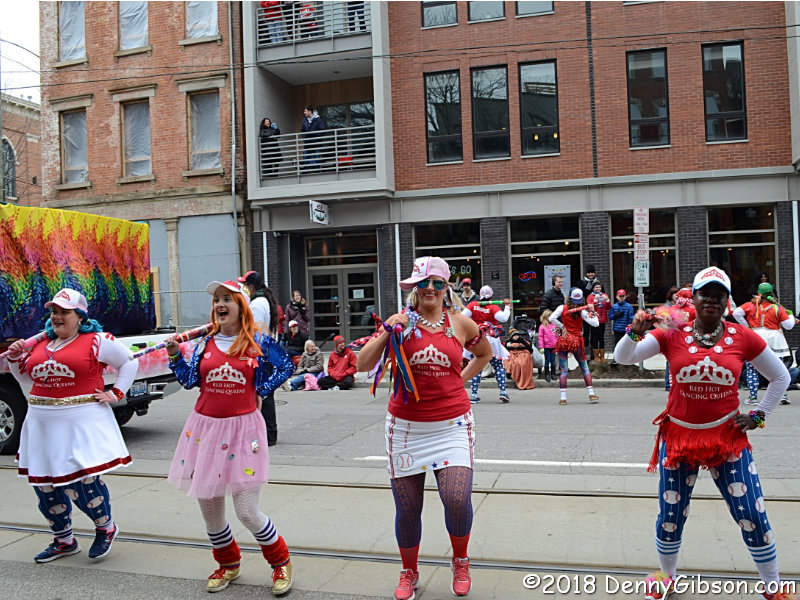
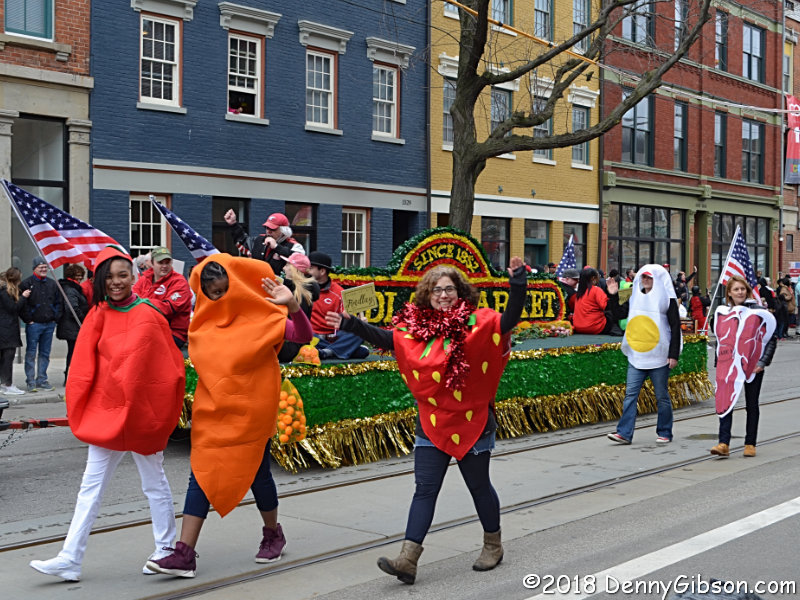
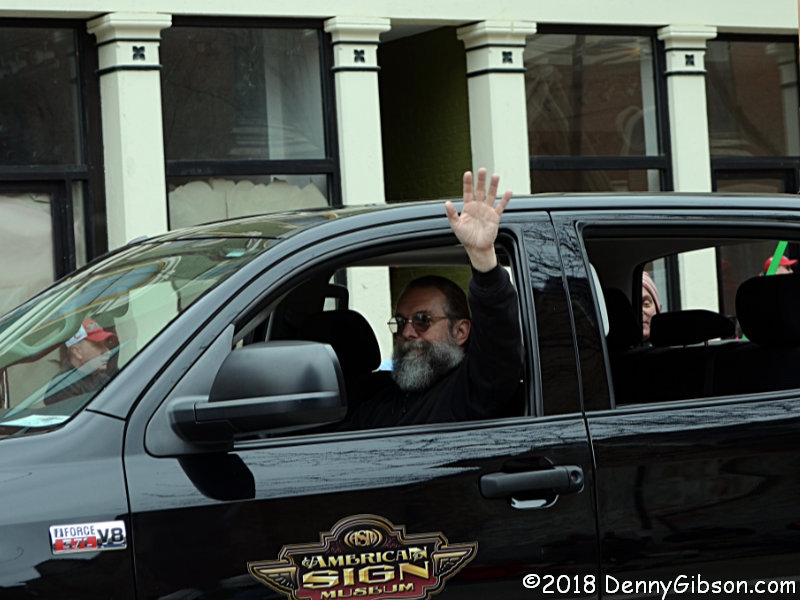
There’ll be nothing but locals from here on out. Like some folks from Findlay Market, the Red Hot Dancing Queens, and Kahnie from the American Sign Museum. I even got a shot of Tod piloting the big black truck.

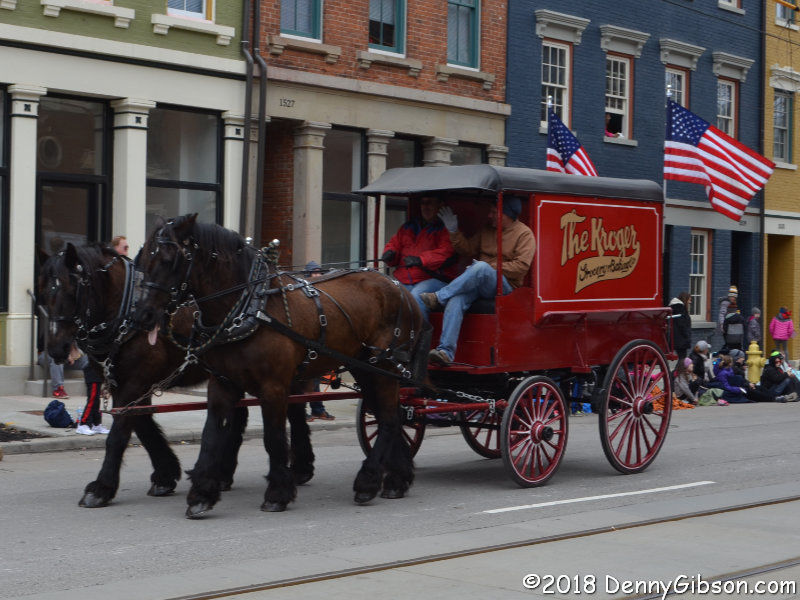
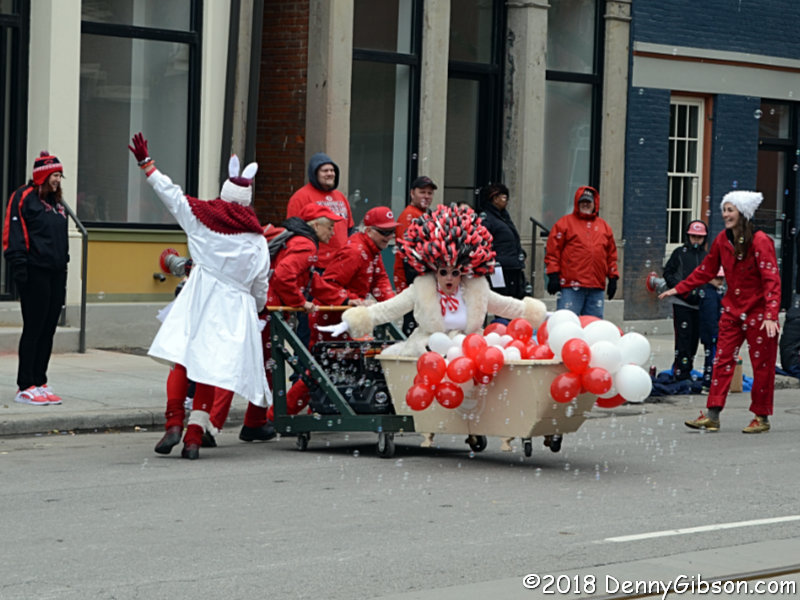
The Kroger Company still has one of Barney Kroger’s delivery wagons from the 1880s and Arnold’s has a passenger bathtub although it’s not one I’m familiar with and it’s not quite self-propelled. On the 25th the bar made a plea for a “go-cart mechanic” and on the 29th there was video evidence that repairs had been successful. However, the tub in the picture is neither of those I’ve seen before, has a rear mounted bubble machine, and is being propelled by a couple of laughing footmen. And it was still way cool. The third picture is of a new-to-me float from Rhinegeist.

This is the bus I had a pre-parade partial shot of in front of the Rhinegeist Brewery. It wasn’t really the last thing in the parade but I thought it would be an OK thing to use for the closing panel. A few hours after the parade wrapped up, the Reds got  their first win of the year by beating the Chicago Cubs 1-0. The three loses were to the Washington Nationals. A second Cubs game scheduled for Tuesday was postponed by rain then, after a pre-planned day off, the team headed to Pittsburgh for a four game stand. They lost the first two, won the third, and one remains to be played. The Reds begin 2018 with a 2-5 record.

Double Play (Red Velvet & Othello)

Like last week’s post, multiple events are involved. Unlike last week’s post, the events involved are similar and connected. They are not only connected to each other but to one of last week’s as well. On Wednesday, I attended an Ensemble Theater of Cincinnati performance of Red Velvet. I’d seen nothing but positive reviews and comments and I’ve now verified them. The entire cast is excellent but Ken Early stands out in the lead role of Ira Aldridge. I’d seen Early before as Phileas Fogg in ETC’s production of Around the World in 80 Days. He was good as Fogg but is truly impressive in the more challenging Red Velvet.

The play is fact based. In 1833 Ira Aldridge became the first black actor to play Othello in London’s Covent Garden. He was not well received. Even though he had been praised for his portrayal of that and other Shakespearean roles in other parts of England, Londoners expected their Othello to be a proper Englishman in blackface.

Lolita Chakrabart wrote Red Velvet in 2012. I got three things out of watching it. One was learning something of a man who, while rather famous 200 years ago, had pretty much disappeared from history and was totally unknown to me. Another was being led to focus on the fact that the racism of the nineteenth century may have been tamed a bit but it certainly has not been eliminated. The third thing I saw in the play was the absolute passion that actors can develop for their craft. I don’t know that Shakespeare productions involve more passion than others but it seems more visible there.
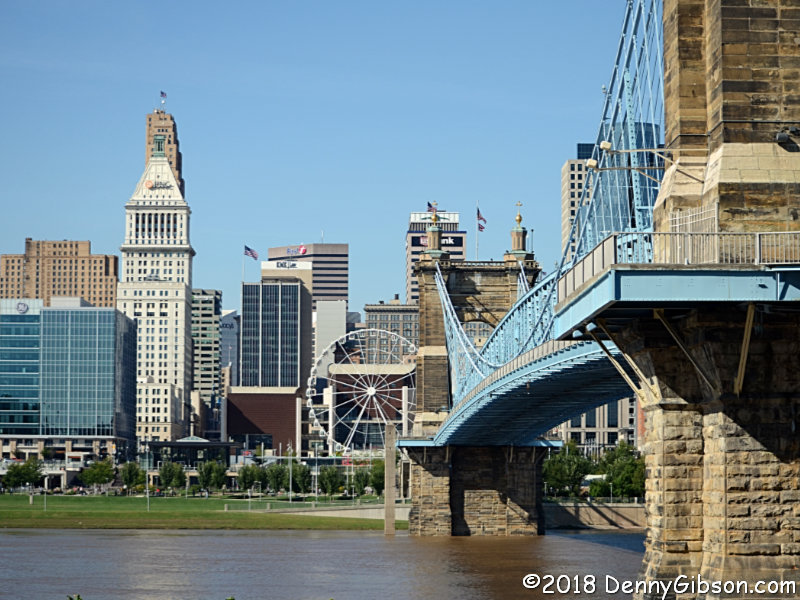
Shortly after purchasing my ticket to Red Velvet, I received an email offering a discount to another play at another theater. The Cincinnati Shakespeare Company is overlapping ETC’s run of Red Velvet with a production of one of that play’s subjects, Othello. Cooperation between the theaters included discounts to one for attendees of the other. The eagerness with which I jumped on the offer was partly due to something I’d heard last week. During the Q & A session at last Wednesday’s Words and Music event at the Mercantile Library, Steve Earle was asked about his favorite authors. He cited a few (including J. K. Rowling) before naming William Shakespeare as the English language writer he most admired. He added that, if you personally didn’t care for Shakespeare, it might be because you’ve only read the words and didn’t experience them in a performance. That made sense to me and, realizing that I probably hadn’t seen a performance of any Shakespeare play as an adult, resolved to correct that. The opportunity came much quicker than I expected.

One night after seeing Red Velvet, with its Othello excerpts, I saw the real thing in its entirety. Overall, it supported Earle’s observation that seeing the Bard’s creations beats reading them. The CSC production uses a modern setting which could be either a plus or minus but which I thought rather neutral. The presence of cell phones, computer tablets, and TV news broadcasts did not intrude on the scripted words in any way although I suppose it could make the early seventeenth century language seem extra archaic. On the other hand it could serve to underscore the timelessness of the themes of jealousy and betrayal. I didn’t know enough to be affected one way or the other.

All of the principles displayed plenty of passion in their “big scenes” but otherwise often seemed to be in a hurry to deliver their lines before they forgot them. The exception was Nicholas Rose as Iago who struck me as being attentive to the pace of every phrase and the timing of every pause.

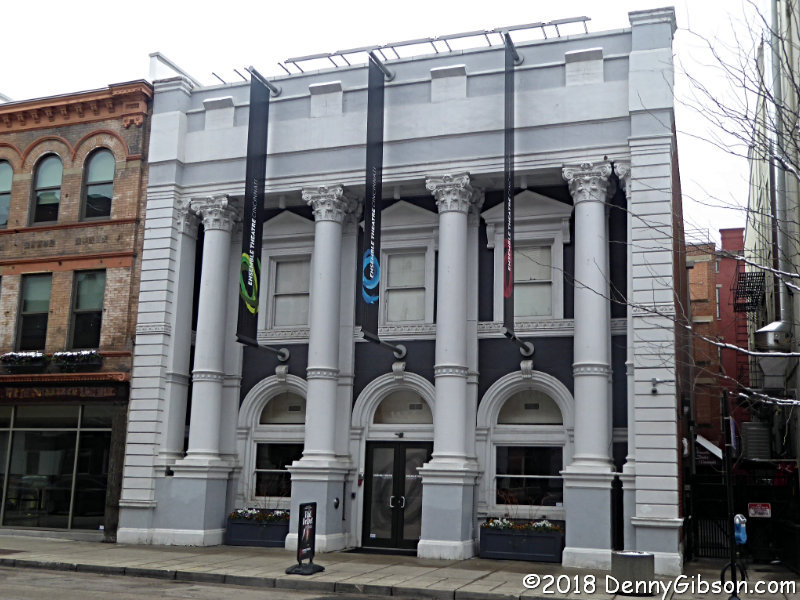
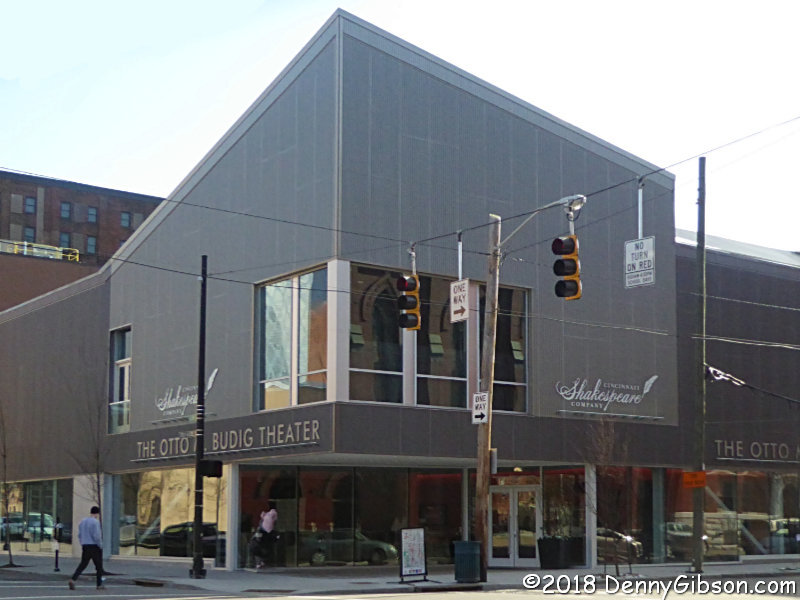
Overall it was a very good week in which I learned to appreciate William Shakespeare a little bit more and also learned a little about how much Cincinnati appreciates its live theater. I’ve attended a few ETC shows in the past and, while the basic layout remains the same, improvements in the theater itself and the greatly enlarged lobby indicate a solid future. This was my first CSC show which means I never saw the previous home on Race Street. I cannot, therefore, appreciate how big an improvement the brand new Otto M. Budig Theater is, but I can still be impressed with the really cool venue.

Both shows I attended were sold out or nearly so and these are not the only professional and semi-professional theater companies doing well in Cincinnati. Playhouse in the Park (where I attended Marie and Rosetta a couple of weeks ago) just announced that a new theater will be built at the end of this season. Landmark Productions opened its all new Incline Theater (where I’ll be seeing Spamalot on Thursday) in 2015. Although there’s no new theater on the horizon, Know Theater is now in its twentieth season and the Aronoff Center continues to present “Broadway” touring companies and such. Anyone wanting to see a play in Cincinnati definitely has choices.

CSC’s last performance of Othello was March 24. Red Velvet runs through March 31 at ETC.


The spring equinox occurred at a quarter past noon on Tuesday making Wednesday the first full day of spring. That’s when I took this picture in Washington Park as I walked past on the way to the Ensemble Theater.

Library, Gardens, Uke, and Eggs

No single big thing happened this week but it sure wasn’t empty. If it had been, I’d be posting a Trip Peek or some other pre-canned asynchronous bit. Instead, I’m making this post from four things that happened during my non-empty week. The picture at right was taken Wednesday at something I’ve been anticipating for quite some time. It’s Steve Earle appearing at The Mercantile Library as part of the Words and Music Series.
The library was certainly full but everyone had at least a little breathing room. Steve’s song introductions were insightful although they probably weren’t any longer than normal. He often provides a good background for what is about to be  heard. About the only song he didn’t provide much introduction to was the surprise opener, F the CC. Anyone wanting to hear that in a library missed a rare opportunity. Steve played several songs, read a complete story from Doghouse Roses along with excerpts from his novel I’ll Never Get Out of Here Alive, then stayed on stage to take questions. It was exactly what I’d hoped for.


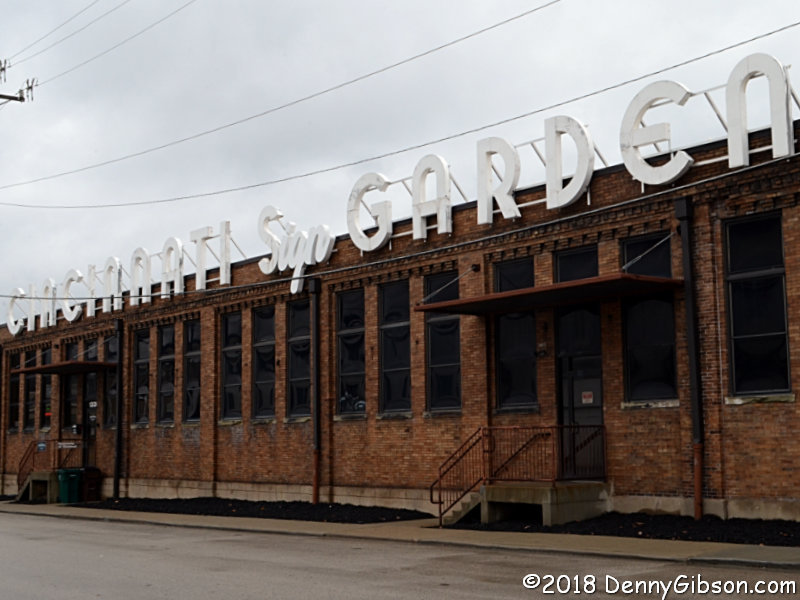
Cincinnati Gardens opened in 1949 and closed in 2016. On Monday, Ronnie Salerno posted some pictures of the recently begun demolition. That article can be read here and it should be. In addition to pictures from a very recent visit, it contains links to other pictures and other memories. It prompted me to take a few of my own pictures when I was next in the neighborhood which turned out to be Friday. Of course I have my own memories of The Gardens.
My first visit was in 1966 to see Cavalcade of Customs; My last in 2012 to watch the Cincinnati Roller Girls. In between were numerous concerts, sporting events, and shows. I did not see the concert that is almost always cited when someone talks about the place. The Beatles played here in 1964. However, I do remember seeing the Jefferson Airplane (with opener Cincinnati’s Lemon Pipers) in 1967 and Emerson, Lake, and Palmer (opening for The James Gang) in 1971. The venue was never known for its acoustics and I’ve told everyone who would listen that ELP was the only group that actually sounded good in there.

I played The Gardens twice myself. From 1957 to 1972, the NBA Royals called Cincinnati home. The University of Cincinnati supplied the pep band for their games at The Gardens. I joined the UC marching band my freshman year carrying a lot of equipment while taking part in a single parade and no halftime shows. When an upperclassman couldn’t make the first two games of the NBA season, I was picked to bang a drum in a crowded corner of the floor while watching Oscar Robertson and friends do their thing.

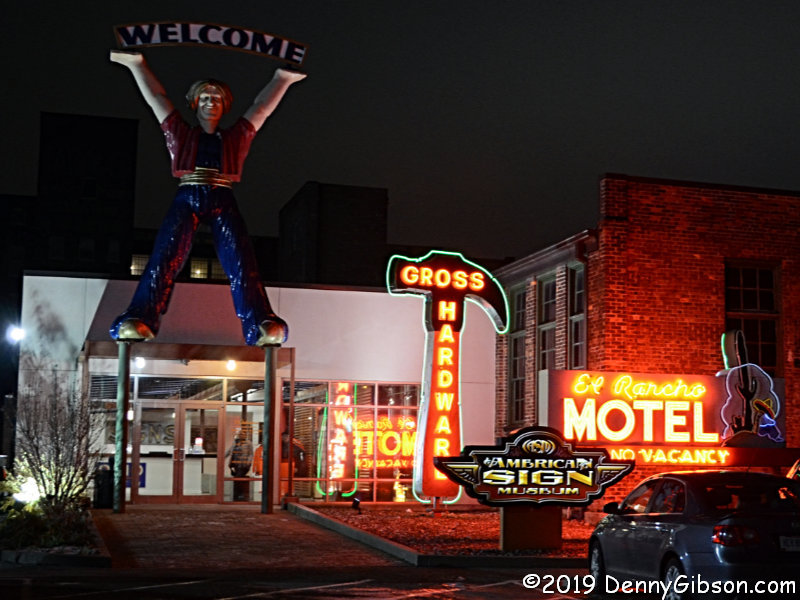
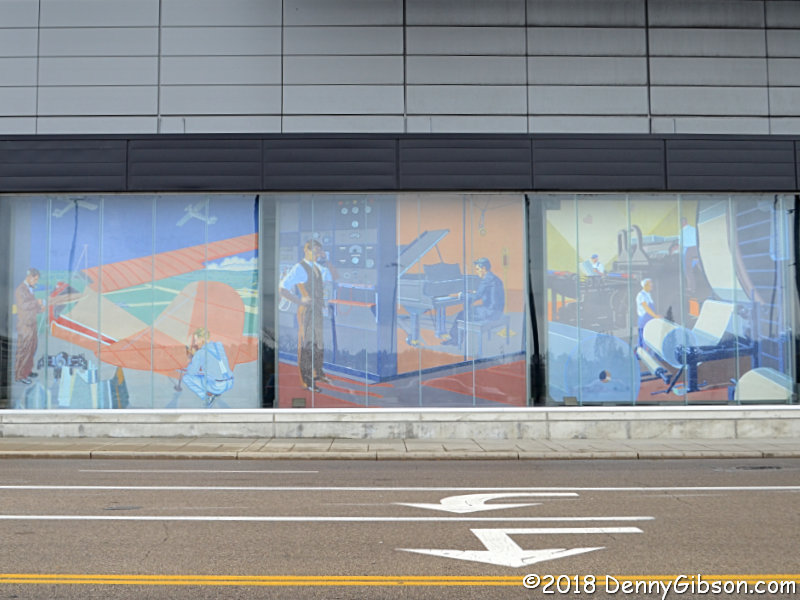
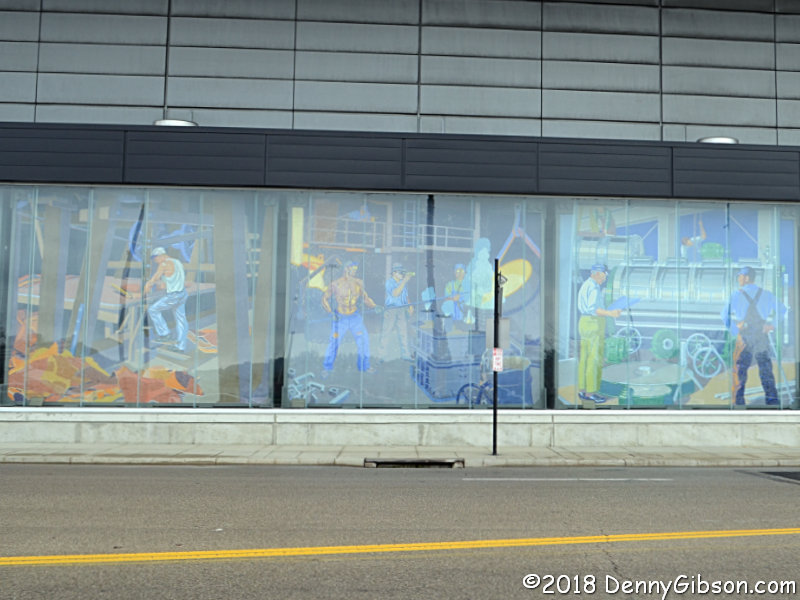
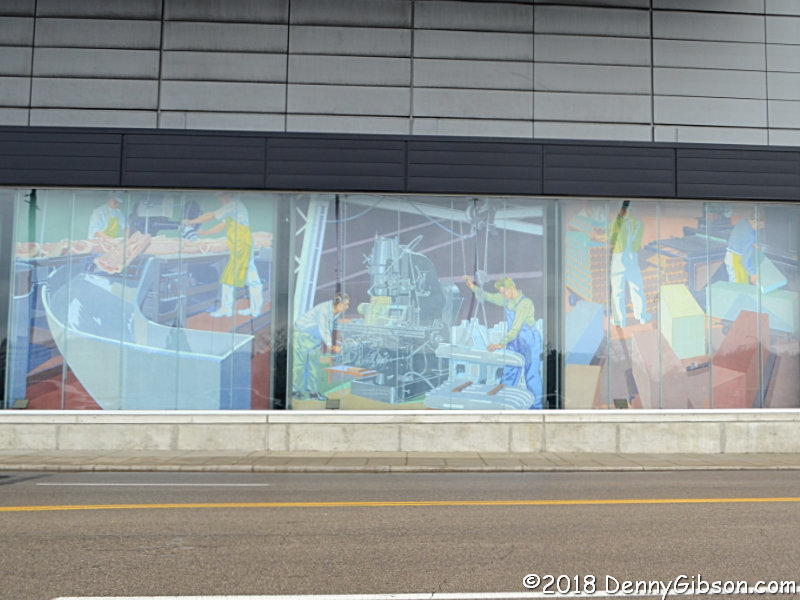
The letters whose outlines can be seen in the third picture have been given to the American Sign Museum where they are expected to eventually be mounted on the building as “CINCINNATI Sign GARDEN”.


On Friday night I took in some music at Cincinnati’s oldest bar, Arnold’s. A normal Friday night for me is playing trivia but, with the NCAA tournament getting revved up, that was canceled due to lack of interest and space. I looked online to see who might be playing and the fact that John Redell would be at Arnold’s caught my eye. Learning the Erin Coburn would be with him made it even more attractive and I’d already pretty much made up my mind to go when I found out the Dixon Creasy would also be there. Too cool. John is the ultimate mentor and, when not performing solo, spends a lot of his time making other people look good. That was the case when I last saw John and Erin together but not — at least not entirely — tonight. Erin can now readily hold her own and John permits himself to shine a bit more. A most enjoyable evening that included hearing a ukulele through a wah-wah live for the first time. That’s something everybody needs.


The fourth and final event to contribute to this post is my Saint Patrick’s Day breakfast. With its name inspired by the original owner’s pet chimpanzee, the Monkey Bar and Grill, on the Little Miami River, is undergoing what newspapers have referred to as a renovation. Transformation might be more accurate. One of the renovations not yet completed is the kitchen and the bar has been relying on food trucks for weekends and special occasions. Crappy weather threw a wrench (What kind of wrench was it?) into some outdoor plans but it didn’t keep Big Al’s BBQ from offering breakfast inside. Not the fanciest Saint Paddy’s breakfast I’ve ever had but it did the job and eating at the penny bar (20,000+ they say) was pretty cool.

Bock’s Back

Anytime you spot a Trojan goat being led down the street by a self propelled bathtub, the odds are considerable that you’re at Cincinnati’s annual Bockfest parade. It happened Friday for the twenty-sixth time. My attendance has been frequent but imperfect. While I have no statistics to prove that Friday’s parade was the biggest yet, it felt like it might be. Sunshine and relatively warm temperatures (high 40s) helped.

The bathtub belongs to Arnold’s Bar and Grill. It’s Cincinnati’s oldest tavern and the parade’s starting point. The traveling tub is a reference to the legend that the bar’s bathtub was used to make gin during prohibition. As I recall, the goat was created by the defunct downtown Barrel House Brewery but is now in the care of the Moerlien Brewing Company.

Goats are traditionally associated with bock beer and they appear at Bockfest in many forms. However, no matter how many legs a particular goat might have, it still has only two ends.

If you’ve read any of my parade related posts over the last few years, you know that the Red Hot Dancing Queens became instant favorites of mine from the first time I saw them. Nobody has more fun than these gals.

Two friends attended this year’s parade with me. It was Dave’s first time and he accompanied me along the route dodging goats, dancers, and Segways. As it turned out, he also dodged my camera. Clyde, who attended his first Bockfest parade with me two years ago, has since joined Die Innenstadt, a support group for FC Cincinnati, the local USL team. Although it initially took a little urging to get him to participate, once committed, he not only marched with the group, but did an outstanding job waving one of their big flags.
Dave and I made it to the parade route end and reunited with Clyde for one Schoenling Bock inside the super-crowded Bockfest Hall. I admit that I sometimes lead my friends to the beer taps, but I don’t make them drink. That’s all their doing.

Bibliophilia at the Mercantile

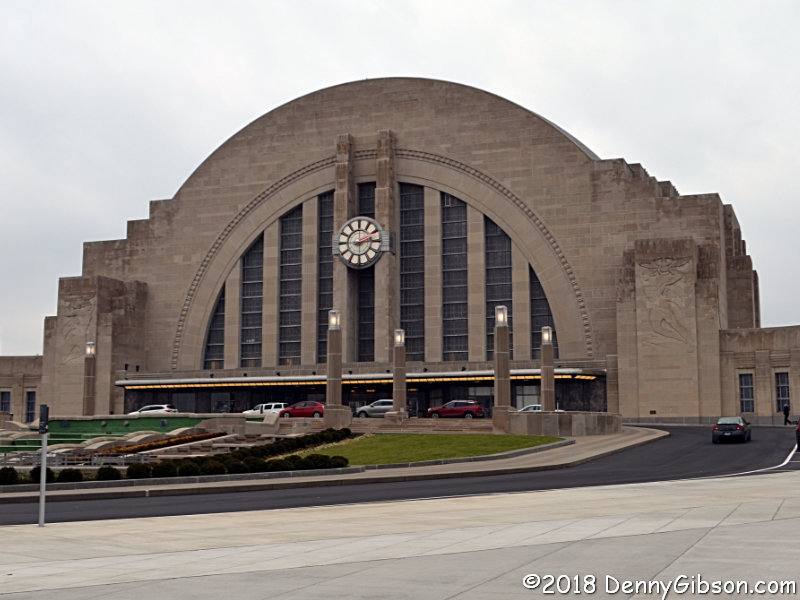
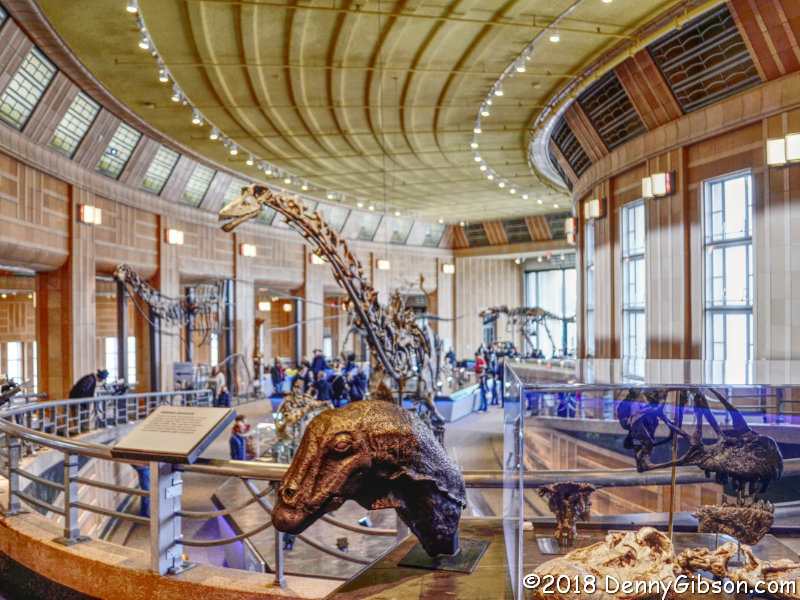
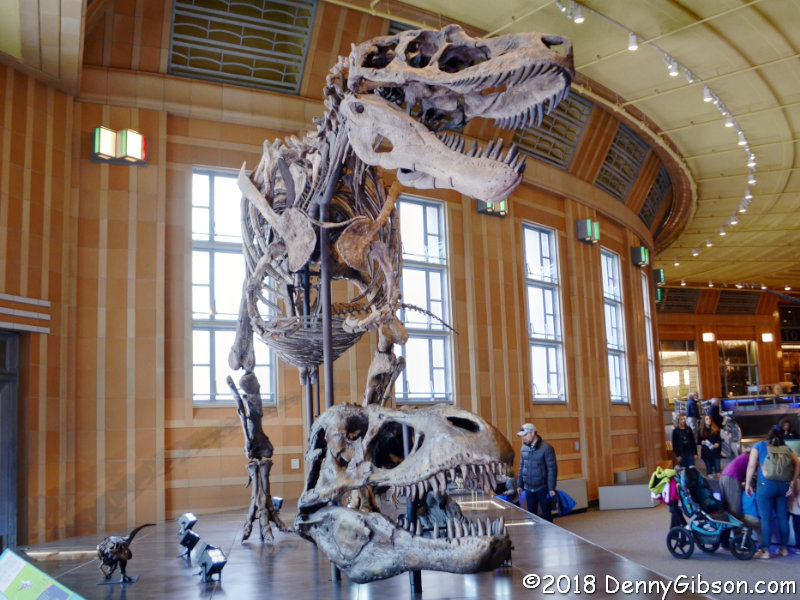
Despite natural first impressions, the title is one of of my most accurate and straightforward. Bibliophilia is the name of a Cincinnati Museum Center CurioCity program that was held at the Mercantile Library of Cincinnati on Thursday. The Museum Center (a.k.a., Union Terminal) is currently undergoing a major renovation and numerous events that would normally be held there are being spread around the city. The Mercantile Library is one of the city’s oldest institutions and it is with considerable chagrin that I admit to this being my first visit.

Bibliophilia exhibits included Sarah Pearce’s artistic creations and a letter press from the Museum Center. Pearce made that dress out of pages from a book of patterns following one of those patterns. The letter press was fully operational and even I managed to produce something legible with it. There was also a station with manual typewriters that attendees could use to write Tweet sized (140 character) stories and a place where they could bind their stories into pamphlets. A rather major activity was a scavenger hunt that had people prowling all through the library to answer a set of questions.

I didn’t take part in the scavenger hunt but prowled nonetheless. The Young Men’s Mercantile Library Association was founded in 1835. It lost a couple of homes to fire and moved around a bit during its first seven decades but has occupied the purpose built upper floors of 414 Walnut Street since 1904. It’s here under a $10,000 10,000 year lease that guarantees space even if the building is replaced.

The place looks exactly as a library should. In fact, it looks a lot like what it did in 1904 and some of the furnishings and many of the books predate that considerably. But there have been changes over the years. You can now be neither young nor male and still join and, even though “mercantile” is still part of the name, a connection with commerce is no longer required.

The library was recently the subject of a great Cincinnati Refined article accompanied by some marvelous photos. Check it out here.

A surprise bonus was running into a couple of travelers I hadn’t seen in quite awhile. We’ve sometimes joked online about probably meeting each other beside a narrow road in some semi-distant state. Although the Rowlands (Chris & Katherine) and I both live near Cincinnati, a crossing of paths on two-lane roads seemed more likely than the meeting in a library in the heart of downtown that happened Thursday. I tried to get a candid shot of the two of them but my attempts turned out to be the blurriest of the blurry so I asked to use a picture that Katherine took of Chris & I. Catch up on their travels and learn a lot about Reubens here.

Santa Z’s Legacy

Here’s a Christmas display that looks a bit more traditional than the one in last week’s post. And it doesn’t just look traditional, Zapf’s Christmas Display is a definite Cincinnati tradition with decades of history. In 1970, Bill “Santa Z” Zapf marked the first Christmas in his new home with some outside decorations and the house has been the site of an ever growing holiday display every December since then.

Bill died in 2008 but his son, known as Billy, keeps the tradition going. Billy was busy replacing some lights in his father’s name when I stopped by in the afternoon, but he still offered up a friendly hello and chatted a bit as he worked. It’s obvious that Billy gets a lot of pleasure from the display and a good deal of that pleasure comes from the memories it triggers. Memories of his dad and the time the two of them spent creating and maintaining the glowing wonderland.

Yes, there is a normal nativity scene among all those figures. I’m including both day and night views of the nativity because that’s what I did last week but it’s an undeniable fact that this is a display meant to be enjoyed at night.

In early December, Cincinnati Magazine published their Top 5 Holiday Light Displays. All five are commercial or municipal operations. Described as “…your average neighborhood light display…on steroids”, Zapf’s received the lone Honorable Mention. Four of the top five have fixed admission prices and the fifth requests donations. Although it might no be as obvious, the Zapf family does too. There is a “Thank You Box” by the porch and the North Side Bank and Trust accepts donations to the Keep Santa Z’s Lights On fund. Electricity isn’t free.

The porch itself is packed with smaller decorations including one that hints at the Zapfs receiving a well deserved Major Award.

The display is located at 2032 W Galbraith Road. A recent Channel 5 story on the display is here.

Time of the Season

It was fun while it lasted. Jasen Dixon set up The World’s First Zombie Nativity Scene in 2014. He says he almost didn’t bring it back this year and definitely won’t next year. The display faced legal challenges and a certain amount of outrage during its first two years but it seems things were fairly quiet last Christmas season. From the beginning, the display had at least as many fans as detractors, and, while the number of those in favor has increased, the number of those actively opposed has fallen dramatically. For some it was a practical matter. After 27 misdemeanor charges and $13,500 in fines were dropped early last year, Sycamore Township officials decided “It’s not worth the expense…”.

In 2015 I included a couple of daytime pictures of the Zombie Nativity in some comments tacked onto a Christmas time blog post. This year I snapped both day and night shots. I ended my 2015 comments with the observation that I thought “…a new local Christmas tradition has been established.” Whether or not you think that was right depends on whether or not you think the word “tradition” has any business being associated with something something that lasts just four years.

The title for this post comes from a 1968 hit song from the band The Zombies. I listened to a lot of stuff from them back in the day but I’d been smitten by zombie music long before. I remember singing along to this Kingston Trio recording from an older cousin’s collection as a pre-teenager. In searching for that 1959 performance I discovered a really cool one by Rockapella and another by the great Harry Belafonte.

Seventy-Six Years After

Thursday was the seventy-sixth anniversary of the Japanese bombing of Pearl Harbor. On the day following the attack, President Franklin Roosevelt called December 7, 1941 “a date which will live in infamy” and it does, even though public events marking the day are decreasing. That’s to be expected as the number of people with personal memories of the day gets a little smaller each year and other horrible events occupy the memories of following generations.

The town of New Richmond, Ohio, holds a Pearl Harbor Remembrance event each year on the Sunday preceding December 7. When it began, about thirty years ago, approximately twenty-five Pearl Harbor survivors attended from the surrounding area. For my first time there, in 2011, just three remained and only one, Joe Whitt, was healthy enough to be there. The others have since passed on while Joe, at 94, continues to attend the event and share his memories.

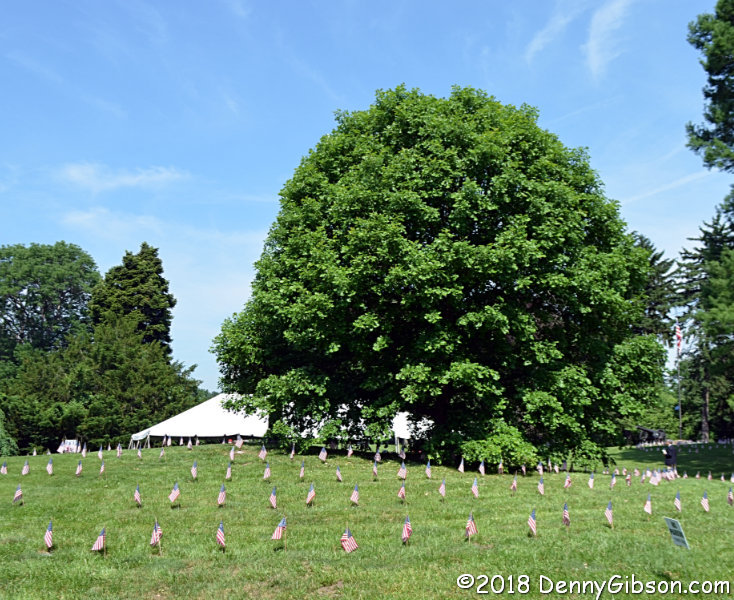
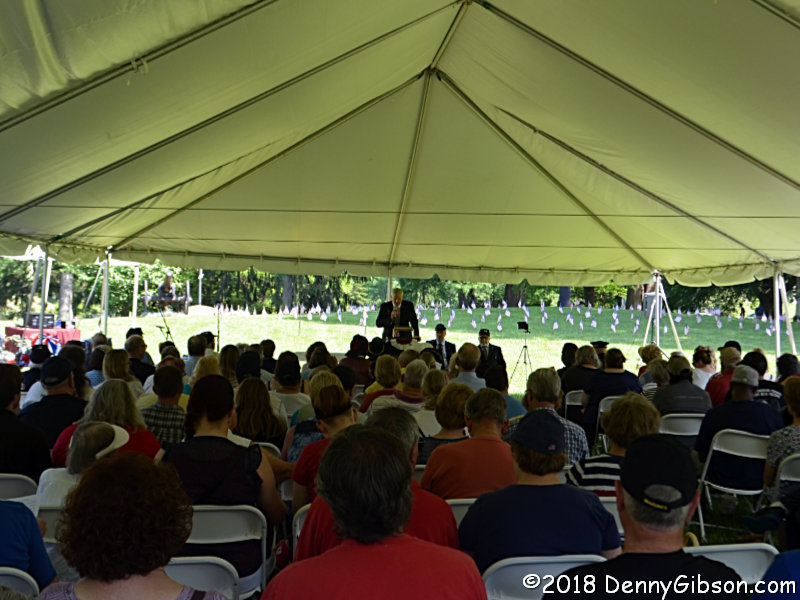
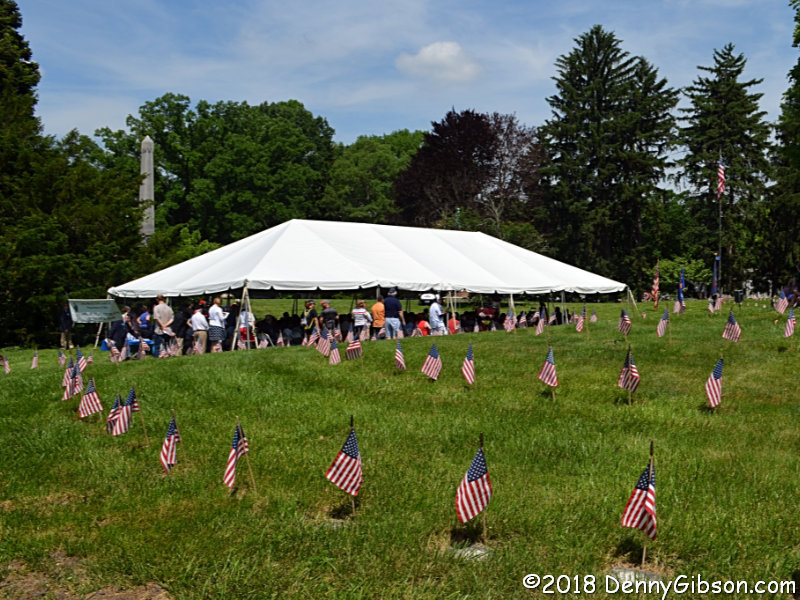
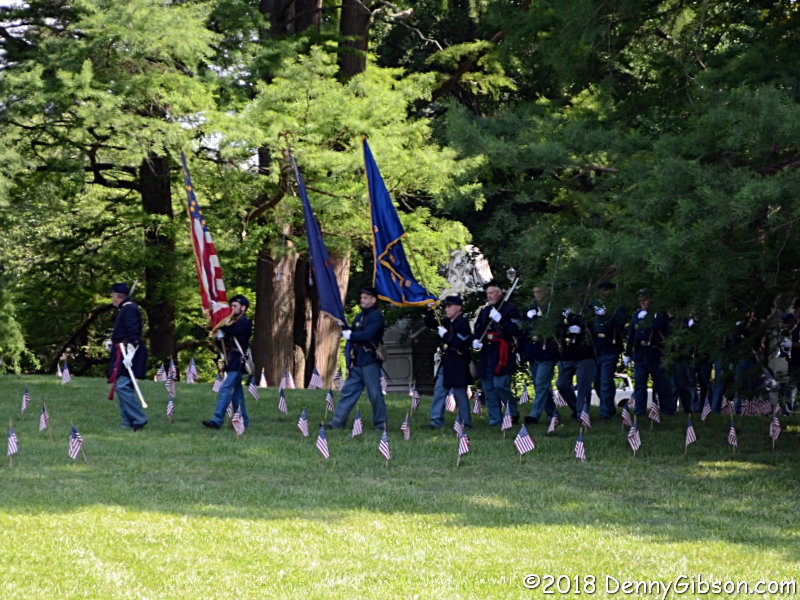
This year I also attended an event on the actual anniversary of the bombing. The VFW Post 7696 event at West Chester Township’s Brookside Cemetery was the only one that turned up in an online search. Things began with a recounting of key events surrounding the attack.

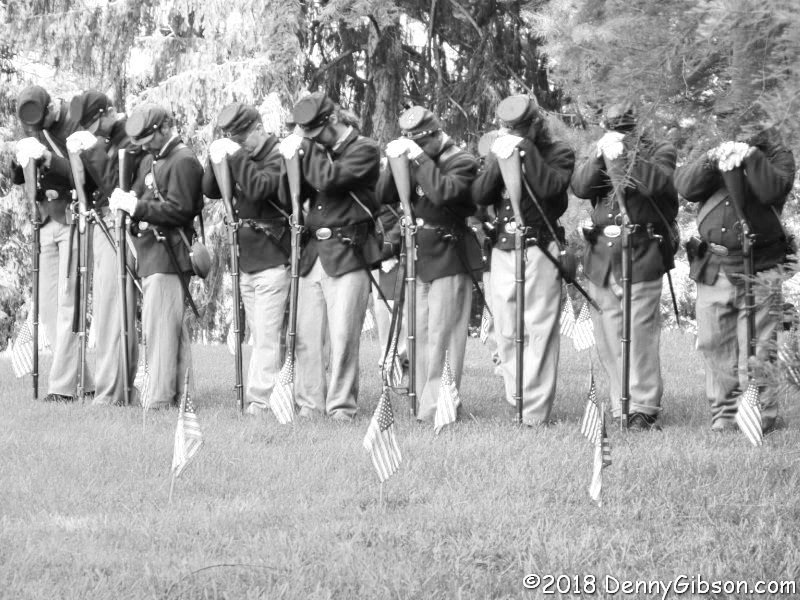
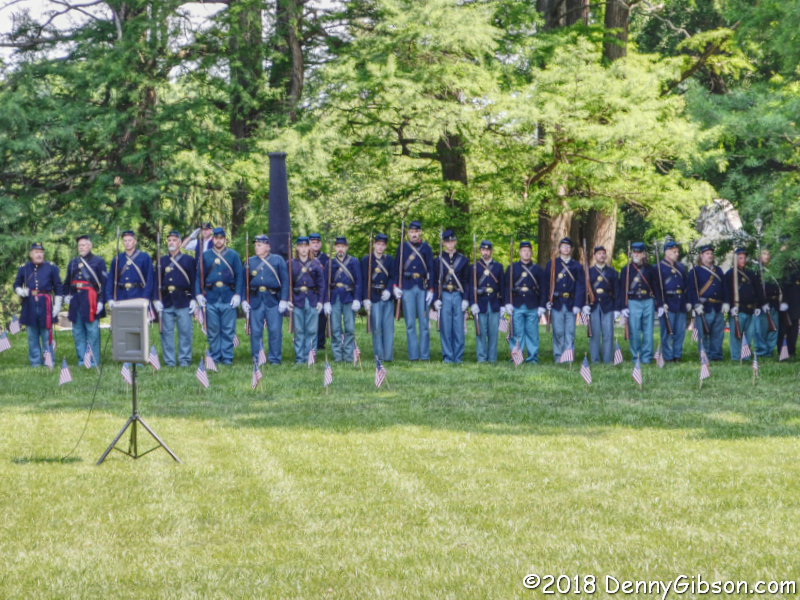
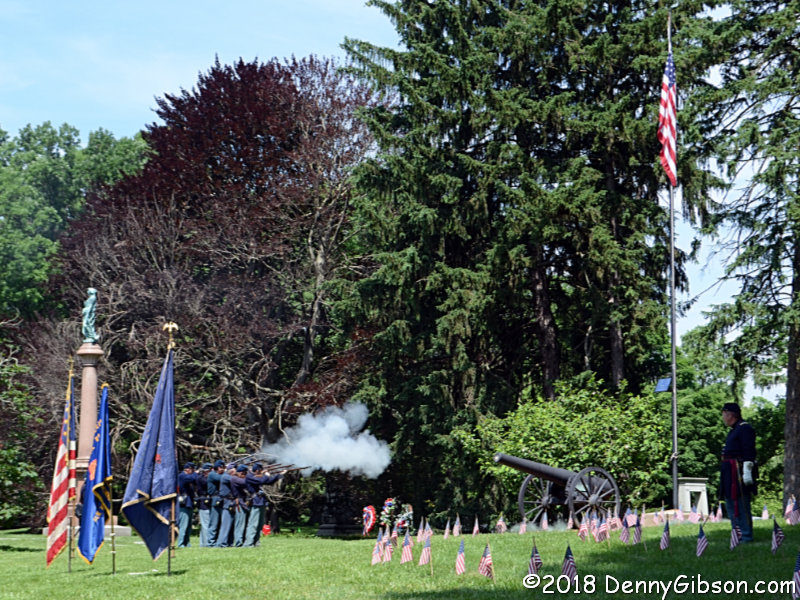
A Soldier’s Cross ceremony followed. A bayoneted rifle is thrust into the ground then “dog tags” are hung from it. Boots are then placed in front of the rifle and the cross completed with a helmet placed atop the rifle. The event concluded with a rifle volley and the playing of Taps.

This year’s Pearl Harbor Remem-brance Day was  a little bit different for me by virtue of having visited Pearl Harbor and the USS Arizona Memorial for the first time in the spring. The opening photo of the Arizona’s anchor is from that visit as are the three on the right. My journal for the visit is here..

The singing of a familiar medley of service songs was part of Sunday’s activities in New Richmond. As the songs associated with each of the five US military branches was performed, veterans of the branch stood. It seemed to me that close to half of the crowd stood at some point. Later, one of the speakers asked all WW II veterans to raise their hands. I counted three including Joe Whitt.

Book Review
Transforming Cincinnati
ArtWorks Cincinnati

It would be nearly impossible to spend any time at all around Cincinnati and not notice that its mural population has been increasing. I’ve noticed but I didn’t understand. I didn’t understand that ArtWorks Cincinnati, a name I sometimes noticed being associated with a new mural, wasn’t just a company hired to paint some pictures on some walls. I started to understand that aspect of Cincinnati’s murals just a little when ads for Transforming Cincinnati started to appear that included pieces of the back story. At that point I thought I understood the book’s title but, as I learned when I attended the big premier nearly two weeks ago, that was probably what I understood the least. The official launch took place on November 18 at a “Book Premier & Artist Signing” hosted by Joseph-Beth Booksellers. I attended with the idea of getting a copy with a few autographs in it. I got so much more.

Part of the back story I was starting to hear concerned Cincinnati Mayor Mark Mallory challenging ArtWorks to create murals for each of the city’s 52 neighborhoods. That was in 2007 and ArtWorks was already well established. Their previous projects included 2000’s Big Pig Gig where 425 full sized fiberglass pigs were decorated and displayed around Cincinnati. For those who don’t know, Cincinnati was once the largest pork-producing city in the world and was known as “Porkopolis”. In the decade since they accepted the mayor’s challenge, ArtWorks has completed 147 murals in 37 neighborhoods.

That is essentially what I knew when I arrived at the launch. John Fox, the book’s editor, served as MC for a panel of artists who answered his questions and told some stories. Thinking I understood the book’s title, I expected to hear about how a mural had transformed an ugly building or brought some brightness to a dreary corner, and how all those murals worked together to transform the city. I did hear a little of that but I also heard about how the projects had transformed people. It wasn’t long before I grasped the connection between ArtWorks and “creative job-training”. The fact that I don’t live in Cincinnati proper is the only excuse I have for not seeing this earlier. ArtWorks doesn’t just go into a neighborhood and paint a mural they think is cool. They work with the neighborhoods to design a mural that is appropriate and they do it — and create the mural itself — with the help of young apprentices. When possible, those apprentices come from the mural’s neighborhood. As ArtWorks founder Tamara Harekavy explains in the book’s introduction “These usually are the teens’ first paid jobs, certainly the first time they’ve been paid to make art.” That is creative job training in every sense of the word.

As I listened, it became apparent that it wasn’t just the teen apprentices who were transformed. Designers, project managers, and teaching artists were all affected by the projects. Even famed nature artist John Ruthven, who helped reproduce his painting “Martha, The Last Passenger Pigeon” on a six-story building, talked glowingly of working with the teens and seeing his work on such a giant scale. The mural was painted in 2013 when he was 89. That’s Ruthven on the left side of the photo. Tamara Harekavy is on his left, then mural artists Jonathan Queen and Jenny Ustick, and book designer Christopher A Ritter.

So what about the book? All I’ve talked about so far is my buying experience. Well, it’s a fairly large format (9 x 12) photo book about murals. Therefore the bulk of its pages are filled with pictures of murals and more pictures of murals. These are typically accompanied with the names of everyone involved and that includes the Youth Apprentices. But there are also descriptions (and pictures) of the process, extra information on some murals, and a couple of maps showing mural locations. Many of the mural pictures are, as might be expected, an accurate as possible recording of the actual mural and nothing else. Others show a considerable chunk of the mural’s surroundings. This is something the book’s creators made extra effort to do since the murals are intended to fit into and enhance their locations. There are also several fold-outs that provide wonderful four-page views of selected murals including the aforementioned “Martha, The Last Passenger Pigeon”.

Transforming Cincinnati, ArtWorks Cincinnati, Orange Frazer Press (November 2017), 9 x 12 inches, 160 pages, ISBN 978-1939710-765
Available from ArtWorks CincinnatiOrange Frazer Press, and in store at Joseph-Beth Booksellers Cincinnati.