 After my return visit to an outstanding Ohio museum last week, my thoughts rather naturally turned to other Ohio museums when considering activities for the mostly open following week. I settled on two I had never visited, then added a sunflower field and a nearly new member of the World’s Biggest club to create a four-stop Friday outing. Although I reached all four, only two can be counted as successful visits.
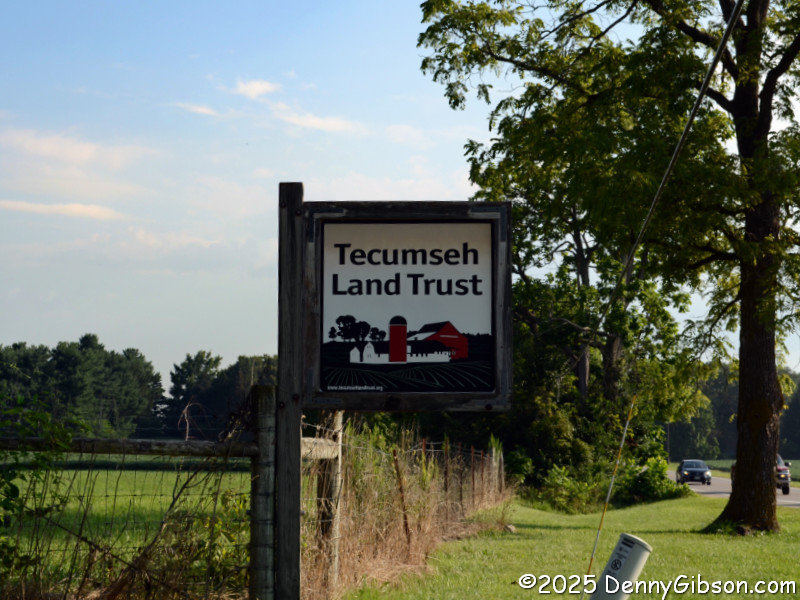
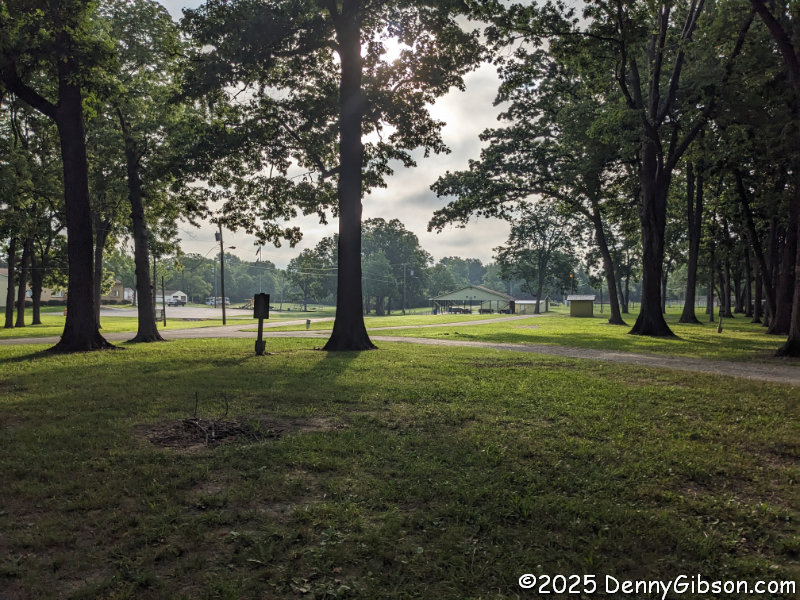
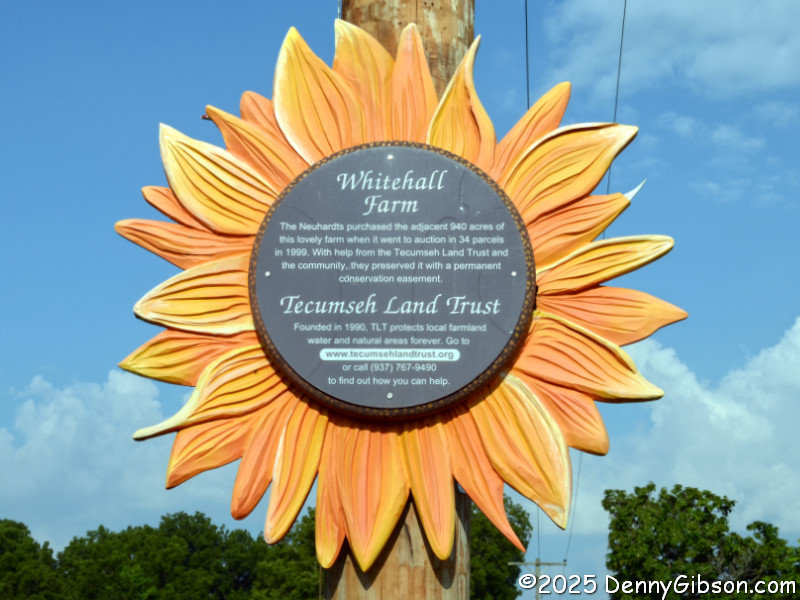
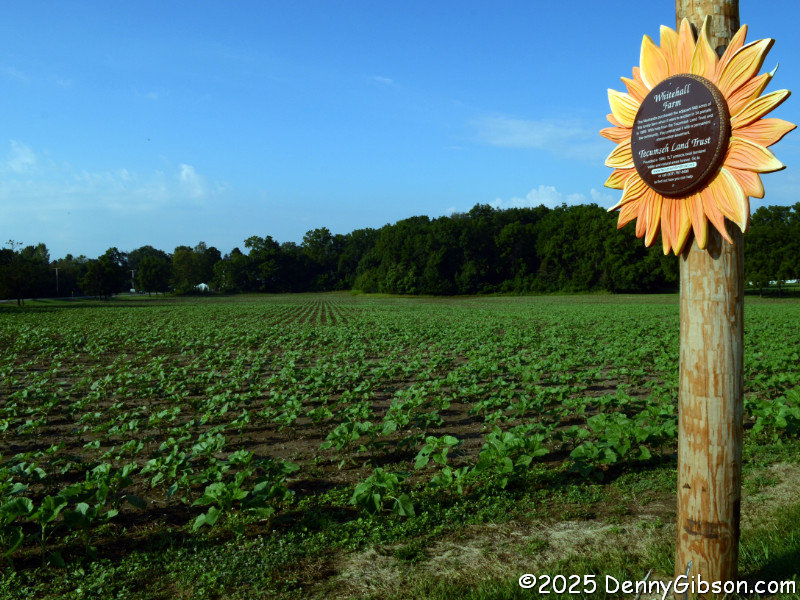 I actually knew there would be no blooming flowers at Tecumseh Land Trust before I left home. When I initially made my plans, I’d found some general information indicating that the field operated in August and September. A few days later, I learned that projected bloom dates for 2025 were near the end of September.
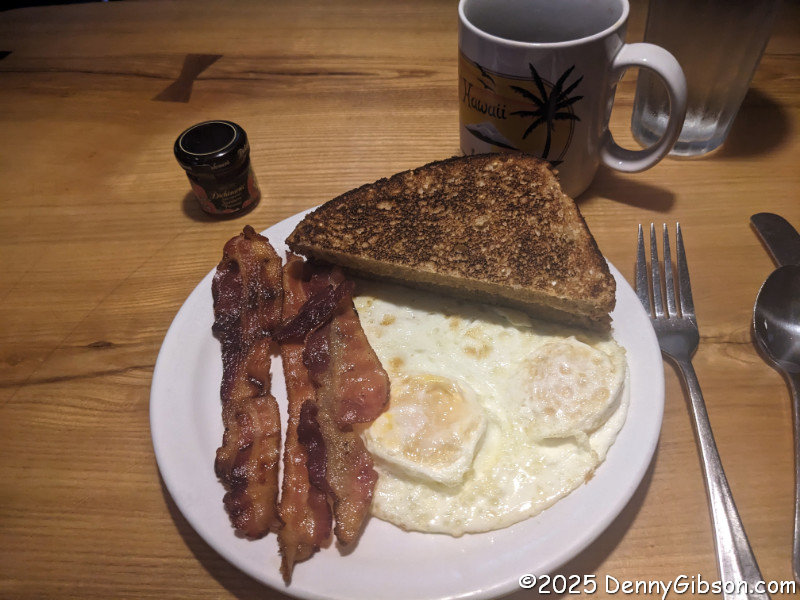
 Of course, I considered dropping the field from my agenda, but my appetite was already aimed at one of my favorite restaurants in nearby Yellow Springs. So I stuck with the circuitous two-lane drive and breakfast at Sunrise Cafe rather than the direct but boring expressway route to my second stop. Maybe I’ll come back for a meal — with flowers — next month.

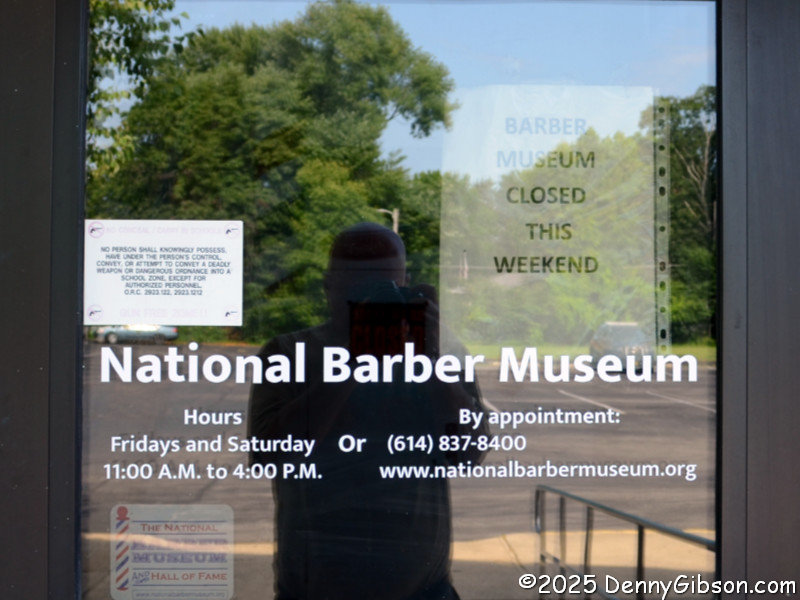 This was what the trip was more or less built around and what I anticipated being the trip’s highlight. Instead, it provided only an accidental selfie. I believe that when I first became aware of the National Barber Museum, all visits were by appointment only. At some point, regular hours on Fridays and Saturdays were added. I was disappointed when I saw the closed notice, but since I was there just a bit before the scheduled opening, I did what I probably should have done earlier. I called. I spoke, I assume, with museum director Mike Ippoliti, who explained that a lack of volunteers and his own recent foot surgery prevented normal operation at present. He expected regular hours to return in a few weeks. I wished Mike well in his recovery and headed to stop number three.
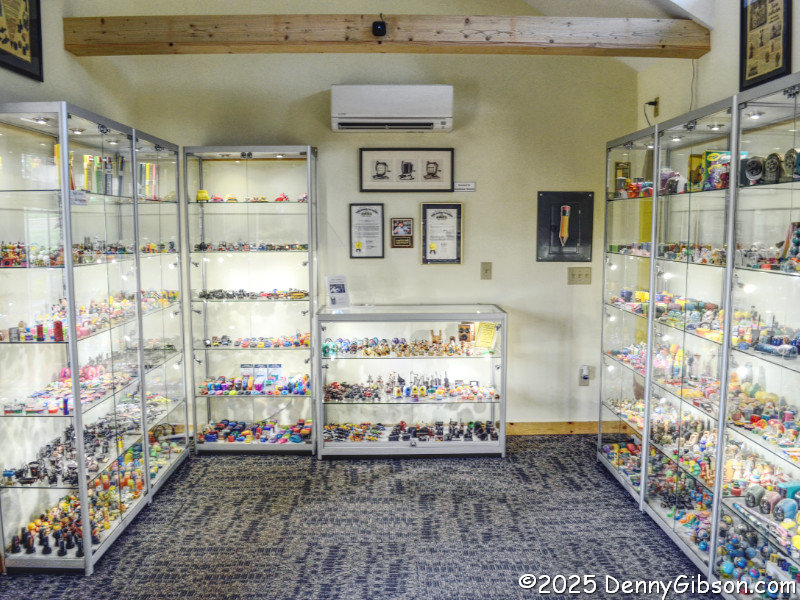
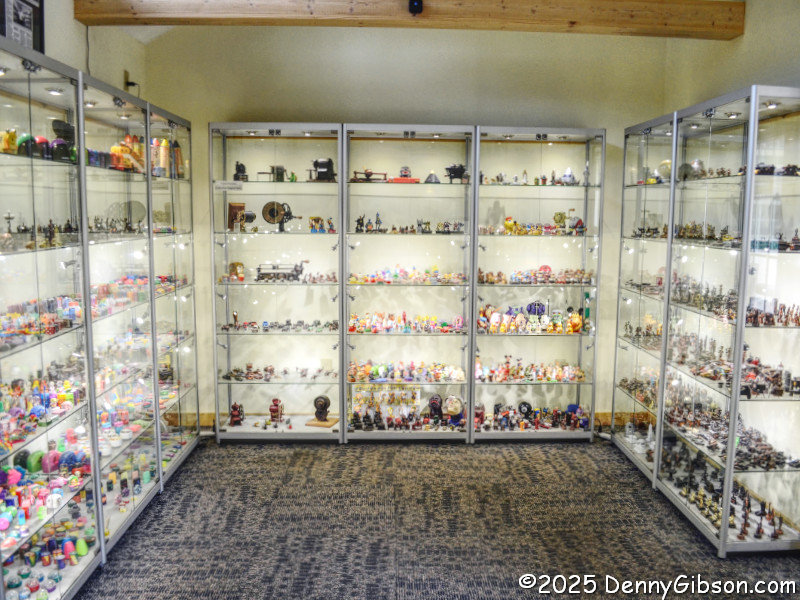
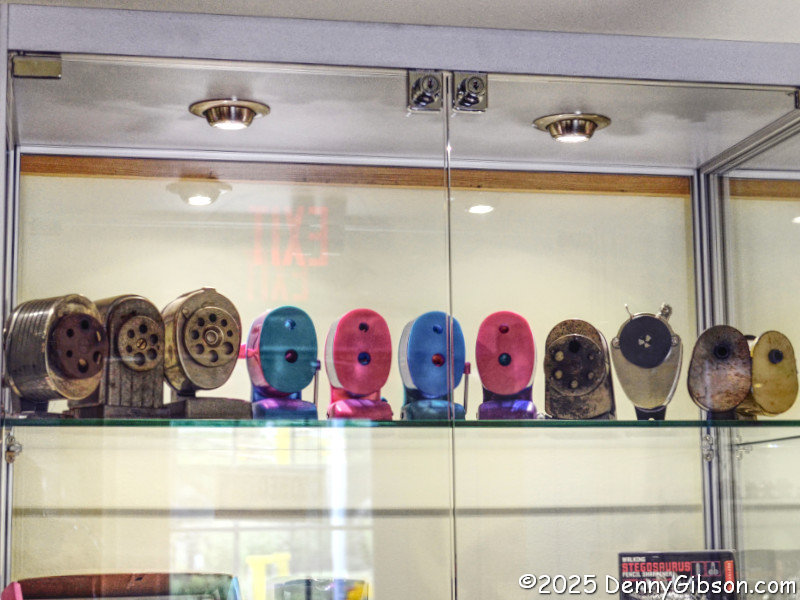
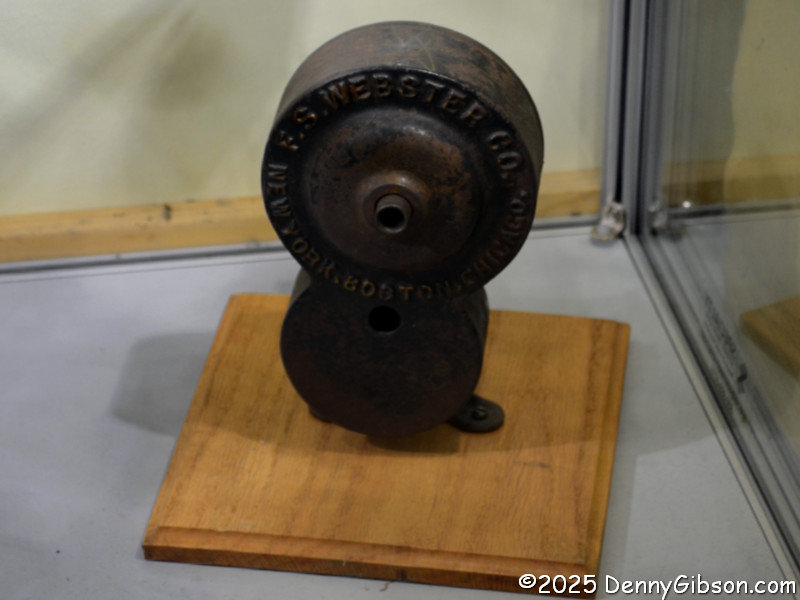
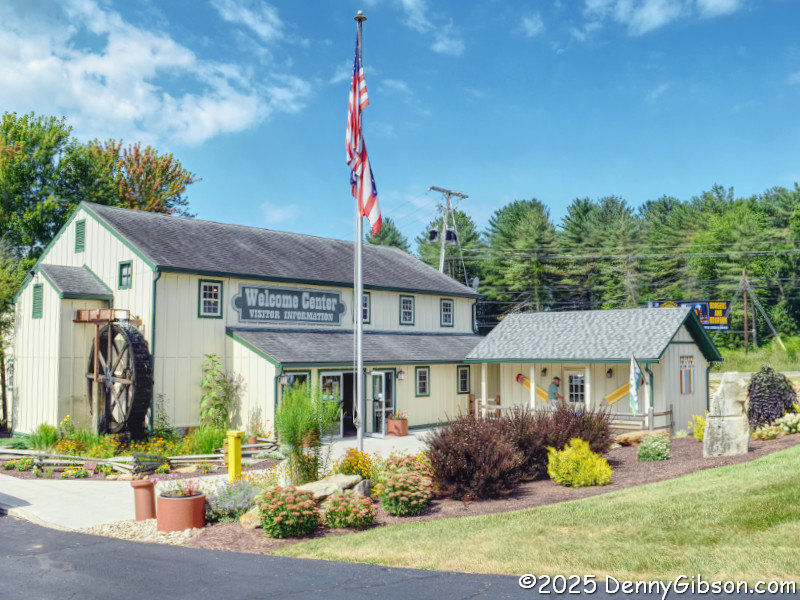 I missed the first two iterations of the Paul A. Johnson Pencil Sharpener Museum. The first iteration was assembled in a shed at Paul A. Johnson’s home. After Johnson’s death in 2010, the nearly 3,500 sharpeners and the shed housing them were moved to the Hocking Hills Regional Welcome Center near Logan, OH. In 2024, the deteriorating shed was replaced by the building on the right side of the first picture. By then, the collection had grown to somewhere around 5,000 sharpeners when the widow of Florida collector Frank Paredes donated all the sharpeners he had amassed to the museum.

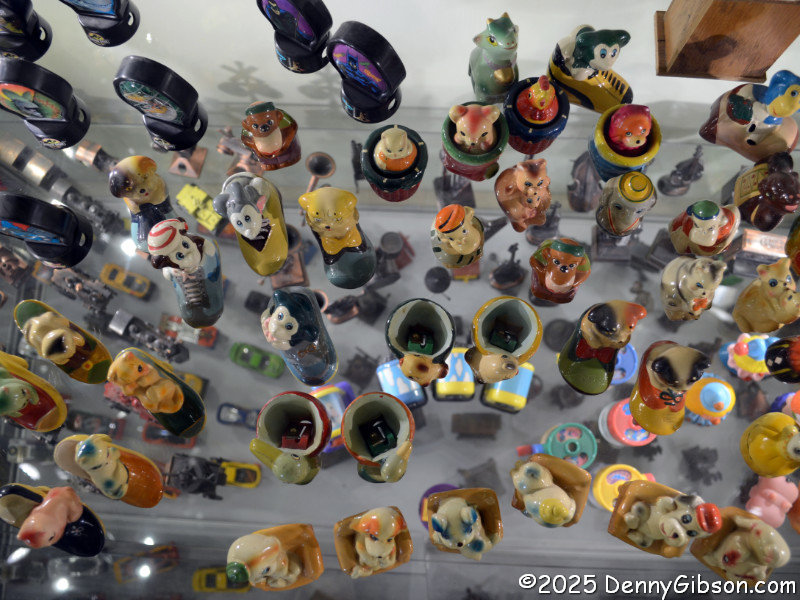
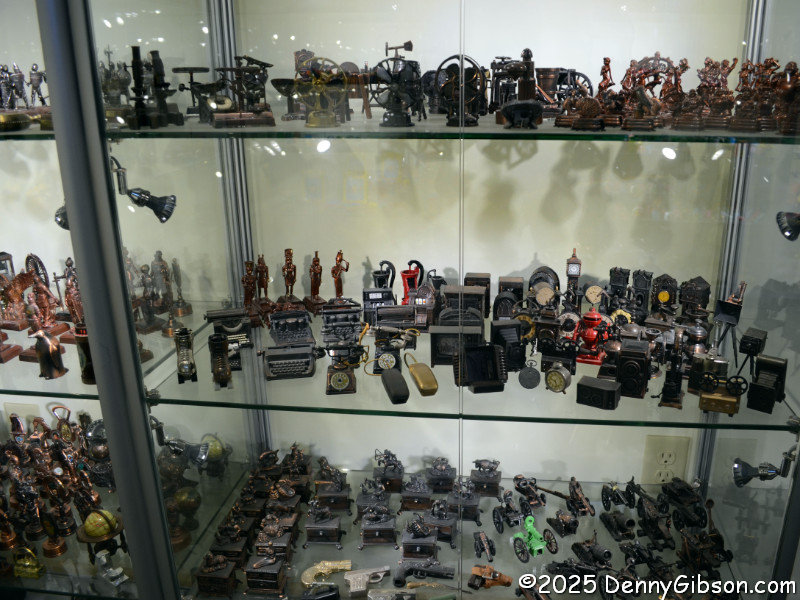 The incredible collection includes sharpeners I remember from my school days, and some even older than that.
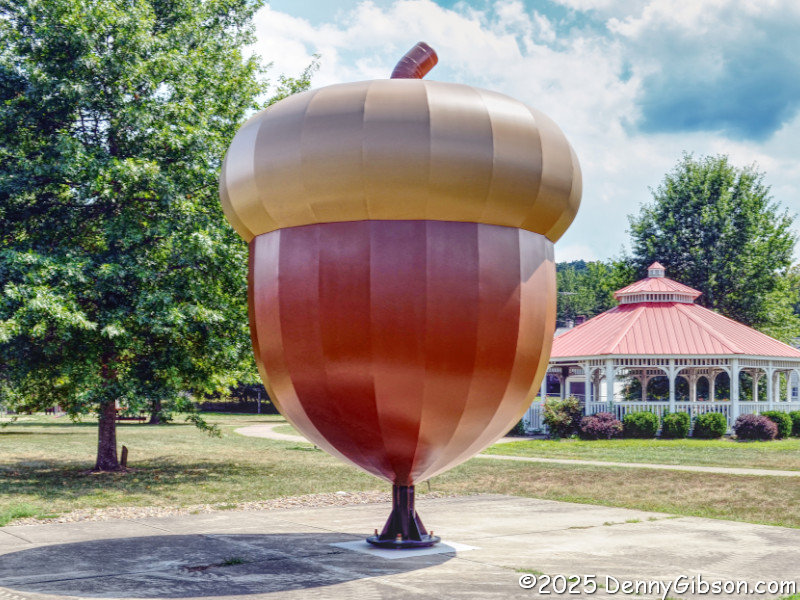
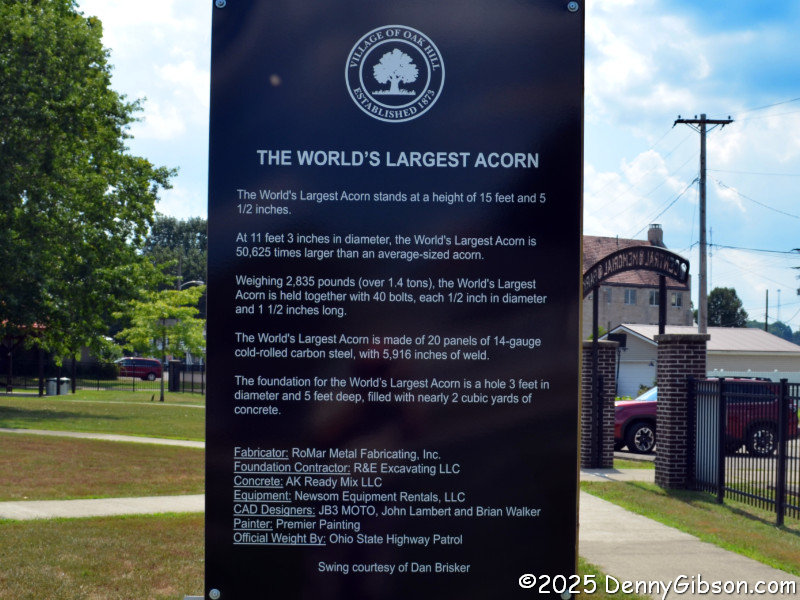
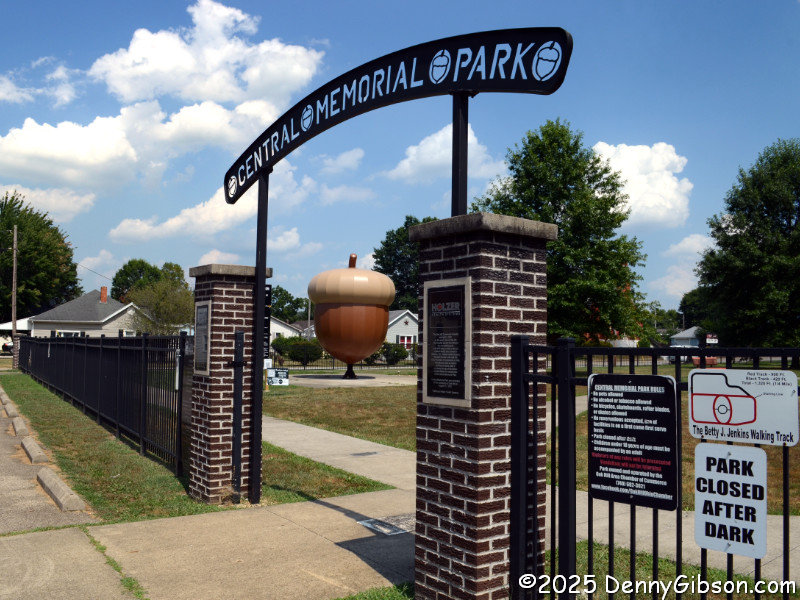 Just over two months before I got there, the town of Oak Hill, OH, erected this giant acorn and declared it the World’s Largest. As far as I know, Raleigh, NC, never claimed that the big nut dropped there on New Year’s Eve was the World’s Largest, but, having some experience with that particular acorn, I was curious about how they compared. It’s not really close. The Raleigh acorn is 10 feet tall, while the height of this one is 15 feet and 5 1/2 inches. That and other statistics are noted on a nearby sign. However, when I went looking for the dimensions of the Carolina nut, I learned that some folks in Silver Springs, MD, may have a legitimate challenge to Oak Hill’s claim. Take a look here. It doesn’t appear that the Guinness record trackers were involved in any of this, so where it all will lead is unclear.
 Sunflowers had yet to arrive at the Tehcumseh Land Trust, but I did find some standing tall in the Pioneer Garden at the Hocking Hills Regional Welcome Center, and that lets me end this post on a bright note with a bright bloom.
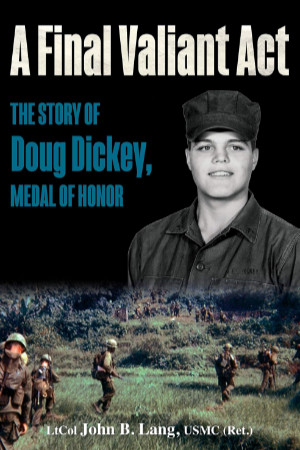 This is the second book that I’m aware of about Medal of Honor recipient Doug Dickey. I was aware of the first one,
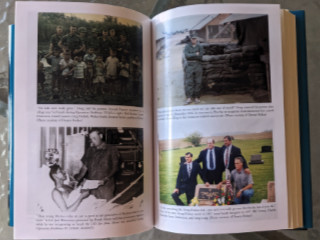
 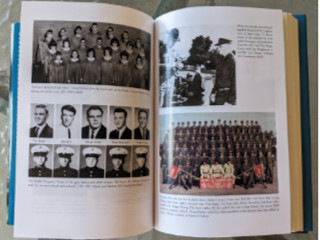 The book includes several maps and diagrams to help describe things like locations and organization hierarchies. There are even a few black and white pictures mixed in with the text. That’s nice, but they are on matte paper. What is even nicer is the section of twenty-two glossy pages containing higher quality images, many of which are in color.
 As mentioned several times on this website, Doug Dickey was a classmate of mine. I have attended events that honored him and read much that has been written about him. Two things from this book that I’d not heard before stood out. The common belief was that Doug fell on top of a single grenade, and that is what the Medal of Honor citation describes. But years later, when witnesses were able to compare notes, it was determined that there was a second grenade that Doug pulled under his body after falling on the first one. I was also struck by the sentence that Lang ends his book with, and with which I’ll end this review. It’s something that Doug’s mother, Leona Dickey, said when talking about her oldest son. “The guy who threw the grenade — he would have loved him, if he could have just met him.”