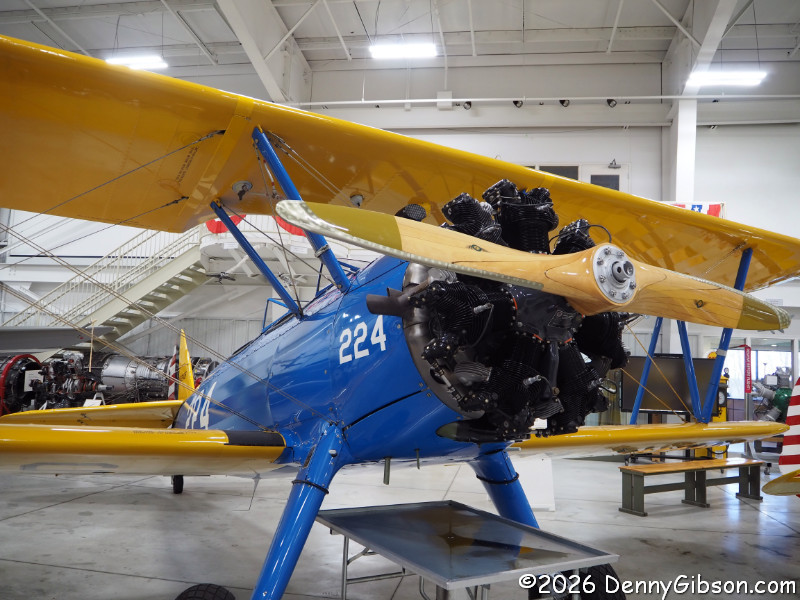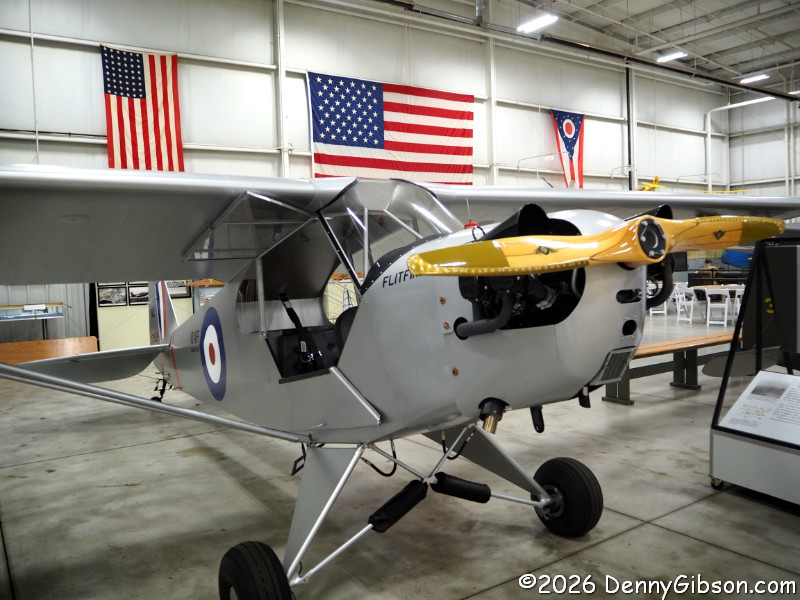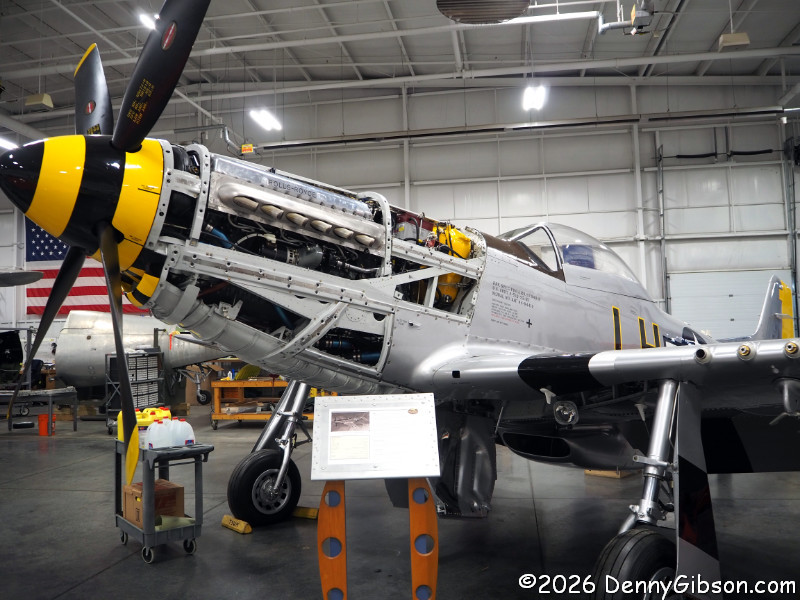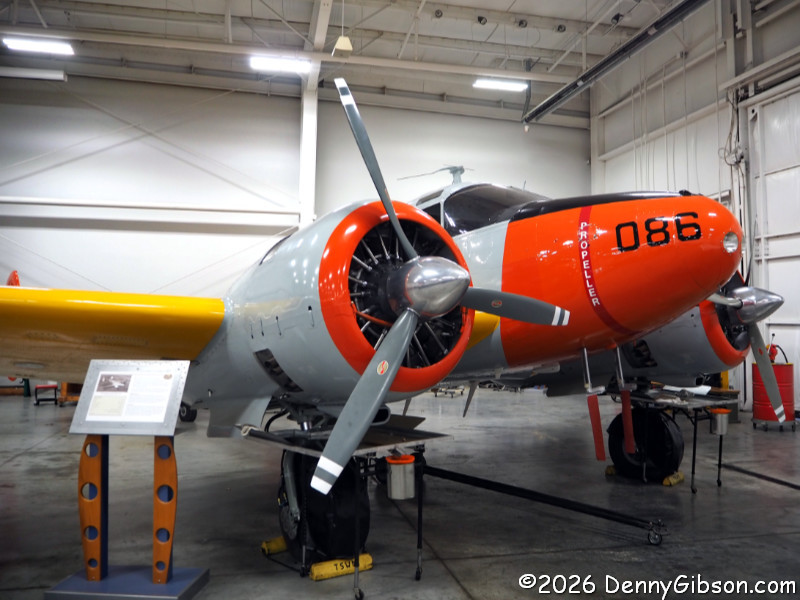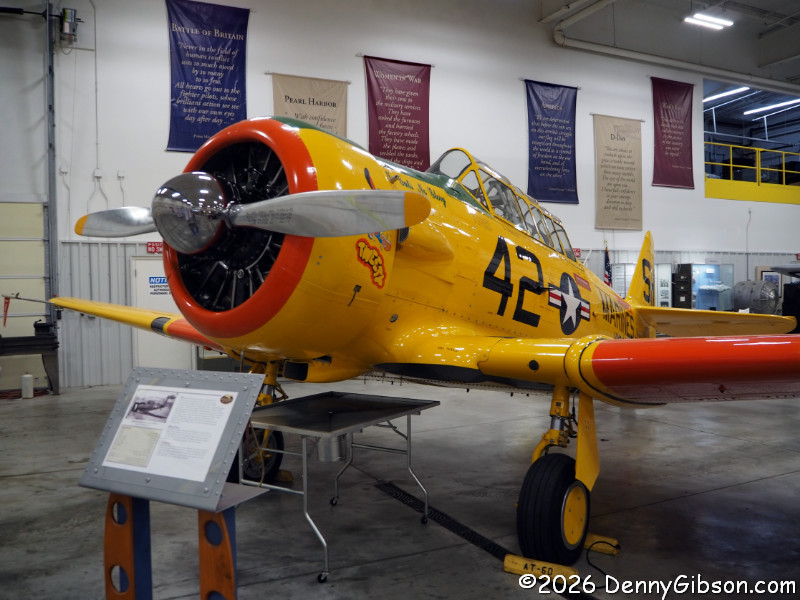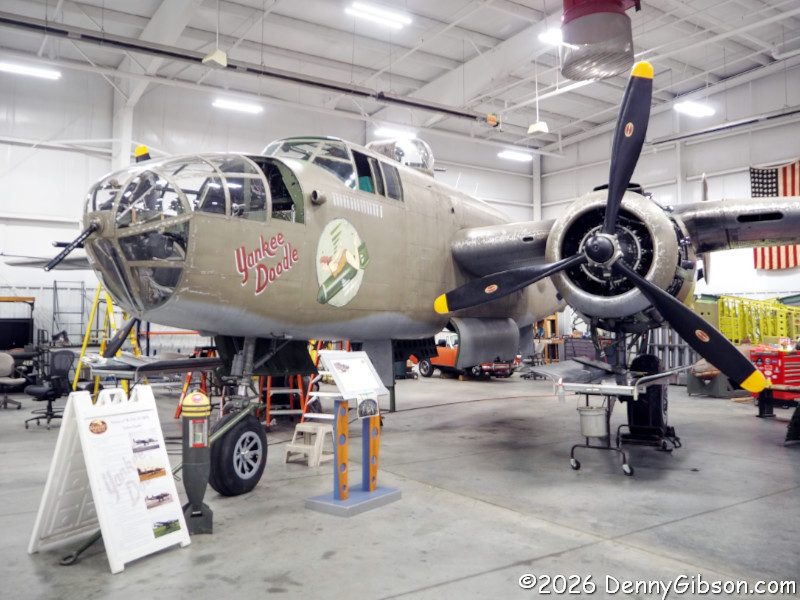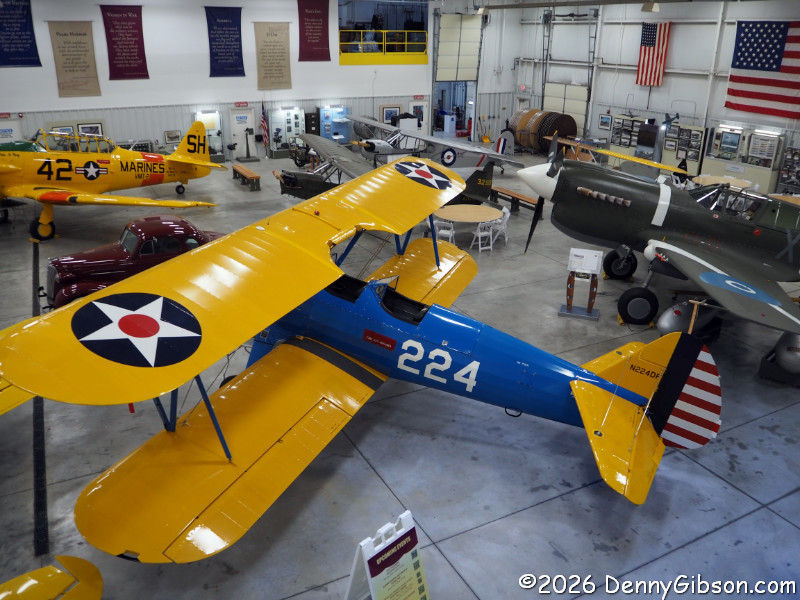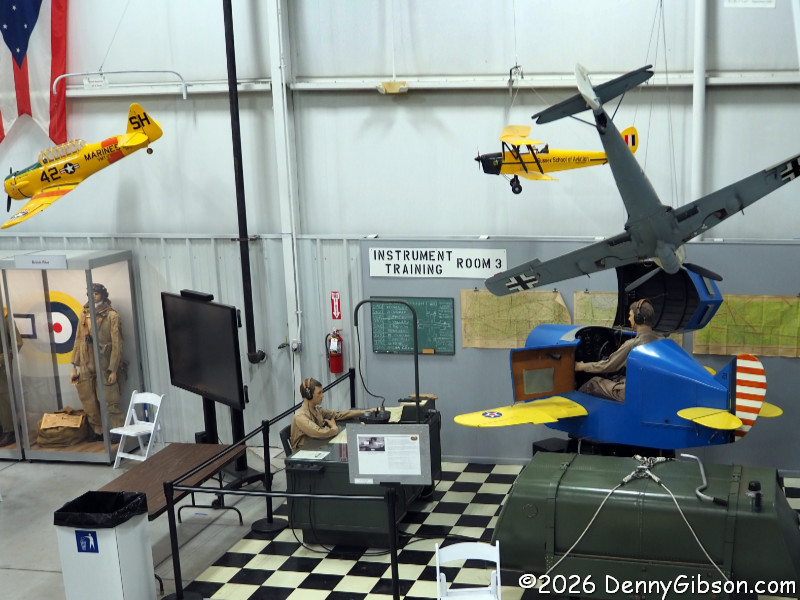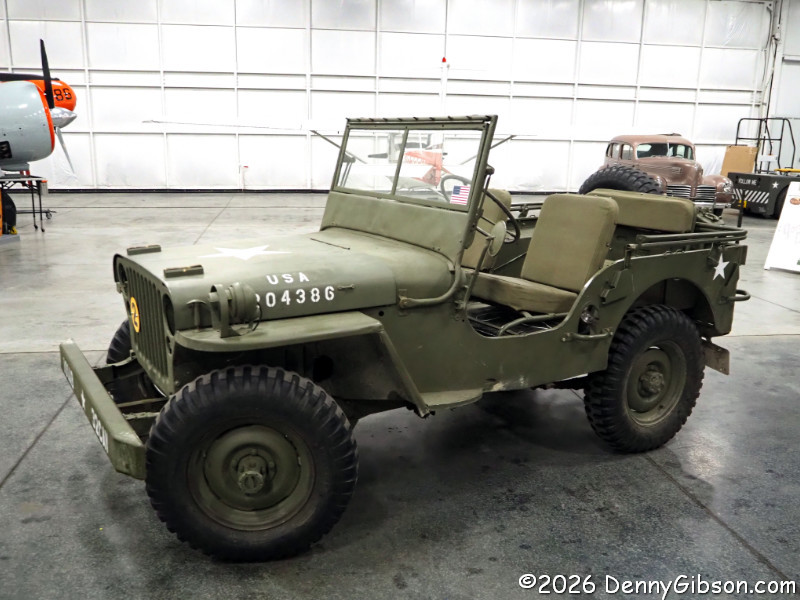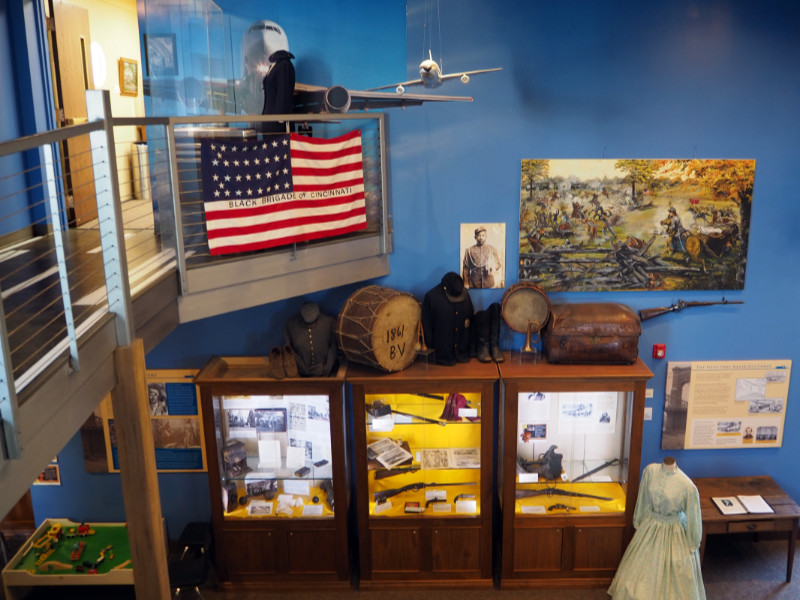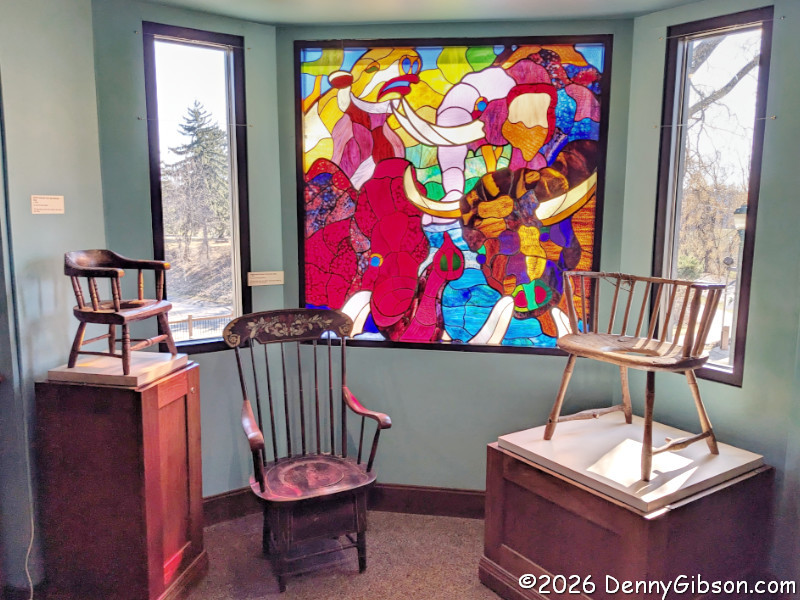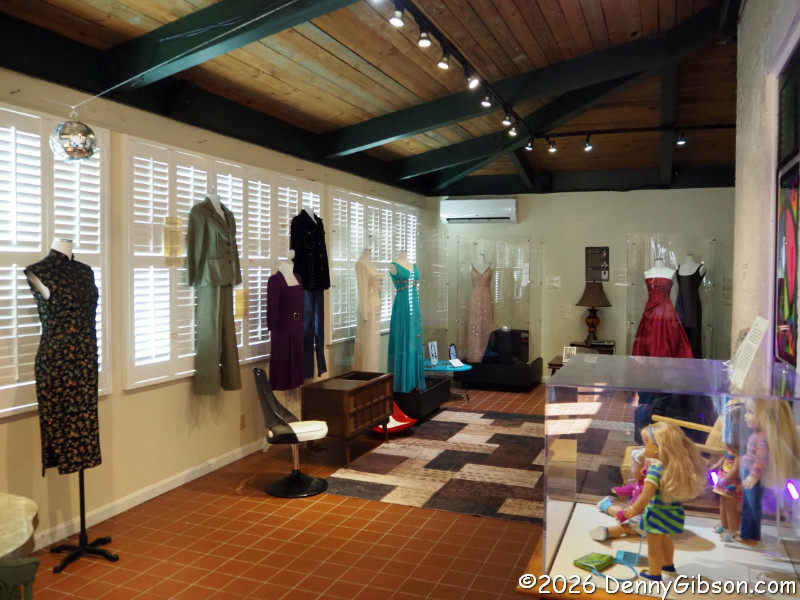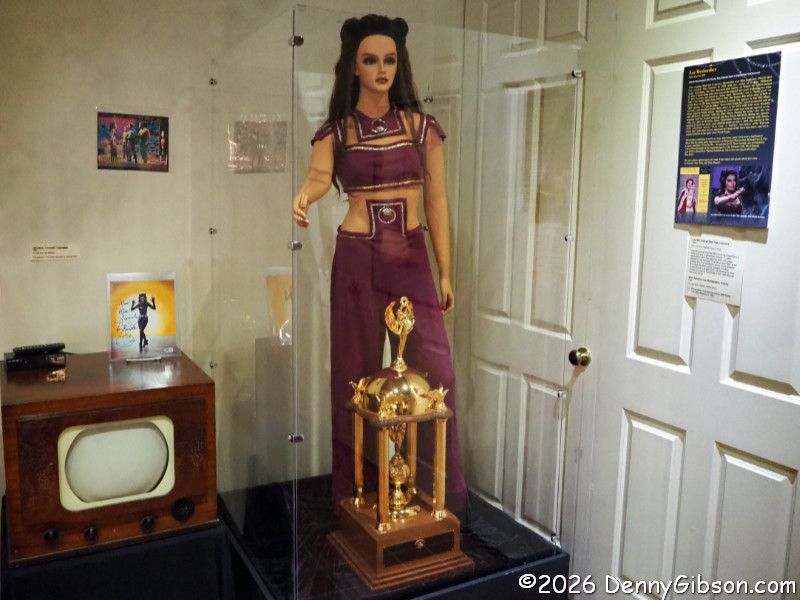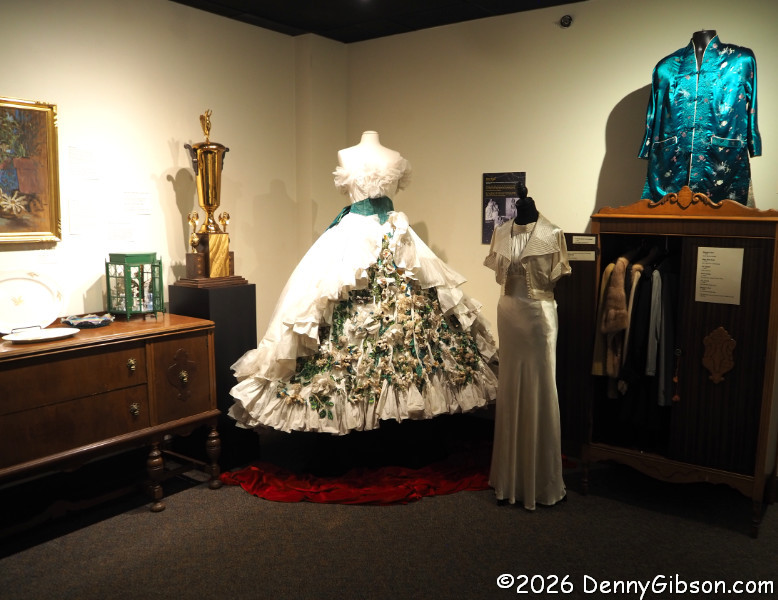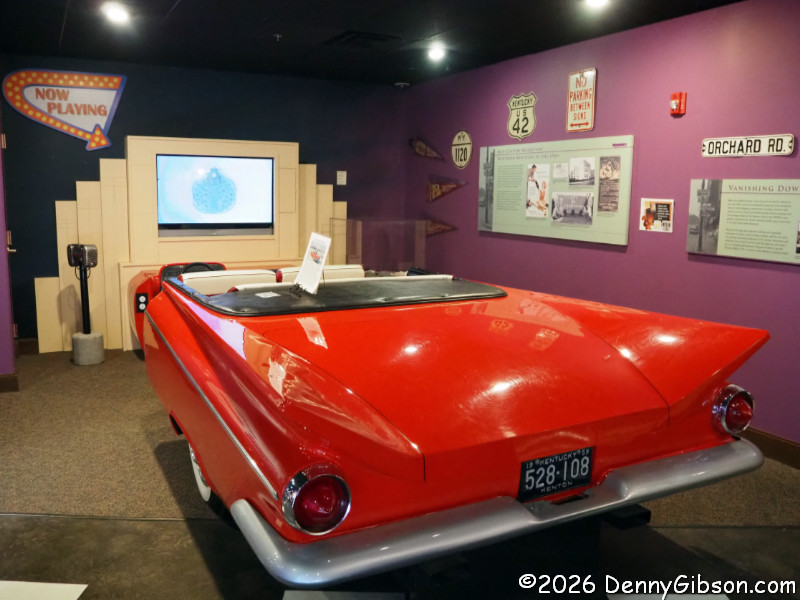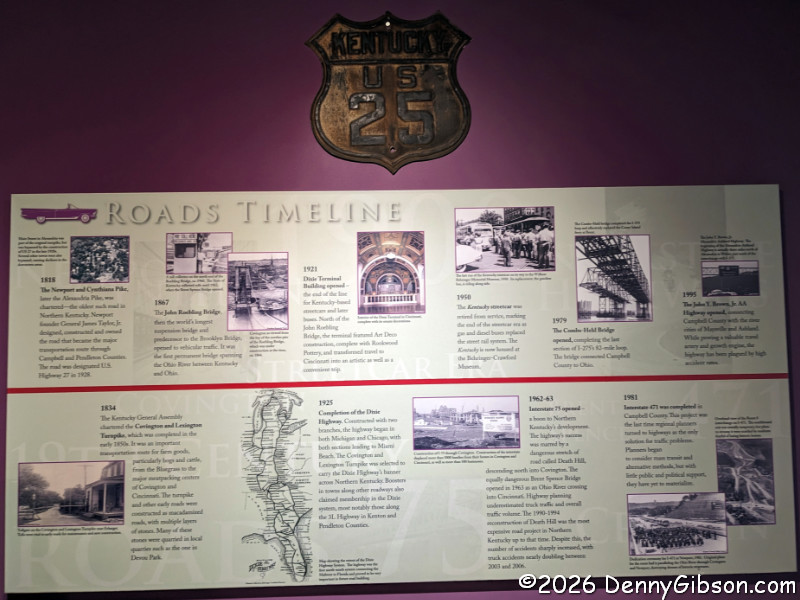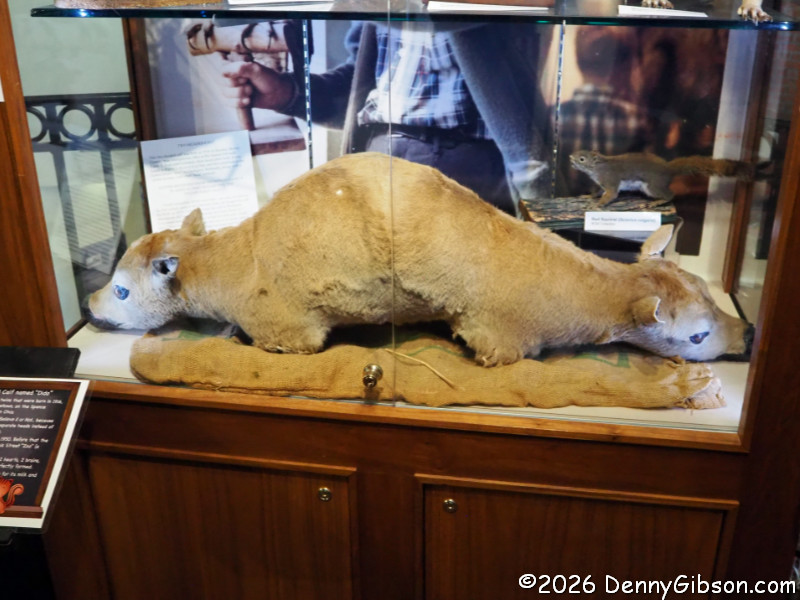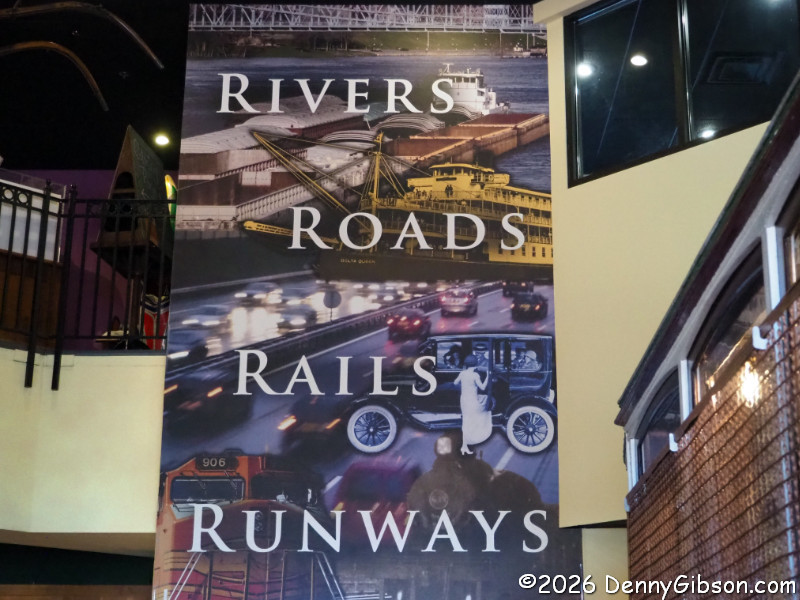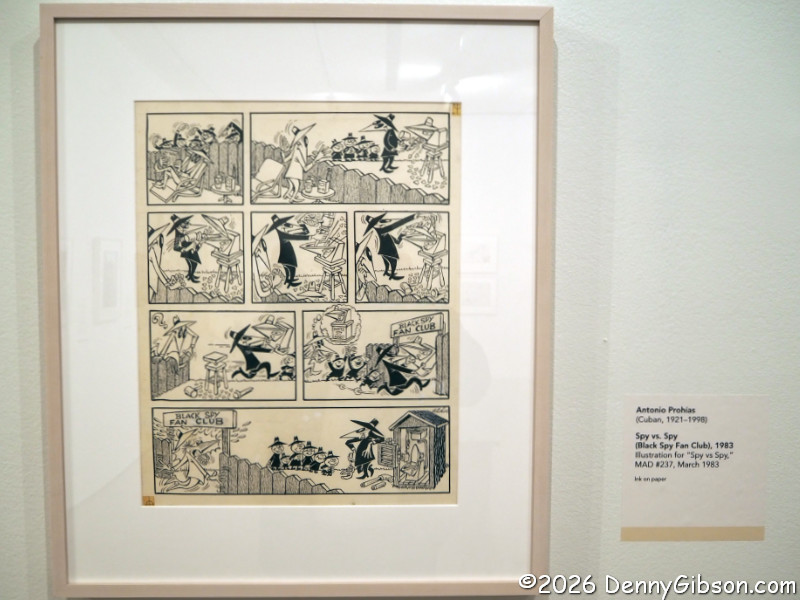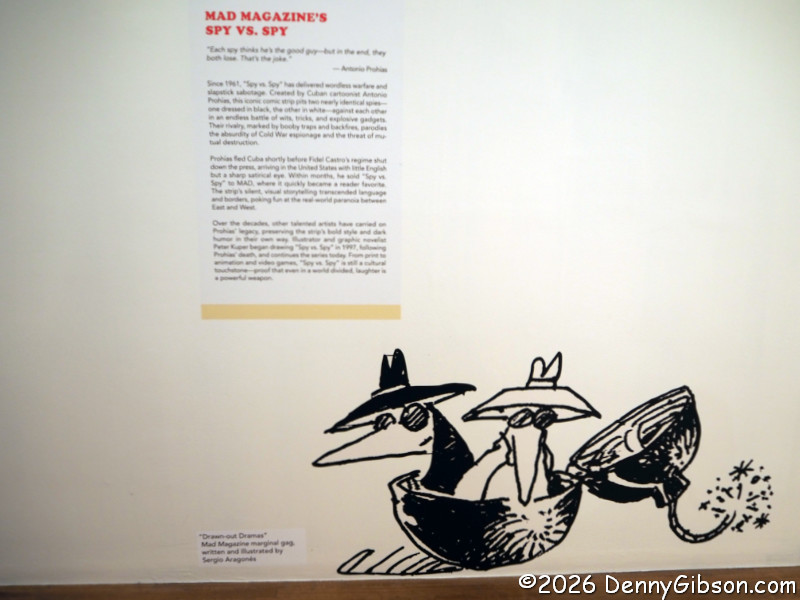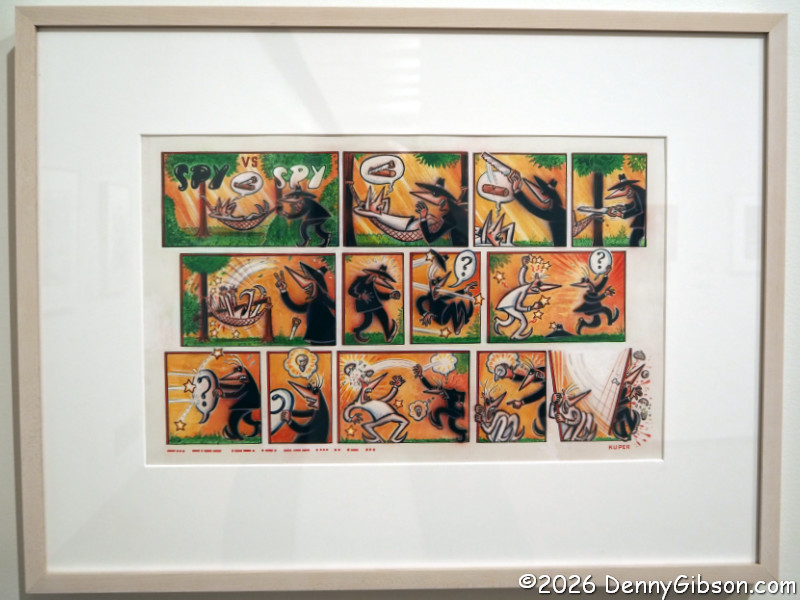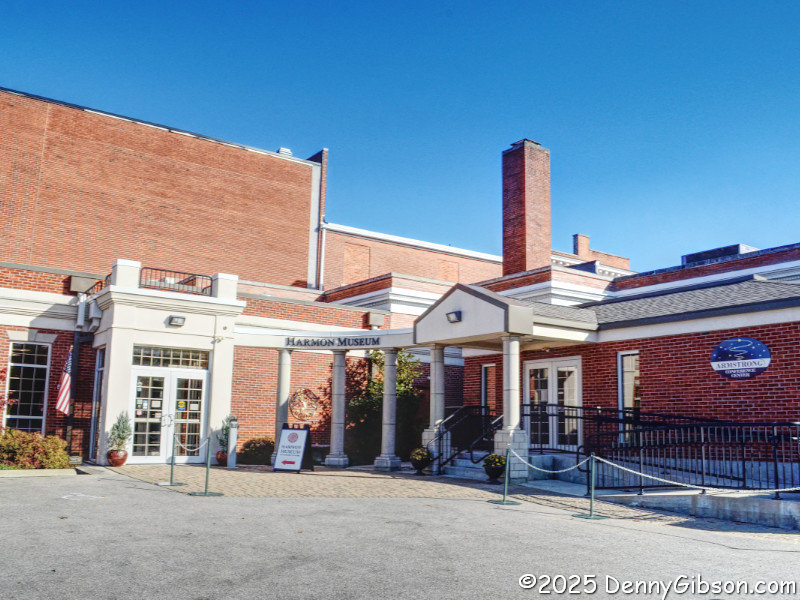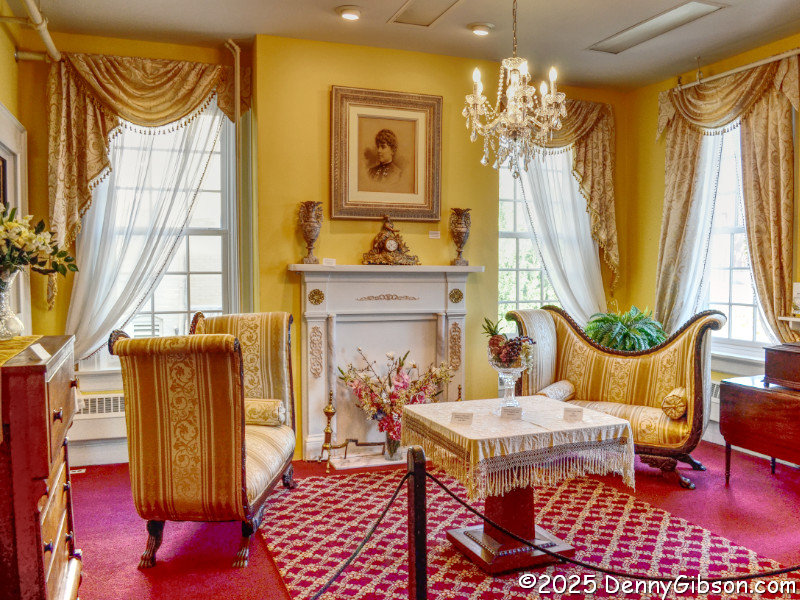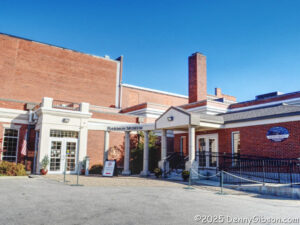
Harmon Museum
Lebanon, Ohio

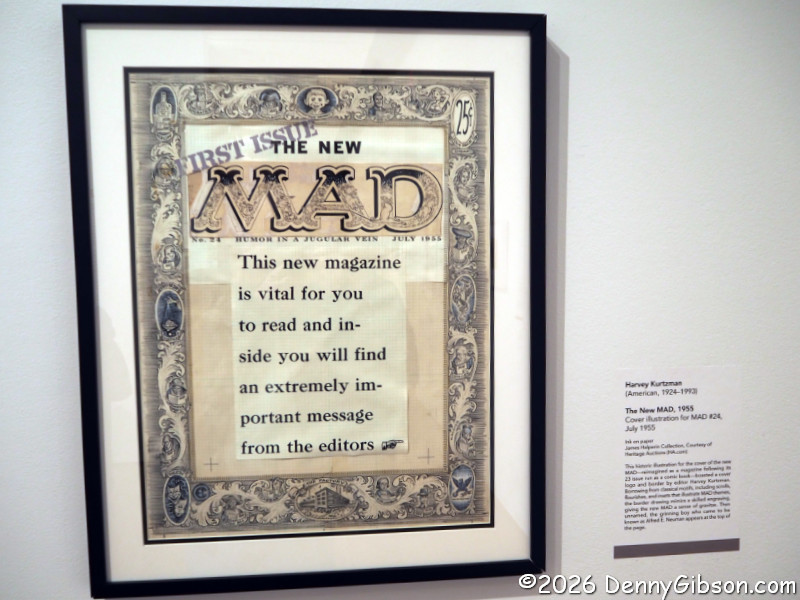
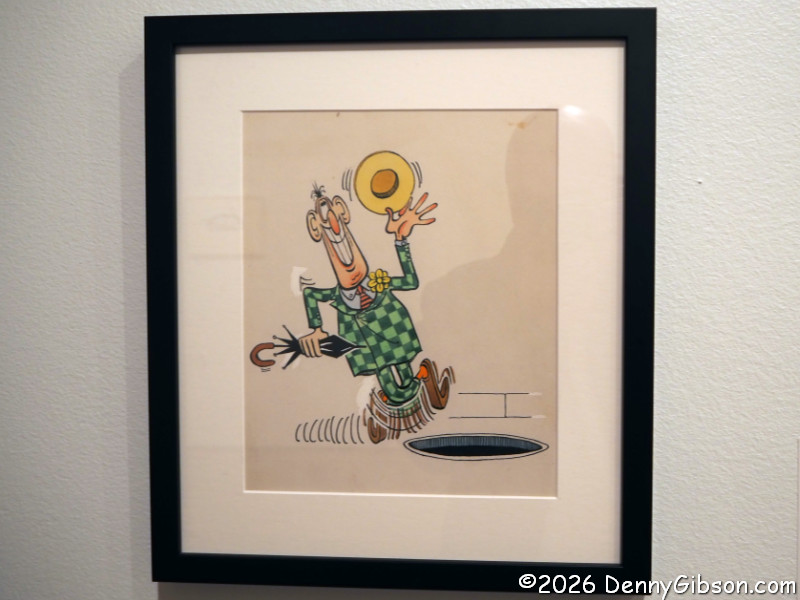
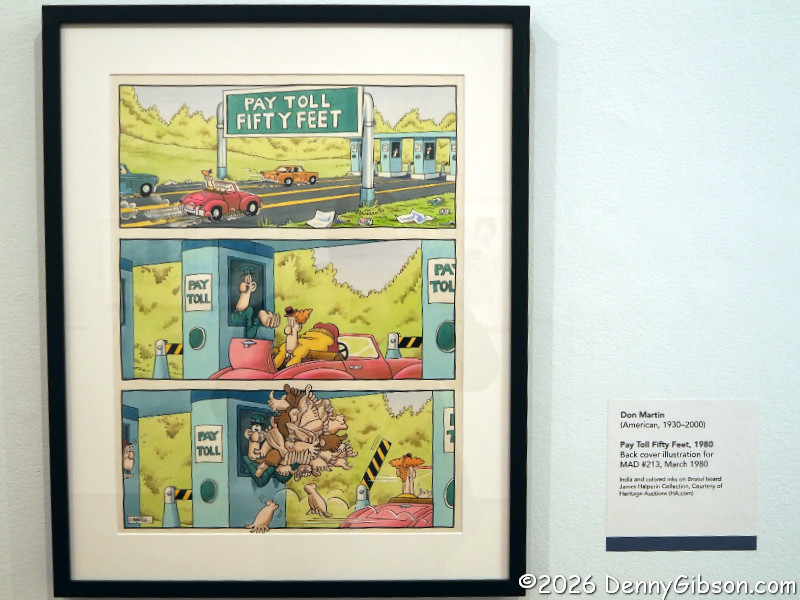
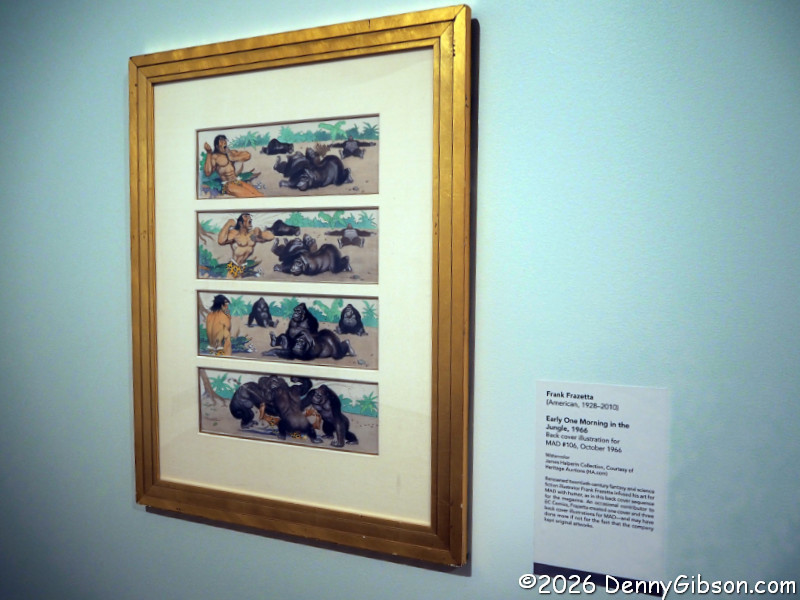
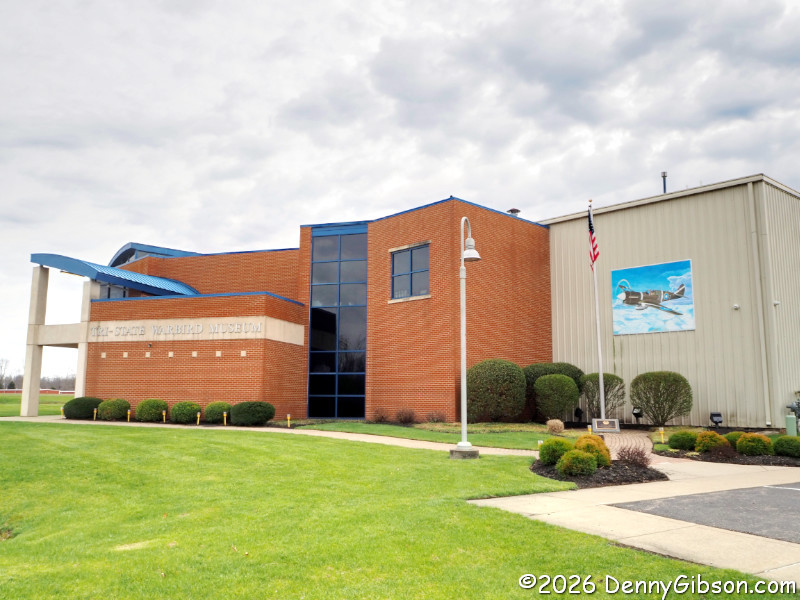
It might be apparent that I occasionally use a museum visit to feed a post for an otherwise idle week. And I’m sure it’s no surprise that I find some of those targets through various online searches containing the word “museum.” Without giving it too much thought, I’ve filtered out of the results museums that are too close or too familiar. I recently asked myself why. Why was I refusing to document visits to places I knew were interesting simply because they were not new discoveries? I had no answer, which means I now have a few not-new-to-me candidates for future idle weeks. Here’s the first: Harmon Museum, just one county and a dozen miles from home.
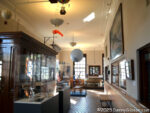
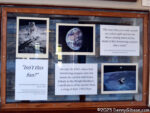
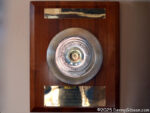
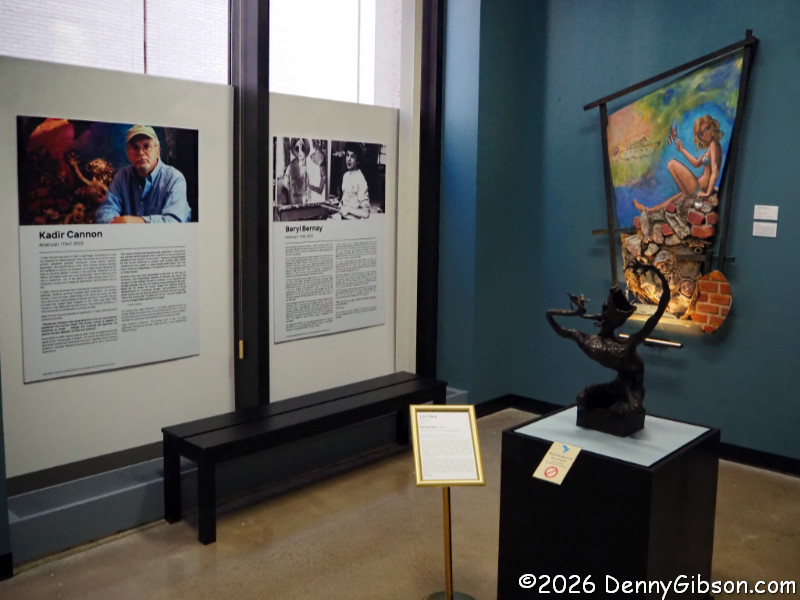
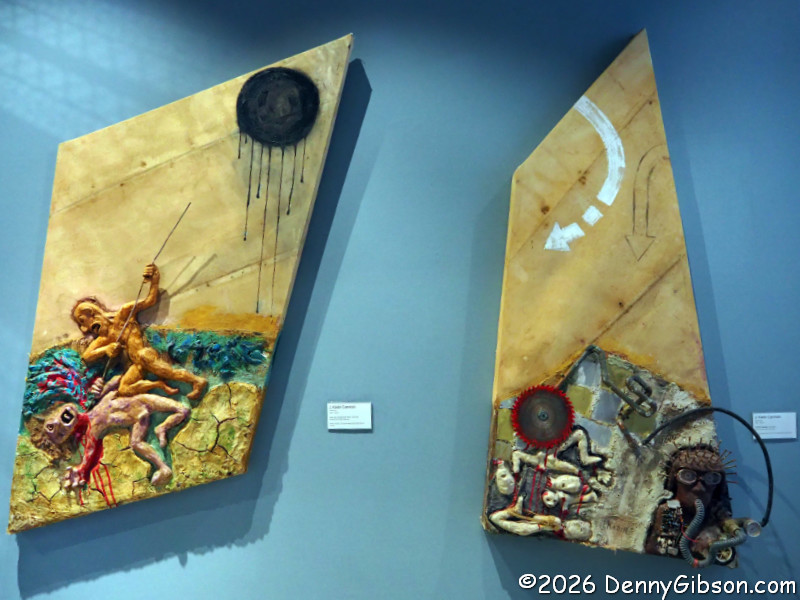
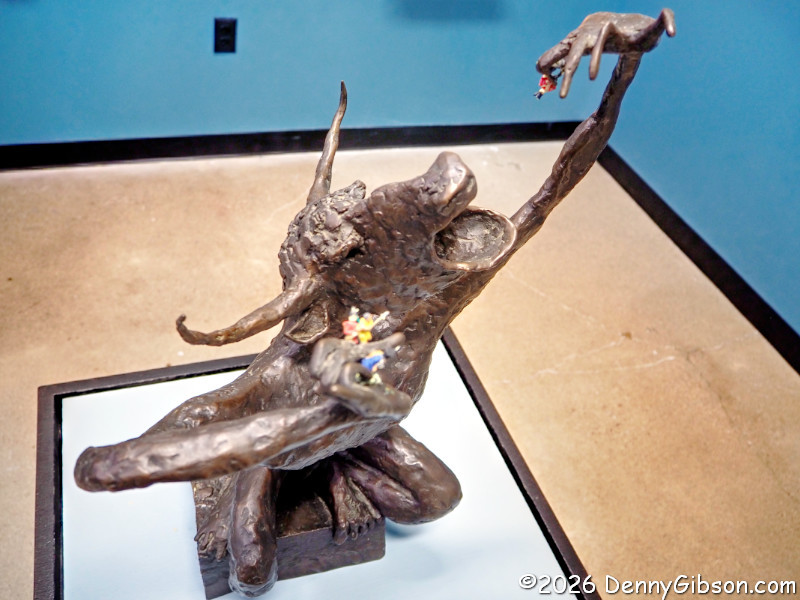
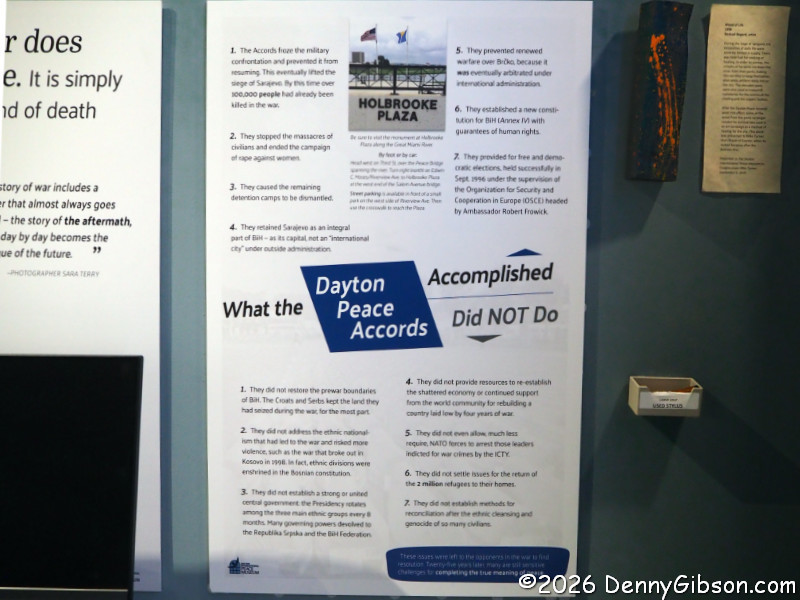
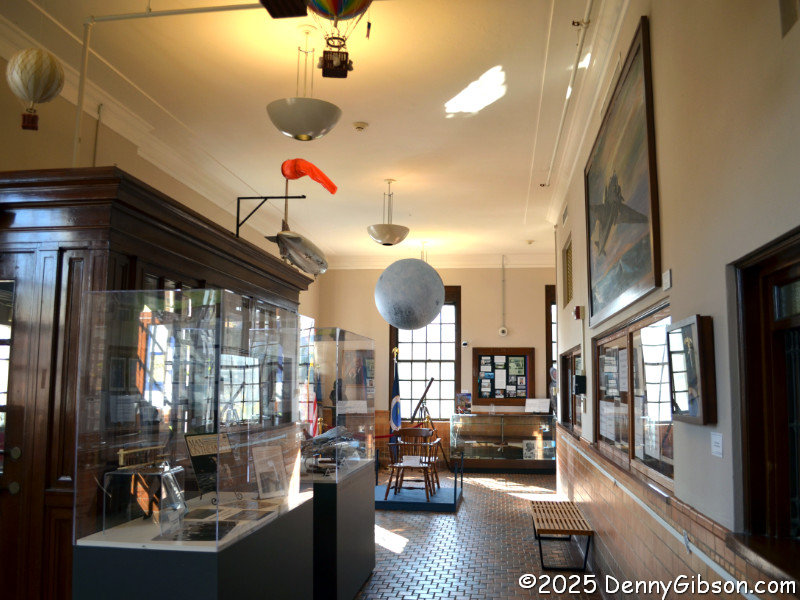
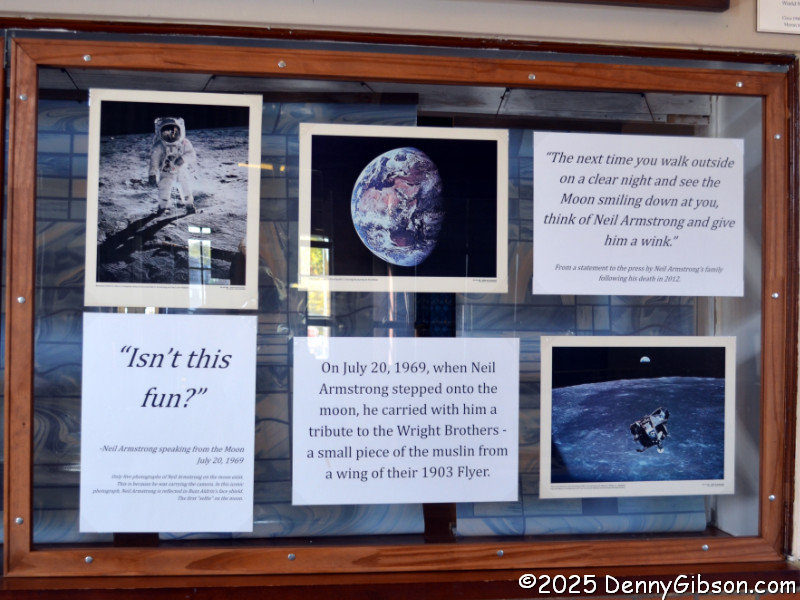
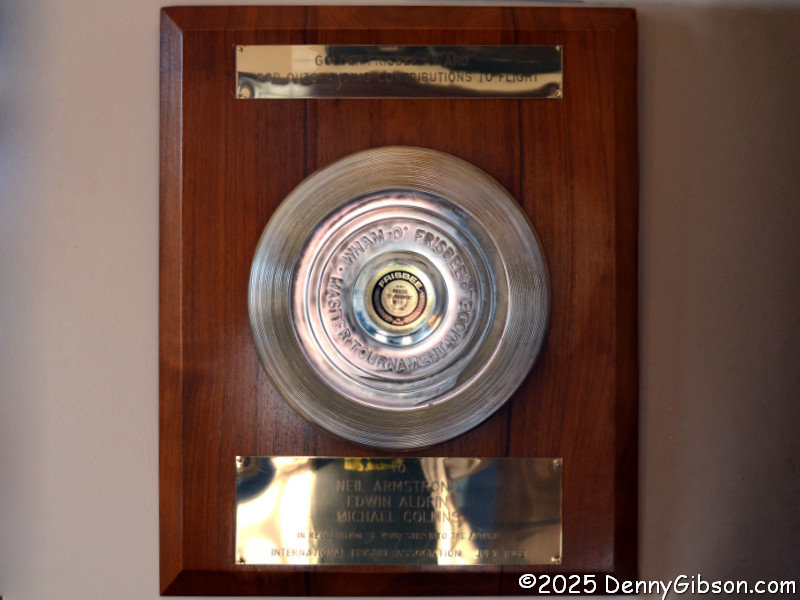
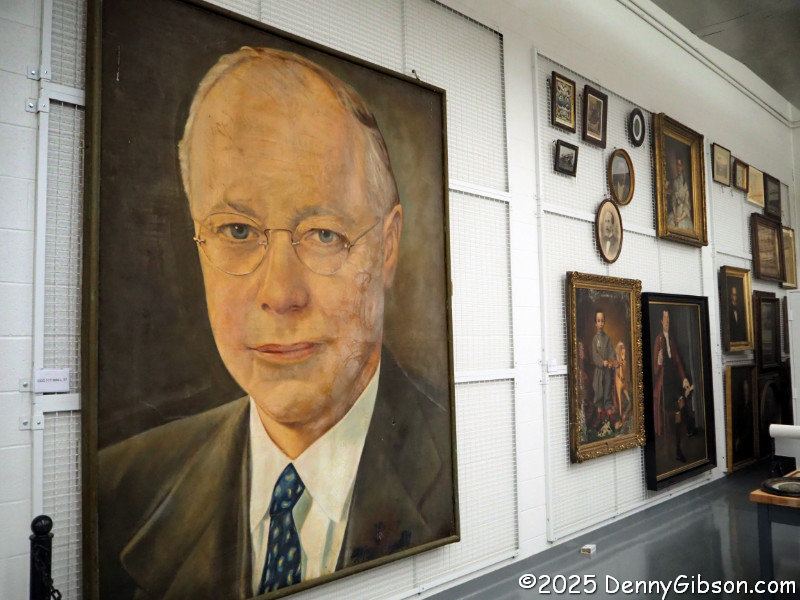
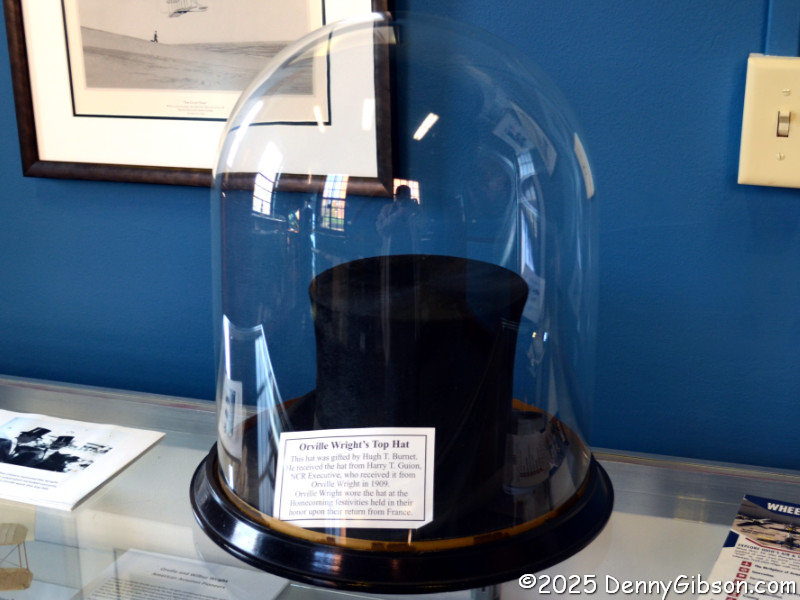
The first gallery inside the entrance is filled with art, and no photos of the wonderful paintings and sculptures on display are permitted. The art gallery leads to the Armstrong Conference Center, housed in the attached former post office. Two ladies were meeting at one of the tables, and I quickly apologized for interrupting. They weren’t the least bit annoyed and paused their discussion to make sure I crossed the open room to see the aeronautics exhibit at the front of the building. Neil Armstrong spent his final years in Lebanon, and most of the items, including the golden Frisbee for his “step into the future“, are related to his life. Non-Armstrong-related items include Orville Wright’s hat. I had a very nice chat with the ladies at the table as I passed them on the way back to the main museum. One said that if I were still in the museum when they finished, she would point out a few of her favorite things.
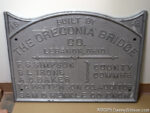
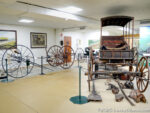
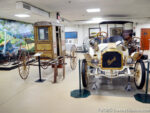
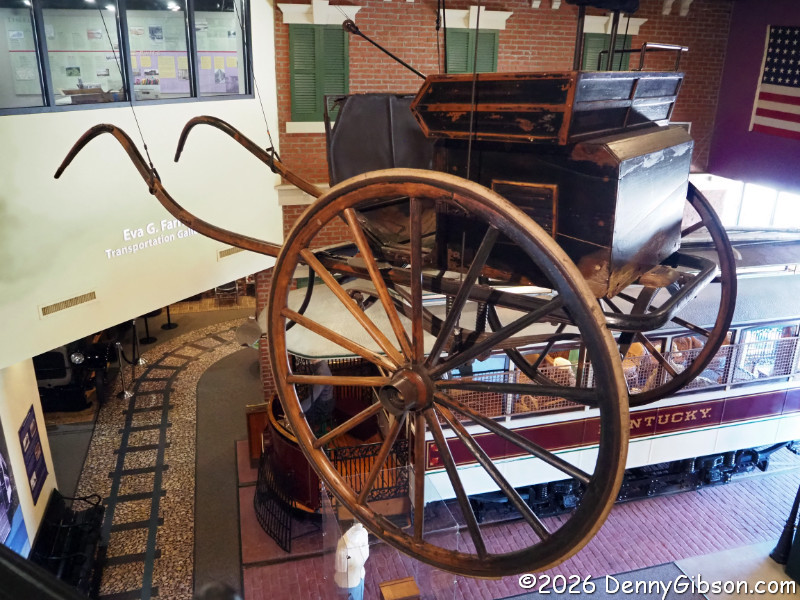
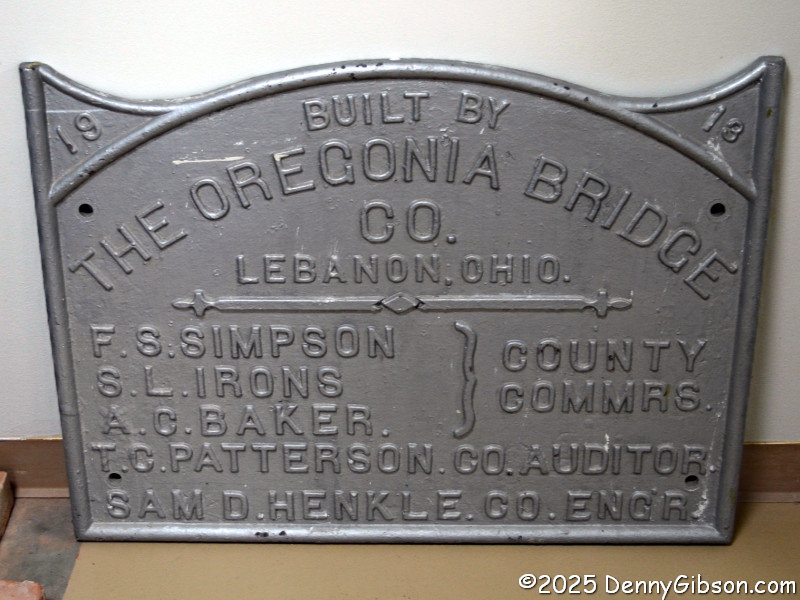
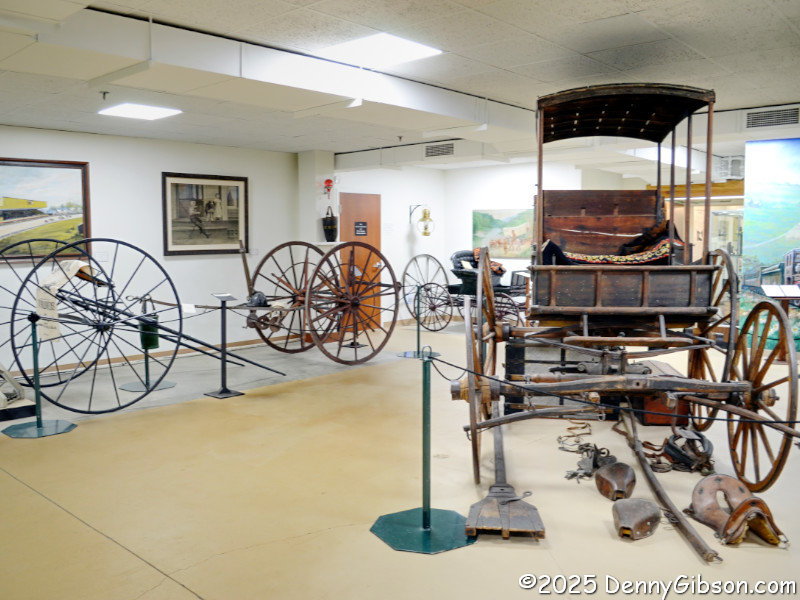
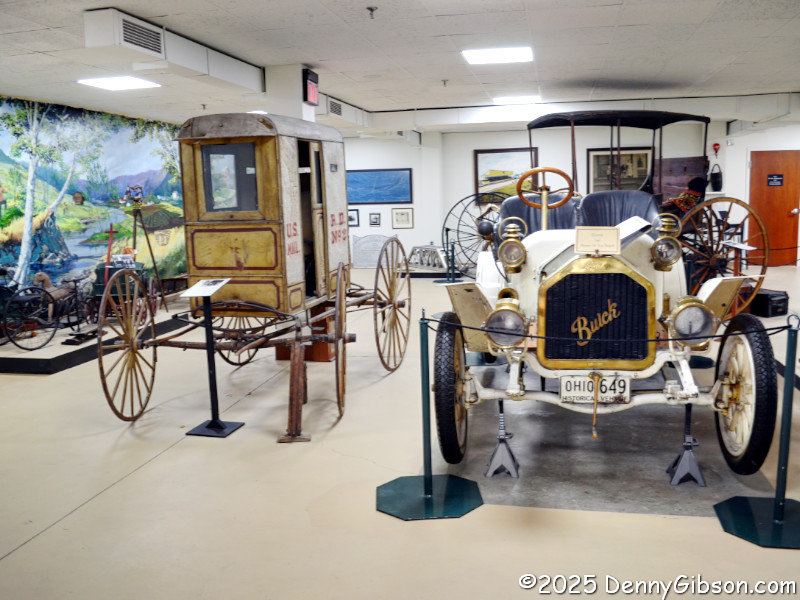
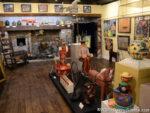
Back at the entrance to the main museum, I was greeted by a 1908 Buick Model D and an early U.S Mail wagon. Beyond them were some other early vehicles. I have seen quite a few signs like the one in the last photo in the wild, and I’m sure my road fan friends have too. The Oregonia Bridge Company was incorporated in 1896 in the small nearby town of Oregonia. Rapid growth prompted relocation to Lebanon in 1903.
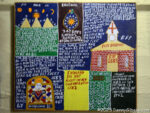
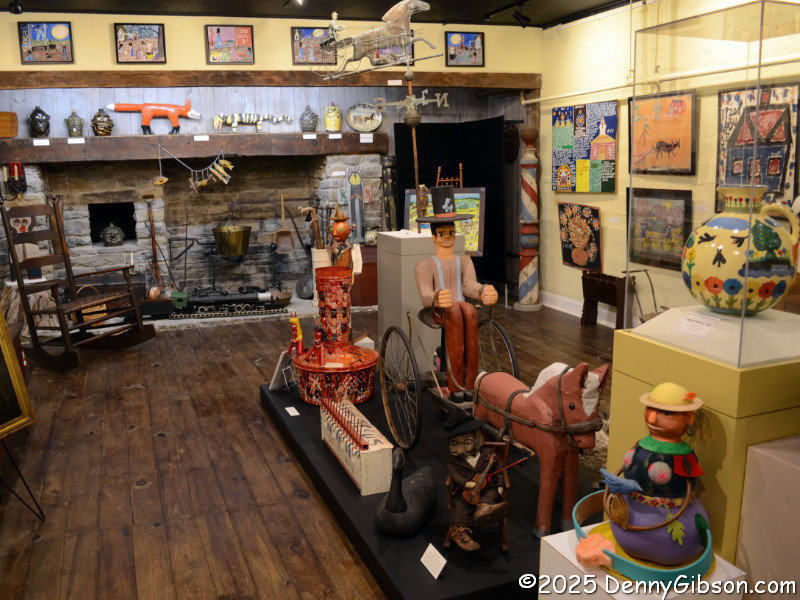
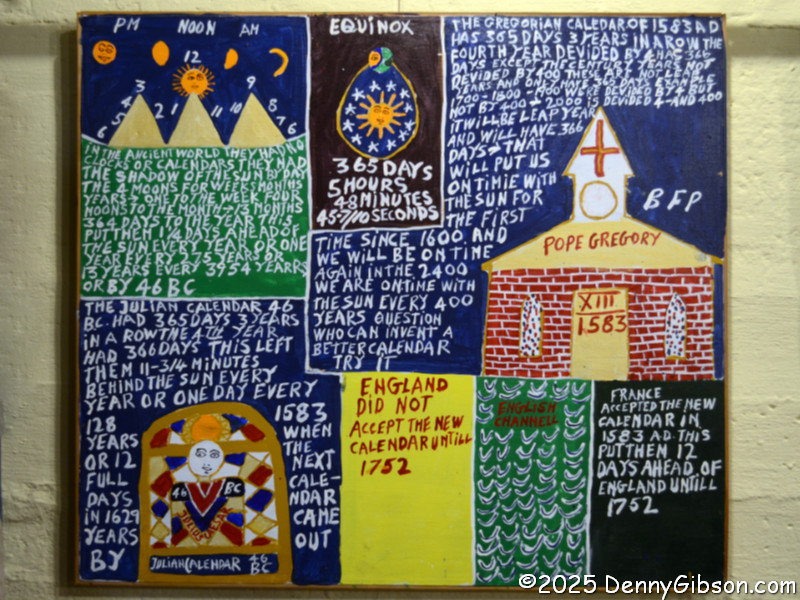
Next up was a room filled with some very impressive folk art. I found the painting in the far right corner, by Jimmy Lee Sudduth (1910-2007), particularly interesting. A few of this blog’s posts have touched on the difficulty of keeping our man-made calendars in sync with the cosmos, which is sort of the subject of the painting. As Mr. Sudduth notes, the sun and our calendar last matched up in 2000 and won’t do it again until 2400. Lucky to be alive to experience one such alignment, I guess.
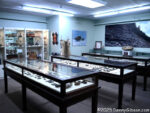
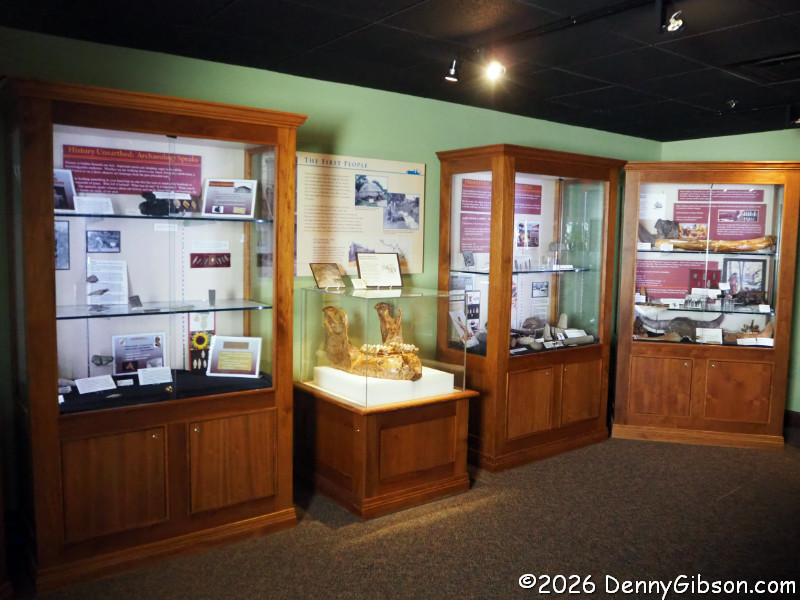
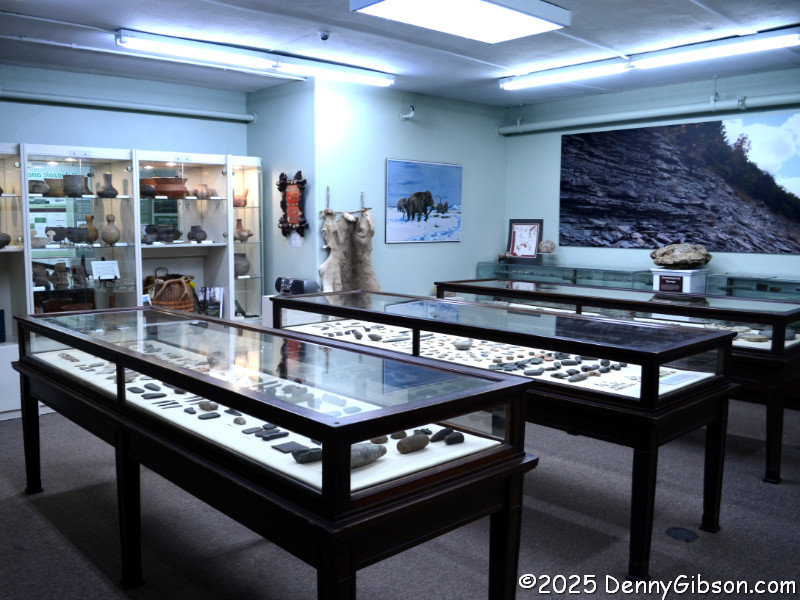
The adjacent room contained an impressive collection of locally found arrow and spear points, axe heads, and other prehistoric tools. It was here that Hope, the lady I met in the Armstrong Conference Center, caught up with me and told me that this was her favorite room in the building. She pointed out some items in the room and even demonstrated, short of a final launch, the workings of an atlatl.
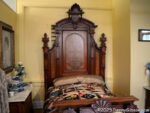
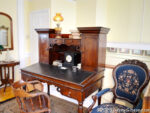
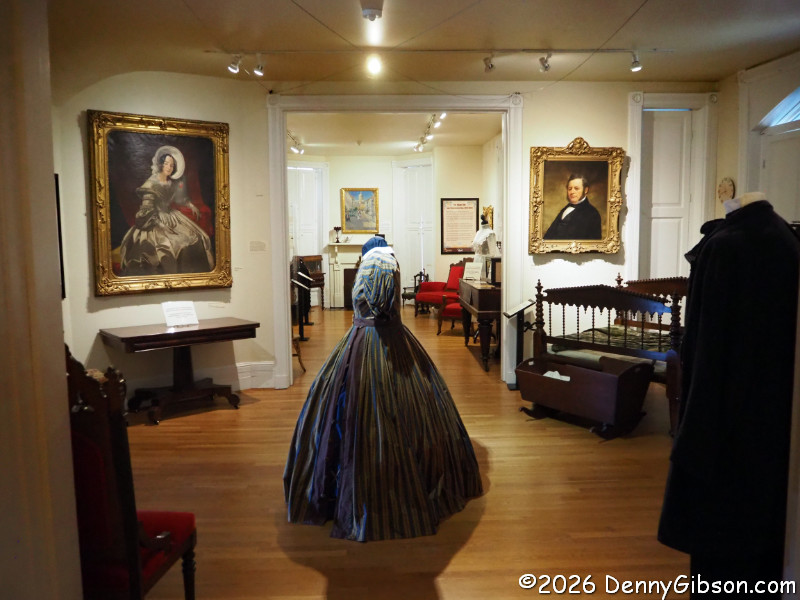
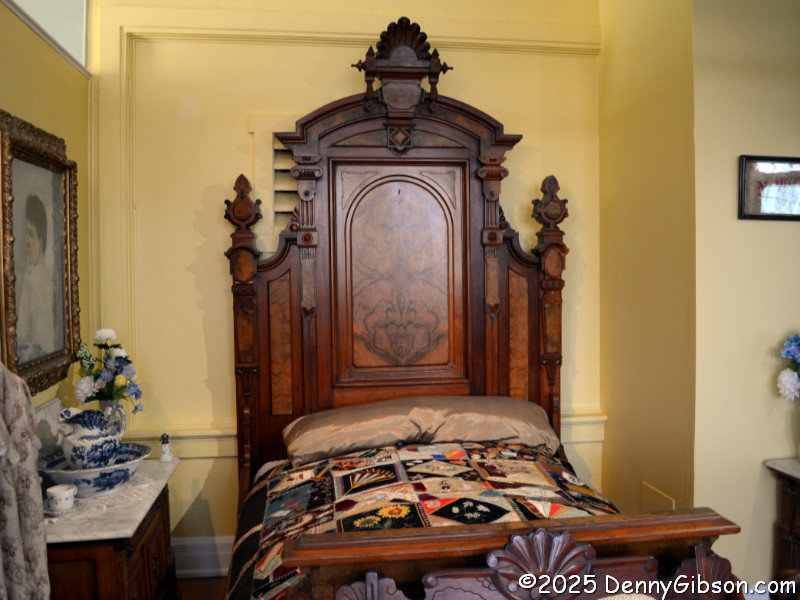
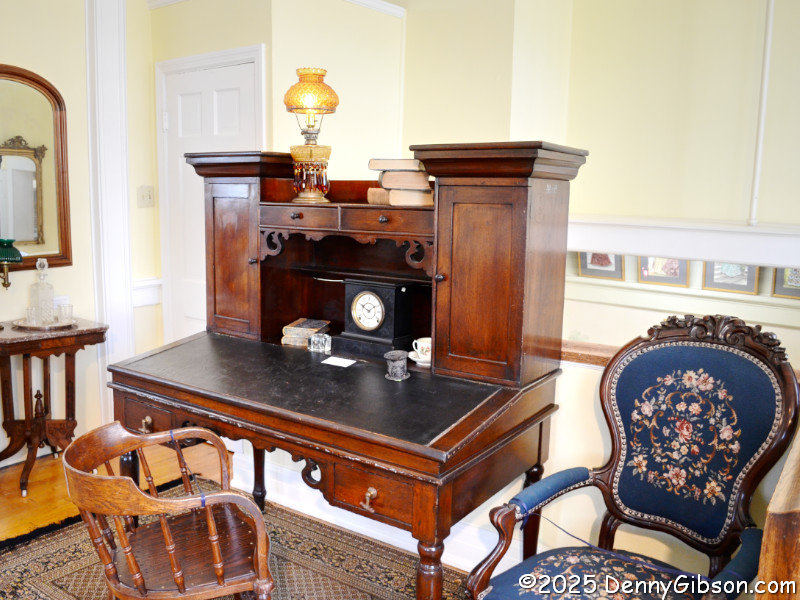
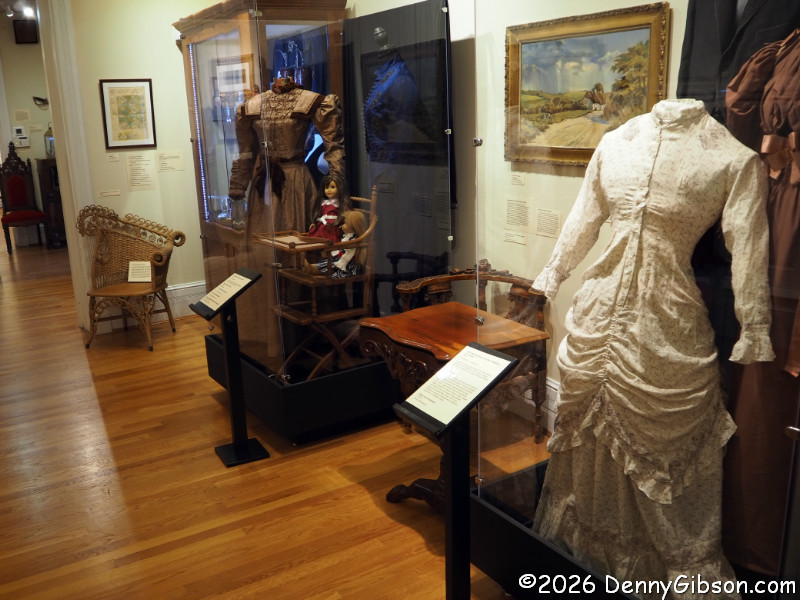
I was then treated to a guided “highlights tour” of the rest of the museum. As we moved upward through the exhibits, Hope called various items to my attention and shared some information about each one. This bed was a product of the Cincinnati Art-Carved Furniture Movement of the late 19th century. This was a rather major movement powered primarily by women, and something I previously knew absolutely nothing about. I guess this desk was not among Hope’s favorites, but it was among mine. Thomas Corwin was a Lebanon lawyer who had great success in politics. He served in both houses of the U.S. Congress and as the U.S. Secretary of the Treasury, along with several positions within Ohio, including governor. This desk is from his time as Ohio’s 15th governor (1840-1842).
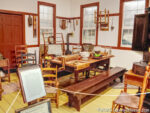
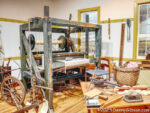
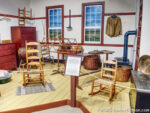
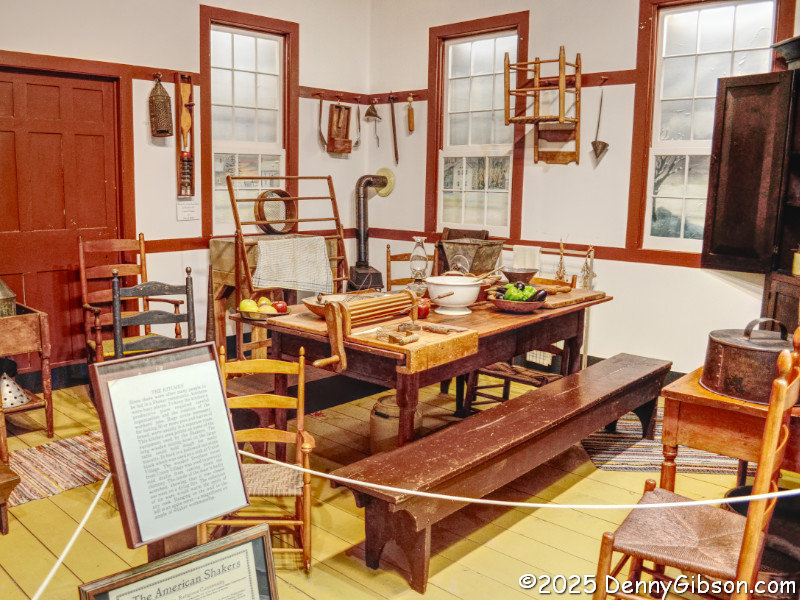
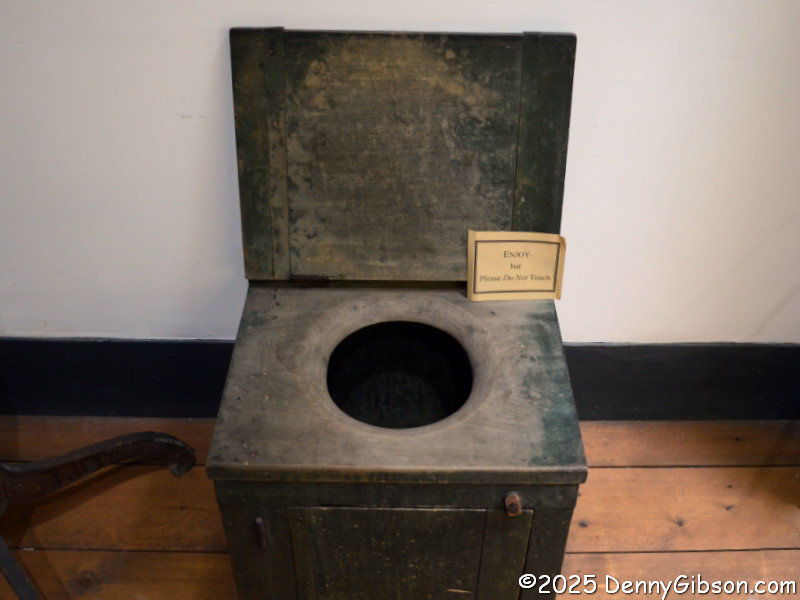
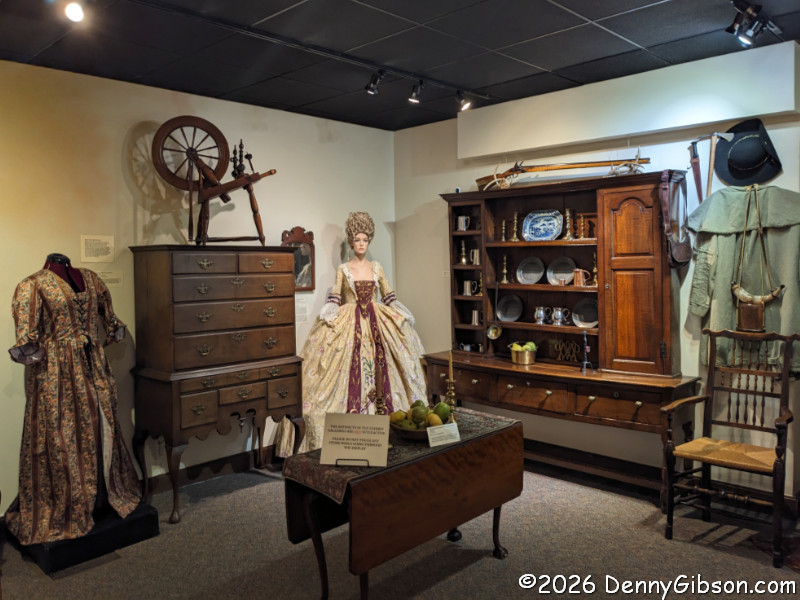
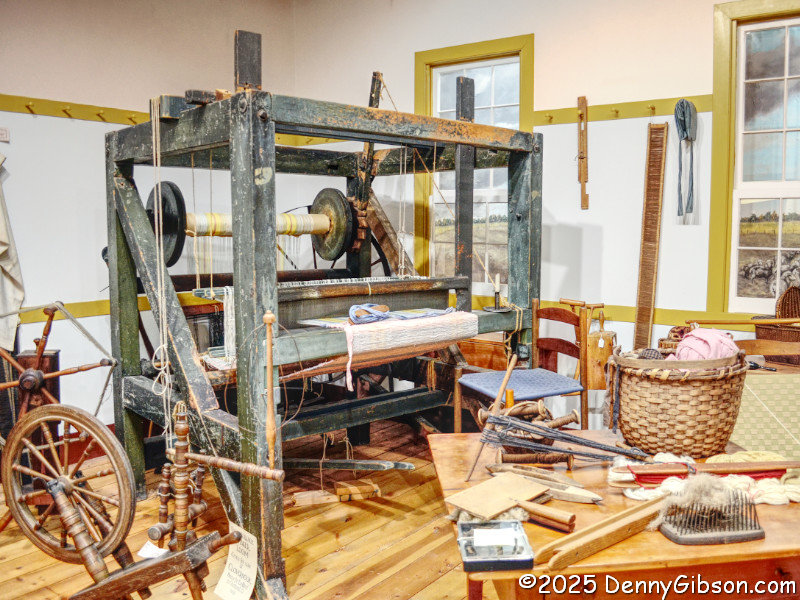
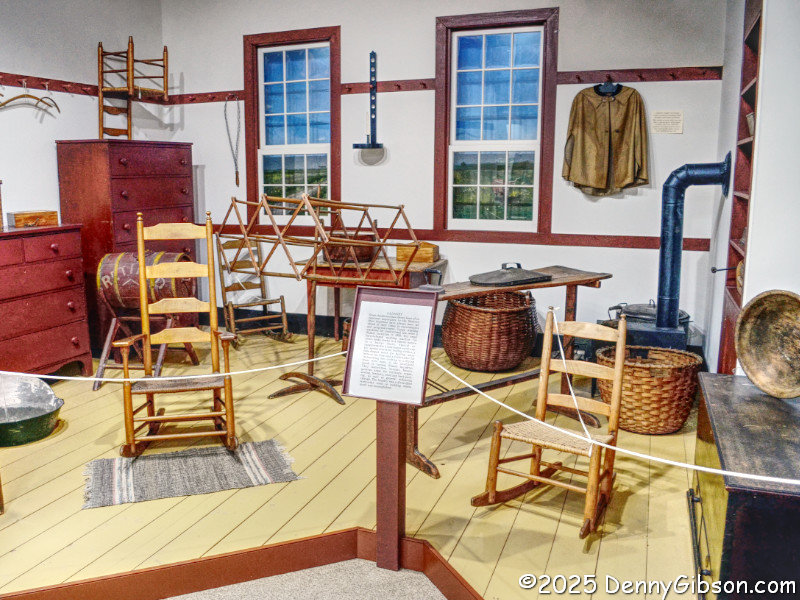
Following the “highlight tour”, I returned to Shaker Gallery on the top floor. In the early 19th century, a large colony of this communal religious group stood in nearby Turtlecreek Township, and the museum has many articles from there. Pictured are a laundry room, a textile room, and a kitchen. Curiously, one of the few items accompanied by instructions is one where they are probably not needed.
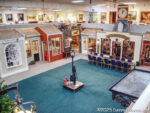
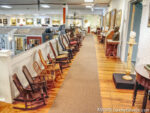
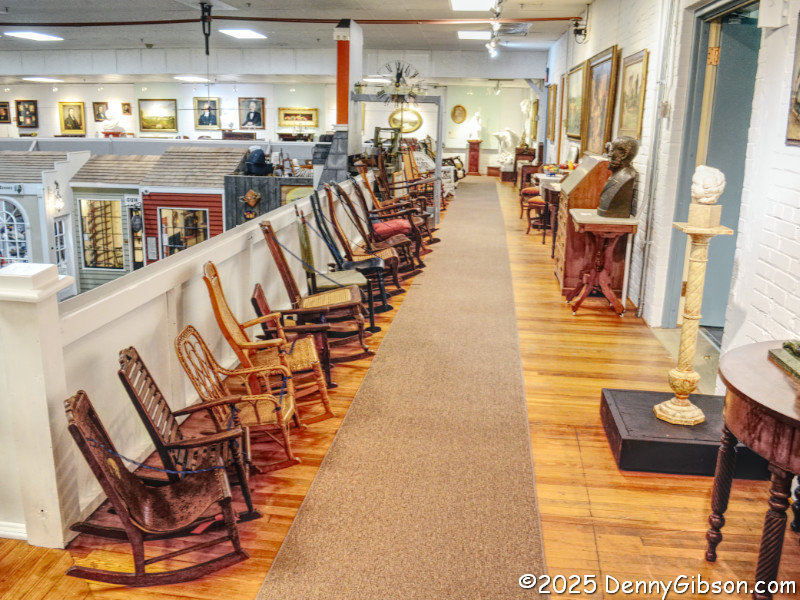
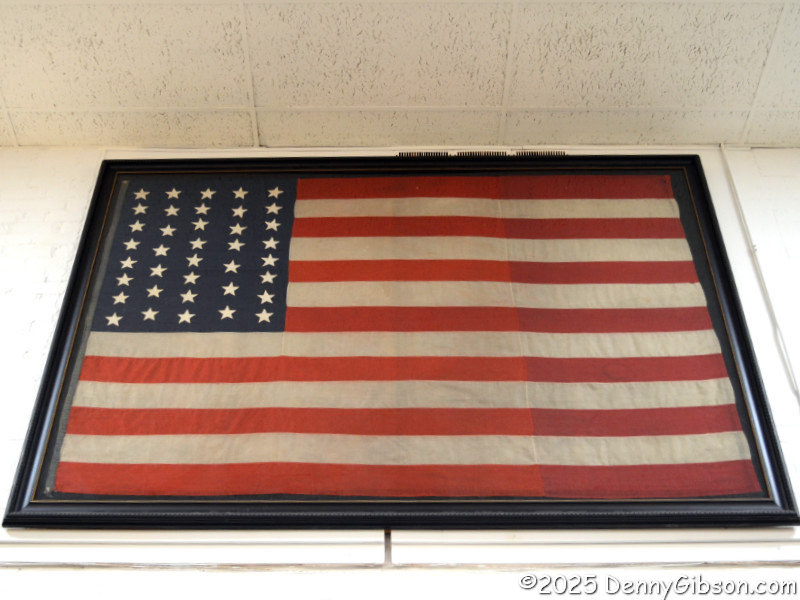
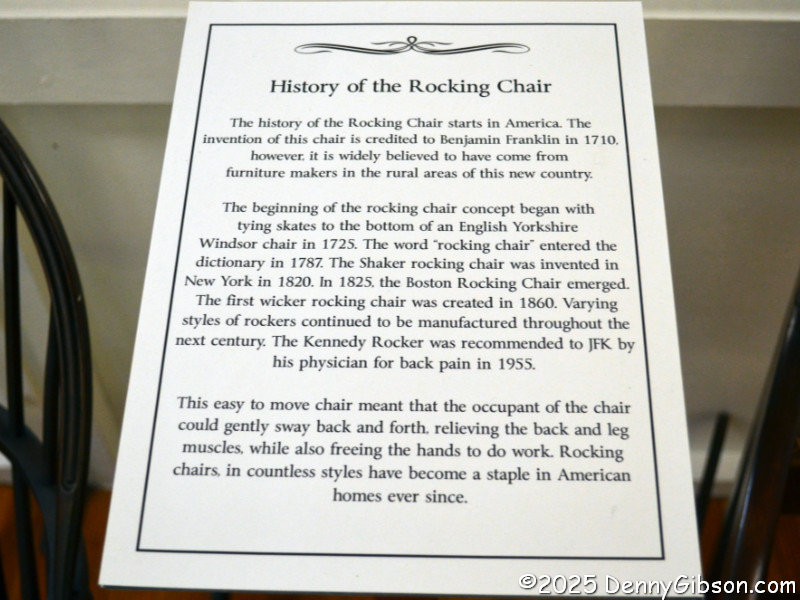
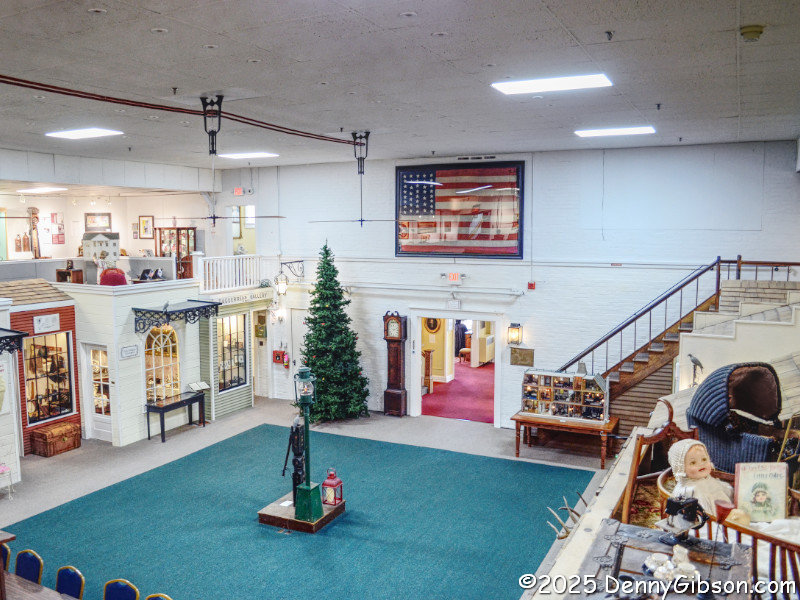
The building housing the museum was originally built as a gymnasium with a large space where basketball games and other athletic activities took place. Basketball hoops were once mounted where the clock and the 1876 38-star flag are now. The rocking chairs are among Hope’s favorites, and she commented that she thought this collection was one of the world’s largest when we passed it. According to this placard, rocking originated in America. I suppose it’s only natural that we eventually combined it with rolling.
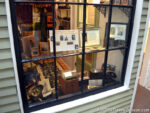
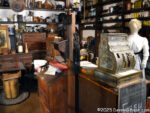
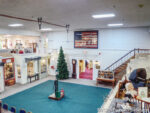
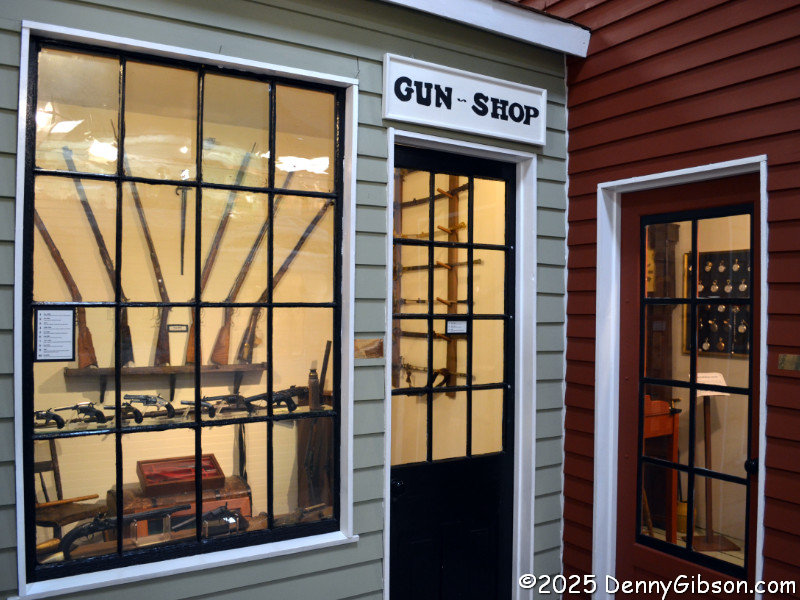
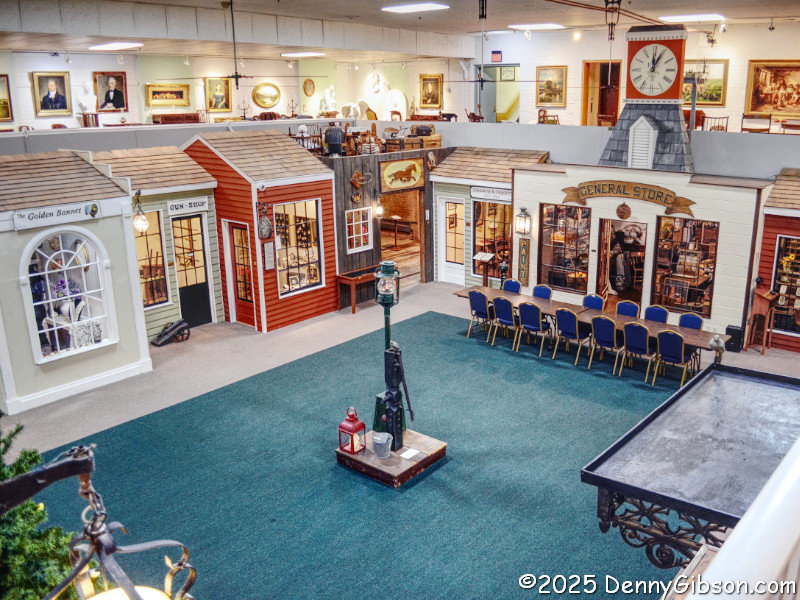
The space where basketball was once played is now surrounded by several shops, forming a sort of old-time town square.
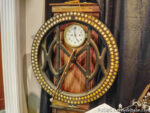
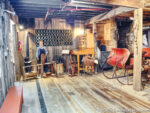
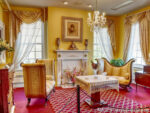
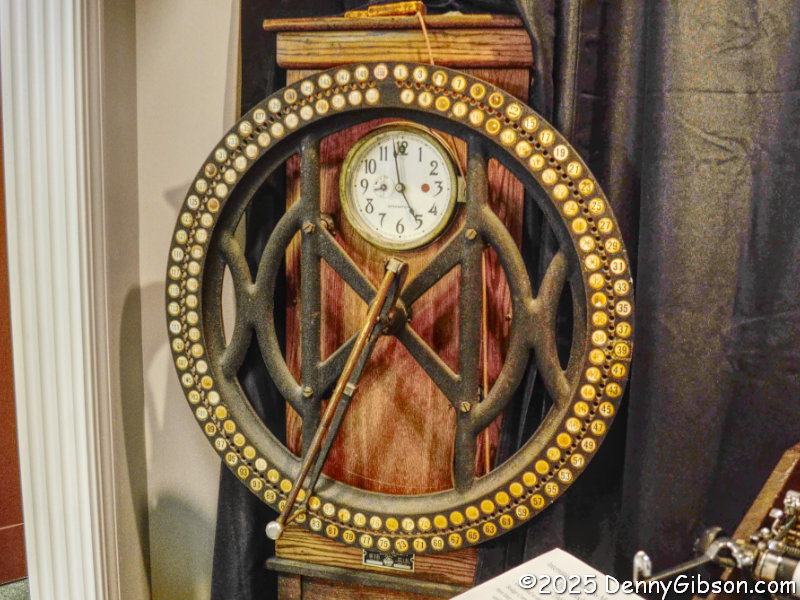
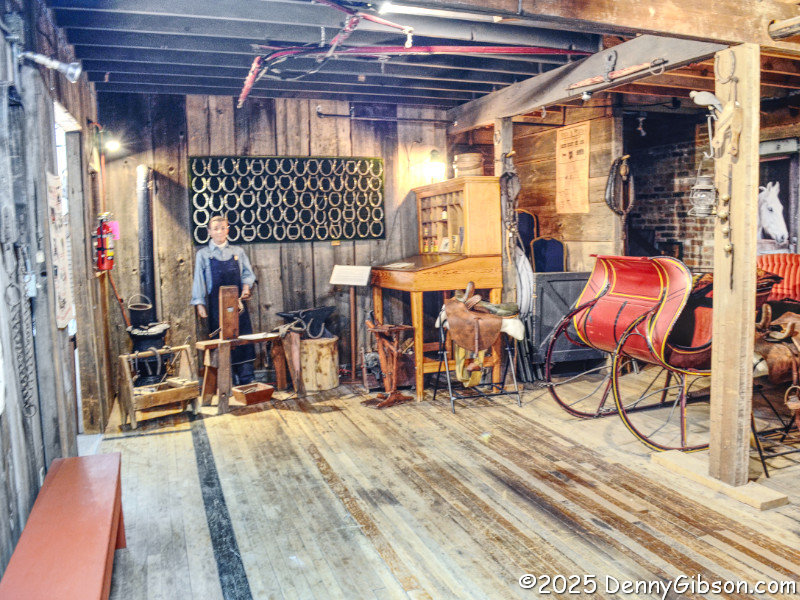
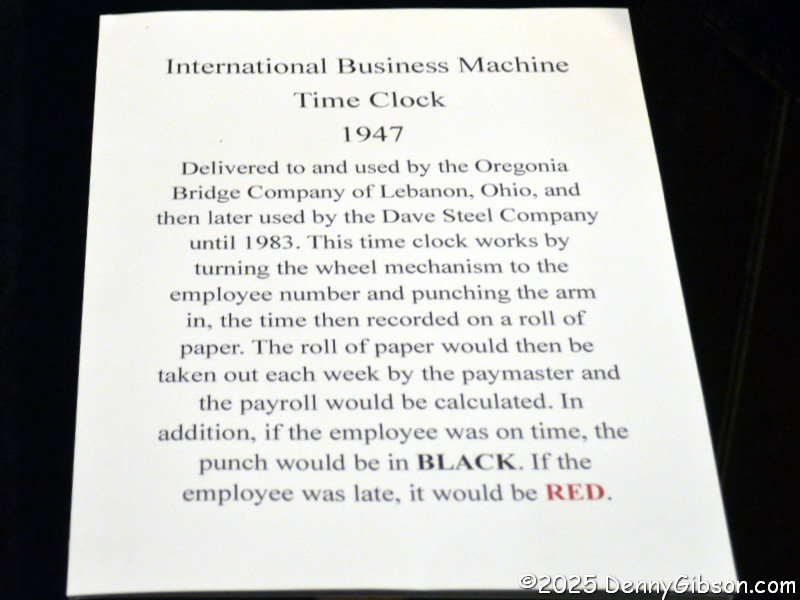
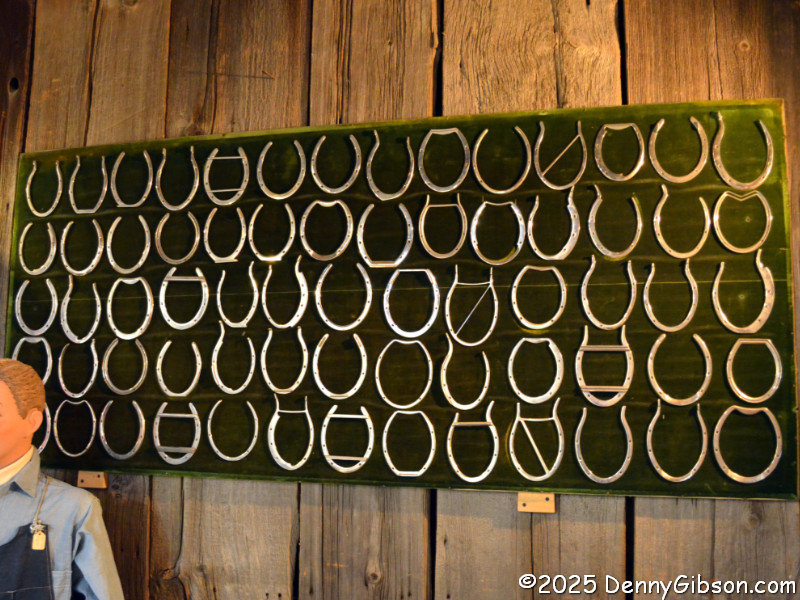
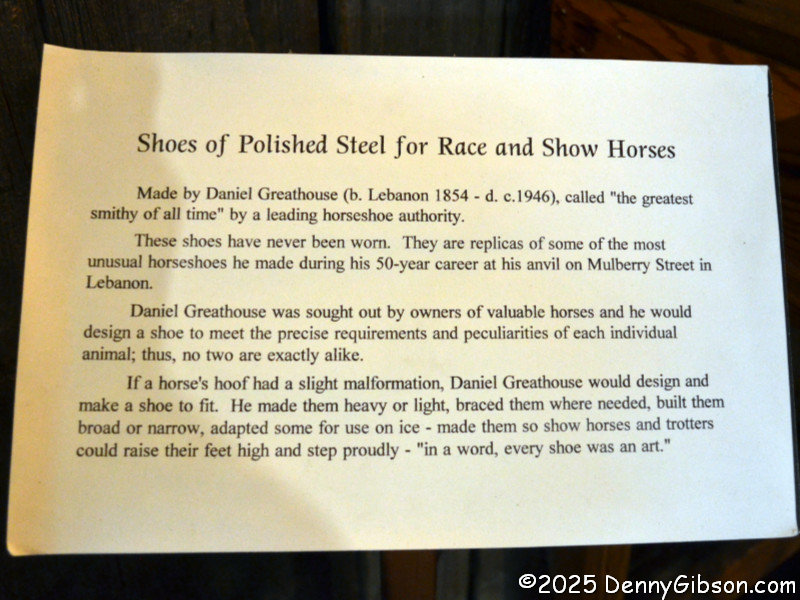
The museum is well organized, but there is no single correct path through it. That’s even more the case when you make a pass taking advantage of someone’s favorites before falling into your own meandering. There was very little coherent sequencing in the preceding photos, and there is even less from here on out. This is simply a trio of my own favorites. The IBM time clock was purchased in 1947 by the previously mentioned Oregonia Bridge Company. Read about it here. The most interesting thing for me in the blacksmith shop is the framed shoes on the wall. Read about them here. The furniture in the last photo came from the Glendower Historic Mansion. I learned today that the mansion was home to the first incarnation of the Warren County Historical Society Museum. Over the years, it was owned and administered by the WCHS and the Ohio History Connection. Most recently, the WCHS was the owner. It closed in 2022 and is now a private residence. I visited it during a period when OHC owned it.
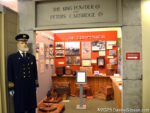
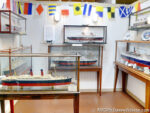
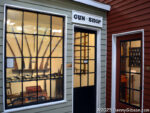
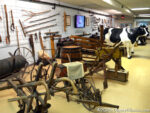
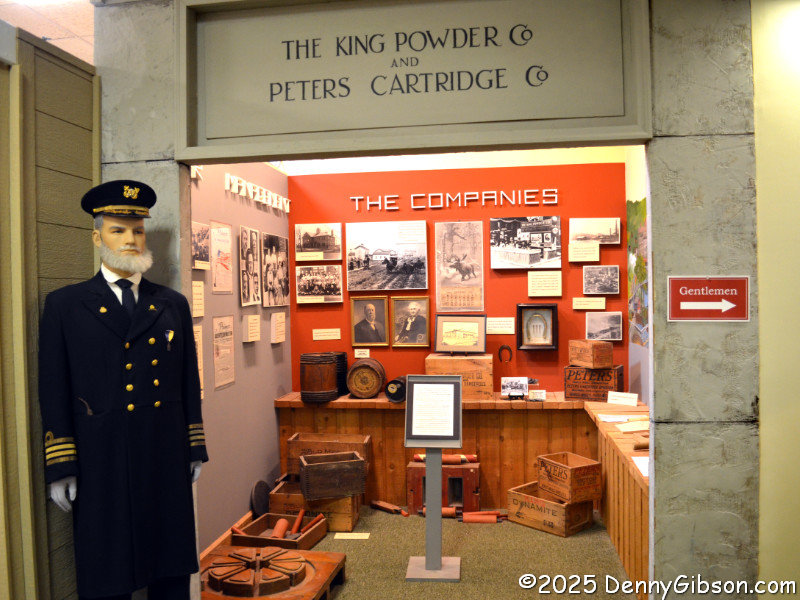
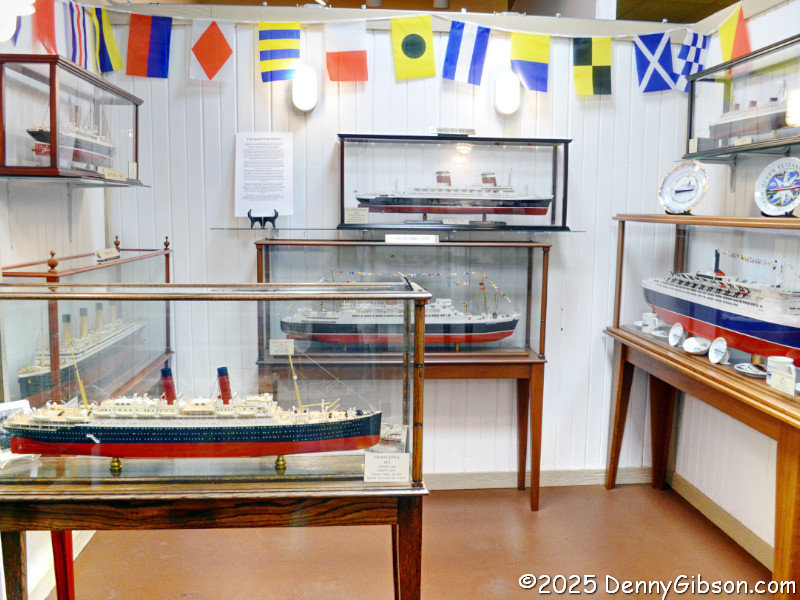
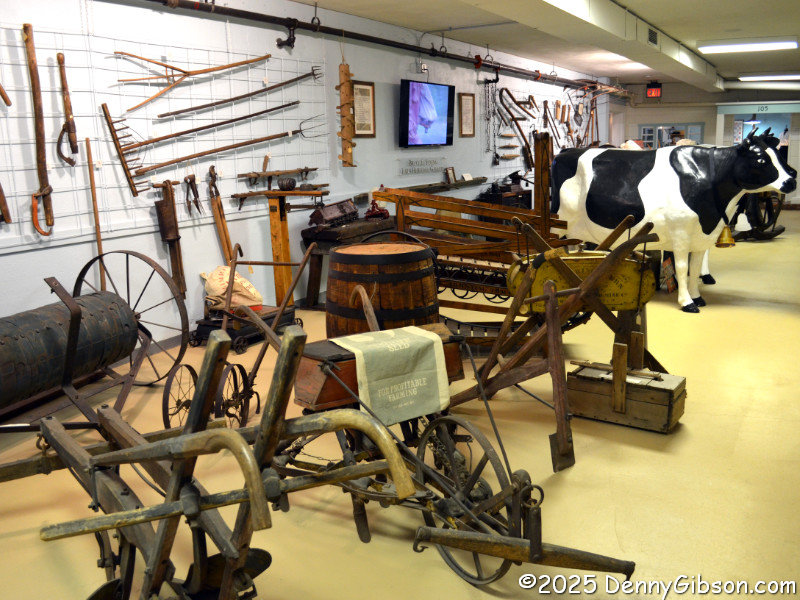
That there is a goodly amount of farming gear on display is not a surprise. That there is a collection of phenomenal ship models is. Finding a display about gunpowder and cartridge manufacturing might surprise some, but not anyone really familiar with the area.
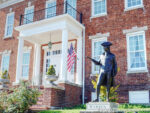
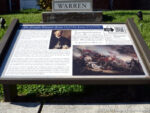
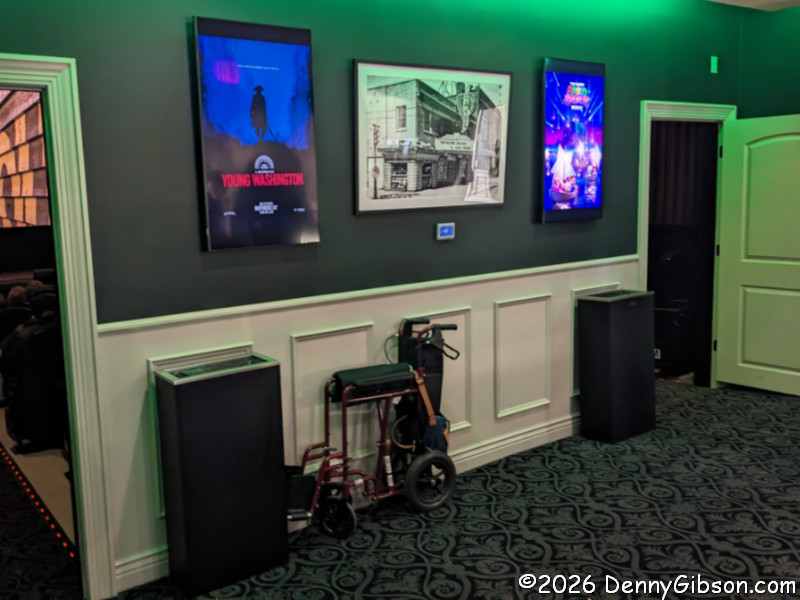
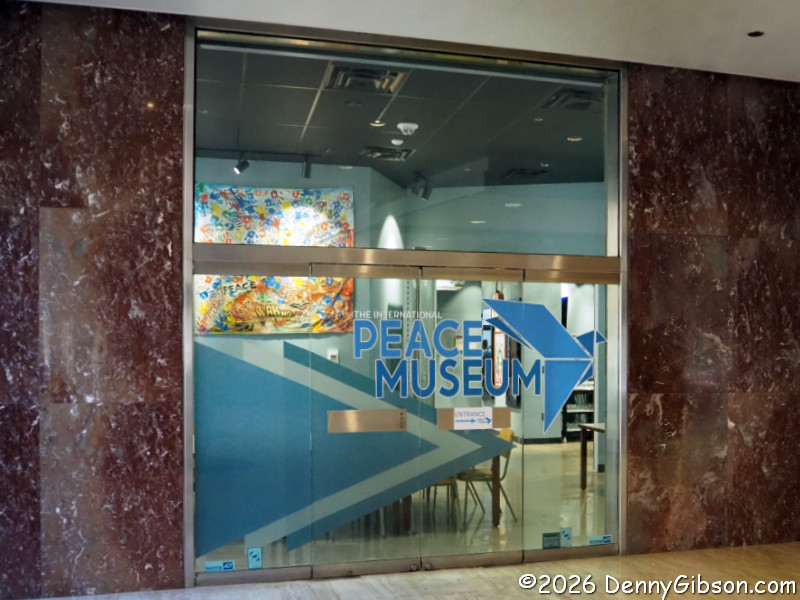
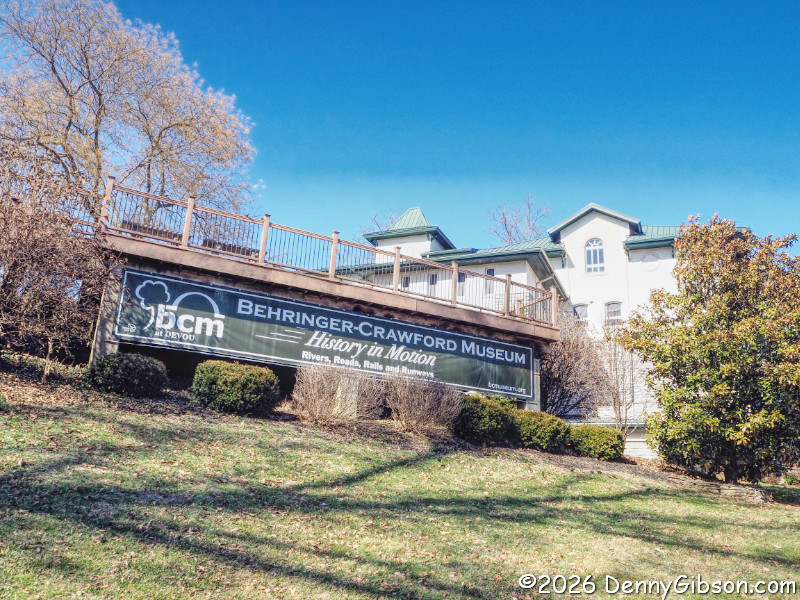
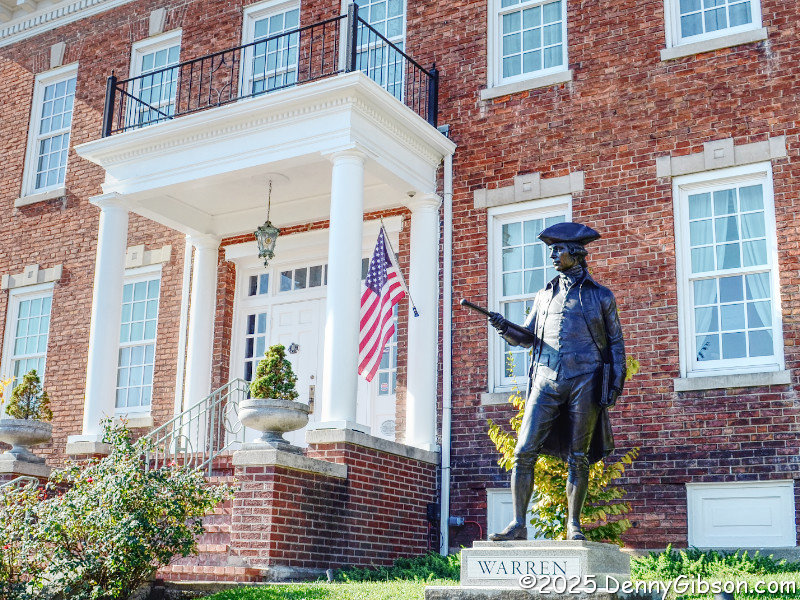
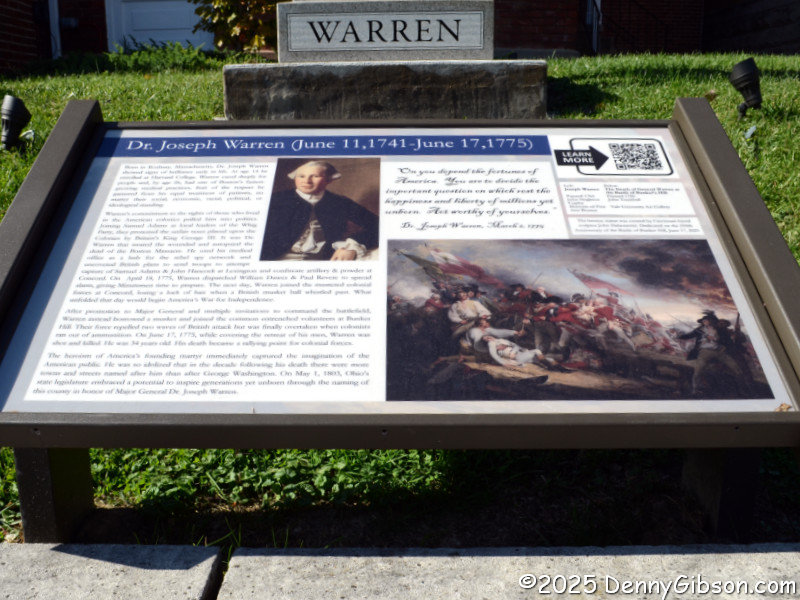
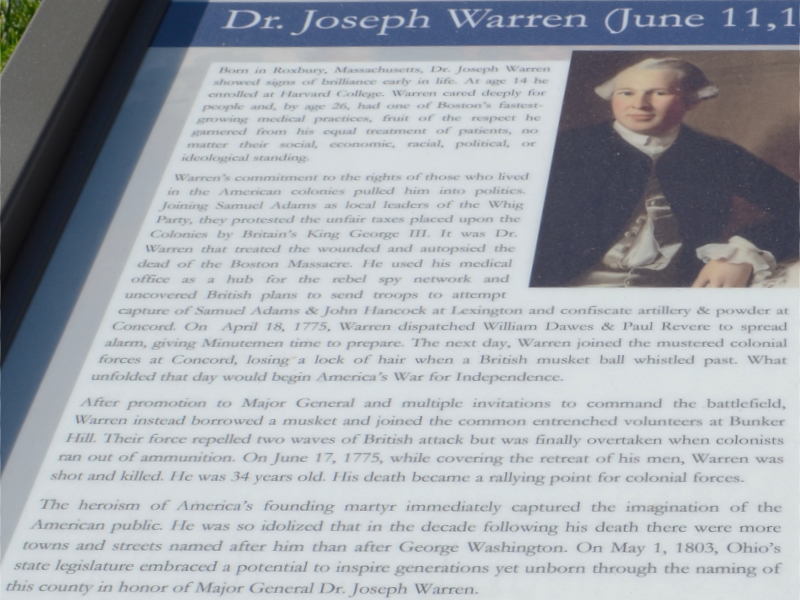
The entrance pictured at the top of this article is located at what might be considered the rear of the building, where it is conveniently near a parking lot. The front of the building faces Broadway, and that is where this statue of Warren County’s namesake, Dr. Joseph Warren, stands. The statue was dedicated just months ago on the 250th anniversary of Dr. Warren’s death at the Battle of Bunker Hill on June 17, 1775. A somewhat more readable version of the text on the sign is here. The QR code at the sign’s upper right leads here.

Not Long Ago. Not Far Away.

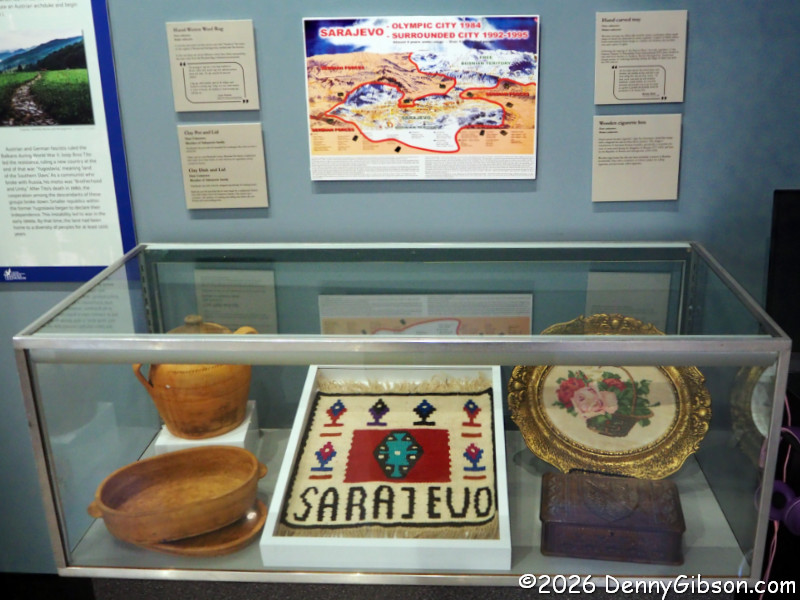
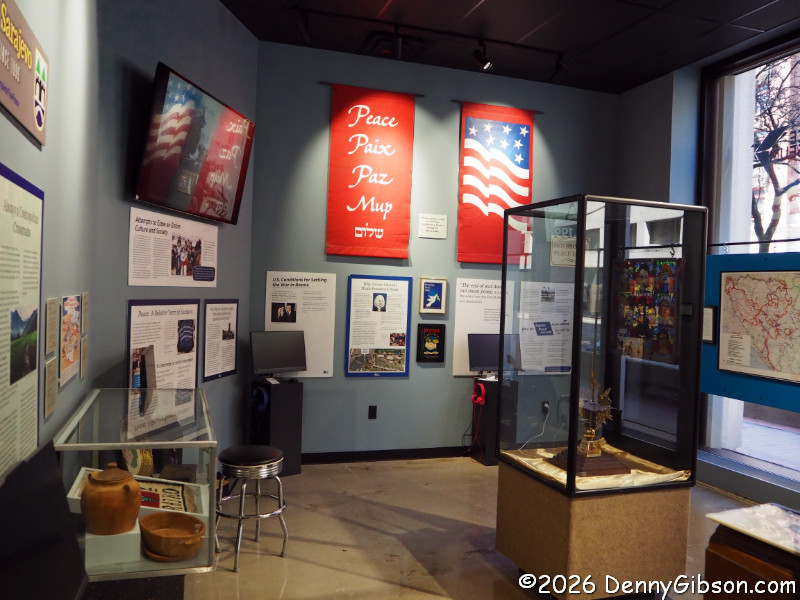
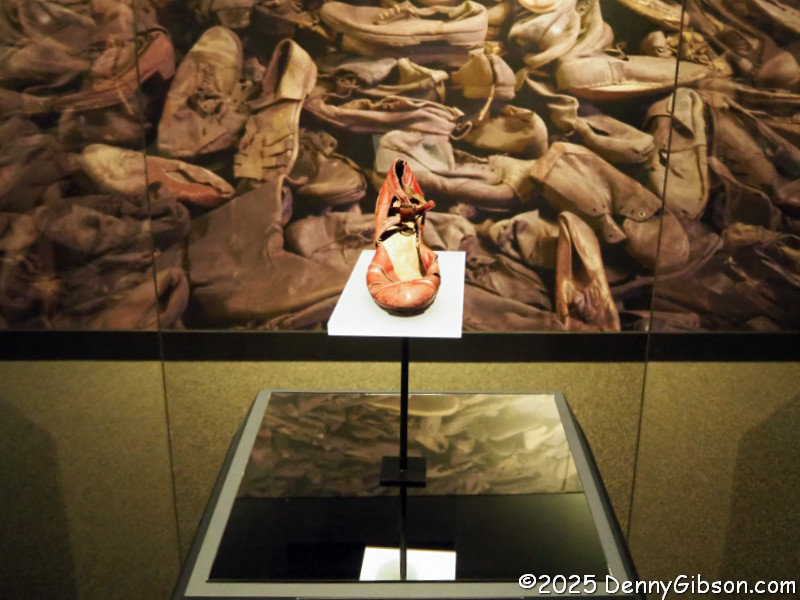
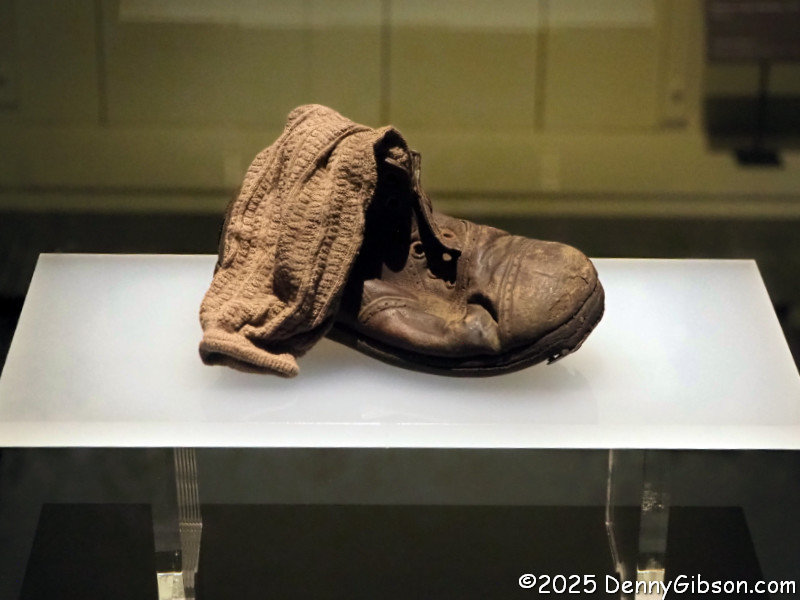
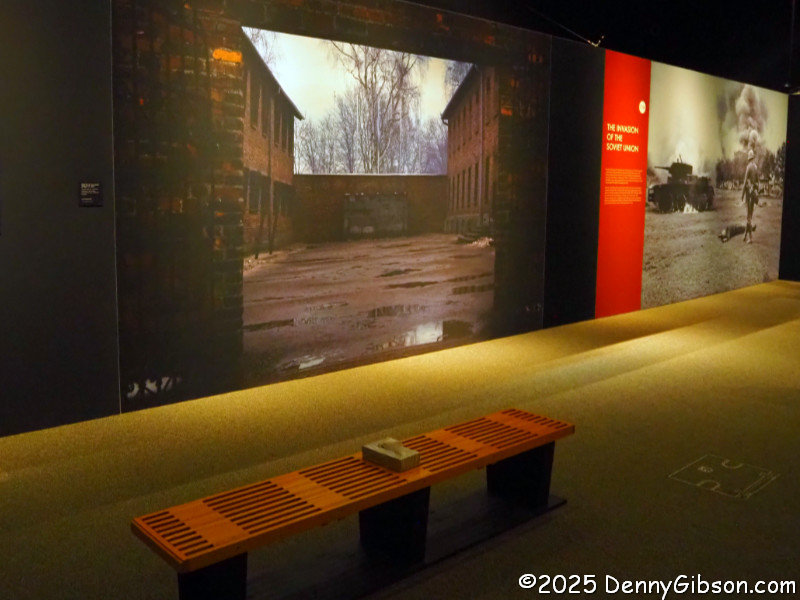
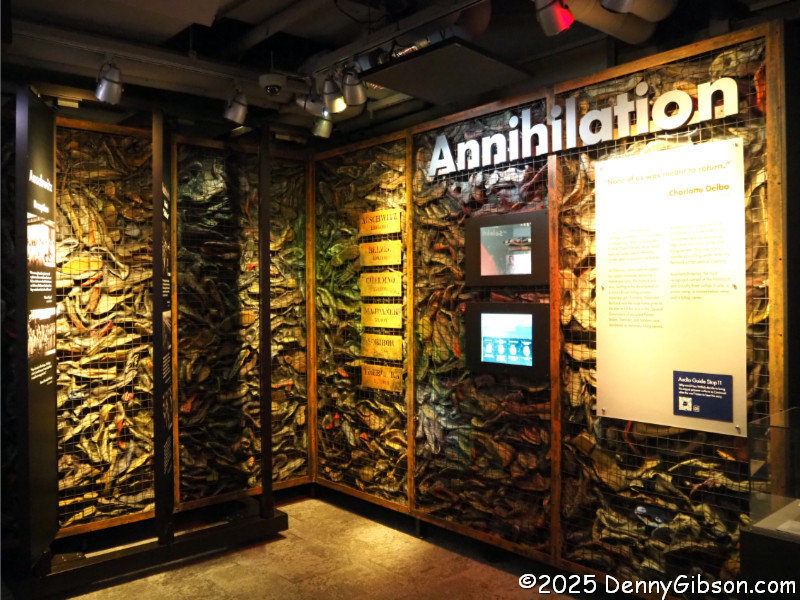
On Saturday, October 18, “Auschwitz. Not long ago. Not far away.” opened at the Cincinnati Museum Center. I attended on Wednesday. The red shoe pictured at right is one of the first items visitors see when they enter the exhibit. Photos of the shoe, backed by the image of countless other empty shoes, have been used to promote the display. The wall-filling image boggles the mind as the realization that the owners of all those shoes walked into Auschwitz but never walked out slowly forms. The mind nearly breaks realizing that the photo contains just a fraction of such shoes.
Having seen pictures of that red shoe, and knowing that this was “the largest collection of artifacts from Auschwitz outside of Europe”, I probably could have predicted the question that formed as I moved into the exhibit and listened to the included audio guide. It’s a question that most of us ask ourselves anytime we give much thought to the Holocaust. “How could this have happened?” we wonder. The exhibit doesn’t really explain it, but it does tell some of the history. It describes and displays artifacts from the small Polish village that would become home to the largest of the Nazi concentration and extermination camps.
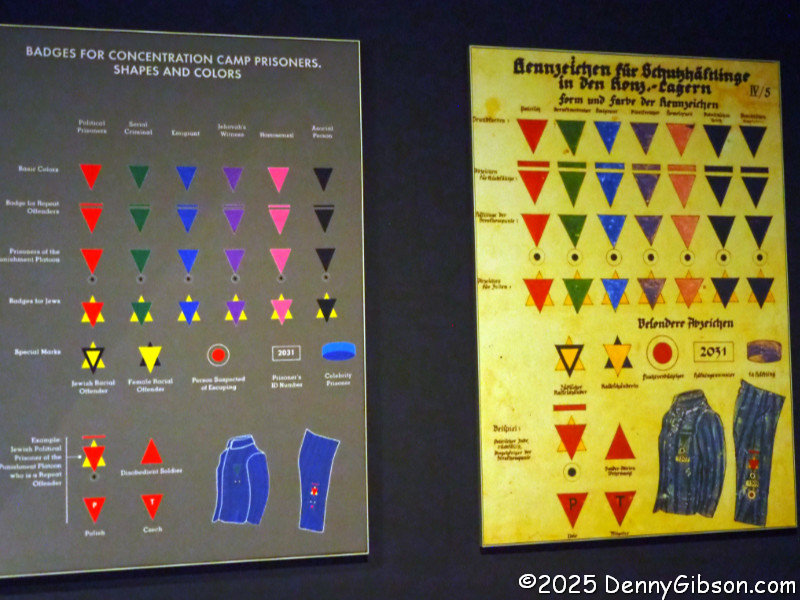
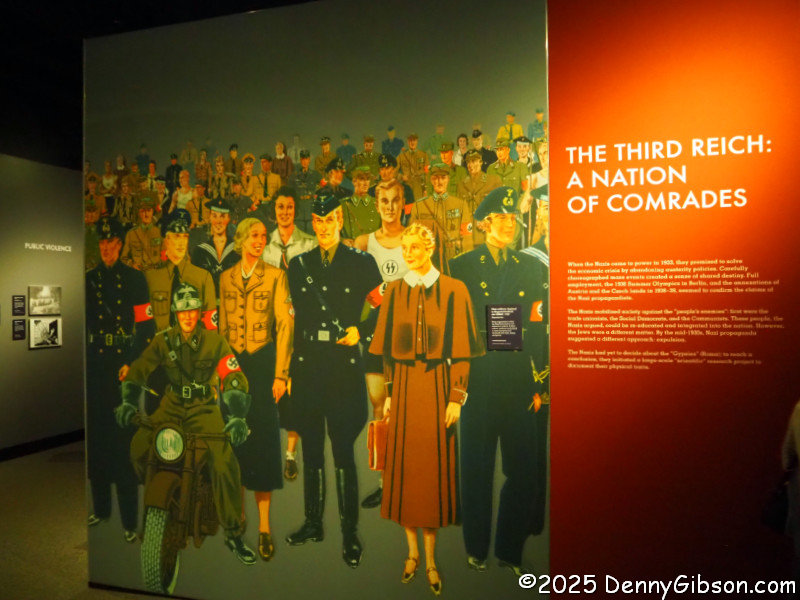
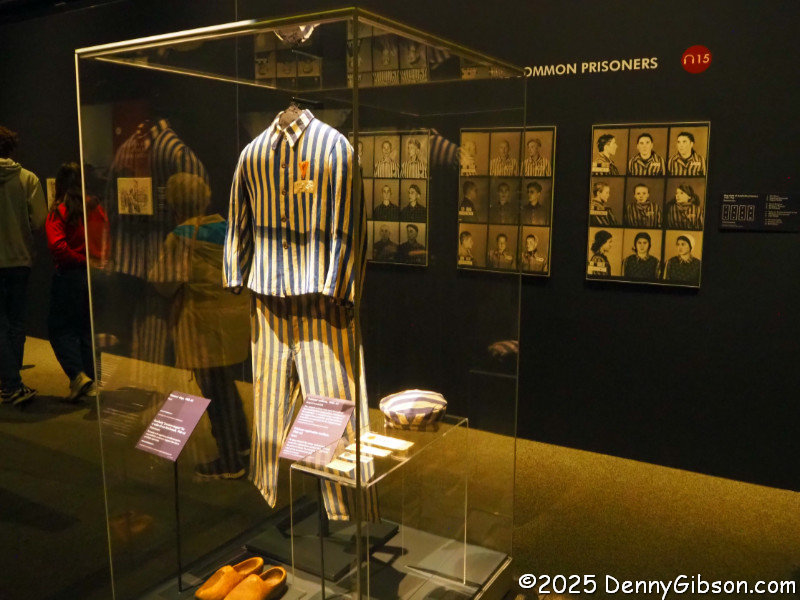
Establishing that the “other” was responsible for all of Germany’s problems was essential. The “other” was mostly, but not exclusively, Jews. Blacks, Roma, homosexuals, and people with disabilities were among those persecuted by the Nazis.

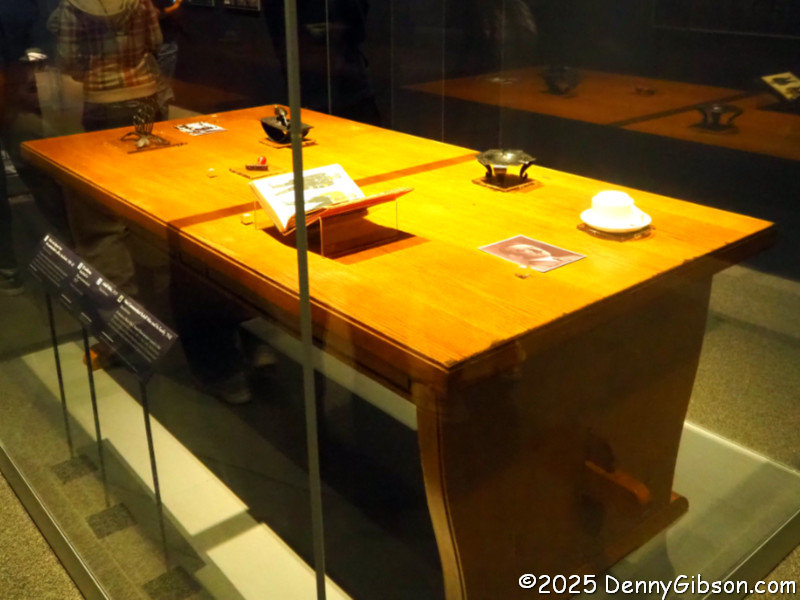
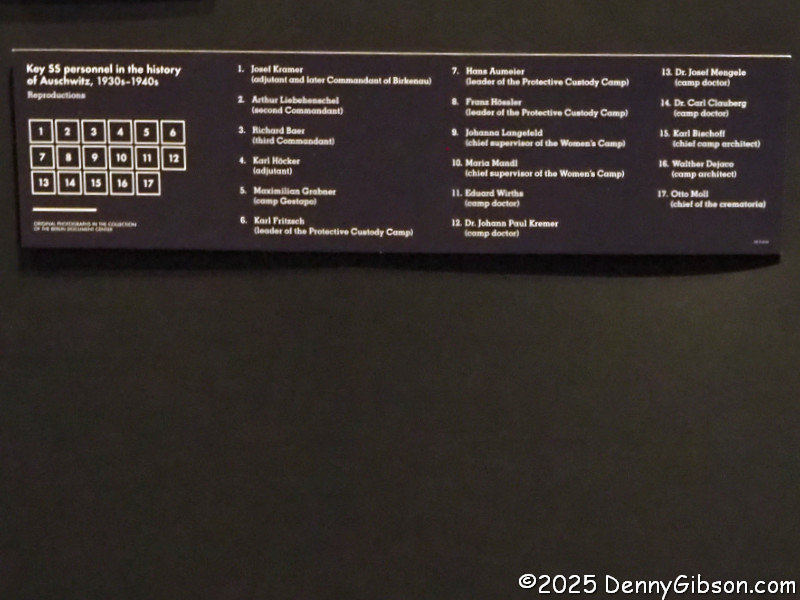
This is the desk of the camp commandant, Rudolf Höss. Photos of key Auschwitz personnel are displayed nearby with an identifying legend.

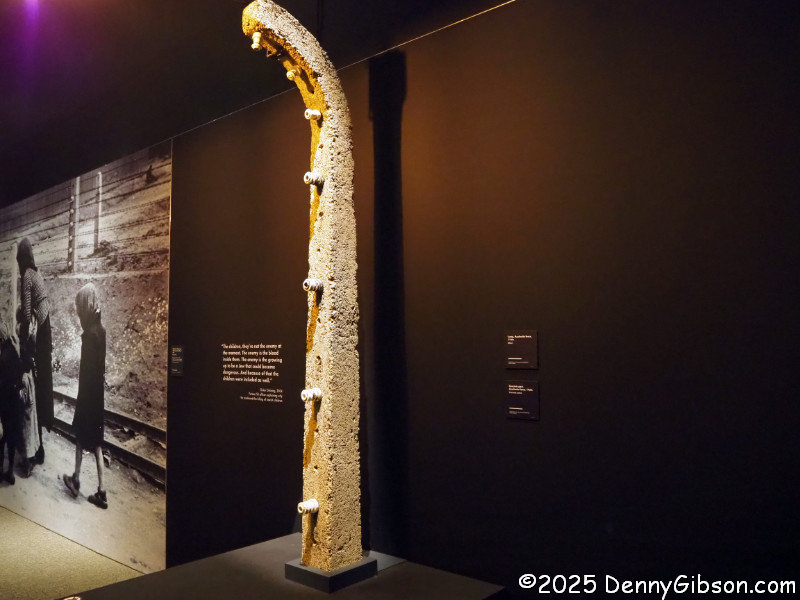
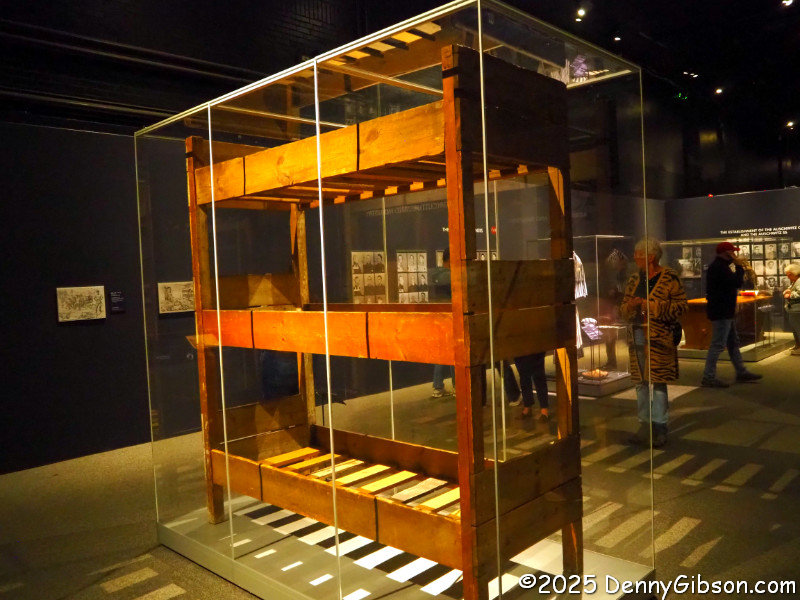
Roughly 80% of those arriving at Auschwitz were sent directly to the gas chambers. The other 20% became slaves, and not many survived the starvation, beatings, and forced labor. Many more than three people occupied the three-tiered bunks. The concrete post held barbed wire, as seen in the photo in the background.

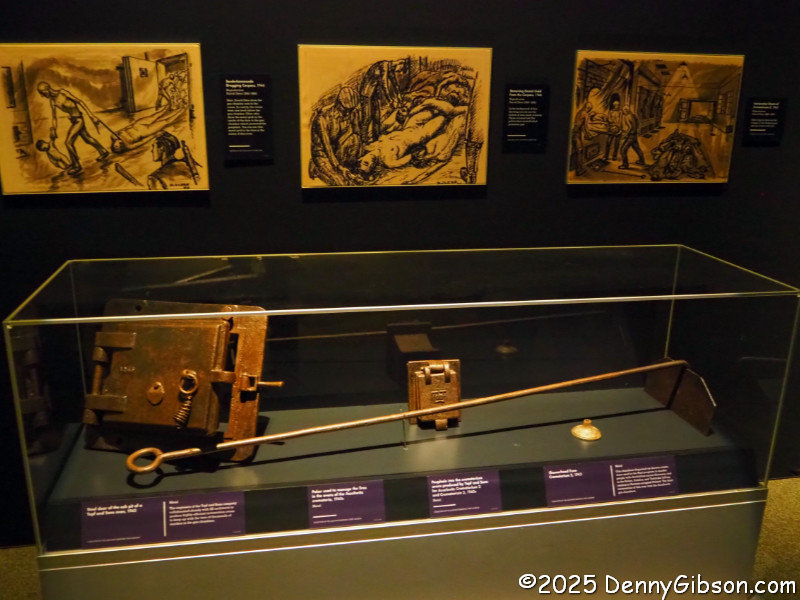
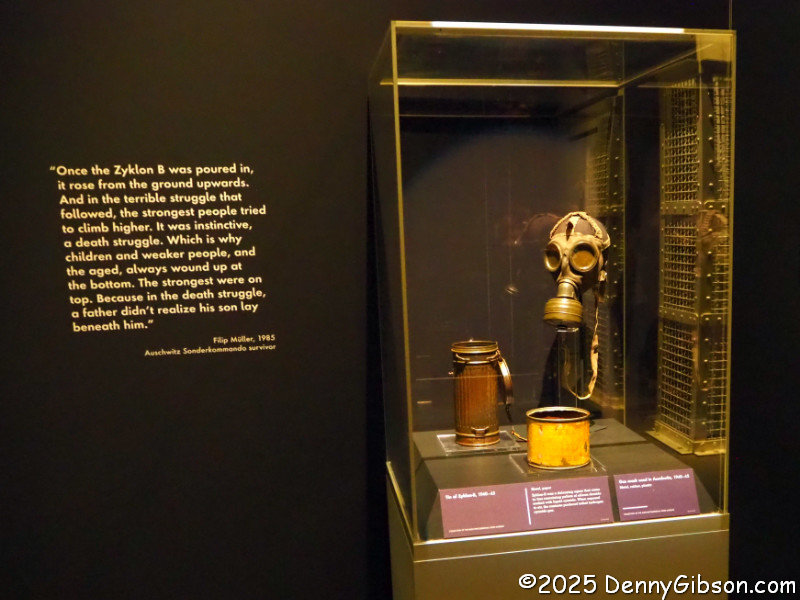
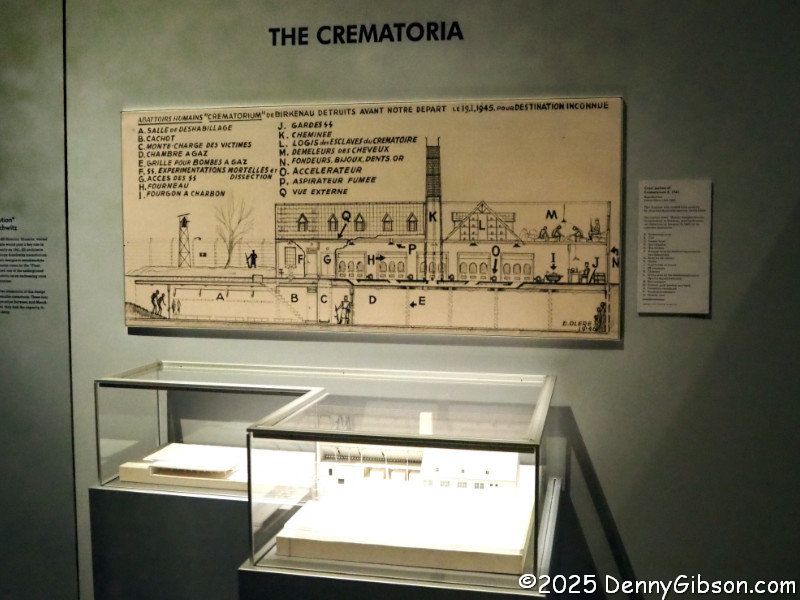
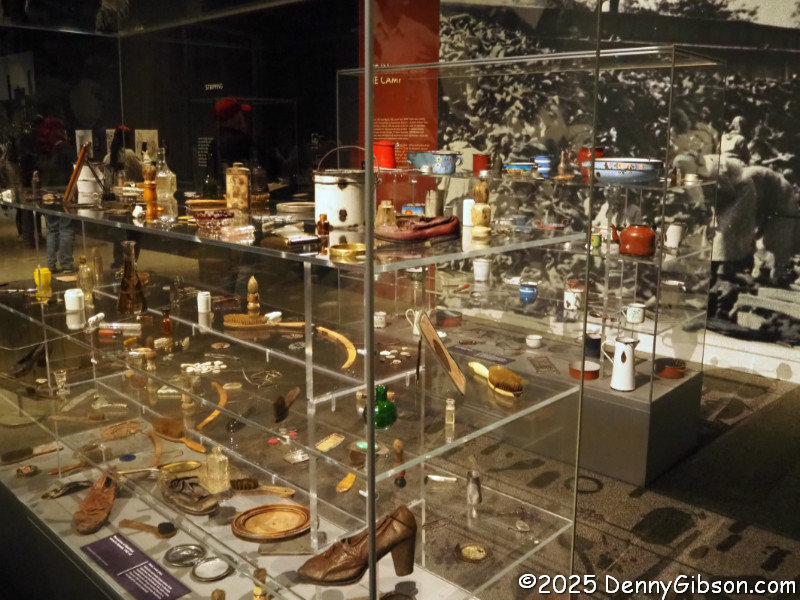
Some of the prisoners were “rented” to various privately held companies, but many were assigned tasks in the camp, such as removing bodies from the gas chambers or moving them through the crematorium. The first photo contains items from gas chambers and crematoriums. There is a “shower head” in the lower right corner. The gas mask in the second photo was worn by a soldier who dropped the Zyklon B once the chamber was sealed.

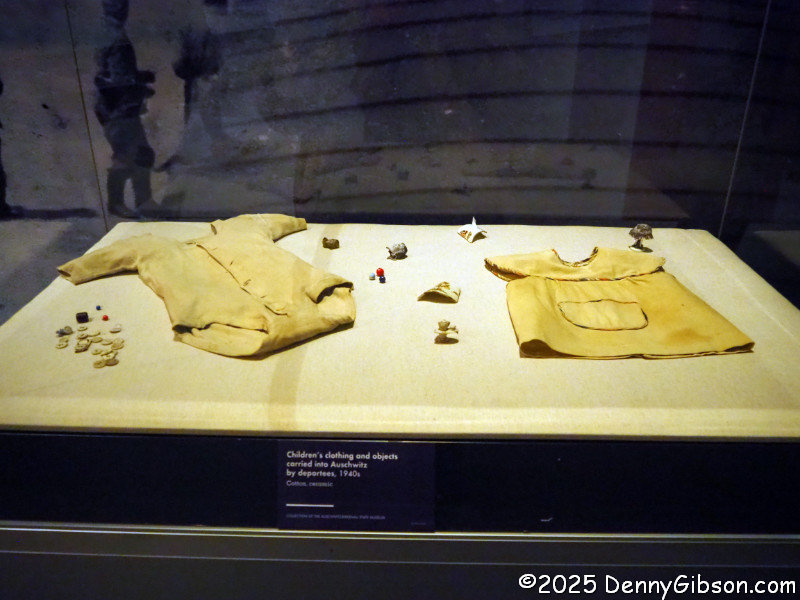
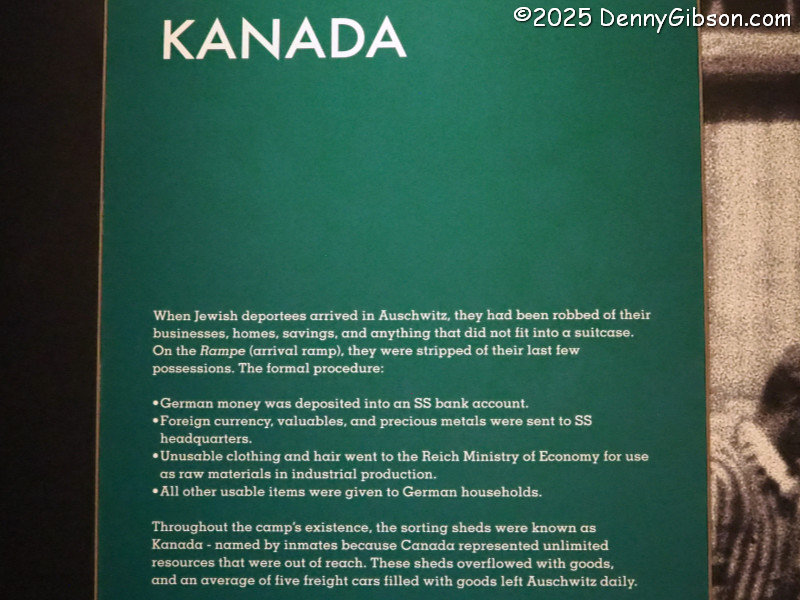
Other prisoners were forced to sort through the few possessions that actually made it to the camp. Prisoners referred to the sorting sheds as Kanada.

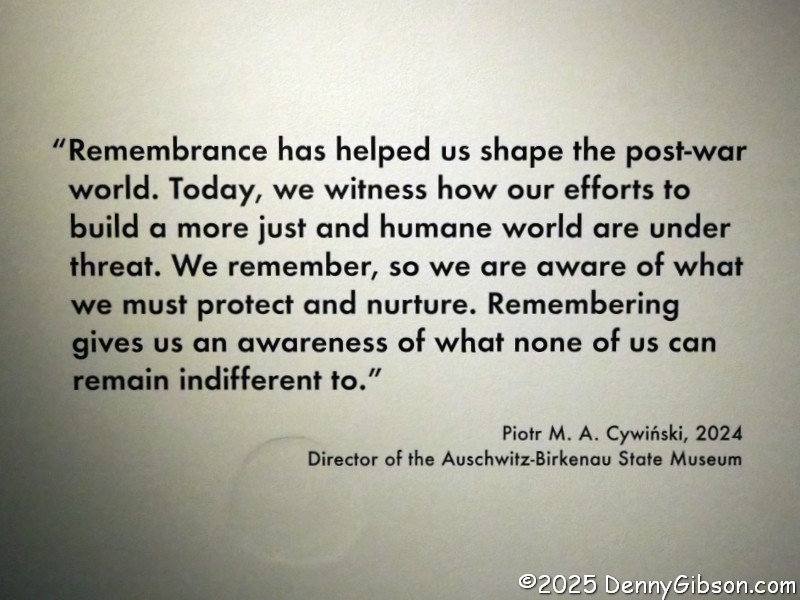
There were several benches placed throughout the exhibit. Many were positioned in front of screens showing videos of scenes related to the camps. All had a box of tissues placed at their center. There was no lack of tear-inducing images, artifacts, and stories in the exhibit. Nearly all of the items on display are from the Auschwitz-Birkenau State Museum. The last picture is of a quote from the director of that museum about remembrance. I immediately thought of Eisenhower’s 1945 command, “Get it all on record now. Get the films, get the witnesses, because somewhere down the track of history some bastard will get up and say this never happened.” He was right, of course. That quote on the wall notes that today “…our efforts to build a more just and humane world are under threat.” Nearer the beginning of this article, there is a photo of a quote about  “…the disappearance of a number of quite harmless people…” It’s from 1938 Germany during the Nazi rise to power. As I read it, it occurred to me that it could have easily come from certain Central or South American countries a few decades ago. Or it could have come from somewhere not even that far away or that long ago.

Auschwitz. Not long ago. Not far away.” runs through April 12, 2026.


The Holocaust and Humanities Center helped bring the Auschwitz exhibit to Cincinnati. Although a separate operation, it is housed in the Cincinnati Museum Center and throughout the exhibit’s run is offering discounted adult admission of $7.50 to anyone presenting an “Auschwitz. Not long ago. Not far away.” ticket. This rate is available year-round to seniors and military.

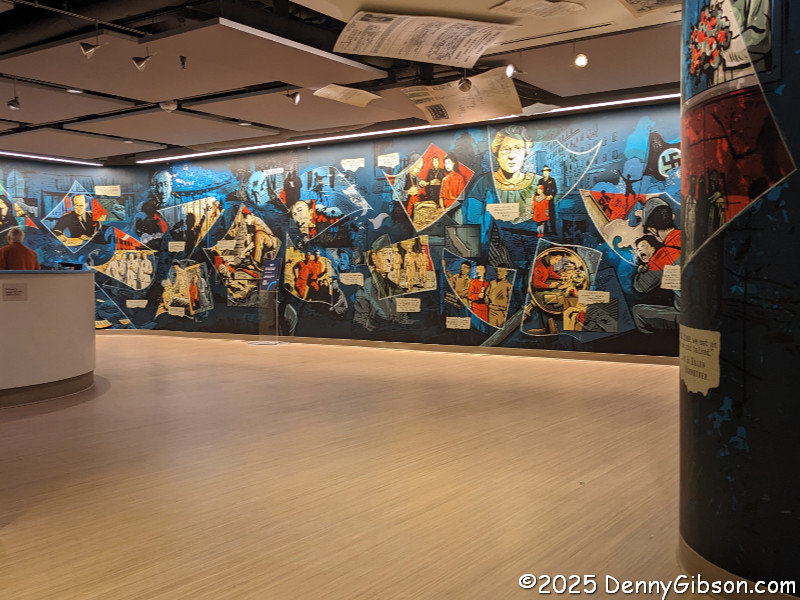
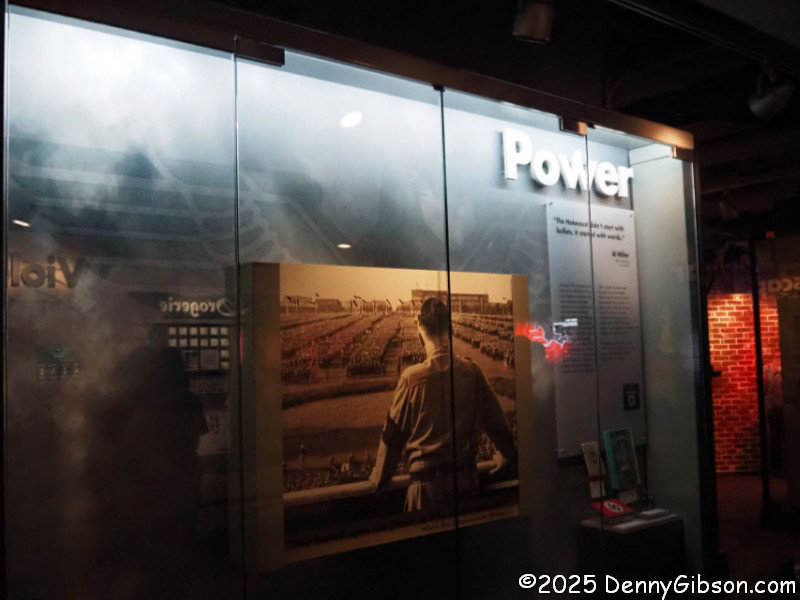
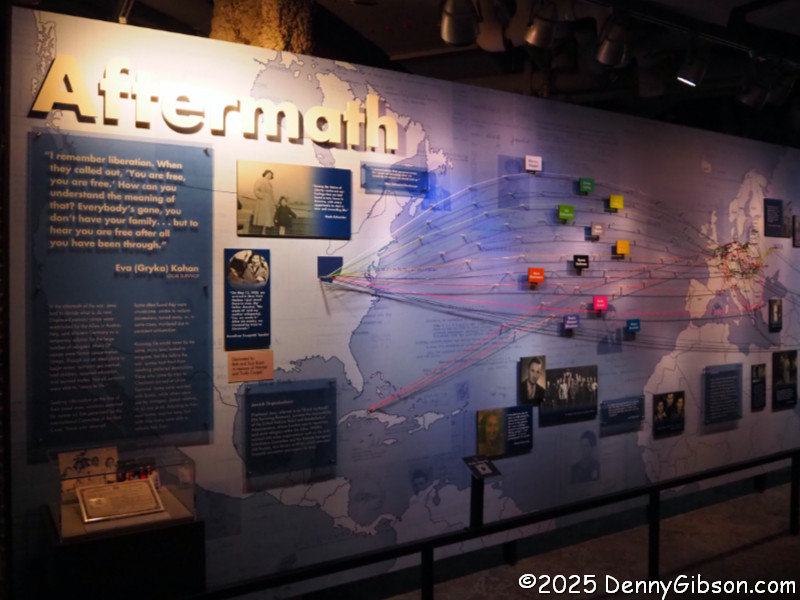
Naturally, there is overlap between the Auschwitz displays and those in the Holocaust Museum. A notable example is this molded wall of abandoned shoes that echoes the red shoe and large photo from Auschwitz. But there are also a lot of differences. The museum has many interactive displays, and the story it tells is broader than the one with a specific concentration camp at its center. In particular, the museum continues the story well beyond the liberation of the prisoners with reporting on the post-war trials and tales of recovery.

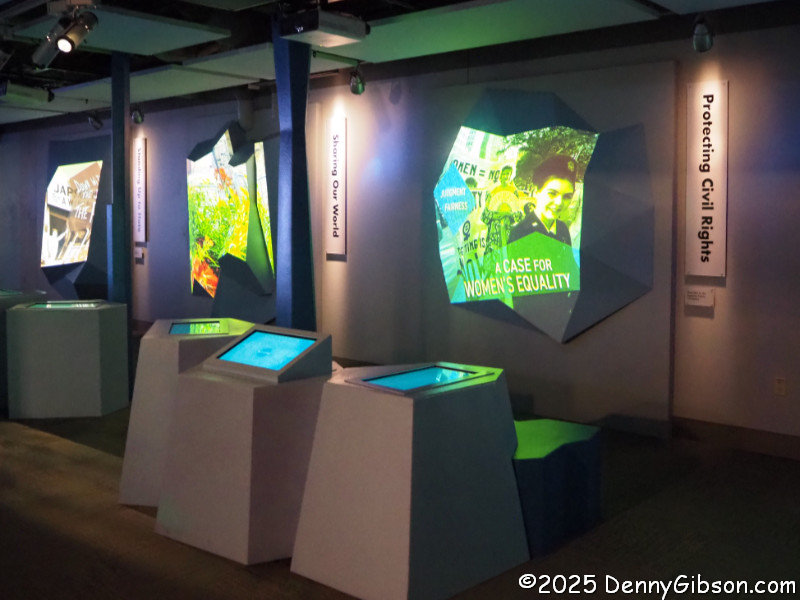
When I spoke with a friend about the Auschwitz exhibit, I encouraged a follow-on visit to the Holocaust Museum, and it wasn’t just because of the broader story. The Holocaust is humanity at its worst. Studying it and acknowledging it is important and necessary, but it is hardly uplifting. The museum offsets that just a little by presenting recent examples of bigotry being defeated and human rights being defended. Your mood probably won’t be exactly celebratory when you leave, but it very well might be hopeful.

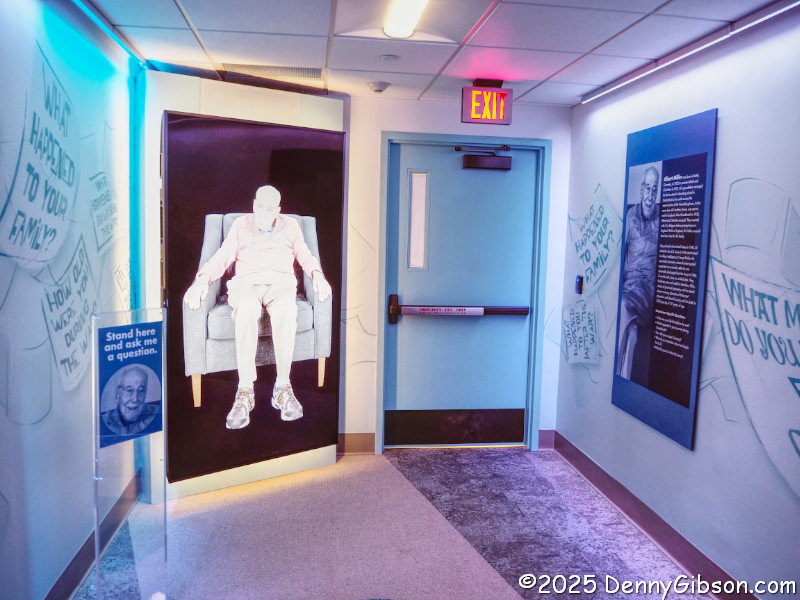
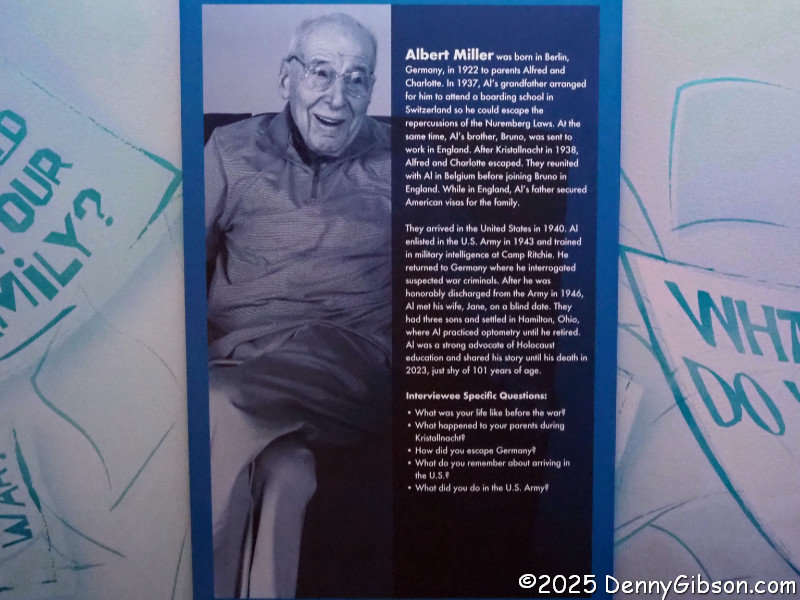
With every museum that exists, it is always possible to see something you’ve previously missed when you revisit. But sometimes that new discovery really is something new. That is the case with this recently installed interactive display featuring Albert Miller (1922-2023). Albert, who escaped Europe with his parents in 1940, then returned as a Nazi interrogator in 1943, tirelessly answers spoken questions about the life he lived.

I documented my first visit to the museum here

Season of the Clown

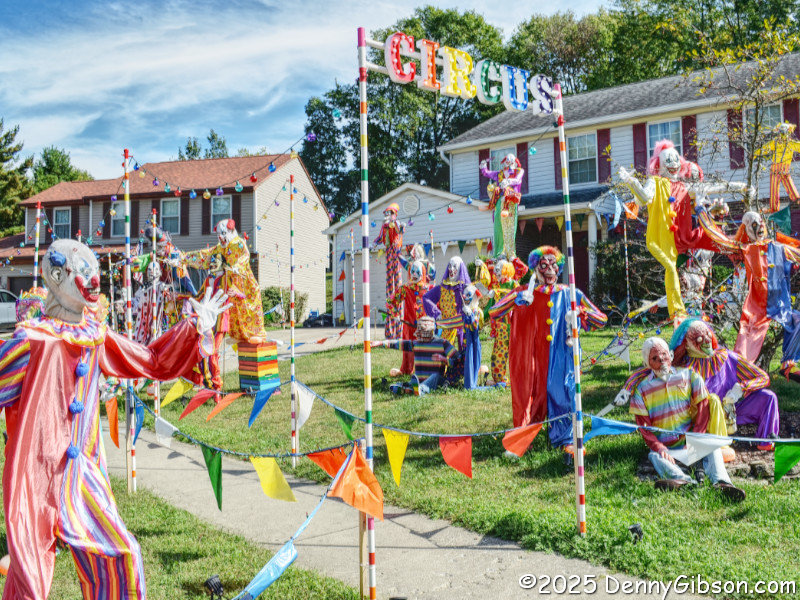
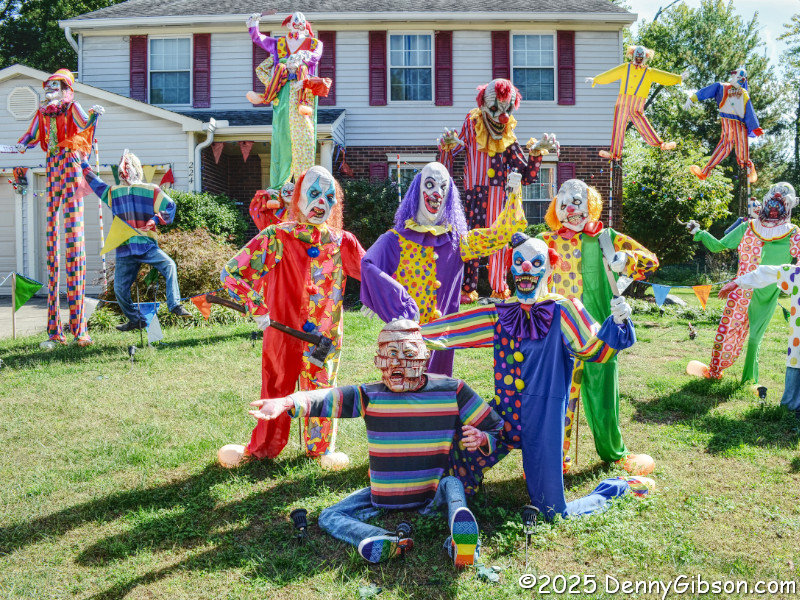
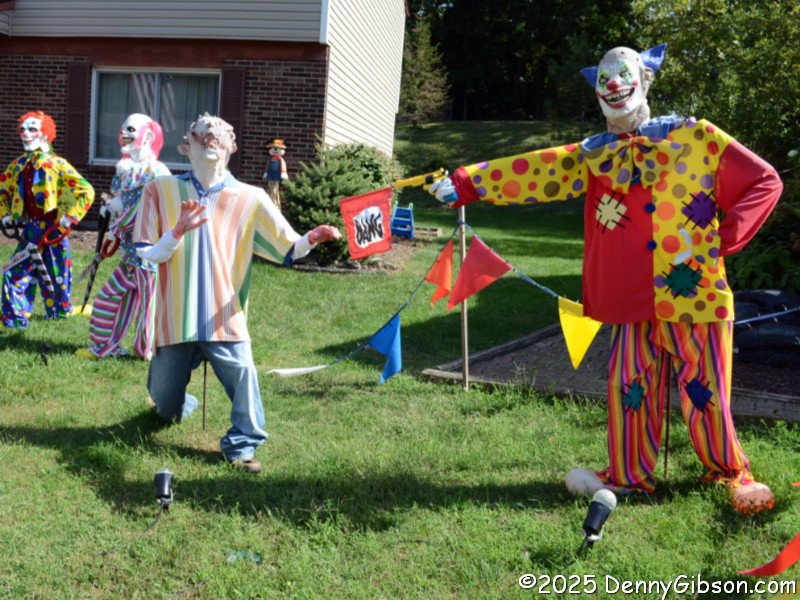
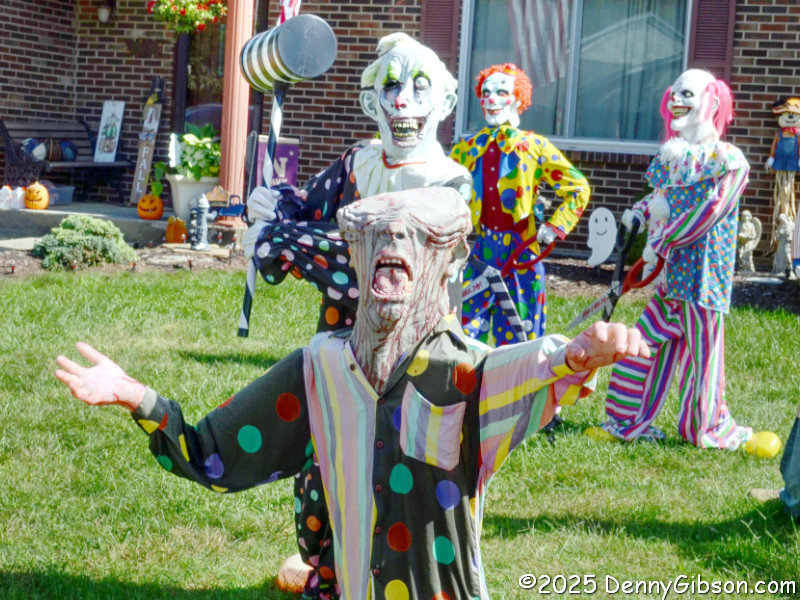
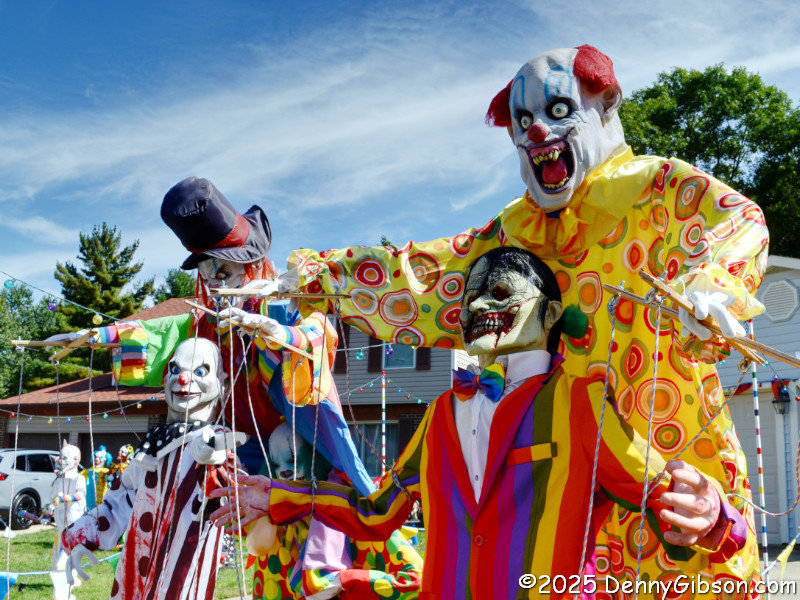
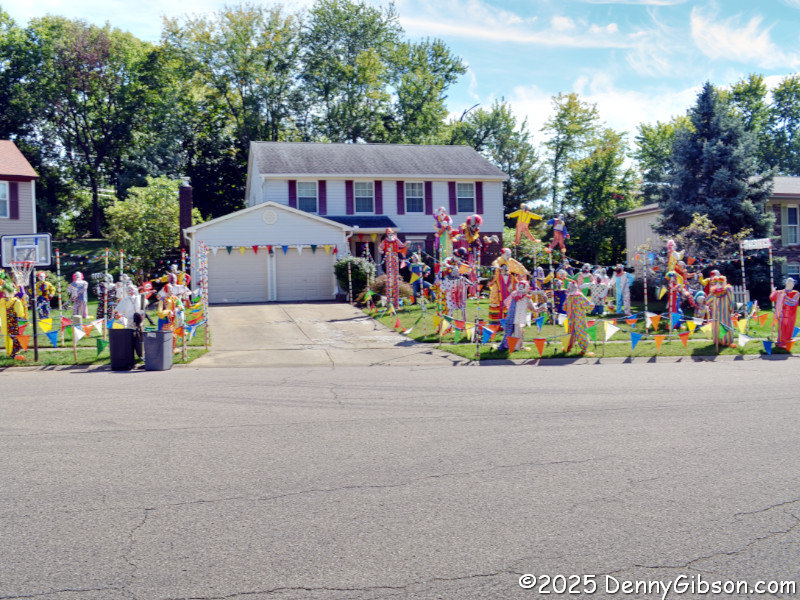
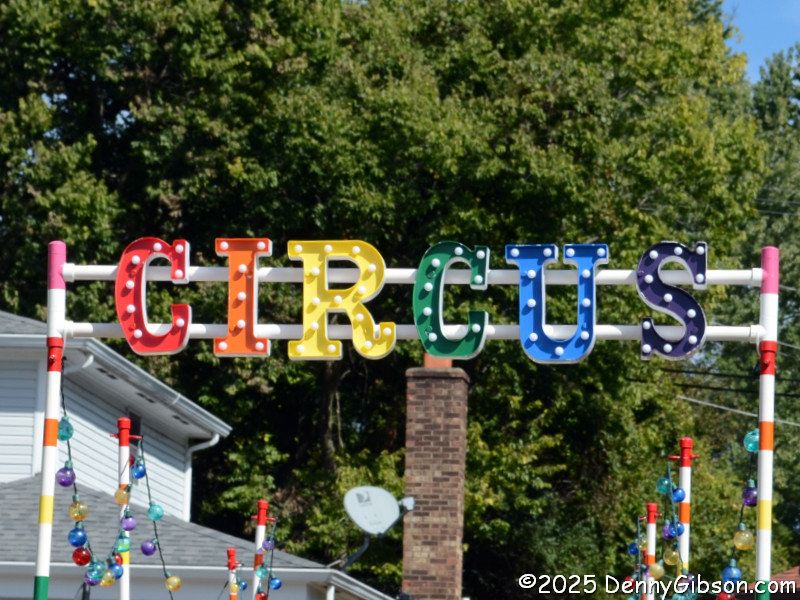
Not everybody decorates for Halloween with store-bought skeletons and inflatable witches. Some people, like this guy in Delhi Township that I just learned of, do it with personal creativity. For the last ten years, Shaun Reynolds has filled his front yard with unique creations based on different themes. This year, it’s clowns.

“I’ve wanted to do this since I was a kid,” Reynolds told TV station WCPO. It was through their article and video that I learned of the seasonal attraction. Check it out here. I didn’t get to meet Reynolds when I visited on Thursday, but I have a feeling that he’s not quite finished with being a kid.

I did get to meet Teresa, a long-time neighbor. I was poised to ask what it was like having a big, spooky attraction in your neighborhood, but I didn’t really need to. Her smile when she greeted me let me know she was loving it. I had thought of counting the figures on display, but had not followed through. Theresa made that unnecessary, too. “38 or 39,” she said. She also tried to describe how great the place looks at night with the lights on, as well as just how crowded and fun it gets on Fridays and Saturdays.

Reynolds makes it very clear that he does this for fun and that sharing it and seeing others enjoy it is part of that fun. Of course, some folks have wanted to contribute something, so the Reynolds family has taken to accepting donations of food and money, which they pass on to the Delshire Elementary School food drive.

I’d sure like to see this place at night, and I’m going to try to make that happen. Maybe you can, too, but it is obviously pretty cool day or night. It’s on Assisiview Court.

One for Sun(flowers) in Ohio

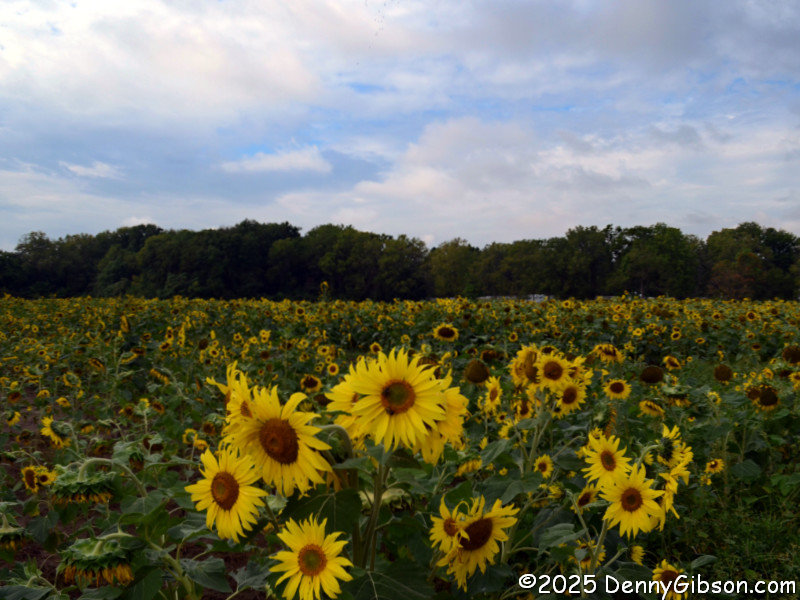
Remember last month’s Two for Four in Ohio post, when one of the targeted museums was closed and the sunflowers were barely out of the ground? At the time, I noted that the projected date for Tecumseh Land Trust blooms was near the end of September. Well, the end of September is near, and the blooming sunflowers are here.

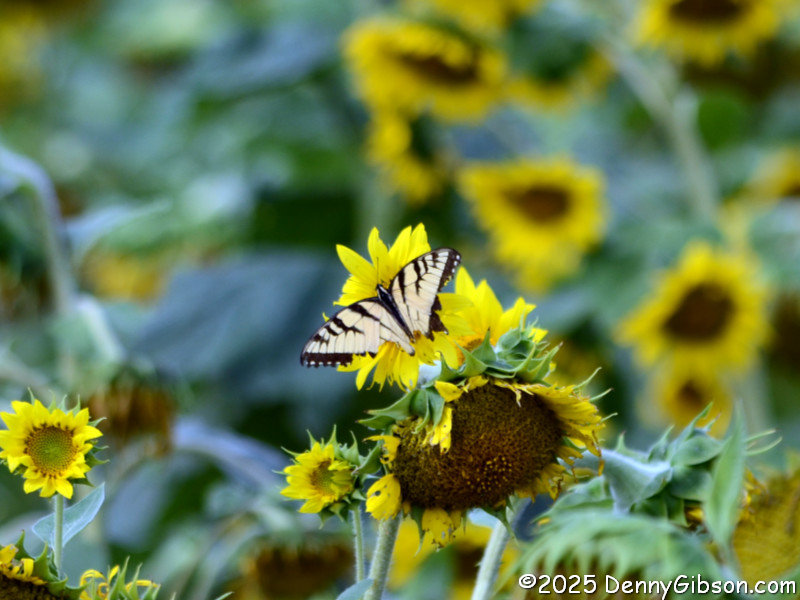
Thursday morning’s rain ended, and the forecast said it would not be back until evening. That wasn’t correct, but I did manage to get my visit in before the rain returned just past noon. This time, I was not alone. There were about half a dozen cars parked in the designated area next to the flowers, and some small winged beings hanging out right in their midst. Here’s a closer look at the bloom in the center of the opening photo.

The ground was wet but apparently not actually muddy, as a few of the humans from the parked cars ventured out into the field to take selfies surrounded by yellow flowers. Most, however, walked around the edge like I did. Just before I left, a group of women arrived with their young daughters wearing some very pretty dresses and posed the group at the field’s edge for photos. I worked at keeping all wingless creatures out of frame.

Even though none of the sunflowers said a word, I left with the impression that they were glad to see me.

A Thoroughly Modern Attic

Museums in small towns are sometimes referred to as the village attic. Some of them really do resemble an old farmhouse attic with little filtering or organization of objects displayed. Most, however, display items in an organized manner that avoids looking overcrowded. Part of how this is accomplished is by being selective in what items are displayed and having only a portion — often a very small portion — of the museum’s collection on display at any one time. As the state’s attic, the Ohio History Connection is very organized, with a rather tiny fraction of its collection on display and the bulk stored elsewhere. Last year, it got a brand new “attic”, and on Thursday, I got to see it.

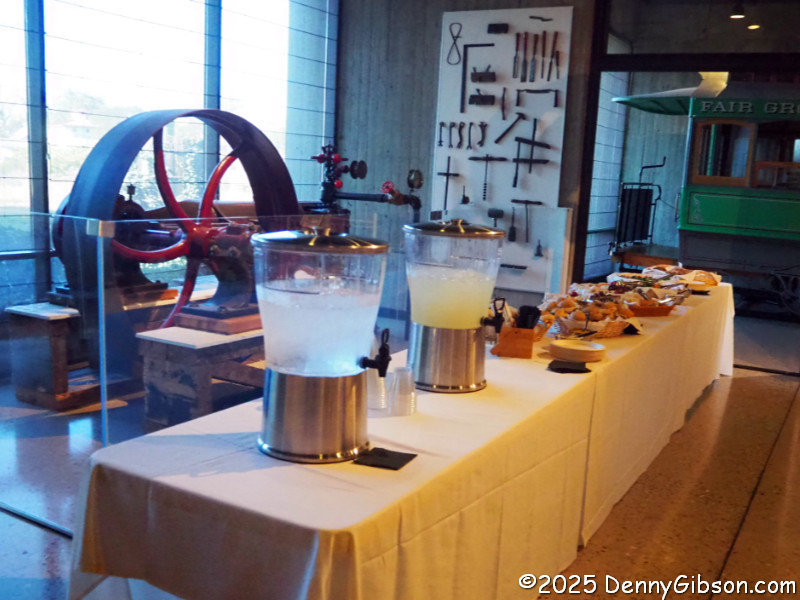
The occasion was an architectural tour preceded by a reception and presentation. I didn’t realize that food would be available, but I did realize that it was National Cheeseburger Day. I enjoyed the lemonade, but I skipped the food because I had just left Urban Gourmet, where I had celebrated the holiday.

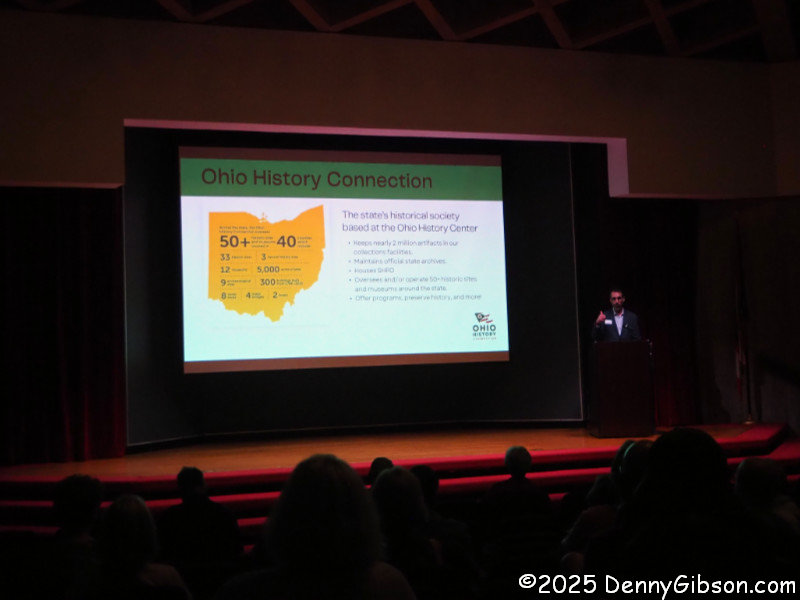
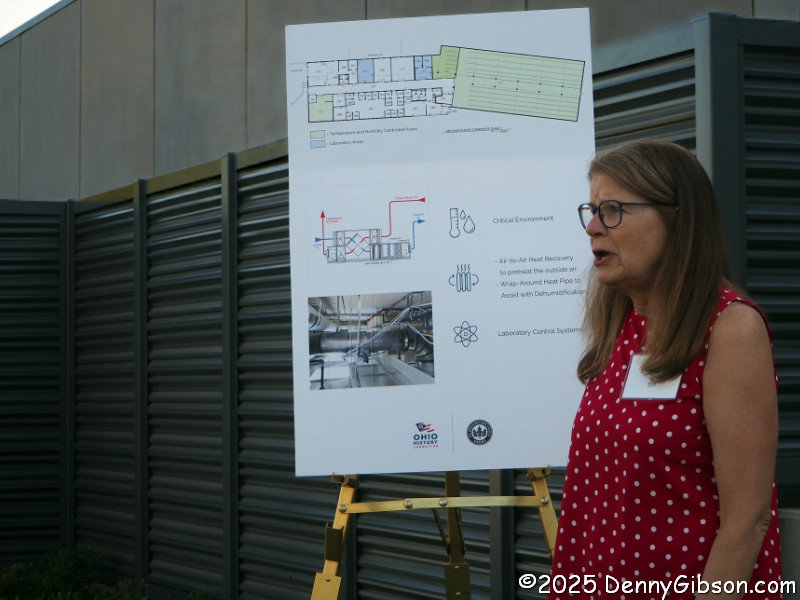
The tour began with a presentation in the auditorium. Several people gave short presentations about different aspects of the project, which began several years ago with the Collection Care Center opening in June 2024. I happened to catch architect Carlos Lugo at the podium.

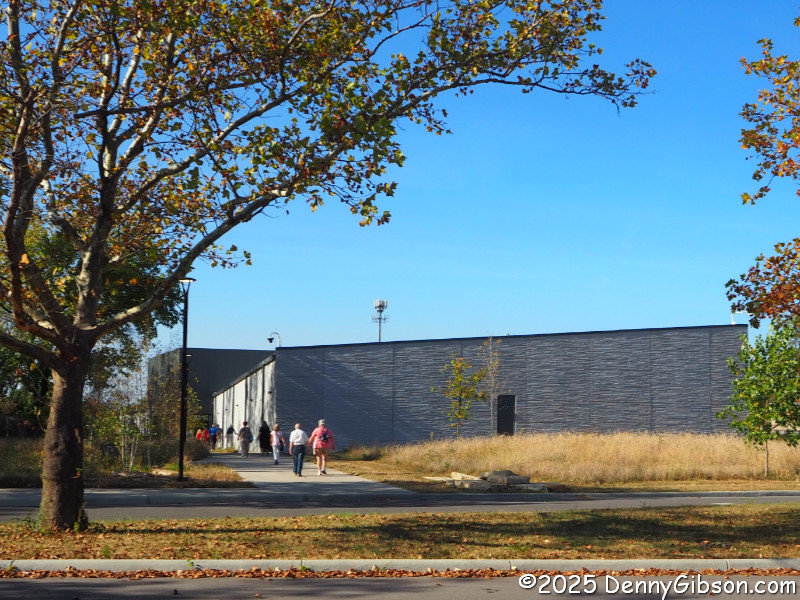
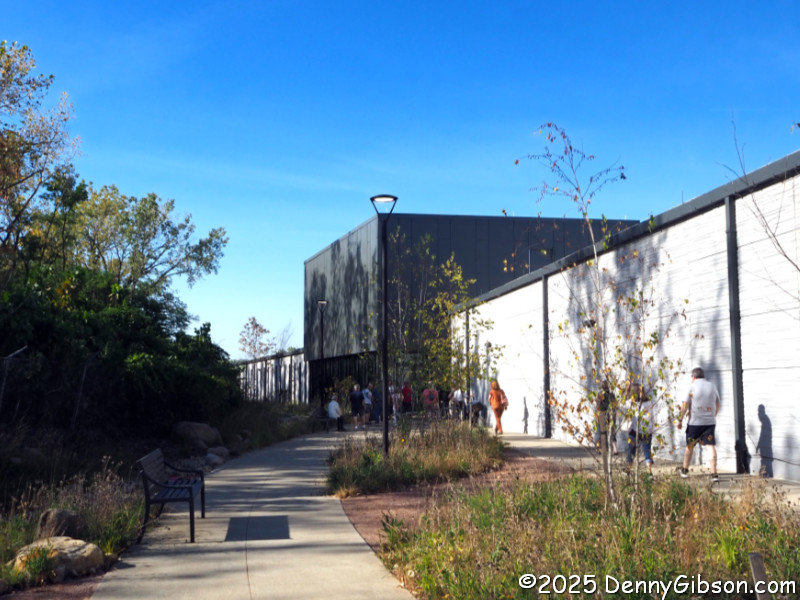
Following the presentation, we all went out to our cars and drove from the museum, past Ohio Village, to the Collection Care Center on the north side of the campus. At the door, the fifty or so attendees were split into smaller groups to tour the building.

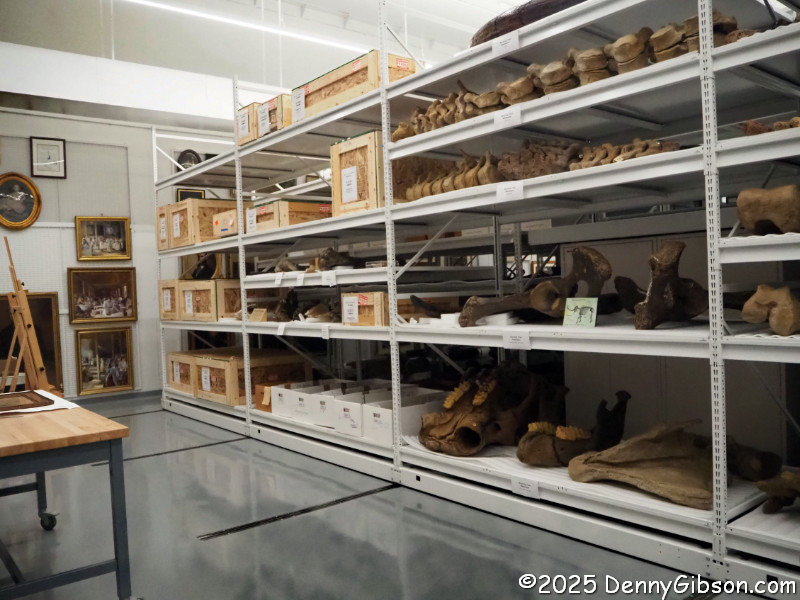
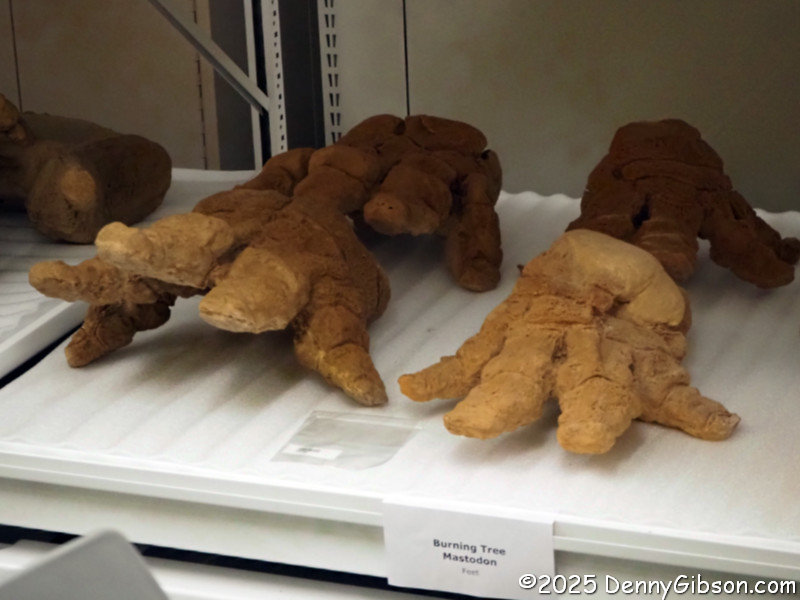
The group I was in began our tour in the actual storage section. Among the wide range of things stored here are lots of fossils. Some are authentic, while others are cast copies. 

The bones of mastodon feet aren’t typically found intact in the wild. These are castings from assembled fragments. I thought a shelf filled with mastodon feet was pretty unusual, regardless of whether they were bone or plaster.

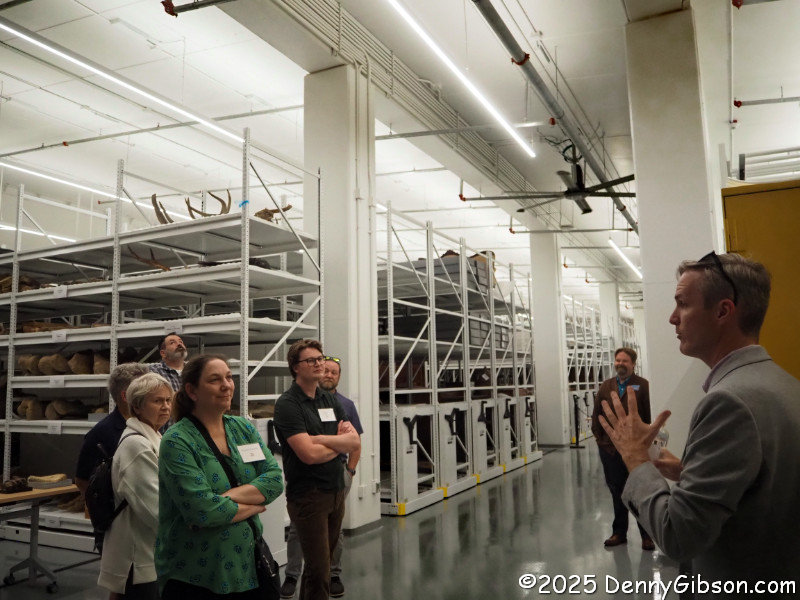
There is an enclosed loading dock at the other end of the building with offices, lab areas, and an extra-wide corridor in between.We paused in that corridor to learn about the building’s use of pre-formed concrete to speed construction and about other efficiency-focused aspects of the building. We then went outside to learn more about the climate control systems. I have the impression that the majority of attendees were architects. For many, hearing these details was as practical as it was entertaining. I was very impressed by the thoughtful answers to the building’s many unique requirements, but that was probably fueled as much by things I didn’t understand as by those I did.

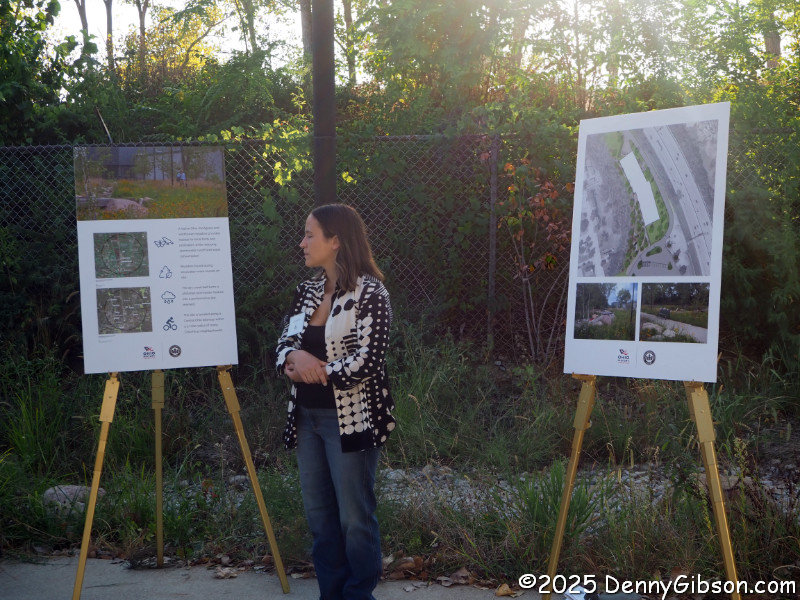
Our last stop was just outside the front door after we passed back through the building. Here we learned about the landscaping. Native plants are used, and there is no mown lawn. There are some paved as well as gravel paths with a few benches along the way. Several glacial erratics encountered during excavation have been incorporated. The place has been incredibly well thought through, both inside and out.

For a much better overview of the project than I’ve provided, I suggest an article and video published by The Columbus Dispatch when the center opened. It is here


An Auto Park Turns Two

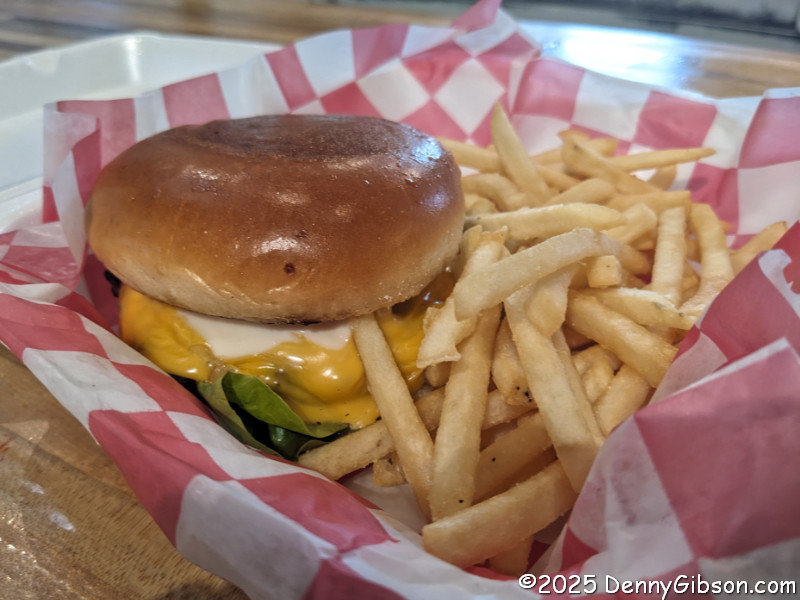
I’ve not been overly secretive about the fact that I’m generally not crazy about bright and shiny brand-new diners or diners of any vintage with a hard-core Marilyn & Elvis vibe. Just the “bright & shiny” thing is probably enough to explain why I’ve passed the 4 Speed on 50 Diner multiple times without stopping. Two Fridays ago, I was headed home from a spot a bit deeper into Indiana than Lawrenceburg with a stomach empty enough and a bladder full enough to pull me in. Inside was a staff so friendly and food so good that I was very glad I stopped. I sat at the counter and watched this burger prepared on the grill in front of me, then ate it. I swear it didn’t look that big on the menu. At some point, I asked the cook about the museum I’d seen signs for, and he pointed to a fellow he called one of the owners at the end of the counter. He explained that the museum contained some very interesting cars but had just closed for the day. Then he went on to tell me the diner’s second anniversary was being celebrated in just over a week with some special entertainment and the weekly Cars & Coffee.

I decided that was a good activity for an absolutely beautiful Saturday, and headed over in time to catch a decent chunk of Cars & Coffee. The day’s entertainment highlight would be a renowned Elvis impersonator, but that was scheduled for the evening when I intended to be sitting quietly at home. I did get to see one of the event’s guest celebrities, however. This Ford appeared in the Movie Hoosiers. I confess to being one of the few people in the world and possibly the only male over 16 living within 60 miles of Milan, IN, carrying that shame. Yeah, I know. I will fix that someday. I promise.
The setup here is sort of a car culture campus. A separate website, 4 Speed on 50 Auto Park, covers the non-diner part of the operation. The Hoosier car is displayed in front of the diner. Cars & Coffee makes use of a parking area between the diner and an associated gas station so that diner access is not affected. I’m guessing that might not remain the case once the Elvis crowd starts rolling in. There appeared to be a pretty decent turnout, and it certainly included some real classics.

Once I had checked out all the cars, I went inside and don’t even pretend you’re surprised. There’s a real greeter with a real smile just out of frame to the left. I once again sat at the counter and watched as my meal was cooked. It was then delivered with a smile. This time it was a Local Omelet (goetta, onion, peppers, mushrooms, cheddar jack cheese). After eating, I carefully selected and then made use of one of the restrooms.

Now I was ready to visit that museum. When I purchased my ticket, the fellow I had spoken with the previous week was sitting nearby, and I made a comment about him being the owner. His dad was the actual owner, he now explained as he walked with me to the museum entrance. Both he and his dad were named Steve, and there was a third Steve who helped run the place I would probably encounter while I was there. Not long after he left, I was looking over a 1969 427 Corvette when three men entered, and I made some joke about one or two of them being Steve. I was off by one. One was the owner and creator of the complex, and one was the other Steve I’d just been told about. The third was a visiting friend who was also named Steve. So, minutes after learning the name of Steve the Younger, I met Steve the Elder, Steve the Other, and Steve the Visitor.

Steve TE has brought together a rather impressive collection of cars spanning a wide range of years and styles. Some are extremely rare, and many have remarkably low mileage. I believe the oldest car in the museum is the 1911 Brass Era Model T Ford. The 2010 Hit King Edition Camaro is one of just 27 made. Pete Rose signed the engine covers, and each car came with a spare, unsigned cover, in case the owner wanted to save the signature and actually use the car. The 1948 Buick parade car once belonged to the family that owned the land where the museum now stands. It had been sold before Steve TE bought the land, but he managed to track it down and have it restored.

There’s really a lot more than cars here. Guys who put together car collections like this seem to naturally pick up lots of other things car-related, as well as some stuff that’s not really car-related at all. The cigarette vending machine served up a pack of smokes when a dime and a nickel were inserted simultaneously. Out of view are climate-controlled spaces similar to those seen here that are rented by individuals for car storage. And even the public space isn’t exactly all museum. A large section called The Hub can be rented for private events and has been the site of birthday and graduation parties, club meetings, and at least one wedding. Of course, parts of it do look pretty much like a museum.

For a different view of some of the cars and maybe some fun and games, climb the stairs to the mezzanine. I did and snapped pictures that include the Hit King Camaro, the Brass Era T, and Steve TO waiting for me to come back down. He basically gave me a fully guided tour and answered every question I had, including some called down from the mezzanine.

The mezzanine also provides a nice overlook of the diner and US-50 passing by. I’ve not suddenly become a fan of brand-new chrome-plated diners, and I’ll probably still cringe a little when I next find myself knee deep in Elvis & Marilyn paraphernalia, but Steve Caudill… I mean, Steve TE and his wife, Barbara, have created something pretty cool in Lawrenceburg, Indiana. The diner isn’t trying to pretend it’s something it’s not, and the museum’s impressive collection is very nicely presented. A miniature golf course is to be added to the complex in the near future. If the folks running that are as cheerful and competent as everyone I’ve met on my two visits, I might be tempted to pick up a putter for the first time in a few decades. Maybe not, though. I’m more likely to sip a milkshake while looking at cool cars and watching someone else count strokes.

Two for Four in Ohio

After my return visit to an outstanding Ohio museum last week, my thoughts rather naturally turned to other Ohio museums when considering activities for the mostly open following week. I settled on two I had never visited, then added a sunflower field and a nearly new member of the World’s Biggest club to create a four-stop Friday outing. Although I reached all four, only two can be counted as successful visits.

I actually knew there would be no blooming flowers at Tecumseh Land Trust before I left home. When I initially made my plans, I’d found some general information indicating that the field operated in August and September. A few days later, I learned that projected bloom dates for 2025 were near the end of September.
Of course, I considered dropping the field from my agenda, but my appetite was already aimed at one of my favorite restaurants in nearby Yellow Springs. So I stuck with the circuitous two-lane drive and breakfast at Sunrise Cafe rather than the direct but boring expressway route to my second stop. Maybe I’ll come back for a meal — with flowers — next month.

This was what the trip was more or less built around and what I anticipated being the trip’s highlight. Instead, it provided only an accidental selfie. I believe that when I first became aware of the National Barber Museum, all visits were by appointment only. At some point, regular hours on Fridays and Saturdays were added. I was disappointed when I saw the closed notice, but since I was there just a bit before the scheduled opening, I did what I probably should have done earlier. I called. I spoke, I assume, with museum director Mike Ippoliti, who explained that a lack of volunteers and his own recent foot surgery prevented normal operation at present. He expected regular hours to return in a few weeks. I wished Mike well in his recovery and headed to stop number three.

I missed the first two iterations of the Paul A. Johnson Pencil Sharpener Museum. The first iteration was assembled in a shed at Paul A. Johnson’s home. After Johnson’s death in 2010, the nearly 3,500 sharpeners and the shed housing them were moved to the Hocking Hills Regional Welcome Center near Logan, OH. In 2024, the deteriorating shed was replaced by the building on the right side of the first picture. By then, the collection had grown to somewhere around 5,000 sharpeners when the widow of Florida collector Frank Paredes donated all the sharpeners he had amassed to the museum.
The incredible collection includes sharpeners I remember from my school days, and some even older than that.

Just over two months before I got there, the town of Oak Hill, OH, erected this giant acorn and declared it the World’s Largest. As far as I know, Raleigh, NC, never claimed that the big nut dropped there on New Year’s Eve was the World’s Largest, but, having some experience with that particular acorn, I was curious about how they compared. It’s not really close. The Raleigh acorn is 10 feet tall, while the height of this one is 15 feet and 5 1/2 inches. That and other statistics are noted on a nearby sign. However, when I went looking for the dimensions of the Carolina nut, I learned that some folks in Silver Springs, MD, may have a legitimate challenge to Oak Hill’s claim. Take a look here. It doesn’t appear that the Guinness record trackers were involved in any of this, so where it all will lead is unclear.

Sunflowers had yet to arrive at the Tehcumseh Land Trust, but I did find some standing tall in the Pioneer Garden at the Hocking Hills Regional Welcome Center, and that lets me end this post on a bright note with a bright bloom.

Back to the Bikes

I have thought of revisiting the Bicycle Museum of America quite a few times in the more than two decades since my first visit. Sometimes it has been when I’m looking for a target for an interesting day trip, and sometimes it has been due to something more specific. The most recent specific event that triggered thoughts of the Ohio museum was my visit to the Cycle Through exhibit at the Cincinnati Art Museum. When I started getting serious about a trip to the bicycle museum, I naturally took a look at the journal for my 2002 visit and noted that I had driven a bit of OH-66 to get there, and that naturally reminded me that I had driven its full length a couple of years later on the first day of a two day trip. The museum visit journal is here. The journal for the OH-66 drive is here.

So, I headed to Piqua, OH, and the southern end of OH-66 at US-36. It has become a little fancier over the years and now sports a “BEGIN” tag. That the more famous Route 66 will reach its centennial next year is getting a lot of attention. The centennial of Ohio’s Route 66 was last year, but I missed it. I wished the route a belated 100th as I started my drive. Although I drove all of OH-66, the museum was the trip’s focus, and I did not make a lot of other stops.

Cars parked on the street in front of the museum kept me from getting a clear picture of the building. It and other older nearby buildings housing restaurants and such are well maintained and picturesque, and make New Bremen quite an attractive town. The attendant, whose name I have absolutely no excuse for not asking, was extremely friendly and helpful. One of the things I learned while planning this trip was that the museum owned one of four surviving Schwinn bicycles from Pee-wee’s Big Adventure. I suspected that this might be the one I had recently seen in Cincinnati, and started to ask. I did not quite get my question fully formed before learning that not only was that customized DX Cruiser on loan from the museum, but so was every other bicycle in the display. I should have known that. The Cycle Thru! description on the Cincinnati Art Museum’s website notes that it is made up of “over 20 bicycles from The Bicycle Museum of America in New Bremen, Ohio”. Just one more thing I missed.

The museum contains a replica of an 1816 Draisine, which is the earliest known use of motion to balance on two tandem wheels. There are, of course, quite a few penny-farthings among the historic vehicles on display. When I first heard that name many years ago, I initially thought it had something to do with cost, but soon learned that it came from the idea that those big-wheeled bicycles looked like a large British penny coin paired with a small farthing coin. In the middle of all those historic bicycles is something that looks more like a farthing-penny. It’s an American Star Highwheel, which tried to make things a little safer by putting the little wheel in front. The H.B. Smith Manufacturing Company, makers of the American Star, also patented a steam-powered bicycle, and yes, I would like to see one of those.

In fairly short order, inventors applied gears, chains, and straps to eliminate the need for a huge wheel to achieve a decent speed, and the penny-farthing became a thing of the past. In addition to those on display, the museum has one on rollers with “trainer steps” for anyone wanting to give it a try. Of course, inventors did not stop inventing. A different way to go riding with your friends can be seen on the wall behind the steps. Bicycles with driveshafts existed before the nineteenth century ended, and inline skates clearly aren’t as new as you might think.

Backed by one of the museum’s windows is a replica of a monocycle from 1869. The museum also has one of just thirty existing Monovelos from 2008. Monocycles are just plain weird. Fitting between these two date-wise is a 1998 motorized version at the Lane Motor Museum in Nashville.

The museum has about 800 bicycles in its collection, so even with twenty on loan in Cincinnati, there is no problem keeping a couple hundred on display. The challenge is picking which ones that will be. That’s the same challenge I have picking which photos to post. I could go on and on, but I’m going to cut it off here with a pair I have at least a tiny personal connection to. My first motorized vehicle was a 1948 or ’49 Whizzer. The one pictured is a 1950. That’s a 1949 J.C. Higgins Colorflow in the other photo. My first new vehicle was a 1960 J.C. Higgins Flightmaster that is the subject of what I believe is the most popular post ever on this blog. The Flightliner post is here. A post on the Whizzer is here. Before leaving, I learned that the museum has a 1960 girl’s Flightliner in storage. Flightliner fans, keep your eyes peeled. It could come out someday.

I did make a couple of stops beyond the museum, but they were related to my 2004 OH-66 drive rather than to OH-66 in general. Where the route ends at US-20 in Fayette, I was happy to see an “END” tag that was not there in 2004. I celebrated completing the route with a Budweiser in the same building where I celebrated in the same manner twenty-one years ago, but the name was now Freddy’s Place instead of Harry’s Tavern, and the Bud came in a can instead of a bottle.

I also repeated my dinner stop in Archbold, where Mom’s Diner was not only still in business but had a new pseudo-neon sign hanging out front. With the exception of a few details, the inside looked essentially the same. I did not record what I ate in 2004, but today I had the fish sandwich special. The place was fairly busy when I arrived and just about full when I left. That not only kept me from taking many photos, but it also interfered with my jukebox playing. In ’04, I played “That’ll Be The Day”, but today it wasn’t an option. In ’04, I had the juke box all to myself, but that wasn’t at all the case today. By the time I settled on “Rock Around the Clock”, someone had beaten me to it. My quarter went for “Mack the Knife” by Louis Armstrong and His All Stars.
Bones, Butterflies, Bison, Bunnies, and Beavers

I have visited Big Bone Lick State Historic Site a couple of times in the past, but that was many years ago. Since then, I’ve passed it several times, without stopping, on the way to Rabbit Hash. A friend visited both last week, and their description of that visit made me promise myself that I would return. A sunny Thursday almost immediately provided a perfect opportunity.

My first stop at the park was the Visitor Center. In addition to having a gift shop, helpful attendants, and a supply of information and maps, the center houses a small but very interesting museum. A panel just inside the door offers a pretty good overview of the park. That big guy in the foreground of the third photo is a Harlan’s Ground Sloth.

At the rear of the Visitor Center is a life-sized diorama depicting how earlier visitors to the salt springs might become trapped in the bogs and involuntarily leave their bones for future scientists. Big Bone Lick is on the Lewis and Clark National Historic Trail, not because the Corps of Discovery stopped here but because both of its captains did. At the urging of President Jefferson, Meriwether Lewis visited the site in 1803 on his way west to join William Clark. The boat carrying the specimens he collected sank on its way to Jefferson. In 1807, after that famous expedition to the Pacific Ocean, Clark made a stop here to collect and ship specimens that did reach the President.

Although they have absolutely nothing to do with vertebrate paleontology, I found the smallish examples of wildlife flitting about in front of the Visitor Center a lot of fun to watch.

A paved path that begins a short distance from the Visitor Center leads to an elevated bison viewing stand. But no bison presented themselves to be viewed there today. Instead, the small herd was lounging in the grass, just out of sight, a short distance away.

Having noted that I’ve passed Big Bone Lick a number of times while driving to Rabbit Hash, continuing on to the one-of-a-kind river town after my stop was rather natural. Besides, if I hadn’t, I could not have put “bunnies” in the title. I grabbed an ice-cold ginger ale at the general store, then sipped it as I watched the Ohio River flow by.
This intersection, just east of US 42 about two and a half miles east of Big Bone Lick, marks the community of Beaverlick. I believe there used to be limit signs here, but I found none today. If I didn’t imagine them, I’m guessing they are hanging on a college dorm wall somewhere. Until a year or so ago, there was a Beaverlick Trading Post at US 42, but it is now an ice cream stand, and almost all of the signage has been changed. They’ve not yet taken care of a couple of side doors, however. Places like Big Bone Lick and Beaver Lick (now Beaverlick) were salt licks where various animals came to get a little salt in their diet. They were named for the lickers, not the lickees.

To complete what has turned into a survey of the area’s smile-inducing place names, I stopped at an establishment that appears to be the last remaining enterprise acknowledging that the community of Sugartit once existed. It’s just a few miles north of those spots made famous by salt-licking beavers and big boned animals.

Where the Airstream Wheels Start

One reason the Airstream Heritage Center has been on my “someday” list for such a long time is that, while I find travel trailers interesting, they are not something I aspire to, and therefore don’t think about a whole lot. Another is that it’s close enough to my home that I knew it would be a simple day trip when the time came. Early in the week. I briefly followed a long flatbed trailer with three small new Airstreams strapped to it, and that reminded me of just how close to me their point of manufacture is. That reminder, along with an idle Thursday, led to a leisurely drive north. A popular Airstream slogan is “Home Is Where Wheels Stop”. Those Airstream wheels are mounted and start turning in Jackson Center, Ohio.
The Heritage Center is attached to the front of the 750,000-square-foot trailer manufacturing plant. The admissions desk is just out of frame on the right. On the left is a new trailer and a display of Airstream-branded gear. The gift shop, where my museum tour will eventually lead, is on the right. The museum entrance is straight ahead. The online reservations for the factory tour would not let me select a date prior to June 10, so I assumed the tours were full or otherwise not available. Not so, said the girls at the museum desk, and they signed me right up.
First up in the museum is a timeline that begins with the birth of Airstream founder Wally Byam in 1896 and ends with the building of this facility in 2018. Displayed at the timeline’s very beginning is the canteen that Wally’s grandfather, Loren, carried in the Civil War. It is claimed that this whole Airstream thing came to be because Wally really liked to camp, and his wife, Stella, did not like sleeping on the ground.

This is the very first Airstream Clipper ever built. It was hand-delivered by Wally Byam to the President of Mexico in 1936. At some point, it became the property of a traveling circus. It was eventually discovered near Mexico City and, once identified, restored. The placard contains some photos and an abbreviated history.

In the late 1930s, Airstream produced some wooden trailers that resembled large teardrop trailers more closely than the familiar rounded-end models typically associated with the name. The sign explains that this 1938 Airlite “…had an aluminum skin applied over the original Masonite exterior which helped to preserve it”. Airstream halted production during WWII but got the wheels rolling again in May 1947 with the Airstream Liner, which was basically a much improved Clipper. That’s a 1949 Liner pictured. The third photo is of a 1949 double-door Whirlwind model.

Here’s a trio of particularly well-traveled examples. In fact, Oscar and Etta Payne’s 1957 Bubble could be the most travelled Airstream of them all. With a legitimate claim of having gone “Around the World in 859 Days”, it is one of four Airstreams from the 1960 European Caravan to tour Russia in the Soviet Union. Virgil and Grace Golden ordered their 1963 Tradewind specifically for the 1963-64 Around the World Caravan, but it made many more journeys than that. The white 1955 Cruiser was used by Wally and Stella Byam on the 1956 European Caravan. It was painted white to match the Byams’ white Cadillac tow vehicle.

I had driven to Jackson Center thinking I would have no factory tour, and I would have been quite happy with that. Of course, learning that I could tour the factory made me even happier. The picture at right was taken just outside the museum. Corporate offices are upstairs. Trailer manufacturing is through those doors straight ahead. No photos are allowed.

There are approximately 500 employees in this building and about 1200 in all Airstream facilities in Jackson Center. The city’s population is roughly 1450. Our guide, Dan, did an outstanding job of describing every phase of the operation, and the tour does an outstanding job of selling the product. Airstream has a reputation for high quality. That top-tier quality, along with worker safety and satisfaction, is a primary goal is evident throughout the factory. It looked to me like the premium prices these trailers command are justified.

Factory tours are free, and the museum is cheap — $5 or less. Currently, the company’s website (https://www.airstream.com/) appears to be experiencing some issues, including those that prevented me from reserving a tour in advance. Hopefully those are resolved soon. At present, website issues do not interfere with access to a factory tour video that is almost as good as the real thing.