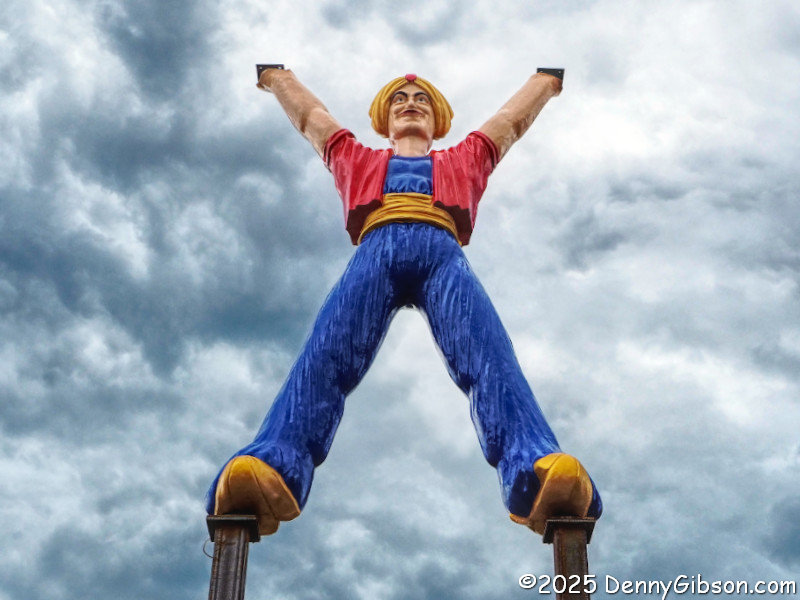
I visited the American Sign Museum on Thursday. Technically, I visited it twice, once during normal hours and once in the evening for a special Tod Talk. The Tod Talk, “Acquiring and Restoring the Frisch’s Mainliner Sign”, was the reason I was there on this particular day, but I also wanted to see the freshly installed genie pictured at right and the museum’s first-ever special display. Ergo, a threefer.
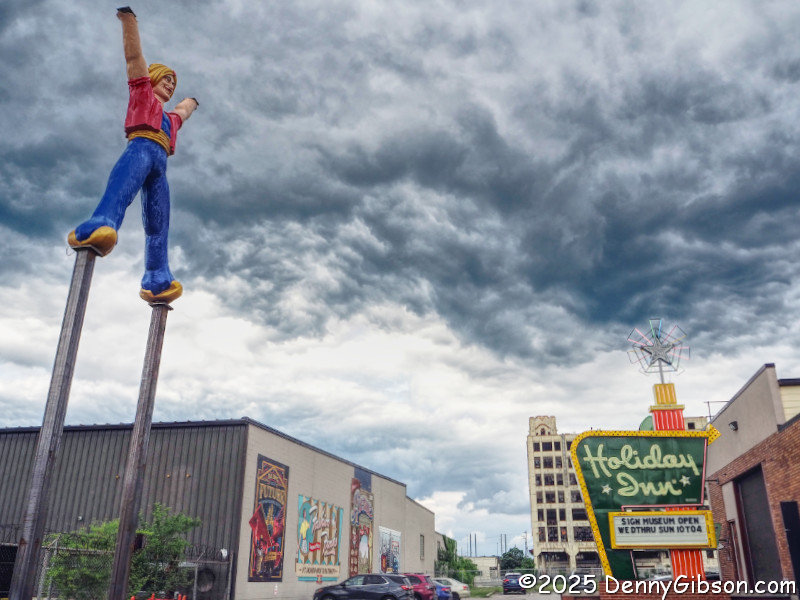
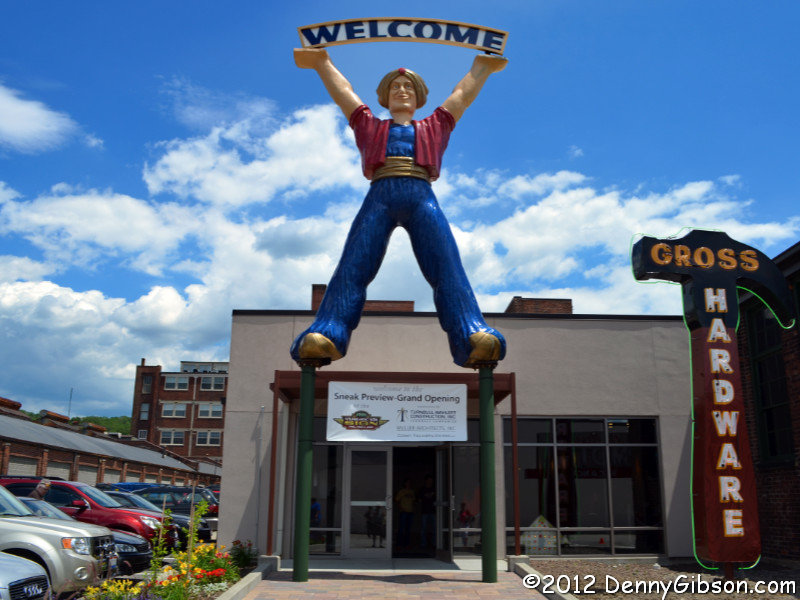
The museum has owned a pair of the giant Carpeteria Genies since 2003, but one was held in off-site storage until last week. Wonderfully restored, it now stands beside the entrance to the museum’s parking lot. I failed to get a picture of the genie at the front door (which is admittedly looking a little faded these days), so I have included one from the museum’s 2012 grand opening at this location.
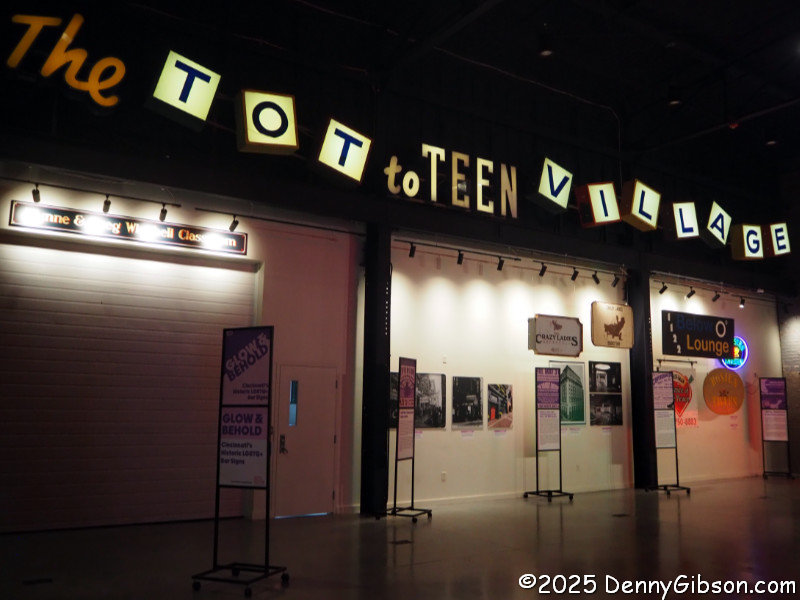
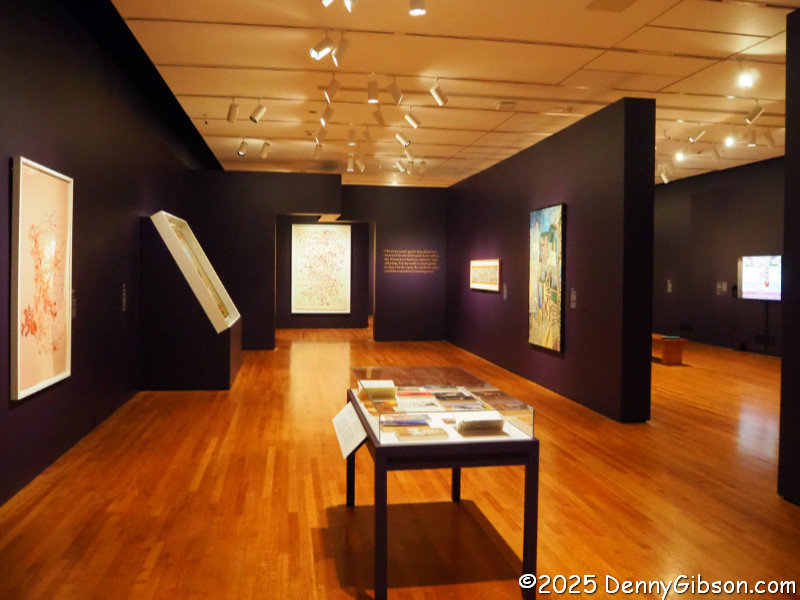
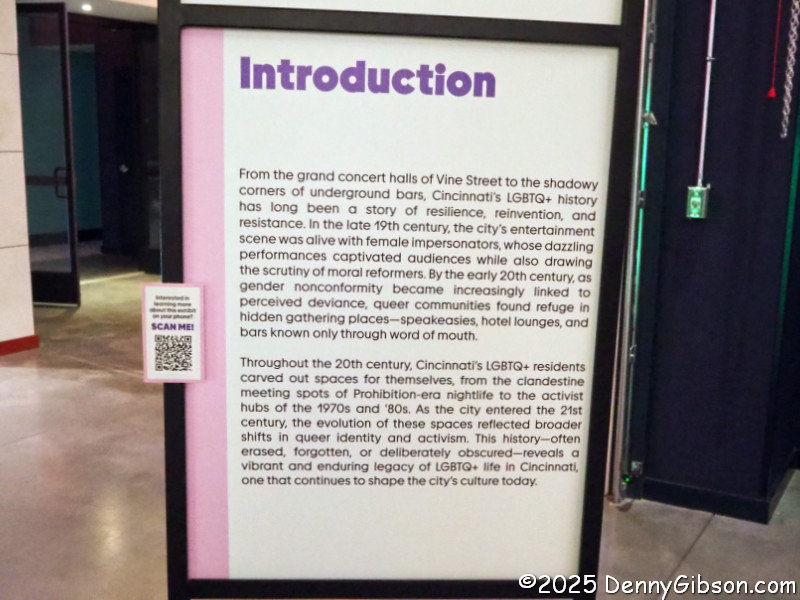
When the museum expanded last year (New Stuff to Look At), it was said that there was now enough space to potentially accommodate some temporary exhibits. The first such exhibit, Glow & Behold: Cincinnati’s Historic LGBTQ+ Bar Signs, is in place now. One panel supplies an introduction. Another notes that “…there were more drag queens and kings, known then as female and male impersonators, working on Vine Street in Cincinnati in the 1880s and 1890s than there are today.”
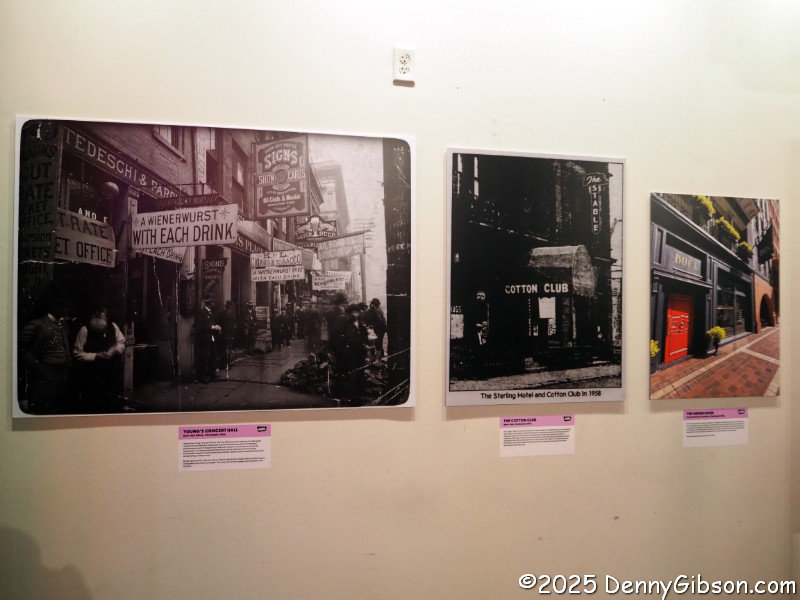
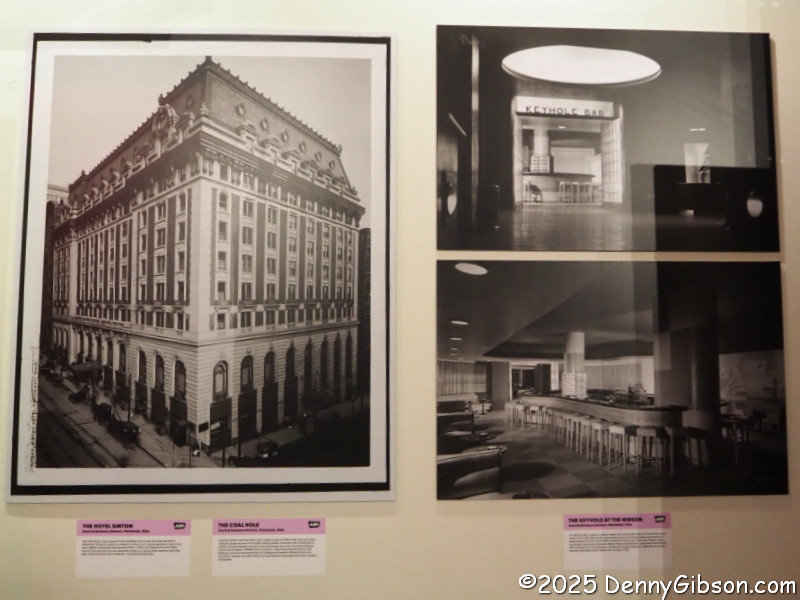
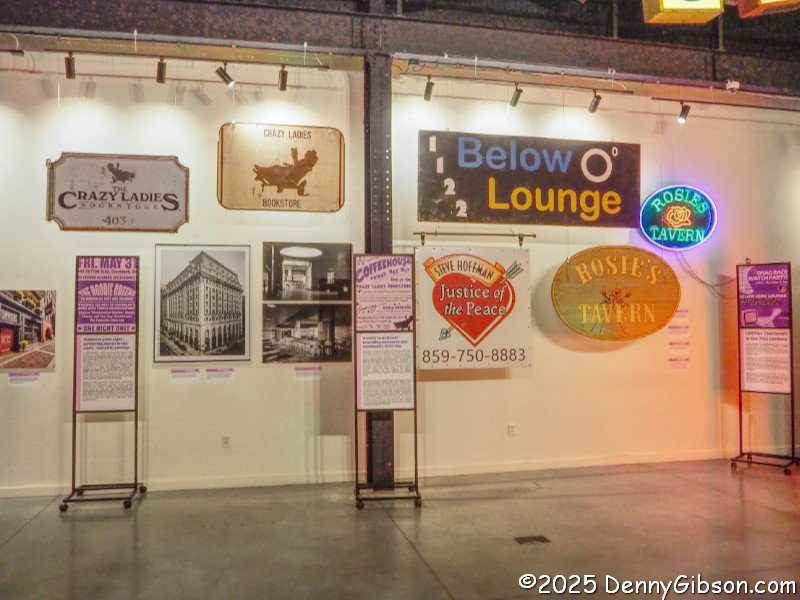
The exhibit includes photos of several businesses that no longer exist, along with retired signs (Remember where we are.) from both defunct and very active establishments. Saturday night’s “Signs & Spouses: A Sparkling Celebration of Marriage Equality” was inspired by this exhibit.
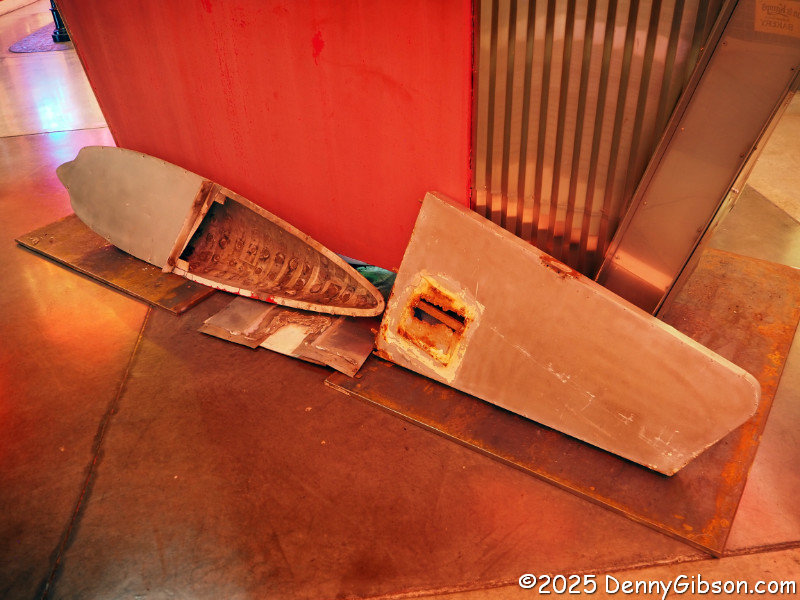
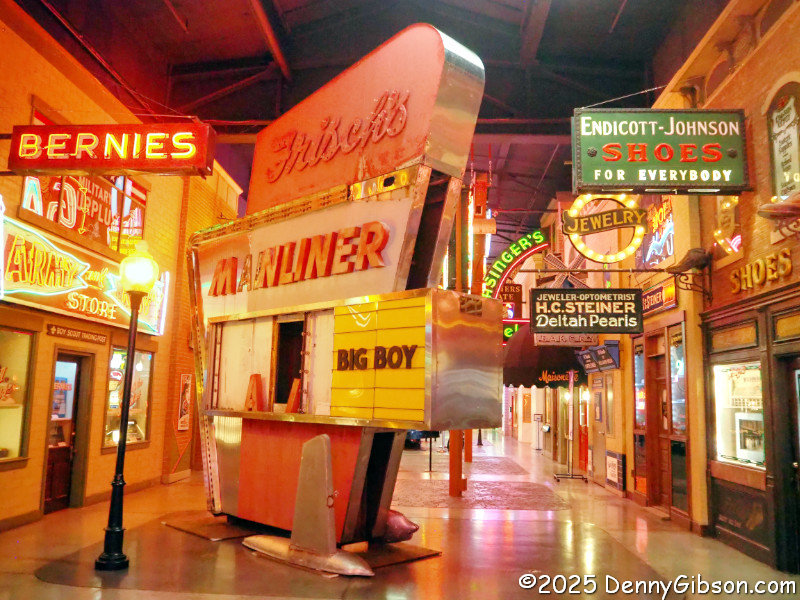
As closing time approached, I took advantage of the relatively empty museum to grab pictures of the Frisch’s Mainliner sign and its flying machine in pieces on the ground without humans milling about. I will be learning a lot more about this sign in a couple of hours.
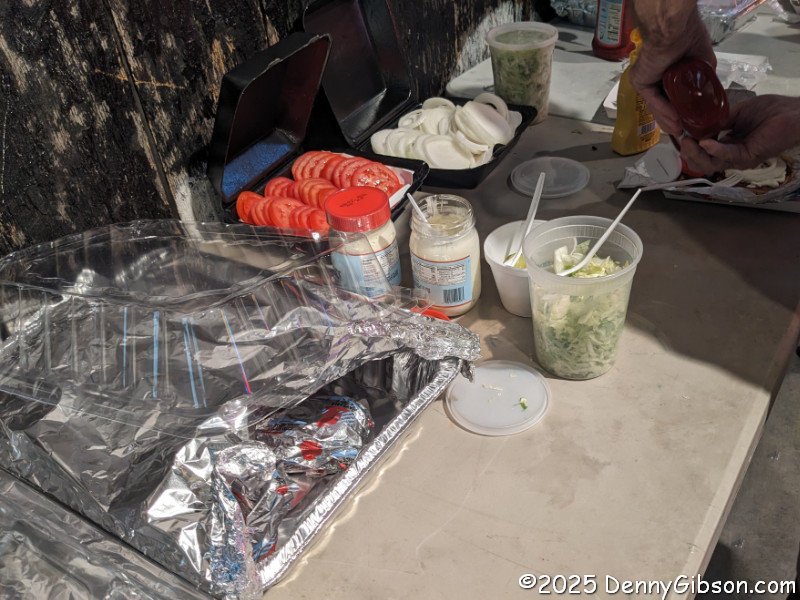

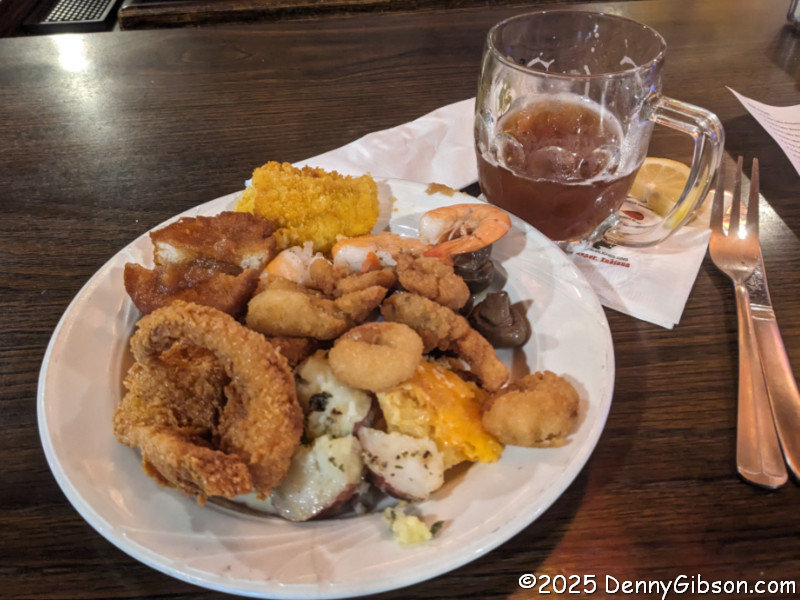
Between the time that the Tod Talk was announced and when it actually happened, the sign was moved from the storage site to inside the museum, and so was the talk. The email announcing the move let us know that this would allow a cash bar, etc. To my surprise, “etc.” included a genuine Frisch’s hamburger from the still-operating independently owned franchise restaurant in Bellevue, KY. I had eaten during my time away from the museum, but I hadn’t eaten THAT much, and I didn’t want to appear unappreciative, so…
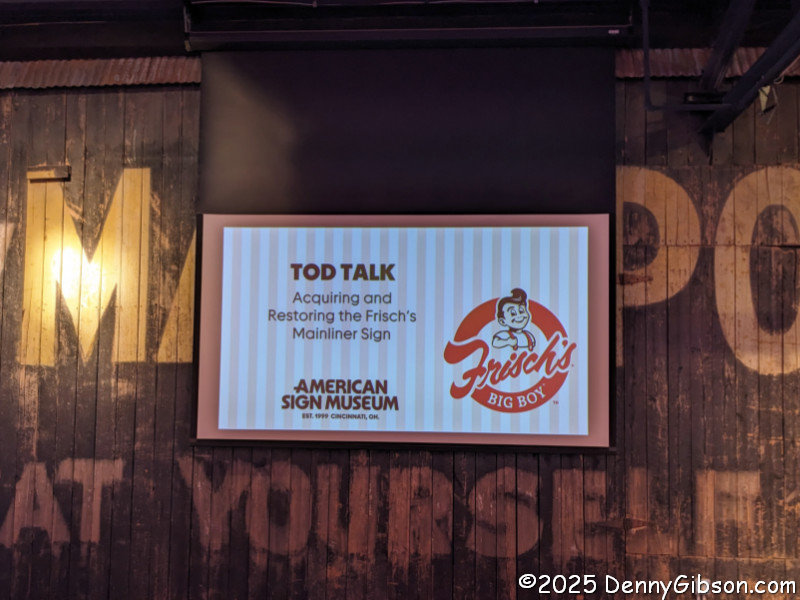
The talk began with Erin Holland, the museum’s Director of Education and Engagement, delivering a greatly abbreviated version of her March presentation on the overall history of Frish’s and its advertising. Then Tod Swormstedt, the museum’s founder and the Tod of Tod Talks, stepped in to share stories about acquiring and taking possession of the Mainliner sign.
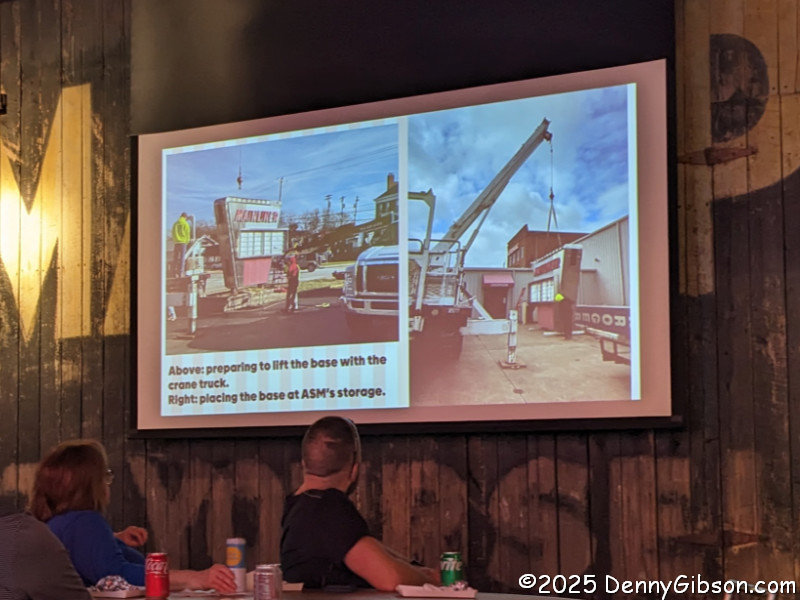
The instant that hints of the Mainliner closing began to circulate, the fate of its incredible sign became a topic of concern for many locals and the ASM in particular. As restaurants closed and lawsuits opened, it wasn’t easy to learn just who owned what. It took some creative sleuthing by Erin to contact the owners of the sign. That resulted in a mid-December meeting with three men identified at the time only by their first names. Although they tried to imply that there were others interested in the sign, it was pretty obvious to Tod that not many would actually want a sign of that size, fewer still would have the means to remove it, and no one else could possibly accomplish that by the suggested end-of-year deadline. Even so, there was no additional contact until Christmas Eve, when the museum was told it could have the sign, and yes, that end-of-year deadline was real and very firm. In anticipation of that happening, Tod had sown some seeds in the ASM phenomenal community of helpers. Although the timing could hardly have been worse, the sign was taken down and transported to a museum storage area in a single day.
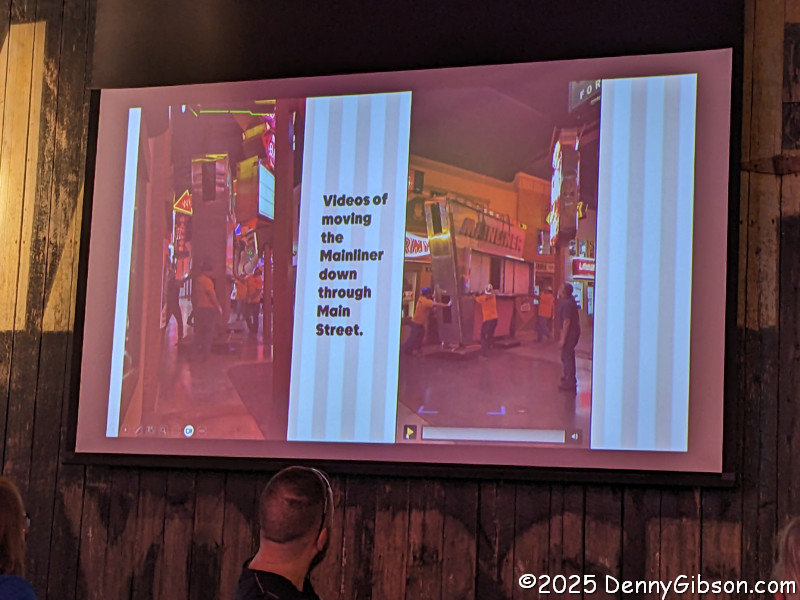
Every day is a big day at the ASM, but some are bigger than others. The museum is closed on Mondays and Tuesdays, so various projects are often scheduled for those days. Monday, May 19, saw two really big projects completed. The huge genie in the opening photo was erected in front of the museum, and the Frish’s Mainliner sign was moved inside it. Natalie Grilli, photographer for the upcoming book on the museum’s first twenty-five years, was onsite and busy bouncing between the two giants in motion. Natalie was also onsite Thursday evening. Pictures and some of the videos of the moves we saw on Thursday can be seen on the ASM’s Facebook page.
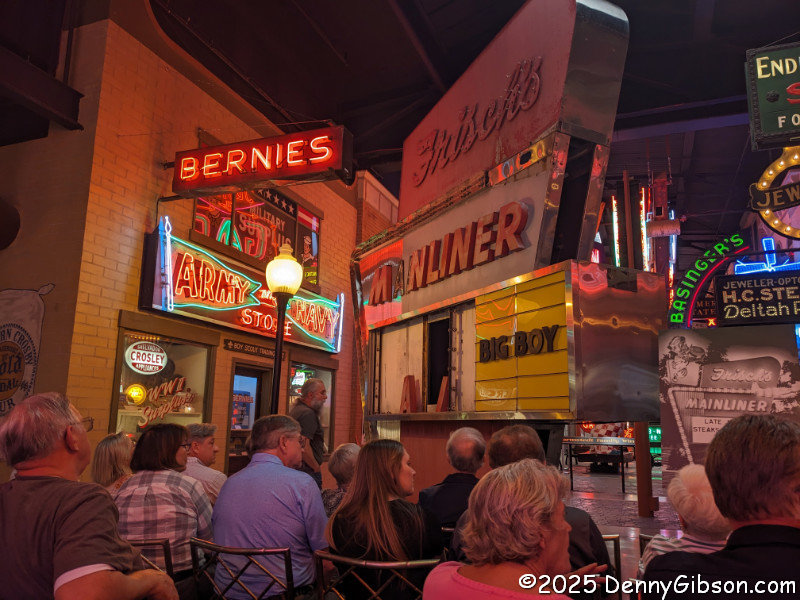
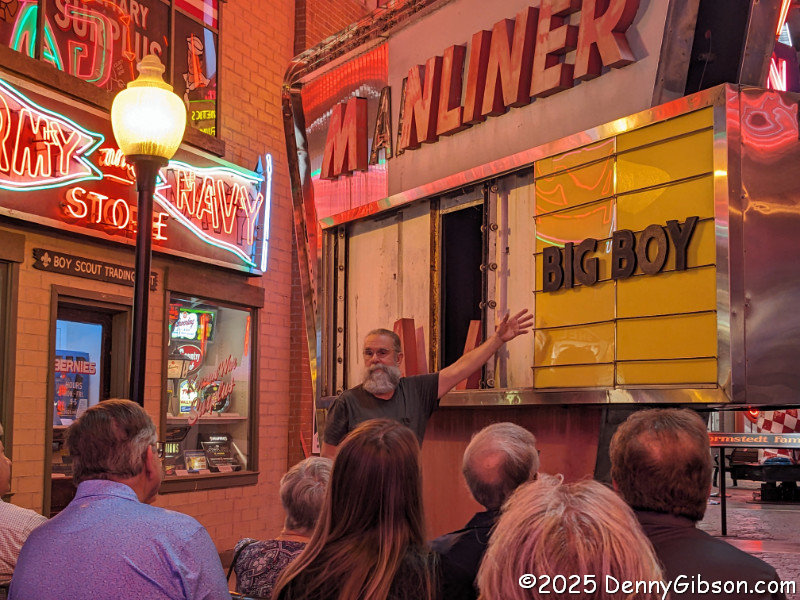
The group then moved out to where the Mainliner sign now stands, and I silently congratulated myself for taking those unblocked photos earlier. Tod now pointed out some of the sign’s features and described some of the plans for its restoration. Those plans are far from complete, but he said restoring the rotating propellers is definitely part of them. A printout of that photo displayed next to the sign was waiting on each chair, and I’ve included a scan of mine here. Note that the original chase lighting was incandescent and ran through the airplane. At some point, this was removed from the plane and converted to neon tubes on the sign body. The plugged holes can be seen in the picture of the airplane interior above. This is also something that Tod hopes to restore. The separate section with the Big Boy has been lost and will likely not be restored.
Something that may be obvious but still should be pointed out and cheered is that the restoration of this sign will take place in the middle of the museum in full sight of visitors. This will certainly present some challenges for those doing the restoration, but it is sure exciting for us mere spectators. Also in the realm of spectating, the sign can be seen at its original home during my own final visit to the Mainliner. A link to pre-order that 25th anniversary book I mentioned is on the museum’s support page



 I had so much fun driving twice across the country for
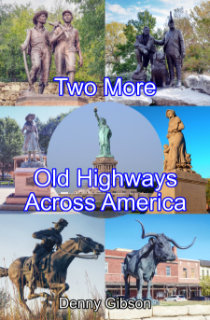
  I also bragged about the title of the Yellowstone Trail and US 20 book and bemoaned the fact that it wasn’t as clever as initially envisioned. Of course, clever sometimes also means cryptic, and that might have been the case here. Anyone who thought 20 in ’21 and the YT Too overly cryptic will be happy to see that the title of this book isn’t cryptic at all and not the least bit clever either. It really is about going across America on two old highways and, since I’ve done that before, it really is about two MORE old highways. It just occurred to me that some folks might be unhappy about having to guess which two, and I can understand that. But putting the wordy names of these two auto trails in the title would have made it entirely too long, and it’s too late to do anything about it now anyway. Sorry.
 To be honest, though, even if the names National Old Trails Road and Pikes Peak Ocean to Ocean Highway were right there in the title, they would not be recognized by everyone. Out west, some would recognize the NOTR as something that turned into US 66. Back east, a similar number might recognize it and think it had become US 40. In the middle of the country, I suspect that just a few would even recognize the PPOO’s name. Of those who did, some might say it was replaced by US 36, while others would claim it became US 22. There is a little truth in each of these claims, but my point is that not all that many people know that the PPOO and NOTR were both once routes that connected the East Coast with the West. Their names in the title would not be any more enlightening to many than the words “Old Highways”.

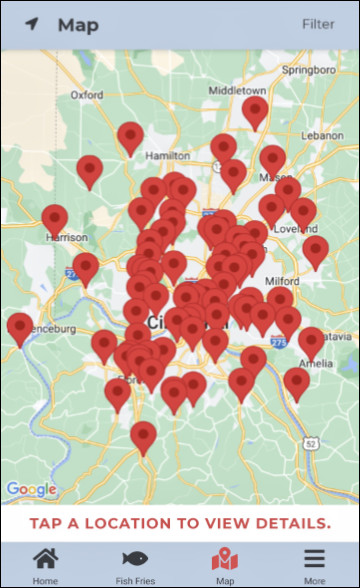 Yes, that image at right looks pretty much identical to the opening image in last year’s Lenten wrap-up post (