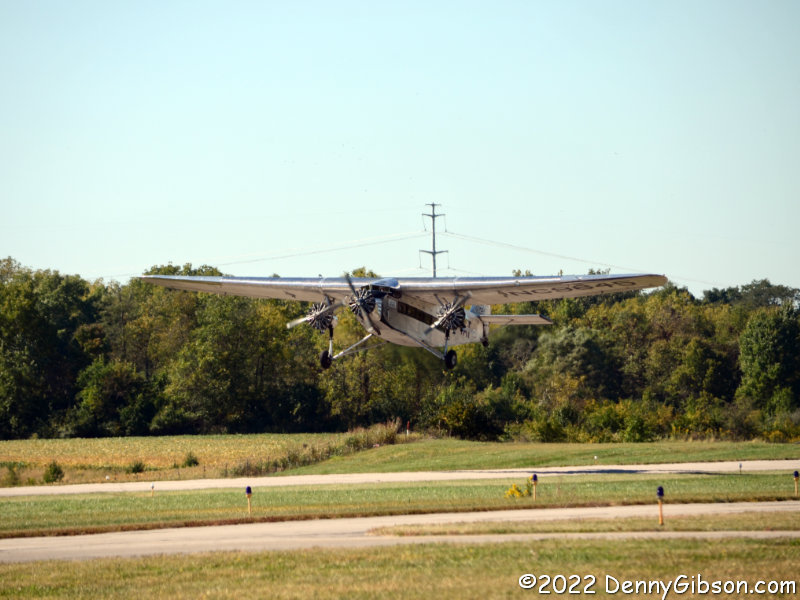
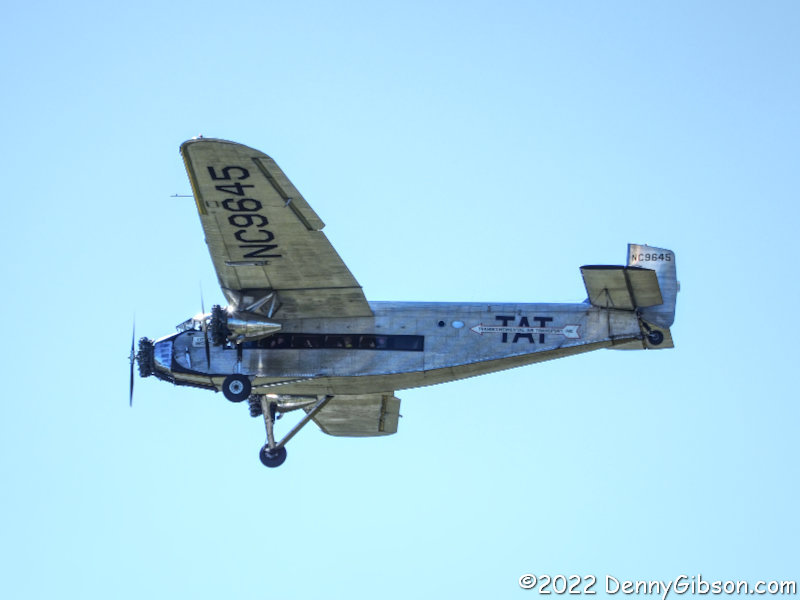
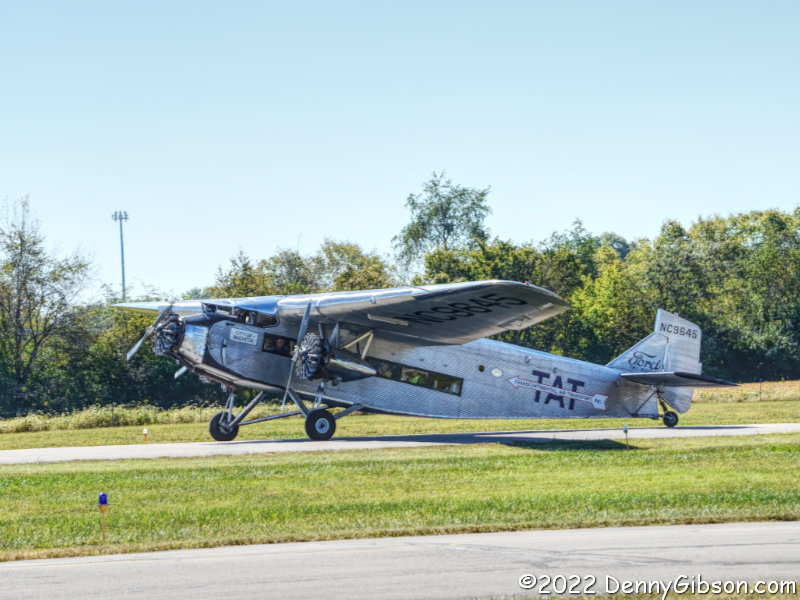
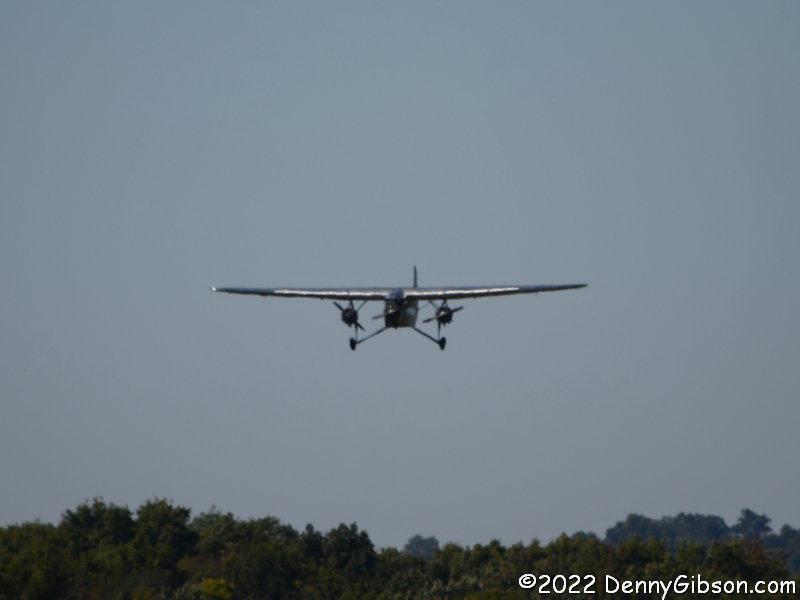
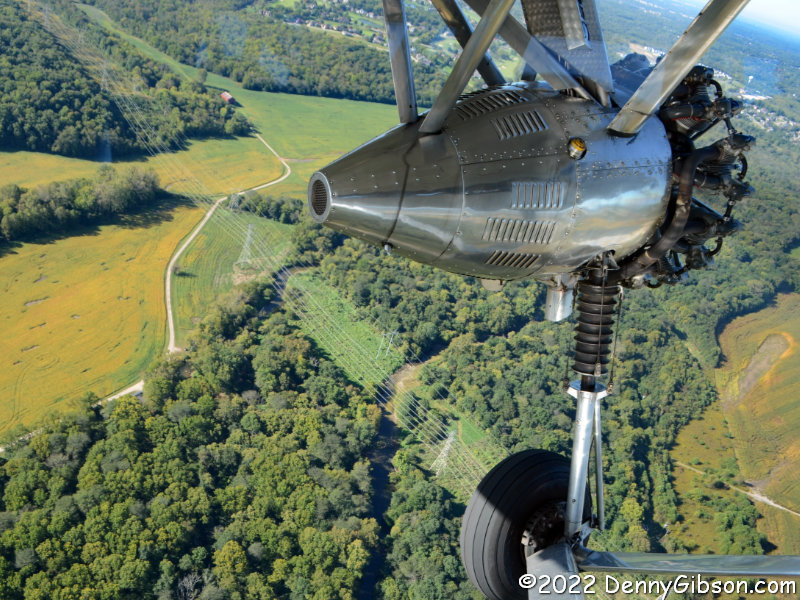
 …did not carry me too far away but it did carry me nearly a century into the past.
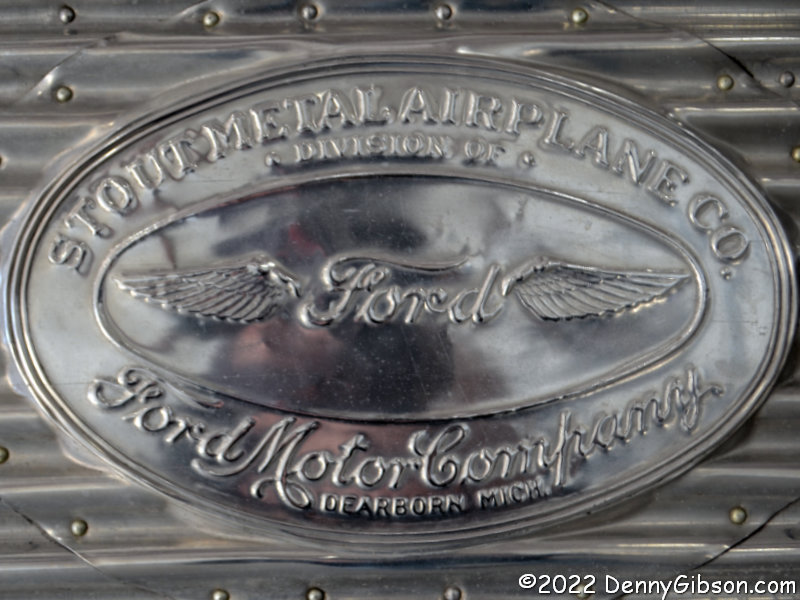
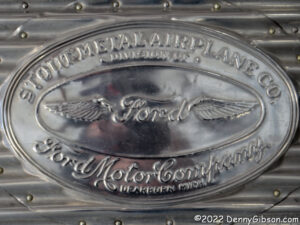
In 1922, Henry Ford invested in the startup Stout Metal Airplane Company then purchased the entire outfit two years later. The most notable of numerous modifications made to Stout’s original design was the addition of two engines. Ford Tri-Motor production began in 1926 and ceased in 1933 which coincided almost exactly with the period when the Waco Model 10 was produced. There were several Model 10s present at the Waco Fly-In I attended a couple of weeks ago.
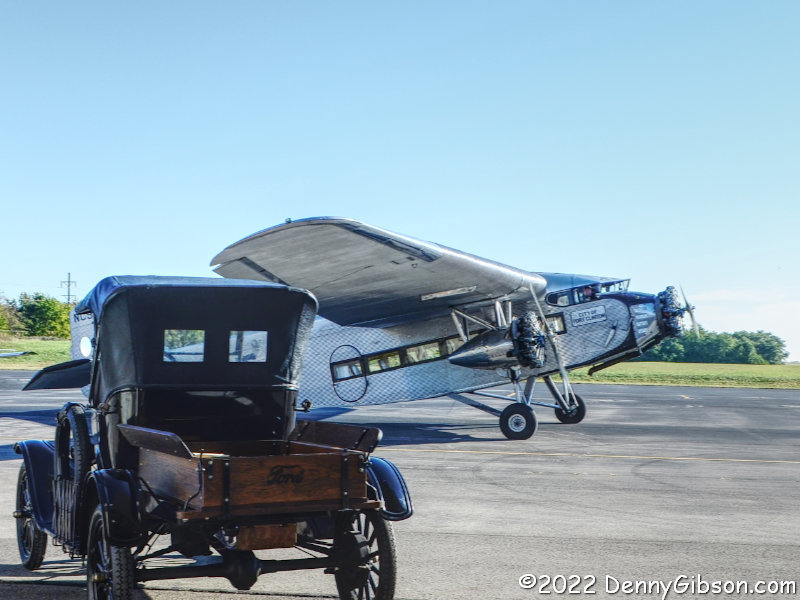
 Ford produced 199 Tri-Motors in a span of eight years. In one year less (1927-1933), Waco turned out 1,623 Model 10s. Both airplanes were civilian passenger planes and both were icons of the early days of human flight but similarities between the two don’t go far beyond that. The Ford was all metal while the Waco was mostly cloth-covered wood. The Waco was an open bi-wing with a compartment for two passengers positioned in front of one for the pilot. The Ford was totally enclosed with a pilot and co-pilot sitting ahead of, depending on model, up to seventeen passengers. With a stewardess often part of the crew, it is generally thought of as the first airliner. That these two aircraft were contemporaries and both highly successful is certainly food for thought.
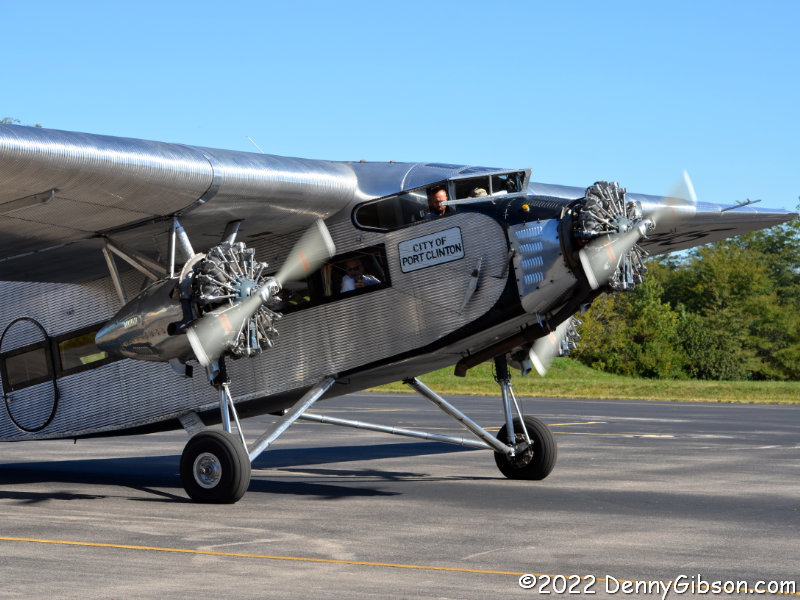
 As of Friday, I can list another difference between a Waco 10 and a Tri-Motor. I have never flown in a Waco. On Friday, I took a ride in a Ford Tri-Motor 5-AT-B at the Greene County Airport near Xenia, Ohio. As was the case with the subjects of a couple of last year’s adventures (Smooth As Glass and An Airy Plane Ride), I learned of the touring Tri-Motor through Brandi Betts’ Make the Journey Fun blog. Brandi flew in the plane during its Chillicothe stop and reported on it here.

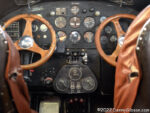
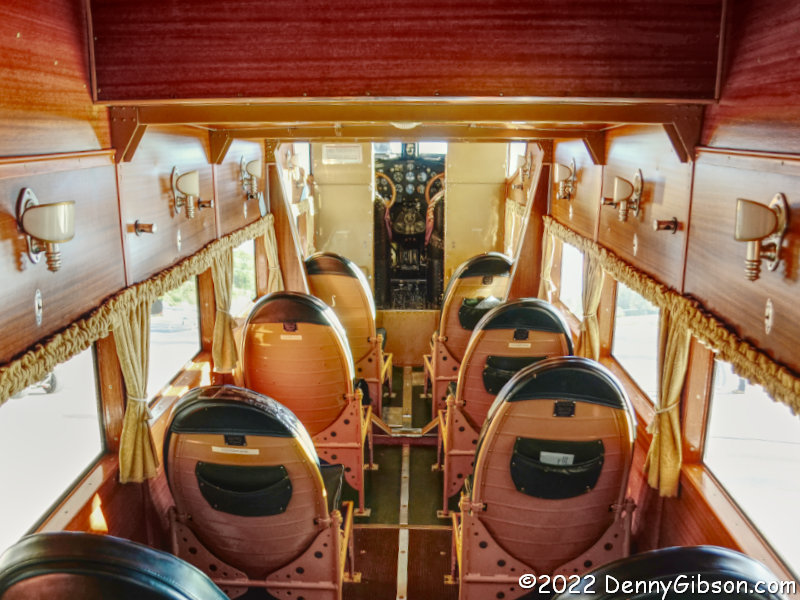
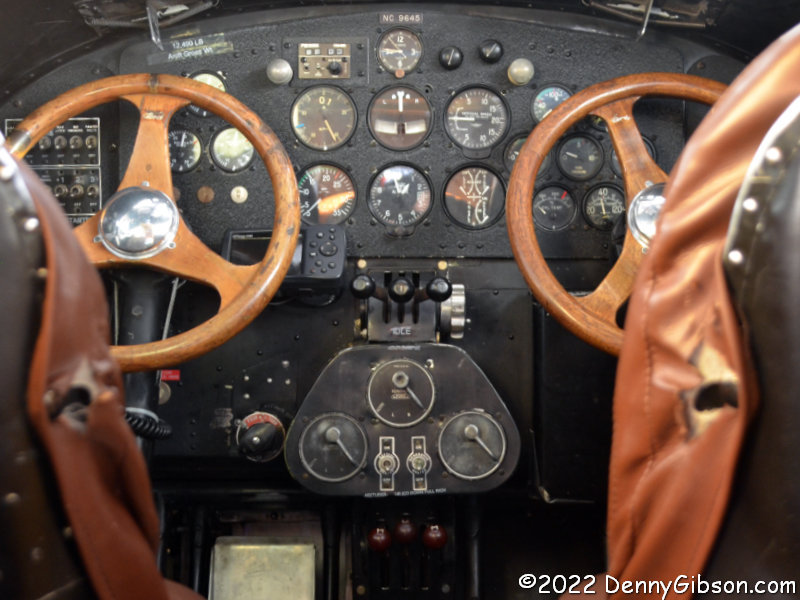
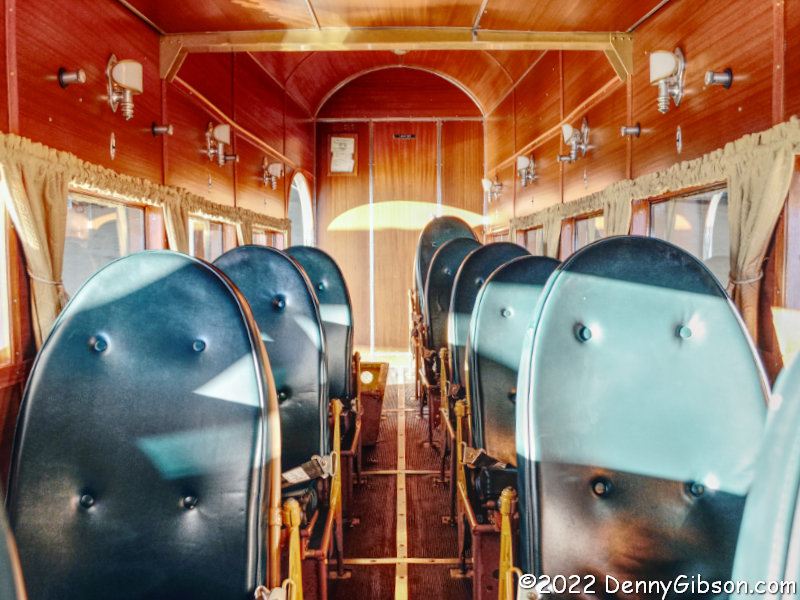
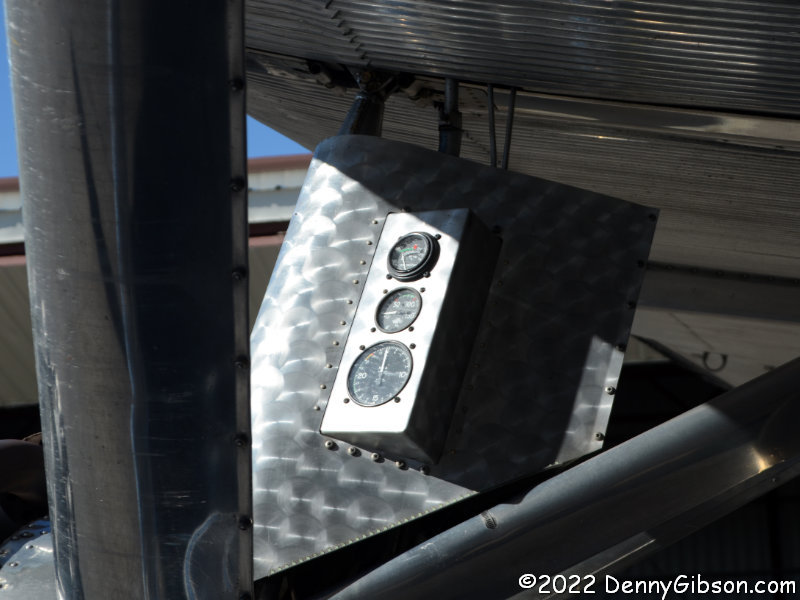
 I guess I was eager to fly like it was 1929 and arrived at the airport before the airplane was even rolled out of the hangar. While chatting with some of the event organizers, I was told it was OK to step inside the plane for some photos which is how I got these shots of the empty interior. Sharp eyes might notice that not everything is triplicated in the cockpit. Tachometers plus pressure and temperature indicators for the outboard engines are mounted on wing struts near the engines.
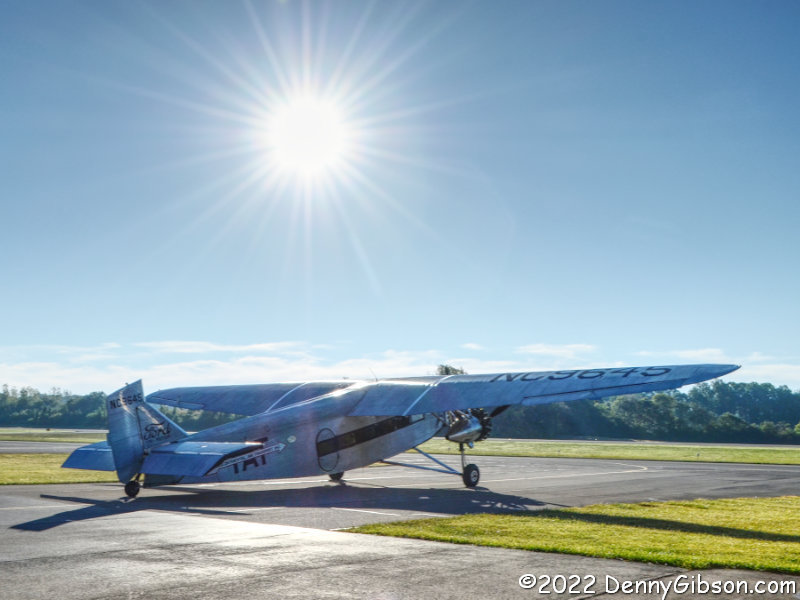
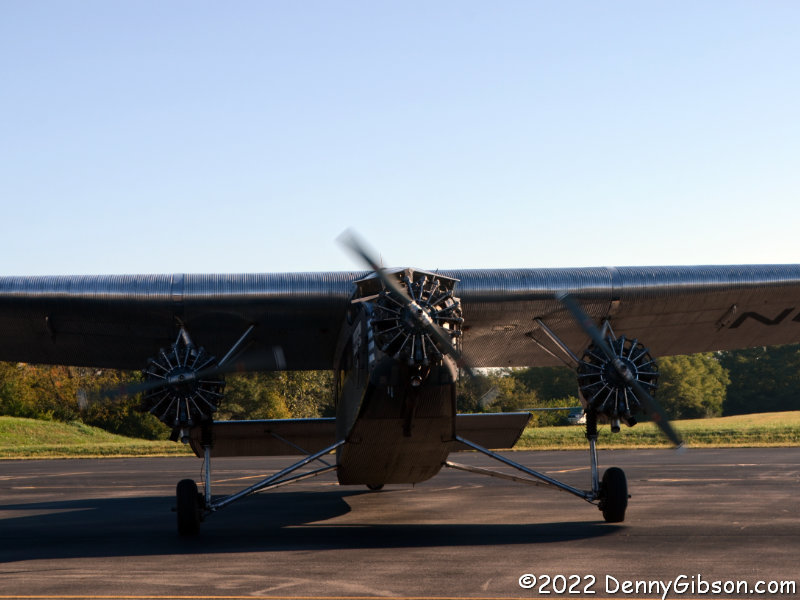
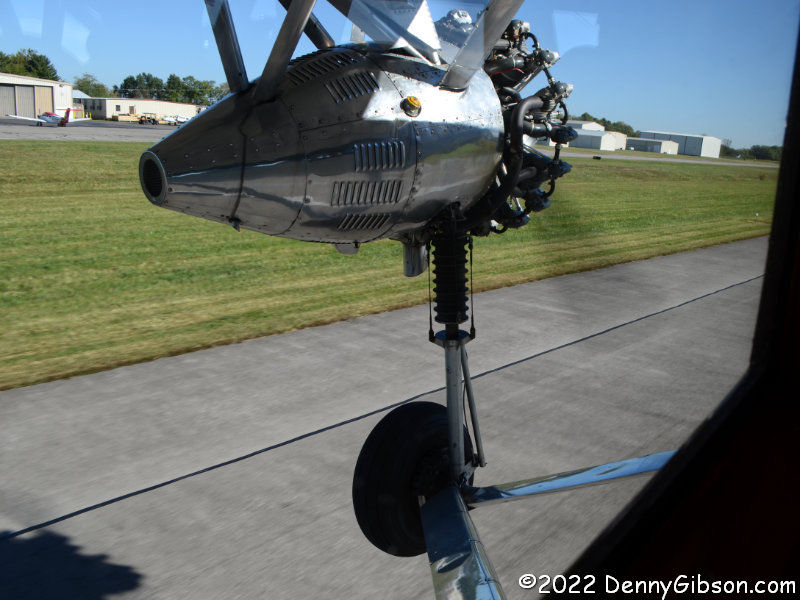
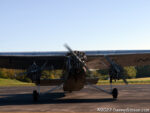 Before the day’s first flight, the Ford was taxied down the runway for refueling and I was able to watch the three radial engines fire up and the propellers start turning. The into-the-sun shot near the top of this post was also taken at the start of the gas run.
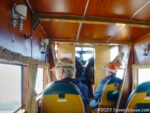
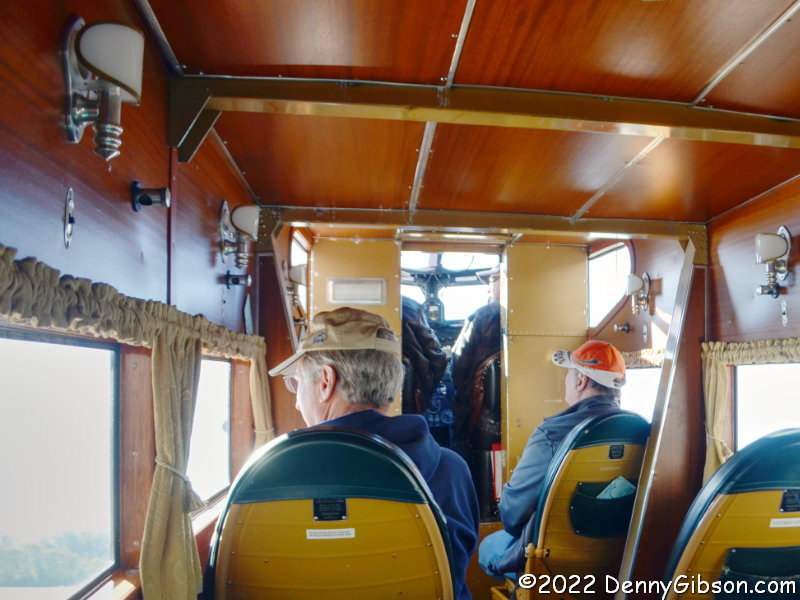
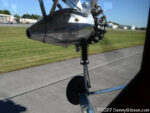 Shortly after the plane’s return, the first set of passengers was given a short briefing and permitted to board. Note that every seat is a window seat and every seat is an aisle seat. Six of the ten seats as well as the extra-charge co-pilot’s seat were occupied by males of a certain age. The other seats were empty.
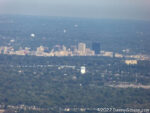

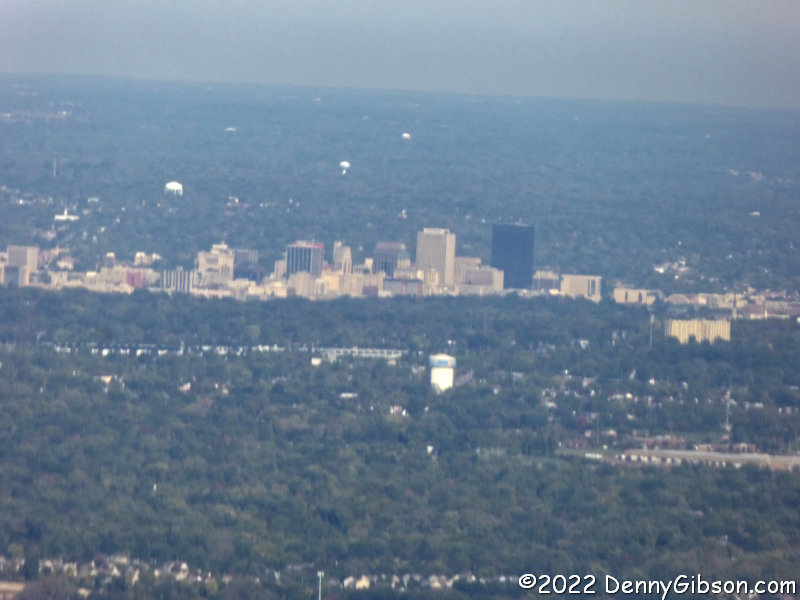
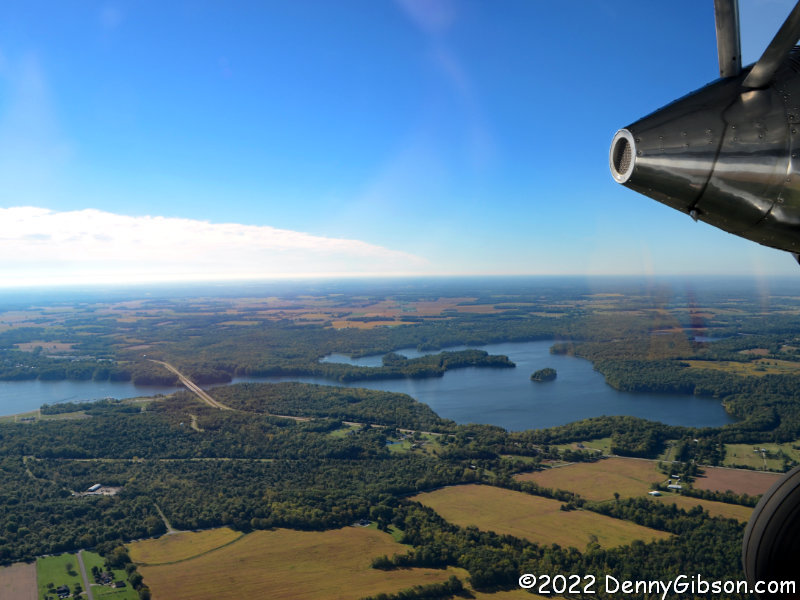
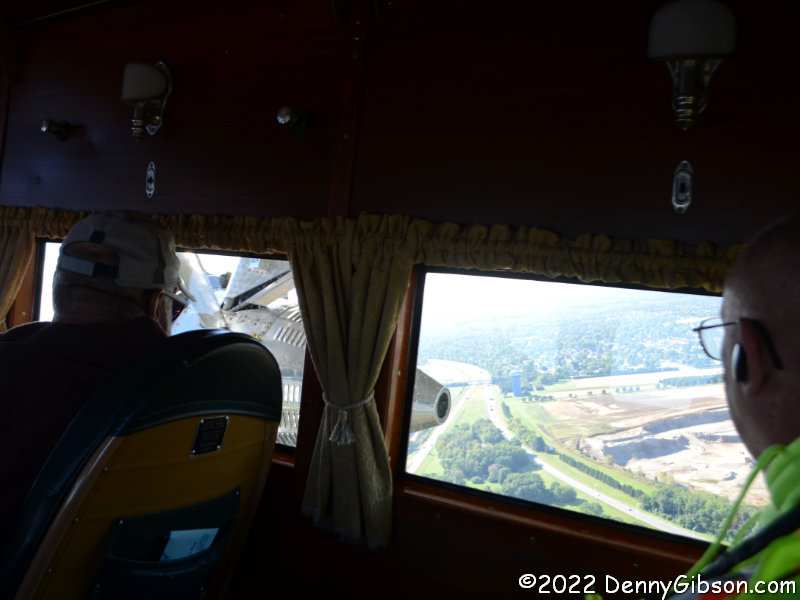
 Not only was every seat a window seat, the windows were real windows and not those too-low and too-small foggy portholes found in today’s airliners. It was even possible to look out the opposite side of the plane. Photos here are of the water-filled gravel pits northeast of the airport, OH-73 crossing Ceasars Creek Lake, and downtown Dayton from eight or ten miles away. Plus I got a pretty good look at the ground during our final bank to return to the airport,
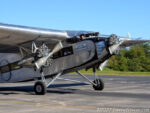
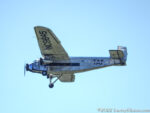 Assuming the event is more heavily attended during the weekend, showing up on Friday morning worked out well in avoiding crowds. The downside was that I wanted to take photos of the next flight and I had to wait a while for it to fill. When it did, I again got to see those props start turning then watch the plane head into the sky.
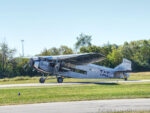
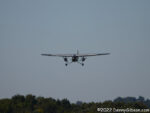 Flights are about half an hour from engines on to engines off with fifteen to twenty minutes of that being airborne. Having waited to see the takeoff, it only made sense to wait for the landing.
The Transcontinental Ait Transport logo this plane now wears was also the one it wore first. The plane first flew on December 1, 1928, and became the property of TAT in January 1929. Its complete history is told here. The TAT story is a short but important one. Although crossing the continent was not accomplished entirely in the air, the company did put Ford Tri-Motors to work for about a year expediting travel between the coasts. Overnight trains were used to connect New York with Columbus, OH, and Waynoka, OK, with Clovis, NM. Tri-Motors carried travelers between Columbus and Waynoka and between Clovis and Glendale, CA. The fare for a forty-eight-hour one-way trip was $352.
Rides will be available at the Greene County – Lewis A Jackson Regional Airport until 5:00 PM today (Oct 2, 2022) and at some other spots in Ohio, Indiana, and Kentucky during the rest of October. Check it out here.

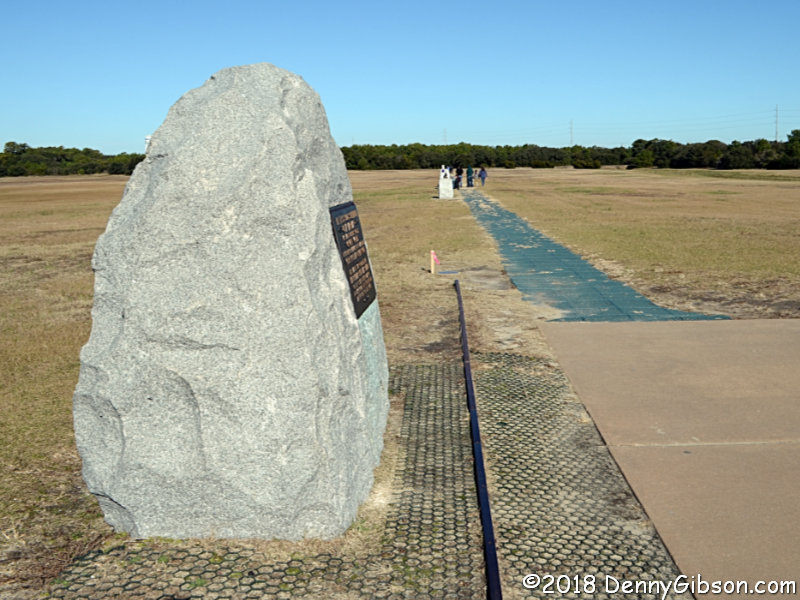 This picture is from my 2018 Kitty Hawk Holidays trip. It was a Christmas Escape Run so obviously the December 25 holiday was included but it started sufficiently early to include another holiday — the 115th anniversary of the Wright Brothers’ first flight on December 17. Stops on the way to Kitty Hawk, NC, included the National D-Day Memorial and Appomattox Court House. The anniversary was celebrated with ceremonies at Kill Devil Hill then I stuck around the area a couple more days in order to drive some of the Outer Banks Scenic Byway and check out other points of interest. Christmas was spent in Knoxville, TN, which I reached largely on US-64 and the Dixie Highway with several stops and side trips to Charlotte and Mount Airy. I reached home on December 27 following a last meal on the road at the since-closed Parkette Drive In in Louisville, KY.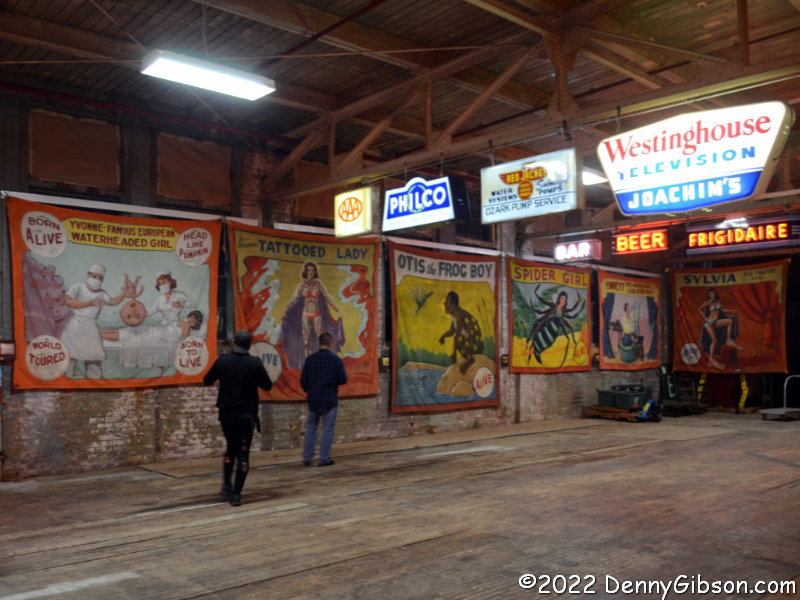

 We fought a war to get this country going then gave every land-owning white male above the age of twenty-one the right to vote. A little more than fourscore years later, we fought a war with ourselves that cleared the way for non-whites to vote. Several decades of loud, disruptive, and sometimes dangerous behavior brought the granting of that same right to non-males a half-century later, and another half-century saw the voting age lowered to eighteen after a decade or so of protests and demonstrations.
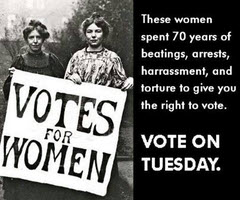 Of course, putting something in a constitution does not automatically make it a practice throughout the land and I am painfully aware that resistance followed each of those changes and that efforts to make voting extremely difficult for “the other side” are ongoing today. I don’t want to ignore partisan obstructions and system flaws but neither do I want to get hung up on them. I meant my first paragraph to be a reminder that a hell of a lot of effort, property, and lives have gone into providing an opportunity to vote to a hell of a lot of people. Far too many of those opportunities go unused.
 I first posted the core of this article in 2014. In the original title, I claimed to not care how anyone votes. That was never entirely true, of course. I have my favorite candidates and issues. I’ll be disappointed in anyone who votes differently than I do but not nearly as disappointed as I’ll be in anyone who doesn’t vote at all. I’m reminded of parents working on getting their kids to clean their plates with lines like, “There are hungry children in China who would love to have your green beans.” I’m not sure what the demand for leftover beans is in Beijing these days but I’m pretty sure some folks there would like to have our access to ballots and voting booths.





























 This makes two consecutive book reviews that are seriously belated and that’s hardly their only connection. I wasn’t even aware of either the book or its author when I arrived at the 2022 Lincoln Highway Association conference but, John Jackson, co-author of