Cincinnati Strut

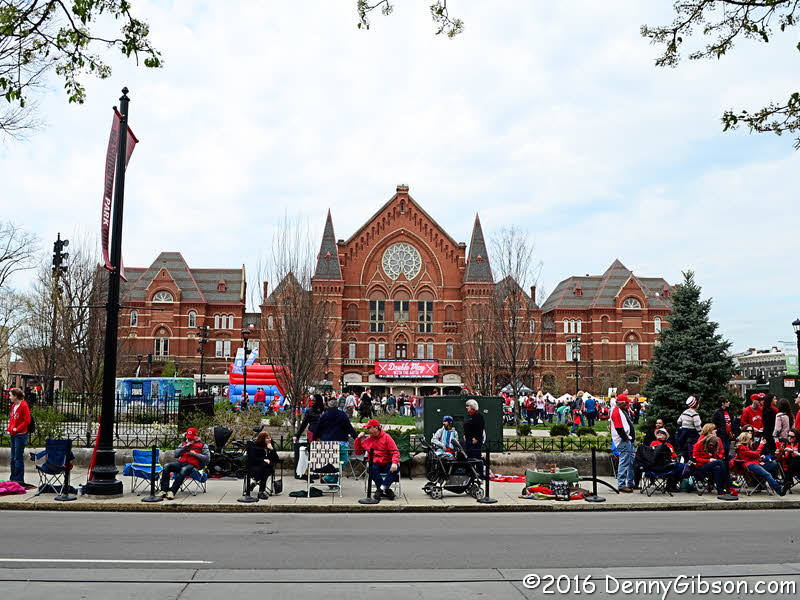
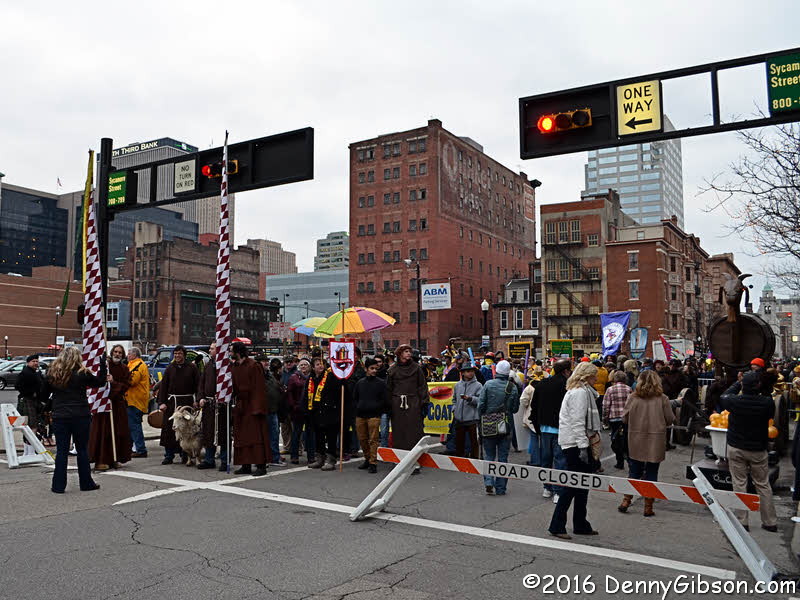
od2016_01I’m sure some folks get tired of hearing about how special Opening Day is in Cincinnati but that’s not going to stop me. I won’t write as much about the history as I did back in 2012 but I will again mention that the world’s oldest professional baseball team always opens at home and always has a marvelous parade. The picture at right shows people gathering for the parade on Race Street. Behind them is Washington Park and Music Hall stands beyond the park. The park was completely renovated a few years ago and is now a popular gathering place for families. Music Hall will be closing soon for its own renovation. I reported on a performance there a couple of weeks ago.

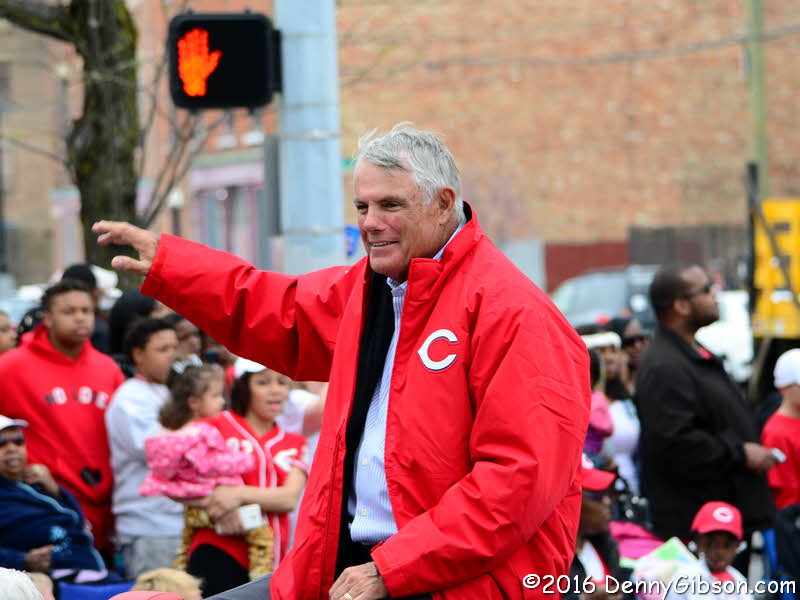
od2016_02Lou Piniella managed the Reds in their last World Series win in 1990. I remember it vividly and recall thinking that it had been a long dry spell since The Big Red Machine wins in 1975 and ’76. But that was just fourteen years and the Reds have now played twenty-five seasons without even getting to a World Series let alone winning one.

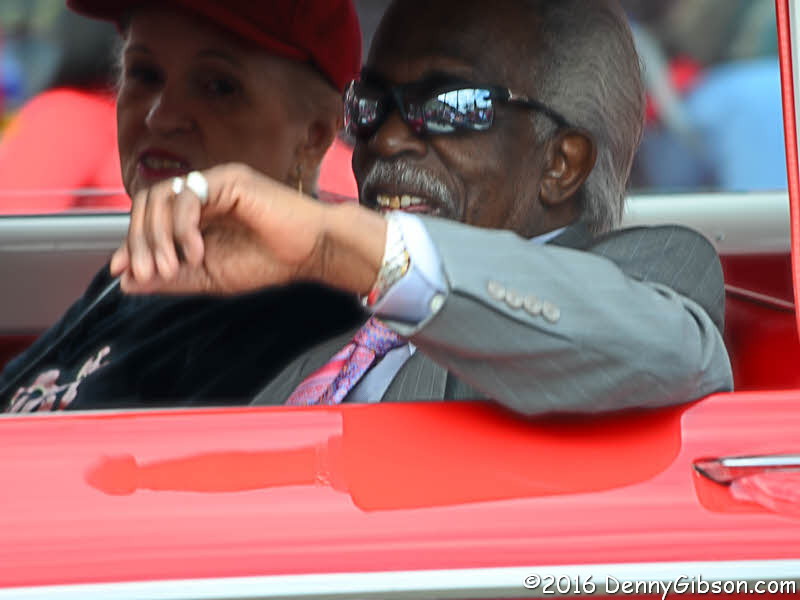
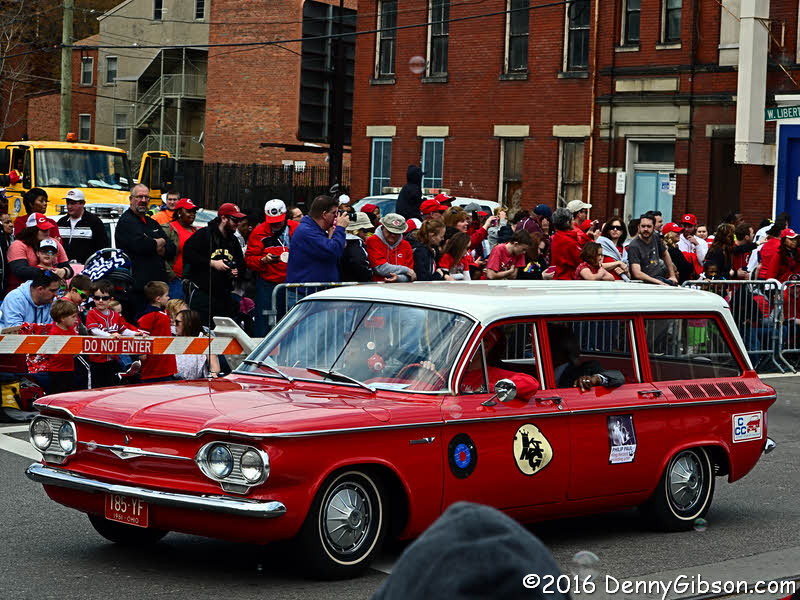
od2016_03I snapped a picture of the Corvair station wagon as it approached but didn’t realize who was in it until it was beside me. That’s legendary King Records studio drummer Phillip Paul with who I believe is his good friend Roberta Narcisse beside him. Paul recorded the original “The Twist” with Hank Ballard and the Midnighters, “Train Kept A-Rollin'” with Tiny Bradshaw, “Hide Away” with Freddy King, and an incredibly long list of other hits. Paul isn’t quite as flashy as another local music legend who was in last year’s parade but, while Bootsy Collins performs only occasionally, the ninety year old Paul has a steady weekend gig in downtown Cincinnati.

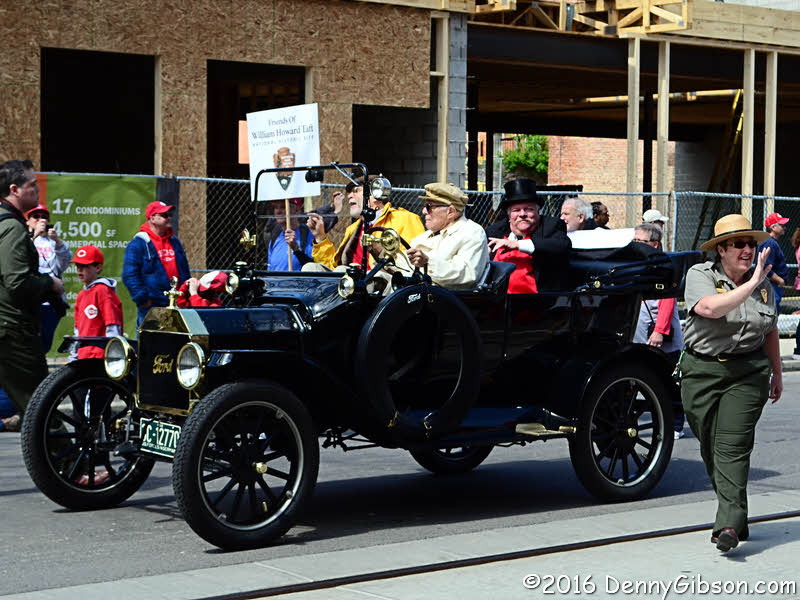
od2016_04President William Howard Taft threw a ceremonial first pitch to start the Washington Senators 1910 season and every president since has thrown a first pitch at an Opening Day, World Series, or All Star game at some time while in office. Taft was a Cincinnati native and his former home is now a National Historic Site. A fancy brewpub right on today’s parade route bears his name. If you have any thoughts of being a Taft impersonator, Cincinnati is the place to be.

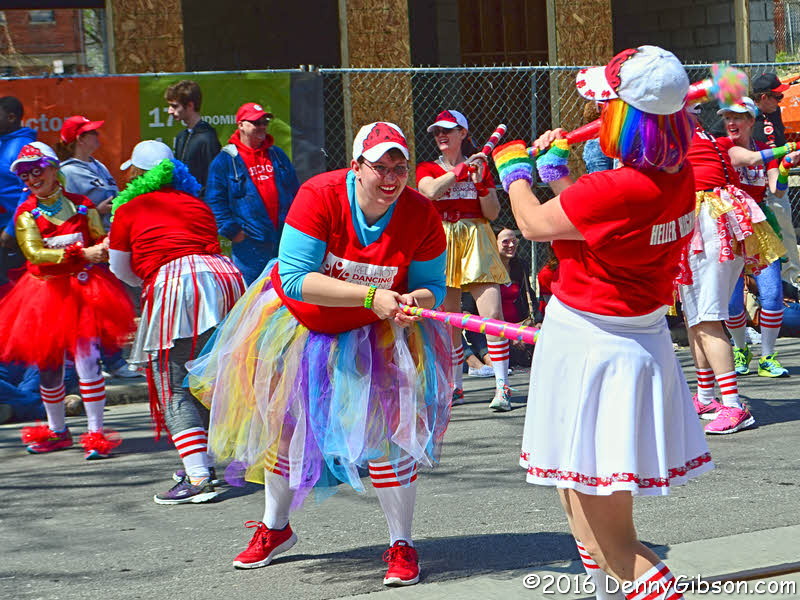
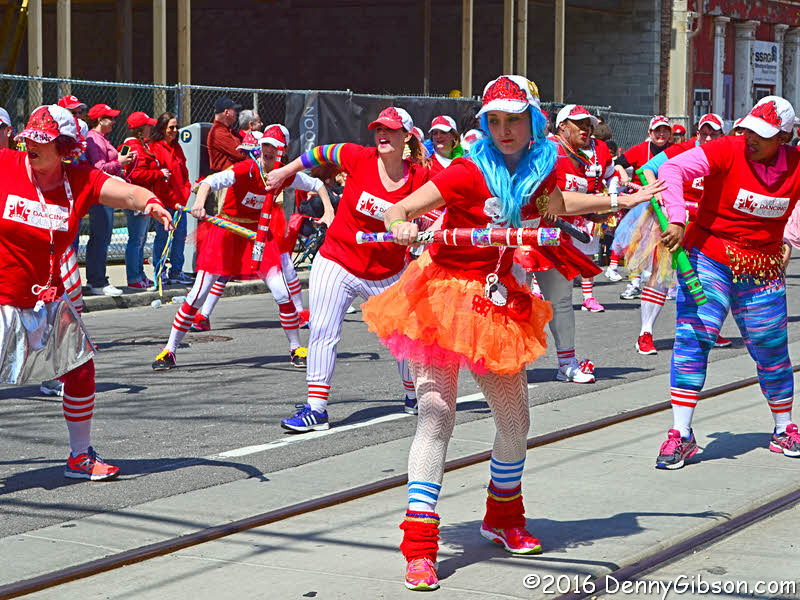
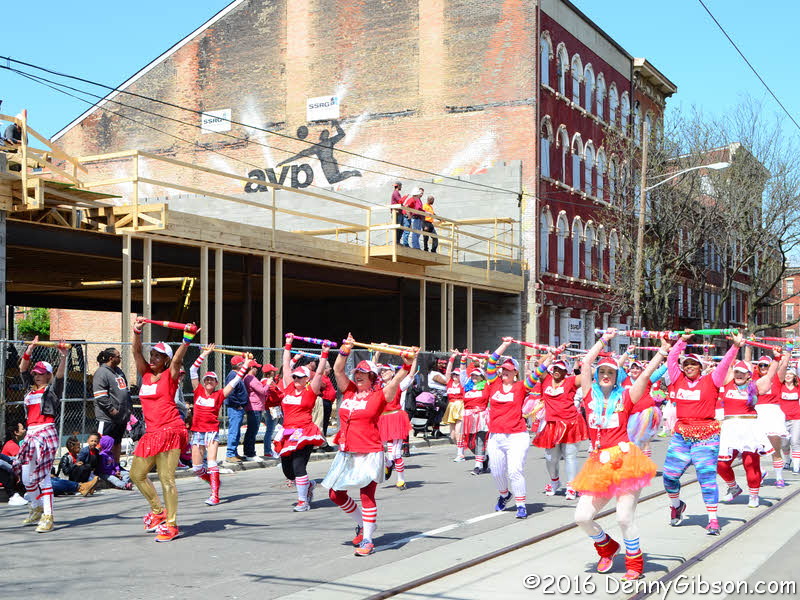
od2016_07od2016_06od2016_05In less than a year of existence, the Red Hot Dancing Queens have made me a most sincere fan. As I told a small group of them I encountered after the parade, if everyone could have a mere fraction of the fun these gals have, the world would be a much better place. Watch for them at parades and festivals throughout the summer.

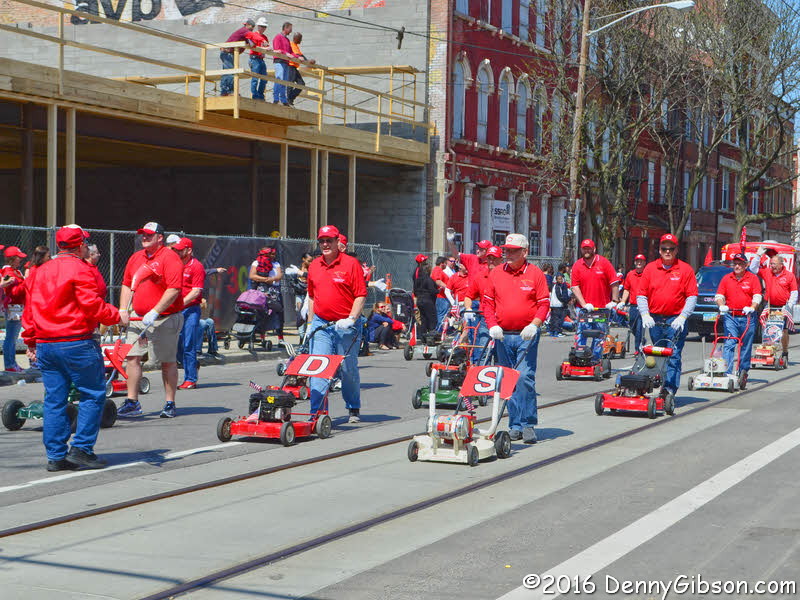
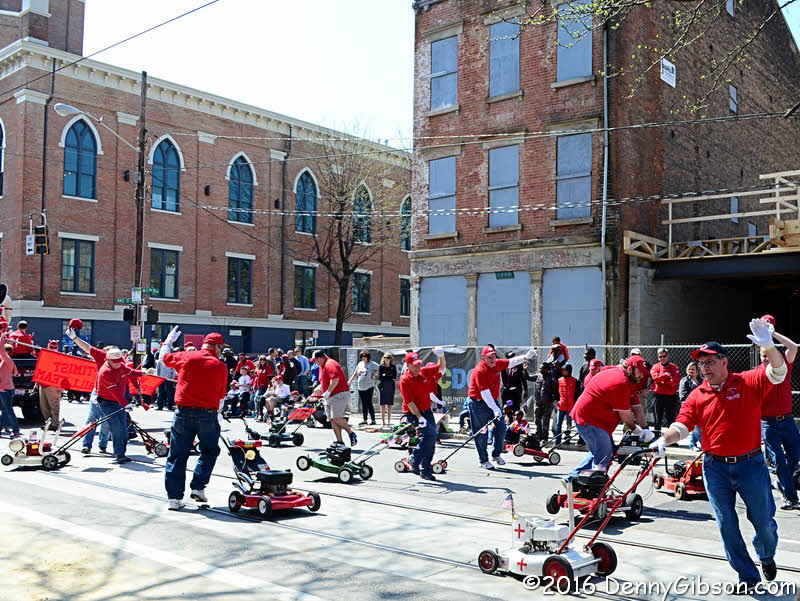
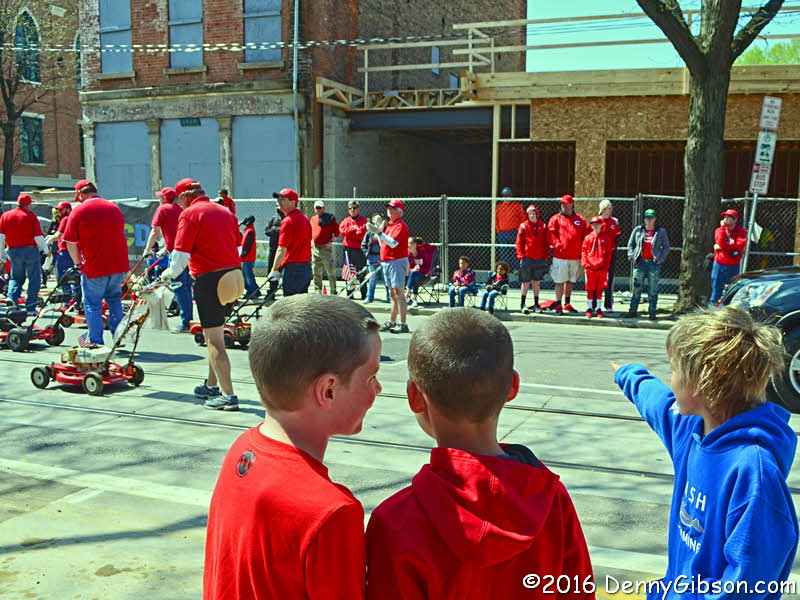
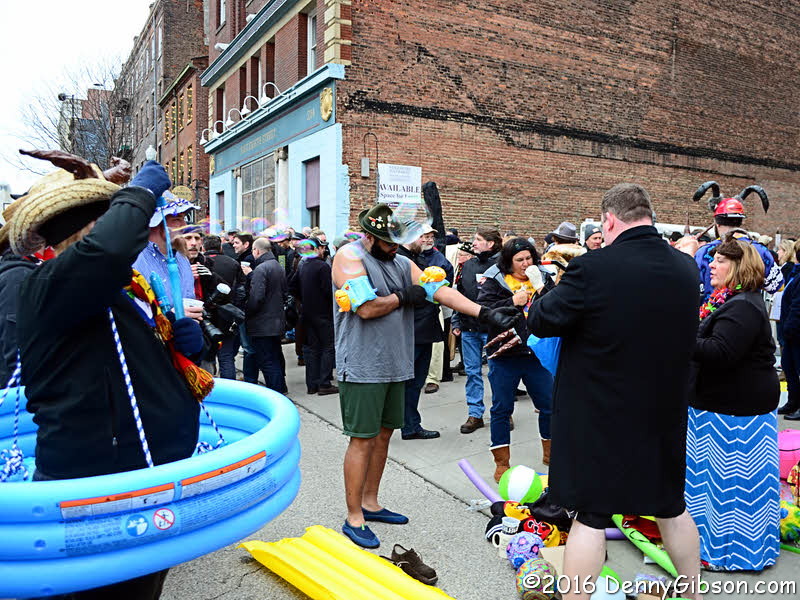
od2016_08od2016_09od2016_10Here’s another parade group that I like a lot. I recall first seeing the Wapakoneta Lawnmower Precision Drill Team a long time ago in a Saint Patrick’s Day but they haven’t been in that parade for many years. They might have realized that the fun was draining from that parade well before I did. After completing one of their precision choreographed drills, there was a pause in the parade and some of the team members dashed over to the curb to high-five some of the spectators. Only after he had rejoined the formation did the group of boys in front of me notice the faux southern exposure on the guy they had just exchanged high-fives with. As we all know, a little snicker makes everybody feel better.

Coincidence at Play

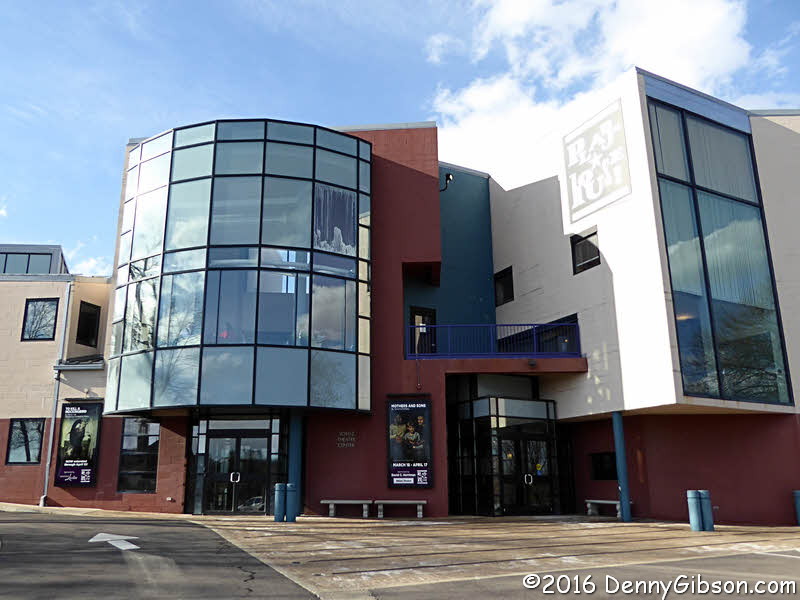
tcamb1I’ve yet to read To Kill a Mockingbird. I have seen the 1962 movie multiple times and now I’ve seen the play. I had hoped to read the book between learning that the play would be performed this season at Cincinnati Playhouse in the Park and actually seeing it but that didn’t work out.

The Friday night performance would be the biggest event of my week but I didn’t expect it to lead to a blog post. I anticipated that a canned Trip Peek would be published this morning. A Friday morning email got me to thinking differently.

The email was the April E-News from the Smithsonian. One of the topics was “The Scottsboro Boys” with this two sentence tease: “The case of the Scottsboro Boys, which lasted more than 80 years, helped to spur the civil rights movement. To Kill a Mockingbird, the Pulitzer Prize-winning novel by Harper Lee, is also loosely based on this case.”

I read the article referenced in the email and could easily see similarities between the 1931 real world incident and the fictional one Harper Lee set just a few years later. Both involved black men accused of imaginary crimes against white women and both occurred in a world where color mattered a whole lot more than truth. Later I read that in 2005 Harper Lee said this was not the incident she had in mind when writing To Kill a Mockingbird but that it served “the same purpose”. Despite there not being an official connection between the Scottsboro Boys and To Kill a Mockingbird, reading about the incident and its repercussions served a purpose for me, too. It provided an unpleasant picture of this country near the midpoint between the Civil War and today. The accuracy of that picture is reinforced by a contemporary pamphlet, They Shall Not Die!, referenced in the Smithsonian article.

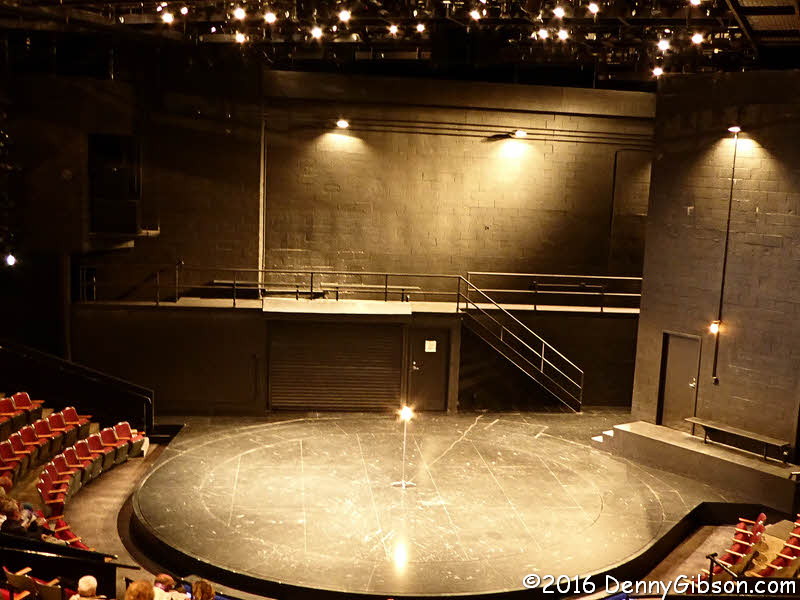
tcamb2I took my seat on Friday with the Scottsboro story fresh in my mind. The stage was bare except for a single light bulb which would actually be removed at the play’s start although it would return later. The stage consists of a large circular center and a surrounding ring both of which rotate. Sometimes they rotate in opposite directions which can seem to expand the distance between actors or the distance they travel. Set Designer Laura Jellinek states that “our main goal was to eliminate any artifice between the audience and the story” and this set certainly accomplishes that. As one audience member observed during the discussion that followed the play, she briefly looked around for the jury during the courtroom scene before realizing that “we were the jury”. At its most crowded, the stage holds nine chairs for the key figures in that courtroom scene.

The discussion I mentioned happens after every performance. Anyone interested moves close to the stage to listen or participate. There were naturally questions about this specific production but there were also questions about the story. There is a sign in the lobby that I now wish I’d taken a picture of. “Don’t read books that think for you. Read books that make you think.” might not be 100% accurate but it’s close. Friday night’s discussion was evidence that this play is prompting some thinking and I’ve no reason to think that discussions following other performances are any different.

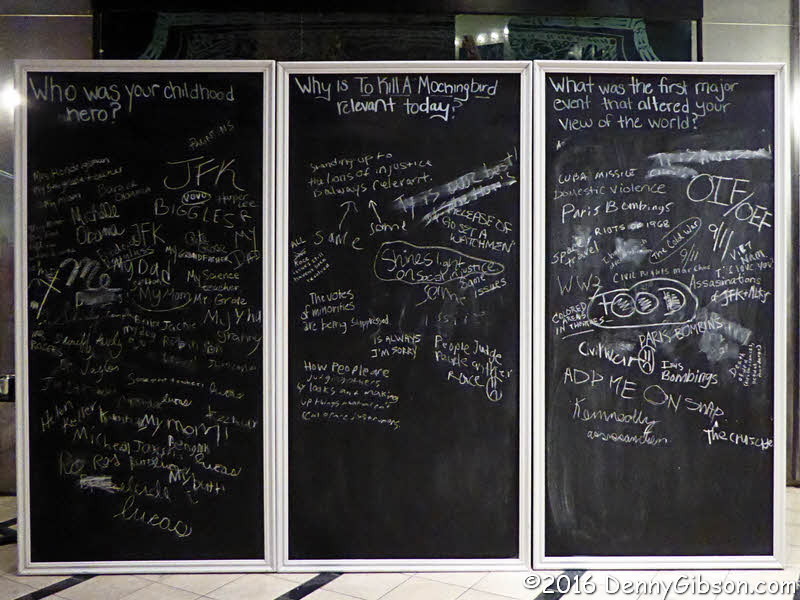
tcamb3There is also a set of blackboards in the lobby. As I assume is true at every performance, the blackboards started out empty except for a question at the top of each. By the time people started heading home, the boards were full. It’s pretty clear that some thinking is going on here, too.

It was the coincidence of the Smithsonian email showing up on the day I was set to see the play that nudged me towards making it a blog entry. There is another coincidence of sorts that I find interesting.  Each week, the blog This Cruel War publishes an article on lynchings. The article is published on Wednesdays but, since I subscribe via RSS and I seem to always be behind in my RSS reading, it is often a day or more after publication before I read a specific article. I read this week’s post the morning after my Playhouse visit. In it, the source of the series’ title, “This Disgraceful Evil”, is given. It comes from a 1918 Woodrow Wilson speech in which he calls upon America “…to make an end of this disgraceful evil.”

We don’t have to deal with actual lynchings now as much as in 1918 but there’s still plenty of crap going on. “It cannot live”, Wilson continues, “where the community does not countenance it.”

Originally scheduled to end today, April 3, To Kill a Mockingbird‘s run a Playhouse in the Park has been extended through April 9.

A Pre-Refurb Peek at Music Hall

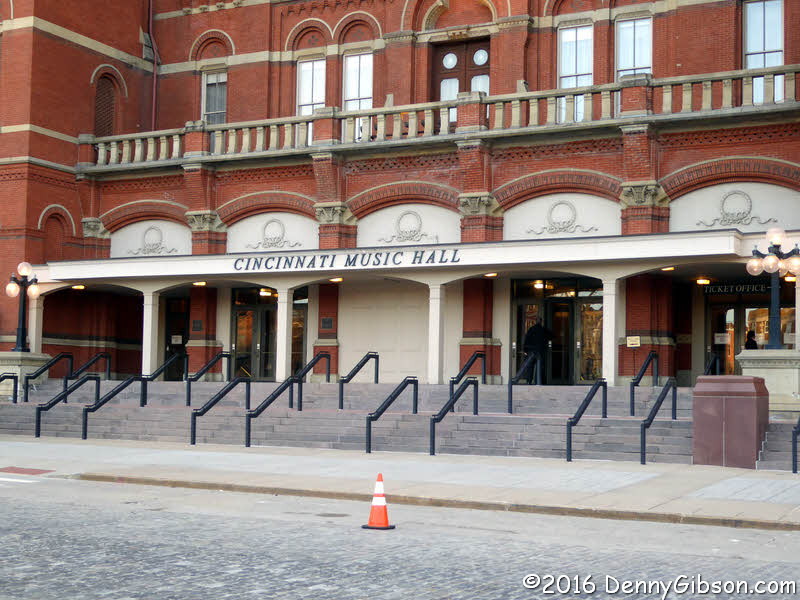
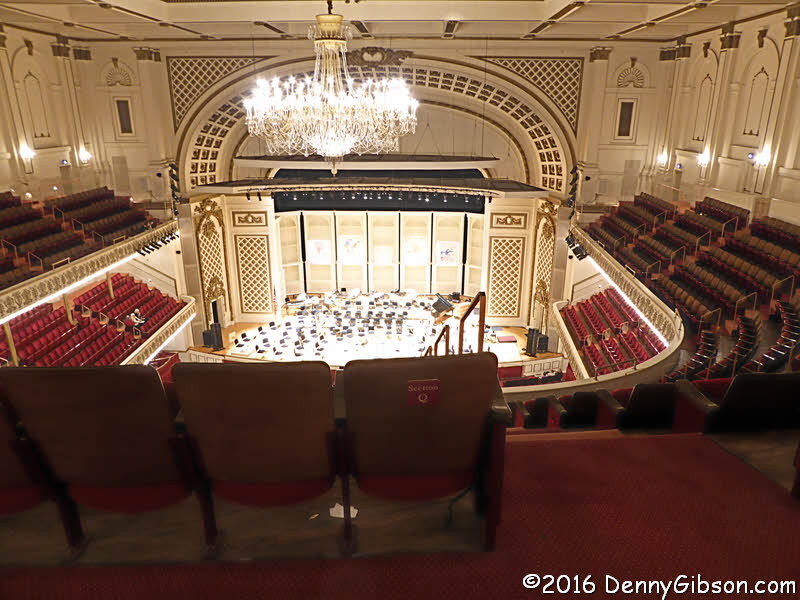
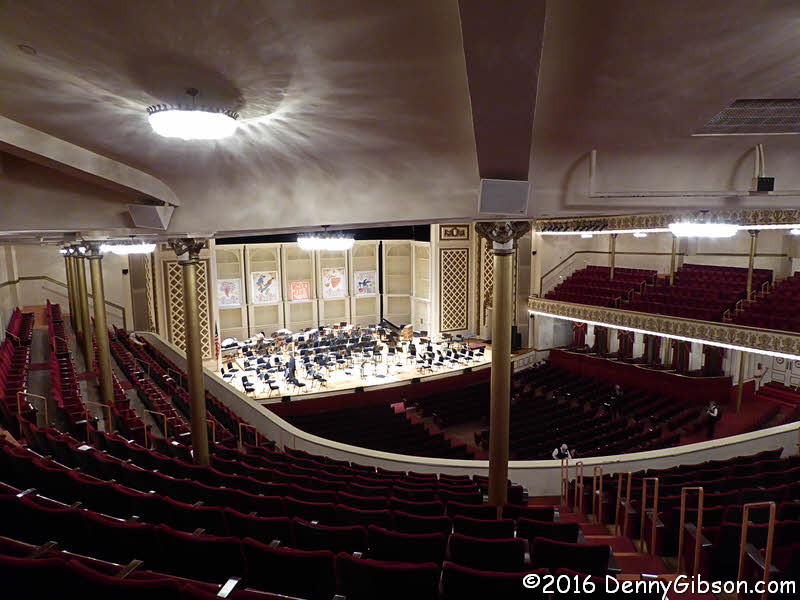
cmhmn01At the end of this year’s May Festival, Cincinnati’s Music Hall will close for extensive renovations. The Cincinnati icon, which first opened in 1878, will open again in the fall of 2017. I knew I ought to attend at least one more performance there before the closing and working in part of the May Festival has been in the back of my mind. A number of things lined up Friday that made attending the first night of the MusicNOW Festival possible and attractive. I may still try to make it back for the May Festival but the pressure is off and I had a most enjoyable evening.

MusicNow, the brainchild of Bryce Dessner of The National, was first held in 2005. Although The National was formed after he moved to New York, Bryce is a Cincinnati native and frequently involved with the city’s music. An Australian tour prevented him from attending this year’s festival but one of his compositions opened Friday’s concert and another was premiered on Saturday.

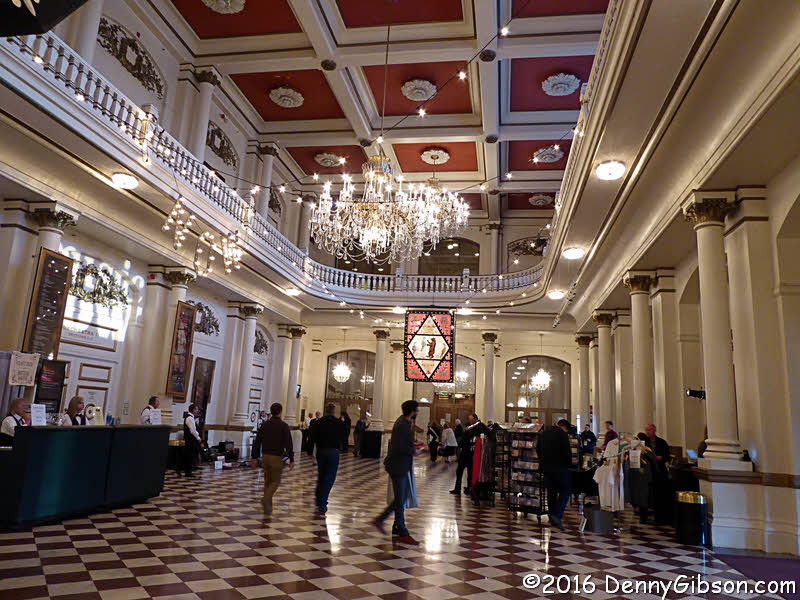
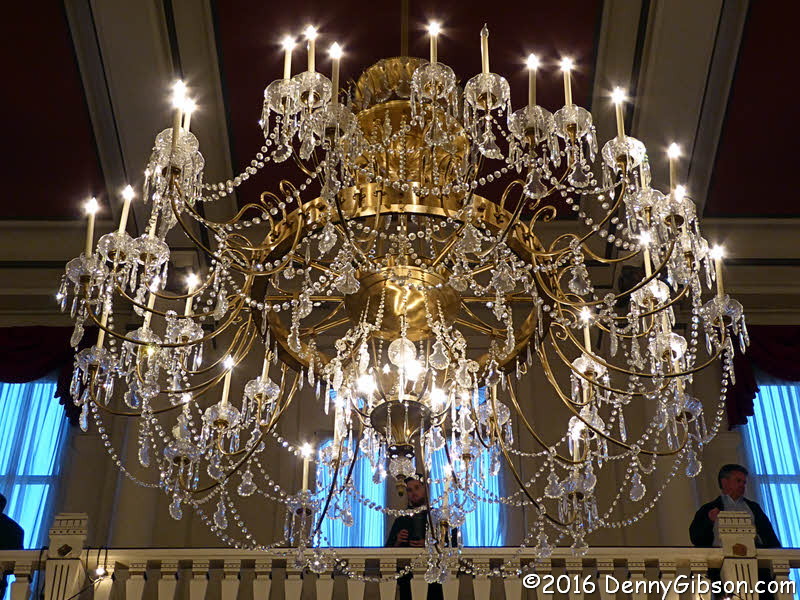
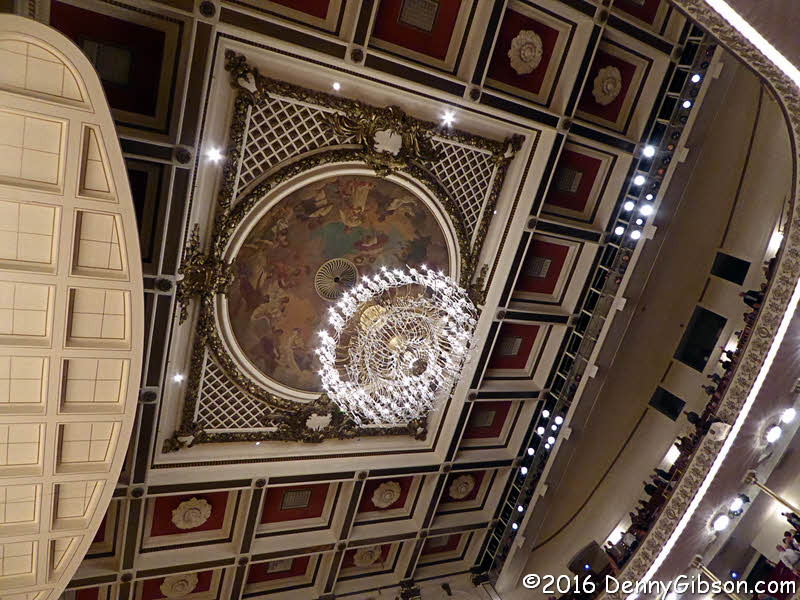
cmhmn02cmhmn03With about an hour to go, the lobby was pretty empty and I grabbed a couple of pictures. There are a number of large chandeliers in the building with one of the most impressive hanging in the center of the lobby..

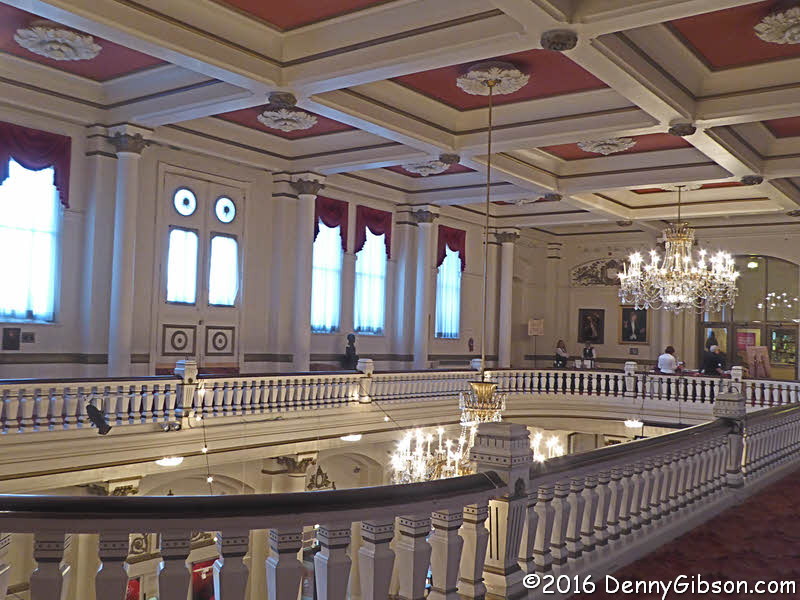
cmhmn06cmhmn05cmhmn04I used some of the extra time to head upstairs. On the second floor, I snapped pictures of the upper level of the lobby and the balcony of the main concert space, Springer Auditorium. The third photo is of the Springer Auditorium Gallery. The seats in the foreground are about where I sat to watch Big Brother and the Holding Company in October 1968. This was the performance that was paused while Janis and the band watched the Beatles on the Smothers Brothers Show.

I believe that 1968 show was my first at Music Hall. Many, wildly diverse, have followed. If Big Brother is at one end of the range, Andrés Segovia might be at the other. He was solo and acoustic when I saw him in 1982. So was Bruce Springsteen in 1996. But Bruce was 47; Segovia nearly 90. That little old man and that little old guitar on the big old stage remains one of my most memorable concerts and a great demonstration of the wonderful acoustics of that big old space. There were numerous Cincinnati Symphony Orchestra concerts that included a variety of soloists; several performances of the Nutcracker ballet; the Kinks; John (not yet Mellencamp) Cougar; Peter, Paul, and Mary; and others I’ve temporarily forgotten. But my purpose in going to Friday’s show was not to trigger old memories. I wanted to firm up my impressions of the building in anticipation of next year’s changes. It was standing at the back wall of the Gallery and looking at the distant stage that prompted the most ancient memories then not-quite-as-ancient memories just followed.

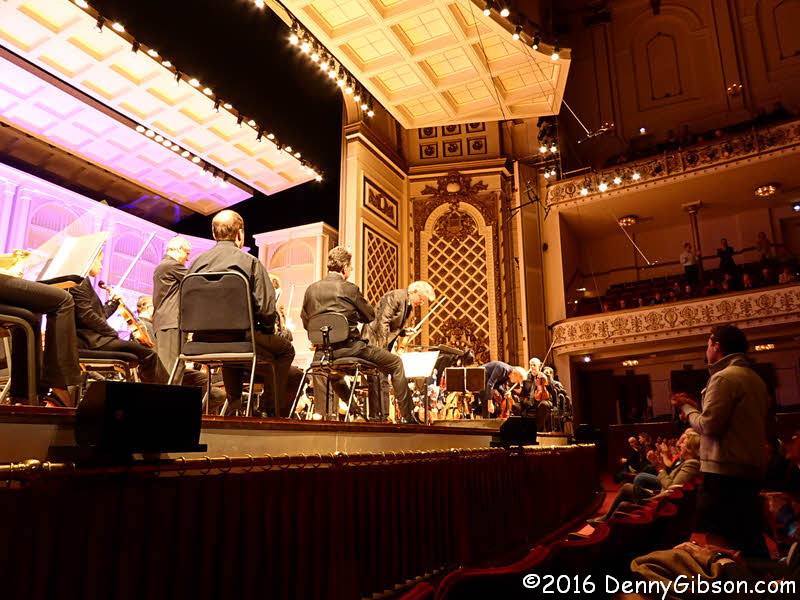
cmhmn07My seat was a last minute pay-what-you-want bargain. From the left side of the second row the visuals consisted largely of orchestra member’s ankles and partially obscured profiles of featured performers but the audio was fantastic. The Kronos Quartet performed first followed by violinist Jennifer Koh with the Cincinnati Symphony Orchestra. After an intermission, the quartet and orchestra performed together. Mandolinist Chris Thile closed the show. He performed, like Segovia and Springsteen, solo and he even stepped in front of the mic to do a couple of songs completely acoustic. Not suprisingly, it sounded great from a few yards away but I almost bolted from my seat to see if he reached the rear of the audtorium as well as Segovia had. I didn’t. I wish I had.

cmhmn08The Cincinnati Opera has put together a rather nice Music Hall Renovation FAQ in which they specifically mention that “The large chandelier in the auditorium will be restored.” I don’t know if that means the others will not be but it does raise the question. I hope that’s not the case although if only one can be saved, this is certainly the right one.

Bye Bye Bell

cbtSome might remember 2014’s Bye Bye Four One Two Five blog post in which I bid farewell to a long held telephone number and a couple of Cincinnati Bell services. For roughly six years preceding that post, I had relied on CB for my mobile telephone as well as my home phone and internet connection. That had to change because the company was bailing out of the mobile business. When I made that post in October of 2014, I had switched to Verizon for my mobile service and had simply dropped the seldom used home voice service. The only service I retained with CB was an internet connection. In the last paragraph of the post I expressed happy surprise that the internet connection was the same price alone as it had been bundled. That didn’t last.

For the first year, my internet-only bill was $35 per month. It then went to a perfectly acceptable $36. Five months later it jumped to $48.54 which was neither acceptable or ignorable. There were, I soon learned, two components to this roughly 35% increase. One was a significant but not quite outrageous jump in the service rate from $36 to $39.99. The larger piece of the increase came from the addition of a $7.99 equipment fee and accompanying $0.56 state tax. Through on-line chat and a subsequent phone call I was able to verify that this was, as I immediately suspected, a monthly rental fee for the nondescript ADSL modem I had been using free since 2008. I was also told that I could neither buy the modem outright from Cincinnati Bell nor supply my own. As the representative looked over my account, she uttered the phrase “wireless internet” and I told her I did not have CB supplied WiFi which she shrugged off and so did I. I guess I had already decided to run away fast rather than pursuing specific issues.

Cincinnati Bell’s current flagship product uses fiber-optics. Called Fioptics, it is not yet available at my address although I doubt its availability would have materially changed things. My service was a copper wire product called ZoomTown 5 Mbps. The service is often described as “5/1” to indicate 5 Mbps download and 1 Mbps upload. These are marketing friendly “rounded up” numbers more precisely described as “Download up to 5 Mbps. Upload up to 768 Kbps”. There is also a ZoomTown 2 Mbps or “2/1” product. Although I have seen download speed as high as 4.47 Mbps, recently observed download speeds have all been under 1.33 Mbps. Observed upload speeds have always been around 0.66 Mbps which is close enough to 768 Kbps to keep me happy. It happens that the only record I have of speeds near 5 Mbps (the 4.47 reading) is from before switching off voice service but I have no evidence that the slowing coincided with the switch.

My most charitable interpretation of this is that Cincinnati Bell made a couple of small errors. It seems quite possible that somewhere along the way I was accidentally switched from the 5 Mbps service to the 2 Mbps service. It is also quite possible that I was somehow supposed to have a WiFi router from Cincinnati Bell but that someone forgot to actually provide it. If that were the case, then I could press Cincinnati Bell and get a fancier modem/router for my $7.99. If an accidental service reduction had actually occurred, then I could press Cincinnati Bell and get it switched back or I could arrange for my billing to be changed to match the service I was apparently receiving.

I might have merely grumbled and moved to get the errors corrected had there not been at least a little bit of competition left in the local internet market. There is, so instead of expending energy trying to get Cincinnati Bell to correct its errors, I switched to Time Warner Cable. Three things led to the switch. For one thing, TWC allows customers to supply their own modems and provides a list of compatible products. Secondly it’s cheaper. I’m starting with a 2 Mbps plan which should be the equivalent of what I’ve actually been getting from CB. The CB rate is $26 per month (although I’ve actually been paying more) and the TWC rate is $14.99 per month. Yes, I had to spend some money up front but I’m getting nearly twenty bucks ($8.55 + $26 – $14.99 = $19.56) back every month. If I should decide I want more, TWC lists 6 Mbps and 15 Mbps plans that are both cheaper than CB’s 5 Mbps plan. The third reason to switch is that TWC hadn’t pissed me off in years.

Getting the new service should have been quick and easy. It wasn’t although neither was it exactly horrible. When the condominium I live in was built in 1997, all units were pre-wired for Time Warner Cable. I subscribed to TWC for a couple of years before going to DirecTV in 1999. The DirecTV installation made use of the TWC cabling and was working fine when I canceled my subscription in favor of over-the-air TV in 2009. An appointment was made and a technician arrived right on schedule. However, after doing a LOT of testing, he told me that there seemed to be a break in the internal cabling and that someone else would need to come out to fix it. I would be contacted within a week.

I let two weeks pass then called. Someone had entered a placeholder appointment for a couple months in the future then dropped the ball. A more qualified tech arrived less than two days later. He looked things over and, rather than pulling new cable as I expected, simply completed the one connection the previous tech had missed. Bingo!

While both services were connected I checked their speeds using Ethernet (not WiFi) and found the Time Warner connection delivering essentially what was advertised:nsttwc

Cincinnati Bell, not so much:nstcb

I know those rates seem pretty pitiful to many. They are the minimum offerings from the two companies but they are sufficient. One might think that, as a feeder of a blog and website, I am a heavy Internet user. Nope, heavy Internet users are families streaming movies to multiple TVs while playing World of Warcraft with friends in Walla Walla, Washington. I certainly wouldn’t object to more speed but I have what I need for less than a Skinny Vanilla Latte Grande per week.

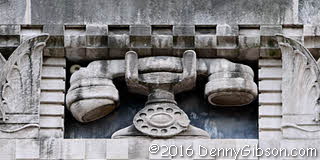
The opening photo shows a detail of the 1931 Cincinnati Bell Building in downtown Cincinnati.

Bock Again

cbf16_01It was cold and cloudy for the 24th Cincinnati Bockfest Parade. It was, however, dry so a friend and I braved the 40-and-falling temperature to walk beside the merry participants. It was my friend’s first exposure; my fifth.  The cold seems to have kept some observers away but it had no noticible affect on the size of the parade itself. I think a few past entries were absent (e.g., the whip lady) but I doubt that temperature was the cause and there were compensating new entries to keep things interesting.

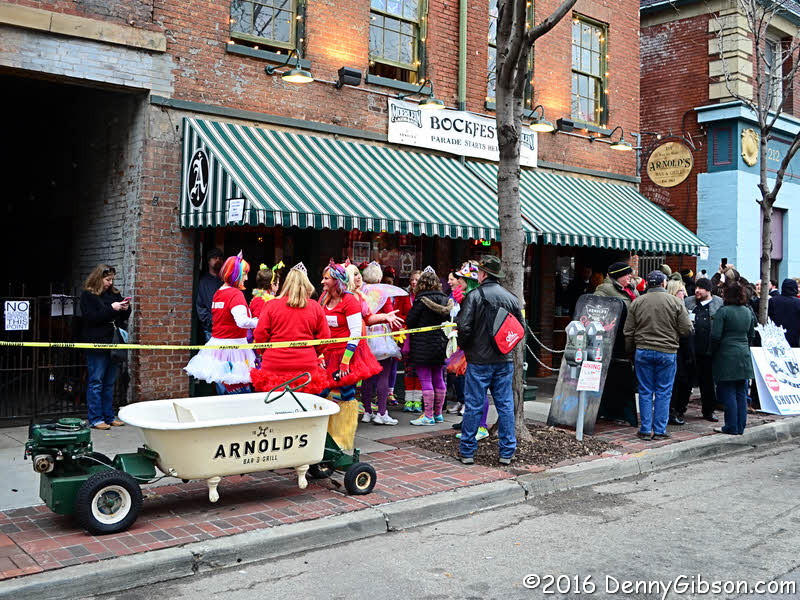
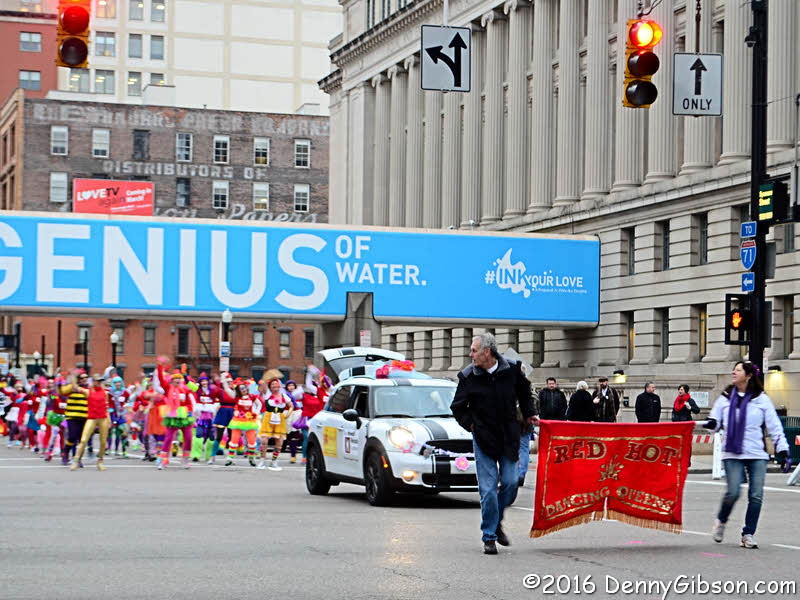
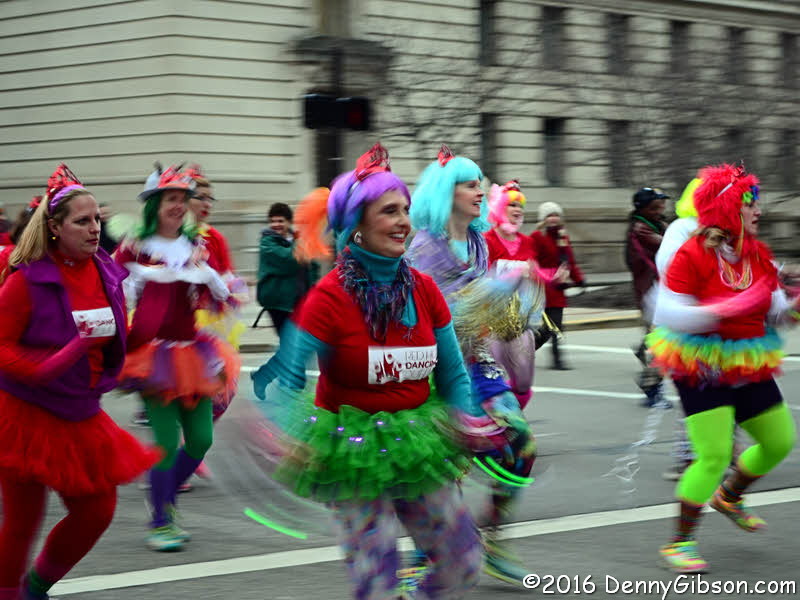
cbf16_02cbf16_03Proving that the temperature was not a deterrent to everyone was this this wading pool accompanied group wearing shorts, T-shirts, and water wings. Some Red Hot Dancing Queens gathered in front of Arnold’s, Cincinnati’s oldest bar and traditional parade starting point. The Dancing Queens instantly became one of my all time favorite parade groups when I saw them on their second outing at last year’s Northside 4th of July Parade.

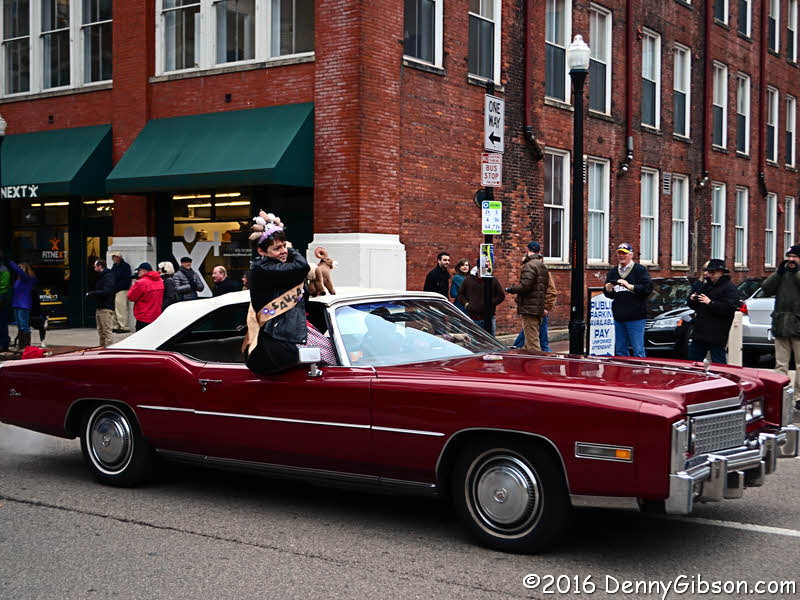
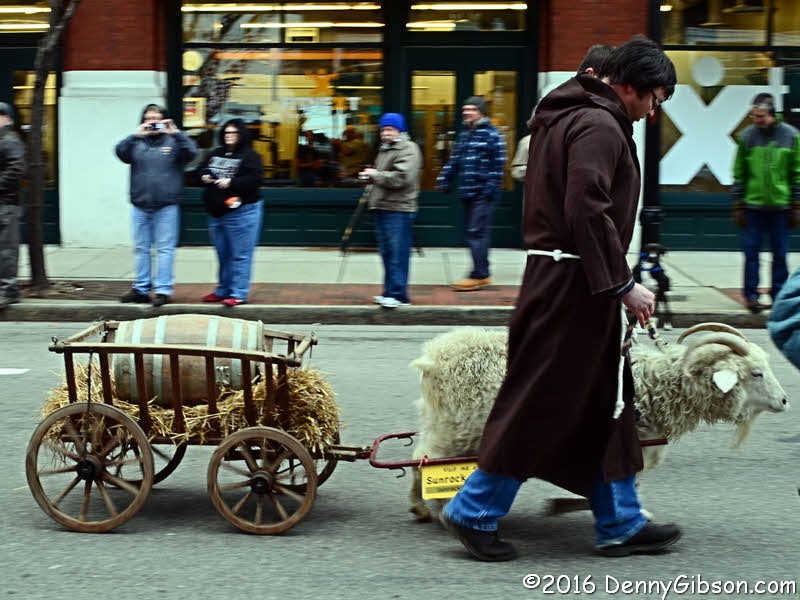
cbf16_05cbf16_04I failed to get a picture of parade Grand Marshall Mick Noll and barely caught Schnitzel the goat pulling the ceremonial keg of bock beer. That’s 2015 Sausage Queen, Elyse Lohrbach, in the Caddy. Her reign ended Saturday night when the 2016 queen, Rachel Appenfelder, was chosen.

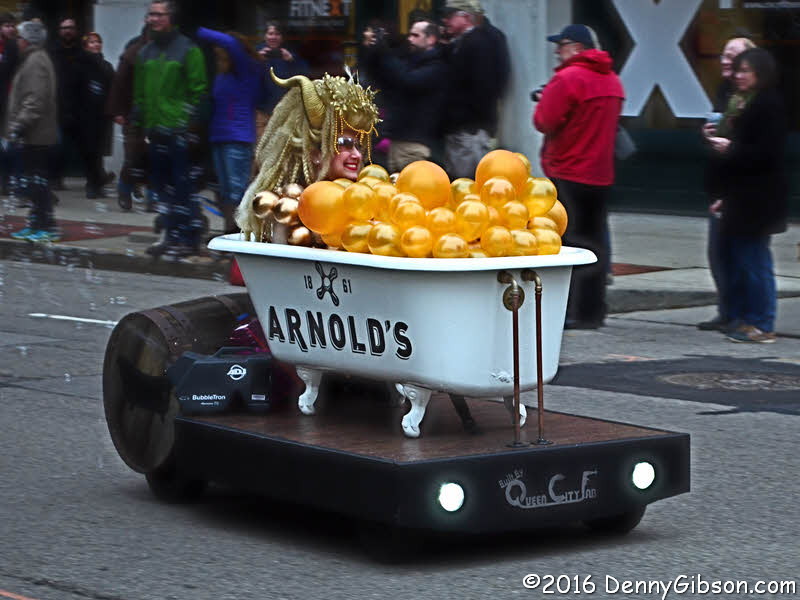
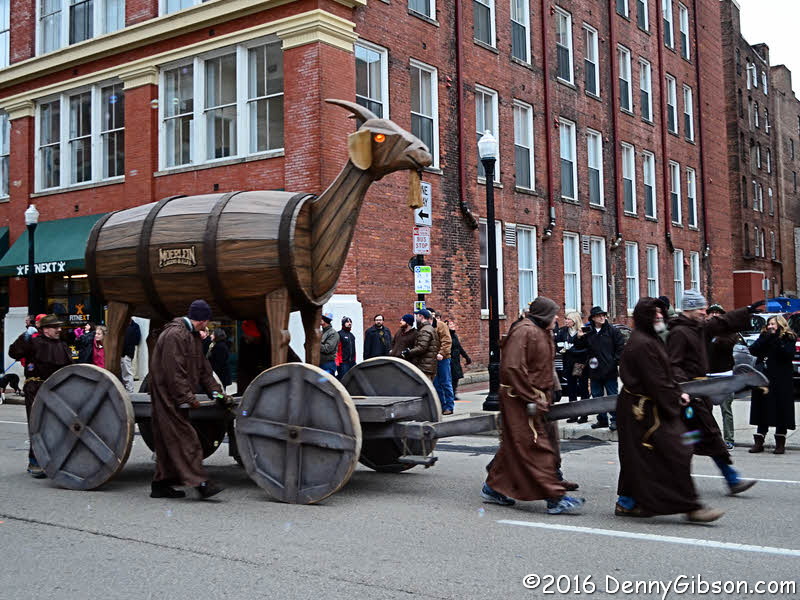
cbf16_06cbf16_07It’s always good to see perennial favorites Arnold’s self propelled bathtub and the Trojan goat. I personally prefer the original motorized tub (two paragraphs back) although I’m sure the new model is both safer and more reliable.

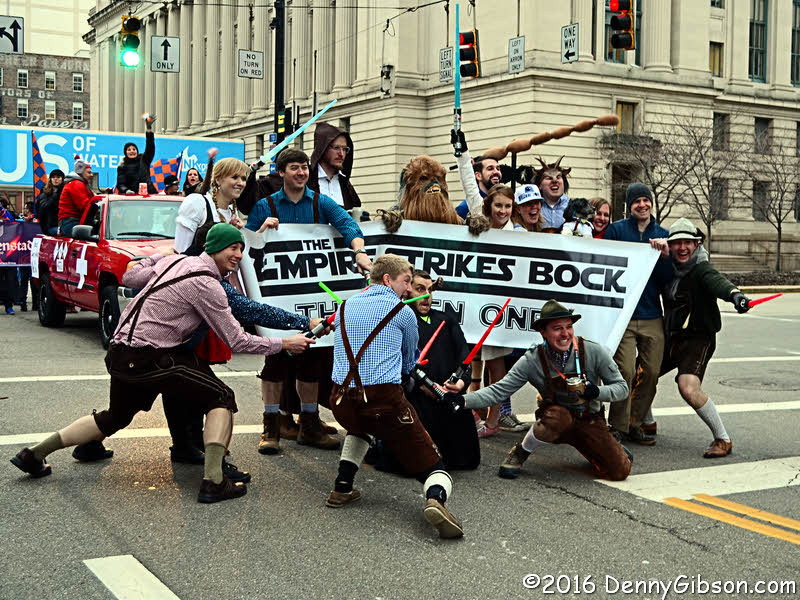
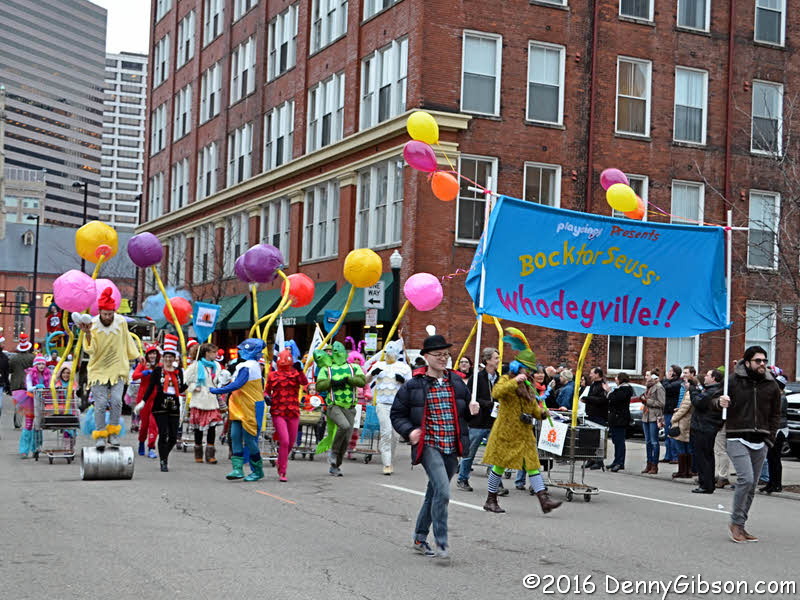
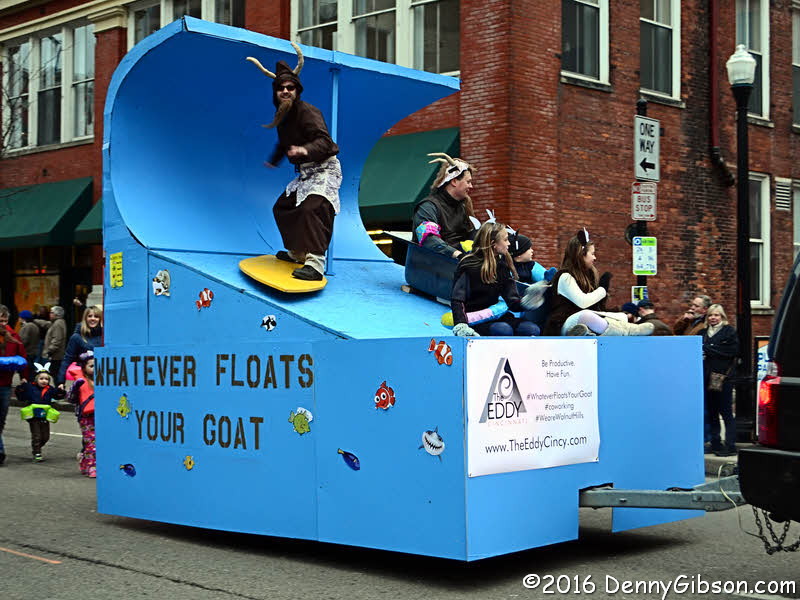
cbf16_10cbf16_09cbf16_08And now some of the new entries. In case you haven’t noticed, the parade is a real showcase for certifiably groan-worthy puns. Here we have “Whatever Floats Your Goat”, “Bocktor Seuss’ Whodeyville”, and “The Empire Strikes Bock”.

cbf16_11cbf16_12That cluster of Red Hot Dancing Queens in front of Arnold’s had grown to full strength when the parade stepped off. The fun that these gals have is truly contagious and there is no known cure.

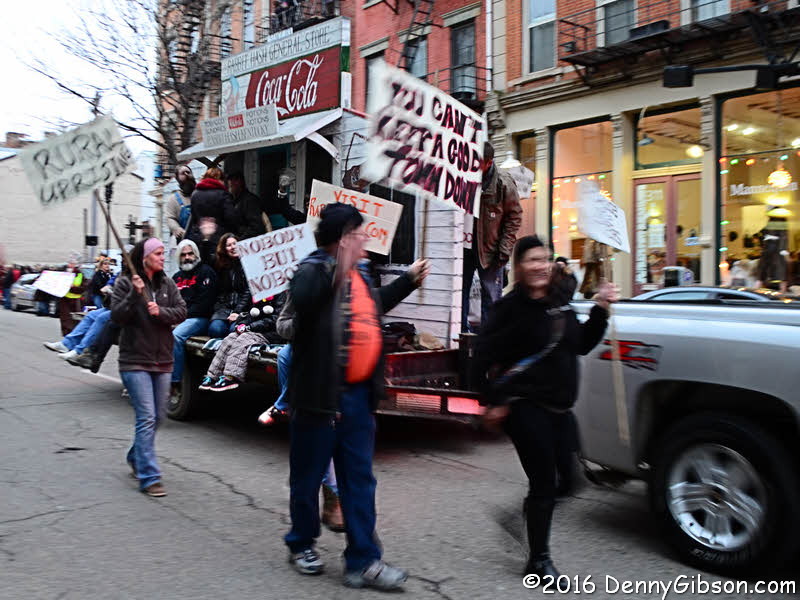
cbf16_13I normally probably would not post this blurry picture of a float that has appeared in previous parades but I really need to this time. The 185 year old Rabbit Hash General Store was destroyed by fire just three weeks ago but, as the sign says, “You Can’t Keep a Good Town Down”. There were no injuries and there is some insurance but it isn’t really enough to rebuild the store. A GoFundMe campaign, accessible through the Rabbit Hash website, has been established.

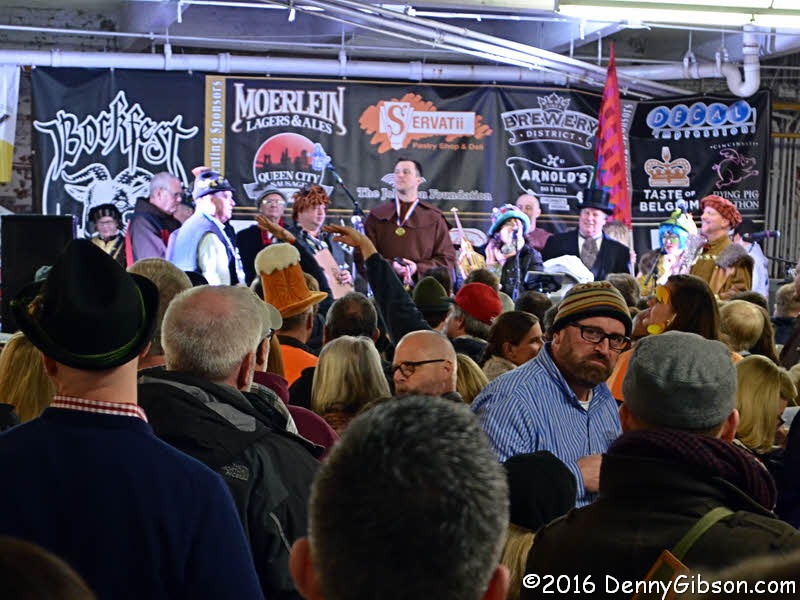
cbf16_14We got inside Bockfest Hall which is something I did not do in either of the preceding two years. I guess that was our reward for dealing with temperatures that not everyone wanted to deal with. In the warmer and brighter 2014 and 2015, when the end of the parade reached the end of the route, the street outside the hall was filled with people trying to get in. Of course, getting in didn’t mean getting to see or hear much. The reduced crowd was still a very big crowd. I snapped this picture over the top of that crowd and only later realized that it contained the previously missed Grand Marshal. That’s Mick Noll in the blue hat at the photo’s left and Christian Moerlein’s Greg Hardman in the top hat on the photo’s right.

The following links lead to evidence of my previous visits: 2010, 2011, 2014, 2015

Mo’ Bricks

brickmas01How big is Cincinnati? Big enough to simultaneously support two major LEGO exhibits. That’s how big. The Art of the Brick opened at the Cincinnati Museum Center on October 23. It runs through May 1. Down at Newport on the Levee, BRICKmas opened November 25. It runs through January 1. The Art of the Brick is the work of a single artist, Nathan Sawaya. BRICKmas is the work of lots of people coordinated by the Ohio Kentucky Indiana LEGO Users Group (OKILUG).

brickmas02I visited The Art of the Brick back in November and posted a blog entry here. I visited BRICKmas just over a week ago (Dec 12) with my daughter and grandson. Theoretically, BRICKmas could have been the subject of last week’s blog post but that slot was already filled with the Saint Anne’s Hill Christmas Tour. I considered doing a “bonus” post but decided to make it easy on myself and save BRICKmas for this week. Here is what I did eight days ago.
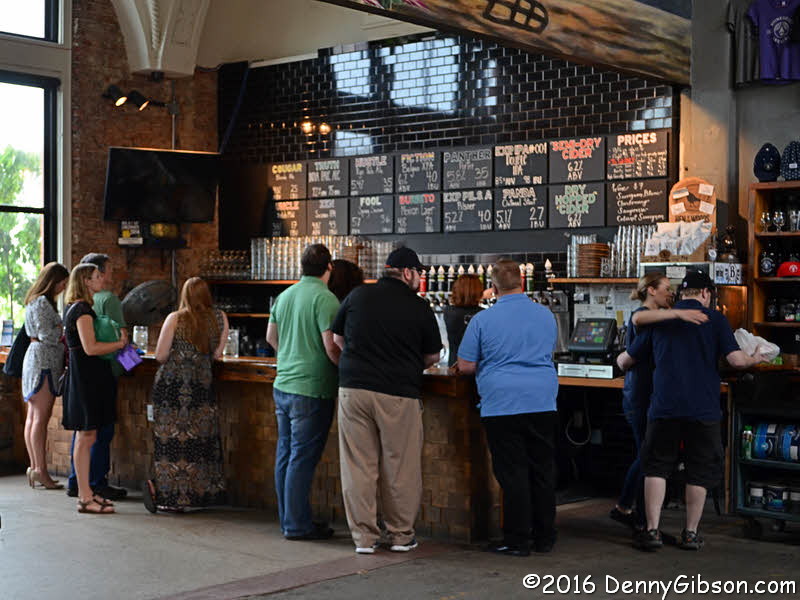
brickmas04brickmas03BRICKmas fills two separate areas. The first contains several large and complex displays. Each has a theme and some are reproductions of specific scenes or locations. Electric trains and other moving items add life.

brickmas05brickmas06brickmas07The folks who made the displays clearly had a lot of fun and a lot of imagination. I learned later that there is a Santa Claus figure in each display. We spotted a couple but didn’t know to look for them. There were also quite a few non-Santa figures in the displays that were equally out of place. Some were hidden. Others not. The pumpkin-headed horseman in the first picture to the left is actually in the area covered by the second picture in the preceding paragraph but he is hidden by a tree. The other two picture contain some rather incongruous figures in plain sight. There is some help in finding them here and here.
brickmas09brickmas08The Roebling Bridge model at the top of the article and both displays in the photos at right were in the second section. Here the individual items, like the full size heads, seemed larger, and the themed scenes, like the Sponge Bob Square Pants setting, seemed smaller. This section was more or less targeted at the younger attendees and this is where the play areas and do-it-yourself tables were. It was here that we noticed some kids with scavenger hunt type check lists. We were disappointed that we hadn’t received one but it was really too late to get overly concerned about it. Apparently the first thing we were supposed to find was the check list and we failed miserably.
brickmas10This picture was taken shortly after we arrived at the levee before visiting the BRICKmas displays. I’m going to pretend that it was at the end of the day as we’re about to head home. Even though Wesley’s drivers licence is a few years away, he’s pretty sure he could handle a little sleigh and a few reindeer.

The Brewery’s Neighborhood

sahdoc15_00Neighborhood taverns may not be as common as they once were but they are hardly extinct. Traditional beer towns like Cincinnati, Saint Louis, and Milwaukee have them and I’m sure they’re not alone. Once upon a time, some of the neighborhoods in those beer towns had a neighborhood brewery. A precious few do so today. One that does is the Saint Anne’s Hill Historic District in Dayton, Ohio. That’s the neighborhood brewery at right. It’s the Fifth Street Brewpub, the first co-op brewery in Ohio and the second in the nation. Today patrons come from near and far and even the owner/members are a widespread bunch but the founders who had the idea and made it happen are neighbors. They did it to save a little history and to put some more life back into their neighborhood. The rest of the Saint Anne’s Hill pictures are posted in sequence but this was taken at the end of the evening as I approached the brewpub for a little R&R after a guided walk around the neighborhood. There’s something of a “bonus” in the photo. The contraption at the very top is part of the rigging for the overhead wires that power Dayton’s electric trolley buses. Dayton is one of only five US cities operating electric trolley buses. The others are Boston, Philadelphia, San Francisco, and Seattle.

sahdoc15_01Saint Anne’s Hill was hardly lifeless even before the brewpub opened in 2013. A downward slide that had started with the Great Depression and World War II was halted in the early 1970s as a modern sort of pioneer started restoring some of the elegant old houses in the area. A some point, residents began offering tours of homes decorated for Christmas to raise funds for community projects. The biennial tours continue to be offered in odd numbered years. They begin at this 1869 house which is now the High Street Art Gallery operated by the Dayton Society of Painters and Sculptors.

sahdoc15_02The area’s original heyday was in the early twentieth century and tour guides dress in the height of period fashion. That’s our tour guide, Jack, under the top-hat. There were eight homes on the tour and Jack told us about each one before we entered. In the picture we are learning about a house on High Street built by a family named Bennington in 1890.

sahdoc15_03sahdoc15_04sahdoc15_05The tour’s appeal comes from the wonderfully restored historic homes themselves as well as beautiful Christmas decorations both inside and out. Two, three, or more trees are a big part of each home’s charm which meant there were many great looking trees to chose from. The trees shown here were chosen largely because their photos came out OK and I won’t attempt to identify the houses they were in. In addition to the Bennington house this year’s tour included a 1902 house also on High Street, an 1886 house on McLain Street, 1900 and 1853 houses on LaBelle Street, and 1855 and 1865 houses on Detoit Street.

sahdoc15_06In addition to telling us about each home we entered, Jack provided information on several other houses as we passed. This house, on what is now Detoit Street, was built by Eugene Detoit in 1838. It is the oldest house in Saint Anne’s Hill and one of the oldest in Dayton.

sahdoc15_07sahdoc15_08sahdoc15_09Different homes participate in each year’s tour with one exception. The 1869 Bossler Mansion is always the final stop and that is where we were treated to some incredible bread pudding as were all the tour groups in previous years. The mansion’s thirty rooms were once divided into thirteen apartments. During tour weekend, the second floor holds a gift shop filled largely with items made by local craftsmen. The last photo is the view from the cupula atop the mansion.

This was the second time I’ve taken a tour of decorated historic homes. The first was in 2012 in Morristown on the National Road.


zns02zns01Saint Anne’s Hill is something over thirty crow miles from where I live. A holiday display that has been getting a lot of press is much closer. The World’s First Zombie Nativity Scene, which has been covered by the New York Times, CNN, and the BBC among others, is about a half dozen miles from my door. Most of the big time coverage was triggered by threats by the township to fine the owner up to $500 per day. Officials have always claimed that the threats were because of zoning violations and it seems they were even if that might not be what initially caught their attention. A day or two before I took these pictures on Friday, the display had been made smaller and a roof that extended upward a few feet removed. The township says it’s now good to stay.

Even though it was the threatened fines that brought the world wide attention, most reports focused on the “non-traditional” nature of the display. Fair and balanced Lou Dobbs called it an “obscenity” and said “I think if you’re going to mock a religion, I’m thinking they should have chosen the Islamic religion to see what would happen.” Lou and company notwithstanding, my sense is that defenders out number those who are upset and that, after two years of what some would call oppression, a new local Christmas tradition has been established.

Book Review
Fading Ads of Cincinnati
Ronny Salerno

faoc_cvrBuying local is a good thing and so is reading local. I was able to combine the two recently. November 30 was the official release date for a new book about Cincinnati and in the early evening its author made the book and his signature available at a downtown location that appears between its covers. The book was Fading Ads of Cincinnati, the author Ronny Salerno, and the location Igby’s Bar inside a building with a fading “TWINE PAPER” painted on its side. Those two dim words are typical of the fading ads that are the book’s subject.  How could I not?

Although this was my first time meeting Salerno, I knew the name. I first spotted it on some photographs in a small exhibit near downtown Cincinnati a few years back. I wasn’t clever enough to find his wonderful Queen City Discovery blog from that prompt but I did find it eventually and I’ve followed it for some time now. Salerno loves taking photographs and he’s really good at it. He especially loves taking pictures of old abandoned buildings with a story. A third love is also apparent in that blog: the city of Cincinnati. He brings all three loves to Fading Ads of Cincinnati.

The book is the latest in the Fading Ads of… series published by History Press. About the only reference to a publisher I’ve made in past reviews is an identification at the end. Saying a bit more seems appropriate here. Until last year, the USA’s History Press Inc. was part of the UK’s History Press Ltd. It was acquired by Arcadia Publishing in the middle of 2014. All of those entities deal with local and regional topics and often use something of a formula approach. Although it is not all they do, Arcadia is probably best known for their sepia-toned Images of America books. As hinted at by the title, these books are filled with images most of which are historical. The images are selected and described by local experts who typically also provide several pages of introductory text at the book’s beginning. More often than not, these experts are not just knowledgeable but have a personal attachment and attraction to the subject. Saying that most love what they write about would not be wrong. History Press publications tend to be wordier and, although historical images are sometimes used, include plenty of modern color photos. But, just like those Arcadia books, History Press books rely on local experts for their creation and, just like those Arcadia book writers, these experts are often in love with their subjects, too. Kind of sounds like Ronny Salerno, doesn’t it?
Salerno is a good match for the Fading Ads… series. Before reading the book it had actually occurred to me that he might have had every subject identified and many photographed long before he even took on the job. That wasn’t quite the case, however. He was naturally familiar with many of the area’s old signs but not all. He conferred with other “sign hunters” and got tips from friends but he also found his own senses sharpening as he strolled through both unfamiliar and familiar neighborhoods. The result is nearly one hundred new color photos of mostly — but not entirely — old stuff. There are also several historical photos from places like the Library of Congress.

faoc_int1The photos aren’t left to stand alone. Captions describe each of them, of course, and many get multiple paragraphs of attention. Salerno has been successful in digging up many of the signs’ histories with some of the best stories coming from signs identifying local or regional companies that are no longer with us. Names like Shillito’s and Brendamour’s will be recognized by many Cincinnatians and probably some others as well. Out-of-towners might not be familiar with local landmarks like Davis Furniture (“The Friendly Store”) or the Dennison Hotel (“105 Rooms – 60 baths”) but they are exactly what I and some other locals think of when we think of “fading ads” or the more common “ghost signs”.
faoc_int2Salerno brings up the phrase “ghost signs” in the introduction and says people often thought he was writing about the supernatural when he used the term. “Fading advertisements”, he says, doesn’t have that problem. Fair enough but it’s just possible that his position also has something to do with the book’s predetermined title. “Ghost sign” slips into the book a time or two and in the final chapter Salerno more or less acknowledges the validity of both. As for me, I’m comfortable and most familiar with the term “ghost signs” (and “ghost bridges” and “ghost towns”) so I’ll just continue to think of Fading Ads of Cincinnati as a book about ghost signs.

Geography has a lot to do with the book’s organization and the bulk of the photos are in three chapters titled “Downtown”, “Northern Kentucky”, and “The Neighborhoods”. Like any city of any size, Cincinnati has official and unofficial neighborhoods with their own identities. It’s southern boundary is defined by a river that also defines the border of Ohio. In some ways, the Kentucky communities on the south side of the river are quite different from those on the north but the ease with which a cluster of bridges usually allows interstate traffic makes them often seem like Cincinnati suburbs. The prominent “John R. Green Co” sign in Covington, Kentucky, fits in this book as comfortably as the “Little Kings” sign in Cincinnati’s West End.

I mentioned that not everything pictured in the book is old. One chapter in particular shows almost exclusively new unfaded and non-ghostly signs. The photos were taken at the Cincinnati Reds’ home field and include a shot of a huge sign announcing the 2015 All-Star Game which Cincinnati hosted. The “fading ads” connection is solid and arrow straight. Those stadium signs and many more around the area are the work of Holthaus Lackner Signs, a company headed by Kevin Holthaus. Kevin is the grandson of Gus Holthaus who started the company and whose signature appears on many signs in the area including several in Fading Ads of Cincinnati. The only old sign appearing in the “Signature Legacy” chapter is a remnant of a sign possibly painted by Kevin’s great-grandfather, Arnold Holthaus.

A link at the end of this article leads to the book on Amazon. An entry on Salerno’s blog identifies other online outlets and several area stores where it is also available. Another option is to catch the author at a local bar with a faded sign but you’ll have to be both patient and vigilant.

Fading Ads of Cincinnati, Ronny Salerno, The History Press, November 30 2015, 9 x 6 inches, 160 pages, ISBN 978-1467118729
Available through Amazon.

The Art of the Brick

aotb01“Remember”, says Nathan Sawaya, “it all starts with one brick.” Sawaya is the artist responsible for all those LEGO® sculptures currently on display at Cincinnati’s Museum Center in “The Art of the Brick”. I failed to do my homework before visiting the exhibit on Monday though I actually think that might have helped as much as it hurt. Since I’m writing about it, I’m obviously not advocating that everyone attend with the level of ignorance I had but I can’t help but think my off target expectations caused me to be more impressed with some aspects of the exhibit than I would have been otherwise.

aotb02aotb03aotb04Museum mailings on the exhibit included “Make & Take” and “Harry Potter Building Part” promotions. Apparently those “fun & games” promises made more of an impression on me than the word “art” in the title. What I expected, I suppose, was a collection of technically impressive structures. My misconception was not immediately apparent as things started off with items that were either flat or fairly shallow base-relief. Most were copies of popular works which more or less supported the idea of “technically impressive”.

aotb07aotb06aotb05Next up were some fully 3-dimensional copies of some 2- dimensional works of art. These were followed by reproductions of some familiar 3-D sculptures. The technology was more complex and the results more impressive but it was still, you know…

aotb08aotb09Then things changed. I don’t really know what Sawaya had in mind when he chose the word “metamorphosis” to identify a particular subset of his work but I do know it fit what I experienced. When I first entered the exhibit I didn’t even know that it was the work of one man. I learned that during the introductory video. I now realized that the word “art” in the title was no accident. Venus de Milo and friends were essentially the last “reproductions” in the exhibit. Sawaya’s vision would pretty much rule from here on out. An athlete is captured mid-stroke in Swimmer. Facemask is a self portrait.

aotb12aotb11aotb10That Sawaya is a talented artist as well as a skilled technician becomes even more apparent in his “Human Condition” collection.

aotb13aotb14As Sawaya notes, Yellow is probably his best known piece. Its ability to grab attention gets it featured in plenty of ads and brochures. Full frontal shots are everywhere and oblique views aren’t uncommon. This “dark side of the moon” shot is a kind of rare, however. Sawaya also notes that it gets that attention from both young and old. For adults he conjectures that it is seen as a “cathartic ‘opening one self up to the world'” and for kids he thinks it’s “Probably because yellow guts spilling onto the floor looks cool.”

aotb15I know this isn’t very artsy. I guess it might even be considered a reproduction of sorts but it’s not a reproduction like that reproduction of Michelangelo’s David. In this entire exhibition made of children’s building blocks, this is the only piece that was made specifically with kids in mind. It isn’t life size but it is big — over six feet tall and a tad under twenty feet long — and it is certainly technically impressive. 80,020 pieces they say.

aotb16aotb17aotb18One more big surprise awaited. It’s a collaboration with photographer Dean West called “In Pieces”. The first picture shows a group of items constructed from LEGOs by Sawaya. The surrounding walls are lined with photographs in which the items are combined with people and other real-world elements. For example, the red dress can be seen being worn in the picture beyond it.

aotb20aotb19These two pieces near the very end of the exhibit may require a little explaining. Cincinnati was once the pork packing capital of the world. Porkopolis borrows the city’s one time nickname and flying pig mascot. Sawaya made the piece specifically for this exhibit. Hugman is the name of a style of sculpture that Sawaya likes to install in various cities he visits. The three shown here are special in that they are made of bricks by visitors to other exhibits. I may have even found one signed by an unknown relative. “The Art of the Brick” differs from most temporary exhibits at the museum by not only permitting but encouraging photos, even flash. That might be apparent simply by the number of photos in this article. That much appreciated photo policy made the purpose of that empty pole obvious to me even though it wasn’t exactly spelled out.

“The Art of the Brick” is at the Museum Center through May 1 and is definitely recommended.

Three for Me and the DAV

dav5k2015_01A veteran buddy talked me into walking with him at the inaugural National 5K Run/Walk/Roll/Ride in 2013. We both signed up again last year but, when I called from near the start line to see why he was late, I learned he had forgotten and was half way across the state. This year he is living out of state so I knew when I registered that I would be doing it alone. Just me and more than 3,000 strangers.

dav5k2015_02dav5k2015_03Just before the hand-cycles lead off the timed entries, the motorcycle contingent rolls by the starting line. This large group, mostly veterans, will cruise the course then park near the end to greet and cheer every participant.

dav5k2015_05dav5k2015_04The picture at the top of this article is a capture from a video posted as part of the results. Participants can view a clip of their finish based on bib number. I finished in 1:04:26. That’s 4 minutes and 3 seconds faster than last year and a mere 47:31 behind the fastest runner. I’m obviously closing in.

In 2013 the only event was the one in the DAV’s home town of Cincinnati. In 2014 an event in Dan Diego was added and this year an Atlanta event joins the other two. With a perfect attendance record to maintain, I intend to be back next year. Blog posts on the previous events are here and here.