A River Roots Cruise (Lagniappe)

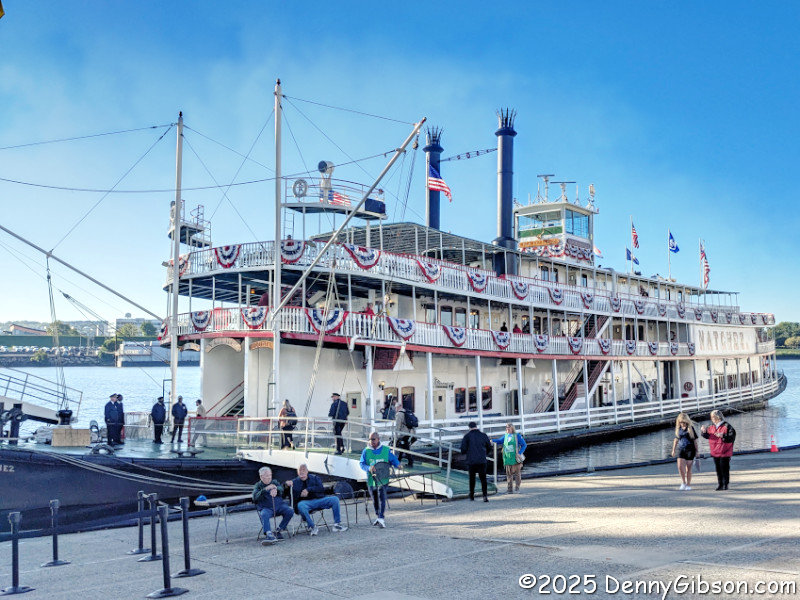
The American Roots Festival is not Tall Stacks. It’s similar but not matching. Tall Stacks was a festival that happened six times between 1988 and 2006 on the Ohio River at Cincinnati. Among the reasons given for not reusing the name is a desire to paint the event as something broader than a gathering of riverboats and to associate it with the nation’s upcoming 250th anniversary in 2026. Whether or not that painting and association were necessary and/or successful is not my concern. I definitely enjoyed some of the musical offerings at Tall Stacks, but for me, the boats were always the reason for its existence, and that is even more true for me and the Roots Festival. The fact that I was heading out of town when the festival officially began, but not before a day of “advance cruises” took place, has a lot to do with that. A Wednesday cruise on the Steamboat Natchez from New Orleans is my only personal contact with the American Roots Festival.

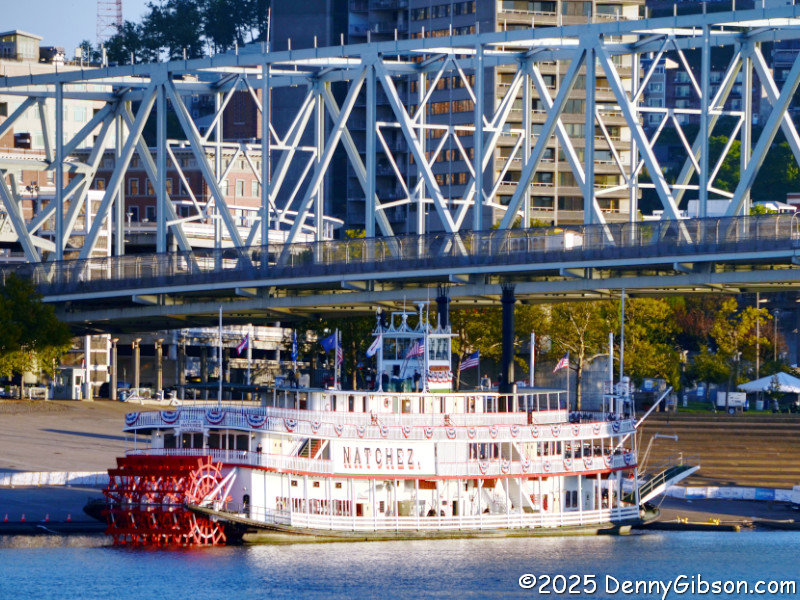
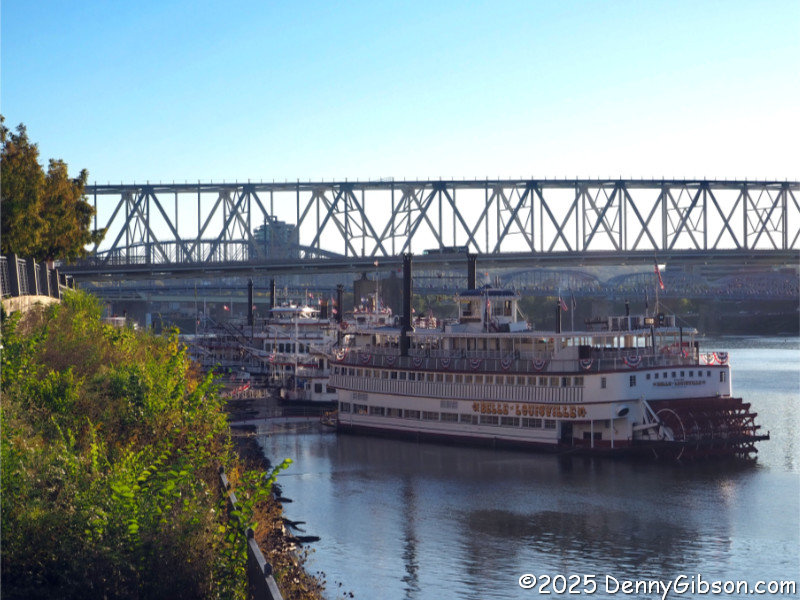
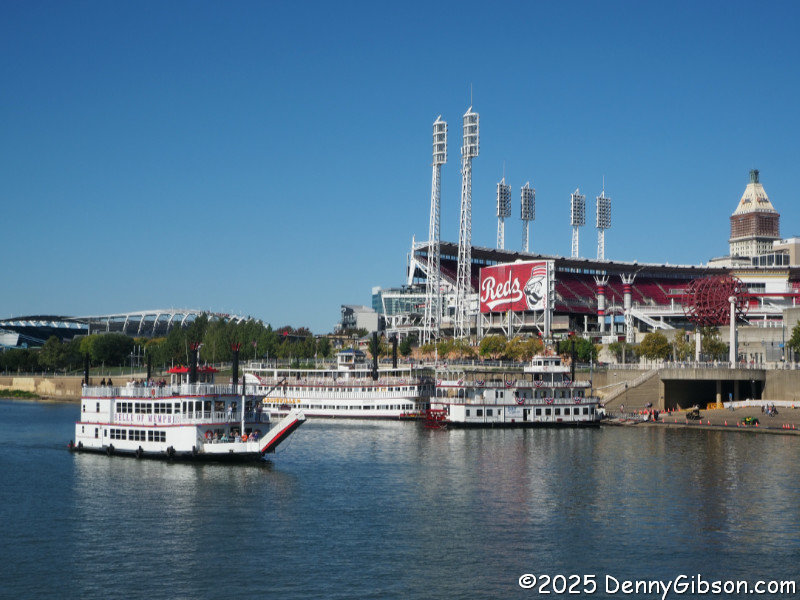
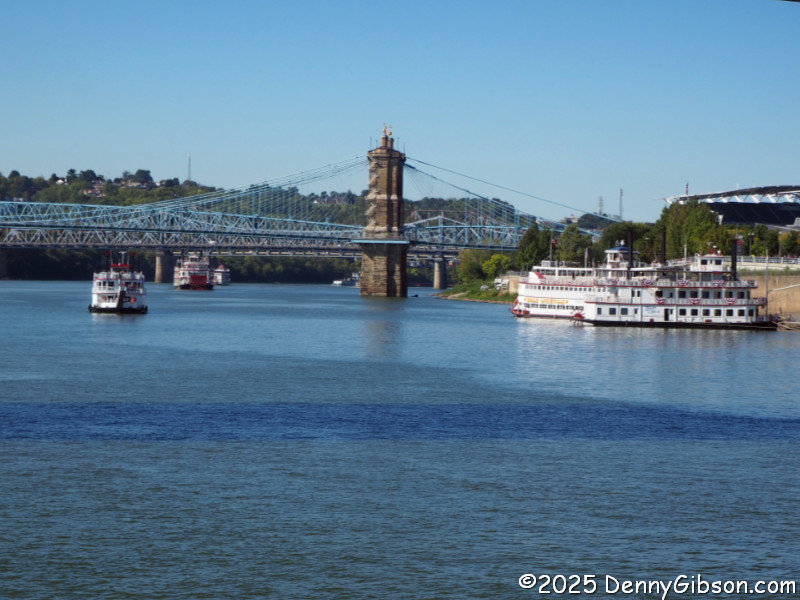
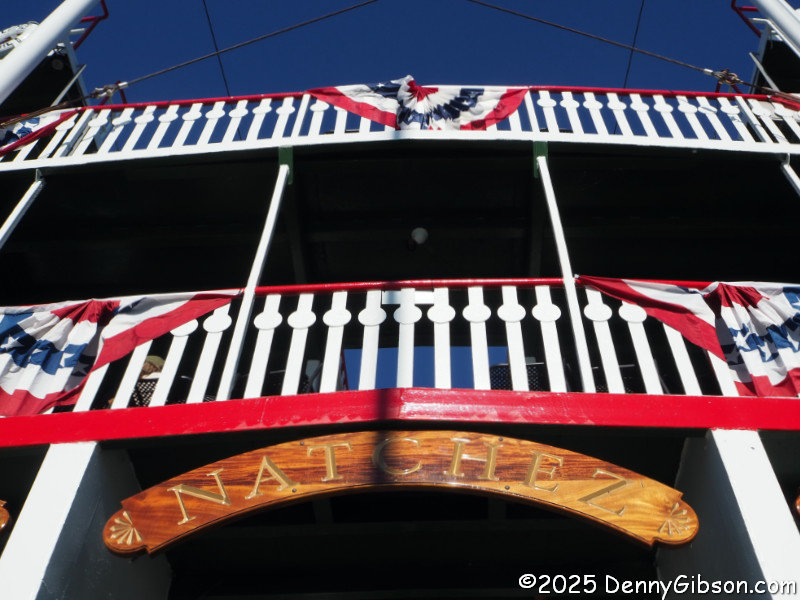
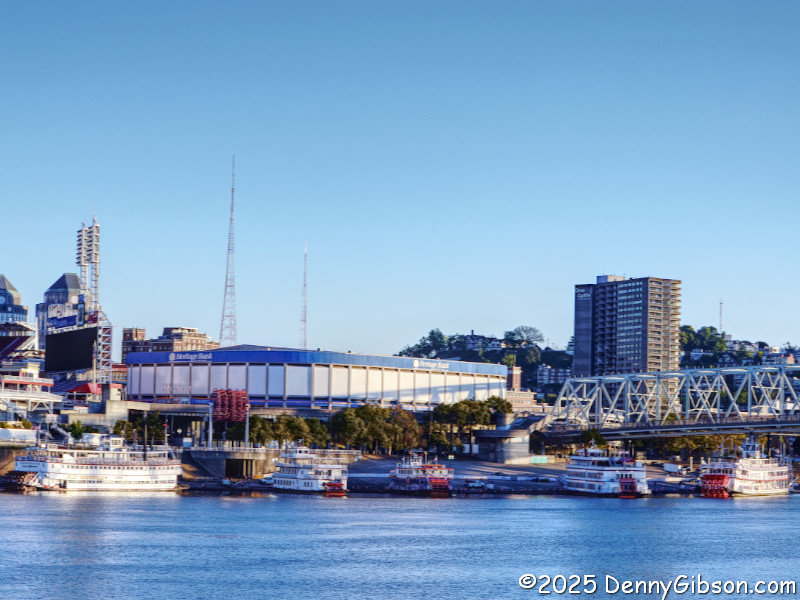
I arrived downtown well in advance of the scheduled boarding time and slipped across the river into Kentucky to snap a picture that includes five of the nine boats in town for the event. The boat I would shortly be cruising on is at the far right of that picture, plus I grabbed one of it alone.

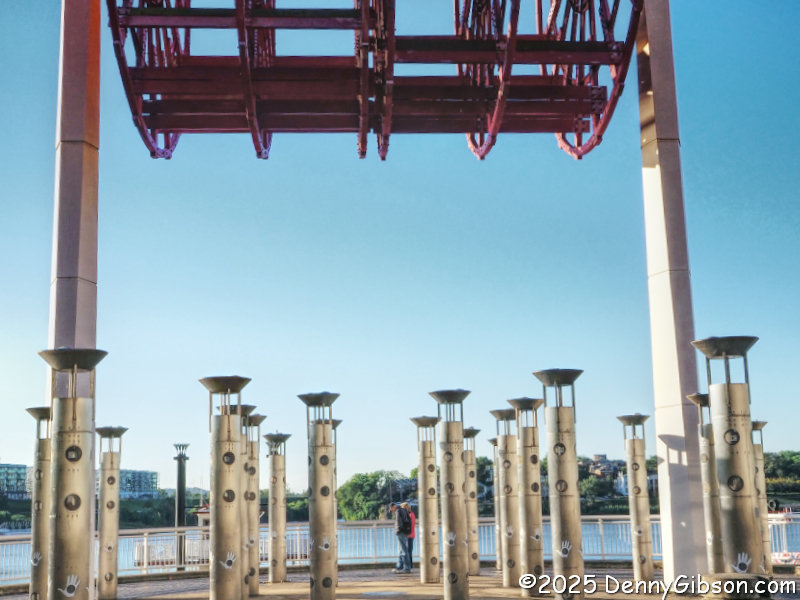
Back in Ohio, I parked near the public landing and walked to the river for a closer view of the boats. The Belle of Louisville is at the west end of the line. On the way to the landing, I passed the National Steamboat Monument and was happy to hear the whistles blow as I walked through them. That’s not always, or even often, the case.

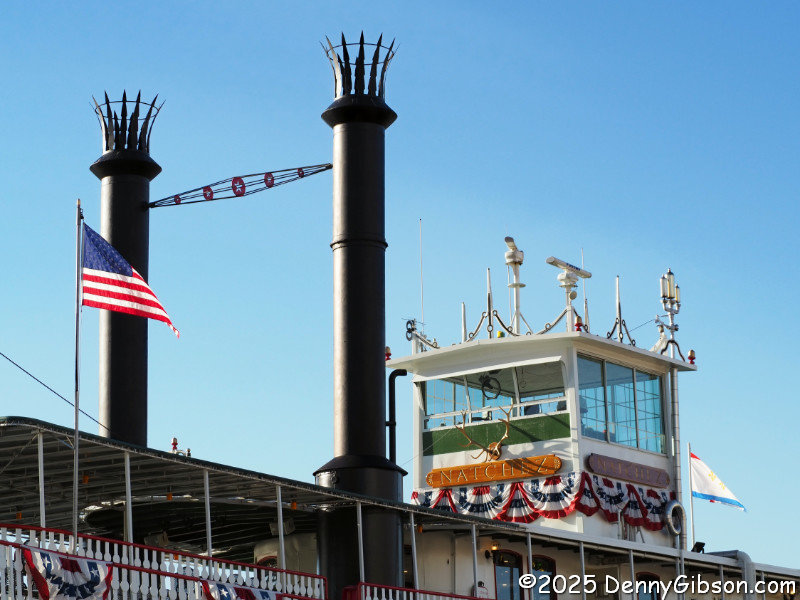
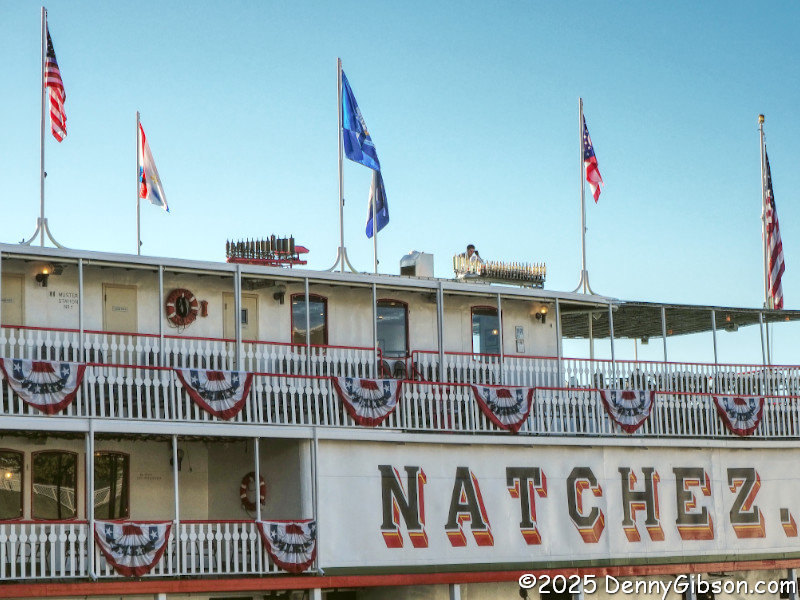
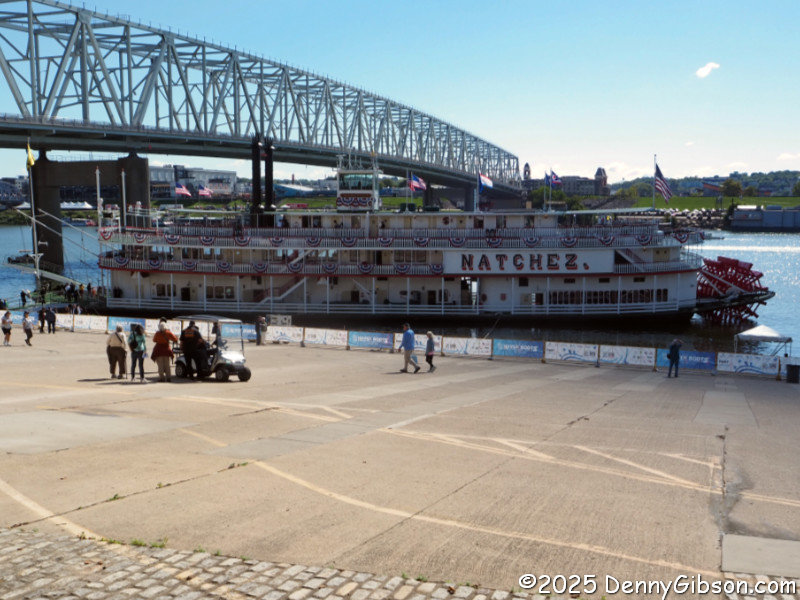
I actually took photos of all nine boats, and a couple even came out OK. However, with the low sun, most were atrocious, and I’m reserving them for my own entertainment. I spent the remaining shore time taking some close-ups of the Natchez. This trip is something of a homecoming for the calliope on the left. It was built in Cincinnati between 1900 and 1910 by Thomas J. Nichol for the Steamboat Sidney.

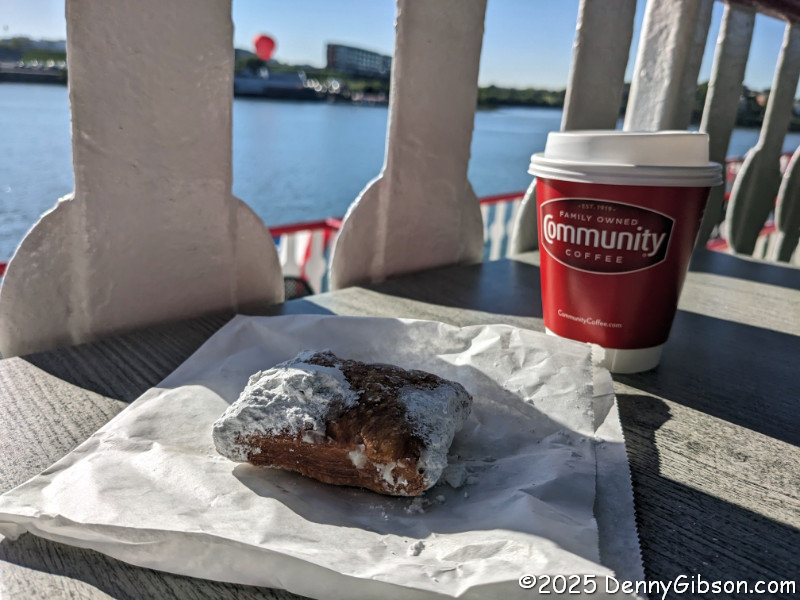
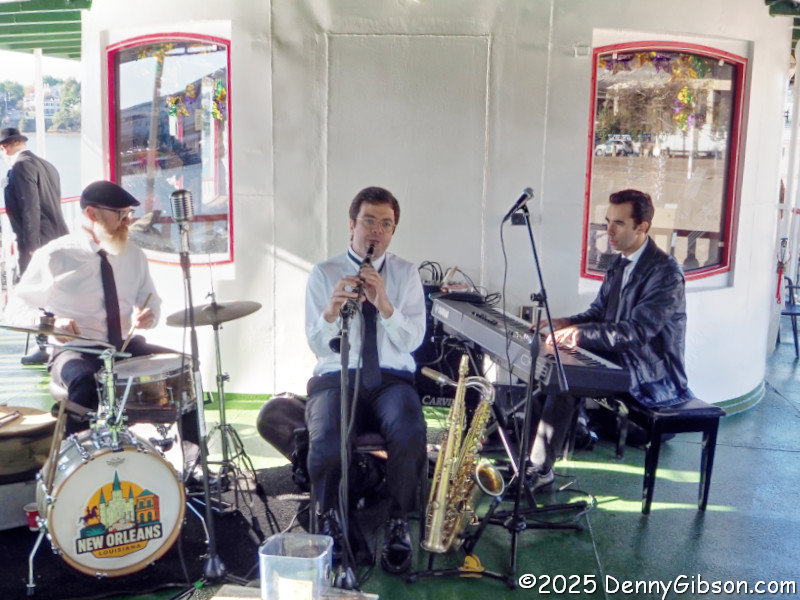
A wide variety of cruises is available during the festival. This was a 90-minute “Beignets & Coffee” cruise. During the half hour allotted between boarding and departure, I listened to the excellent onboard Dixieland trio and downed my beignet.

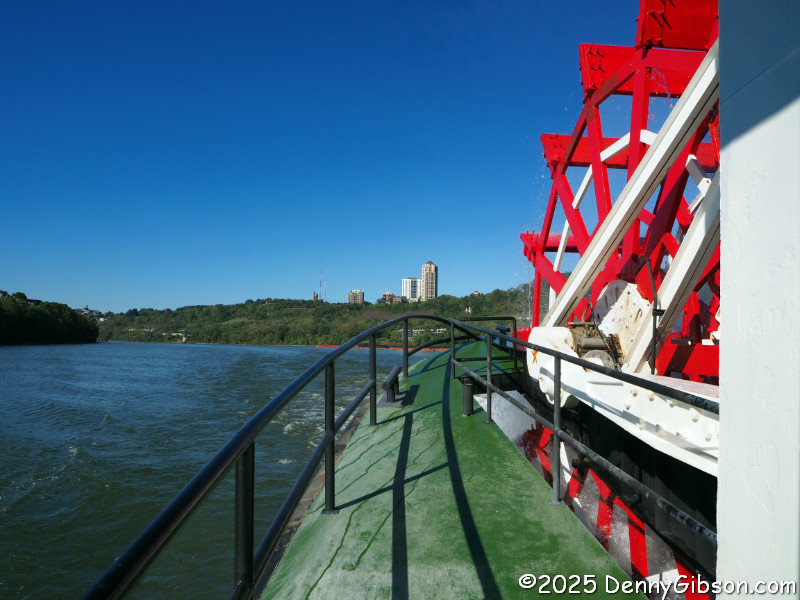
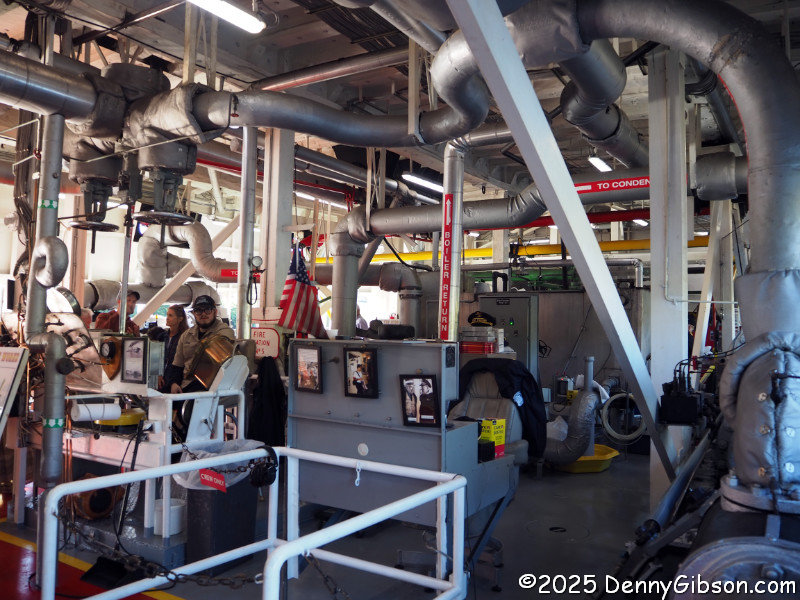
That left me free to roam around once we were underway.

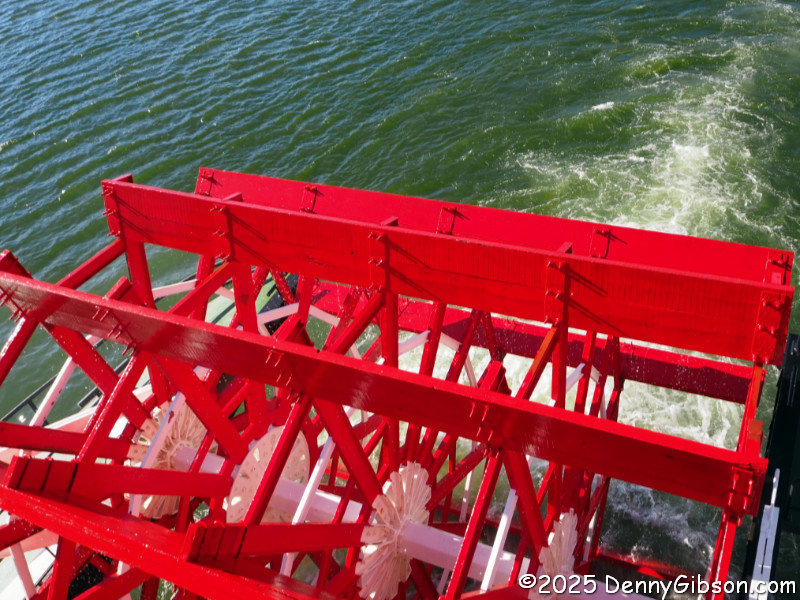
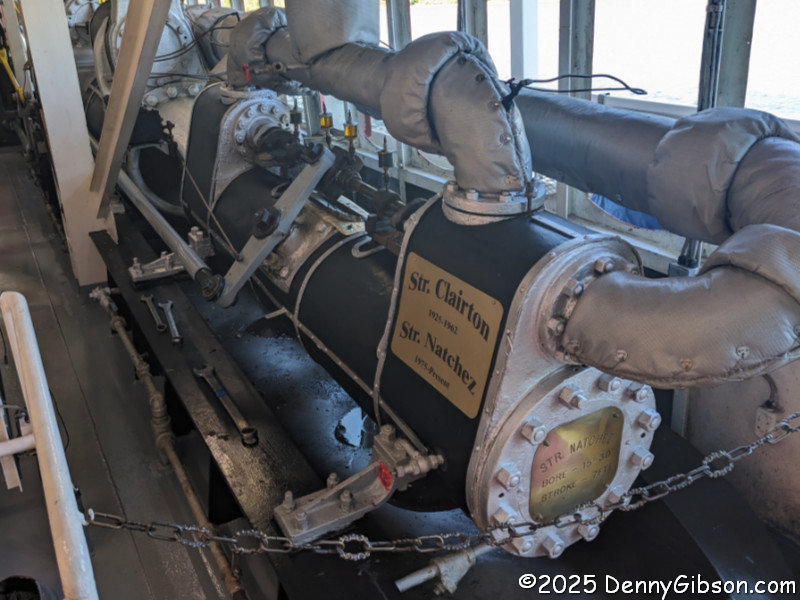
Built in 1975, the Natchez is pretty new for an authentic sternwheeler. She’s not entirely new, however. For example, the engines were in service aboard the Steamboat Clairton from 1925 until 1962, which means they are celebrating their centennial this year.

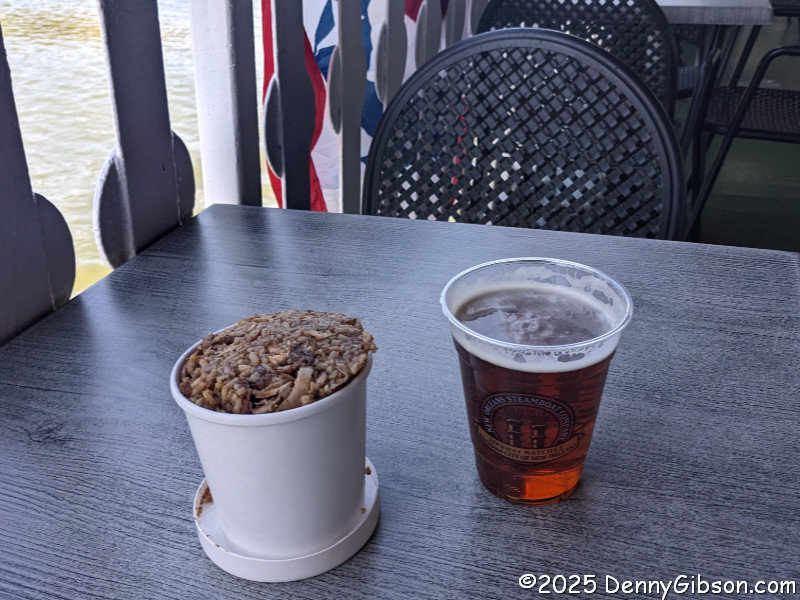
With breakfast and onboard exploration out of the way, I used the turnaround point as an excuse for an early lunch of jambalaya and Abita Amber. That container was absolutely stuffed with quite tasty jambalaya, which I completely failed to finish before realizing that we were nearing Cincinnati. About half of it came home to nourish me as I wrote this.

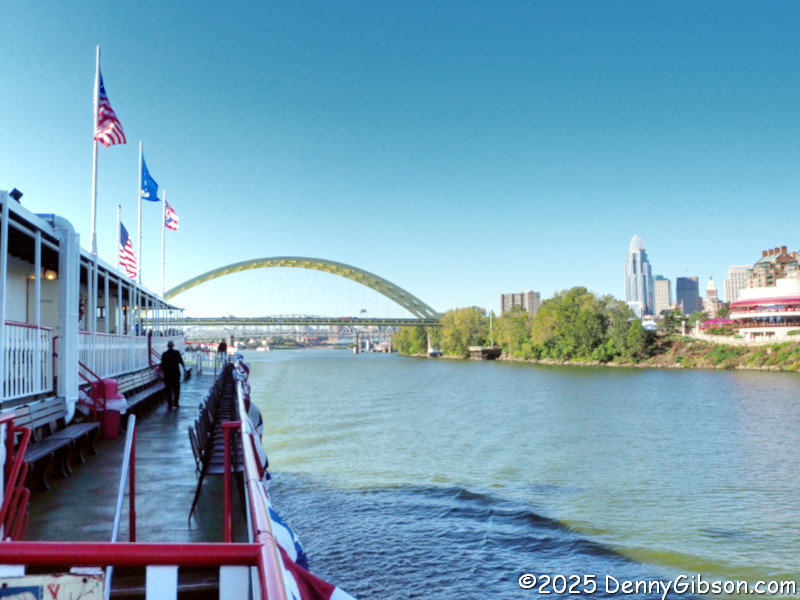
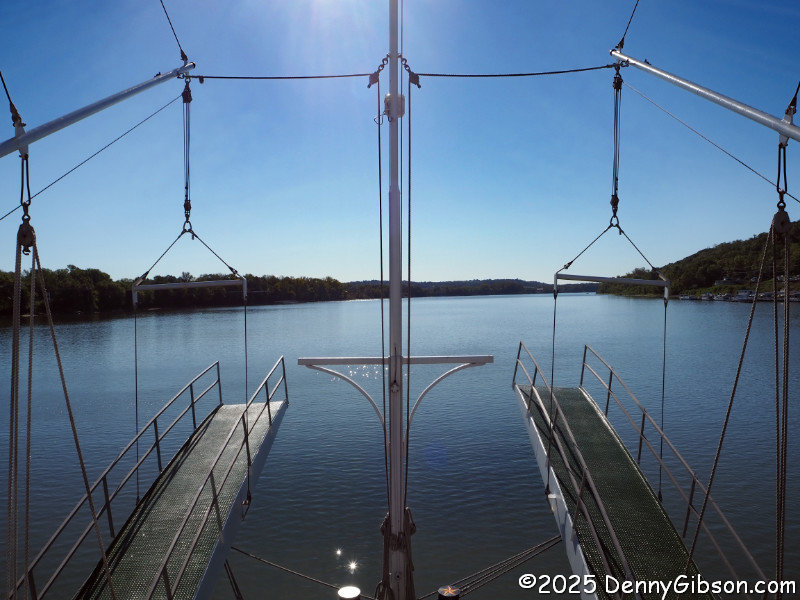
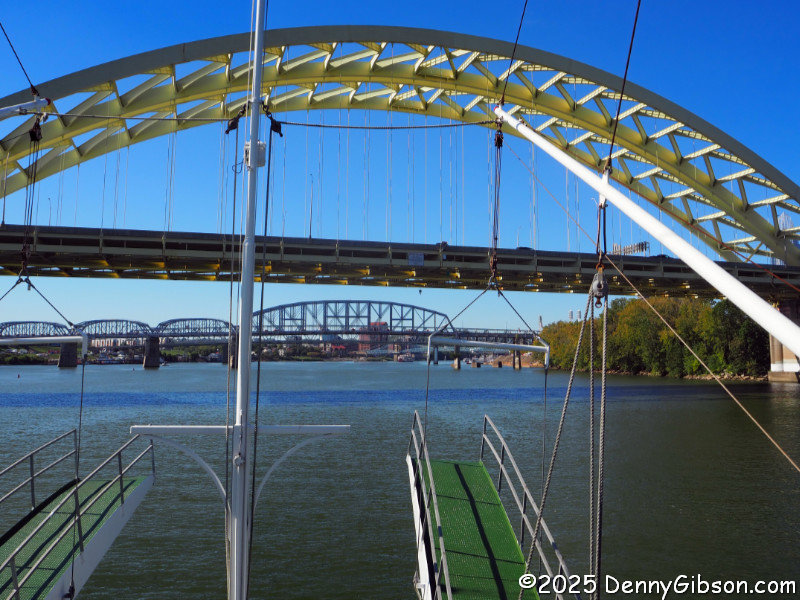
Not too long after I capped the jambalaya and stuffed it into my jacket pocket, we passed under the Big Mac Bridge and were soon facing the Roebling Bridge with the Bengals’ and Reds’ stadiums off to our right. Several other visiting riverboats were in motion on the river as we turned around and pulled into the landing.

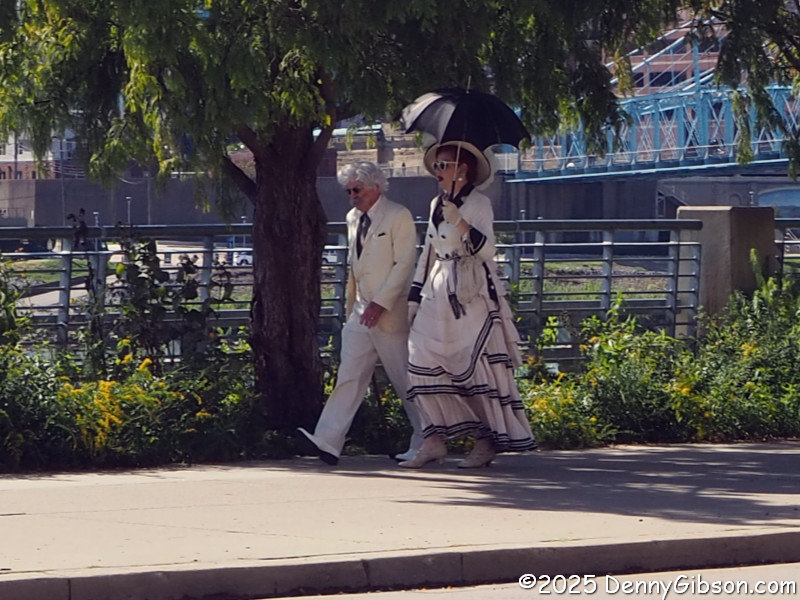
Back on shore, I paused at the top of the landing to gaze at the Natchez one more time before heading to my car. Cruising up and down the Ohio on a steam-powered sternwheeler can definitely play havoc with one’s sense of time. That’s no doubt why I didn’t question seeing Mr. Clemens heading toward the very river where he got his pilot training half as much as I might have otherwise.

This blog did not exist during the Tall Stacks period. There was, however, an Oddment section with entries not related to road trips. An entry was made for the final Tall Stacks event in 2006. It is here.


Because of my plans to leave town on Thursday, I finished writing this Wednesday for publication as the regular weekly post on Sunday. But it began to bother me that, although there would still be a day of the festival left at that point, at the moment nearly all of it remained. There was at least a small chance that it might be useful to someone if it appeared on Thursday instead of Sunday. So here it is: a blog post published on a normally silent day of the week. I’ll put up a canned post on Sunday, and this will be, as the folks in NOLA say, lagniappe.

Season of the Clown

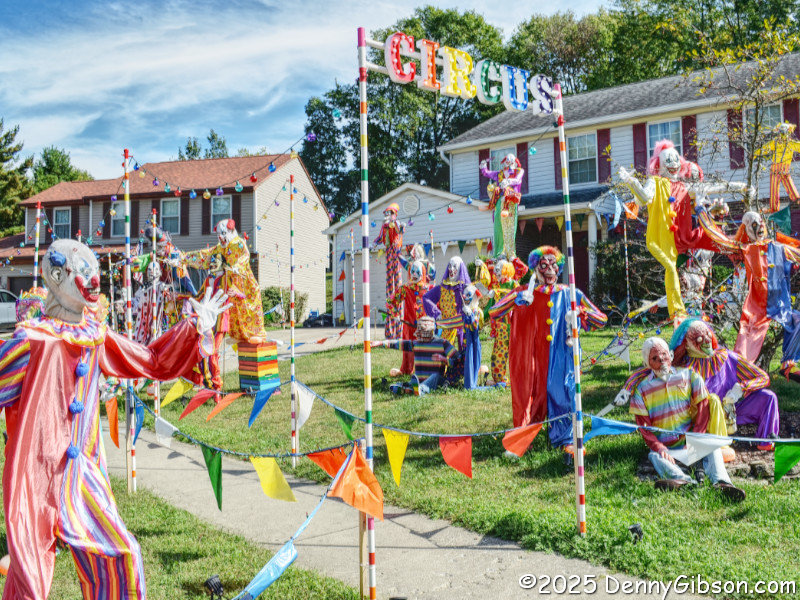
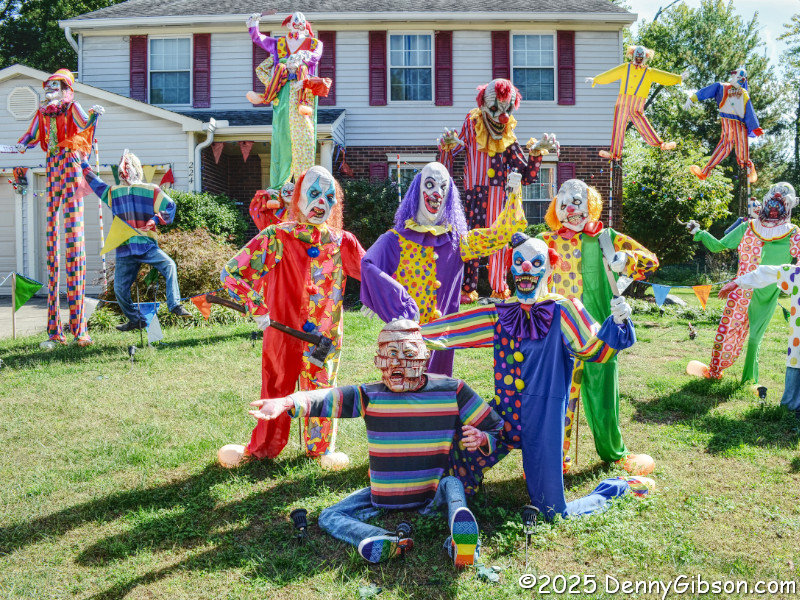
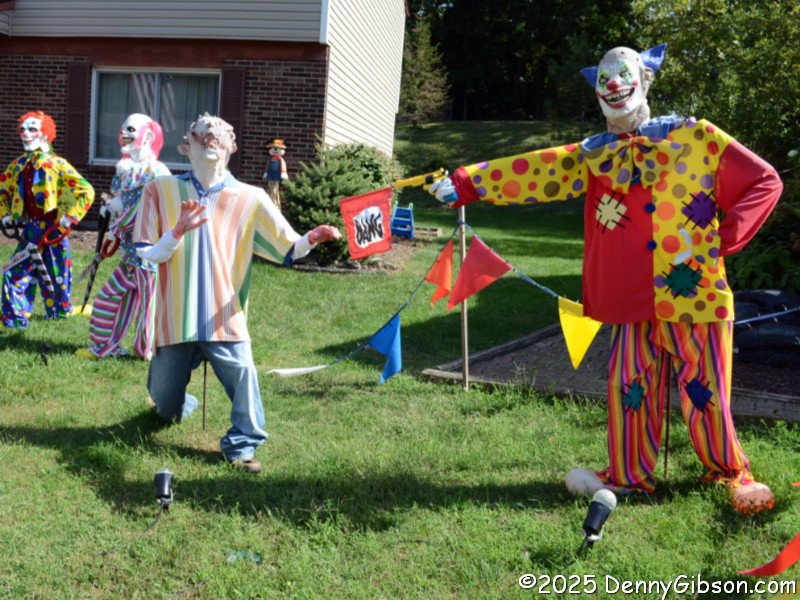
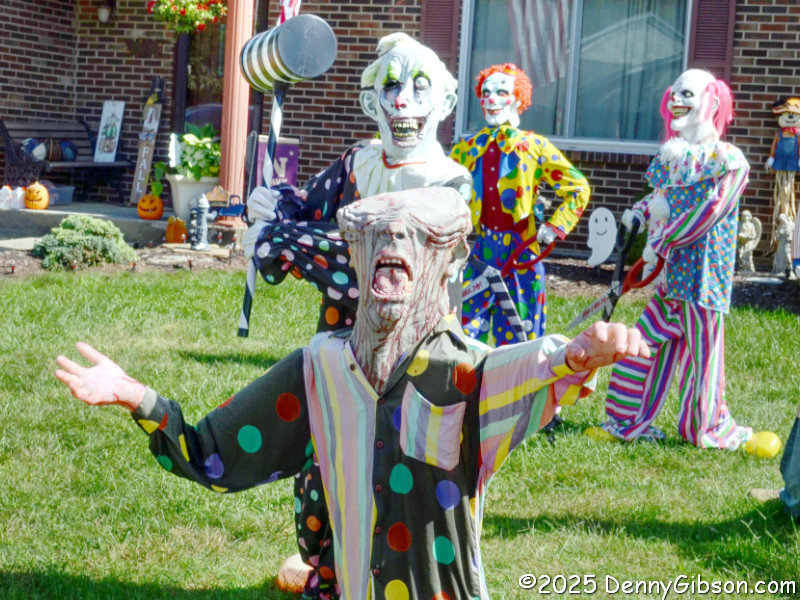
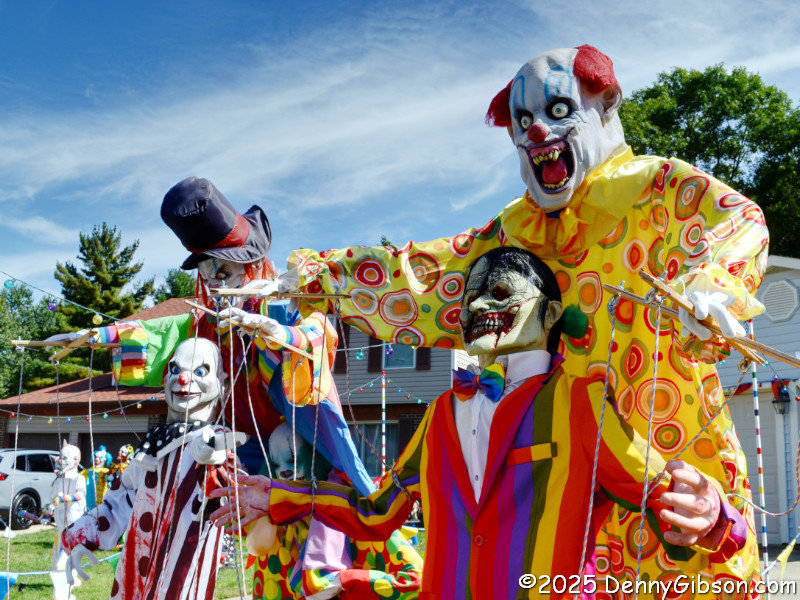
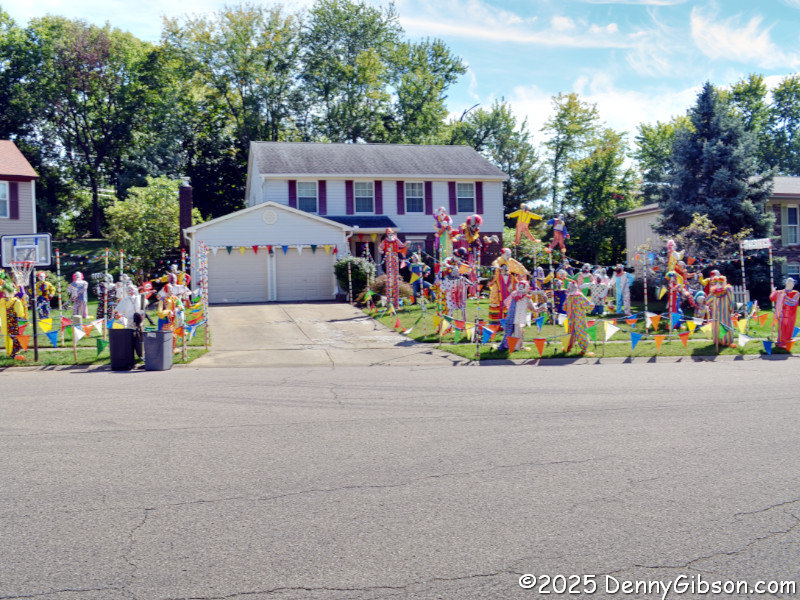
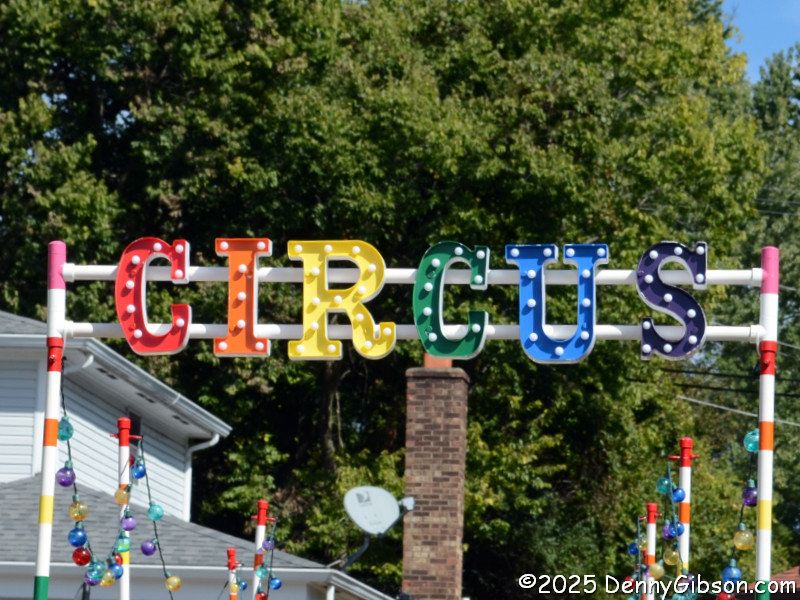
Not everybody decorates for Halloween with store-bought skeletons and inflatable witches. Some people, like this guy in Delhi Township that I just learned of, do it with personal creativity. For the last ten years, Shaun Reynolds has filled his front yard with unique creations based on different themes. This year, it’s clowns.

“I’ve wanted to do this since I was a kid,” Reynolds told TV station WCPO. It was through their article and video that I learned of the seasonal attraction. Check it out here. I didn’t get to meet Reynolds when I visited on Thursday, but I have a feeling that he’s not quite finished with being a kid.

I did get to meet Teresa, a long-time neighbor. I was poised to ask what it was like having a big, spooky attraction in your neighborhood, but I didn’t really need to. Her smile when she greeted me let me know she was loving it. I had thought of counting the figures on display, but had not followed through. Theresa made that unnecessary, too. “38 or 39,” she said. She also tried to describe how great the place looks at night with the lights on, as well as just how crowded and fun it gets on Fridays and Saturdays.

Reynolds makes it very clear that he does this for fun and that sharing it and seeing others enjoy it is part of that fun. Of course, some folks have wanted to contribute something, so the Reynolds family has taken to accepting donations of food and money, which they pass on to the Delshire Elementary School food drive.

I’d sure like to see this place at night, and I’m going to try to make that happen. Maybe you can, too, but it is obviously pretty cool day or night. It’s on Assisiview Court.

Summer’s Here

Where I live, Friday was the first day of Summer — barely. Summer Solstice, which marks the beginning of astronomical Summer, occurred at 10:52 PM EDT on June 20. Since the 21st was the first full day of Summer, some folks think of that as the first day of the season. But it was the 20th that encompassed the solstice, got Summer started, and counts as the longest day of the year. In Cincinnati, the sun was above the horizon for approximately 916 minutes on Friday versus a little more than 895 minutes on Saturday.

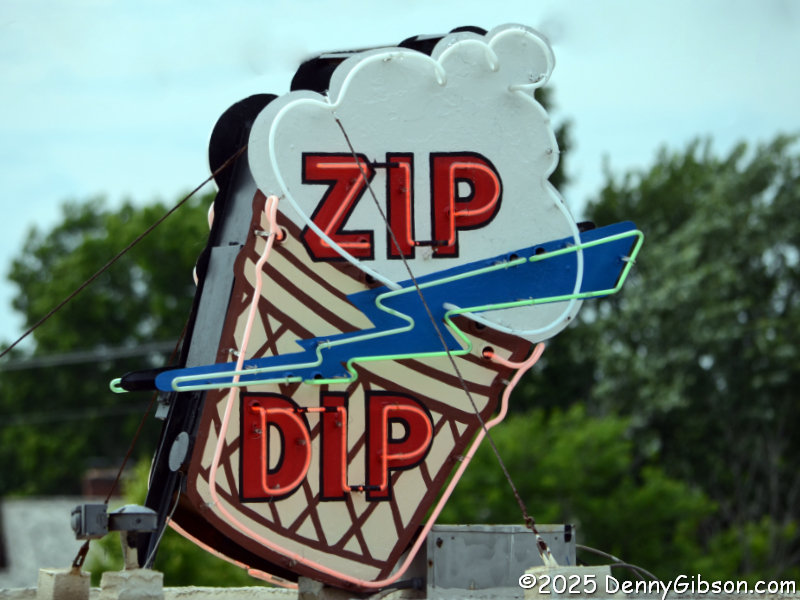
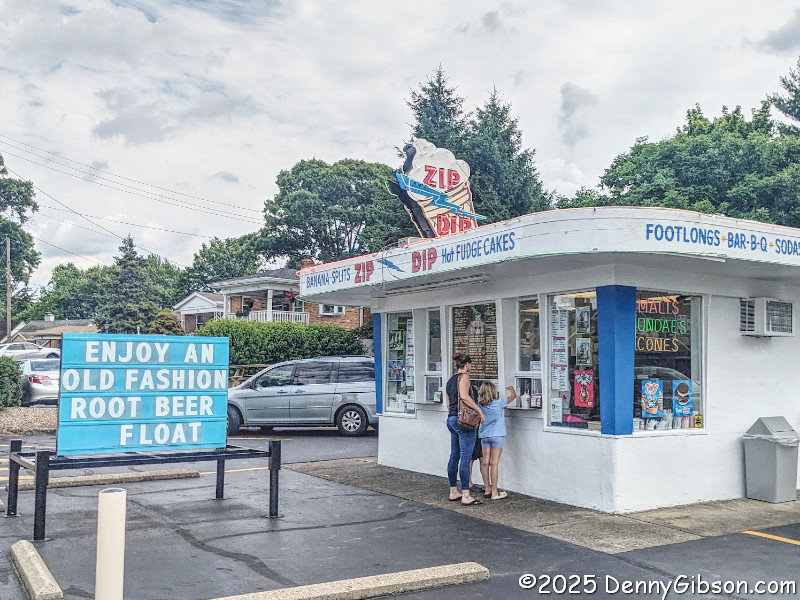
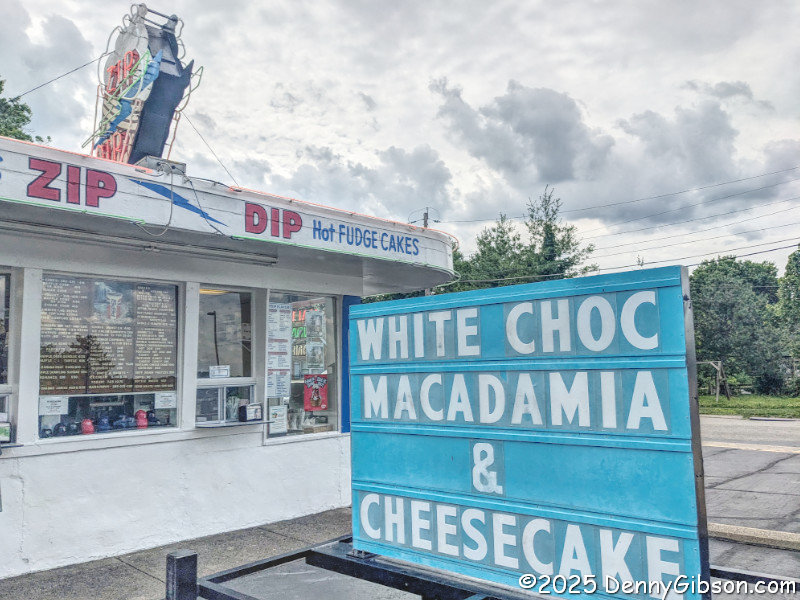
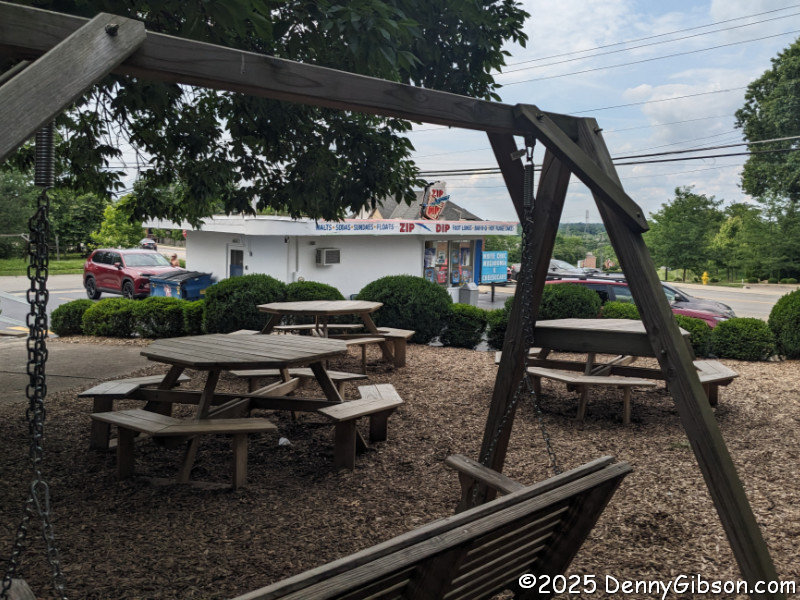
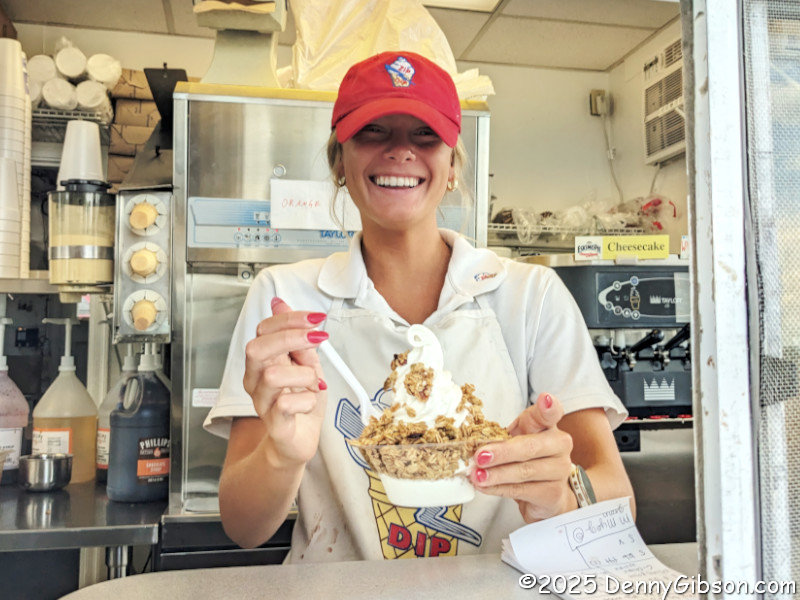
On that 80+ degree first day of Summer, the memory of a recent story about an ice cream stand’s anniversary prompted me to drive to the west side of town, and some sweet coolness. Zip-Dip opened for its 75th season in early March. Regular Summer hours went into effect on May 23. In addition to chocolate and vanilla soft serve, Zip-Dip offers orange sorbet and two rotating flavors of yogurt. I couldn’t have picked a better day for flavor choices.

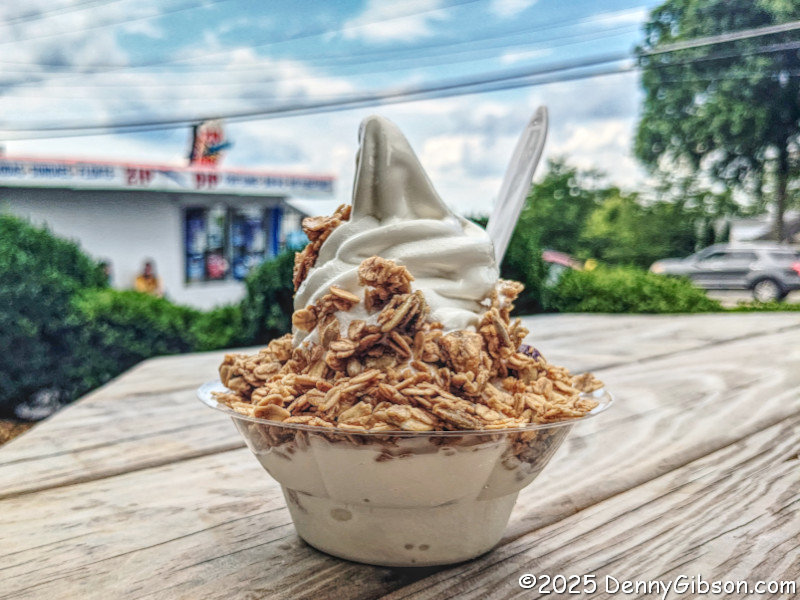
I got my white chocolate macadamia yogurt with granola and a smile, then headed to the attached picnic area to eat it. Yeah, that cute curl had melted by the time I picked my spot, but I could taste the curl in my first bite, along with a smile and summer and a little neon.

Sign Museum Threefer

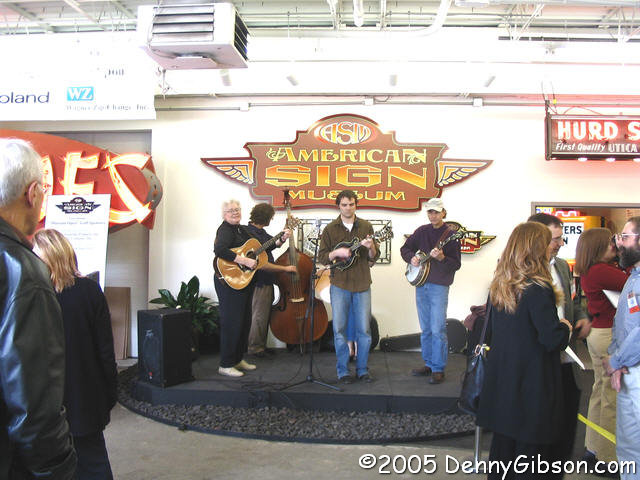
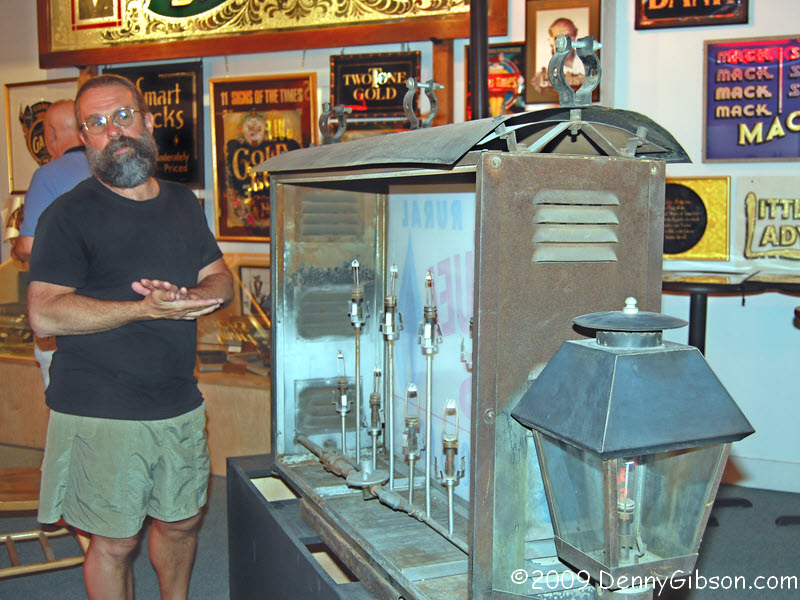
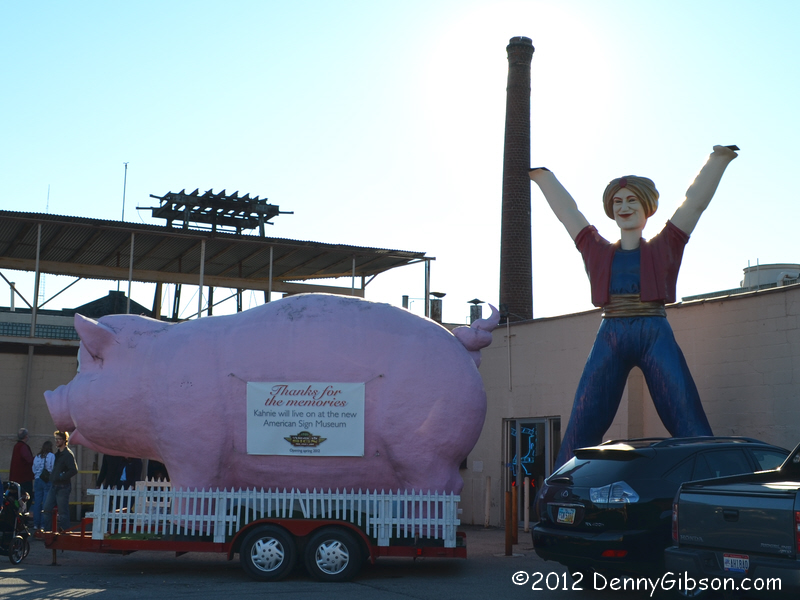
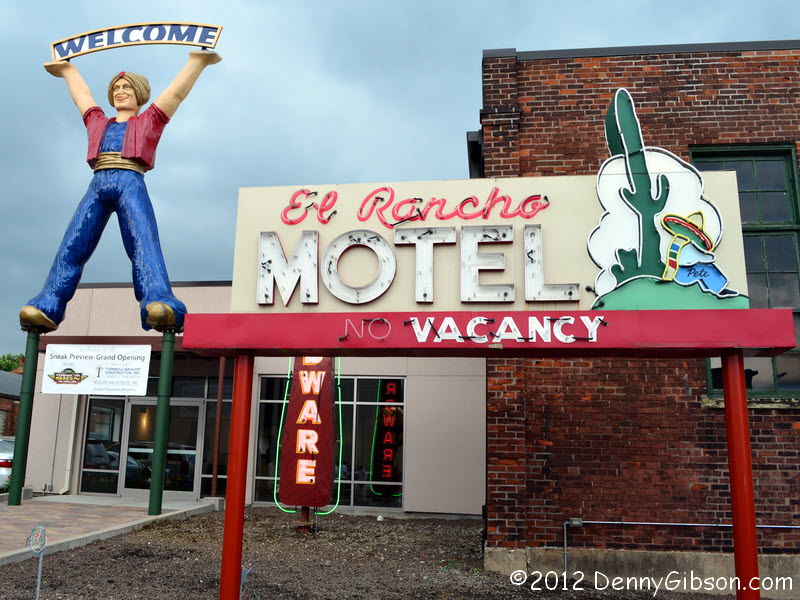
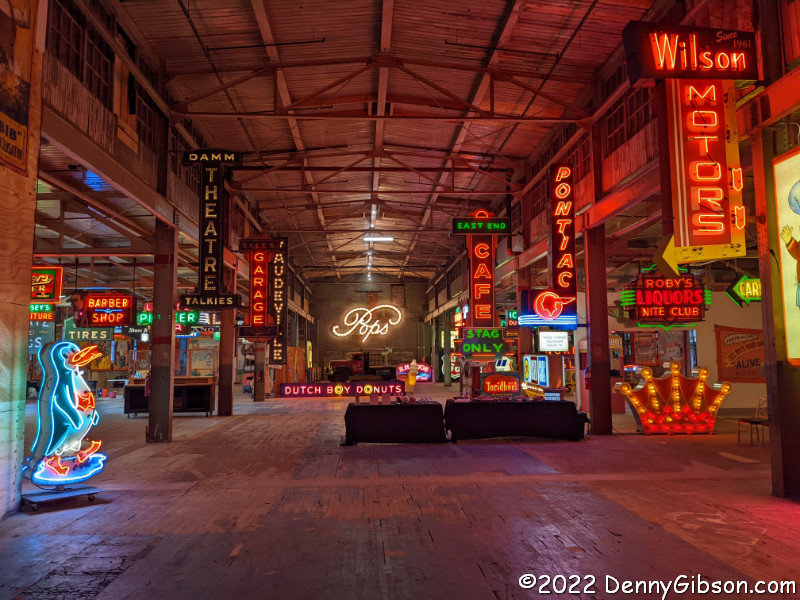
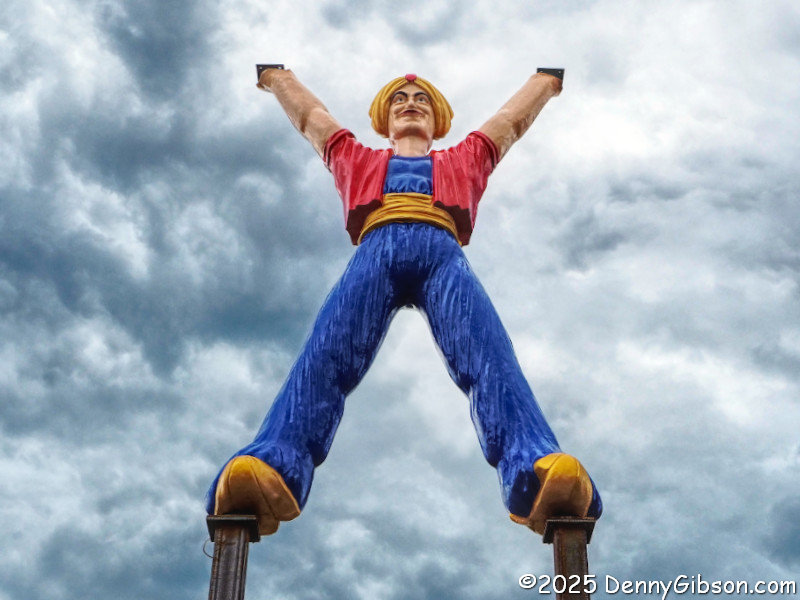
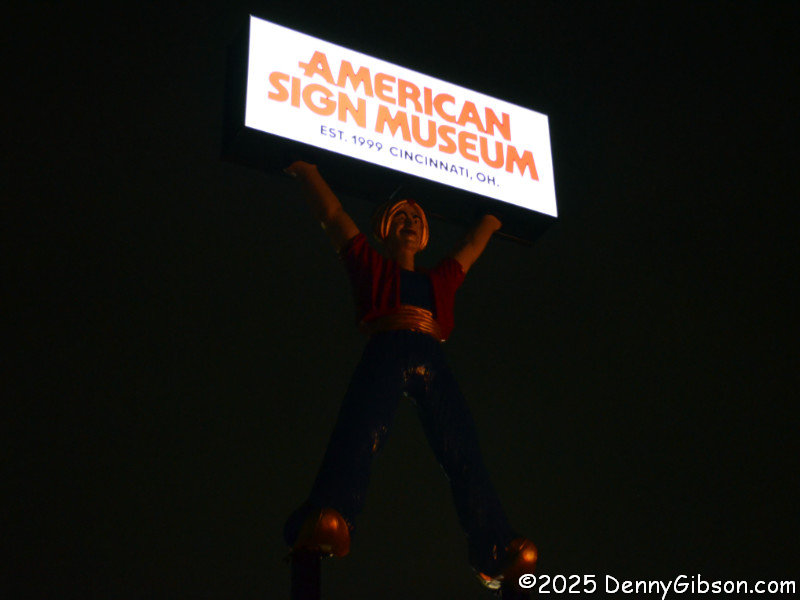
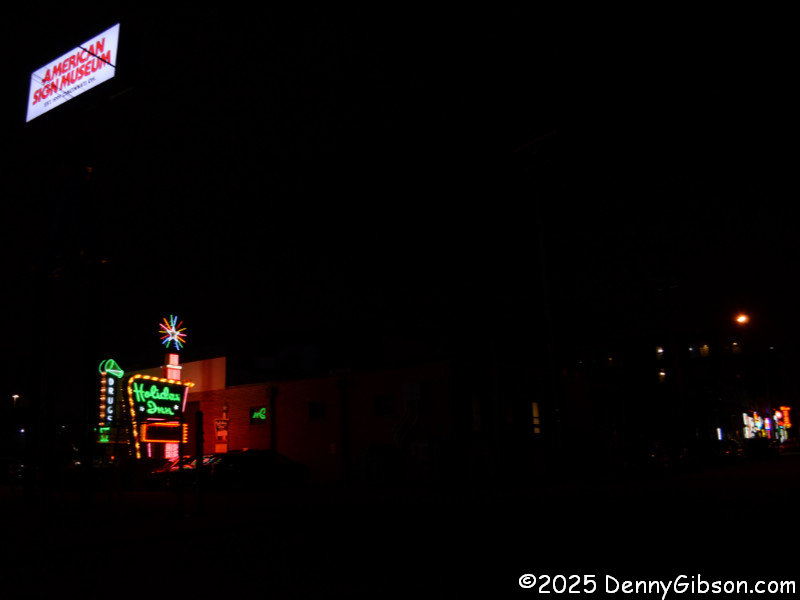
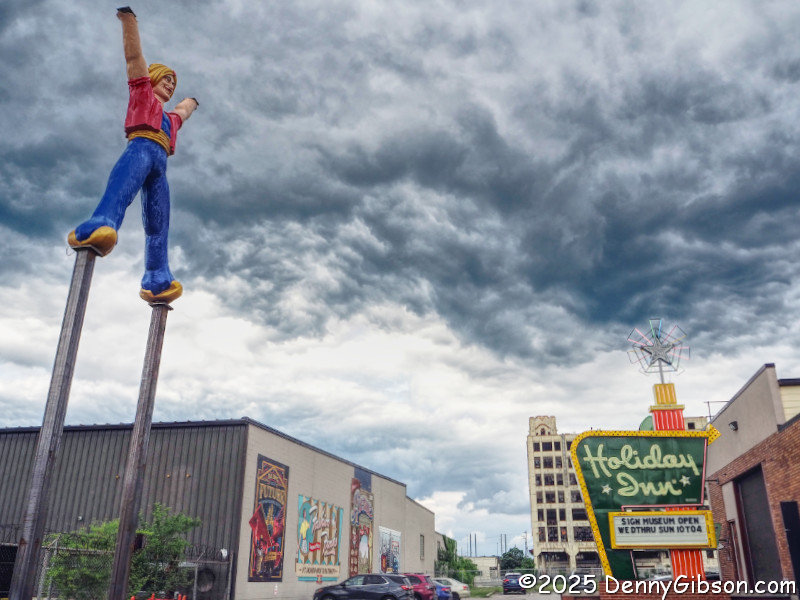
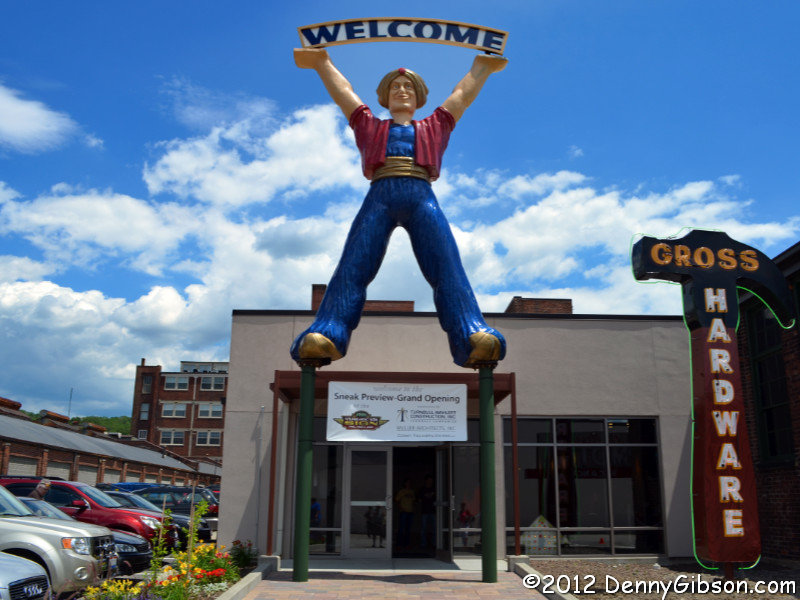
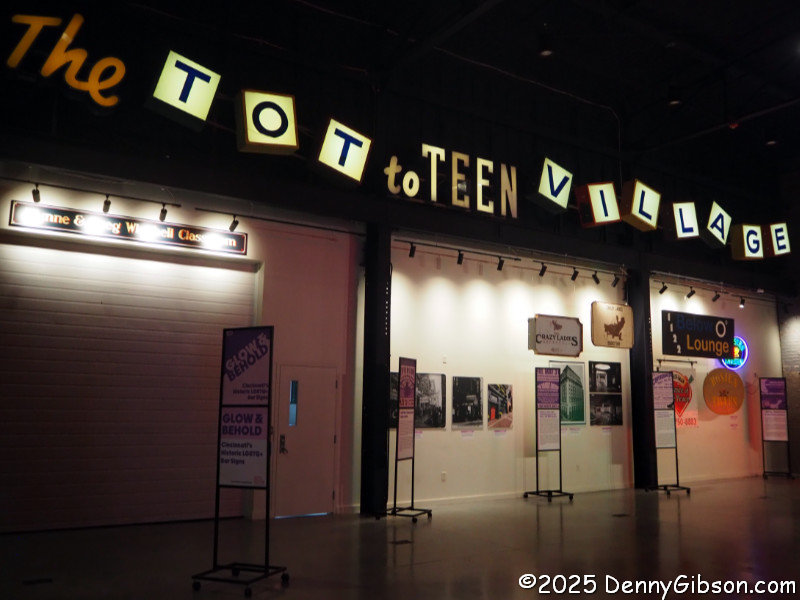
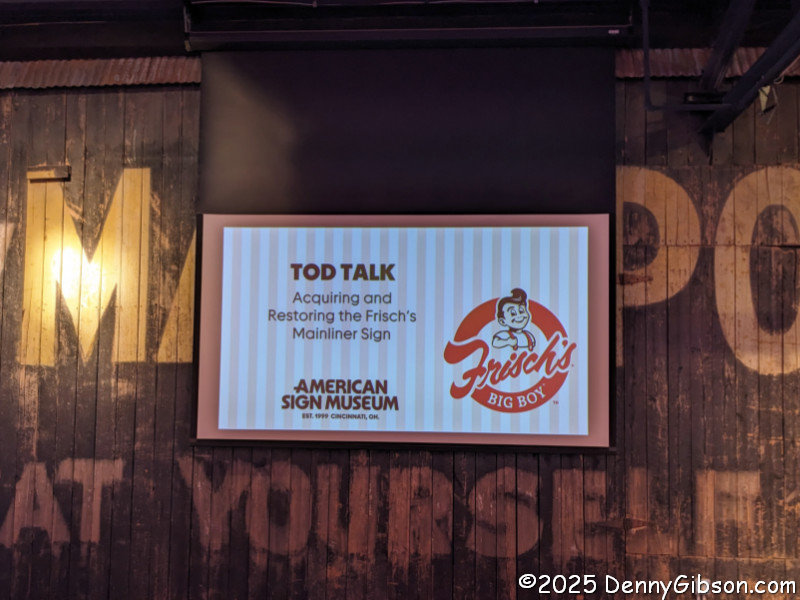
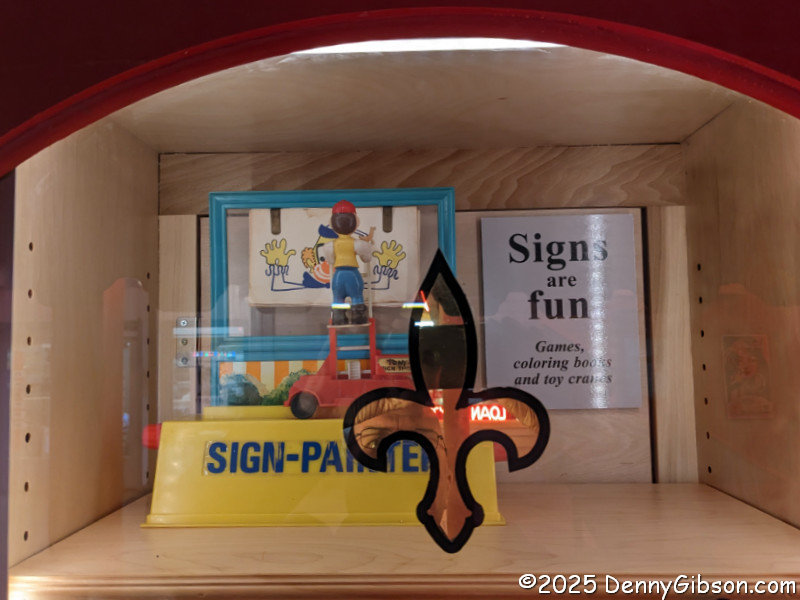
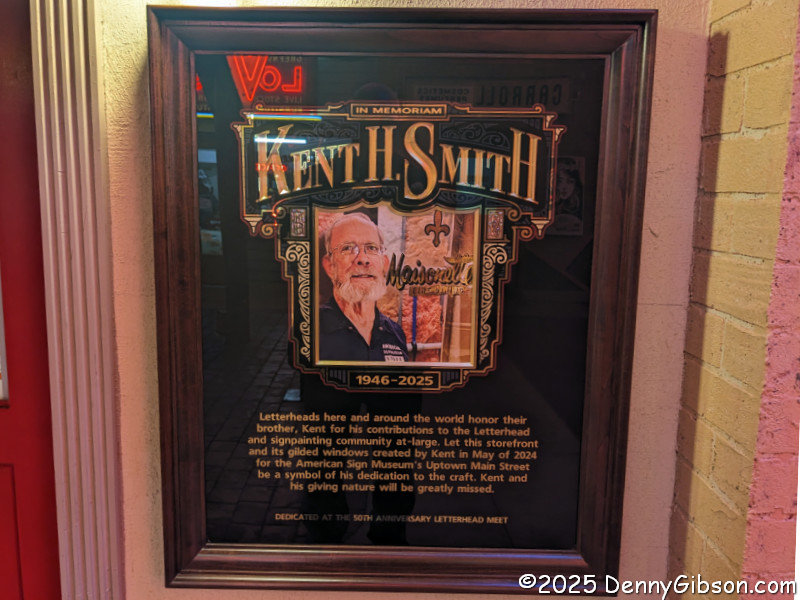
I visited the American Sign Museum on Thursday. Technically, I visited it twice, once during normal hours and once in the evening for a special Tod Talk. The Tod Talk, “Acquiring and Restoring the Frisch’s Mainliner Sign”, was the reason I was there on this particular day, but I also wanted to see the freshly installed genie pictured at right and the museum’s first-ever special display. Ergo, a threefer.

The museum has owned a pair of the giant Carpeteria Genies since 2003, but one was held in off-site storage until last week. Wonderfully restored, it now stands beside the entrance to the museum’s parking lot. I failed to get a picture of the genie at the front door (which is admittedly looking a little faded these days), so I have included one from the museum’s 2012 grand opening at this location.

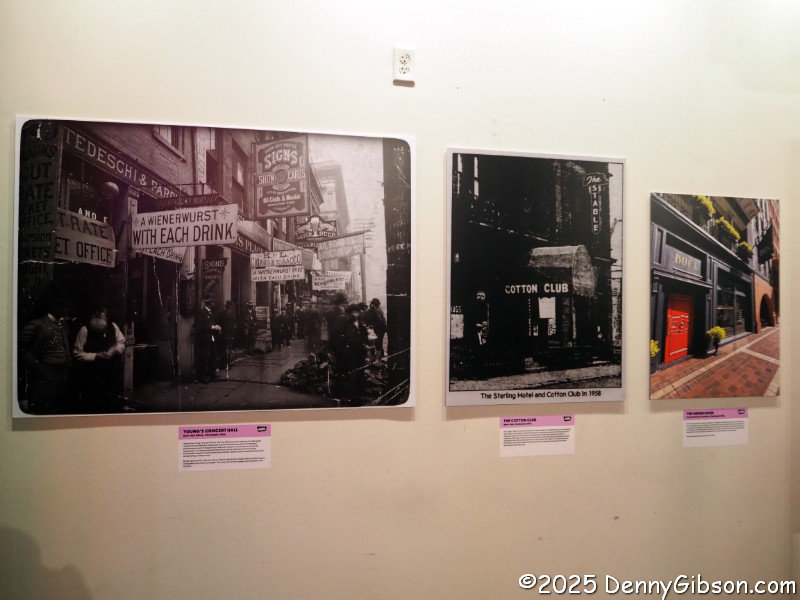
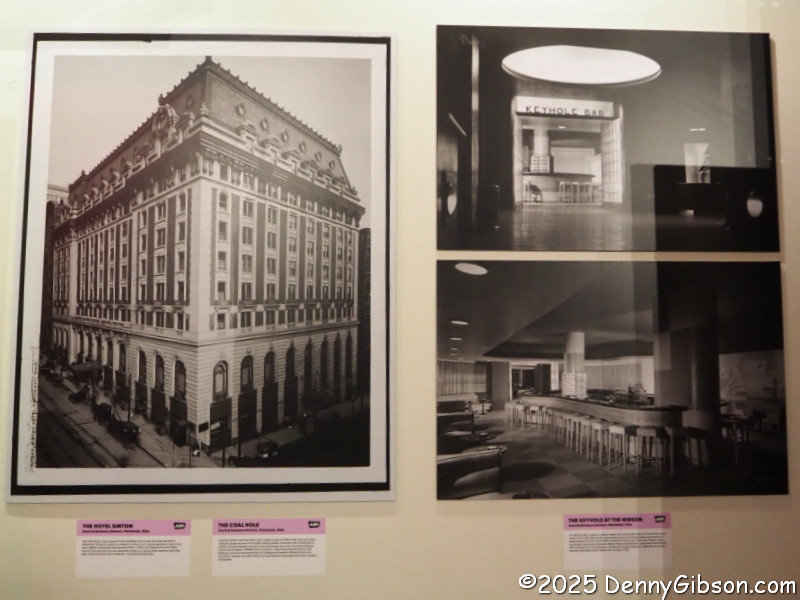
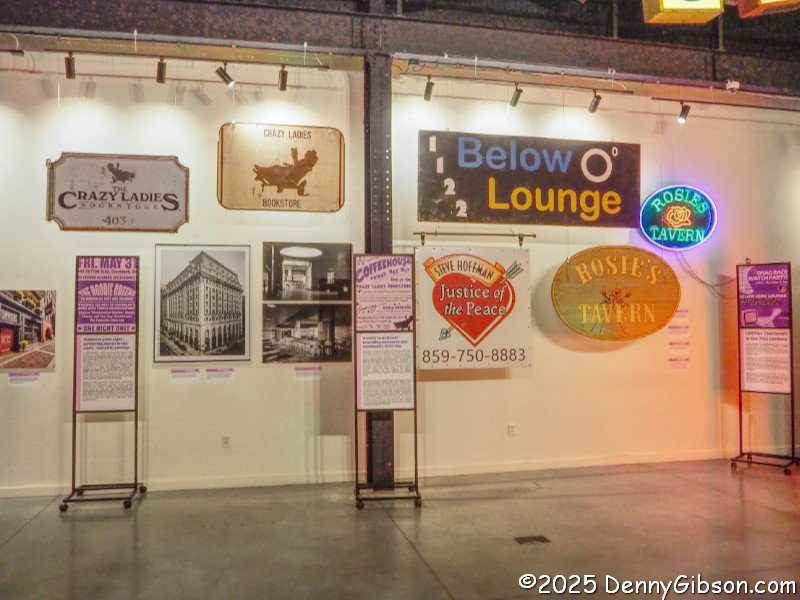
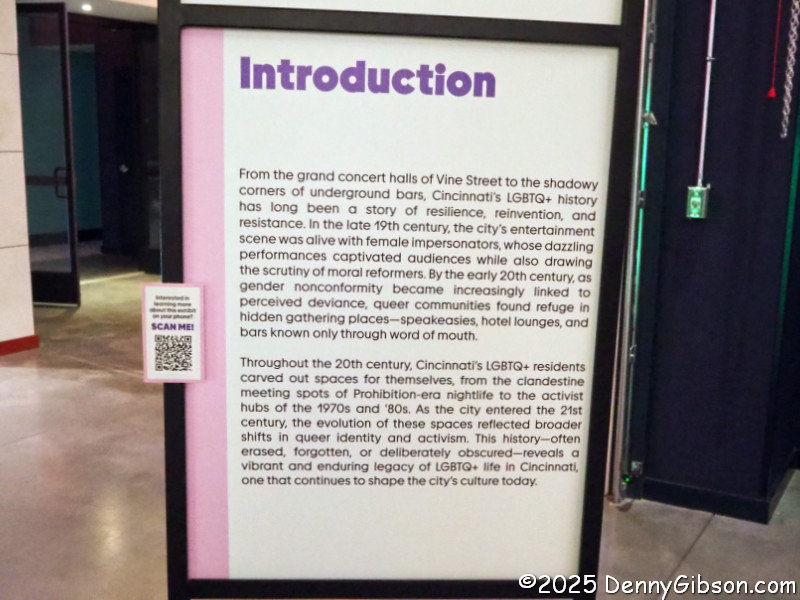
When the museum expanded last year (New Stuff to Look At), it was said that there was now enough space to potentially accommodate some temporary exhibits. The first such exhibit, Glow & Behold: Cincinnati’s Historic LGBTQ+ Bar Signs, is in place now. One panel supplies an introduction. Another notes that “…there were more drag queens and kings, known then as female and male impersonators, working on Vine Street in Cincinnati in the 1880s and 1890s than there are today.”

The exhibit includes photos of several businesses that no longer exist, along with retired signs (Remember where we are.) from both defunct and very active establishments. Saturday night’s “Signs & Spouses: A Sparkling Celebration of Marriage Equality” was inspired by this exhibit.

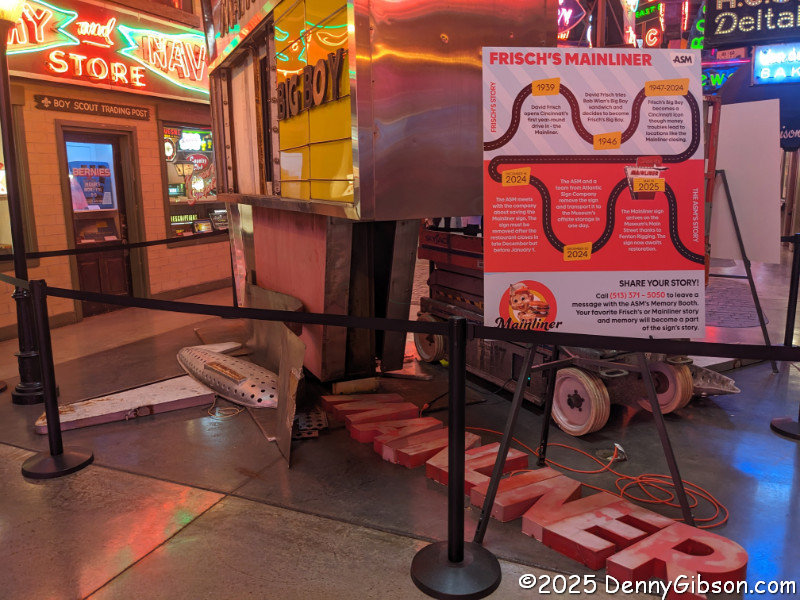
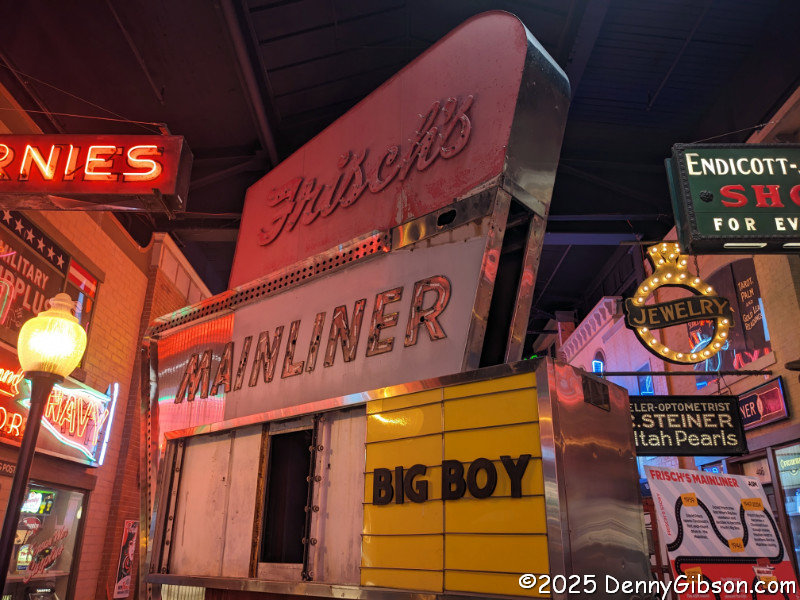
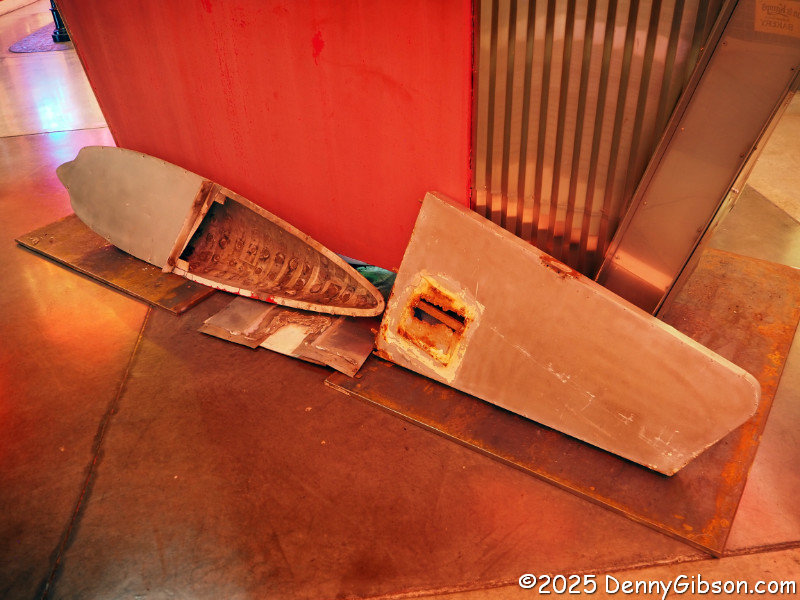
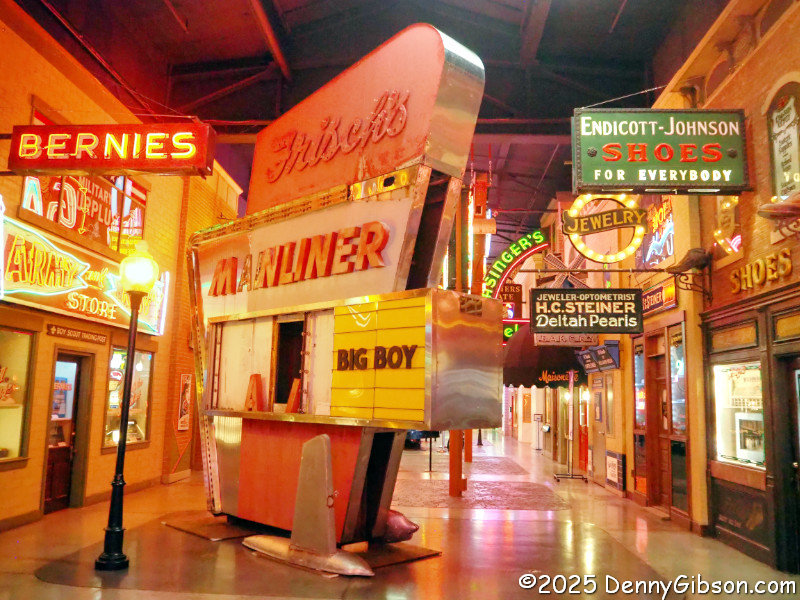
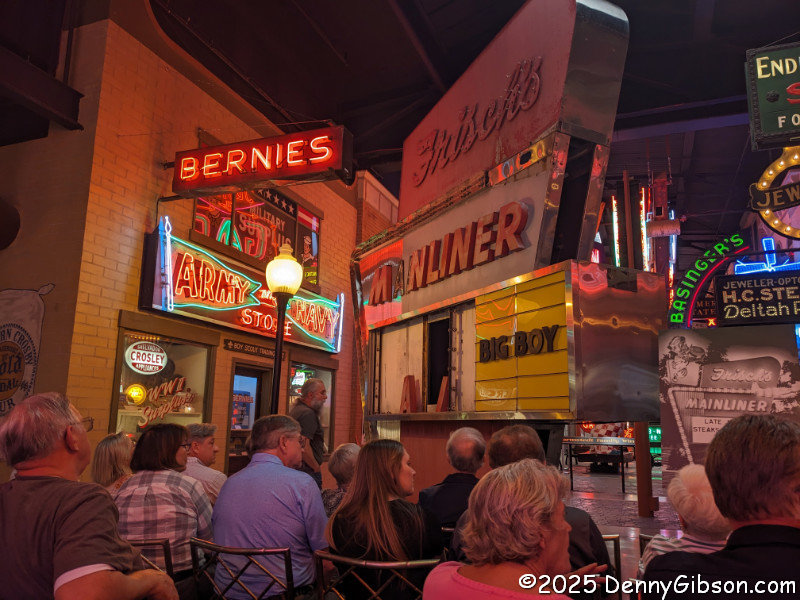
As closing time approached, I took advantage of the relatively empty museum to grab pictures of the Frisch’s Mainliner sign and its flying machine in pieces on the ground without humans milling about. I will be learning a lot more about this sign in a couple of hours.

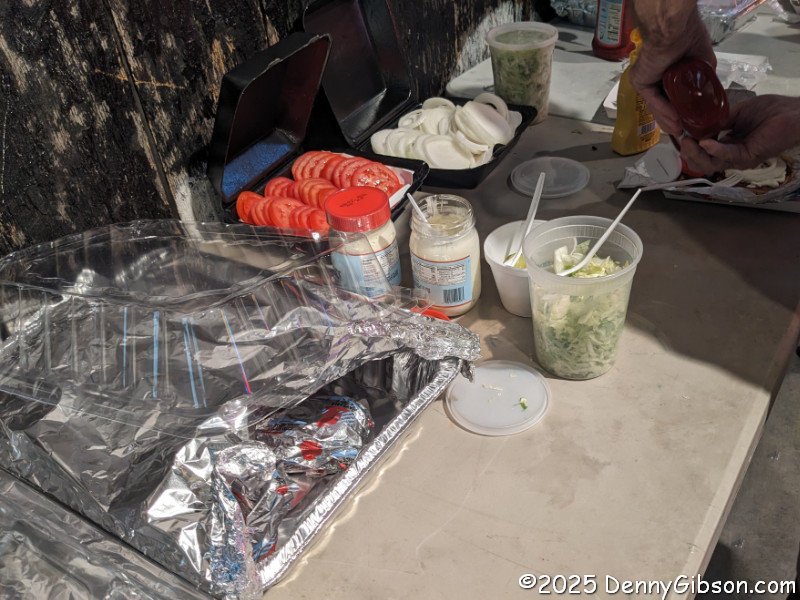
Between the time that the Tod Talk was announced and when it actually happened, the sign was moved from the storage site to inside the museum, and so was the talk. The email announcing the move let us know that this would allow a cash bar, etc. To my surprise, “etc.” included a genuine Frisch’s hamburger from the still-operating independently owned franchise restaurant in Bellevue, KY. I had eaten during my time away from the museum, but I hadn’t eaten THAT much, and I didn’t want to appear unappreciative, so…

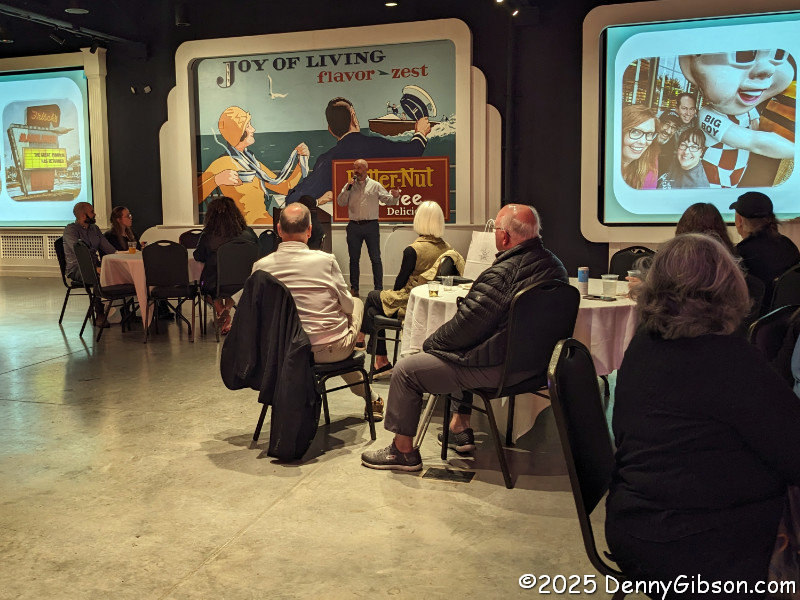
The talk began with Erin Holland, the museum’s Director of Education and Engagement, delivering a greatly abbreviated version of her March presentation on the overall history of Frish’s and its advertising. Then Tod Swormstedt, the museum’s founder and the Tod of Tod Talks, stepped in to share stories about acquiring and taking possession of the Mainliner sign.

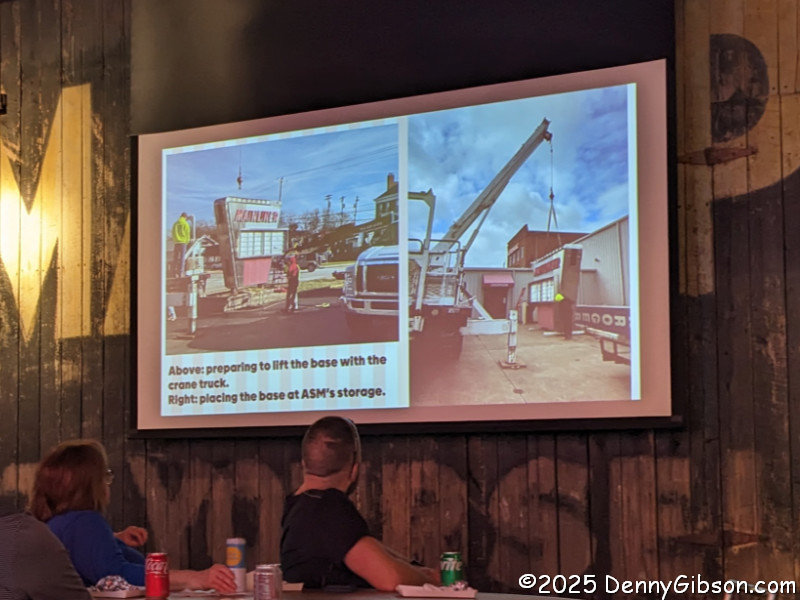
The instant that hints of the Mainliner closing began to circulate, the fate of its incredible sign became a topic of concern for many locals and the ASM in particular. As restaurants closed and lawsuits opened, it wasn’t easy to learn just who owned what. It took some creative sleuthing by Erin to contact the owners of the sign. That resulted in a mid-December meeting with three men identified at the time only by their first names. Although they tried to imply that there were others interested in the sign, it was pretty obvious to Tod that not many would actually want a sign of that size, fewer still would have the means to remove it, and no one else could possibly accomplish that by the suggested end-of-year deadline. Even so, there was no additional contact until Christmas Eve, when the museum was told it could have the sign, and yes, that end-of-year deadline was real and very firm. In anticipation of that happening, Tod had sown some seeds in the ASM phenomenal community of helpers. Although the timing could hardly have been worse, the sign was taken down and transported to a museum storage area in a single day.

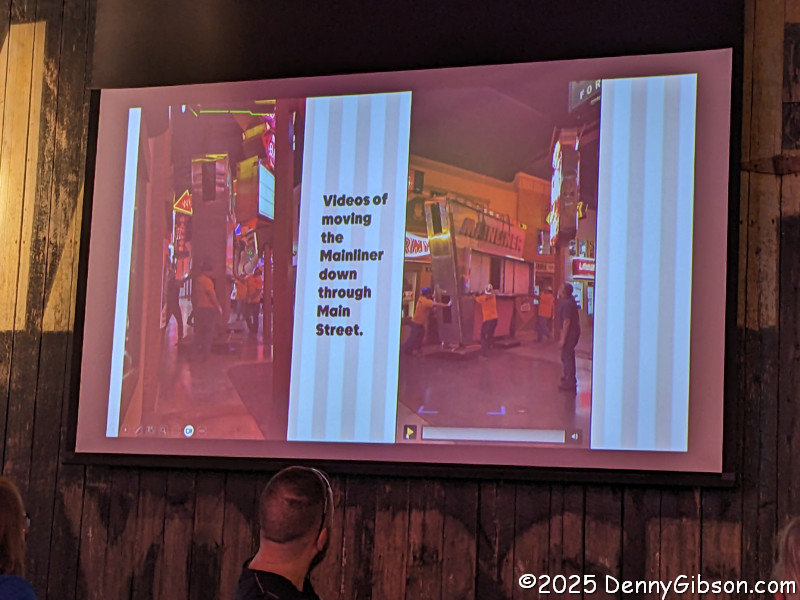
Every day is a big day at the ASM, but some are bigger than others. The museum is closed on Mondays and Tuesdays, so various projects are often scheduled for those days. Monday, May 19, saw two really big projects completed. The huge genie in the opening photo was erected in front of the museum, and the Frish’s Mainliner sign was moved inside it. Natalie Grilli, photographer for the upcoming book on the museum’s first twenty-five years, was onsite and busy bouncing between the two giants in motion. Natalie was also onsite Thursday evening. Pictures and some of the videos of the moves we saw on Thursday can be seen on the ASM’s Facebook page.

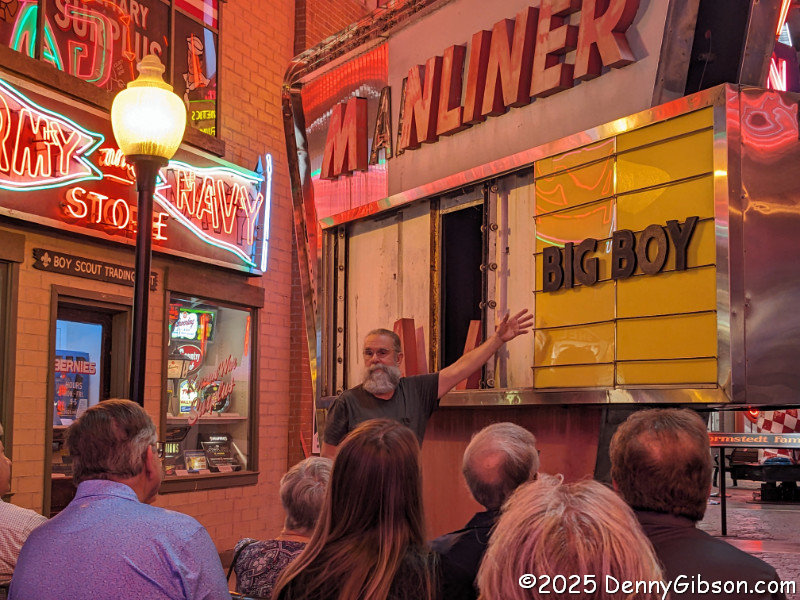
The group then moved out to where the Mainliner sign now stands, and I silently congratulated myself for taking those unblocked photos earlier. Tod now pointed out some of the sign’s features and described some of the plans for its restoration. Those plans are far from complete, but he said restoring the rotating propellers is definitely part of them. A printout of that photo displayed next to the sign was waiting on each chair, and I’ve included a scan of mine here. Note that the original chase lighting was incandescent and ran through the airplane. At some point, this was removed from the plane and converted to neon tubes on the sign body. The plugged holes can be seen in the picture of the airplane interior above. This is also something that Tod hopes to restore. The separate section with the Big Boy has been lost and will likely not be restored.

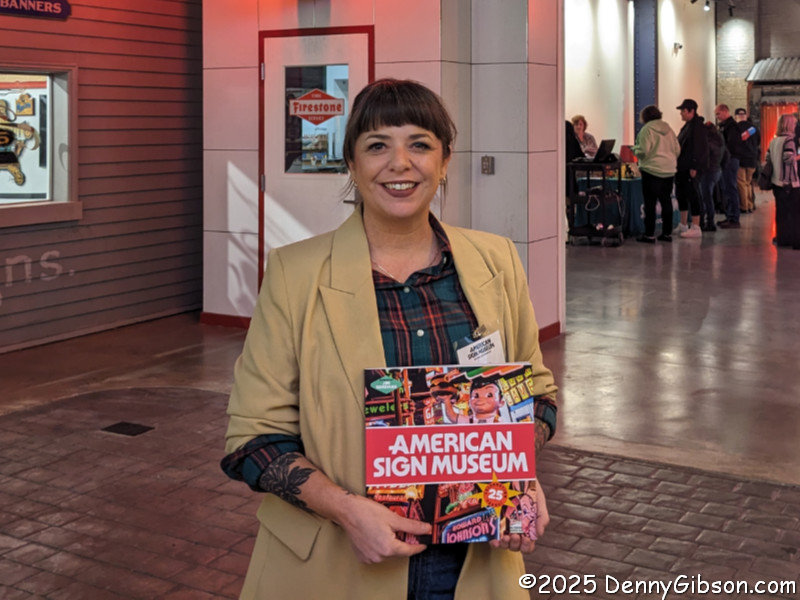
Something that may be obvious but still should be pointed out and cheered is that the restoration of this sign will take place in the middle of the museum in full sight of visitors. This will certainly present some challenges for those doing the restoration, but it is sure exciting for us mere spectators. Also in the realm of spectating, the sign can be seen at its original home during my own final visit to the Mainliner. A link to pre-order that 25th anniversary book I mentioned is on the museum’s support page

Barbie and Julia

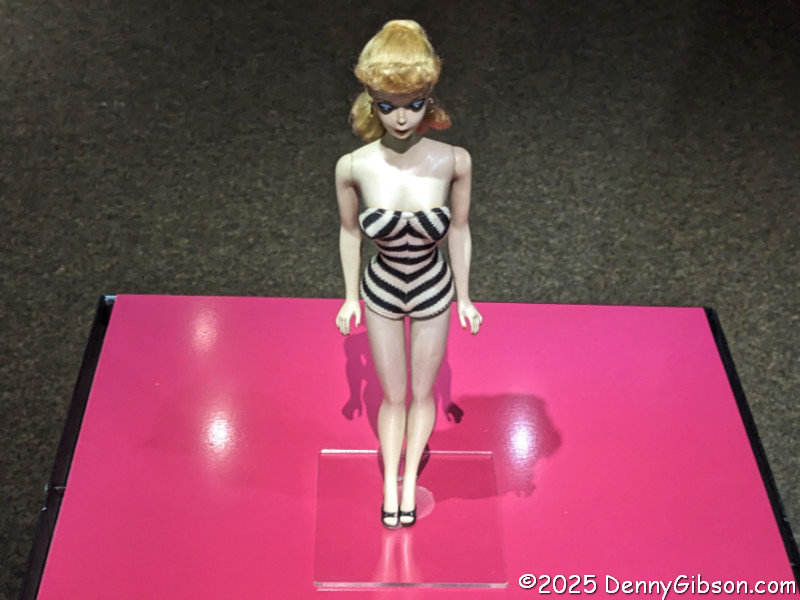
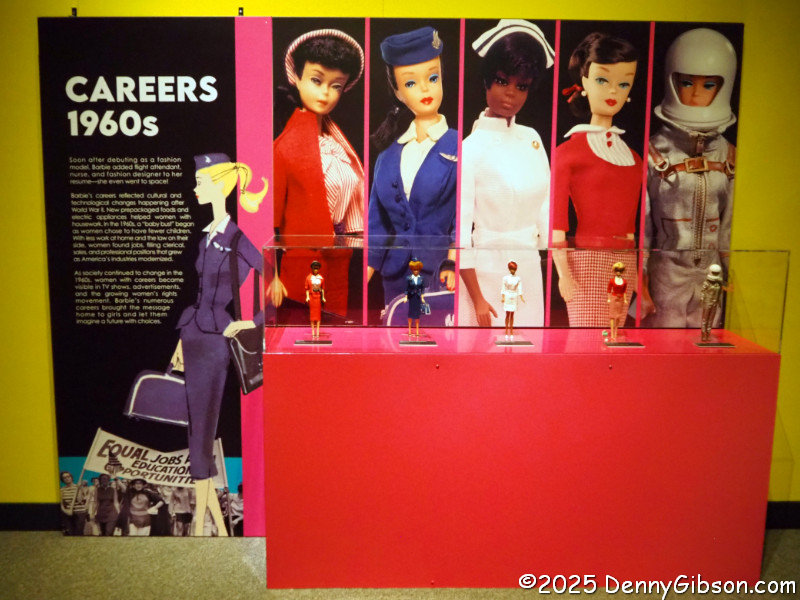
In my report on the Cincinnati Museum Center’s 1950s Day, I mentioned that the event was timed to tie in with the museum’s ongoing exhibits on Barbie and Julia Child. I also explained that I intended to see both exhibits but would do so on a day less crowded than 1950s Day. It happened on Thursday. In hindsight, those tie-ins seem a bit of a stretch since the first Barbie, pictured at right, appeared at the very end of the 1950s in 1959, and Julia Child’s first TV show aired in 1963.

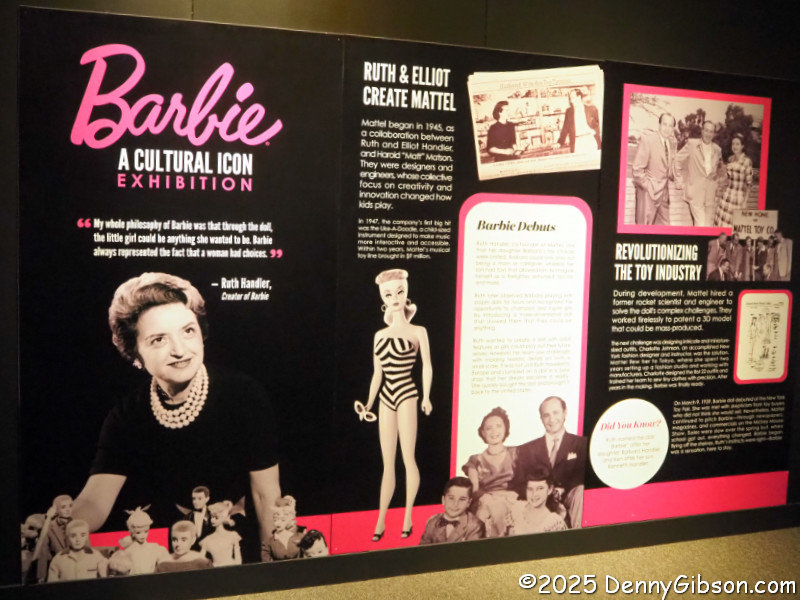
Barbie was conceived by Mattel co-founder Ruth Handler to address the disparity she saw in the toys available to her son and daughter. The son had dolls that let him imagine himself as a cowboy, soldier, fireman, and so much more. The daughter had dolls that let her pretend to be a mother. The daughter’s name was Barbara.

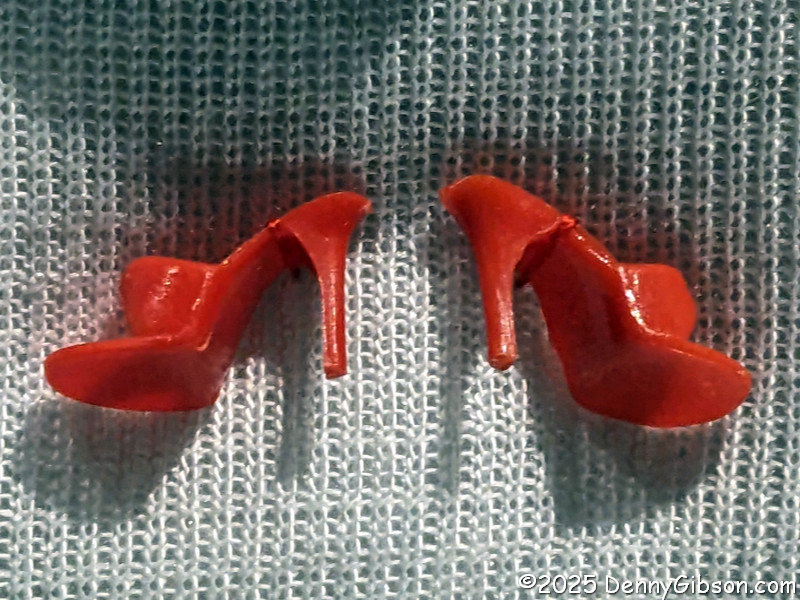
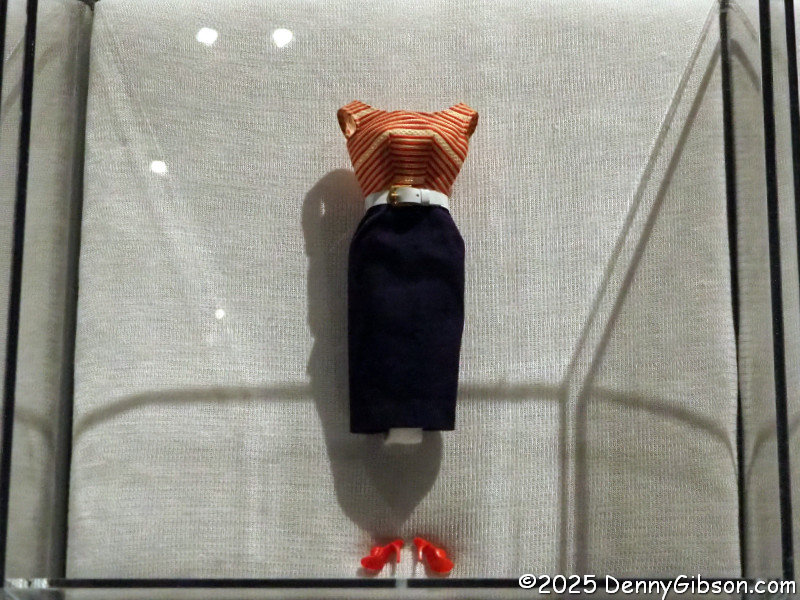
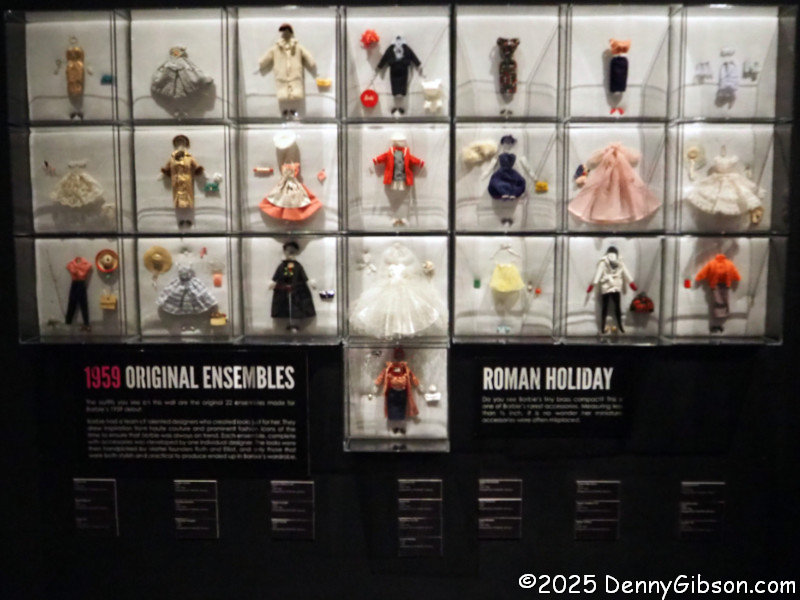
Clothes and other accessories have always been an important part of the world of Barbie. There were twenty-two different ensembles available for that very first Barbie, and their display provides an opening for telling about my only personal Barbie experience. My sister would have been nine when Barbie first appeared, so she might have had a Barbie. I just don’t recall. My daughter definitely had some in the 1980s. The pictured “Cruise Stripe Dress” was only made in 1959-62, but the red high heels it was packaged with, or at least a close facsimile, continue to be made today. I understand that there are worse sources of pain, but stepping barefoot on an upturned tiny red stiletto in the darkness does create a memory lasting forty years and beyond.

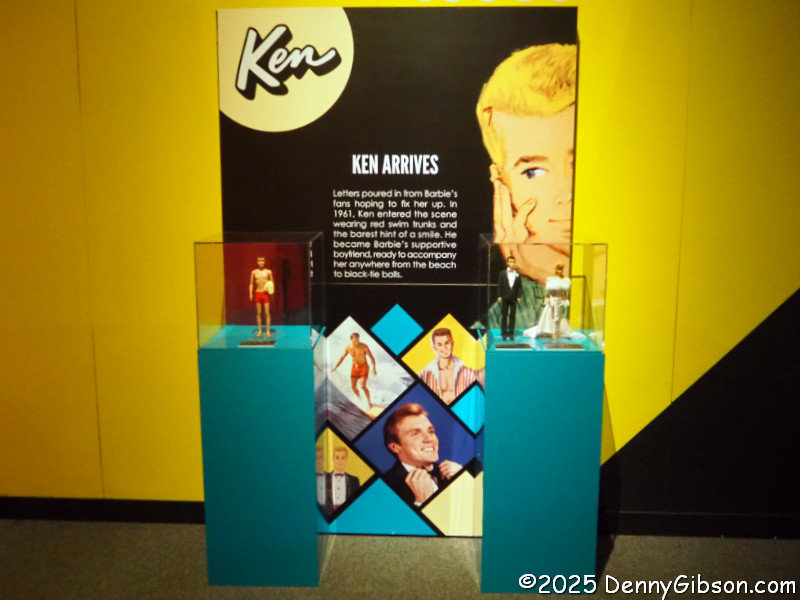
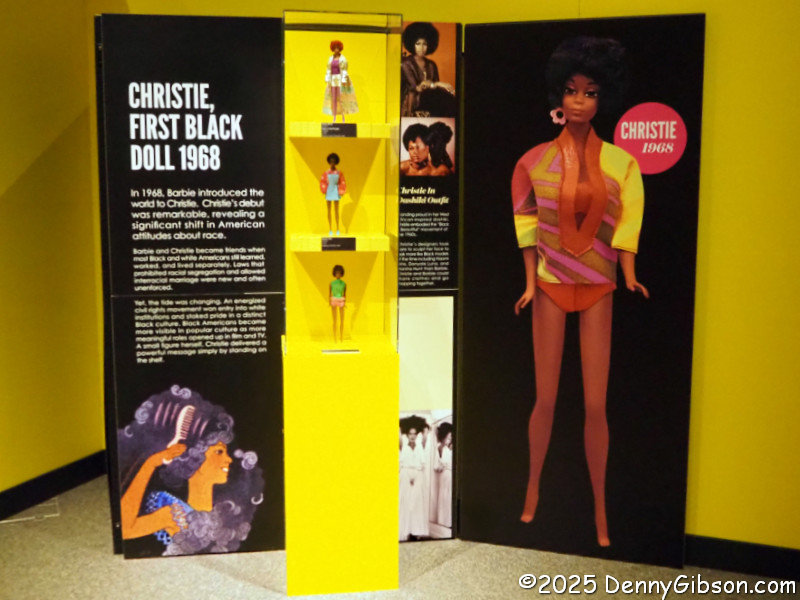
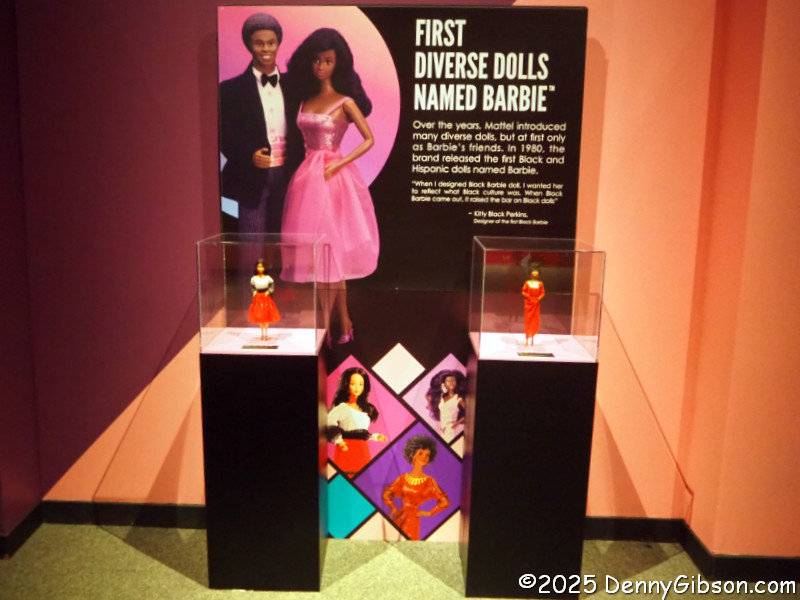
Gender diversity began to be addressed rather quickly. Racial diversity stayed absent a little longer. Ken (Yes, Ruth’s son was named Kenneth.) appeared in 1961. Barbie’s Black friend Christie came along in 1968.

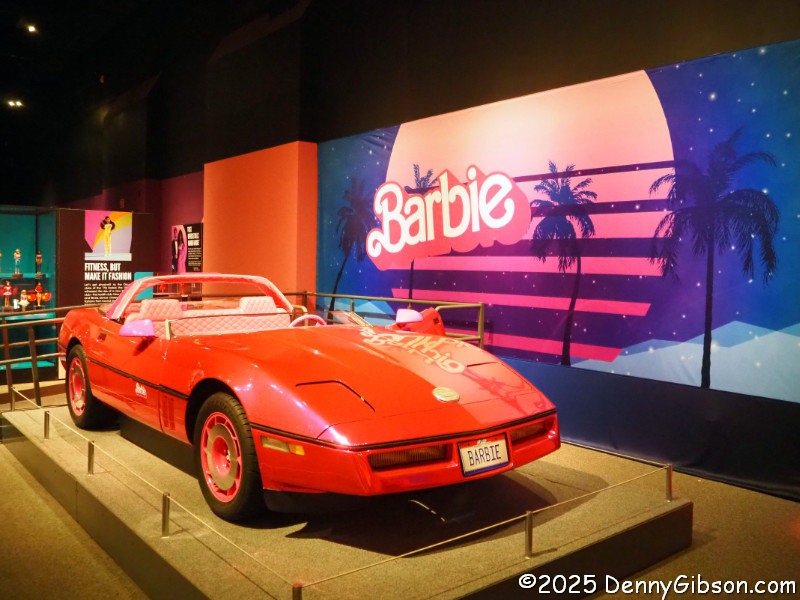
Barbie has had a lot of vehicles, especially sports cars and campers, during her 60+ years of existence. I was surprised to learn (from the internet, not the exhibit) that her first car was a 1962 Austin-Healey 3000. A pink Corvette is the first car I think of when I think of Barbie, and I believe that is true for many people. This mockup of a 1985 model was one of several photo ops scattered throughout. I saw probably thirty to forty people inside the exhibit while I worked my way through it. Three were males, two guys with their partners, and I. The rest were females in groups of two or three. Many took advantage of this Corvette to grab pictures of each other.
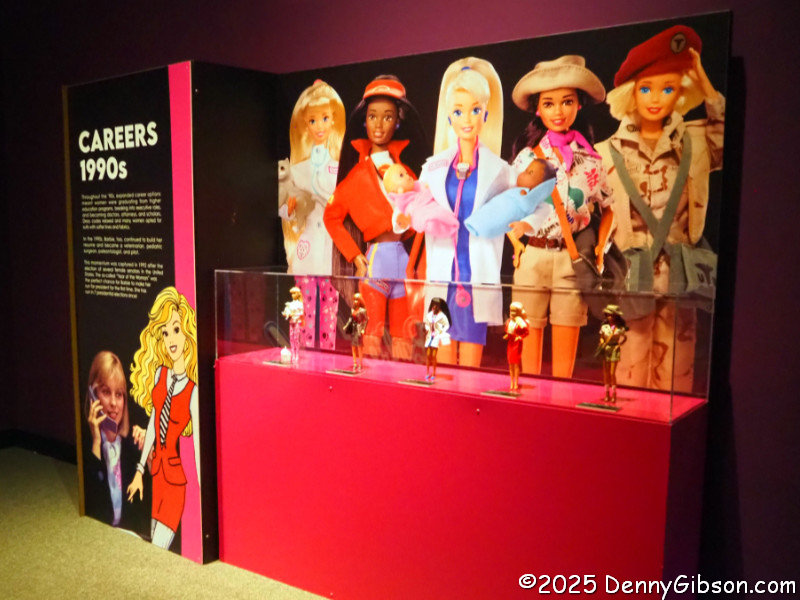
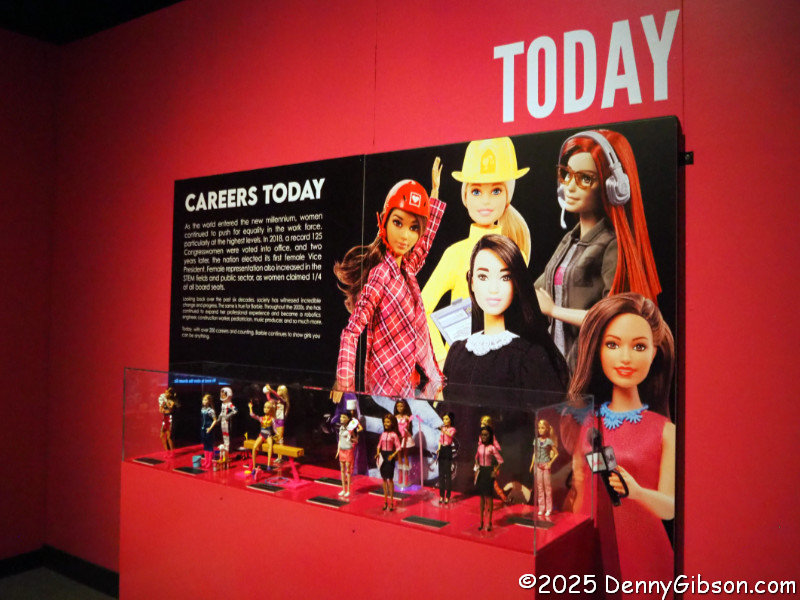
The idea that girls could be anything they wanted to be was an important part of Ruth Handler’s vision for Barbie. Numerous displays showing some of the careers available to Barbie and her playmates during various periods are spread around the exhibit.

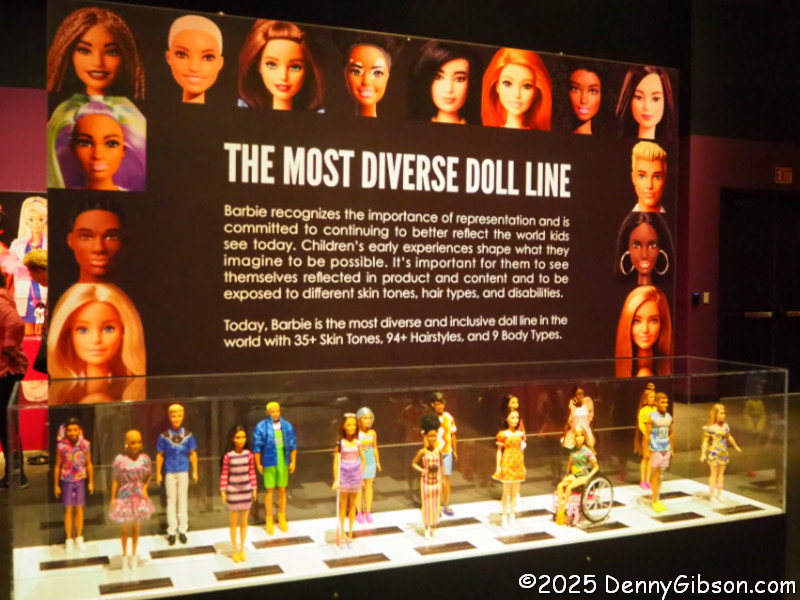
1968’s Christie was a powerful “some of my best friends are Black” statement. In 1980, that statement moved onto “and I am too” with the introduction of Hispanic and Black dolls carrying the name Barbie. Today, Barbie can proudly be called the world’s “most diverse doll line”.

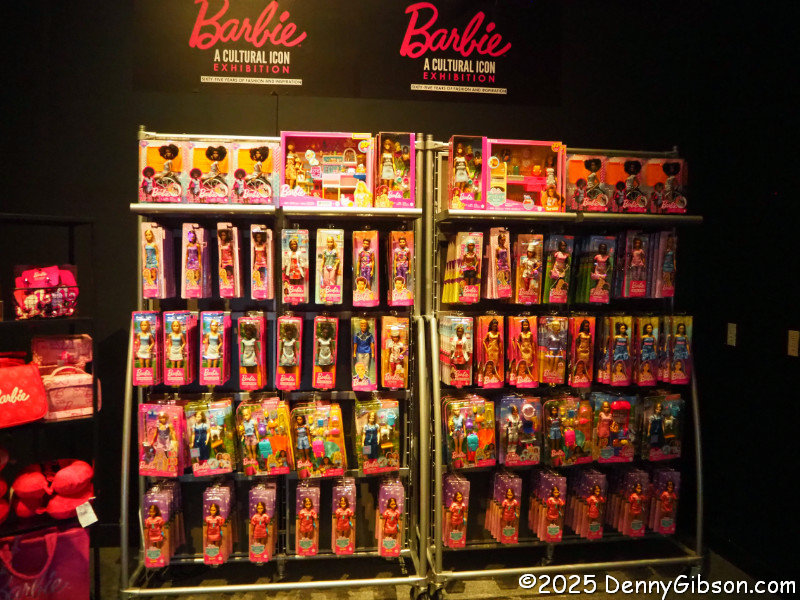
The 1959 Barbie in the opening picture retailed for $3. That’s about $33 in 2025. Some estimates place its current value at more than $27,000. The standard “exit through the gift shop” takes you past this rack of Barbies priced at $11.99. Not too bad, I think, for an icon.

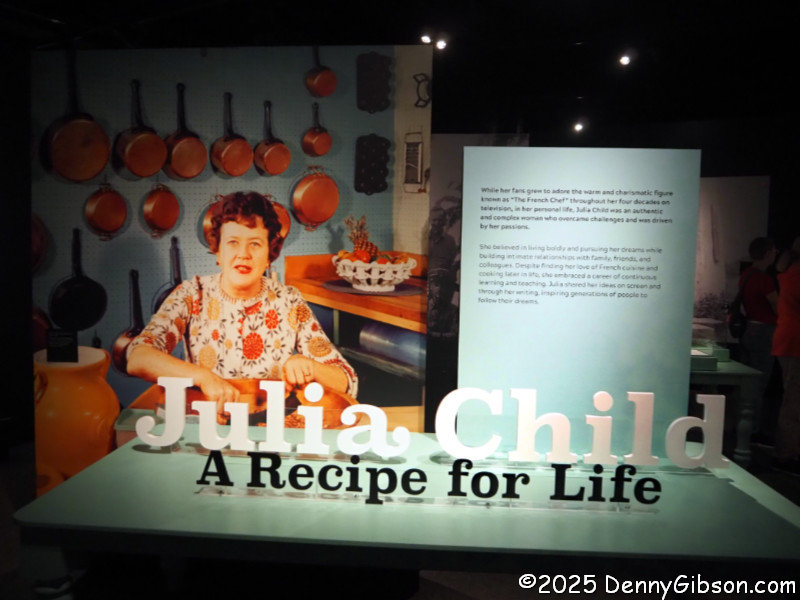
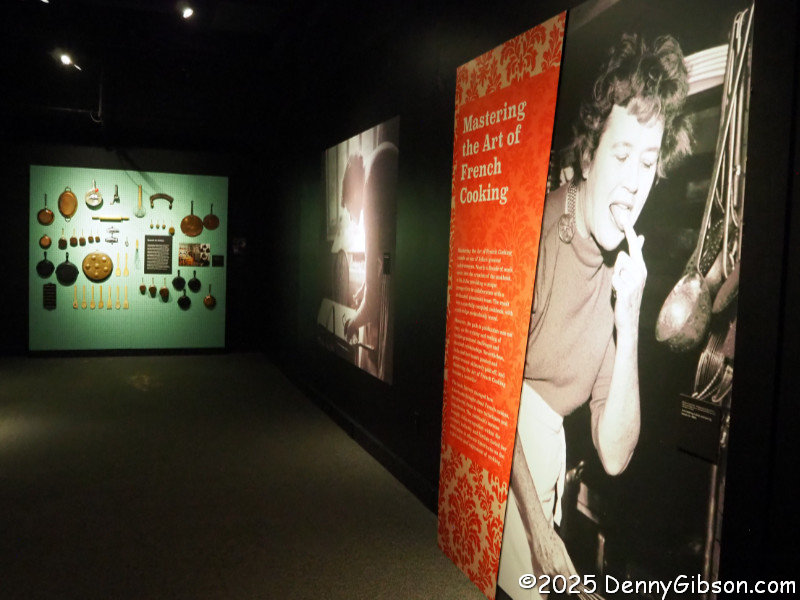
The entrance to the Julia Child exhibit is right next to the entrance to the Barbie exhibit. Barbie is a ticketed event; Julia is included with museum admission. Although I did not know much about Barbie, I knew even less about Julia. I have seen her on TV while channel surfing, but don’t believe I have ever watched a full program or interview.

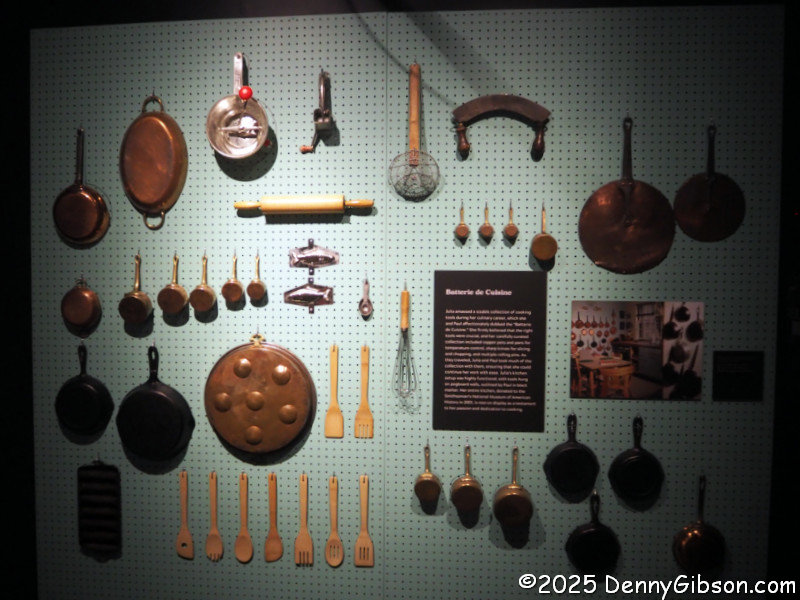
I was even more out of place here than I had been in the Barbie exhibit. Not only did I know very little about Julia Child, I knew less about French cooking and the tools of the trade. Others in attendance knew of various events in Child’s life and specific items in the collection of cooking gear she called “Batterie de Cuisine”.

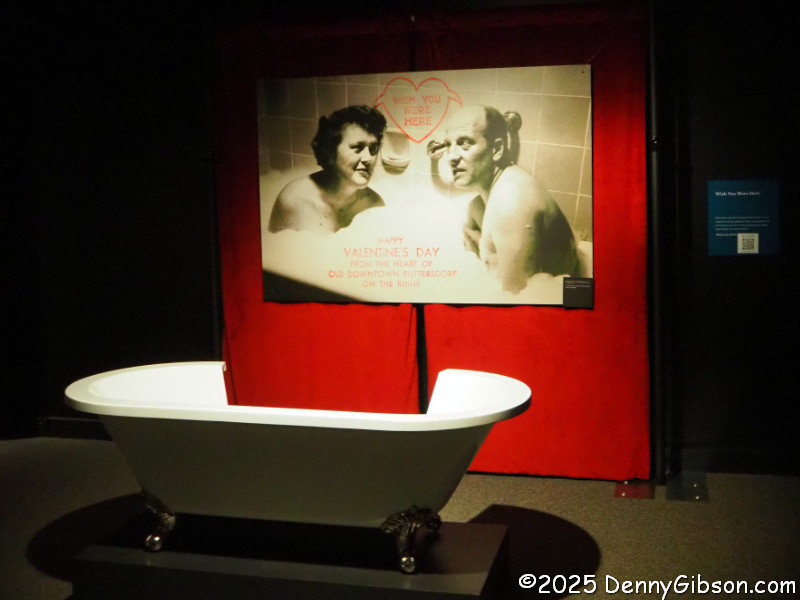
Apparently, Child had achieved some level of fame before that 1963 television show. This photo of her and her husband, Paul, was used as a Valentine’s Day Card in 1956. I believe this was the only spot in the exhibit set up especially for a photo op. It did not seem as popular as Barbie’s Corvette, but some of the same groups of women who posed in the car also took each other’s pictures in the tub with Julia and Paul in the background.

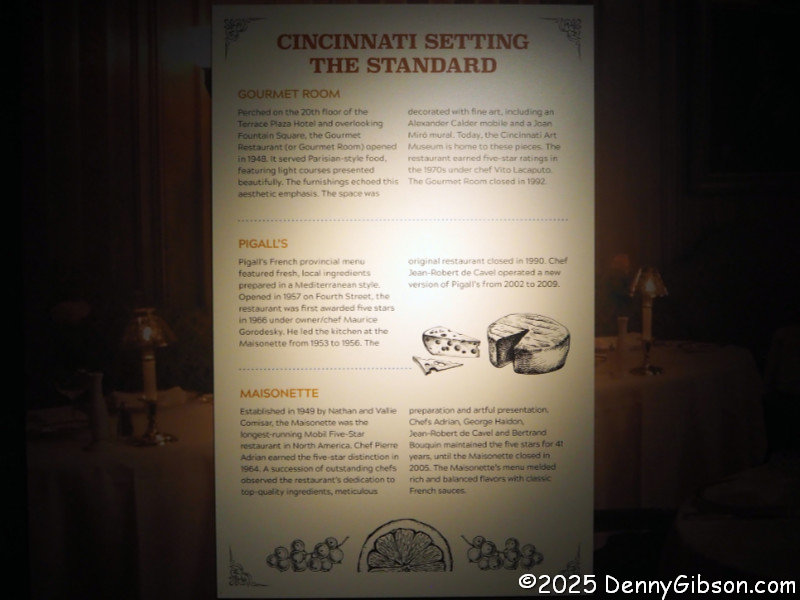
As with many traveling exhibits at the CMC, a local connection is part of this one. Cincinnati has been home to some well-known French restaurants. I never made it to Pigall’s, but I did have one meal each at the Gourmet Room and the Maisonette. Two out of three ain’t bad.

Barbie: A Cultural Icon is here through September 1. The last day for Julia Child: A Recipe for Life is today, May 18. 

Mystery & Benevolence On Display

When the Mystery & Benevolence exhibition opened at the Taft Museum of Art in February, I tucked it away as something I would like to attend someday. But other things came along, and it eventually became untucked. A post on a blog I follow reminded me of it just in the nick of time. The exhibition closes today, May 11. I saw it on Wednesday.

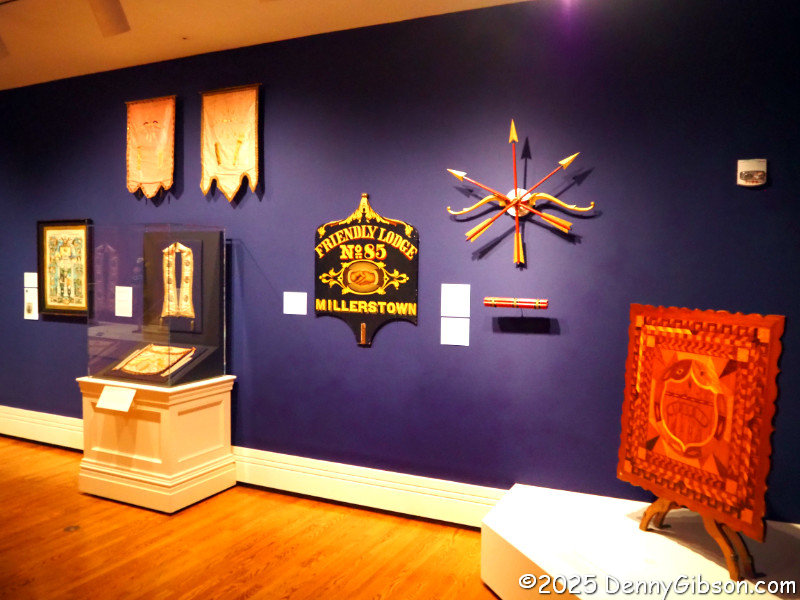
The exhibition is subtitled “Masonic and Odd Fellows Folk Art”, and most of the items displayed are from either the Freemasons or the Independent Order of Odd Fellows, although there is a smattering of items from some lesser-known groups. The columns in the opening photo are from a Masonic temple and represent those at the entrance to Solomon’s Temple in Jerusalem.  The letters ‘B’ and ‘J’ identify them as the pillars of Boaz and Jachin.

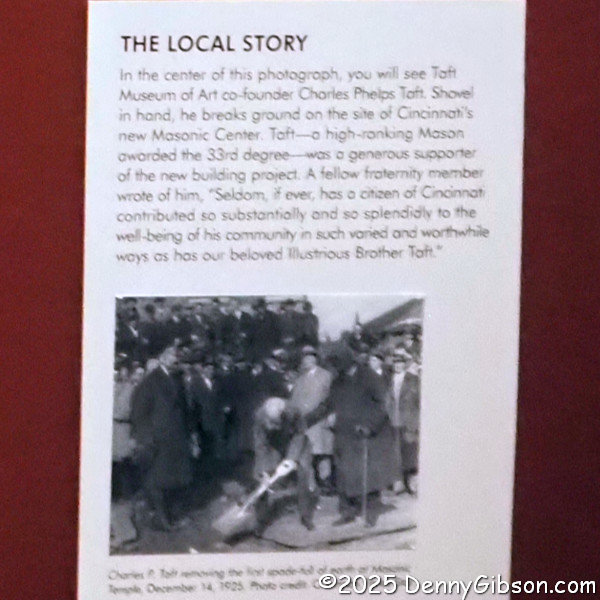
This is a traveling exhibition put together by New York’s American Folk Art Museum, but there are several local touches. One relates to this 1870 “Washington as a Freemason” poster printed by Cincinnati’s Strobridge Lithographing Company, as described by a “local story” placard.

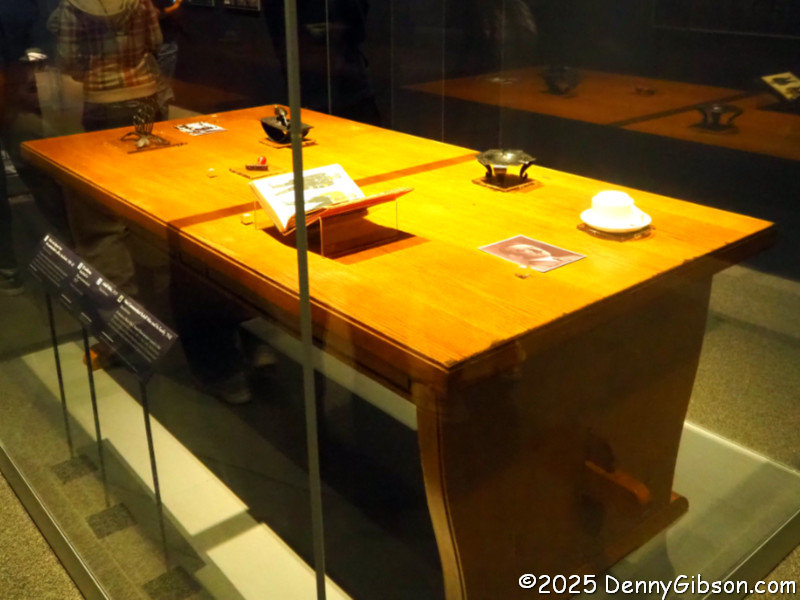
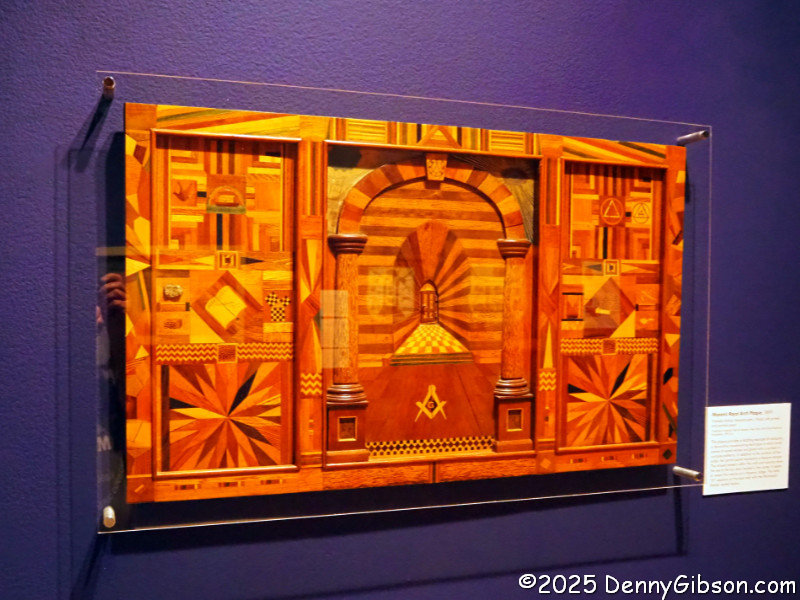
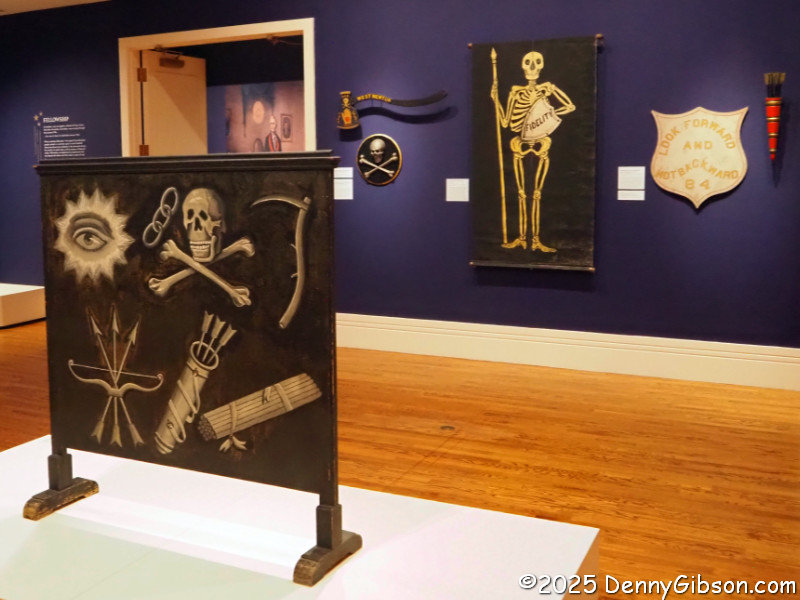
Focusing on the “art” aspect of the exhibit, here are a couple of impressive marquetry works. The plaque contains numerous Masonic symbols, while Independent Order of Odd Fellows symbols fill the folding table. Additional IOOF items are displayed beyond the table.
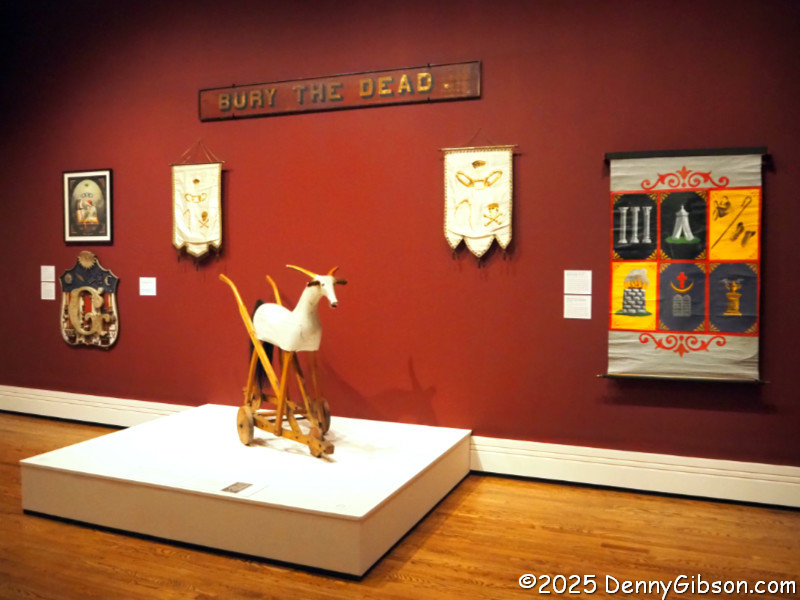
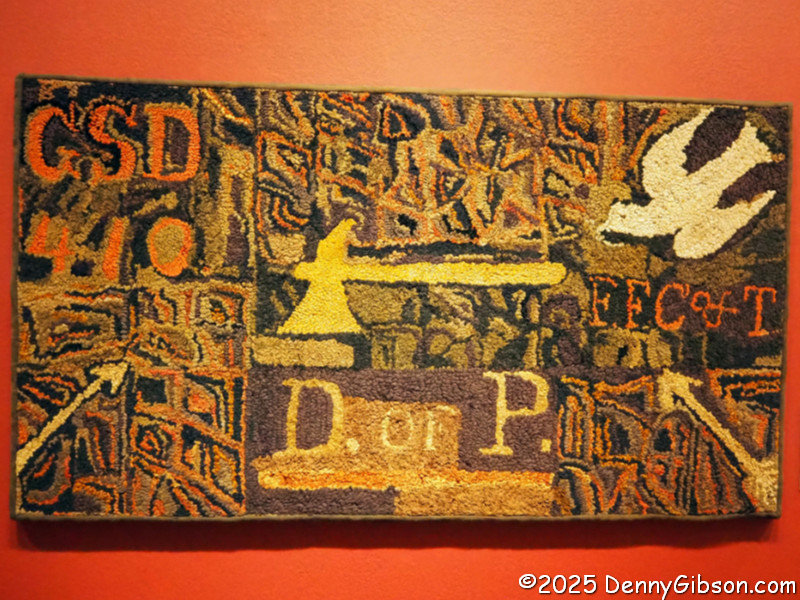
The Odd Fellow’s “BURY THE DEAD” sign fits in with the “Benevolence” of the exhibit’s title. In the days before life insurance was common, help with burial expenses was a valued benefit of membership for many organizations. Goats appear in the rituals and symbols of several fraternal organizations. The rideable one pictured here belonged to the Modern Woodmen of America. Another item from something other than the Freemasons or Odd Fellows is this 1902 hooked rug. It is labeled as belonging to the Daughters of Pocahontas, although I believe it should be the Degree of Pocahontas, the Women’s Auxiliary of the Improved Order of Red Men.
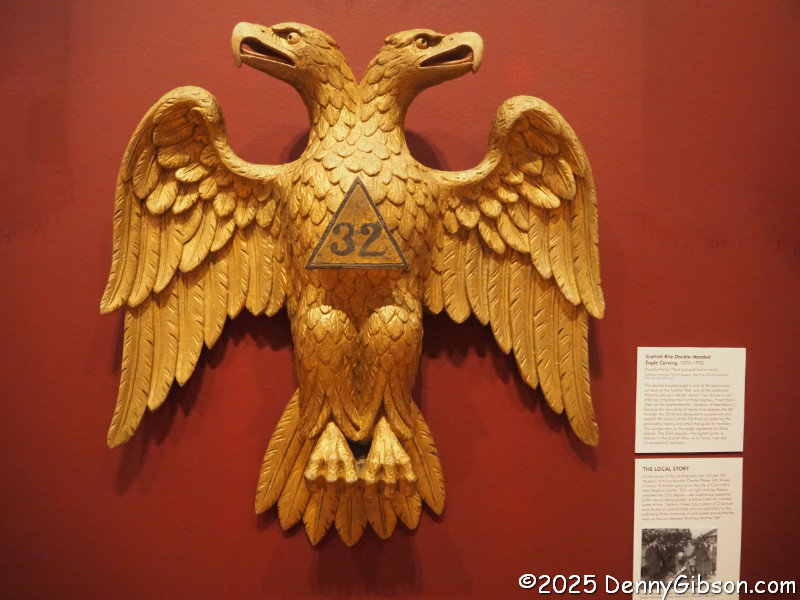
I knew next to nothing about the internals of fraternal organizations when I entered the exhibition, and not much more when I exited. That’s not because the organizers didn’t try. It is because those internals are usually cryptic and often illogical, and I don’t believe either is by accident. My quite possibly incorrect understanding is that there are three degrees of “regular” Freemasons, but there are systems of degrees (called rites) that extend well beyond that. The Scottish Rite is one of the better-known of these, and the double-headed eagle is one of its better-known symbols. The “local story” displayed by the eagle is about Taft Museum of Art co-founder Charles Phelps Taft, who was a 33rd Degree Scottish Rite member.

The panel in the foreground contains International Order of Oddfellows symbols. The skeleton hanging on the wall is from the Knights Templar division of Freemasons. I was struck by the frequency with which skulls and skeletons show up here. There is a hint at an explanation in references to the Latin phrase “memento mori”. The English translation is “remember you will die”, and it is used as a reminder to do something good before you go. That’s pretty benevolent. The rest is still a mystery.

1950s Flashback

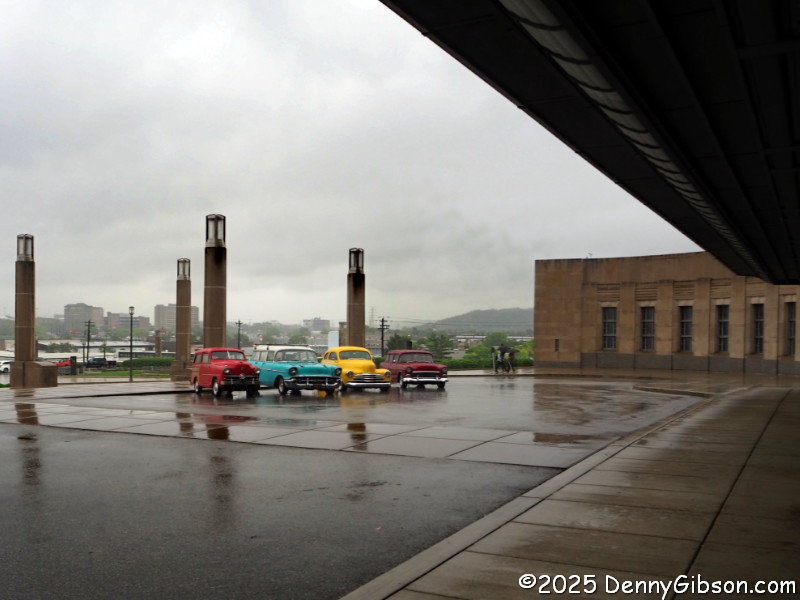
The Cincinnati Museum Center has presented a 1940s Day or Weekend annually since 2011. I attended the third in 2013. Saturday was their first-ever 1950s Day. Asked on their Facebook page if this would also be an annual event, the museum said no. It is intended to be a one-time thing to mate up with the ongoing Julia Child and Barbie exhibits. “But,” they added, “it could come back!” I don’t really remember the 1940s, but I do remember the 1950s, and the rain on Saturday looked just like rain did when Ike was in the White House and Waite Hoyt was on the radio.

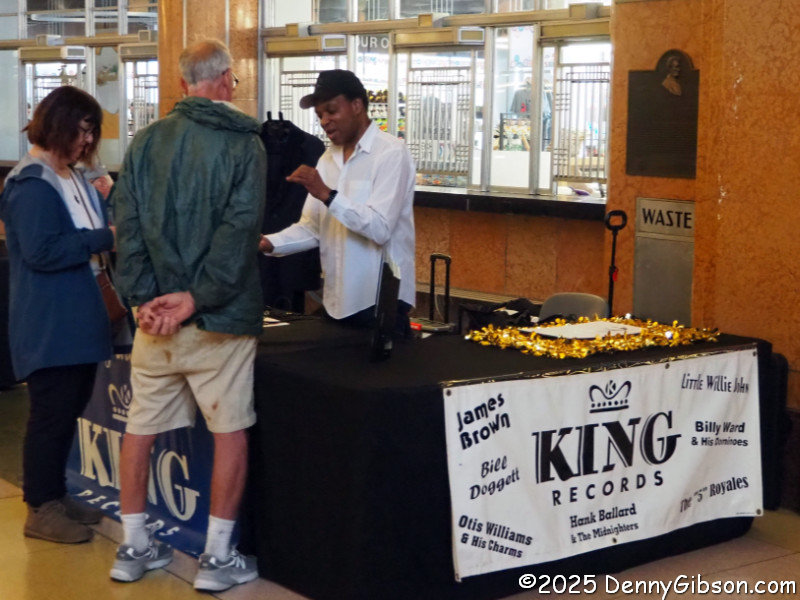
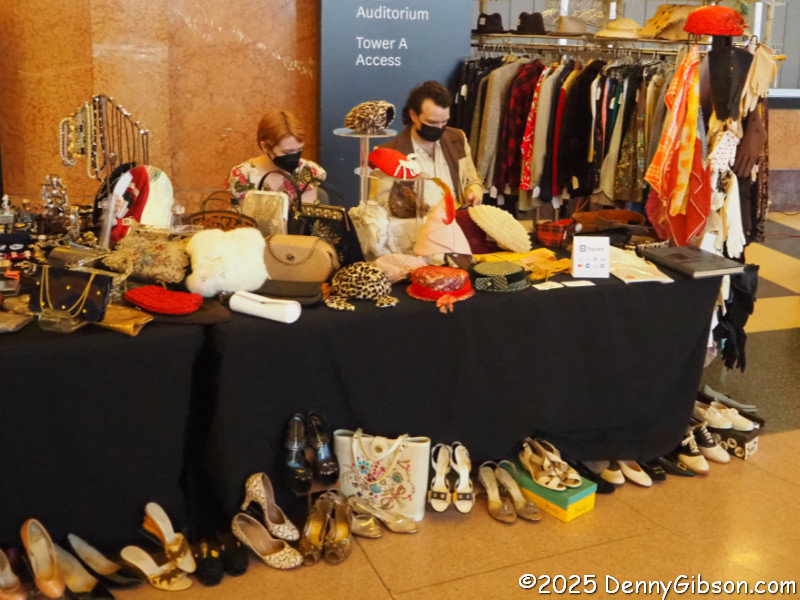
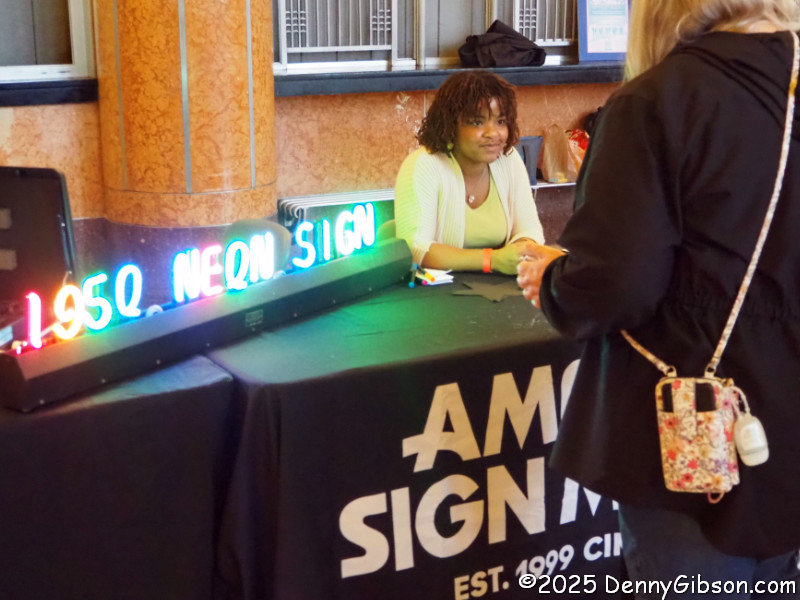
Individual information tables lined the rotunda. Pictured are King Records Legacy, Casablanca Vintage Clothing, and the American Sign Museum with a genuine 1950 NEON SIGN.

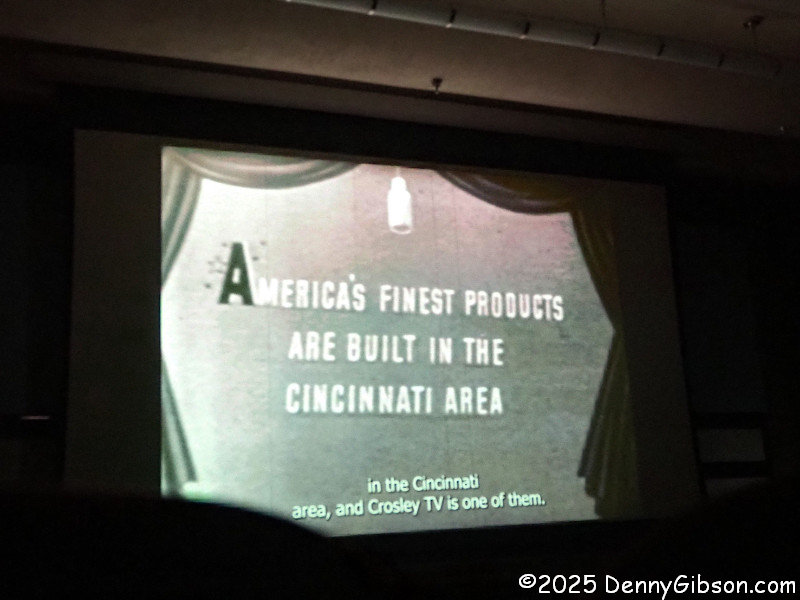
I stepped into the Newsreel Theater intending to watch a few minutes of the Moving Images presentation and ended up staying more than an hour watching clips of “Melody Showcase”, “Midwestern Hayride”, and commercials. I don’t remember “Melody Showcase”, but “Midwestern Hayride” was a staple at our house, and it’s even possible that I saw some of what I saw today when it was broadcast live.

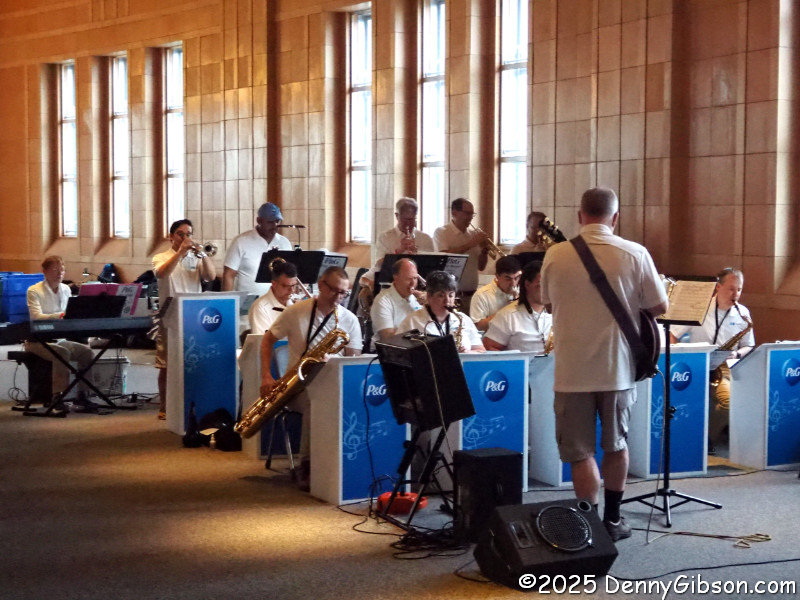
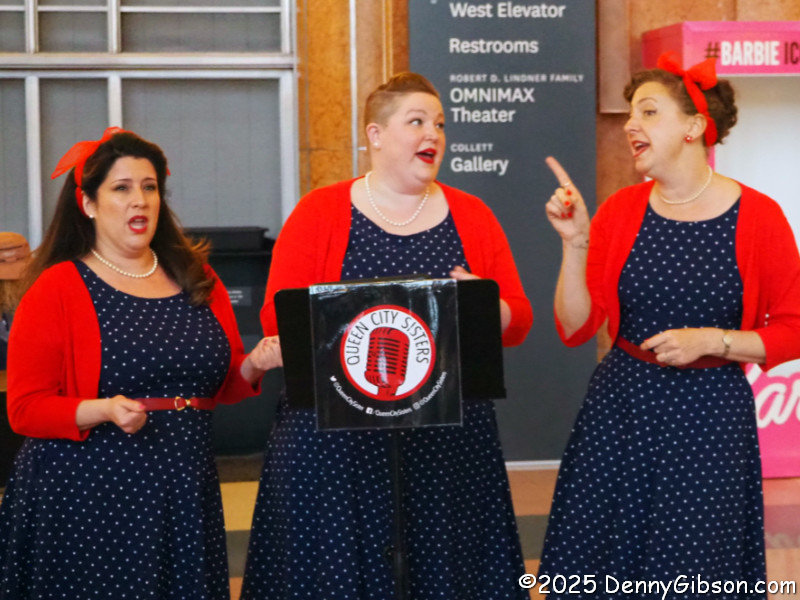
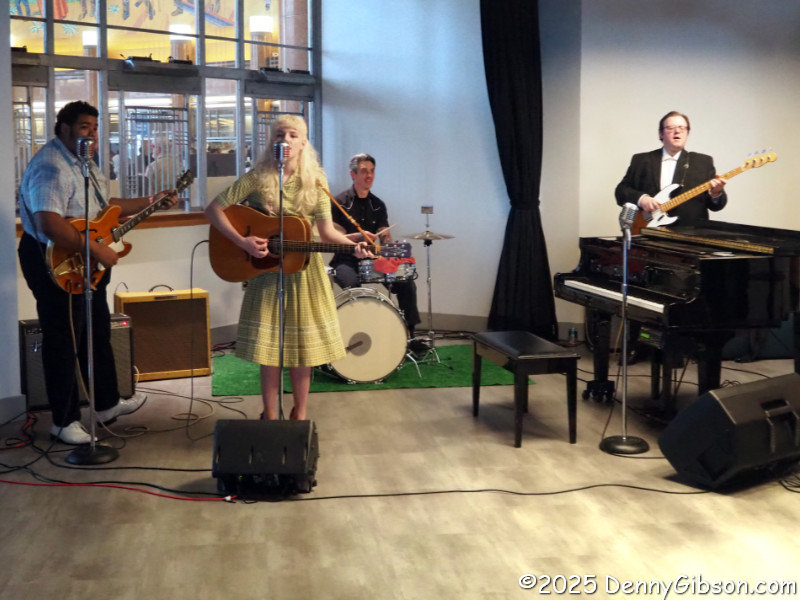
1950s Day included quite a bit of live music. I caught the P&G Big Band, the Queen City Sisters, and Naomi Carman and the Bluecreek Boys. I do intend to check out the Barbie and Julia Child exhibits sometime, but the museum was far too crowded for that on Saturday. I’ll slip them in on a weekday when school’s in session and employed people are doing employee things.  

Living on the Air in Cincinnati

I’m sure everybody is familiar with the joke about someone having “a face for radio.” It’s based on the idea that you do not have to look good to sound good. That’s an idea that often applies doubly to buildings. I’ve not been in a lot of radio stations, but I have been in enough to know that the people behind the microphones are frequently speaking in a dark cubicle far from prying and non-prying eyes, with little for their own eyes to take in as they work. That description has applied to Cincinnati’s WVXU and WGUC, but will no longer. Cincinnati Public Radio is letting the public see its new building this weekend. The bulk of personnel are already operating in the new space, and the plan is to switch broadcasting activity at noon on Tuesday.

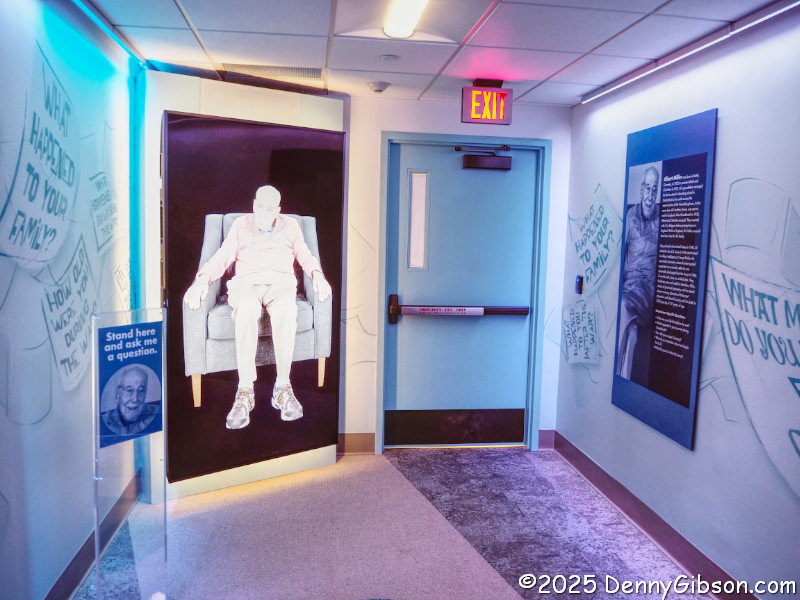
I attended Saturday’s open house, which repeats today, April 27, 2025, from 1:00 to 5:00. Directions and other details are here. The cartoon in the opening photo stood not far from the entrance. The distance between speech balloons represents reporter Bill Rinehart’s signature pause when identifying debris on the roadway. I got my first view of the building from a drive by a few weeks ago, but this was my first up-close and stationary look.

And it was obviously my first look inside. That is the Cincinnati Symphony Orchestra Woodwind Quintet on stage in an area dubbed The Gathering Space. There is also a Performance Studio. With spaces such as this, dare we hope that live music performances — possibly featuring local talent — might be in CPR’s future?

Pictures from the upper floor, including subjects from the preceding paragraph, show how open the building is.

The Instrument Petting Zoo, which seemed to be a big hit, was a new one on me. A more traditional petting zoo was also on the agenda, but the pettees had not yet arrived when I was there. After I walked to my car and worked my way back through the traffic to exit, I saw a Cincinnati Zoo van parked near the front door. I’m pretty sure that meant additional petting was happening or about to.

There are a number of smaller work areas, including some without windows. Most, if not all, of these are mixing and editing stations where a little isolation is a good thing.

As far as I know, the food trucks will not always be there, but they were certainly welcome on Saturday and will be there on Sunday if you want to grab a meal or some Graeter’s ice cream while checking out the building. The CSO quintet was piped outside to a nice park-like area, so I assume Sunday’s Gathering Space performances will be as well. That is where I listened while enjoying some black raspberry chocolate chip. The new place is finished, and the Welcome Weekend is half over. Cincinnati Public Radio is just about done packin’ and unpackin’.

ADDENDUM 29-Apr-2025: Although I was aware of the building’s forward-thinking mass timber construction and actually had it in mind as something to point out when I snapped the picture of the stairway, it completely got away from me during the writing phase. I was reminded of my glaring oversight as I listened to the official throwing of the switch at noon today. The core of this building is not steel or concrete. This is the first mass timber building in Cincinnati. Learn about mass timber here and watch a video about why Cincinnati Public Radio chose it here

Cycle Thru and Collective Behavior at CAM

I made it to “Cycle Thru! The Art of the Bike” within its first week. It opened at the Cincinnati Art Museum on Friday, April 4, and I attended on Thursday, April 10. It will be there for another eighteen weeks, through August 24. The exhibit includes photographs, paintings, and other pieces of art that feature bicycles, but while I enjoyed looking at those items, what I documented were the real things: Bicycles that might themselves be considered pieces of art.

The exhibit begins with an 1878 Ariel High Wheel. This style of bicycle originated in Britain and was commonly known as a penny-farthing because the pairing of the large and small wheels reminded people of the relative size of penny and farthing coins. On the left in that first picture is an Otto Dicycle, which women could ride without risking the embarrassment of exposing an ankle. In the foreground of the second photo is a cast iron and wood velocipede from 1865. I had seen the three-wheeled vehicle in the third picture in promotions for the exhibit but could not figure out what was going on until I read its description at the museum. That trailing wheel was supposed to make the ride smoother, but it’s not clear how well that worked. That rider comfort was definitely top of mind with this bike is reinforced by its “bespoke anatomical saddle“.

I thought one of the vehicles in the 1900s-1910s display might belong to Wile E. Coyote, but what looked like an Acme Rocket is one of two metal cans to hold air and keep the water bike afloat. The wall behind the very rare 1960 fiberglass Bowden Spacelander is filled with bicycles from the 1930s and 1940s. The 1965 Sears Spaceliner at upper left in the 1950s-1960s caught my attention because of its resemblance to my 1960 J. C. Higgins Flightliner. The Spaceliner was designed by Viktor Schreckengost and built by Murray, and I’m guessing that is also true of the Flightliner.

Of course, for anyone not having owned a Flightliner, the big attention grabber in that last group of bicycles is almost certainly the customized 1953 Schwinn DX Cruiser from Pee-wee’s Big Adventure. The saddle might not be bespoke, but everything else sure is.


The museum itself is, as always, free. “Cycle Thru!” is not. However, admission to the bicycle exhibit also includes another paid exhibit at the museum. Until May 4, that second exhibit is “Shahzia Sikander: Collective Behavior!“. After that, “Cycle Thru!” will be paired with “Farm to Table: Food and Identity in the Age of Impressionism“. I’m sure “Farm to Table” will be a very good show, but man, I sure liked the Sikander exhibition. The photo above is of the second edition of her sculpture “NOW”. The first edition is on permanent display outside the Appellate Courthouse in Manhattan

As the museum’s description of the exhibit states, Shahzia Sikander works “in a variety of mediums—painting, drawing, print, digital animation, mosaic, sculpture, and glass,” and I believe the exhibit contains examples of every one of them. The first item shown here, “Provenance the Invisible Hand“, combines silkscreening and hand painting. The second, “Arose“, is a glass mosaic. A detail from its center is here.

Liquid Light II” is painted glass. “Promiscuous Intimacies” is a bronze sculpture. I made myself comfortable on a futon and watched the “Parallax” digital animation but somehow missed its description, so I am including a capture from a PDF of exhibit labels here.

I also missed any onsite description for “NOW”, so am including a capture of the PDF for that as well. It is here. As I did some fairly casual research on Sikander, I learned of an 18-foot statue named “Witness” that is similar to the 8-foot “NOW”. On July 8, 2024, while on display at the University of Houston, “Witness” was beheaded. Although an anti-abortion group had protested the statue’s presence in February, nothing is known that connects the group with the decapitation. Sikander explained her desire to not have the statue repaired with, “The damage reflects the hateful misogynistic act and it should not be forgotten.”

Cincy’s Fire Fighting Heritage

I once ate dinner here. It was sometime in the 1980s. The company I worked for held a banquet for a sales conference here, and we were all allowed to tour the museum before the meal. I recall that I found the Cincinnati Fire Museum quite interesting at the time, but for some reason gave those memories the better part of four decades to fade. During Saturday’s visit, I did find a few pieces of equipment to be somewhat familiar, but I don’t really remember anything about the layout of the museum and have a hunch it has changed more than a little since I was here.

Steps — or for adventurous youngsters, a pole — lead to a lower level where the oldest items in the museum are on display. The city’s first fire engine has been lost to history, but its second survives. It is a pumper built by William C. Hunnerman of Boston in 1816. With a crew of twelve, it could throw water up to 133 feet. The massive drum was Cincinnati’s fire alarm from 1808 to 1824. After the city became too big for the drum to be heard by all, a bell took over, and the drum fell on hard times, which included a period of being used as an oat bin before someone recognized its importance and started to take better care of it. Bored-out logs like the one here were once common components in city water systems. When firemen reached the scene of a fire, they might drill a hole in the nearest pipe to access the water, then plug and mark it for possible reuse in the future. The name “fire plug” has outlived wooden pipes and hand drills by a bunch.

Before the middle of the nineteenth, things called fire engines were merely pumps that were usually mounted, almost always accompanied by some sort of tank, on wheels. Manpower pulled the engines to fires, and manpower operated the pump once they arrived. In 1853, Shawk and Latta, a Cincinnati company, developed the first practical steam pump for fighting fires. Cincinnati soon gained a reputation as a supplier of firefighting equipment. The horse-drawn fire engine (rear view here) was built in 1884 by the Ahrens (later Ahrens-Fox) Fire Engine Company, who had obtained the Latta patents in 1868.

At almost exactly the same time that steam power was dramatically changing firefighting equipment, an equally dramatic change was occurring with the firefighters. Boston began paying some of its firefighters in 1679. Cincinnati went further in 1853 and is considered to have established the nation’s first fully paid fire department. In 1873, Cincinnati firefighters were forbidden from holding other jobs, making them truly professional.

Closing things out is a pair of twentieth-century Ahrens-Fox fire engines. The chain-driven Model M-4 was delivered to Cincinnati’s Company 13 in 1918. The 1958 cab forward Model ECB is the last fire engine ever produced by Ahrens-Fox. It was retired in 1981.