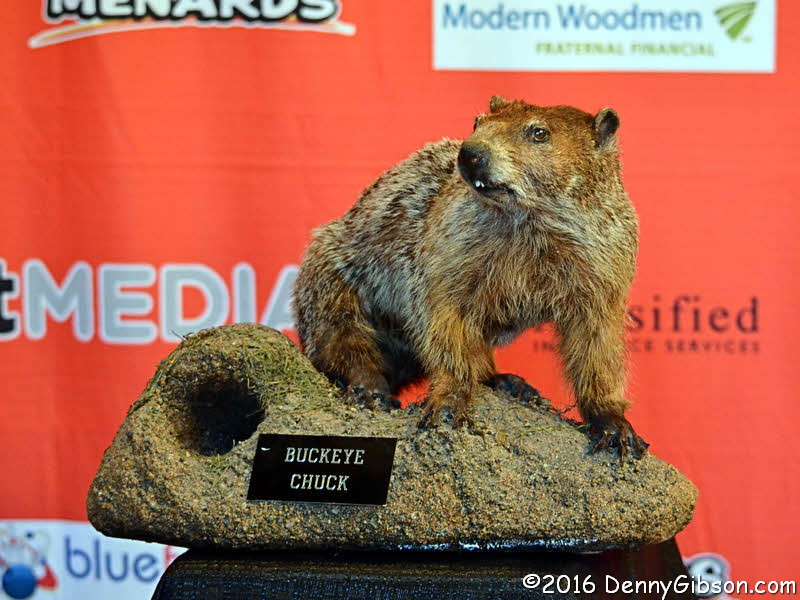
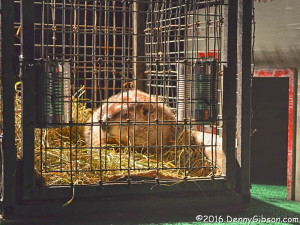
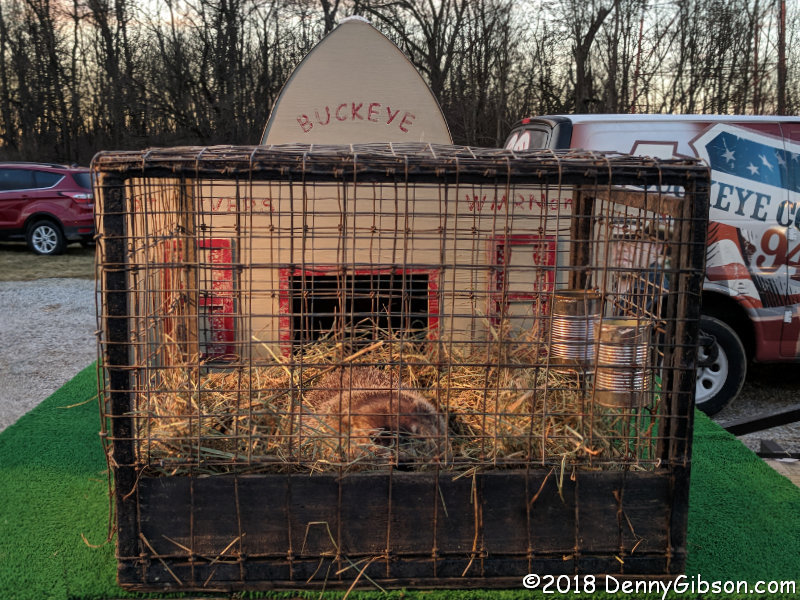
 If I’d had any confidence that I would actually attend a Groundhog Day event this year, I might have posted a canned article last week and saved the Happy Imbolc piece for today to be fleshed out with the latest news. But the truth is that I wasn’t sure I would make it to Buckeye Chuck‘s dawn pronouncement until just minutes before I was on the way. I was noncommittal when I went to bed on Monday. If I woke up in time and in the mood to go, I would, but I set no alarm clock and told myself that sleeping through the whole thing would be just fine. I awoke at 4:04, four minutes past what I had decided was the ideal departure time. There was slack in that ideal time but I waffled for a few minutes before finally deciding to go. I hit the shower and then the road and reached Marion, Ohio, right about 7:00. The photo of Buckeye Chuck in his cage was taken at 7:03.
 The gathering in Marion isn’t nearly as large as the one in Punxsutawney but it is respectable. Radio station WMRN has been offering localized groundhog predictions since the late 1970s when Charlie Evers started sharing those provided by groundhogs in the neighboring woods with listeners. That led to a naming contest that produced the name Buckeye Chuck and Evers was instrumental in getting the Ohio legislature to proclaim Buckeye Chuck the state’s official groundhog in 1979. The original Buckeye Chuck was present today, patiently posing for photos. Evers has moved on but is still a force in the area with a show on radio station WWGH.
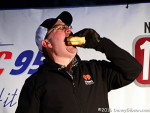
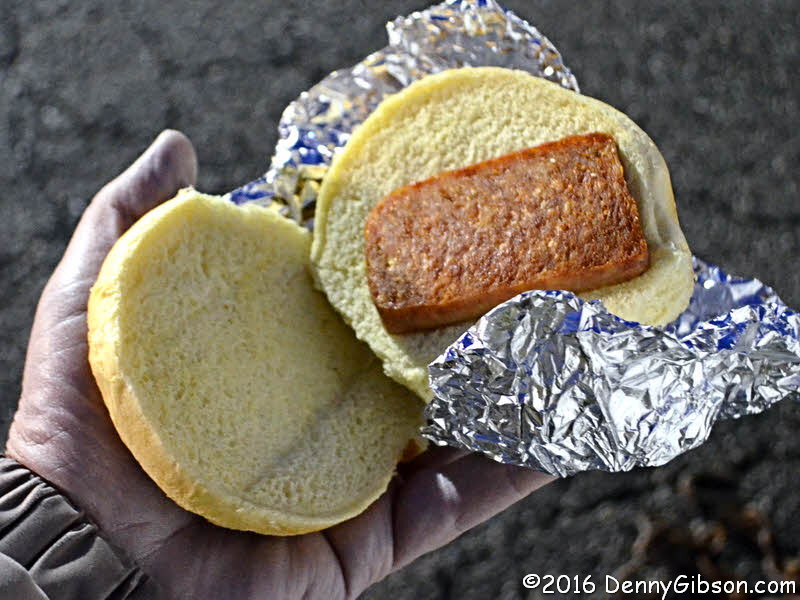
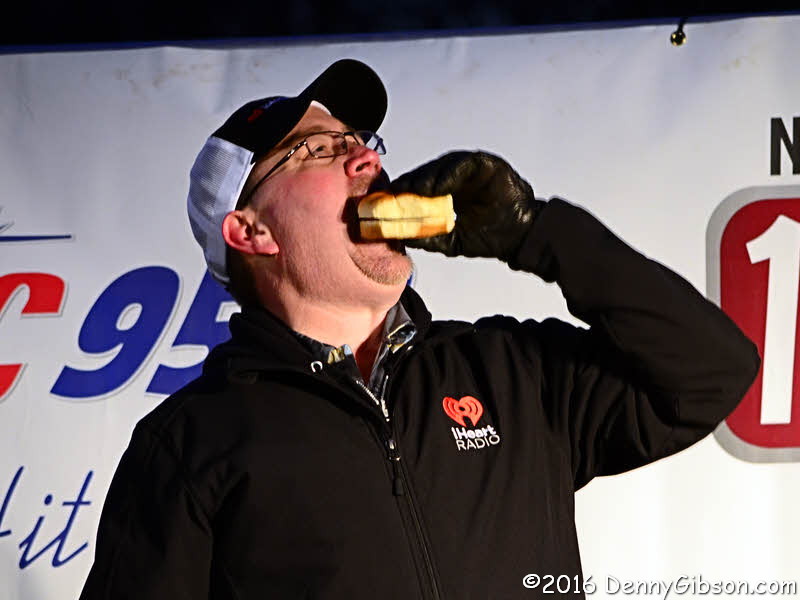
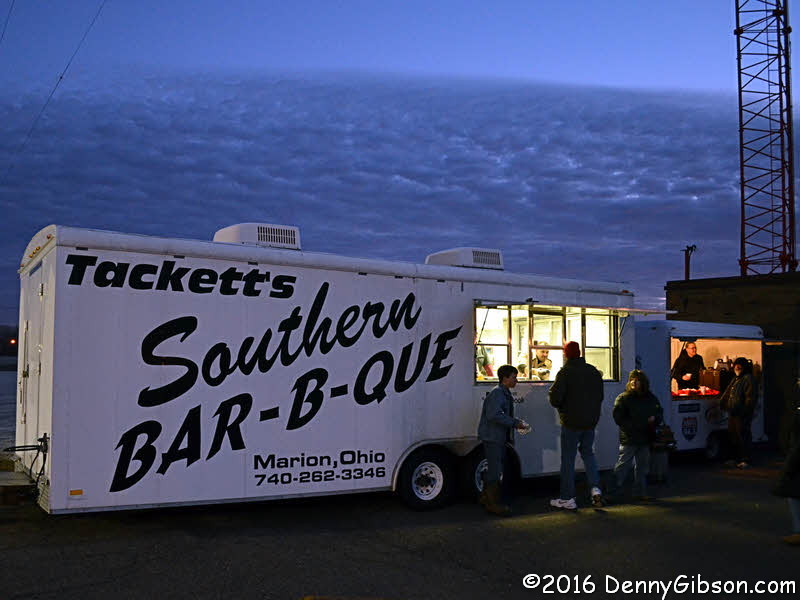
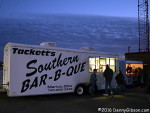 A WMRN Groundhog Day tradition is providing free ground hog, in the form of Spam sandwiches, to everyone present. That’s Buckeye Chuck’s current partner and translator, Scott Shawver taking the first bite of his. I had my own which I consumed with less ceremony but possibly more enthusiasm.

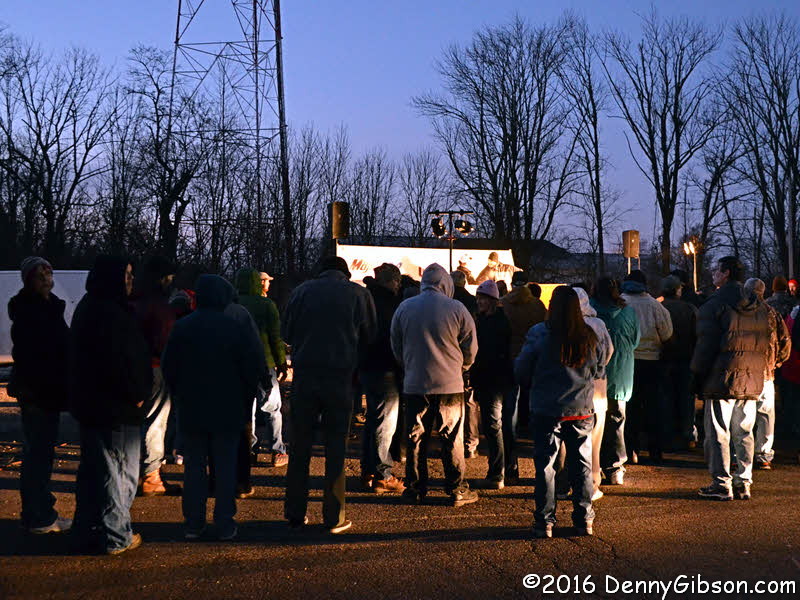
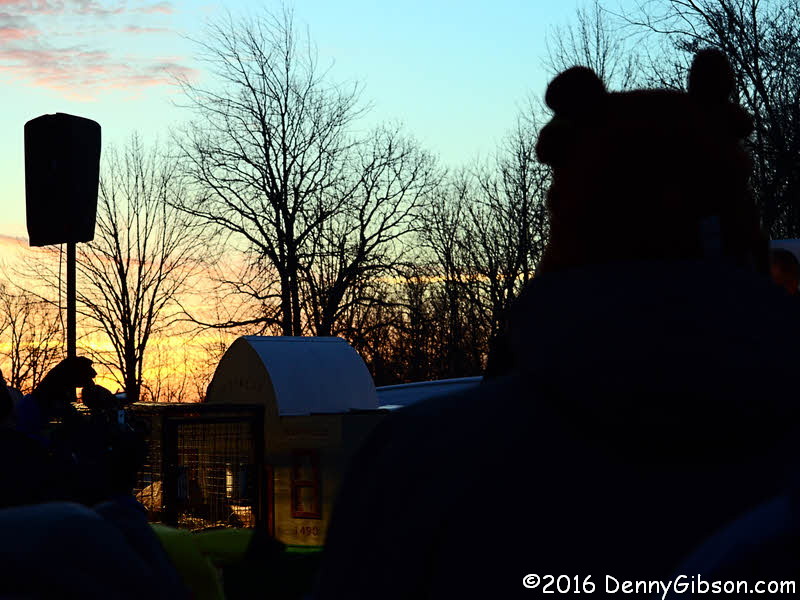
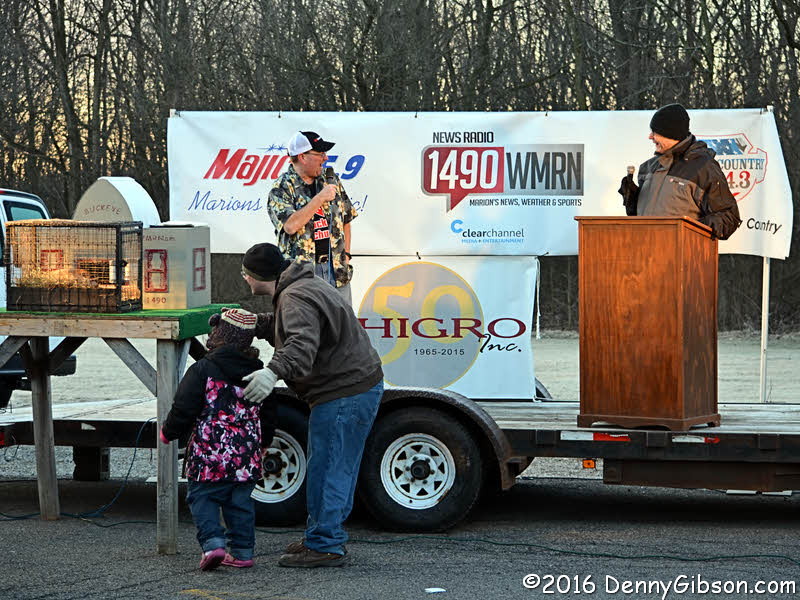
 Broadcasting from the stage near Buckeye Chuck went live at 7:15, just a few minutes before Shawver bit into that sandwich. Sunrise was at 7:41. The time in between was filled with the reading of a couple of proclamations, including one from Marion Mayor Scott Schertzer and assorted banter from Shawver and co-host Paul James. When they began wondering about who had come the farthest, I thought I might be in the running but the first question, “Anyone from out of state?”, turned up a couple from New Jersey. They visit a different groundhog each year. Last year it was General Beauregard Lee near Atlanta, Georgia, and they have been to Punxsutawney, Pennsylvania “many times”. Clouds continued moving steadily on and by the time the sun popped over the horizon the sky was pretty much clear. Buckeye Chuck saw his shadow, an indicator that six more weeks of winter should be expected, instantly.
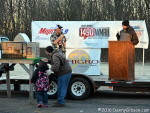 The mildly disappointed crowd dispersed rather quickly although some took advantage of the daylight to get a better view or a better picture of Buckeye Chuck while Shawver and James wrapped up the program. I dawdled a bit before walking to the car. Deciding to drive to Marion was as far as my morning planning had progressed. Just before climbing into the car, I asked the only person standing nearby if he knew of a good place for breakfast. “No,” he said with a laugh, “I’m from Cleveland.”
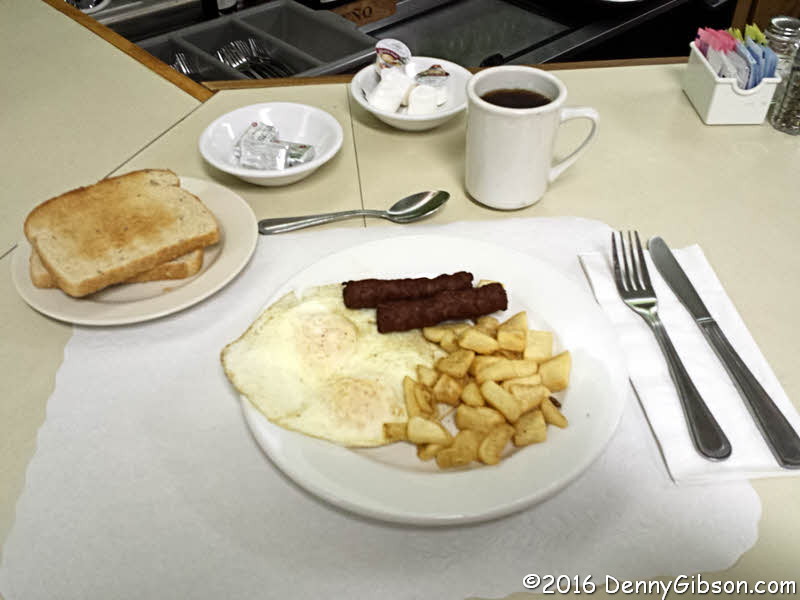
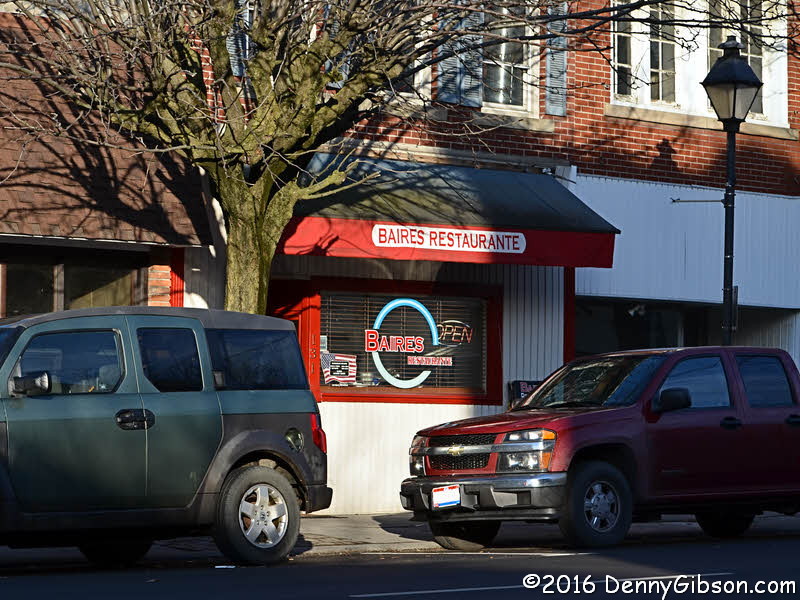
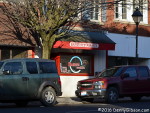 Scanning signs and storefronts as I drove back through Marion,I spotted a likely looking place near the center of town. I took the photo as I left. The street in front of Baires Restaurant was completely empty when I arrived. A guy at the counter and another in a booth were drinking coffee and chatting with each other when I entered. Service was somewhat slow but the lone woman on the business side of the counter seemed pretty busy in the cooking area so I didn’t think too much of it. The first person to enter after me was a fellow on a walker. As he worked his way into the seat next to me and against the wall, I asked, thinking it might be easier, if he would rather sit where I was. “This one’s got my name on it,” he laughed and he meant it. He pointed to a small brass plate on the back of the swivel stool marking it as his regular seat. The cook/waitress immediately appeared with his grapefruit which I had noticed her preparing earlier. My food arrived as I chatted with my new neighbor and learned that the restaurant normally opened at 8:30. It was not yet a quarter past when I entered and what I took to be slow service was more than I had a right to expect. Now that the place was officially open, a number of people entered with new folks greeted, usually by name, by those already there. As I paid my bill, I joked with the person I now realized was cook/waitress/owner about me busting in early and she grinned. “Oh, you’re alright.” In case there is any question, I had sausage & eggs.
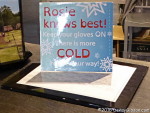
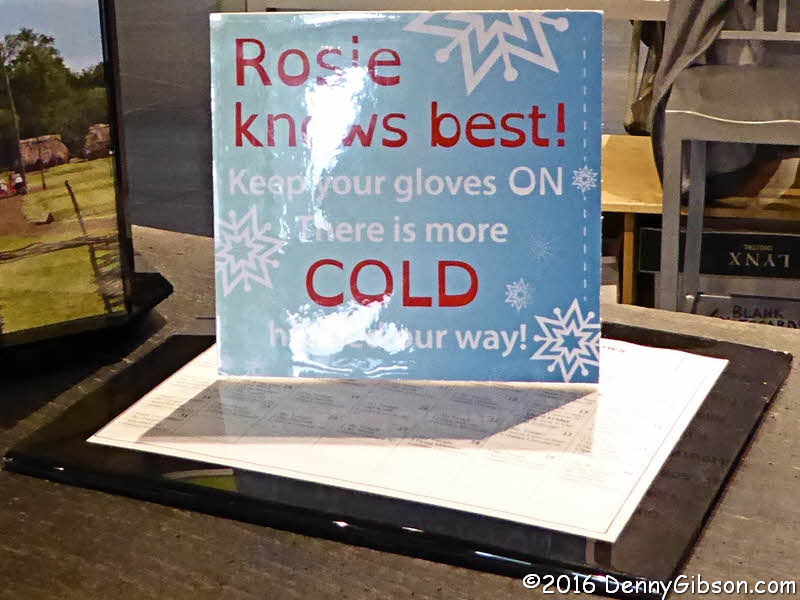
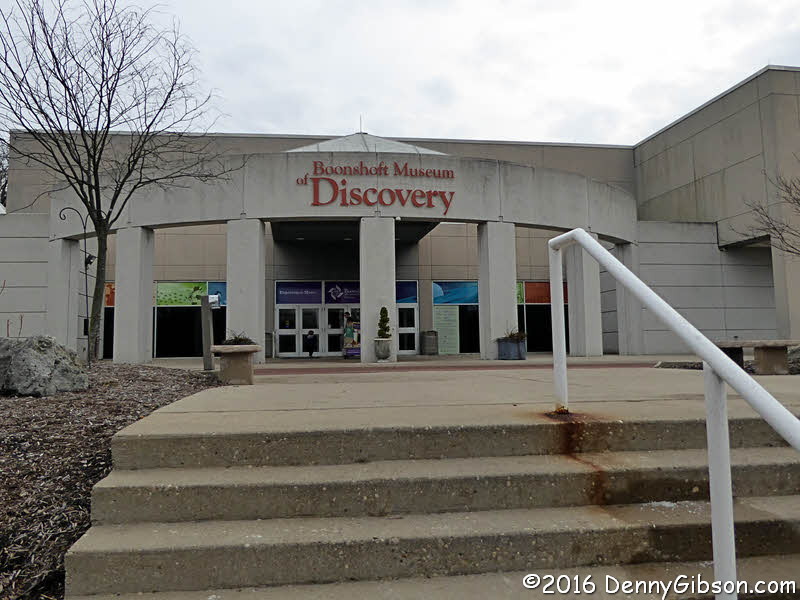
 One of the reasons I had been so nonchalant about possibly sleeping through Buckeye Chuck’s emergence was that I had a Plan B. The day’s big event at Boonshoft Museum of Discovery, where I’d watched a groundhog named Rosie make her prediction in 2013, was aimed toward a much younger crowd and was scheduled for a comfortable 10:00 AM. I hadn’t even thought about it after starting toward Marion but I got curious as I was about to select “Home” on the GPS, and tapped Boonshoft instead. When I did, I realized that, without the breakfast stop, I probably could have worked in both Chuck and Rosie. Since it made the time to home only slightly longer, I proceeded to the museum. The last load of attending school children were about to climb aboard their bus when I arrived. Rosie’s appearance had taken place more than forty minutes earlier but I coud see the official result. She agreed with Chuck.
Not many did. Punxsutawney Phil predicted an early spring as did all the other U.S. groundhogs on my short list consisting of Staten Island’s Charles G. Hogg, Illinois’ Woodstock Willie, and Georgia’s General Beauregard Lee. The only groundhog of note that I found agreeing with Chuck and Rosie lives in Canada but not all Canadians are of the same mind, either. In Ontario, Wiarton Willie sided with the Ohio rodents in predicting more winter while Shubenacadie Sam claims an early spring is on the way in Nova Scotia.
 As stated in last week’s post, I had no plans to be awake at 4:30 AM Thursday. That was when Imbolc, the midpoint between Winter Solstice and Vernal Equinox, occurred this year. Neither did I have plans to assure that I was asleep at that time but that seemed the most likely and it is indeed what transpired. I didn’t miss it by too much, though. The picture at left was taken at 5:22, a mere fifty-two minutes past Imbolc. Admitedly I can’t prove it but I strongly suspect that the view from my bed was pretty much the same at the magic moment as it was less than an hour later.

 On Friday, I made my second excursion to see Buckeye Chuck with no more planning than the first and with worse timing. In 2016 I arrived long enough before sunrise to look around a little and down a free SPAM sandwich before the big event. I cut it a little closer this year and, while I did have a few minutes to wait, the SPAM (i.e., ground hog) sandwiches provided by local sponsors were all gone. To be honest, they weren’t entirely gone but the last few had been distributed moments before I arrived and all I could do was watch them disappear into the mouths of nearby spectators.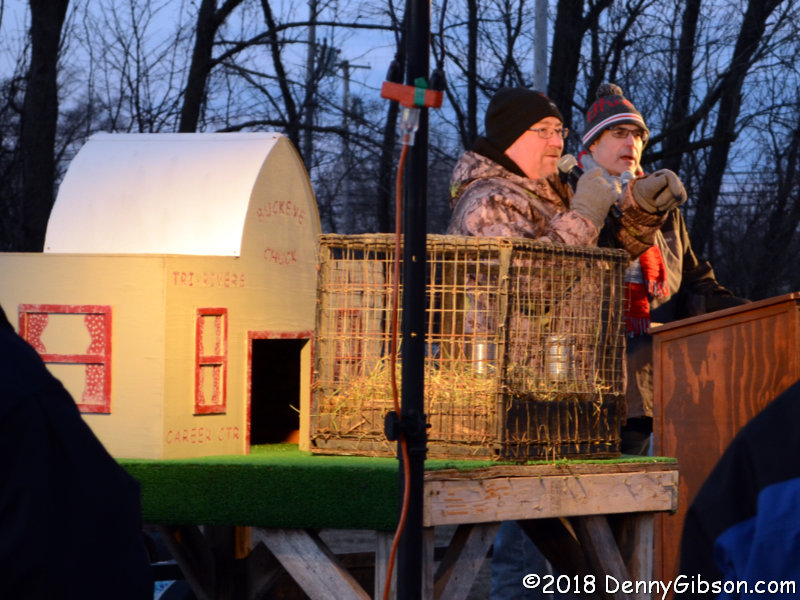
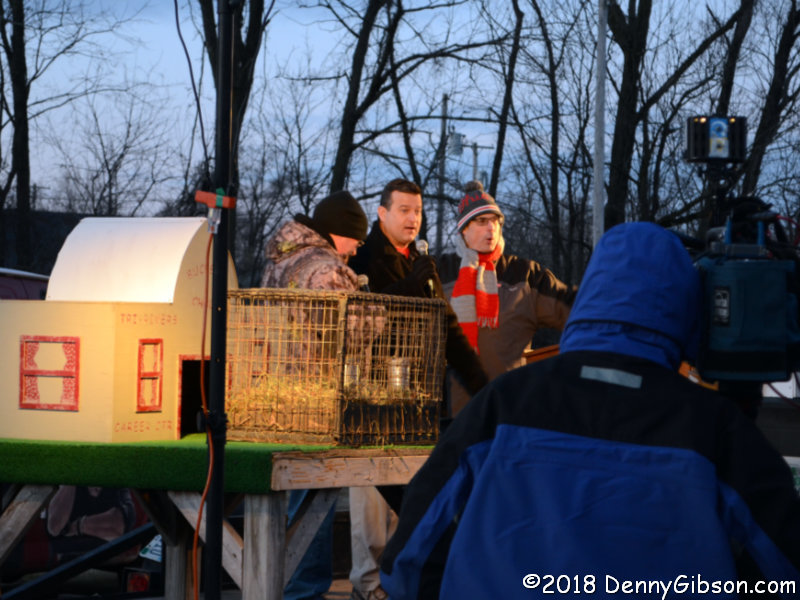 My arrival preceded sunrise by only about ten minutes and co-hosts Scott Shawver and Paul James filled the time with banter and guests including Marion Mayor Scott Schertzer. I’m guessing that Schertzer appears every year (he did in 2016) but this year he has a little extra claim to fame. Just two weeks ago, Cincinnatian Connie Pillich picked him as her running mate in her campaign for governor. Pillich is an occasional patron of the place where I eat pizza, drink beer, and play trivia. When James and Shawver polled the crowd to see who came the farthest, my shouted “Cincinnati” was the apparent winner but, because there was no one from out of state, not much was made of it. Actually nothing was made of it at all.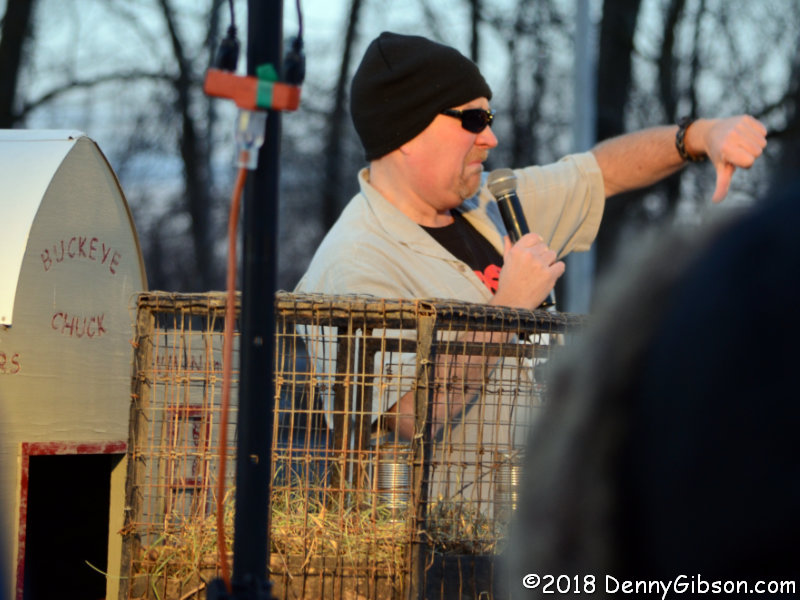
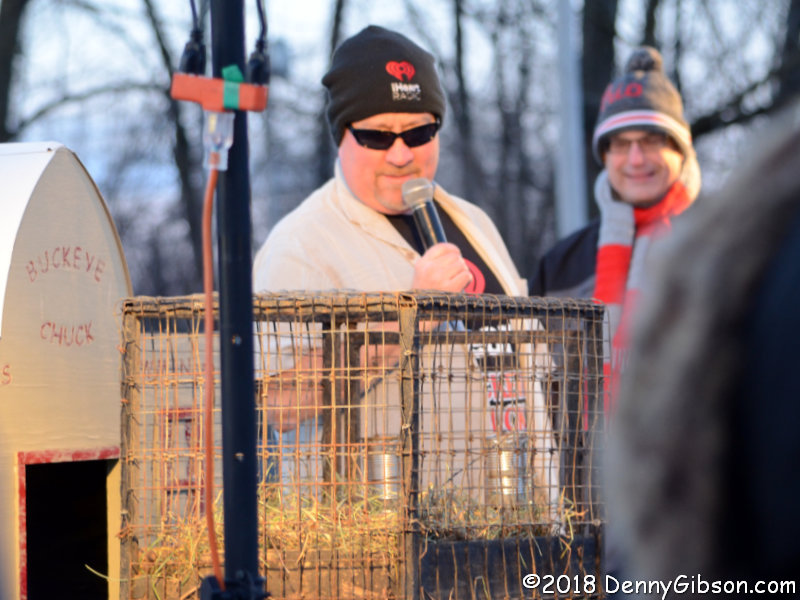 James and Shawver claim to alternate duties but, having only been here in two even numbered years, Shawver is the only one I’ve personally seen deal with Chuck. He bravely — it was 12 degrees Fahrenheit — stripped down to shirtsleeves and briefly studied the situation before announcing the obvious. In the bright sunlight. Buckeye Chuck couldn’t help but see his shadow and predict six more weeks of winter.
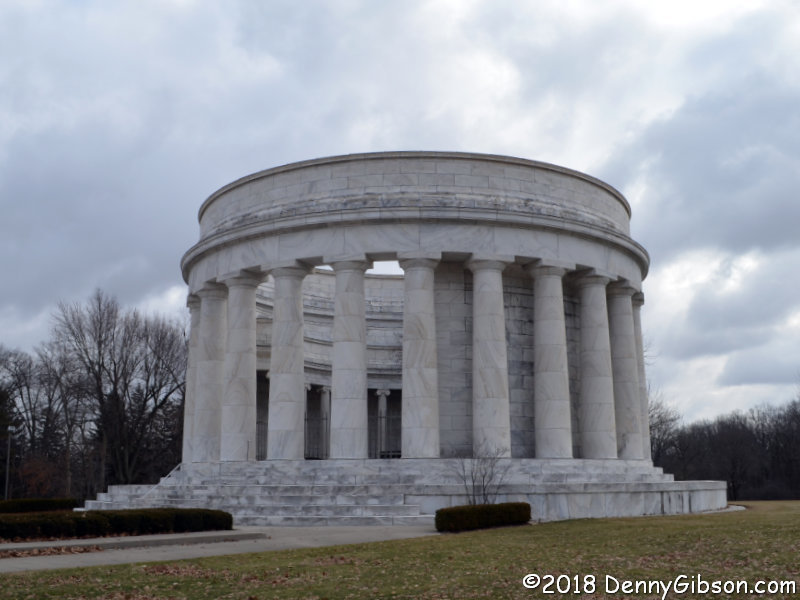 Before leaving town, I again satisfied my need for ground hog with sausage and eggs at Baires Restaurant then stopped by President Harding’s memorial. Look at those clouds and consider how much different Chuck’s prediction would have been if delivered just a short while later.



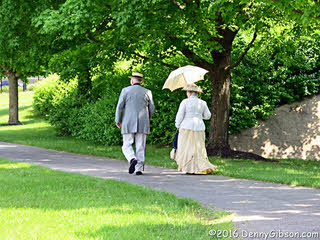 A couple of Ohio History Connection sites are reopening this weekend after pretty big makeovers. On Saturday I visited Ohio Village which moved from the 1860s to the 1890s since I last saw it. I’ll reach the Hayes Presidential Center, which reopens with new displays after a major renovation. Saturday’s journal has been posted.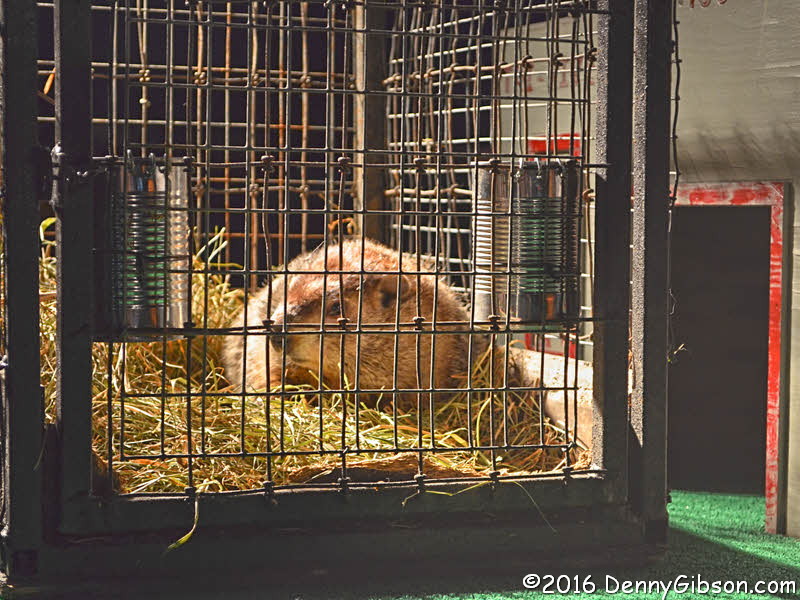

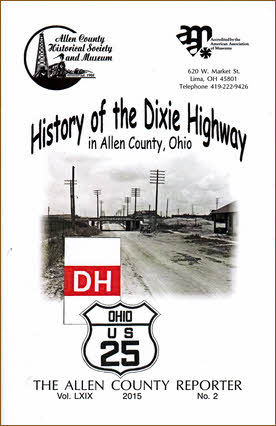 I could have called this a pamphlet review. That’s technically what it is. Or, since one definition of pamphlet is “a small book”, I could have called this a small book review. I decided to leave the title be but, in line with the publication’s size, I’ll try to be brief and do a small small book review.