 Wednesday is this blog’s day for reviews. Although not every Wednesday gets one, reviews do sometimes appear two or more weeks in a row. In fact, reviews appeared on six consecutive Wednesdays earlier this year. But today is definitely the first time I have ever published back-to-back reviews of premieres of locally produced musicals about local history. In addition to their being musicals with local roots and having me in the audience of their inaugural runs, both Above the Sand (reviewed here) and Utopia, Ohio, the subject of this review, convincingly demonstrate the phenomenal amount of talent in this area. The similarities between the debuts of these two new musicals are striking but there are some pretty big differences between the musicals themselves.
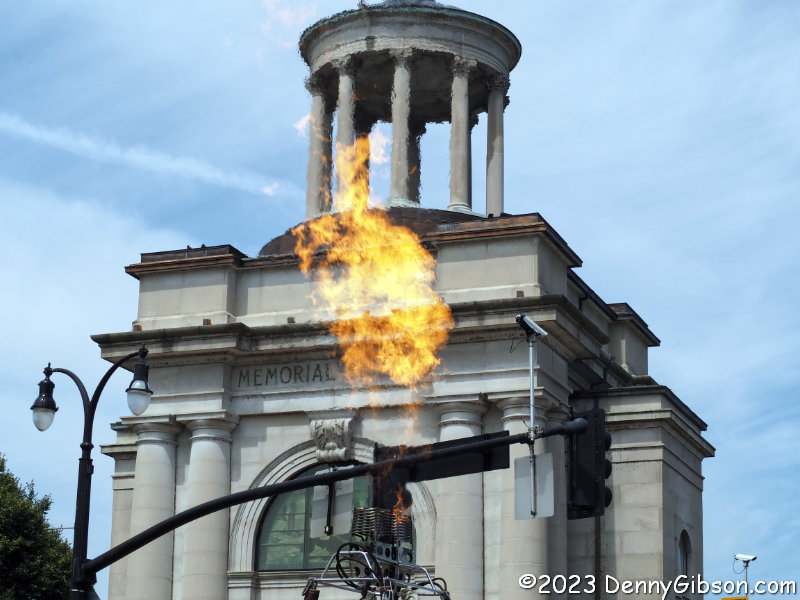
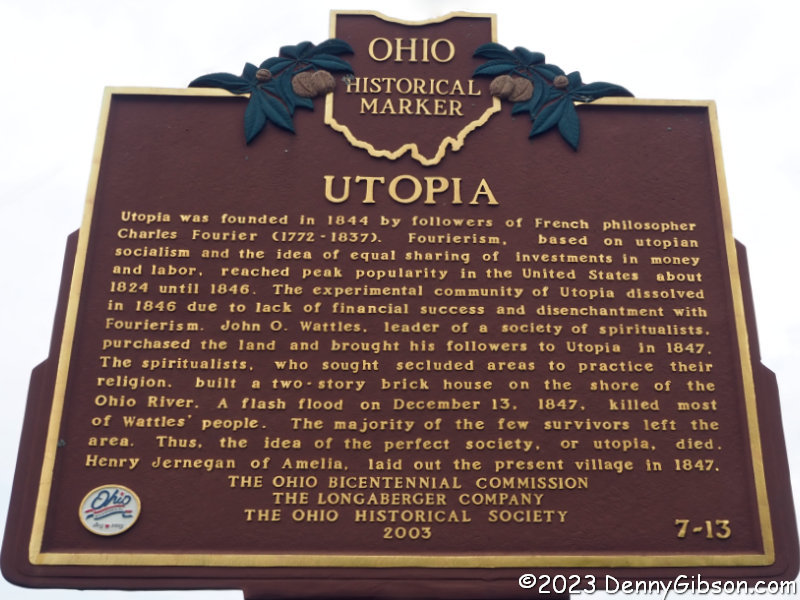
One difference of note is the public’s familiarity with the two subjects. Virtually everyone knows that the Wright brothers were the first humans to successfully fly a heavier-than-air machine, and many residents of southwest Ohio know a lot more of the story than that. But the story of Utopia, an unincorporated community near Cincinnati, is hardly known at all. My guess is that even people who live fairly close to the small cluster of buildings on the banks of the Ohio River know little or nothing beyond what is written on the historical marker in the opening photo and not many stop to read even that.
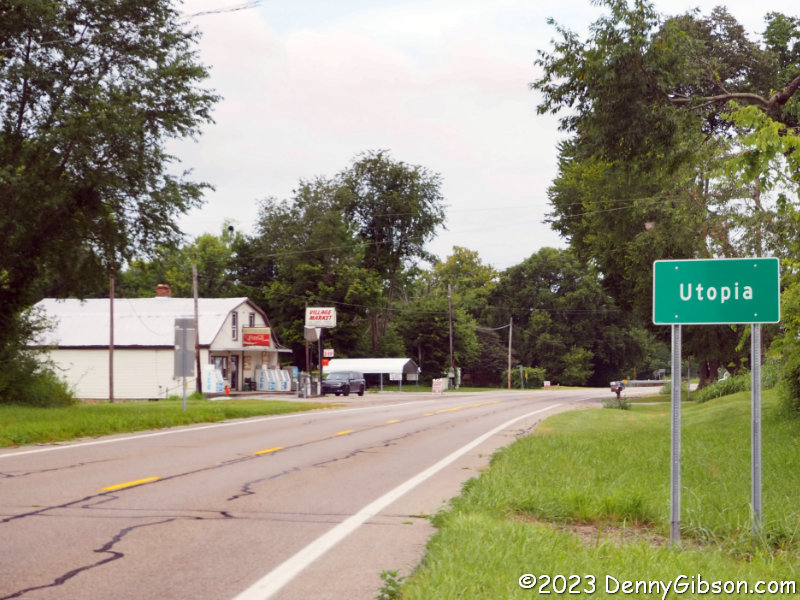 Utopia was actually the name of the third and final attempt at communal living at the location. The Clermont Phalanx was first. A “phalanx” was a group of followers of the writings of Charles Fourier. The Clermont Phalanx was formed in 1844 and failed in 1846. Within months of that failure, abolitionist and spiritualist John Wattles established the community of Excelsior on a portion of the phalanx property, and Josiah Warren, “America’s first anarchist”, established Utopia a short time later on another portion. A very good history of all three is available here. Joshua Steele, the writer of Utopia, Ohio, provided a nice summary in a Facebook post here.
 I’ve brought up all of this background stuff because I believe a decent knowledge of the history is necessary to understand the musical. Notice I said “understand” not “enjoy”. Enjoying the musical is easy because the music and performances are so good. In fact, knowing nothing at all about the history would not keep you from enjoying the music. You can appreciate the tunes the same way you appreciate a concert or a new album. All five cast members are talented vocalists. There is no orchestra. Every cast member plays at least one instrument and some play several. The full battery includes guitar, mandolin, piano, accordion, violin, and cajon. Coordinating instruments no doubt complicated the director’s and stage manager’s jobs but it was handled quite well.
Coordinating hats also added some complexity. With more roles than actors, hats were used effectively to distinguish specific roles. Linsey Rogers and. Brad Myers were particularly adept at this. At times, images projected at the side of the stage also helped know who was who.
Determining when was when was a different matter. You might be able to tell the players without a program but not the dates. The songs of Utopia, Ohio do not tell a story chronologically, at least not in the order they were performed on Thursday. That is why, I assume, there are dates in the program. It took me way too long to realize this. Once I did, I started taking in the performance more as a concert than a play despite having a pretty good sense of the history of the three failed communities. In the end, I decided that viewing it as a series of related but not ordered musical vignettes was best. Within each vignette, the cast skillfully brought music, lyrics, actions, and expressions together to tell the intended story and to entertain as well.
A very important difference between last week’s review and this one is the fact that Utopia, Ohio‘s first run is not already over. This is being published on the morning of the second of four scheduled performances so I do not feel the too-late-to-matter guilt I did last week. Maybe I will, though, as at least one of the three remaining performances is sold out. Check for tickets here. If you do snag one, my advice is to either pay close attention to the dates in the program and put the history together in your head or ignore them completely and just tap your toes to some fine music.
























 When I wrote about
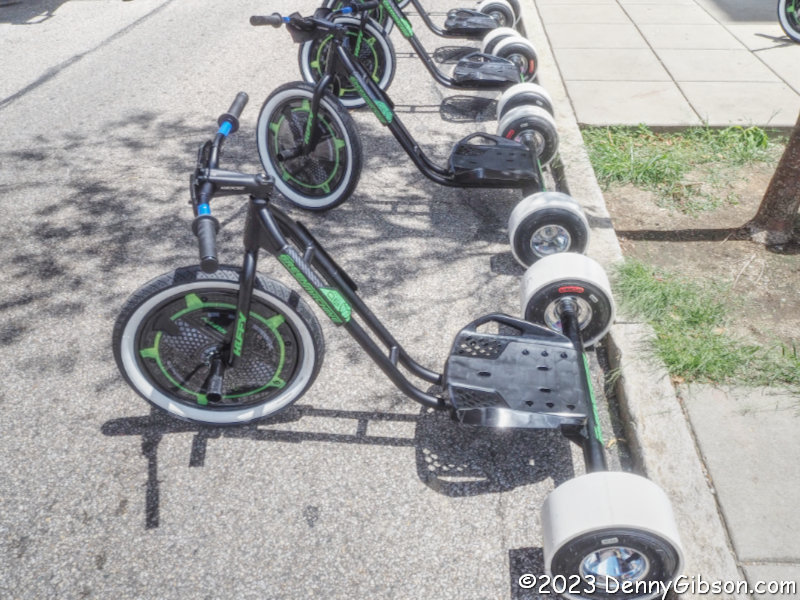
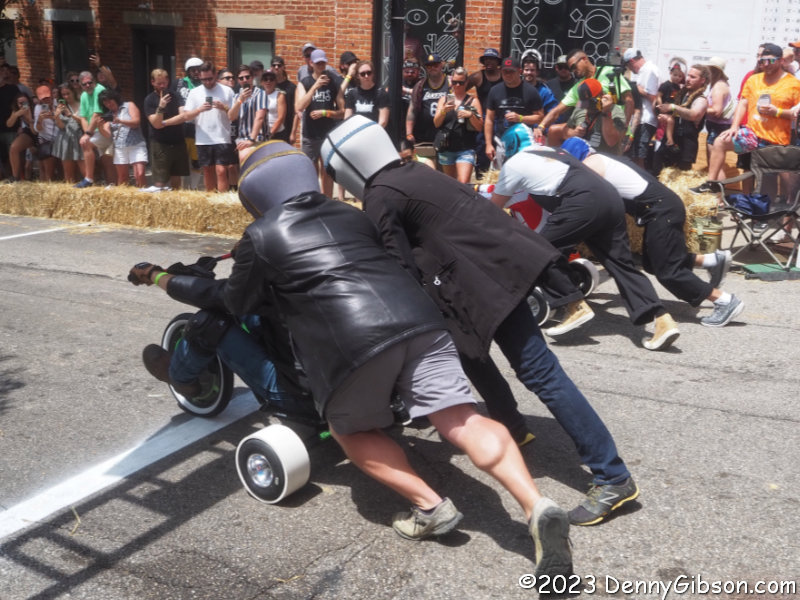
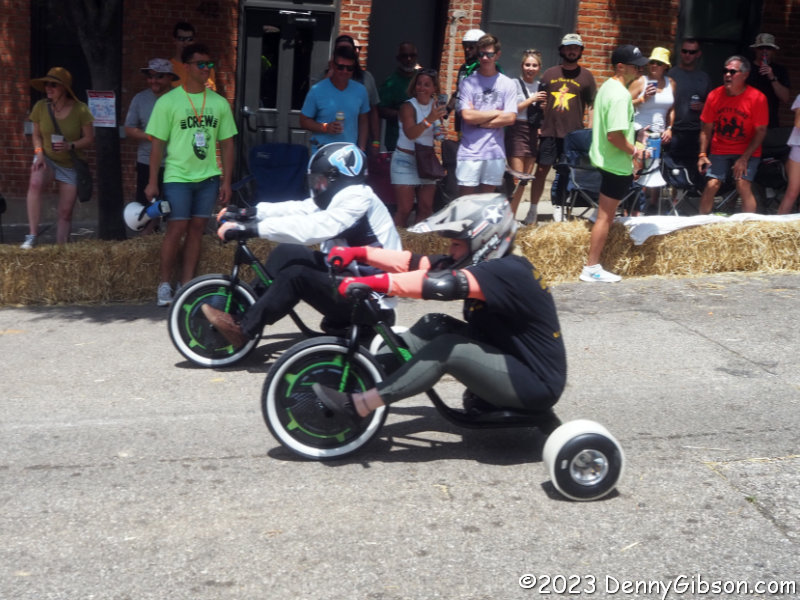
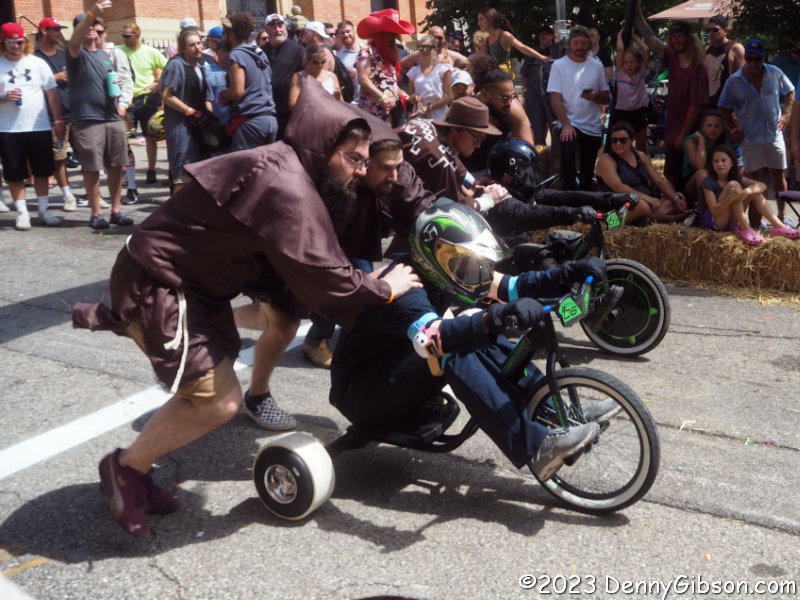
 History does repeat itself. In the early 1970s, I lived with my wife and two sons in a house with a driveway that sloped to a paved area in the back. That driveway was an ideal spot for the four-year-old to give his Big Wheel a workout. While I worked on something on a car behind the house, he repeatedly pushed the three-wheeler to the top of the hill so he could come rocketing down the hill, brace his feet on the pedals to stop the big front wheel, and throw the rear wheels into a perfect 180-degree slide. This was exactly what Big Wheels were designed for. After one of his countless slides, he looked up at me and made an incredibly insightful observation. “Dad”, he said, “I bet you wish you could do this.”






























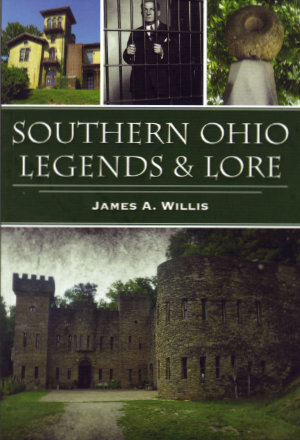
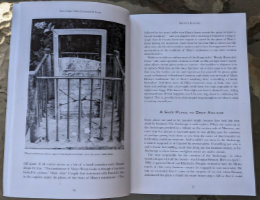 The stories are divided into six sections: “Ghostly Legends”, “Legendary Characters”, “Legendary Villians”, “Legendary Places”, “The Unexplained”, and “Legendary Events”. Having lived my entire life in southern Ohio, I was already at least somewhat familiar with most of them. There are exceptions including all four “Ghostly Legends”. It is the only section where every story is new to me and it is the only section dealing more or less directly with possibly supernatural phenomena. I’m thinking those two facts might very well be related. I’m also thinking that this is the right place to mention that Willis is the founder and director of the paranormal research group The Ghosts of Ohio. I find it somehow reassuring that this is also the only section where that comes into play and even here there is no straying from the “verifiable facts” approach.
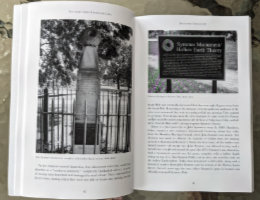 I don’t believe I learned anything new about any of the “Legendary Characters” but I appreciate the concise and complete descriptions. Willis’ reporting on John Symmes and his hollow earth theory is among the most even-handed and comprehensive I’ve read. Likewise, his tale of “Legendary Villian” George Remus where I did learn a few details for the first time.
 “Legendary Places” combines a place I had never heard of (Athens Pentagram) with three that I am quite familiar with. That somehow makes it my favorite section. One of the three familiar places, the Loveland Castle, was the subject of a blog post here