 As soon as I learned there was a complete, functioning Roto-Sphere about 100 crow miles from my home, I put it not just on the To-Do list, but on the To-Do-Soon list. It was cool enough and close enough to justify a trip on its own, but when I also learned of a historic ice cream parlor not far from the big spinning star, it became my number-one open-day, decent-weather day-trip target. I made it to the target on Wednesday.
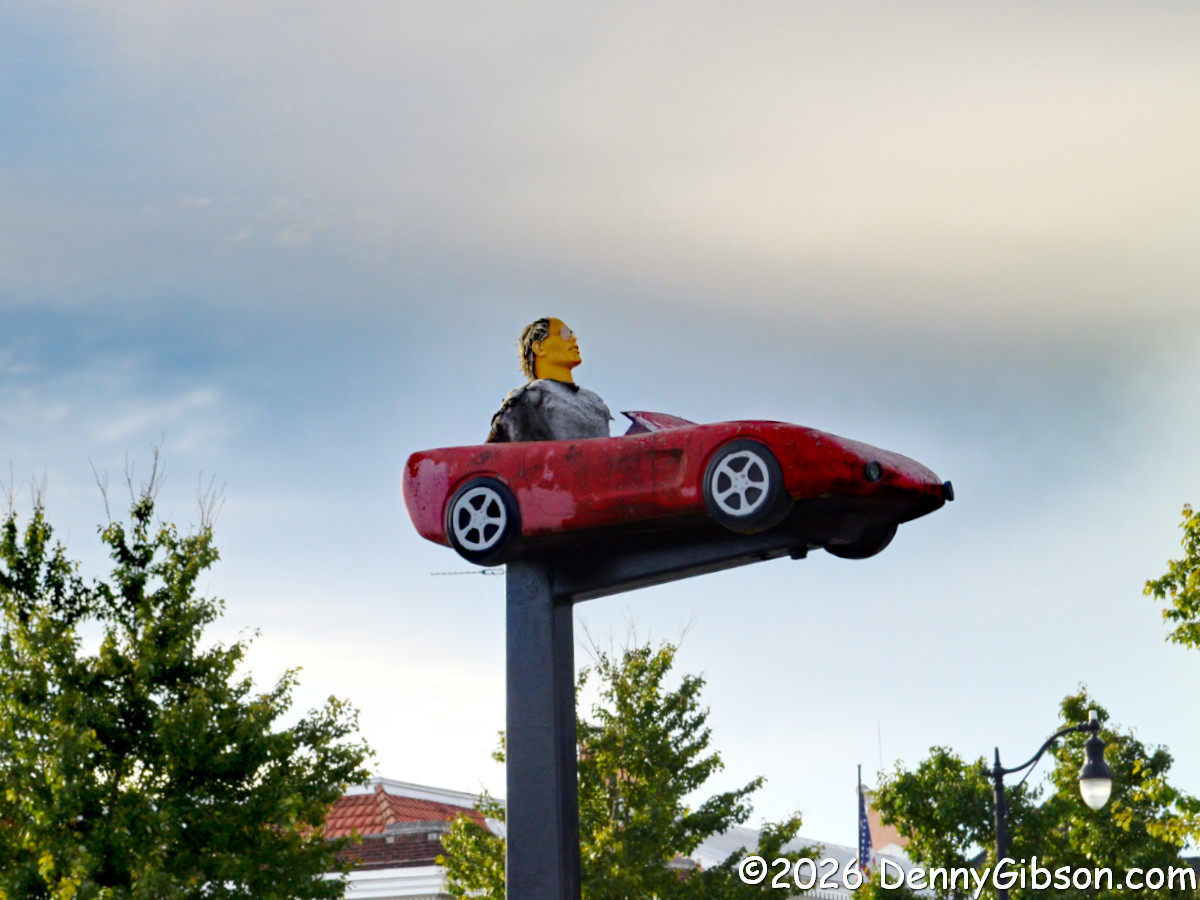
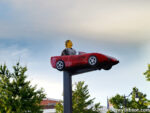 This has absolutely nothing to do with either the Roto-Sphere or the ice cream parlor, other than being on the way. My destinations were in Indiana, and I covered much of the distance on US-52. I first saw this car on a pole on a 2003 day trip when I was driving a car that looked quite similar. I took a picture and made a silly joke about putting the car “in levitation mode”. I’ve passed the car many times since then, but today is the first time I’ve seen it with a driver. It’s also the first time since 2003 that I’ve taken a picture. Those facts are, I believe, somehow related.
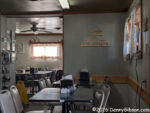
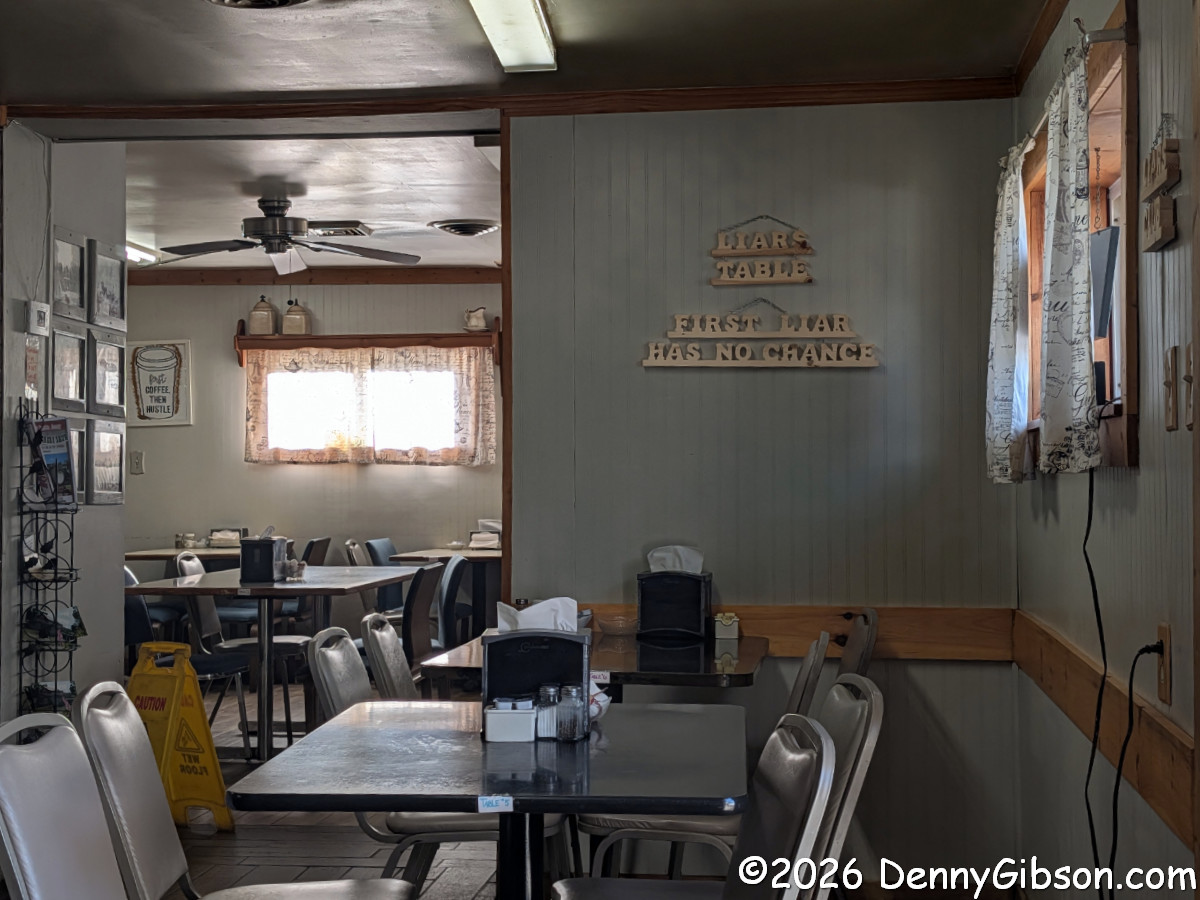
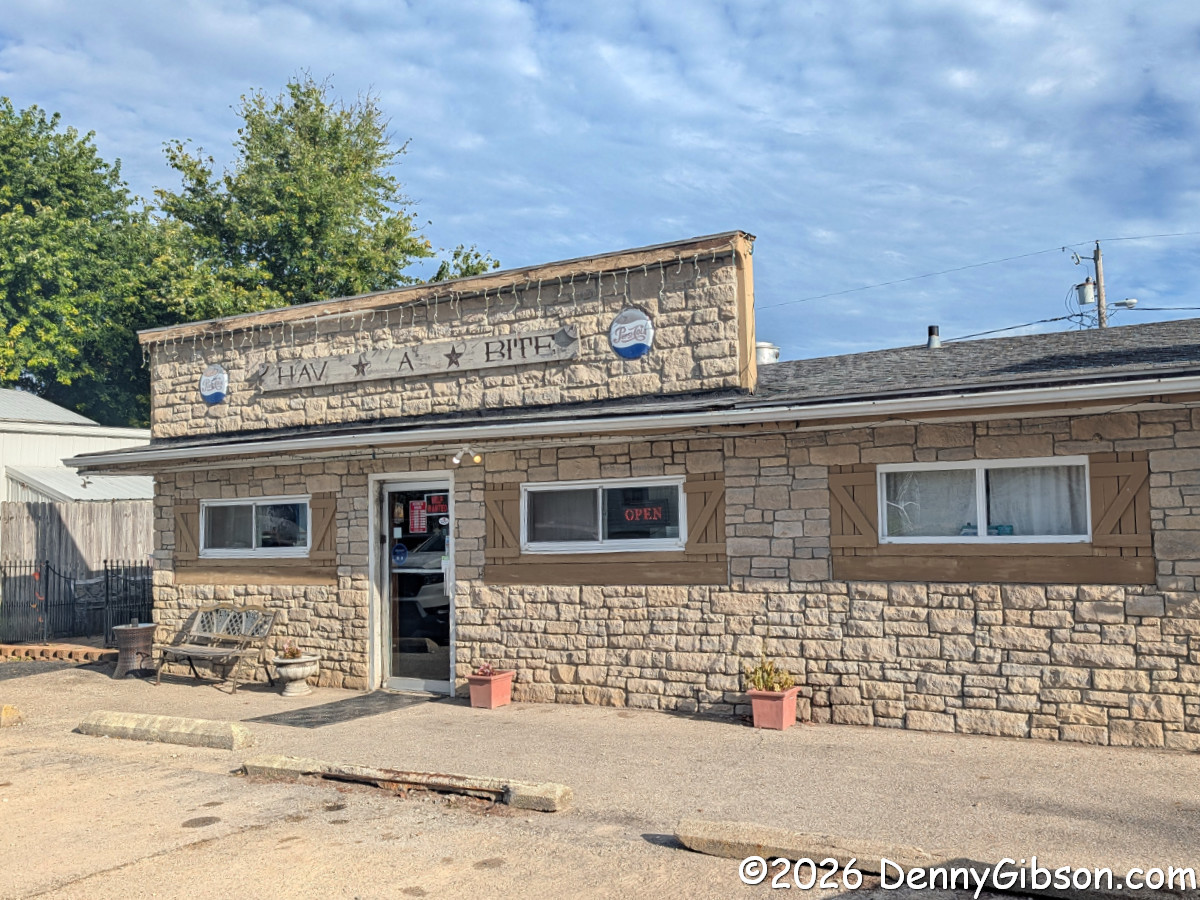
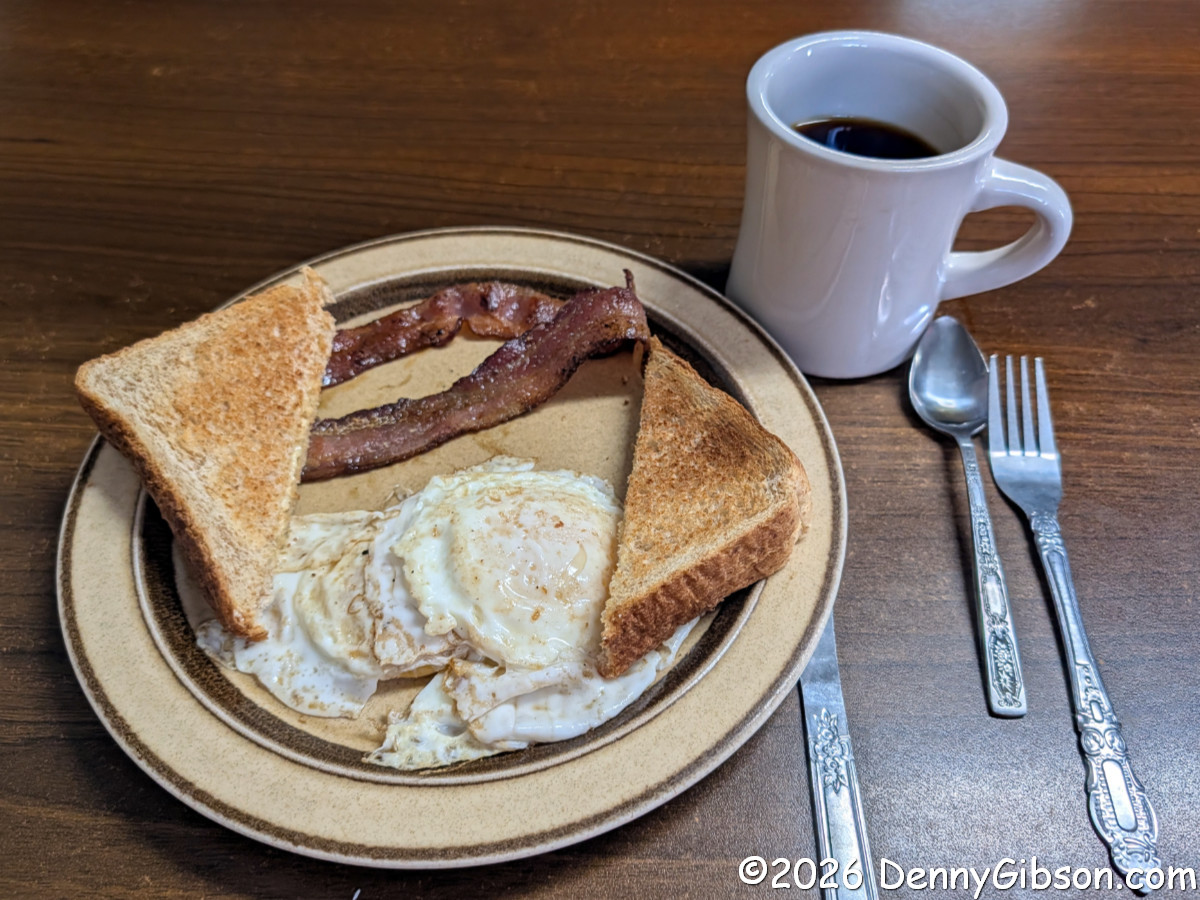
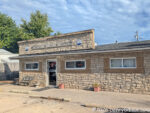 Hav-A-Bite’s involvement with Wednesday’s trip also comes from being on US-52. It’s near Metamora, IN, and served me a fine breakfast. I have seen plenty of liar’s tables, both labeled and not, but I’ve not seen this warning about being the first liar before. I bet there’s a good story behind that.
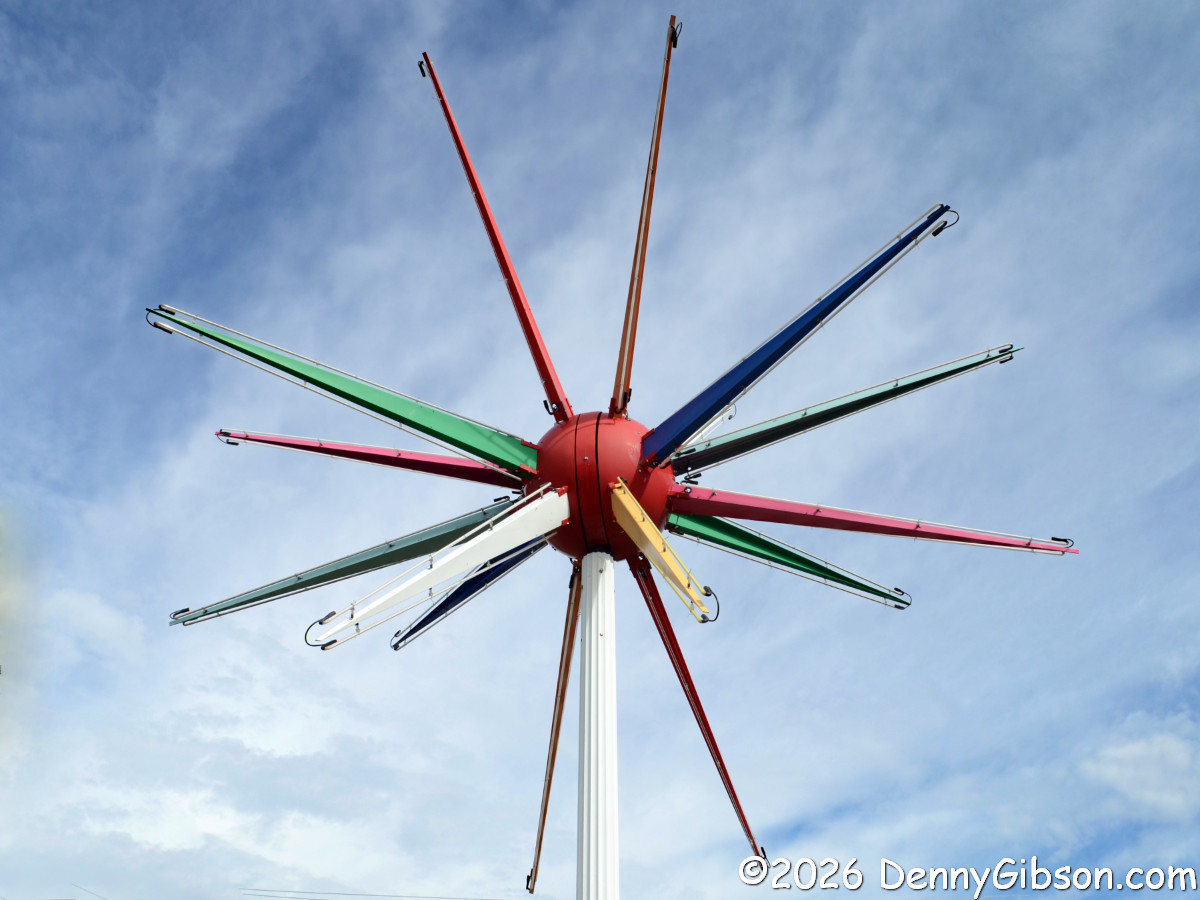
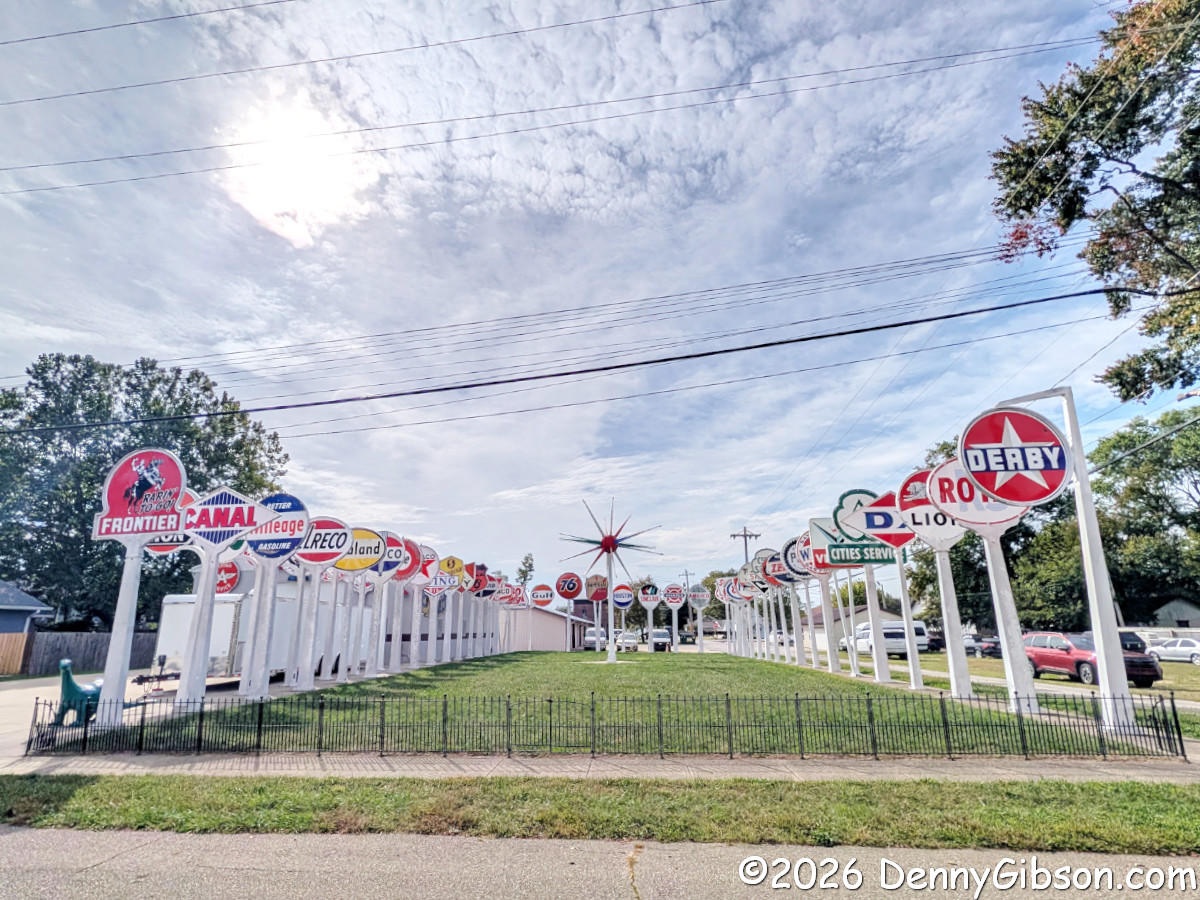
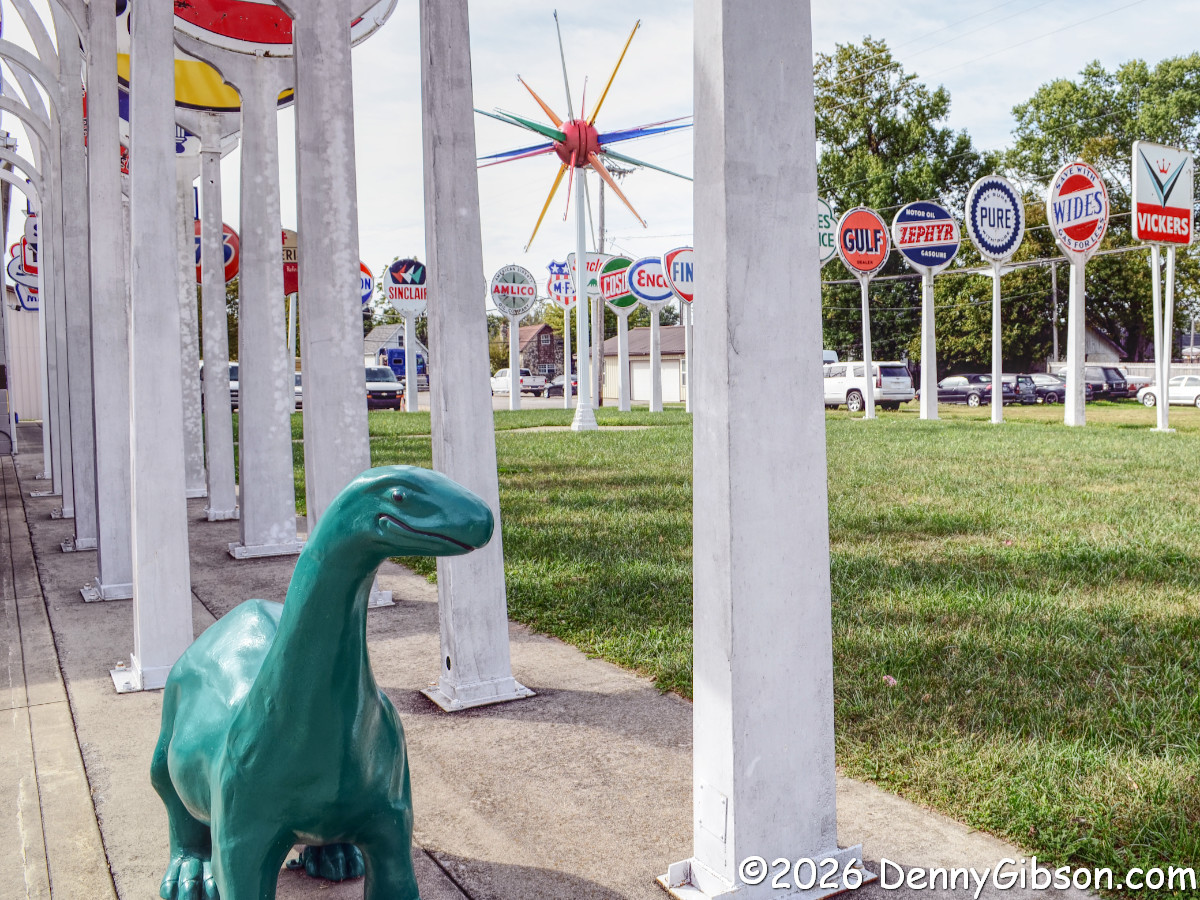
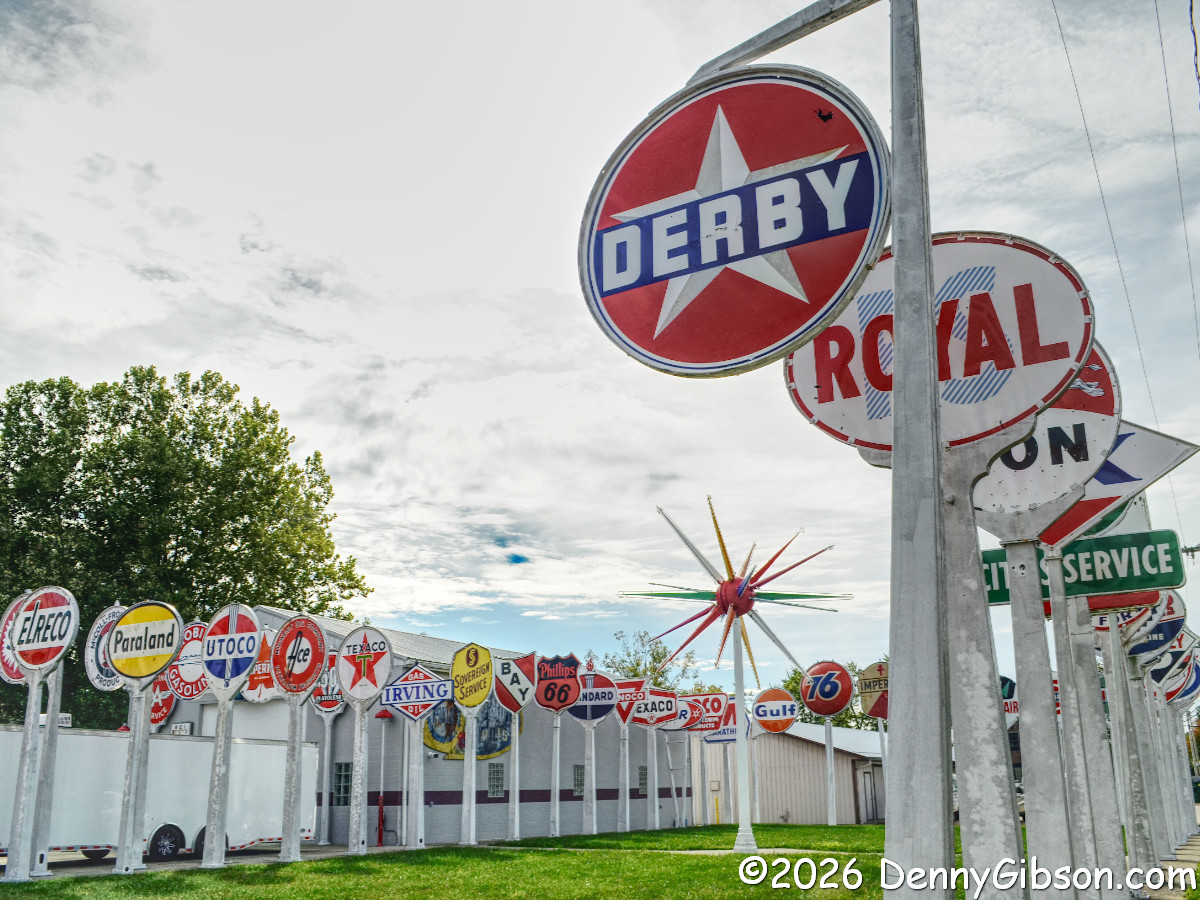
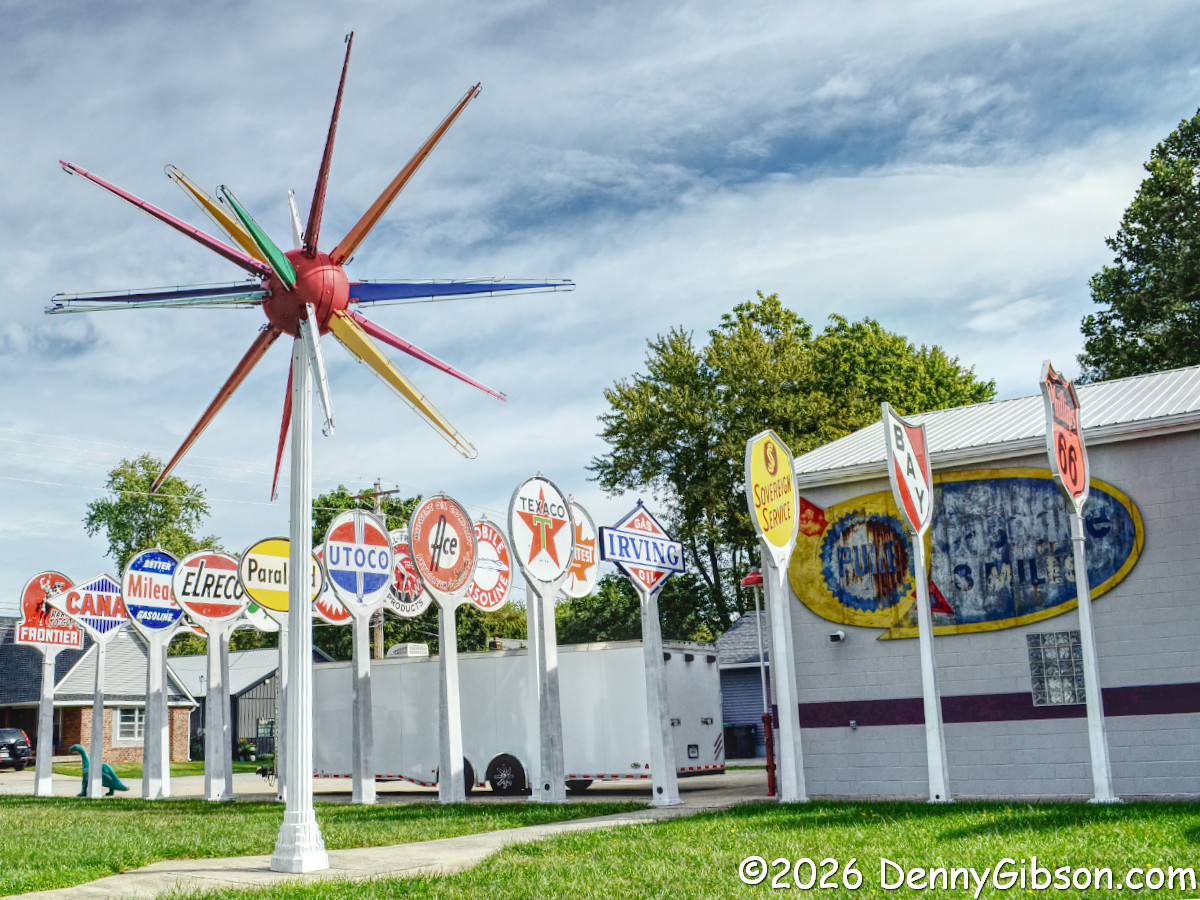
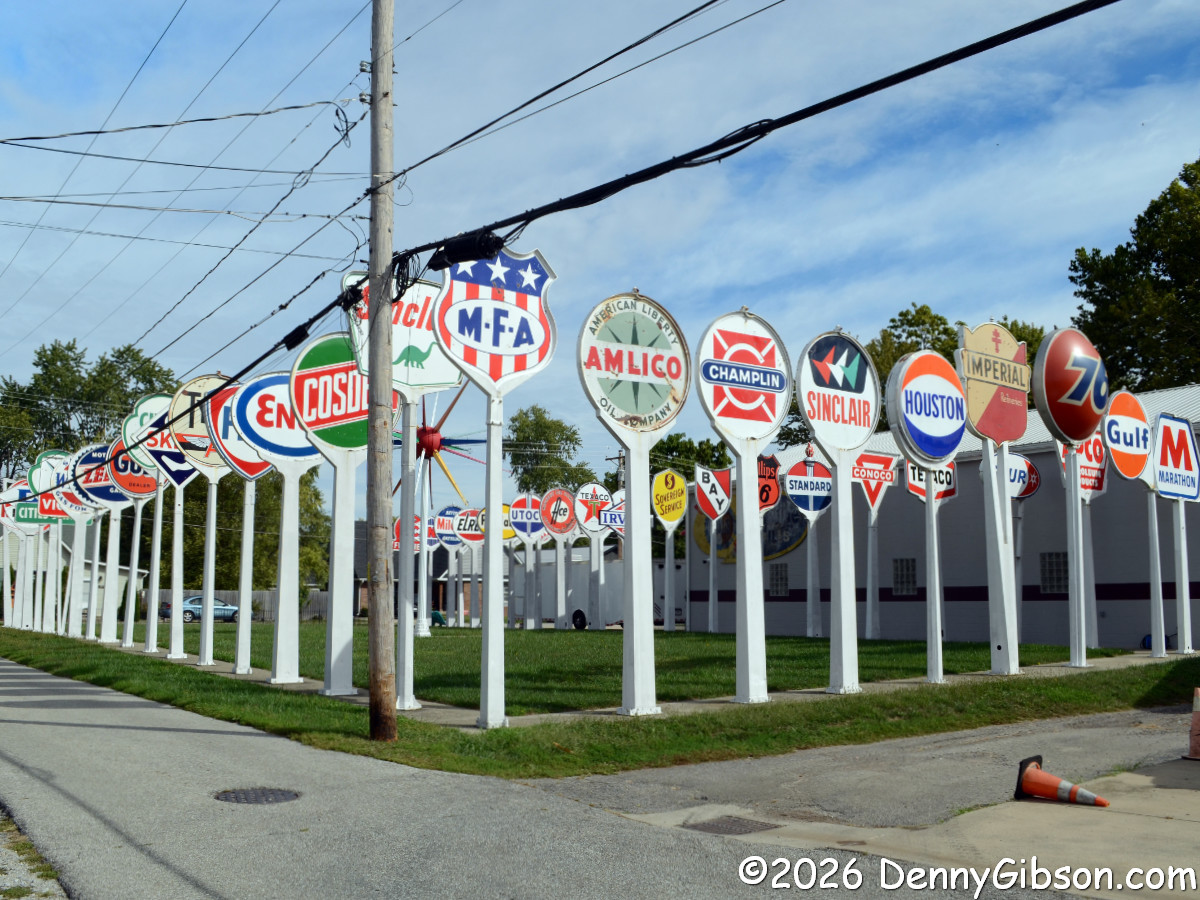
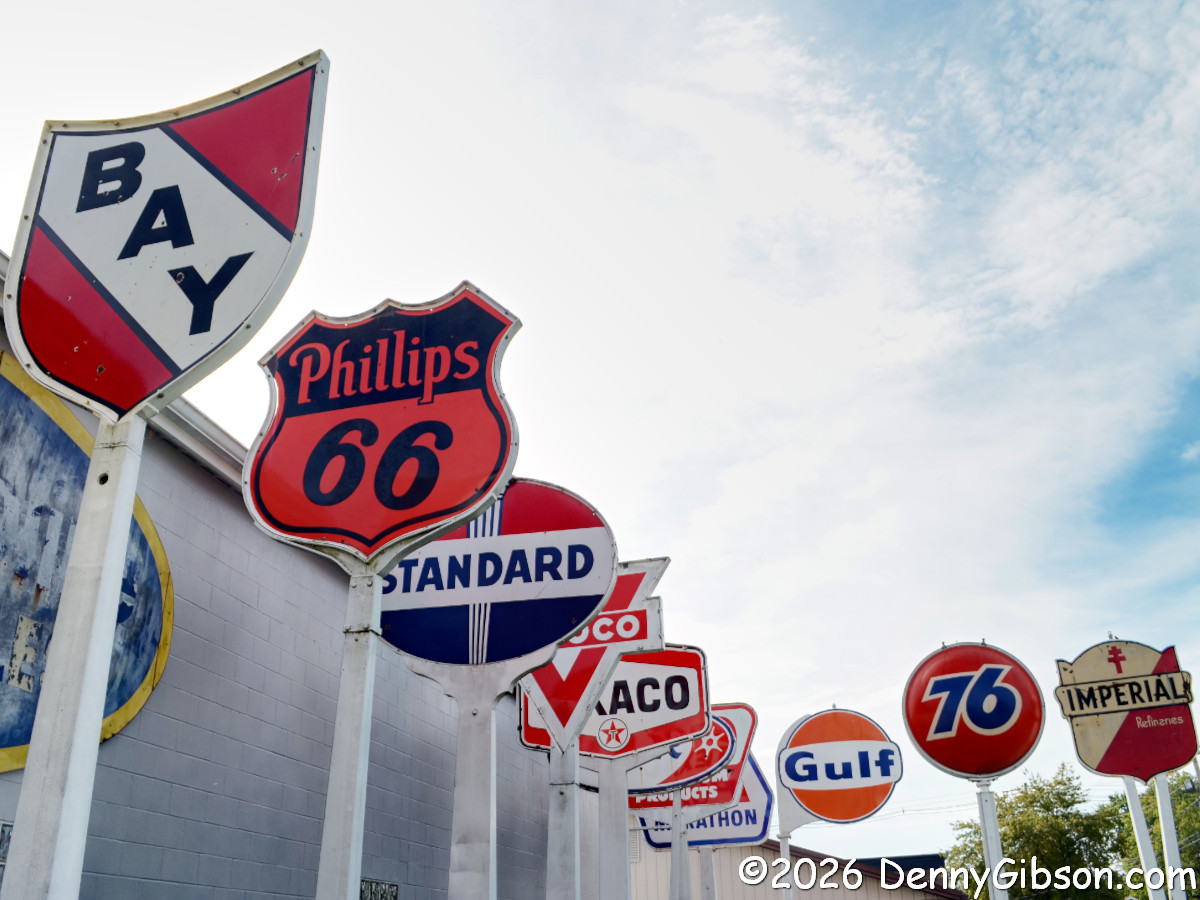
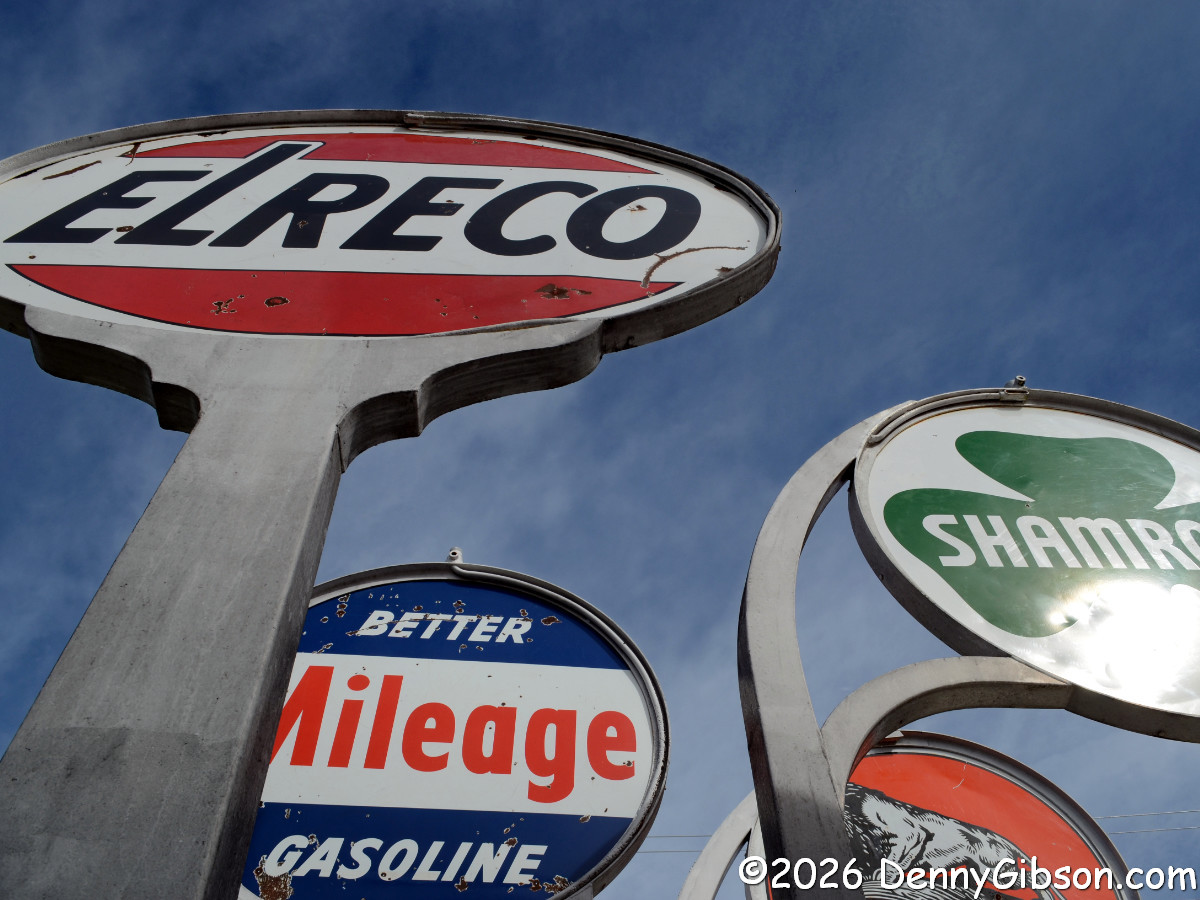
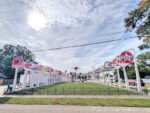 The Roto-Sphere prompted this visit, but it’s obviously not the only reason I’m here. Alan Whitaker began erecting this sign garden in Whiteland, IN, in 2013. I certainly should have known about it earlier, but it took the American Sign Museum’s acquisition of a Roto-Sphere for what Google Maps calls a Garden of Gas Station Signs to register on my poorly aligned radar. That acquisition was greatly assisted by both Whitaker and Debra Jane Seltzer. Seltzer’s research (RoadArch.com) helps preserve the history of Roto-Spheres and track the survivors. Whitaker is the absolute master of their restoration and maintenance. He is fully responsible for restoring the ASM’s Roto-Sphere, which is not yet on display but should be later this year.
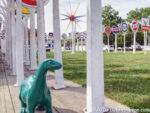
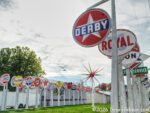
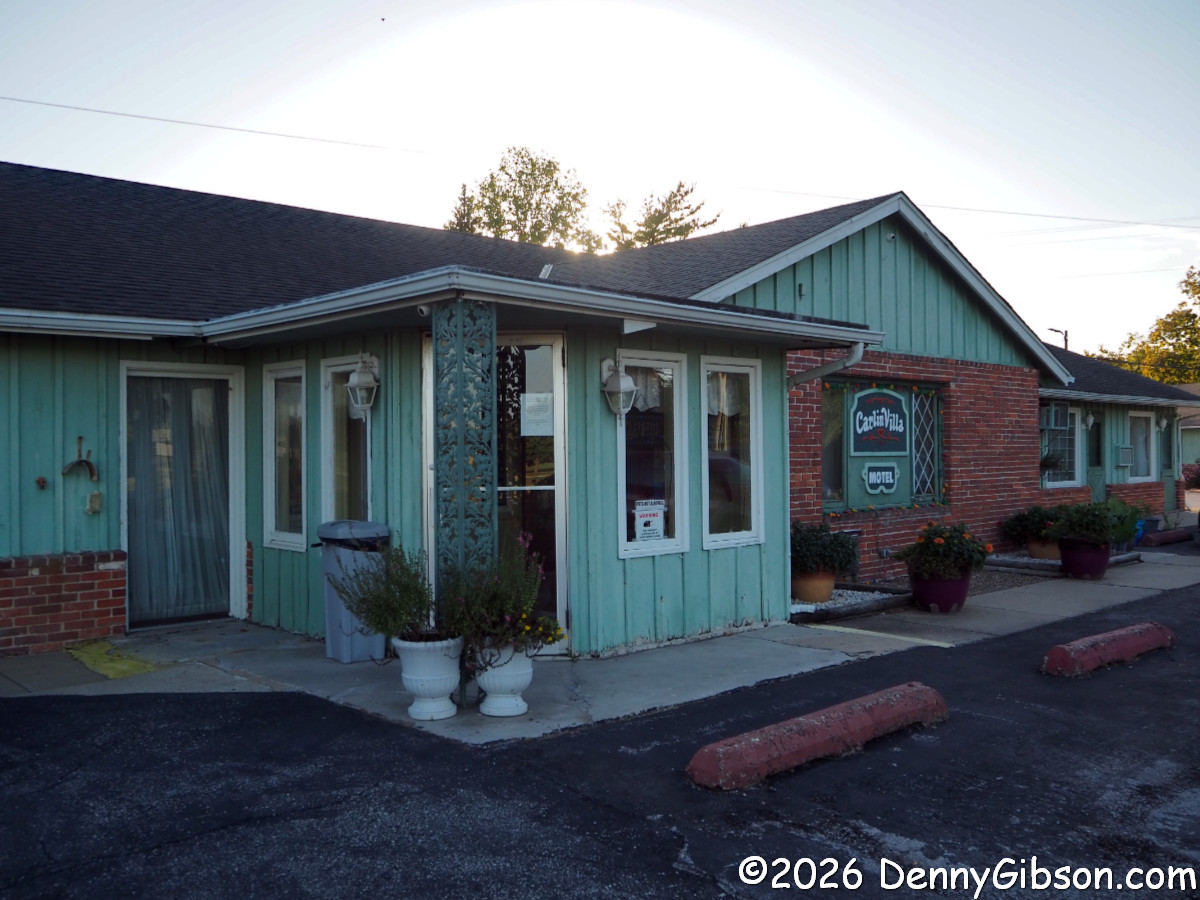
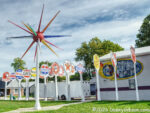 No one was present at the garden on Wednesday. The sphere was neither lit nor rotoing but it sure looked good. It originally stood over the Catalina Motel in Lexington, KY, and was the first one Whitaker resurrected.
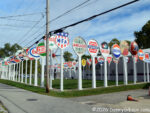
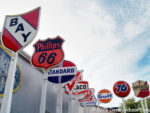
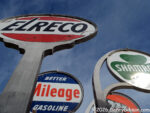 Had Whitaker or an associate been on site, I might have gotten a look at the other collectibles (more signs, pinball machines, etc.) stored inside, but that’s not why I came, and I was not disappointed. The completely intact Roto-Sphere and the rows of signs were more than enough to make the drive worthwhile. I’ll be back.
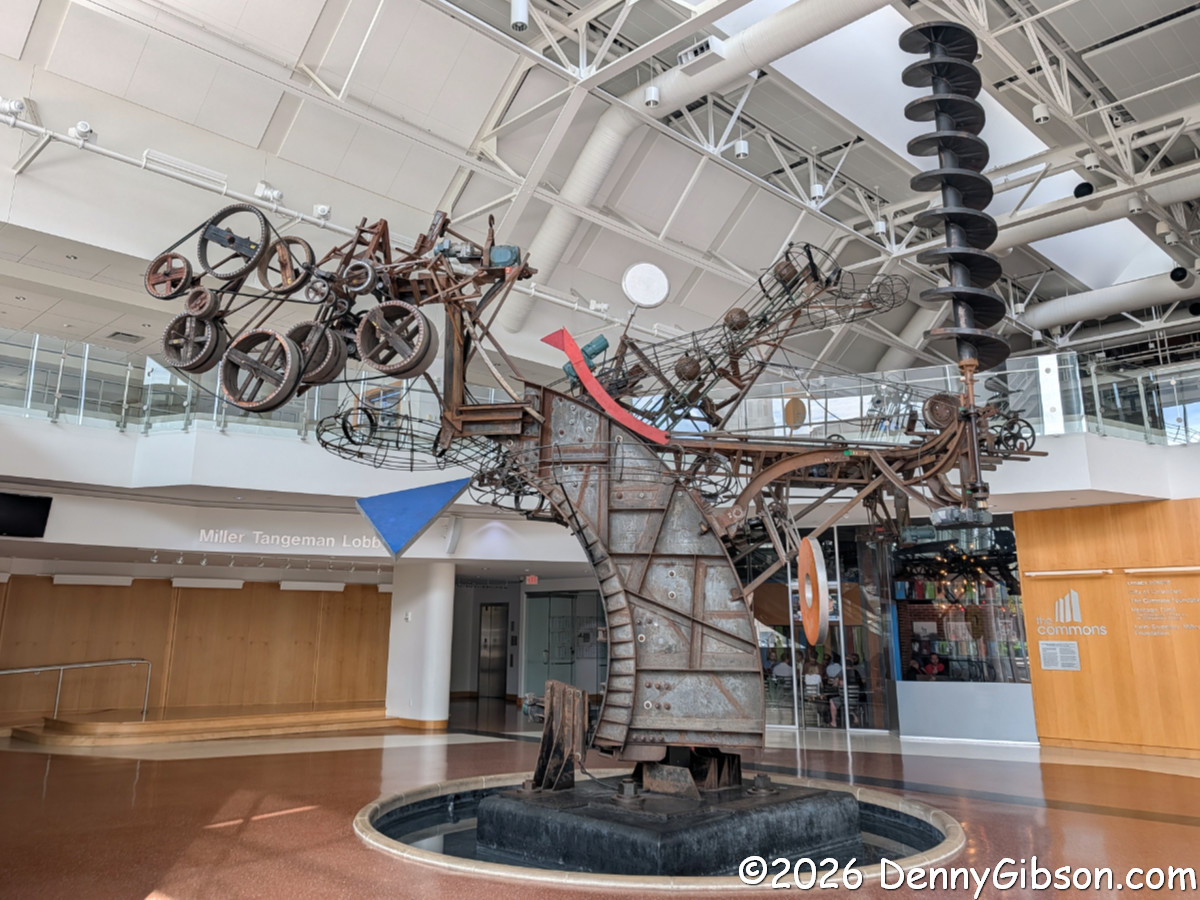
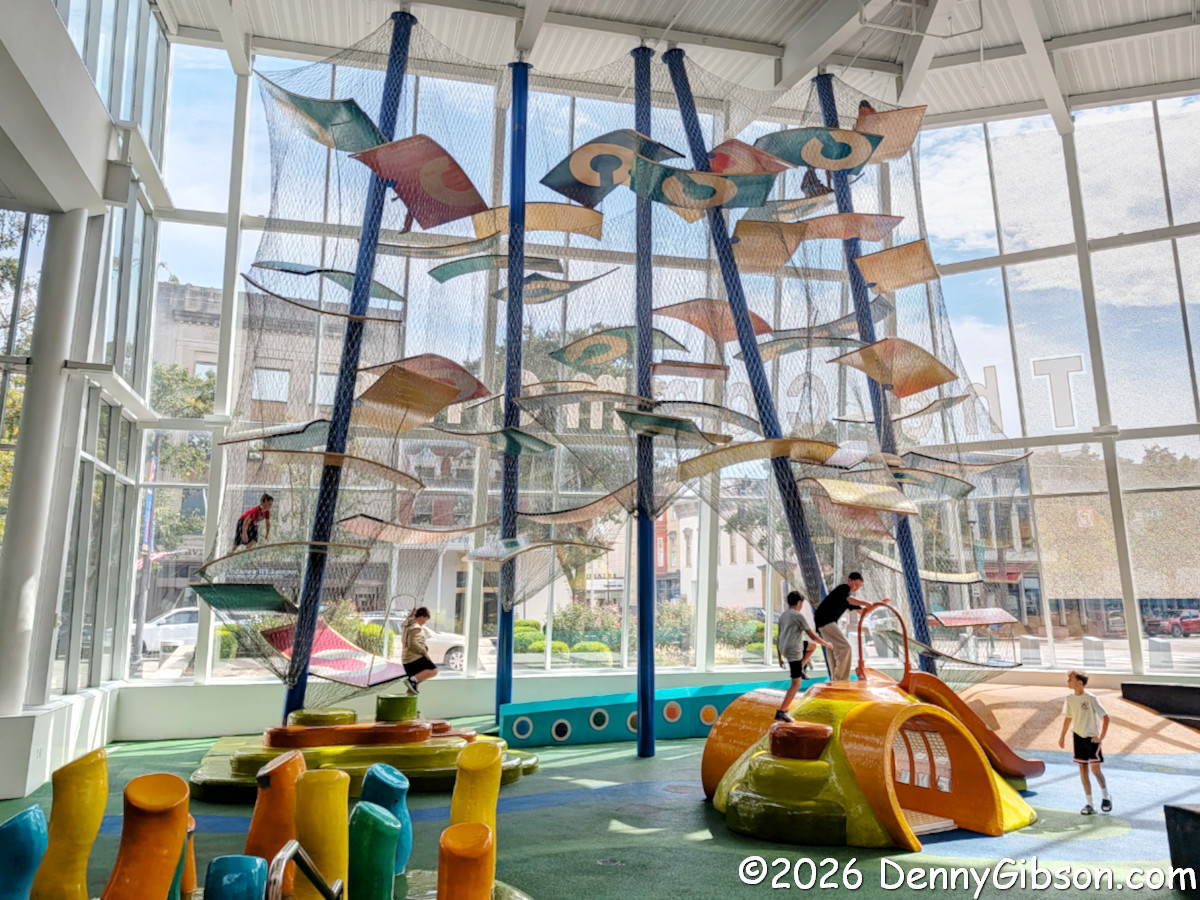
 I have no good explanation for why it took me so long to visit the Garden of Gas Station Signs in Whiteland, but only now visiting this next spot is not just inexplicable. It’s inexcusable. The ice cream parlor I mentioned is in the town of Columbus, IN, about 25 miles south of Whiteland. I have been to Columbus multiple times, and the parlor has been there since 1900. And if that wasn’t embarrassing enough, when my GPS directed me there, I realized it was almost directly across the street from a place where I’d spent some time in 2012. In fact, today I parked around the corner and passed through The Commons to reach my destination.
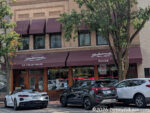
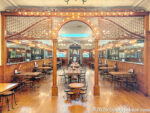
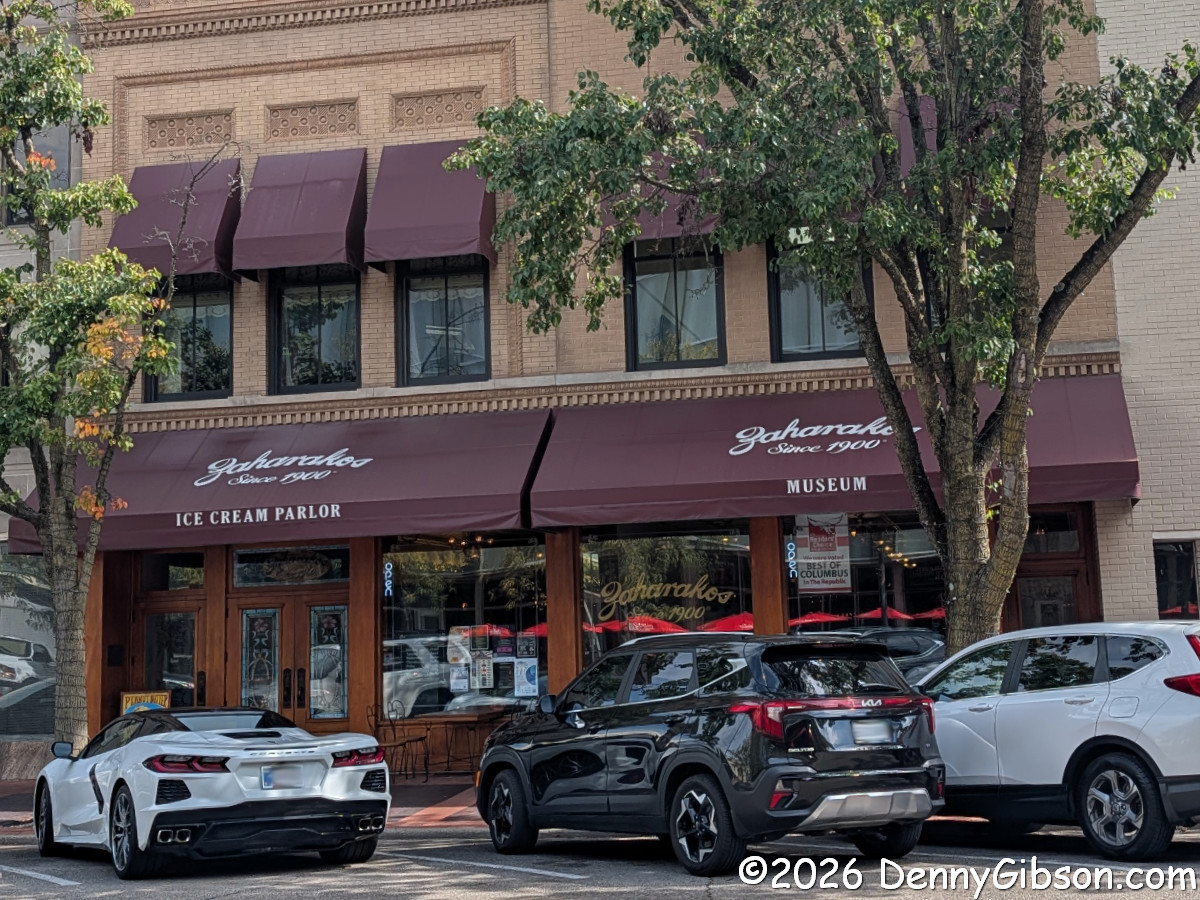
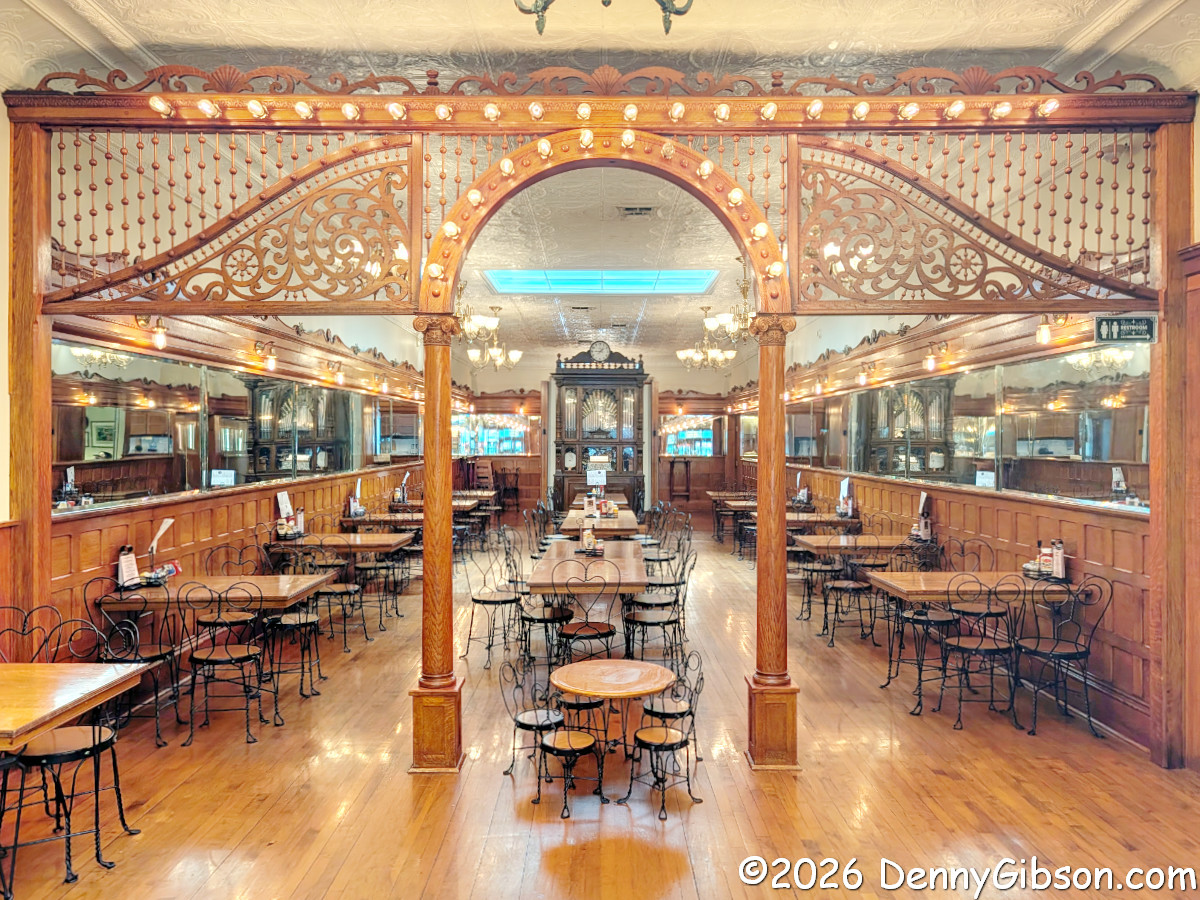
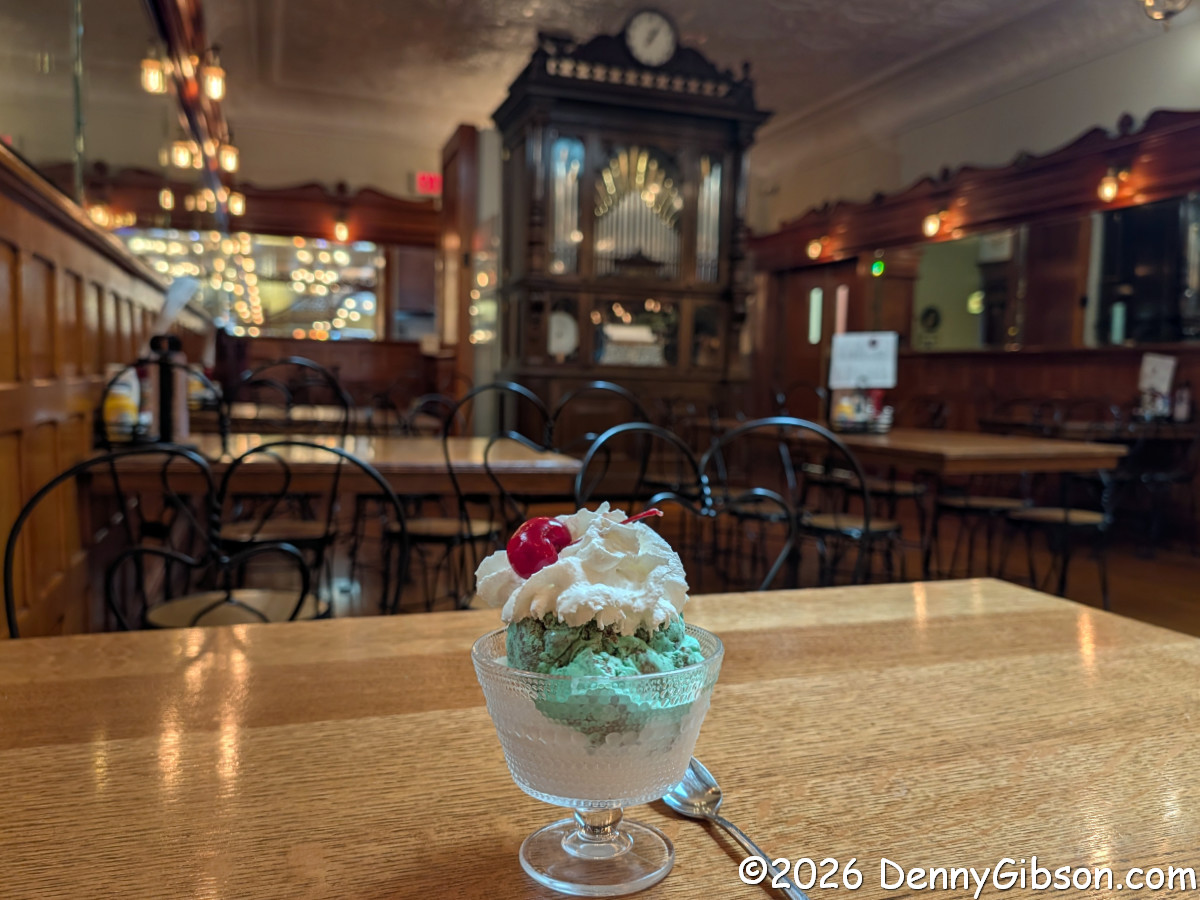
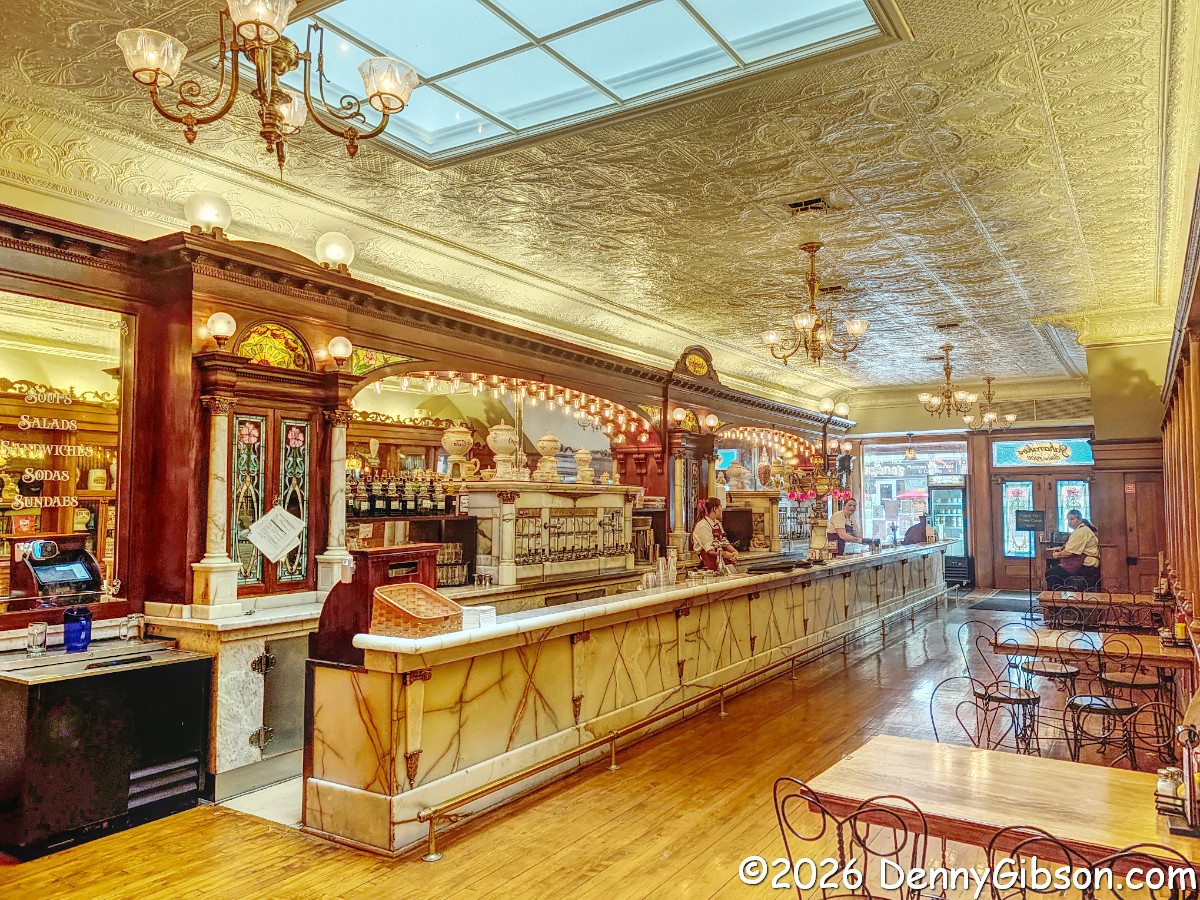
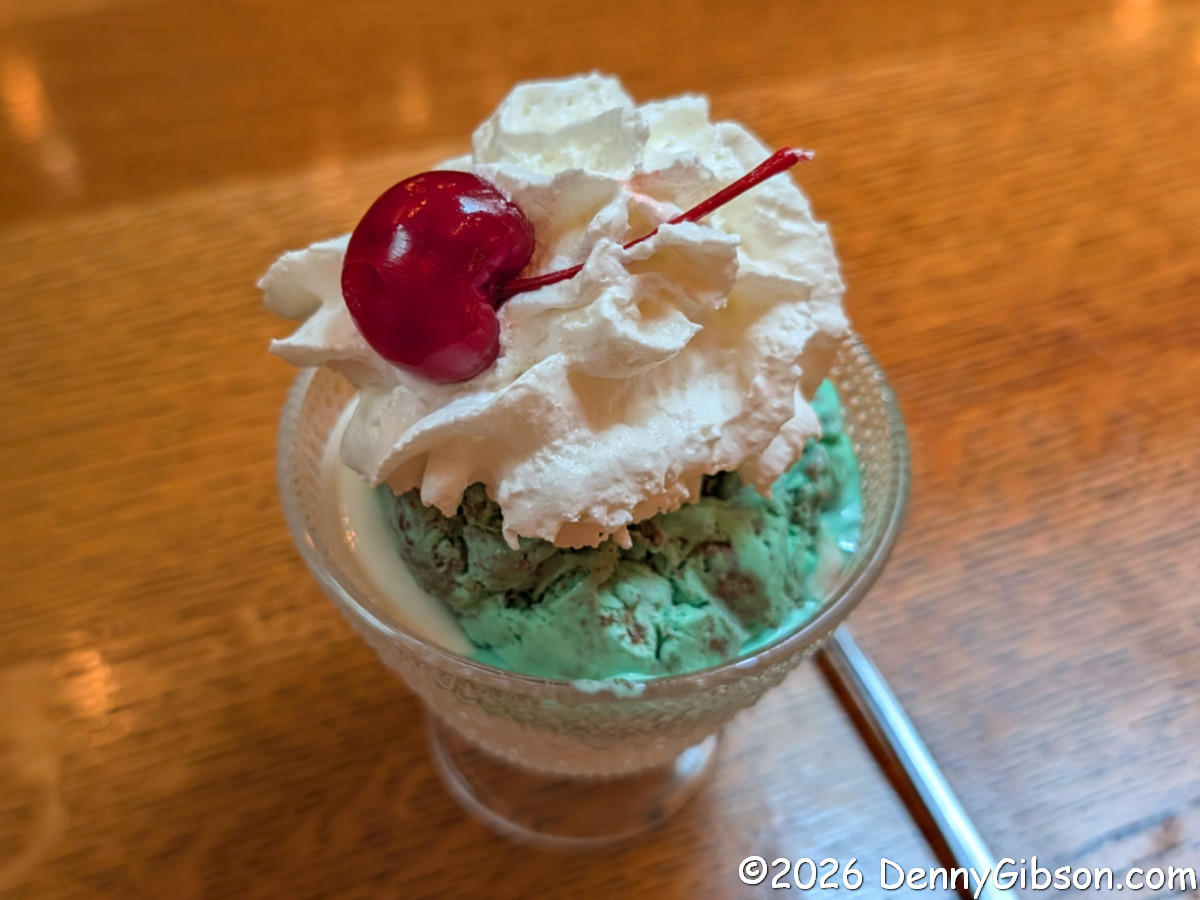
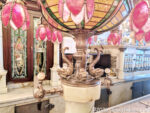
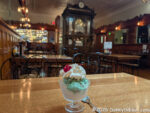 That destination was Zahariko’s, which I had only recently learned of from a friend’s blog post about A weekend in Columbus, Indiana. On arrival, I was guided through the arch to a table in the back portion of the main room. That’s where I enjoyed my mint chocolate chip with marshmallow, whipped cream, and a cherry while gazing at a beautiful 1908 Welte orchestrion that entertained us all with a march I should have known, followed by My Old Kentucky Home. Sorry I can’t share the music, but I can offer a closer look at that cherry and supporting cast.
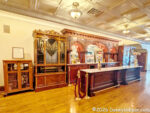
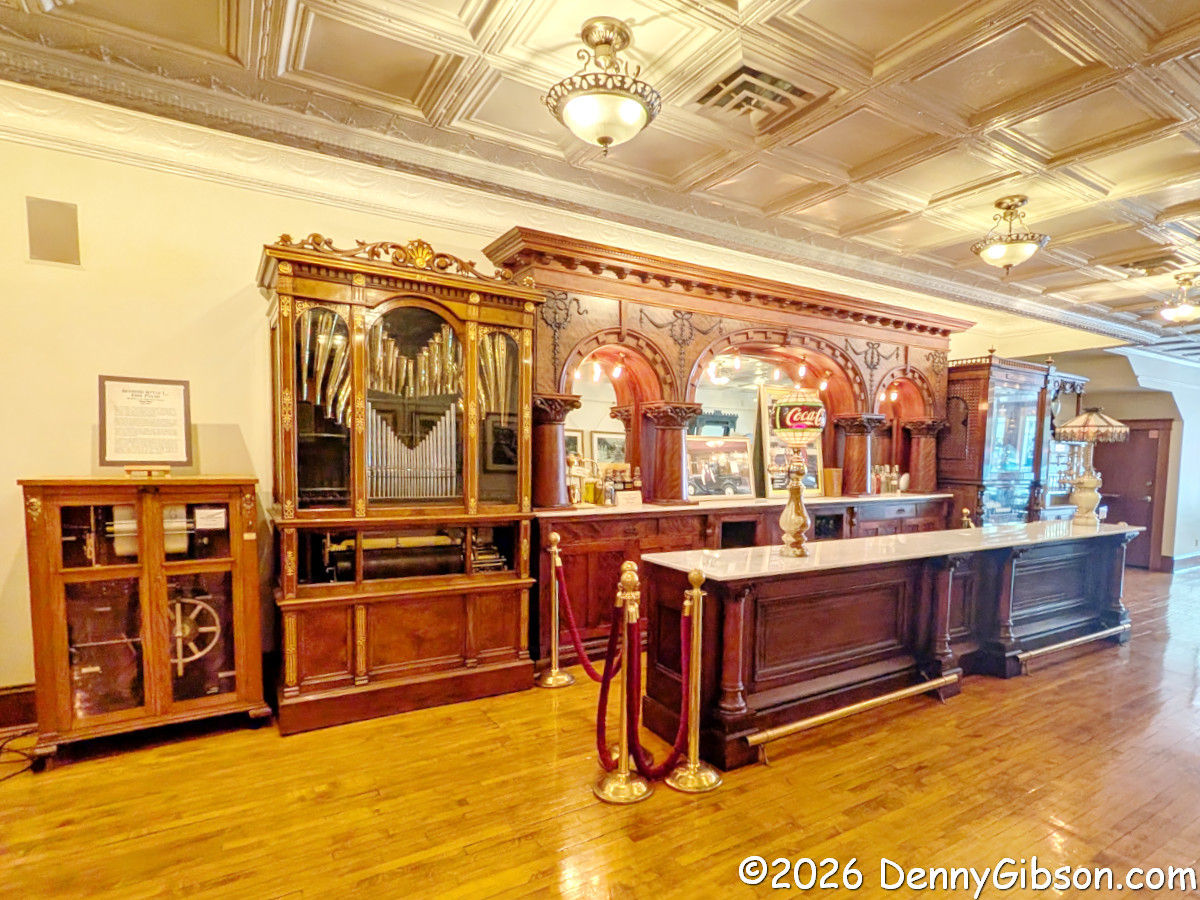
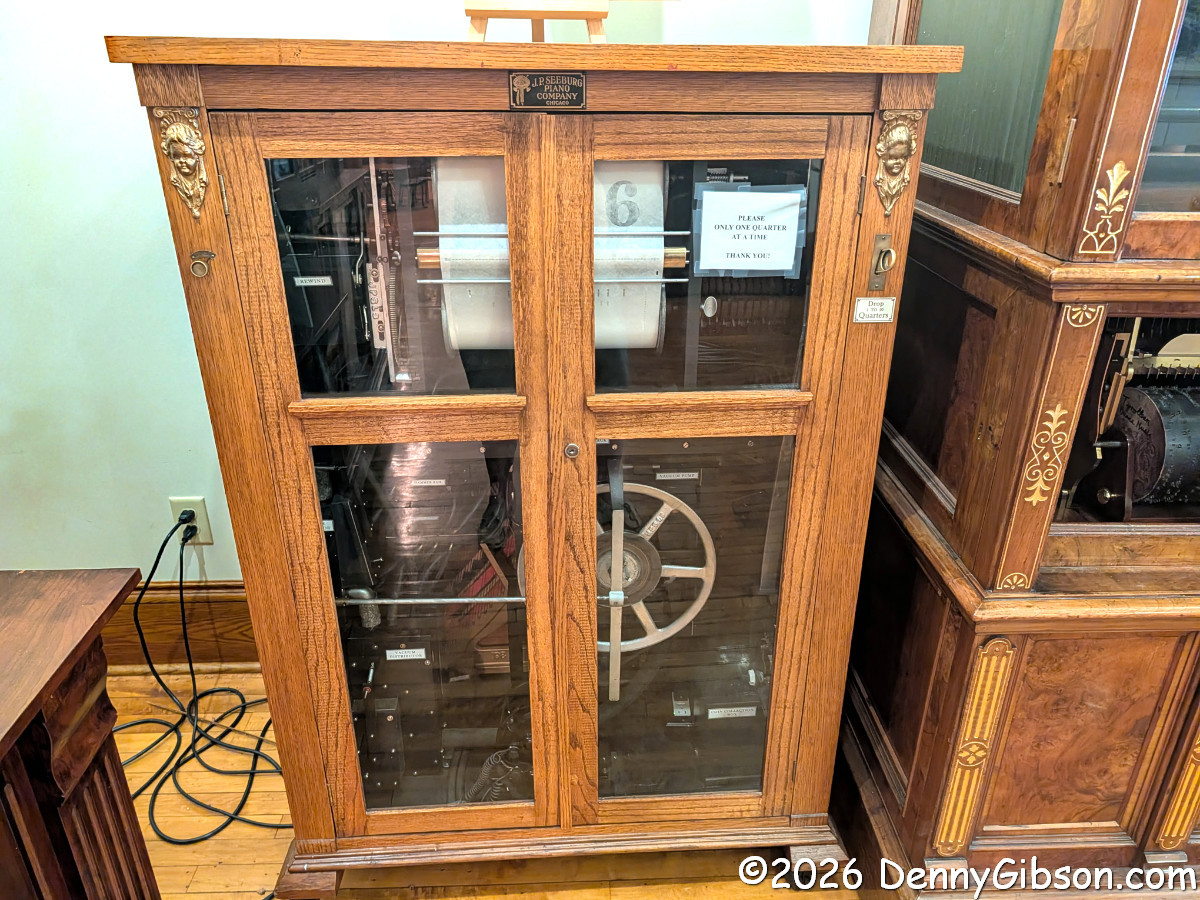
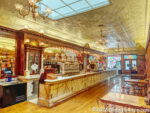 This half of the business looks like — and is — a working restaurant with some truly impressive furnishings and equipment. The soda fountain and counter could have kept me gawking for an hour all by themselves. In an adjacent room, equal in size to the first, another marble counter sits unused. Although the room itself is used for overflow seating and probably accommodating large groups, it’s here that the establishment begins to look more like a museum. There are several automated music machines on display, including some, such as the Seeburg Coin Piano described here, available to take your coin and play you a tune.
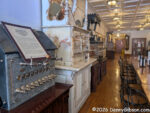
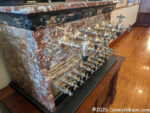
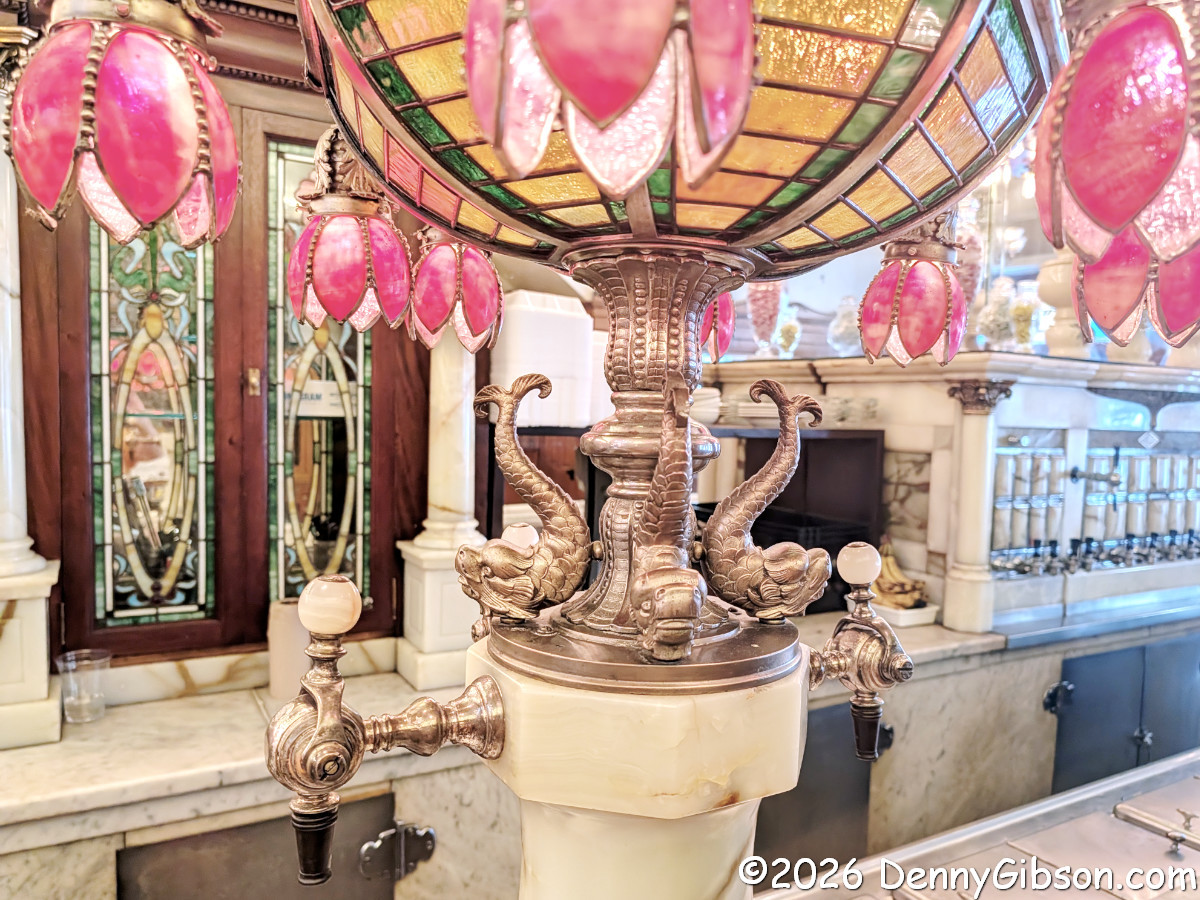
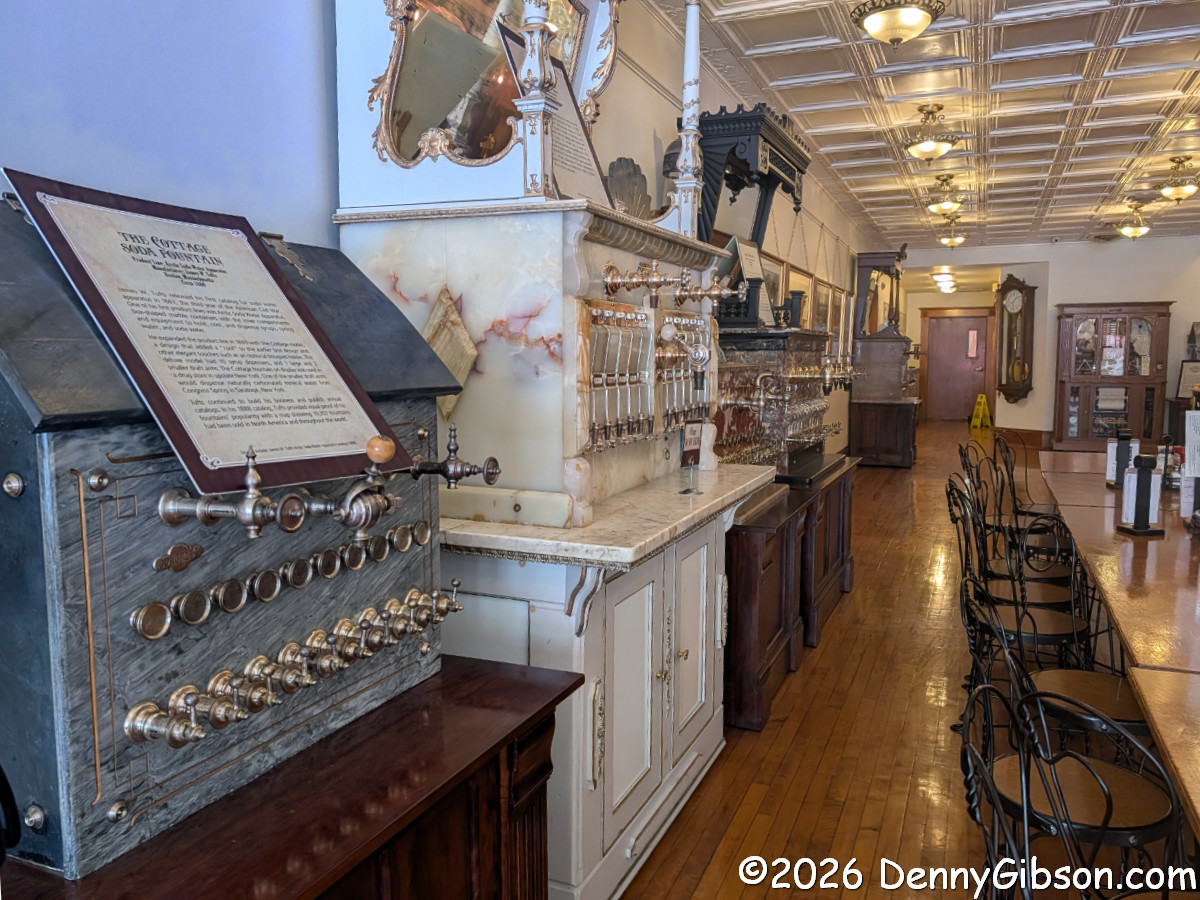
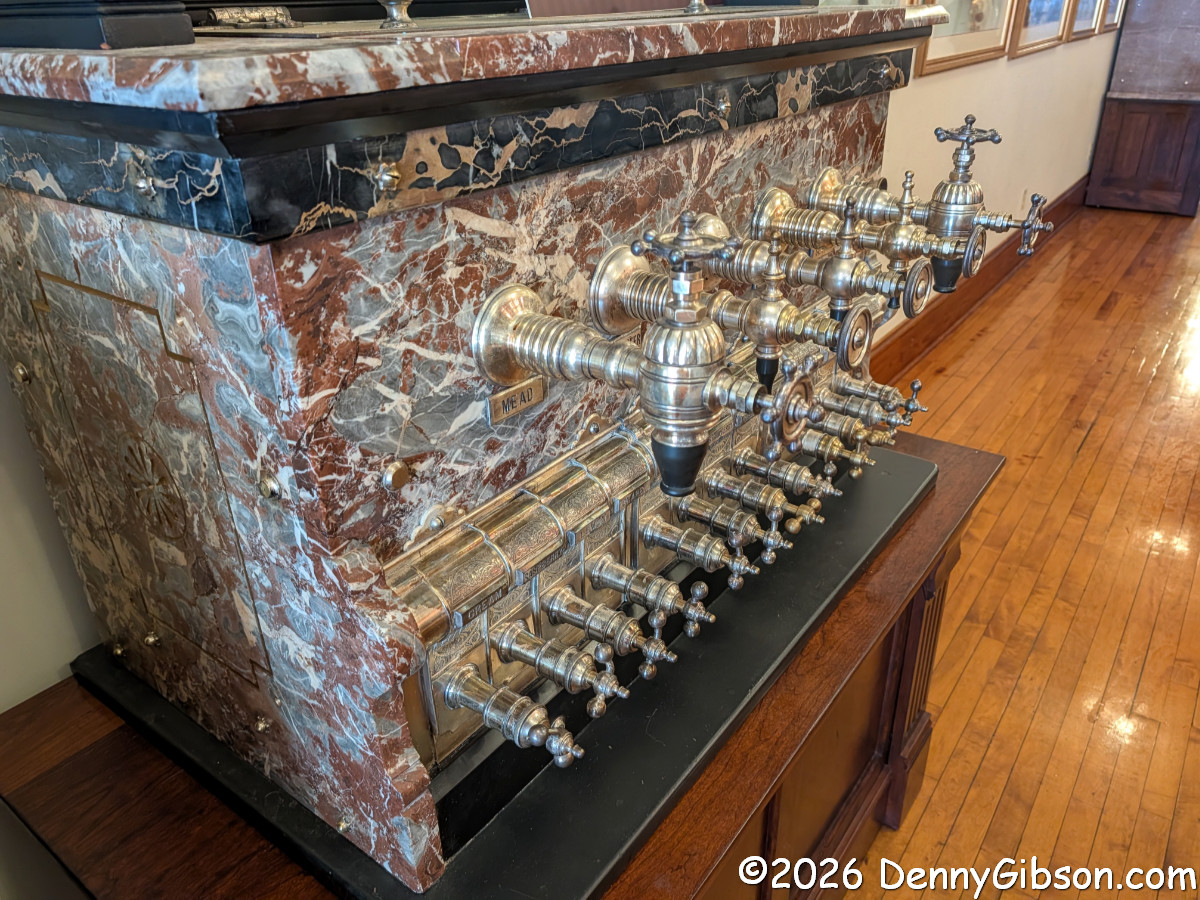
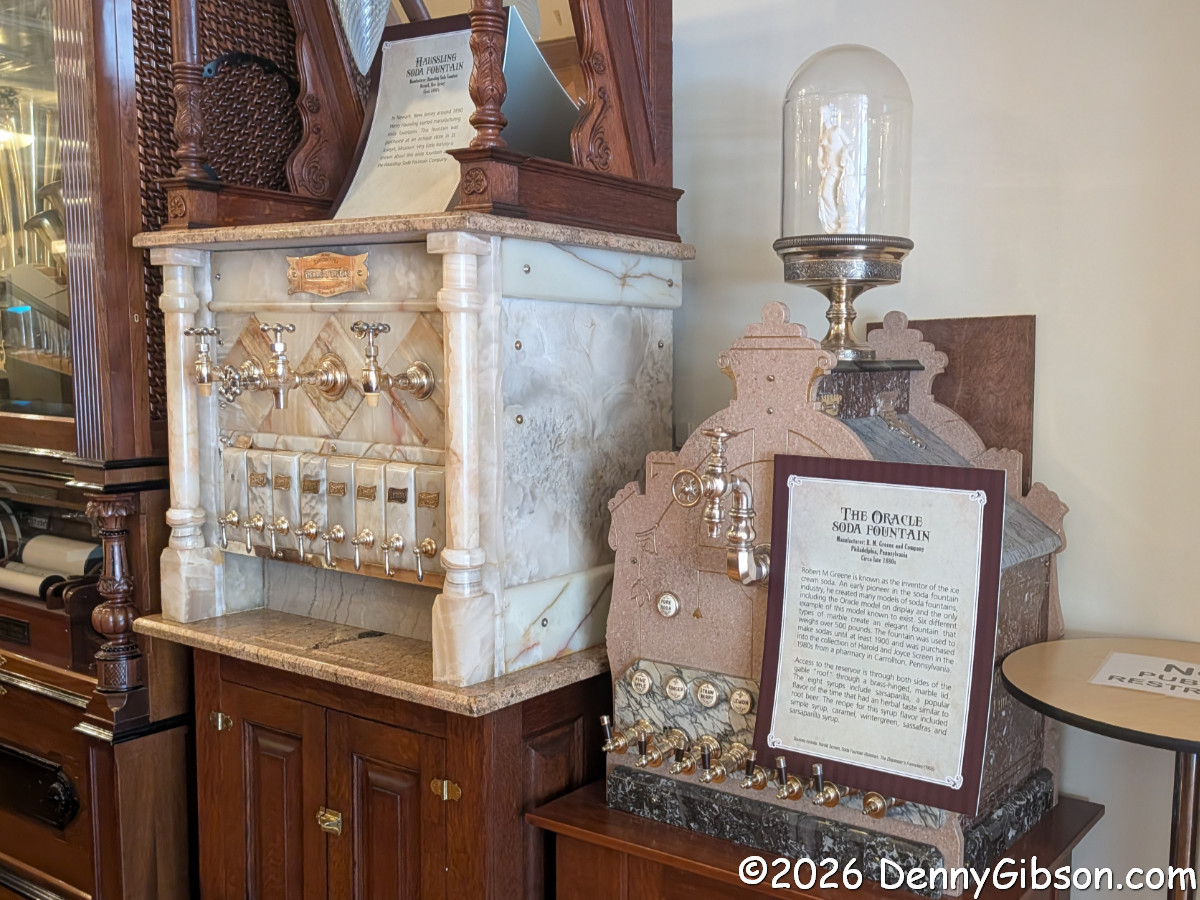
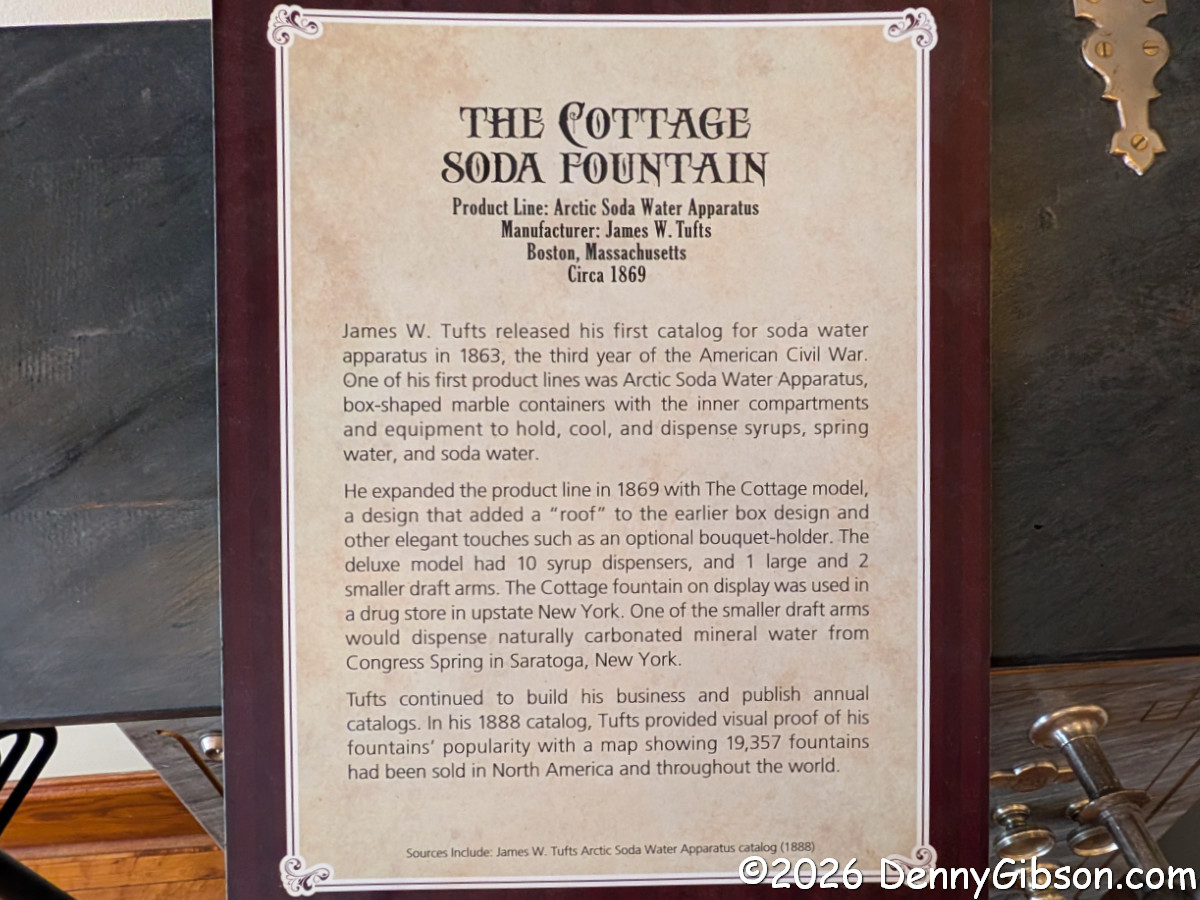
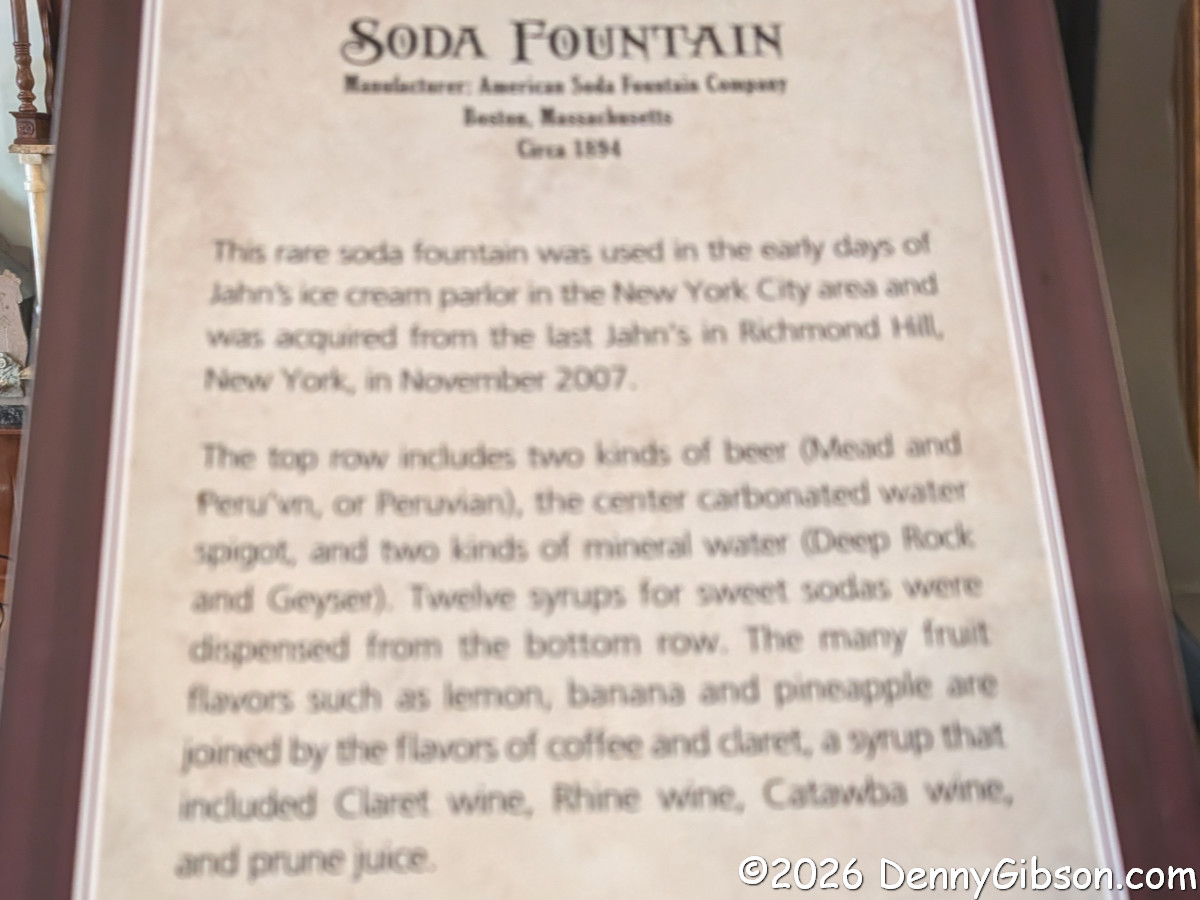
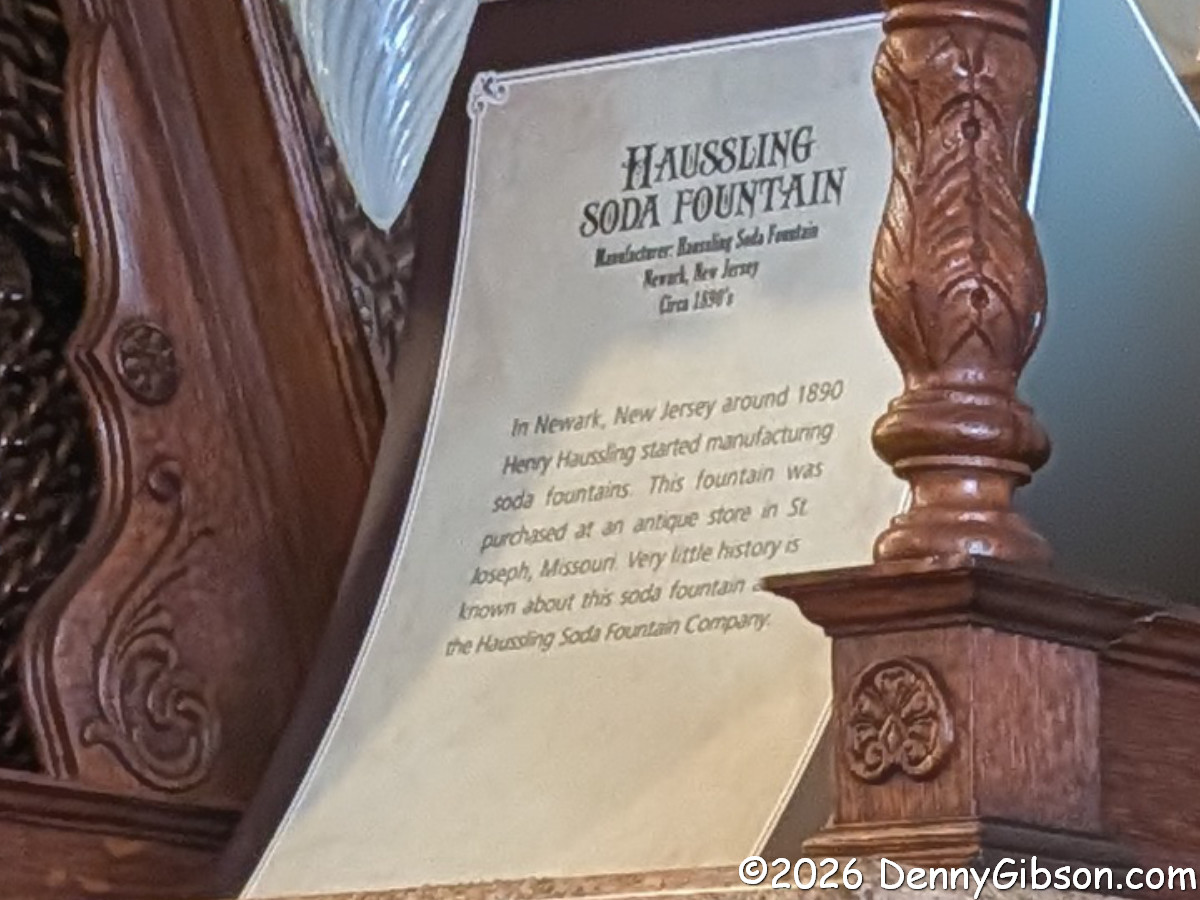
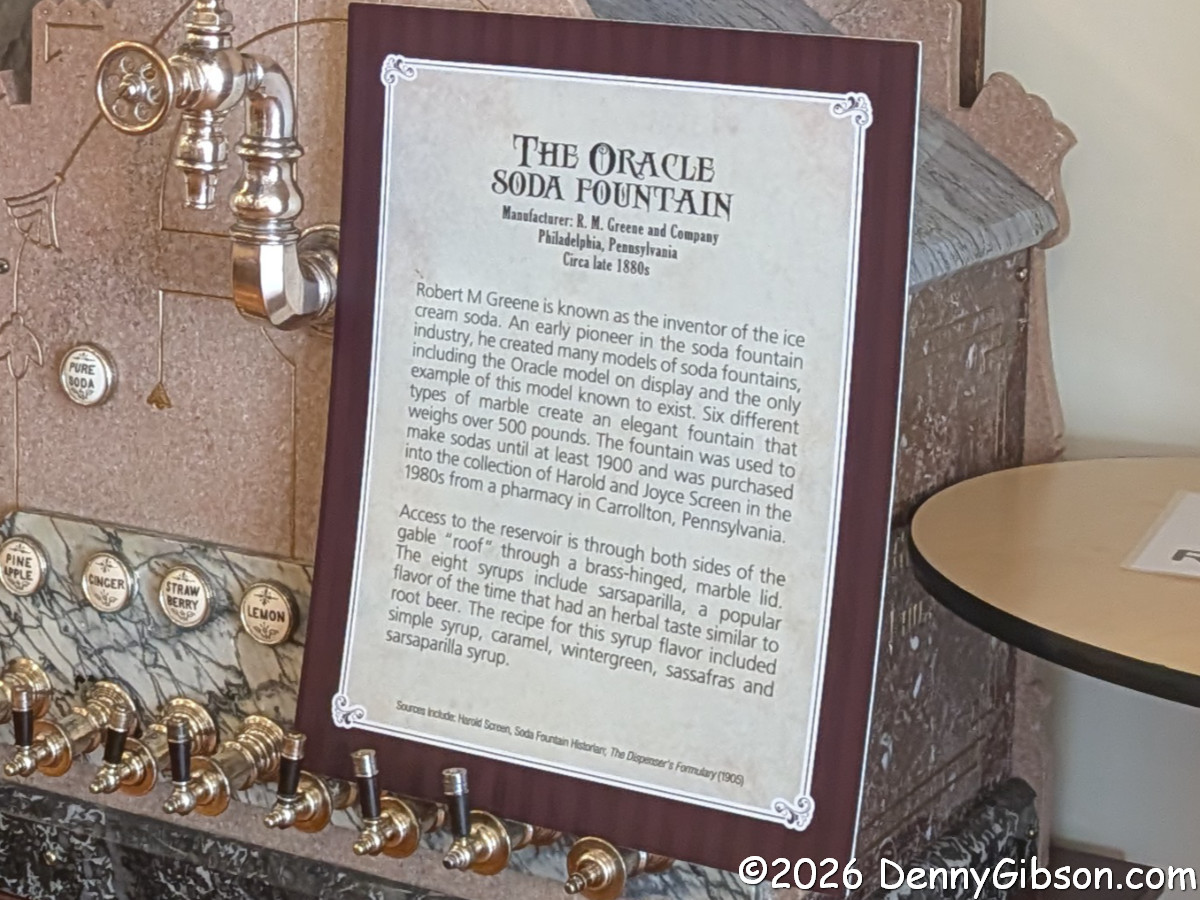
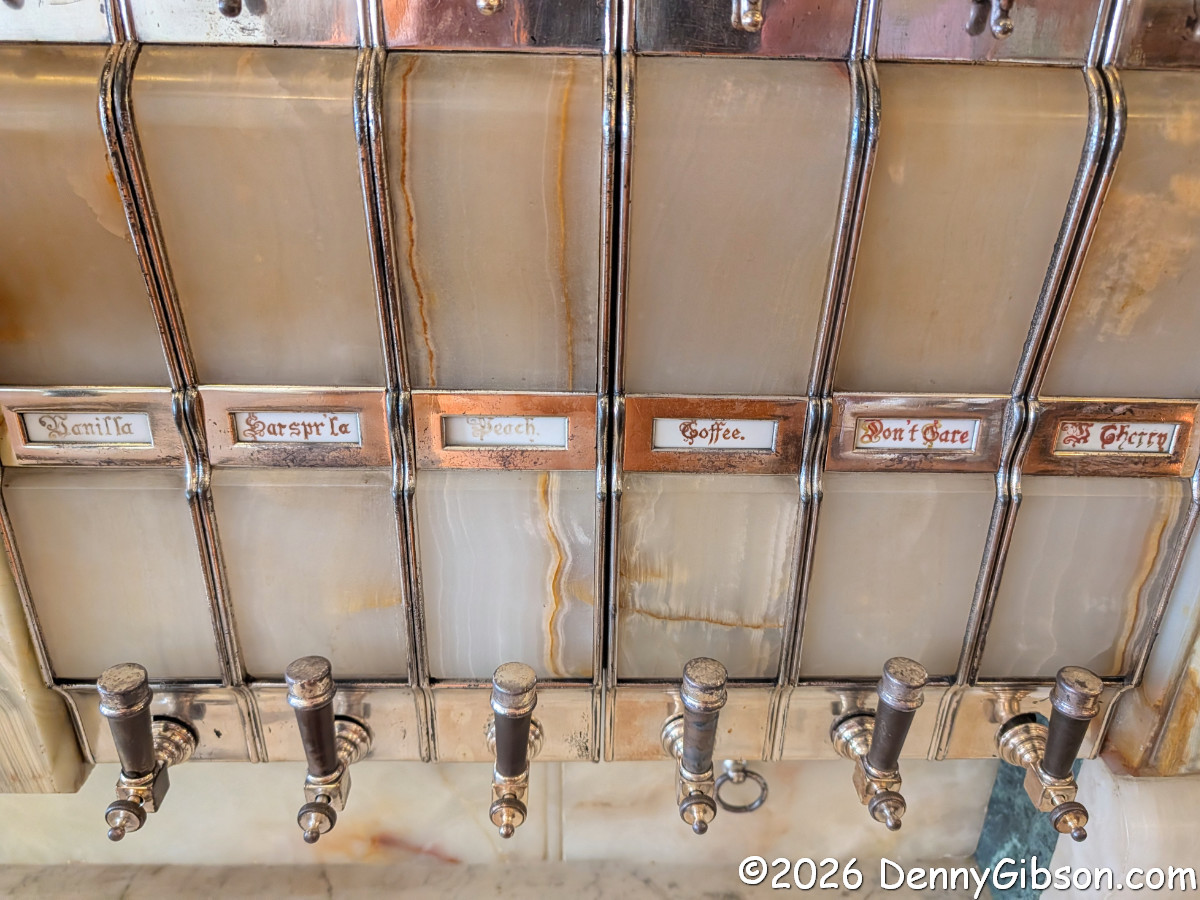
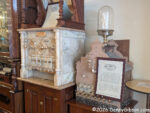 This is a tiny sample of the many antique soda fountains on display. In the front of the first photo is a Cottage Soda Fountain made by James W. Tufts around 1869. The fountain near the center of that photo is from the American Soda Fountain Company. I thought it was cool enough to deserve its own picture, even though the description I have is pretty fuzzy. The two smaller fountains in the third photo are a Haussling and an Oracle. The variety of beverages and flavors dispensed by these fountains is phenomenal and includes a choice for those who don’t want to choose.
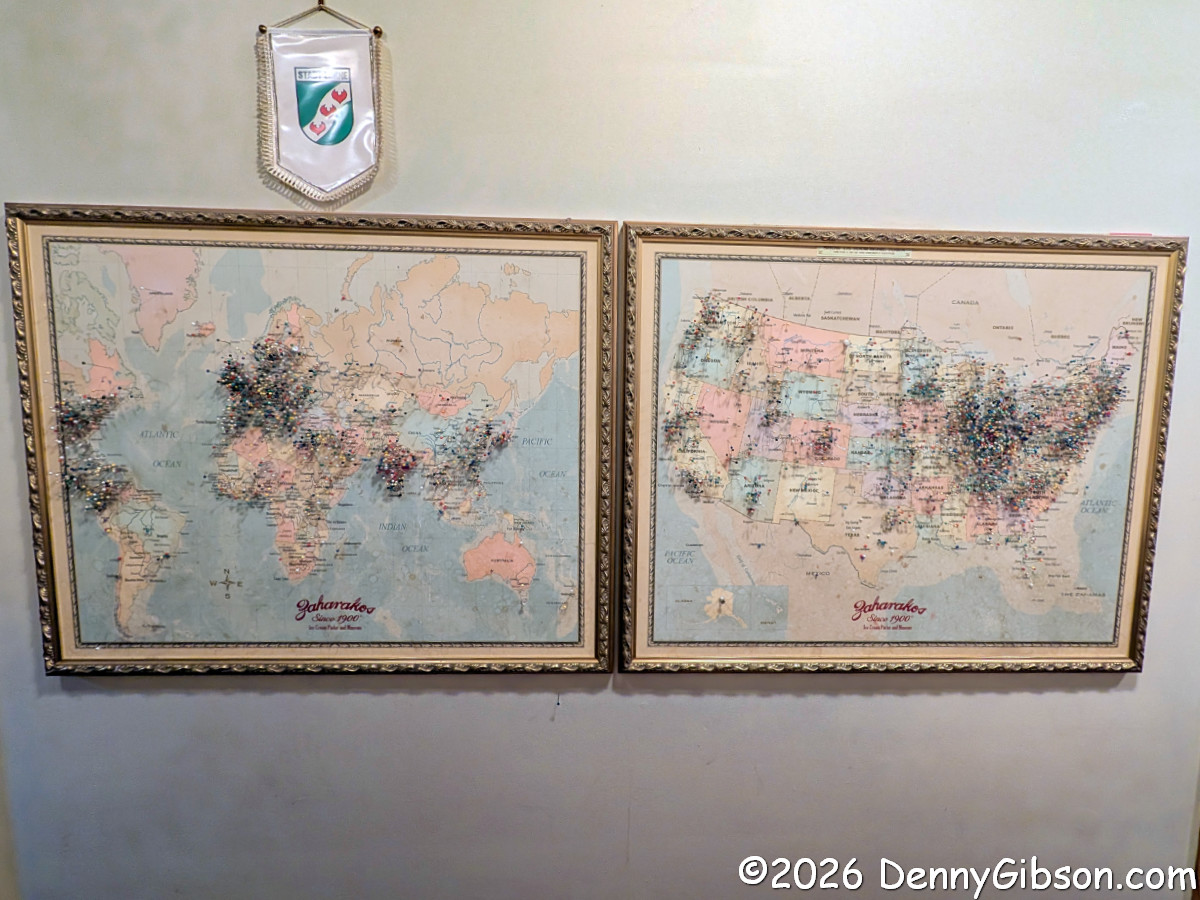
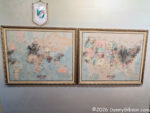 It was rather cringey to have not known about a giant sign collection that has existed for a dozen years and an ice cream parlor that has been around for well over a century, but more embarrassment was waiting when I got home. I’d chatted with my waitress about the place, and she mentioned an upstairs, but I got the impression it was only used for private rentals. When I later looked over the website, I learned that there were more public displays on the second floor. As I was leaving, I spoke with a couple of servers who told me the place was decorated extensively for the holidays. I need to go back to see the decorations, check out the second floor, and possibly see a Roto-Sphere in motion on the way. Of course, I still won’t be able to find space for my own pin on that wall-mounted map.
 I planned this trip six months ago, then decided mid-morning yesterday that today was the day to take it. Weather and various appointments have interfered with all previous attempts, and yesterday I suddenly realized that I now had the required three open days and the weather forecast didn’t look too bad. I’m near Knoxville tonight, headed to Chattanooga for a couple of museums and a new-to-me park.