Open House at Vent Haven

On Saturday, right after I was welcomed at the Vent Haven Museum open house, I was asked if I’d been there before.  “Yes”, I answered. “Several years ago.” I later checked to see when that earlier visit was and discovered that apparently — in my mind, today — several equals ten.
My only previous visit to the “World’s Only Museum Dedicated to Ventriloquism” occurred way back in 2011. It was during that short period when Oddment pages had not yet been totally replaced by blog posts. There is an Oddment page here. I joined a guided tour on that 2011 visit which made the information I received and shared on that Oddment page noticeably more precise and organized than what I’m posting here. That’s not at all a knock of the open house, and I encourage everyone to partake if they can. They generally do two a year and the second one for 2021 is just a month away on Sunday, June 13.

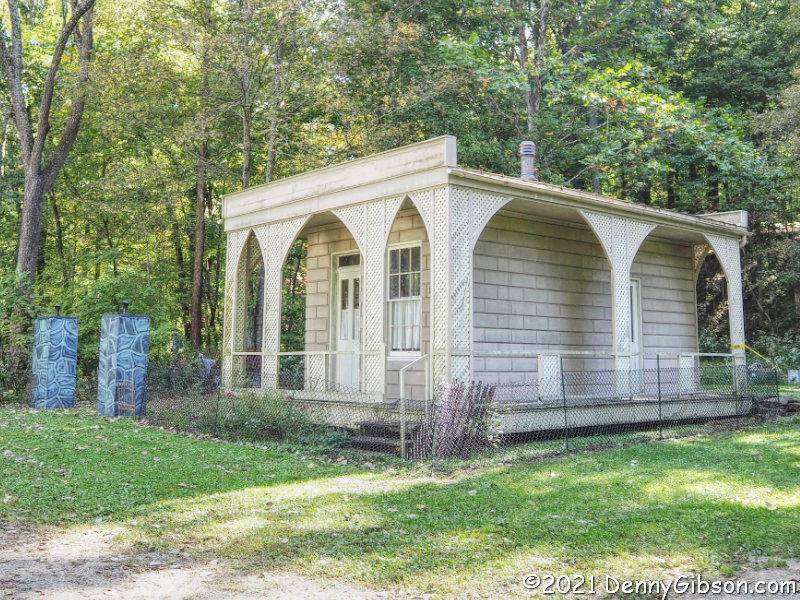
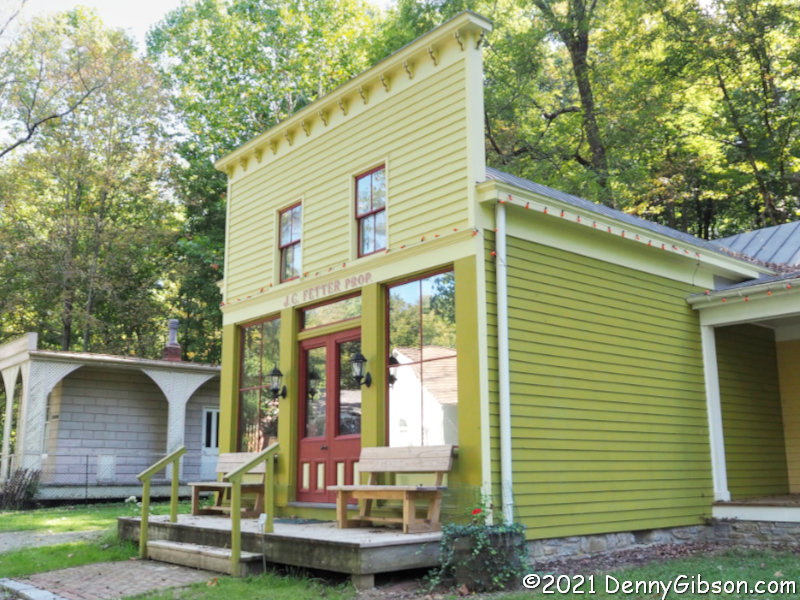
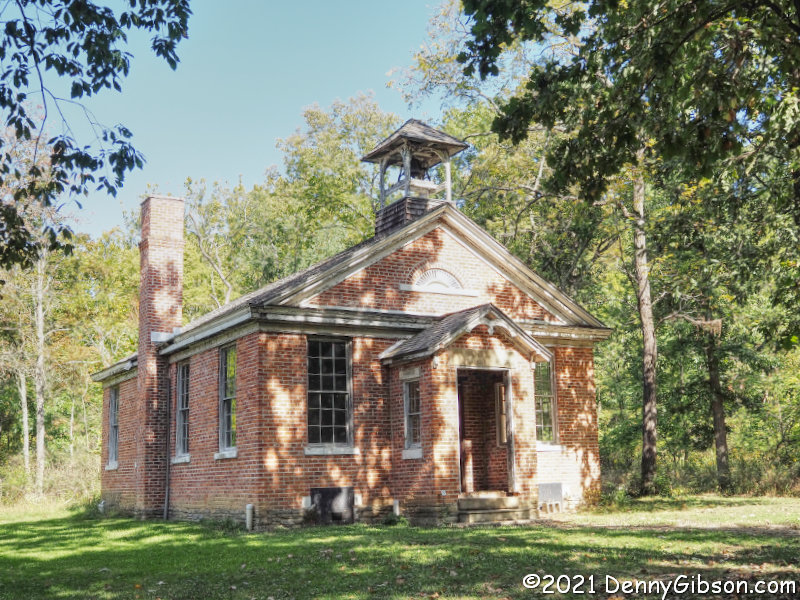
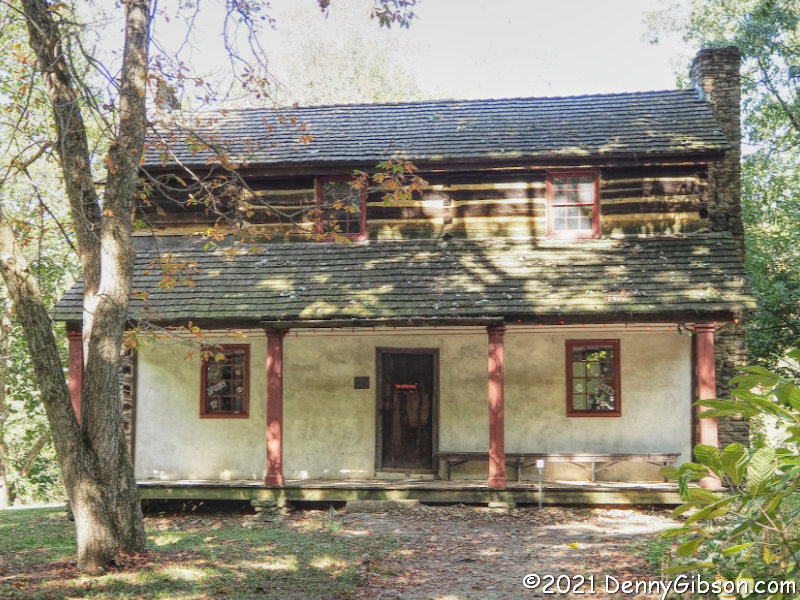
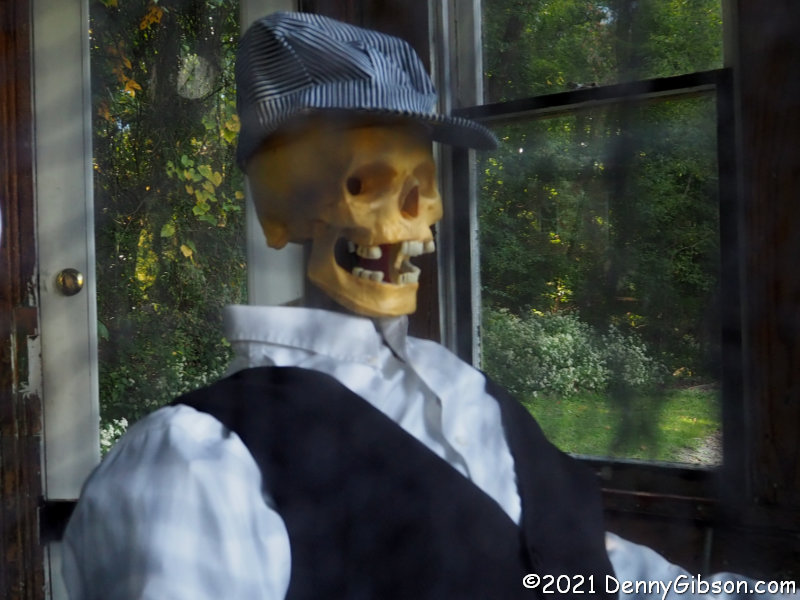
Today I’ll just share a couple of photos from each of the three open buildings. My first stop was in the building directly behind the house. It was built in the 1960s by museum founder W.S. Berger, and is the first building constructed specifically for the museum. There are hundreds of ventriloquist dummies in the building but I’ve chosen pictures of the string of past presidents and another small grouping. It is the smallest member of that grouping that caught my eye. It’s a replica of “Bull” from the TV show Night Court.

This is the collection’s first home after it was booted from the residence by Mrs. Berger in 1947. It is the garage left empty when Mr. Berger retired and sold his car. The middle picture is of eight dummies donated in the last twelve months. The museum typically gets 10-15 donated each year. There are also a few hundred dummies in this building but none more realistic looking than Penn and Teller.

Construction of the third building was started by Berger but he died before it was completed. It and the garage will be taken down later this year to be replaced by a new building that will offer several enhancements (including restrooms!). Be aware that these are not the only wall-of-bodies or shelf-of-heads photo ops in the museum which now has about a thousand residents.

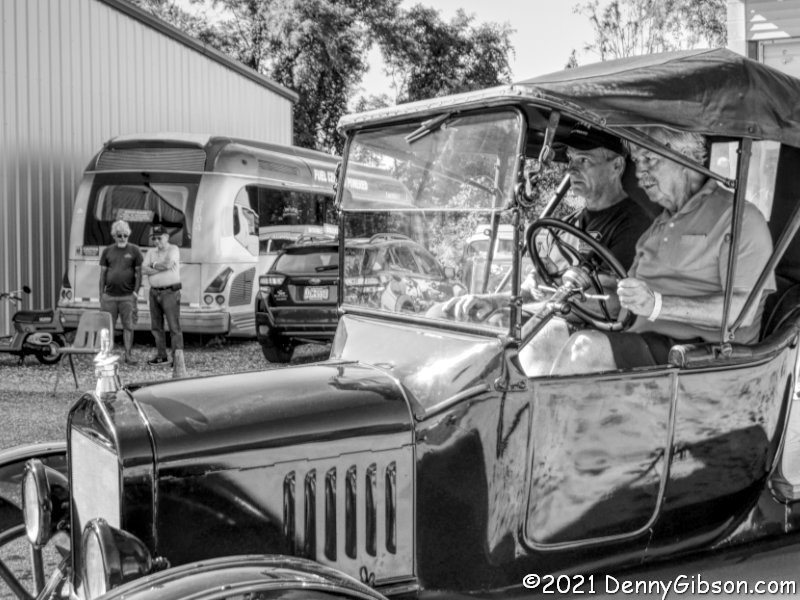
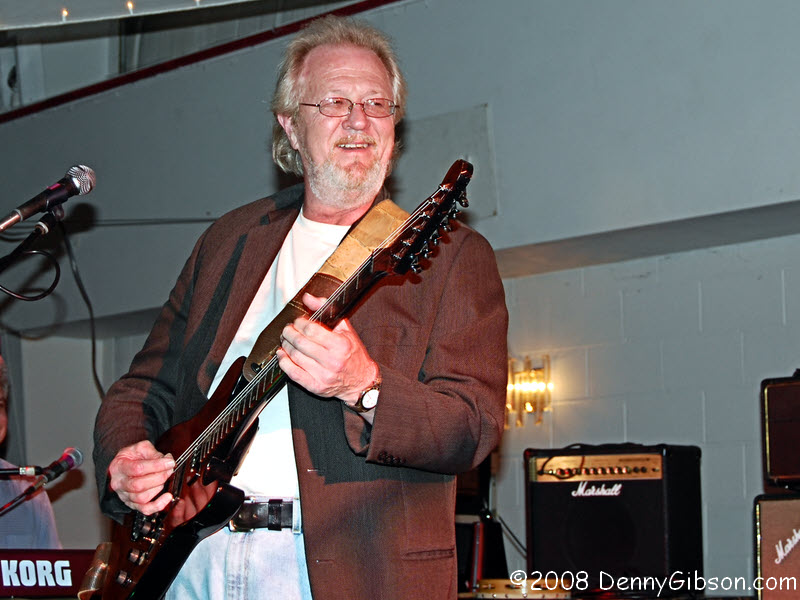
I actually took this picture soon after I arrived but saved it for a closer. It’s Mike Hemmelgarn who made absolutely everyone feel relaxed and welcome.

Trip Peek #109
Trip #103
Bunkin’ With Unk

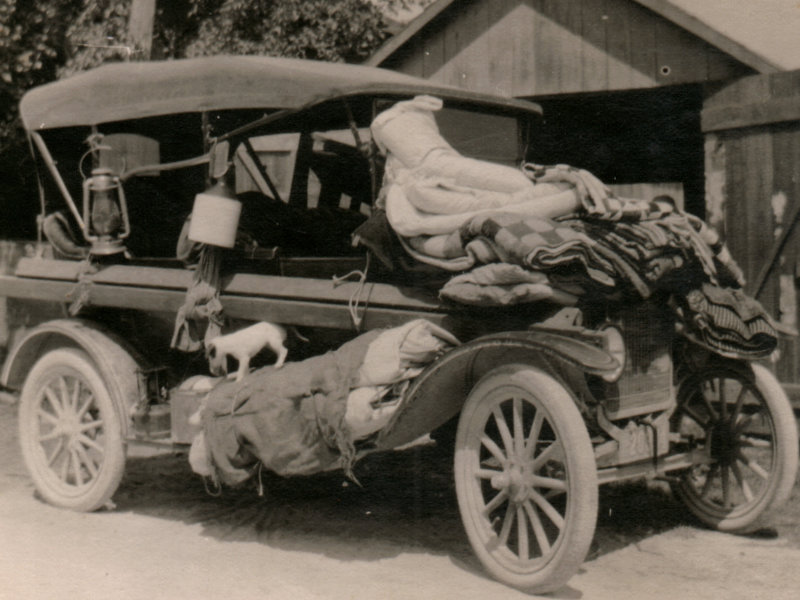
This picture is from my Bunkin’ With Unk trip although that is obviously not my uncle in the photo. The uncle of which I speak had taken to wintering in Florida and in January of 2012 I decided to accept his invitation to spend a little time with him at Lake Alfred between Winter Haven and Lakeland. I more or less dashed to Orlando on expressways then moved to the old Dixie Highway. During my time at his place, my uncle and I took in a little more Dixie Highway, including that brick segment near Espanola that had scared me off back in 2008, and I made a solo run to Bok Tower. When it came time to leave, I headed west on what some call the Tampa Loop of the Dixie Highway. None of this loop was ever formally made part of the Dixie Highway although much of it was tentatively recognized by the Dixie Highway Association pending certain conditions that were never met. This not quite official Dixie Highway passes by  Weeki Wachee Springs which is how I managed a photograph with Mermaid Karri.


Trip Peeks are short articles published when my world is too busy or too boring for a current events piece to be completed in time for the Sunday posting. In addition to a photo thumbnail from a completed road trip, each Peek includes a brief description of that photo plus links to the full-sized photo and the associated trip journal.

Big To Do at Wigwam 2

The first second night I stayed at a Wigwam Village of any vintage was April 22, 2004, when I pulled into Wigwam Village #2. There was no neon outlined tepee like the one at right to greet me. I had driven down after work which put me at the village a little after 10:00 PM. The office and gift shop were in use but weren’t open that late. I retrieved the key that had been left for me in the mailbox and let myself in.
CORRECTION 21-May-2025: When I wrote this, I apparently forgot about my stay at Wigwam Village #6 in Holbrook, AZ, on Sep 5, 2003.

There were lights in front of the office including a neon VACANCY, OFFICE, and arrow. I have no pictures from this visit that show the neon tepee lit and I believe it was completely non-functional but my memory isn’t good enough to swear to that. I got an external shot of the office tepee that included the sign and an internal photo with owner Ivan John.

John retired and sold the motel about a year later. Things had really deteriorated prior to his 1996 takeover and the deterioration commenced anew after his departure. It might not have been immediate. The picture at right of the lighted neon tepee was taken in 2007 and I don’t know if its resurrection came before or after John left. It is the image I used to represent the village in A Decade Driving the Dixie Highway. While John ran the place, a playground and picnic tables were added and the rooms refurbished while retaining most of the original wooden furniture. Since at least 2007, I don’t believe much effort or money has been invested in improving the village until new owners came along in November.

Even if I did not know what was planned for today, I might have seen the ladder at the sign as a clue. There really isn’t much on the outside of the tepees to indicate how much work Keith and Megan have done. The grounds look neater but that’s about it. Even inside there are no dramatic changes. Bathroom fixtures have been updated but the general deep cleaning and repainting may not be immediately obvious.  My habit of posting little collages of motel rooms had not yet been established when I stayed here in 2004 and 2007 so the oldest internal view I have to compare with today‘s is one from 2009.

Megan and Keith had begun accepting a few guests in March but today was a sort of grand-opening of Historic Wigwam Village No. 2 with nine wigwams revitalized and rented. A tepee-shaped cake and some very accurate cookies really added to the occasion.

Megan and Keith each spent a few minutes talking about their experiences during their fairly brief ownership and about their plans for the future. Then they threw the switch that illuminated the recently replaced neon on the sign. It looked good immediately and even better as the sky darkened. In his remarks, Keith noted that they thought bringing the sign to life was an important and highly visible indicator of their intentions to bring the whole village back to life. I think he’s right and it seems that a lot of others do too.

That’s All, Brother

Lt. Col. John M. Donalson named his C‑47 “That’s All, Brother” as something of a declaration that the Nazi’s success in Europe was just about over. Then he used it to lead more than 800 aircraft loaded with paratroopers across the English Channel to confront those Nazis on the night of June 5, 1944. When I heard that the plane was coming to the National Museum of the United States Air Force on Tuesday, I thought I might be interested in seeing it. When I woke up a couple of hours ahead of its estimated arrival time, I decided that I was interested in seeing it land.

A one-hour window had been announced for the landing and the plane appeared just about in the middle of that window. It made one pass over the runway without landing. Maybe that was so the pilot could scope things out or maybe it was so people on the ground could take pictures like the one at the top of this article. It then circled the museum and dropped onto the runway without a hiccup. Even with a chainlink fence in front of me, I was able to get a shot of the big airplane slipping safely between a water tower and a tractor-trailer.

The museum’s announcement said that the plane would be available for up-close viewing, inside and out, once it was on the ground and parked. Inside viewing would be limited to two at a time. I figured there would be a long and — with the two viewer limit — slow-moving line to get inside the plane so I anticipated not doing that. I did walk out to the plane, however, to get a closer look and better photos. Next to the plane, T-shirts and other merchandise were being sold from a van. It’s a Mercedes. Maybe no one other than me saw the irony in that, and even I am unsure whether using a German vehicle with D-D stripes to support a U.S. WWII military plane is a major insult or simply cynical.

The line was not as long as I feared and the two-person limit was not in place although there was an effort to maintain social distancing and a mask requirement was being strictly enforced. The C-47 is a military version of the DC-3 so it isn’t completely unfamiliar. Of course, passengers seating in the DC-3s I’ve seen looked considerably more comfortable than this. Information on this plane’s history and future can be found at “That’s All, Brother”.

There was a lull in the boarding right after I exited the plane, and I was able to get a shot of the door. One of the operations “That’s All, Brother” was involved in after D-Day was dropping supplies in relief of the siege of Bastogne during the Battle of the Bulge. With a touch of awe in his voice, the docent inside the plane pointed out that those supplies were thrown out this very door.

I could say that I took these pictures after checking out “That’s All, Brother”, but the truth is that there was a fair amount of time between the plane’s landing and it being available, and that’s when I went inside the museum. These pictures are, in fact, out of sequence. There are a few hundred aircraft displayed at the museum. Like “That’s All, Brother”, these are three with a WWII connection. The all-volunteer Flying Tigers, organized to fight in China before the U.S. entered the war used Curtiss P-40s. The C-47 in the middle picture was the last in routine USAF use. “Bockscar” is the name of the Boeing B-29 Superfortress that dropped an atomic bomb on Nagasaki on August 9, 1945. A mockup of that bomb, named “Fat Man”, is displayed beside it.

I’ve visited the museum several times and actually spent less time inside it today than on almost any other visit. But, for some unknown reason, I was really struck today by the amount of money, energy, and intelligence that has been devoted to creating machines whose sole purpose is the destruction of other machines — and people.


A friend called on Friday evening to tell me about a related event. “That’s All, Brother” was helping with a celebration honoring a local veteran. The celebration started Friday and would continue on Saturday. The fellow being honored was Jim “Pee Wee” Martin who parachuted into Normandy on D-Day and would be turning 100 on April 29. I decided I was interested in seeing that, too.

That’s All, Brother” was joined by “Placid Lassie“, another C-47, and “D-Day Doll“, a C-53. All had participated in the D-Day invasion. As the three planes flew over Skydive Greene County, a couple dozen passengers exited. There were other jumpers, including the Army’s Golden Knights, and music, ceremonies, and fireworks were planned. Promised rain made an appearance about the time the Golden Knights finished their jump which prompted Terry, the friend who called Friday, and me to slip away while we were still mostly dry. 


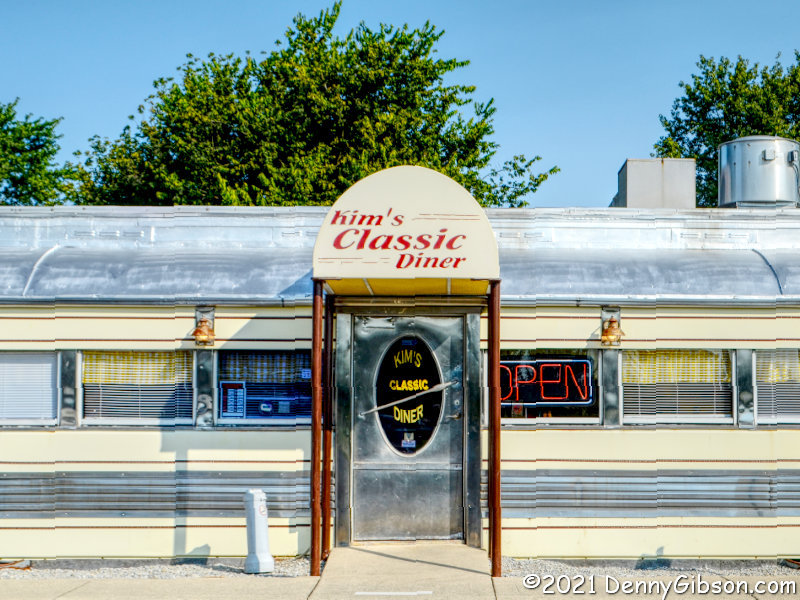
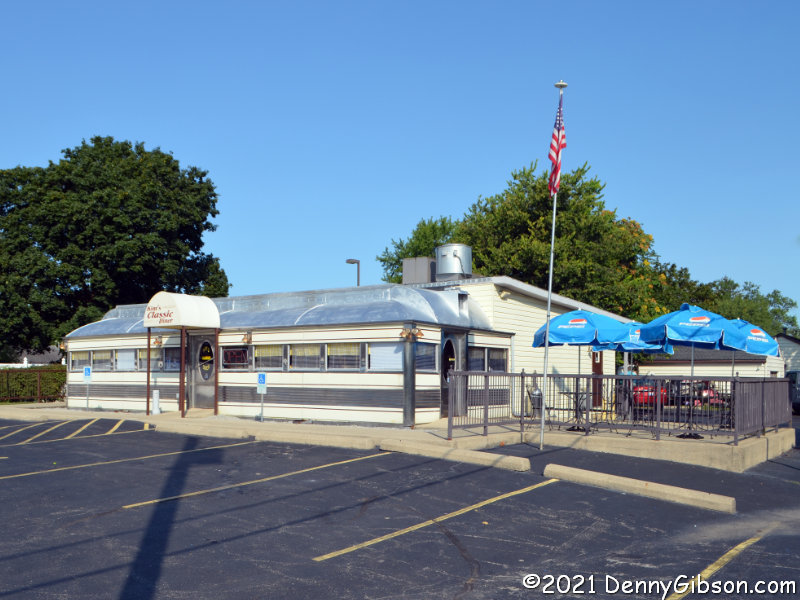
These pictures are from Tuesday and are very out of sequence. When time permits, breakfast at the somewhat nearby (4 miles) Hasty Tasty is a nice prelude to an Air Force Museum visit. Hasty Tasty was a local chain that peaked at thirteen stores. This is the last and may also have been the first.

Trip Peek #108
Trip #101
George for the Holidays

This picture is from my 2011 George for the Holidays trip. Although basically a Christmas Escape Run, the trip pieced together a variety of elements. It started in Louisville, KY, where the Louisville Slugger Museum, Frazier History, and Caufield’s Novelty are all clustered together about a block from the Ohio River. The first day ended at the 232 (now242) year old Talbott Tavern in Bardstown, KY. On the second day, I drove a combination of Jackson and Dixie Highways to Shelbyville, TN, where I spent the night at a horse farm. In the morning, I took in the nearby Jack Daniels Distillery then headed to Nashville for the trip’s central event.

That event, which supplied the trip’s title, was the Long Players performance of George Harrison’s All Things Must Pass in Nashville. I had picked up a good deal on a swankier than normal motel by booking three nights. My original plan had been to simply hang around Nashville but I managed to add a dose of complication. Belatedly, I realized that the southernmost point in my planned trip (Shelbyville) was quite close to where friends lived just over the Alabama border. I looked for a way to simply drive there for a visit directly from Shelbyville but the concert and prebooked lodging made anything but a driveby and wave impossible. So, after spending a night in Nashville, I drove to Alabama for a fun visit and Christmas Eve dinner. Christmas Day was spent back in Nashville, and that’s when the featured photo was taken.

My friend Mary had supplied me with cookies that included an entire gingerbread family that I photographed at various locations along the way. On Christmas Day, I decided to pose one of the Gingers on stage at Legends Corner on Nashville’s Broadway. Musician Buck McCoy not only tolerated the intrusion but participated. Exactly nine years later, I found myself looking at pictures taken by Buck. His apartment was just across the street from where an RV filled with explosives was detonated on Christmas Day 2020. Buck’s cellphone videos were some of the first visuals many people, including me, saw of the damage. The blast destroyed Buck’s apartment and most of its contents but just days later country star Brad Paisley gave Buck a new guitar so he could “get back to work and make a living.” He is doing just that including at his long-time regular Legends’ gig.


Trip Peeks are short articles published when my world is too busy or too boring for a current events piece to be completed in time for the Sunday posting. In addition to a photo thumbnail from a completed road trip, each Peek includes a brief description of that photo plus links to the full-sized photo and the associated trip journal.

Trip Peek #107
Trip #130
Miles of Possibility

This picture is from my trip to the 2015 Miles of Possibility Conference in Edwardsville, IL. I had made trips to other conferences but this one was different. There had been Lincoln Highway conferences and Jefferson Highway conferences but this was a Route 66 conference. It was, I believe, the first of its kind. Route 66 events I attended previously were called festivals with car shows, vendor exhibits, and maybe some pay-your-own-way group meals or parties. There were vendors and some party like goings-on in Edwardsville but it was organized around a full schedule of presentations that people actually paid to attend. It worked and, although I have only attended one other, there have been Miles of Possibility Conferences every year since with the exception of the COVID riddled 2020.

The conference was a two-day affair with the first day ending in a concert in the Wildey Theater and the second — October 31 — ending in a Halloween Party. I made it a seven-day trip by spending three days getting there and two days getting home. The day I spent crossing Indiana included stops at the state’s three concrete airmail arrows. I spent two days crossing Illinois with stops at both Route 66 and non-Route 66 attractions. Part of the first day following the conference was spent with a group of conference attendees that disbanded in Saint Louis. From there, it was US-50 all the way home.


Trip Peeks are short articles published when my world is too busy or too boring for a current events piece to be completed in time for the Sunday posting. In addition to a photo thumbnail from a completed road trip, each Peek includes a brief description of that photo plus links to the full-sized photo and the associated trip journal.

Birthday Breakout 2021

I don’t believe I have ever taken a birthday trip before but it seems like a pretty good reason to break away from this semi-hibernation and do a little traveling. The trip is a short one that barely gets outside of Ohio, but it is the first trip of the year and I’m really looking forward to it.

This entry is to let blog only subscribers know about the trip and to provide a place for comments. The journal is here.

Big Bunnies and Lunisolar

Two years ago, I decorated a post about determining the date of Easter with what was claimed to be a new flavor of Peeps. Last year, in the early days of the COVID-19 pandemic, I reused the post after augmenting it with another claimed new Peeps flavor. I once again see those two flavors, Root Beer and Hot Tamales, being touted as new. At best, I think they might be called seasonal. So what, if anything, really is new? Maybe Peeps Giant Bunnies. Everything is relative, of course, and in the world of Peeps, I suppose it is legitimate to call something about five inches tall GIANT. Plus, at about two dollars each, they can be used in that old pirate joke about a buck an ear.

But, as I said up top, the original post was about determining the date of Easter, and the Peeps picture was just decoration. The bunnies serve pretty much the same role in today’s post. The real purpose of today’s post is to reveal just how much ignorance was in the original.

I presented the formula for finding the date of Easter — first Sunday after first full moon after vernal equinox — as something that separated Christian Easter from Jewish Passover, when it is simply calculating the date of Easter pretty much the same way that the date of Passover is calculated. At least that’s what I now think. Although I now know a lot more about the Jewish calendar than I did a few days ago, I am absolutely not an expert.

The Jewish calendar is lunisolar, meaning it is based on both the sun and the moon. The more common Gregorian calendar is purely solar with no direct lunar involvement. All months of the Jewish calendar start with a new moon. A new moon occurs approximately every 29.5 days, so that the Jewish calendar can keep the months pretty much in sync with the phases of the moon by alternating 29 and 30-day months. Of course, 12 X 29.5 is a little short of the 365.24 days that it takes the Earth to circle the sun, so every now and then a thirteenth month is added to the year. The timing of these “leap months” is based on a nineteen-year cycle and there are other tweaks as well.

Passover begins on the fifteenth day of the month of Nisan, which is the first month after the vernal equinox. Because every month starts with a new moon, the fifteenth of every month is a full moon. Ergo, Passover always begins on a full moon. Being a week long, it always contains a Sunday. Rather than moving Easter away from Passover in 325, the First Council of Nicaea kept the scheduling just the same as it had always been and simply stopped saying the word Passover out loud. Oh wah, tagoo, Siam.

ERRATUM 1-Jan-2026: My jump to the conclusion that Easter always falls on the Sunday of Passover Week was very wrong. Because of the “leap months”, Easter can fall outside of Passover Week as it did in 2024. Passover was April 22-30 that year, while Easter was on March 31.  

My Caboodles — Chapter 4
Lee Markers on Dixie Highway

Like the Madonna of the Trail monuments in an earlier My Caboodles chapter, these, too, are a natural for me. Like the Madonnas, they are markers along the side of a famous historic highway that I have traveled. But there are significant differences. The biggest is that the primary purpose of these markers was not to mark the highway but to promote the memory of Confederate General Robert E. Lee. This aspect is discussed a bit more in an earlier post, Free? Advertising on the Dixie. In this post, I’ll just present the markers in the sequence I discovered them.

1. In 2008, when I stumbled upon this marker in front of the Madison County courthouse in Marshall, North Carolina, I had no idea there were others. I was excited to find something with a Dixie Highway reference but even then I must have felt it was off-target just a bit. In my journal, I said, “At least it’s sort of a Dixie Highway marker.” On the morning of November 5, 2020, it was discovered that this plaque had been pried from its stone. Erected 1926.

2. Just a couple of months after discovering the marker in Marshall, I took my first picture of the marker at the NC-SC state line. By then I was aware of the eight markers in the Carolinas, but not of the two outliers. In October 2017, vandals pried the plaque from the marker and its whereabouts are unknown. The third photo was taken in December 2017. Erected 1928.

3. By January 2012, I’d learned of two markers outside the Carolinas. Discovering that one was less than 18 miles north of where I live was actually shocking. In August 2017, just a couple of months before the plaque was ripped from the NC-SC state line marker, this one near Franklin, Ohio, was the target of planned demonstrations and counter-demonstrations. The city shortcircuited things by removing the rock and plaque in the middle of the night. The monument has since been returned to public view on private property about two and a half miles north of its original location. Erected 1927.

4. On the second day of my 2014 Christmas trip, I reached all of the Carolina markers which included six I’d not seen before. Just as the second marker I photographed was barely inside the state’s southern border, the first one of this outing was barely inside its northern border with Tennessee. Erected 1928.

5. I believe of all the Lee-Dixie markers I must have driven by without noticing, I’m baffled the most by this one mounted in a huge brick base in Hot Springs. Erected 1926.

ADDENDUM 16-May-2024: This plaque was stolen in March 2022. Discussions by city officials over whether to replace the plaque with a replica or something different were continuing as of May 1, 2024. Discussions and plans have been hampered by uncertainty as to who owns the land where the marker stands.  

6. The next marker in geographic sequence was the one in Marshall but the next new-to-me marker was in downtown Asheville where it shares space with the 65 foot tall Vance Memorial and a tribute to Drover’s Road. On the day I took my picture, someone had draped a shirt over one of the Drover’s Road pigs. At about the same time that the plaque was pried from the NC-SC marker, an attempt was made to do the same here. The bent corner in the blurry drive-by picture is evidence of that. The face was also badly scratched in a subsequent attack. On July 10, 2020, the marker was removed and put into storage. Erected 1926.

7. I failed to pick out the marker in Fletcher when I drove by it the first time but I did better on my second pass. On pass number two, I was able to spot it trying to blend into the shrubbery. Erected in 1926.
ADDENDUM 27-May-2023: I have just learned that the plaque was removed from this marker in October 2020. According to information here, the removal was initiated by the church where the boulder stands and the plaque was returned to the United Daughters of the Confederacy.

8. The marker in Hendersonville wasn’t particularly hard to spot. It’s a tradeoff but I think I prefer a little tougher hunt and the shrub as background rather than the red car. Erected 1926.

9. Geographically, the next marker was the already photographed one at the NC-SC state line. That meant the next new-to-me marker was the lone South Carolina marker in Greenville. It’s actually a block off of the Dixie Highway but I don’t know whether it was moved to be with a group of Confederate monuments or was originally erected there. Aside from its placement, the marker is unusual in that it identifies a specific United Daughters of the Confederacy chapter rather than the overall organization which makes the plaque a bit taller than the others. It was also erected several years later than any other Lee-Dixie marker and several years after the Dixie Highway ceased to formally exist. Erected 1935.

10. I completed the caboodle several days later when I reached the only marker in Florida. It was placed about the same time as most of the others and the text is quite standard, but it is unique in other ways. The most obvious differences are the smooth marble base rather than a rough boulder and a plaque that appears to be made of steel rather than bronze. Lastly, the image of Lee is similar but not identical to the others. Erected 1927.

I had started towards home when I stopped at the Florida marker, but before I actually reached home, I drove by the Ohio marker just so I could say I saw all ten on the same trip.

Book Review
America’s First Highways
Stephen H. Provost

I knew nothing of this book or its author until just before it was reviewed in the Jefferson Highway Association newsletter, The Declaration. The only reason I learned of it that early was because the reviewer, Wayne Shannon, is a friend whom I happened to chat with by phone while he was putting his review together. He was quite positive in talking about the book but, like me, unfamiliar with the name Stephen H. Provost.

Wayne’s positive comments prompted me to order America’s First Highways before I had seen his actual review. In the process of ordering, I discovered that Provost is an experienced journalist and editor with more than three dozen books to his credit. The overwhelming majority of those books are fiction which helps explain the lack of name recognition by at least some road buffs.  I believe this is Provost’s fourth road-related book. He is a Californian so there’s not much surprise in his first two road books being Highway 99 and Highway 101. The cover of Highway 99 did look familiar to me when I saw it online but I could not recall where I had seen it or in what context nor did I remember the author. That simply reinforces something that everyone already knows about me. I’m not too bad with faces but horrible at remembering names.

Provost’s third road-related book, Yesterday’s Highways, appeared just a few months ahead of the subject of this review. The timing of their publication suggests that they are to be viewed as a pair and that idea is cemented by this book being identified internally as “Volume II America’s Historic Highways”. It is my understanding that they split history in the reverse sequence of their publication with America’s First Highways culminating in the mid-1920s when the United States Numbered Highway System came into being, and Yesterday’s Highways picking up the story, with some overlap, there. Please note that I’ve yet to actually see one of these books so take that description with a grain of salt.

The one that I have seen is logically divided into two parts. They are described by a phrase on the first page that is almost, but not quite, a subtitle: “Auto Trails and the Quest for Good Roads”. Their actual titles are “Trail Blazers” and “Trail Builders”.

“Part 1: Trail Blazers”, a.k.a., “the Quest for Good Roads”,  focuses on the late 19th and early 20th century when devices capable of utilizing long-distance roads were starting to appear with essentially no long-distance roads in existence. Bicycles were the first such devices to arrive with automobiles close behind. People had, of course, been traveling long distances for quite some time. Some traveling was by foot or in wagons pulled by horses and oxen where smooth roads were appreciated but not absolutely required. Other traveling was by train which demanded and constructed its own specialized form of smooth roads. Bicycles and automobiles offered more flexibility than trains and more speed than walking but required supporting infrastructure. The quest for good roads was somewhat formally recognized in The Good Roads Movement originated by cyclists but soon supported by motorists as well.

Provost writes about individuals and organizations, including manufacturers, working for good roads, then uses a goodly portion of Part 1 to describe organized events that drew attention to the need for improvements in roads and demonstrated improvements in the machines that traveled on them. There is a chapter on “Road Tests”  such as the Glidden Tours and another on “Great Races to Strange Places” such as the 1908 New York to Paris race.

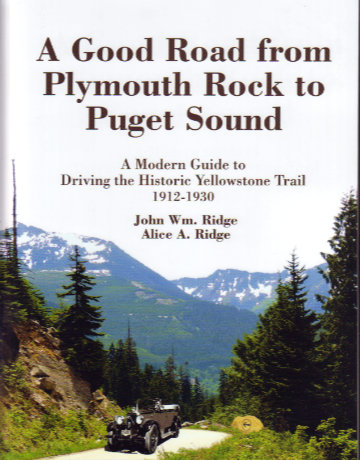
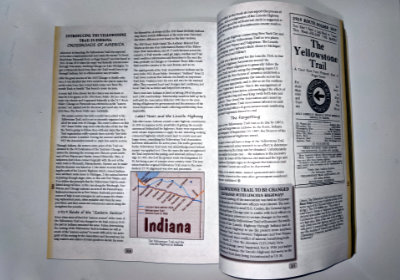
“Part 2: Trail Builders”, forms the bulk of the book. One of the builders is, of course, Carl Fisher so there is significant coverage of the Lincoln and Dixie Highways he promoted. Under the heading “Land of Confusion”, Provost provides coverage of the Lee Highway, Jefferson Davis Highway, Jackson Highway, Jefferson Highway, Pike’s Peak Ocean to Ocean Highway, Yellowstone Trail, and Ozark Trails. Other named auto trails are mentioned but do not have a dedicated section. The most surprising member of this group, in my opinion, is the National Old Trails Road which is often cited as the first nationwide auto trail with a formal organization.

As mentioned, the era of named auto trails ended with the coming of the United States Numbered Highway System in 1926, and Provost discusses the big change in “End of the Trails” and “The End is the Beginning”.

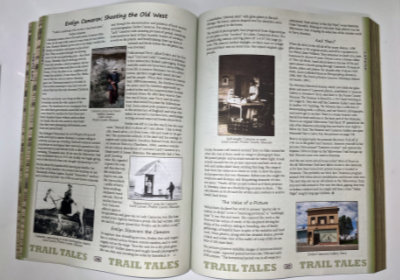
The whole book is filled with black and white photos. Some are modern images taken by Provost but most are historic captures of the people, roads, and places he is writing about. Altogether it provides a great overview of the era of named auto trails and the periods immediately preceding and following. It is a very nice introduction for those newly interested in historic highways while frequently offering some details well beyond a simple surface scan. Guess I’m going to have to give Volume I a look.

America’s First Highways, Stephen H. Provost, Dragon Crown Books (April 29, 2020), 8 x 10 inches, 290 pages, ISBN 978-1949971118
Available through Amazon.