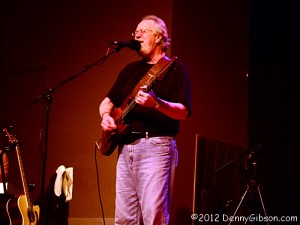
 Guitarist Larry Goshorn “retired” this week. Of course, musicians don’t retire the way some folks do. A guy who retires from Ford will probably never build another car and a retired assassin can be perfectly happy not killing anyone ever again. But no one believes that, just because a musician does his last concert and stops actively looking for gigs in clubs and bars, they quit being a musician. Following Wednesday’s “farewell” concert, Larry may not be as prevalent on the local music scene as he has been but neither will he vanish completely.
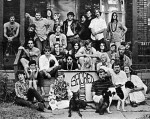 Larry, along with brothers Dan and Tim, has been a big part of Cincinnati’s music for pretty much as long as I’ve been here. I moved to the big city in the fall of 1965 and evolved from visitor to resident over the next couple years. I don’t know when I first became aware of the Sacred Mushroom or even when the Sacred Mushroom first came into existence but I do remember Sunday afternoons in Eden park with the Mushroom in the band shell and nights in a dump called the Mug Club with the Mushroom on stage. Dan Goshorn did most of the singing but Larry also sang a bit along with doing all the lead guitar work. I fondly recall a couple of break time conversations with Larry at the Mug Club. I don’t recall their content; Only that they happened. No reason for Larry to remember them at all.
The Sacred Mushroom was a different sort of band. There was, of course, the Mushroom House and a life style that said “we are musicians, dammit” but their music was different, too. There were other good bands in Cincinnati including several that, like the Sacred Mushroom, did a mix of covers and originals. But the Mushroom’s covers were from guys like Willie Dixon and Paul Butterfield and their bluesy originals (actually Larry Goshorn originals) were not exactly formula top 40.
The peak and the crash were not far apart. In October of 1968, they opened for Big Brother and the Holding Company. I was there in the last row of the last balcony with a ticket I’d bought at the last minute. Their one and only album was released the following summer but the band was already disintegrating. It was kind of like the Beatles and Let It Be minus the long string of million selling albums in front of it.
Larry didn’t stop playing, of course. I may have even seen him a time or two before he went off to help put Pure Prairie League on the charts but I really don’t remember. My memories of his days with PPL are pretty spotty, too. Even though I liked several of their tunes, I never became a big fan. I saw them perform just once.
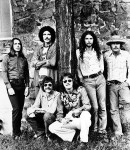 Larry didn’t write the song that put Pure Prairie League on the charts. That song, Amie, was written and recorded by Craig Fuller before he left to deal with draft obligations. What Larry did do, after replacing Craig, was
 sing play (see Tom Sheridan’s informative reply below) Amie in a couple of hundred concerts that got the song enough airplay to make it a hit. He then went on to write a number of the band’s songs including my favorite, Two Lane Highway. As much as I like the song, I don’t dare dwell on the lyrics. Just like Springsteen’s Born in the USA is not (despite what some politicians apparently believe) exactly glorifying the country, Two Lane Highway is not an ode to back roads. I never thought to ask but was there when a friend did and learned that Larry wrote the song in the back of a GMC motor home as the band rolled through a Pennsylvania night and he really did want to “get off this two lane highway”. He’s got a front row spot in the picture at right.
The Pure Prairie League story is a convoluted one and quite a few web pages offer up pieces and variations of it. Today, a four piece group with a couple of original members keeps the name alive. The official Pure Prairie League website makes no mention of Larry at all. A careful scan turned up one tiny uncaptioned picture that has Larry in it but that’s all. The closest the site’s text comes to mentioning him is in an almost comical reference to the “departing Gorshorn [sic] brothers”. Along with ignoring his contributions, they’ve forgotten how to spell his name. Larry’s younger brother, Tim, had joined him in the group around 1977 and they did leave together around 1978. Tim later rejoined for a second stint.
Between PPL and the 1994 opening of a certain bar on Main Street, I have no personal knowledge of Larry’s activities. I heard ads for The Goshorn Brothers Band on radio and I may have even had a beer or two somewhere they were playing but I wasn’t paying attention. When I saw Larry and Tim at what I believe was the opening night for Tommy’s on Main, I was reminded of how much I enjoyed his playing and I’ve not lost sight of him since.
I probably irritated some folks when I said I was never a big fan of PPL. I liked them well enough and I certainly appreciated their talent but they weren’t one of my top tier groups. That tier was filled with the Moody Blues, the E Street Band, Yes, and others. I liked PPL the same way I liked the Eagles and there are more similarities between the two than my level of fandom. Of course, they sound somewhat alike but there was another connection that maybe only I cared about. PPL had sucked up Larry Goshorn; The Eagles had sucked up Joe Walsh. I was much more a fan of the James Gang and Sacred Mushroom than of the Eagles and Pure Prairie League. On one of those very first nights at Tommy’s, I mentioned to Larry that I had thought of his time with PPL as a “day job”. He smiled and said, “Me too.” I don’t know if he meant it the same way I did or if he even meant it at all.
The Tommy’s gig started as an “acoustic” duo then one night ex-PPL drummer Billy Hinds showed up with a snare drum. From there, it wasn’t long until a five piece Goshorn Brothers Band had taken up residency at Tommy’s. Billy was behind a full drum kit with Michael Baney and Steve Schmidt taking care of bass and keyboards. Other top notch musicians would sit in or perform their own shows. Wonderful music poured out of Tommy’s for the next couple of years with GBB typically playing three nights a week and me being there for at least one of those nights more often than not. Tommy’s eventually closed but the Goshorn Brothers rolled on. The lineup wasn’t particularity solid so you were never quite sure who would be backing up the brothers on a band date but you knew they would be good. The two Goshorns could probably make anybody sound good but it’s a plain fact that they attract the best. Many different combinations have appeared as the Goshorn Brothers Band over the years and every one that I’ve heard sounded great.
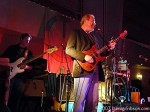
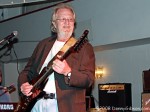 I have no pictures from Tommy’s. Those at left are from the 2007 and 2008 Summer of Love Reunions. A big part of celebrating the Cincinnati music scene of four decades ago was the current Goshorn Brothers Band playing the role and the songs of the Sacred Mushroom. Both years, Mushroom bassist Joe Stewart (in the first picture) was coaxed into performing a couple of those tunes with his old bandmate.
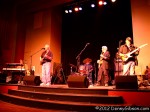
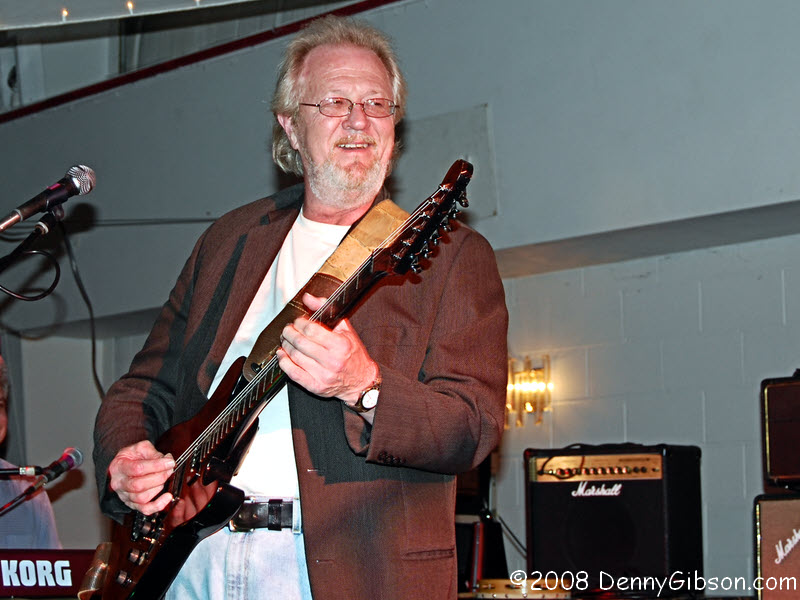
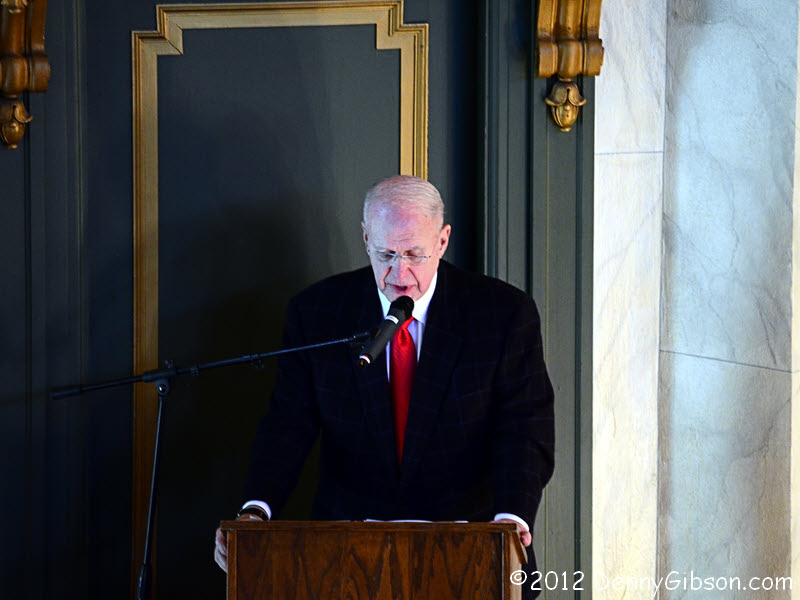
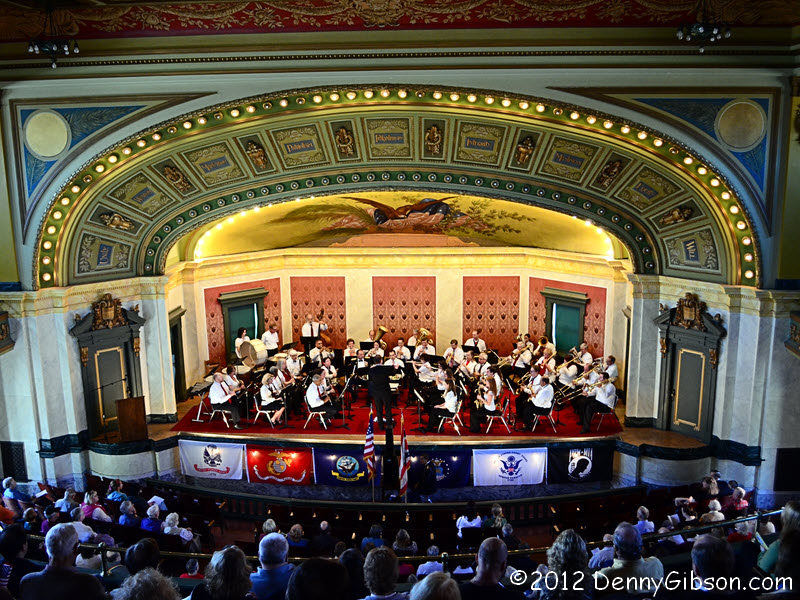
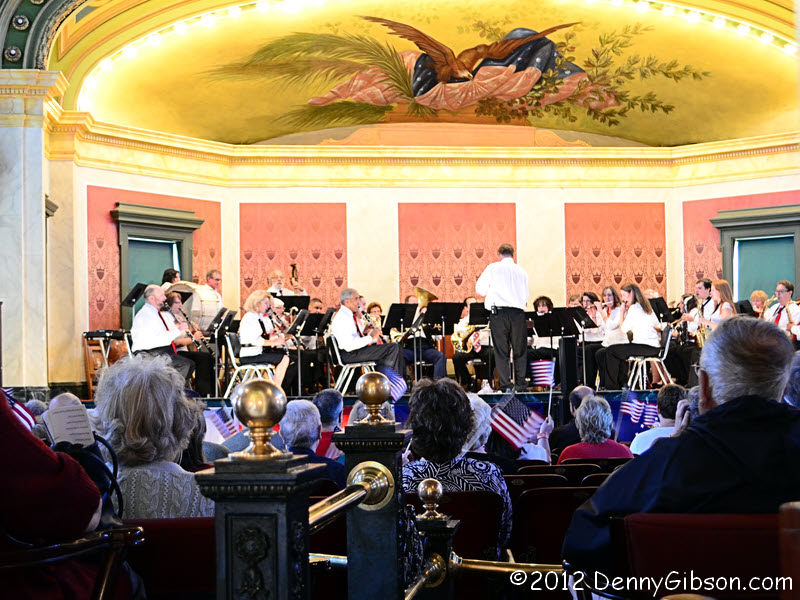
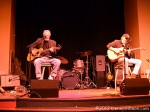 The photo at the top of this post is from Wednesday’s concert as are the two at right. The evening began with a Larry and Tim acoustic set and ended with the brothers fronting a hard hitting five piece. The time between was filled by the same group minus Larry. Larry broke his ankle early in the year and Tim has been performing without him in a quartet sometimes called Whistle Pig and sometimes called Friends of Lee. Members are Lee Everitt on keys, Bam Powell on drums (no, his head doesn’t really look like a cymbal), and Mike Fletcher on bass. This was the group that filled in the middle and by definition became the Goshorn Brothers Band when Larry joined them.
The music was great and the event well attended. The only surprises were things that didn’t happen. I had expected some comments or jokes about retirement and there was absolutely nothing of the sort from the stage. I had also expected something like an all star jam but, despite there being a number of well known and talented musicians in the house, nothing of that sort happened either. I really shouldn’t have been surprised though. The “we’ll never see Larry again” shock of the first announcement had become a more realistic “we’re going to see Larry less”. The shift was made official with an “or is it?” appearing on posters and tickets. It was a great show and it brought a lot of old (in every sense of the word) friends together. But I think we were all rather relieved to realize that Larry is only mostly retired.
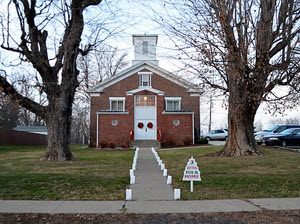 On Saturday I toured several nicely restored and decorated homes on the National Road in Morristown, Ohio. An Oddment page on the Holiday Tour of Homes is here.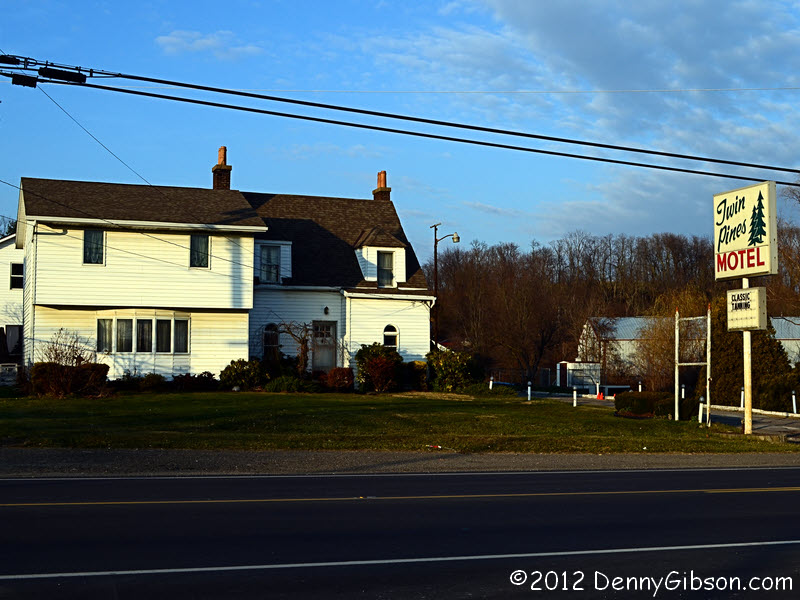
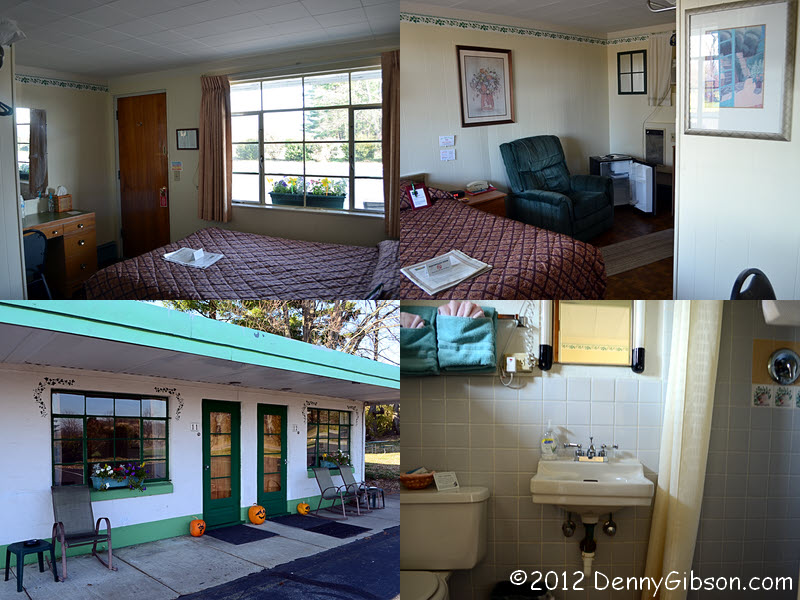
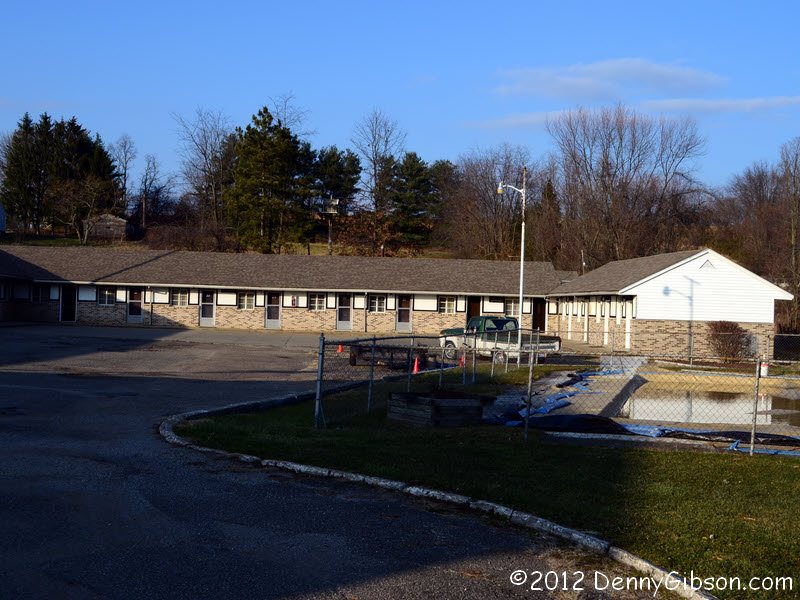 My bed for the night was at the Twin Pines Motel a few miles east of Morristown. I had read a couple of reviews that made it sound OK and it was. It’s a clean and reasonably maintained older place with no frills but all the necessities including wi-fi. Price was about $50 with tax. There is a look at my room here.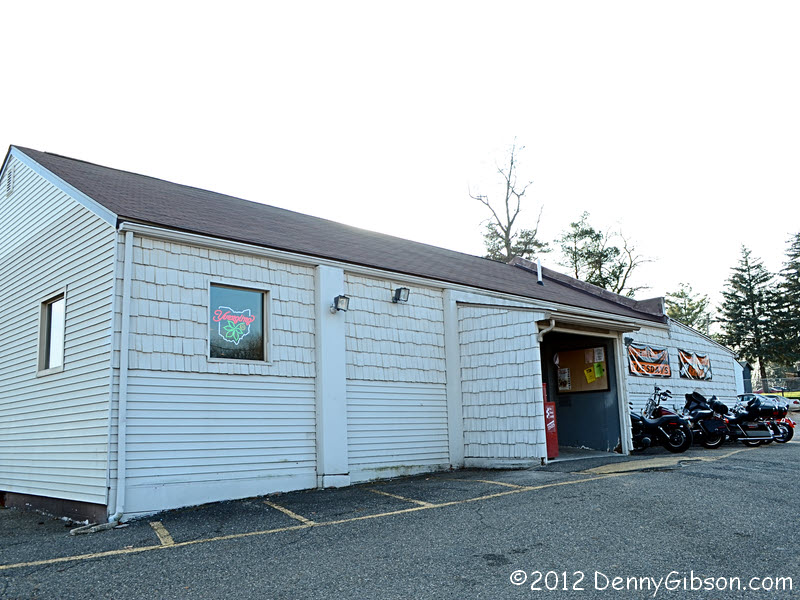
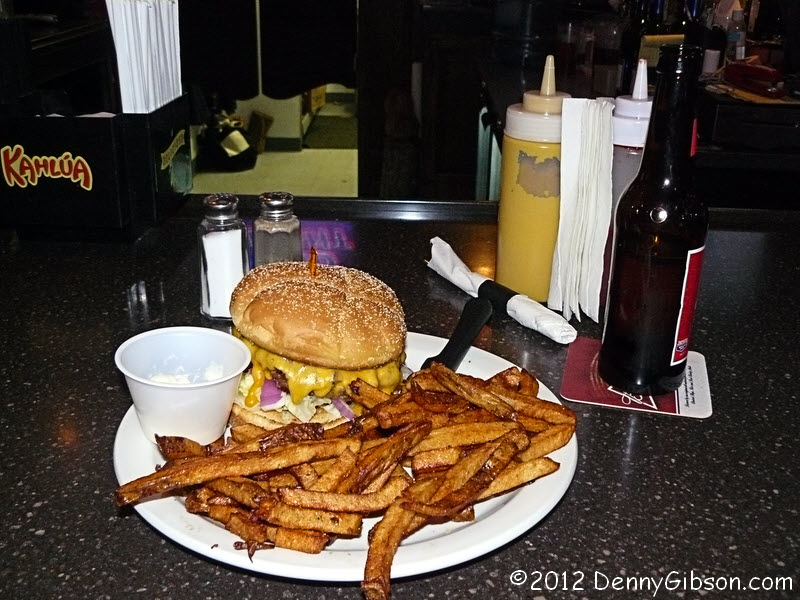
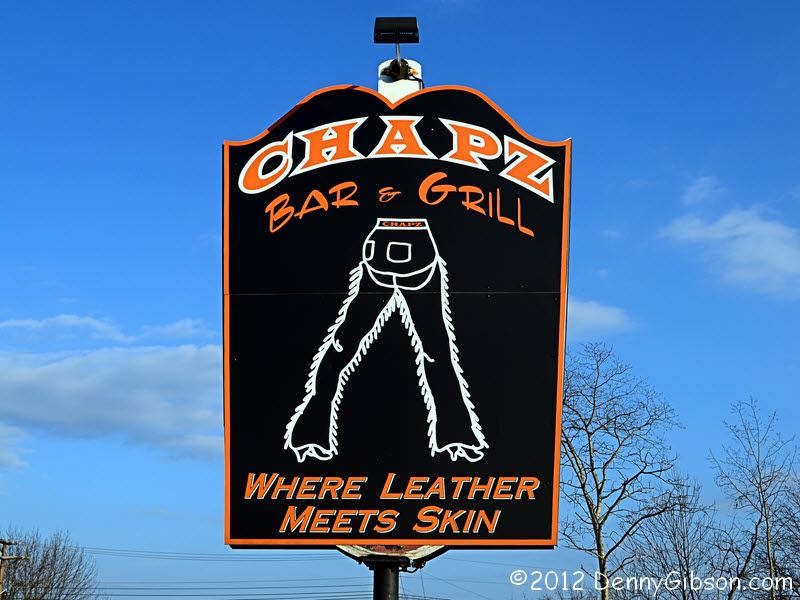 Chapz is on the National Road between Morristown and the Twin Pines. I stopped there for a beer before the home tour and for a ‘burger after. Anything that looks that unhealthy just has to taste great and it did. Just as the sign shows, female bartenders and waitresses wear Daisy Dukes and motorcycle chaps. Depending on age and size that can look really hot… or not.




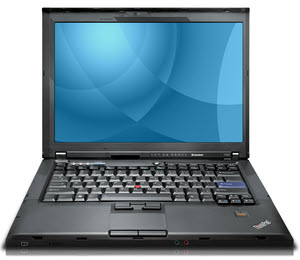 An HP Pavilion barely made it two years, a Toshiba Satellite didn’t quite make three, and both were limping during their final months of service. This post is being written on a Lenovo T400 that’s still going strong after three and a half years as my do-everything and go-everywhere computer. My computers aren’t really treated harshly but they certainly aren’t pampered. That includes the Lenovo and I’m convinced that its relative longevity is due entirely to superior design and build quality. It seems to truly be an example of “getting what you pay for”.
 The
The