 The last weekend in January seems like a pretty safe time to have an ice festival in Richmond, Indiana. The average temperature there for both the 26th and 27th is 32°F which sounds just about perfect. But averages are not guaranteed. If the town’s Meltdown Winter Ice Festival had taken place a week or two ago, organizers might have wondered if people would brave the near-zero temperatures to attend. On Friday, their top concern was probably whether or not the ice sculptures would survive the day’s temperatures which were pushing fifty.
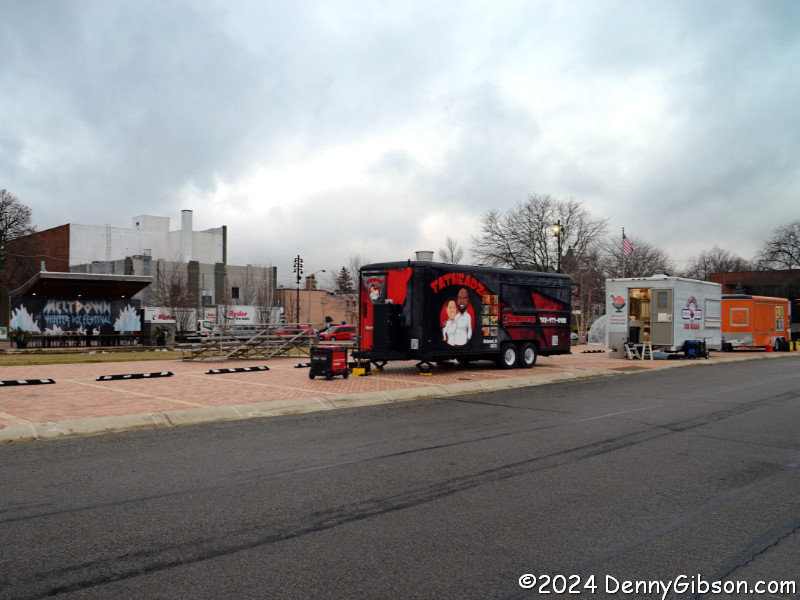
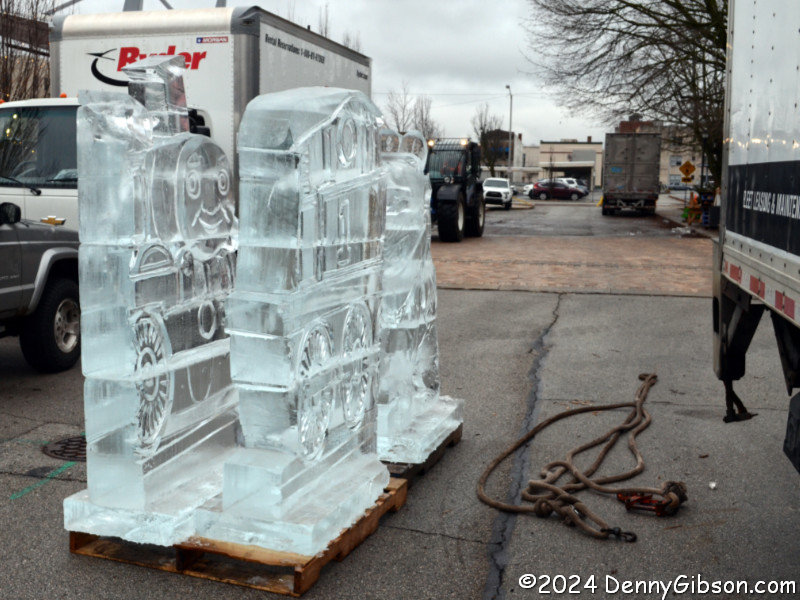
This is the Meltdown’s eleventh year but it somehow hid from me for the first decade. A significant part of it escaped me this year, too. I timed the hour-and-a-half drive to give me time for dinner before the first item on the schedule. I parked near Jack Elstro Plaza where big blocks of ice were being unloaded and food trucks were setting up. I ate at a local restaurant as I worked my way to the historic district. An online map indicated where sculptures would be but those I walked by were empty. It eventually sunk in that all carving was to be done on-site and was just starting Friday evening. All ice festivals I’ve attended had on-site carving but others also had some sculptures finished elsewhere and trucked in ready to display.
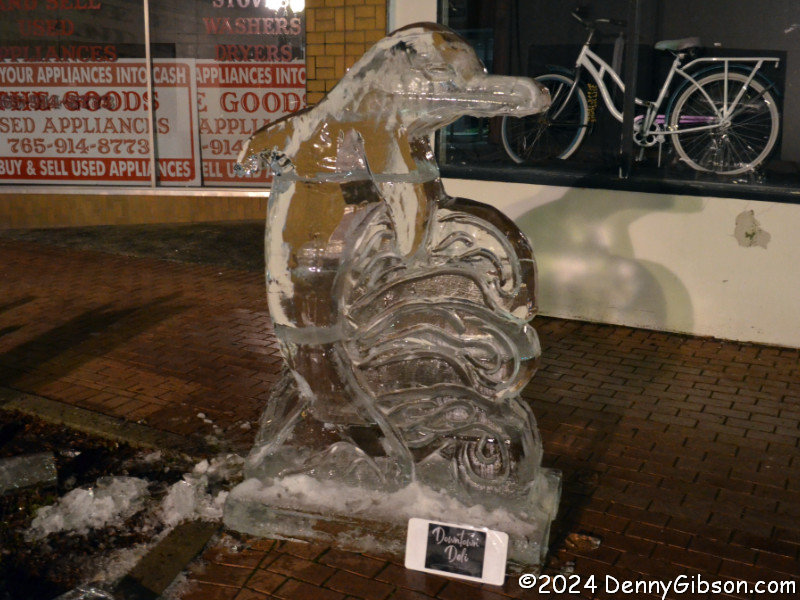
I continued along the path indicated by the map. It included several blocks of Main Street and it was on Main, in the vicinity of Jack Elstro Plaza, that I saw my first ice sculpture of the day. A fellow adjusting the sponsor tag as I approached told me it had just been finished a very short time before. There was already evidence of melting and I had to wonder if it would make it through the night.
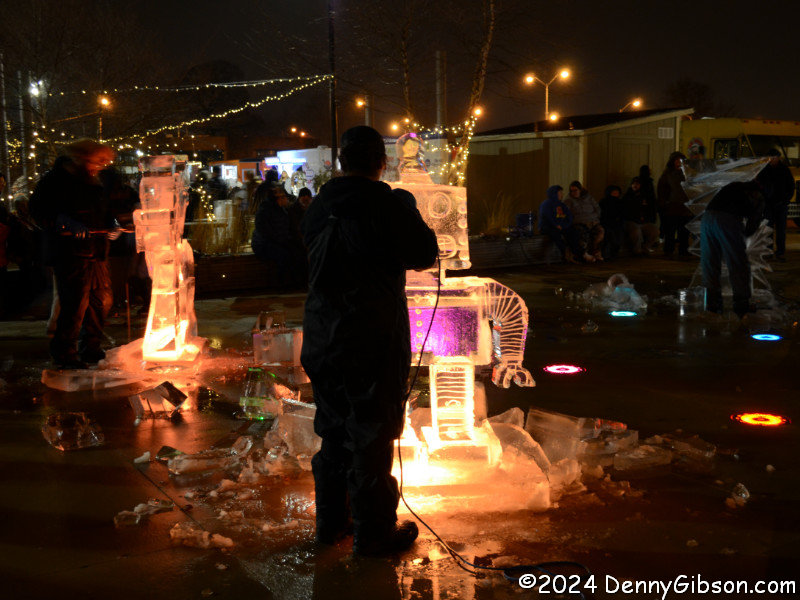
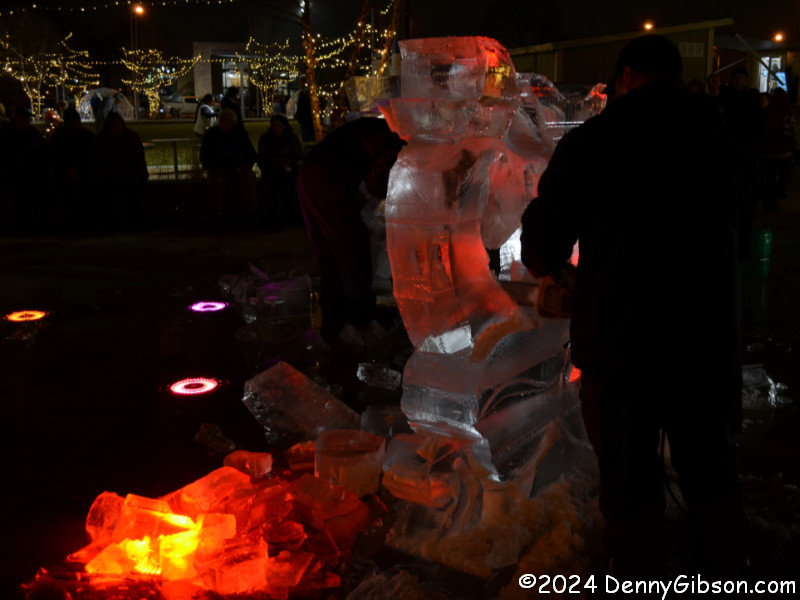
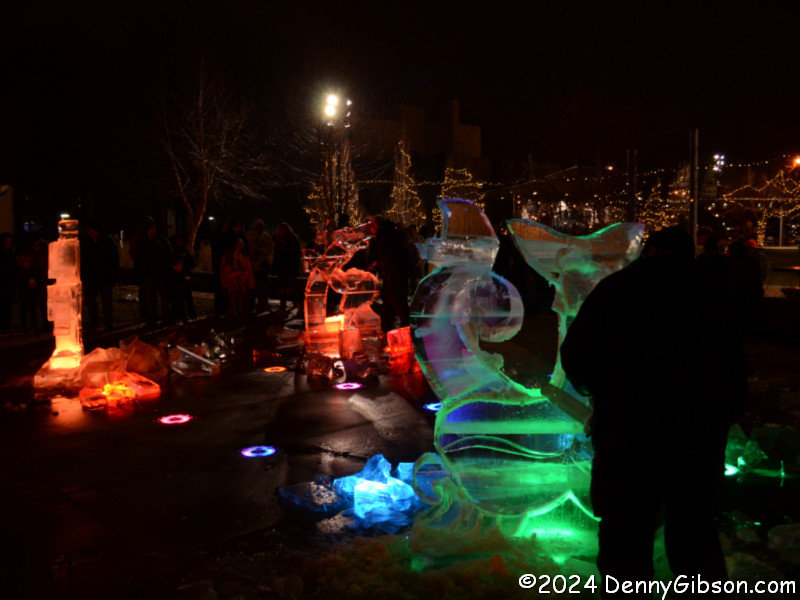
Back at the plaza, things had picked up considerably while I was walking and eating. Several sculptures were nearing completion and perhaps would soon be positioned around town like the one I had seen on Main Street.
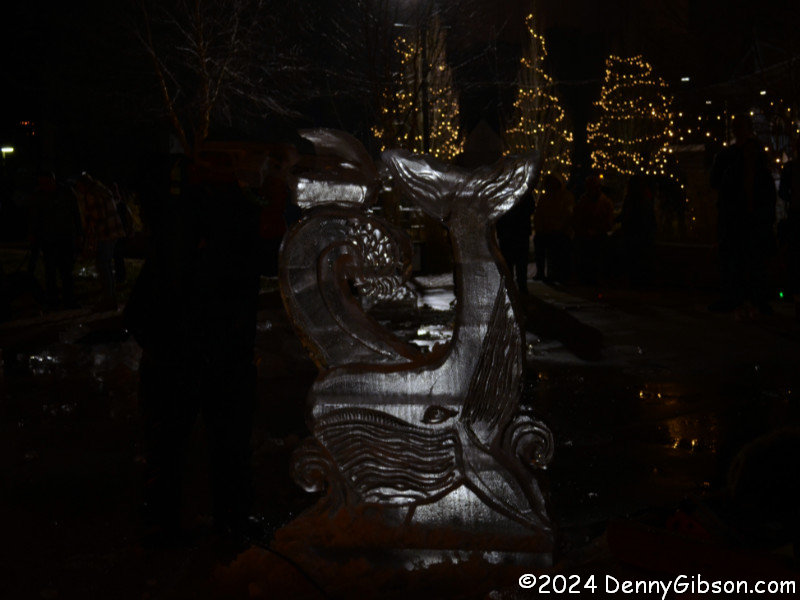
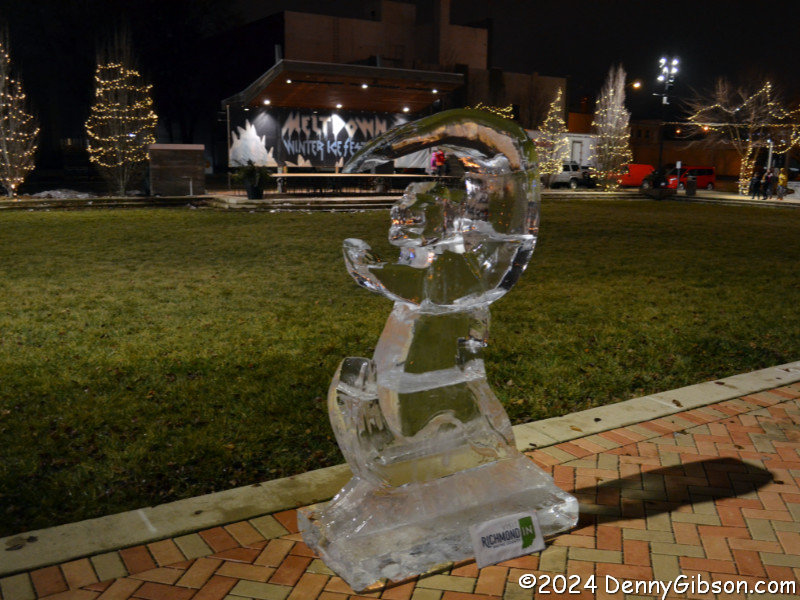
A couple completed sculptures appear to have already been moved from the carving area to display positions around the plaza. Or maybe they had been carved in place. I’m still not really sure how all this works.
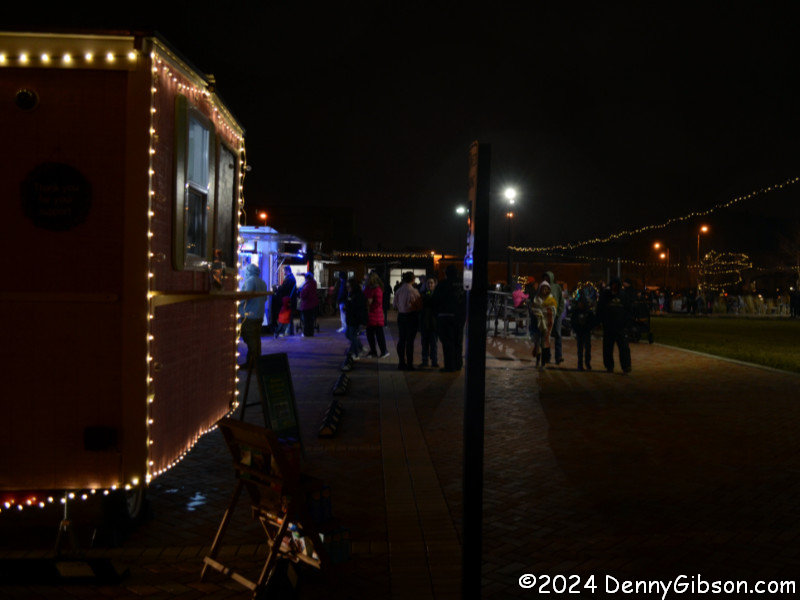
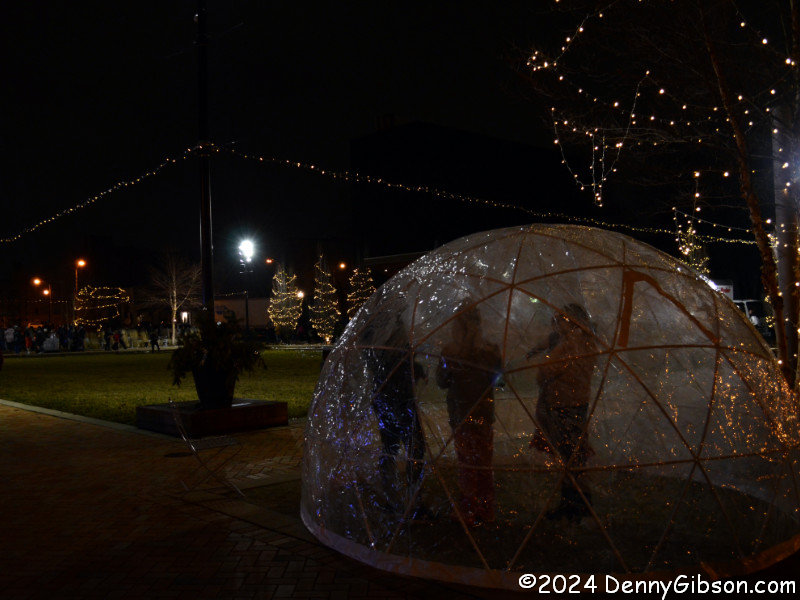
The food trucks were all operating and the igloos scattered around the plaza area had a few occupants although I believe they had entered out of curiosity rather than a need to keep warm. I went through all of the food trucks looking for a cup of coffee but came up empty. Maybe if it had been fifteen or twenty degrees cooler, some enterprising vendor would have coffee or hot chocolate on their menu. And maybe those igloos would have been completely filled.
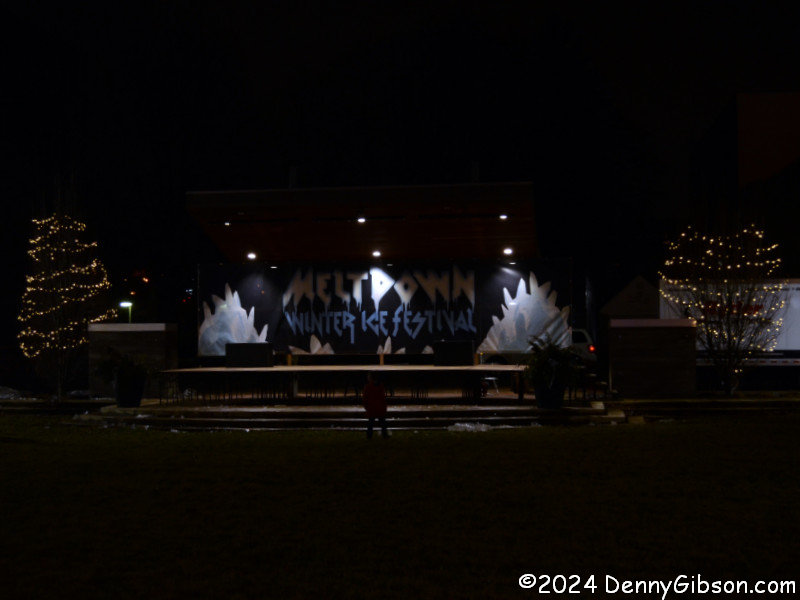
So I learned that showing up when the event first opens is not a wise move in terms of looking at completed sculptures. I had intentionally picked Friday over Saturday because I thought Saturday might be too crowded. I had only myself to blame for feeling a little disappointed when I started for home.
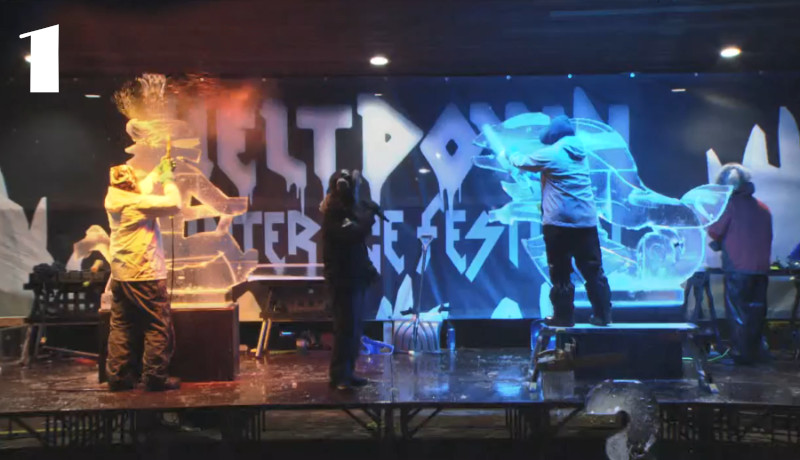
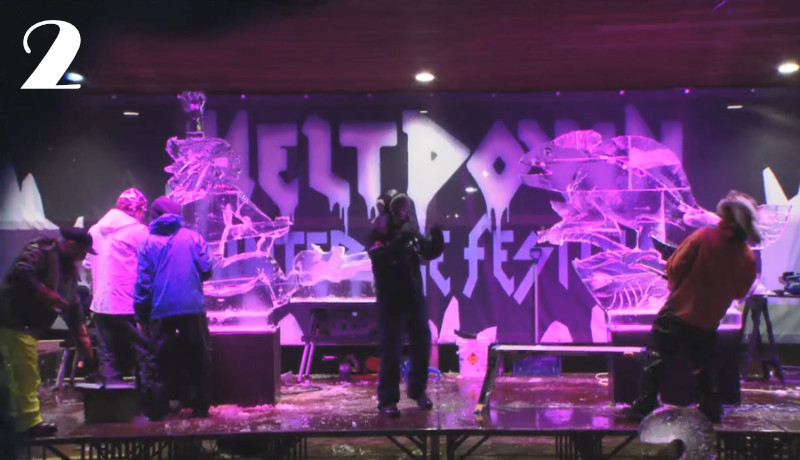
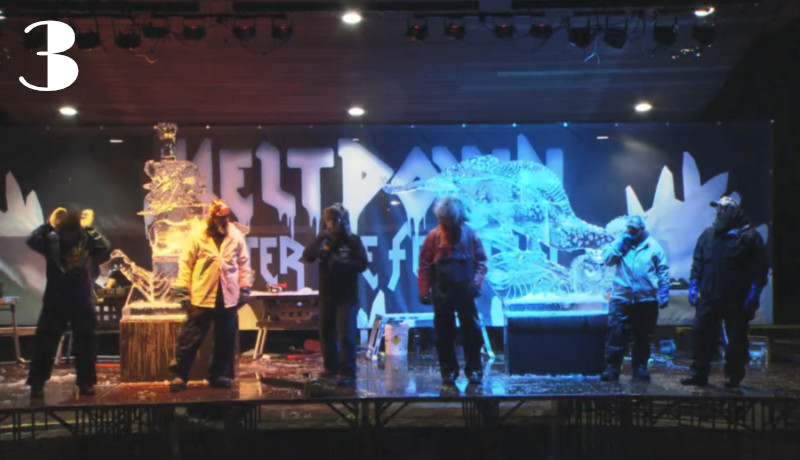 I was not disappointed enough to drive back to Richmond on Saturday but I did check in on things remotely. Rain might have reduced crowd size somewhat but there was still a good turnout and there was never any thought of canceling the festival’s main event, the Meltdown Throwdown, because of the rain. I was surprised to learn that this timed competition between two teams of carvers was being streamed live for the first time. The teams carve in three ten-minute segments. The screen captures are from the beginning of the second and third segments and after it is all over. The winner, selected by audience volume, was the iguana from Team Ice with a tongue carved separately and attached in the final moments. The guitar on Team Fire’s rocker was also a separately carved attachment. A second guitar was smashed in dramatic Pete Townsend fashion as time expired
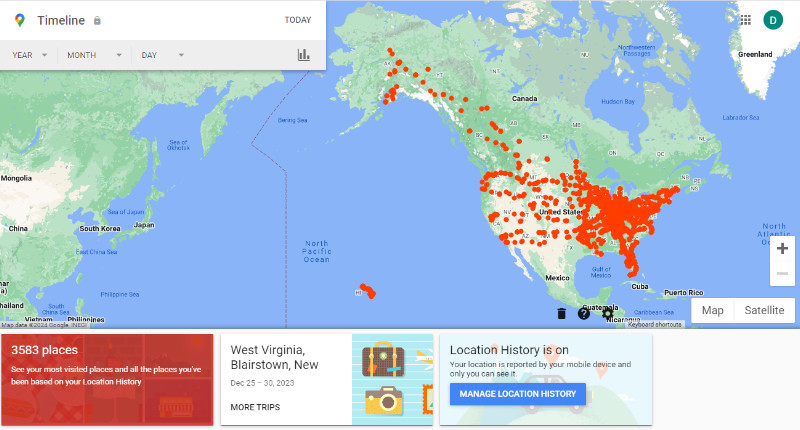
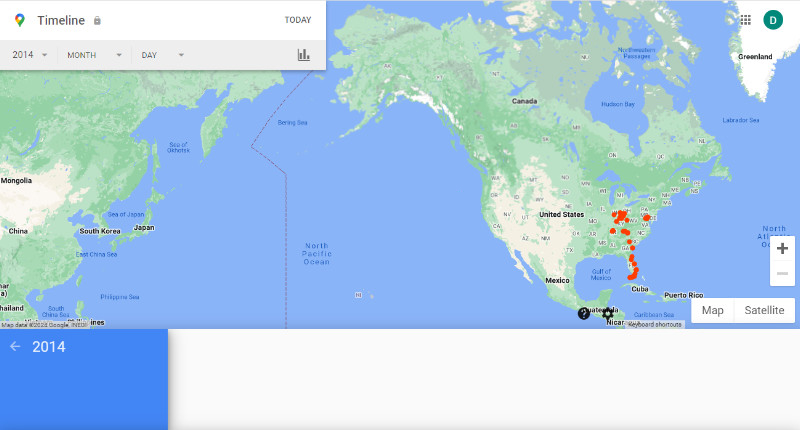
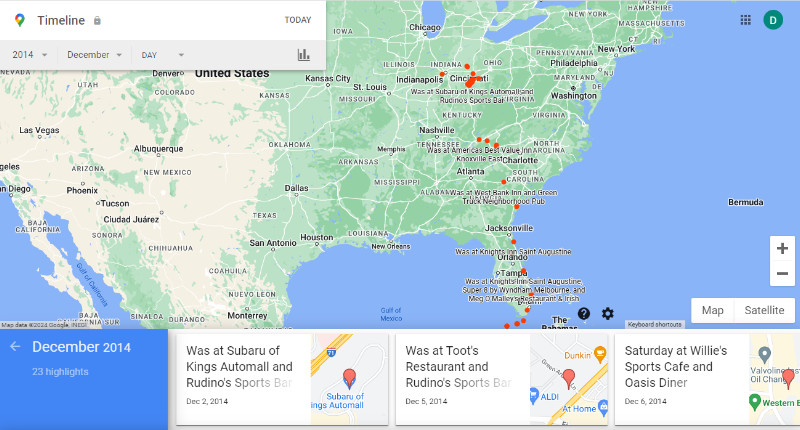
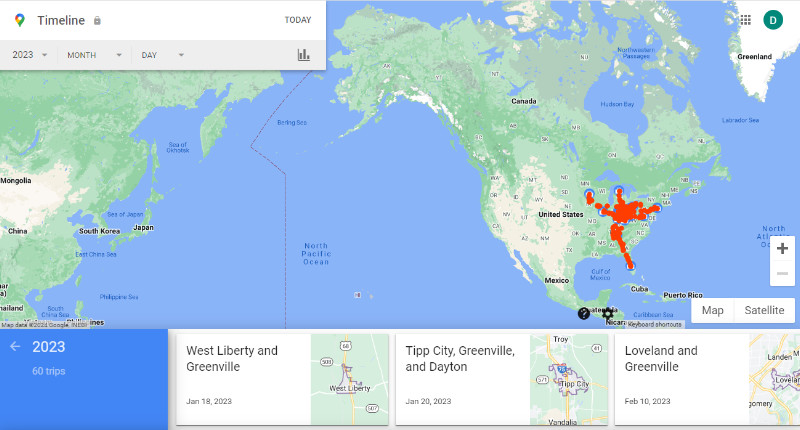
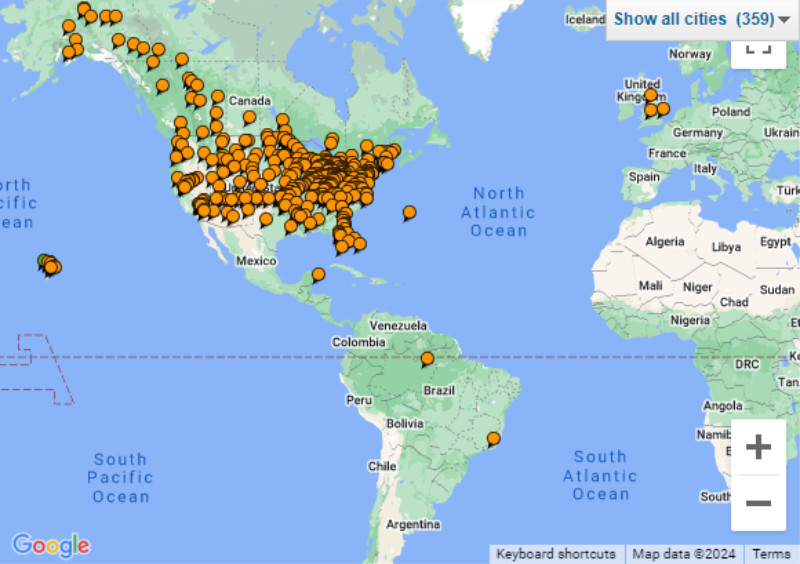
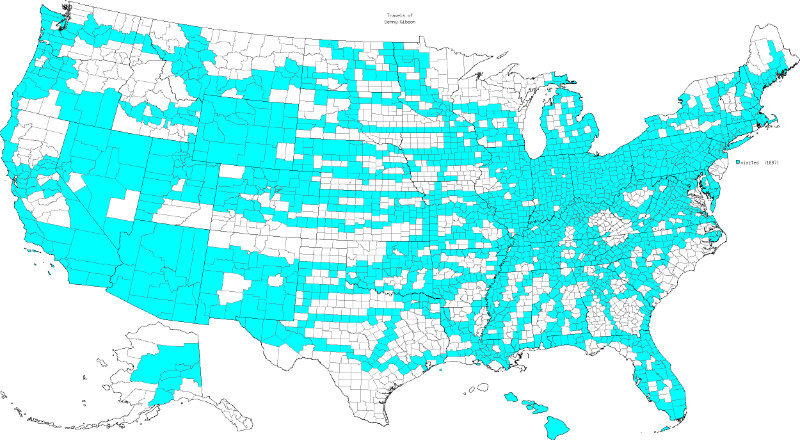
 Everything went up this year. Everything that is except interest. I’ll discuss website traffic toward the end of this post but it’s probably not much of a spoiler to note that it continues its general decline. As for my own activity, I did get in one more trip than last year, and, unlike last year’s added trip, this one did translate to an increase in days on the road and pictures posted. Again, no trips from the year being reviewed made the top five but, unlike 2022 when there were no repeats from the previous year, the first four of 2023’s top five were repeats from 2022 and the fifth sort of was. Two of 2022’s top five blog posts made it again this year along with two brand new posts and one returning after an unusual absence.
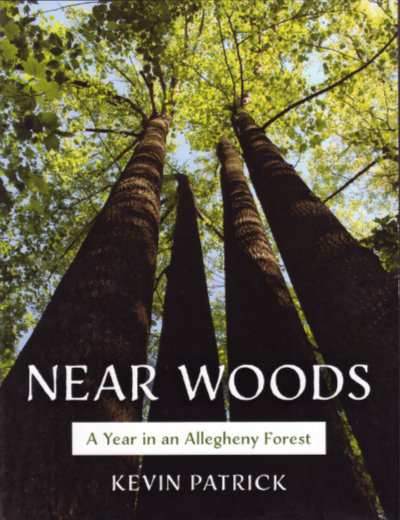 The year Kevin Patrick spent “connecting with White’s Woods” may have been, as a blurb on the back of Near Woods says “In the spirit of Walden” but the resulting products are not the same. Thoreau’s time at Walden Pond was an experiment in self-sufficiency and the book he wrote some years later documented its success. His observations of nature and seasons were generally used to support some aspect of his minimalist lifestyle and not to educate the reader. I suppose some of Patrick’s observations are also made to reinforce some philosophical viewpoint, but he is a lot more subtle and he helps the reader share the raw observation as near as possible. Exactly one-half of this book’s pages are filled with some excellent photographs.
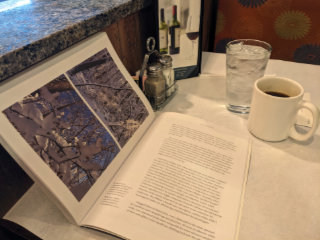 Of course, Near Woods is better looking than either Walden or PrairieErth. To some degree, that’s just something that color photographs do for a book. But these high-quality and well-chosen photos do more than make the book pretty. They are the “raw observations” mentioned in the first paragraph of this article. The book’s design incorporates the photos wonderfully and helps make reading the book a pleasure. Every lefthand page contains one or more photographs. Righthand pages are all text. Captions are in the extra wide inner margins of the text pages. It didn’t take me terribly long to recognize the beauty of this. Every page turn resulted in a new image that could be studied as quickly or slowly as desired before tackling a new page of text.