 How tough could it be? There are only three of them, and they are all on a single historic auto trail. Granted, the auto trail runs all the way across the country and there is a marker at each end but that just means there’s some distance involved. Collecting another three-member caboodle seemed like something that should be rather straight forward and it would have been at any time other than the summer of 2014.
There was an International Route 66 festival scheduled for Kingman, Arizona, that year. I planned to attend and, never one to seek out shortcuts, decided to first drive the Old Spanish Trail from Saint Augustine, Florida, to San Diego, California, then work my way back east to the festival.
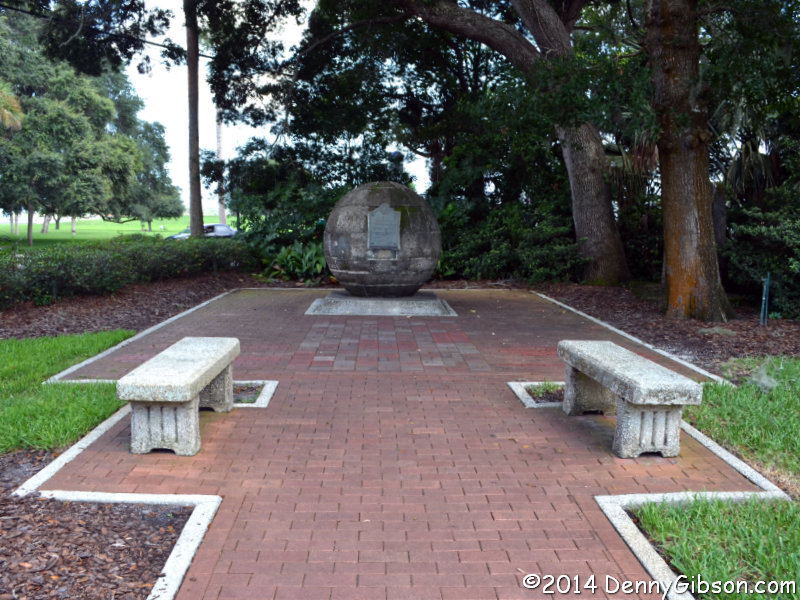
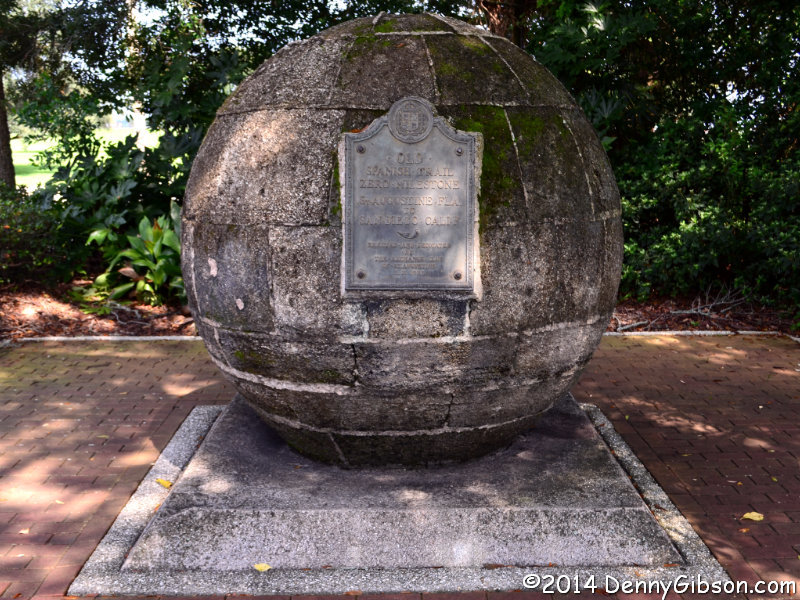
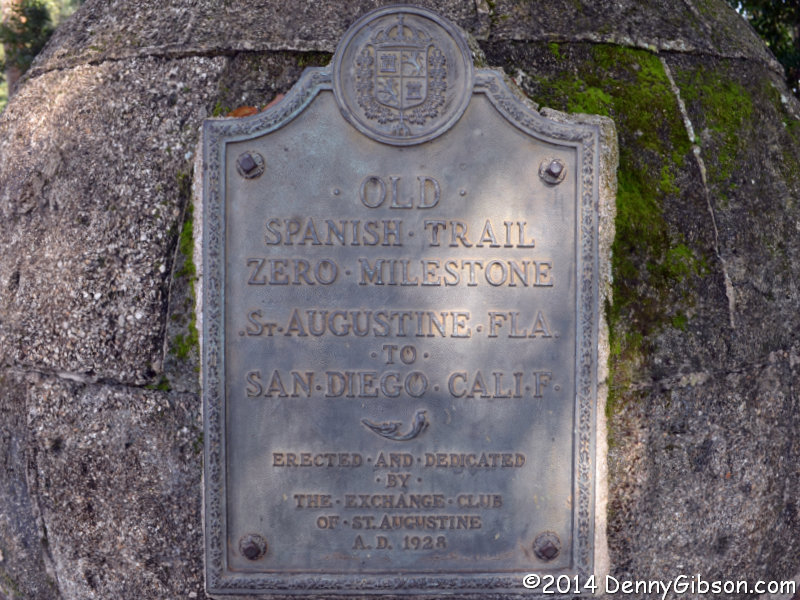 1. The first one was pretty easy. It’s a hundred yards or so north of Castillo De San Marcos on the opposite side of San Marco Avenue (US-1). It can partially be seen from the street but you need to enter the small park that houses it to see and read the plaque. This is not, as is sometimes claimed, part of an old Spanish “colonial trail” but the eastern terminus of an early twentieth century named auto trail.
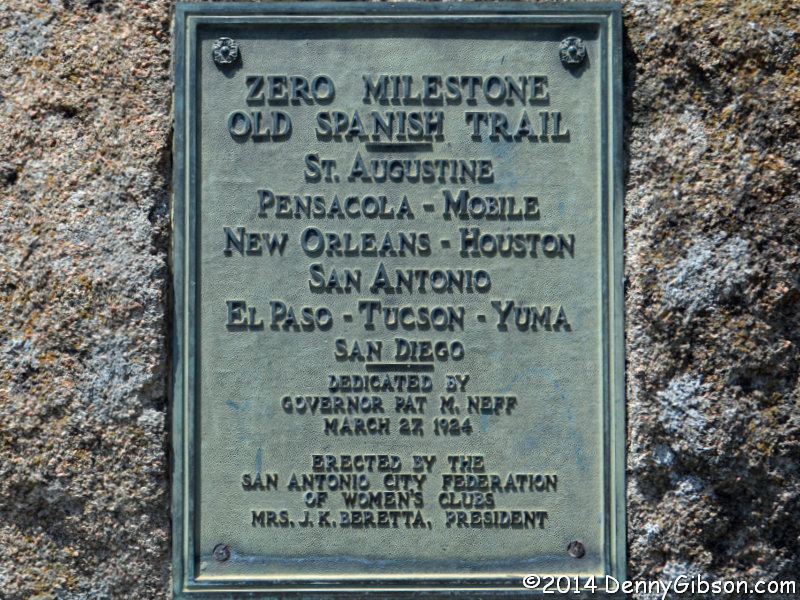
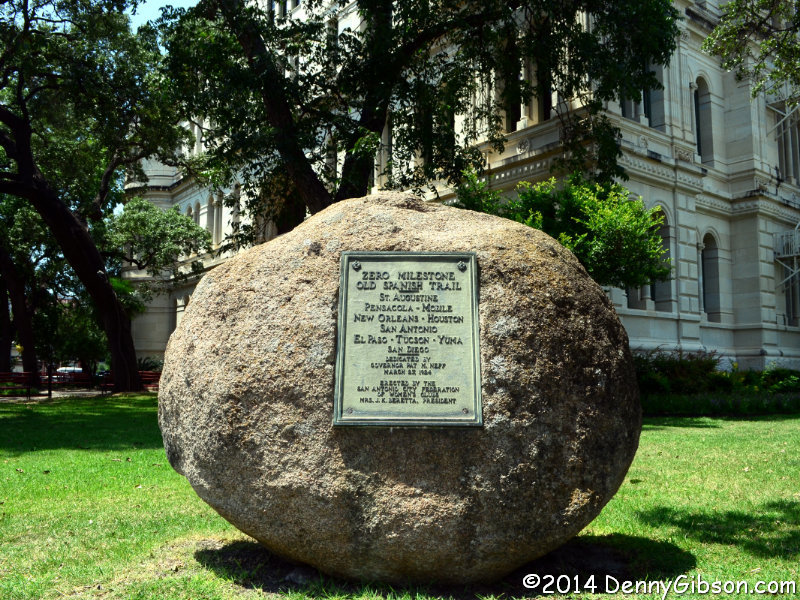 2. The second one sits outside San Antonio’s city hall and is also pretty easy to find and photograph. It is near the midpoint of the 2,750-mile-long route but is still labeled a “Zero Milestone”. The best reason I can think of for this is that the Old Spanish Trail Association was headquartered in San Antonio and considered this the starting point for trips to either end.
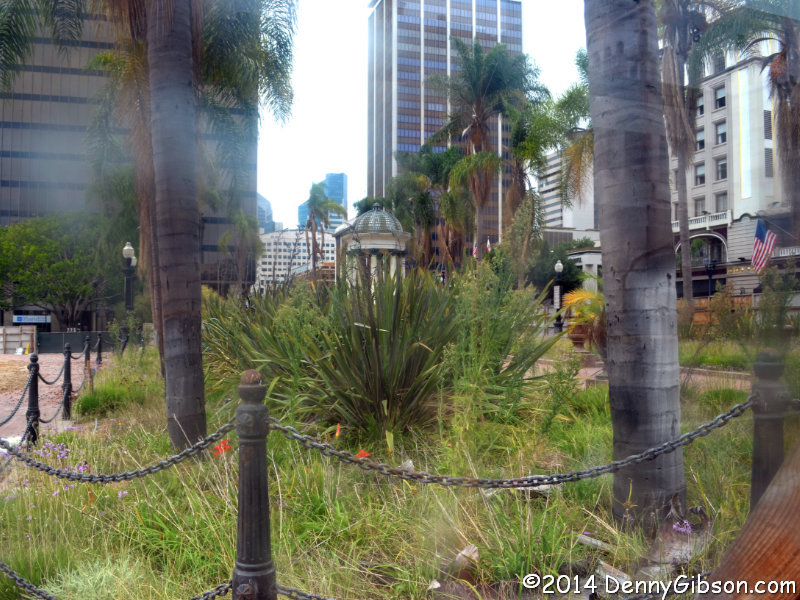
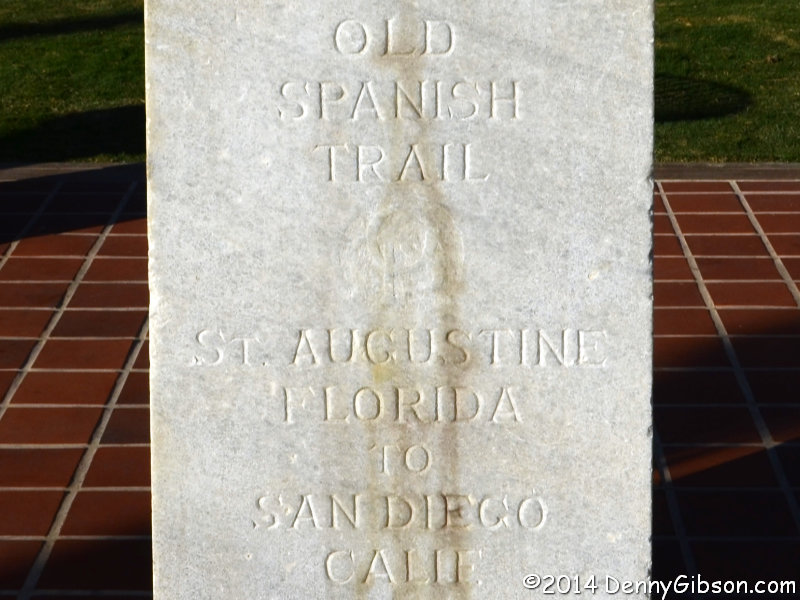
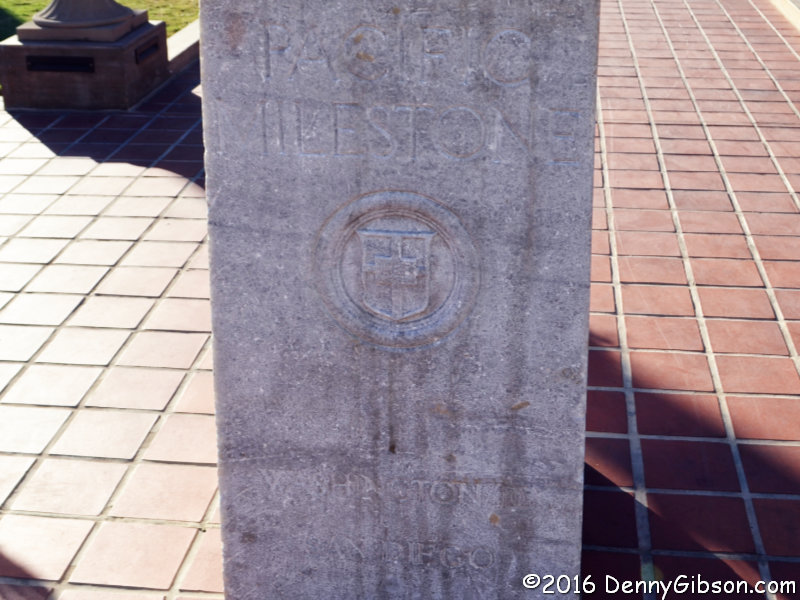
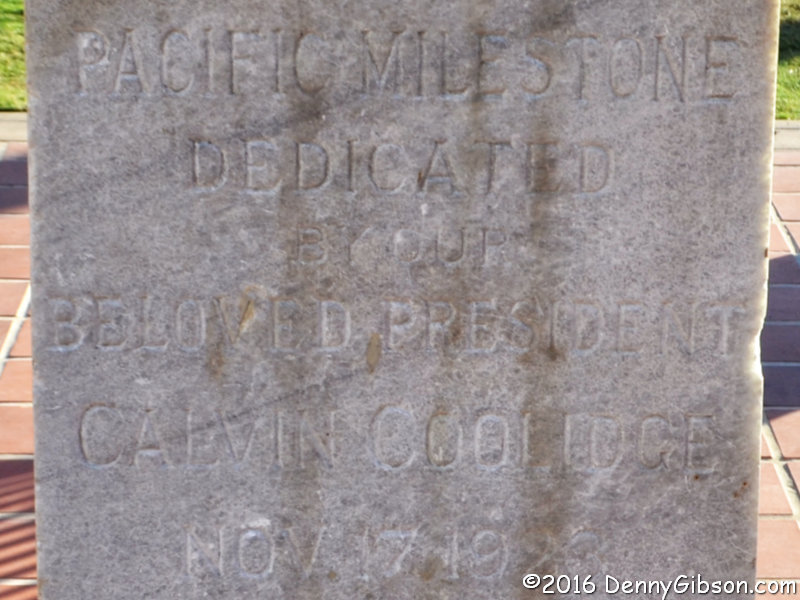
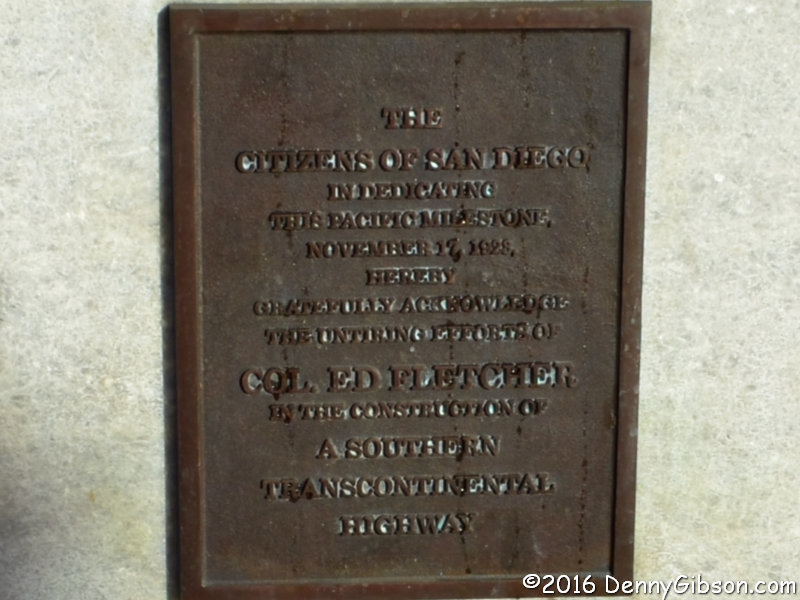
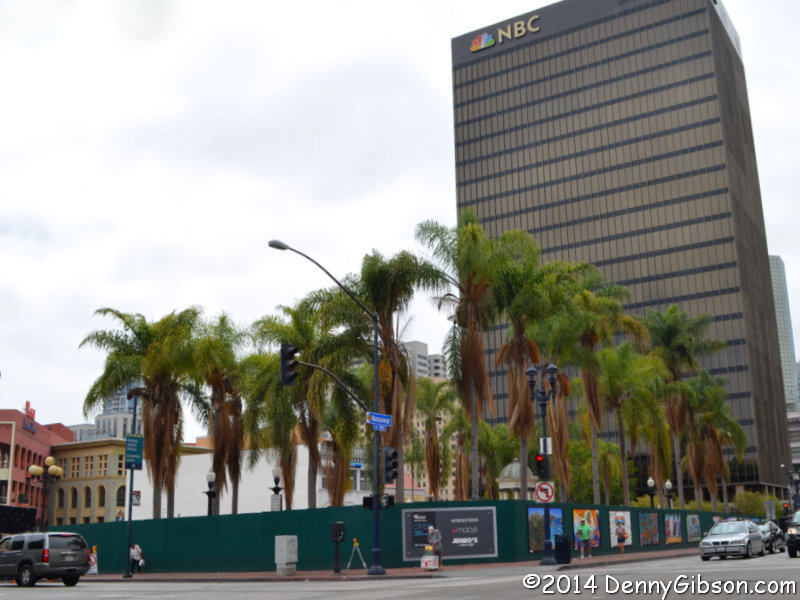
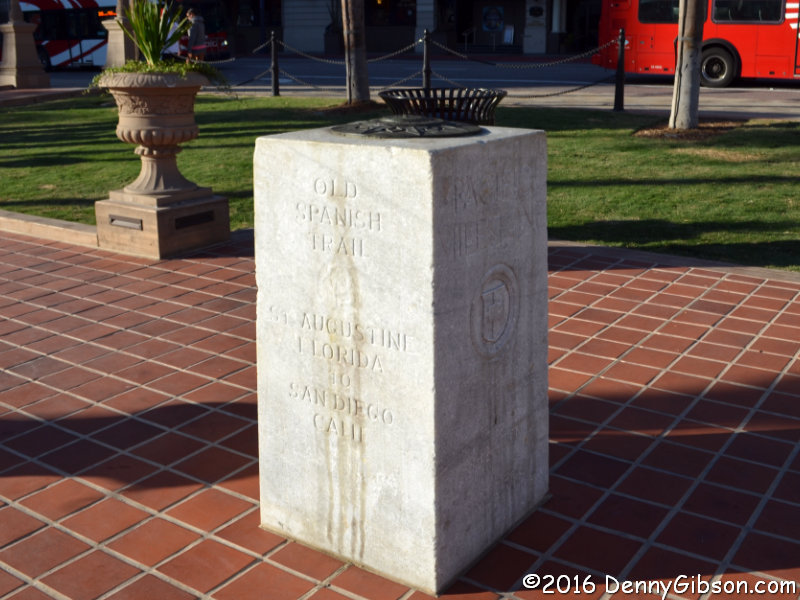 3. But that 2014 trip hit a snag when it reached the western end of the OST. The picture at the top of this post shows what I saw when I pulled up to Horton Plaza in downtown San Diego. The plaza was in the middle of a multi-year redo that had caused the marker to be moved to a warehouse. The first picture at left, taken through a gap in the fence, shows the area where the marker would reappear in May 2016. The second picture shows the marker in November 2016. Although the marker is commonly referred to as a Zero Milestone, it is inscribed Pacific Milestone. Here are somewhat readable views of the south, east, north, and west sides.
As it turns out, the situation in 2014 may not have been a blip but the new normal. The Pacific Milestone is once again absent. In addition to marking the western end of the Old Spanish Trail, the stone also marked the western end of the Lee Highway, named for Confederate General Robert E. Lee. There are references to extensions leading to San Francisco and New York City but those may have been on paper only and were not a consideration when the stone was placed. The inscription on the stone’s east side specifies Washington, D.C., and San Diego as its endpoints. The logo in the center of that inscription contains the word “Lee”. As reported here, the stone’s connection to the Confederacy triggered its removal from the park in June 2020. This is a caboodle that may never be seen again.




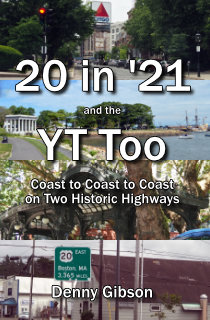 Missed it by that much. I had this really great idea for a book title, and even figured out the story that would fit it. I would drive one way across the country on the Yellowstone Trail and the other way on US 20. I would do this in the year 2020, and the resulting travelogue would be perfectly described by that catchy title: 20 in ’20 and the YT Too. But COVID-19 played havoc with 2020 travel plans and the wonderful title’s “best if used by” date came and went. I made the planned trip a year later and adjusted the title appropriately. It’s admittedly not quite the same but it’s not horrible. Is it? Well?








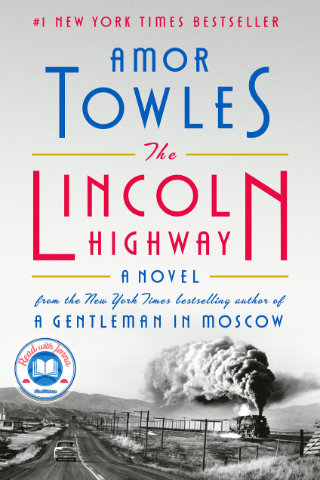 This post is a direct violation of one of the claims made on this blog’s “About” page. There the claim is made that “You will not be seeing a review of the latest novel…”. I suppose I could claim that, at the time of this review, The Lincoln Highway: A Novel is no longer the absolute latest novel, but the fact that it is a “#1 New York Times Best Seller” means it is precisely the sort of mainstream major publisher offering I had in mind when I made that claim. My primary defense is that I was tricked into reading it. Realizing that not everyone will see that as a legitimate justification, I will try to minimize the impact of the violation by not doing a very good job.