Heritage Village Cincinnati

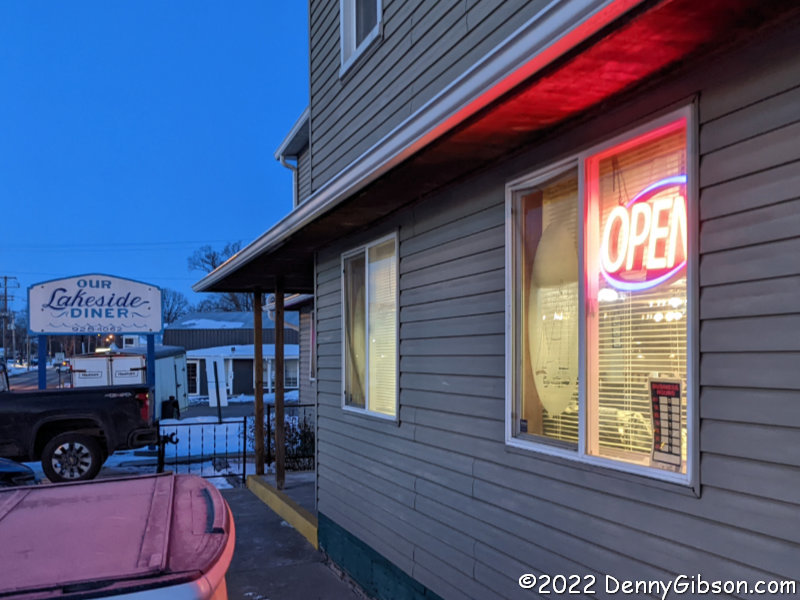
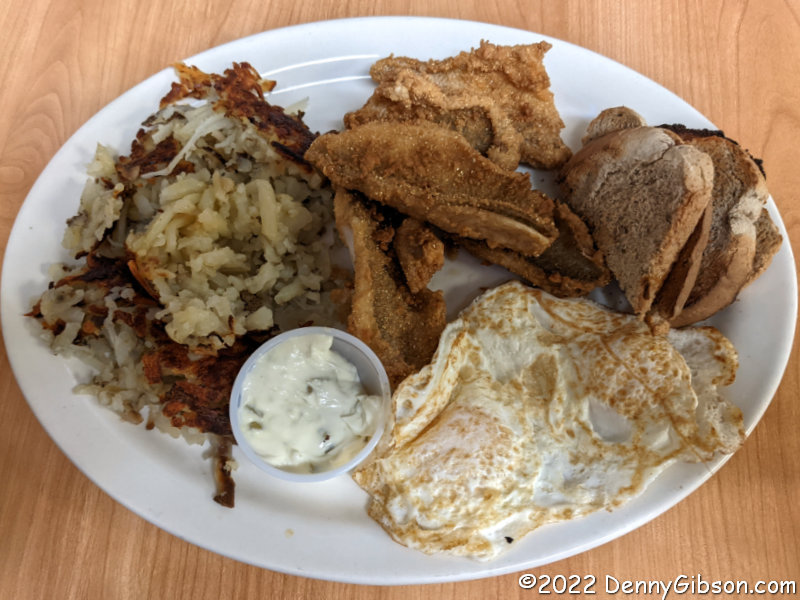
Friday felt a little odd. It had absolutely nothing scheduled but it was surrounded by days that did. Noting strenuous or even particularly time-consuming, but there were meetings and appointments with specific times that had to be attended to. It would seem logical, I think, to want to just sit around the shanty on that uncommitted day, and that’s probably what I would have done if the day hadn’t promised sunshine and 80 degrees. I know it was my awareness that there would soon be a huge gap between 80 degree days that made me want to avoid wasting this one. I went out to breakfast at a place a little farther away than normal and which I hadn’t been to in a long time. Over a goetta and cheese omelet, I pondered ways to put the day to use. Museums weren’t high on my list because I did not want to spend a lot of time indoors, but I eventually used “museum” as an internet search term and got a near-perfect hit. Heritage Village Museum & Education Center is definitely a museum. It says it right there in the name. But it also says it’s a village which means there is some open space. It really did seem to be exactly what I was looking for.

It wasn’t far from the restaurant where I was eating, so I simply headed directly there when I was done. As I approached the building where admission fees are collected, I passed a sign stating that guided tours were scheduled for 10:00, 12:45, and 3:00. It was about 10:30. Inside the building, I joked that I’d timed my arrival quite badly for a guided tour. The attendant agreed and added something about the last one being yesterday. I eventually figured out that guided tours are given May through September, and that she meant the last one for the year. It was October 1. I somehow felt less foolish missing a tour by a day than by half an hour. I paid my admission. received a self-guided tour brochure, and set off to guide myself.

The first building encountered was also the first building moved into the village. Elk Lick House was from a spot in Clermont County that is now covered by East Fork Lake. The Chester Park Train Station and Crossing Tender’s Booth came from Winton Place across Spring Grove Avenue from Chester Park racetrack and amusement park. The McAlpin’s clock is one of the few things in the village I remember in its original location. It stood in front of the store on Fourth Street from 1992 to 1999. It was actually the fifth clock to stand there with the first four falling to “the elements and traffic mishaps”.

The Fetter Store came from what is now known as Owensville in Clermont County. It was built around 1866. Dr. Langdon’s Office was moved here in 1973 from the Linwood section of Cincinnati. Preparations for Halloween and trick-or-treating were in evidence behind the doctor’s office as well as in that tender’s booth back at the train station.

Myers Schoolhouse is the newest addition to the village and is actually still in the process of being restored. It was moved here in 2008. Its official name was Delhi Township District School #3. It was in use as a school from 1891 until 1926 when Delhi Township consolidated all of its schools.

After reaching the schoolhouse and turning around, the first building encountered is the Somerset Church. The Presbyterian church was built around 1829 and, until it was moved to the village in 1991, stood near Fields Ertel and Montgomery roads less than a mile from where I currently live. Next to the church is the Kemper Log House and a reproduction of its stone kitchen. The house that Rev. James Kemper built in 1804 is the oldest structure in the village. It originally stood near where Cincinnati’s Eden Park is today.

The Hayner House is both the beginning and end of the tour. It was built near South Lebanon in the 1850s. In the village, it faces Sharon Creek as it once faced the little Miami River. The entrance to the museum and gift shop, where tour tickets are purchased, is on the other side of the house. A glance down while walking between the creek and the house can provide a reminder as to just which state you are in.

Smooth As Glass

Not long ago, I read about Jack Pine’s Glass Pumpkin Festival in a Make The Journey Fun blog post and thought it interesting but just a bit far away for a casual outing. Then City Beat published an article on it that renewed my interest but didn’t make it any closer. The weather, however, did. Right on cue, temperatures plummeted into the 40s on Wednesday, the first day of autumn, and stayed there Thursday. Possible rain was predicted for Saturday and Sunday. Grasping at Friday’s sunny and 70 seemed a very logical thing to do and the two-hour drive to the festival became a very logical way to do it.

I had not signed up in advance so didn’t make it into the reserved parking area but walking from the overflow area was hardly a hardship and the $5.00 parking fee was the only thing even remotely resembling an admission charge. That’s Pine’s studio and production facility in the first picture. The “pumpkin patch” pointed to by the arrow in front of the biggun in the second picture is shown in the third. It’s where pumpkins and other products of the Pine studio are displayed and offered for sale.

Pumpkins and pumpkin-shaped items are naturally the biggest sellers at this time of year. The theme for the 2021 Pumpkin of the Year is “Celebrate Life”. A number of them are lined up in the second picture. No two alike, but no two totally dissimilar.

There are some real pumpkins in the patch and some of those are quite impressive.

Glass pumpkins outnumber the organic kind and will undoubtedly outlast them, too.

After making a pass through the Pumpkin Patch, I roamed among the other vendors taking glorious photos of the sunlight sharing itself with their glass and metal art. I captured a pumpkin ice cream cone held high in front of the place where I bought it and took pictures of the fellow who played guitar and sang while I ate it. I entered the studio and recorded several phenomenal photos of the talented glass blowers and the gorgeous objects of art they produced. Then I misplaced the SD card containing those photos. This photo taken with my phone is all I’ve got. The festival continues through today (Sunday) so there’s time for you to take your own pictures. Or find some in the parking lot.

ADDENDUM 27-Aug-2022: The chances of finding pictures in the parking aren’t as good as they once seemed. The lost SD card was found and turned into its own post for Halloween. It’s here

PA Cars

I pieced together a trip from odds and ends and leftovers then slapped on the name PA Cars because it includes a couple of Pennsylvania car museums. I’m going to learn to drive a Model T at one of them. The first day’s journal has just been posted despite it being the end of the trip’s fourth day in real life.

This entry is to let blog only subscribers know about the trip and to provide a place for comments. The journal is here.

Remembering Larry

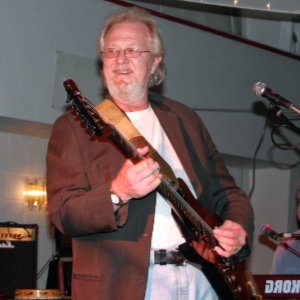
Larry Goshorn - Cincinnati Summer of Love Reunion 2008Larry Goshorn left us this week. There was what seemed to be a promising upturn after a few rough days in the hospital but it was not to be. He breathed his last on September 14. I did a lot of remembering back in 2012 when he announced his retirement from performing. I was among those who didn’t completely buy that and expected him to occasionally pop up on a stage for a song or two, but I don’t believe he ever did. He did do some producing and wrapped up a long-simmering project in 2016 with the release of “I Wish I Could Fly“. Nine of the album’s ten songs were written entirely by Larry and the tenth was written by Larry and his wife Kim. The backing musicians were Cincinnati all-stars in various groupings. Plenty of current stars were always ready to play with Larry and Larry was always ready to help the not-yet-stars, too.

I’m going to let my 2012 Hats Off to Larry post supply most of the memories for this post. If I were to redo it, “I Wish I Could Fly” would be one of the two big additions. The other would be the song he wrote and recorded last year that was his response to the death of his brother Tim in 2017 (Remembering Timmy).

Big thanks to Jerry Burck for providing an embeddable version of the recording. It grabbed me when I first heard it in February 2020. Its grip is even firmer now. 

Kim’s (Is) Back

Not only is Kim’s Classic Diner back in operation, owner Kim Starr is back at the helm. After years of wanting to own a diner, a few more years shopping for the right one, and another year moving and rehabbing a 1946 Silk City, Kim seemed to be living her dream. That dream, however, was put on hold about a dozen years ago so that Kim could devote all of her energy to helping her daughter deal with life-threatening heart and lung issues. Now it is those threats that have been put on hold — hopefully forever — as daughter helps mom bring her diner back to life.

There were attempts to keep things going without Kim’s involvement. Over the years, the diner was leased to three different operators but all three failed as a business, a responsible leasee, or both. I remember two of them but must have missed the third one entirely. I know it can’t be easy to make a classic diner go in a town of well under 3,000, but every time I drove through Sabina and past the closed business, I thought to myself that this place would be hopping if Kim was still here.

Well, Kim is here now, and while the place may not yet be hopping all the time, it apparently is some of the time. Employees spoke of being “swamped” on occasion and a scan of the diner’s Facebook page shows that the daily specials have “SOLD OUT” more than once since the August 20 reopening. I was there on Friday for breakfast. It wasn’t swamped but I sure was not alone. I did my normal dawdling while other customers came and went and I think there were always between five and ten people eating with me.
My Friday visit was just one day shy of the eighteenth anniversary of the original opening. One of the reasons Kim had picked the second anniversary of the 2001 terrorist attacks for her opening date was the diner’s New York history. I was happy to see articles about that history back on the walls and especially happy to see that three mugs from those days (delivered to Kim by a visiting waitress) were back on the shelf. These were among the items that had gone home with Kim for safekeeping during her absence from the diner.

In addition to being one of the coolest diners within my extended neighborhood (It’s about 40 miles straight up US-22), Kim’s is special to me for another reason. It was the subject of the first of four Diner Days articles I wrote for American Road Magazine between 2006 and 2008. It was, in fact, the very first thing of mine published to the general public. In that article, I spoke of the use of car names for breakfast selections, and I am happy to report that that is once more the case. This time I had a Mercury.   
WTC and Me

Nineteen years ago, on the first anniversary of the terrorist attacks that killed so many innocent people in New York City, at the Pentagon, and in a Pennsylvania field, I posted some of my related memories on this site. A standalone web page was used as this blog did not yet exist. The page was accessible for many years through a link on this site’s home page. That link was eventually removed during a site layout change. However, the page itself remained in place for some time even though there was no way to access it other than entering its URL. Early this year, when the site was moved to its current host, the page was among those not making the move so that even a direct URL became useless. Today, on the twentieth anniversary of those attacks, I have restored the page and am providing access to it here and through the image above even though the page continues to be much more personally therapeutic than generally informative.  

Ohio Cup Vintage Base Ball 2021

I saw my first vintage base ball game right here in Ohio Village back in 2010. It was a July 4th Ohio Muffins intrasquad game. The Muffins might be the oldest vintage base ball team in the country and are definitely the first to play a regular schedule. They are currently celebrating their 40th year of existence. The big end of summer gathering of teams called the Ohio Cup Vintage Base Ball Festival was well established when I saw that 2010 game but this is my first time attending. This is the 29th festival after a COVID19 triggered cancelation last year.

The game is played with the rules, equipment, and courtesy of the 1860s. There are no big padded gloves or other protective equipment. Pitching is underhanded with no calling of strikes or balls. The idea was to put the ball in play, get some exercise, and have some fun. Having fun today includes dressing the part by both players and umpires.

There are 25 teams participating in the festival with games taking place on four diamonds. The teams come from places as far away as Tennessee and Minnesota and their friends, families, and idle players make up a large part of the audience although there are a fair number of pure spectators like me. Note that the event is called a festival rather than a tournament. The goal, remember, is to have fun. There are no trophies and no official winner beyond the individual games

Without the need to call strikes and balls, the (there’s only one) umpire’s main job seems to be identifying foul balls.

Runs and outs can only happen after a ball is hit. Runs have always been scored only by crossing home plate. Then as now, a runner can be retired with a tag or a force-out, and catching a hit ball in flight seems to have always resulted in an out. In 1860 and in Ohio Cup Vintage Base Ball, catching a ball on the first bounce also counts as an out. I’m guessing that went away when padded gloves appeared.

At the end of each game, the teams line up along the base paths and a member of each team gives a short speech that usually has a few jokes and a compliment or two. Then each team gives three huzzahs before they pass each other and shake hands. Yeah, that’s the way it should be done. Huzzah! Huzzah! Huzzah!


I’d heard about an Umbrella Alley in Columbus so decided to take a look while I was there. It was rather nice but, after seeing the Umbrellas in Batesville, also rather underwhelming with a total of thirty-nine umbrellas. I thought the giraffe at the nearby Lego store was cooler.

An Airy Plane Ride

A couple of weeks ago I credited a blog post mentioned by another blog post with nudging me to revisit Hartman Rock Garden. However, it wasn’t the rock garden post that Jim Grey’s blog actually referenced and which prompted me to subscribe to Make the Journey Fun. It was this one: Deep Thoughts In Flight. It really struck a chord.

It was a chord that was just waiting to be struck. Flying in an open airplane had long been part of my own — not particularly deep — thoughts and blogger Brandi Betts’ July post, along with a couple of others about her airborne experiences with Goodfolk & O’Tymes Biplane Rides, finally prompted me to act on those thoughts.

I spoke with owner/pilot Dewey Davenport by phone and made tentative plans for a flight on August 9. Clouds and the possibility of rain led us to postpone the outing, and when my friend John and I prepared to climb aboard on Tuesday, there was no doubt in our minds that the postponement was a good thing. The only clouds in the sky were the soft fluffy welcoming sort.

As probably everyone reading this knows, in the early days of flight, passengers sat in front of the pilot and this plane is definitely from those early days. The four-passenger (plus pilot) D-25 New Standard was built in 1930, less than twenty-seven years after Wilbur and Orville first left the ground in an aircraft with a passenger capacity of zero. During the in hangar preliminaries, Dewey gave us a rundown of the D-25 in general and of this one in particular. Although it spent some of its middle years as a cropduster, it had been built specifically for barnstorming which is precisely the role it has returned to. A photo of this very plane appeared in National Geographic showing its use along the Snake River in one of the very first air rescue operations — in 1935!.

As we climbed into the sky, I, feeling we would likely need it later, kept an eye on our left landing gear. I assume John was similarly watching over the right side gear although I did not verify that. Conversation with protective earmuffs in place is challenging. I have flown in small airplanes in the past but never with the delightful in-your-face wind and noise of an open cockpit. I suppose it might become noticeably less delightful on a multi-hour flight to the coast although I’m not entirely sure of that. Experiencing flight in exactly the same manner that it was experienced close to a couple of decades before I was born was pretty darned cool and not a little exhilarating. Even though the overhead wing meant we passengers were traveling comfortably in the shade, the bright sun did enable me to take a long-distance selfie.

The view that an open aircraft provides is clearly unbeatable. In addition, Dewey made sure we experienced some of the unique non-visual sensations available as well. There was nothing remotely dangerous, of course, but we were treated to some climbs and dips that delivered that hint of weightlessness found on really good roller coasters. And there were some fairly hard banks. First to the right, so I could look straight at the ground right past John. Then to the left, so I could look straight at the ground right past nothing. That third picture might look like we are parked on the ground but nope. Dewey was just giving us a feel for what crop-dusting might have been like.

After we actually had landed, I exited ahead of John and turned around just as Dewey answered his question about where the nearest cornfield was.


Another flight was scheduled shortly after ours, and we stuck around to watch it take off. It was a very short taxi back to the runway then a revving of the radial engine started the airplane speeding — in a leisurely manner — over the grass to break free — also in a leisurely manner — from Earth’s surface. Dewey is almost always successful in his goal of making sure every customer has a great experience. He definitely works at it. The only time someone has been unhappy was when a flight had to be canceled due to darkness. Not only do people leave feeling happy, a goodly number no doubt leave feeling envious of Dewey’s “office”. John and I sure did.


I don’t have a “favorite blogs” list, but if I did Make the Journey Fun would almost certainly be on it. Brandi Betts visits some of the same sorts of places I visit and writes about some of the same sorts of things I write about. She does it more frequently (often daily), also writes about some things I do not (e.g., her cat), and has the occasional deep thought post more often than I do (which is pretty much never). But even if she had not turned me onto a wonderful keeper of bi-planes or reminded me of a delightful rock garden I’d still applaud her blog simply because of the name and the tagline. And that’s some pretty deep thought for me, eh? 

Music Hall Inside and Out

I recall that at some point during the COVID-19 “shutdown”, outside tours of Cincinnati’s Music Hall became available and I had every intention of joining one. I do not recall why I didn’t. I finally made it on Saturday but by then, inside tours were also available so I did one of those on Friday. I’m no stranger to the 144-year-old building and even posted some 100% layman-type commentary on the place before and after its recent renovation: A Pre-Refurb Peek at Music Hall and A Post-Refurb Peek at Music Hall. But what little I did know about the building came purely from attending events there so I learned plenty from both tours.

Much of Friday’s tour was through public spaces I was fairly familiar with but which I’d never seen without a crowd of concertgoers. The statue of Reuben R. Springer is in the main lobby. Springer donated the majority of the money to construct the Samuel Hannaford designed building that replaced a tin-roofed wooden structure on the site. During the 2016-17 renovation, the solid wood doors across the front of the building were replaced by glass doors that really brightened up the lobby. Two of the original doors now stand behind each of the two bars in the corners of the lobby.

The main performance space is named Springer Auditorium and I’ve been inside it quite a few times. That includes once since the big renovation so I was aware of improvements like the wider seats and overhead acoustic panels. I was not, as a certain cinematic scientist might say, shivering with anticipation when we entered but maybe I should have been. I knew that the 1,500-pound Czechoslovakian chandelier was lowered and cleaned on a regular basis and was even vaguely aware that it happened every two years but I had no idea that one of those cleanings was currently in progress. Seeing all that crystal at eye level with the ceiling images unblocked was probably the day’s personal highlight for me.

We did get into some non-public spaces I’d never seen before. One of these was the huge backstage area with a glimpse of the main stage through a narrow opening. Another was the north hall which was originally built for industrial exhibitions but which became an athletic venue at some point. It was here that Ezzard Charles won many of his fights on the way to becoming World Heavyweight Champion and where the Cincinnati Bearcats played basketball in the 1940s. Cincinnati Gardens effectively took over the job of hosting Cincinnati’s athletic events when it opened in 1949. This is where I took the picture of the handpainted Music Hall that opens this article.

Friday’s last stop was the upper floor of the south hall. The south hall had been built as a place for agricultural exhibits. With its glass roof, it functioned as the city’s horticultural showplace until Krohn  Conservatory opened in 1933. Since then, it has served as a nightclub and dance hall in various forms and today is often rented out for private functions. I have been here a few times but only when it was jam-packed with people.

There were, of course, no non-public spaces on Saturday’s outside tour and I don’t believe I actually saw anything that I had not seen before. I did, however, learn quite a bit and now see some things differently. I know I’ve heard the architectural style described and may have even heard some form of the name our guide used; High Victorian Gothic Revival. But I don’t recall ever hearing the idiom he shared: “stripes and spikes”. He attributed this to an architecture critic of the day and it certainly seems to fit.

The south hall is marked with leaves and flowers to match its agricultural purpose while the north hall’s industrial connection is indicated by gears and mallets. Musical lyres adorn the central building.

The main building displays its year of completion if you can sort the digits into the right sequence. The two side buildings were completed during the following year. The fronts of all three were constructed with glazed bricks brought from Philadelphia and Zanesville. Some of these were then black coated on site. The rear portion of the buildings used less expensive local bricks and some additional money may have been saved by not paying someone to shuffle the build date.


Music Hall is close to downtown Cincinnati and I used the tours as an excuse to eat at a couple of favorites I don’t get to all that often. Friday’s tour was in the afternoon and I stopped by Camp Washington Chili on the way home but took no pictures. Saturday’s tour was in the morning and I headed to the Anchor Grill for breakfast. I did not intend to take pictures there either, but a banner in the parking lot changed my mind. Anchor Grill survived the worst of the pandemic on carryout so I checked before I went, and was happy to see they were now allowing dining-in. Apparently, they’ve been doing it since May, and that’s when the actual 75th anniversary was, too. I really should have been paying attention.

In my experience, the Band Box isn’t played much but almost as soon as I got my order in today, the curtain opened and the music began. It was still going when I left with the animated dance orchestra performing a non-stop medley of brokenhearted country love songs. I thought that was really special. And eating in restaurants older than me two days in a row is pretty special too.

The Berlin Masterpieces in Cincinnati

This post’s title is a take-off of the title of an exhibit at the Cincinnati Art Museum the full and accurate title of which is Paintings, Politics and the Monuments Men: The Berlin Masterpieces in America. At the heart of the exhibit is the story of a wildly popular, though somewhat controversial,1948 tour of paintings with its own title: Masterpieces from the Berlin Museums. The tour did not reach Cincinnati although two of the fourteen cities it did reach, Cleveland and Toledo, were in Ohio and there is a major Cincinnati connection.

The picture of General Eisenhour looking over some of the paintings that the Nazis had hidden away is at the entrance to the exhibit. On the other side of the wall it is mounted on, there is a timeline of the Nazis’ rise and fall that ends with the Masterpieces from the Berlin Museums tour. Two items from late 1943 are “Allies invade Italy”, in September, and “Monuments, Fine Art, and Archives section (Monuments Men) of the U.S. Army is established”, in December. The Monuments Men (the subject and title of a 2014 movie) set out to locate and protect artworks at risk of being destroyed by the Nazis.

Thousands of items were located, some in a large salt mine, and brought together at Wiesbaden, Germany. This is where the Cincinnati connection comes in. The director of the Wiesbaden Central Collecting Point was Cincinnatian Walter I. Farmer. By itself, his work in documenting pieces of art and preparing them for return to their owners would have been noteworthy but there was something more.

When he became aware of plans to ship a large number of paintings to the U.S. for safekeeping, Farmer organized thirty-two Monuments Men to produce the Wiesbaden Manifesto which protested what Farmer feared was “spoils of war” type treatment of the European treasures. Smithsonian Magazine calls this “the only act of protest by Army officers against their orders during the entirety of the Second World War”. Although it was eventually published, the manifesto was initially suppressed by Farmer’s superiors. The paintings were shipped to the National Gallery in Washington, DC, and placed in storage. As plans formed to return the paintings to Germany, it was decided to put them on display before their departure. An exhibit at the National Gallery was so popular that the U.S. Congress took notice and actually legislated the tour of thirteen additional museums. All 202 paintings were returned to Germany at the conclusion of the tour. 

Photos of “The Berlin 202” are displayed on a wall near the center of the exhibition. Four of the actual paintings, on loan from the State Museums of Berlin, are on display. The exhibit is fleshed out with other paintings in CAM’s possession by some of the artists contained in the 202. Paintings, Politics and the Monuments Men: The Berlin Masterpieces in America runs through October 3, 2021.