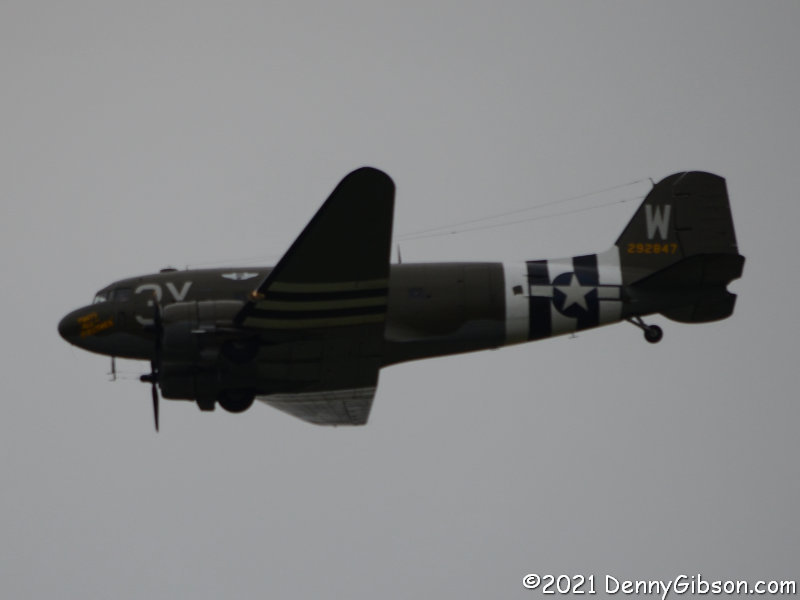
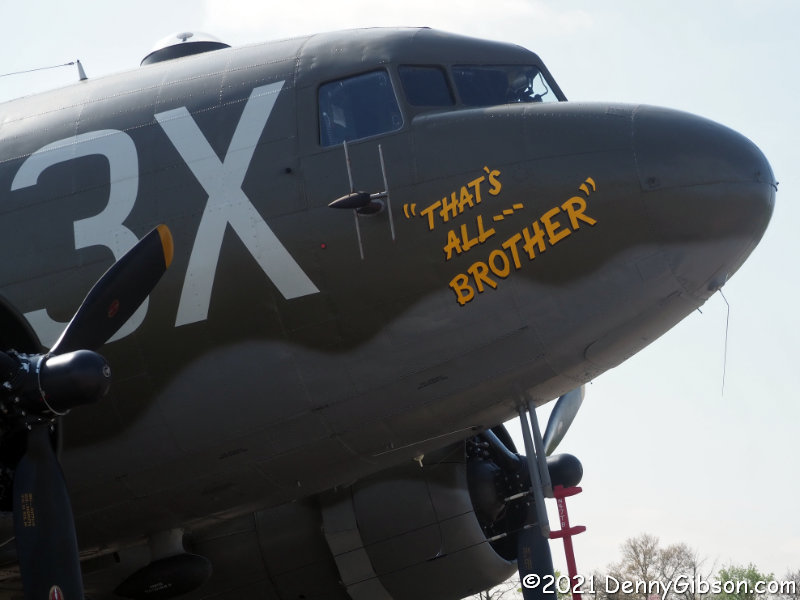
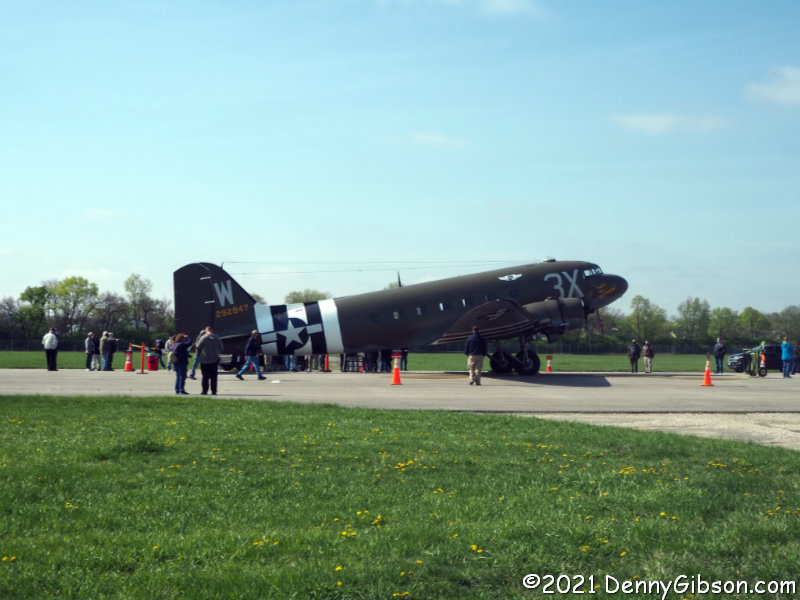
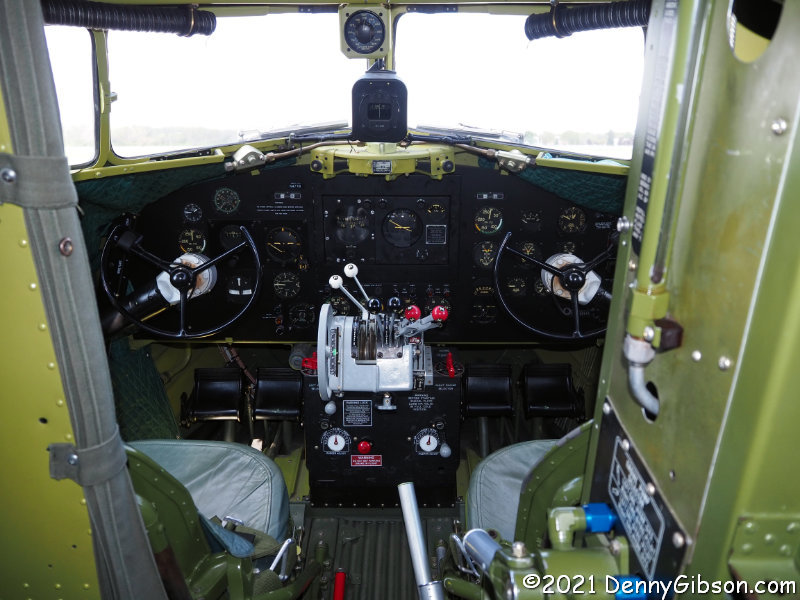
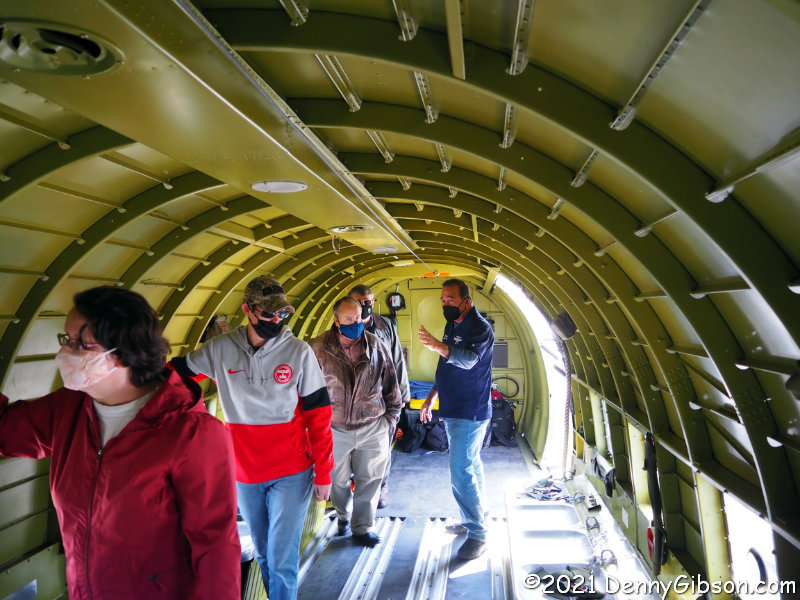
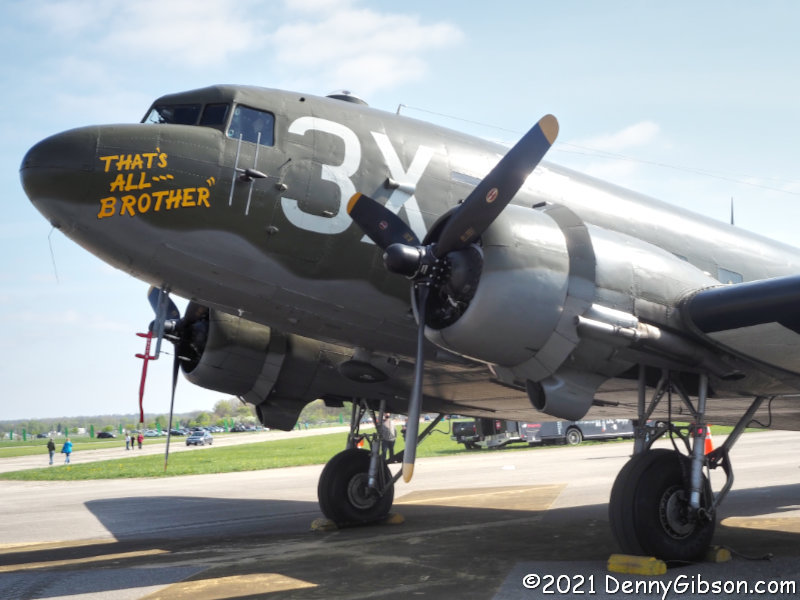
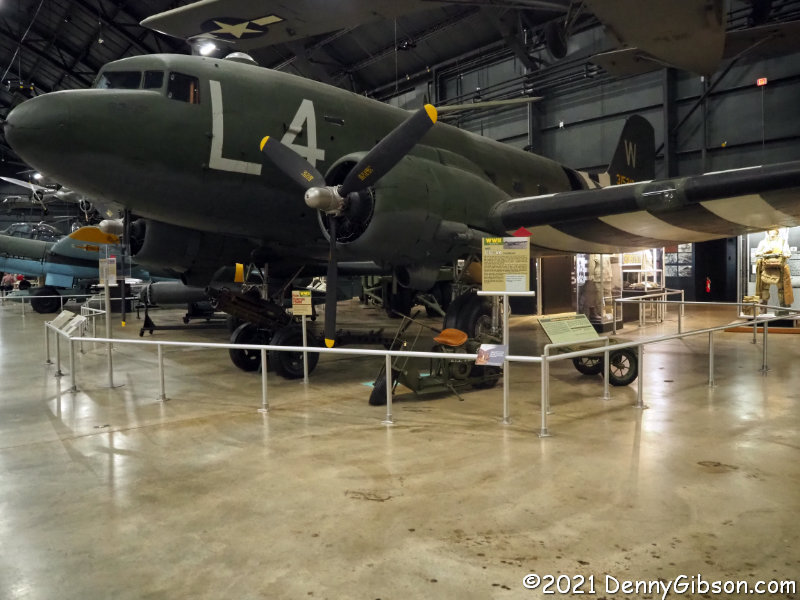
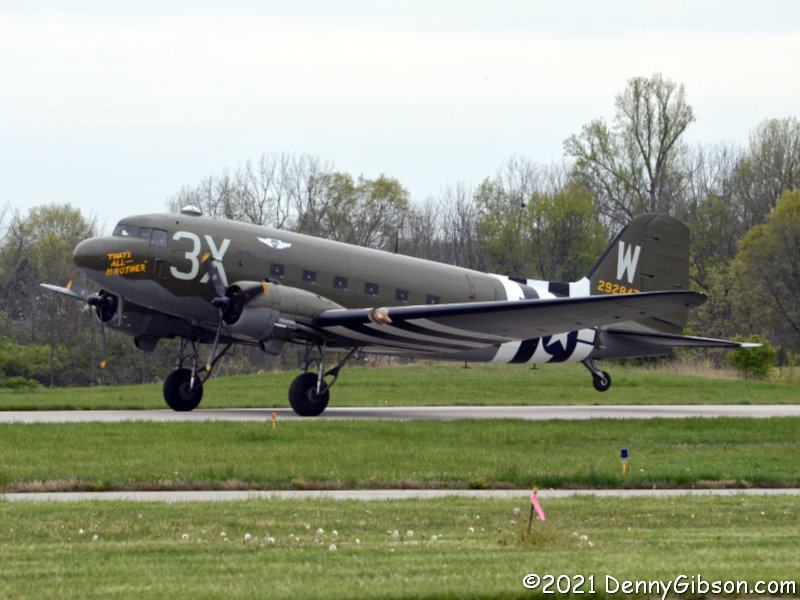
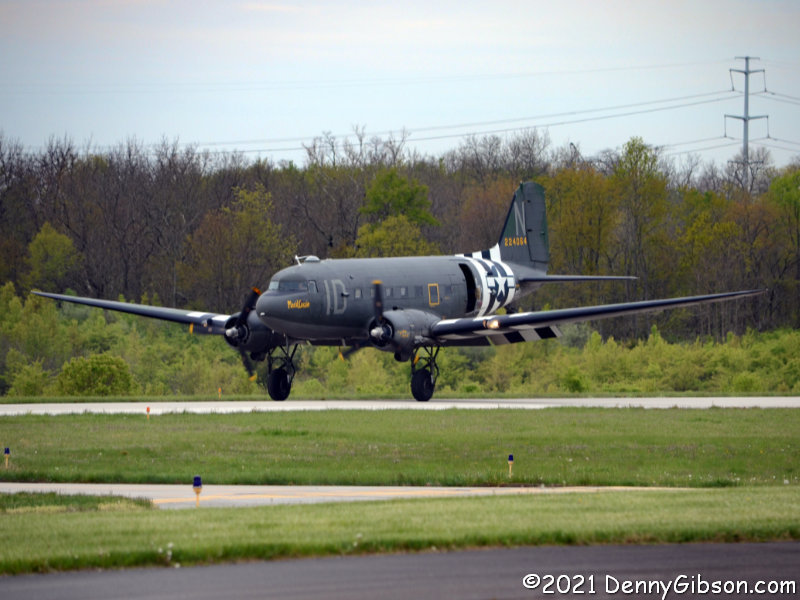
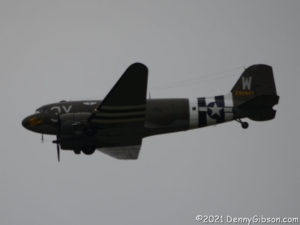
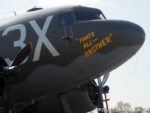
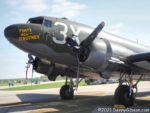
 Lt. Col. John M. Donalson named his C‑47 “That’s All, Brother” as something of a declaration that the Nazi’s success in Europe was just about over. Then he used it to lead more than 800 aircraft loaded with paratroopers across the English Channel to confront those Nazis on the night of June 5, 1944. When I heard that the plane was coming to the National Museum of the United States Air Force on Tuesday, I thought I might be interested in seeing it. When I woke up a couple of hours ahead of its estimated arrival time, I decided that I was interested in seeing it land.
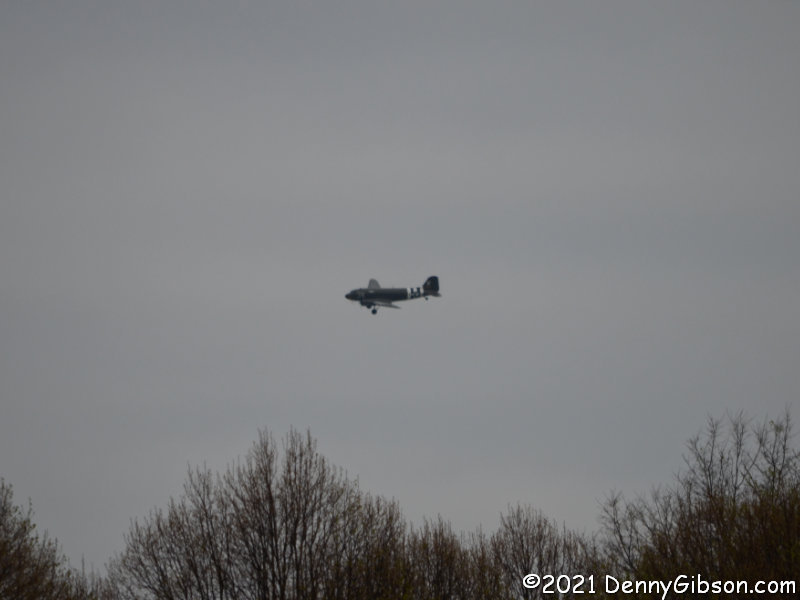
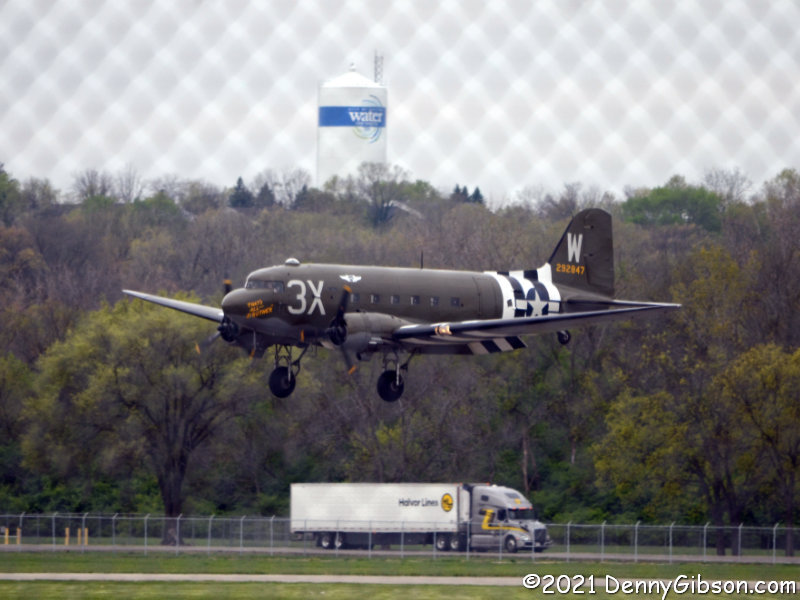
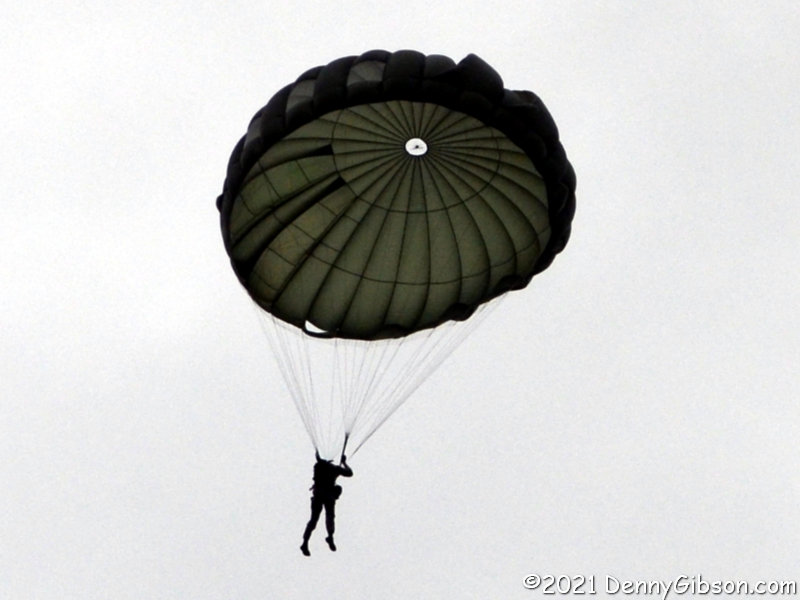
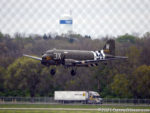 A one-hour window had been announced for the landing and the plane appeared just about in the middle of that window. It made one pass over the runway without landing. Maybe that was so the pilot could scope things out or maybe it was so people on the ground could take pictures like the one at the top of this article. It then circled the museum and dropped onto the runway without a hiccup. Even with a chainlink fence in front of me, I was able to get a shot of the big airplane slipping safely between a water tower and a tractor-trailer.
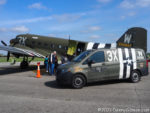
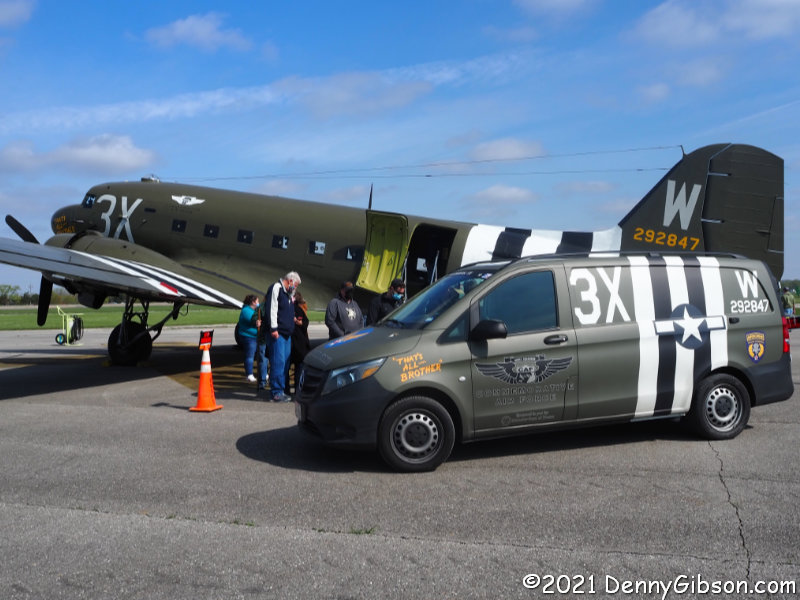
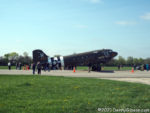 The museum’s announcement said that the plane would be available for up-close viewing, inside and out, once it was on the ground and parked. Inside viewing would be limited to two at a time. I figured there would be a long and — with the two viewer limit — slow-moving line to get inside the plane so I anticipated not doing that. I did walk out to the plane, however, to get a closer look and better photos. Next to the plane, T-shirts and other merchandise were being sold from a van. It’s a Mercedes. Maybe no one other than me saw the irony in that, and even I am unsure whether using a German vehicle with D-D stripes to support a U.S. WWII military plane is a major insult or simply cynical.
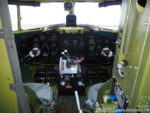
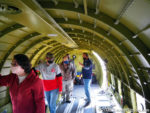
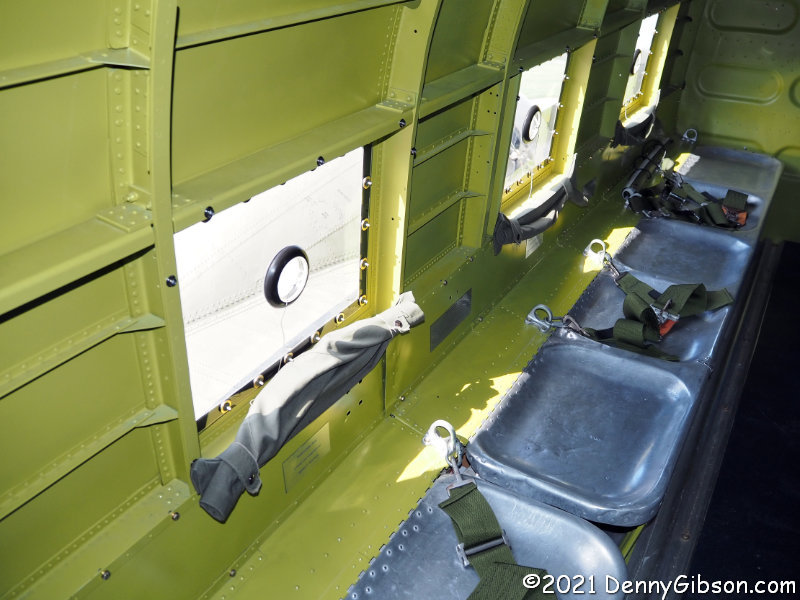
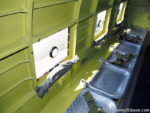 The line was not as long as I feared and the two-person limit was not in place although there was an effort to maintain social distancing and a mask requirement was being strictly enforced. The C-47 is a military version of the DC-3 so it isn’t completely unfamiliar. Of course, passengers seating in the DC-3s I’ve seen looked considerably more comfortable than this. Information on this plane’s history and future can be found at “That’s All, Brother”.
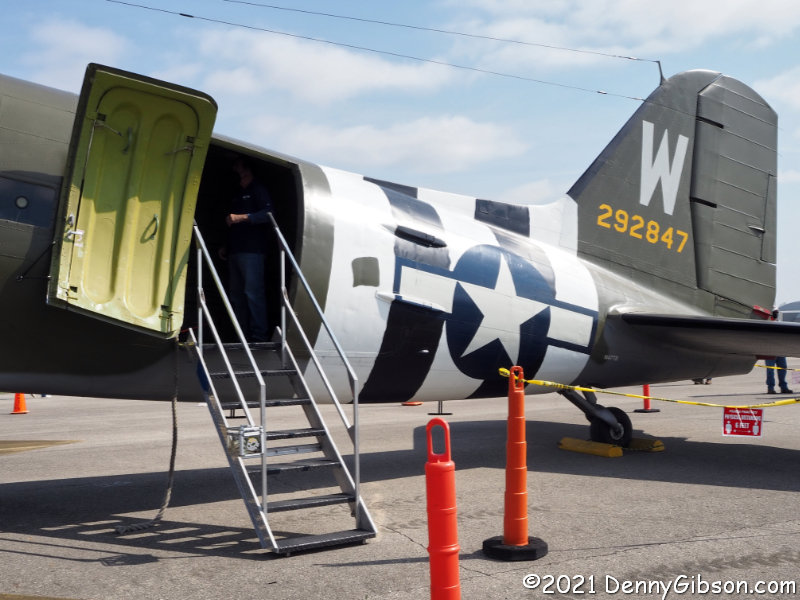
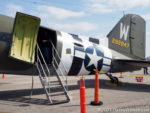 There was a lull in the boarding right after I exited the plane, and I was able to get a shot of the door. One of the operations “That’s All, Brother” was involved in after D-Day was dropping supplies in relief of the siege of Bastogne during the Battle of the Bulge. With a touch of awe in his voice, the docent inside the plane pointed out that those supplies were thrown out this very door.
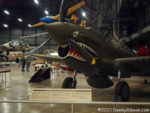
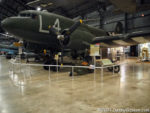
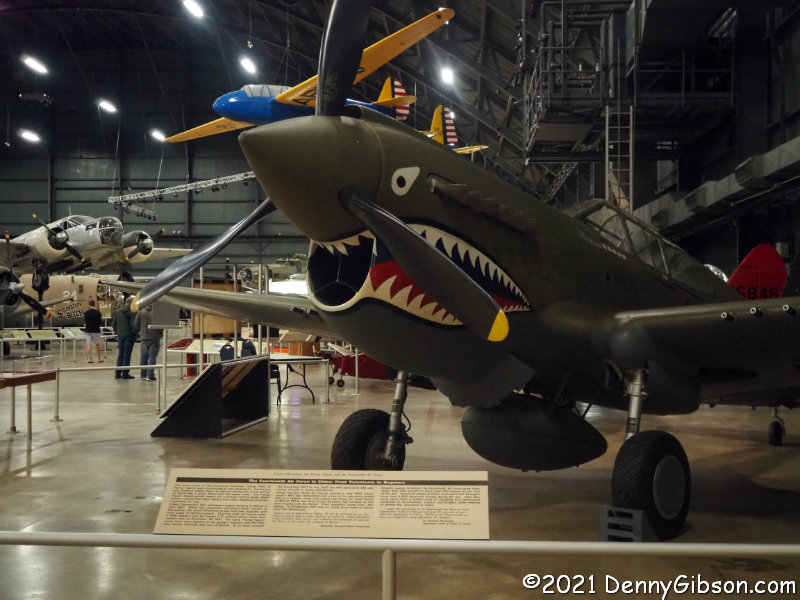
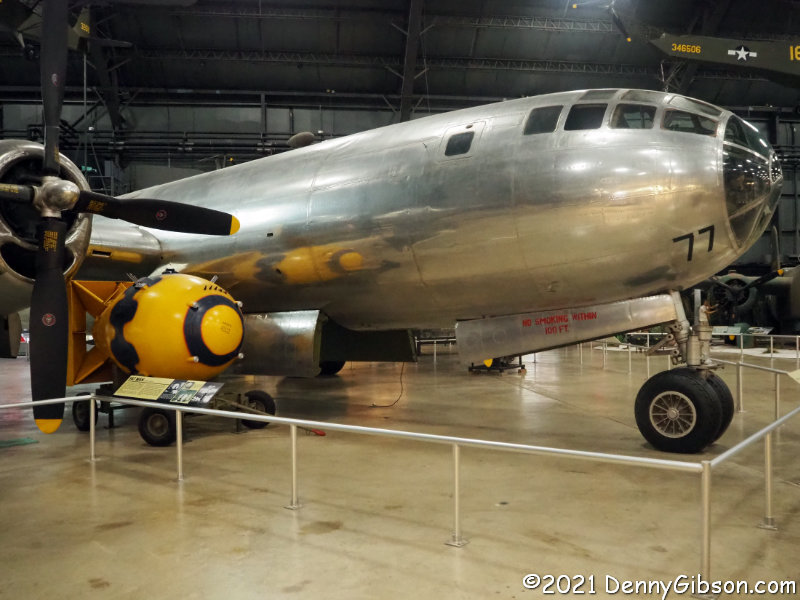
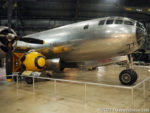 I could say that I took these pictures after checking out “That’s All, Brother”, but the truth is that there was a fair amount of time between the plane’s landing and it being available, and that’s when I went inside the museum. These pictures are, in fact, out of sequence. There are a few hundred aircraft displayed at the museum. Like “That’s All, Brother”, these are three with a WWII connection. The all-volunteer Flying Tigers, organized to fight in China before the U.S. entered the war used Curtiss P-40s. The C-47 in the middle picture was the last in routine USAF use. “Bockscar” is the name of the Boeing B-29 Superfortress that dropped an atomic bomb on Nagasaki on August 9, 1945. A mockup of that bomb, named “Fat Man”, is displayed beside it.
I’ve visited the museum several times and actually spent less time inside it today than on almost any other visit. But, for some unknown reason, I was really struck today by the amount of money, energy, and intelligence that has been devoted to creating machines whose sole purpose is the destruction of other machines — and people.
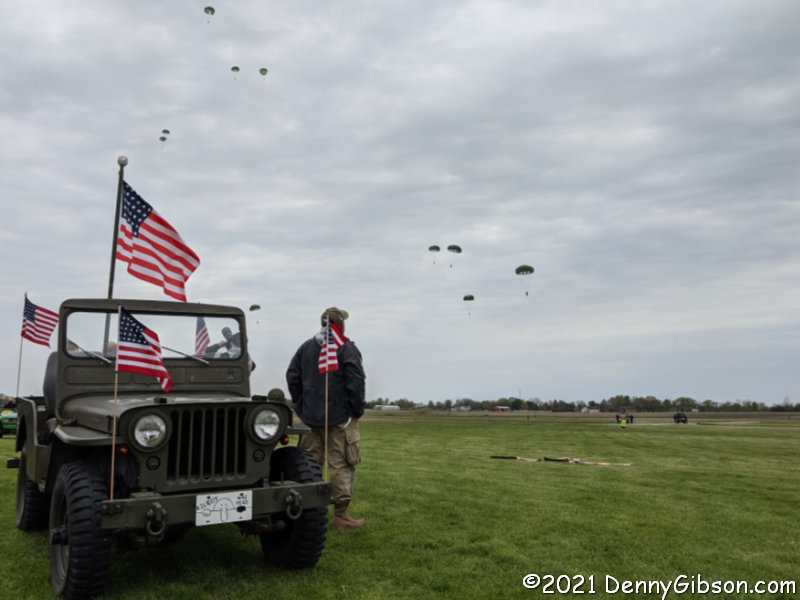
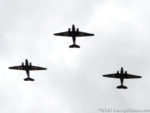 A friend called on Friday evening to tell me about a related event. “That’s All, Brother” was helping with a celebration honoring a local veteran. The celebration started Friday and would continue on Saturday. The fellow being honored was Jim “Pee Wee” Martin who parachuted into Normandy on D-Day and would be turning 100 on April 29. I decided I was interested in seeing that, too.
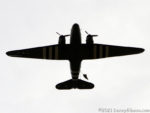
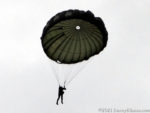
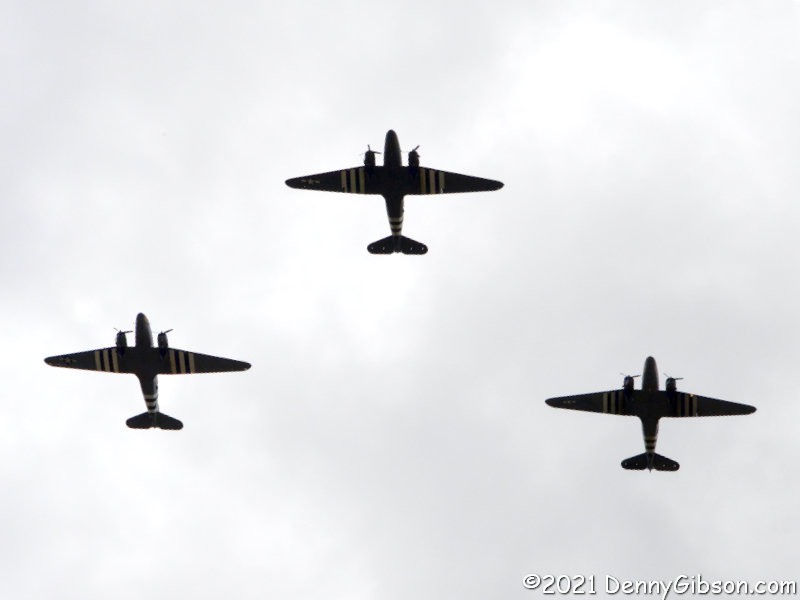
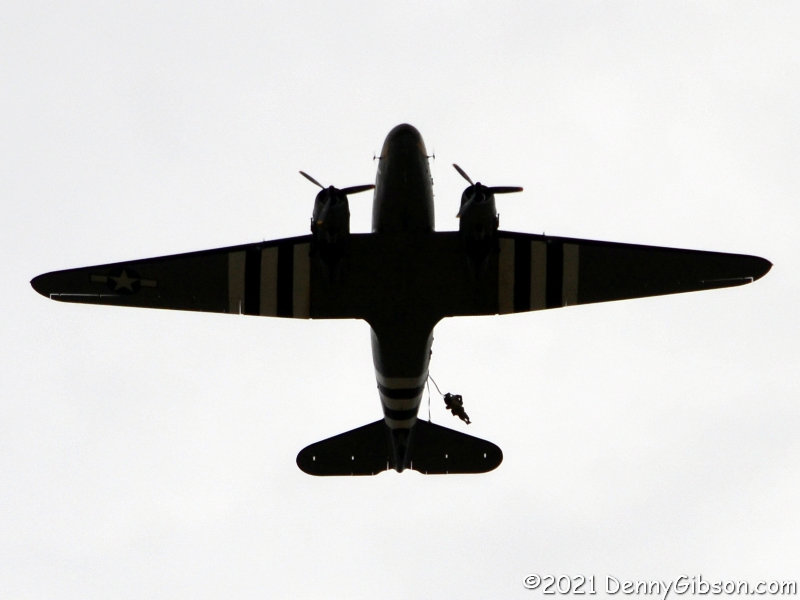
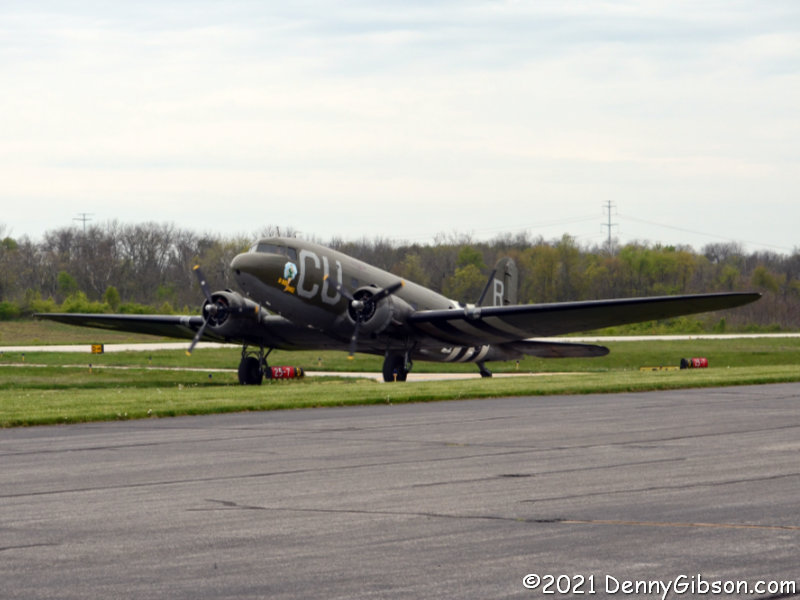
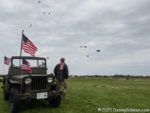 “That’s All, Brother” was joined by “Placid Lassie“, another C-47, and “D-Day Doll“, a C-53. All had participated in the D-Day invasion. As the three planes flew over Skydive Greene County, a couple dozen passengers exited. There were other jumpers, including the Army’s Golden Knights, and music, ceremonies, and fireworks were planned. Promised rain made an appearance about the time the Golden Knights finished their jump which prompted Terry, the friend who called Friday, and me to slip away while we were still mostly dry.
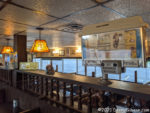
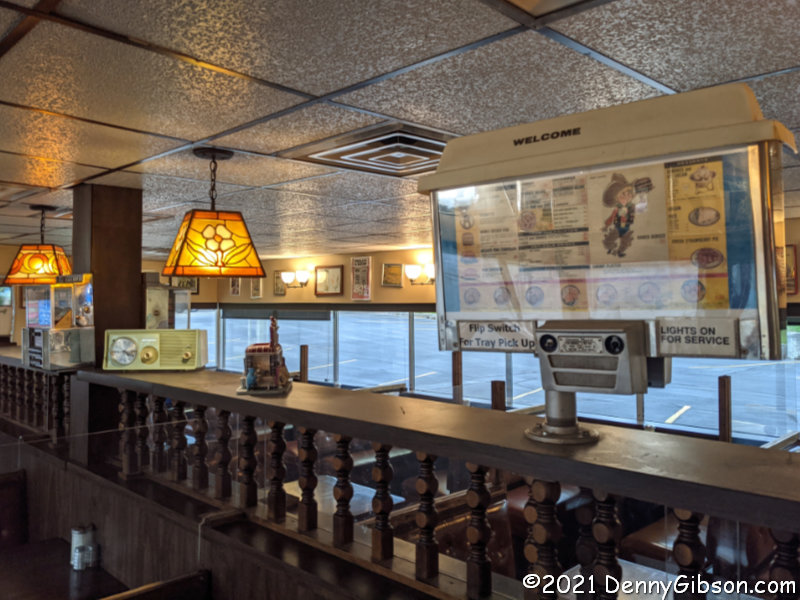
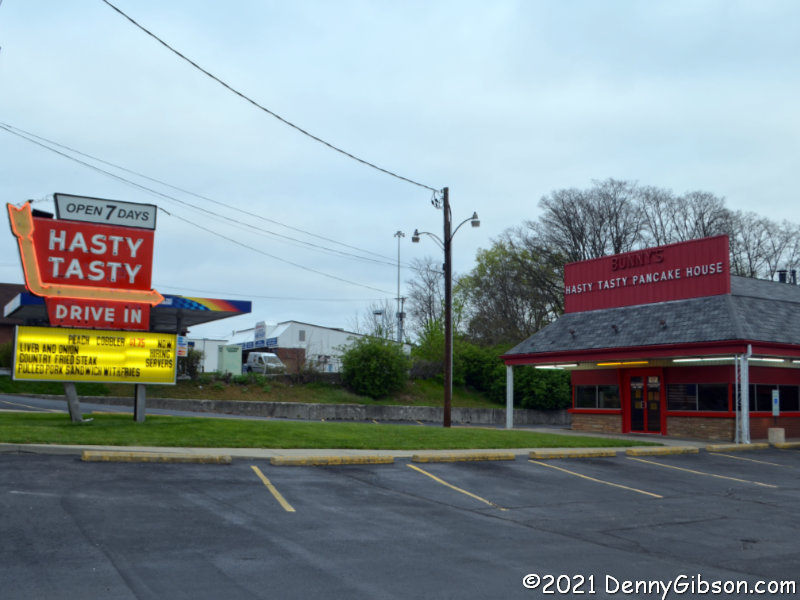
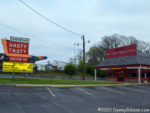 These pictures are from Tuesday and are very out of sequence. When time permits, breakfast at the somewhat nearby (4 miles) Hasty Tasty is a nice prelude to an Air Force Museum visit. Hasty Tasty was a local chain that peaked at thirteen stores. This is the last and may also have been the first.

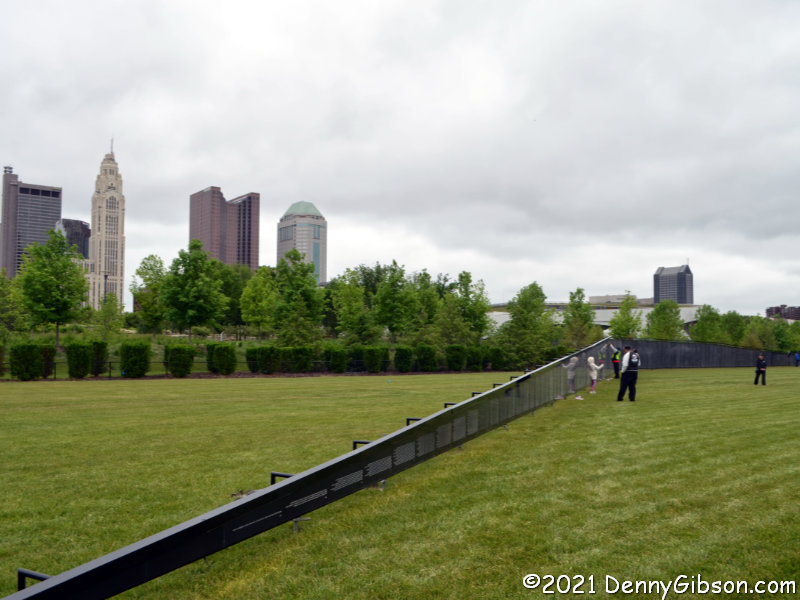 I have seen the real Vietnam Memorial Wall in Washington, DC, multiple times and a traveling version once. When I heard that a wall replica would be on display in Columbus over the Memorial Day weekend, I didn’t really feel an overwhelming need to see it. However, when I woke up Saturday morning, that’s exactly what I wanted to do.
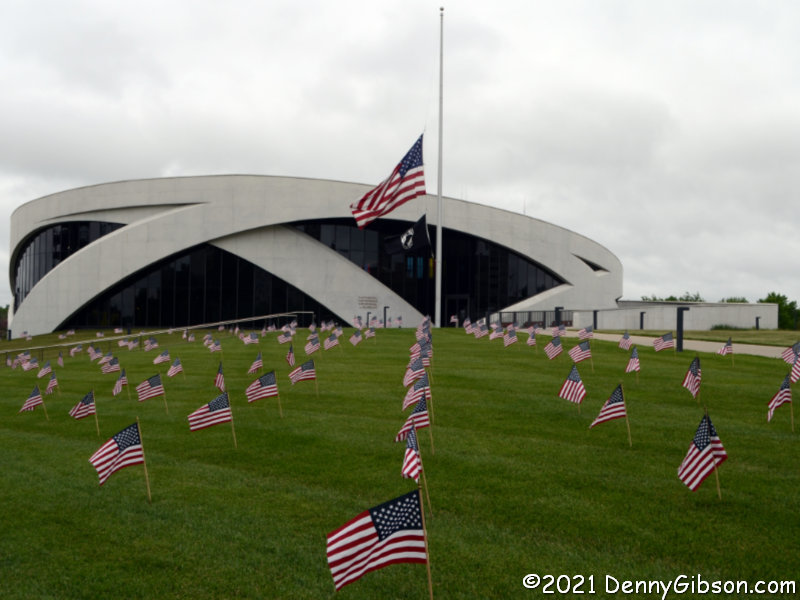 The Columbus display is hosted by the National Veterans Memorial and Museum. I have long been annoyed by people confusing Veterans Day and Memorial Day, and arrangements such as this may inadvertently contribute to the blurring of the two. They are not, of course, completely separable. They are two sides of the same coin or two branches of the same path. Everyone who joins the military will someday be honored by one — but not both — of these holidays.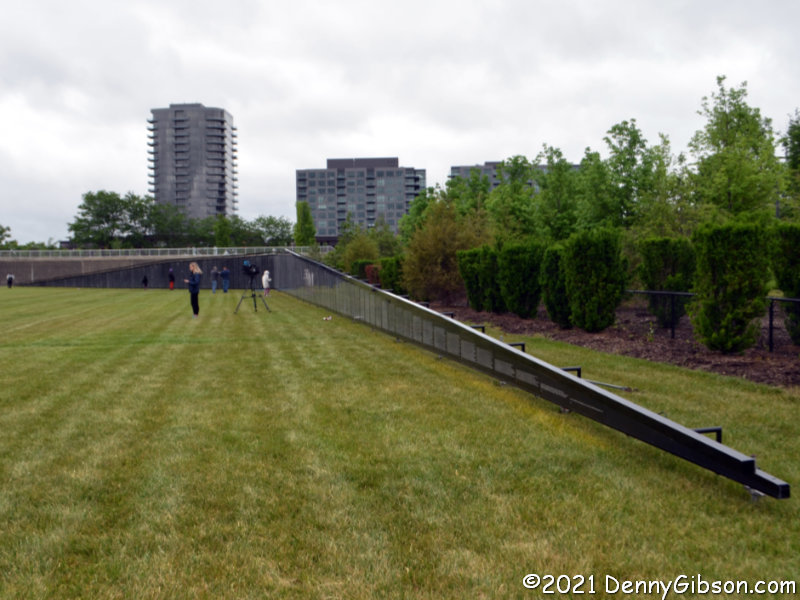
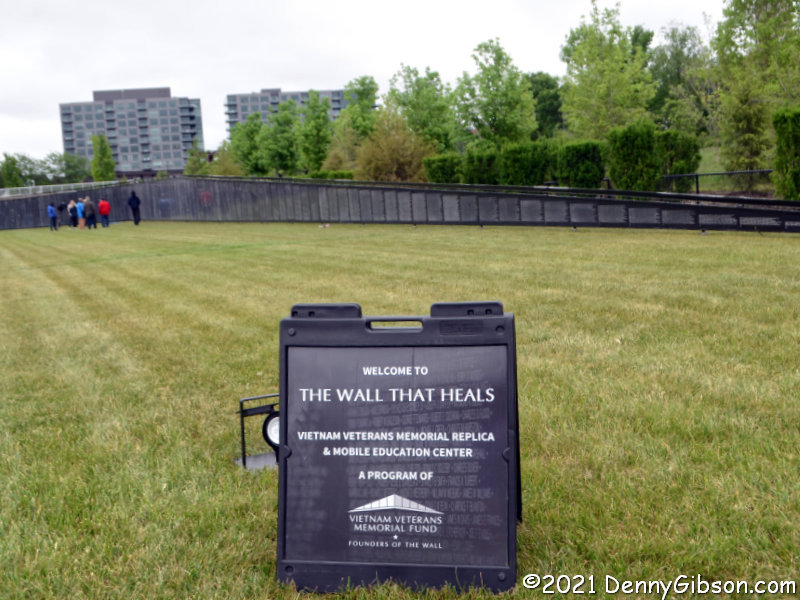 “The Moving Wall” is a half-sized replica that began touring in 1984. At some point, a second copy was created. It was one of these that I saw in 2008. The replica displayed in Columbus is a different one called “The Wall That Heals”. At 3/4 the size of the original, it provides a rather realistic experience. The openness of the museum grounds combined with the fact that I was there before much of a crowd appeared, allowed me to get the entire wall into a single photo. These pictures were taken a little before 9:00 AM. The museum opens at 10:00 and I’m sure the number of people on site picked up considerably then.
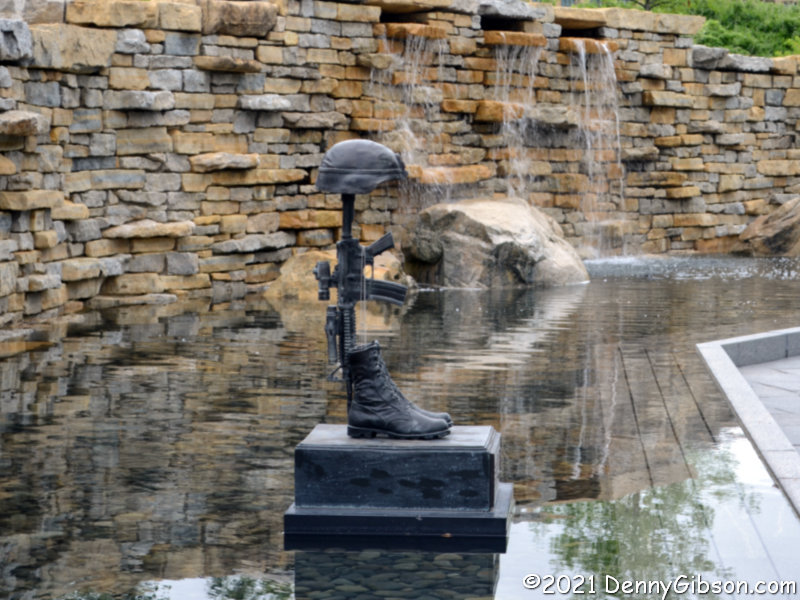 I visited the museum shortly after it first opened in 2018 and described the visit here. I did not enter the museum today. I did walk some of the paths and ramps that surround it. Although officially a place for and about veterans, even without the wall, the museum has several reminders that many who set out to become veterans never make it.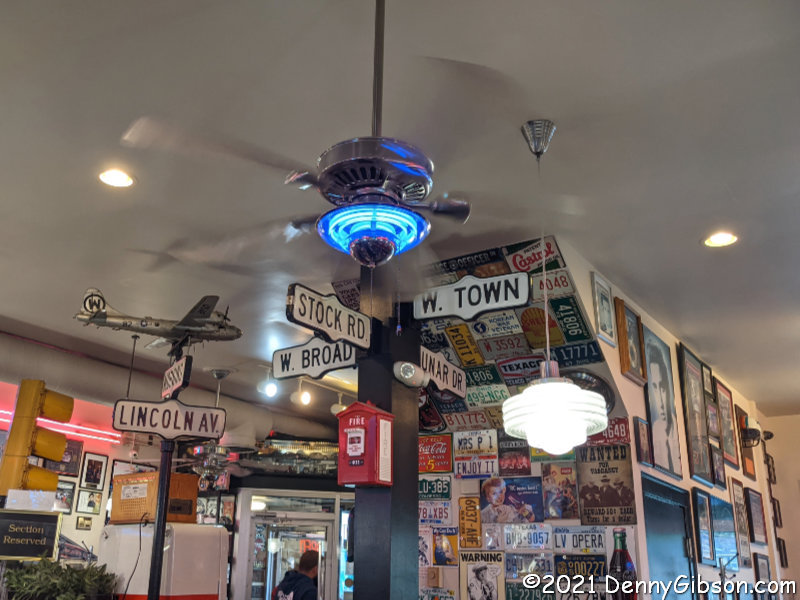
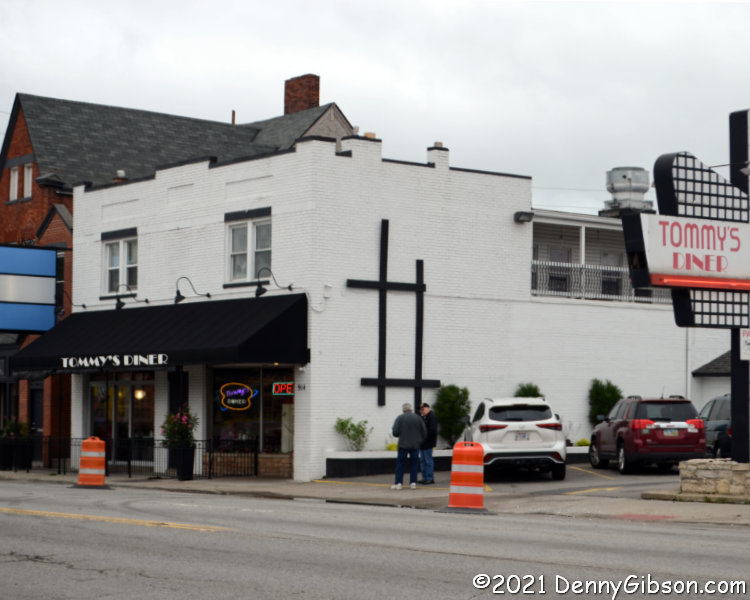 Any morning in Columbus is a good time for breakfast at Tommy’s Diner, but that seems especially true when the day’s destination is less than a mile away.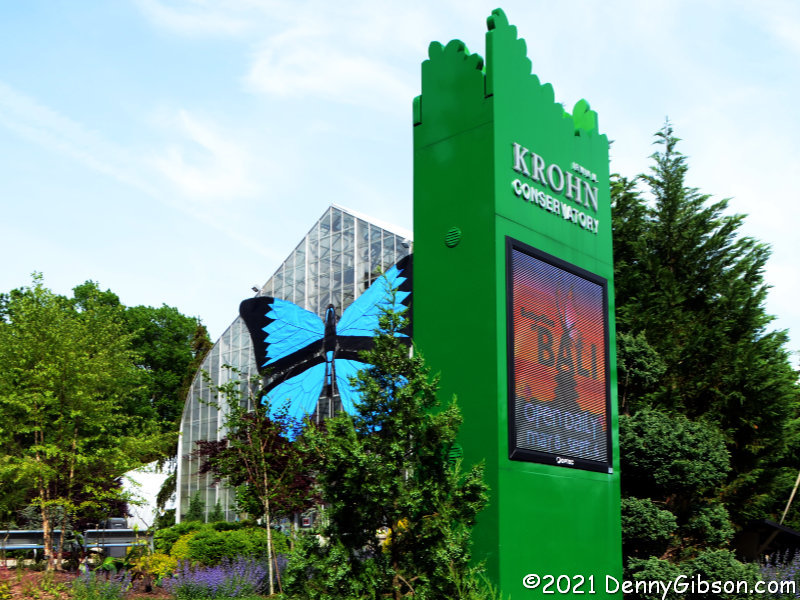






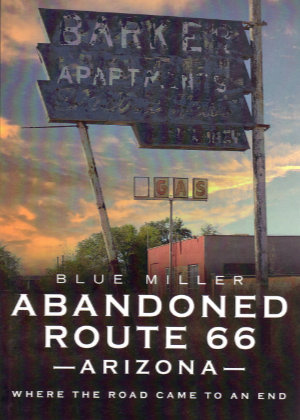 If I maintained a list of questions I frequently ask myself, “Why another Route 66 book?”, would be high on the list. I have never arrived at a reason that another one is actually needed; only justifications for ones at hand. Those justifications generally take the form of answers to two questions. They are, “What makes this book different from all others?”, and “Why should I buy it?” In practice, I ask them in the reverse order which means that, if I don’t have a good reason to buy a book, I’ll probably never get around to discovering what, if anything, makes it different.
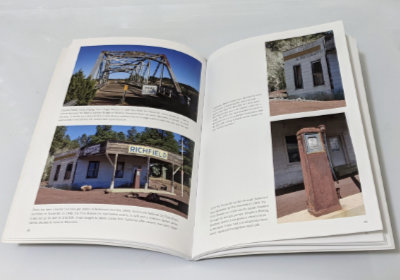 Although not of the coffee table variety, this is first and foremost a photo book. It contains upward of a hundred photographs, in color, printed on good quality semi-gloss paper. They are primarily documentary photos. That does not mean that they are boring, but it does mean that properly recording each subject is the main goal. The book is certainly not without its share of creative composition, but there are no abstract-light-patterns-on-pavement style pictures. There are usually two or more photos on a page for a max size somewhere around 5.5 by 3.5 inches. That might keep you from displaying it on your coffee table, but it is plenty big enough to show off bridges, buildings, and signs.
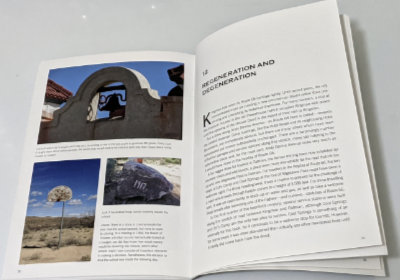 Yes, the pictures are cool and those of some fairly obscure places enlightening, but it is the words that made me happy with my purchase. The histories of most of the pictured buildings are told. Some are reasonably well known and available elsewhere, but Miller’s telling is both complete and concise. Others are not so well known, and I’ve little doubt that Miller’s aforementioned sleuthing ability brought out some details and possibly some entire stories. Maybe others knew all those details about the schools of Valentine, but I sure didn’t, and the story of the Ostermans and Peach Springs was all new to me. There are other examples of what I take to be sleuthing in the book, and all of them add to my appreciation of it.