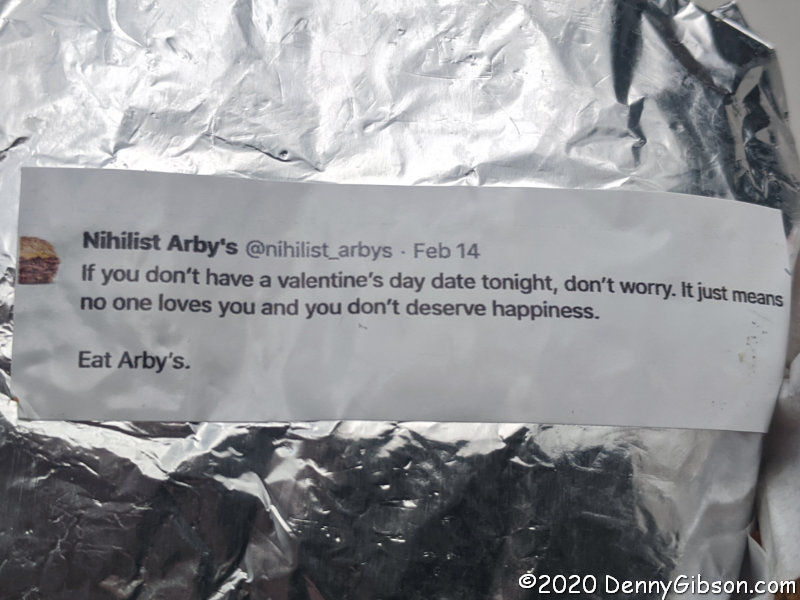
 I really don’t like writing things that make others look bad and no one likes writing things that make themselves look foolish. Today I’m doing both.
For over six years, my website has been hosted by an outfit called Arvixe. It has served me well, and even today is mostly satisfactory. I moved the site this week for just one reason and my decision had much more to do with their handling of the problem than the problem itself. That’s where the anger comes from. The embarrassment comes from the fact that I put up with the problem for more than a year.
There are email lists associated with both this blog and the trip journal part of the website. In July of 2019, I noticed that some messages were bouncing. I believe the bouncing must have started sometime in June. Of course, there’s some embarrassment in the fact that I wasn’t paying closer attention and didn’t spot it sooner, but I do have an excuse. I was in the middle of a road trip which means I was often running out of time to maintain the journal let alone keep an eye on things that are supposed to just work. When the trip ended and I was back home, I looked into it a bit more and submitted a support ticket on July 10, 2019.
I’d encountered similar problems in the past and wasn’t overly concerned. This whole web thing is a hobby for me and I use what is called Shared Hosting to keep costs to a tolerable level. Dedicated servers and dedicated IP addresses offer increased control and performance but they are much more costly. Almost all hobbyists and many small businesses use Shared Hosting where many different websites share a server and an IP address. An obvious risk in this sort of arrangement is that bad guys might be among those sharing your server. Individual subscribers can’t do much about bad guys. Hosting companies try to keep bad guys out but screening can’t be perfect. So my problem started with some bad guys, spammers to be specific, moving into my cyber neighborhood.
Sadly, that is all too common. Sometimes the hosting company recognizes the problem quickly and boots the bad guys before they cause too much trouble. Sometimes they don’t, and people on the receiving end take action to protect themselves or their subscribers. This typically consists of putting the offending IP on a blacklist and rejecting all messages coming from there. I have had that happen multiple times with multiple hosting companies.
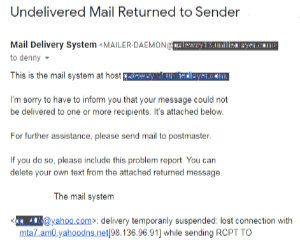 It’s terribly inconvenient, of course, but is usually solvable in a reasonable amount of time. Many blacklists are public with established procedures for getting off of them after proving the bad guy is gone. That’s not the case with Yahoo. Nor is it now the case with AOL and Verizon since, through purchases and mergers, they’re all one happy and secretive family. Their lists are essentially private and getting removed from them (i.e., restoring your reputation) is not very easy. I’m sure that knowing that made me more tolerant as weeks then months slid by with no resolution.
My tolerance for a lack of action was due partly to a lack of travel. The blog’s email list runs at least once a week but currently contains just two Yahoo addresses and one AOL address. The travel journal’s list runs daily but only when I’m on the road. It contains nearly twenty of the at-risk addresses. After that July trip, an August trip was pushed into September then canceled. With a maximum of three messages getting bounced (and very occasionally none), I convinced myself I could wait. When short trips in October and December brought a rash of rejection notices, I convinced myself I didn’t have time to undertake moving the site right then. My dumbest move in this whole fiasco came at the end of the year when, stuck on the idea that I had no time to move the site, I renewed my agreement with Arvixe and actually gave them more money! Then came COVID. Trips that were planned for April, June, July, and August were canceled. That should have left me with time to move the site, but now I had another stupid excuse. I’d just renewed my hosting plan and had to protect my investment.
The summer passed with varying amounts of bouncing each week. I entertained myself by reporting the continuing lack of progress on the support ticket with increasing levels of sarcasm. I made a point of noting the problem’s one year anniversary. For their part, the Arvixe support techs repeatedly explained how tough the problem was, avowed it was a high priority involving the most senior admins, told me about their complex email system (CloudMark), and reassured me that they understood how important the issue was to me and that my patience was sincerely appreciated. They also frequently asked me to supply headers from the reject notices although I’m reasonably certain that was purely to give the impression of something being done. It became apparent that the CloudMark system, which sounded like something that should avoid unreliable IPs, either didn’t work or was administered improperly. In fact, rather than being used to solve the problem, its complexity was used as an excuse for the lack of progress. It was also obvious that either those senior admins were incapable of having an IP removed from a blacklist despite months of effort or they had succeeded in getting IPs removed but that bad guys kept being allowed on the server and causing the IPs to be placed right back on the blacklist. Neither described a company deserving of my business.
I eventually managed a short trip in September and the resulting rash of rejection messages from the journal’s email list finally convinced me I had to do something. Two days after that trip ended, I arranged for hosting at another provider. I let Arvixe know, in my next ticket update, that I intended to move around the middle of the next month, but no one there acknowledged it. And nothing improved.
 Over the next couple of weeks, I moved things to Bluehost, my new hosting provider. Last Monday, I activated access to the new location (i.e., switched name servers) but encountered some problems and backtracked. On Tuesday, with help, via chat, from Bluehost technicians, the switch was made successfully. This is my first blog post since the move, and I’m really looking forward to it reaching all subscribers. I’m also looking forward to all subscribers to the trip journal list receiving mailings from an outing beginning early next month, and I sincerely apologize for taking so long to acknowledge and correct an intolerable situation. Email subscribers, this move’s for you. I very much appreciate each of you.
ADDENDUM 25-Oct-2020 09:45: At the time this was published, a problem existed which reported proper email addresses as invalid when attempting to subscribe. That has now been corrected.

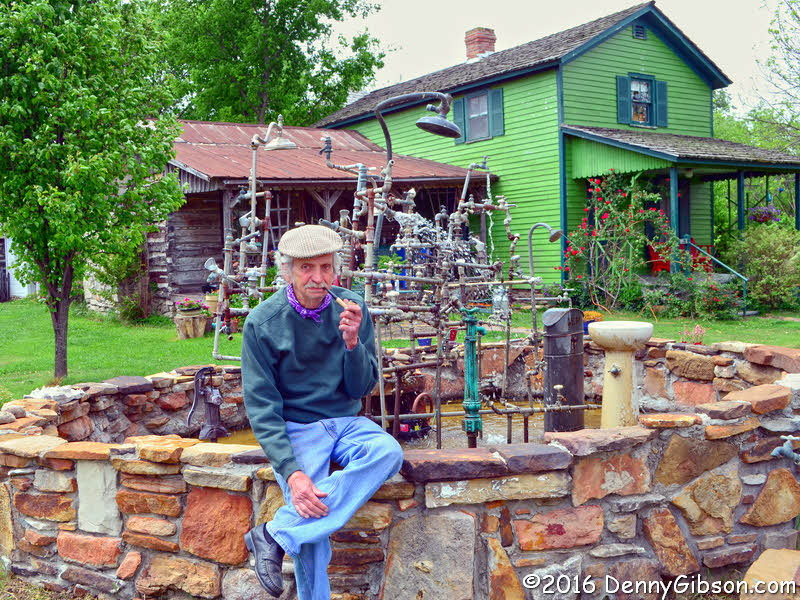 This picture is from my 2016 trip to the Jefferson Highway Association Conference in Carthage, Missouri. The picture at right is of artist Lowell Davis in front of his home in Red Oak II. The Jefferson Highway once ran north and south through Carthage and US-66 once ran through east and west. Red Oak II is a little outside of Carthage and sits on neither historic highway which qualifies it as a must-stop for both. Conference presentations took place at an event center right across the road which allowed us to simply stroll over when time permitted. The two-day conference was at the center of a ten-day trip which meant there were many stops, at mostly familiar sites, both going and coming. I even worked in a concert in Tulsa after the conference ended. I missed the conference’s bus tour as it was the same day as the Celebration of the Life of Laurel Kane, who had died in January, at her beloved Afton Station.
 Like many, I’ve thought of writing a memoir. Maybe I already have. Considering that “a memoir is a form of creative nonfiction in which an author recounts experiences from his or her life”, each of the travelogues I’ve published might qualify. But it’s when I remember other, not necessarily travel-related, experiences from my life that the word memoir enters my head. That happened today. I’m reading Down the Great Unknown about John Wesley Powell’s pioneering trip down the Green and Colorado Rivers and just finished a section discussing the sensations of traveling through whitewater. It naturally made me recall some of my own whitewater experiences. There aren’t all that many, but there are a couple I’ve thought of writing down in the past. The dearth of new subject matter resulting from the current coronavirus quasi-quarantine combined with today’s memories prompted me to begin a series of “memoir posts” and kick it off with this rafting story.
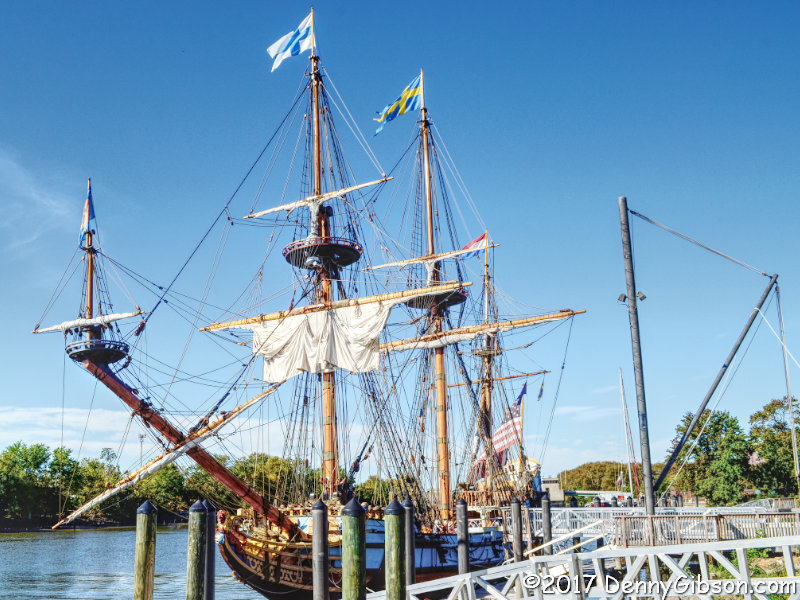

 Like the first My Caboodles chapter, this third installment contains just three items. Some might consider it less than a full caboodle and I suppose, if a National Caboodle Association is ever formed, I might be called out on it. Here’s my thinking.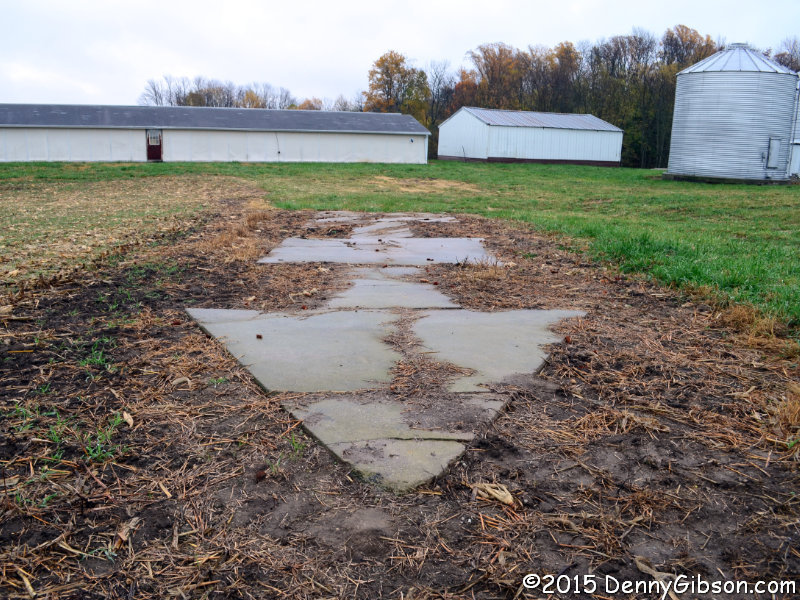
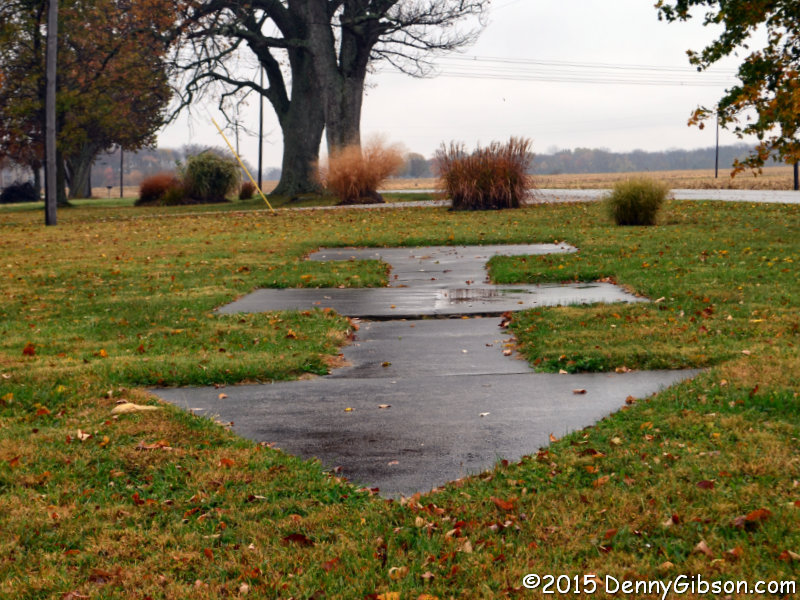
 We fought a war to get this country going then gave every land-owning white male above the age of twenty-one the right to vote. A little more than fourscore years later, we fought a war with ourselves that cleared the way for non-whites to vote. Several decades of loud, disruptive, and sometimes dangerous behavior brought the granting of that same right to non-males a half-century later, and another half-century saw the voting age lowered to eighteen after a decade or so of protests and demonstrations.
 Of course, putting something in a constitution does not automatically make it a practice throughout the land and I am painfully aware that resistance followed each of those changes and that efforts to make voting extremely difficult for “the other side” are ongoing today. I don’t want to ignore partisan obstructions and system flaws but neither do I want to get hung up on them. I meant my first paragraph to be a reminder that a hell of a lot of effort, property, and lives have gone into providing an opportunity to vote to a hell of a lot of people. Far too many of those opportunities go unused.
 I first posted the core of this article in 2014. In the original title, I claimed to not care how anyone votes. That was never entirely true, of course. I have my favorite candidates and issues. I’ll be disappointed in anyone who votes differently than I do but not nearly as disappointed as I’ll be in anyone who doesn’t vote at all. I’m reminded of parents working on getting their kids to clean their plates with lines like, “There are hungry children in China who would love to have your green beans.” I’m not sure what the demand for leftover beans is in Beijing these days but I’m pretty sure some folks there would like to have our access to ballots and voting booths.