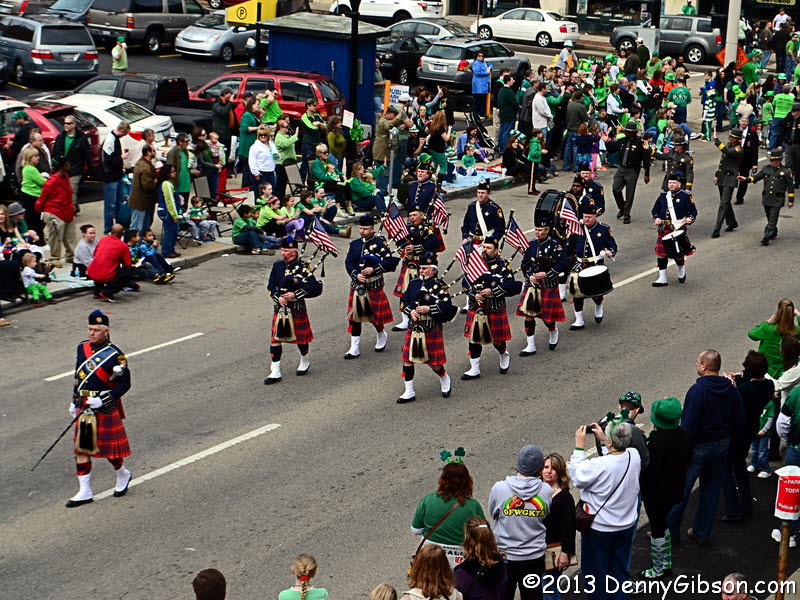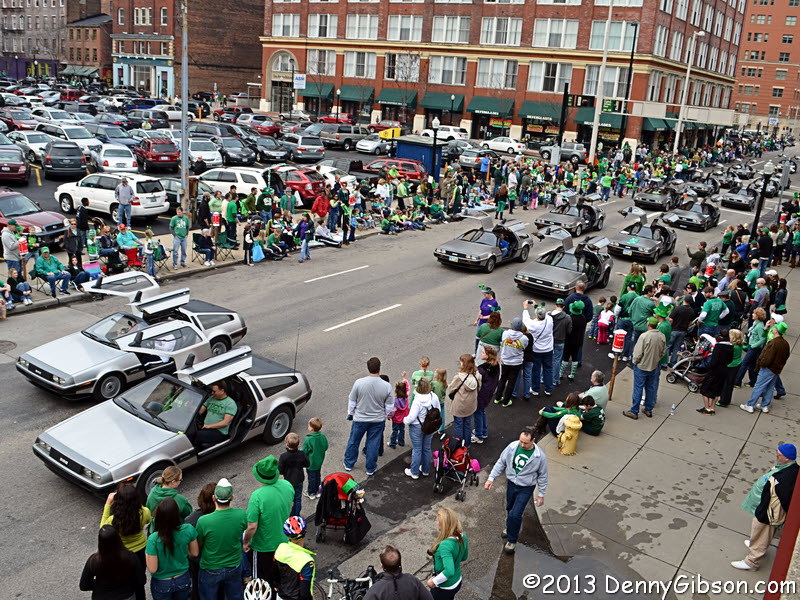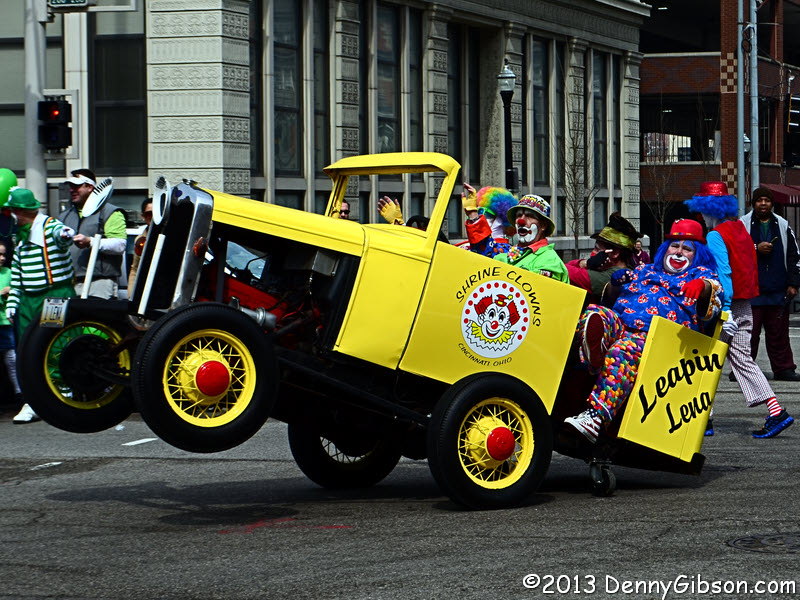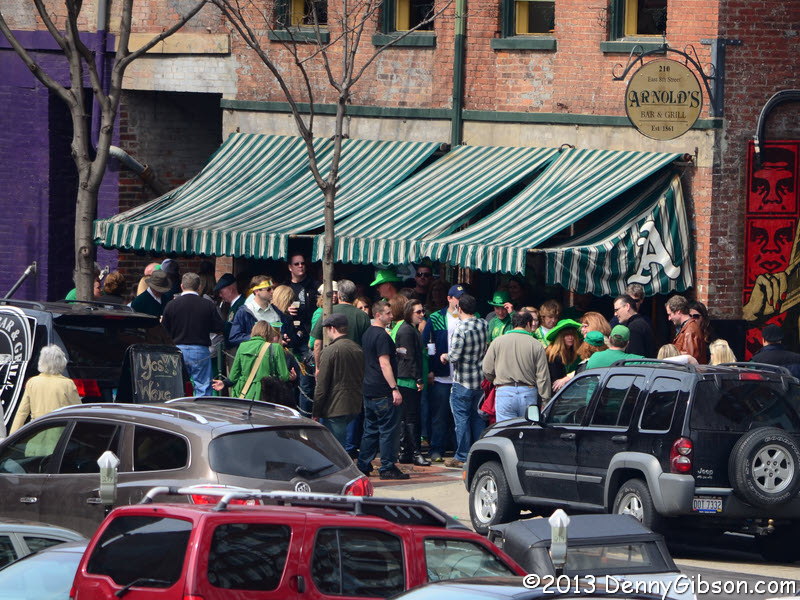
Trip Peek #5
Trip #26
Pair of Madonnas

Madonna at Springfield, OHThis picture is from the my 2004 Pair of Madonnas day trip. The trip was loosely organized around the Madonna of the Trail monuments in Springfield, Ohio, and Richmond, Indiana. From home, I headed northeast to intersect the National Road east of Springfield then more or less followed it west to Richmond. The photograph shows the Springfield Madonna in its nicely landscaped but hard to reach spot near Snyder Park on the west edge of town. In the fall of 2011, the statue was moved to a new park near the center of town. The new home is much more accessible but is even further from the statue’s original location a half mile or so west of Snyder Park.

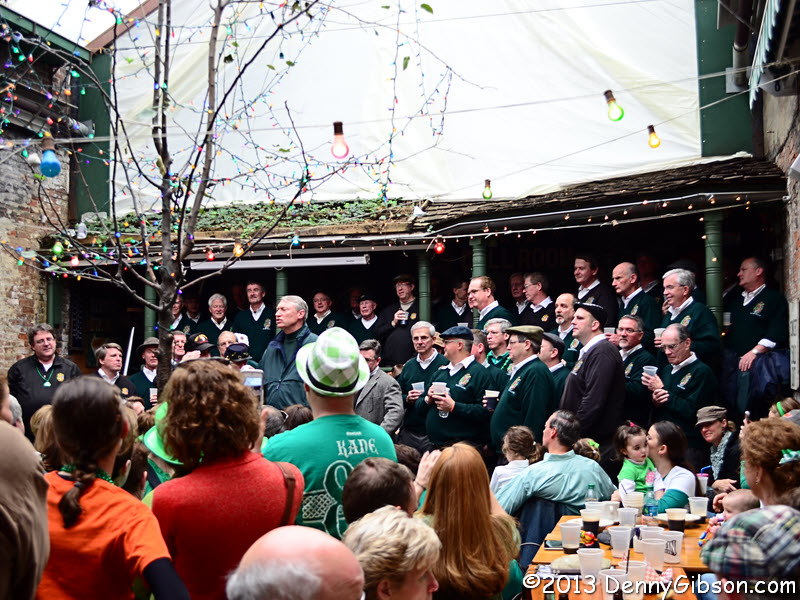
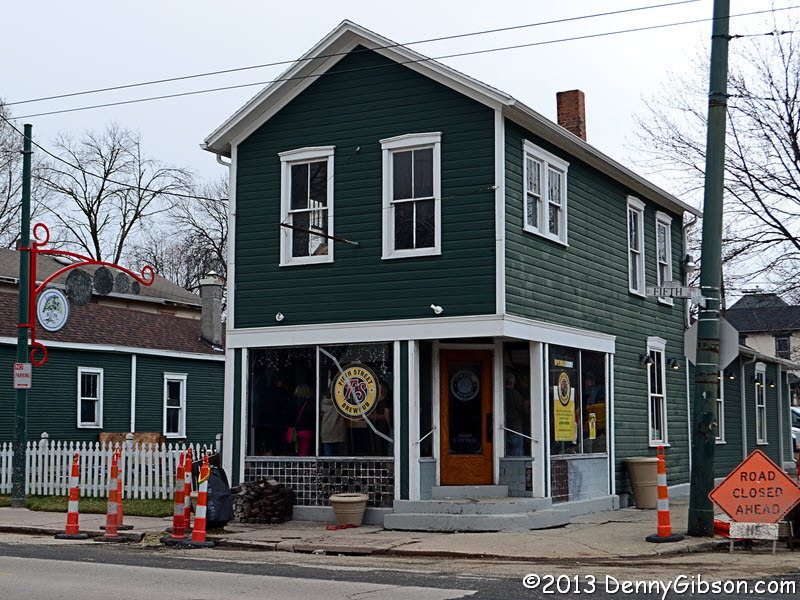
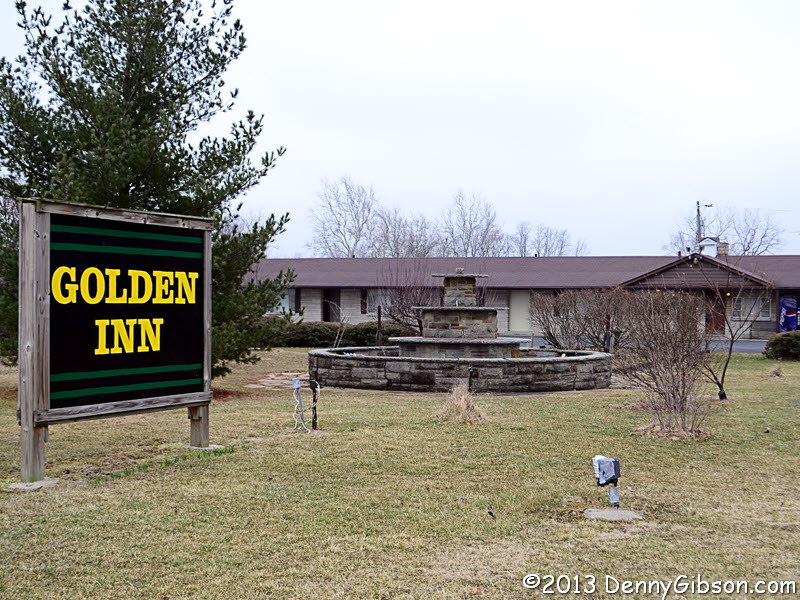
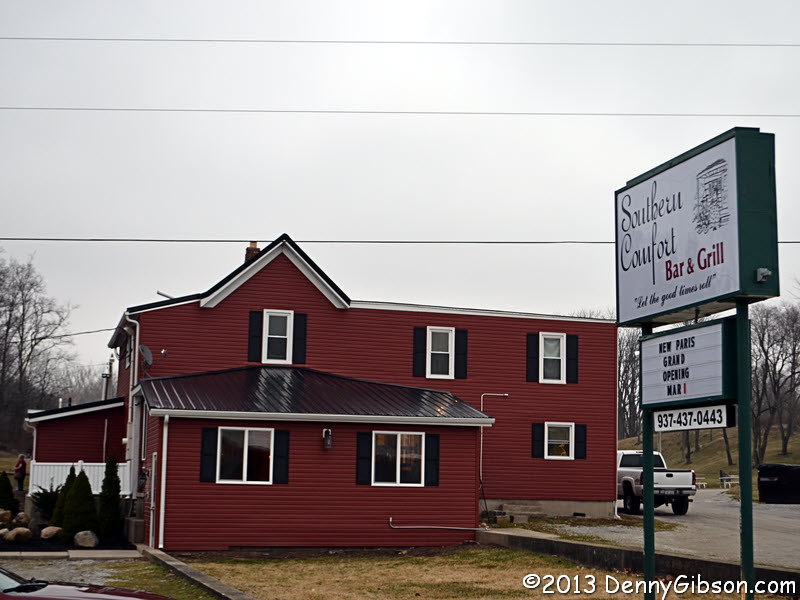
Trip Pic Peek #4 — Trip #60 — Crescent City Christmas


Trip Pic Peeks are short articles published when my world is too busy or too boring for a current events piece to be completed in time for the Sunday posting. In addition to a photo thumbnail from a completed road trip, each Peek includes a brief description of that photo plus links to the full sized photo and the trip journal it is from.

Wilmington’s Denver and Murphy

dandm1I live about thirty miles from Wilmington, Ohio. It’s where my daughter lives as do some very close friends. The nearness of my own bed means there’s hardly ever a reason for me to spend the night there and the willingness of friends and family to put me up means there’s really no need to resort to commercial lodging in any case. In fact, when I first mentioned that I intended to spend a night at the General Denver Hotel, I was met with incredulity. Why would anyone, I was asked, want to stay in that old place when they could stay in a nice, warm, no-cost bed just a few blocks away? Fortunately, they know me well enough that there wasn’t a big fight when I explained that I wanted to stay there precisely because it was such an “old place.” I did realize, however, that the warmness of the available bed was stressed because my friend’s parents had once nearly frozen while staying at the GDH and that the temperature of my room would be a hot topic, so to speak.

dandm2I’ve mentioned the General Denver in this blog before. It’s where I’ve eaten, in addition to several other meals, my last four Thanksgiving dinners. I wrote of the one in 2011. It was built in 1928 by Matthew Denver who named it for his father, James Denver. James was born in Virginia and seems to have dropped off his parents, and eventually his own offspring, in Wilmington while he went out west to become the Governor of the Kansas Territory, a Civil War General, and enough other high-profile things to warrant having the city of Denver, Colorado, named after him.

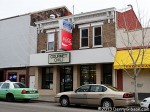
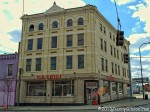
dandm4dandm3The General Denver Hotel was certainly a high toned place when it opened but it wasn’t alone. The ten-year-old Murphy Theater stood across the street, and the nine-year-old courthouse was barely a block away. The courthouse and theater had cost $300,000 and $250,000 respectively. It was a pretty classy neighborhood and still is. All three buildings remain in use today. In fact, it was an event at the Murphy that allowed me to finally justify a night at the Denver on Saturday. Lisa Biales, who I’ve also mentioned in this blog, performed there as a New Lyceum Circuit artist.

The guy who the Murphy is named after was a pretty high-profile fellow, too, but he built the theater himself rather than waiting for the next generation to do it. Charles Murphy was born in Wilmington. He worked for the Cincinnati Enquirer and Times-Star newspapers and the New York Giants baseball team before becoming a team owner himself. The Chicago Cubs were his from 1906 through 1913. The Cubs have won exactly two World Series in their long history. Both — 1907 and 1908 — were on Murphy’s watch.

dandm5dandm6Matt and Jim and Chuck are still in town. I stopped by Sugar Grove Cemetery to see them before checking in to the hotel. There are large family markers — the Denvers have a truly impressive Washington Monument style obelisk — surrounded by smaller individual ones. Finding them took some luck in addition to the FindAGrave clues but I could now be a guide if the need ever arises.

dandm9dandm8dandm7Checking into the General Denver involved signing a real register. It’s hard for me to believe that I’ve never signed one before but I certainly can’t remember ever doing it. My friend, John, met me in the bar and, although I did eat dinner there and had good intentions, lively conversation made me forget to take a picture. I did get a picture of breakfast. I had the Denver Bake, which is simply a casserole version of a Denver omelet. It seemed super appropriate to eat, as I Tweeted at the time, a Denver omelet in the hotel named for the man that the city that the omelet was named after was named after. Both meals were good, and the from-the-menu breakfast is included with the room. That elevator is the original with manual controls that must be operated by a trained professional (i.e., essentially any member of the hotel staff). I took a ride before I left and found it very smooth. Like most hotels more than a few years old, the General Denver is reportedly haunted and I’ve mentioned the heating problems of the past. I saw neither ghosts nor frost during my stay and thought my room rather comfortable.

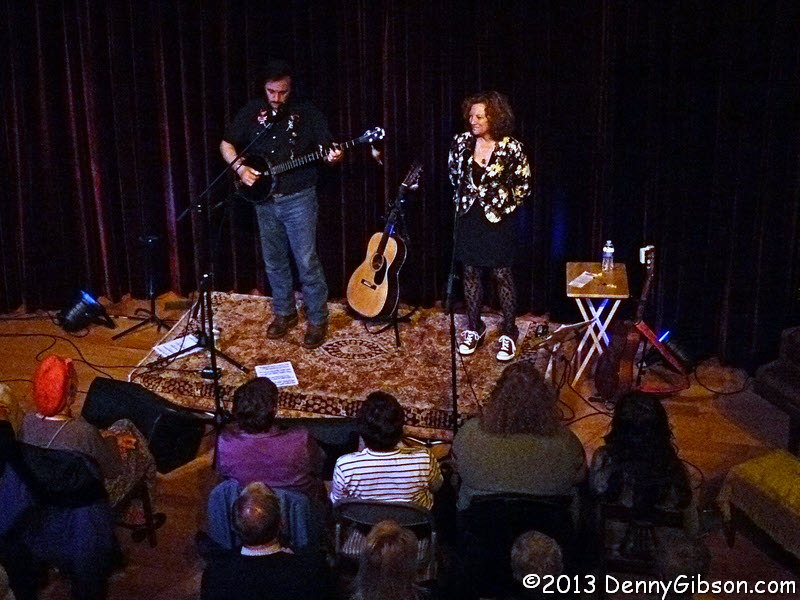
dandm10The bartender had suggested that, if the concert audience was small enough, it might be placed entirely on stage as had been recently done at another show. I didn’t give it much thought, and John and I walked across the street as show time neared with me, thinking we would simply take our reserved seats. The bartender’s prediction had indeed come true, so our last-minute arrival put us in the last rather than the first row. That was hardly a problem, though, as the last row on the stage put us at least as close to Lisa and violinist Doug Hamilton as the front row on the floor would have and the setting was clearly much more intimate. Lisa was just getting over a cold she had been fighting for several days, but you would not have known that from her voice, which was spot on. I think this was probably the first time I’ve seen just the two of them perform, which may explain why Doug sang a bit more than I’m used to. Nice addition. Of course, both handled their instruments masterfully, and the duo delivered two great-sounding sets separated by a short break. Anyone with even slightly sharp eyes may have noticed that Lisa Biales is not listed on the marquee in my picture of the theater. That’s because I didn’t get around to taking the picture until Sunday morning after the sign had been changed. However, her name can be seen in an enlarged section of the photo at the beginning of this article.

My Wheels — Chapter 2
1948/9 Whizzer

WhizzerIt was 1962, I was 15 years old, and I was going mobile. Fourteen and fifteen year old Ohioans can still ride two and three wheelers with “helper motors” but both vehicle and and rider require a license. Plus the motor must be under 50 CC and 1 HP and incapable of moving the rig faster than 20 MPH. Shish!

Back in those comparatively lawless ’60s, anything that had pedals could be ridden by anyone fourteen or older without a license of any sort. I believe there was a displacement limit of 125 CC and there may have been a horsepower limit as well. My freedom machine was just under the size limit, produced 2 1/2 horsepower, and could reach 40 miles per hour. It cost me $35.

My Dad took me to pick it up. He followed me for a mile or so than got tired of poking along and pulled on by and headed home. I was on my own on the familiar State Route 49 moving along effortlessly at a pace that my most frantic pedaling could match for only a brief moment. Could life get any better?

Why yes. Yes it could. Even in those far distant times, motorcyclists (I don’t recall hearing the word “biker” until years later.) waved at one another when they passed. I passed one motorcycle on that first six mile ride. From a distance, a Whizzer looks much like a “real” ‘cycle. The approaching rider’s arm moved out and toward the road in a low salute. I mimicked him as best I could. He might have been a little embarrassed when we actually passed and he realized he had just waved at a kid on a moped. As for me, I tried to look manly and roadwise while almost certainly sporting a grin as wide as my handlebars.

The Whizzer lasted one summer but what a summer it was. My best friend, who lived about two miles away, had a moped. I think his acquisition came before mine and probably helped me convince Dad that I needed that Whizzer. We had often gotten together via bicycle but now we didn’t have to hang out at one place or the other; We could head off on far ranging adventures. Dale, with a tank of his Dad’s tractor fuel, and I, with some gas from my Dad’s lawnmower supply, would visit friends or go off for a root beer without a second thought. We traveled huge distances (like 10 miles) in (compared to pedaling) an instant.

allstatempDale’s moped had a capital ‘M’  — and a hyphen. It was a real Mo-Ped sold by Sears under the Allstate brand. They were made, apparently, by Puch in Austria. Our two mopeds did the same job but they sure had their differences. The Mo-Ped had a two-cycle 50cc motor with a two speed transmission and chain drive. Power from the Whizzer’s larger four-cycle reached the rear wheel through a belt. Belts and pullies slip; Chains and gears don’t. Compared to the Whizzer, the Mo-Ped was a jackrabbit off the line. The Whizzer would slowly lumber into motion usually helped by my feet on the ground or on the pedals. The Whizzer’s top end was well above the Mo-Ped’s so I’d usually whiz by, to show I could, before settling down for a side by side cruise. When first setting out, the Mo-Ped could be started on its stand with a little pedal pushing. The Whizzer could, in theory, be started by pedaling but it was a real chore. The method of choice was to start pushing it, release the clutch, (‘pop’ is not a word often associated with the Whizzer belt idler.), and jump on after the bike started but before it ran away.

My sister and I were still spending some of the summer with our grandparents but I could now get there and back by myself. It was on a long solo ride during a stay near summer’s end that I did in the Whizzer’s engine. The combined filler cap/dip stick had vibrated loose and all six ounces of oil had slowly blown off behind me. The engine suddenly locked up and a demonstration of the “safety” aspects of belt drive followed. Rather than the entire drive train locking and sending the bike into a skid or me over the handlebars, the belts started slipping and things came to a very rapid but controled stop.

When I got it home and looked inside, I discovered that the cap had actually been torn loose from the connecting rod and the crank had made at least part of a revolution before slamming back into the free floating rod and bending it into a shallow ‘S’. It was incredibly ugly.

I acquired some used parts including another whole motor but I never got around to repairing the bike. I’ve no doubt that one of the reasons was that I would turn sixteen in the spring and my mind was already on vehicles with more wheels. I sold it to a slightly younger friend who tinkered around with the spare motor, put it in the bike, and was himself mobile by the next summer. He used it for at least a couple of years because I remember loaning him my car while I rode the Whizzer on a summer of 1965 afternoon. It was still pretty cool.

ADDENDUM 21-Dec-2019: A recent discussion led me to thinking I might have overstated the Whizzer’s engine displacement so I checked it out. Turns out I was understating it. Apparently all, or nearly all, Whizzers were 8.45 cu. in. (138.47 cc) which means I really have no idea what, if any, size restriction existed on mopeds in the 1960s.

Previous Wheels: Chapter 1 — 1960 J. C. Higgins Flightliner
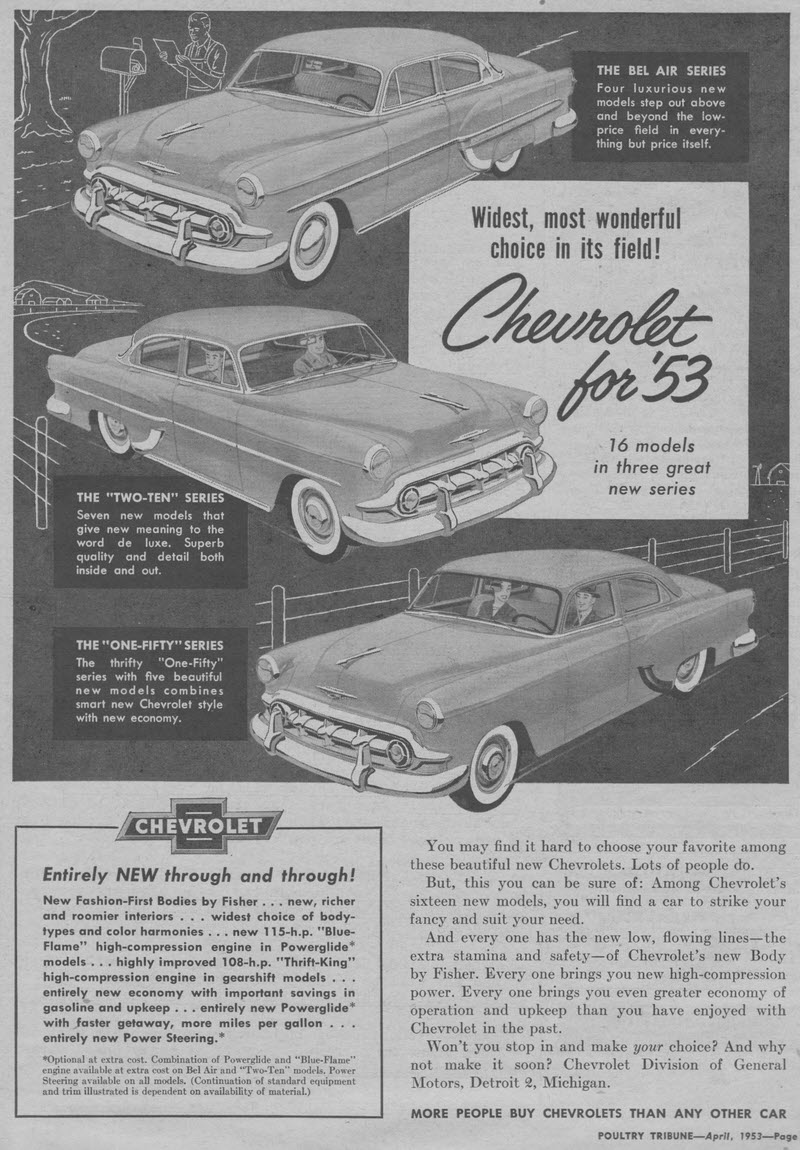
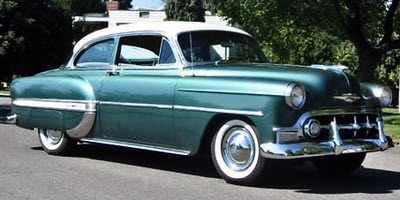
Next Wheels: Chapter 3 — 1953 Chevrolet


Although we’ve long lived much more than a mile apart, I’m still good friends with Dale of the Mo-Ped. It was Dale who traveled with me along Indiana’s Lincoln Highway in 2009.

My Gear – Chapter 15
Garmin nüvi® 2460LMT

Garmin 2460This product took me to within one U-turn of abandoning Garmin completely. It replaced a Garmin Quest which was, in my opinion and for my purposes, nearly perfect. I talk about that here. I could plot routes on my computer then transfer them to the Quest where they were used to guide me along the route just as desired. I would still be using a Quest today if Garmin hadn’t stopped providing map updates around 2005. It wasn’t the roads as much as the POI (Points of Interest). A rerouted expressway or a new exit probably won’t affect any of my routes which tend to follow old roads that haven’t moved in years. But I was using the Quest to find places to eat and sleep and, as time went on, more and more of the mom ‘n’ pop establishments in its data base closed down while the Quest continued to believe them very much alive.

The wild goose chases were aggravating and not being able to depend on there being a functioning motel where the GPS reported one was even more troublesome. With a west coast trip planned for 2011, I decided early in the year to update my guidance system. I did not feel tied to Garmin but some internet searching and forum combing indicated it was still probably my best choice.

Since being able to accept and play back a pre-plotted route is critical for me, I did my best to assure that I got a unit capable of that. It turned out that my best wasn’t good enough though it was awhile before I realized that. Through internet searches, GPS forum exchanges, and email conversations with vendors and Garmin employees I came to believe the 2460LMT would do the job. This unit was at or near the top of Garmin’s line of “automotive” products and, before too long, at or near the top of the “Most Irritating Things I’ve Ever Owned” list.

I ordered directly from Garmin and soon the 2460 was in my hands. After a little playing I tried downloading one of my pre-planned routes. The unit “froze”. Cycling power brought it back and I tried again. In time I realized that the freeze would eventually end on its own and tried various sequences of power, connect, and download but none produced a route on the nüvi. Through a series of emails and phone calls I reached someone at Garmin who seemed to really care. She tried her best. She ran experiments and asked questions and passed information back and forth with untouchable engineering personnel. Her best wasn’t quite good enough either. I did manage to get a tiny test route to appear but my real routes seemed to disappear. In what I took as a lame brushoff but which turned out to be a sorry truth, the engineering folks passed along that “some routes take a really long time.” I’ll skip the rest of the gorey details and let it be known that I did eventually get all of my routes loaded but it was always hours and sometimes days before a route was processed and usable on the nüvi.

Not surprisingly, my opinion of Garmin products was pretty low at this point but it got lower. The unit seemed to work fairly well as I traveled around the area and I even used it to successfully follow a couple of short test routes. I acquired the unit at the beginning of May. In early June I set out for a Lincoln Highway Association conference near Lake Tahoe. The nüvi contained routes intended to guide me along some of the Lincoln Highway’s historic alignments. That the nüvi had flaws became apparent rather quickly but it took awhile to understand them.

The two most onerous nüvi shortcomings are the inability to turn off automatic recalculation and its treatment of each segment as an independent route. A route is a start and end point and some number of intermediate waypoints. At least that’s the way the Quest and I and most routing software sees them. nüvis, however, see routes as nothing more than a list of start and end point pairs. When one point is reached, the nüvi then calculates a path to the next. Since it is always ready to recalculate a route, it does this, not from the point just reached, but from the current position. Here is the sort of real world problem this creates:

Your pre-plotted route contains a right turn just beyond a waypoint. The nüvi guides you to the waypoint and begins calculating a path to the next one. This is hardly instantaneous and you’ve passed that planned turn before it is done. The nüvi is automatically recalculating from your current position so it simply tells you to turn right on some other road then guides you to that next point along a completely different route than the one intended.

If all you want to do is reach the nearest Starbucks as quickly as possible, this behavior is just fine. It is far from fine if you want to reach that Starbucks along a particular road — like the Lincoln Highway or Historic Route 66.

The nüvi 2460LMT is not a bad product. It and all the other members of the nüvi line do what they are intended to do quite well. They are, in fact, the right device for the vast majority of GPS users. The problem is the way Garmin classifies its products. There is a line of products that does routing properly; The way the Quest does and the way I want. But it (zūmo®) is marketed as a motorcycle line and it took someone outside of Garmin to set me straight. I replaced the nüvi® 2460LMT in less than a year. When I tell of that replacement in a future My Gear installment, I may also tell you what I really think of those silly names.

My Gear – Chapter 14 — Lenovo T400

Video Review
Going My Way
Chuck Land

Going My Way coverI am even less qualified to review DVDs than I am to review CDs and books. That won’t stop me of course. I just thought you should know. Going My Way is Chuck Land’s take on the story of Larry and Tim Goshorn’s musical adventures. Chuck Land is the guy behind Landman Productions, The Chuck Land Show, and, as often as possible, a Hammond B3. Larry & Tim are the guitar playing siblings who have powered a few decades of music in Cincinnati and carried a lot of Cincinnati music a long long way from home. Those album covers on the DVD jacket represent music from the 1960’s Sacred Mushroom, through Pure Prairie League and the Goshorn Brothers Band, to their most recent duo recording Acoustic. In case you didn’t notice, those album covers are posed along the center line of a two lane highway.

This is a Cincinnati story. The brothers have been back in Cincinnati for many years now and so has Chuck. He and the Goshorns are close friends these days but much of the brothers’ story is outside of Chuck’s personal experience. Those bits he covers through period photos and interviews with people who were there. Recent parts of the story include Landman Production performance footage.

The documentary opens with Sacred Mushroom bassist Joe Stewart praising his former bandmate. Joe appears in the video several more times and talks about making music with Larry long before the Mushroom even existed as well as filling in some of the Sacred Mushroom story. Other persons interviewed include concert promoter and former Cincinnati Vice-Mayor Jim Tarbell and retired radio personality Gary Burbank. Tim and Larry are recorded talking about themselves, each other, and individuals they’ve performed with over the years. Other musicians and fans are also interviewed but, somewhat curiously, Rick “Bam” Powell is the only Goshorn Brothers Band member, other than the brothers, to talk to the camera. More understandable is the fact that no other members of Pure Prairie League are interviewed, either.

The DVD is packaged with a CD containing eight songs from throughout the Goshorns’ careers. The Pure Prairie League years are well represented with songs penned by Tim or Larry and first released by PPL but presented here in post-PPL versions. It’s a nice sampler.

No matter where you live, it’s all but certain that you have heard some Goshorn music. If you’ve lived around Cincinnati, there is also a darned good chance that you have seen one or both Goshorns perform at a club, concert, or festival. Going My Way offers a look on the other side of the speakers and serves up a lot of history on this pair of talented and significant Cincinnati music makers. Find it here.

Chili All Week and It’s Cold, Too.

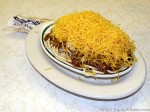
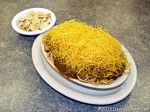
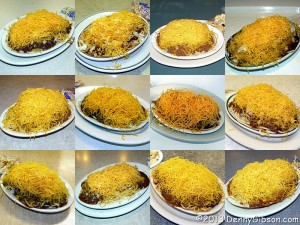
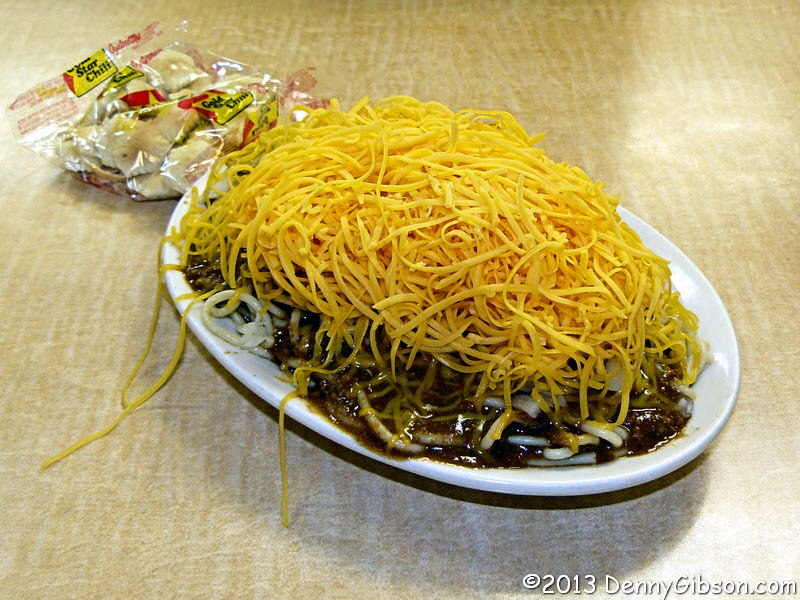
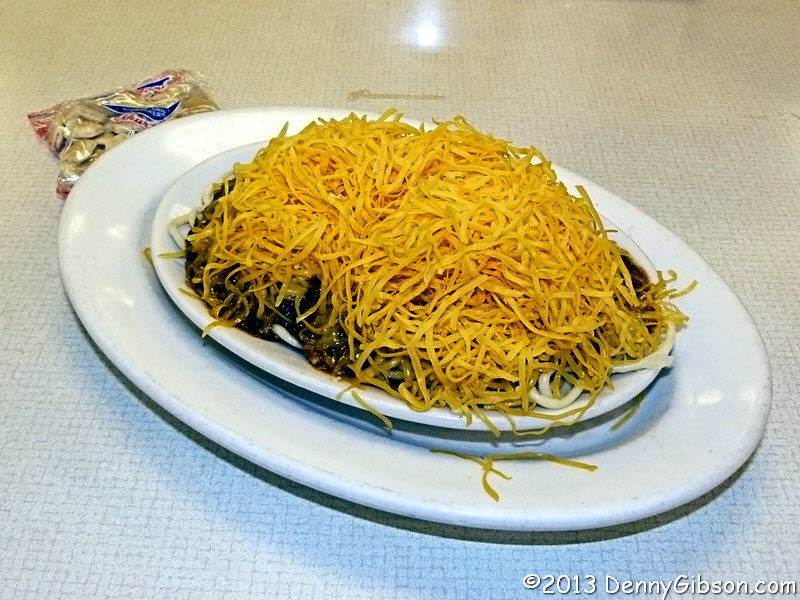
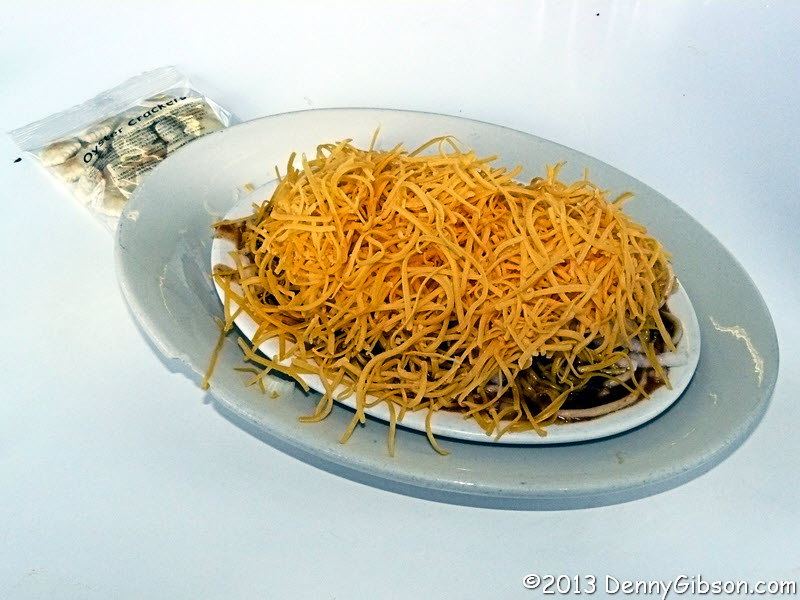
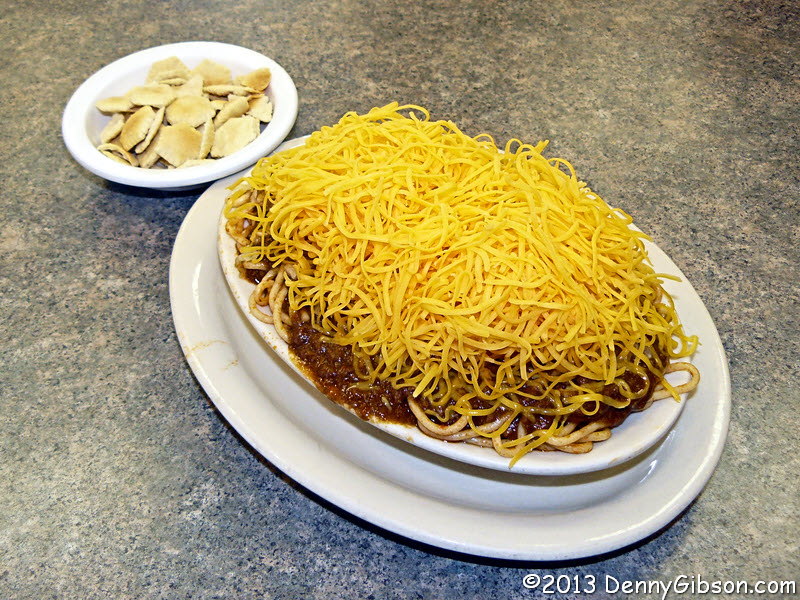
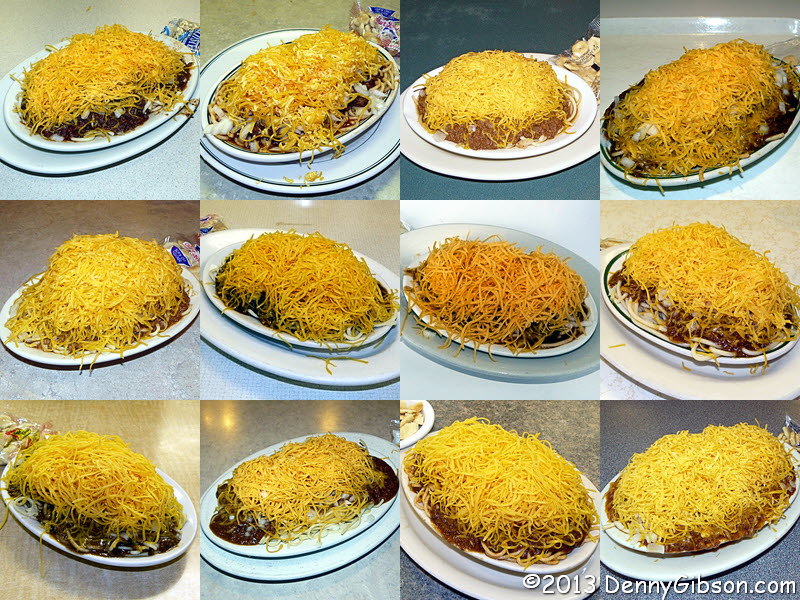
Cincinnati Hills and ChiliThe most recent AAA magazine contains an article titled Cincinnati’s Seven Hills. There are a lot more than seven hills around here but Cincinnati gets its name from Rome and likes to connect with it in other ways, too. So, like that ancient city, Cincinnati is said to be built on seven hills although there is no universal agreement on which seven those are. AAA picked Mount Adams, Mount Auburn, Mount Lookout, Mount Washington, Mount Airy, Price Hill, and Walnut Hills and the article contained a brief description of each one. Price Hill’s description included mention of Price Hill Chili. There are even more chili parlors than hills in Cincinnati and everyone has their own favorites. Not only was Price Hill Chili not on my personal favorites list, I’d never even been there. I can’t reproduce the exact thought sequence but I seemed to naturally move from seven hills to seven chili parlors to seven days between my planned Sunday posts. So, when the next Sunday afternoon rolled around, I set out for the first of seven daily 4-ways. In Cincinnati, chili is commonly eaten over spaghetti with shredded cheese piled on top. That’s a 3-way: spaghetti, chili, cheese. Add onions or beans and you’ve got a 4-way. Add both for a 5-way. I’m a 4-way with onions sort of guy.

Price Hill ChiliPrice Hill ChiliSunday: I started with Price Hill Chili, the place mentioned in the article. It calls itself a “family restaurant” and there is a lot on the menu besides chili. There is also a bar area and a big patio that I’m sure is an attraction in the summer but not so much in February. It’s been in business since 1962. The place was certainly busy though not so full that I had to wait for a seat. It didn’t take long for my 4-way to appear and it disappeared rather quickly, too. The chili is plenty meaty and tastes quite good but not good enough to dethrone my favorite. It does, however, top the lists at both Urban Spoon and Metromix.

Empress ChiliEmpress ChiliMonday: This might be as close as you can get to the “big bang” of Cincinnati chili. Cincinnati style chili is said to have been born when Tom and John Kiradjieff started serving a modified Greek stew on hot dogs and spaghetti in their stand next to the Empress Theater. The brothers adopted the theater’s name for their restaurant and the whole city adopted the stew and the style of serving it. Ninety years later, Empress Chili is still very much around although details of the “empire” are foggy. There are several restaurants in the area that advertise and serve Empress Chili without being Empress restaurants and the product can be purchased in many area supermarkets. There are somewhere between two and four official Empress Chili parlors and Empress Chili in Hartwell, where I stopped, is one of the two “for sures”. The other is in Alexandria, Kentucky. The employees on site when I was there were friendly and competent but didn’t really know how it all fits together either. This was the first I’ve had Empress Chili in several years and, while it’s not my own favorite, it is quite good and is the favorite of bunches of people.

Dixie ChiliDixie ChiliTuesday: Some of the oldest evidence of the Empress “big bang” can be seen at Dixie Chili in Newport, Kentucky. Greek immigrant Nicholas Sarakatsannis worked at Empress for awhile before moving on to start his own restaurant. Not wanting to compete with his former bosses, Nick picked a spot across the river. That was in 1929 and the restaurant, though greatly enlarged, is still there and there are two more. All are in Kentucky. The phrase “greatly enlarged” may be a little weak to describe growing from the original 8 x 30 foot store. It’s that white covered area between the buildings and is shown left center in an array of photos displayed at the restaurant. With all that history, it’s kind of hard to believe that this was my first visit. Sad but true. However, it’s a place I liked well enough to assure a return visit.

Delhi ChiliDelhi ChiliWednesday: This was the last place to be added to my schedule. Picking six chili parlors was fairly easy. Picking seven was much tougher and it sure wasn’t due to a lack of candidates. As I read about the various places that internet searches turned up, Delhi Chili worked its way to the top of my list. Everything I read about Delhi Chili made it sound like the independent neighborhood parlor I was looking for. Eating there clinched it. The restaurant has been there since 1963 and features chili but operates like a diner with daily specials and other non-chili offerings. Plus, you can’t get much friendlier. There’s not even a decent Facebook page let alone a real website but you can find the place with this and once you find it I think you’ll like it. I like it a lot — especially the cheese — and will definitely be back. Wish it was closer.

Pleasant Ridge ChiliPleasant Ridge ChiliThursday: Pleasant Ridge Chili began in 1964. It looks and feels like a neighborhood chili parlor should and, like Delhi Chili and just about every other non-chain chili joint in the city, its menu includes much more than chili. Although there are 4-ways I personally like a little better, those at PRC are certainly good and the place is definitely comfortable with friendly staff and customers, too.

Blue Ash ChiliBlue Ash ChiliFriday: I was just a little surprised when Guy Fieri selected Blue Ash Chili for an episode of Diners, Drive-Ins, and Dives. I’d eaten here several times but had always ordered one of their over-stuffed double-decker sandwiches. I had never tried the chili but that was something I soon corrected and decided that Guy had made a pretty good choice. Blue Ash Chili started in 1969 and recently added a second restaurant that’s actually just a little bit closer to me but it had to be the original for this visit.

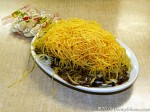
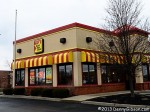
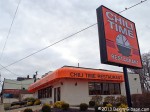
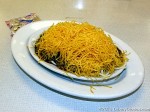
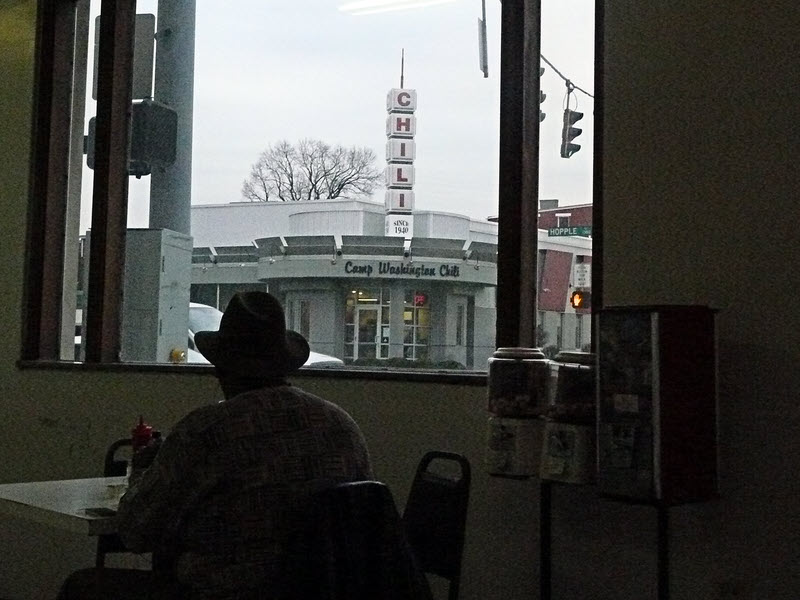
Camp Washington ChiliCamp Washington ChiliSaturday: Camp Washington Chili moved a couple of notches up the street and built a new building in 2000 when street widening took the brick structure it had occupied since 1940. It’s open 24 hours a day 6 days a week and serves breakfast and sandwiches in addition to chili. I can’t deny that the around the clock diner image is part of the reason I like the place but I really do like the meaty chili. I want to say it has more flavor than most but maybe they all have the same amount of flavor and this just has more of the flavor I like.

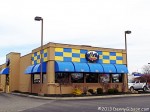
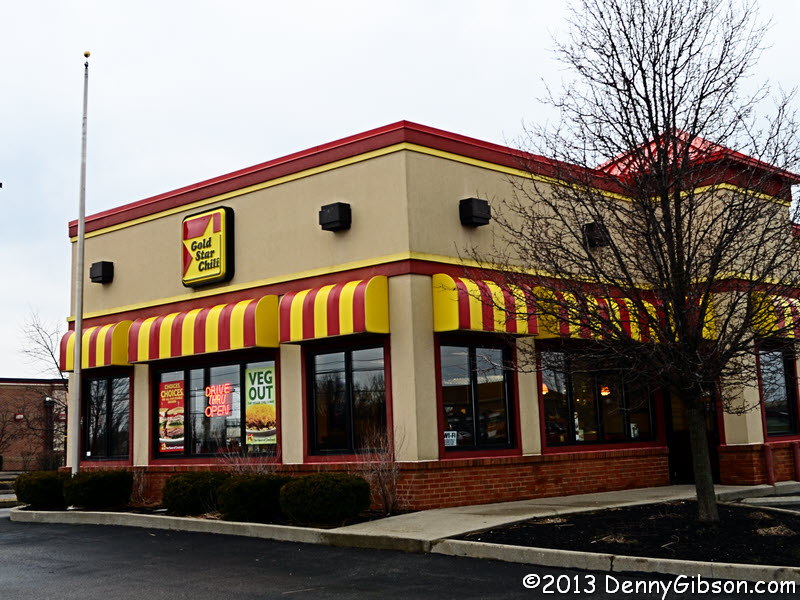
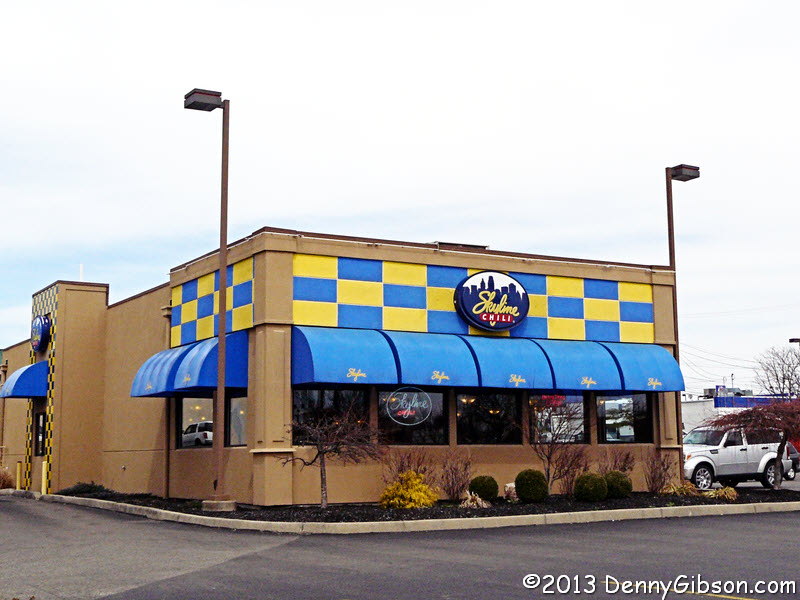
The Cincinnati chili giants, Skyline and Gold Star, are, I suppose, conspicuous by their absence. That’s not because they’re no good or that they’re not genuine Cincinnati chili parlors. They are both very good and very Cincinnati. Skyline was started by a former Empress employee in 1949 on Price Hill and four brothers launched Gold Star in 1965 on Mount Washington. But I wanted to eat at independent parlors and came pretty close to succeeding. Dixie and Blue Ash do have multiple locations but they are few and not far between. Empress is the closest of the seven to being a chain but its unique spot in Cincinnati chili history would warrant a stop no matter what.

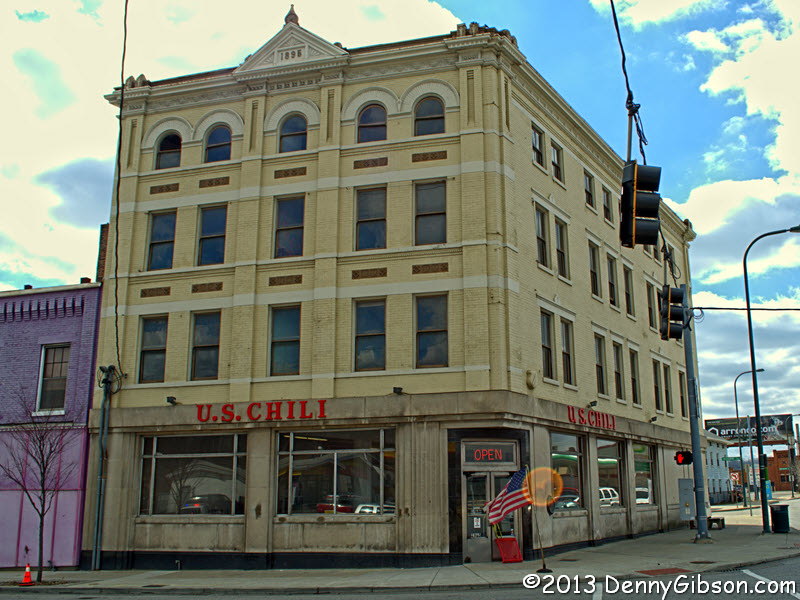
None of my week’s worth of 4-ways was less than good and none were expensive. Not one stop required more than a ten dollar bill for a 4-way, iced tea, and tip. Camp Washington and Blue Ash remain my number one and two choices respectively but Dixie and Delhi are both credible challengers. More data is needed. While the others are left at the bottom of the list, it’s a pretty short list and I’d happily scarf down another 4-way at any of them… after a little break.

Addendum 10-FEB-18: I did scarf down more 4-way after a little break but I did it at some different parlors before returning to any in this set. The report on the second round is here.  


Common Ground Veterans Initiative Scholarship Fund

I’ve mentioned musician Josh Hisle in a couple of trip journals and in an earlier blog post. I very much like his music but there’s a lot more to Josh than meets the ear. He has been involved in Common Ground on the Hill for several years and now, as a veteran himself, is very active in their current effort to increase veteran involvement even more. That effort includes an Indiegogo fund raiser here. Check out the video, tell your friends, and chip in a few bucks if you can.

The Future is Rosie

Groundhog Day Boonshoft Museum of DiscoveryA far as I know, not a single marmota monax in the city of Cincinnati has shown any propensity for prognostication. That means I have to go to Dayton if I want my Groundhog Day predictions live. But not only is Dayton, OH, a much shorter drive than Punxsutawney, PA, watching the Boonshoft Museum of Discovery‘s Rosie do her thing is a lot less effort and a lot more comfortable than watching Punxsutawney Phil, which I did once, do his. It was even a little more comfortable this year than most. Normally the resident groundhog works in an open wooden shelter beside the museum but, when single digit temperatures were predicted, museum staff decided to move it inside. There is no doubt that both Rosie and the kids (who are very much the target audience) appreciated this. The predicting took place next to a solid wall of windows so that any shadow making stuff that showed up outside could make shadows inside, too. It took a few banana slices from the museum’s Melissa Proffitt to entice a reluctant Rosie to poke through the door but she eventually came out and took a look. There wasn’t a hint of a shadow and Rosie confidently predicted an early spring. Museum President and CEO Mark J. Meister read the proclamation with TV weatherman Chris Mulcahy, who served as MC, looking on.

Boonshoft Museum of DiscoveryBoonshoft Museum of DiscoveryAfter the big event, many of us kids headed off to check out the museum though quite a few did hang around to get a closer look at Rosie. It’s no accident that the museum feels like a combination children’s museum and natural history museum. In 1993, one century after the Dayton Museum of Natural History began, some community leaders got together to explore starting a children’s museum. The philosophies of the new group and the existing one were so similar that the Children’s Museum Board and the Board of the Dayton Society of Natural History merged in 1996 and this is the result. The phrase “…to be the premier regional provider of interactive science learning experiences which enrich the lives of children and adults…” is from the Boonshoft’s mission statement and I think they may have already done that. This is one really cool place. Every single employee I had contact with was extremely friendly and helpful. On top of that, they all seemed to be having a really good time and spoke about the museum with genuine enthusiasm. Seems like this is a good place to work as well as visit.

Boonshoft Museum of DiscoveryBoonshoft Museum of DiscoveryRosie isn’t the only resident of the museum. The Discovery Zoo contains quite a few animals, birds, and other smallish critters. Otters and meerkats are representative of the size of animals on display although the largest resident is a Burmese python that’s nearly 16 feet long and 180 pounds in weight. I understand that he almost never sees his shadow.

Boonshoft Museum of Discovery

Boonshoft Museum of DiscoveryI think my personal favorites were The Dome and Science on a Sphere. Both are pretty much what they sound like. The Dome is a full-dome screen on which planetarium programs and movies, including some in 3D, are projected. Science on a Sphere is a large ball which can display images on its entire surface. The picture here shows a color coded image of the height of waves during the 2011 Japanese tsunami.

This was Rosie’s second year of handling Groundhog Day duties. She was found injured in Minnesota and is believed to be about three years old. Although she has essentially recovered from her injuries, she is partially blind in one eye so returning her to the wild would not be wise. Ivy, Rosie’s predecessor retired last year then died just a month after Groundhog Day. The average lifespan of a groundhog in the wild is two to four years; In captivity it’s eight to ten. Ivy was right at eleven. Of course, regular meals and good shelter had a lot to do with Ivy’s long life but I’ve a feeling that having a purpose helped a little, too.


Triangle Park - First NFL GameThe Boonshoft Museum of Discovery is in Triangle Park a little north of downtown Dayton. It seems somehow fitting that my visit to Rosie and the park occurred on the eve of this year’s version of the National Football League’s Game of the Century. Until I started putting this post together, I simply assumed that Triangle Park took its name directly from its location in the triangle formed by the joining of the Stillwater and Great Miami Rivers. Turns out that had nothing to do with it. The name comes from a trio of Dayton companies who sponsored a professional football team and gave them the name Dayton Triangles. This was their home. The Triangles were charter members of the American Professional Football Association (APFA) which changed its name to the National Football League (NFL) in 1922. Not only was professional football played here for several years, there is at least a 50/50 chance this is where the very first APFA/NFL game took place. Read the story here then imagine an all Ohio Super Bowl between the Dayton Triangles and the Columbus Panhandles.

My Wheels — Chapter 1 1960 J. C. Higgins Flightliner

JC Higgins FlightlinerThis wasn’t exactly my very first set of wheels but it was the first with any sort of brand identity. There were probably three wheels in my very first set and they might very well be on the vehicle shown here. That’s the photo I use for my summertime “on the road” Facebook profile picture. The tricycle was followed by a peddle tractor that had its front wheels welded back on at least a time or two due to high speed crashes at the end of the sidewalk and a dimly remembered tiny bicycle with training wheels. The first two-wheeler that actually allowed me to hit the road was a 24 inch girls bike.

It was purchased at an auction or some other sort of sale and was very used. Dad made some repairs and we (at least I thought I was helping) painted it a dark purple. The color wasn’t carefully chosen because it was my favorite. It was carefully chosen because it’s what we had. That the bike was made for a girl barely registered with me. At first I could hardly reach the pedals from the seat and spent a lot of my riding time standing up. The lack of a horizontal bar turned out to be a major advantage. I eventually grew into then out of the 24 incher. A slightly older aunt had retired her 26 inch bicycle and it became mine. That was great initially but, as I became a teen, riding that light blue girly bike became less and less attractive. “Sure,” my Dad said. “You can have a new bike. All you have to do is pay for it.”

I set my sights pretty high. It took close to a year but through odd jobs and, no doubt, some gifts, I eventually accumulated enough to buy a shiny new bicycle from the Sears catalog. I couldn’t afford the Deluxe Flightliner with chrome fenders and “torsion spring-action fork” but I could afford the regular Flightliner and I’d still get dual headlights and a rear carrier that sorta kinda had fins. It came partially disassembled in a big box. Unpacking that bicycle and putting it together was the most exciting thing I’d ever done.

I rode it to the nearest town once in awhile but that was more than three miles each way and took some planning. I didn’t need a destination, though. That bike spent a lot of time going nowhere in particular on Ohio 49. During the summer, when school was out, my sister and I spent a lot of time at our grandparents. Somehow I frequently talked Dad into wrestling the bike into the trunk so I could ride it around the extremely small town where they lived.

J. C. Higgins FlightlinerThis is not a picture of my bike but one from the internet that looks pretty much the same. At some point I removed those headlights I’d lusted after to get the look of a big air scoop. The “fins” were pretty handy for tying down packages but not so popular with passengers. I moved on to motorized transport in 1962 and the two year old Flightliner lost its spot near the center of my world. Embarrassingly, I can’t even remember whether I sold it then or later. It would be 1979 before I’d buy another new vehicle.

Next Wheels: Chapter 2 — 1948/9 Whizzer


Jim Grey rescued me again. OK, maybe rescued isn’t exactly right but only because I didn’t need rescuing at the precise moment he planted the seed for this series but I will someday. Back in August of 2012, when I had no post ready by my self imposed Sunday deadline, Jim gave me an idea for a series of articles that require very little time to prepare and can be used at any time. That was the start of the Trip Pic Peek series. Recently, he unknowingly gave me another idea. First, he turned me on to the Curbside Classics automobile website. I subscribed to the blog and find I read about half of the posts. Then Jim did a series of Curbside Classic posts himself as a guest blogger. He wrote about cars he had owned in the sequence that he owned them. That was the seed. His articles were fun to read and I’m guessing they were fun to write. I decided to start my own series along those lines though I won’t go anywhere near the depth of some of the Curbside Classic posts and, as you can see, I’m not limiting myself to cars. Trip Pic Peeks will remain the true safety net since they can be produced in just a few minutes. Like My Gear and My Apps, My Wheels articles can be prepared and stockpiled as time permits. This third My… series should come in handy as My Gear and My Apps approach the present and temporarily peter out. The first car is just a couple chapters away.

My Apps – Chapter 5
Life After Frontpage Express

When Frontpage Express went away it left a big empty spot in my tool box. FPE was what I initially used to create, edit, and preview webpages. It also allowed me to manage the collection of pages that made up my website and upload the site to the remote server. Microsoft stopped bundling FPE with Internet Explorer at version 6 in 2001. It didn’t immediately disappear but I realized that I best be looking for a replacement. There was, of course, the full blown Frontpage but it was complicated and pricey while my website was simple and I was cheap. Complicated and pricey seemed to describe every all-in-one web tool so I ended up dealing with the four aspects of website management separately.

File Upload

Somewhere inside every web site is an FTP (File Transfer Protocol) server and that is the most basic way to upload files. All versions of MS Windows includes a command line FTP client and I’ve often used that to upload files. I’ve also used some of the fancier FTP clients with graphical interfaces and more powerful features. At some point, MS Windows Explorer became capable of creating FTP connections so that copying to or from a remote file system can be done with the same drag-and-drop cut-and-paste operations as purely local transfers. That’s the way I’ve done uploads for years.

Source Editing

CSE HTML ValidatorFor at least a couple of years, I maintained the website with the NotePad text editor packaged with MS Windows. The general structure of the website and the layout of the pages had been established with FPE. Adding a new daily page or even a new trip consisted of copying an existing page and modifying it. NotePad handled that just fine. It did not, however, provide much help. There was no spell checking and no syntax checking. Around 2004 or 2005 I started using a program that did both. That program was the free “Lite” version of CSE HTML Validator. It helped tremendously and after a couple of years I purchased the “Standard” version with more powerful error checking and support for CSS and PHP in addition to HTML. These are simply additional programming languages used in webpage authoring. I doubt that many readers of this blog are also writers of HTML but for any that are, CSE HTML Validator is a very good tool worth checking out.

Preview and Testing

WAMPServerAs long as I was just dealing with pure HTML, simply pointing a browser at a webpage file was all the preview I needed. Then one forgotten but fateful day I added some PHP or some server side includes and the limits of that method became immediately obvious. Fortunately, by the time I reached this point, many others had already passed it and establishing a local web server was fairly easy. Although my very first web hosts were MS Windows based, I had rather early on switched to Linux. This was not a philosophical or technology triggered switch. It was pure economics. The most common web hosting rig in the world is the Apache server running on the Linux operating system and that’s where the bargains are. It’s cheap because it’s common and common because it’s cheap. To round things out, most of those host providers include, among a mishmash of other tools, bells, features, and whistles, the PHP language preprocessor and the MySQL data base.

Duplicating this common Linux based server model on an MS Windows machine is called WAMP (Windows Apache MySQL PHP) and I’m sure it was pretty messy once upon a time. For me, it was as easy as installing an integrated package from those really smart and generous folks in the world of Open Source. There are several WAMPs available. I’m using the one from WampServer. I like it and have experienced no real problems with it but I’ve no experience with the others so can offer no sort of comparison.

Link Checking

Xenu's Link SleuthWhen I wrote that Frontpage Express “allowed me to manage the collection of pages that made up my website”, what I had in mind was link checking; Verifying that my little piece of the web was coherent with no loose strands leading to no where and no important somewheres with no strands leading to them. The Standard version of CSE HTML Validator, which I own, checks links in individual pages. The more expensive Professional version does this for full websites and other collections, too. The Lite version does neither. I can justify the price of CSE HTML Validator Standard but not Professional. I use the free Xenu’s Link Sleuth. This powerful program checks every internal and external link in a website and produces a full report of errors. It even throws in a complete site map.

As I’ve said before, there are lots of higher level web authoring tools out there that weren’t even dreamed of in 1999. I am not suggesting that anyone start running a website the way I am. What I am suggesting is that, if you are doing or are considering doing anything similar, these are some pretty good tools to do it with.

My Apps – Chapter 4 — Serif PhotoPlus

Book Review
Indiana Cars
Dennis & Terri Horvath

Indiana Cars coverYes, I am late to the party. This book on Indiana’s automotive history was published in 2002 but, since it’s about old cars, none of the history has changed and the cars have only gotten older.

I learned of and purchased the book when one of its authors performed guide duty on a tour that was part of the Lincoln Highway Centennial Kickoff in Indianapolis. On that tour, Dennis Horvath took us to many of the city’s automotive landmarks and this book contains all of those and more. Though few might consider Indiana Cars light reading, it is certainly interesting reading. Dennis knows automotive history. And he really knows Indiana automotive history.

There is a tremendous amount of it. At one time second only to Michigan in automobile production, Indiana has been home to more than 400 vehicle brands. Some are still widely recognized — Stutz, Studebaker, Duesenberg. Other, such as Lexington, Flandermobile, and Empire, are pretty much forgotten outside of hardcore automotive circles and the pages of this book. Similarly, Indiana had plenty of automobile pioneers. Louis Chevrolet, Harry Stutz, and Eddie Rickenbacker are fairly well known; Guys like Elwood Haynes, Charles Black, and Louis Schwitzer not so much. They’re all there in Indiana Cars.

There is an introduction and “A General Overview by Decade” to get things started. That overview begins in the 1890s. It talks of the overall automotive industry and Indiana’s role in it. There are lots of numbers. It was this I had most in mind when I said that some folks would not consider the book light reading. Statistics are necessary, of course, in showing growth and relationships. The Horvaths do a good job of presenting them but they are still numbers. Numbers don’t make for exciting reading but they make for a good reference book and that’s a role Indiana Cars plays quite well.

Indiana Cars sampleOnce the background is set, the book moves onto the various manufacturers. Not every mark ever built in the state is covered but there are sizable sections on what the Horvaths consider “Significant Automobiles”. The reading isn’t so dry now. There are fairly lengthy articles on the likes of Duesenberg and Studebaker and shorter ones on others. The book is well illustrated with photographs and clippings from period literature. Facts are seasoned with entertaining anecdotes. Joe Cole got his first car running and took off without installing the brakes. Lack of fuel finally stopped it after many laps around Monument Circle in Indianapolis. In 1891, Charley Black’s six-block drive in a Benz included crashing into both a surrey and a shop window. Those were the good old days.

Trucks built in Indiana have a section as do military vehicles. Many of those pioneering Hoosiers who put Indiana near the front of the early automotive development are covered, too. Appendices include listings of all Indiana cars, major milestones, and other items.

Indiana Cars excels as a source of information  The book most likely contains the answer to whatever questions you may have about the automotive industry in Indiana. Car nuts will find it entertaining. They and history buffs will find it educational. Those in neither group may find it a wee bit dry.

Indiana Cars: A History of the Automobile in Indiana, Dennis E. Horvath and Terri Horvath,  Hoosier Auto Show & Swap Meet Inc. (printed by Jackson Press), 2002, hardback, 8.8 x 11.2 inches, 198 pages, ISBN 978-0964436459
Available through Amazon.