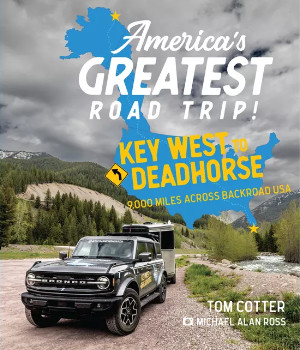
 It’s a simple concept. Position yourself at the southernmost point in the continental United States then drive to the northernmost point in the U.S. accessible by road. The former is Key West, Florida. Deadhorse, Alaska, is the latter. The two are separated by a little over 4,000 miles as an extremely hardy all-weather crow might fly. Limited to traveling on the earth’s surface, Tom Cotter and Michael Alan Ross clocked 8,881 miles in making the connection. The difference is easily justified. Tom and Michael had more fun than any crow could even dream of.
Tom Cotter is best known as The Barn Find Hunter from the numerous books and videos he has produced about automotive treasures found in barns and the like. He is also a road-tripper whose adventures include a cross-country Model T drive documented in a book I reviewed here. Michael Alan Ross is a very successful automotive photographer whose work filled that Model T book. On that Model T drive, MAR, as he is commonly known, drove a chase vehicle. This time he and Cotter share the driving and space in the small camper they tow.
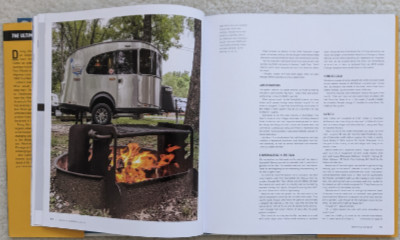 That camper was a new Basecamp 16X on loan from Airstream. The tow vehicle was a 2021 Bronco Outer Banks on loan from Ford. As Cotter tells it, he got the Bronco by telling Ford that Airstream had promised him a camper and he got the camper by telling Airstream that Ford had promised a Bronco.
Very early in the trip, the travelers broke one of the few guidelines they had established by jumping on I-75 while still in southern Florida. This is at odds with the “backroad USA” called out in the subtitle and Cotter readily admits that it is “cheating”. But it is understandable. With everything that lay ahead of them, there was a natural urge to leave the familiar behind and get on with the exotic. Before leaving Florida, they returned to the planned program by leaving the interstate for US 27.
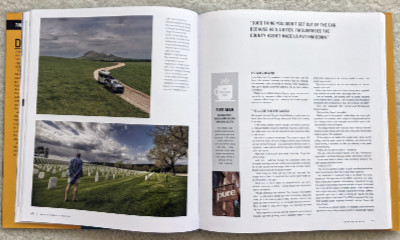 They clipped a corner of Georgia, then crossed Alabama (with a stop in Muscle Shoals) before turning north in Louisiana to reach Tennessee. They entered Missouri via the bootheel and maintained a west-by-northwest course through that state and Kansas with appropriate adjustments to take in the big ball of twine in Cawker City. Then it was a little more directly north through Nebraska and the Dakotas with a Memorial Day pause at the Black Hills National Cemetery in South Dakota. There was a different sort of pause at the North Dakota line. Despite all of Cotter’s past travels, he had, at this point, visited just forty-nine states. North Dakota was number fifty.
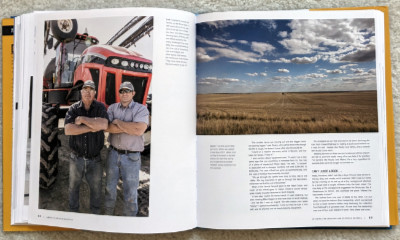 North of Bismarck, Cotter and MAR picked up US 2 and headed west. That might not be the most direct route to Alaska but there were friends near Seattle and, as any good road-tripper knows, anything can be “on the way” if you look at it just right. Hitting Glacier National Park and the Going-to-the-Sun Road might have also been a factor in route selection but the scenic road was not yet open for the summer when they arrived. There was, of course, plenty of great scenery even without Going-to-the-Sun, and plenty of interesting people, too.
Cotter and MAR both had friends in the Seattle area but swapping hellos was not the only reason for making that a target. The two travelers had planned for a month-long break in the middle of the trip to attend to their day jobs and visit family. The Bronco and Airstream would be left with friends while they flew home and back.
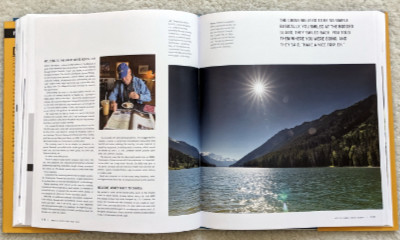 With the break out of the way, it was time to enter Canada and head for the beginning of the Alaska Highway in Dawson Creek, British Columbia. Cotter had a recent (but not quite current) edition of The Milepost with him. The Milepost is published annually and is close to indispensable for anyone traveling the Alaska Highway. That road is its primary focus and its initial reason for being but it now not only covers the Alaska Highway but just about every path for getting to and from it. That includes coming from Vancouver which is what Cotter and MAR were doing.
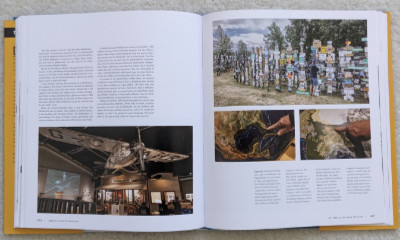 British Columbia and the Yukon Territory contain the bulk of the Alaska Highway with only the northernmost two hundred miles or so being in Alaska. Cotter reports that any pride associated with returning to the U.S. was short-lived and declares this “absolutely the worst roads” they had driven so far. The Alaska Highway officially ends at Delta Junction but Fairbanks is easily reached on what is sometimes seen as an extension, the Richardson Highway.
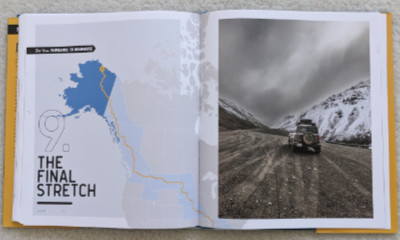 The Airstream was left with a cousin while Cotter and MAR tackled the final stretch to Deadhorse in the Bronco. Several aspects of this trip reminded me of my own 2016 drive to Alaska but perhaps none so much as the mention of “a mandatory pit stop at the Hilltop Restaurant north of Fairbanks”. Even though I did not drive north of Fairbanks on my own but used a commercial tour company to visit the Arctic Circle, we had breakfast at the Hilltop before hitting the Dalton Highway.
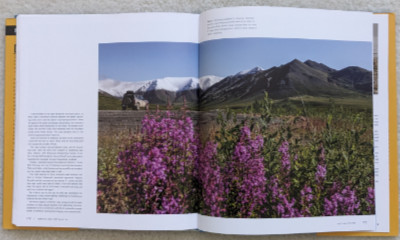 My visit to the Arctic Circle had been a one-day there-and-back affair. Cotter and Mar spent a night on the Dalton Highway in Wiseman and two nights at the end of the road in Deadhorse. Just reaching the end of the road would be enough for most people but Cotter went above and beyond by joining the Arctic Polar Bear Club with a dip in the 40°F Prudhoe Bay to bookend his dip in the “warmer than my morning shower” water at the start of the trip in Key West.
Looking back over what I’ve written, it seems I’ve been reviewing the trip rather than the book. Maybe there is at least a sense of it in the included thumbnail images. It has lots of MAR’s wonderful photos. The thumbnails offer hints of these although they don’t show that they are printed on heavyweight glossy paper which helps them look their best. Cotter’s words augment the photos (or vice versa) with details of the trip I have more or less summarized. Those words are at their best when telling about encounters with others. Some are people living along the route while others just happen to be traveling a piece of it at the same instant Cotter and MAR pass by. The ratio of the two sort of reverses itself as the trip progresses. Residents — some permanent and some temporary — outnumber people actually in motion during the early portions of the trip but the situation is pretty much the opposite once the Dalton Highway is reached.
Some percentage of interesting people exists among both residents and travelers just about everywhere. Cotter manages to find them on a regular basis but he suggests that the percentage may increase toward the end of the trip. “Boring people generally don’t travel to Alaska’s outback,” he observes. I guess that means his job got easier the farther they traveled.
America’s Greatest Road Trip!: Key West to Deadhorse: 9000 Miles Across Backroad USA, Tom Cotter and Michael Alan Ross, Motorbooks (September 19, 2023), 9.45 x 10.71 inches, 192 pages, ISBN 978-0760381069
Available through Amazon.

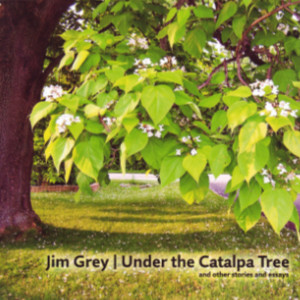 Like pictures? It’s got ’em. Like variety? Got that too. There are enough pictures to fill a deck of cards or a weekly calendar, which is not accidental. The premise for the book was writing an article to accompany a photograph every week for a year. That could very well be a student assignment in an overly long writing course and in a sense it is. Jim Grey assigned himself the exercise to, as he says, “strengthen this muscle”. He is referring to the writing muscle which can surely benefit from practice just as much as a musician’s skill or an athlete’s strength.
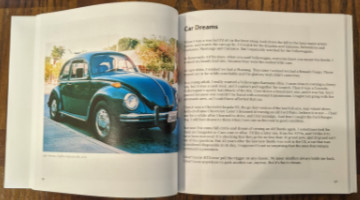 Even though photographs are at the heart of Under the Catalpa Tree, the book’s subtitle mentions only “stories and essays”. I’m guessing that is at least partially because only the stories and essays needed to be newly created for the book. The photos already existed from Grey’s many years of photographing the world around him. He doesn’t explain how the photos were selected. I am sure it was not completely random but there is tremendous variety. They range in quality from slightly fuzzy black-and-white snapshots taken years ago with a yardsale camera to crisp color images taken with high-end gear and well-developed skills. Some photos are digital but film is the source of many of the images since Grey collects — and heavily uses — film cameras. Among the subjects are family, friends, cars, houses, nature, and an abbey in Ireland.
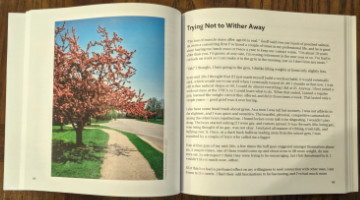 A detail I appreciate is laying out the book so that all images are alone on a left-hand page. That happens naturally when the text occupies a single page, which is common, or three pages, which is not. There are quite a few two-page essays where a blank is used to get things back in synch. Totally worth it, in my opinion. Those pages, by the way, utilize Amazon’s premium paper which has the photos looking their best.
 Last Wednesday’s post was the 100th book review published on this blog. Eight were of my own books and one (
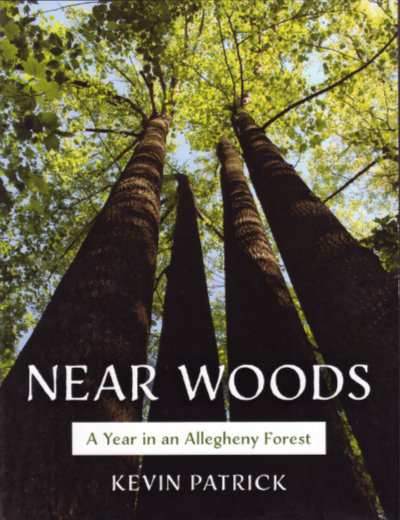 The year Kevin Patrick spent “connecting with White’s Woods” may have been, as a blurb on the back of Near Woods says “In the spirit of Walden” but the resulting products are not the same. Thoreau’s time at Walden Pond was an experiment in self-sufficiency and the book he wrote some years later documented its success. His observations of nature and seasons were generally used to support some aspect of his minimalist lifestyle and not to educate the reader. I suppose some of Patrick’s observations are also made to reinforce some philosophical viewpoint, but he is a lot more subtle and he helps the reader share the raw observation as near as possible. Exactly one-half of this book’s pages are filled with some excellent photographs.
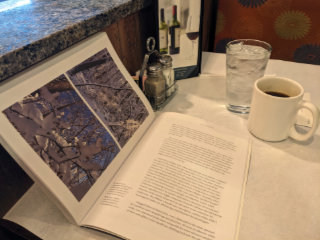 Of course, Near Woods is better looking than either Walden or PrairieErth. To some degree, that’s just something that color photographs do for a book. But these high-quality and well-chosen photos do more than make the book pretty. They are the “raw observations” mentioned in the first paragraph of this article. The book’s design incorporates the photos wonderfully and helps make reading the book a pleasure. Every lefthand page contains one or more photographs. Righthand pages are all text. Captions are in the extra wide inner margins of the text pages. It didn’t take me terribly long to recognize the beauty of this. Every page turn resulted in a new image that could be studied as quickly or slowly as desired before tackling a new page of text.
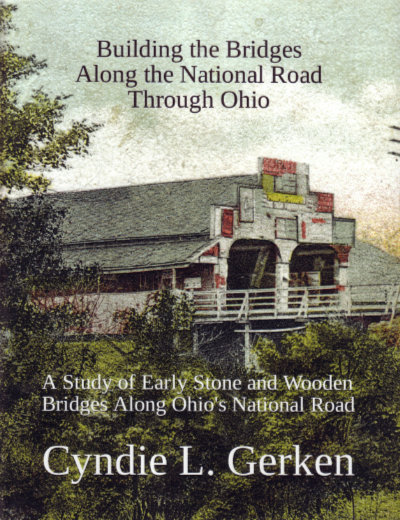 Cyndie’s done it again. As I began to write this review of Cyndie L. Gerken’s fourth book on the National Road in Ohio, I revisited my reviews of the previous three thinking I might come up with a better opening line but everything I saw just reinforced my initial thought. Cyndie has indeed done it again.
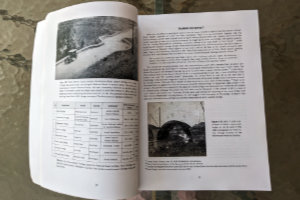 Although I certainly know better, I tend to instinctively think of big stone arches when I hear the phrase “National Road bridges”. One reason is that many of those stone bridges, some of them S-shaped, are still in existence. There were also many wooden bridges along the road but all were much shorter-lived. Building the Bridges… includes both. It identifies twenty-one covered wooden bridges built for the National Road in Ohio in addition to probably forty-some stone bridges. There were also well over a thousand stone culverts and one reason an accurate count of stone bridges is difficult to produce is that not everyone followed the same rules when distinguishing culverts and bridges. Span length was and is the distinguishing characteristic. Twelve feet, twenty feet, and no doubt some other numbers of feet were used to make the distinction and some reports did not distinguish the two at all.
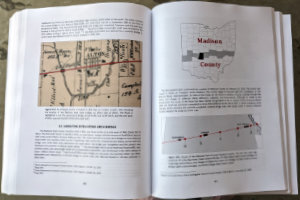 After telling us about as many of the bridge builders as she could identify, Gerken touches on some of the iconic National Road bridges east of Ohio, including the Wheeling Suspension Bridge, before beginning a county-by-county trek across the state. Each county chapter begins with a thumbnail of the county and the National Road through it. A map locating the National Road bridges in the county appears very early in each chapter. Sections on each of the bridges and some of the culverts in the county appear also in east-to-west sequence. Just as some bridges east of Ohio were touched upon preceding the border-to-border coverage, a few in Indiana follow it.
 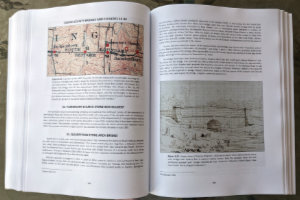 At a minimum, the location of each structure and what it crossed is given. The builder or builders are identified if known and, thanks to some pretty good sleuthing, many of them are. Beyond that, the information given for each bridge or culvert varies widely but it is a natural variation. For unnamed culverts over unnamed intermittent streams, location might be just about the only thing known. For major structures, lots of additional information might be included and usually supported by various graphics. Topographic maps are fairly common and there are lots of historic photographs and drawings. Plenty of modern photos also appear and if a structure is still standing there’s a good chance that the book contains a very modern picture of it taken by the author herself. Stories about events associated with happenings at or near a particular bridge can pop up anytime and are often fleshed out by reproducing contemporary reports.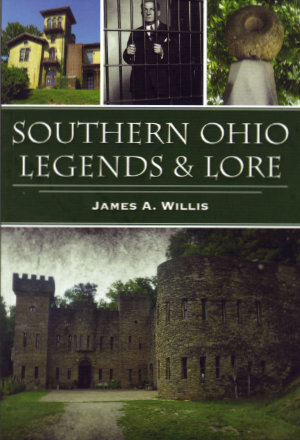
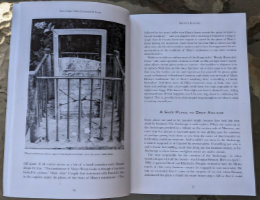 The stories are divided into six sections: “Ghostly Legends”, “Legendary Characters”, “Legendary Villians”, “Legendary Places”, “The Unexplained”, and “Legendary Events”. Having lived my entire life in southern Ohio, I was already at least somewhat familiar with most of them. There are exceptions including all four “Ghostly Legends”. It is the only section where every story is new to me and it is the only section dealing more or less directly with possibly supernatural phenomena. I’m thinking those two facts might very well be related. I’m also thinking that this is the right place to mention that Willis is the founder and director of the paranormal research group The Ghosts of Ohio. I find it somehow reassuring that this is also the only section where that comes into play and even here there is no straying from the “verifiable facts” approach.
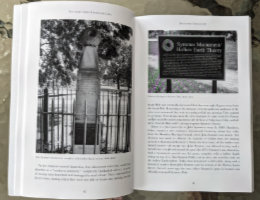 I don’t believe I learned anything new about any of the “Legendary Characters” but I appreciate the concise and complete descriptions. Willis’ reporting on John Symmes and his hollow earth theory is among the most even-handed and comprehensive I’ve read. Likewise, his tale of “Legendary Villian” George Remus where I did learn a few details for the first time.
 “Legendary Places” combines a place I had never heard of (Athens Pentagram) with three that I am quite familiar with. That somehow makes it my favorite section. One of the three familiar places, the Loveland Castle, was the subject of a blog post here
  In the prologue of Philippines, Palau, and Guam, Matt Cohen says he considered but discarded the idea of organizing the book along the lines of the Philipines’ four ‘B’s — basketball, beauty contests, boxing, and beaches. I guess that was on my mind as I scanned it for the first time and found myself registering three ‘C’s — color, culture, and composition.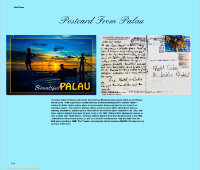
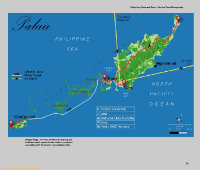 Although it is not presented as such, the book really is a travelogue of sorts. Most if not all of the travel photos were taken during a single extended trip taken by the author and his wife in early 2023. After deciding not to use the four ‘B’s as organizing tools, Cohen went with a fairly straightforward geographical organization. The Philippines gets three chapters covering the three areas where they spent the most time. These are Manila, North Luzon, and Cebu/Bohol. Palau and Guam each get their own chapter. Each chapter begins with an actual postcard that the Cohens mailed to themselves from the region covered by the chapter accompanied by a brief description of the region. A map, with locations of interest marked, follows.
 The chapters are then filled with pictures of people, places, and things accompanied by text ranging from a few words to a few paragraphs. Most questions I had when first encountering a photo were answered in nearby text. The places pictured range from mountains to markets. Things range from colorful new balloons offered for sale to an abandoned Japanese tank slowly being claimed by foliage. People include unnamed workers, islanders in native dress, a mayor, a governor, a president, and a would-be bride left at the altar.
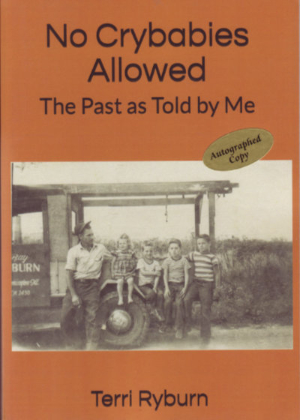 I know Terri Ryburn as the owner of historic Sprague’s Super Service in Normal, Illinois, and as a key ingredient in the Miles of Possibility Route 66 Conferences. I know the picture on the cover of the book from a copy hanging on the wall of the former gas station that Ryburn has turned into a Route 66 information center, gift shop, and photo op. I knew that was Terri seated on the fender with her dad and older brothers standing beside her because she told me when I spotted the photo on the wall. She may have told me that the photo contained only half of her total family but if she did I forgot. From reading No Crybabies Allowed I learned (or maybe relearned) that, while Terri was the youngest family member in this particular photo, she would be in the elder half of eight children after two more brothers and two sisters came along. None were crybabies.