Live Music From Dead Man String Band

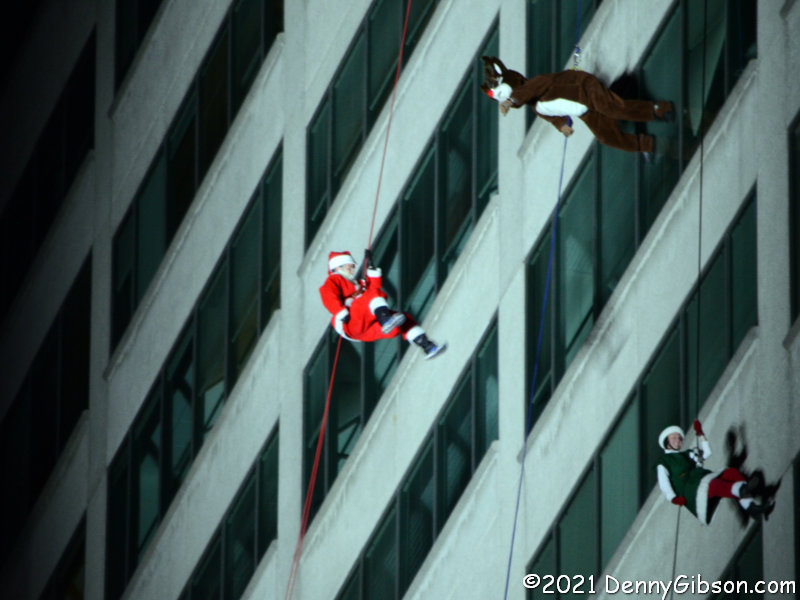
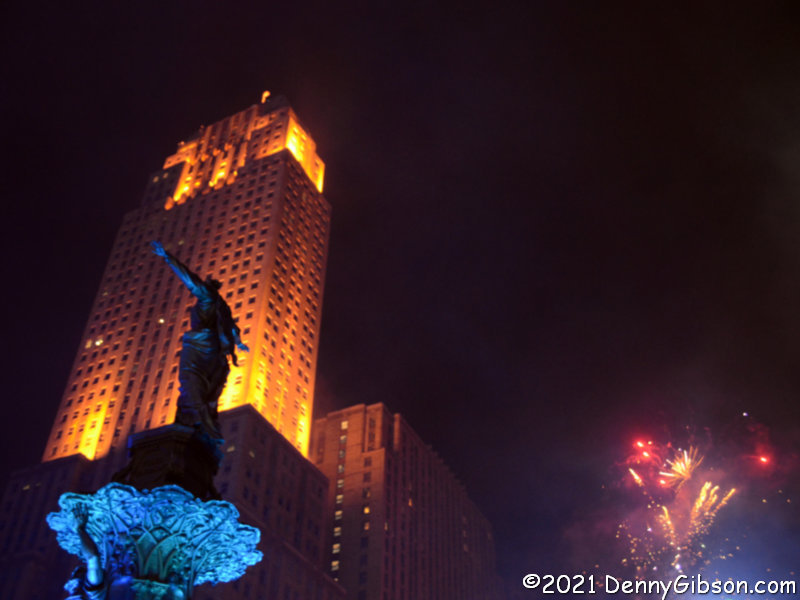
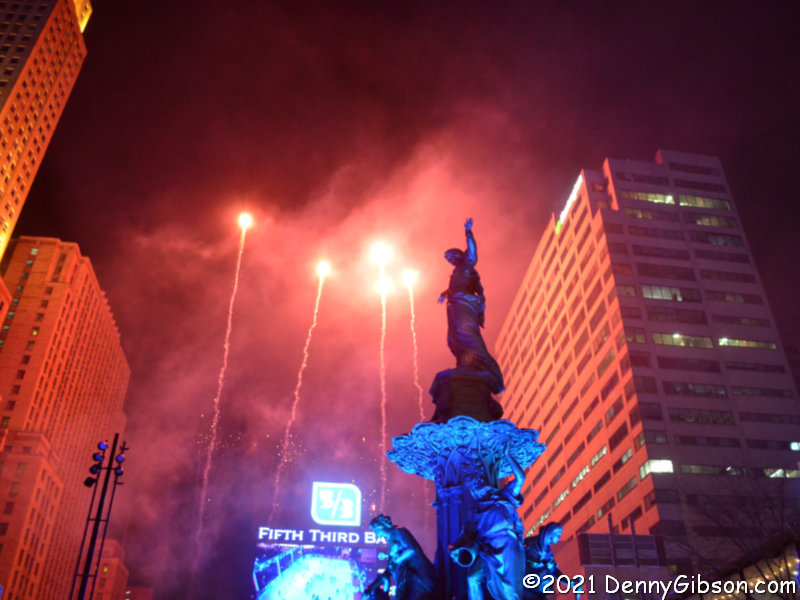
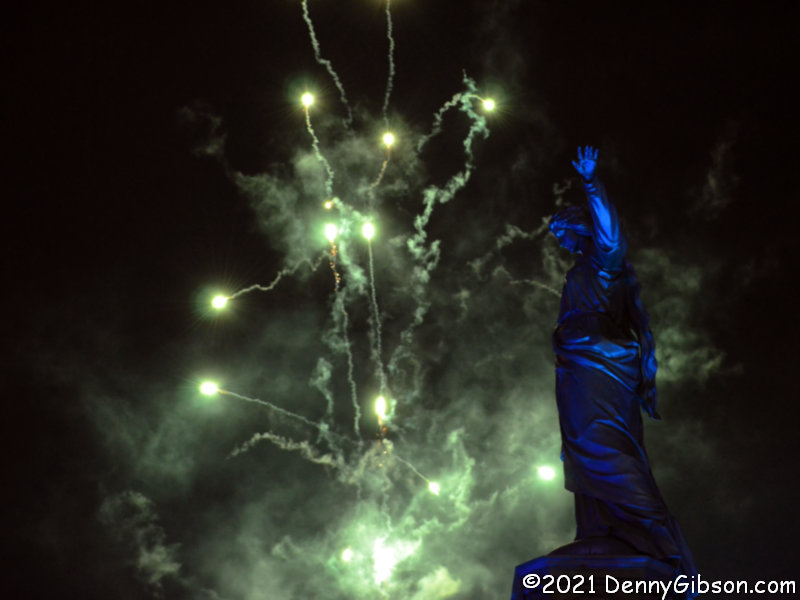
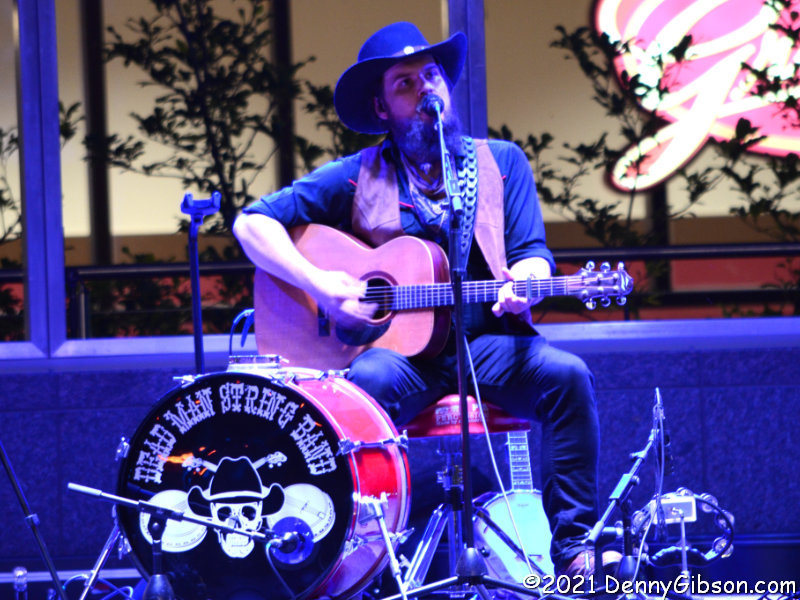
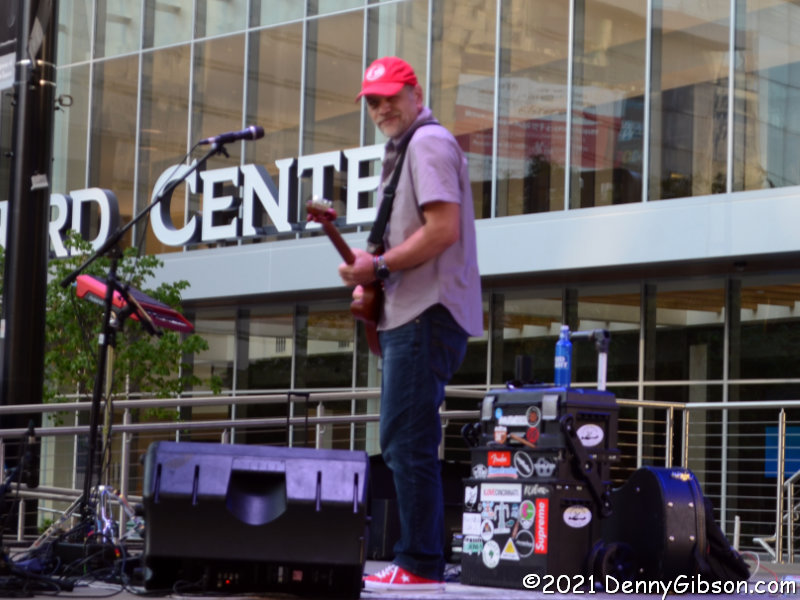
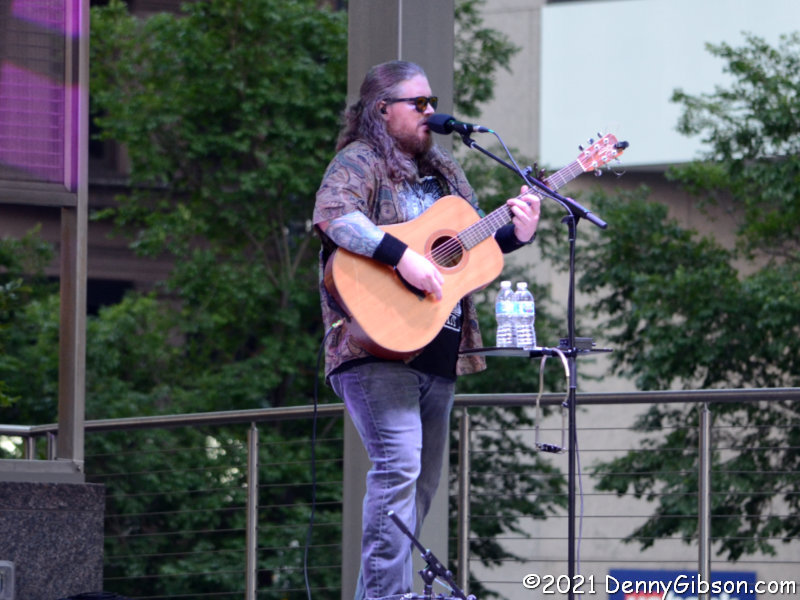
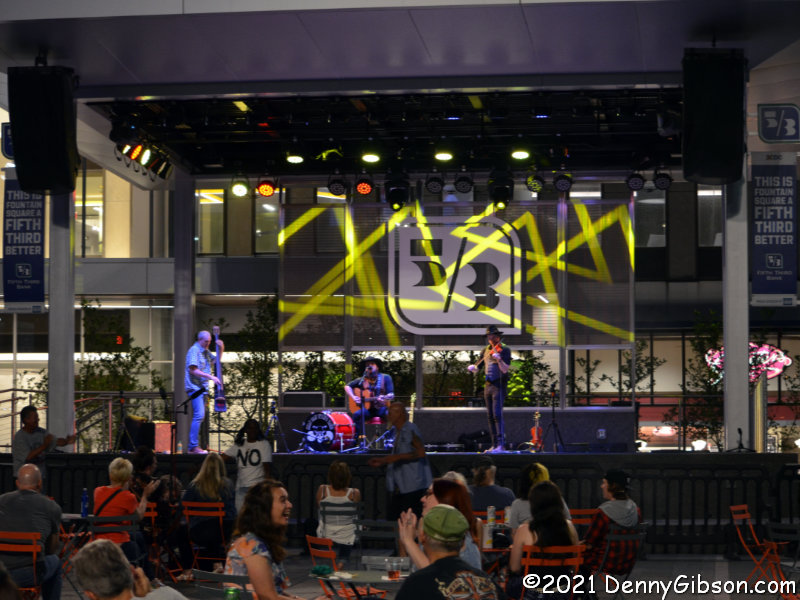
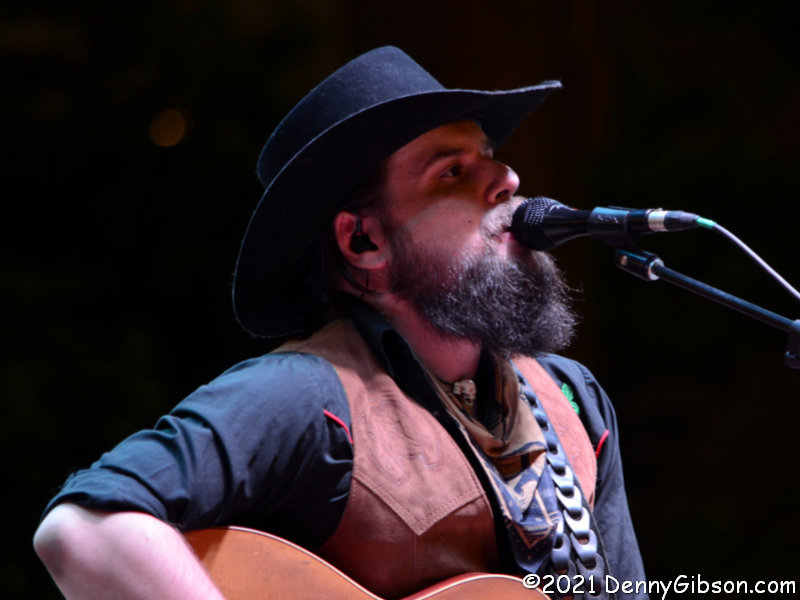
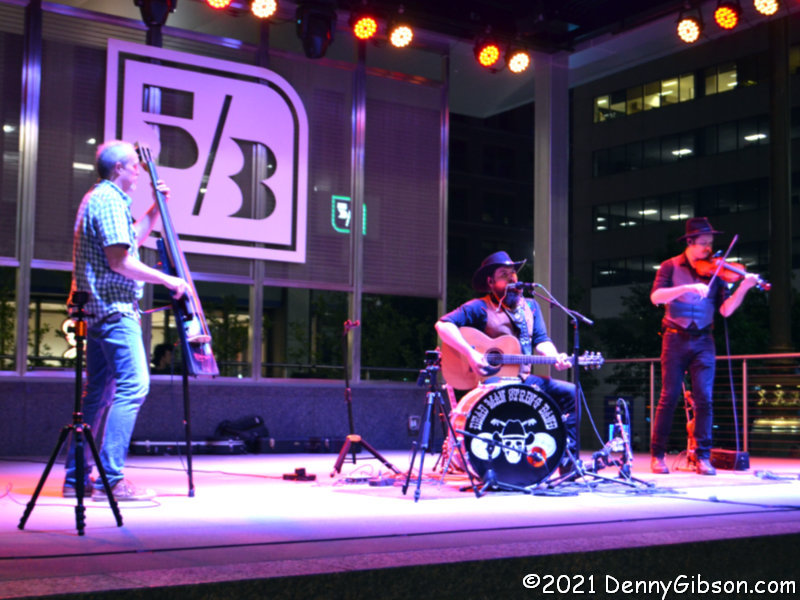
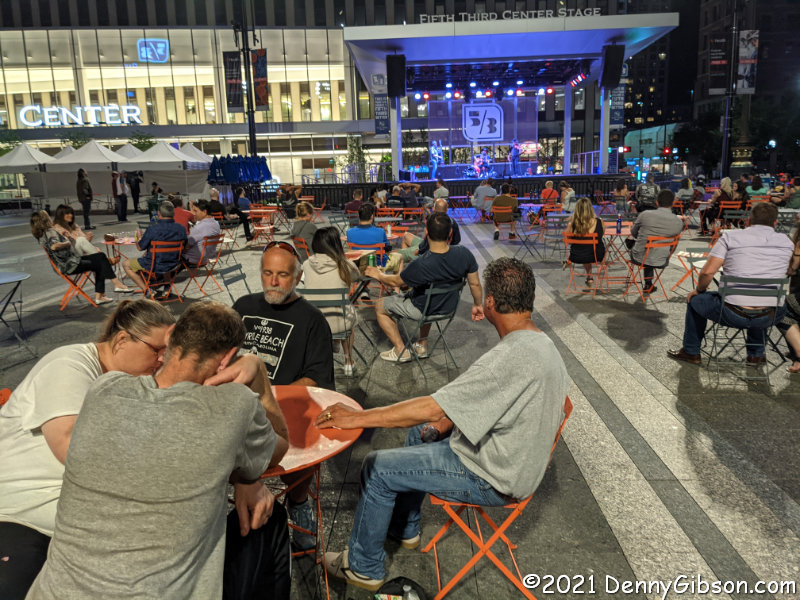
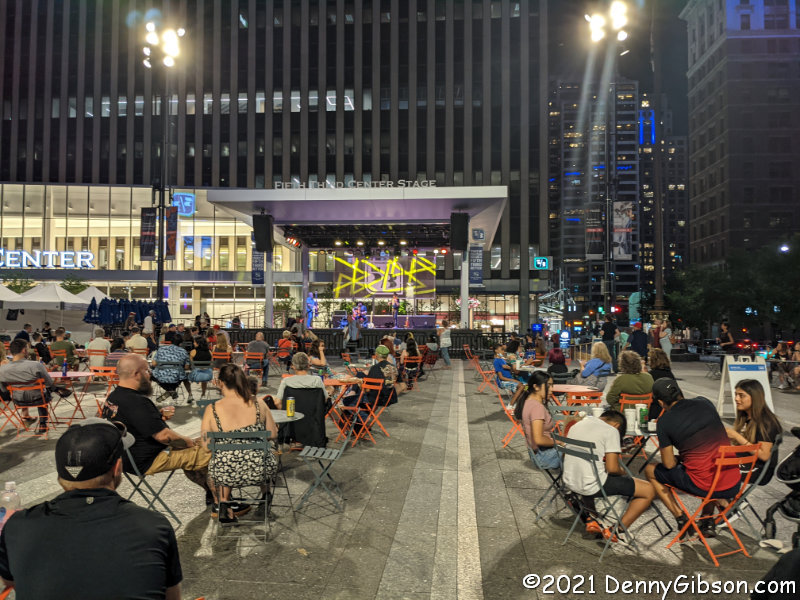
I have experienced very little live music during the last fifteen months, and I miss it. I was looking forward to attending a Dead Man String Band performance on Fountain Square last month but it fell victim to some serious wind and rain. It was rescheduled for June 4 and this time the weather cooperated in wondrous fashion. It was not, however, the same show I would have seen on May 7 if the weather had not misbehaved so badly back then. The “band” underwent a major transformation that included a tripling in size. You’ll see.

A difference I don’t think had anything to do with the transformation of the headliner, was a change in openers and an increase from one to two. I apologize to Loop Man Dan for catching just a smidgen of his set as I walked through the square on the way to dinner. I returned in time to hear about half of Nick Baker’s performance. Both were new to me and everything I heard sounded good.

Wikipedia says that a string band is “an old-time music or jazz ensemble made up mainly or solely of string instruments”. The original Dead Man String Band was an ensemble of one. Rob McAllister played some pretty fancy bass and lead parts on an electric guitar while wearing a mask and playing bass and snare drums with his feet.

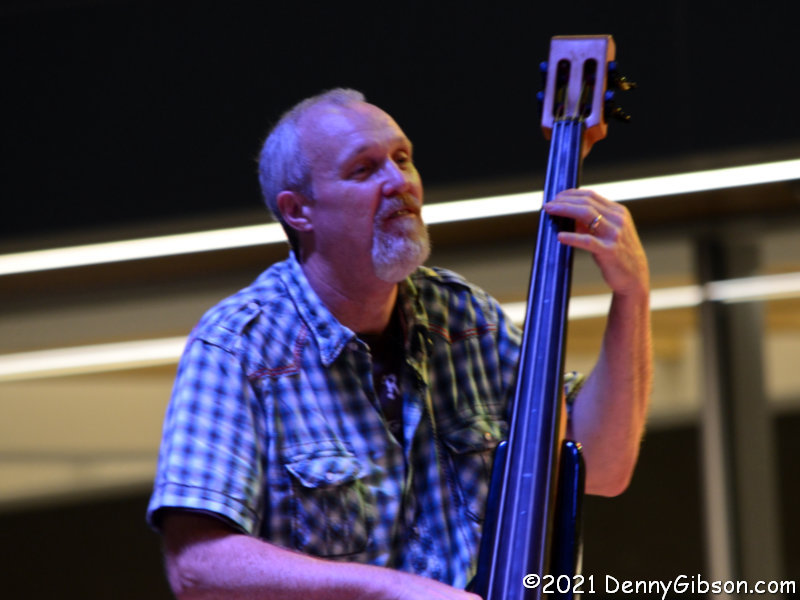
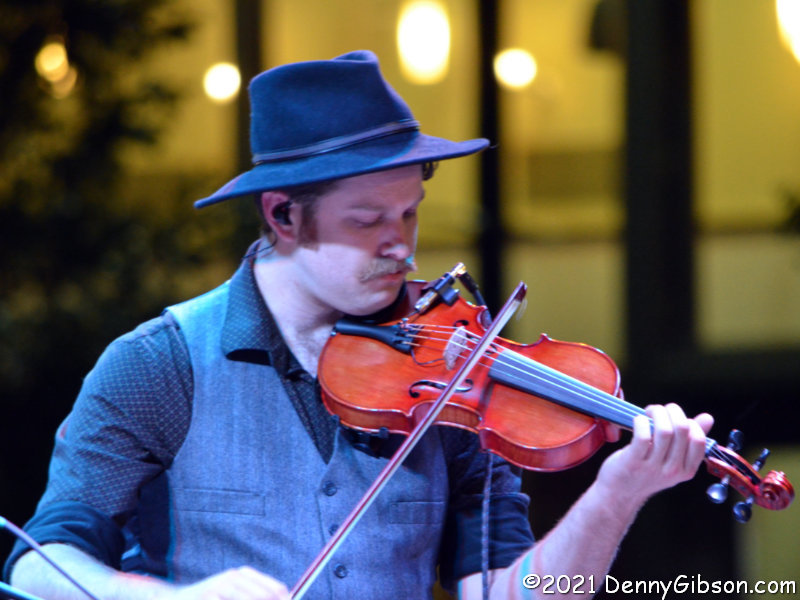
Rob is still at the heart of the band but, with the addition of John Castetter on bass and Eric Osborne on fiddle, it more closely fits the standard definition of a string band.

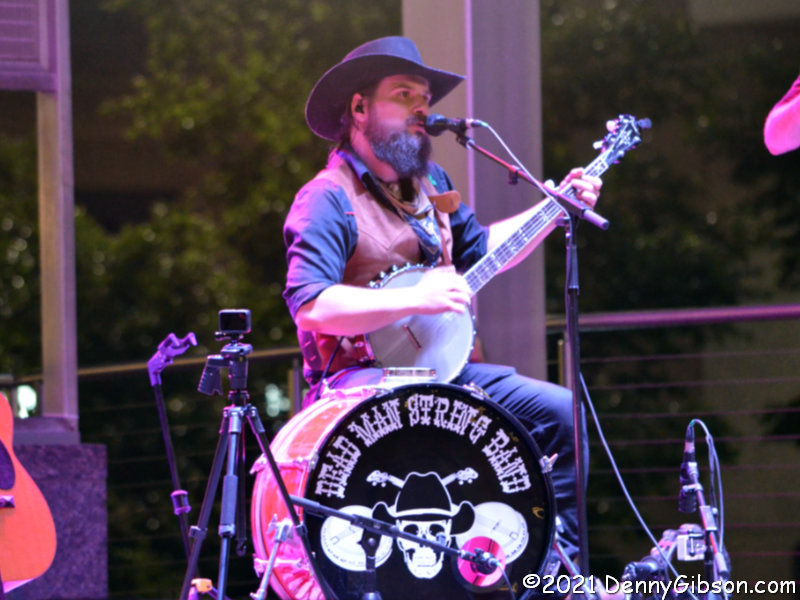
Rob calls this the acoustic version of the band and has written a ton of new music for it. That even includes some banjo tunes so that the instrumentation matches that of a traditional string band a little closer. Tonight there was no snare or hi-hat; just a tambourine for that left foot. His face is still partially hidden but now it’s by a beard instead of a mask.

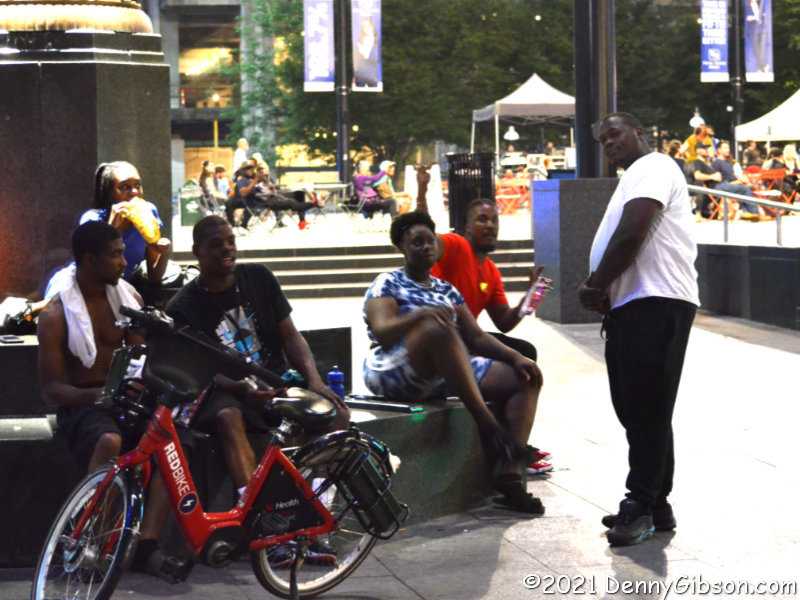
As I circled the crowd on the way out, two different groups spotted my camera and volunteered as subjects. One was seated at a table at the back of the widely spaced crowd and the other was listening from the side of the stage. That’s something that has not happened in a long time and it felt pretty good. Actually, the whole evening felt good — and a little strange. The pandemic isn’t over and COVID has not been conquered but there are promising signs. A little string band music is one for sure.


Butterflies of Bali

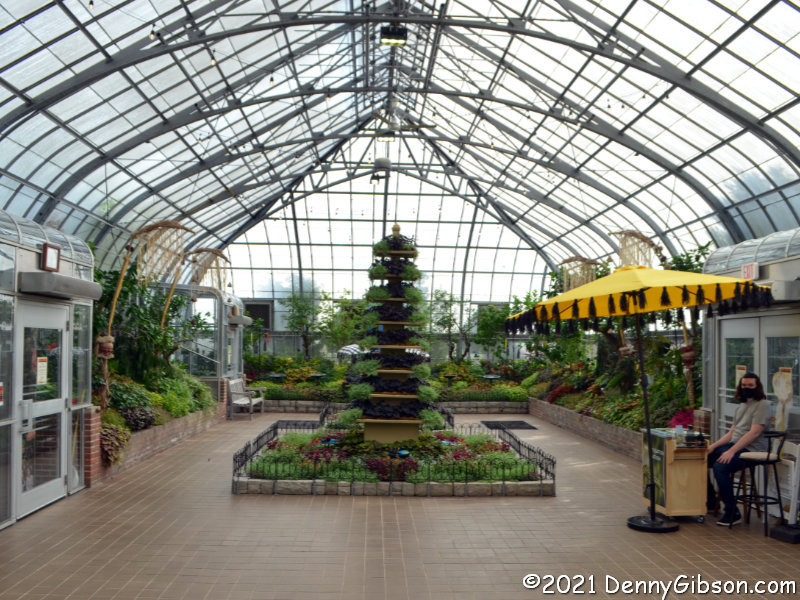
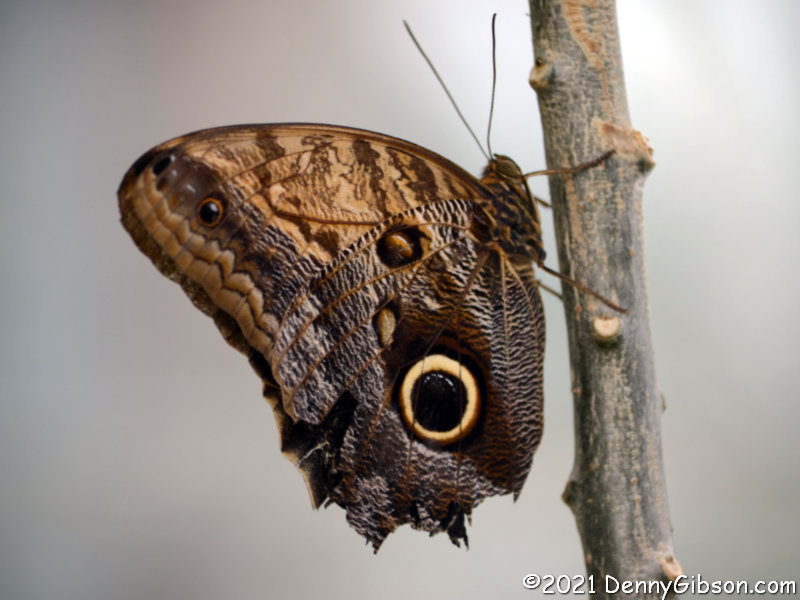
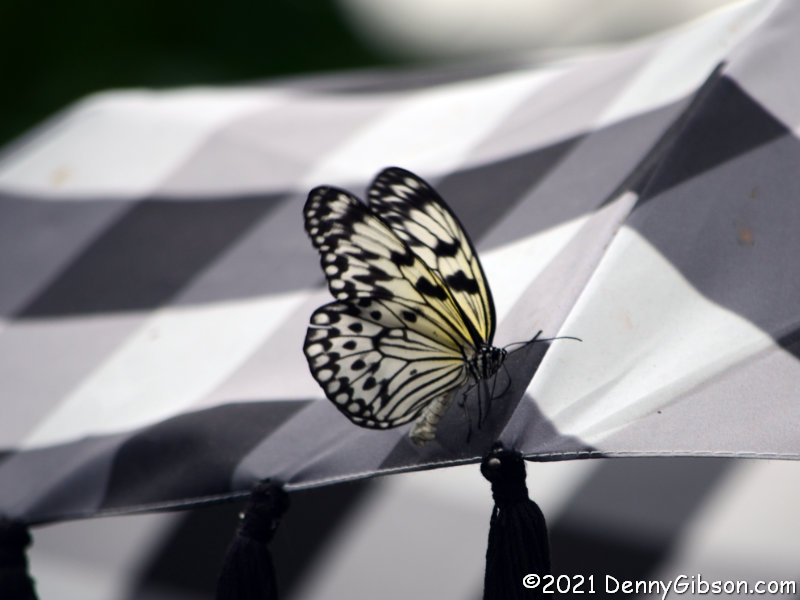
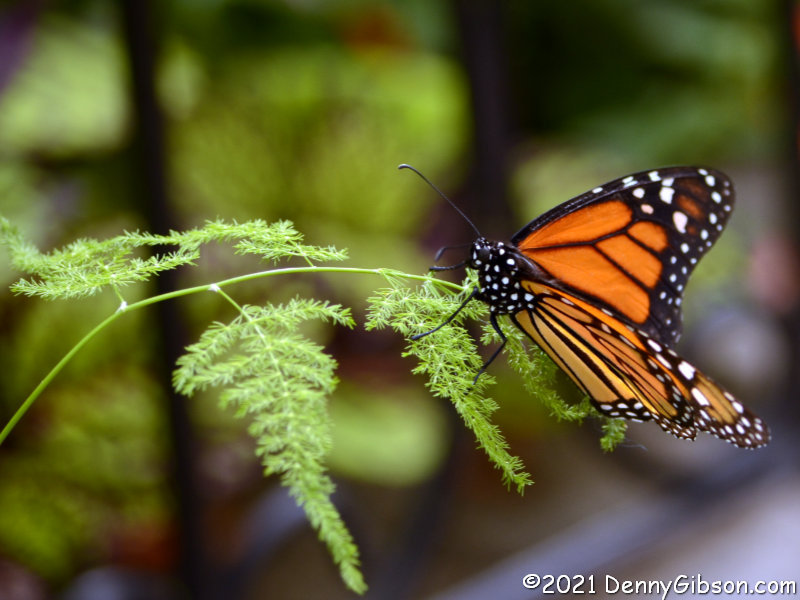
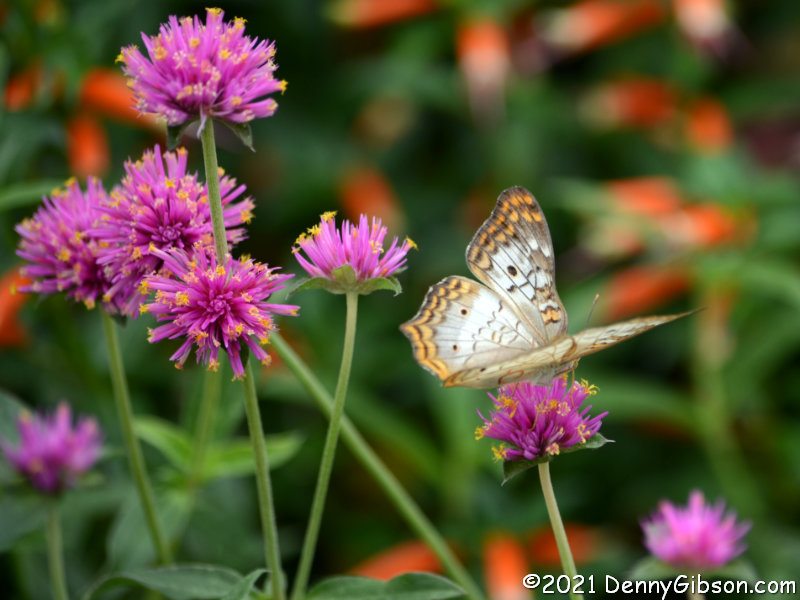
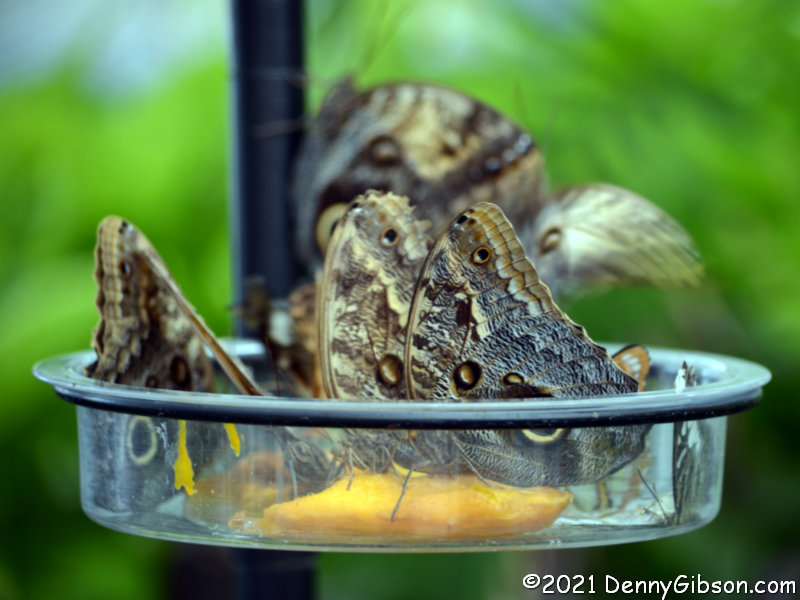
Like pretty much everything else, the annual butterfly show at Cincinnati’s Krohn Conservatory took a break in 2020. The show started in 1996, and for the first couple of years was called simply The Butterfly Show. Recent shows have featured butterflies from a specific country or region. The 2019 show, with a blog entry here, featured Butterflies of Ecuador. Nothing was featured in 2020 because of the COVID-19 pandemic. The show has returned in 2021 with the Butterflies of Bali.

The pandemic is not, by any means, over. Vaccines have greatly reduced the rate of new cases in the United States and led to events like the butterfly show being allowed but things are hardly back to normal. Attendance is through time-stamped tickets which are limited to forty per hour. The Butterfly Showroom is completely cleared between groups. I happened to be the first of my group which gave me a chance to capture an essentially empty show area.

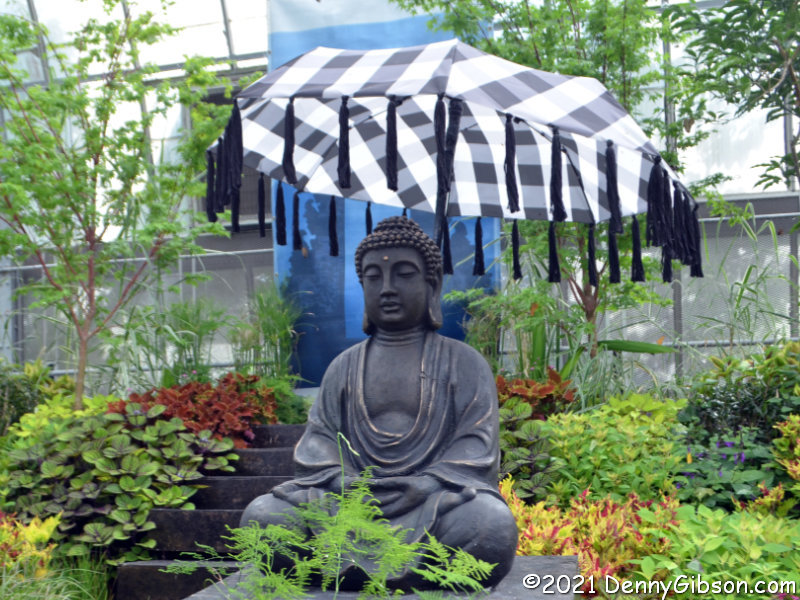
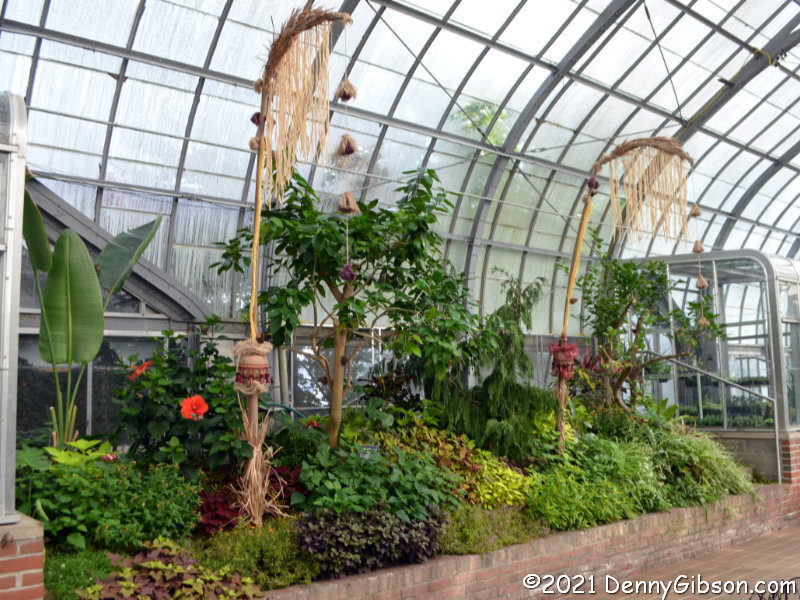
The showroom was decorated with items that I assume were Bali-inspired including a pair of rather trim-looking Buddhas. In verifying that these slender fellows were indeed Buddhas, I discovered that Bali is more than 85% Hindu and less than 1% Buddhist. I guess there were no Vishnu statues in the prop room.

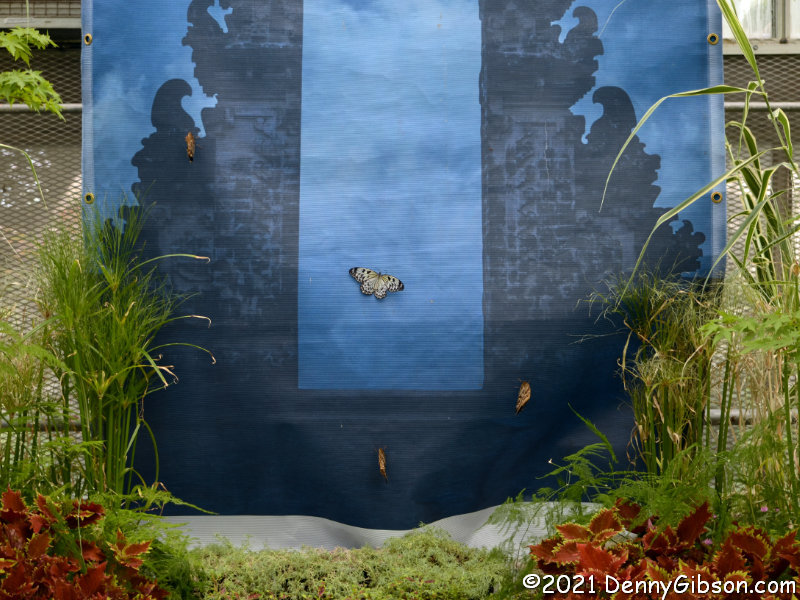
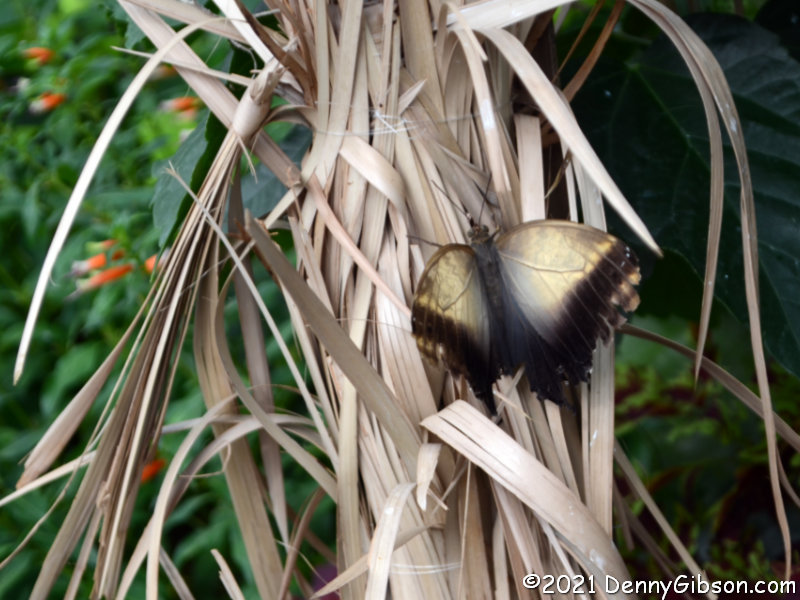
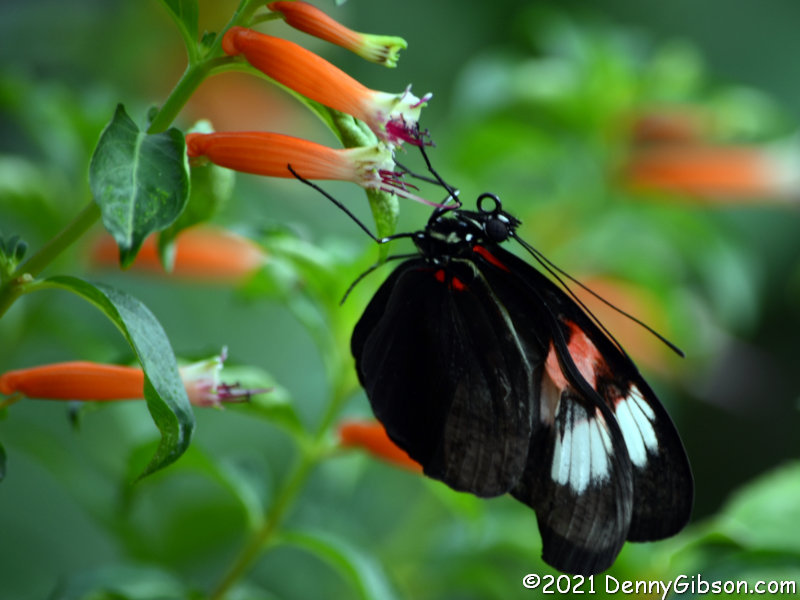
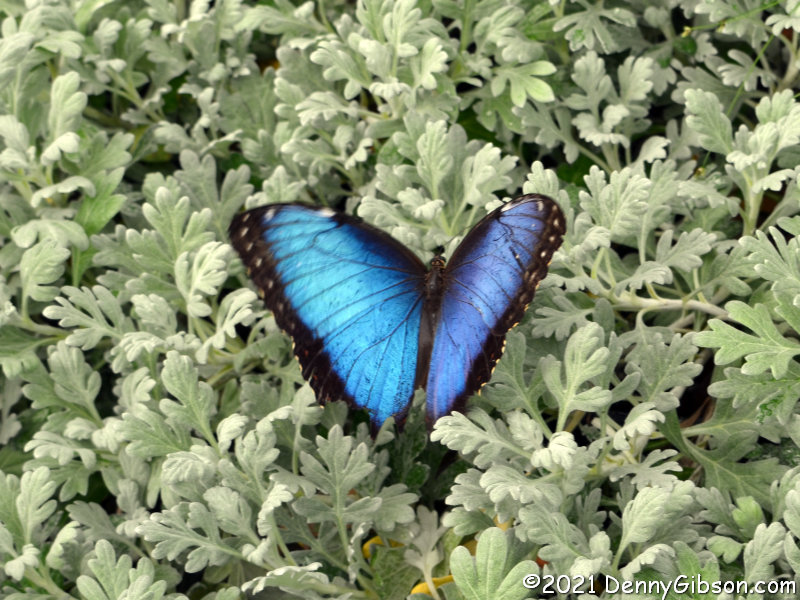
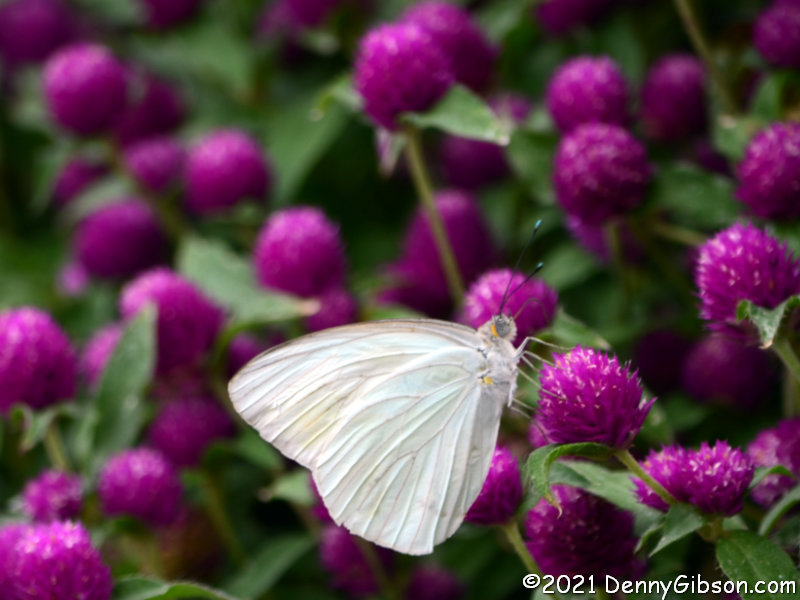
The brochure I was given at the show contains names and photos of the various species in the exhibit but I did not try to identify them when I took these photos and my willful ignorance continues with this posting.

My ignorance extends to all of the flora pictured with the fauna and I don’t even have a brochure to aid in guessing. 

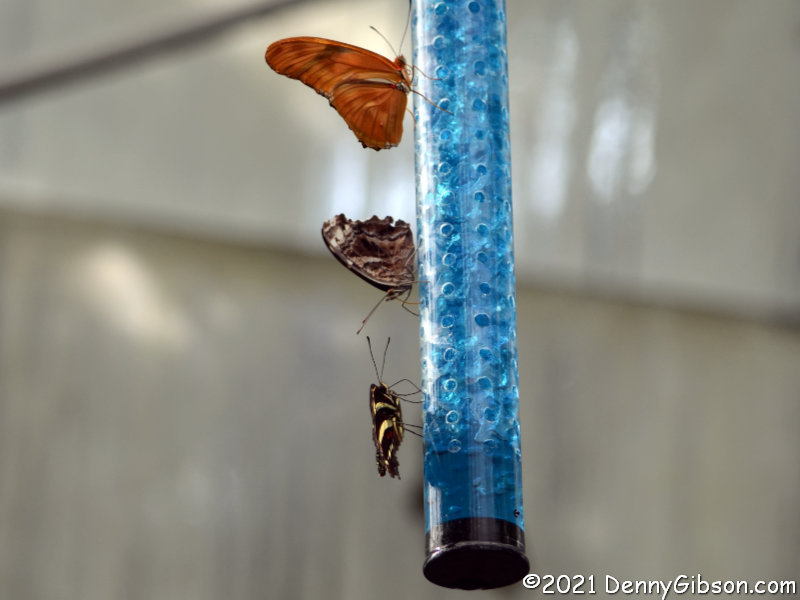
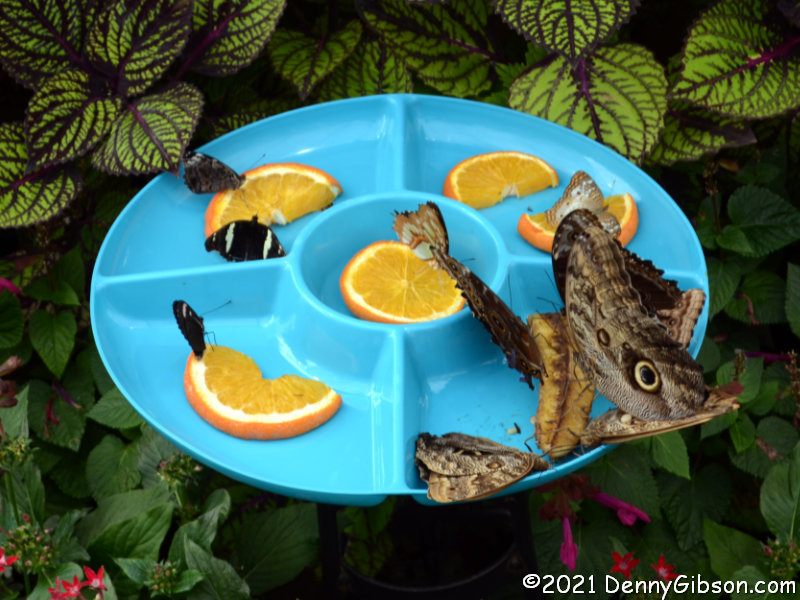
To support all of the flitting they do, the butterflies are provided with a number of free nectar buffets placed throughout the showroom.

Despite every timeslot being sold out, there were never anywhere near forty people in the showroom while I was there. Thirty to forty-five minutes seemed to be the typical amount of time spent in the showroom, and attendees somehow staggered their arrival and departure so that no more than twenty to twenty-five people were present at one time. 

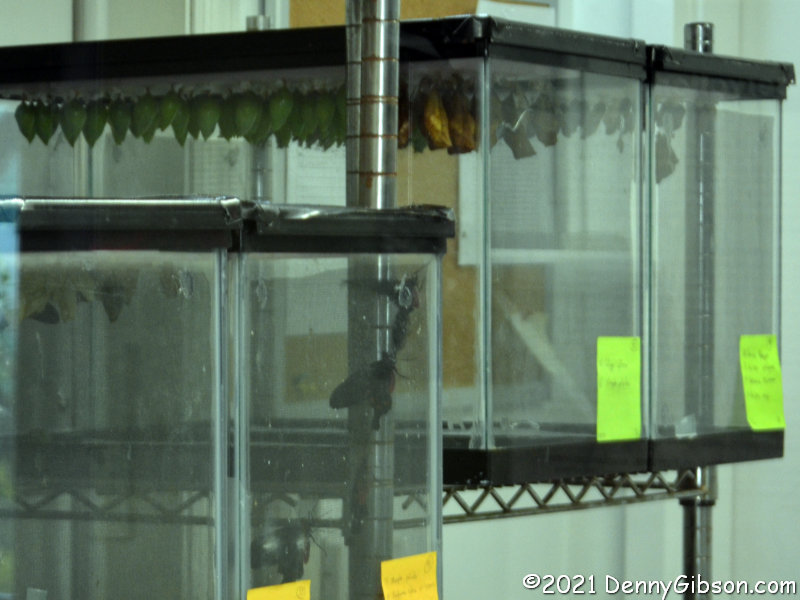
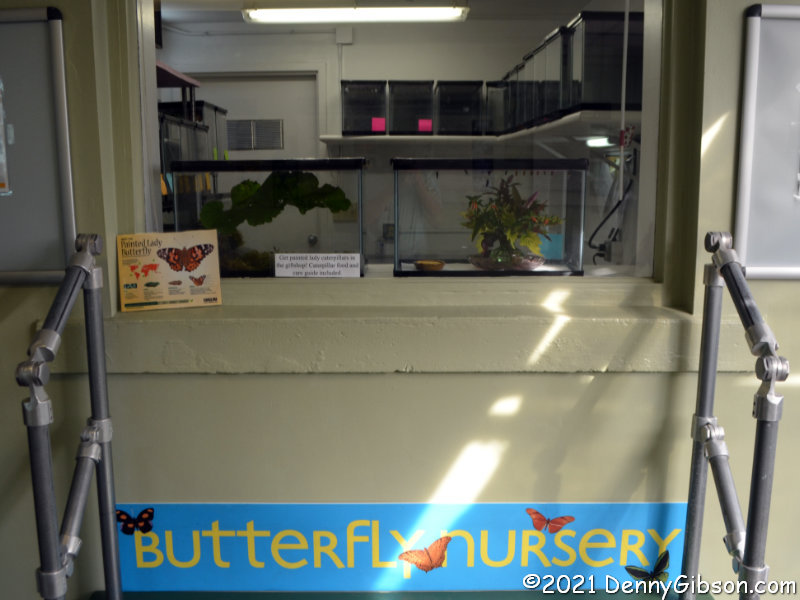
I headed out after about forty-five minutes. The exit path passes right by the Butterfly Nursery. Butterflies come from neither eggs nor storks but from cocoons spun by caterpillars that are sometimes as colorful as the butterflies they become and sometimes not attractive in the least. The show runs through September 6 so there is plenty of times for these little guys to shed their cocoons and become part of the big show. 
Chillin’ With Neon

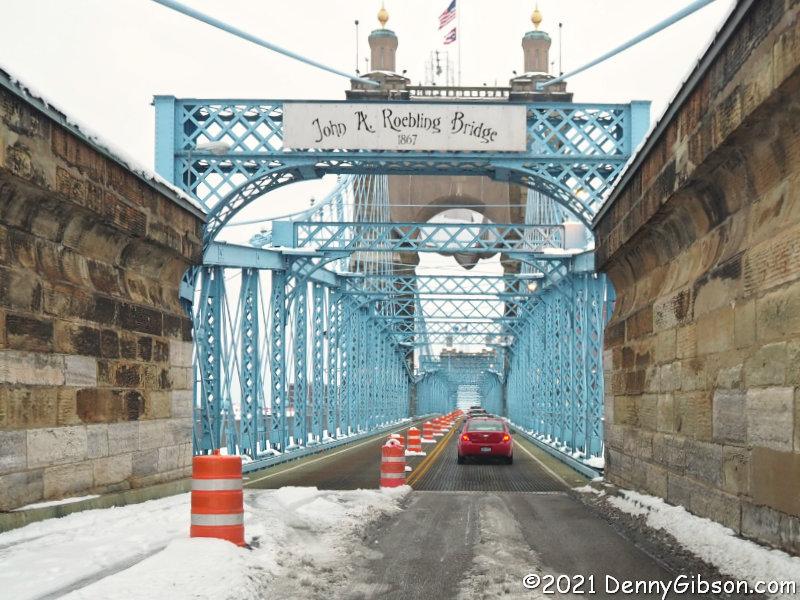
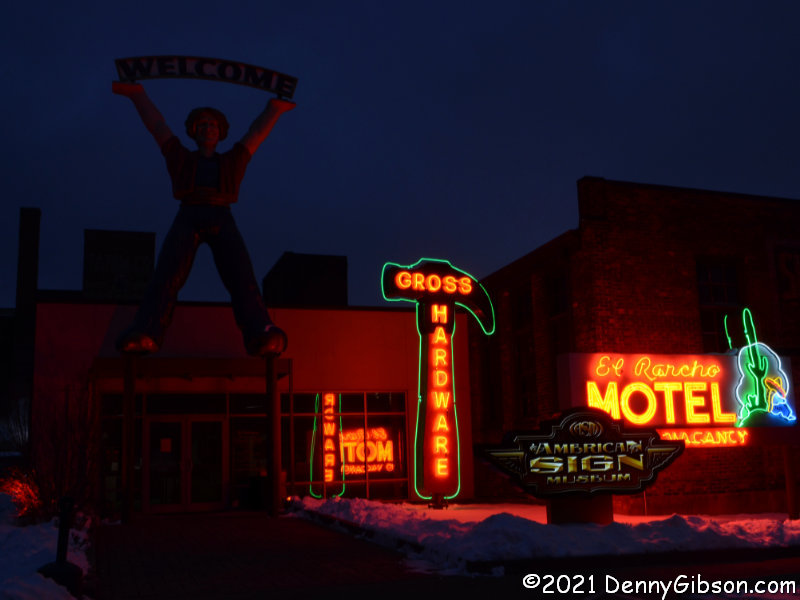
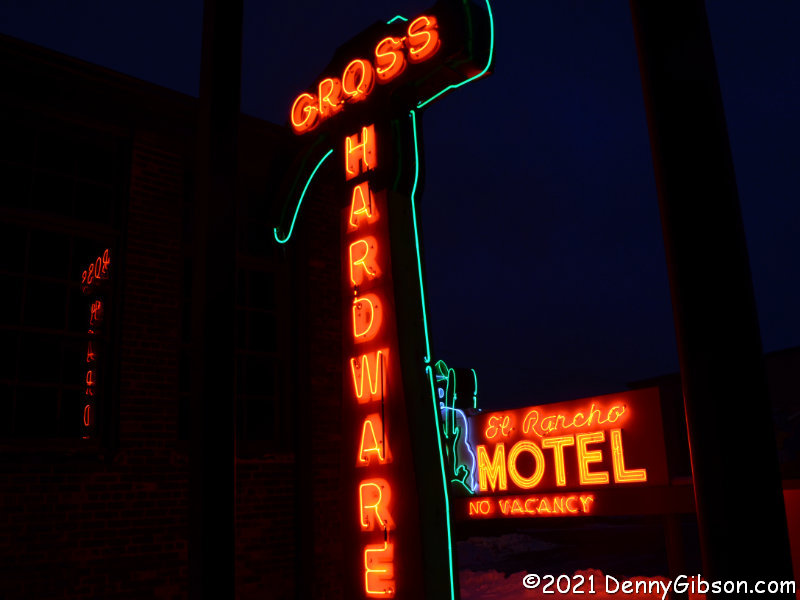
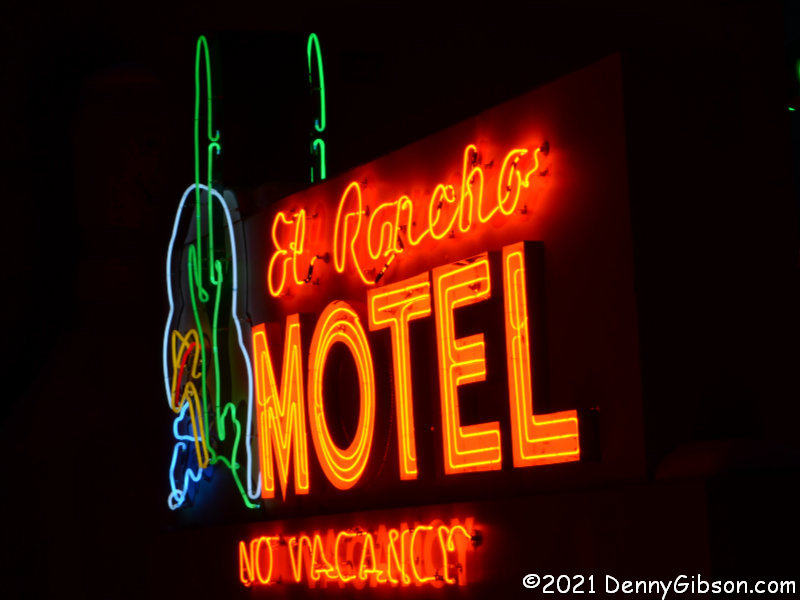
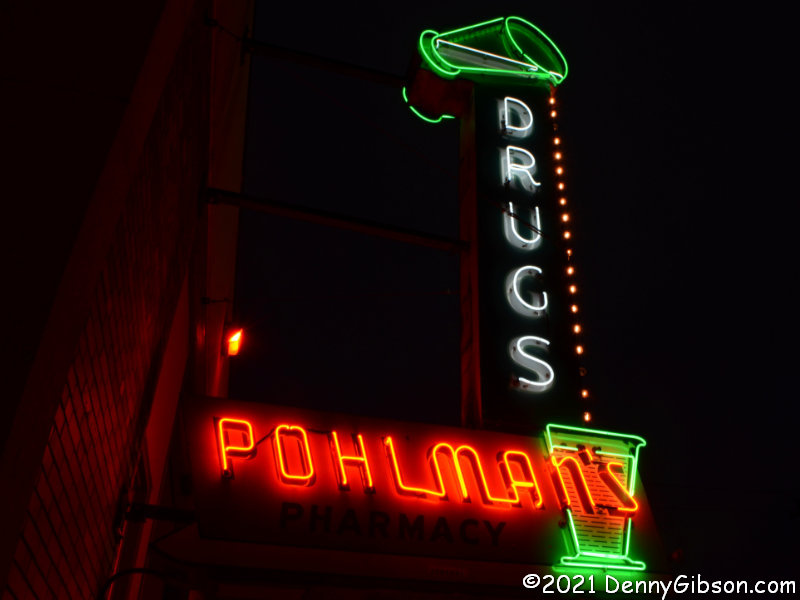
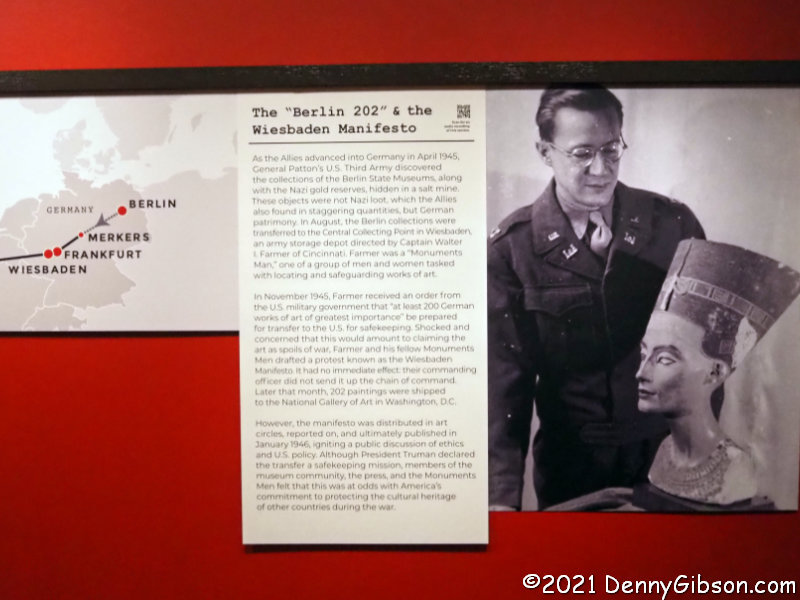
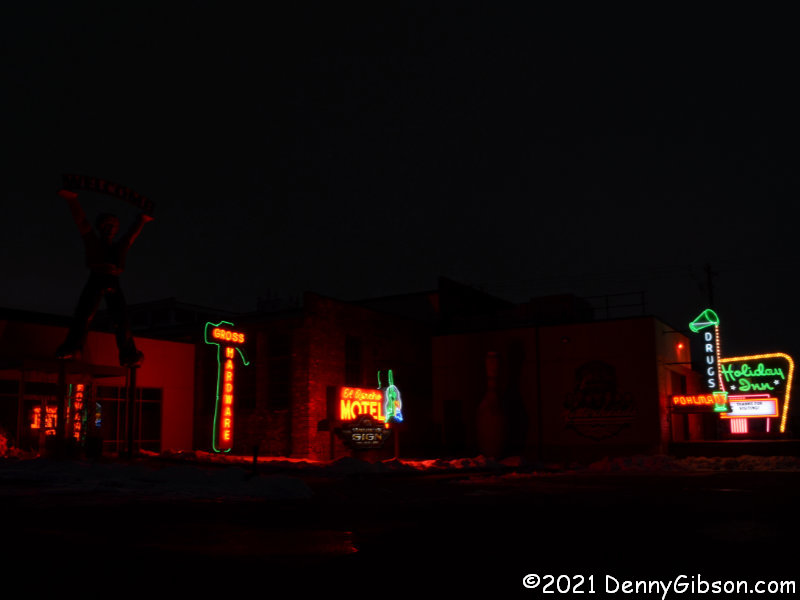
What would it take to get you to walk around outside in 28° weather? The subjects in the photo at right did it for me. As part of the ArtsWave Red Light Valentines Display, the American Sign Museum kept the outside signs illuminated for several hours on both Friday and Saturday nights, and I decided that was something I ought to see. I helped justify the trip downtown with one last drive across a favorite bridge just ahead of an extended closure.

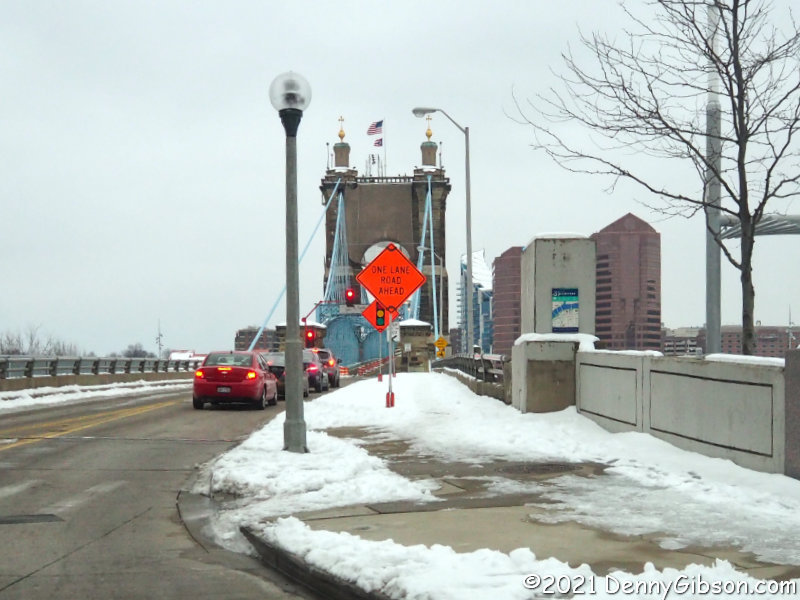
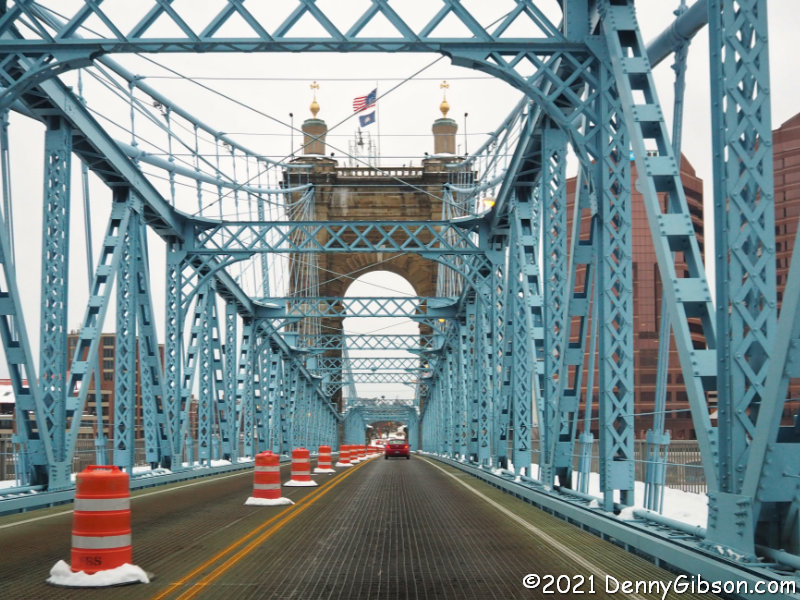
The John A. Roebling Suspension Bridge has had its share of brief closings over the last few years. Once it was closed until it could be inspected after being struck by a car. Then it was closed when pieces from one of its sandstone pillars started falling onto the roadway. A protective net, visible in the middle picture, allowed it to reopen. Recently, it was closed for its own protection when a fire closed the nearby Brent Spence Bridge carrying I-71/I-75, and the nineteenth-century suspension bridge was just too tempting to truckers with rigs far in excess of the bridge’s limits. It was reduced to a single lane a couple of weeks ago as crews prepare for a full closure on Monday. Repairs that include replacing deteriorated sandstone will keep it closed for nine months or so.

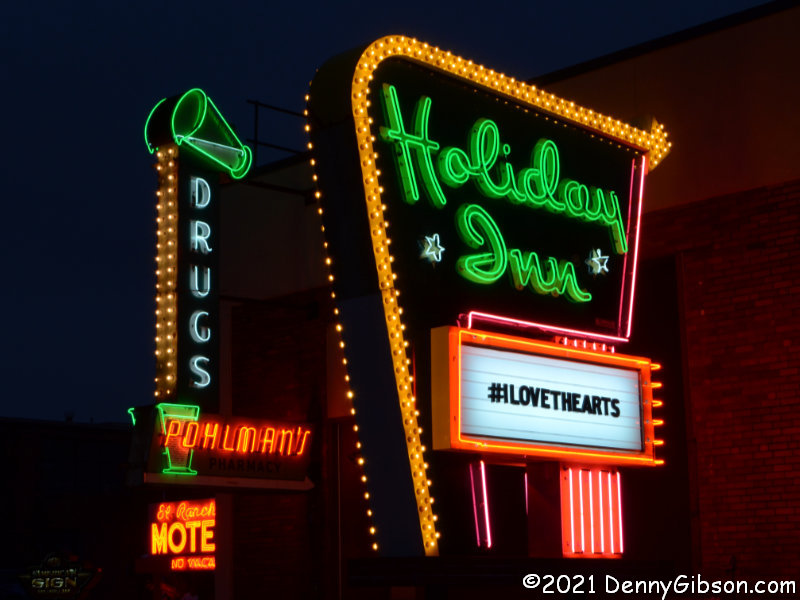
After crossing to Kentucky on the Roebling, I returned to Ohio on the now repaired Brent Spence, and headed to the Sign Museum where I was greeted by a brightly lit Holiday Inn sign.

I have seen these signs lit before, but only when some event was taking place in the museum. Having them all aglow with an empty parking lot and dark building was something new to me.

I was half expecting there to be a number of photographers flitting around the signs but I had the place all to myself. After twenty gloveless minutes of tripod toting and camera aiming, I had a pretty good idea why. As I drove back past the Holiday Inn sign, I found myself thinking that heated steering wheels might not be entirely frivolous.   

Purple Trusses Majesty

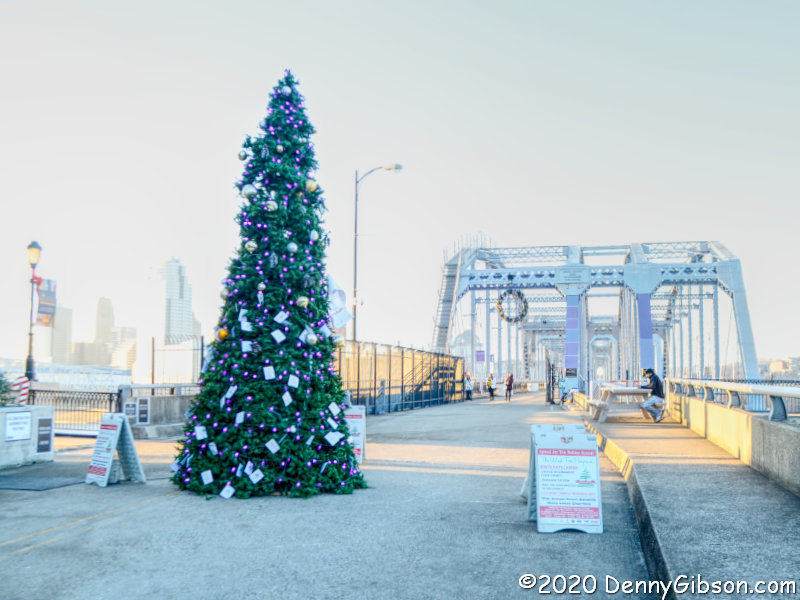
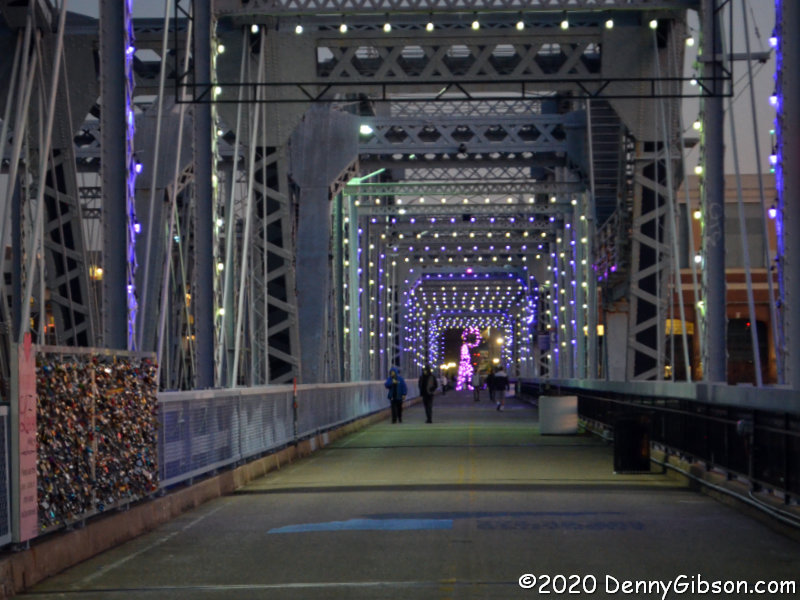
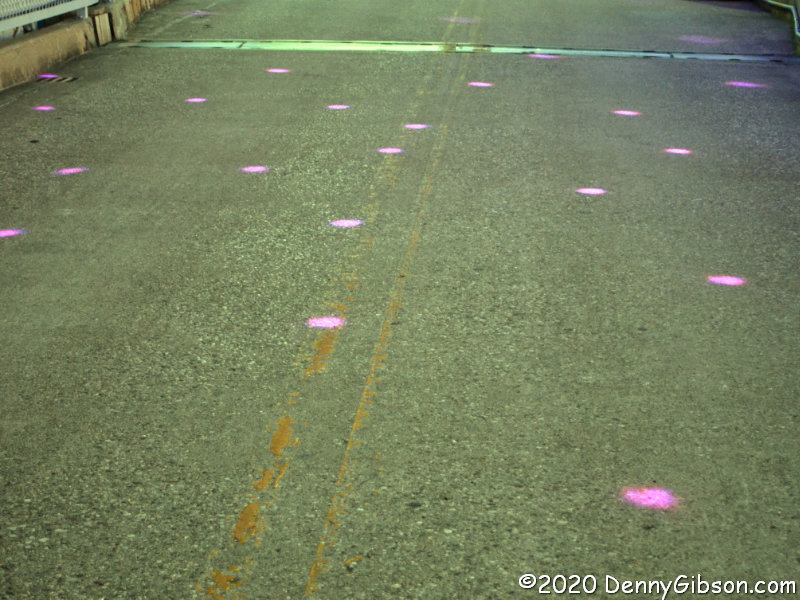
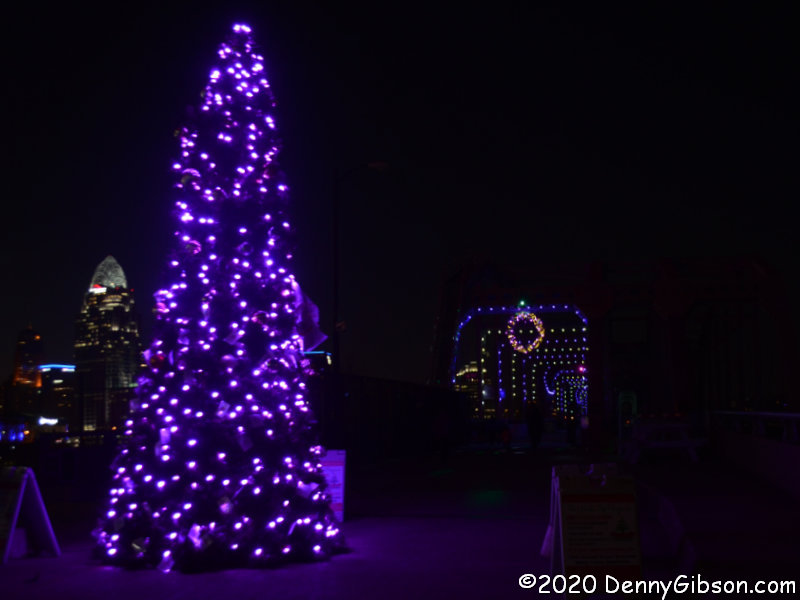
This isn’t the first year for a Christmas display on the Purple People Bridge but it is the first year I’ve taken notice. Maybe that’s because more people have been posting pictures of it on social media, or maybe it’s because I’m sitting at home paying more attention, or maybe it’s because the display has received a little more publicity because it almost didn’t happen. The privately owned bridge is normally home to a variety of fundraising events throughout the year but that was not the case in COVID-riddled 2020. There was simply no money in the budget of the nonprofit Newport Southbank Bridge Company for lighting the bridge this year, but local companies, led by realtor North American Properties, stepped in to assure that there would be lights. The 25-foot tree placed at the bridge’s south end by the Wish Tree Program is covered with gift suggestions for people in need.

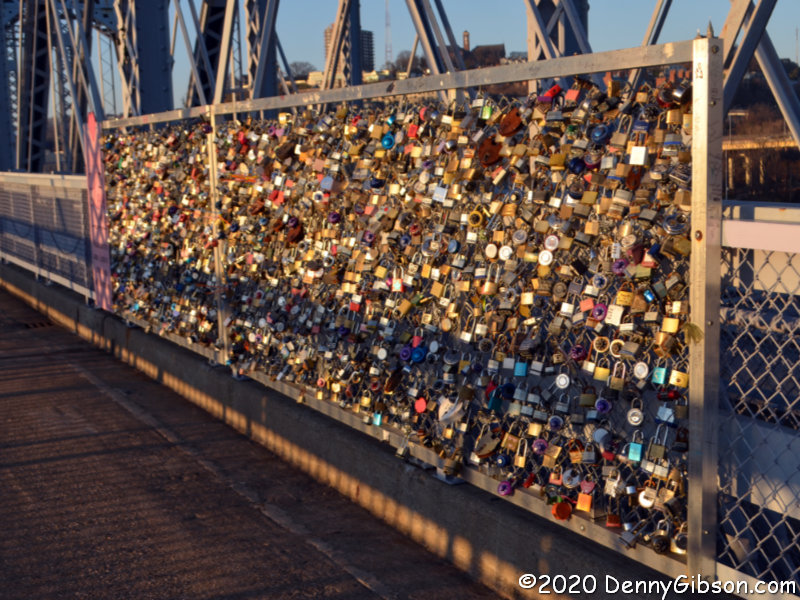
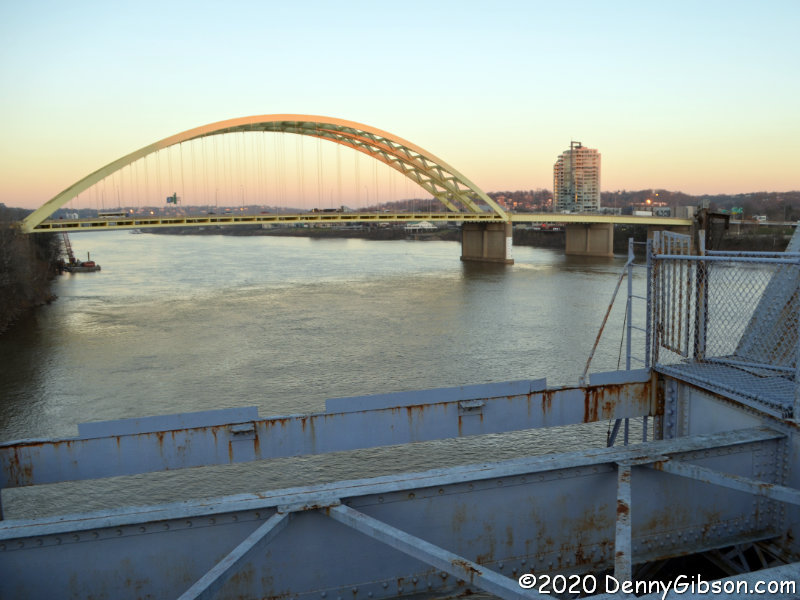
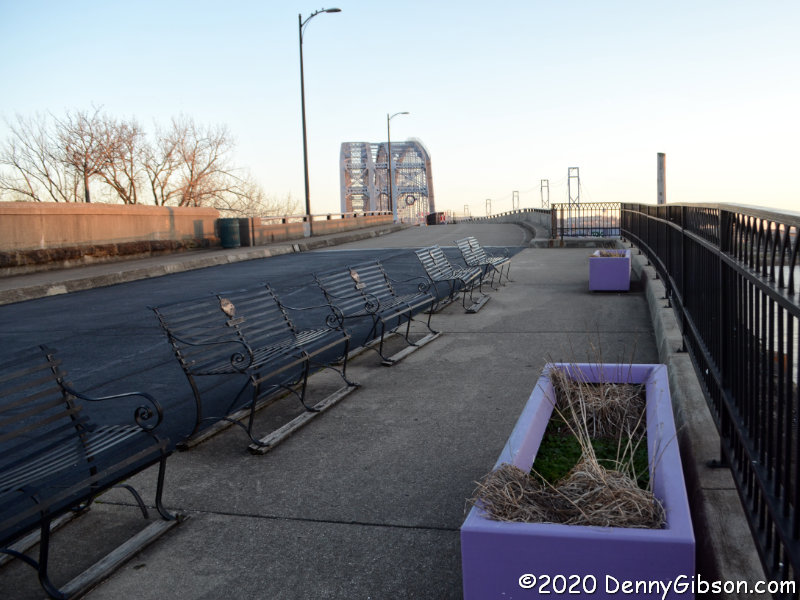
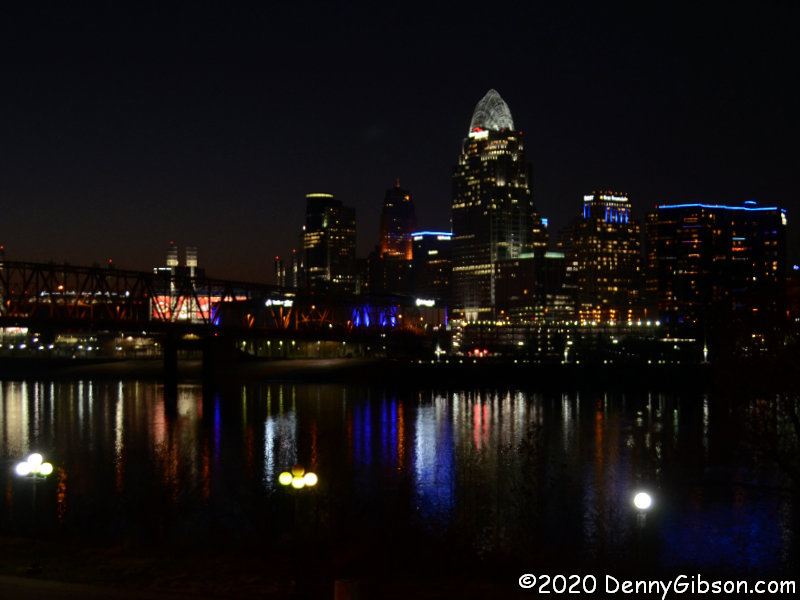
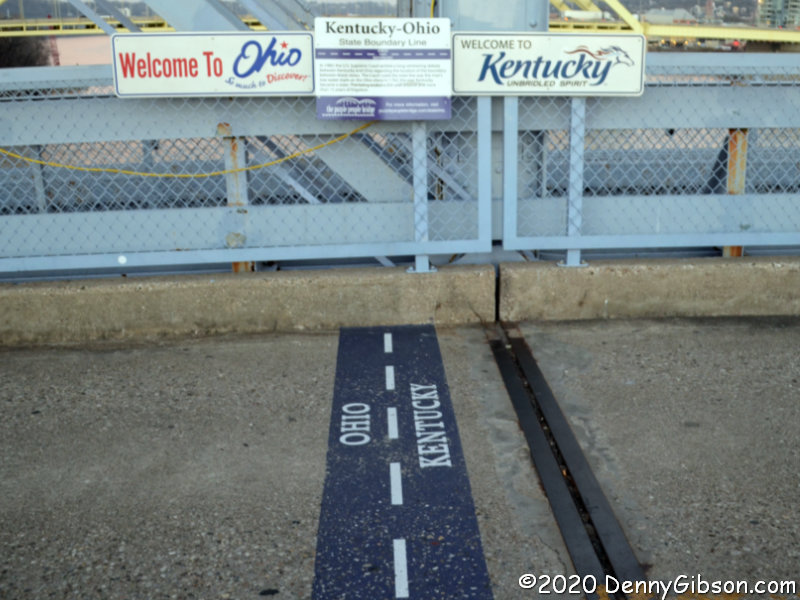
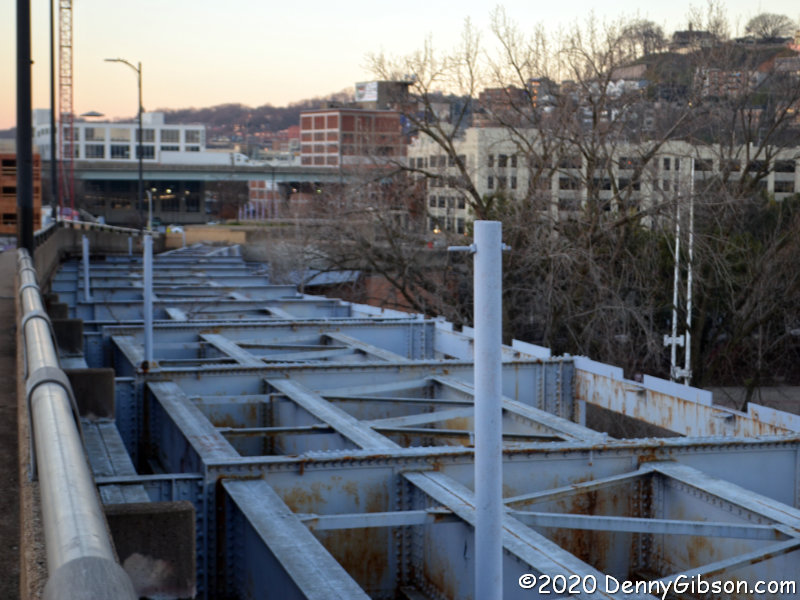
I arrived at the Kentucky end of the bridge a little before sunset and walked across it to Ohio. Note that the state line is a lot closer to Ohio than it is to Kentucky. It is the low-water mark on the northern bank — as it existed in 1792. When “love locks”, closed by couples before tossing the keys in the river, became a problem around 2017, they were removed from the actual bridge and a special area designated. I presume that even the special area has to be cleaned up occasionally. The middle picture is of the Big Mac Bridge which carries I-471 and is officially named the Daniel Carter Beard Bridge. The supports in the foreground of that picture once carried railroad tracks. They can be better seen here. The third picture was taken from the Cincinnati access ramp looking back at the bridge.

As the light faded, I headed back toward Kentucky. With the change in lighting, the people on the bridge also begin to change. It had been mostly people jogging or biking for exercise and workers on a foot-powered interstate commute. Now small groups, including some obvious families, began to appear to take in the lights.

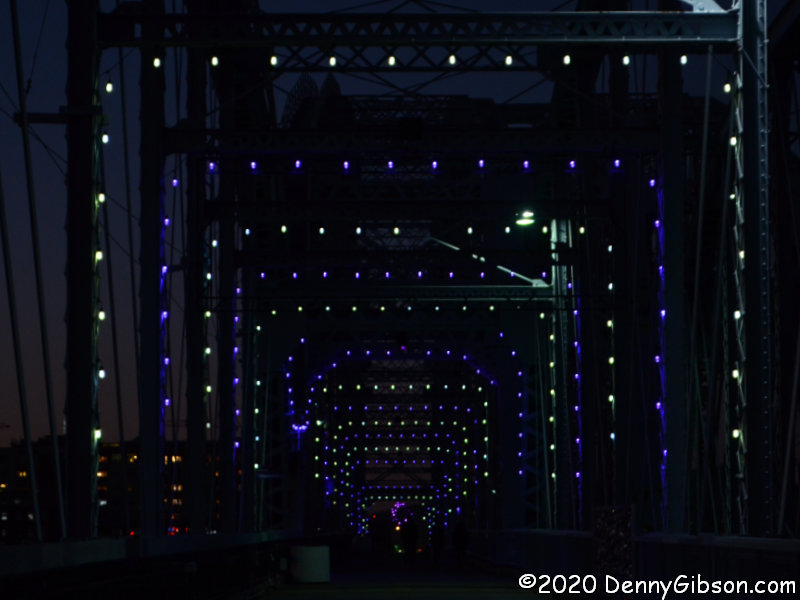
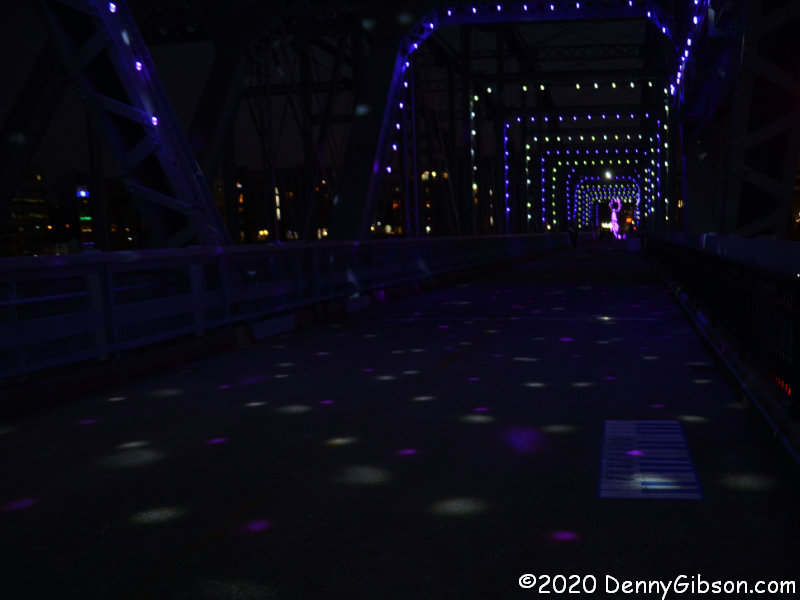
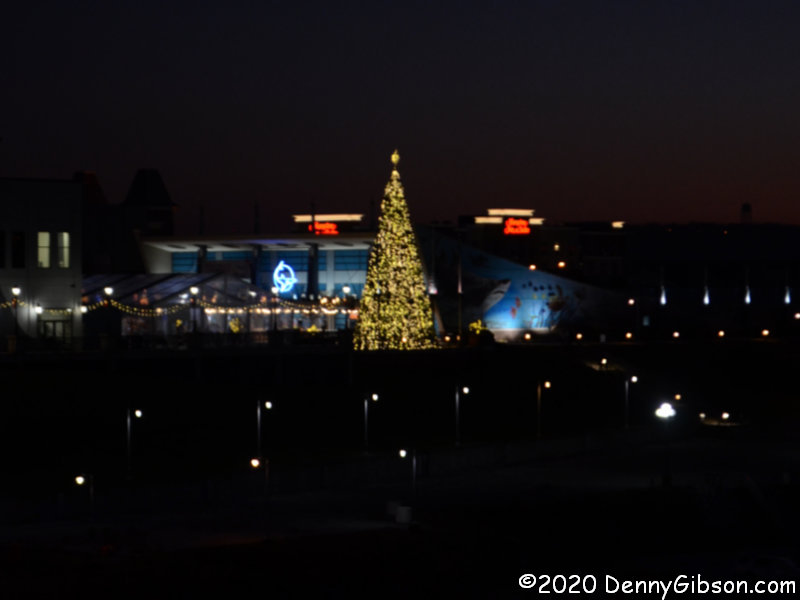
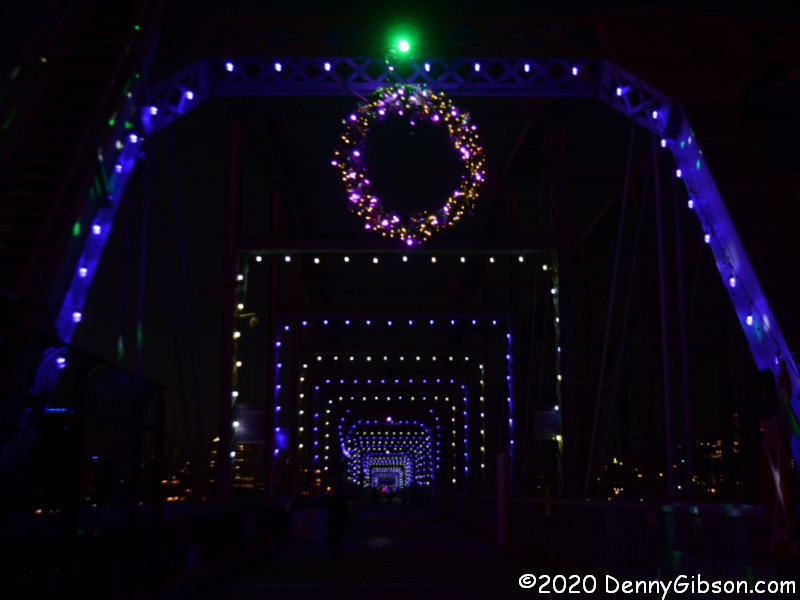
When darkness came, the bridge began to take on that “infinity room” look I’d seen in pictures others had shared online. Somewhere near the middle, I leaned over the railing to grab a shot of the big tree in Newport.

Back on the Kentucky shore, I stepped off to the side for a view of the city across the river before taking a parting shot of the Wish Tree and heading home. The display is free and it only cost me $3 to park in the garage next to the bridge. The lights will be lit each night through January 15.


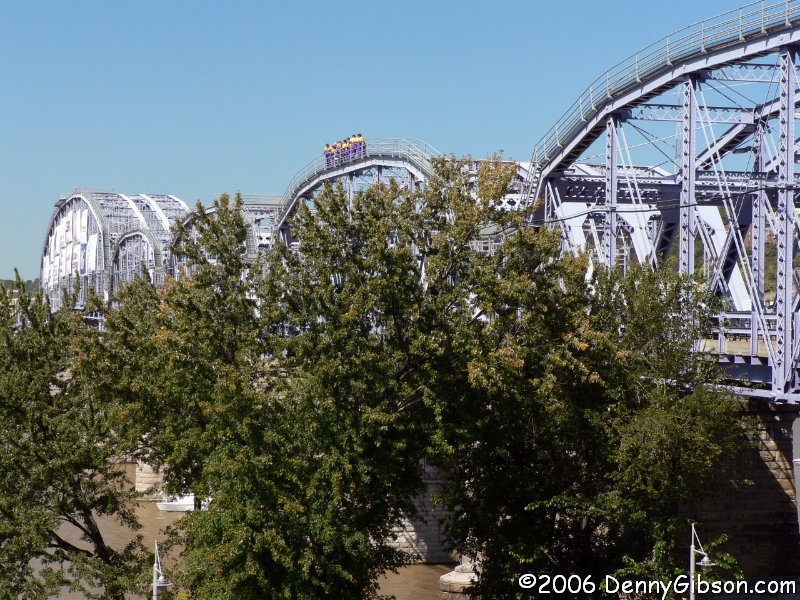
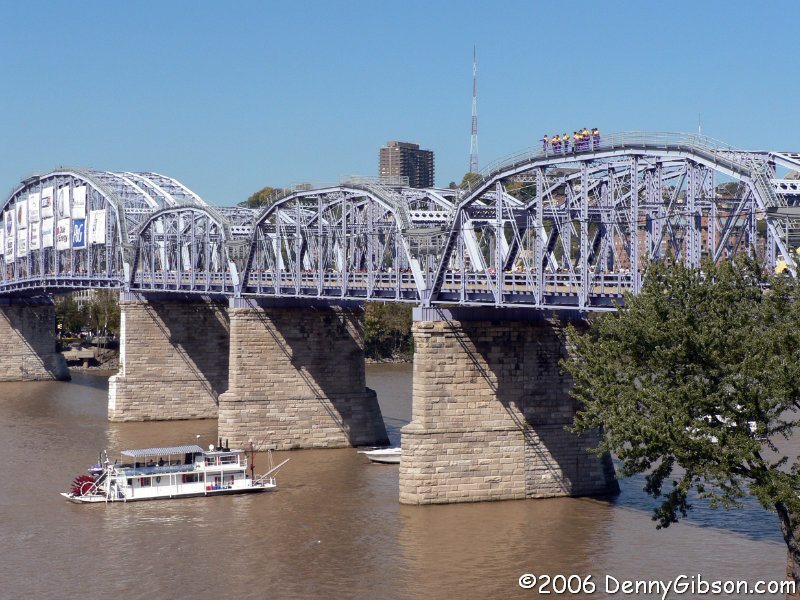
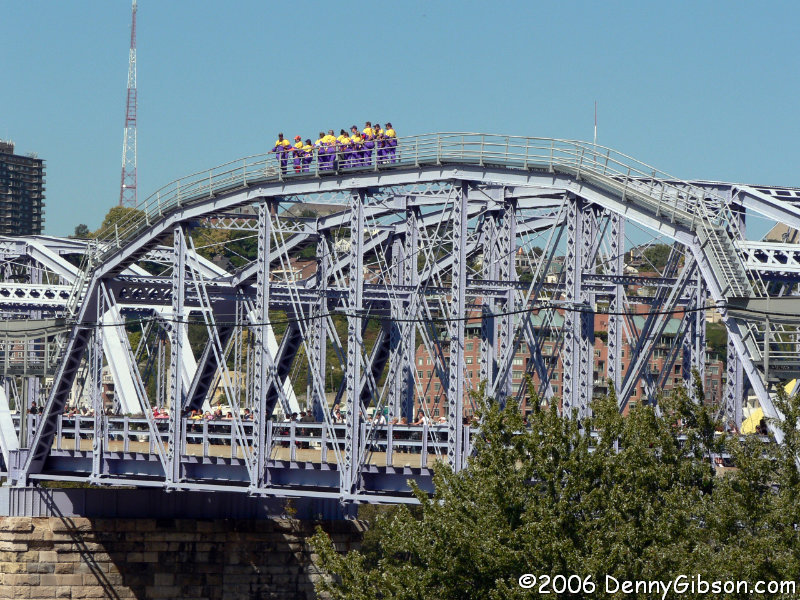
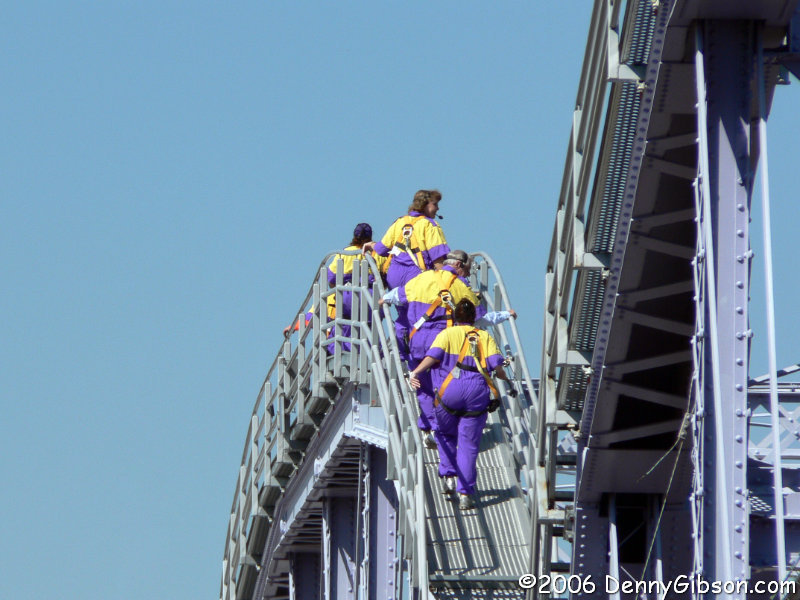
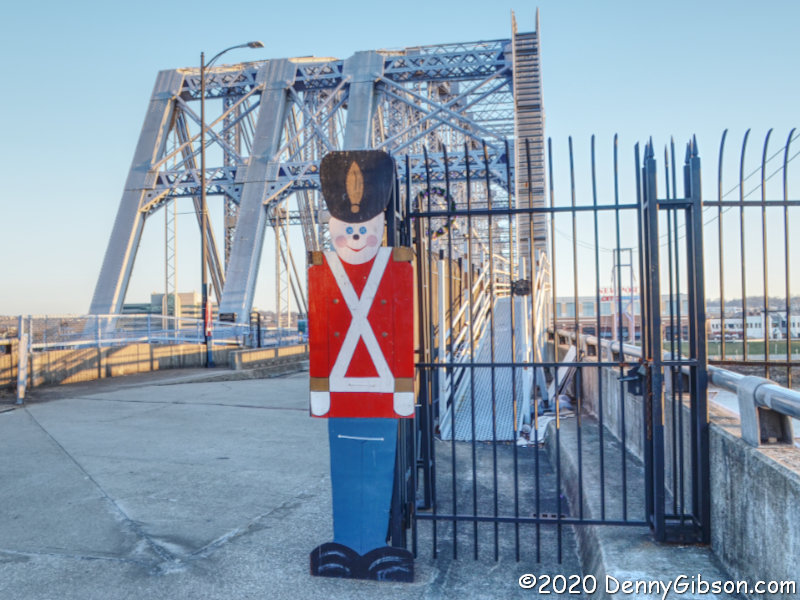
What was originally called the Newport Cincinnati Bridge opened in 1872 as a railroad only bridge. Over the years, it was widened, had decks added, and for a long time served automobiles, trains, and pedestrians. It lost the trains in 1987, became a people bridge in 2001, and became purple in 2006. In addition to being painted purple, the bridge had stairs and railings added to allow people to walk along the top of its trusses for a fee. They’re still there.

Sadly for the promoter, there usually wasn’t all that much to look at, and, even when there was, the improved view from a maximum of maybe 140 feet above the free-to-walk deck did not seem worth the fee which hovered in the $30-$40 range. These pictures were taken during Cincinnati’s last Tall Stacks Festival when the riverfront was full of boats. That gave climbers something to look at and the idea was new enough to seem attractive. I’m fairly certain those few days in October 2006 were the busiest ever for the climbing operation which closed less than a year later. 

Minor Ado About Nothing

Today is the final day of 2020’s Greater Cincinnati Restaurant Week. In normal times, I would have visited at least one or two of the participants, but, to restate the obvious, these are not normal times. I scanned the restaurant list looking for places that I’d not tried but wanted to, that offered something appealing to me, and that had outdoor seating. I came up empty and had accepted the fact that there would be no new restaurant experience for me this year. Then a friend posted something about a pop-up at a restaurant I’d never tried but wanted to. The restaurant was not a GCRW participant and the dates of their pop-up (9/25-10/2) didn’t align with Restaurant Week (9/29-10/4) but the two did overlap. There was outdoor seating and the food offering did appeal to me. As I learned the story behind it, it became more than appealing; It became an all-consuming but short-lived obsession that I satisfied the very next day.

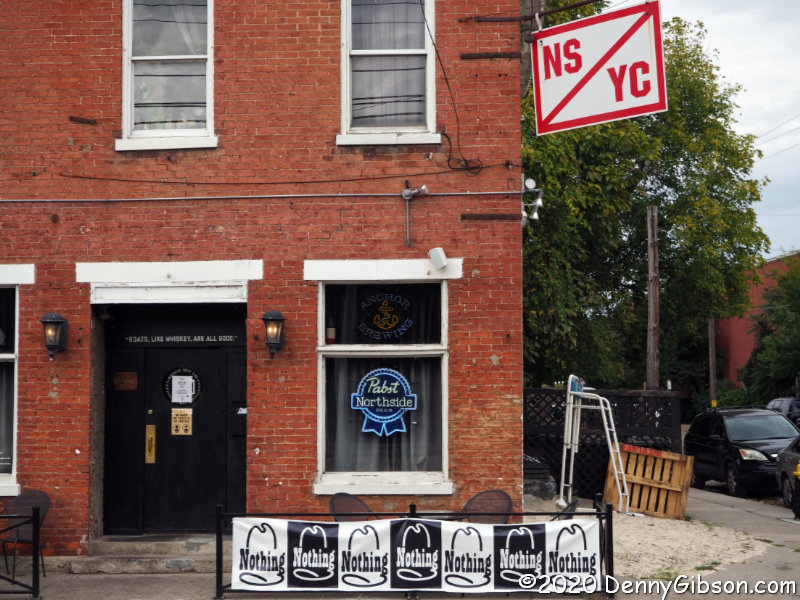
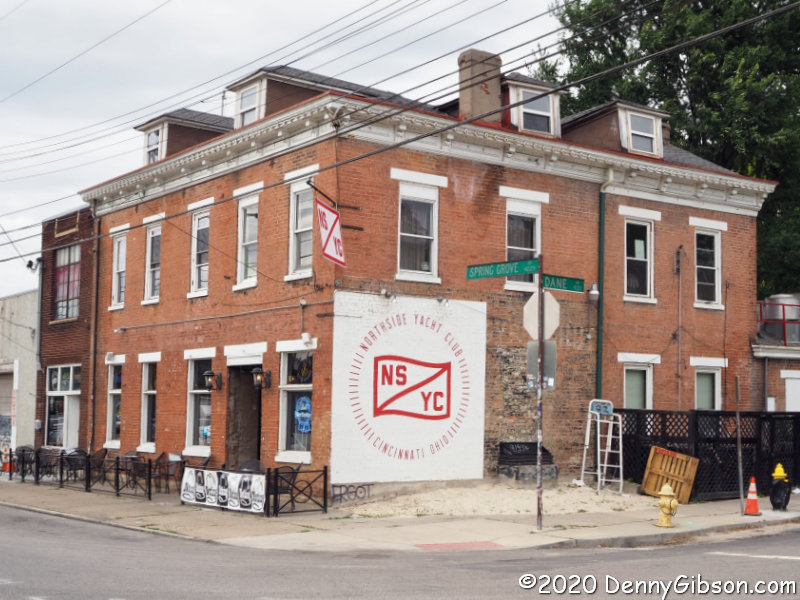
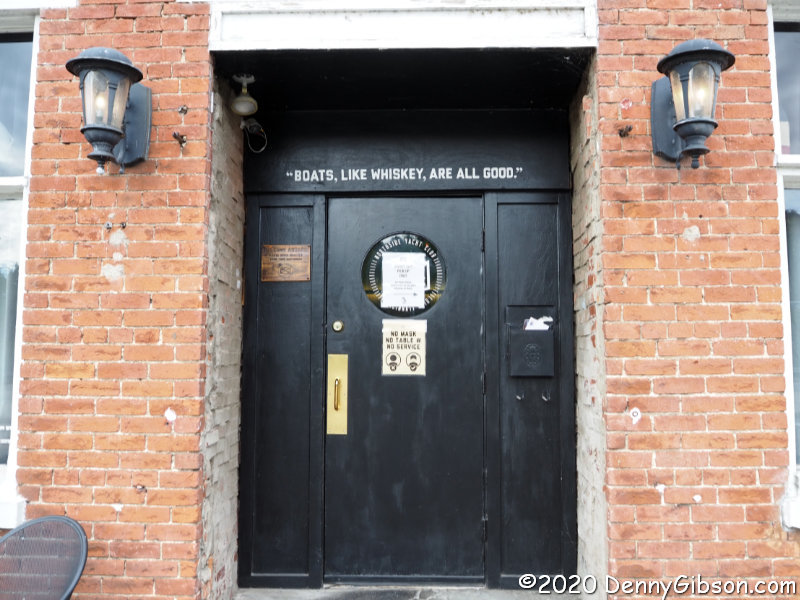
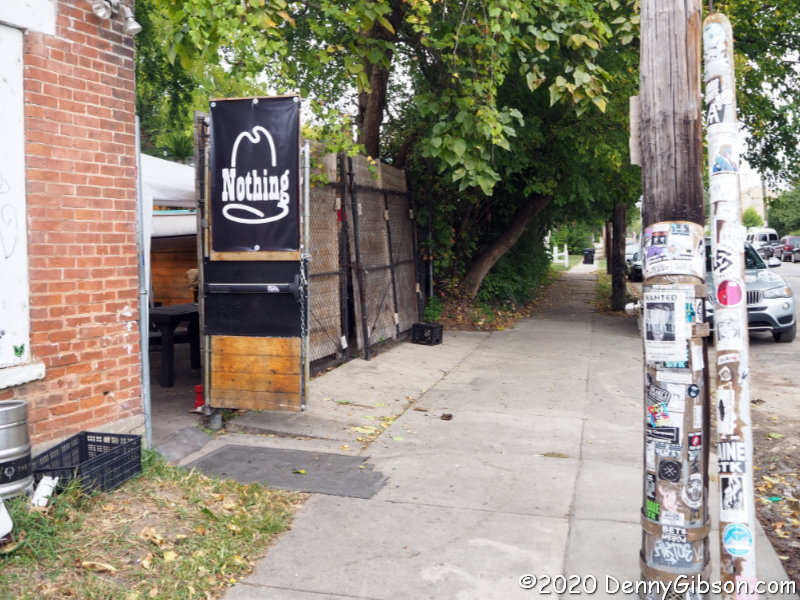
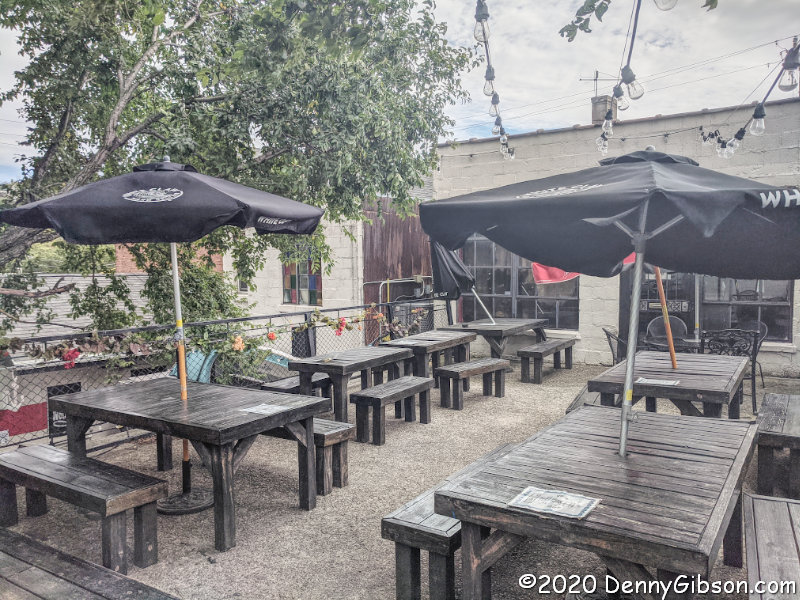
Northside Yacht Club is the place. It has a pretty nice front door but during the pandemic that is used only for picking up carry-out orders. These days, the main entrance is on the side next to the tastefully decorated utility poles. It has been there since 2015, normally has a variety of live music, even now has cool drinks and food, and has done a couple of pop-ups in the past.
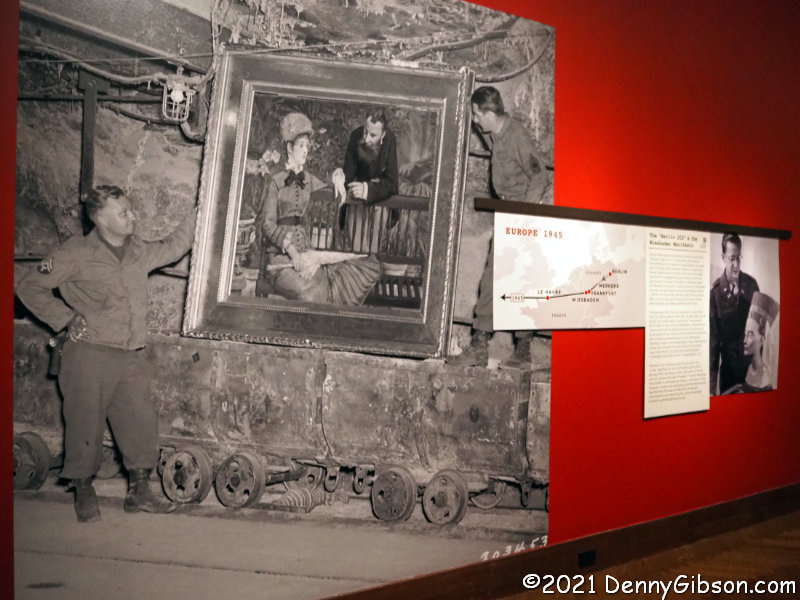
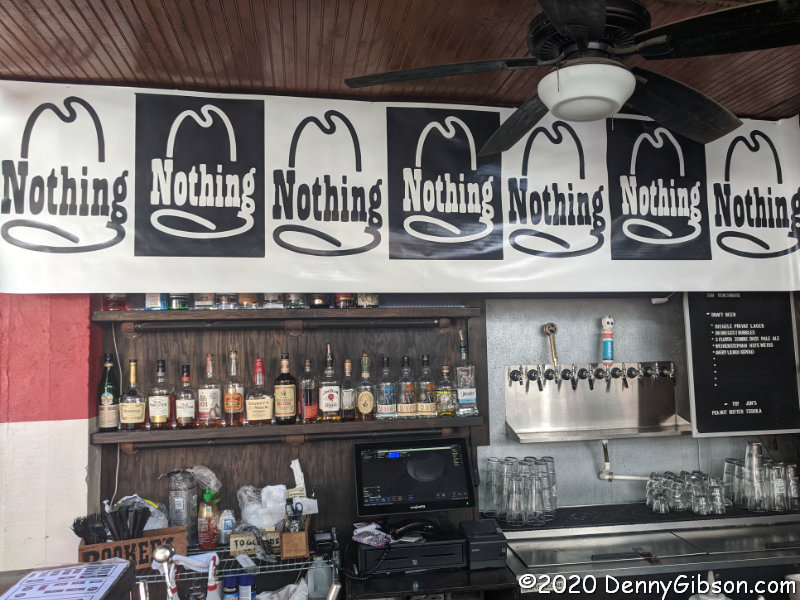
Building on an old false rumor, NSYC wore an Applebee’s costume for Halloween in 2017. Last year it combined two Cincinnati favorites, Skyline chili and LaRosa’s pizza, to become SkyRosa’s. It was Ronny Salerno’s tongue in cheese-filled cheek report on the faux Applebee’s that first brought the Yacht Club to my attention. This year, they put on their disguise a little earlier, possibly because the end of September in Ohio usually offers a better outside dining experience than does the end of October. The pop-up that just ended involved Arby’s, but there was more to it than that. NSYC’s menu temporarily mimics that of the roast beef chain but the inspiration came from a punk rocker’s Twitter account. That both the rocker (Brendan Kelly) and the account (@Nihilist_Arbys) are well known is evidence of just how uninformed I am. You’re better off checking out the Twitter feed and this Arby’s-meets-nihilist story than having me try to explain things. There’s a good CityBeat story here.
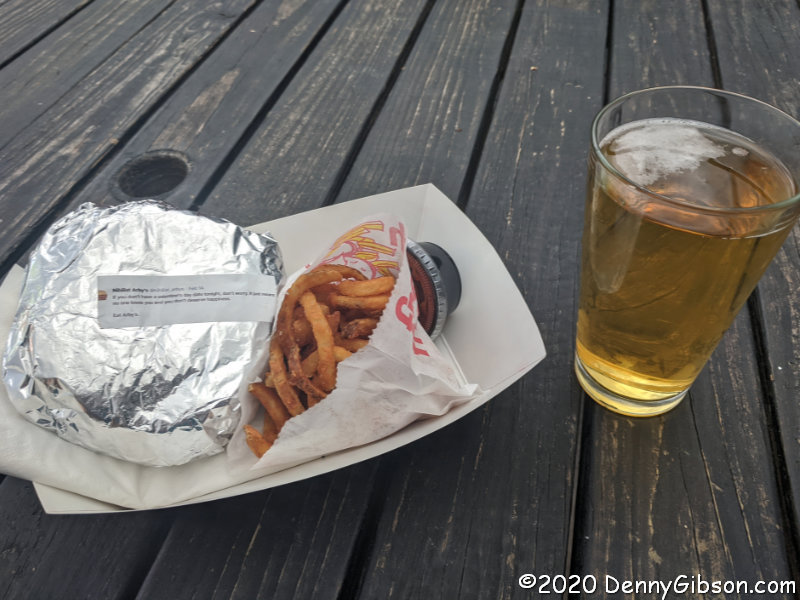
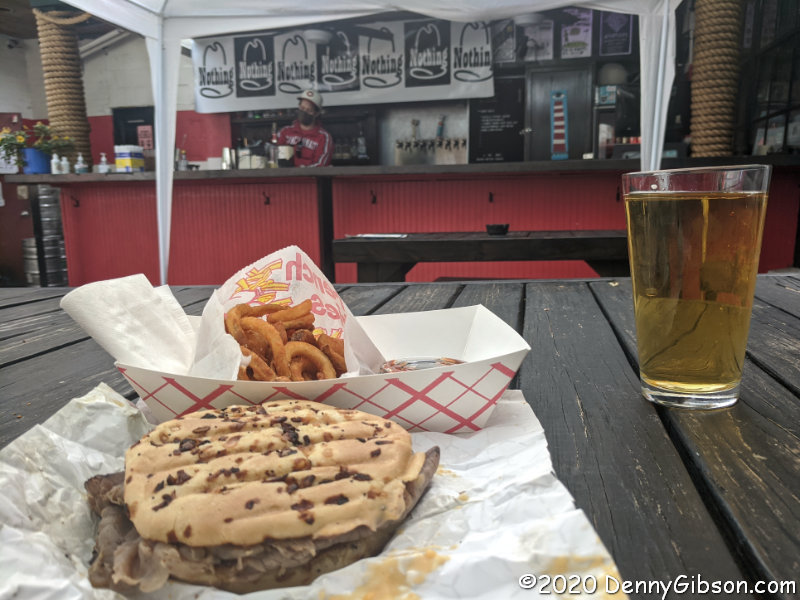
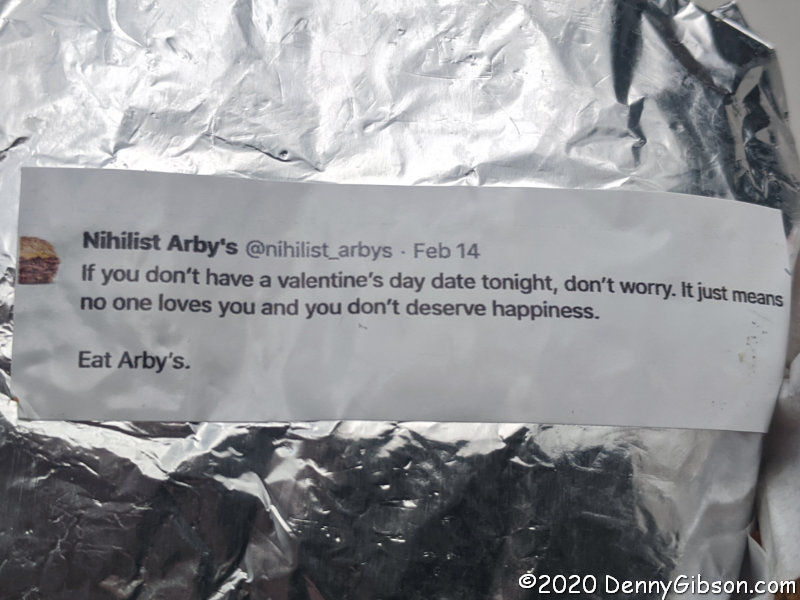
Each sandwich comes with a nihilist_arbys’ Tweet. Mine was originally published on Valentine’s Day. I chose the beef and cheddar and it was excellent. The Sixteen Bricks bun makes it look like the Arby’s version but believe me it was many steps up in quality. The curly fries, on the other hand, were a near-perfect match for Arby’s in all regards. The beer may look like a Bud Light but it’s Riegele Privat lager. Neither, of course, are available at a real Arby’s.

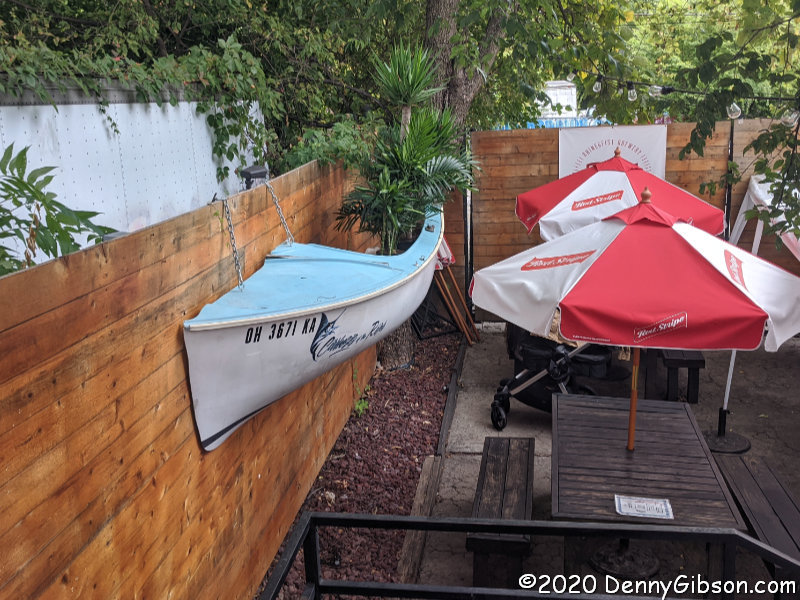
Before leaving, I checked out the upper deck which offers plenty of additional seating and overlooks a Northside style split-the-yacht wall decoration.


Oktoberfest Lite

As everyone should know, the largest Oktoberfest in the world takes place each year in Munich, Germany. Not this year, however. A very distant second is the Cincinnati Oktoberfest which has also been canceled. Both of these events, as well as many others, are victims of the COVID-19 pandemic. When the cancellation of Cincinnati’s Oktoberfest was first announced, there was some muttering about a decentralized event whose participants could be counted so we could claim the number one spot for one year. Those mutterings seem to have completely faded and I suspect part of the reason is that a fair amount of decentralized partying is going on in Germany, too.

Oktoberfest Zinzinnati has a website and a Facebook page through which some activities, such as a Zoom based Chicken Dance, have been and will be coordinated — after a fashion. Even in decentralized form, attendance is limited by social distancing requirements and I opted to avoid anything resembling a crowd by celebrating solo in the afternoon. The site of my “celebration” was Cincinnati’s oldest restaurant and one of the most Germanish places in the city, Mecklenburg Gardens. To head off any claims of fibbing on my part, Arnold’s (1861) is indeed older than Mecklenburg’s (1865), but Arnold’s began life as a tavern. Mecklenburg’s has been a restaurant since day 1. UPDATE 9-20-20: Postcard image added.

My pocket camera did not do well in the mottled light beneath the 150-year-old grapevines but you might be able to pick out the photo-op cutouts in the first picture and the open tables in the second. Only one customer entered ahead of me, but several of those tables were filled soon after. A sausage and beer seemed appropriate and Mecklenburg’s offers a variety of each. I chose a goettawurst which is, of course, based on goetta, a Cincinnati creation. I bet you can’t get one of those in Munich. The beer is Spaten Märzen which you certainly can get in Munich, but there I’d be laughed at for drinking it from a tiny half-liter mug.

Before leaving, I stepped inside where I got a not-so-good picture of the bar which the pandemic has caused to be stripped of stools. A pleasant chat with bartender and part-owner John Harten made for a nice finish to my visit. John told me they have started doing tours of the historic building on Tuesdays. That sounds like something I need to check out.  

Here’s the Beef

Cincinnati Burger Week number six is almost over. Today is the final day of an event that is now part of a statewide Ohio Burger Week. Maybe it has been in the past although I always thought it was local. For 2020, special hamburger deals were/are to be found in five cities — Cincinnati, Cleveland, Columbus, Dayton, and Toledo — from August 17 through August 23. I’d seen claims of fiftyish participants but that turns out to be rather low. Nearly seventy restaurants are now listed on the Cincinnati Burger Week website. With this blog in mind, I picked six to try on the six days preceding publication. The number six also fit in with the sixth year for the event and the six dollar (up from $5) burger price. I picked places based on location, the availability of outside seating, and how strongly a specific offering appealed to me. One of the goals of Burger Week is to try something new so half of the places I picked were places I’d never been to before.

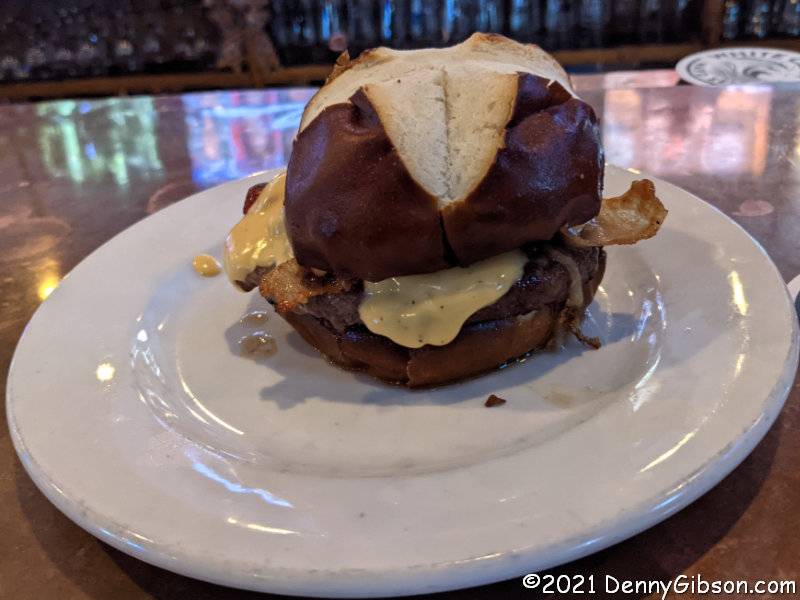
The first day went swimmingly and that included perfect weather. Two of my selections were within walking distance but one is closed on Mondays. I headed to the other. At deSha’s American Tavern I enjoyed a Ducking Good Burger at one of the well-spaced tables on the waterside deck. A Ducking Good Burger is described as ground beef, fontina cheese, roasted tomato-garlic aioli, topped with shredded potatoes tossed in duck fat, served on a brioche bun. The only thing keeping this from being the perfect Burger Week experience is that I’m quite familiar with deSha’s (and Belhaven Scottish Ale) so the sandwich itself was the only thing new to me.

The second day was hardly perfect, but it ended well. I decided to head to the farthest away of my selections trying to target a point where the rain that filled most of the day would let up. Not only did I mistime the rain, I really blew it with the ‘burger. I’d made myself aware of the days each restaurant would be closed but not of the time. I arrived at 4:15; They closed at 3:00. But I knew of another nearby Burger Week participant so headed over to Keystone Bar & Grill. The rain had more or less stopped but the outside tables were not yet being used. I sat near the door at a properly distanced table. It turned out that a choice of two hamburgers was offered. When asked, my waitress told me, “I think you should try the donut.” I was well aware that people have been making sandwiches out of donuts but considered them to be totally over the top and had so far managed to avoid them. I tried again today but the waitress and my own curiosity won out. In my defense, this wasn’t just any donut but a Holtman’s donut. I haven’t found a detailed description of the Maple Bacon Donut Burger, but it was delicious even though the touch of sweetness from the donut glaze was a little strange. The new-to-me Three Floyds Gumballhead was pretty good, too. When I went looking for that detailed description at the end of the day, I discovered an apology tacked to the front of the Keystone website. It was an apology for some slow service on the first day of Burger Week that was at least partly due to overwhelming demand for donuts. Henceforth, it said the donut ‘burger would be available for dine-in only.

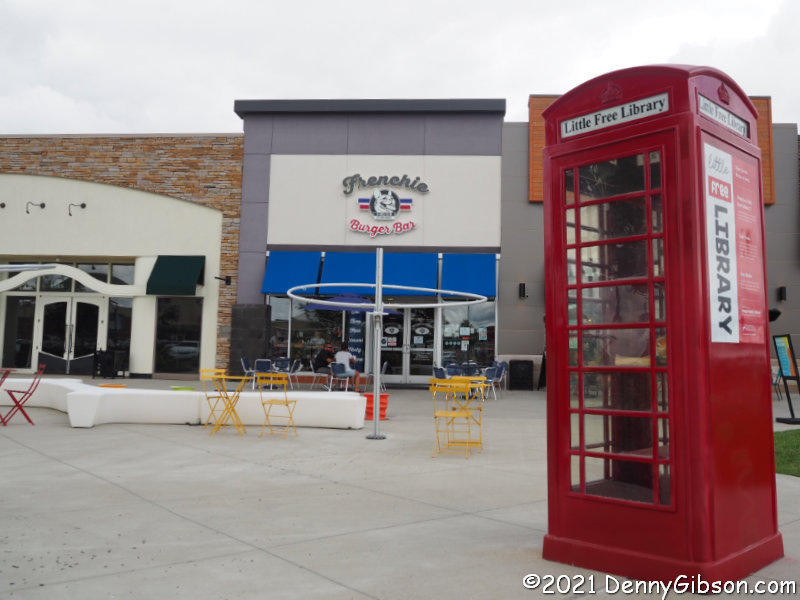
Great weather returned on Wednesday making it a good day to head to the closest restaurant on my Burger Week list. I placed my order inside Frenchie Fresh Burger Bar then took a seat outside, near the Little Free Library in a phone booth, to await its arrival. Inside seating is available. Burger Week ‘burgers are usually enough to fill me so I tend to skip the extras but I decided to give “Frenchie Fries” with parmesan and truffle dust a try. Good but not necessary. As expected, Le Alpine ‘burger (swiss cheese, caramelized onions, & mushroom demi-glaze) would have been enough. As I ate, I noticed a familiar name in the storefront signage that I had not noticed when checking out things online. Beneath the sketch of a French Bulldog is the phrase “by Jean-Robert”. Jean-Robert de Cavel is a Cincinnati celebrity chef who gained fame at the Maisonette, Pigall’s, and his own fine dining establishments. Apparently, Frenchie Fresh Burger Bar is his move into more casual dining. The beer is Country Boy Brewing’s Cougar Bait which (fortunately, I think) doesn’t seem to work for a guy in his seventies even if he is eating truffle dust.

After starting the week with two places where I’ve eaten many times, I moved on to a pair of new-to-me restaurants. Wednesday was the first I’d been to Frenchie Fresh, and Thursday was my first visit to Brown Dog Cafe. It is one of several restaurants inside Summit Park on the former site of Blue Ash Airport. Both indoor and outdoor seating is available but I didn’t even consider eating inside on such a glorious day. I washed down my fontina cheese, bacon jam, and apple slaw topped ‘burger with Grainworks’ Blue Skies Hero Brew in a Fathead’s Brewery glass. Summit Park really is a park with an observation tower I need to come back and check out. On my way out today, I strolled by a playground I could see in the distance from my table. All distancing and mask protocols were carefully observed by the Brown Dog staff but that was not the case with all the kids playing on the equipment and sliding down hillsides on sheets of cardboard.

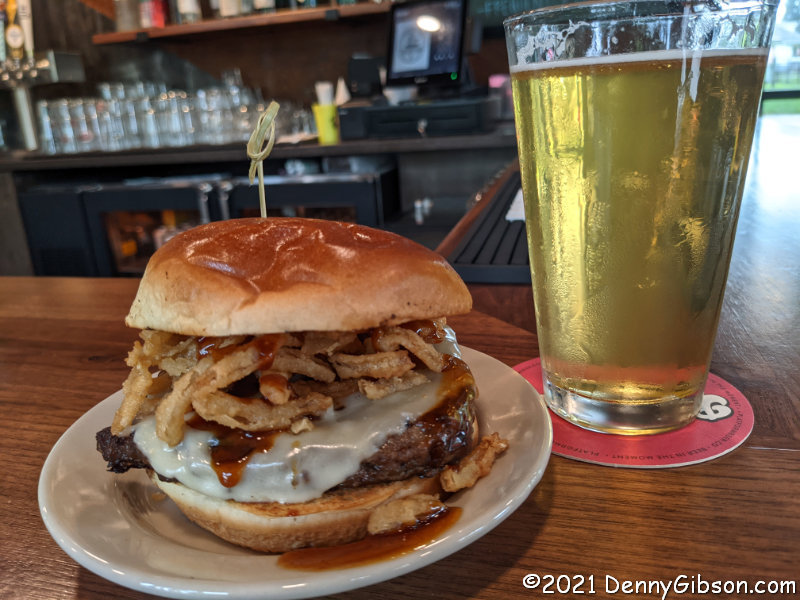
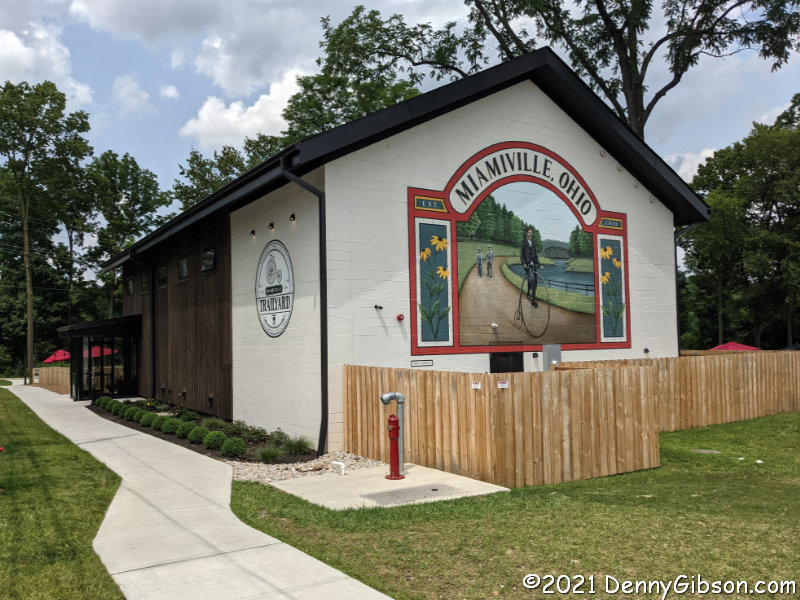
On Friday, I made it three new-to-me restaurants in a row by returning to the place where I’d arrived too late on Tuesday. Butler’s Pantry is on the inland side of a building on the south banks of the Ohio River. All COVID precautions are in place and there seemed to be plenty of outside seating. The tasty  ‘burger was topped with pimento cheese, red onion, bacon, onion straws, and root beer bbq mayo although I gotta admit I didn’t pick up much root beer flavor. Maybe the real beer (Braxton Storm, brewed less than half a mile to the south) washed it away. Free parking across the street with validation at the Pantry.
Even though there were still candidates on my list, by Saturday I decided I’d consumed enough hamburgers for the week. I had penciled in the lone non-beef Burger Week participant for a possible dessert someday but used it to fill the last slot in my six-day moving feast. I learned that my impression that only carryout was available was wrong when I arrived and saw the tables out front. I carried my purchase back home as planned, but in hindsight, wish I’d ordered a cup of coffee and nibbled on my beignet sliders at one of those tables along the one time Dixie Highway (now US 42) in Reading. Très Belle‘s Burger Week page describes one of these treats as a berry-filled beignet bun with edible rainbow sugar cookie dough patty and the other as Nutella filled with edible chocolate brownie cookie dough. They only call one decadent but that doesn’t seem entirely honest in my opinion. Maybe advertising double-barreled decadence is against somebody’s rules.
More Cincy Reopenings
The Cincinnati Reds opened their season on Friday instead of March 26 as planned. Friday is also the day I made the Cincinnati Museum Center visit I’d postponed a couple of weeks earlier. It was supposed to happen on the same day as my Maya exhibit visit, but a service appointment got in the way. The delay moved it from the members-only preview week to a week after the general opening and fountain turn on. Water now shoots high in the air and cascades down through that series of pools in front of Union Terminal. The marker in the foreground stands near where the world’s first professional baseball team had their home plate. Less than two miles away, in an empty stadium, the modern version of the team got the shortened 2020 season rolling with a 7-1 win.

The museum center is using timed entry to keep the number of people in the building below capacity although that hasn’t yet been an issue even though attendance has been slowly increasing. Three museums are part of the CMC. Because just about everything in it is hands-on, the Children’s Museum remains closed as do two of the major components of the Natural History Museum. Keeping the replica limestone cave and the Science Interactives Gallery sanitized just isn’t practical, and some interactive experiences have been temporarily removed as well. I know all of that makes things considerably less entertaining for younger visitors but the most prominent residents of Dinosaur Hall are still there and they’re still awesome.

There are currently two temporary exhibits that are included in CMC admission. I checked out “Inspired by Nature” first. If you’ve spent any time looking over downtown Cincinnati, there’s a good chance you’ve seen some of Charley Harper’s art. It appears in several murals with “Homecoming (Blue Birds)”, on Court Street, being the most well known. The placard at the left of the last picture contains a Harper quote that probably sums up the man as well as any.

This is the centennial year for the passage of the constitutional amendment that allowed women to vote. “An Unfinished Revolution: Women and the Vote” tells of the struggle that preceded that breakthrough as well as the struggle that continues today in pursuit of equality. The 19th Amendment was passed on May 21, 1919, and ratified on August 20, 1920. In between those events, Ohio legislators took steps to assure that women could vote in the 1920 presidential election even if the amendment was not ratified in time. In the center of the first picture, the 1919 and 1920 Hamilton County voter rolls give a visual indication of just how significant a change that was.

Some portions of the Cincinnati History Museum are closed but I think that has at least as much to do with establishing new and reworked exhibits after the big renovation as with anything COVID-19 related. I was excited to find that “Cincinnati in Motion” is now complete. New to me sights included Proctor and Gamble’s Ivorydale complex and Crosley Field where I watched several Reds games and one Beatles concert. Neither “Shaping Our City” nor “You Are Here” were entirely finished when I was here last, but they are now. As we (at least I) struggle to outsmart our phones, it helps being reminded that all new technology requires some learning.

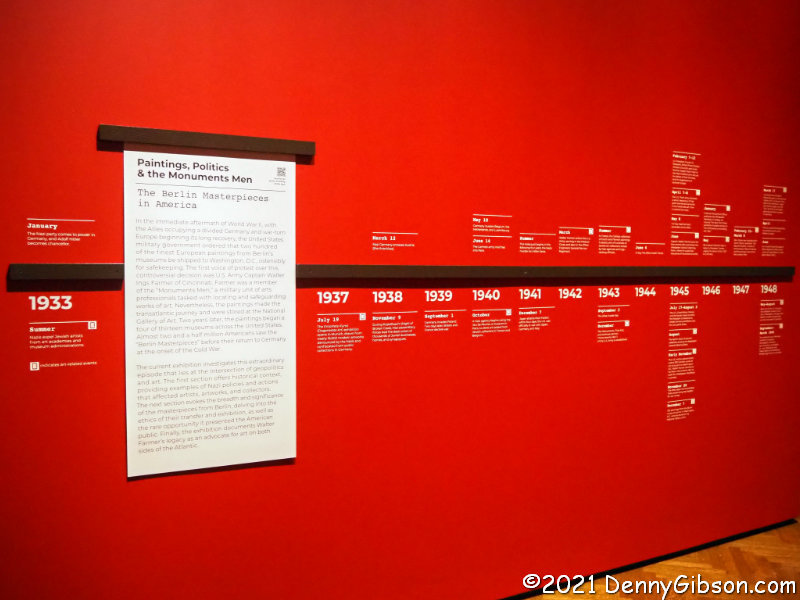
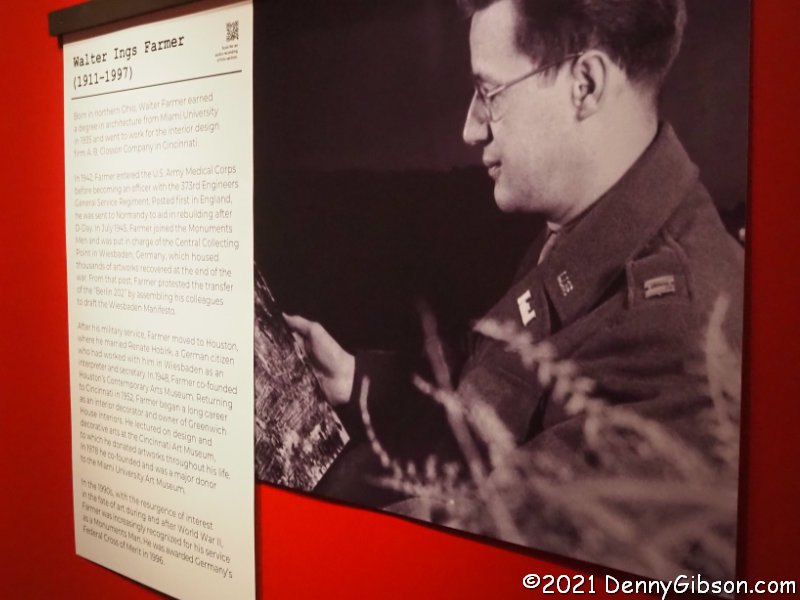
Another thing that happened during the two weeks between my planned and actual visit, was the reopening of the Holocaust and Humanity Center. Entrance to the HHC is not included in CMC admission but it is is the same building and discounted combination tickets are available. This was my second visit and I again found the personal stories and keepsakes extremely interesting. The pictured Torah was saved from a burning synagogue on Kristallnacht. I had taken a picture of the only window in the museum on my first visit but I had not actually looked out of it and that is the whole point of it being there. It provides a view of railroad tracks which is how many holocaust refugees arrived in Cincinnati. The third photo is from the “Humanities Gallery” which deals with today rather than history. I took several pictures of the row of screens and their rotating set of images and picked one to include in this post. Then, as I actually put this post together, I discovered that I had unwittingly selected a picture that was a near duplicate of one I had posted from my first visit. That picture, which can be seen here, obviously made an impression on me undoubtedly because it is evidence of the bigotry present today. I did not want to just repeat that picture and decided I didn’t want to repeat the feeling either. I went with something much more hopeful.

Many things at Union Terminal are now open but absolutely nothing is back to normal. That’s true of the whole world, however, and the folks at CMC and HHC seem to be doing the right thing. Kids have it the worst. I can think of nothing equivalent to the learning that automatically comes along with all the fun in the Children’s Museum and Science Interactives Gallery. I’m sad that they are closed but know that the risk of having them open is too great to even think about. A few interactive displays exist in the Cincinnati History Museum but they are in places that can be constantly monitored and sanitized frequently. In the HHC, pushbuttons are used to activate displays and recordings. Everyone entering is given a rubber-tipped stylus to handle the button-pushing and they are encouraged to “take it with you when you vote”. Hand sanitizer is available throughout all the museums. Every employee and guest I saw was wearing a mask and many staff members also had a face shield. In some sense, this could be considered a good time for adults to visit. It’s not crowded and access to both displays and docents is easy. But empty museums are not, in general, a good thing at all. I really look forward to the return of flocks of noisy kids figuring out where that ball is going to fall and which direction that gear is going to turn.


The picture at right was taken two weeks ago on my way to the Cincinnati Museum Center to see the Maya exhibit. Sugar n’ Spice has operated on Reading Road, about five miles north of downtown Cincinnati, since 1941. They are taking COVID-19 seriously with limited capacity, masked staff, plexiglass dividers, and more. I had heard something about plans to open a second location but I hadn’t really paid any attention to details. As I finished up my original wispy thin pancakes, I struck up a conversation with a manager who showed me some pictures of the new location. I learned that 1) the grand opening was happening the very next day and 2) the new store wasn’t just near the old Sycamore Street diner, it was in the diner.

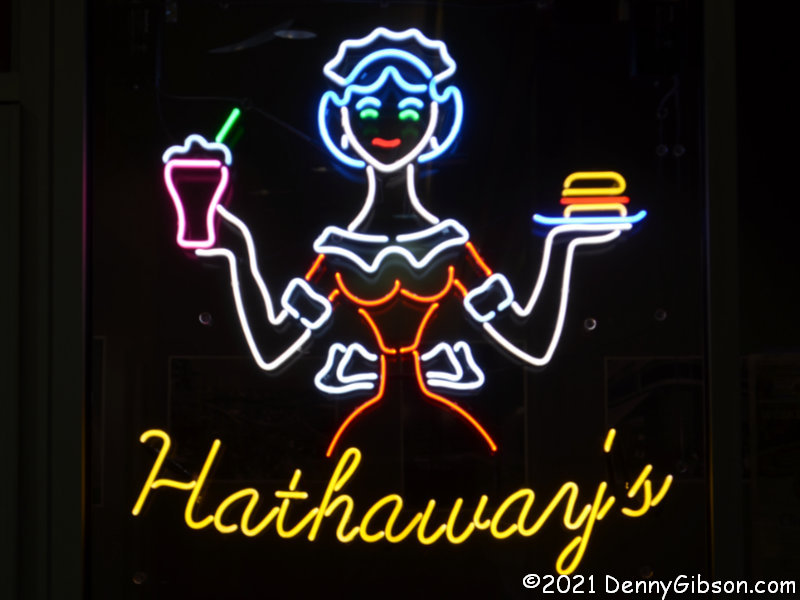
I stopped here on Friday on my way to see the dinosaurs and suffragettes. It’s a 1955 Mountain View diner that was moved from Massillon, Ohio, to the Over the Rhine section of Cincinnati in 1984. It then operated for many years as The Diner on Sycamore. Its most recent life was as Joe’s Diner which closed in 2016. In between, it had a couple years of life as Vinyl and was dormant for several years. I really like what Sugar n’ Spice has done here and I really like their chances of success. The middle of a pandemic is certainly not the ideal time to open a restaurant but everything was, of course, in motion well before the pandemic hit. Although it’s a family-owned business, Sugar n’ Spice is really an established brand that has brought their bright colors and slightly whimsical decor along with a reputation for quality to a classic factory-built diner. The counter is not currently being used but two outside dining areas are available along with plexiglass separated booths in the Mountain View and in the brick and mortar building it is attached to. I’d totally forgotten how big Sugar n’ Spice omelets are. Five eggs aerated. This is what I had for breakfast — and dinner.

Book Review
Secret Route 66
Jim Ross & Shellee Graham

At first glance, this probably looks like a perfect fit for my bookshelf. Like many of the other books there, its subject is a historic highway and its authors are people I know. In this case, the highway is Route 66 and the people are the husband-and-wife team of Jim Ross and Shellee Graham. Both are accomplished historians, photographers, and writers with Jim probably having a bit of an edge in the history department, Shellee having an equally small lead on the photography side, and their writing skills being too close to call. A second glance, however, just might turn up something about this book that is different from most of the others with which it now shares shelf space. It is the word “secret”.

I am not a fan of books with words like “haunted”, “mysterious”, “unsolved”, or “bloody” in their titles. I don’t know whether or not that puts me in a minority of road fans, but apparently it does in the larger world of readers in general. A writer friend’s publisher has pushed for a “haunted” book saying they are four times as popular as the other kind. To me, those words smack of exploitation. They seem to scream out the intent of emphasizing some sort of supernatural or scandalous connection for a topic that must be otherwise boring. I acknowledge that “secret” doesn’t sound quite as exploitative as “haunted” and that even “haunted” and the other words I’ve mentioned can be used as honest labels, but I still find them offputting.

Anyone who read my blog entry about visiting the recently reopened American Sign Museum will know when I bought this book and may even have some idea why. The ASM, like practically every other museum in the country, was hit hard by a COVID-19 related closing. As a member, I’d paid nothing for my visit, and wanted to show a little support with a purchase.

So how is this book I didn’t exactly want? Surprisingly good. I’m not really all that surprised, of course. To my relief, the idea of revealing secrets doesn’t get much further than the title. I doubted that a pair of respected authorities would suddenly become conspiratorial sounding characters sharing dark secrets from the shadows but it was good to have that verified. To some extent, the subtitle also does that. Weird, wonderful, and obscure accurately describe the book’s contents.

Almost everything in Secret Route 66: A Guide to the Weird, Wonderful, and Obscure is something that, while not actually a secret, is not likely to be found in mainstream guides. Even when the subject is something commonly known, Ross and Graham provide some detail or backstory not commonly known at all. Sometimes the subject isn’t a place or a thing but simply that uncommon detail or story.  Among the things that struck me as weird is the true tale of a proposal to use atomic bombs for roadway excavation. Everyone has their own definition of wonderful but my definition is matched by the story of the Motel St. Louis sign that wandered off to help people find another motel (Finn’s in St. James) and then a church (New Hope) before being rescued and returned home. I thought learning about the annual reunion for the ghost town of Alanreed was kind of wonderful, too. Topping my personal list of obscure things is the chapter on several abandoned bridge abutments on the original route through Santa Fe.

A pair of facing pages make up each of the ninety chapters so that everything about an item can be studied without flipping back and forth. A sidebar contains appropriate information, such as location. These pages are printed in black and white, but they are augmented by sixteen pages of color photographs (plus 2 b&w to make the positioning work) in the middle of the book. Some page flipping here is appropriate but the subject and associated page number are shown for each photo to make it easy. Images in the book are a mixture of historic and modern. Most of the modern photos are the work of the authors but not all. Other researchers and photographers are always credited with images provided.

I ended up liking this book that I didn’t exactly want. That really was to be expected with the Ross and Graham names on the cover. It’s a good reference to add to a Route 66 library although not to start one. Seeing obscure things is good. Seeing only obscure things not so much. You don’t want to come home from your first Route 66 trip and have to say “no” to every “Did you see?” your neighbors and relatives ask. You want to respond with, “Yes, and did you see the [put your favorite Route 66 ‘secret’ here]?” 

Secret Route 66: A Guide to the Weird, Wonderful, and Obscure, Jim Ross and Shellee Graham, Reedy Press, LLC,  October 15, 2017, 6 x 9 inches, 208 pages, ISBN 978-1681061078
Available through Amazon.

Maya at the Cincinnati Museum Center

March 14 was to be opening day for a huge exhibit of Maya artifacts at the Cincinnati Museum Center. March 9 was the day a state of emergency triggered by the COVID-19 pandemic was declared in Ohio. The opening did not happen. On Friday, nearly four months later than planned, I was among the first group of visitors to step into the exhibit. We all wore face masks and all staff members wore face masks in addition to clear plastic shields. We were all museum members as only members are allowed in for the first week. Our entry time was preselected which is pretty normal with major exhibits at the museum but the number allowed for each interval was considerably less than what it would have been in March. There were floor markings to encourage six feet of separation and a few interactive “experiences” were removed to eliminate contact. Touching the artifacts would be forbidden in any case and I don’t believe any were removed. All 300+ seemed to be right where they had been waiting for four months.

The Children’s Museum and the cave portion of the Natural History Museum are closed but most of the center is open. Entry, however, is now time-based and I had reserved a slot for checking other things out after the Maya exhibit. That was not to be as I immediately headed home. Missing an appointment with an AC service guy in July is not wise.

That scheduled service call did not actually make me rush through the exhibit but it did cause some shortcuts. As I entered, I learned that an audio tour was available through my phone, but in the probably mistaken belief that it might slow me down, I ignored it. No doubt that’s one reason I have so little information to share on specific items. I read every description but took no notes, not even with my camera, and my memory did not retain details very long.

I did not photograph many of the numerous small pieces in the exhibit and didn’t even do a particularly good job with the larger ones. The three items displayed here against the lighted and decorated pyramids can reasonably be called mid-sized. The picture at the beginning of this article is of the one at the front right of the wider view.

This stela is one of the largest items in the exhibit. It can be seen beyond the pyramids in the previous pictures. Created in 800 CE near the peak of Maya civilization, it documents some of the accomplishments of a Maya king. That’s something I happen to know because of some only slightly blurry photo notes.

Only four Maya codices, all written after the civilization’s peak, are known to exist. The Cincinnati exhibit includes this partial reproduction. It and the two stone carvings are among the items I wish I’d picked up more details on, and it’s likely they will become justifications for a return.

I have no details to share about the stone mask but I do have this for the jaguar man. The exhibit was originally scheduled to close on September 7 but the delayed opening has moved that to January 3, 2021. I hope to return and be better prepared with more time when I do.

As for the rest of the museum, I will definitely be returning, possibly as soon as this coming week, to see that. I sort of want to see what changes COVID-19 has triggered and I most definitely want to check out a special exhibit on women and the vote that is open through September 27. As everyone should know, this is the centennial of the first national election in which women were permitted to vote.