More Cincy Reopenings

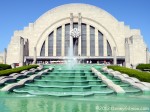
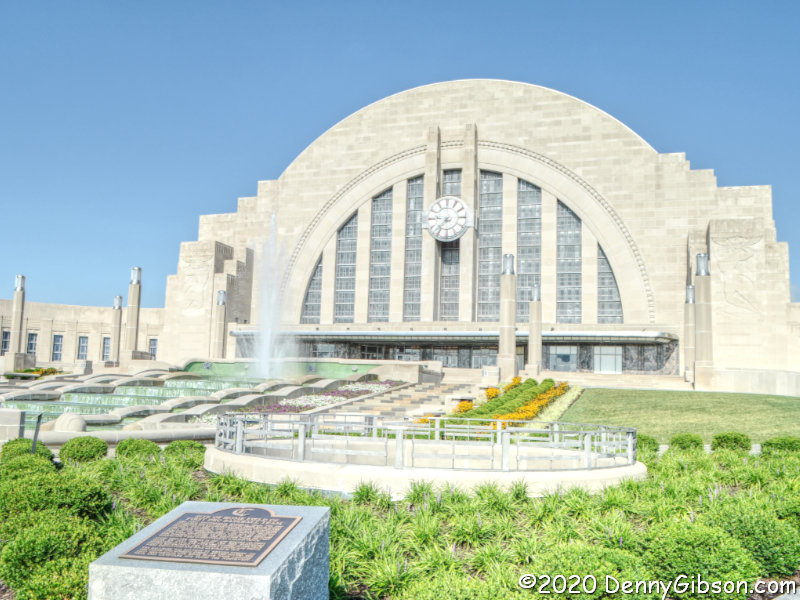
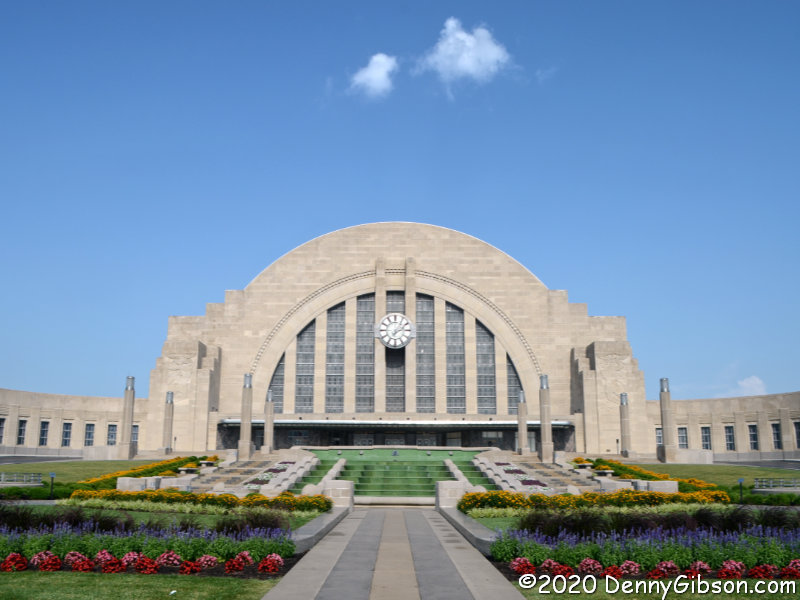
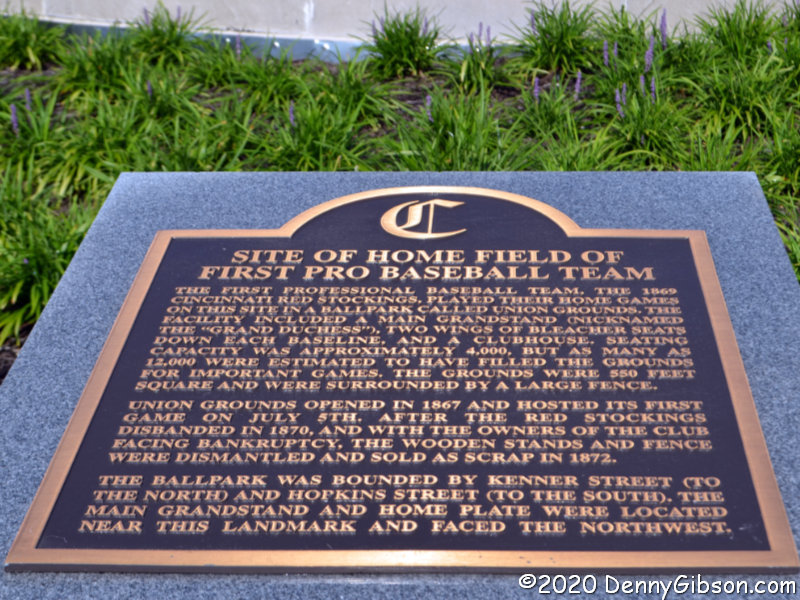
The Cincinnati Reds opened their season on Friday instead of March 26 as planned. Friday is also the day I made the Cincinnati Museum Center visit I’d postponed a couple of weeks earlier. It was supposed to happen on the same day as my Maya exhibit visit, but a service appointment got in the way. The delay moved it from the members-only preview week to a week after the general opening and fountain turn on. Water now shoots high in the air and cascades down through that series of pools in front of Union Terminal. The marker in the foreground stands near where the world’s first professional baseball team had their home plate. Less than two miles away, in an empty stadium, the modern version of the team got the shortened 2020 season rolling with a 7-1 win.

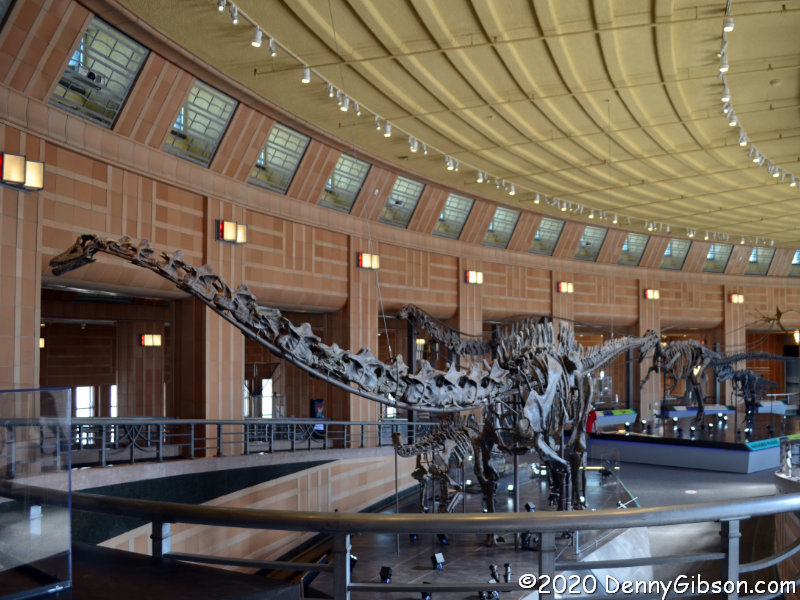
The museum center is using timed entry to keep the number of people in the building below capacity although that hasn’t yet been an issue even though attendance has been slowly increasing. Three museums are part of the CMC. Because just about everything in it is hands-on, the Children’s Museum remains closed as do two of the major components of the Natural History Museum. Keeping the replica limestone cave and the Science Interactives Gallery sanitized just isn’t practical, and some interactive experiences have been temporarily removed as well. I know all of that makes things considerably less entertaining for younger visitors but the most prominent residents of Dinosaur Hall are still there and they’re still awesome.

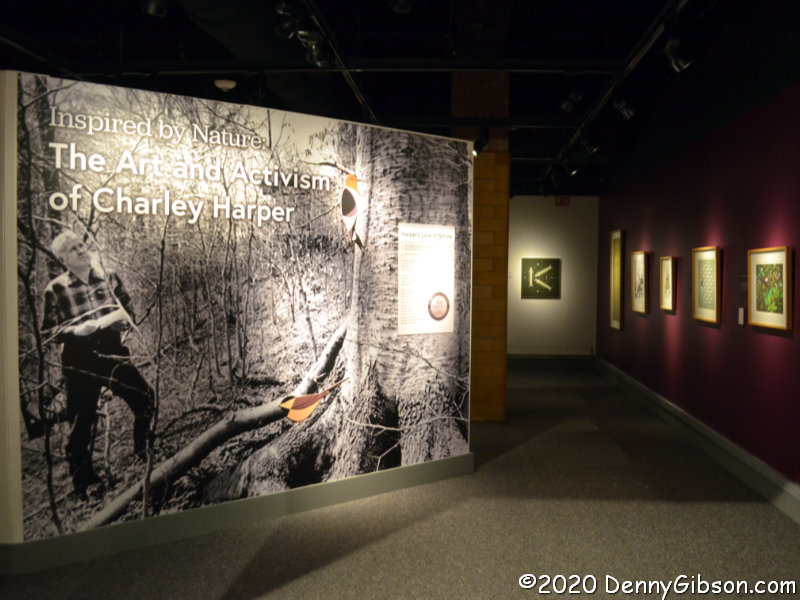
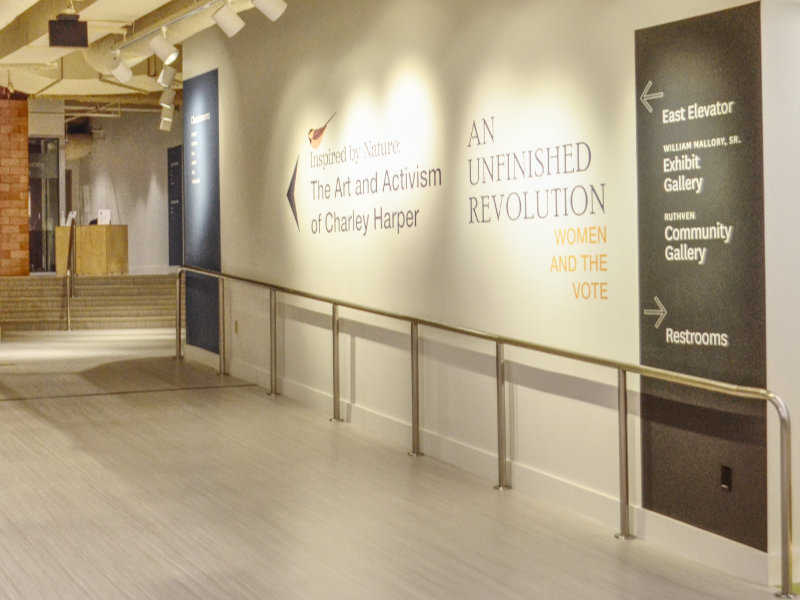
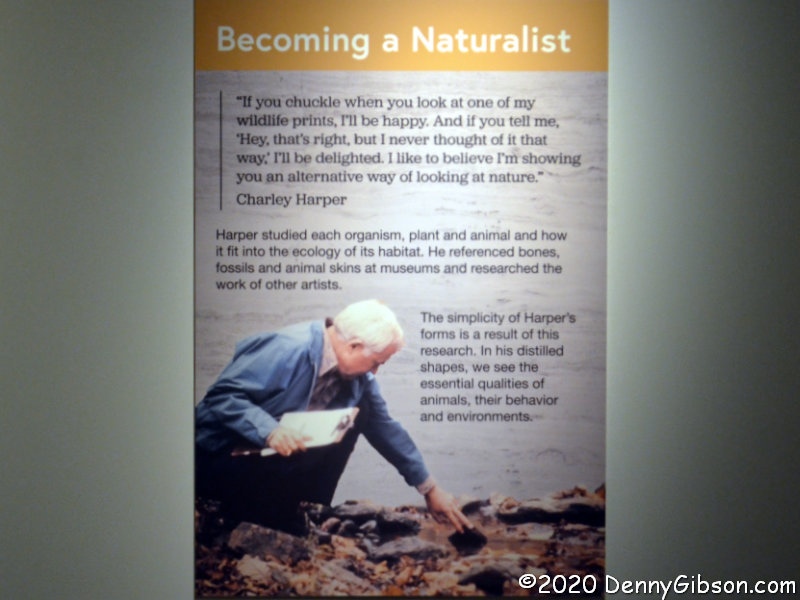
There are currently two temporary exhibits that are included in CMC admission. I checked out “Inspired by Nature” first. If you’ve spent any time looking over downtown Cincinnati, there’s a good chance you’ve seen some of Charley Harper’s art. It appears in several murals with “Homecoming (Blue Birds)”, on Court Street, being the most well known. The placard at the left of the last picture contains a Harper quote that probably sums up the man as well as any.

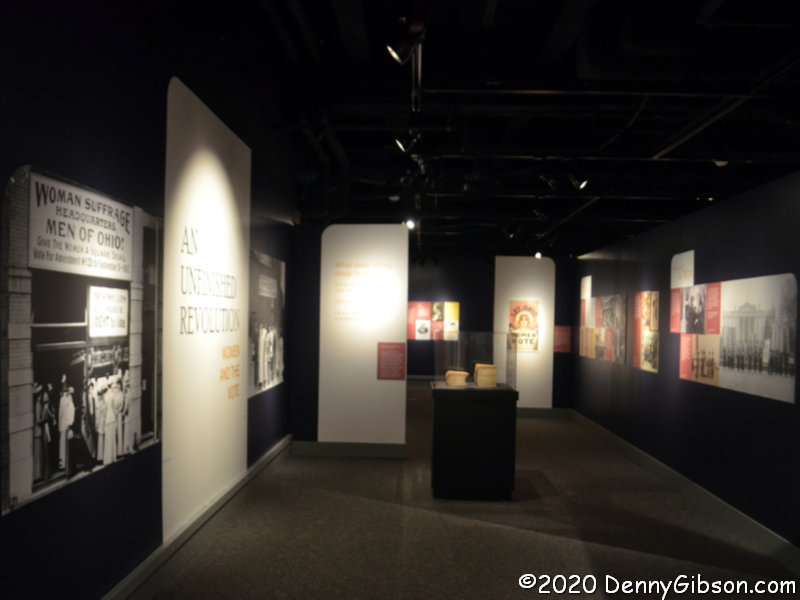
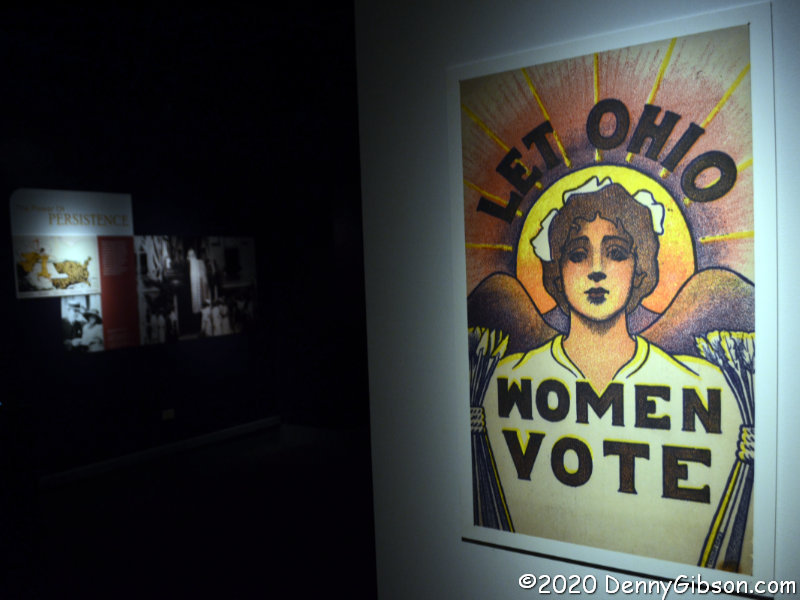
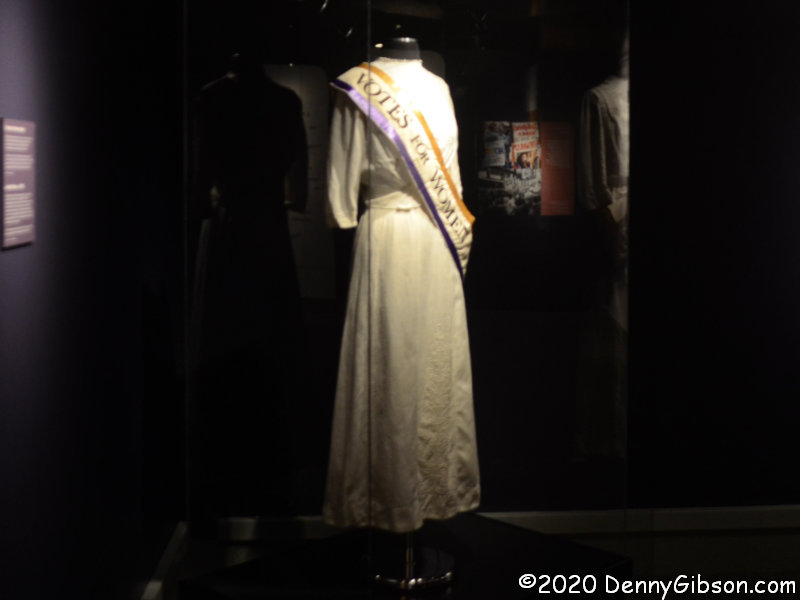
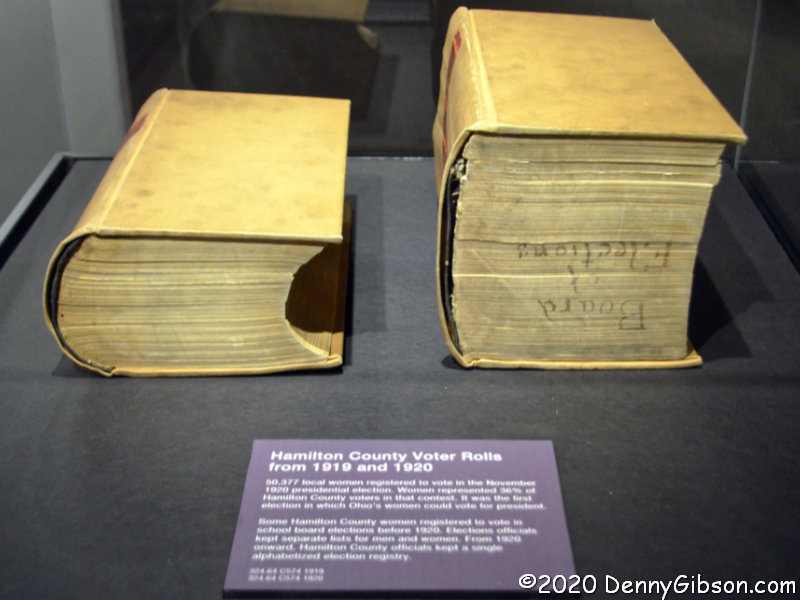
This is the centennial year for the passage of the constitutional amendment that allowed women to vote. “An Unfinished Revolution: Women and the Vote” tells of the struggle that preceded that breakthrough as well as the struggle that continues today in pursuit of equality. The 19th Amendment was passed on May 21, 1919, and ratified on August 20, 1920. In between those events, Ohio legislators took steps to assure that women could vote in the 1920 presidential election even if the amendment was not ratified in time. In the center of the first picture, the 1919 and 1920 Hamilton County voter rolls give a visual indication of just how significant a change that was.

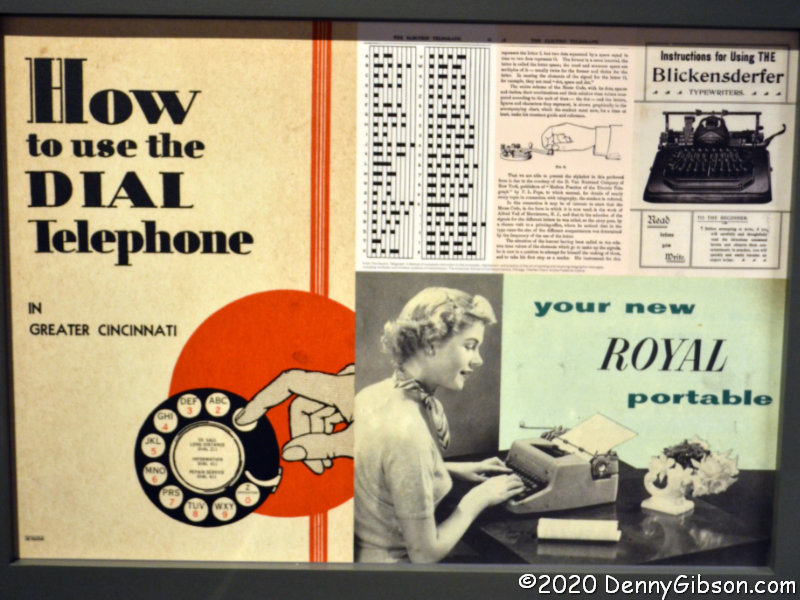
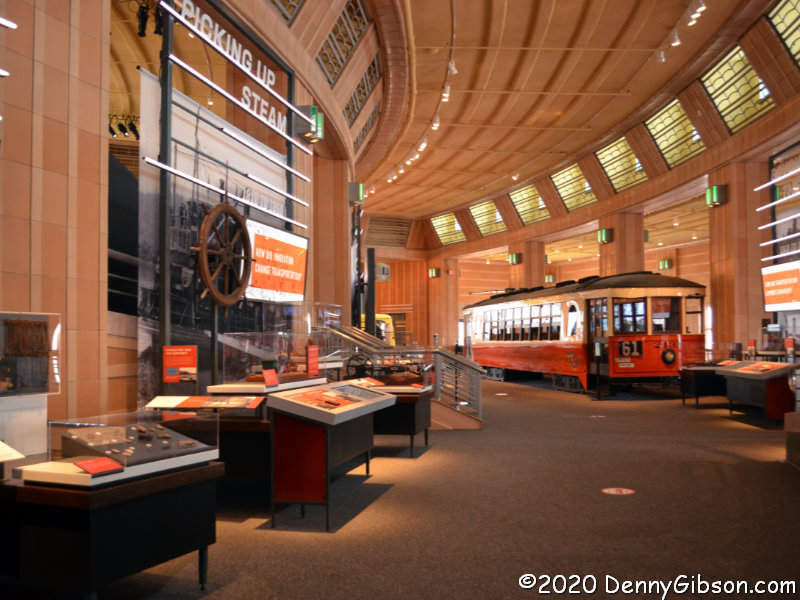
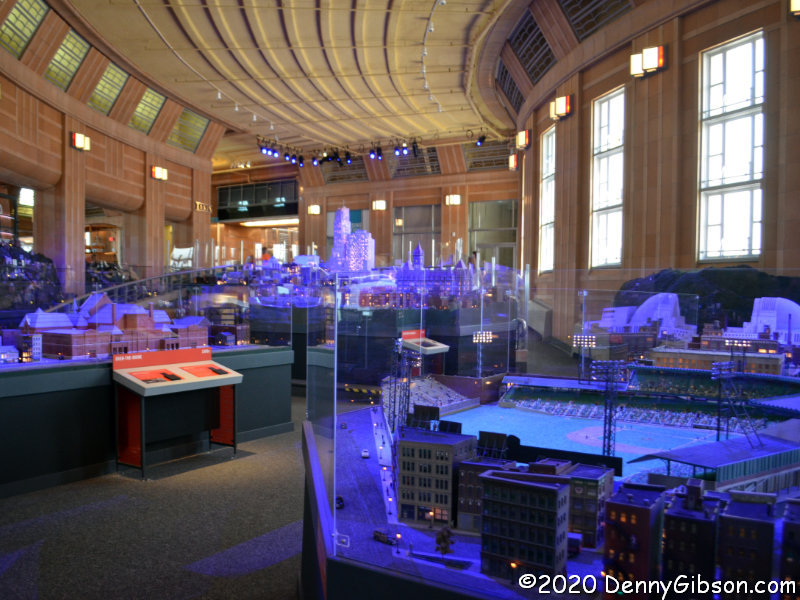
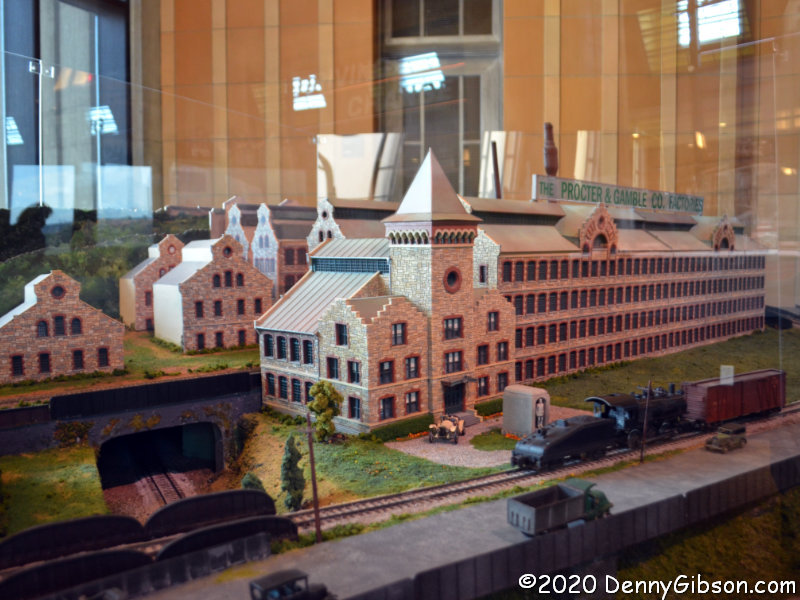
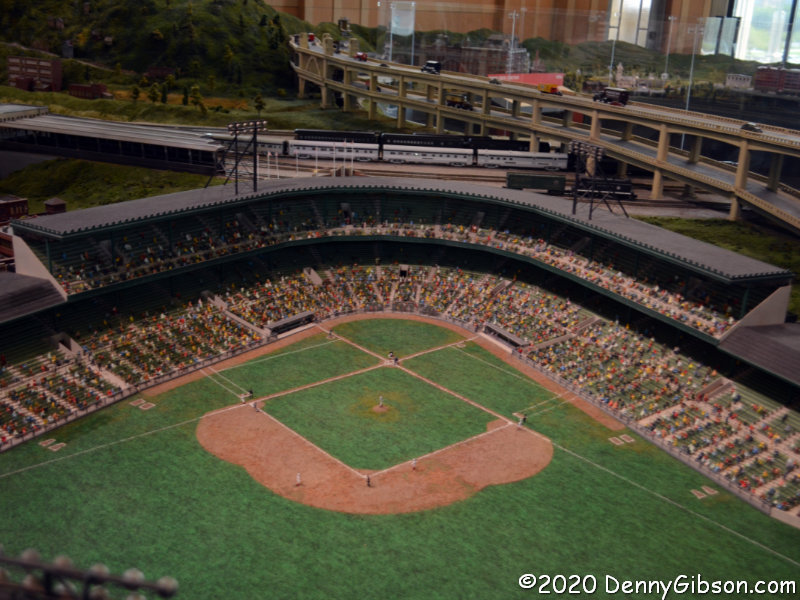
Some portions of the Cincinnati History Museum are closed but I think that has at least as much to do with establishing new and reworked exhibits after the big renovation as with anything COVID-19 related. I was excited to find that “Cincinnati in Motion” is now complete. New to me sights included Proctor and Gamble’s Ivorydale complex and Crosley Field where I watched several Reds games and one Beatles concert. Neither “Shaping Our City” nor “You Are Here” were entirely finished when I was here last, but they are now. As we (at least I) struggle to outsmart our phones, it helps being reminded that all new technology requires some learning.

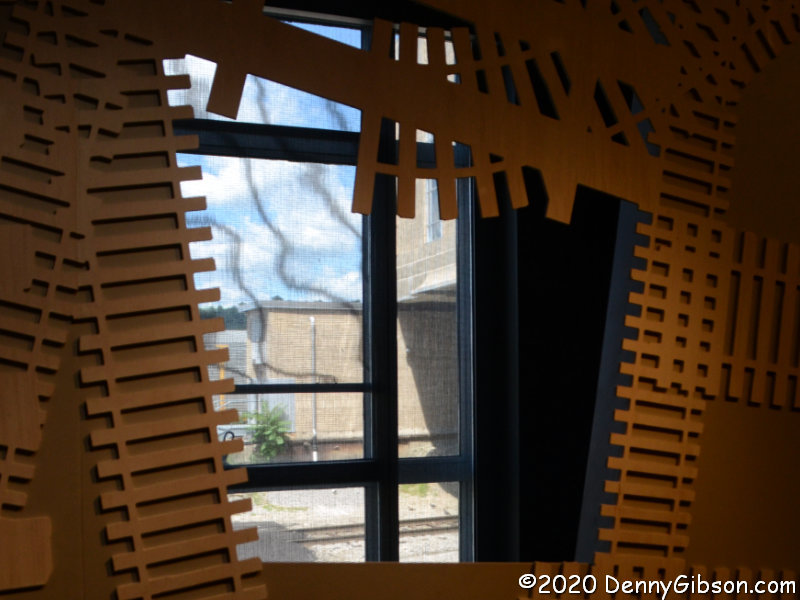
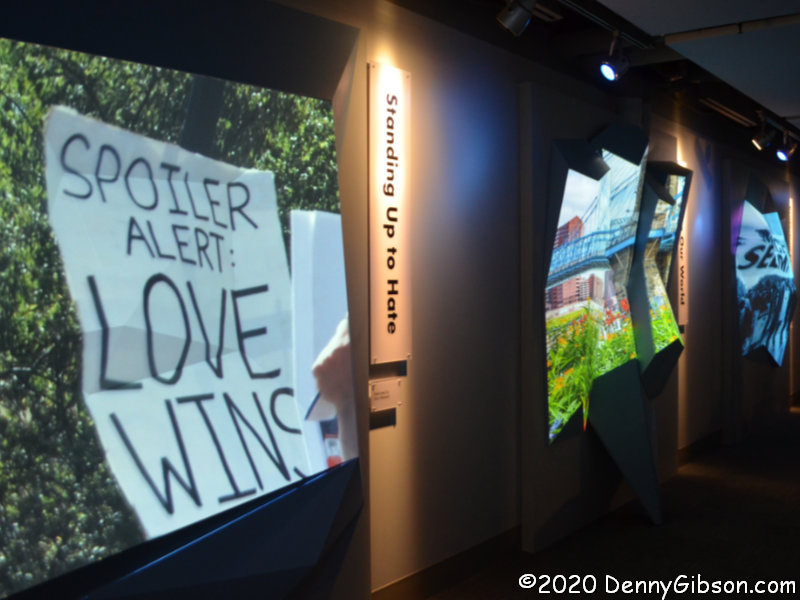
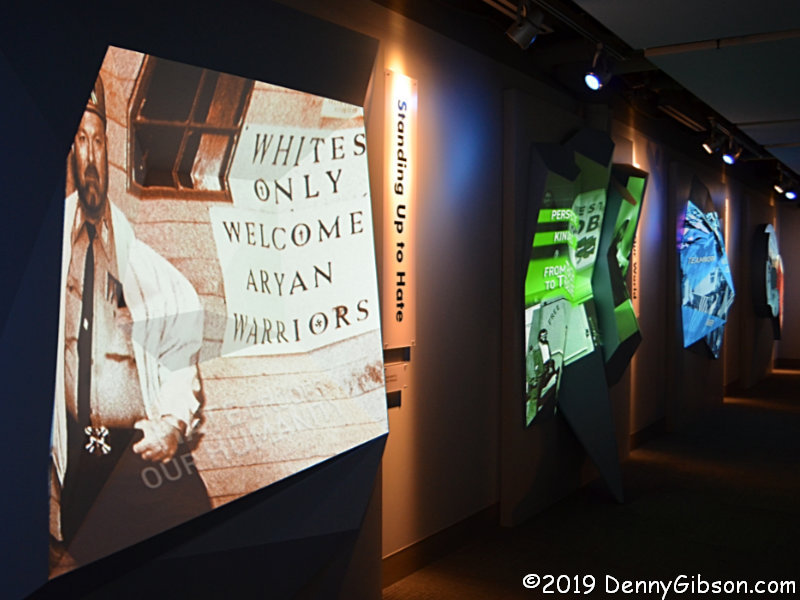
Another thing that happened during the two weeks between my planned and actual visit, was the reopening of the Holocaust and Humanity Center. Entrance to the HHC is not included in CMC admission but it is is the same building and discounted combination tickets are available. This was my second visit and I again found the personal stories and keepsakes extremely interesting. The pictured Torah was saved from a burning synagogue on Kristallnacht. I had taken a picture of the only window in the museum on my first visit but I had not actually looked out of it and that is the whole point of it being there. It provides a view of railroad tracks which is how many holocaust refugees arrived in Cincinnati. The third photo is from the “Humanities Gallery” which deals with today rather than history. I took several pictures of the row of screens and their rotating set of images and picked one to include in this post. Then, as I actually put this post together, I discovered that I had unwittingly selected a picture that was a near duplicate of one I had posted from my first visit. That picture, which can be seen here, obviously made an impression on me undoubtedly because it is evidence of the bigotry present today. I did not want to just repeat that picture and decided I didn’t want to repeat the feeling either. I went with something much more hopeful.

Many things at Union Terminal are now open but absolutely nothing is back to normal. That’s true of the whole world, however, and the folks at CMC and HHC seem to be doing the right thing. Kids have it the worst. I can think of nothing equivalent to the learning that automatically comes along with all the fun in the Children’s Museum and Science Interactives Gallery. I’m sad that they are closed but know that the risk of having them open is too great to even think about. A few interactive displays exist in the Cincinnati History Museum but they are in places that can be constantly monitored and sanitized frequently. In the HHC, pushbuttons are used to activate displays and recordings. Everyone entering is given a rubber-tipped stylus to handle the button-pushing and they are encouraged to “take it with you when you vote”. Hand sanitizer is available throughout all the museums. Every employee and guest I saw was wearing a mask and many staff members also had a face shield. In some sense, this could be considered a good time for adults to visit. It’s not crowded and access to both displays and docents is easy. But empty museums are not, in general, a good thing at all. I really look forward to the return of flocks of noisy kids figuring out where that ball is going to fall and which direction that gear is going to turn.


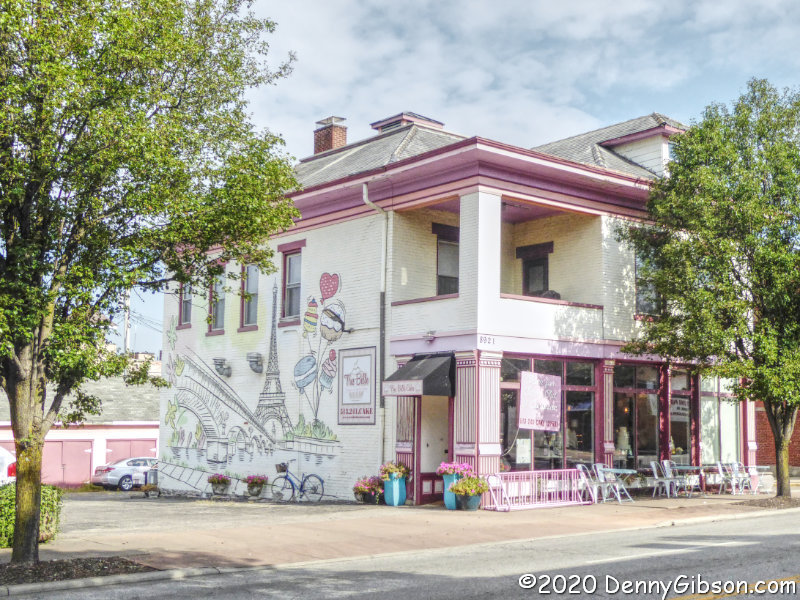
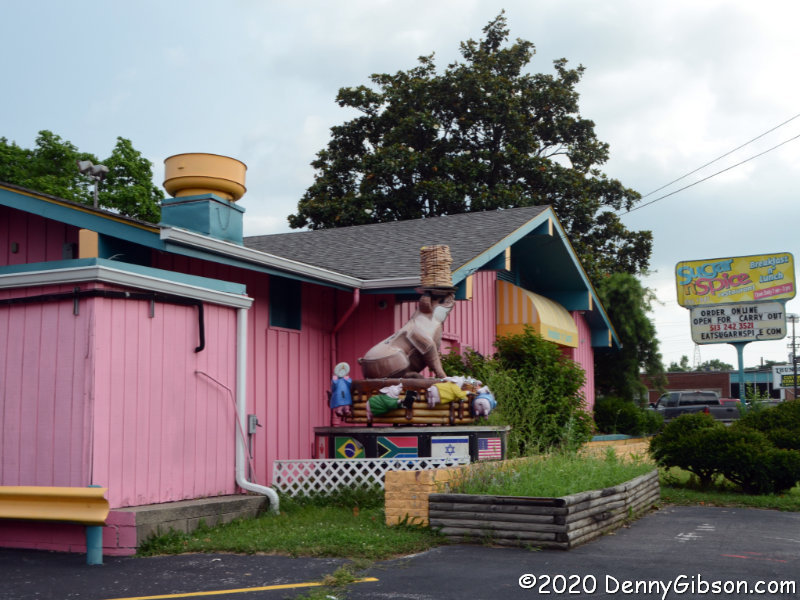
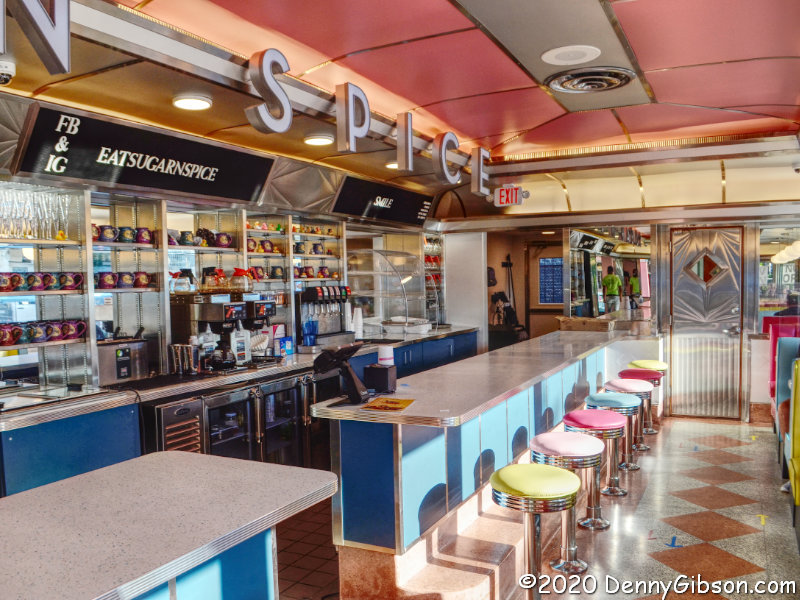
The picture at right was taken two weeks ago on my way to the Cincinnati Museum Center to see the Maya exhibit. Sugar n’ Spice has operated on Reading Road, about five miles north of downtown Cincinnati, since 1941. They are taking COVID-19 seriously with limited capacity, masked staff, plexiglass dividers, and more. I had heard something about plans to open a second location but I hadn’t really paid any attention to details. As I finished up my original wispy thin pancakes, I struck up a conversation with a manager who showed me some pictures of the new location. I learned that 1) the grand opening was happening the very next day and 2) the new store wasn’t just near the old Sycamore Street diner, it was in the diner.

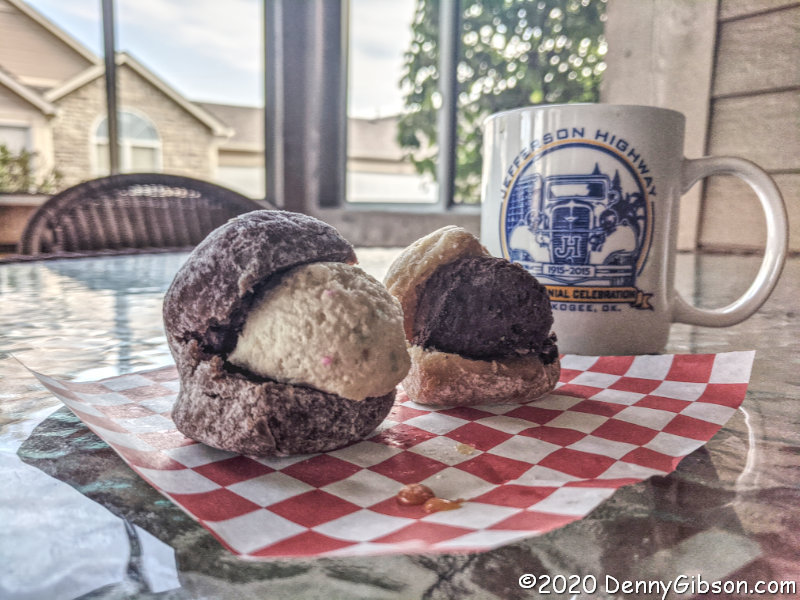
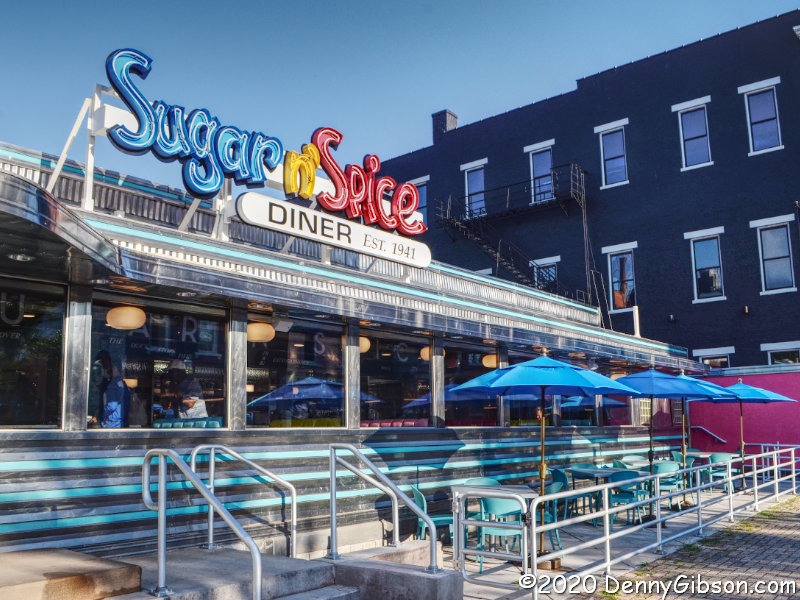
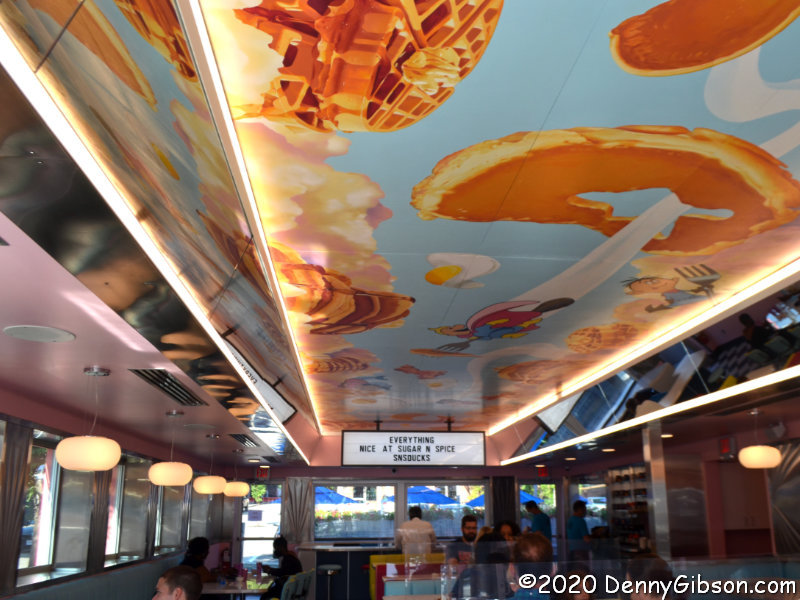
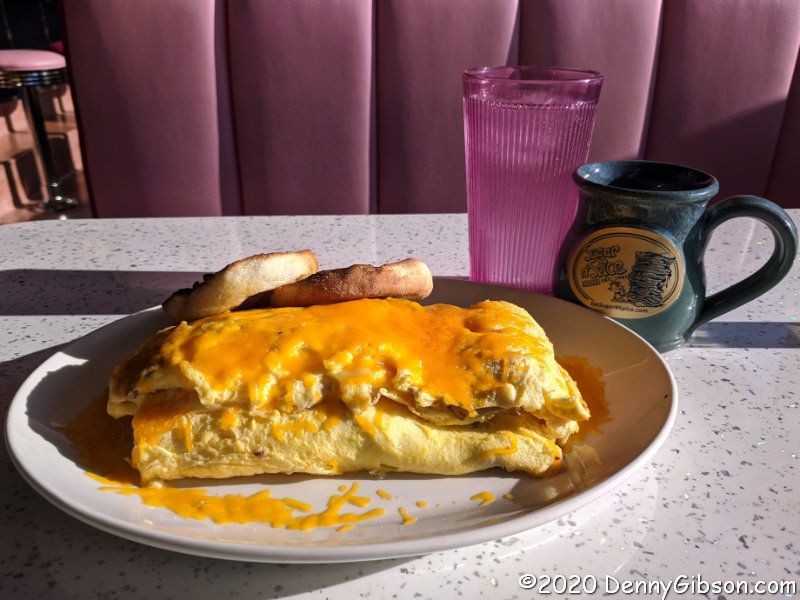
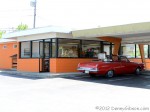
I stopped here on Friday on my way to see the dinosaurs and suffragettes. It’s a 1955 Mountain View diner that was moved from Massillon, Ohio, to the Over the Rhine section of Cincinnati in 1984. It then operated for many years as The Diner on Sycamore. Its most recent life was as Joe’s Diner which closed in 2016. In between, it had a couple years of life as Vinyl and was dormant for several years. I really like what Sugar n’ Spice has done here and I really like their chances of success. The middle of a pandemic is certainly not the ideal time to open a restaurant but everything was, of course, in motion well before the pandemic hit. Although it’s a family-owned business, Sugar n’ Spice is really an established brand that has brought their bright colors and slightly whimsical decor along with a reputation for quality to a classic factory-built diner. The counter is not currently being used but two outside dining areas are available along with plexiglass separated booths in the Mountain View and in the brick and mortar building it is attached to. I’d totally forgotten how big Sugar n’ Spice omelets are. Five eggs aerated. This is what I had for breakfast — and dinner.

Book Review
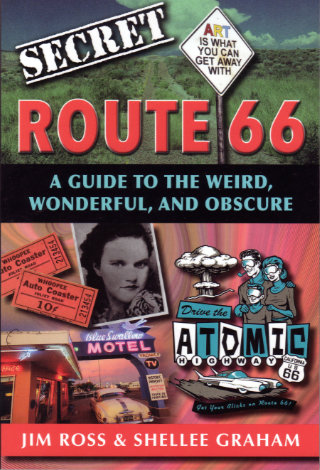
Secret Route 66
Jim Ross & Shellee Graham

At first glance, this probably looks like a perfect fit for my bookshelf. Like many of the other books there, its subject is a historic highway and its authors are people I know. In this case, the highway is Route 66 and the people are the husband-and-wife team of Jim Ross and Shellee Graham. Both are accomplished historians, photographers, and writers with Jim probably having a bit of an edge in the history department, Shellee having an equally small lead on the photography side, and their writing skills being too close to call. A second glance, however, just might turn up something about this book that is different from most of the others with which it now shares shelf space. It is the word “secret”.

I am not a fan of books with words like “haunted”, “mysterious”, “unsolved”, or “bloody” in their titles. I don’t know whether or not that puts me in a minority of road fans, but apparently it does in the larger world of readers in general. A writer friend’s publisher has pushed for a “haunted” book saying they are four times as popular as the other kind. To me, those words smack of exploitation. They seem to scream out the intent of emphasizing some sort of supernatural or scandalous connection for a topic that must be otherwise boring. I acknowledge that “secret” doesn’t sound quite as exploitative as “haunted” and that even “haunted” and the other words I’ve mentioned can be used as honest labels, but I still find them offputting.

Anyone who read my blog entry about visiting the recently reopened American Sign Museum will know when I bought this book and may even have some idea why. The ASM, like practically every other museum in the country, was hit hard by a COVID-19 related closing. As a member, I’d paid nothing for my visit, and wanted to show a little support with a purchase.

So how is this book I didn’t exactly want? Surprisingly good. I’m not really all that surprised, of course. To my relief, the idea of revealing secrets doesn’t get much further than the title. I doubted that a pair of respected authorities would suddenly become conspiratorial sounding characters sharing dark secrets from the shadows but it was good to have that verified. To some extent, the subtitle also does that. Weird, wonderful, and obscure accurately describe the book’s contents.

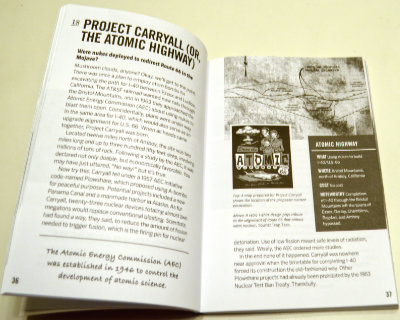
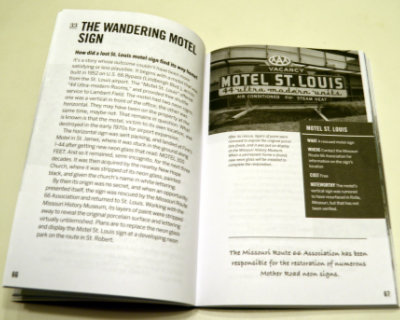
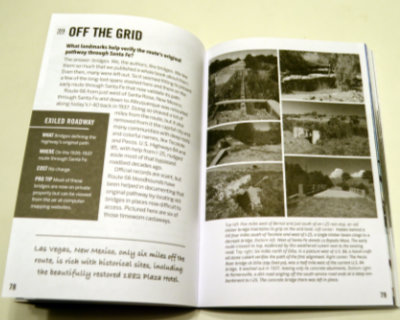
Almost everything in Secret Route 66: A Guide to the Weird, Wonderful, and Obscure is something that, while not actually a secret, is not likely to be found in mainstream guides. Even when the subject is something commonly known, Ross and Graham provide some detail or backstory not commonly known at all. Sometimes the subject isn’t a place or a thing but simply that uncommon detail or story.  Among the things that struck me as weird is the true tale of a proposal to use atomic bombs for roadway excavation. Everyone has their own definition of wonderful but my definition is matched by the story of the Motel St. Louis sign that wandered off to help people find another motel (Finn’s in St. James) and then a church (New Hope) before being rescued and returned home. I thought learning about the annual reunion for the ghost town of Alanreed was kind of wonderful, too. Topping my personal list of obscure things is the chapter on several abandoned bridge abutments on the original route through Santa Fe.

A pair of facing pages make up each of the ninety chapters so that everything about an item can be studied without flipping back and forth. A sidebar contains appropriate information, such as location. These pages are printed in black and white, but they are augmented by sixteen pages of color photographs (plus 2 b&w to make the positioning work) in the middle of the book. Some page flipping here is appropriate but the subject and associated page number are shown for each photo to make it easy. Images in the book are a mixture of historic and modern. Most of the modern photos are the work of the authors but not all. Other researchers and photographers are always credited with images provided.

I ended up liking this book that I didn’t exactly want. That really was to be expected with the Ross and Graham names on the cover. It’s a good reference to add to a Route 66 library although not to start one. Seeing obscure things is good. Seeing only obscure things not so much. You don’t want to come home from your first Route 66 trip and have to say “no” to every “Did you see?” your neighbors and relatives ask. You want to respond with, “Yes, and did you see the [put your favorite Route 66 ‘secret’ here]?” 

Secret Route 66: A Guide to the Weird, Wonderful, and Obscure, Jim Ross and Shellee Graham, Reedy Press, LLC,  October 15, 2017, 6 x 9 inches, 208 pages, ISBN 978-1681061078
Available through Amazon.

Maya at the Cincinnati Museum Center

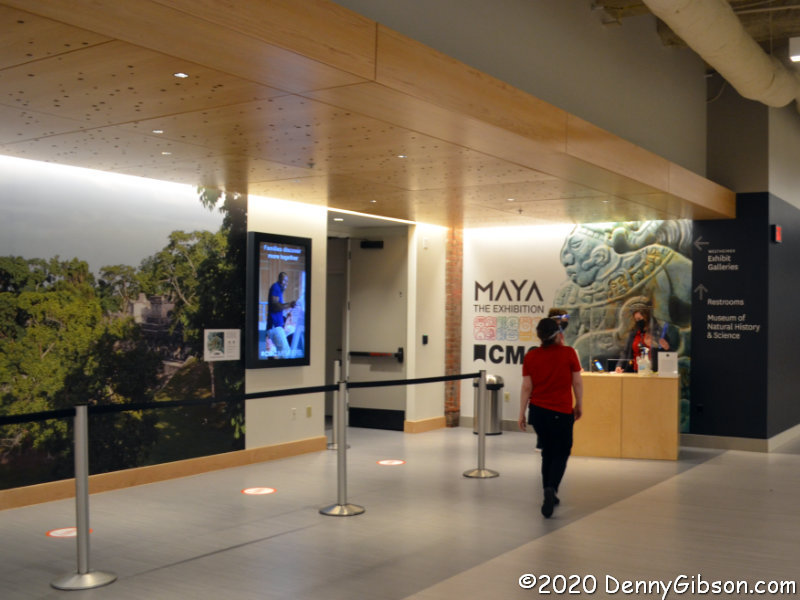
March 14 was to be opening day for a huge exhibit of Maya artifacts at the Cincinnati Museum Center. March 9 was the day a state of emergency triggered by the COVID-19 pandemic was declared in Ohio. The opening did not happen. On Friday, nearly four months later than planned, I was among the first group of visitors to step into the exhibit. We all wore face masks and all staff members wore face masks in addition to clear plastic shields. We were all museum members as only members are allowed in for the first week. Our entry time was preselected which is pretty normal with major exhibits at the museum but the number allowed for each interval was considerably less than what it would have been in March. There were floor markings to encourage six feet of separation and a few interactive “experiences” were removed to eliminate contact. Touching the artifacts would be forbidden in any case and I don’t believe any were removed. All 300+ seemed to be right where they had been waiting for four months.

The Children’s Museum and the cave portion of the Natural History Museum are closed but most of the center is open. Entry, however, is now time-based and I had reserved a slot for checking other things out after the Maya exhibit. That was not to be as I immediately headed home. Missing an appointment with an AC service guy in July is not wise.

That scheduled service call did not actually make me rush through the exhibit but it did cause some shortcuts. As I entered, I learned that an audio tour was available through my phone, but in the probably mistaken belief that it might slow me down, I ignored it. No doubt that’s one reason I have so little information to share on specific items. I read every description but took no notes, not even with my camera, and my memory did not retain details very long.

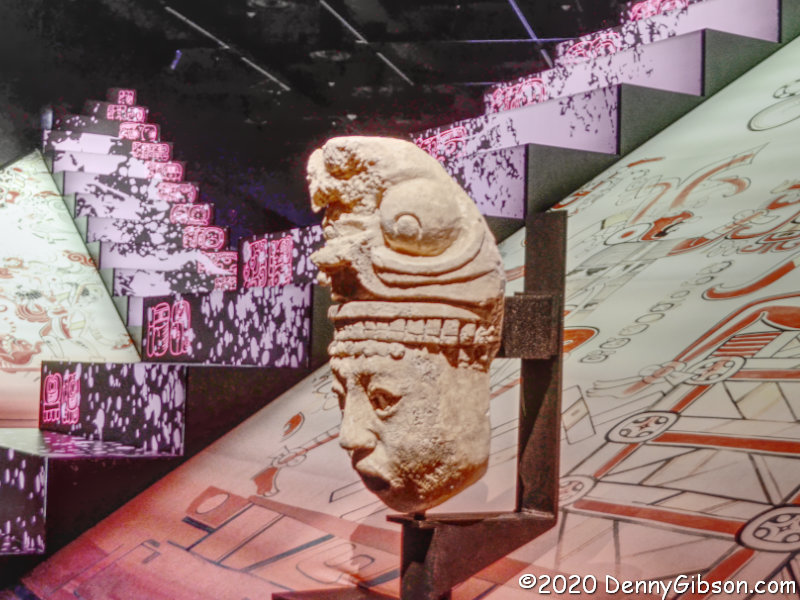
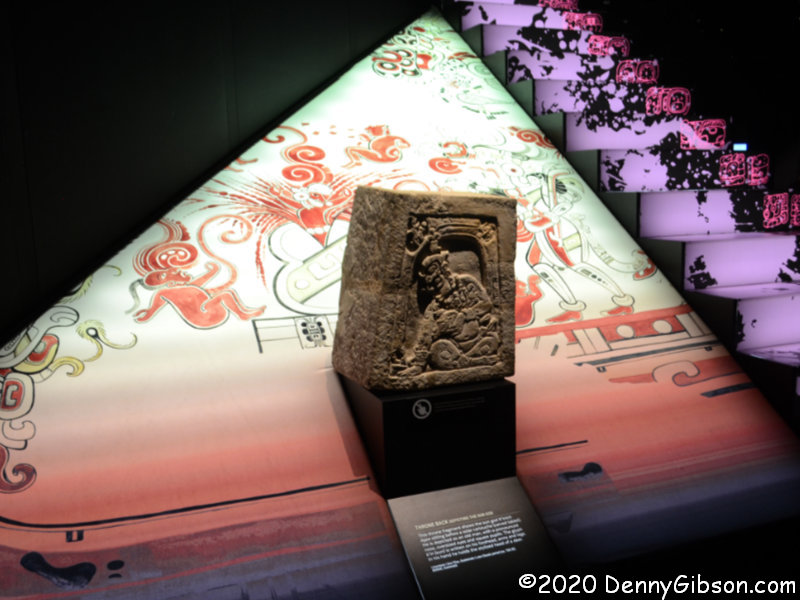
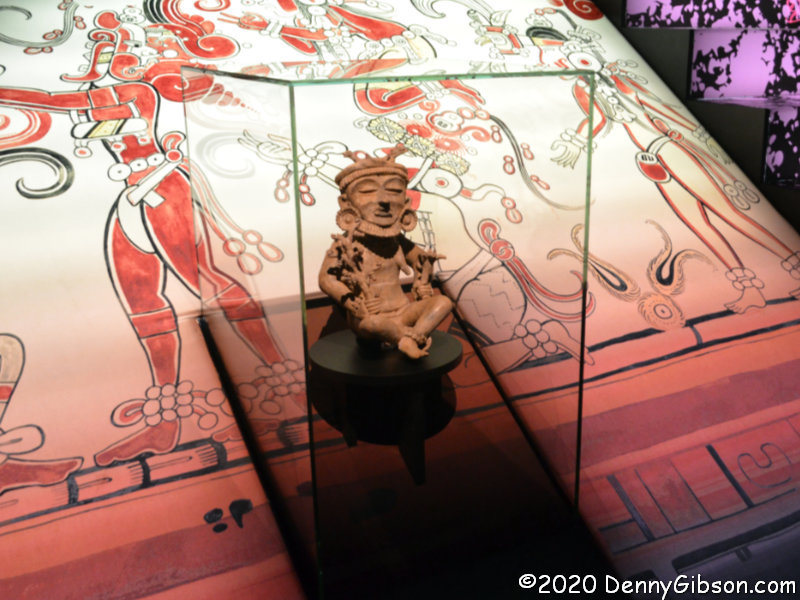
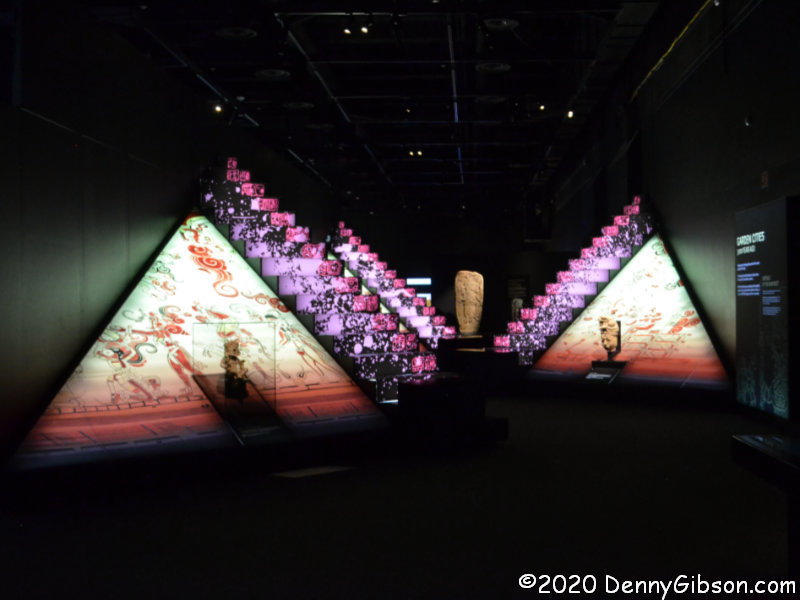
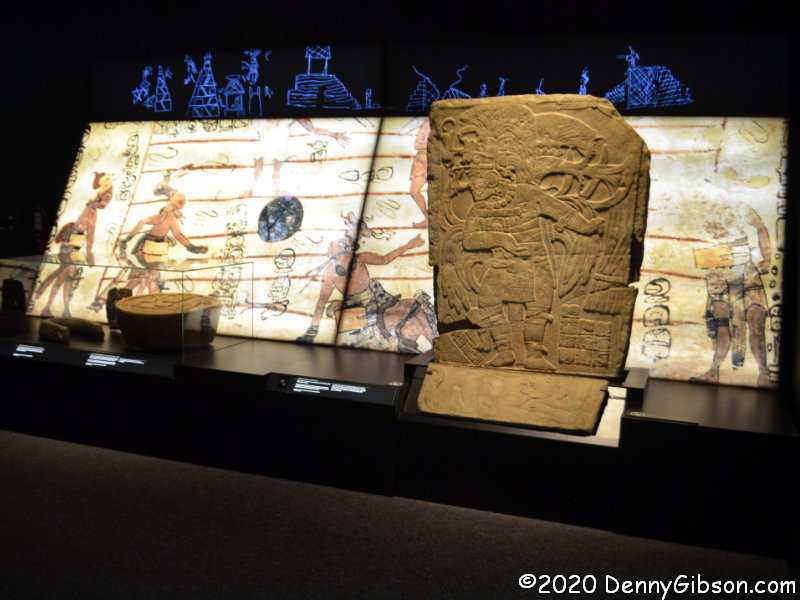
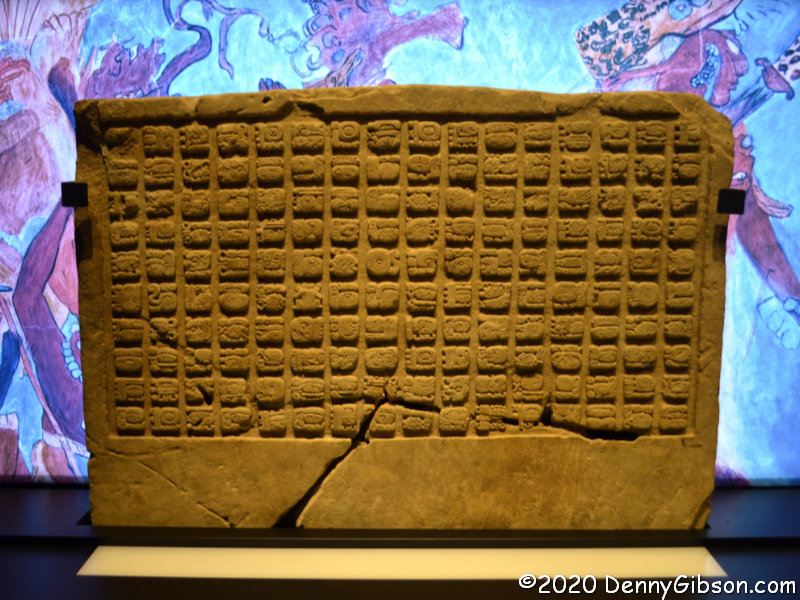
I did not photograph many of the numerous small pieces in the exhibit and didn’t even do a particularly good job with the larger ones. The three items displayed here against the lighted and decorated pyramids can reasonably be called mid-sized. The picture at the beginning of this article is of the one at the front right of the wider view.

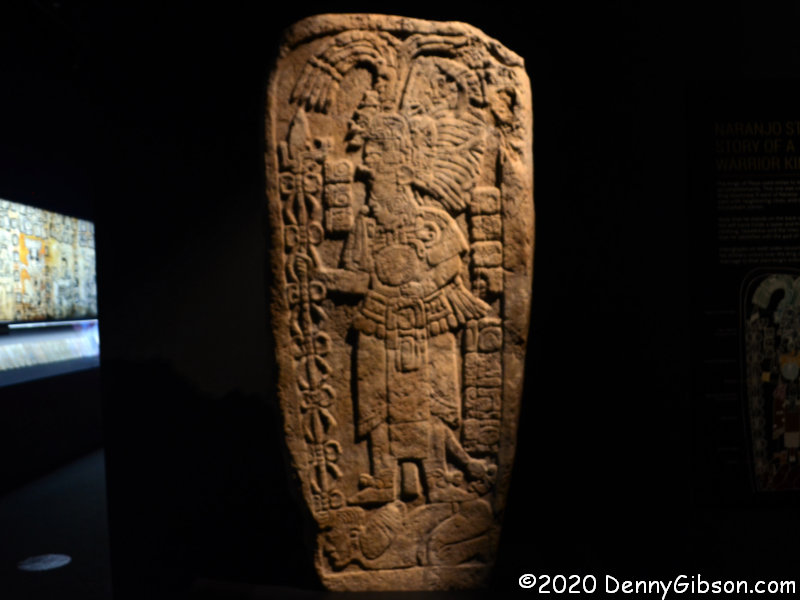
This stela is one of the largest items in the exhibit. It can be seen beyond the pyramids in the previous pictures. Created in 800 CE near the peak of Maya civilization, it documents some of the accomplishments of a Maya king. That’s something I happen to know because of some only slightly blurry photo notes.

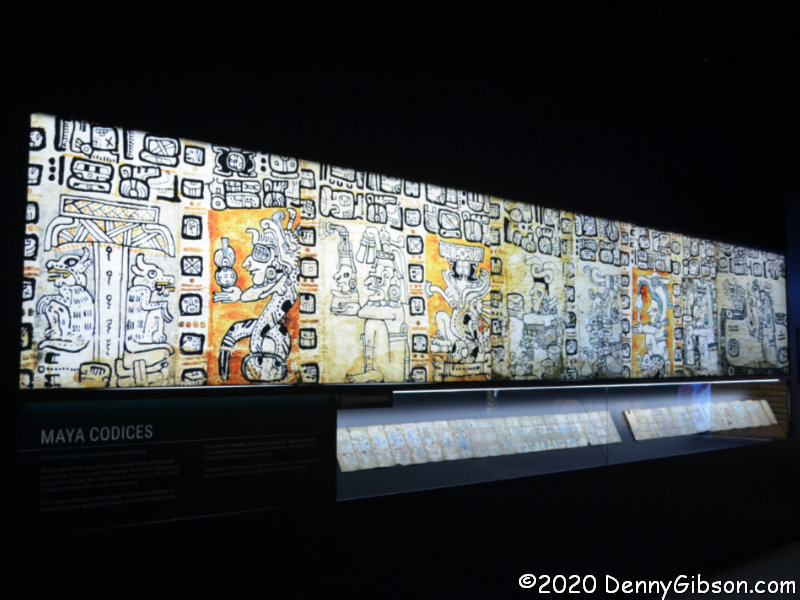
Only four Maya codices, all written after the civilization’s peak, are known to exist. The Cincinnati exhibit includes this partial reproduction. It and the two stone carvings are among the items I wish I’d picked up more details on, and it’s likely they will become justifications for a return.

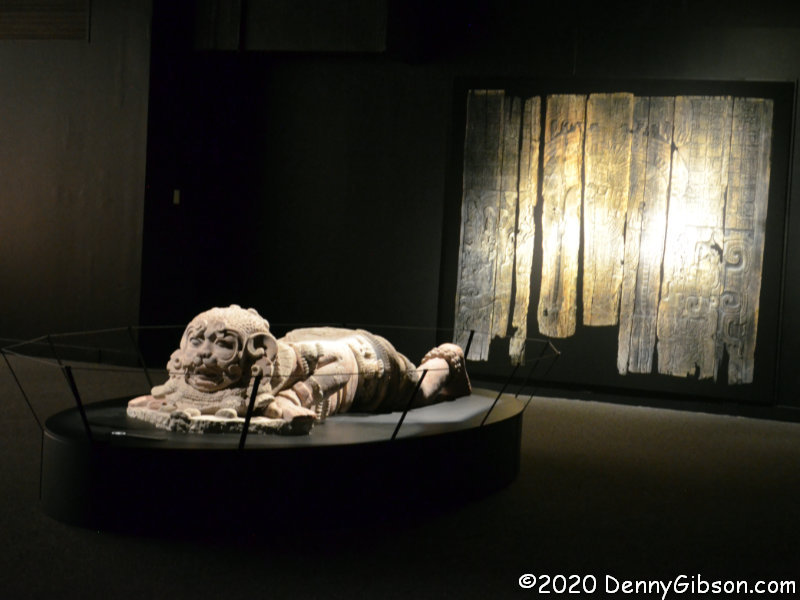
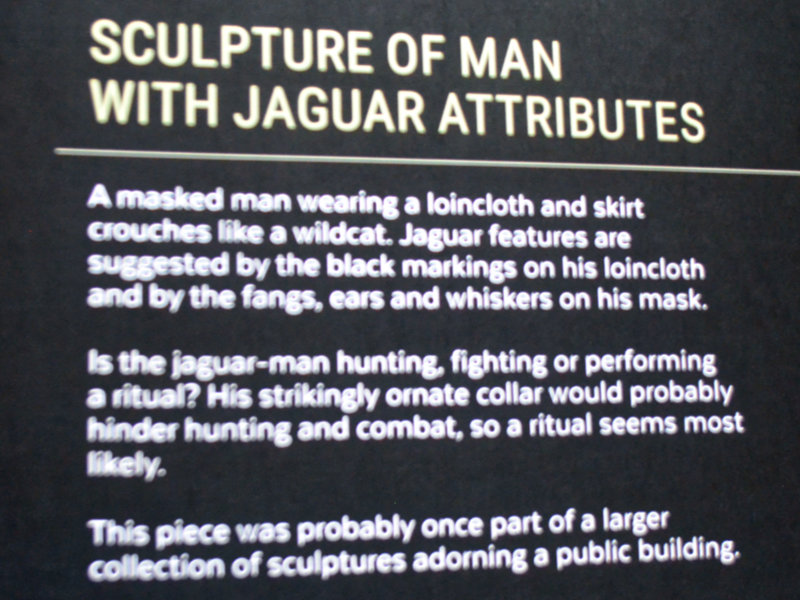
I have no details to share about the stone mask but I do have this for the jaguar man. The exhibit was originally scheduled to close on September 7 but the delayed opening has moved that to January 3, 2021. I hope to return and be better prepared with more time when I do.

As for the rest of the museum, I will definitely be returning, possibly as soon as this coming week, to see that. I sort of want to see what changes COVID-19 has triggered and I most definitely want to check out a special exhibit on women and the vote that is open through September 27. As everyone should know, this is the centennial of the first national election in which women were permitted to vote. 

Return of the Signs

Concerts, museums, festivals, and parades have all made frequent appearances in this blog but not lately. They have all been impacted by the COVID-19 shutdown. I”ve tried to keep my concert cravings in check by watching online live streams and even did a post about it back in the early days of the quasi-quarantine. The closest a museum has come to being the subject of a post in the last several months is when I covered the new stairs at the closed Cincinnati Art Museum. Until today.

The Cincinnati Art Museum opened to members on June 18th and to the public two days later. Parts of the Cincinnati Museum Center will be open to members on July 10 and to the public on the 17th. The American Sign Museum allowed members in on July 1 and will open to the public on Wednesday, July 8. Preceding a general opening with a members-only “soft opening” isn’t the only thing these three have in common. All will operate at reduced capacity enforced by advance reservations. Employees and visitors will be screened for high temperatures. All employees will wear masks and masks will be required for all visitors to the Sign Museum. The other two stress the wisdom of wearing masks and ask that visitors comply but apparently won’t actually require it. Hopefully, anyone not wearing a mask will be glared at intensely until they at least start smoldering.

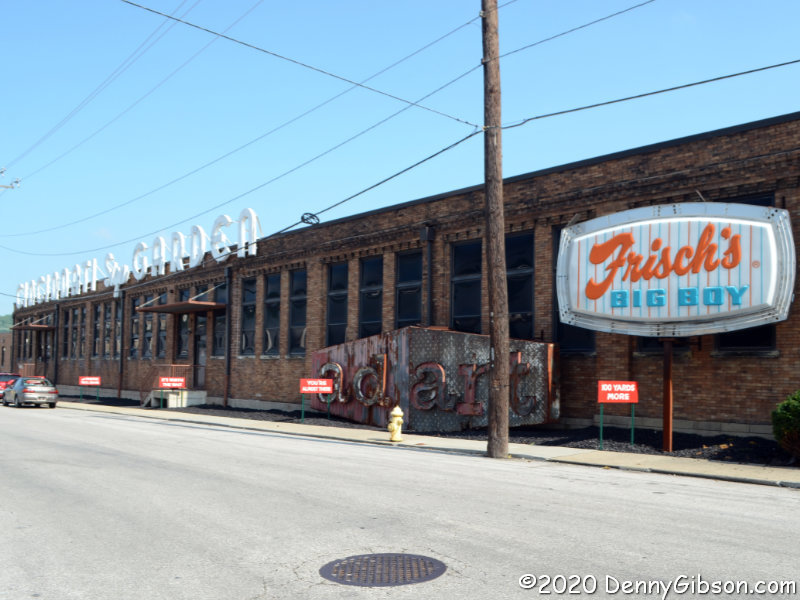
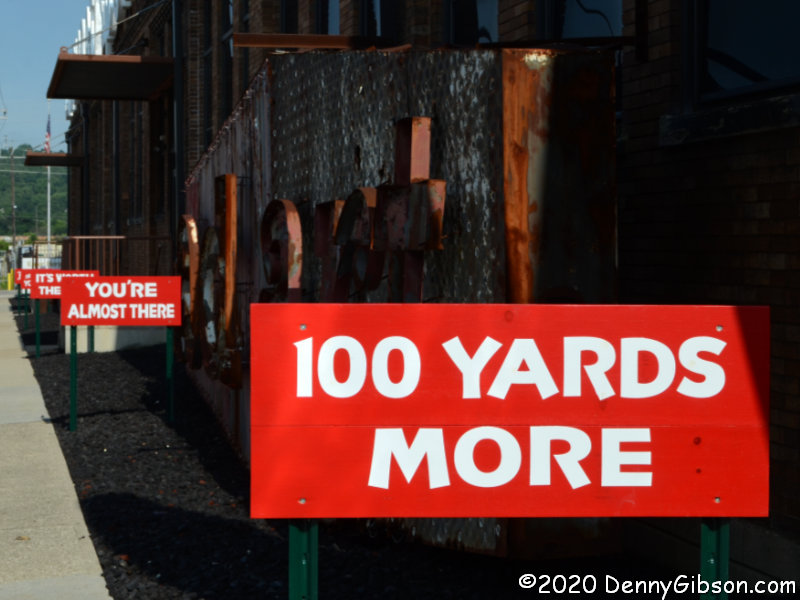
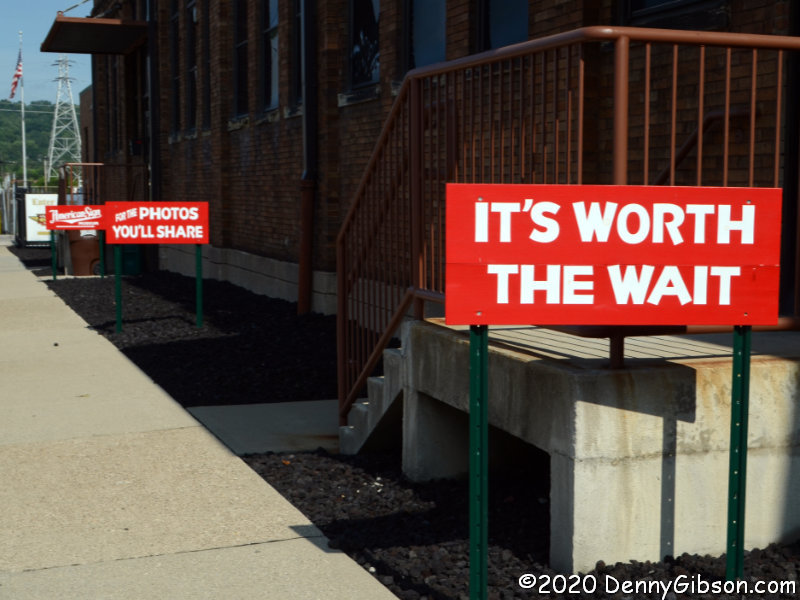
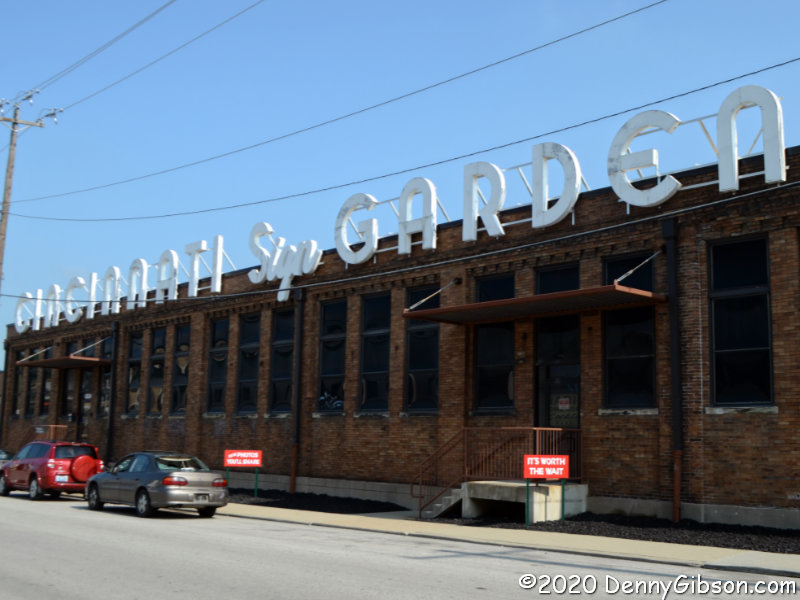
Almost as soon as I heard of the Sign Museum’s opening, I went online to make my reservation. I had expected to be asked to pick a day and time but was simply assigned the first slot on the first day. That was just fine with me but I’m guessing a phone call is required if a specific time and date is needed. Before entering, I stepped out front to get a look at the recently added Burma-Shave style signs. Here is the font-appropriate finale. The big letters atop the building were rescued from Cincinnati Gardens just ahead of its 2018 demolition. The ‘S’ was moved and three lower case letters added to make the perfect sign museum topper.

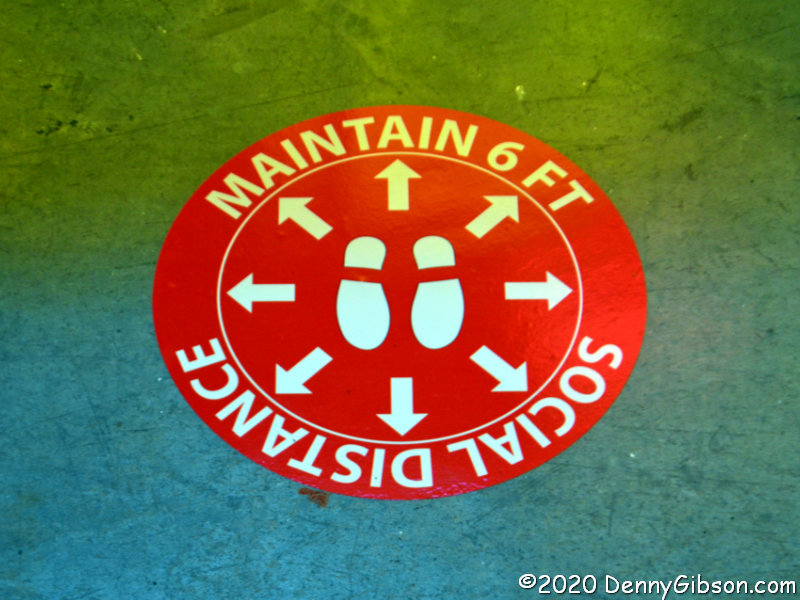
Once inside, it was scan, scan, scan. My temperature was checked with a forehead scan, my ticket was scanned on my phone, and I scanned a QR code for the self-guided tour. The free live tours have been temporarily halted to help maintain social distancing. I’d never tried the audio tour and figured I should since the live tour I always recommend won’t be available for a while. The audio tour is accessed through a smartphone by scanning the QR code or entering the URL. It then plays through the phone (earphones recommended) and is controlled (start, stop, etc.) through it. I was quite impressed and will have no qualms about recommending it in lieu of a live expert. With or without a guide, I almost always find something new when I visit although sometimes it’s something that’s been there since day one and I’d just not noticed. These signs on the floor were definitely new. They are placed throughout the museum as reminders about social distancing and to provide visual hints as to just how far six feet is.

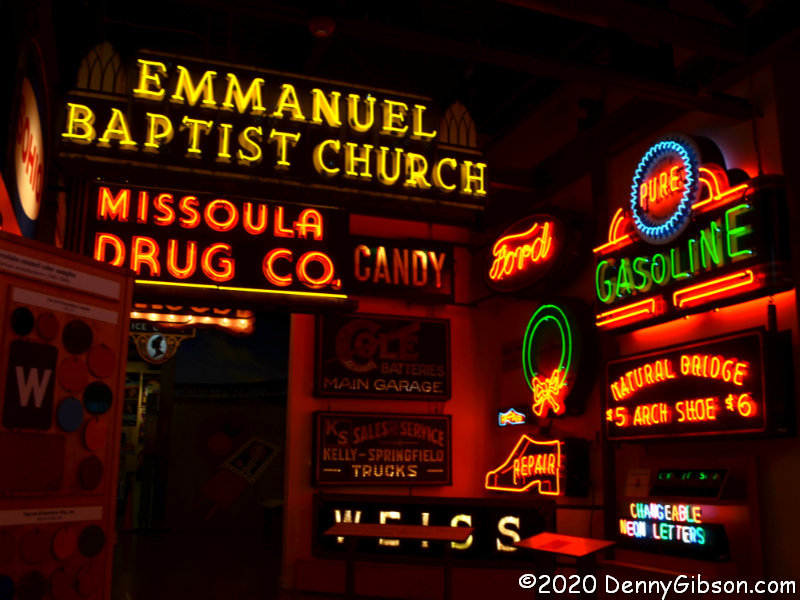
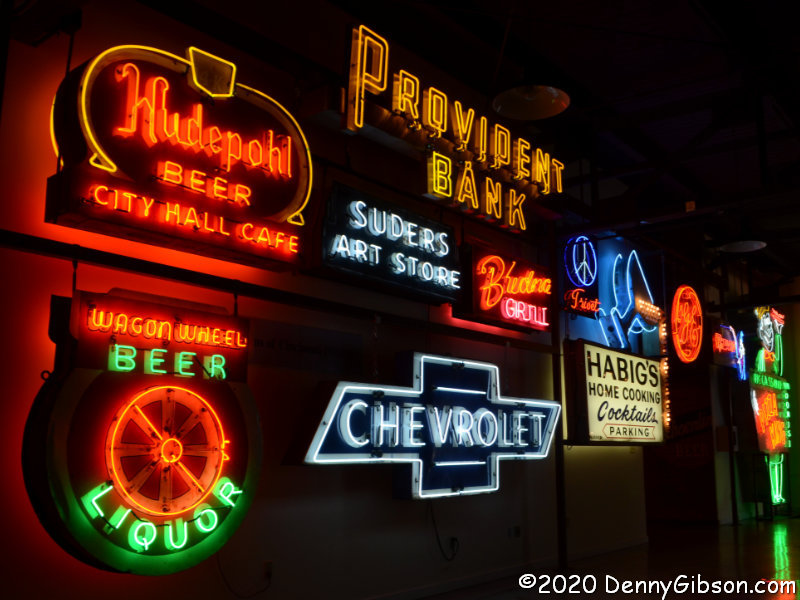
Of course, all the old favorites are still there. The audio tour talks about the history of signs just like a live guide would and describes many of the more interesting signs on display. It doesn’t cover every detail of every sign and that’s just like a live guide, too. Exploring and reading on your own is part of the fun. The audio tour does come up short when it comes to answering questions but the folks at the front desk and roaming staff members are happy to do that.

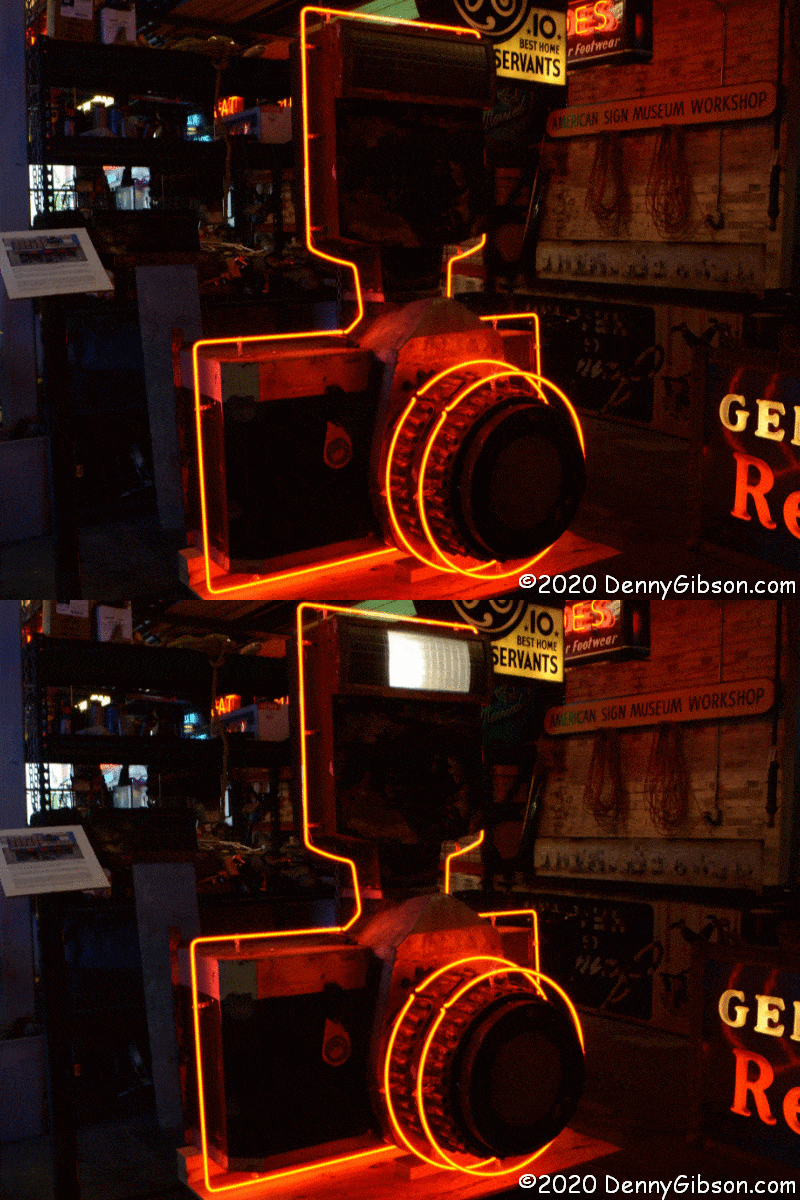
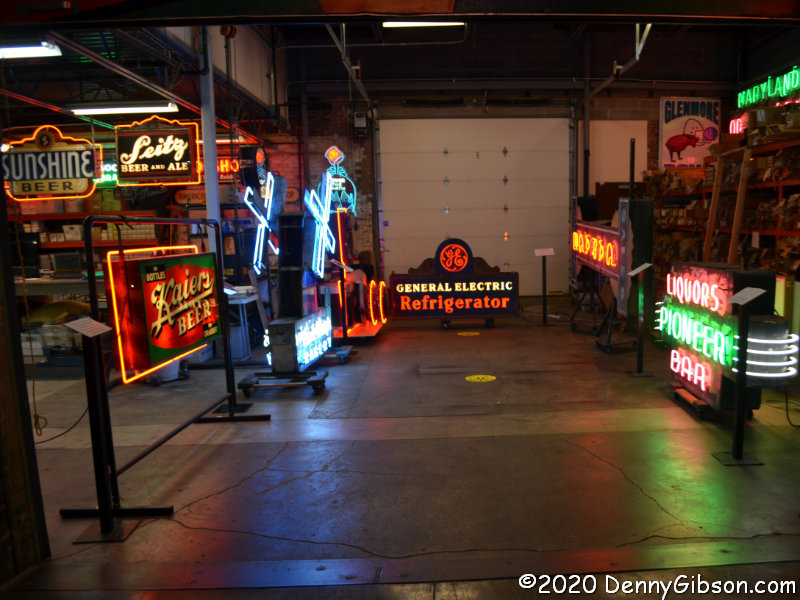
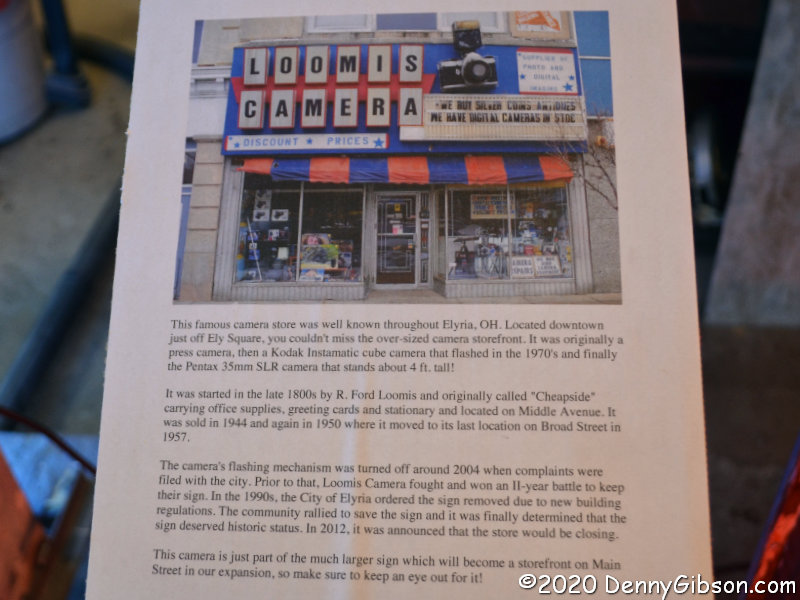
A favorite spot of mine is this workshop area which is usually open with contents constantly changing. Some signs leave here to return to their proper homes in the wild while others are on their way to be displayed in the museum. The big camera, a highlight of my day, is one of the latter. A lot of space remains unfilled in the building housing the museum and a major expansion is in the works. As told here, the neon trimmed Pentax, complete with working flash, will be part of that expansion.

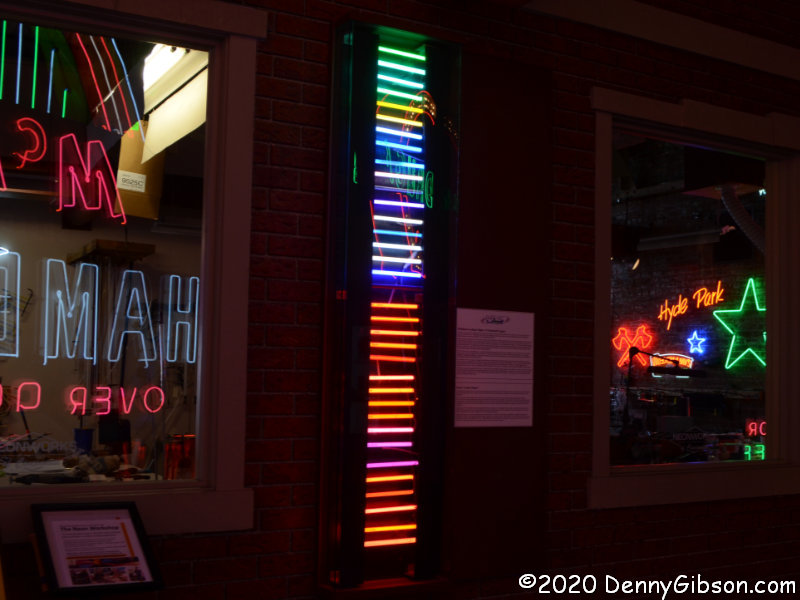
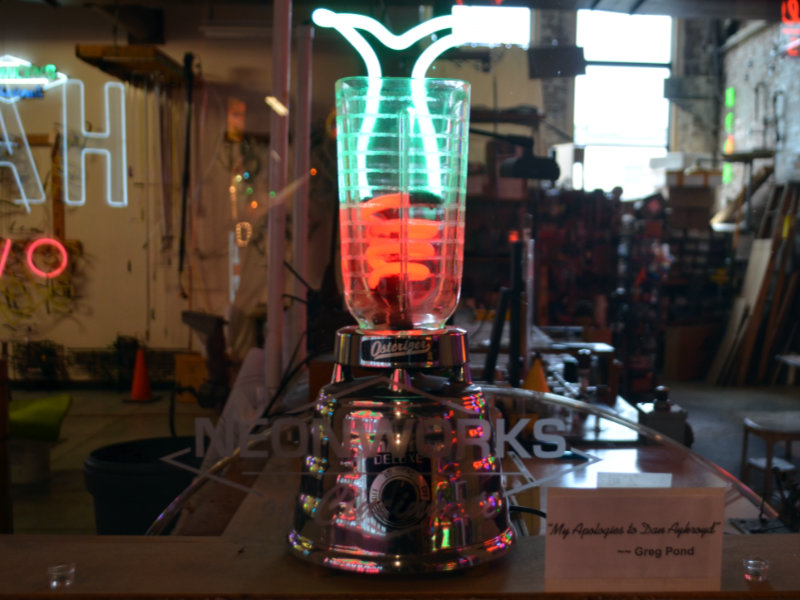
As I mentioned, I sometimes think something is new when it isn’t but I’m pretty confident that both of these items are recent additions. The “color chart” was once used by Cincinnati’s Holthaus-Lackner Signs who donated it. I’m absolutely certain that the neon sculpture is new because I watched the comment card being taped to the window as I approached. For any who miss the Dan Aykroyd connection, there’s this. The Neonworks sign shop can be glimpsed in the background of both of these photos. Guided weekday tours usually included a visit inside the shop. Those visits are on hold along with the tours but you can still watch through the windows.

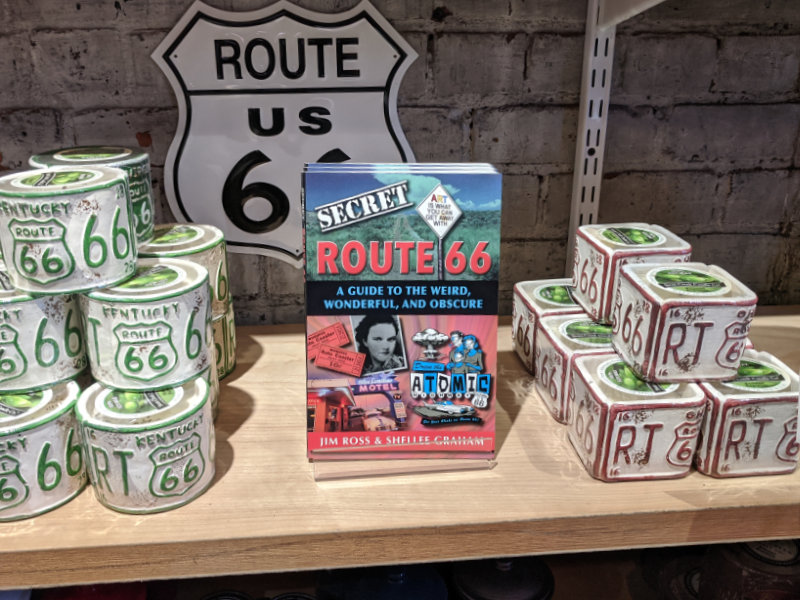
Before leaving, I made a pass through the gift shop where I spotted this book by a couple of friends in Oklahoma. I then posted a picture similar to this one to a Route 66 Facebook group. It has received about fifty reactions (including from one of the authors) but no comments. I really expected someone to jump all over the Kentucky tagged items on the left and those on the right tagged Ohio. Route 66 ran through eight states that are listed on an out of frame sign, and neither Kentucky nor Ohio is among them. Those two states do, however, supply the majority of museum visitors and gift shop customers. There is a Stanley Marsh 3 (the Cadillac Ranch guy) sign on the cover of the book that reads “ART IS WHAT YOU CAN GET AWAY WITH”. Clearly, those candles are art.

Coincidence at Play (Again)

This post originally appeared on April 3, 2016. A few weeks ago I predicted that I would be recycling more blog posts as the ongoing COVID-19 pandemic restricted real-world interaction, but I didn’t think that would be the case this week. I had a pre-canned series post selected when coincidence struck. I was trying to figure out when I had visited a particular museum and resorted to searching this website for some record. The museum is one with many Civil War artifacts so I used those words in the search and this post appeared in the results. I had all but forgotten it but a reread made me think that a repost might be appropriate. As I wrote four years ago, “there’s still plenty of crap going on.” I did, incidentally, read “To Kill a Mocking Bird” within a couple of weeks of seeing the play.

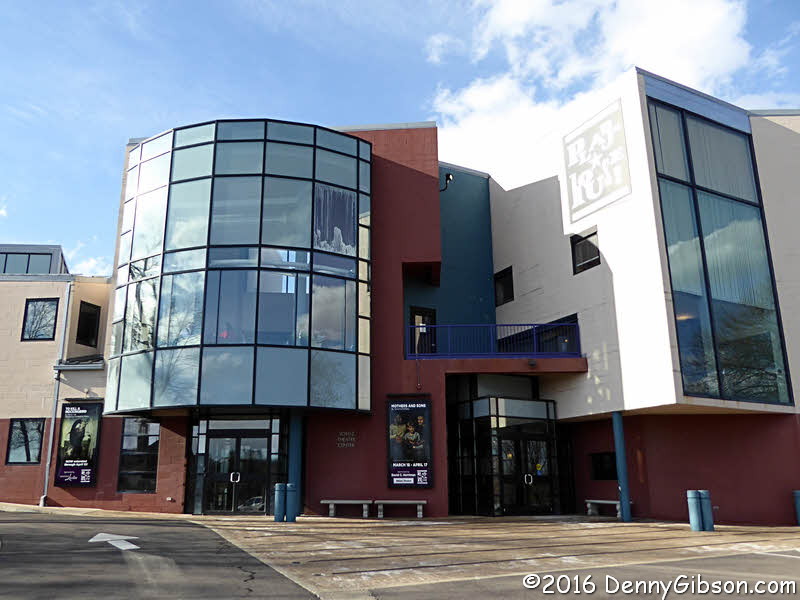
tcamb1I’ve yet to read To Kill a Mockingbird. I have seen the 1962 movie multiple times and now I’ve seen the play. I had hoped to read the book between learning that the play would be performed this season at Cincinnati Playhouse in the Park and actually seeing it but that didn’t work out.

The Friday night performance would be the biggest event of my week but I didn’t expect it to lead to a blog post. I anticipated that a canned Trip Peek would be published this morning. A Friday morning email got me to thinking differently.

The email was the April E-News from the Smithsonian. One of the topics was “The Scottsboro Boys” with this two sentence tease: “The case of the Scottsboro Boys, which lasted more than 80 years, helped to spur the civil rights movement. To Kill a Mockingbird, the Pulitzer Prize-winning novel by Harper Lee, is also loosely based on this case.”

I read the article referenced in the email and could easily see similarities between the 1931 real world incident and the fictional one Harper Lee set just a few years later. Both involved black men accused of imaginary crimes against white women and both occurred in a world where color mattered a whole lot more than truth. Later I read that in 2005 Harper Lee said this was not the incident she had in mind when writing To Kill a Mockingbird but that it served “the same purpose”. Despite there not being an official connection between the Scottsboro Boys and To Kill a Mockingbird, reading about the incident and its repercussions served a purpose for me, too. It provided an unpleasant picture of this country near the midpoint between the Civil War and today. The accuracy of that picture is reinforced by a contemporary pamphlet, They Shall Not Die!, referenced in the Smithsonian article.

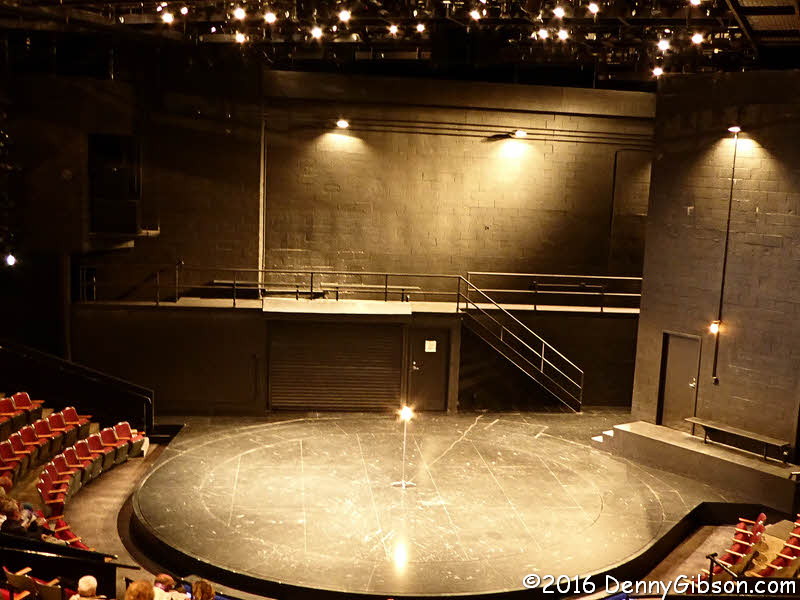
tcamb2I took my seat on Friday with the Scottsboro story fresh in my mind. The stage was bare except for a single light bulb which would actually be removed at the play’s start although it would return later. The stage consists of a large circular center and a surrounding ring both of which rotate. Sometimes they rotate in opposite directions which can seem to expand the distance between actors or the distance they travel. Set Designer Laura Jellinek states that “our main goal was to eliminate any artifice between the audience and the story” and this set certainly accomplishes that. As one audience member observed during the discussion that followed the play, she briefly looked around for the jury during the courtroom scene before realizing that “we were the jury”. At its most crowded, the stage holds nine chairs for the key figures in that courtroom scene.

The discussion I mentioned happens after every performance. Anyone interested moves close to the stage to listen or participate. There were naturally questions about this specific production but there were also questions about the story. There is a sign in the lobby that I now wish I’d taken a picture of. “Don’t read books that think for you. Read books that make you think.” might not be 100% accurate but it’s close. Friday night’s discussion was evidence that this play is prompting some thinking and I’ve no reason to think that discussions following other performances are any different.

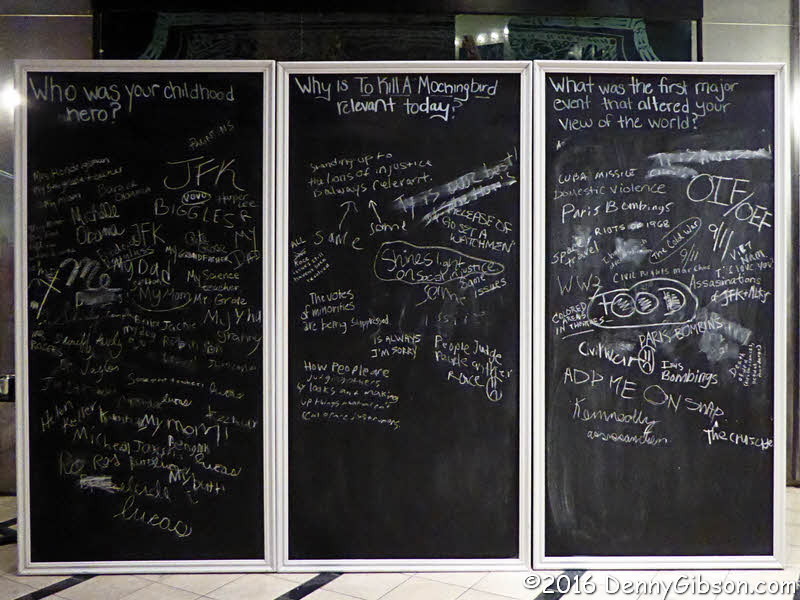
tcamb3There is also a set of blackboards in the lobby. As I assume is true at every performance, the blackboards started out empty except for a question at the top of each. By the time people started heading home, the boards were full. It’s pretty clear that some thinking is going on here, too.

It was the coincidence of the Smithsonian email showing up on the day I was set to see the play that nudged me towards making it a blog entry. There is another coincidence of sorts that I find interesting.  Each week, the blog This Cruel War publishes an article on lynchings. The article is published on Wednesdays but, since I subscribe via RSS and I seem to always be behind in my RSS reading, it is often a day or more after publication before I read a specific article. I read this week’s post the morning after my Playhouse visit. In it, the source of the series’ title, “This Disgraceful Evil”, is given. It comes from a 1918 Woodrow Wilson speech in which he calls upon America “…to make an end of this disgraceful evil.”

We don’t have to deal with actual lynchings now as much as in 1918 but there’s still plenty of crap going on. “It cannot live”, Wilson continues, “where the community does not countenance it.”

Originally scheduled to end today, April 3, To Kill a Mockingbird‘s run a Playhouse in the Park has been extended through April 9.

Cincinnati Art Climb

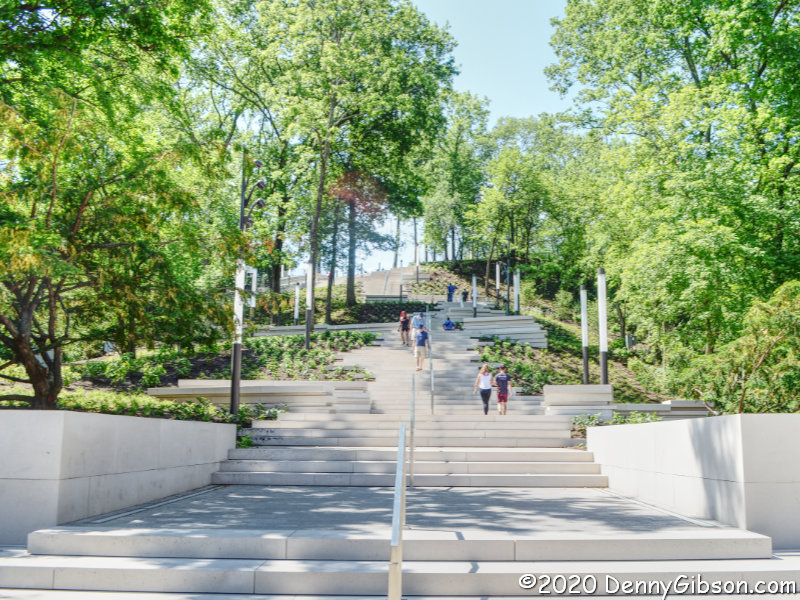
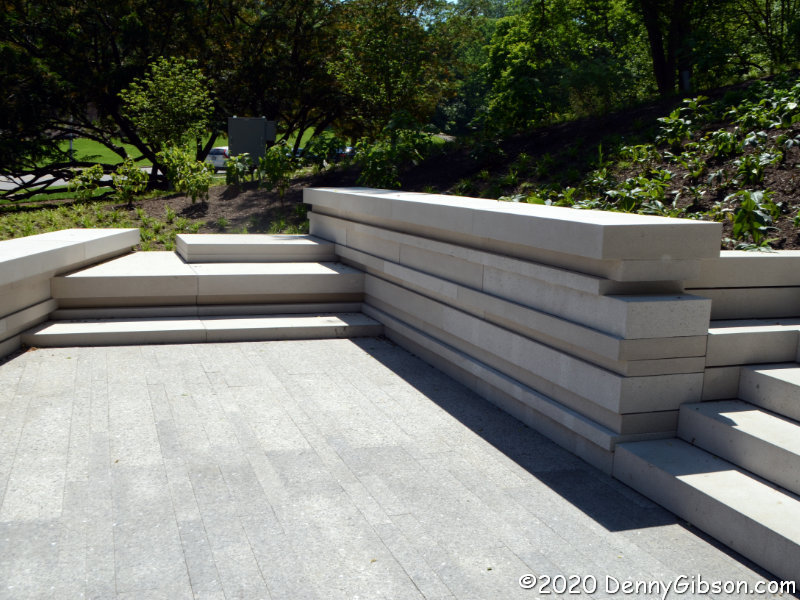
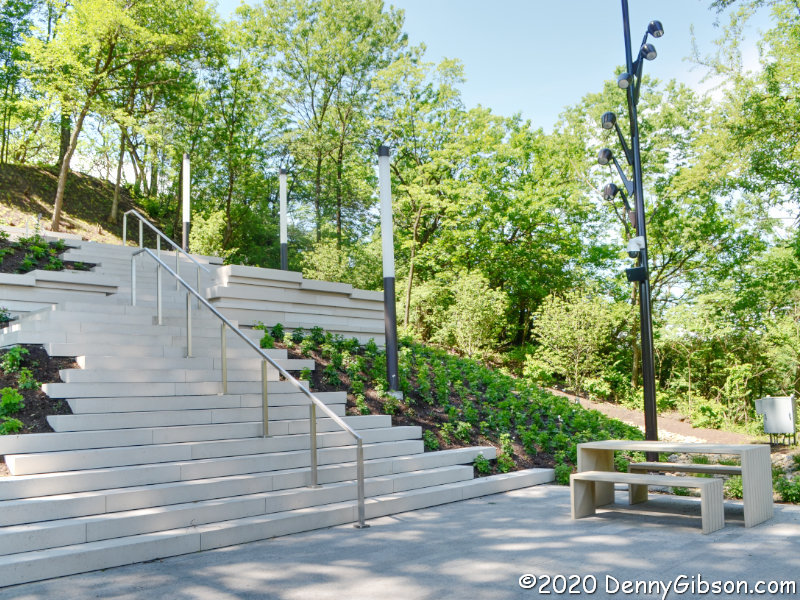
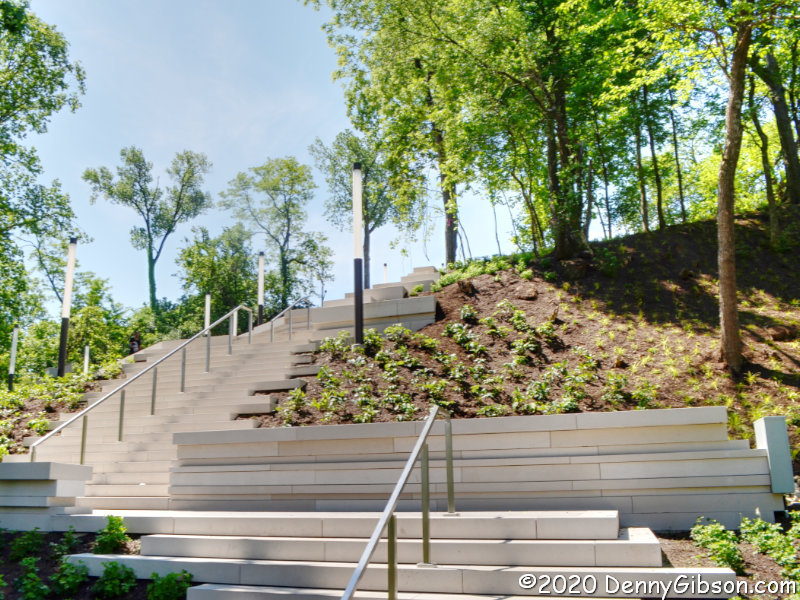
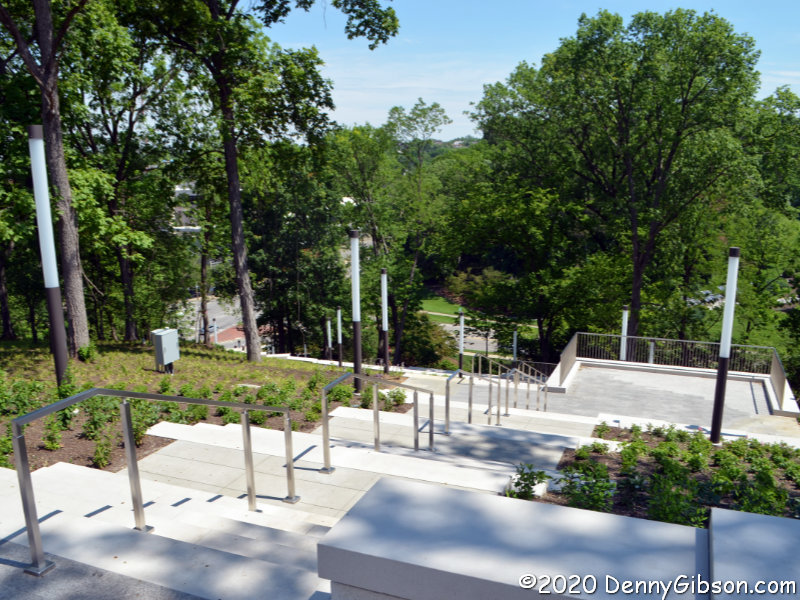
It probably would have been a low-key opening in any case, but in the middle of a pandemic-driven shutdown, the opening of the Cincinnati Art Museum’s Art Climb seemed extra muted. Even so, I was aware of the May 7th opening of the first phase and wanted to check it out. Then, just about the time that enough restrictions had been lifted to make me start thinking seriously about a visit, nationwide protests over the death of George Floyd at the hands of the Minneapolis police caused me to back off. I finally made it on Wednesday. Broad steps now connect the museum at the edge of Mount Adams with Gilbert Avenue. For road fan readers, Gilbert carries US-22 and OH-3. The steps end at the museum’s parking lot, about 450 feet away. There are 166 of them, covering roughly 100 feet of elevation change.

The project isn’t 100% complete. There are empty niches where works of art will someday be displayed, and additional tables, benches, and landscaping might appear as time goes on. Dave Linnenman, the museum’s Chief Administrative Officer, notes that “It will be a thing to enjoy, not just a way to get up and down.” Right now, it is fully functional as a way to get up and down and even as a thing to enjoy for many. Plentiful lighting and numerous security cameras are there to make it safe. The lighting will be certainly be appreciated when the popular Art After Dark events resume.

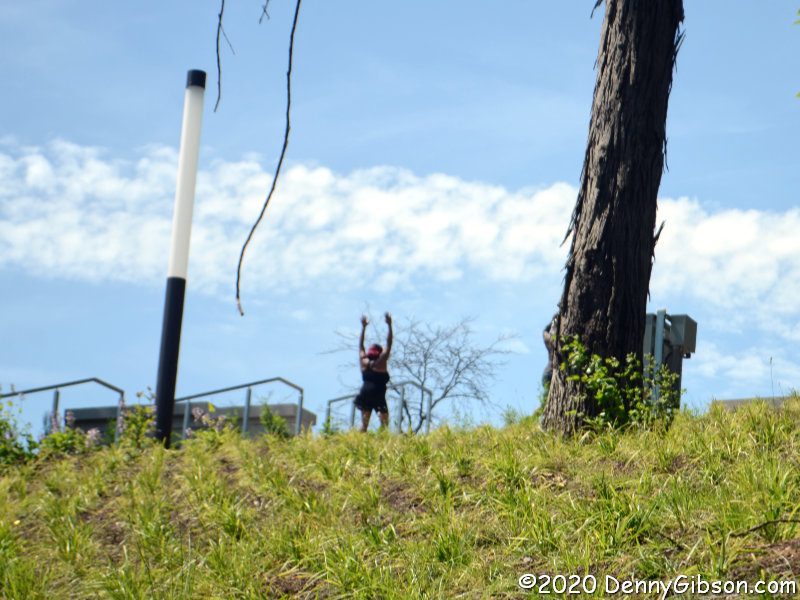
People simply enjoying the steps on Wednesday included parents with young children and some athletic types going up and down multiple times for exercise. A few were even running up some empty sections. What might at first look like someone celebrating making it to the top is actually one of the people making multiple climbs. The young woman had passed me on her way down and again on the way up and was just stretching a bit before starting back down.

The closest thing to sculpture currently on the steps is this tri-level not-yet-operational water fountain. I’m sure that a cool drink of water would be a great reward for the climb especially if the temperature was a bit higher. Today, looking back over where I’d been was reward enough.

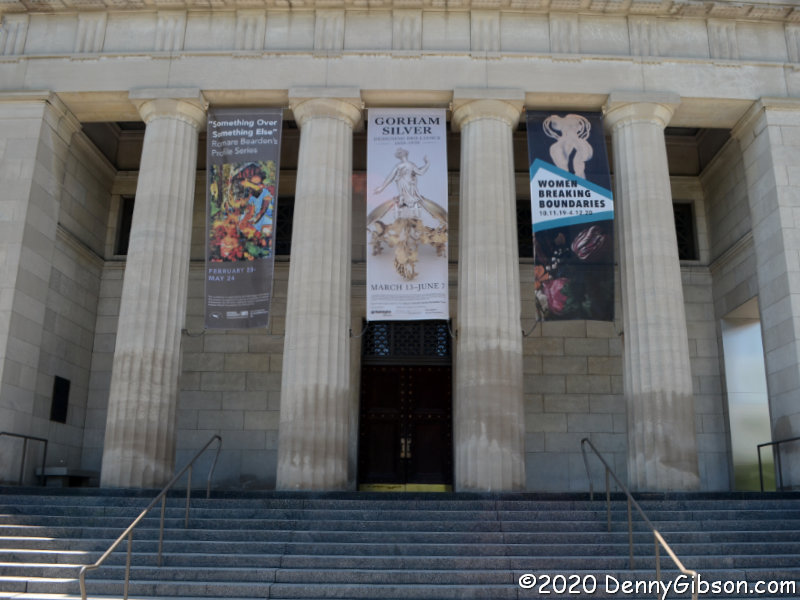
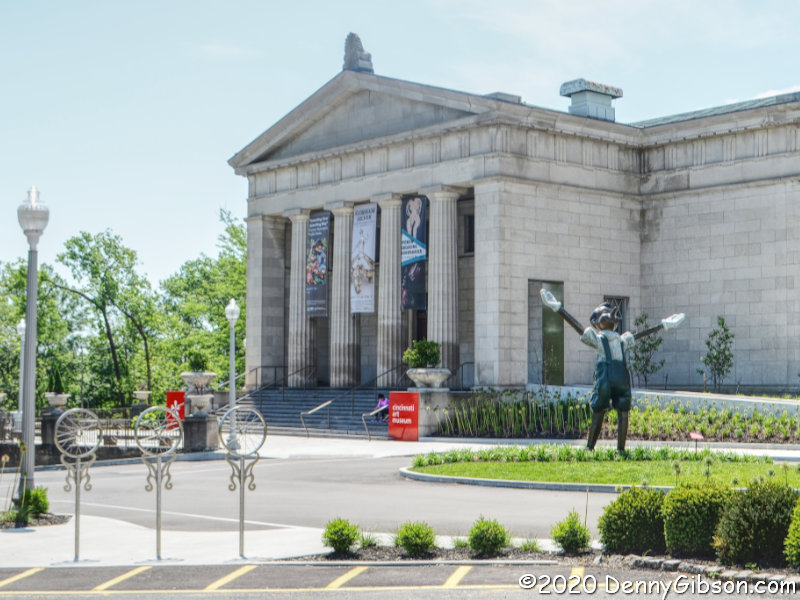
The museum was closed, of course, but I walked across the nearly empty parking lot anyway. As usual, Jim Dine’s Pinocchio (Emotional) lets us know how happy he is to be alive and he always makes me feel that way, too. Banners at the museum’s entrance let us know some of the things we’ve been missing during the shutdown. On the day after I took these pictures, it was announced that museums were among facilities allowed to open next week. The day after that, the Cincinnati Art Museum announced plans to reopen on June 20 with reduced capacity and some other restrictions. That announcement is here.

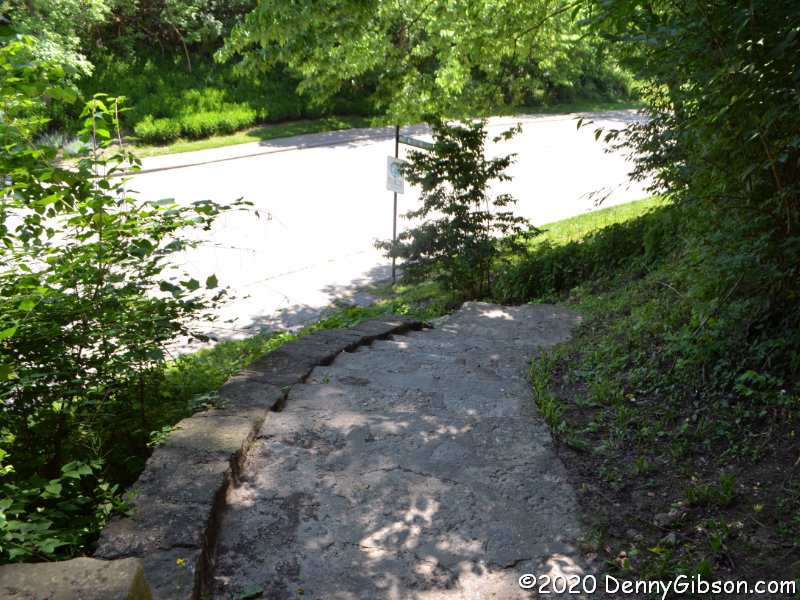
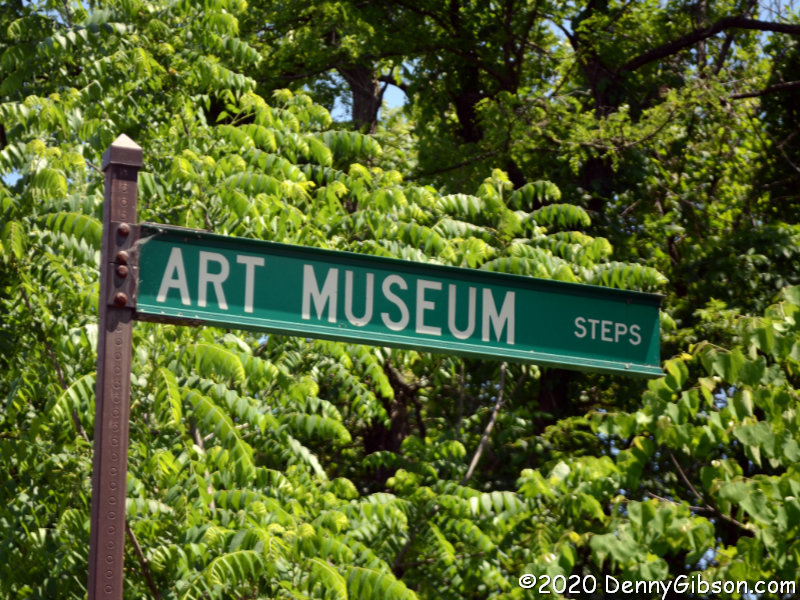
This “steps” sign has nothing to do with the new Art Climb. It has been at the east edge of the parking lot for years and I’ve walked past it many times. I was vaguely aware of where the other end of the steps it refers to was located, but I’d never had any reason or desire to travel them. When I first thought of taking in the new stairs, I figured I would park at the museum and go down them then return. However, when I saw I could park near their lower end, I decided it made more sense to do it the other way around. Not only would going up use the steps as intended for museum visitors, it would have me headed downhill when I was likely to need it more.

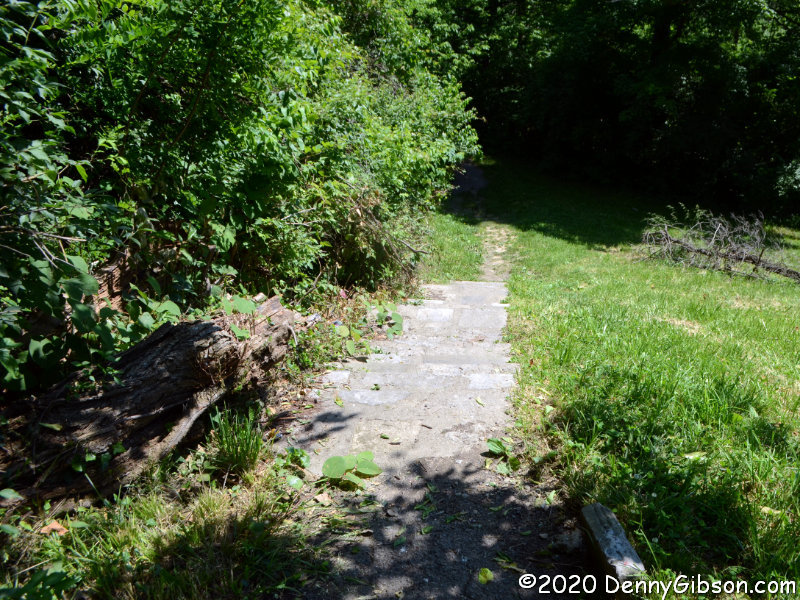
I know that all downhill paths are not equal, but decided that today was probably my best opportunity for checking out the old steps. The route does have steps on both ends and there are some in the middle, but they are nowhere near as wide or as even as the new ones. In between is a sometimes paved and sometimes not path that is always narrow. There are no lights on any of this. The lower end of the Art Climb is at the intersection of Gilbert Avenue and Eden Park Drive. The old steps emerge on Eden Park, maybe 500 feet away. I’d parked on Eden Park Drive about midway between the two sets of steps, so using the older ones for my return was somewhat sensible. I suppose I might come down them again sometime, but I’m rather certain that I’ll never go up them.

Signs of Summer (Past)

This article first appeared on May 20, 2012. Recent memories and shared pictures reminded me of the places it features so I decided to repost it as close to its anniversary as possible. With concerts, museums, travel, and other story-generating activities currently non-existent, there will likely be more of this sort of reuse before the current summer slips into the past.     
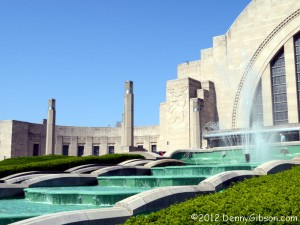
Fountain at Cincinnati Museum CenterThe fountain in front of Union Terminal, a.k.a., Cincinnati Museum Center, runs all summer and is turned off all winter. Therefore, one sure sign of summer in Cincinnati is the turning on of the fountain. That happened Friday at 10:30 AM. I had kind of hoped to see the stepped pools below the fountain go from bare concrete to a series of waterfalls right before our eyes but it wasn’t quite that dramatic. Whether the pools were primed in the interest of time or whether the standing water was simply left over from some secret testing I cannot say, but they started the day ready to overflow at the slightest provocation.
Fountain at Cincinnati Museum CenterFountain at Cincinnati Museum CenterFountain at Cincinnati Museum Center


I still think bare concrete morphing to cascading waterfalls would have been cooler but watching the fountain go from zilch to a spurt to a full spray wasn’t bad.
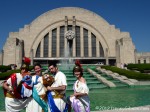
Day in Pompeii CharacterDay in Pompeii CharactersAll the kids, and there were plenty, were properly wowed and they also enjoyed the characters on hand to promote the ongoing A Day in Pompeii exhibit. I’ve seen the exhibit and it’s a duesy. University of Cincinnati Professor Steven Ellis, along with several UC students, has been instrumental in the current excavations in Pompeii and that was instrumental in making Cincinnati one of only four US cities hosting the exhibit. As you can see, security was tight.

The weather was obviously quite nice for the events at the fountain but Friday was just one of several consecutive near-perfect days. Perfect not only for fountains of water but for fountains — or taps — of root beer. I made it to three different root beer stands on three of those near-perfect days.
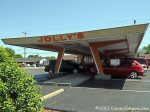
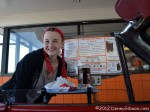
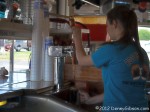
Jolly's Drive In, Hamilton, OhioJolly's Drive In, Hamilton, OhioOn Thursday it was the Jolly’s on the west side of Hamilton, Ohio. Back in 1938, Vinny Jolivette opened an A&W Root Beer franchise in Hamilton. He built this place in 1967 and, casting off the A&W identity, used the family name to inspire a new one for the restaurant. It’s west of the Great Miami River on Brookwood. Somewhere along the line, they added another on the east side of town on Erie. That one has a cooler sign but this one still makes its own root beer and that trumps the sign. The two remain officially connected (The car side signs carry both telephone numbers.) but are managed somewhat separately by two brothers. There is a third Jolly’s in Tiffin, Ohio, that was started, also as an A&W, in 1947 by Vinny’s brother, Roy, and it seems there was a fourth somewhere in Indiana (possibly Bloomington) but I know very little about it.
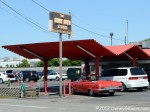
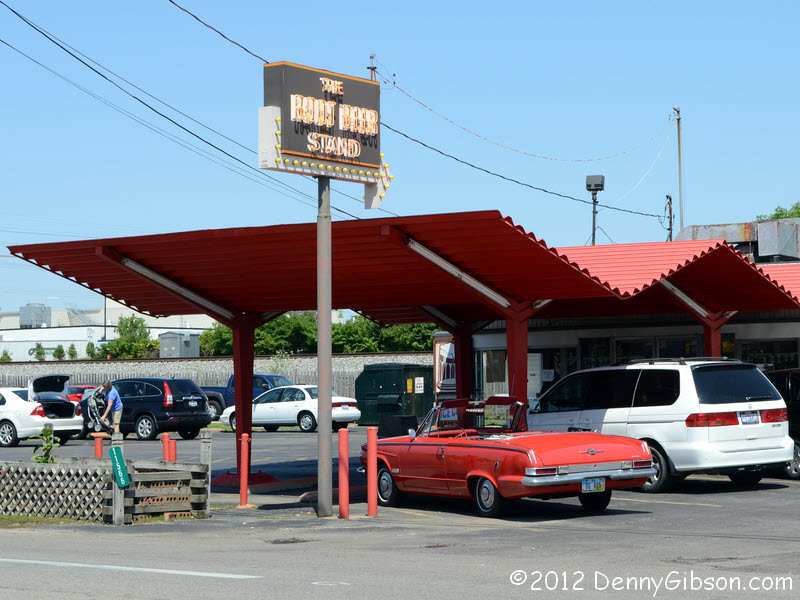
The Root Beer Stand, Sharonville, OhioThe Root Beer Stand, Sharonville, OhioI stopped by The Root Beer Stand in Sharonville, Ohio, on Friday afternoon. It started life in 1957 as an A&W then went independent in 1982. It stopped using carhops in 1972. Originally built and operated by the Rideour family, it moved on to its second and current owners, Scott & Jackie Donley, in 1990. The Donleys have kept everything pretty much the same and that definitely includes making the root beer using water from their 280 foot well. Claims that “it’s something in the water” may very well be true here.
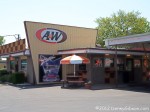
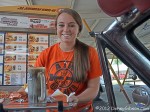
Neil's A&W, Union City, OhioNeil's A&W, Union City, OhioI got my Saturday root beer fix at the A&W in Union City, Ohio. Despite this being a place I frequented as a teenager, I know few details of its history. I do recall that is was owned by a fellow named Smith in the 1960s and that he operated a used car lot right next door. I have vivid memories of sipping root beer and drooling over a black 1956 Thunderbird that sat in that lot when I was about seventeen. At some point, it became Neil’s A&W Drive In and so it remains today. Curiously, this place doesn’t show up on the official A&W website nor does it have its own site but it does have a FaceBook page.

All three of these places make their own root beer using at least some of the original A&W equipment. Guess that stuff was made to last. All of them taste great and I’m guessing that the recipes are all the same or similar. The Root Beer Stand has its special water and both it and Jolly’s serve their brew in chilled glass mugs. I love ’em both and I do tend to dislike chains but “real” A&Ws (Not stuffed-into-a-corner-of-a-gas-station A&Ws.) are pretty cool and it’s hard to beat an ice-covered mug.
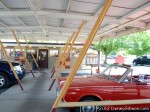
Neil's A&W, Union City, OhioJolly's Drive In, Hamilton, OhioI’m guessing that some noticed the slightly red convertible in the center of the Root Beer Stand photo. That’s my 1963 Valiant and plans to drive it to Darke County and the A&W at the border led to the warm-up visits to Hamilton and Sharonville. The 200-mile round trip was the car’s longest outing since the cold drive home from Cambridge in early 2011. She done good. These pictures show her at Jolly’s and Neil’s.
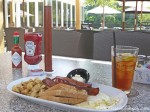

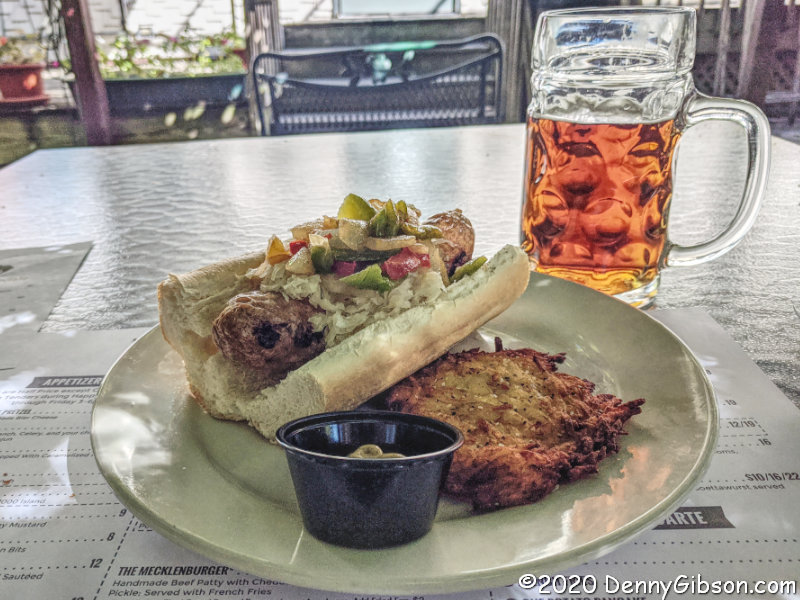
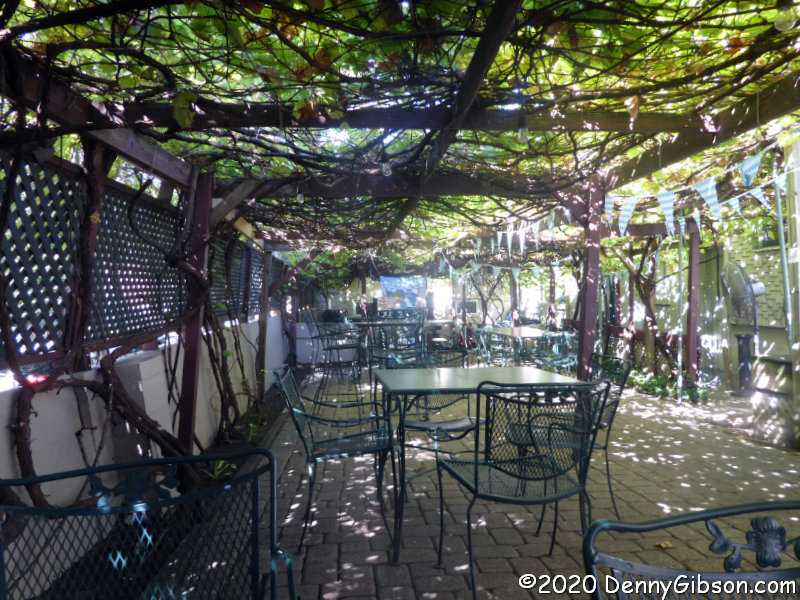
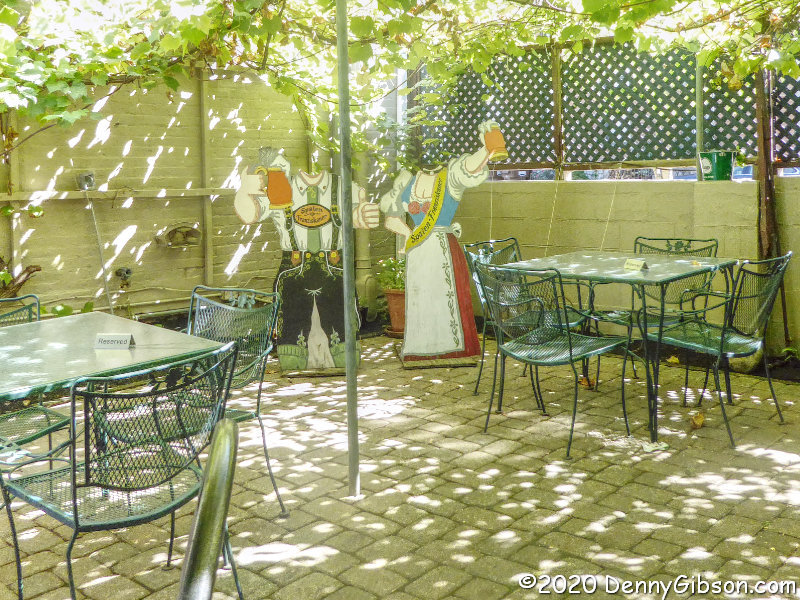
Flipdaddys: Burgers & Beers... & BrunchI recently learned that the neighborhood Flipdaddy’s does brunch on Sundays so I walked over this morning to check it out. It was quite good. I’m always dismayed but rarely surprised to find myself alone on a restaurant’s patio. But, with the thermometer at 74 degrees, I was a little bit surprised today. Lots of people just don’t like any temperature I guess. To be fair, one couple and their home from college daughter did venture outside to eat. That was it. The restaurant was fairly busy inside but just one other outside table was ever used all the while I leisurely worked through my bacon & eggs and slowly sipped my Magic Hat dessert.
Home Learning

Since 2009, depending on your definition of work, I have either always worked at home or never worked at home. But I’ve left home a whole bunch to eat, quite often to sleep, and a respectable number of times to learn something. Of course, I more often than not learn something every time I leave the house but right now I’m talking about those times I’ve headed out to a museum or lecture. At the moment, just like the bars and other music venues I wrote about on Wednesday, museums and lecture halls are closed.
The opening image is a screenshot of the Cincinnati Museum Center’s home page and its “Notice of Temporary Closure”. The Museum Center is a place I get to somewhat frequently for OMNIMAX® movies, the permanent exhibits, and world-class traveling exhibits. A traveling exhibit I was really looking forward to, Maya — The Exhibition, was set to open right when the COVID-19 related closures began. I’ve also attended several lectures there. In particular, I liked a series called Brown Bag Lectures. During the two-year-long renovation project, the lectures moved offsite and have yet to return although the building reopened at the end of 2018. Despite good intentions, I haven’t attended a single Brown Bag Lecture since the start of the renovations.

Sometime after the Holocaust and Humanity Center moved into the Museum Center, it began lectures of its own. The Holocaust Speakers Series only recently made it on to my radar and I had not yet attended one. I did, however, once attend a similar talk by the fellow, now deceased, that the HHC’s Coppel Speakers Bureau is named after. Like all other activities, the lectures were canceled when the building closed, but some lectures, like some musical performances, can be adapted to the internet. The HHC has done that with this series with the first “digital lecture” taking place last Wednesday. In the screenshot at left are HHC CEO Sarah Weiss and the presenter of that lecture, Ray Warren. I had expected to simply call up the website and watch a live feed but the lecture was delivered via Zoom which allows questions and other interactions. I’d not used Zoom previously and had to install the application but it was automated and quick.

Ray told the story of his parents who had survived the Holocaust separately then met and married after the war. His slide presentation was set up for use on a large screen in front of a real audience and there were a few glitches early on but problems were solved or worked around. Ray told us not only about his parents’ remarkable experiences but about his own experiences in discovering some aspects of their story. His slides included pictures of friends and family before and after the war. There was a picture of the earrings, now displayed at the HHC, that his mother managed to hide even during her time at the Bergen-Belsen concentration camp. They were the only connection she had with her pre-war life.
I only took one screenshot during the lecture and it was very near the end. Ray talked about how people made decisions before and during the Holocaust. He spoke not only of how but when. Don’t be late, he said. He mentioned some more recent events that deserved decisions. He mentioned the white supremacist gatherings in Charlottesville and elsewhere and he mentioned the much closer and more recent incident in the photo. Just over two weeks before the lecture and barely ten miles from my home, someone painted “The Jews killed Christ. They are the enemies of the whole human race.” Don’t be late.
My post on the opening of the Holocaust and Humanity Center is here. The one on hearing Werner Coppel is here. For the present, there will be digital lectures each Wednesday at 11:00. Register here.

Music Review
Viral Streaming
Various Artists

This isn’t so much a review of music as a review — and preview — of a situation. For quite some time, the Internet has used the word “viral” as if it owned it. Widely and rapidly shared videos, jokes, and photos are said to have “gone viral”. Now the Internet is helping us deal with something that has gone viral the old fashioned way. The novel coronavirus that causes the disease known as COVID-19 is being widely and rapidly shared and we’re trying to make it stop.

We’re trying to make it stop by practicing social distancing. Some people at the World Health Organization want to use the more accurate “physical distancing” but “social distancing” seems to be pretty entrenched. Even before there were “stay-at-home” and “shelter-in-place” orders, bars and the dining areas of restaurants were closed and the income of people who make their living in them was suddenly interrupted. We are quasi-quarantined and semi-isolated, but thanks to the Internet, it’s a quarantine that is, in ways both good and bad, unlike any that’s come before.

One large group whose income has been interrupted is performing musicians. Major festivals and tours, including the Rolling Stones’ “No Filter Tour”, have been canceled or postponed. Some of the big-name stars have moved to fill a little of the vacuum with online concerts and performances. I understand Willie Nelson took part in an online concert last week. I learned of it too late to watch and sure am sorry. There’s an excerpt here. Neil Young has talked about a series of home shows and has one posted here. It’s unclear to me if that’s from a live stream or when there will be more. I stumbled on and surprised myself by enjoying a live feed from Brad Paisley. I’m sure there are others. I think the big-name home show I enjoyed the most is the one pictured at left. That’s Neil Diamond singing Sweet Caroline with some modified lyrics: “Hands. Washing hands. Reaching out. Don’t touch me, I won’t touch you.” 

Of course, no one is really worried about Mick and Keith missing a few paychecks, and neither of the Neils was looking for a handout. Nor was Willie. He was, however, bringing attention to others on the feed who could use some help. A few rungs down the ladder from the Stones and Willie are a whole bunch of musicians that have managed to derive a livelihood from music. With the venues closed, the income is gone. Many are trying online “concerts” in hopes of pulling in some tips. Even on paying gigs, many would typically have a tip jar out. Now, though, the tips aren’t to augment what might be rather small payments from the venues. They’re the whole shebang.

During the last week, I’ve watched online performances by some Cincinnati musicians who happen to be in my line of sight. The opening picture is of Rob McAllister (Dead Man String Band) who did a show on Saturday. So did Ricky Nye, pictured at right. I watched Ricky live then caught Rob’s archived show on Sunday morning. On Sunday night I watched the folks in the other picture on the right, Serenity Fisher and Michael Ronstadt. These are all people I know so I sort of knew what to expect but there were surprises. Rob played a new only-heard-once song and Serenity broke out the bunny ears.

I also checked out some folks I’d never heard before. Ricky, Serenity, and Michael did their own streaming through their Facebook pages. Rob kicked off a series of live streams from CincyMusic. I took advantage of the series to catch three new-to-me artists. Kyla Mainous was on Monday night. Vusive and Matt Waters were on Tuesday. All three showed a lot of talent. Kyla and Matt are singer-songwriters that I’d welcome the chance to see in person. Vusive produces electronic music which happens to not be something I’m likely to go out of my way for although I appreciate the talent and effort involved.

I really enjoyed the “concerts” and I think the performers had a lot of fun too. Although I didn’t, many took advantage of Facebook’s comment support to request songs or just say hi. It gives the shows something of an intimate and interactive feel. I know there are lots of people in Cincinnati besides musicians whose income has suddenly disappeared and I know that’s true for cities everywhere. The interactive two-way aspect of this streaming means the help can go both ways. Music can be a tremendous benefit in dealing with tough times, and right now there’s a lot of music flowing through the Internet because it’s got nowhere else to go. Some can make music, and some can’t. Some can tip a little, and some can’t. Sometimes the helping hand drops a dollar in a hat and sometimes it strums a guitar.

ADDENDUM 25-Mar-2020 13:00: Not long after this was published, CincyMusic shared news of a ten act live stream planned for tonight starting at 7:30 in addition to the already scheduled stream at 6:00. Check them out here and here.

Trip Peek #92
Trip #144
SCA Conference 2017

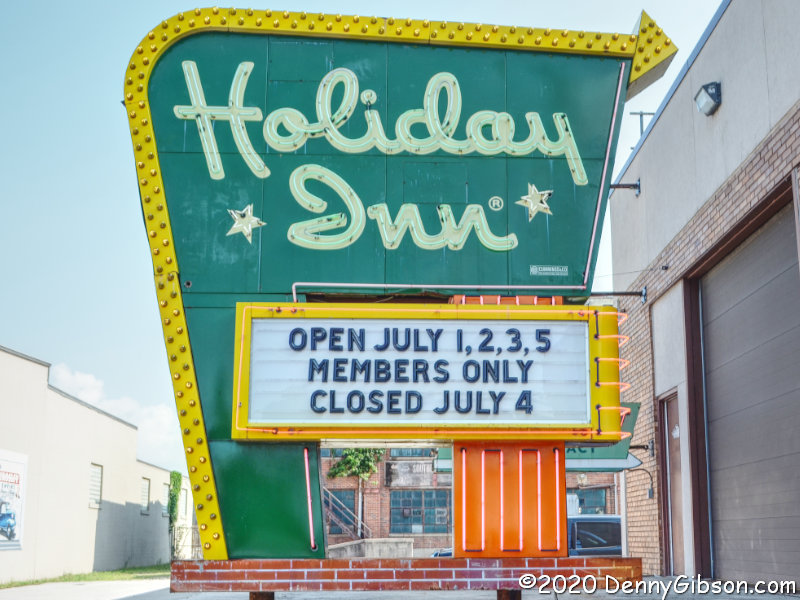
This picture is from my 2017 “trip” to the SCA Conference. I put trip in quotation marks since the conference was in Cincinnati and I spent every night at home in my own bed. The retired Holiday Inn sign is in front of the American Sign Museum where we had dinner after the first full day of the conference. That day was spent on a bus tour around the Cincinnati area, the next was filled with presentations, and the third with a bus tour north along the Dixie Highway.


Trip Peeks are short articles published when my world is too busy or too boring for a current events piece to be completed in time for the Sunday posting. In addition to a photo thumbnail from a completed road trip, each Peek includes a brief description of that photo plus links to the full-sized photo and the associated trip journal.