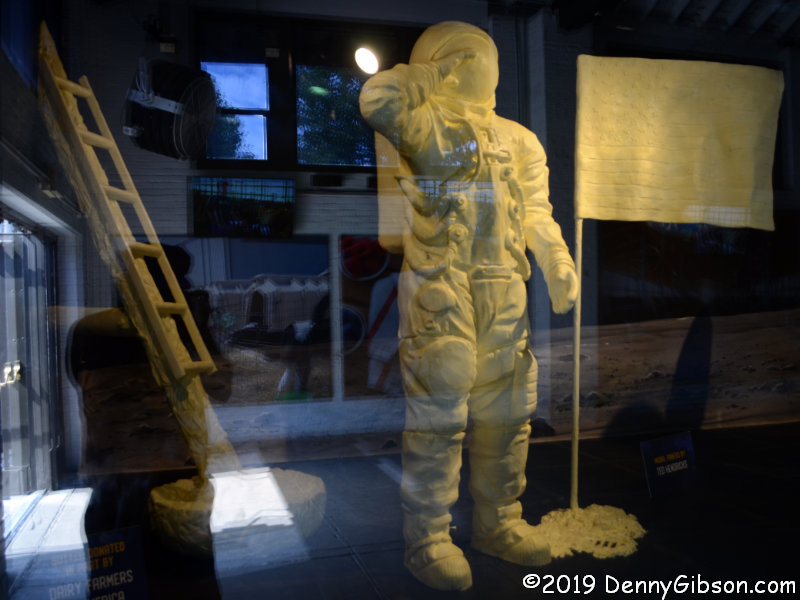
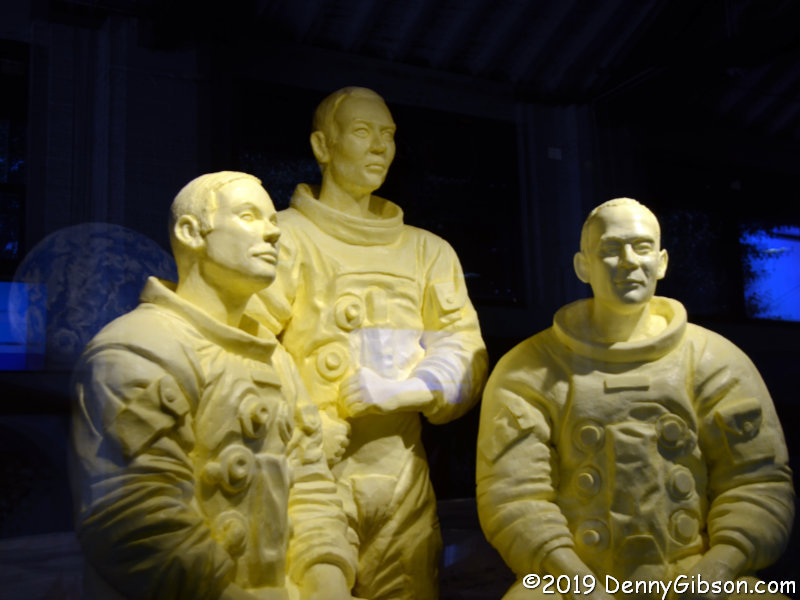
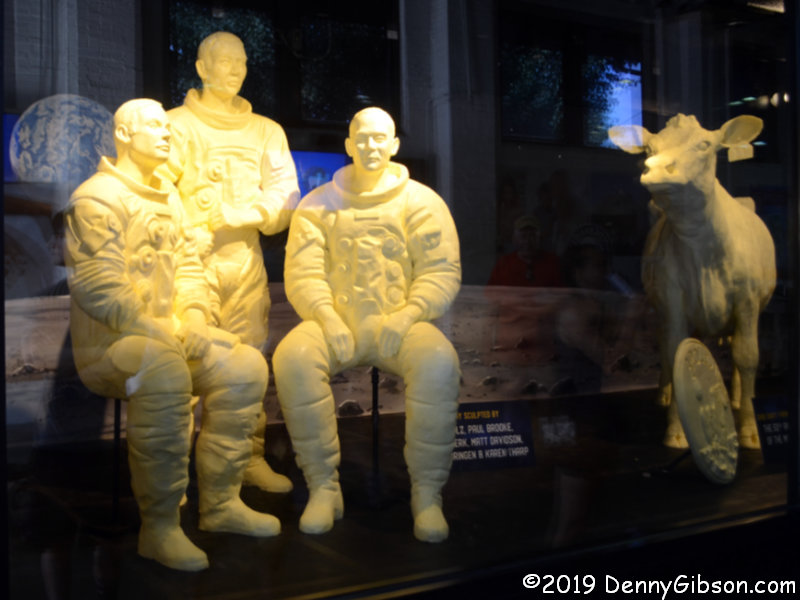
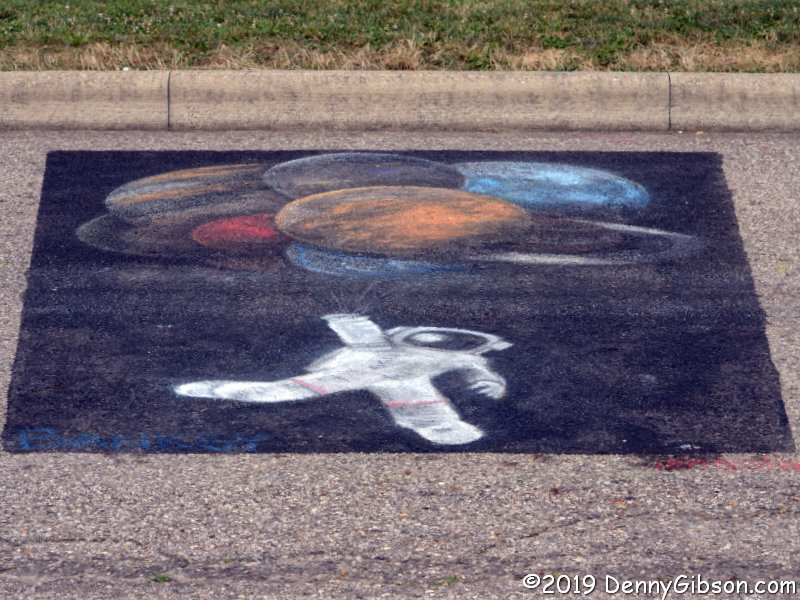
 My best guess of what I was doing exactly fifty years before the publication of this post is sleeping. I wouldn’t be sleeping much longer because it was Monday morning and I would have to wake up and go to work. And I would not have been asleep very long either. I would have stayed up way too long watching TV after a long drive home. Just having the possibility of watching TV late at night was unusual even at the very end of the 1960s. With the exception of Bob Shreve’s all-night movies on Saturday, all five Cincinnati channels went off the air around midnight. But the wee hours of July 21, 1969, were different. It was the day following the day when the Eagle had landed. There was news to be shared.
We — my wife, our son, and I — were visiting friends in Saint Louis over that weekend. Our plans were to be home at a decent hour but we were paying more attention to someone else’s travel plans than our own. While we were on our way to Saint Louis, Michael Collins, Buzz Aldrin, and Neil Armstrong were on their way to the moon. As we prepared to drive home, Buzz and Neil prepared to head for the Lunar surface. At 13:44 EDT on that Sunday afternoon, the pair separated from Michael and the command module Columbia and began their descent. At 16:17 EDT, Armstrong announced that “The Eagle has landed.”
The timestamps on my own recollections aren’t nearly as precise or reliable as NASA’s. Part of me thinks that we did not leave Saint Louis until after the Lunar Module was on the surface. Information currently available online says that a four hour rest period was planned between landing and exiting. If that was the information we had then and if we really did not depart until the Eagle landed, then I must have thought I could drive to Cincinnati in under four hours or maybe I was terribly confused by time zones. Or maybe we were counting on the astronauts sleeping for the full four hours then spending considerable time preparing to leave the lander. Whatever the reasons and reasoning, I know for certain that as we headed toward home, we believed we had a good shot at making it in time to watch man’s first step onto the moon.
There was no radio in the car. Not even AM. The vehicle’s entertainment system consisted entirely of an under-dash 8-track tape deck. That was normally not a problem since no one in their right mind would want to listen to news or the top 40 when all seven minutes of Light My Fire was available in stereo with the click of a cartridge. But this drive was not normal and we really did want to listen to news. As I recall, the Bairds, who we were visiting in Saint Louis, loaned us a portable transistor radio which we propped atop the dash and fiddled with almost constantly as signal strength ebbed and flowed.
The details were forgotten long ago, but I remember that somewhere along the way we heard that the rest period was going to be shortened and the astronauts would be stepping from the capsule earlier than once thought. Whether or not we ever actually had a legitimate chance of reaching home before that happened seems doubtful to me now. But, regardless of how likely or unlikely that had been, it now became clear that it was pretty much impossible. If we continued our drive, human beings were going to be walking on the moon while our only connection was a tiny radio with temperamental reception.
We were still somewhere west of Indianapolis when that realization struck. Like so many other details of that day, I cannot recall our thought processes as we left the expressway in search of a television. We did this near the airport and I know that at least part of the reason was that we knew there were motels in the area. There surely was no money for rented lodging in our family budget so it seems unlikely that we planned on spending the night. On the other hand, this was a truly major event so it’s possible that we were at least considering it. Checking prices may have even been on my mind when I stepped into the hotel lobby. If so, I’m sure it vanished when I saw the TV playing in the furnished lobby. I left and quickly returned with the family.
I think of it as a Holiday Inn but, in reality, it could have been any of the slightly upscale (to a 22-year-old father) motels of the time. Whatever the brand, it was upscale enough that flight crews from multiple airlines regularly overnighted there. My wife and I found seats on a sofa with 5-month-old Crispian parked in front of the TV in a little plastic carrier commonly referred to as a “pumpkin seat”. The three of us became lobby fixtures while others watched the TV for a bit on the way to their rooms.
Time moved slowly as we waited for the astronauts to step outside the capsule. Multiple flight crews arrived while we waited and each followed the same procedure. One member went to the desk to check in the entire crew while the others stood behind the sofa staring over our heads at the glowing screen. When the paperwork was completed, the unlucky person who had somehow been chosen to perform it, distributed keys and everyone rushed off to their individual accommodations and personal televisions.
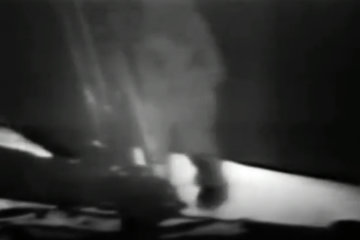
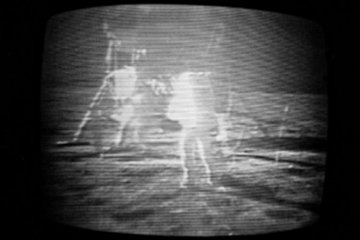 At 22:56 EDT, Neil Armstrong stepped onto the Lunar surface. The picture at the top of this article shows his foot hanging from the Lunar Module’s ladder just before that happened. After Buzz joined him, Neil placed the camera on a tripod to provide a more panoramic view. The black and white images were dim and blurry and sometimes flickered away. And they were beautiful.
I halfway think we stayed in that hotel lobby during all of the approximately two and a half hours of Extravehicular Activity but I’m not at all certain. I am certain that Cris saw that first step because I checked to make sure his eyes were open. Of course, any memories he has of the event are almost certainly from repeatedly being told about it rather than from what he actually saw. My great grandfather had been dead just over eight years at the time of the moon landing but he had lived to see three humans (Gargarin, Shepard, Grissom) in space. He was born in 1875 and was almost exactly the same age as the kid in the pumpkin seat when Custer’s troops were annihilated at Little Big Horn. As my son watched dim images of men nearly 240,000 miles away and I watched him, I wondered what advances he would see in his lifetime. Fifty years in, the list is impressive and growing.
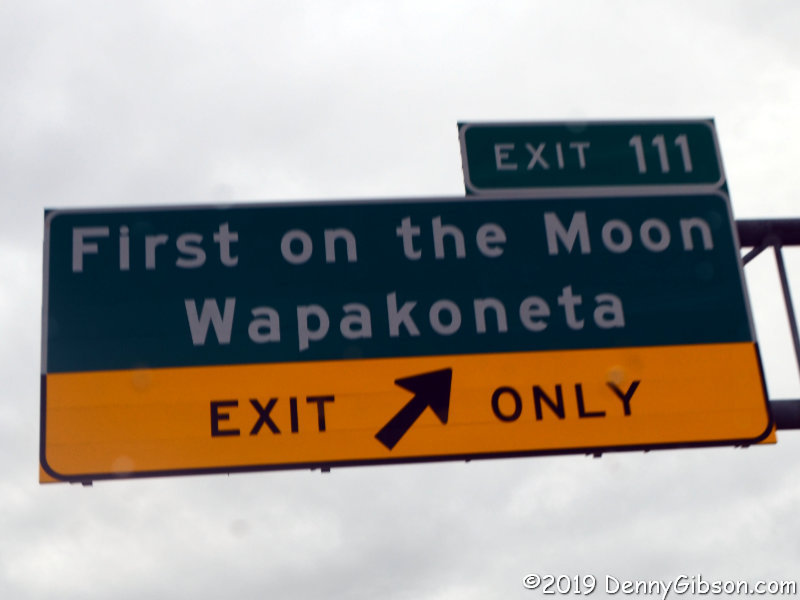
 A ten-day 50th anniversary celebration in Wapakoneta, Ohio, Neil Armstrong’s hometown, wraps up today. The final event is a 7:00 Wink at the Moon concert featuring the Lima Area Concert Band. Other concerts and events have filled the ten days in downtown Wapakoneta and at the Armstrong Air & Space Museum at the edge of town. I visited Tuesday, the anniversary of the rocket launch that started Neil and his buddies on their way to the moon.
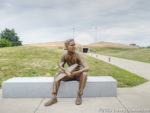
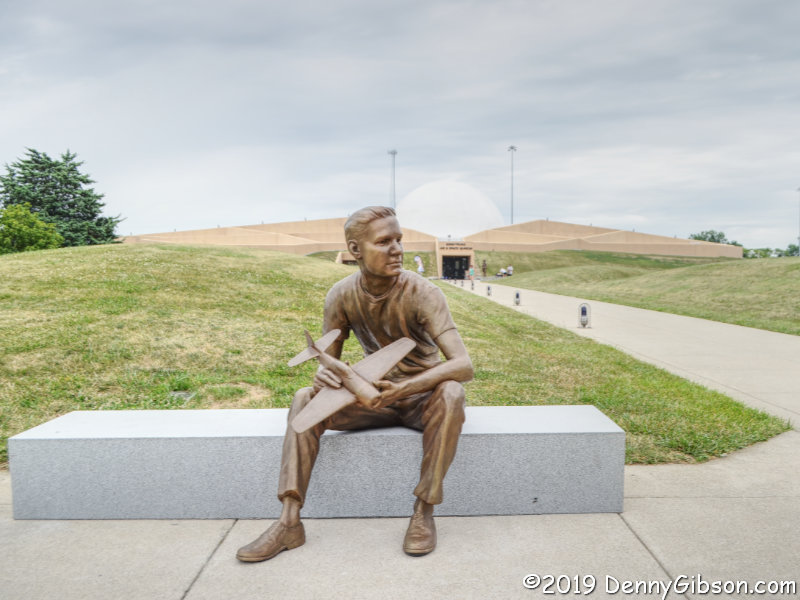
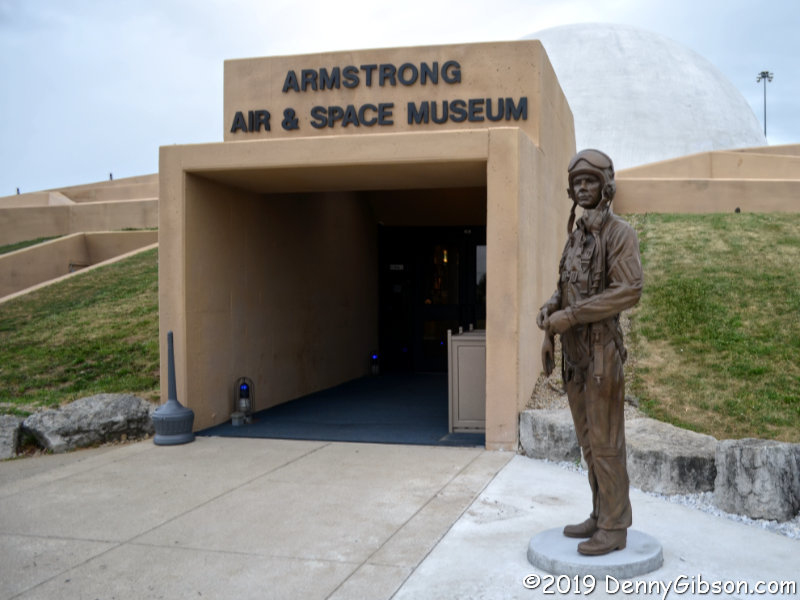
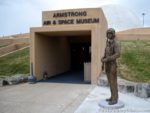 Two new statues of Armstrong had been unveiled at the museum on Sunday. It’s a bit disappointing that the white clouds and low light make the moon-like dome of the museum so hard to see. I photographed the statues before the crowd started to arrive but noted later that the statue of the young dreamer was — and I’m sure will be — a very popular place for families to pose their younger members for photos. A third statue, of Armstrong in his 1969 welcome home parade, was to be unveiled downtown on Thursday.
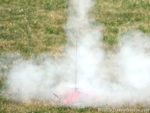
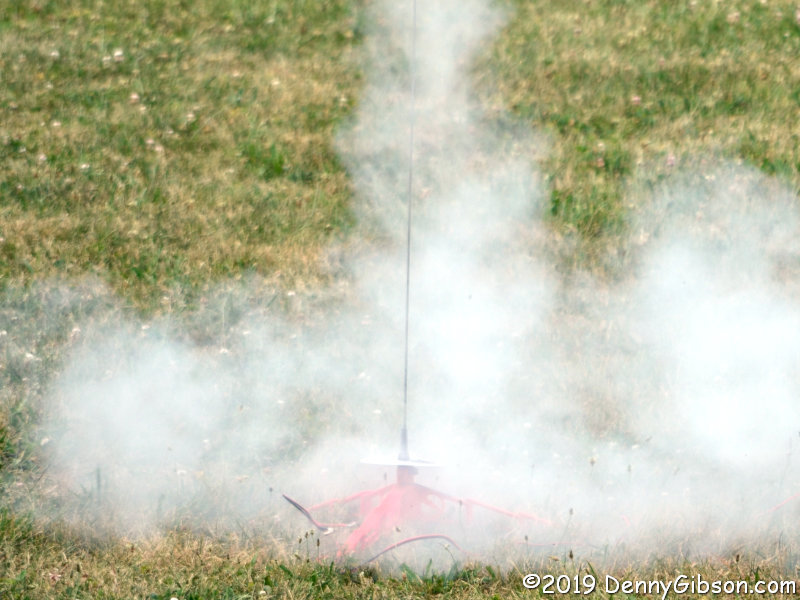
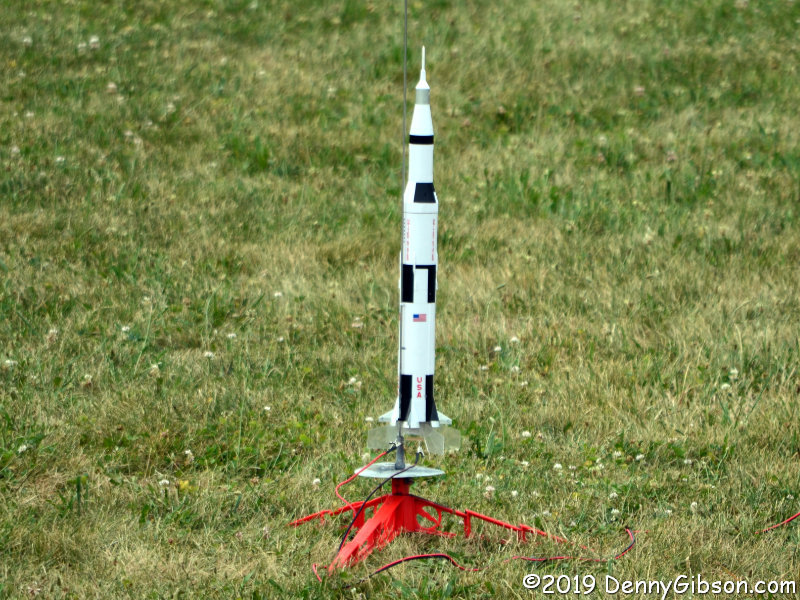
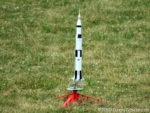 As 9:32 approached, attention was focused on a 22-inch replica of the Saturn 5 rocket that had lifted off in Florida at that time exactly fifty tears earlier. A recording of that half-century-old countdown was played to help coordinate the launch of the model. The model was a solid fuel-powered Estes much like the ones I helped build and launch even more than fifty years ago. When the count reached zero, I was quickly reminded that the acceleration characteristics of an Estes rocket are much closer to those of a bullet than to those of a 6.5 million pound 363 foot Saturn 5.
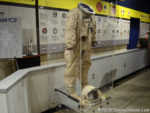
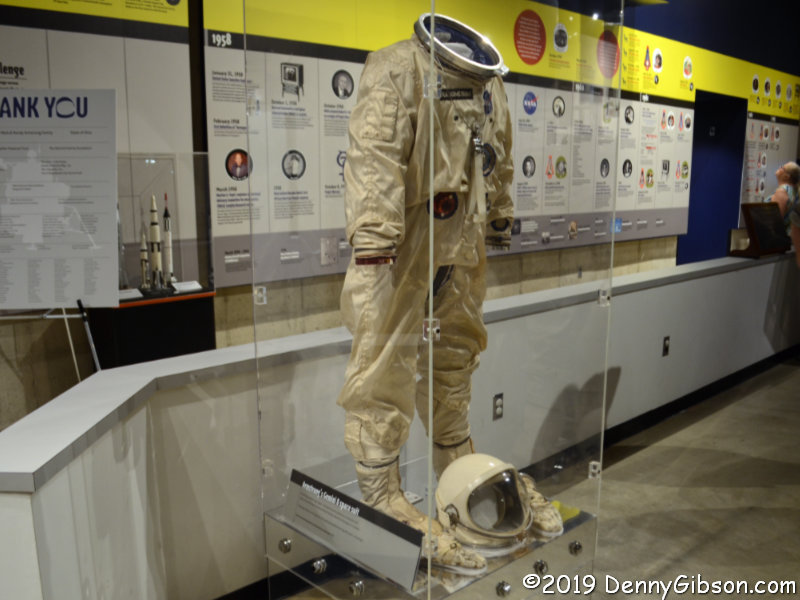
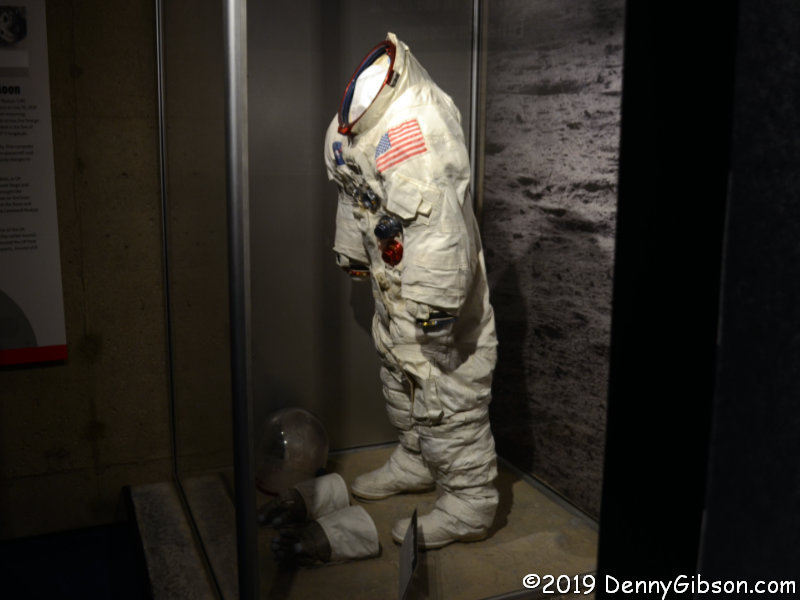
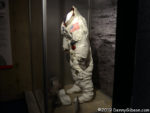 Following the countdown and launch, the museum was opened — and filled. I waited outside for the initial rush to pass although the place was still pretty busy when I did go in. The first picture is a reminder that Armstrong’s career did not begin with the moon landing. It’s the suit he wore on Gemini 8. His partner on that flight was David Scott who made it to the moon himself on Apollo 15. The second picture is of Armstrong’s backup suit for Apollo 11. On the day I took this photo, July 16, the Smithsonian returned the suit worn on Apollo 11 to display after being out of sight for some time being repaired.
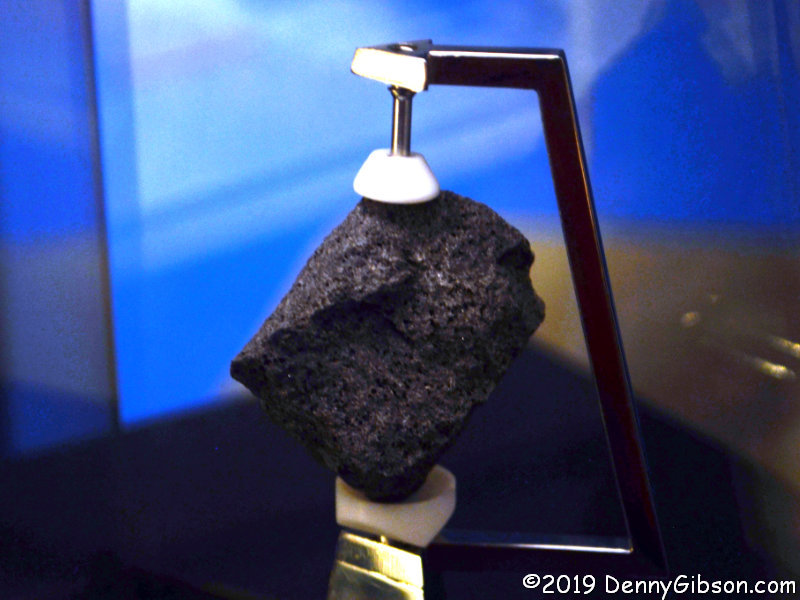
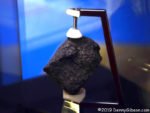 Just beyond where this piece of the moon is displayed, is a movie that runs every half hour. Many other artifacts and information panels are in that room where I spent fifteen minutes or so waiting for the next showing. It was there that I was struck by the fact that I was one of the few people in that museum who actually remembered the Apollo expeditions. Many were adolescents born decades after the moon landings, but it was clear from overheard comments and answers to youthful questions that most of the parents and even grandparents weren’t around in 1969 or were too young to have solid memories. I’ve since learned that only four of the twelve men who walked on the moon between 1969 and 1972 are currently living. Yeah, I guess that really was a ways back.
 On the anniversary of the actual landing, I watched a movie. Apollo 11: First Steps Edition is a version of Apollo 11 created for OMNIMAX style theaters. Yesterday’s showings are the only ones planned for the theater at the Cincinnati Museum Center but I believe this is the same movie being shown elsewhere including the Air Force Museum in Dayton. Made entirely of archival footage, it gave everyone in the sold-out theater a glimpse inside the historic mission and refreshed memories for a few of us. Sometimes the images are so big or there are so many of them that it’s hard to take it all in. It was that way the first time, too.
That concert that will be happening in Wapakoneta tonight gets its name from a statement that Neil Armstrong’s family issued at his death in 2012. “… the next time you walk outside on a clear night and see the moon smiling down at you, think of Neil Armstrong and give him a wink.” I did that last night shortly after the moon cleared the horizon. It was about the time when, fifty years earlier, Neil and Buzz’s time outside the capsule was a little more than half over. I thought of Neil and winked then winked two more times and thought of Buzz and Michael. Nicely done, fellows. Nicely done.

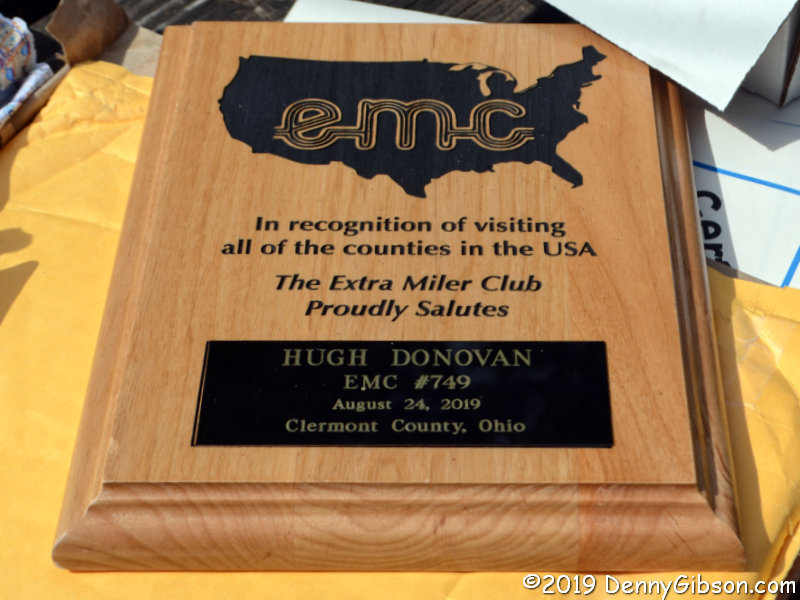
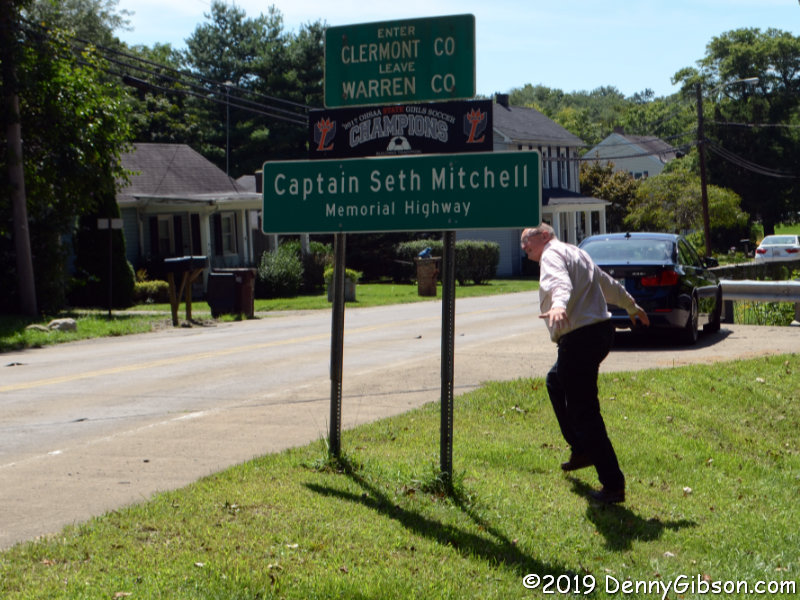 There are 3142 counties in the United States of America and a surprising number of people have visited all of them. The Extra Miler Club is an organization for folks who have that as a goal. Prior to yesterday, its 100% Club had 61 members. Member number 62 is Hugh Donovan who completed the task by entering Clermont County, Ohio, at 1:50 PM, August 24, 2019.
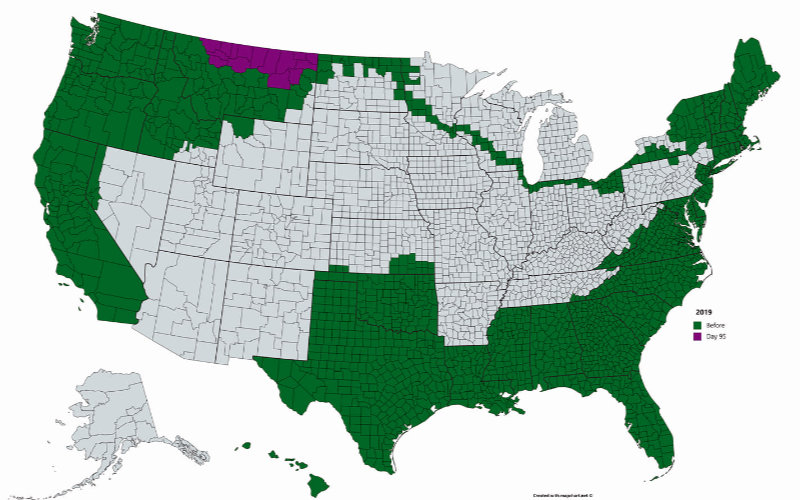 I first heard of Operation 3142 sometime in April, about the time that Hugh reached the halfway point of his quest. Even then it was hardly a given that he would succeed. Ripping through multiple counties per day was one thing on the eastern mainland but quite another in other areas. In his favor was the fact that one of the big challenges, Hawaii, was already tallied. On the other hand, another big challenge, Alaska, remained and would be even tougher.
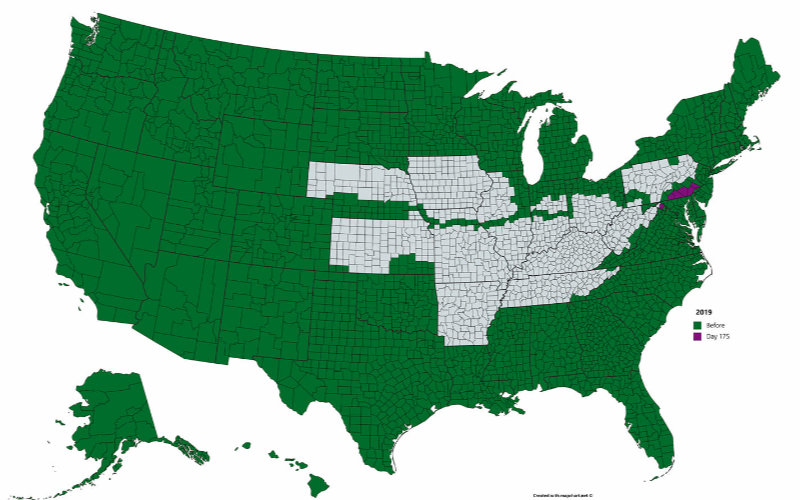 Even in summer, hitting all of Alaska had some hiccups and took more than two weeks but by mid-June it was done. Although the to-go count had been dropping rapidly, Hugh had resisted revising his target date. Things now seemed much more predictable and he announced that he now anticipated completion at the end of September. That would beat the original goal by three months and reality would be even better. There were still nearly 1000 counties to be reached but they were all grouped in the heart of the mainland, and for the first time I started thinking that the final county might be within some reasonable distance of my home.
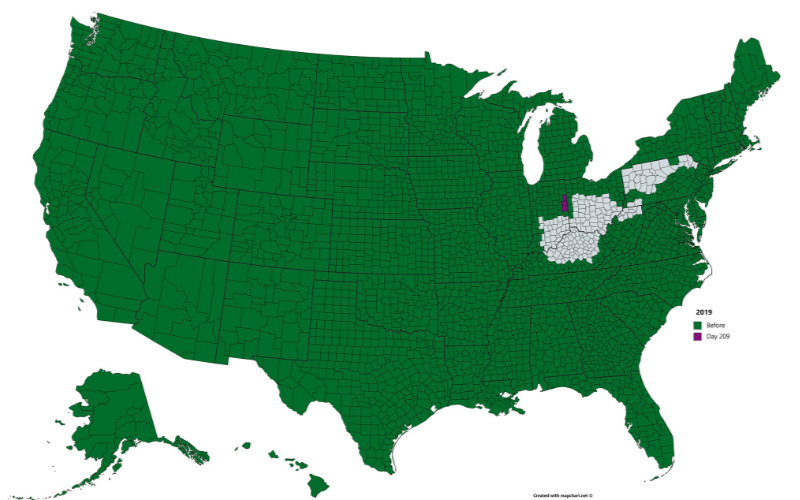 But not only would this revised completion date be soundly beaten, the final county would be within an unbelievably reasonable distance of my home. The white area on his scoring map was steadily shrinking with its center moving to the east. On August 1 a revised — and quite precise –completion date was announced that trimmed more than a month from the end of September target. Hugh planned to enter his 3142nd county on August 24. That was barely three weeks away from the announcement date but astonishing me even more was the news that the final county would be one barely three miles away from my door. In addition to the county itself being ridiculously close, a planned celebration would be taking place nearby at a familiar brewery. Attending was an instant no-brainer.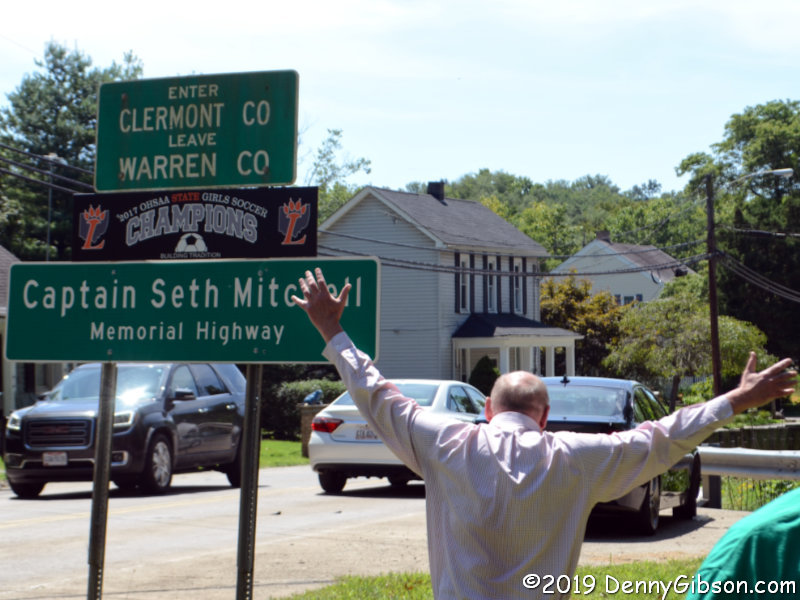
 There was a small group gathered at the county line a little ahead of when Hugh planned to cross it. Fortunately, some in the crowd were more attentive than I and knew what to look for. My first glimpse of Hugh was after he had exited the car driven by his son and was beginning to walk the last 50 or so yards to the sign marking the country boundary. He stepped across to cheers and applause.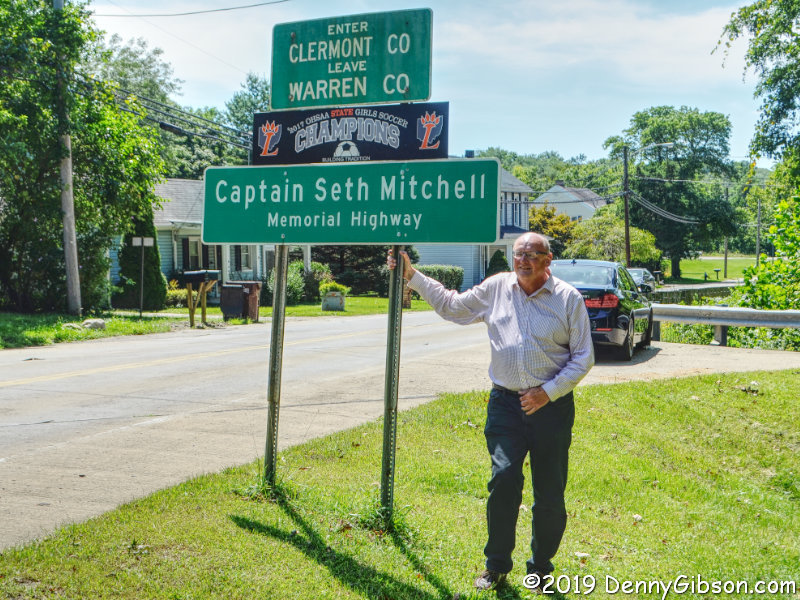
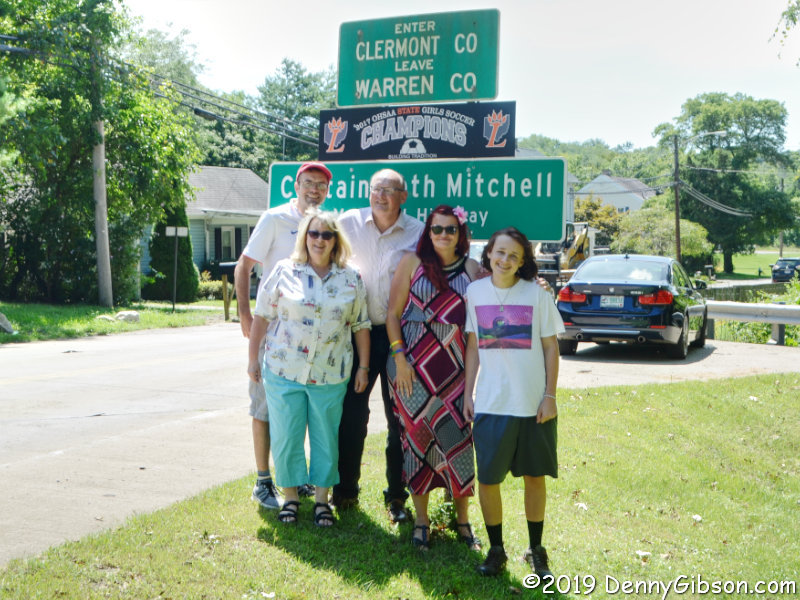
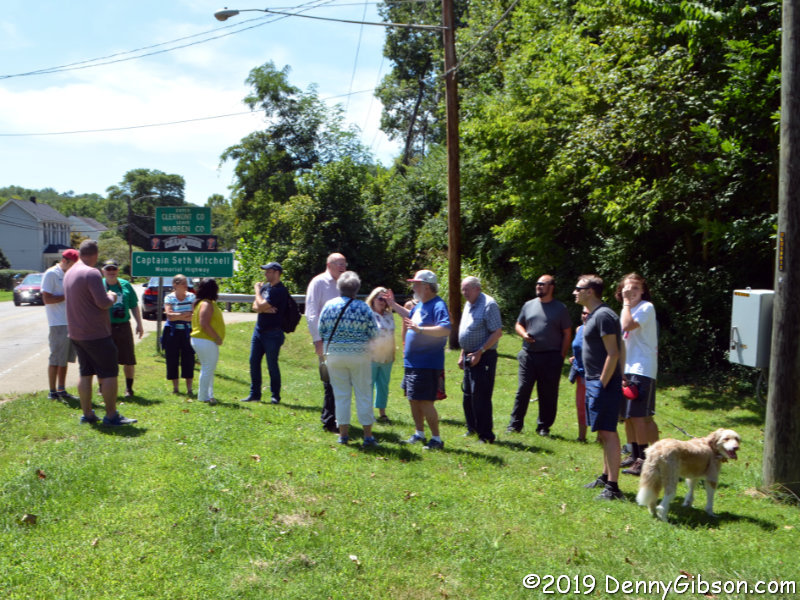 Several posed photos followed with many including family and friends who had assisted in planning and executing the numerous journeys. That’s the A team in the middle picture. Hugh is in the center with, left to right, his son, wife, daughter, and grandson. As you probably suspected, the third picture was not posed.
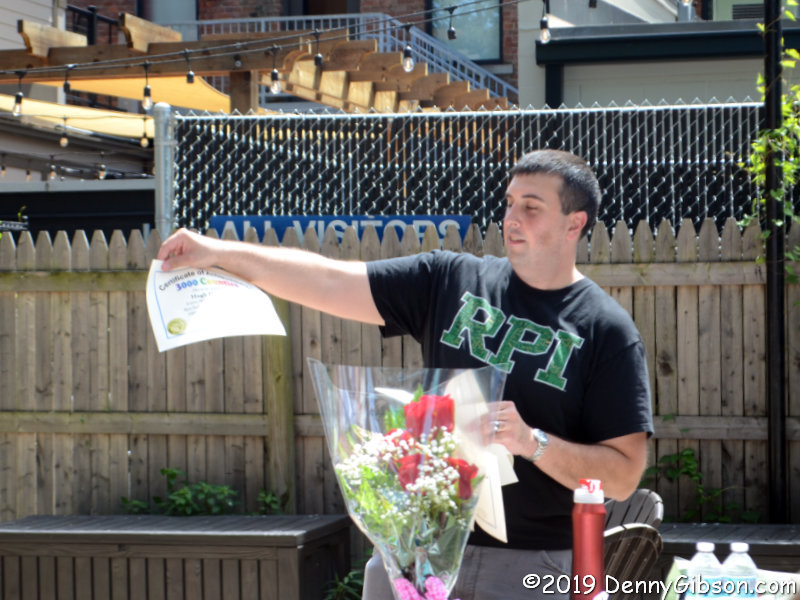
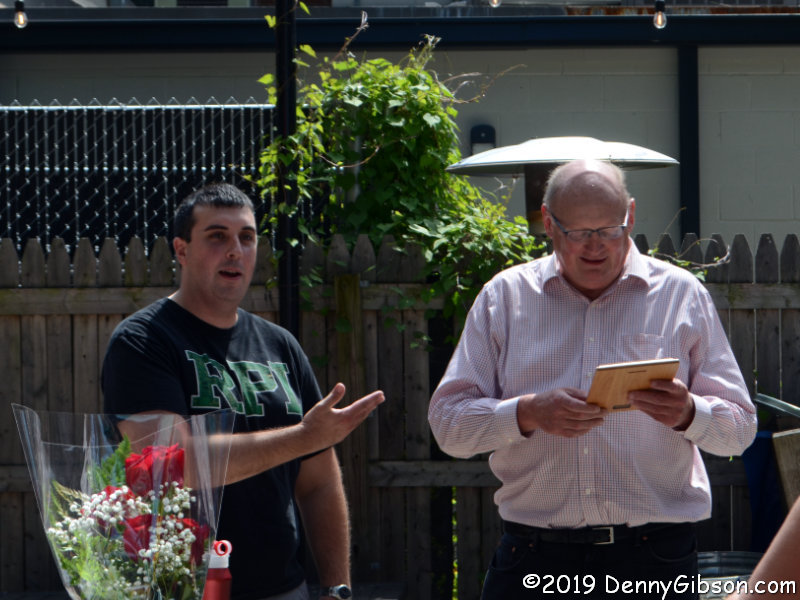 In time, things moved to the nearby Narrow Path Brewery where some fairly informal formalities took place. Extra Milers Club Vice President, Jonathan Riehl, was on hand to present Hugh with a plaque honoring his accomplishment. The club also awards certificates for hitting certain milestones like 500 or 1000 counties but Hugh blew through those so fast there was no time to mail them so Riehl just handed them over en masse. Then Hugh did a little talking but most of what he said was thanks. It was pretty clear that he considered the most impressive part of what he had accomplished to be the routing and other logistics management that others had contributed. He was proud of what he had done but seemed even more proud of what his son, daughter, wife, and grandson had done. Cool guy.