Cincy Got Rail

csclaunch01It has been said that Cincinnati is a place where big ideas come to die. That may not be entirely fair but neither is it unfounded. Especially when the big idea involves public transportation. The biggest of the deceased big ideas is the subway. Tunnels were dug in the 1920s but death came before any track was laid. The streetcar line that opened on Friday barely escaped a similar fate. On Friday morning Cincinnati photographer/writer Ronny Salerno’s blog post consisted of a brief personal recounting of the steps leading to today’s launch which in turn provides a pretty good overview of the history of the big idea itself. The original big idea, a multi-county and multi-state transit system, has been repeatedly beaten and bashed but a downtown streetcar was a small part of that big idea and it is now a reality.

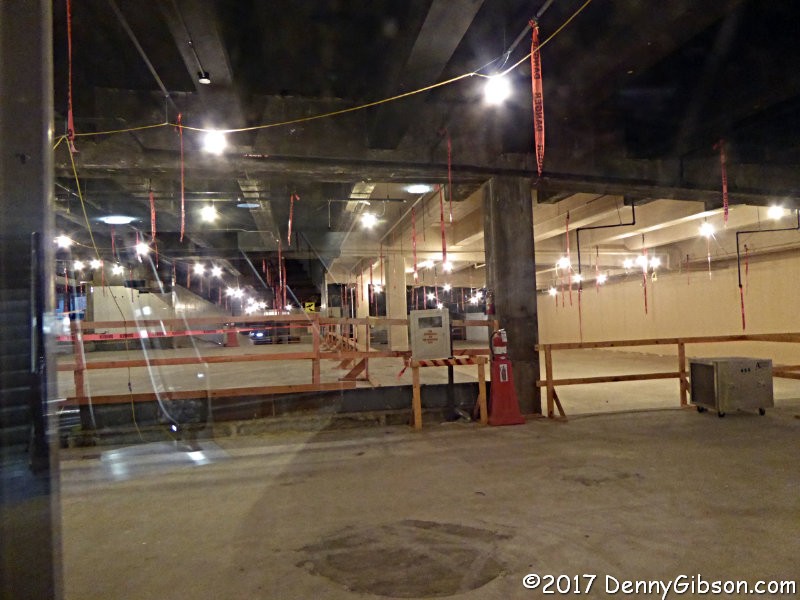
csclaunch02csclaunch03csclaunch04Another big idea that faced serious opposition before becoming reality was the revitalization of Washington Park. The new streetcar line passes on two sides of the park and that is where a little ceremony was planned. I guess it wasn’t too little because, when I arrived about an hour early, the 450 car garage beneath the park was already full. I parked several blocks away and took the picture at the top of this post as I walked back. The presence of every local media outlet was another indication of how big this event was to the city. After a stirring fanfare by trumpeters from the Cincinnati Symphony Orchestra, I moved around the crowd to watch the proceedings from the rear.

csclaunch05Of course the rear wasn’t the best spot for photos but I managed. One of the first to speak was John Schneider. Schneider is a developer and planner whose support of this project earned him the nickname “Mr. Streetcar”. Each speaker introduced the next and as Schneider finished up his remarks he noted that one of his few regrets was not getting autographs from all of the dignitaries present at the streetcar groundbreaking. He had the shovel he had used with him and he intended to correct his error beginning with the next speaker, Cincinnati Mayor John Cranley. That’s Schneider on the left and Cranley on the right. Cranley was  a very vocal opponent of the streetcar and campaigned on a promise to end its construction. Only the fact that it would cost more to abort than complete kept him from making good on that promise.

csclaunch06csclaunch07Past mayors Mark Mallory and Roxanne Qualls were next. Both are long time supporters of the streetcar and, not surprisingly, were roundly cheered by the crowd who had come to celebrate its opening.

csclaunch08Another nine speakers followed the current and former mayors but their remarks, which were largely thank-yous, were brief and the presentations wrapped up roughly an hour after they started. Several small balls were then tossed into the crown in preparation for a digital “ribbon cutting”. Anyone catching a ball earned a seat on one of the bicycles standing by the stage. The bicycles were provided by Red Bike, Cincinnati’s rental/sharing service, and each had an electric generator under its rear wheel. When sufficient power was generated, a large screen turned red and confetti shot from it. There were actually two such screens. I never did get a view of the cyclists and barely got my camera pointed toward the screen in front of them when the confetti erupted. When that happened, I heard a noise behind me and turned to find an identical screen flashing red and spewing confetti. That screen was free of the tight crowd near the bicycles and pretty much ignored. I was at the right place at the right time but I sure wasn’t facing the right direction.

csclaunch09csclaunch10csclaunch11With the screens red and the confetti fired, dignitaries began boarding the cars and I moved to the corner to watch the first filled streetcar depart. Officially this new mode of transportation is named the Cincinnati Bell Connector. Cincinnati Bell ended arguments over if and when the system would become self-sustaining by purchasing ten years of naming rights for $340,000 per year.

csclaunch13csclaunch12Once the several car loads of special guests completed their circuit of the 3.6 mile route, the Connector would begin carrying the general public and people started lining up almost as soon as the speeches were over. I spent a little over an hour in the park’s cool shade before getting in line and I should have waited even longer. Another half hour passed before I boarded a car and it wasn’t the one in the first picture. In order to pick up riders at other stops, cars left Washington Park about one third full. I reached the door just as the car reached its quota. Suddenly I was first in line.

csclaunch14The car I did board was completely filled by the time we reached the Banks which is where I got off. I snapped the picture at left then walked down to the Moerlein Lager House for a Connector beer and a commemorative glass. I then re-boarded at the same stop and completed the circuit (plus a little) to reach Rhinegeist Brewery for a Traction beer and another commemorative glass. As planned, I ended my initial streetcar experience here and headed to my car parked nearby.

The opening weekend when rides are free and various businesses have special offers and activities provides no real indication of how popular or successful the Cincinnati Bell Connector will be. My own impression was positive and I fully intend to make use of it in the future. I also overheard several others express similar feelings. It’s going to be a while before we know whether or not those impressions, intentions, and feelings will lead to success but at the moment it sure doesn’t look like an idea that came here to die.

ACDs Seen

acds01Three of America’s most revered marques of the early twentieth century were manufactured in Auburn, Indiana, and the town celebrates that fact every year. The 2016 Auburn Cord Duesenberg Festival is the sixtieth. It has been going on for over a week but is almost over with the wrap-up taking place today. I have thought of attending the festival for a long time but a recent Dennis Horvath blog post reminded me of just how big the event is and got me to seriously thinking about finally making it there this year. Tentative plans for other Labor Day Weekend activities kept attendance from being a certainty but both schedule and skies were clear when the weekend actually got here so Friday morning I headed toward northern Indiana.

acds02acds03acds04I reached Auburn during staging for the Factory Test Route Tour. The pair of Cords pictured at the top of this post formed the front row and another Cord sat in the rear. I walked to just beyond the police motorcycle escort then watched the group set off to follow the twenty-eight mile course that the Auburn Automobile Company once used to test new cars.

acds07acds06acds05Of course the tour’s start point was the company’s headquarters which is now the Auburn Cord Duesenberg Museum. Window shoppers can easily identify at least some of the cars.

acds08acds09This was my second visit to the museum where the building, the cars, and the presentation combine to make this one of the finest automobile museums I’ve ever seen. Over a hundred cars fill the museum and, while they are mostly Auburns, Cords, and Duesenbergs, other interesting and significant cars are also displayed. Office areas with various exhibits are also part of the museum.

acds12acds11acds10Being right next to a world class museum no doubt helps with traffic but it does expose you to some tough comparisons. My first impression of the National Automotive and Truck Museum was not helped by the fact that cars for the auctions that are an important aspect of the festival filled a significant portion of the museum. This meant that many museum vehicles were relocate and displays compressed. On the other hand, the museum’s truck collection does include some truly interesting vehicles.

acds13acds14A downtown Classic Car Cruise-In ended my first day ever at the ACD festival. There were plenty of beautiful and interesting classics parked along the streets but, after seeing all those pre-war ACDs, hot-rods, muscle cars, and ’50s & ’60s classics didn’t hold quite the attraction they might otherwise. The vehicle I found most interesting was a Corvair camper. It is not a converted van but a factory built shell mounted on a pick-up bed.

acds17acds16acds15Saturday started with a pancake breakfast at the National Military History Center. There are actually two museums here and today ten bucks got you breakfast plus admission to both.

acds18acds19acds20The day’s main attraction for me was the Parade of Classics. The 1912 Auburn Town car in the first picture was featured in this year’s festival poster. I had expected downtown to be jam packed for the parade but, except for the courthouse lawn, the area wasn’t crowded at all. There’s an awful lot going on in town this week and the parade isn’t the only place these cars can be seen but that still surprised me.

acds23acds22acds21One of the places to see the cars is around the courthouse square where they all park immediately following the parade. The cars are roped off but you can still get mighty close and all those shiny ACDs are mighty pretty.

It Was Fifty Years Ago Last Week

chartickAs threatened, I did go to last Sunday’s The Beatles At Crosley – 50 Years Later! I probably should have coughed up $1.29 for a Wild Thing MP3 but I didn’t so there was no point in cruising the Senior Center. I did, however, make the drive with the top down despite the fact that number of wheels and a collapsible top are about the only things my 2003 Miata has in common with my 1959 Impala. Other differences between 1966 and 2016 include the presence of a camera in my hands. I still had no souvenirs but I could photograph other people’s. The ticket stub pictured above (note the word “bleaches”) belongs to long time friend Charlotte Wiltberger. By long time I mean that, although I didn’t know her when she bought the ticket, we would meet in a matter of months.

bacf50_01bacf50_02A five foot blowup of one of Gordon Baer’s Cincinnati Post photographs was placed on the field to provide a nice spot for attendees to pose for their own photos. I walked to the first base side of the field to snap a shot that approximates my field of view at the concert.

bacf50_05bacf50_04bacf50_03The event was sponsored by radio station WVXU and the brainchild of John Kiesewetter. That’s John on the left of the first picture introducing Dusty Rhodes. Dusty is now Hamilton County Auditor but once upon a time was a radio discjockey and one of the men responsible for bringing the Beatles to Cincinnati in both 1964 and 1966. The middle picture is of The Beatles Invade Cincinnati author Scott Belmer. Discjockey Jim LaBarbara, in the third picture, didn’t move to Cincinnati until 1969 but “The Music Professor” had contact with the Beatles in other cities.

bacf50_06bacf50_07Other folks sharing memories included discjockey Tom Sandman and musician (Haymarket Riot) Steve Helwig. That’s Bev Olthaus and Charlotte, whose ticket appears at the top of this post, in the second picture. Bev attended both the 1964 and ’66 concerts and has both tickets and a scrapbook filled with memories. There’s a better look at what Charlotte has in that frame here.

bacf50_09bacf50_08Jeff and Misty of the Newbees wrapped things up by leading a sing-along of Beatles songs. No screaming. No crying or fainting. Just a bunch of people with fifty year old memories mouthing the words to songs that helped many of us through quite a few of those fifty years.

Let’s Race Some Cardboard

cbr24_00New Richmond’s 24th Annual Cardboard Board Regatta took place on Saturday. It would have made a great Sunday morning blog post but that slot was already taken by the Beatles concert anniversary (It Was Fifty Years Ago Today). I have done two posts on a single day before and it would have worked as a Sunday evening post but I just didn’t have the time to get it together. When I realized that wouldn’t be possible, I considered not doing any post at all but decided that photos of what the organizers describe as “corrugated chaos” deserve to be seen. With time available, a Monday evening post came together. I’ve posted previous regattas (tag = Cardboard Boat Regatta) so won’t say much about the event beyond reminding readers that all of these wonderful watercraft are made of nothing but cardboard, duct tape, paint, and creativity. More information can be found at the Cardboard Boat Museum website.

I won’t say much about the pictures, which I’m posting as a gallery, either. I will just draw attention to a couple of interest. Each year the pros at the museum build a boat that is raffled off as part of a turnkey race entry. Water Wars was this year’s raffle boat. The last photo shows the start of the race for the prestigious “Cardboard Cup”. Any boat that raced earlier and still survives may enter.

It Was Fifty Years Ago Today…

bcftic…that the Beatles finally got to play — at Crosley Field. I was there. I was also there the day before when they didn’t get to play. Thinking about that weekend still brings a smile despite details having seriously faded from many of my memories and others turning out to be dead wrong. I have no souvenirs or photos. The ticket in the image above isn’t mine (It’s from RareBeatles.) but I once had eighteen of them.

Tickets went on sale in April as my freshman year at the University of Cincinnati was winding down. Someone down the hall from my dorm room was a friend of Joe Santangelo, the younger brother of concert promoter Dino Santangelo. That was certainly lucky but was not nearly as miraculous as the fact that I had money at the end of the school year. Joe could provide third row tickets and I had a hundred dollars. I bought eighteen at $5.50 each. That was face value. No service charge. No handling fee. No Ticket Master. I’m not certain but I’m thinking that the money may have come from a few weeks of wearing a stinky T-shirt and letting people sniff my armpits. Proctor and Gamble often used students in product tests. I participated in a couple and their completions marked some of the few time I actually had cash in hand in those days.

I sold fifteen of those tickets for as much as ten dollars a piece. It was my only serious scalping venture and I remember minor feelings of guilt at selling something for nearly double what I’d paid. I also remember that I didn’t like being a salesman and it showed in my lack of total success. When August 20 arrived I still had three tickets in my possession. Two were for me and my date. The third was left over inventory.

Yes, I had a date but it hadn’t been easy. School was out and I was back in Darke County with the concert about a hundred miles away. None of the few girls I had any sort of contact with could or would go. As I recall, Micky was the friend of a co-worker. What I do recall vividly is picking her up. This was in the final days of my 1959 Chevy co-ownership. The sky was clear and the sun was shining as I pulled up to her house with the top down and those big white fins spread out behind me. The Troggs’ Wild Thing was playing on the AM radio as I turned off the car and headed to the door to meet a girl I’d only talked with on the phone. There is simply no denying that the Beatles and Troggs can make you feel cool even when you’re not.

I can’t remember when the top went up. Maybe we made the whole drive with the car open or maybe we closed it to help with conversation and to keep Micky’s hair in place. It’s really strange what details stick and which disappear. At the stadium it quickly became clear that I had little chance of selling my extra ticket. The concert had not sold out and the scalping scene that we know today did not yet exist in any case. I ended up giving it to the usher who showed us to our seats near first base. No one ever appeared for the seat so he may very well have the souvenir that I don’t.

When the rain hit, someone magically produced several big plastic sheets and everyone in our section tried to form some shelter. Attempts to dump pools that collected without drenching someone weren’t always successful and waterfalls could appear at any time where sheets came together. But I don’t remember anyone becoming the least bit angry. We were all wet and arms got tired as we struggled to hold that plastic above us while hoping against hope to hear the music we had all come for. The huddled masses under that plastic may have been soggy and disappointed but we were having fun and laughing. Maybe it was because we were all younger. Maybe it’s because the world was.

I recall Micky having a good time and laughing along with everyone else and there was a solid reason that she couldn’t return the next day. Even so, we never saw each other again. I suppose that a pair of two hour rides separated only by sitting in the rain for two hours might not be the ideal first date.

Fortunately my buddy Dale was able to make it and the two of us headed to Cincinnati for the rescheduled concert. We didn’t quite make it in time although I’m not 100% sure when we did make it. Combining our sketchy memories with author Scott Belmer’s “the best we can figure” sequence of opening acts and songs from The Beatles Invade Cincinnati, I think we must have reached the ballpark about the time the Cyrkle took the stage. Belmer lists the sequence of acts as the Remains, the Ronettes, the Cyrkle, and Bobby Hebb and he thinks the Cyrkle opened their set with Red Rubber Ball. I recall hearing that song before we reached our seats; Maybe even before we entered the park. So we probably caught part of the Cyrkle’s set, all of Hebb’s, and missed the Remains and Ronettes completely. Besides doing their own short set, the Remains were the backing band for both the Ronettes and Hebb so we would have at least seen them perform. Had we seen them open we would probably remember them much better. Something that I only learned in putting this post together is that they began the show with Hang On Sloopy. It wasn’t the Remains that had put the song on the charts the preceding fall. That was the local band the McCoys who Dale and I both knew rather well. We might have actually remembered that if we’d heard it.

I have learned that at least one of my memories was absolutely wrong. For many years I told people that the Beatles had opened with Paperback Writer and that the opening harmonies sounded very non-harmonic. Every account I’ve seen says they opened with Rock and Roll Music and Paperback Writer was their tenth and next to last song. I obviously misremembered the sequence but I’m sticking by the non-harmonic part. I think there may have been some speakers along the base lines and we could hear the music to some degree. There was stiff competition, however, and I think I watched the screaming and crying girls in the stands nearly as much as I watched the show on the fairly distant stage. Neither Dale nor I screamed or cried and I don’t think Micky would have either. Of course, we’ll never know for sure.

The Beatles flew directly to Saint Louis to perform that evening. Four more shows (New York City, Seattle, Los Angeles, San Francisco) completed the tour. They never toured again. Crosley Field served as the Reds home for three and a half more seasons before being replaced and demolished. In 1988 a replica of the field was constructed in the Cincinnati suburb of Blue Ash. Later today, the fiftieth anniversary of the concert will be celebrated there. (The Beatles At Crosley – 50 Years Later!} The weather looks promising so maybe I’ll put the top down on the Miata, crank up Wild Thing on the iPod, and see if any of the chicks at the Senior Center want to go.

ADDENDUM 28-Aug-2016: There’s a post on the anniversary celebration here.

Advice: Take It and Leave It

tass1I’m talking about travel advice and I’m really talking about one particular website. It’s a site, TripAdvisor, that I’ve used and fed for many years. We are, in a sense, nearly the same age. The first trip I documented on the web began in August, 1999. TripAdvisor was founded in February, 2000 and has become one of the best examples of crowdsourcing on the internet. An even better example, Wikipedia, defines crowdsourcing as the “process of obtaining needed services, ideas, or content by soliciting contributions from a large group of people”. TripAdvisor collects, vets, and organizes millions of reviews on motels, restaurants, and attractions. There are, of course, other crowdsourced collections of reviews. Yelp and Google are two that I use now and then. Google’s reviews are entwined in their maps feature which makes them unavoidable/convenient. I have nothing negative to say about Yelp or Google or any other rating service but TripAdvisor is the one I’ve come to depend on.

In the old days (i.e., five years ago), while it wasn’t unheard of for me to use TripAdvisor to help select motels en route, that selection was much more likely to happen before a trip started. My most common use of the site once I’d left home was to pick a dinner spot after checking into a motel. On that latest trip, selecting and booking motels one or two nights ahead became standard procedure. This was usually done from from another motel but I accomplished it from a roadside turnout using my phone on a couple of occasions. The phone actually became the default device  for selecting a dinner spot while the laptop booted up. That’s a screen shot from the mobile app at the top of this article.

The target of that latest trip was Alaska by way of Canada. Territory that was, once Cincinnati was a few hundred miles behind me, totally unfamiliar. Shortly before setting out, I’d told a friend that one of the things I was looking forward to was spontaneously picking each night’s lodging as was common on my earliest trips. In those days, I would start looking for a place to stay in the late afternoon and, if an appropriate independent failed to appear on the two-lane I was driving before I was really done for the day, I could usually find an acceptable Super 8 or some such in the cluster at a nearby interstate exit. Had I really thought this through before departing I’d have realized what became quite apparent within a few days on the road. Traveling in western Canada and Alaska is not at all like traveling virtually anywhere in the USA. For one thing, no matter how many lanes make up the road you are on, it is probably the only one available. There is no interstate with all sorts of services paralleling older and less popular roads. Not only is there essentially just one path, as it moves to the north towns become fewer and each night’s stop more predicable. Of course, that’s true for everybody which means those towns can fill up. Almost without realizing it I fell into a pattern of selecting each night’s motel from the one previous. TripAdvisor was always involved in the selection and sometimes in the booking, too.

The lists that TripAdvisor produces can be sequenced by things like composite user ratings or price. List position is important but not nearly as important as reading at least a few reviews. I’m always a little leery of reviews that stray wide of the pack regardless of the direction of the straying. I also discount reviews where it seems that the writer may have had a problem with a third party booking agency or a single employee that tainted their opinion of the actual motel. As someone who favors independent mom & pops, learning something about the owners can be a help. On the other hand, while knowing whether a motel allows both dogs and cats or just one or the other is crucial to many travelers, I have neither and couldn’t care less.

I mentioned booking through TripAdvisor which was a new thing for me. A third party actually does the booking. For all but one of my bookings this was Booking.com. The exception used GetARoom.com. The only hiccup was one of the Booking.com reservations went missing but the motel wasn’t full and I was able to book on arrival. I think I’ll still book directly more often than not but being able to book a room immediately after making a pick can definitely be convenient.

tass2It really was the realization that I had used TripAdvisor so regularly on the Alaska trip that made me think of doing a post to thank and praise them but it is also a chance to talk about my part in the crowd that’s doing the sourcing. I don’t know when I first used TripAdvisor but I know it was well before I submitted my first review in August, 2008. I obviously warmed to it slowly and submitted just one review per year in 2008, 2009, and 2010. The gates finally opened with a western Lincoln Highway trip but I think it was a couple of trips later and a desire to boost a mom & pop motel in Michigan that got me to thinking differently and belatedly post several reviews from the Lincoln Highway outing.

So now I’m a regular contributor. It’s how I pay for the advice I take. But even now I do not review every place I visit. I only review chains if there is something that makes a particular motel or restaurant different from others in the chain. I do not post negative reviews. That doesn’t mean I’ve never met a meal, museum, or motel room I didn’t like. It’s simply that I see no reason to spend time and energy writing a review for them. That’s the same reason I don’t post negative reviews on this blog. I submitted photos with some of my early reviews but I soon quit. TripAdvisor has the right to use uploaded photos however it sees fit without crediting the source in any way. Sorry but that’s not for me. My member page at TripAdvisor is here.

A Tenderloin Tasting

edi01I was invited to join a few road fans at a new-to-me drive-in on Wednesday and that’s just what I did. Although I was not even aware that Edward’s Drive-In existed it has long been an Indianapolis, Indiana, fixture. It opened in 1957 as a Dog ‘n’ Suds. When owner Herb Edwards later went independent he gave the restaurant his own name. A 1978 tornado and a 2006 fire led to significant changes and additions so that the place looks quite a bit different and is a whole lot bigger that the original root beer stand. However, the curb service that was available in 1957 is still offered today.

edi02Indiana is known for big pork tenderloin sandwiches and Edward’s was among the first to serve the popular bun busters. From the beginning the meat was pounded into shape and breaded on site and that’s still the case today. The current menu is fairly large but the three things in the picture are what people are most likely to associate with Edward’s Drive-In. The tenderloin is good and certainly holds a place in Indiana tenderloin history but it’s not the best I’ve ever had. The hand-dipped onion rings just might be. The tasty house made root beer is perfect for washing it all down.

edi03The neon trimmed entrance makes a nice spot to photograph dinner companions Dean Kennedy, Jenny McGinnis, and Jennifer & Pat Bremer. Good food tastes even better when seasoned with good conversation.

Annie’s (Parade is) Back

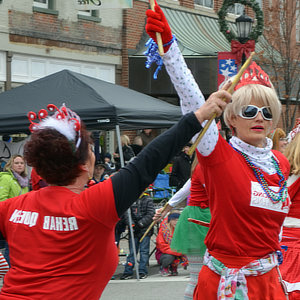
aop16aLast year what was said to be lack of interest but which can probably better be described as lack of agreement sidelined the Annie Oakley Days Parade in Greenville, Ohio. This year it was back and seemed to be just as popular and nearly as big as it ever was. The return of the parade was announced quite some time ago and right before my last visit to Greenville, some six weeks ago, it was announced that the Grand Marshalls would once again be relatives of mine. Several years ago a cousin and her husband had filled the roles. This year it would be an aunt and uncle.

aop16baop16cShortly after the color guard swung around the corner and the parade started down Broadway, the Grand Marshalls rolled by in a white carriage. Uncle Dean and Aunt Arlene had their youngest grandsons with them but Sam and Charlie weren’t really into that smiling and waving thing. They did, however, keep a sharp lookout on both sides of the carriage to prevent any and all surprise attacks.

aop16dKatie Hurd, Miss Annie Oakley for 2016, won her title the old fashioned way — with a gun. Contestants didn’t attempt to gun each other down but, like the real Annie Oakley, demonstrated their shooting skill by firing at a target. The shooting starts at 25 feet and the distance is increased until only one shooter hits the baloon target baloon. That happened at 100 feet. Hurd wears two sashes because she also won this year’s Best Costume competition.

aop16eaop16faop16gMany local businesses supported and participated in Saturday’s parade. There were also plenty of cars. The Darke County Jeepsters are personal favorites. Their matching red vehicles appear in many parades. The parade also contained quite a few Shriner units.

aop16hIt’s certainly fitting that Buffalo Bill Cody rides in Annie’s parade. The long association that the two had benefited them both greatly.

My Wheels — Chapter 21
1979 Chevrolet G10

chevvanThere are surely better pictures of this van around but this was all I could find as I wrote this post. It was my first new vehicle and one of only two that were custom ordered. A friend who worked at a dealer in Cincinnati handled the order. It had a 305 CI V8, 3-speed automatic, air-conditioning, cruise control, and no interior. By no interior I mean it had a basic driver’s seat and nothing else. I stopped on the way home from picking up the van and bought a pair of “captain’s chairs”. I sold the single stock seat back to the dealer for a few dollars.

chevvan1I clipped that opening shot from the photo at left. I’m helping my sons with a Christmas present so it must be late December which makes the van, delivered in September, just a few months old. The “conversion” may have started but I’m sure it had not progressed very far. Fletcher did eventually solo and so did Cris.

Calling what I did to the van a conversion stretches the definition of the word a bit. I covered the floor with plywood and the walls and ceiling with cheap paneling. That paneling went over scraps of insulation retrieved from a furnace manufacturer’s dumpster. Four inches of foam on a raised platform in the back served as a bed. I never did get around to carpeting the interior but that was probably for the best. Another thing I never got around to was seat-belts. The factory seat had a belt attached that went away with the seat. Mounting belts to the replacements was not recommended. What was supposed to be used were extra long belts bolted to the floor. That never happened.

This was a recreational vehicle. It made several camping trips to the Smokies and other nearby spots. It made one trip to Missouri and another to San Diego. In 1982 it attended the Knoxville World’s Fair.

At the time of the World’s Fair trip, all three kids were living with me full time. We were going on to visit friends in Alabama after our one day at the fair so the boys’ bicycles were hung on a rack on the front and the girl’s tricycle was stowed inside. The daughter and youngest son spent the night before in the van to avoid the need to wake up for the early morning departure. We had a great time at the fair although some of us got exhausted quicker than the others. Megan and I spent the last part of the day on a bench while the brothers ran around getting stamps on their fair passports. We were all exhausted by the time we reached a campground south of Knoxville. We were also pretty dirty from the hot day and looking forward to showers. That’s when we discovered we had no towels. Well, most of us had no towels. Only Fletcher had remembered this most important item (Douglas Adams would have been proud of him.) and after he had showered and dried the rest of us did the best we could with the no longer dry Star Trek beach towel.

In 1983 or ‘4 the van entered a new phase in its life. I attended my first of thirteen consecutive Indianapolis 500s in 1981. It was with a group who had several years experience camping at the track and charging into the infield on race morning. Parts of that charge resembled a demolition derby so most of the vehicles used were confirmed beaters. From its time as camper and all purpose transporter, the Chevy van had more than its ahare of dings and scratches but was not yet a beater when it was pressed into service as an Indy car. After a few years, I fully embraced the van’s participation in the annual event and built a deck on its top. Standing atop vehicles to watch the race was standard procedure and the deck made that easier and safer. The deck was made of something like 2x8s on edge and screwed to the gutters with plywood across the top.

I think it might have been the same year that the deck went on that the ignition went sour. A friend removed the ignition switch from the dash and ran new wire to it. It dangled from the dash and worked just fine. Track officials seemed to come up with a new rule or two every year and after several years with the sturdy deck in place, they decided it had to be removed. At that point there was only one person riding with me and, with screwdrivers and a hammer, the two of us ripped the deck off as quickly as we could.

The dangling ignition switch eventually gave out and I replaced it with two wall switches. One turned on the ignition and the other operated the starter. It was a pretty good anti-theft device although the possibility of any one stealing the van at this point was awfully slim. A blown freeze plug interrupted our last drive together. I nursed it home where it sat until a trade opportunity came along.

My Previous Wheels: Chapter 20 — 1972 Audi 100 LS
My Next Wheels: Chapter 22 — 1970 Chevelle

Trip Peek #42
Trip #27
High Speed Privies

pvd12This picture is from my 2004 High Speed Privies day trip. This wasn’t the most spontaneous trip I’ve ever taken but it’s close. The destination was Penn’s Store which, despite it being the oldest continuously operated family store in the country, I first heard of just three days before heading there. The occasion was the commemoration of the store getting its first outhouse. That was in 1992. The store is known to have existed at least as early as 1845. The annual celebration is called the Great Outhouse Blowout and includes. along with plenty of music, outhouse races. Racing, unlike other outhouse activities, involves teams and lots of cheering.


Trip Peeks are short articles published when my world is too busy or too boring for a current events piece to be completed in time for the Sunday posting. In addition to a photo thumbnail from a completed road trip, each Peek includes a brief description of that photo plus links to the full sized photo and the associated trip journal.