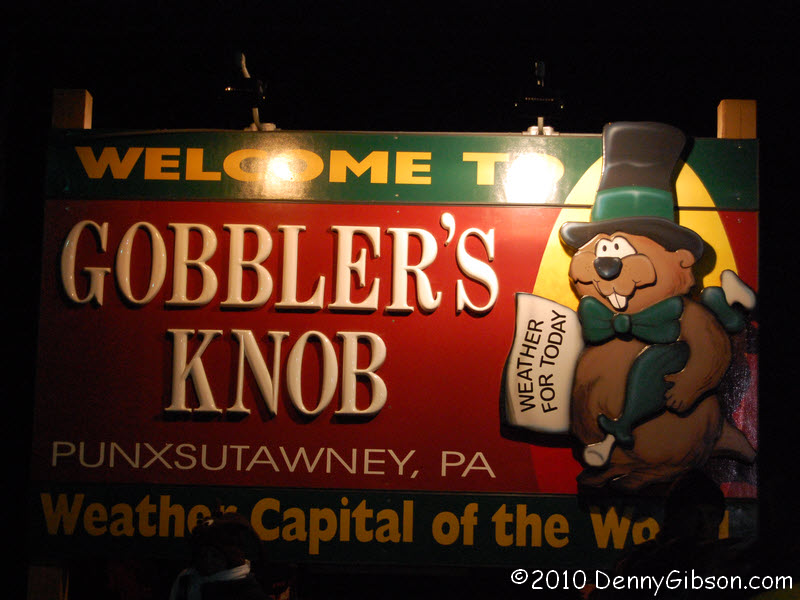
 Groundhog Day has long been one of my favorite holidays. In fact, attending America’s biggest Groundhog Day event in Punxsutawney, PA, was among the first things I did with the newly available time that retirement brought. The photo at right was taken at 4:58 AM, February 2, 2010. Sunrise was more than two hours away and the temperature was four degrees Fahrenheit. I had a good time and I’m glad I went but the experience did not lead to plans for an annual return. Standing outside in pre-dawn single-digit temperatures is something I prefer to discuss in past tense only.
I credited my original fondness for Groundhog Day to a belief that it had no religious connections and was basically folklore that had been adopted by some Pennsylvanians largely to promote silliness. While both of those claims are sort of true, there is more to it. I started to doubt the “no religious connections” when I discovered that America’s Groundhog Day shares its February 2 date with Christianity’s Candlemas. But sharing a date does not a connection make and there are no direct ties apparent between Groundhog Day and any of the three events (presentation of the child Jesus, Jesus’ entry into the temple, and Mary’s purification) Christians attribute to the day.
February 1 is also a day recognized by Christians. It is the day that Saint Brigid of Ireland is reported to have died and is celebrated as her feast day. Before Saint Brigid was born (in 451 they say) a Gaelic festival was celebrated about this time to honor a goddess also named, perhaps by coincidence though probably not, Brigid. I have to say “about this time” because man-made calendars had not yet taken over and feast days were not yet tied to specific numbers on pages. Brigid’s was associated with a point halfway between Winter Solstice and Vernal Equinox called Imbolc which happens near the beginning of what we call February. In 2016 it occurs at 4:30 EST February 4.
Without donut shops and corner diners, it isn’t clear where ancient Irish farmers gathered to talk about the weather but it’s a safe bet that they did. Around Imbolc, the coming spring would have been a big topic. Farmers without donut shops and cable television are quite observant of their environment and they no doubt noticed that bright clear days in the middle of winter were usually a little colder than cloudy ones. With Imbolc being the most “middle of winter” you can get, giving some special significance to the weather on that day was likely fairly natural. That’s about as close to science that the groundhog and shadow story gets.
I’m guessing that making a determination at sunrise was also fairly natural. Even if those early farmers were capable of determining Imbolc’s exact moment — and I’m not saying they weren’t — in those years when it did not occur during the daytime they weren’t about to get up in the middle of the night to see if the sun was shining. The crack of dawn probably seemed about right.
So there really are no direct connections between Groundhog Day and religion and there is plenty of silliness in its fairly recent (1887) use to bring fame to a small Pennsylvania town but its timing is firmly linked to the workings of the solar system and there is a tiny bit of logic in it being a day to make weather predictions. If nothing else, the days around Imbolc are most likely the coldest of the year meaning there’s a good chance that it’s all up-thermometer from here.
My 2010 Punxsutawney visit is here. I will, as usual, celebrate Groundhog Day on Tuesday by consuming pork sausage at some point. I have no plans to be awake at 4:30 Thursday to observe Imbolc.
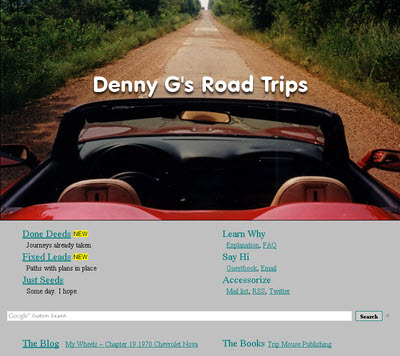 For something that did not even register on my radar a month ago, the concept of mobile-friendly websites has grabbed a lot of space on this blog in the young 2016. The first post of the new year led to me realizing that mobile devices should not simply be ignored. The second post discussed a little of what I had learned and described the first steps taken to be mobile-friendly. And this, the fourth post of the new year, is a report on reaching a milestone on the road to mobile friendliness.
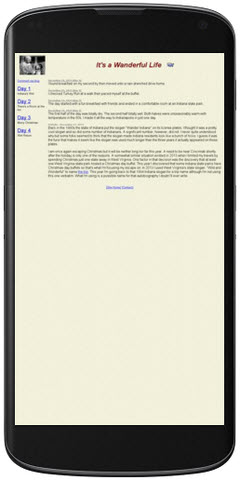
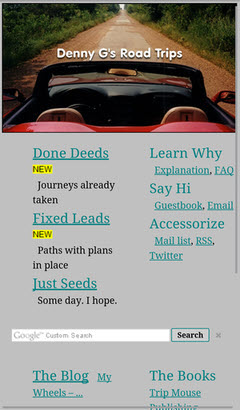 The milestone I speak of is having a home page that passes both Google and Bing mobile friendliness tests. That’s it at the top of the article in desktop (actually laptop) view and at the left in smartphone view. It is the biggest change to the website’s front door in at least fifteen years. It retains most of the flavor and function of the previous version but is simpler and scales down a lot better. About the only things missing are the RSS feeds from Route 66 News, Roadside America, and American Road Magazine and the randomly selected road trip photo and link at the page’s upper right. Both came with a lot of overhead and I don’t recall anyone ever complimenting me on either. I personally really liked the random picture thing, however, and have kept it alive with a “Done Deeds”-“All Trips”-“Random” menu item. The Google ads also seem to be fairly high in overhead and, although I’m hanging on to them for the present, I will be keeping an eye on them and they could go missing.
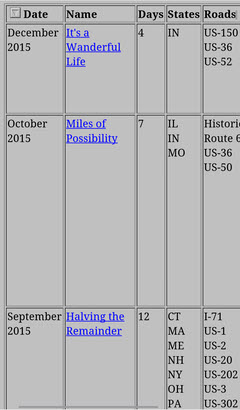 There are a few pages that may never be truly mobile-friendly as Google and Bing see things. Among these are both Oddment and Road Trip index pages. While changes have been made to make text on the pages readable on mobile devices, the table displays overflow smartphone screens in all directions and require zooming and/or panning to view. There are schemes, using pop-ups and such, to make tables slimmer and more mobile-friendly. I don’t really like any I’ve seen and am firmly of the belief that the conversion effort would not be justified for either of these tables. While they might not be officially mobile-friendly, and I have no quibbles with either Google’s or Bing’s criteria, they seem quite usable on my smartphone and I don’t consider them overly unfriendly.
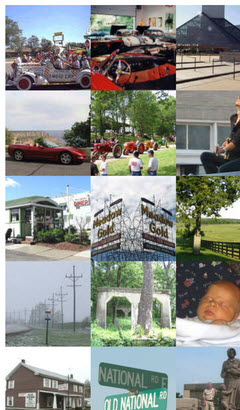 The Clickable Collage is another page which is not officially mobile-friendly. Containing a single photo from every completed road trip, it allows the individual photos to be clicked to access the journal for the associated trip. It was formerly available through a link below the randomly selected photo at the home page’s upper right. It is now reached through the “Done Deeds”-“All Trips”-“Collage” menu item. Although I don’t expect everyone to experience the same memory stimulation I do when viewing the collage, I have to believe that it is most impactful when seen in its entirety. Of course this is best done on a full size (whatever that is) screen where the total view is also actually usable. Making this collage fit a small screen by forcing it into one or two very tall columns just seems wrong and more irritating than impressive. It is clearly not a natural fit for smartphone screens but it can, like those index pages, be viewed and used by panning. It can also be zoomed to fit but, while this view of
  Puckett’s Grocery & Restaurant is the target of this trip but there will be some stops along the way. Puckett’s is in Leiper’s Fork, Tennessee, which, for me, is a little beyond Nashville. I have Music City evenings planned for the Bluebird Cafe and the Grand Ol’ Opry at Ryman Theater before my evening with “America’s Route 66 Band”, The Road Crew, at Puckett’s. You know the saying, “When you come to a Road Crew in the Fork, take it.”
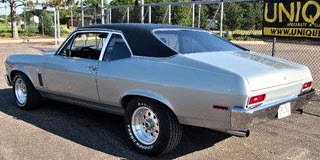 Again I must confess to a purloined photo gracing yet another My Wheels post. My car did not have the highly visible dual exhausts or fancy wheels of the pictured vehicle nor did it have the unseen 350 V8 and 4-speed floor shift. Mine was a 307 V8 with a 3-speed automatic. However, my car was, just like the one at right, a Cortez Silver 2-door with — and this is important — black vinyl top. It is the only vinyl topped car I’ve ever owned and one of very few I can even imagine owning without some level of embarrassment. While I doubt everyone agrees that the vinyl covering looks pretty good on this car it’s apparent that I’m not alone in thinking so. There are many full restorations of third generation Nova coupes that include a restored vinyl top. And that includes some high-end 396 Super Sports.
 I didn’t do it on purpose, Jim. Honest I didn’t. But, as has happened a time or two in the past, mentioning a problem in a blog post was enough to get some insight from blogger
 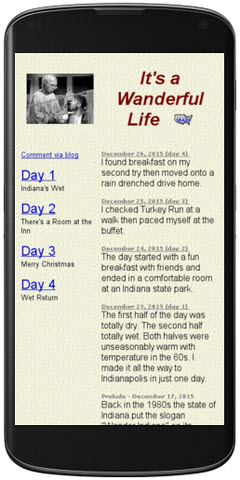 I revisited the Google testing tools and paid a lot more attention to the suggestions. There was some good news. The vast majority of my website is very simple so that adding just one line (to set a mobile viewport) to a page allows it to pass Google’s mobile-friendly test and makes it look better. The page shown at the top of the article reappears at the left with that one line added.
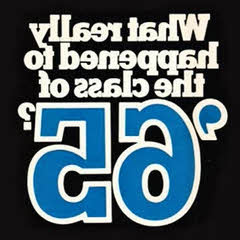 I made a couple more trips this year than last but they were shorter and resulted in less total days on the road. That naturally caused a slight drop in pictures posted to the journal but pictures in the blog increased so that there was not a significant change in the total number of new pictures. In addition to the 52 regular weekly blog posts, there were 14 reviews, 9 road trip links, and 2 miscellaneous asynchronous posts which adds up to just three less blog posts than last year. Three of the new blog posts generated enough traffic to make the top five. The most popular new blog post concerned a little ol’ high school reunion. Once again there were no new posts in the non-blog top five.
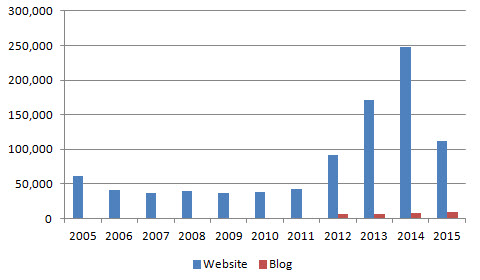 So what’s that mean? One possibility is that a change in the way statistics are compiled or visits detected resulted in an artificial drop in the numbers and I can produce some arguments both for and against that theory. The “for” ones are the weakest. What seems more likely and less palatable is that the numbers don’t lie and readership has truly plummeted. Jim Grey, a friend and popular blogger, recently posted an article he called
 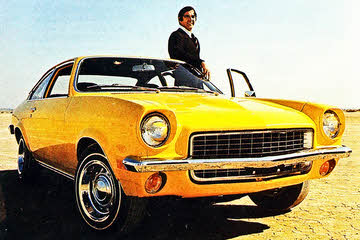 No. That’s not my Vega and that’s not me. It’s John DeLorean in the August 1970 issue of Motor Trend where he was singing the praises of Chevrolet’s new small car. The editors were singing right along with him and even adding some verses of their own. A month later, Car and Driver and Road & Track joined the choir. In February, Motor Trend named the Vega 2300 their 1971 “Car of the Year”. All this for a car that today has a reputation just slightly better than Yugo.
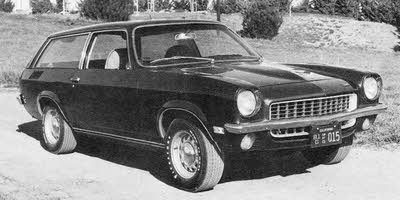 I could’t find any pictures of the dark green 1971 Kammback that I bought in the summer of 1974 so I took to the internet. I didn’t have much better luck there. This black & white photo of what is identified as a 1972 model is the best I could do. The shortage of photos surprised me but so too did the abundance of early praise. I can’t explain the absence of decent Kammback photos so maybe my surprise at that is justified. My surprise at the praise isn’t. In fact, what those magazines said about the car — great handling, sporty looks, comfortable ride — is exactly what I thought of it forty years ago. I was surprised only because I had forgotten.
 It has been three decades since the slogan “Wander Indiana” came and went but I’m going to do just a tiny bit of that over Christmas. The first day, with plenty of that Indiana rain, has been posted.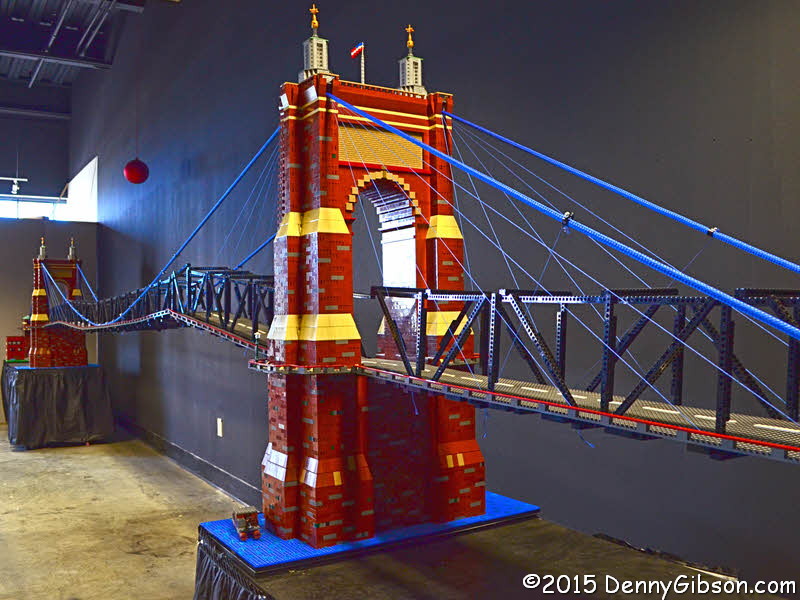

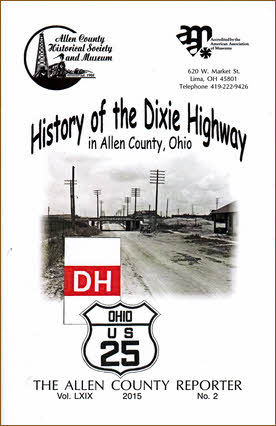 I could have called this a pamphlet review. That’s technically what it is. Or, since one definition of pamphlet is “a small book”, I could have called this a small book review. I decided to leave the title be but, in line with the publication’s size, I’ll try to be brief and do a small small book review.