Vintage Bikes and More

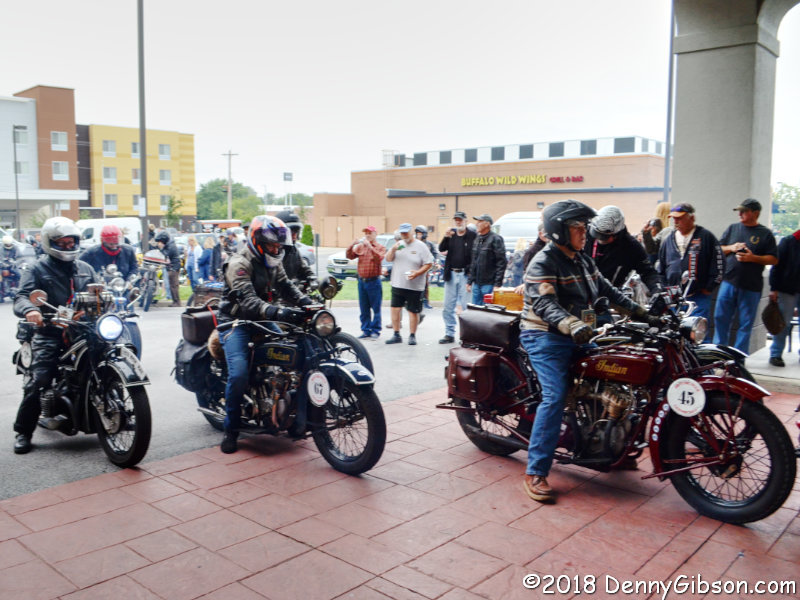
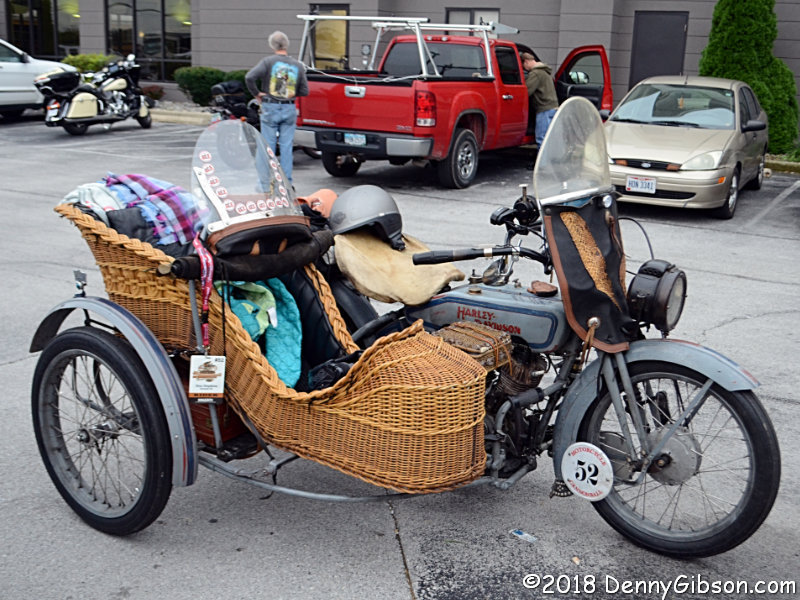
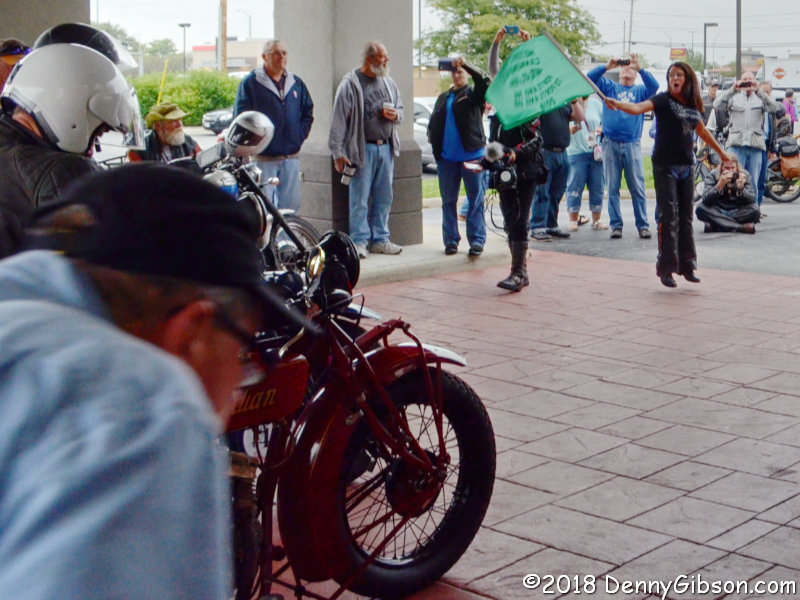
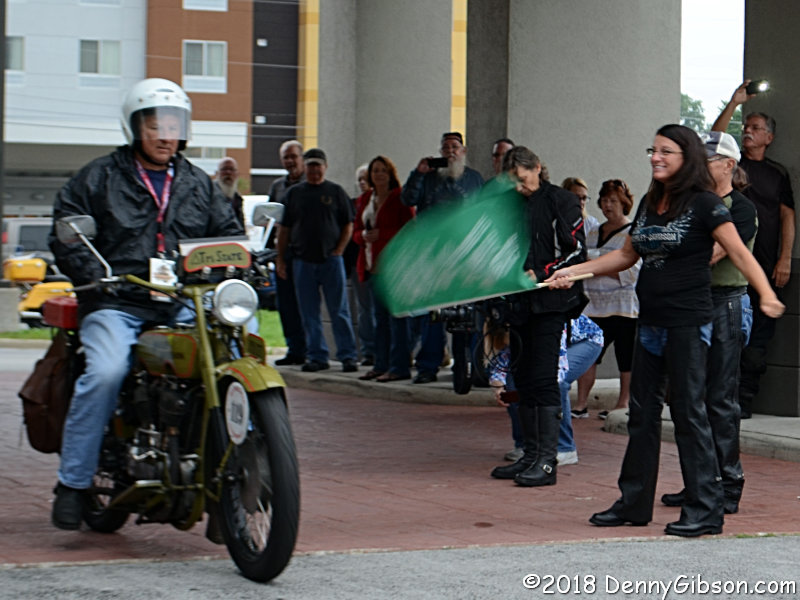
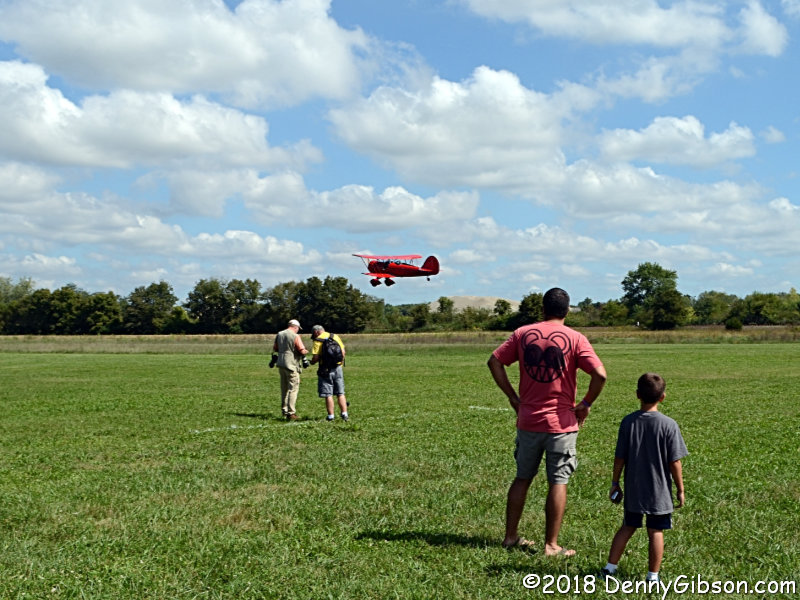
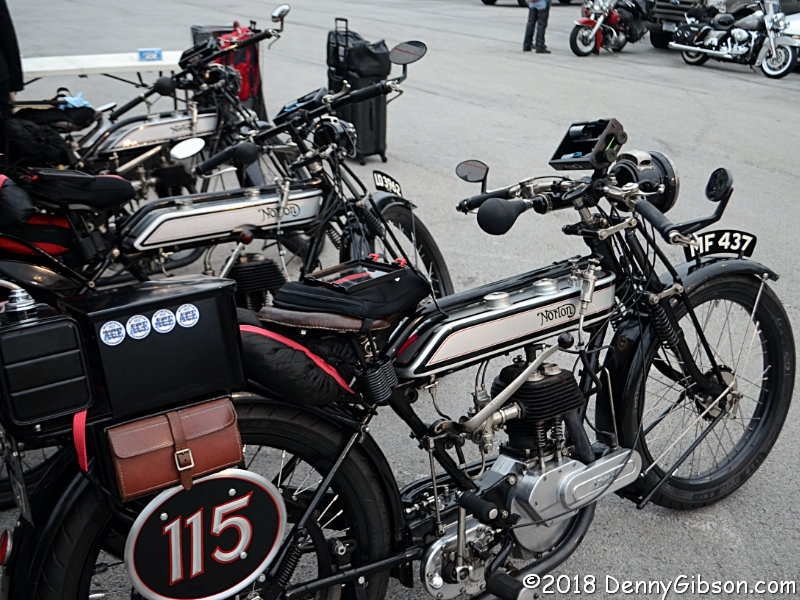
On Thursday, I was back at the Jay County Fairgrounds near Portland, Indiana. It’s a place I’ve been to a couple of times before for the Antique Engine & Tractor Show where my friend Terry displays his collection of Wheel Horses. In 2015, my friend Dale met me there. This time I was there for the National Vintage Motor Bike Club annual meet, and it was Dale who had the trailer full of gear. The picture at right shows vintage motor bikes all set to head out of the gate for a fairly slow cruise around the area.

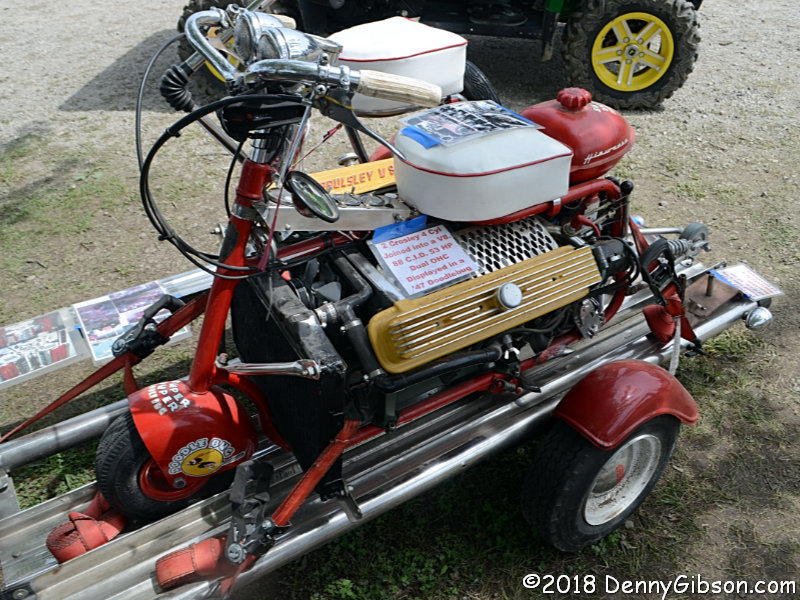
Dale and I were already nearly ten years into our lifelong friendship when we acquired our first motorized transportation. His was an Allstate Mo‑Ped; Mine was a Whizzer. I talk a bit about both vehicles here. I believe Dale’s Mo-Ped was actually much shinier that this example but it never had saddlebags or a windshield. I don’t think either of us knew what a helmet was in those days, either. My Whizzer never looked half as good as those in the picture. That’s a mighty nice looking scaled down replica, too.

Despite the word “motor” in the event’s name, I’m guessing that nearly half of the bikes on the grounds were people-powered. That’s why Dale was there, and the collection in the last picture is the one he brought with him.

Here’s a little better view of the banner at the left of the previous picture. Heart of the City is the name of the bicycle ministry operated by Mission Church Fort Wayne. I stopped by their shop, where Dale and other volunteers repair and recondition bikes for the homeless and inner city’s needy, a few years ago. That’s Dale remounting a wheel after fixing a flat. Orley, another volunteer, was with Dale today but I failed to get a picture. All of the bicycles the two of them brought to the meet are for sale. They are a mixture of Dale’s personal “extras” and some that have been donated to the ministry but aren’t really appropriate for the earn-a-bike program.

This was the first day of the event, and my theory is that most of the traffic was from other participants seeing what everybody else had to offer. Sales were not brisk, but neither were they non-existent. By far the most interesting of the few I witnessed, was this one. I’d noticed this fellow, or at least his hat, during a little walkabout Dale and I did. He is both a collector and an active supporter of some sort of earn-a-bike program in the Detroit area. Some people walked their purchases, and some held a “new” bike’s handlebars to tow it beside the bike they were riding. This guy just slung it over his back and putted away. All that was interesting, of course, but what I thought even more so was the conversation he and Dale had as they roamed among the bikes. With an often foreign vocabulary, they discussed who made what, when they made it, and why this was good and that was bad. I didn’t understand much but I sure did appreciate it. Incidentally, that yellow bike in the first picture is one that Dale fabricated following some Cannondale geometry. There’s a better view here.

Not surprisingly, there were also a few interesting four wheeled vehicles around. We found the Nash woodie on our walkabout. The Amphicar drove by as we sat behind the bikes. As told below, I would see it again in a couple of days.

When this nattily dressed fellow pedaled by, Dale told me that he and his wife Marsha each own a trike like this. He didn’t tell me whether they dress in pure white and wear straw skimmers when they go out riding them but I’m guessing not.


The red Amphicar that we saw in Portland, Indiana, is in the front row of this group of Amphicars in Celina, Ohio. On Saturday, during the annual Lake Festival, an attempt was made to break the Guinness Record for the Largest Gathering of Amphicars which stood, and disappointingly still stands, at 75. This group was slightly smaller at 72. I identified the car seen in Portland by its watercraft license number, and spoke briefly with its owners.

Nothing soothes the pain of a near miss on a world record like a splash in the lake, and many of the cars’ owners wasted little time in doing exactly that.  

Trip Peek #73
Trip #67
Lincoln Highway East

This picture is from my 2008 Lincoln Highway East trip. I used a business trip to the Philadelphia area as the lead-in to a drive on the easternmost portion of the Lincoln Highway. That’s Times Square, where the LH begins, in the picture. After braving Manhattan, I spent the next day in Philadelphia looking over the Liberty Bell and other pieces of history before finally moving beyond the east coast congestion. I stayed with the Lincoln Highway to Greensburg, PA, then shifted to the National Road, which I followed to Zanesville, OH. When I reached Wheeling, WV, on July 5th, I learned that the Independence Day fireworks had been rained out and rescheduled, so I stuck around to see the show that was launched from the 1849 suspension bridge.


Trip Peeks are short articles published when my world is too busy or too boring for a current events piece to be completed in time for the Sunday posting. In addition to a photo thumbnail from a completed road trip, each Peek includes a brief description of that photo plus links to the full sized photo and the associated trip journal.

Ts at a Hundred and Ten

Richmond, Indiana, seems to have become the de facto Model T Capital of the World. The Model T Ford Club of America is headquartered there and operates a marvelous museum dedicated to Henry’s world changing creation. In 2008, when the T turned 100 years old, Richmond hosted a birthday party attended by approximately 1000 of the cars. I was there for one day. This year, with the T turning 110, Richmond had another party. It wasn’t nearly as big as the centennial bash but it was still a pretty big deal with about 100 Ford Model Ts showing up. Again, I was there for one day, Saturday.

Some of those 100 or so visiting Model Ts were parked in the street but many were in the museum’s parking lot. It was a great day for looking the cars over but, because of their proximity to one another and the number of people sharing the space, getting good photos wasn’t so easy. A dead skunk emerging from beneath a rear tire does seem to provide a little extra space, however.

The museum was open and entirely free all day which really was great but the space and people issues seen outside were amplified inside. A chunk of normally open space in the annex was filled with a series of seminars.

I’ve visited the museum in the past when I was the only one there and I expect that will happen again. Today’s lack of “photo space” didn’t really bother me. The cars, in fact, were not the primary reason I was there. I’d first learned of this event last fall on a visit to the museum to see a car named the Silver Streak. In the 1930s and ’40s, a group of young women had used the Streak to travel the country. The car was on loan from its current owner, John Butte. I bought a copy of the book John had written about the car and was in Richmond today to get it signed and meet its author. John is in all three of these photos. The third includes his wife Carmen and the Silver Streak. A few pictures of the car accompanied my review of the book.

Doug Partington is the owner of another Model T with a great story guy. The Wikner Ford Special is the very first race car built in Australia. Doug bought the partially disassembled car when he was fourteen. Only after he’d had considerable fun and success racing the car did he learn of its unique history. The Wikner Ford Special will be on display at the museum for the next eighteen months. The Silver Streak will be leaving in August.

Among the many Model Ts on display was an open car much like the one my great grandparents drove to Florida in 1920 and a green coupe similar to one they subsequently owned which is currently in the possession of an uncle.

Of course the gathering was not limited to already complete and fully functioning automobiles. There were also plenty of pieces that just might be the key to another complete and fully functional Ford.

Doo Dah with a Capital Boom

I’ve made multiple starts on detailing how plans for this outing came together, but they became twisted so quickly that I’m just going to tell what I did with no attempt to explain why. I left home fairly late in the morning on Tuesday, and leisurely drove US-42 and US-40 to Columbus, Ohio, where I checked into my motel near downtown. The first floor was not an option, and when asked “high or low”, I picked high. I would regret that.

I relaxed a bit, then made my way to the banks of the Scioto River just over half a mile away. Columbus celebrates Independence Day with an event called Red, White, & Boom. It includes a street festival, a parade, and fireworks and is apparently never held on July 4th. This year it was on the 3rd. With the temperature in the 90s, it didn’t take a lot of street festival to meet my needs. I found a couple feet of unoccupied curb in the shade and spent some quality time there with an $8 Icee.

As parade time approached, I moved up to the route and found another shady spot to hang out in until a police car and marching band approached. Ford was an event sponsor, and a group of Mustangs made up one of the early parade entries. I don’t really know what the passengers had done do gain their seats, but the line of red, white, and blue convertibles was pretty cool.

I do know what the passenger in this Jeep did. He lived through the attack on Pearl Harbor. Other veterans followed in other vehicles from Motts Military Museum.There was a half dozen or so of these three wheelers in the parade, but this one looked almost custom made for it. I once watched an Independence Day parade in our nation’s capital and remember being impressed with the diverse groups participating. This parade in my state’s capital didn’t have quite as much diversity, but there was certainly a respectable amount including a sizable group of American Sikhs and a yellow dressed Falun Gong group with a lady in a lotus.

When the parade ended, I had a tough decision to make. Just watching people march in 90 degree heat can make an old guy tired. There were virtually no restaurants or other businesses open in the immediate area, and I did not look forward to another three and a half hours waiting on a curb for the fireworks; Nor did I really want to make what was now a one mile walk back to my motel. But I decided that the walk to the motel was the lesser of the two evils and set out in that direction. Near the halfway mark, I found Elevator Brewing open and ducked in for a couple beers and dinner. Sufficiently fueled and cooled, I proceeded to the motel. Remember that game of high/low I’d played earlier? The regret came when fellows sitting in the lobby informed me that the elevators were not working. Climbing to the sixth floor was not what I needed but it was what was required.

I napped for an hour or so then headed out for the fireworks. I wasn’t initially certain that I would walk all the way back to the river but in the end I did exactly that. In front of me, the arches of the Broad Street Bridge were outlined in LEDs (I assume) that switched between red, white, and blue. Above me, LEDs on LeVeque Tower did the same thing.

The Red, White, and Boom website proclaims this “Ohio’s largest Fireworks display” and it’s a dandy. 48,750 pounds of fireworks, they say; Roughly twenty-five minutes long. As seen in this articles’s opening picture, the rockets were launched from the other side of the river on the other side of the Broad Street Bridge and on the near side of the Rich Street Bridge. I suppose people watching from between the bridges had a somewhat better view but I was more than happy with mine.

Before the echoes of the last boom completely faded, people were moving out of the viewing area. Although things were initially quite congested, it was never stifling and motion never really stopped. In fact, the crowd spread out on reaching the streets and I was able to take the first picture. The second picture was taken from my motel room. It seems the main staging area for event buses was about a block away.

I went to Tuesday’s parade because I was there. Ditto the fireworks. This, the 35th Annual Doo Dah Parade, is why I was there. I don’t know who the lady in the lead golf cart was but she was probably about as close to a parade official as I actually saw. She used her bullhorn to thank everyone for coming and offered thoughts and prayers for any trauma caused by what we were about to witness. She was immediately followed by The END. Fortunately, there were lots of stragglers.

I’d met young Groucho earlier in the staging area. He initiated the conversation because I was wearing an American Sign Museum shirt. I did my best to encourage a future visit, and think I did OK. The CHILL! guy was just too friendly to ignore.

Captain Ohio rides a Honda. I believe Honda was the only motorcycle manufactured in Ohio in modern times, but I can’t say whether this particular specimen is local built. The factory in Marysville operated from 1979 to 2005. I also “met” these three art cars in the staging area. The first one may have been here in 2010, or maybe its owner just knows someone who was. A friend of mine sells Route 66 Wine Corks, and often calls his van the Cork Wagon. I earlier shared this staging area photo to get him thinking about an upgrade. The car in the last picture also has some corks but its best feature, in my opinion, is its legs.

I’ve nothing in particular to say about what’s in these last four photos. They’re entries that caught my eye for some reason and there’s plenty more where they came from. My first Doo Dah was certainly a good one. I couldn’t help but think of Cincinnati’s Northside Parade which is also held on the 4th of July and which I’ve attended once. The Cincinnati parade is a little older (1970 vs. 1984), a little more rambunctious (no skateboard or bicycle stunts in the Doo Dah), and a little less political (Northside actually has entries that aren’t political at all). There’s no nudity in either but Doo Dah finds it necessary to specify that in the rules and it got this close. Spectators at both can be part of the show. At the Doo Dah, I spotted this guy across the street who may or may not have just burned his NFL season tickets out of concern for disrespecting the flag.

A Week Late and Several Photos Short

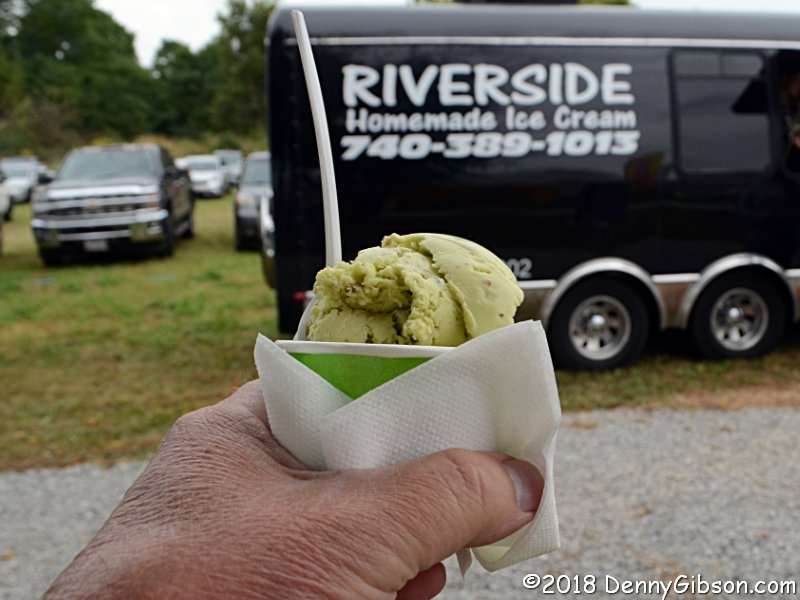
I planned on last week’s post to be primarily about the Tenderloin Throwdown in Greensburg, Indiana. I arrived in early afternoon and bought my set of four sample tickets. A fifth contestant was a no-show. I tried them all and took several pictures including one of each sample with the associated booth in the background. When I did the same thing at the homemade ice cream stand operated by the local historical society, the shutter wouldn’t cooperate.

There was an error message displayed on the camera’s screen, but there’s just no way I’m going to read those tiny letters without glasses. I don’t need no stinkin’ glasses, I may have said to myself. I went down the list of common problems. The mode dial was not out of position and the lens was securely seated. Must be something with the SD card. I popped it out and back in and clicked off a couple shots. The problem returned and I “fixed” it the same way. When It happened a third time, I began to get concerned but I was ready to leave so didn’t investigate.

I’d kind or forgotten all this until I moved the SD card to my laptop in preparation of producing a blog post. It contained just four pictures and one of those was of my feet. Subsequent tests have revealed no errors with either camera or card although I don’t intend to ever use the card again. Sure wish I knew what that error message said.

So last week you got a canned My Wheels post and this week you get one picture of the back of one of the tenderloin stands with the famous tree-in-tower in the background. It is the winner of the grilled category, so there’s that. Obviously four entrants does not a major showdown make, but all four were top notch and tasty, and the homemade ice cream was excellent.


Even when I anticipated a photo spread from the Tenderloin Throwdown, I was considering tacking on a paragraph about the one concert on my schedule. I ended up attending three concerts during the week and, in light of the Throwdown’s vanished visuals, I’m including cell phone photos of all three. Remember, if you want a picture real bad, I’ve got a real bad picture.

On Wednesday the 20th, it was the LSD (Lucinda Williams, Steve Earle, Dwight Yoakam) Tour at Riverbend. This is one I hadn’t planned on, but when a friend’s significant other fell ill the day before, I got her ticket. It really was almost like three concerts with each of the artists doing nearly hour long sets. That’s Steve and his band in the first picture. I didn’t get a picture of Lucinda during her own set but the second picture has her and Steve flanking Dwight for the Dim Lights, Thick Smoke (and Loud, Loud Music) finale.

Thursday’s concert was the one I had planned for a long time. I’ve been sort of focusing on long time legends I’ve never seen. I saw Jackson Browne last month and Steely Dan, Van Morrison, and Paul Simon over the last year or two. This time it was possibly the ultimate living legend with Tony Bennett at Fraze Pavilion.

The quartet opened with an instrumental then Tony’s daughter, Antonia, did three songs. At that point, Tony came on and for the next hour he was on the stage, on his feet, and singing essentially non-stop. He performed basically full songs for the first half then commenced doing one or two lines from hits like Rags to Riches, Fly Me to the Moon, and I Left My Heart in San Francisco. I can’t remember everything he did but there wasn’t one I didn’t recognize at the time. It’s kind of astounding to realize that this guy could do a full concert singing just a line or two from each hit and probably have enough left over for several encores. Yeah, he’s 91 and didn’t hold every note as long as he might have a decade or two back, but he hit them and he was having fun. The Good Life for sure.

The other unplanned concert was a freebie at Miami Valley Gaming held as part of their Rhythm and Brews Festival on Saturday the 23rd. Knowing friends would be there, I stopped by on the way home from the Tenderloin Throwdown and caught the performer I was most interested in, Tinsley Ellis. I also saw part of Lil’ Ed and the Blues Imperials’ set but don’t have even a real bad picture of that.

My Wheels — Chapter 32
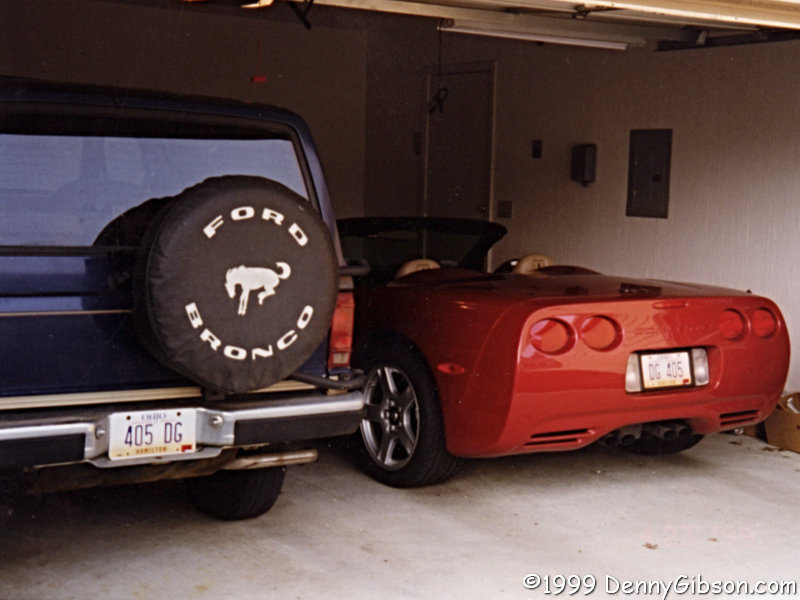
1986 Ford Bronco II

The Camaro was great fun to drive — mostly. On those fairly infrequent Cincinnati snow days, it was not. Well, maybe it was sometimes fun in a perverse slip-sliding-away sort of way, but it sure wasn’t relaxing. After one winter with it as my only vehicle, I went shopping for something a bit more winter friendly. The result was a very experienced V6 5-speed 1986 Eddie Bauer Edition Ford Bronco II.

The Eddie Bauer package included several amenities that made it a near luxury vehicle. It was instantly recognizable by the tan (regardless of base color) lower body trim. Seats and upholstery were special and a premium sound system and power windows and locks were included. My new acquisition had once been a rather prestigious ride. The operative word in that sentence is “been”.

The odometer showed a little more than 10,000 miles but no one would have even briefly thought that accurate. In those days of five digit odometers, this one had clearly passed through its full range at least once. The description that quickly developed was “Everything you absolutely need works. Anything you don’t absolutely need doesn’t”.

When I first got the car, the power door unlocks worked. The lock side of the option had already quit functioning but I could initially unlock both doors with the push of a button. That didn’t last long. Lights for the speedometer and some other gauges worked but other dashboard illumination, such as that for the radio, did not. The dark radio dial was hardly an issue since the premium audio had pretty much quit functioning before I ever saw it. It wasn’t entirely dead, though, and a friend who borrowed the car (It made a good loaner.) described turning it on and listening to a faint but clear broadcast with the volume cranked all the way up. The system’s full capabilities were miraculously restored, and the car filled with ear piercing music, by a bump in the road. It didn’t last long, and another bump soon silenced things completely.

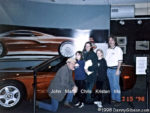
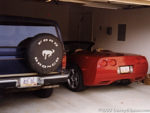
In the photo, the rear door is kept from dropping onto Chris’ head by a wooden dowel as the struts had stopped doing their job long before. I was somewhat surprised and extremely grateful that the power windows fell on the “absolutely needed” side of the great divide. Since air conditioning was apparently not “absolutely needed”, and therefore not working, I appreciated being able to roll down the windows in the summer but it did make me nervous. Having them fail while open and a monsoon approaching seemed almost inevitable but it never happened.

The starter failed a couple of times but even there I was personally lucky. Not so Chris. For me, it failed on pavement within walking distance of home. For her, it happened on a narrow road bordered by snow and mud.

The Bronco was key to making the hundred mile drive to my parents in the winter and as Dad’s health deteriorated its reliability became a concern. I replaced it in 2003 and gave it to my daughter. She had another car but the Bronco’s four wheel drive helped her get to work when snow hit. She lived and worked in town so there was no risk of being stranded on an isolated country road. As I recall, she junked it after one winter.

My Previous Wheels: Chapter 31 — 1994 Chevrolet Camaro
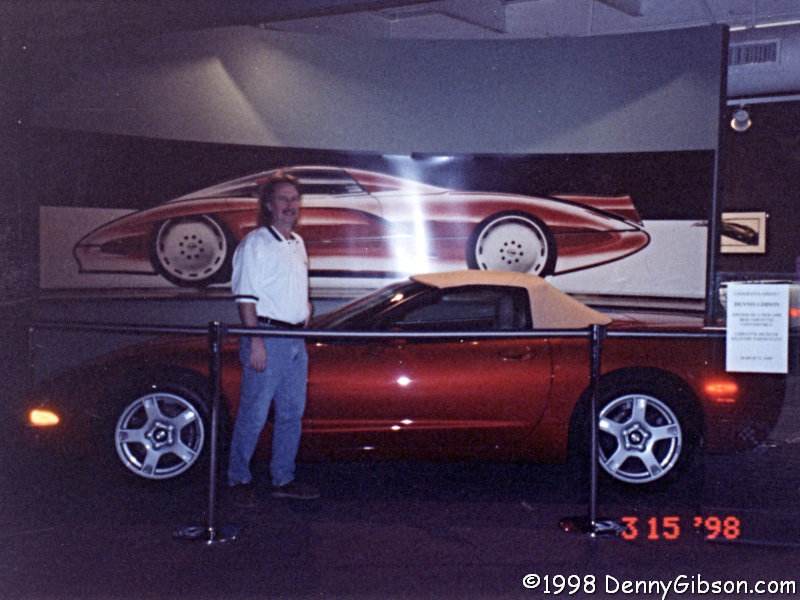
My Next Wheels: Chapter 33 — 1998 Chevrolet Corvette

Book Review
Taking the Tolls Along the National Road Through Ohio
Cyndie L. Gerken

The question was never if there would be another book, just when and what. The answers are “now” (actually February) and “toll gates”. In my review of Cyndie L. Gerken’s first book, Marking the Miles Along the National Road Through Ohio, I noted that the huge amount of information presented in that book was only a portion of what Gerken has collected and that we would probably someday see “a Gerken penned treatise on bridges or taverns or toll houses or something else” which shows that taking three or four guesses really improves one’s chances of being right. Nailed it!

Taking the Tolls Along the National Road Through Ohio: A Study of Toll Gates and Toll Houses on Ohio’s National Road duplicates the form of Gerken’s first book. Both are rather large paperbacks. Both books are also filled with accurate and precise information, but that part’s not duplication; That’s just what Gerken does.

Federal funds for building the National Road dried up somewhere around Springfield, Ohio. Federal funds for maintaining it seem to have never existed. The “Gates Bill” of 1822 was a valiant attempt to finance ongoing maintenance through federally operated toll gates, but President Monroe vetoed the bill. At the time, the role of the federal government in internal improvements was a hotly debated topic. Regarding the power to establish and collect tolls, Madison was “…of the opinion that Congress does not possess this power…” The Feds solved the problem by giving the road to the states. The states solved the problem by charging to use the road. Sometimes the state charged the users directly by collecting tolls. Sometimes the state leased sections of the road to counties or even privately owned companies who then collected tolls.

In Ohio, things got started with seventeen toll gates which were soon augmented by three half gates. One thing this book taught me is that half gates are not, as I convinced myself, gates where a toll is charged in only one direction (Hey, it’s not that dumb!), but gates placed between full gates to catch traffic entering and leaving the road without paying any toll at all. Over the years, individual gates were moved and closed and new ones added.

As she did with her first book, Gerken details her subject in a chapter per county moving east to west. However, before that happens, there is an introduction filled with information about the road and toll gates in general, then chapters on vehicles, toll house architecture, and bridges. Each of these, and the county chapters too, contain numerous photos and stories that color in the detailed information and keep things from becoming boring.

Pictures of gate houses and gate keepers are to be expected, but they are not the only photo subjects presented. This might be the only book available with pictures of the world’s longest bar, grave robbers, a two-headed calf, a Spanish dime, Hopalong Cassidy, and the author’s mother riding in a goat cart. And every one of them belongs.

People almost always keep things from being boring, and Gerken didn’t just compile data on buildings and locations. She dug up facts and stories on the people who occupied those buildings. Although much of that information is sprinkled throughout the book, even more is concentrated in a chapter titled “Meet the Gate Keepers” that follows the county chapters.

At this point, the book could be called boring without triggering a big argument from me. It is here that Gerken lists her numerous references and places several appendices of source material for rates, dates, and so on. Because of Gerken’s thorough research, the entire volume is certain to find work as a reference book but that is especially true of the last fifty or so pages. Three hundred pages of a nice blend of information and entertainment followed by fifty pages of “just the facts” is a pretty good mix.

Taking the Tolls Along the National Road Through Ohio: A Study of Toll Gates and Toll Houses on Ohio’s National Road, Cyndie L. Gerken, CreateSpace Independent Publishing Platform, February 8, 2018, 11 x 8.5 inches, 366 pages, ISBN 978-1981653515
Available through Amazon.

Trip Peek #72
Trip #111
2013 OLHL Meeting

This picture is from my trip to the 2013 Ohio Lincoln Highway League Meeting near Mansfield, Ohio. The meeting itself filled just a few hours in an evening so most of the journal involved the going and coming. On the way there, I spent a night in Columbus so I could see the Lone Bellow in the process of becoming stars. On the day after the meeting, I headed to Georgetown, Ohio, for Ulysses Grant’s 191st birthday. I spent the night at a B & B across the street from Grant’s childhood home where I shared a bathroom with Abe Lincoln. This particular Abe Lincoln’s real name is Fritz Klein and I not only got to chat with him over breakfast, I got this picture taken with him in front of Gran’ts home.


Trip Peeks are short articles published when my world is too busy or too boring for a current events piece to be completed in time for the Sunday posting. In addition to a photo thumbnail from a completed road trip, each Peek includes a brief description of that photo plus links to the full sized photo and the associated trip journal.

Some Subtle Stuff

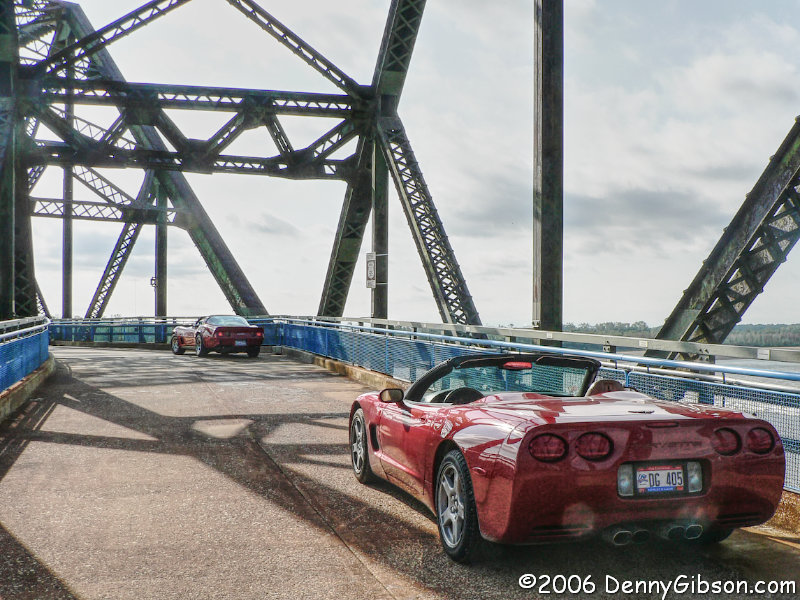
A long time reader recently suggested I do a post on the various cars I’ve used on road trips. That’s not a bad idea and I’m thinking about it. This blog does have a series of posts on some of the hardware I’ve used in making and documenting the trips (My Gear) and another on the software (My Apps). There is also a series on vehicles I’ve owned (My Wheels). That series, however, is not just about cars used on documented road trips. In fact, not one vehicle from those trips has yet appeared. But it’s close. The series is just two chapters away from featuring the car used on my first documented trip in 1999. The 31 My Wheels chapters published so far have been spread over 65 months which suggests that it will be well over a year before the seven owned cars used in documented trips get their chapters. So maybe it makes sense to do a single post with a brief mention of each of the seven. Maybe not. That’s what I’m thinking about.

Regardless of whether or not I do a post on those road trip cars, that suggestion did lead directly to this post. Technically, it wasn’t the suggestion itself that triggered this post; It was the conversation that followed.

When I mentioned it, I learned that the fellow who suggested the car post wasn’t aware that the “Prev” and “Next” buttons on the journal’s daily pages usually reflect the car I’m driving on the trip. I wasn’t overly surprised; It’s rather subtle and has never been spelled out anywhere. But it reminded me of another long time feature that another long time reader had been unaware of until quite recently. This particular reader didn’t realize or had forgotten that a map is part of each trip journal. That’s really easy to understand on the multi-day trips since the map button appears on the trip cover page and not on the daily pages that are the subject of RSS entries and most email notifications. So here we go, with “Five Things You Might Not Know about DennyGibson.com”.

Prev & Next Buttons

All daily pages for multi-day trips have text links for the previous and next day with buttons made of left and right facing vehicles above them. That has been true from the very beginning. That first trip was made in a red Corvette convertible and that’s what formed the buttons. They were static on that first trip but started “popping” when the cursor hovered over them on the second multi-day trip and they had done that ever since.

It’s possible that the concept of the buttons exactly matching the car used on the trip wasn’t yet firmly established, but I think I just intentionally broke from it for the third and fourth multi-day trips. That third multi-day trip was a retrace of one my great-grandparents had made in a Model T. I couldn’t get a suitable picture of the car they actually drove but I did get one of a Model T they owned later and which an uncle owns now. The next trip requiring buttons involved a caravan of Corvettes of every year and I used a picture of the inaugural 1953 model. For the 2004 Tiger Cruise with my sailor son on the USS Enterprise, I used a silhouette of the aircraft carrier. For a couple of Amtrak trips, I used a picture of a toy train. For rental cars, I’ve mostly used generic sedans although I did use a red Jeep, which matched two of the three cars I rented, on the 2017 Hawaii trip. Other than that, those buttons have accurately shown the model and color of the car being driven if not the actual car.

Locator Maps

Although a locator map wasn’t initially part of a trip journal, I did start doing it fairly early on then retrofitted one to journals already posted. A small button shaped like the contiguous US accesses the maps. For multi-day trips, the button is at the top of the cover page next to the trip title. For single day trips, it’s next to the trip title on the only page there is. The general model is a map of the route “zoomed” to fill the available space sitting atop a map of the US with a red rectangle marking the area involved.

To date, DeLorme Street Atlas has been used to produce these maps. With Street Atlas no longer supported, how long that will continue is naturally in question. I do own the final (2015) version of Street Atlas and the resolution of locator maps is not at a level to be affected by minor undocumented changes in the real world. I expect locator maps to continue to be part of future journals although it’s quite possible the tools used to produce them, and therefore their appearance, will change.

The most recent journal has a second map button. For my full length drive of the Jefferson Highway, I imported my planned route to Google Maps and made it available. A big advantage of this over the static locator map images is the ability to zoom and otherwise interact with the map to see details as well as the high level overview. A big disadvantage is that it makes a feature of DennyGibson.com dependent on the functioning of another website. While this is something I try to avoid, it’s not the first. For example, the site search feature utilizes Google’s search capabilities. The Jefferson Highway map was shared with very little manual intervention so it’s possible, but not guaranteed, that I will continue the practice.

Trip Collage

The journals of all completed trips are available through either a list or a collage of photos. Both are accessed under “Done Deeds-All Trips”. I’m mentioning the collage here because it is a personal favorite and something I’ve received almost no feedback on. The collage consists of a single thumbnail from every completed trip. The images are displayed in chronological order and clicking on one leads to the associated journal. I’ve said that one of the reasons this website exists is to eventually feed me my own memories. The collage already does that to some degree which probably explains why I like it while others aren’t so impressed.

Random

A “Random” selection is also available under “Done Deeds-All Trips”. Clicking it presents a single picture from the collage which can be clicked to get to the associated journal. It’s useful when you are really really bored.

FAQ

A link to the Frequently Asked Questions page appears on the site’s home page so maybe it’s not all that subtle. But there are lots of other letters on that page so I’ll grab this chance to mention it. It’s a little like a larger version of this post with the obvious exception that everything in this post answered an unasked question while only part of the FAQ page does that.

Another Sesquicentennial

The American Civil War began with the shelling of Fort Sumter on April 12, 1861, and for the last several years we have been commemorating the 150th anniversary of events that led up to it, were part of it, and were precipitated by it. There are many theories about the origin of what we now call Memorial Day, and, while specifics vary, almost all place the roots in that devastating conflict. The most recognized story of a formal beginning places that beginning a hundred and fifty years ago on May 30, 1868.

I attended two Memorial Day events this year. The first was a parade in nearby Loveland, and the second a gathering at Ohio’s largest cemetery, Spring Grove.

In Loveland, a police cruiser with flashing lights cleared the way with members of the local American Legion Post leading the actual parade. A group of firefighters, looking exactly like I’d want my fire department to look, was close behind. Love the mustache.

What followed was everything a parade should have: high school marching band, classic cars, and freshly polished fire trucks. The parade ended near Veterans’ Memorial Park where ceremonies were to take place. I was watching the time, however, and left just as they were getting started.

The setting for the Spring Grove ceremonies was the Civil War section where 999 Civil War dead are buried in three circular plots containing 333 graves each. These are not, of course, the only Civil War soldiers buried in the cemetery. There are 41 Civil War generals buried at Spring Grove. For the majority, however, it is an honorary (brevet) title. The cemetery’s website has some words about the war’s impact and a link to a list of those generals here.

Although individual events were certainly held earlier, 1868 is the year that the observation of Decoration Day was wide spread and coordinated. That was when Grand Army of the Republic Commander, John A. Logan, issued an order calling for gatherings on May 30 “…for the purpose of strewing with flowers or otherwise decorating the graves of comrades…”. Spring Grove was one of 183 cemeteries participating that first year. There were 336 in 1869. Michigan made Decoration Day a state holiday in 1871 and other states were not far behind. It was made a federal holiday in 1888. I was unable to find a date for an official change from Decoration Day to Memorial Day. It seems to have happened somewhat naturally shortly after the first World War.
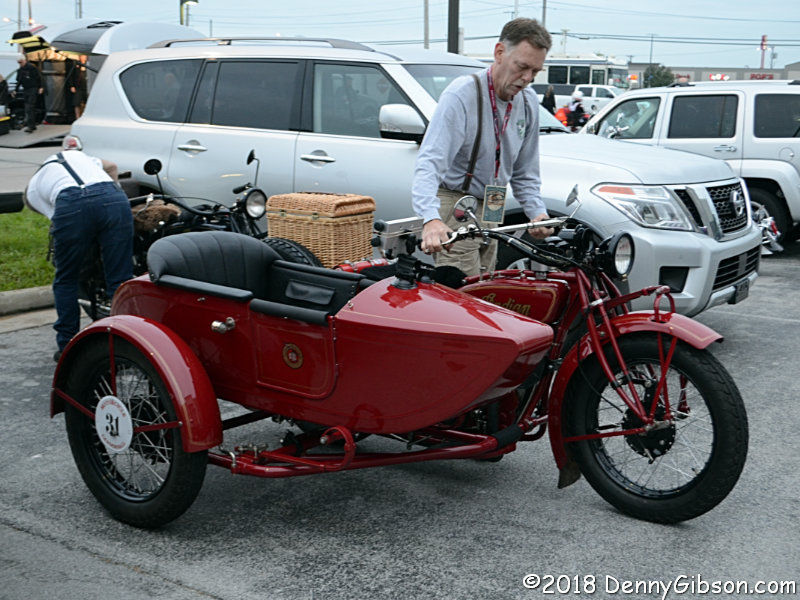
The G.A.R.’s successor, The Sons of Union Veterans of the Civil War, played a major role in the day’s activities and the 6th Ohio Volunteer Infantry helped maintain an awareness of the holiday’s Civil War era roots. They presented the colors at the beginning of the services and fired a twenty-one gun salute near their end.
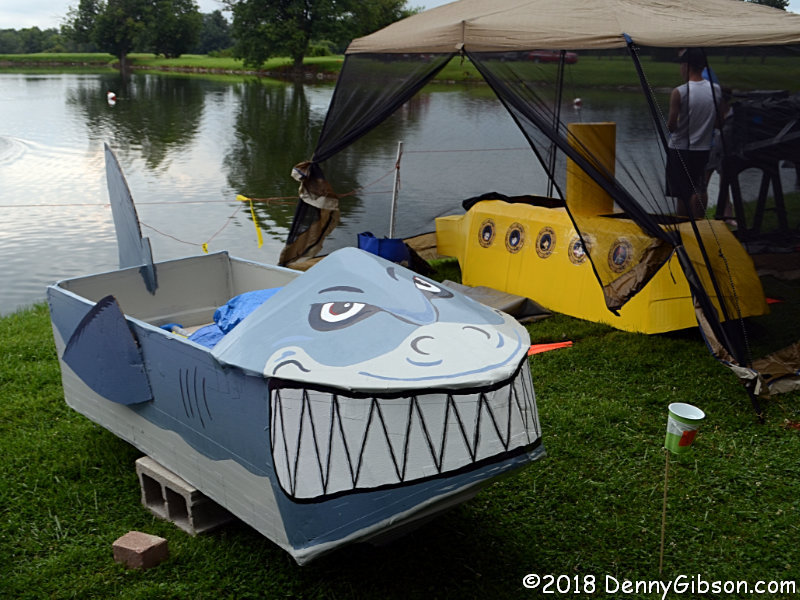
Spring Grove Cemetery was barely sixteen years old when the Civil War broke out.  An excerpt from Spring Grove: Celebrating 150 Years talks about the war, the cemetery, and those early Decoration Days. In describing the very first, it states that “To end the program the Ladies of the Floral Committee led the crowds around the mounds of graves, strewing them with flowers.” Today, The Auxiliary to the Sons of Union Veterans of the Civil War filled the role of the Floral Committee in helping everyone present reenact that ritual from 150 years ago.