 Although it didn’t feel much like it, this was actually something of a repeat. I attended a reading of KJ Sanchez’ Cincinnati King in Washington Park back in 2015. It was during a King Records celebration and drummer Philip Paul was among the musicians performing before the reading. There was music during the reading, too, but it didn’t make me think of the play as a musical. They’re calling it that now, and they’re right. I don’t doubt that my 2015 perception was off a little. In fact, I’ve probably forgotten more about that performance than I remember. But, as enjoyable as that Washington Park reading was, Cincinnati King sure has sure come a long way since then.
From the long list of colorful and talented people associated with King Records, Sanchez picked three to tell her tale. Syd Nathan, the label’s founder and beyond colorful owner, had to be one of them, of course. To represent Syd’s stable of singers, she chose Little Willie John whose story contains some of King’s best and worst. To help keep that volatile pair on point, she picked the guy who did the same thing for much of King’s product, long time session drummer Philip Paul.
Those great characters are portrayed by great actors. Neal Benari is a convincing and properly blustery Syd Nathans, Stanley Wayne Mathis nails Philip Paul, and Richard Crandle made me wish I could have attended just one Little Willie John performance. Benari and Mathis do sing one song each, but it’s Crandle, along with Cullen R. Titmas and Anita Welch, doing the heavy vocal lifting. Titmas and Welch kind of work their way through the King roster from Cowboy Copas to Moon Mullican and Annisteen Allen to Lula Reed. Welch has a wonderful voice and her dancing certainly adds to the show as well. The singers are backed by a top notch quartet comprised of Music Director Richard Livingston Huntley on drums, Terrell Montgomery on bass, Ralph Huntley on piano, and Seth L. Johnson on guitar.
Cincinnati King doesn’t tell the complete King story but it does paint a representative picture. From our current perspective the King Record story may seem rather sad but that could be mostly perception. King Records was successful: the sixth largest record company in the country. It was innovative: the first record company to record, manufacture, package, and distribute its product. It was progressive: generally colorblind hiring practices and minorities in key positions. It was trend setting: Little Willie John preceded James Brown, Moon Mullican preceded Jerry Lee Lewis. It was inspired: Fever, The Twist, The Train Kept A-Rollin’, and other long lived songs originated there. It was noticed: Syd Nathan is in the Rock & Roll and Bluegrass Halls of Fame and several King artists are in one or the other. KJ Sanchez gives us a feel for all of that in a highly entertaining two hours.
It’s also an informative two hours, and I could tell that parts of the story were real revelations to some of the audience. I’m no authority but I have read a fair amount about King Records and Syd Nathan over the years. Still, one piece of the story was entirely new to me. Syd Nathan, in the very early 1960s, traveled to Hamburg, Germany, to see the Beatles. It’s implied that he could have signed them but missed his chance. Whether or not an actual signing was likely, the reason for Syd not even making it to the club is telling. At some point on the day he was to see the Beatles, he watched a group of German boys walk by from his hotel room window. It’s not clear what it was about the boys that seemed menacing but the sighting caused Syd to stay in his room until time to return to London the next day. The Third Reich had been defeated little more than fifteen years earlier. Germany was not a place the Cincinnati Jew wanted to be.
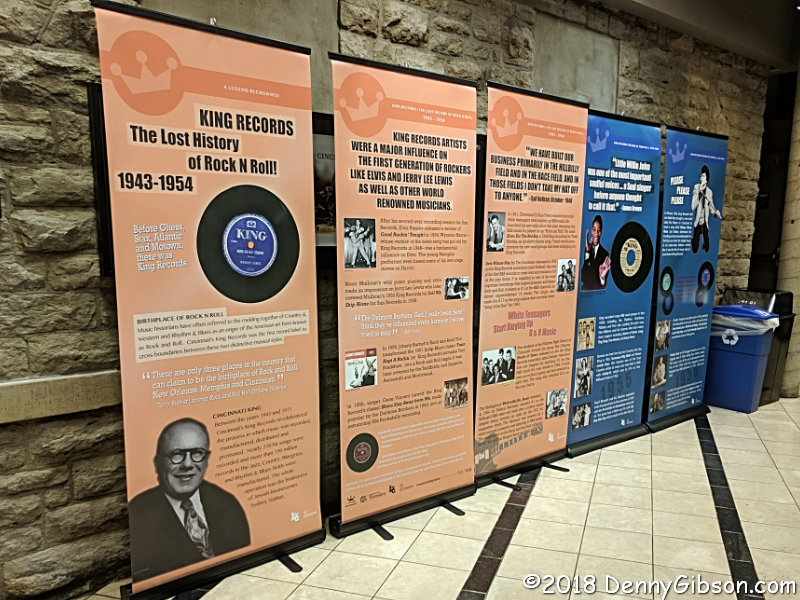
I think it was the day after I saw Cincinnati King that I read a review written a few days earlier. It was very positive. I’d enjoyed the show immensely and the review reinforced my impressions. It praised the story, the actors, the musicians, and the staging. It was all flowers and sunbeams until the very last paragraph. Describing the show as “anchored in local history”, it concluded that it is “not a show that’s likely to move on to other cities and venues.” Maybe so, I thought. King was definitely a Cincinnati company. But I almost immediately started questioning the review’s conclusion. The company’s influence sure wasn’t limited to its home town. People all across the nation were once interested in its music; Why wouldn’t they be interested in its story? There’s a quote from former Rock & Roll Hall of Fame Director Terry Stewart on that panel I photographed:
There are only three places in the country that can claim to be the birthplace of Rock and Roll: New Orleans, Memphis, and Cincinnati.
I’ve no idea what plans may or may not exist for Cincinnati King. I’ve a hunch that KJ Sanchez doesn’t believe that “other cities and venues” are out of reach. I don’t.
Cincinnati King is at Playhouse in the Park through December 23.











 We fought a war to get this country going then gave every land owning white male above the age of twenty-one the right to vote. A little more than four score years later, we fought a war with ourselves that cleared the way for non-whites to vote. Several decades of loud, disruptive, and sometimes dangerous behavior brought the granting of that same right to non-males a half-century later, and another half century saw the voting age lowered to eighteen after a decade or so of protests and demonstrations.
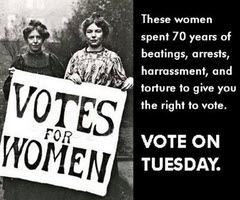 Of course, putting something in a constitution does not automatically make it a practice throughout the land and I am painfully aware that resistance followed each of those changes and that efforts to make voting extremely difficult for “the other side” are ongoing today. I don’t want to ignore partisan obstructions and system flaws but neither do I want to get hung up on them. I meant my first paragraph to be a reminder that a hell of a lot of effort, property, and lives have gone into providing an opportunity to vote to a hell of a lot of people. Far too many of those opportunities go unused.
 In the original title I claimed to not care how anyone votes. That was never entirely true, of course. I have my favorite candidates and issues. I’ll be disappointed in anyone who votes differently than I do but not nearly as disappointed as I’ll be in anyone who doesn’t vote at all. I’m reminded of parents working on getting their kids to clean their plates with lines like, “There are hungry children in China who would love to have your green beans.” I’m not sure what the demand for leftover beans is in Beijing these days but I’m pretty sure some folks there would like to have our access to ballots and voting booths.
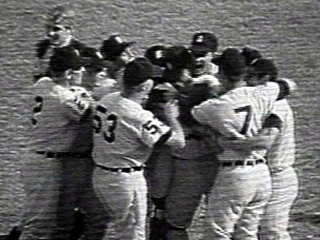 In 1968, it took a full seven games to determine a MLB World Series champion. The seventh game, which saw the Tigers top the Cardinals, was played on October 10.
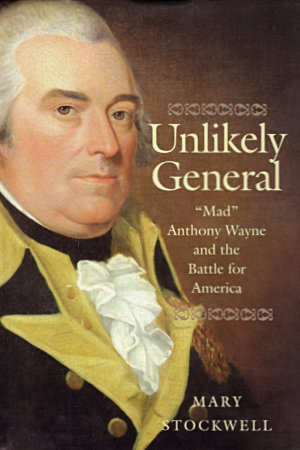 Anthony Wayne gave Fort Greene Ville and Fort Recovery their names. They were significant in both his life and mine although the level of significance is severely tilted toward Wayne. Fort Recovery is where the army led by Arthur St. Clair was nearly annihilated in 1791. It got its name when soldiers under Wayne’s command built a small fort there in 1793. Also built in 1793, Fort Greene Ville stood twenty some miles to the south and was Wayne’s home base during the Northwest Indian War. The treaty ending that war was signed there in 1795. The town that developed on the site of the abandoned fort adopted the shortened name Greenville. I grew up near the midpoint between Greenville and Fort Recovery and adopted Anthony Wayne as a hero at a very early age. I eventually figured out that much of the initial attraction was due the the cool bicorne hat he was commonly shown in, but the fact remains that I’ve known of General “Mad” Anthony Wayne nearly all of my life.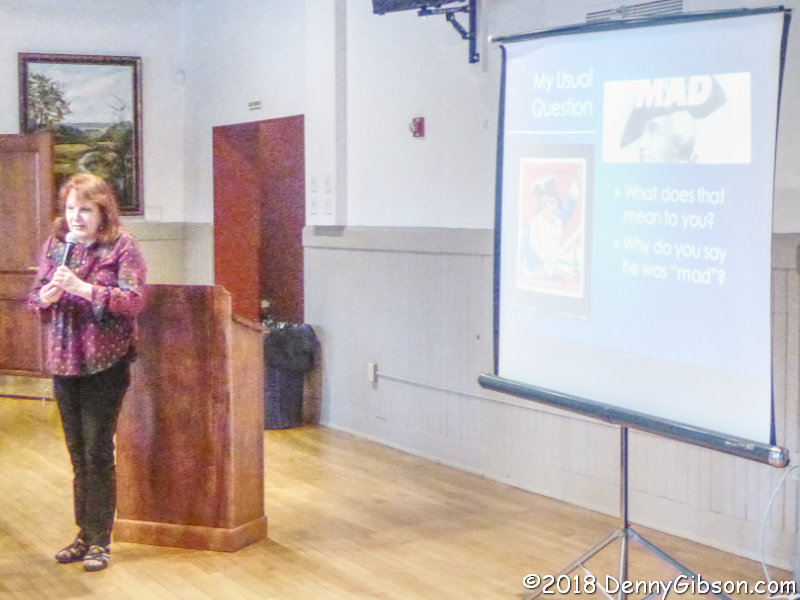
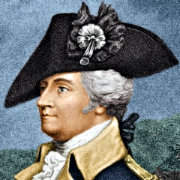 It was probably about sixty-five years ago that I was hooked by that super groovy hat and decided that the dude under it was my hero. It was only a few years later that I saw a painting of a hat-less Wayne and was shocked to learn it was the same person. That painting might even be the same one that appears on the cover of this book. It was at least similar. I recognized that there was more to a man than his hat and Wayne survived as a childhood hero. Inside Unlikely General, Mary Stockwell reveals a lot more than a high forehead. Anthony Wayne was not, as some have interpreted his nickname, insane, but he was a long way from perfect. Perhaps the fact that I’m much older now explains why I was less shocked at learning of the imperfections than I had been at my first sight of Wayne bare-headed.