
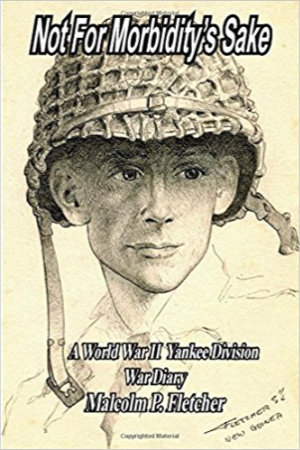
 It’s a familiar story I’d never heard before. In no way is use of the word “familiar” meant to be dismissive. It’s just my way of acknowledging that many aspects of Malcolm Fletcher’s story are to be found in the stories of thousands of other World War II soldiers. Of course, each of those stories is also unique in ways both small and large. Large happenings that make Fletcher’s story unique include the actions that earned him a bronze star and the day he watched his brother get shot and captured. Getting coffee and doughnuts from the Red Cross in February and washing clothes and shaving in May are among the not-so-large pieces of the story that make it real. Numerous photographs, maps, and drawings — many by Fletcher himself — really fill things out.
 It’s a great story and well told, but there’s no denying that the mere fact that it is being shared plays a big role in setting this story apart from most of the others. The majority of those soldiers never told their story to anyone. A relative few did write it down or record it but not many saw an audience beyond family, friends, or a veterans organization. That Malcolm Fletcher wanted to share his story is obvious. He expanded his wartime notes and produced a “diary”. The title is his. Not For Morbidity’s Sake came from the fact that, as his son Michael says in the foreword, “…he took no pleasure in telling most of this story”. Malcolm Fletcher died in 1994, and Michael, with help from his brother Mark, made publication of the diary a reality. To a large degree, this meant editing their father’s writings, but they also augmented the story with information gathered from other family members, friends, and even some of the men who served with Malcolm.
As mentioned, not many World War II veterans made any attempt to share their stories. In addition, not all who did were particularly good at it. Malcolm Fletcher was. At twenty-four, he was a little older than most of the enlistees he headed to Europe with in 1944. Maybe that made him a little more observant, or maybe that just came naturally. Either way, his observations fed some rather good sketches and some articulate writing.
 Those observations also fed some slightly philosophical thinking on the horrors of war and the brotherhood of man. He had personal experience with both. Whether the deeper of Fletcher’s thoughts came during his time in Europe or while he subsequently transcribed his notes in safety in the USA is unclear and unimportant. He was in the midst of battles where men destroyed each other with cannons, bombs, rifles, bayonets, and flame-throwers. He saw many and met a few French, Belgian, and German civilians whose world was ravaged beyond comprehension. And he was there at the end of the conflict, interacting with German and Russian soldiers to learn that “These Russies are just like us.”
He was there as a strange calmness came to a devastated Europe, and plans were being made to send him and lots of other men to tackle the Japanese. He was there when Hiroshima and Nagasaki were bombed, and the war ended without an invasion. He came home to a world that was damaged in its own way. He stumbled. He regained his balance. He wrote his story. The basic plot may be familiar, but the details are unique and personal, and the telling is something special.
Not For Morbidity’s Sake: A World War II Yankee Division War Diary, Malcolm P. Fletcher, CreateSpace Independent Publishing Platform (December 10, 2017), 6 x 9 inches, 226 pages, ISBN 978-1981114696
Available through Amazon.
I know Michael Fletcher through his work as a bassist with several local bands. I’ll admit that it’s rather unlikely I would have found this book on my own otherwise. But, if I had, there is no doubt that I would have enjoyed it. Knowing Mike or even knowing who Mike is is certainly not required to appreciate his father’s story. On the other hand, I probably enjoyed this book more than many, and it’s certain that the story is more familiar to me than most. Malcolm Fletcher’s time in the military more or less parallels that of my own father. Both probably crossed the Atlantic in the same convoy, although Dad landed in England rather than France. Both were at the Battle of the Bulge, and both were early crossers of the Siegfried Line.
But there were definitely big differences. Dad was a courier and spent most of his time driving a Jeep or truck. He was usually at or near the front but was not directly involved in the fighting in the way Malcolm Fletcher was. And he never talked about it the way Malcolm Fletcher did. I kind of wish he had. I’d certainly like to know more, but I think his “silence” was rather typical. There were occasional, seemingly spontaneous, reminisces that provided cherished glimpses but no long stories and no writing or recording.
Dad served with the 78th “Lightning” Division. Until about four years ago, there was an associated veterans group that published a quarterly newsletter called The Flash. Veterans’ memories were an important part of its makeup, and I read many of them. There are, naturally, similarities between the stories of every soldier in every war in every location, but I was thinking specifically of the stories I’d read in The Flash when I called Not For Morbidity’s Sake “..a familiar story I’d never heard before.” I wrote about the newsletter’s end in One Last Flash in 2013.


 For me, up to speed isn’t all that fast. I’m basically a resize, rotate, and crop sort of guy. I was nearly at speed once those were mastered. I do, on occasion, dabble with tone a bit and do a little touch-up work. About as fancy as I ever get is the rare collage or the slightly less rare HDR. Accomplishing these with Affinity is quite different than with PhotoPlus but I eventually figured it out. I’m a long way from being a master of the software but I manage to do what I need.
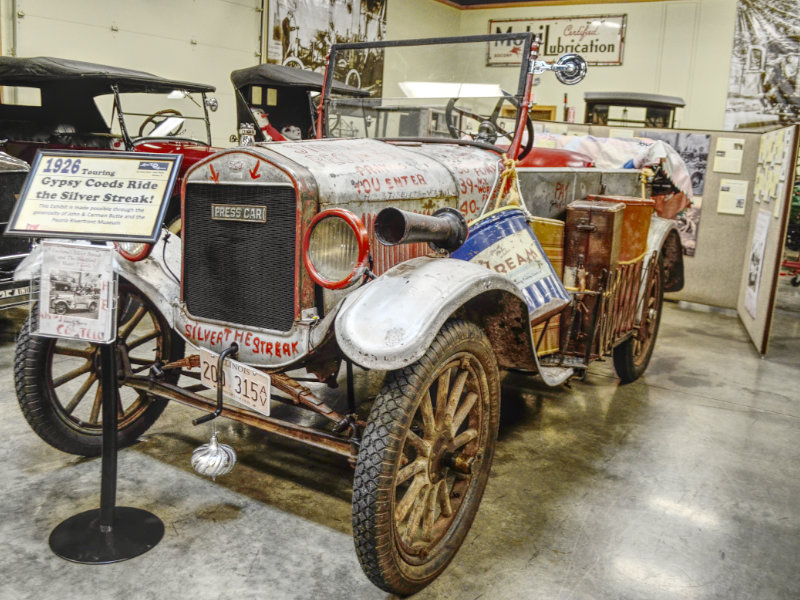
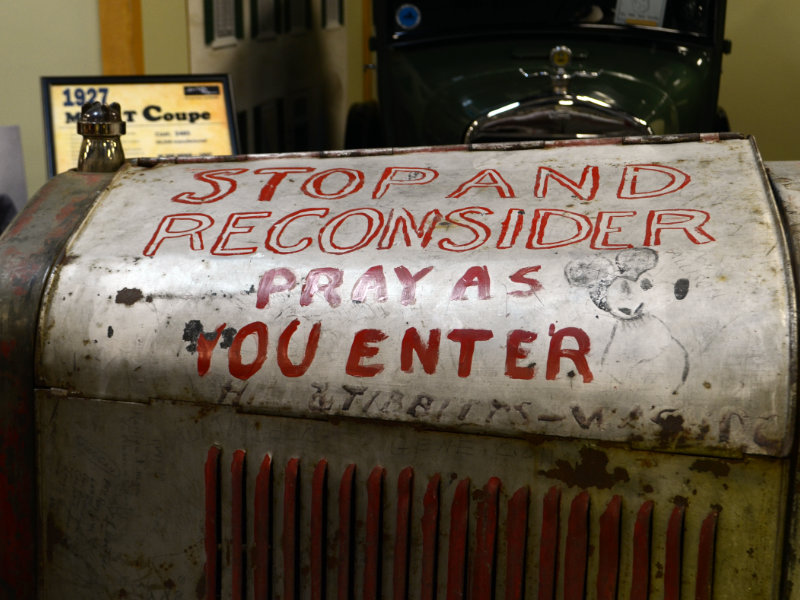
 I first heard of Darlene Dorgan and her friends from a presentation on early female travelers at the Lincoln Highway Association in June. Then they were part of a similar presentation at a Route 66 conference in October. This book may have been mentioned in either or both of those presentations but, if so, it didn’t register. What finally got me interested in Darlene’s Silver Streak and The Bradford Model T Girls was when a blog I follow,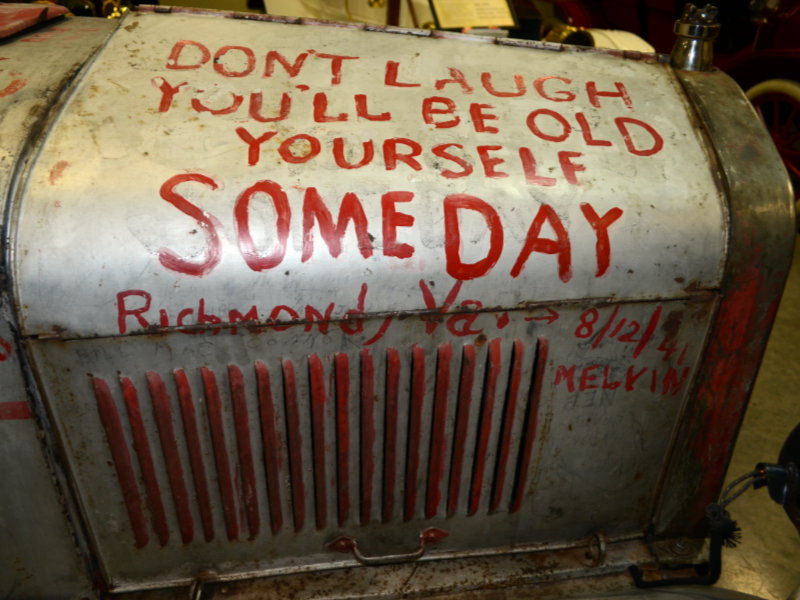

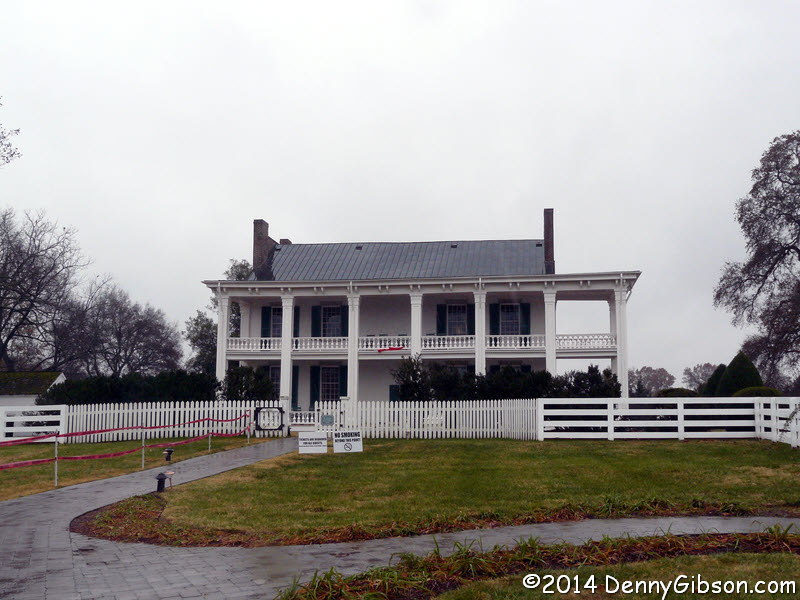
 Things are more or less back to normal after last year’s extra long (and extra exotic) Alaska trip boosted the days and pictures counts significantly. The number of blog posts was nudged upward by 2017 having 53 Sundays. The regular weekly posts were augmented with links for the nine road trips and eleven reviews. In a flip-flop from last year’s summary, two new-for-2017 blog posts made the top five while no new-for-2017 trip journal entries did. The Hawaii trip was closest at number ten.









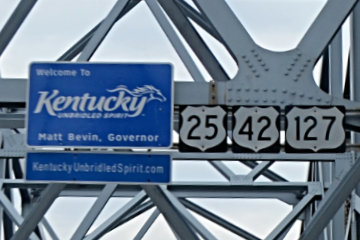 I’m off to Georgia and I’m driving an entire US highway to get there. I’ve had the idea of driving all of US-25, which now ends/begins at the Ohio River, for several years. As I was weighing ideas for this year’s Christmas Escape Run, I finally took a look at what was at its other end and I liked what I saw. Brunswick, where the highway actually ends, has some history and so does nearby Jekyll Island.