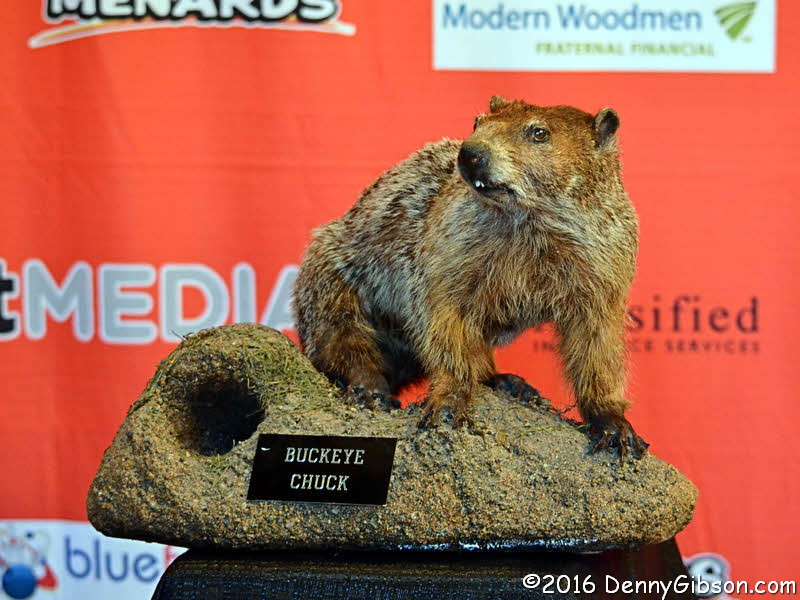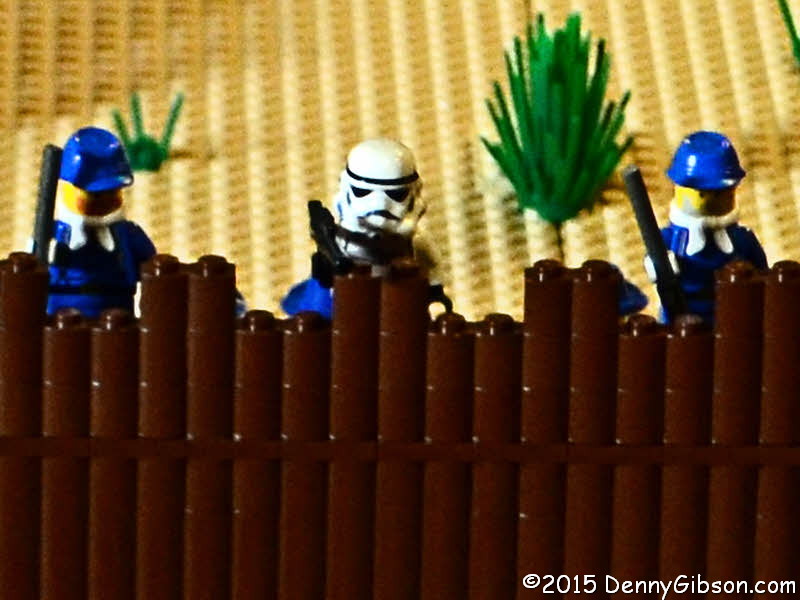
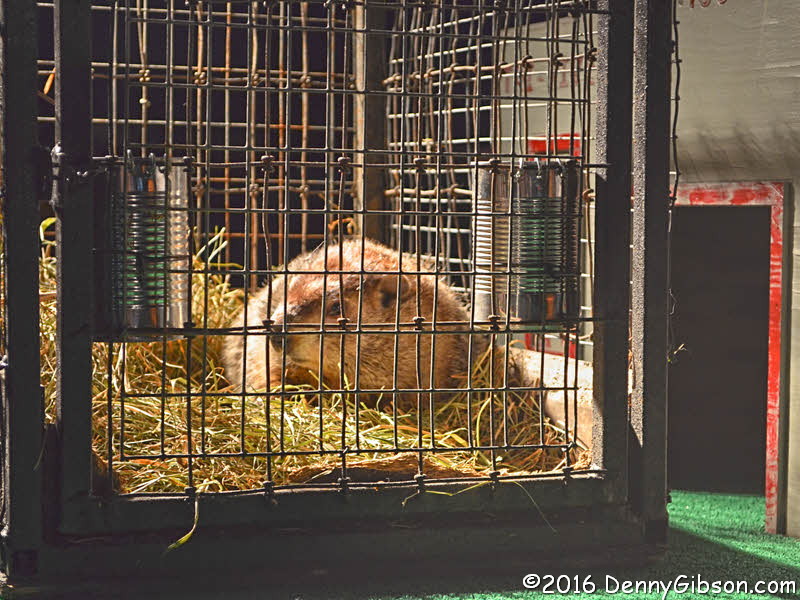
 If I’d had any confidence that I would actually attend a Groundhog Day event this year, I might have posted a canned article last week and saved the Happy Imbolc piece for today to be fleshed out with the latest news. But the truth is that I wasn’t sure I would make it to Buckeye Chuck‘s dawn pronouncement until just minutes before I was on the way. I was noncommittal when I went to bed on Monday. If I woke up in time and in the mood to go, I would, but I set no alarm clock and told myself that sleeping through the whole thing would be just fine. I awoke at 4:04, four minutes past what I had decided was the ideal departure time. There was slack in that ideal time but I waffled for a few minutes before finally deciding to go. I hit the shower and then the road and reached Marion, Ohio, right about 7:00. The photo of Buckeye Chuck in his cage was taken at 7:03.
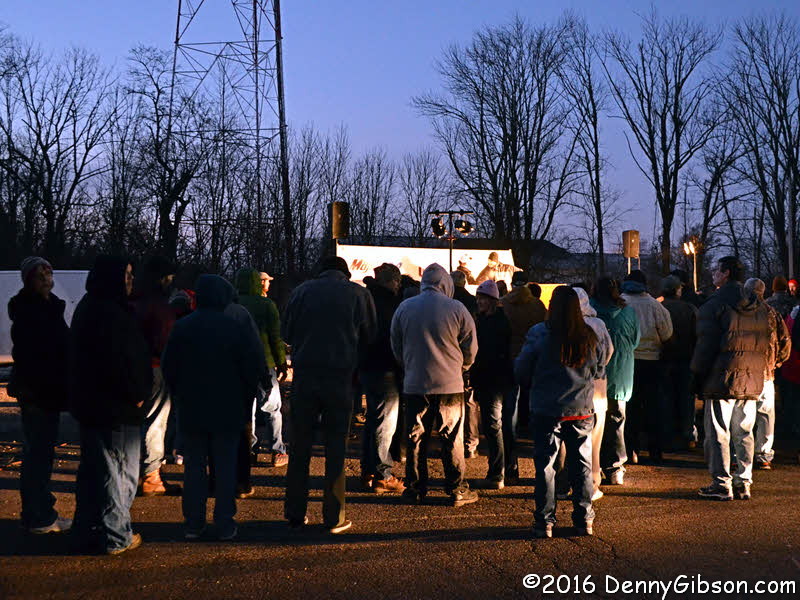 The gathering in Marion isn’t nearly as large as the one in Punxsutawney but it is respectable. Radio station WMRN has been offering localized groundhog predictions since the late 1970s when Charlie Evers started sharing those provided by groundhogs in the neighboring woods with listeners. That led to a naming contest that produced the name Buckeye Chuck and Evers was instrumental in getting the Ohio legislature to proclaim Buckeye Chuck the state’s official groundhog in 1979. The original Buckeye Chuck was present today, patiently posing for photos. Evers has moved on but is still a force in the area with a show on radio station WWGH.
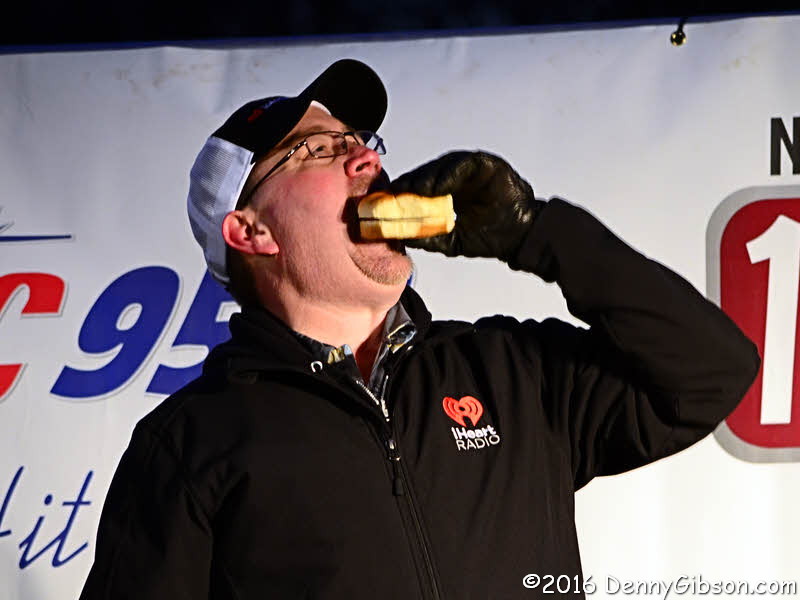
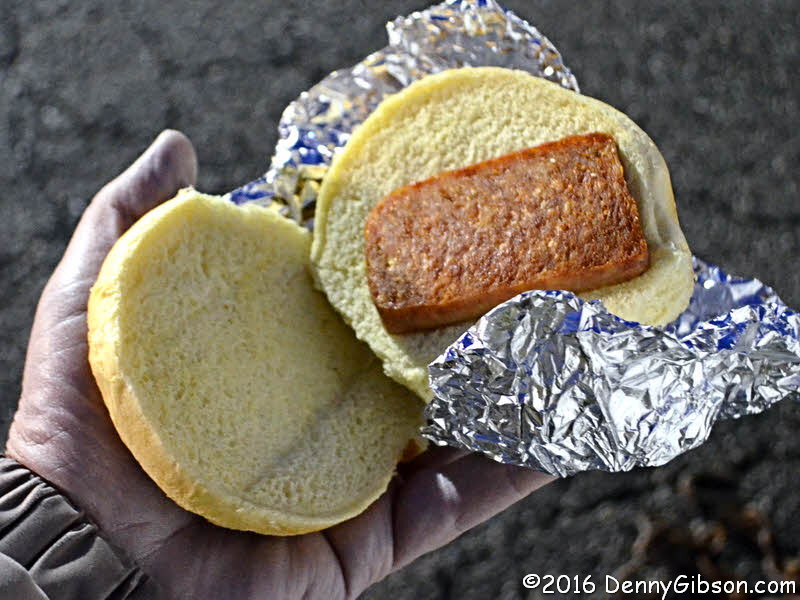
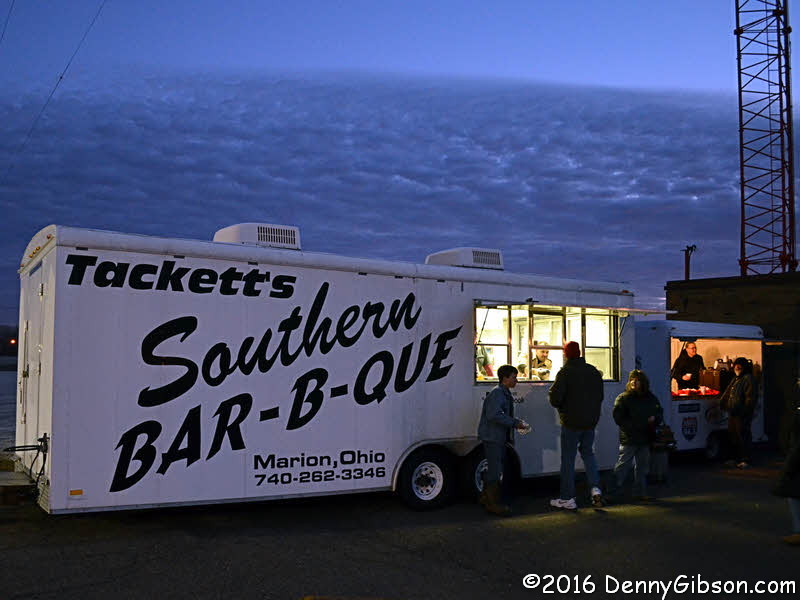 A WMRN Groundhog Day tradition is providing free ground hog, in the form of Spam sandwiches, to everyone present. That’s Buckeye Chuck’s current partner and translator, Scott Shawver taking the first bite of his. I had my own which I consumed with less ceremony but possibly more enthusiasm.

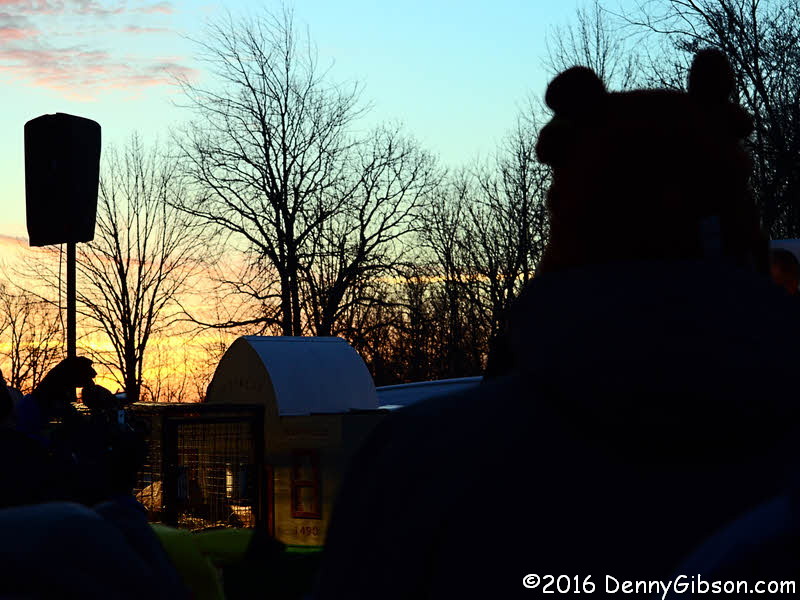 Broadcasting from the stage near Buckeye Chuck went live at 7:15, just a few minutes before Shawver bit into that sandwich. Sunrise was at 7:41. The time in between was filled with the reading of a couple of proclamations, including one from Marion Mayor Scott Schertzer and assorted banter from Shawver and co-host Paul James. When they began wondering about who had come the farthest, I thought I might be in the running but the first question, “Anyone from out of state?”, turned up a couple from New Jersey. They visit a different groundhog each year. Last year it was General Beauregard Lee near Atlanta, Georgia, and they have been to Punxsutawney, Pennsylvania “many times”. Clouds continued moving steadily on and by the time the sun popped over the horizon the sky was pretty much clear. Buckeye Chuck saw his shadow, an indicator that six more weeks of winter should be expected, instantly.
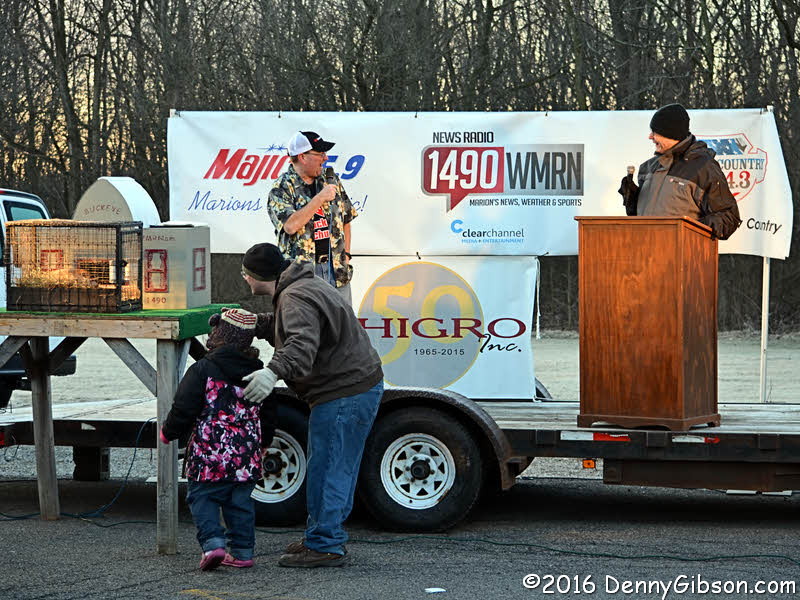 The mildly disappointed crowd dispersed rather quickly although some took advantage of the daylight to get a better view or a better picture of Buckeye Chuck while Shawver and James wrapped up the program. I dawdled a bit before walking to the car. Deciding to drive to Marion was as far as my morning planning had progressed. Just before climbing into the car, I asked the only person standing nearby if he knew of a good place for breakfast. “No,” he said with a laugh, “I’m from Cleveland.”
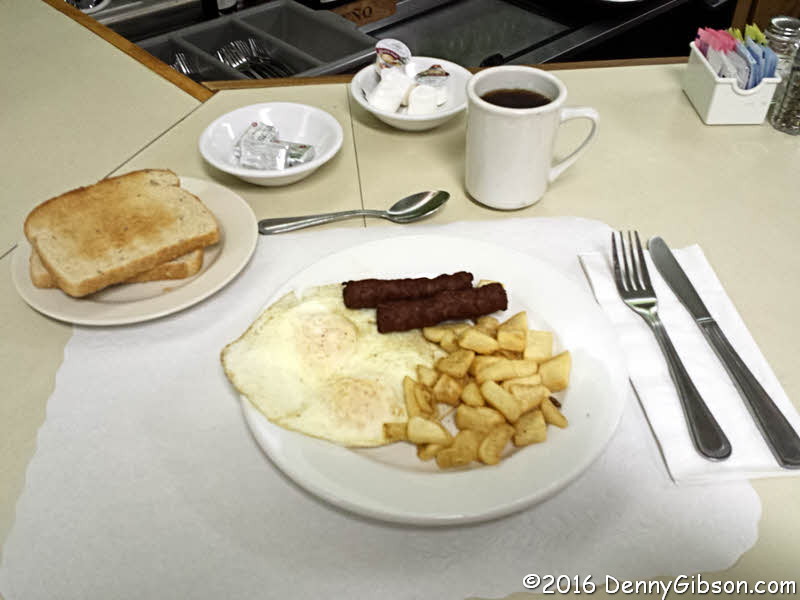
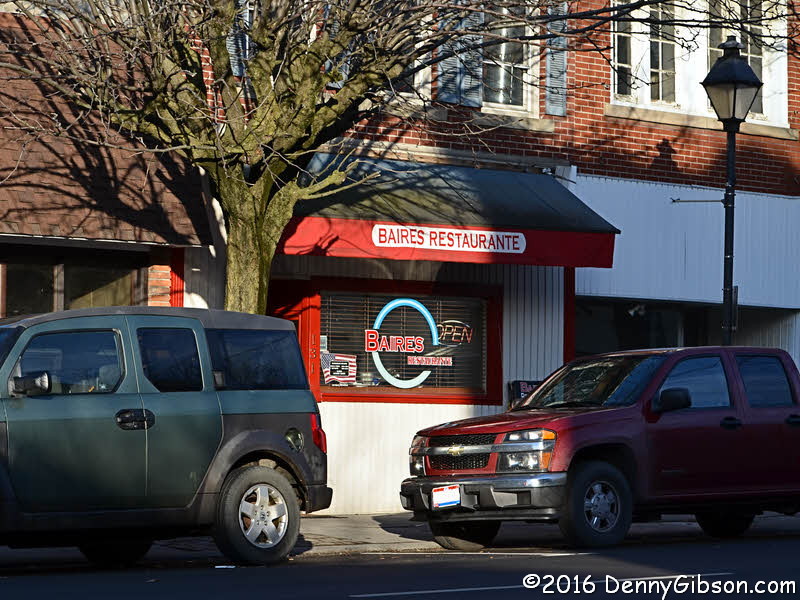 Scanning signs and storefronts as I drove back through Marion,I spotted a likely looking place near the center of town. I took the photo as I left. The street in front of Baires Restaurant was completely empty when I arrived. A guy at the counter and another in a booth were drinking coffee and chatting with each other when I entered. Service was somewhat slow but the lone woman on the business side of the counter seemed pretty busy in the cooking area so I didn’t think too much of it. The first person to enter after me was a fellow on a walker. As he worked his way into the seat next to me and against the wall, I asked, thinking it might be easier, if he would rather sit where I was. “This one’s got my name on it,” he laughed and he meant it. He pointed to a small brass plate on the back of the swivel stool marking it as his regular seat. The cook/waitress immediately appeared with his grapefruit which I had noticed her preparing earlier. My food arrived as I chatted with my new neighbor and learned that the restaurant normally opened at 8:30. It was not yet a quarter past when I entered and what I took to be slow service was more than I had a right to expect. Now that the place was officially open, a number of people entered with new folks greeted, usually by name, by those already there. As I paid my bill, I joked with the person I now realized was cook/waitress/owner about me busting in early and she grinned. “Oh, you’re alright.” In case there is any question, I had sausage & eggs.
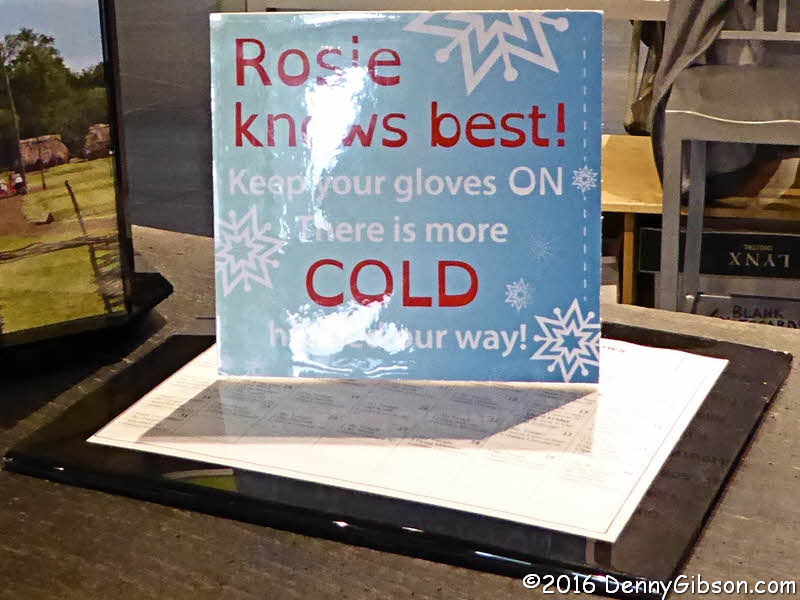
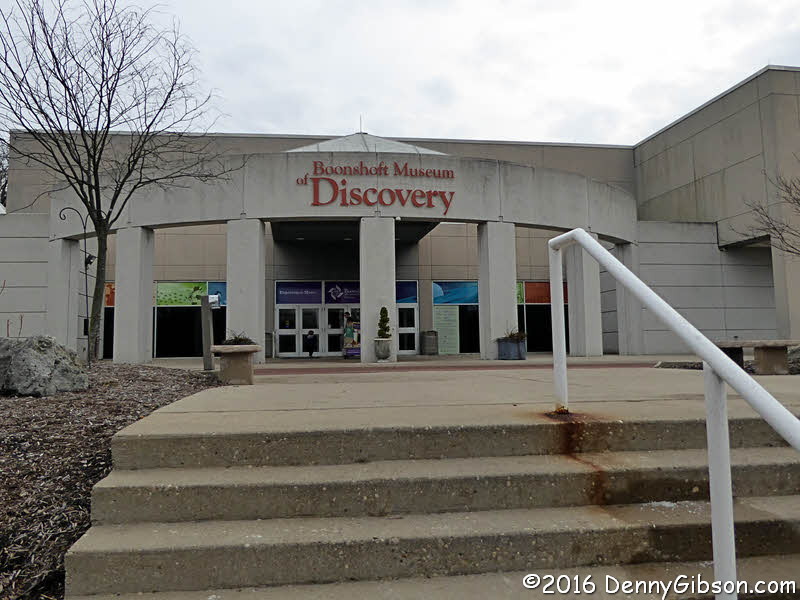 One of the reasons I had been so nonchalant about possibly sleeping through Buckeye Chuck’s emergence was that I had a Plan B. The day’s big event at Boonshoft Museum of Discovery, where I’d watched a groundhog named Rosie make her prediction in 2013, was aimed toward a much younger crowd and was scheduled for a comfortable 10:00 AM. I hadn’t even thought about it after starting toward Marion but I got curious as I was about to select “Home” on the GPS, and tapped Boonshoft instead. When I did, I realized that, without the breakfast stop, I probably could have worked in both Chuck and Rosie. Since it made the time to home only slightly longer, I proceeded to the museum. The last load of attending school children were about to climb aboard their bus when I arrived. Rosie’s appearance had taken place more than forty minutes earlier but I coud see the official result. She agreed with Chuck.
Not many did. Punxsutawney Phil predicted an early spring as did all the other U.S. groundhogs on my short list consisting of Staten Island’s Charles G. Hogg, Illinois’ Woodstock Willie, and Georgia’s General Beauregard Lee. The only groundhog of note that I found agreeing with Chuck and Rosie lives in Canada but not all Canadians are of the same mind, either. In Ontario, Wiarton Willie sided with the Ohio rodents in predicting more winter while Shubenacadie Sam claims an early spring is on the way in Nova Scotia.
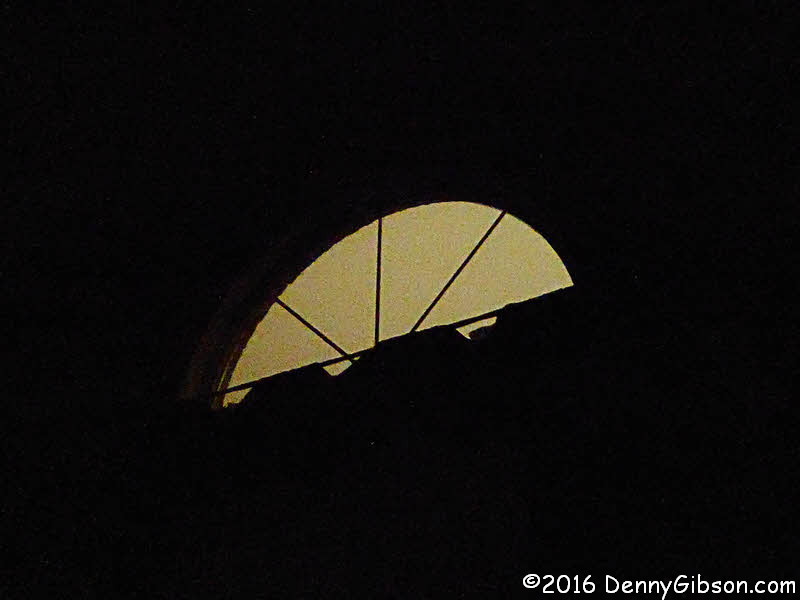 As stated in last week’s post, I had no plans to be awake at 4:30 AM Thursday. That was when Imbolc, the midpoint between Winter Solstice and Vernal Equinox, occurred this year. Neither did I have plans to assure that I was asleep at that time but that seemed the most likely and it is indeed what transpired. I didn’t miss it by too much, though. The picture at left was taken at 5:22, a mere fifty-two minutes past Imbolc. Admitedly I can’t prove it but I strongly suspect that the view from my bed was pretty much the same at the magic moment as it was less than an hour later.
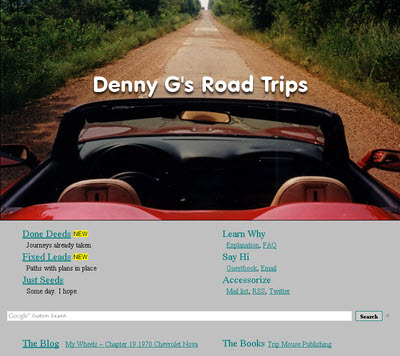 For something that did not even register on my radar a month ago, the concept of mobile-friendly websites has grabbed a lot of space on this blog in the young 2016. The first post of the new year led to me realizing that mobile devices should not simply be ignored. The second post discussed a little of what I had learned and described the first steps taken to be mobile-friendly. And this, the fourth post of the new year, is a report on reaching a milestone on the road to mobile friendliness.
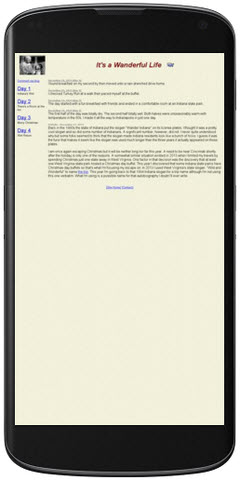
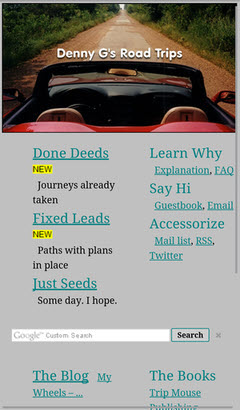 The milestone I speak of is having a home page that passes both Google and Bing mobile friendliness tests. That’s it at the top of the article in desktop (actually laptop) view and at the left in smartphone view. It is the biggest change to the website’s front door in at least fifteen years. It retains most of the flavor and function of the previous version but is simpler and scales down a lot better. About the only things missing are the RSS feeds from Route 66 News, Roadside America, and American Road Magazine and the randomly selected road trip photo and link at the page’s upper right. Both came with a lot of overhead and I don’t recall anyone ever complimenting me on either. I personally really liked the random picture thing, however, and have kept it alive with a “Done Deeds”-“All Trips”-“Random” menu item. The Google ads also seem to be fairly high in overhead and, although I’m hanging on to them for the present, I will be keeping an eye on them and they could go missing.
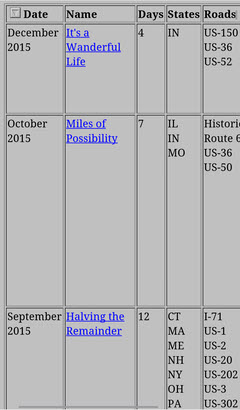 There are a few pages that may never be truly mobile-friendly as Google and Bing see things. Among these are both Oddment and Road Trip index pages. While changes have been made to make text on the pages readable on mobile devices, the table displays overflow smartphone screens in all directions and require zooming and/or panning to view. There are schemes, using pop-ups and such, to make tables slimmer and more mobile-friendly. I don’t really like any I’ve seen and am firmly of the belief that the conversion effort would not be justified for either of these tables. While they might not be officially mobile-friendly, and I have no quibbles with either Google’s or Bing’s criteria, they seem quite usable on my smartphone and I don’t consider them overly unfriendly.
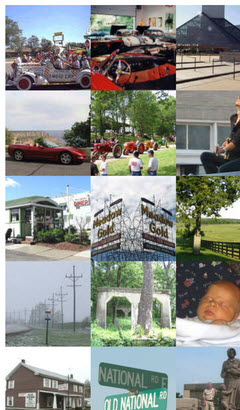 The Clickable Collage is another page which is not officially mobile-friendly. Containing a single photo from every completed road trip, it allows the individual photos to be clicked to access the journal for the associated trip. It was formerly available through a link below the randomly selected photo at the home page’s upper right. It is now reached through the “Done Deeds”-“All Trips”-“Collage” menu item. Although I don’t expect everyone to experience the same memory stimulation I do when viewing the collage, I have to believe that it is most impactful when seen in its entirety. Of course this is best done on a full size (whatever that is) screen where the total view is also actually usable. Making this collage fit a small screen by forcing it into one or two very tall columns just seems wrong and more irritating than impressive. It is clearly not a natural fit for smartphone screens but it can, like those index pages, be viewed and used by panning. It can also be zoomed to fit but, while this view of
  Puckett’s Grocery & Restaurant is the target of this trip but there will be some stops along the way. Puckett’s is in Leiper’s Fork, Tennessee, which, for me, is a little beyond Nashville. I have Music City evenings planned for the Bluebird Cafe and the Grand Ol’ Opry at Ryman Theater before my evening with “America’s Route 66 Band”, The Road Crew, at Puckett’s. You know the saying, “When you come to a Road Crew in the Fork, take it.”
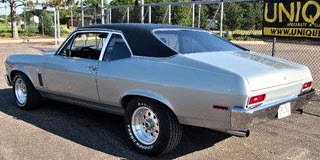 Again I must confess to a purloined photo gracing yet another My Wheels post. My car did not have the highly visible dual exhausts or fancy wheels of the pictured vehicle nor did it have the unseen 350 V8 and 4-speed floor shift. Mine was a 307 V8 with a 3-speed automatic. However, my car was, just like the one at right, a Cortez Silver 2-door with — and this is important — black vinyl top. It is the only vinyl topped car I’ve ever owned and one of very few I can even imagine owning without some level of embarrassment. While I doubt everyone agrees that the vinyl covering looks pretty good on this car it’s apparent that I’m not alone in thinking so. There are many full restorations of third generation Nova coupes that include a restored vinyl top. And that includes some high-end 396 Super Sports.
 I didn’t do it on purpose, Jim. Honest I didn’t. But, as has happened a time or two in the past, mentioning a problem in a blog post was enough to get some insight from blogger
 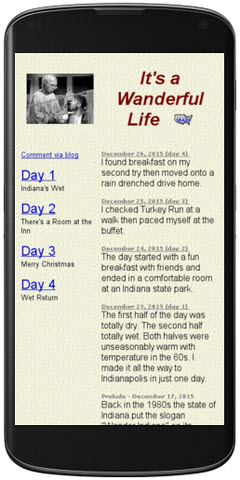 I revisited the Google testing tools and paid a lot more attention to the suggestions. There was some good news. The vast majority of my website is very simple so that adding just one line (to set a mobile viewport) to a page allows it to pass Google’s mobile-friendly test and makes it look better. The page shown at the top of the article reappears at the left with that one line added.
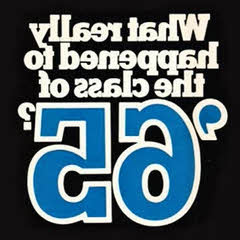 I made a couple more trips this year than last but they were shorter and resulted in less total days on the road. That naturally caused a slight drop in pictures posted to the journal but pictures in the blog increased so that there was not a significant change in the total number of new pictures. In addition to the 52 regular weekly blog posts, there were 14 reviews, 9 road trip links, and 2 miscellaneous asynchronous posts which adds up to just three less blog posts than last year. Three of the new blog posts generated enough traffic to make the top five. The most popular new blog post concerned a little ol’ high school reunion. Once again there were no new posts in the non-blog top five.
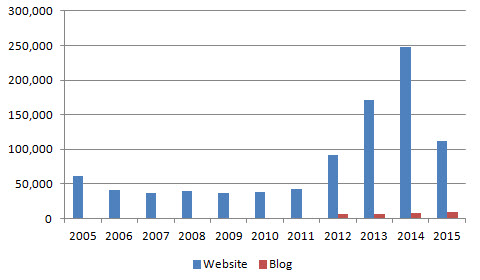 So what’s that mean? One possibility is that a change in the way statistics are compiled or visits detected resulted in an artificial drop in the numbers and I can produce some arguments both for and against that theory. The “for” ones are the weakest. What seems more likely and less palatable is that the numbers don’t lie and readership has truly plummeted. Jim Grey, a friend and popular blogger, recently posted an article he called
 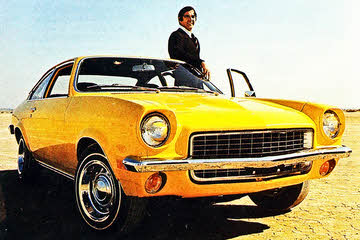 No. That’s not my Vega and that’s not me. It’s John DeLorean in the August 1970 issue of Motor Trend where he was singing the praises of Chevrolet’s new small car. The editors were singing right along with him and even adding some verses of their own. A month later, Car and Driver and Road & Track joined the choir. In February, Motor Trend named the Vega 2300 their 1971 “Car of the Year”. All this for a car that today has a reputation just slightly better than Yugo.
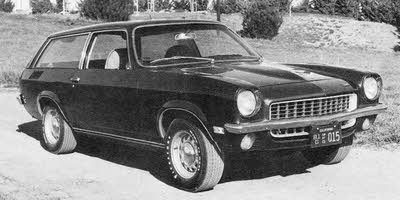 I could’t find any pictures of the dark green 1971 Kammback that I bought in the summer of 1974 so I took to the internet. I didn’t have much better luck there. This black & white photo of what is identified as a 1972 model is the best I could do. The shortage of photos surprised me but so too did the abundance of early praise. I can’t explain the absence of decent Kammback photos so maybe my surprise at that is justified. My surprise at the praise isn’t. In fact, what those magazines said about the car — great handling, sporty looks, comfortable ride — is exactly what I thought of it forty years ago. I was surprised only because I had forgotten.
 It has been three decades since the slogan “Wander Indiana” came and went but I’m going to do just a tiny bit of that over Christmas. The first day, with plenty of that Indiana rain, has been posted.