Brewing Heritage Trail

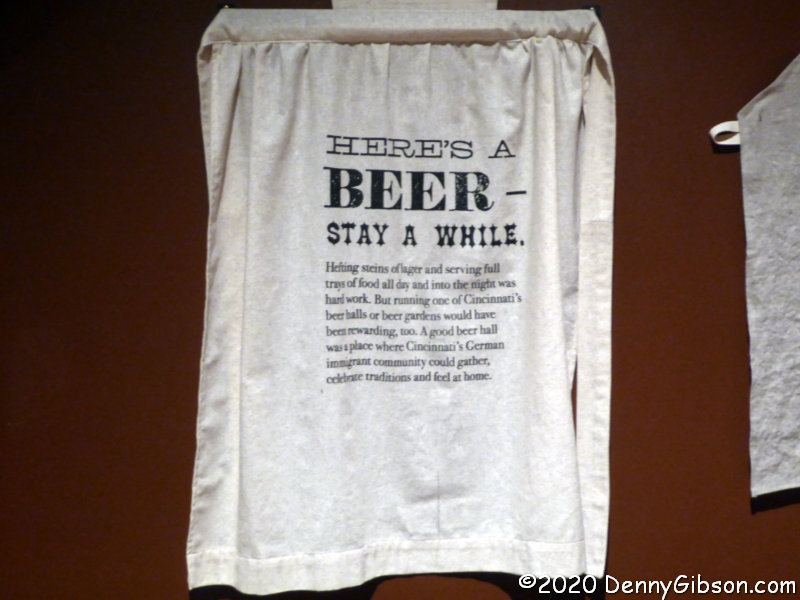
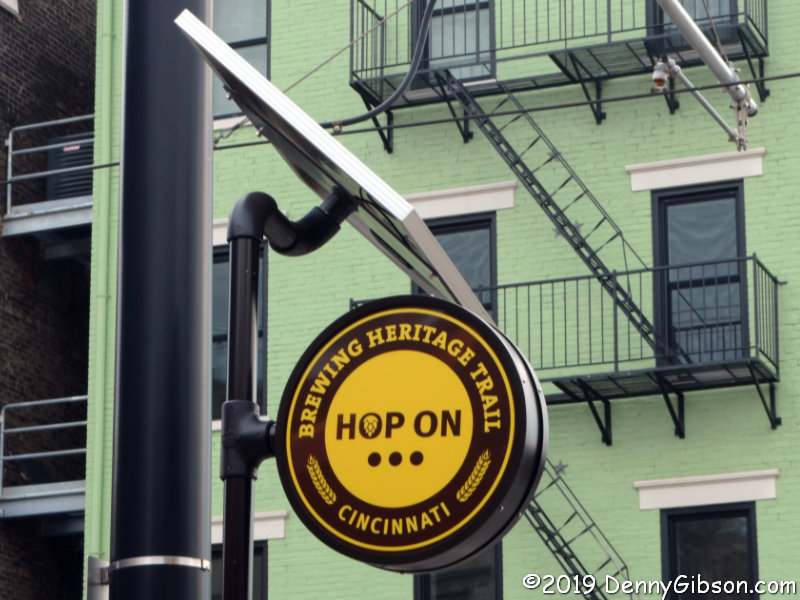
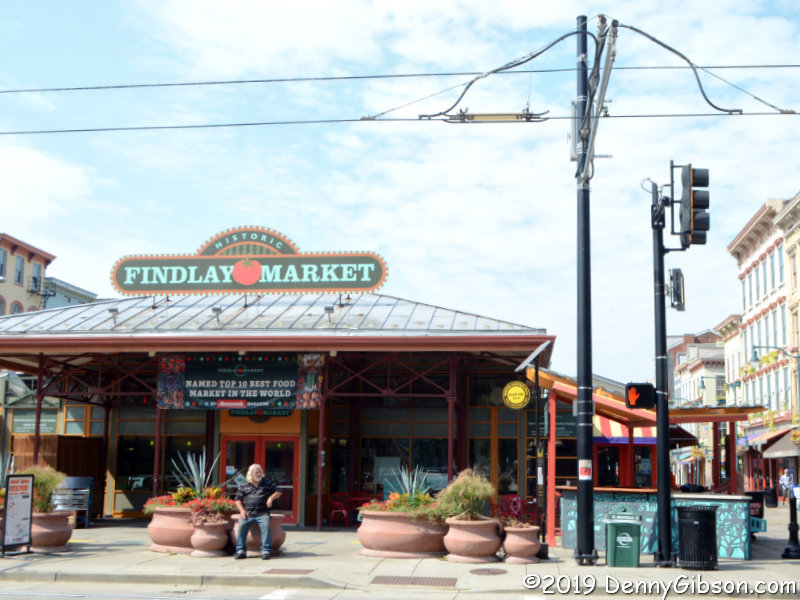
I wasn’t around when the first phase of Cincinnati’s Brewing Heritage Trail opened in April and checking it out has been on my to-do list ever since. Some nice weather finally lined up with some idle time this week, so off I went. There really isn’t an official beginning or end and the designated Hop On points are essentially just suggestions. Even so, I wasn’t feeling particularly rebellious and following the suggestion seemed easier than not so I did. This is the Hop On point at Findlay Market.

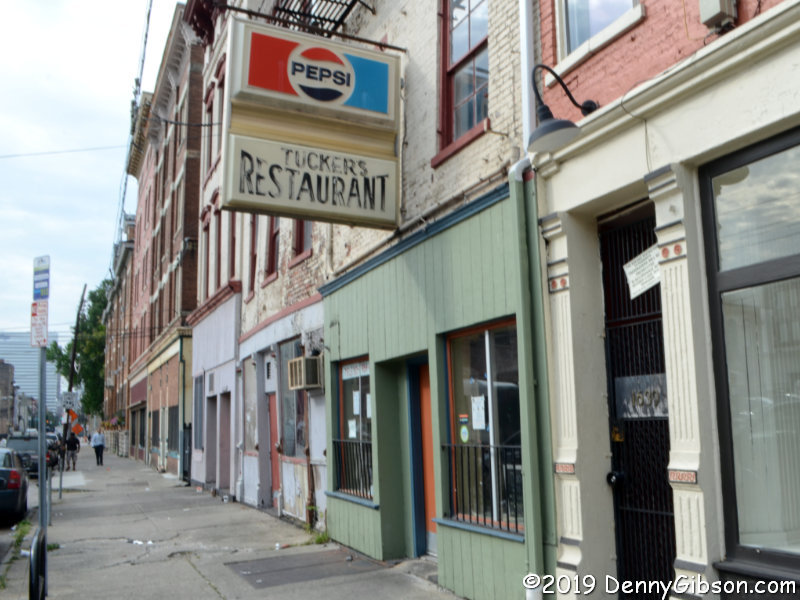
My first stop was physically on the trail but not part of it. I had thought of grabbing something to eat at the market but decided to skip ahead on the trail just a bit and have breakfast at Tucker’s, a Cincinnati institution since 1946. I’ve eaten here in the past but not since a 2015 fire that threatened to permanently close the place. And I’d never met Joe Tucker. Today I sat at the counter while Joe worked the grill and chatted easily with me and everyone else who walked in the door. A great way to start the day.

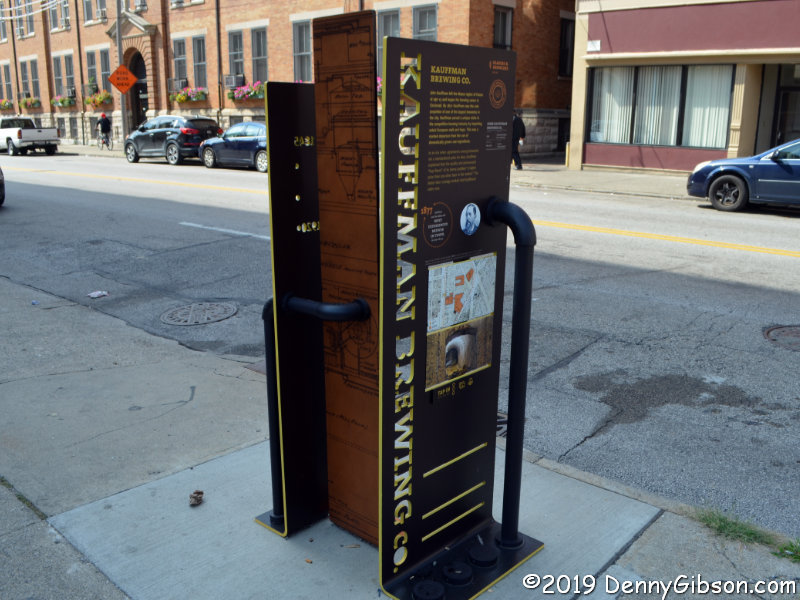
From Tucker’s, I backtracked just a little to begin following the trail in earnest at Vine and Elder. The current trail is a loop plus the beginnings of an extension on McMicken Avenue and the Elder Street connection to Findlay Market. Signs like this one identify segments of the trail as well as the turns. A map is part of the signage at the Hop On points. It is also available online and I referenced it a couple of times from my phone. Apparently an actual smartphone app was available at one time but it has been withdrawn while “we tweak a few items”.

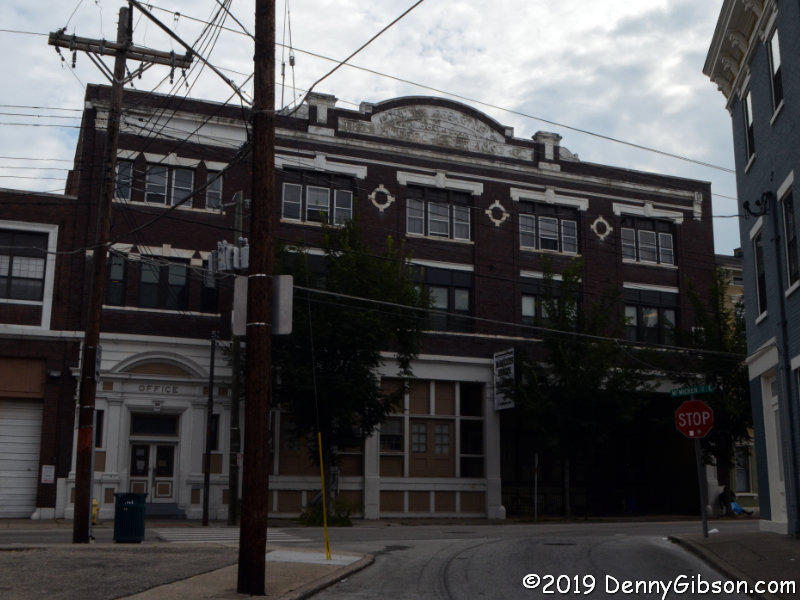
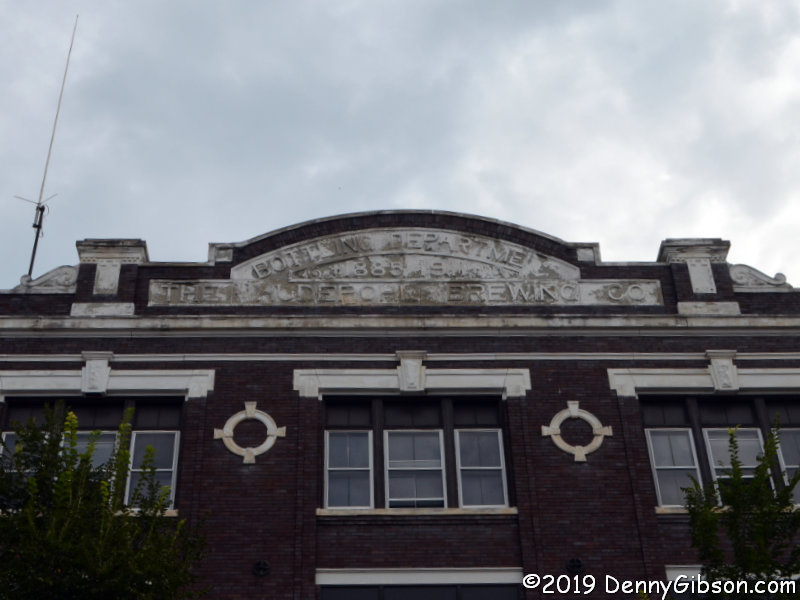
The former Hudepohl Bottling Plant sits on McMicken at the end of Elder Street. Opposite the building is a display featuring a smiling Louis Hudepohl and lots of information about the company. Hudepohl was one of the few Cincinnati breweries to survive prohibition and was once one of the largest in the state. The main Hudepohl brewery was abandoned in the late 1980s but its 170-foot smokestack bearing the company name remained a Cincinnati landmark until its demolition in June of this year.

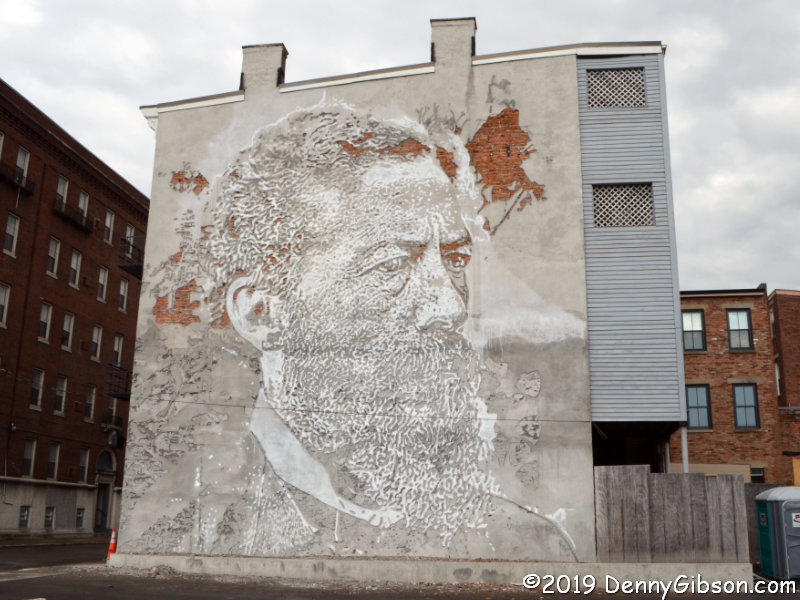
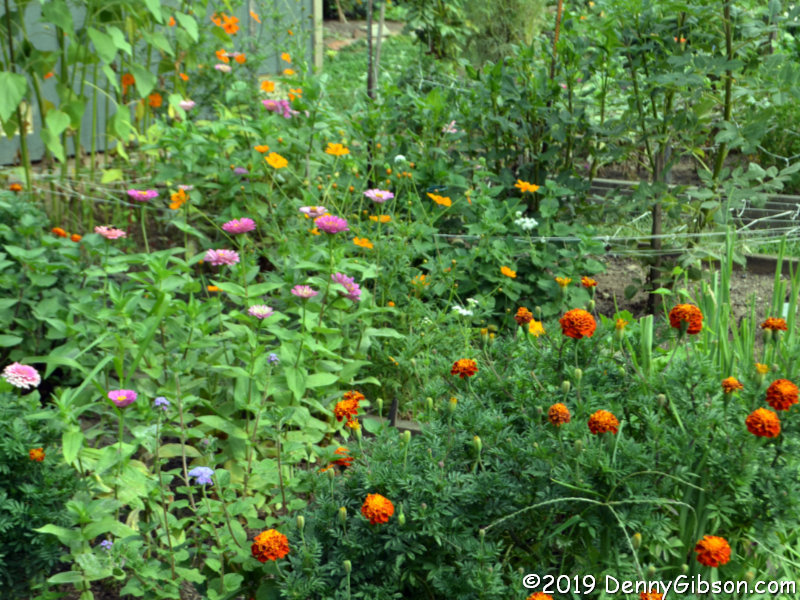
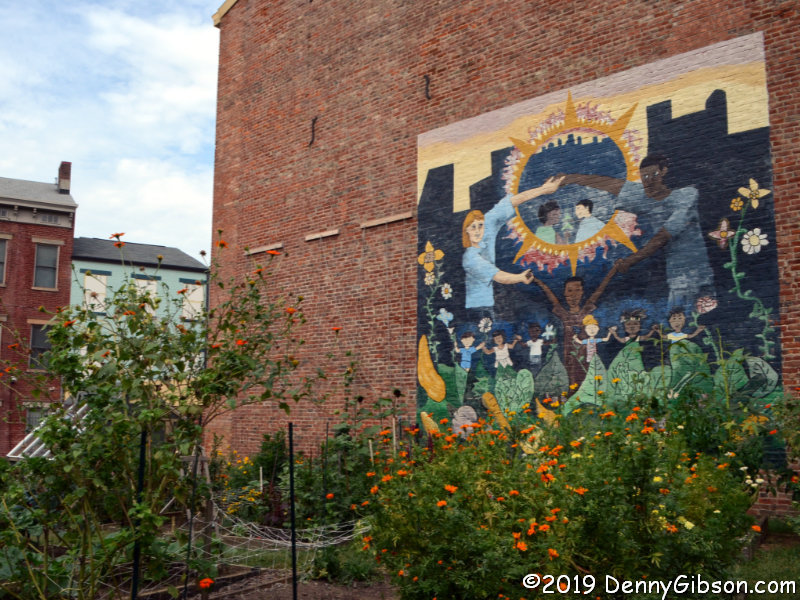
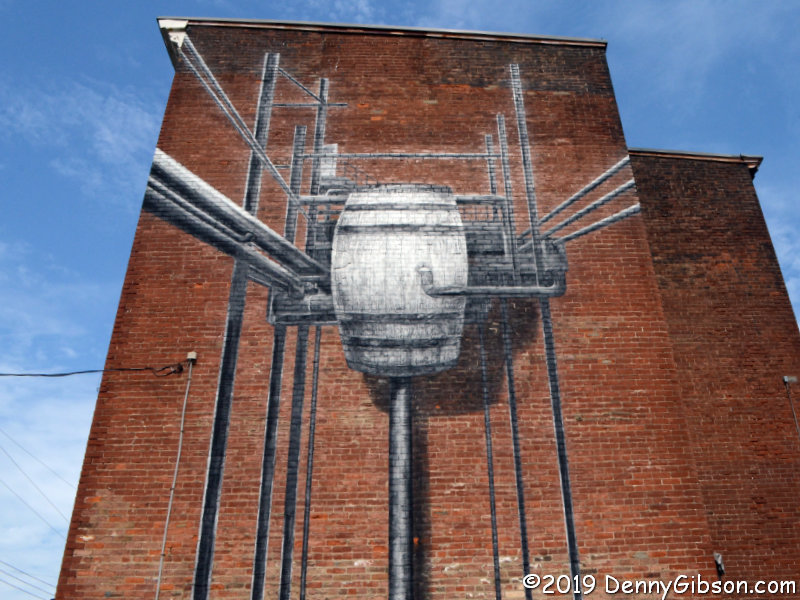
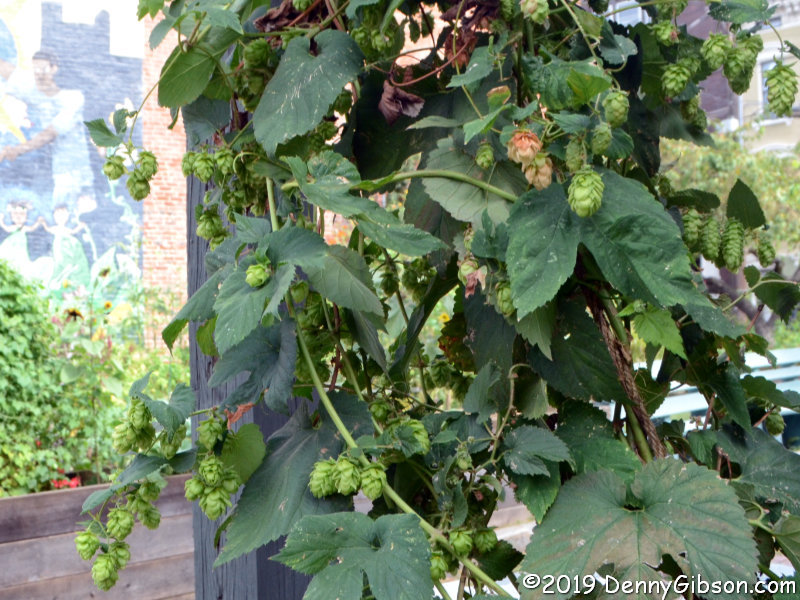
Just yards beyond the Hudepohl kiosk, I found something unrelated to the trail but too cool to ignore. It was the mural that first caught my eye but I soon realized that I was standing by a large — and slightly out of place — garden. When a voice invited me in, I stepped through the gate to meet Christina, the Flower Lady of OTR and a volunteer gardener. Started in 1980, the Over the Rhine People’s Garden was the first community garden in Cincinnati. It is filled with flowers, vegetables, and fruit and there there is a weekly free distribution. Food not taken is donated to a local food bank. I even found a small connection to the trail I was following. At least one volunteer does some home brewing and is growing hops for that purpose.

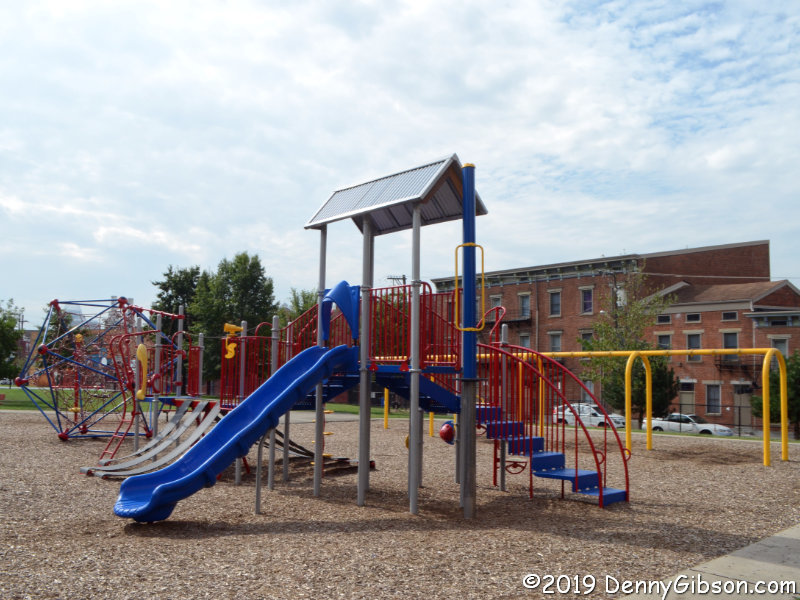
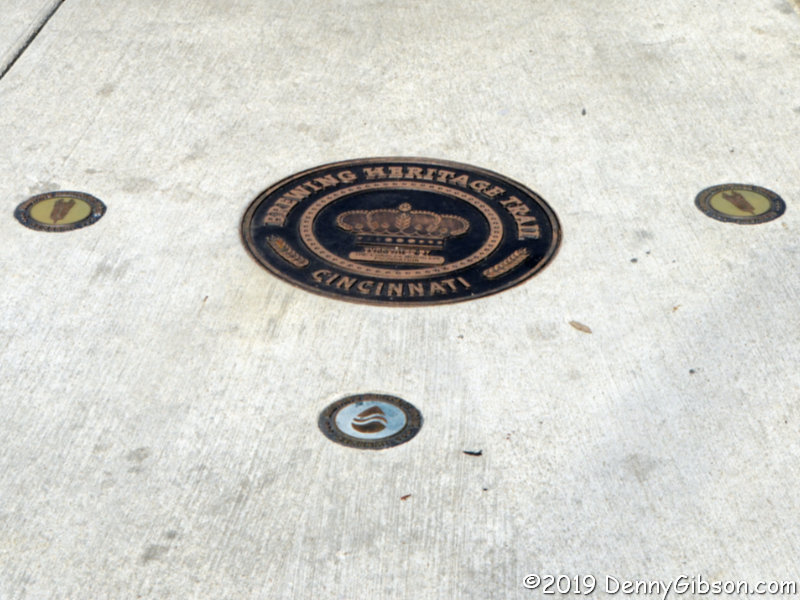
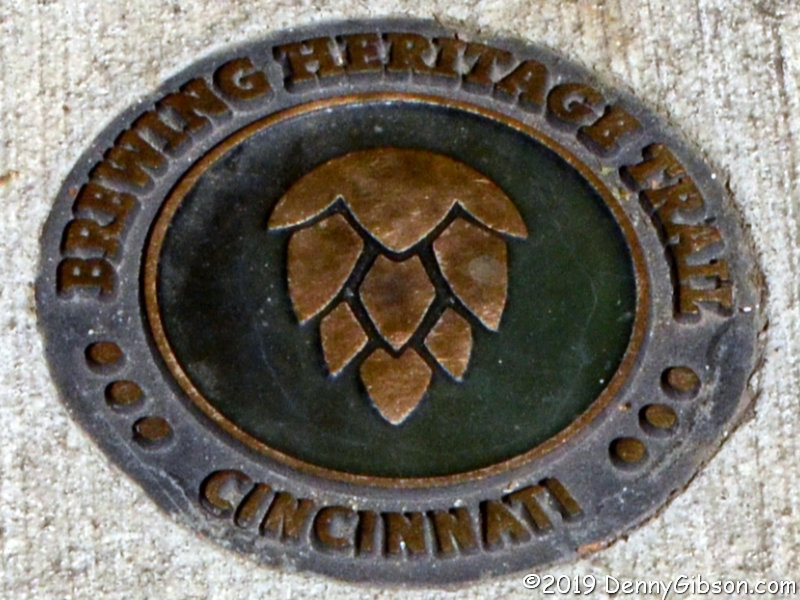
The trail is also marked with medallions pressed into the sidewalks. I’m sure I walked right past some of the smaller ones where they appear all by themselves without even noticing. Just past the green space and playground of Grant Park, this cluster at the corner of McMicken and Moore is pretty hard to miss.

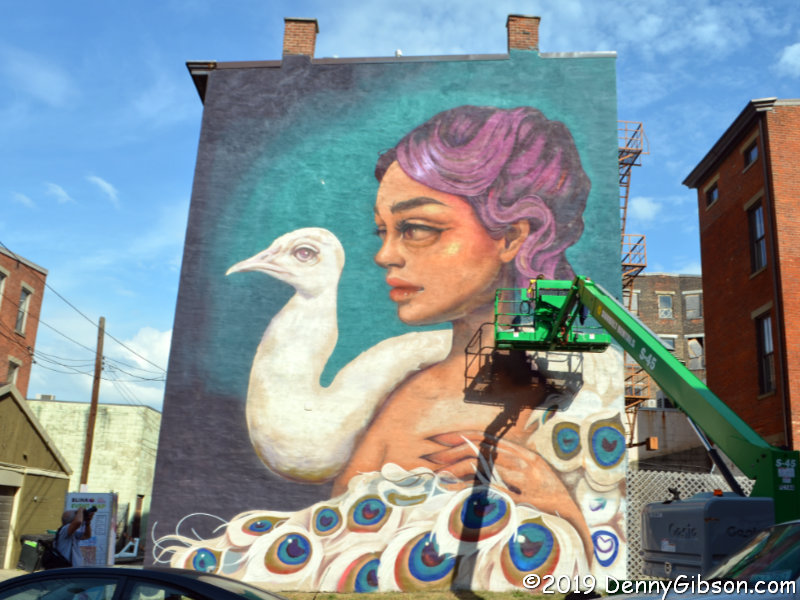
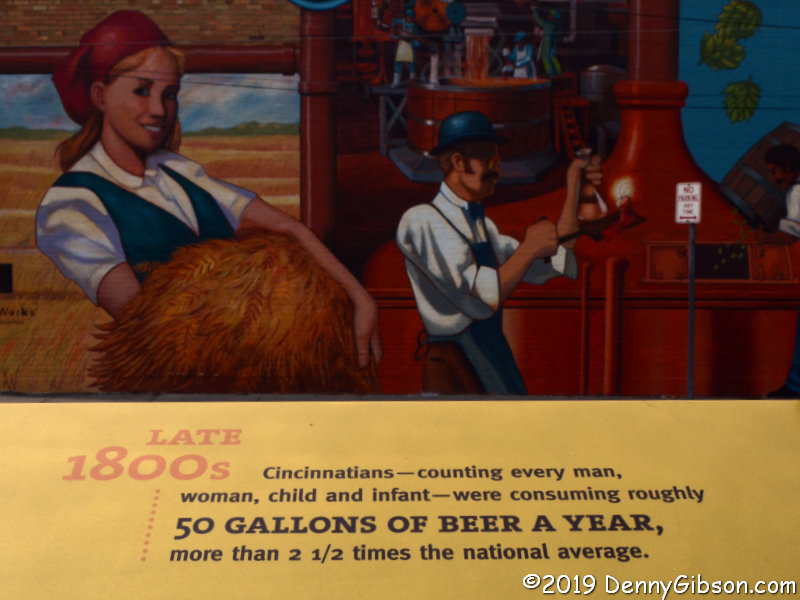
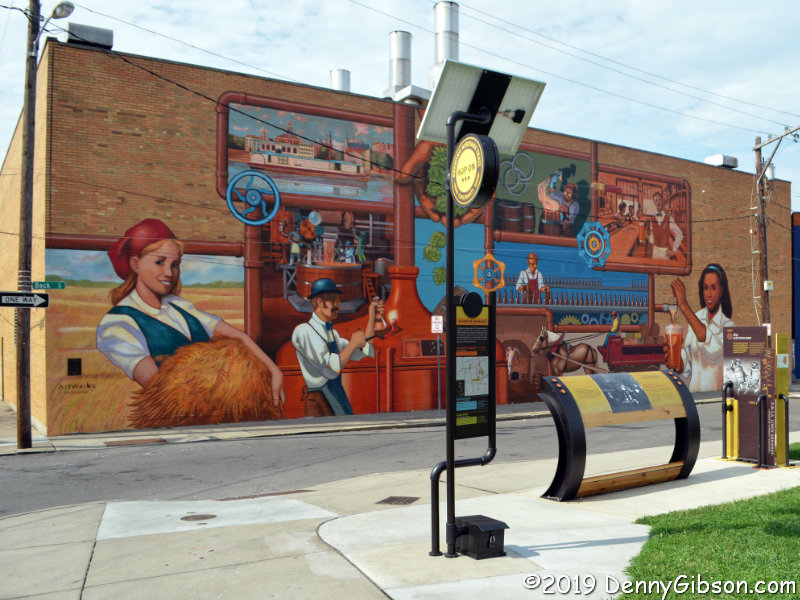
The second Hop On point is just around the corner on Moore Street. It is next to one of the largest murals on the trail and includes multiple information displays. Among the many pieces of information presented is one regarding local per capita beer consumption. That statistic has been cited as one of the reasons that Cincinnati, despite having around forty breweries, was not known as a national distributor. There just wasn’t much left to distribute.

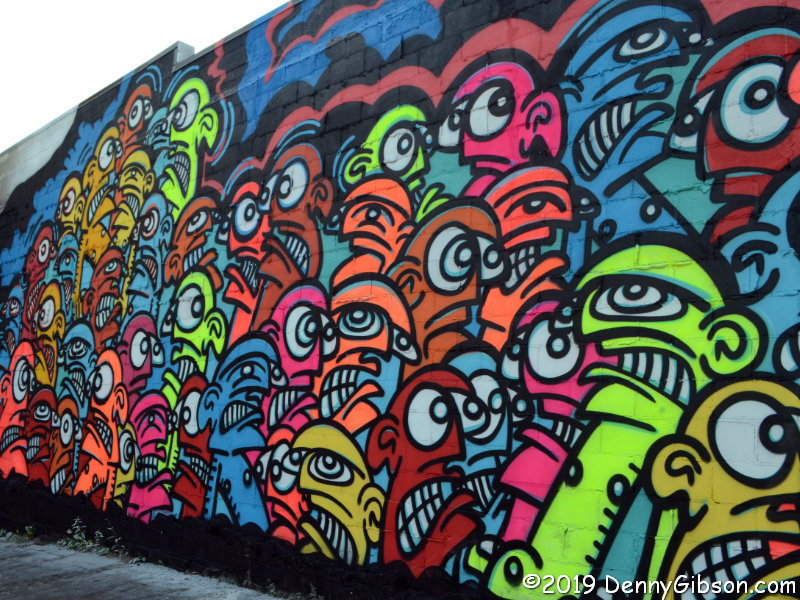
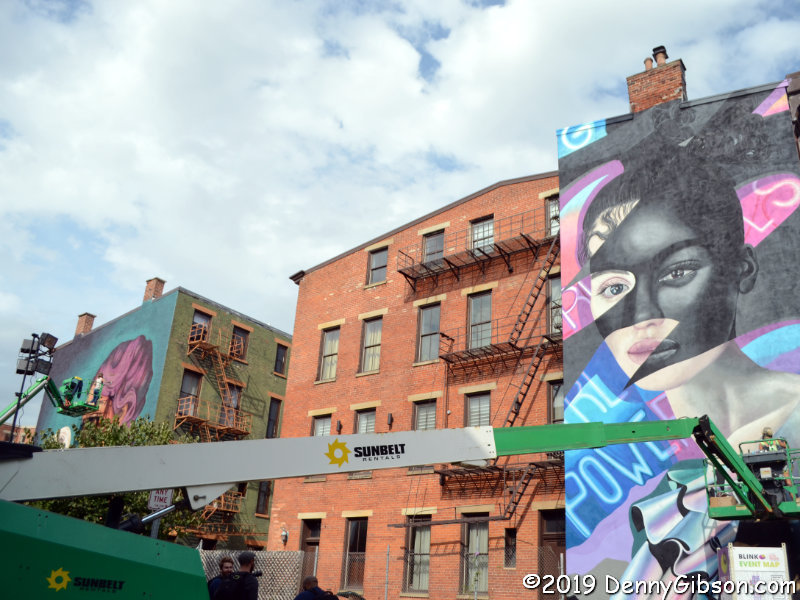
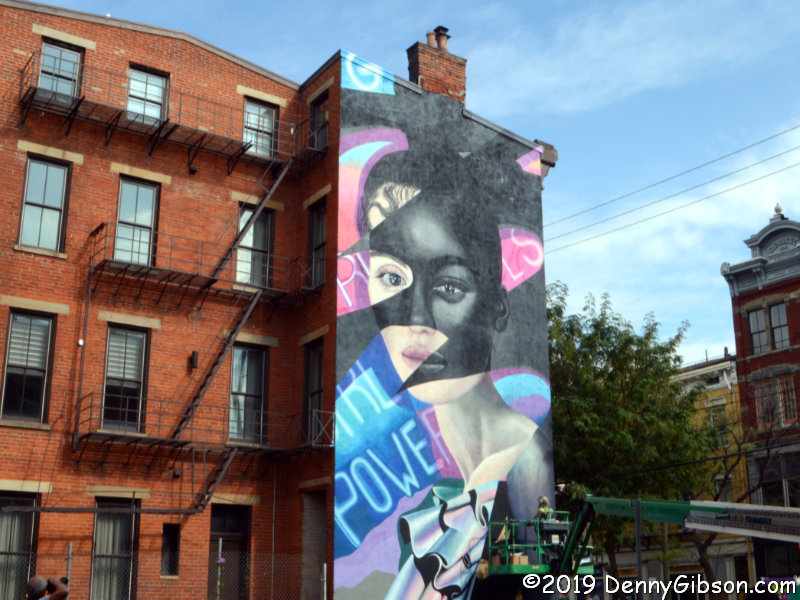
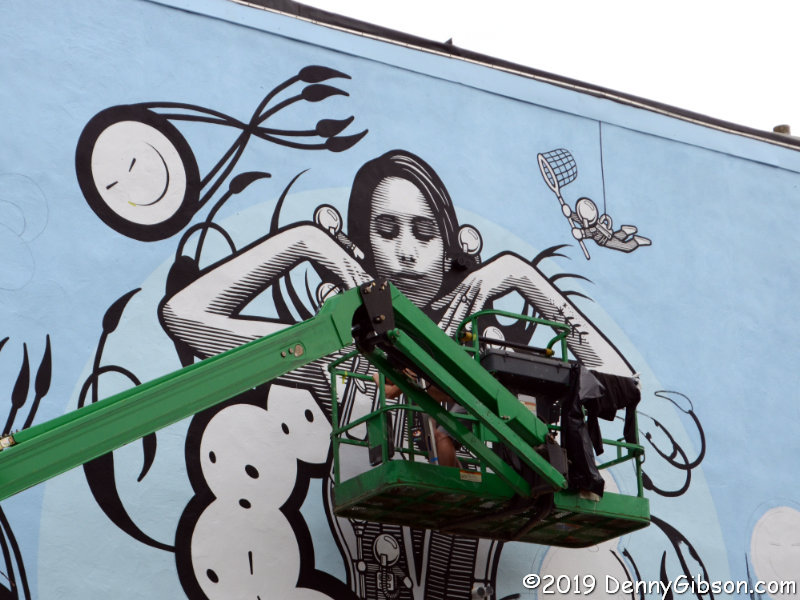
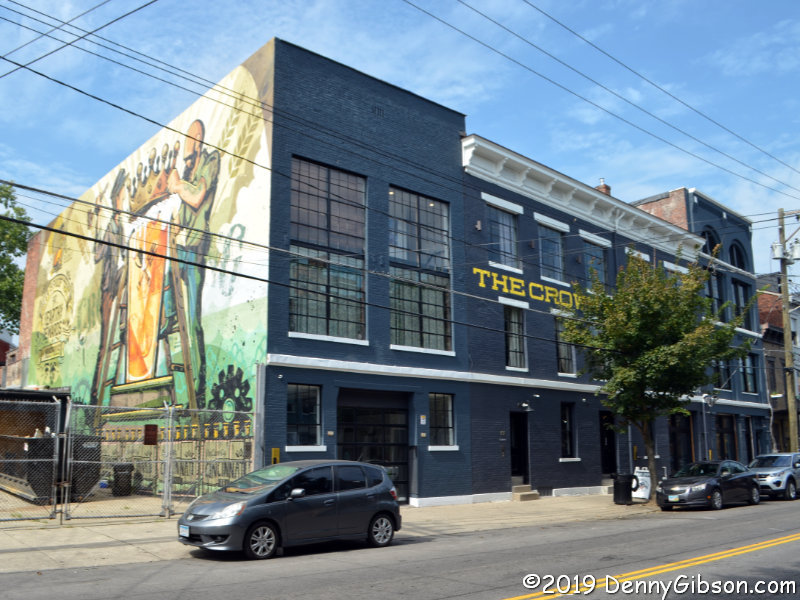
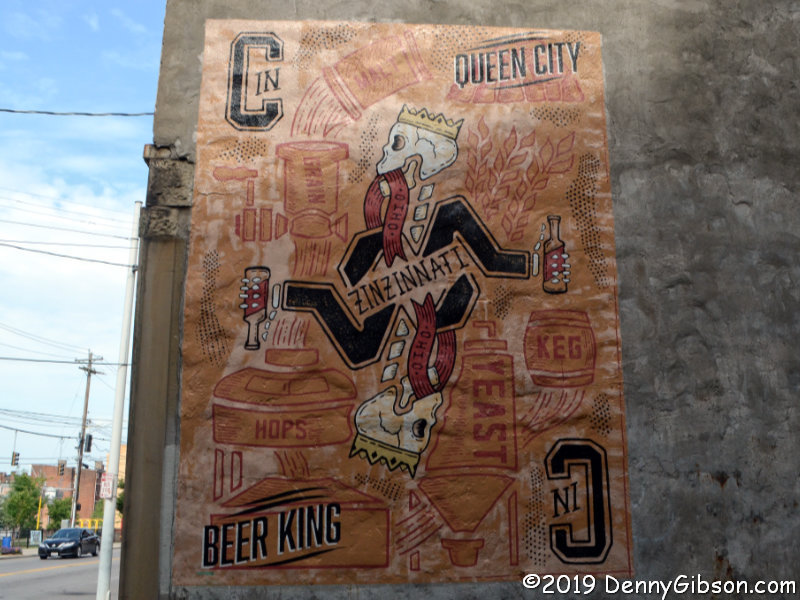
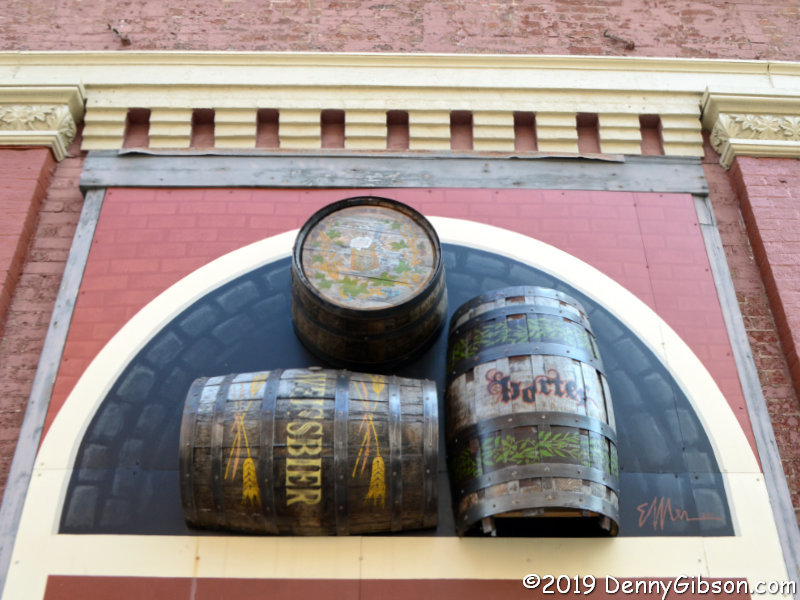
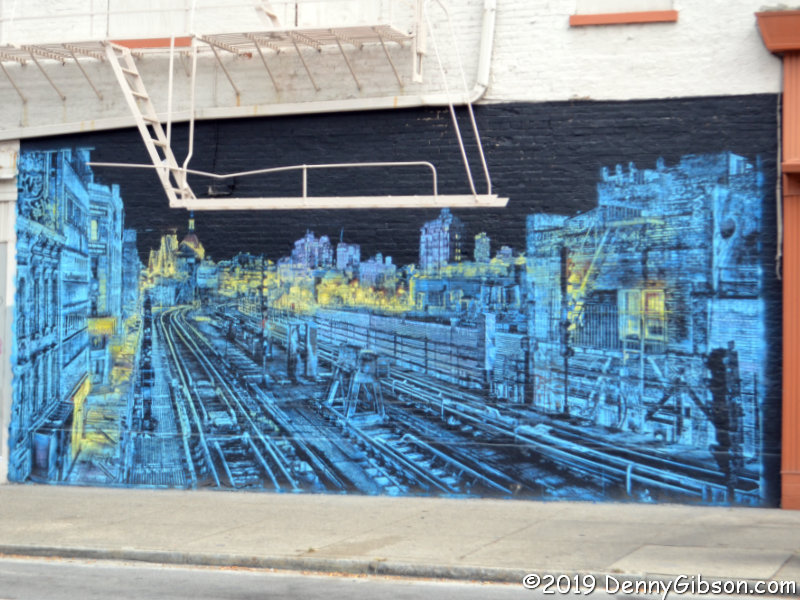
I slipped down the unfinished McMicken Street segment and even backtracked a bit to capture some of the numerous murals along the trail. The Crown Brewery is just one of several buildings in the Brewery District being spruced up to reflect their former lives.

This was once home to Kaufmann Brewery and is now home to Christian Moerlein. In between, it was the Husman Potato Chip factory. Besides containing a brewery and taproom, the building houses the Brewing Heritage Trail Tour Center. A wide variety of tours — both above and below ground — is available. Check them out here. I’d kind of been thinking about a cold brew in the taproom but hadn’t really considered the time. “It’s not yet noon and the taproom is hours away from opening,” I observed to myself dryly.
There were plenty more informative things to read and decorative things to admire. I even have evidence that I didn’t miss ALL of the solo medallions. Reading about history while standing where it actually occurred is always cool.

I finished the loop then the short extension back to the Hop On point at Findlay Market. I’m impressed. An incredible amount of Cincinnati’s brewing history can be learned in an hour’s time walking the trail. As much as I enjoyed the walking and reading, I must admit that two of the day’s highlights were not listed trail features. I really enjoyed talking with Joe and Christina. Both were familiar with and supportive of the trail even without an official connection. I also enjoyed speaking with John Donaldson who owns buildings near the Moore Street Hop On point and who paused to chat as I looked over the nearby signs. If only I could have chatted with a bartender over a cool pint inside the Moerlein taproom.

Ludlow Garage 50th Reunion!

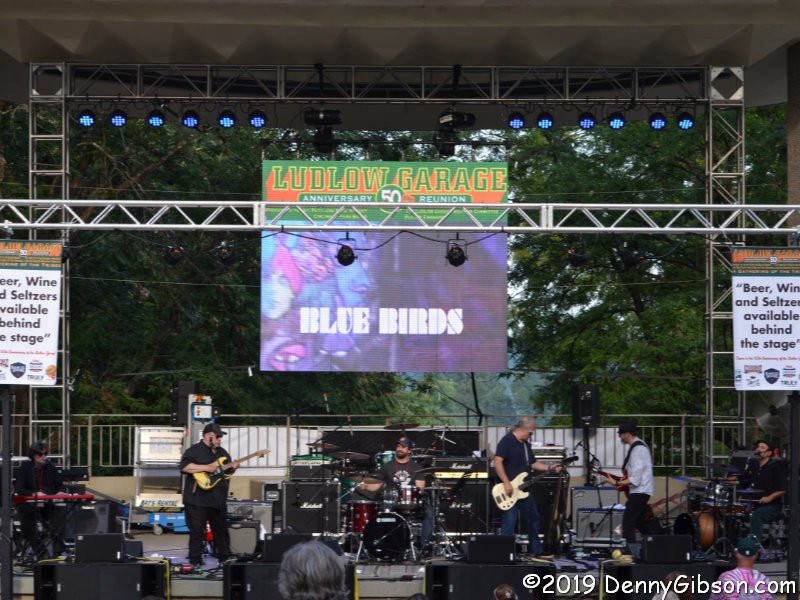
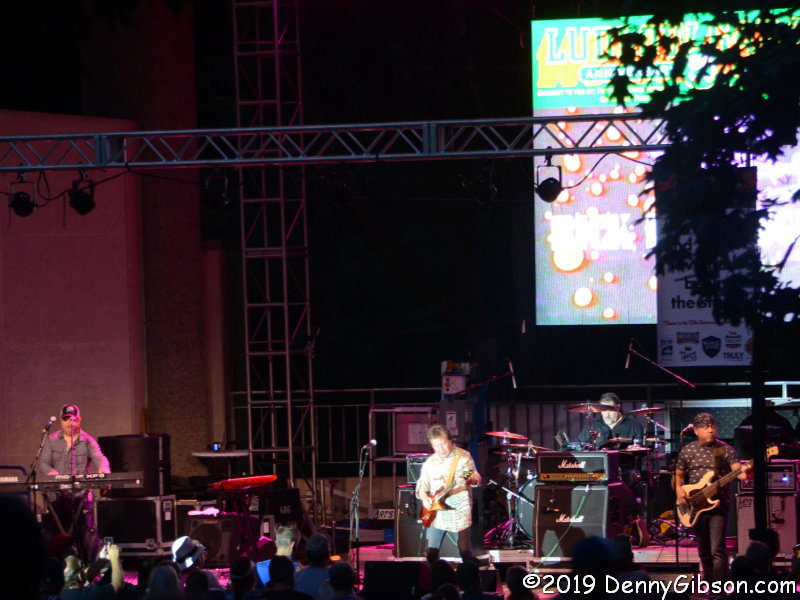
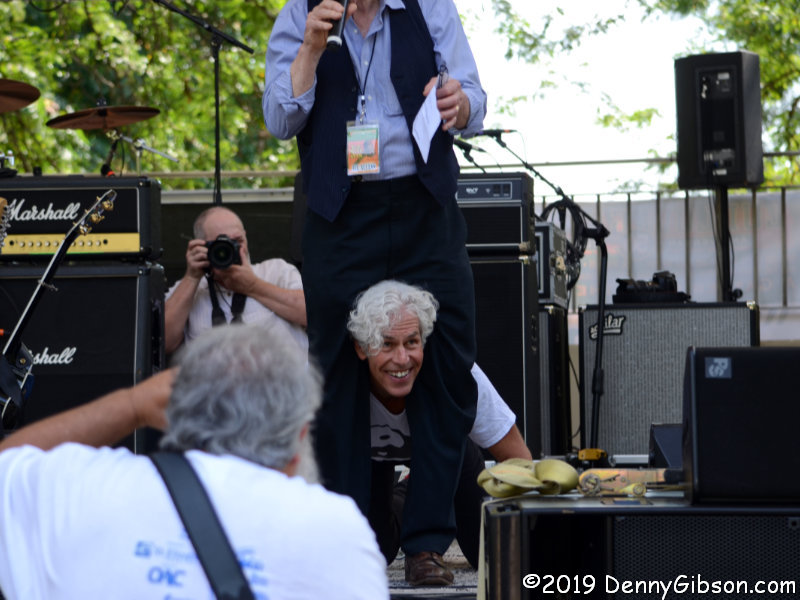
The Ludlow Garage is a sadly dim shadow in my personal reminisces. I blame that on being busy and broke. My first child was born about seven months before the Garage’s opening on September 19, 1969. Some months prior to that, my wife and I had moved from an apartment roughly half a mile from where the Ludlow Garage was about to appear to a house in a Cincinnati suburb some seven miles distant. Besides the new baby, I was working a full-time job and playing in a band, which meant there was little time. A mortgage and commuting to downtown — along with that new baby — meant there was little money. I visited the Garage a few times, but I missed biggies like the Allman Brothers and Pink Floyd. I almost saw Santana. A friend and I were in line when we convinced each other to go somewhere else. I may have seen Mother Earth since I distinctly recall seeing East Orange Express there, and their only appearance listed on the Ludlow Garage Archive is as a Mother Earth opener. Despite thin credentials, I attended the 25th reunion in 1994 and came back for the 50th. As Ludlow Garage owner Jim Tarbell delivered some opening remarks, Rob Fetters, the day’s opener, crept up behind him following Jim’s mention of his name. This might have been a great photo if I hadn’t been so close and chopped off Jim’s head. But it’s the thought — and the spirit — that counts. Right?

Jim managed to finish his remarks, and Rob got the show rolling. The January 1971 demise of the Ludlow Garage preceded the start of Rob’s impressive musical career, so he never got to play there. In the early 1980s, he fronted local legends The Raisins. The Psychodots, The Bears (featuring Adrian Belew), and lots of solo work have followed. Using recorded tracks lifted from albums combined with live guitar and vocals, he delivered a cool retrospective.
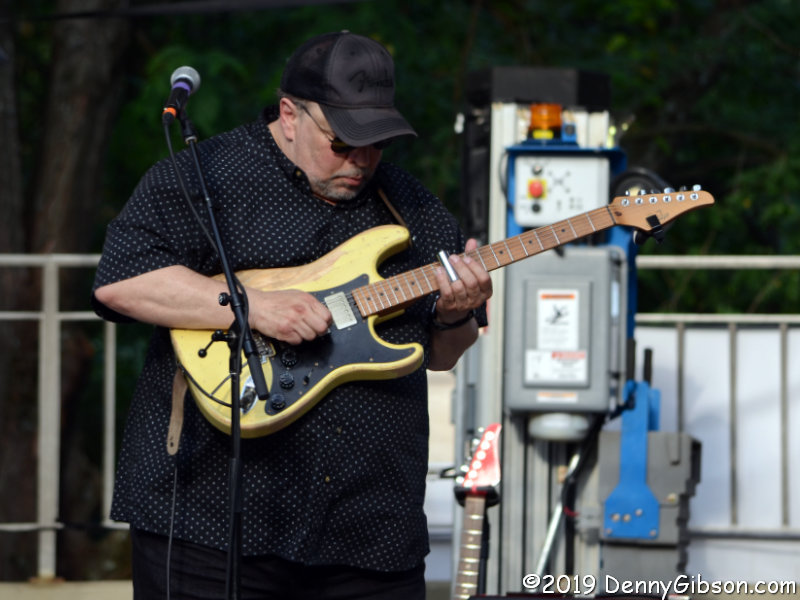
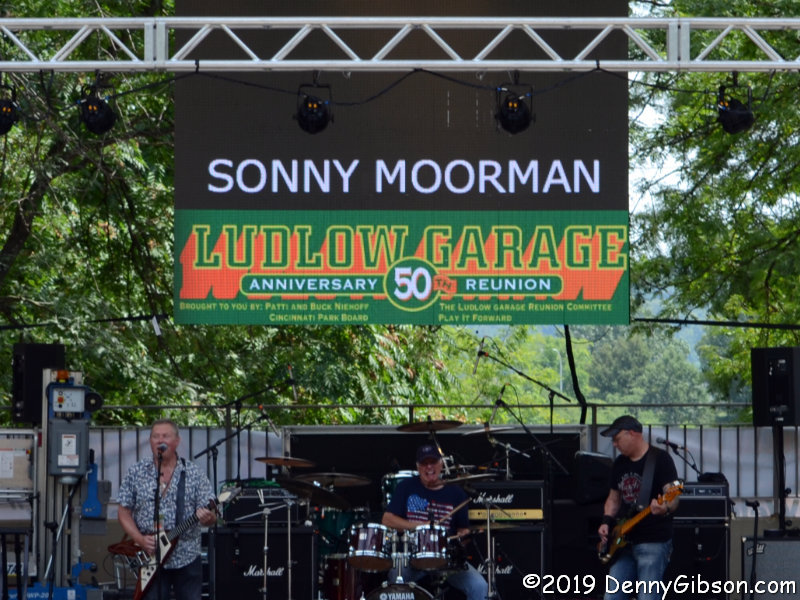
I don’t believe Sonny Moorman ever played at the Garage, either, but he has played just about everywhere else. A typical performance consists of lots of his own blues songs, but one of his side projects was an outstanding Allman Brothers tribute band, and he has been a super fan of Lonnie Mack since childhood. Grand Funk Railroad headlined that first Ludlow Garage with Lonnie Mack preceding them. I’ve often said that if a Lonnie Mack biopic is ever produced, it absolutely has to involve Sonny. He reinforced that today with a remarkable Lonnie Mack tribute set.

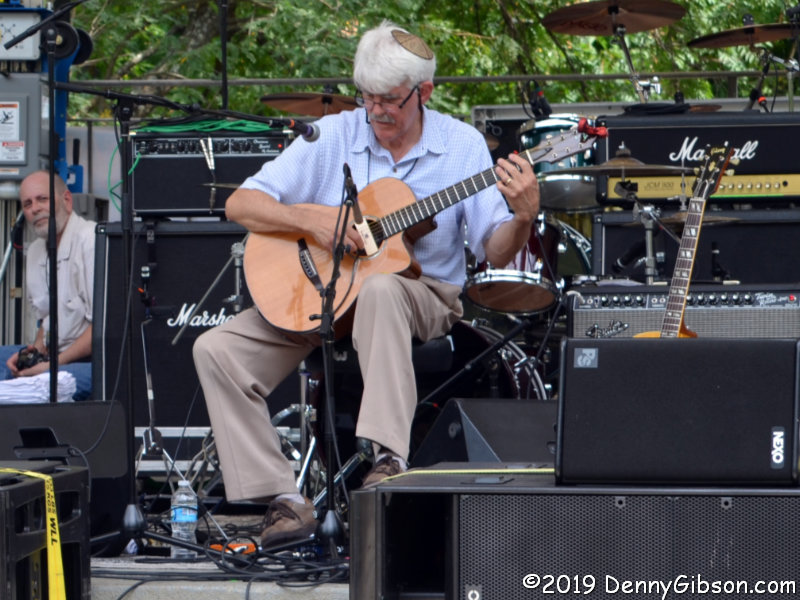
This guy definitely played the Ludlow Garage. Sandy Nassan opened the Garage’s second concert, which featured Spirit. I apologize for not catching the names of the folks providing harmonica and vocals. They were quite good and certainly added to the performance, but on the other hand, they might not have really been necessary for a guy who released the critically acclaimed Just Guitar within a year of that Ludlow Garage appearance.

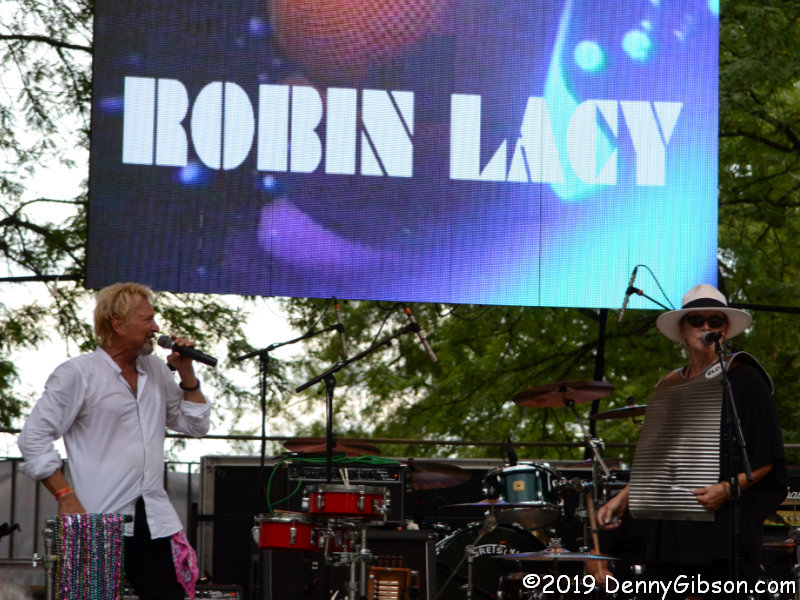
Robin Lacy & DeZydeco recently celebrated their own 30th anniversary, but I missed it. In fact, it had been a while since I’d seen the band, and I’d almost forgotten how much fun they are. Robin and Joani Lacy live near the Ohio River town of New Richmond, where they often perform as a trio with DeZydeco guitarist Ricky Leighton. It’s a place I tend to end up in on semi-aimless drives now and then and I’ve enjoyed several summer afternoons listening to the three of them rotate song selections. As enjoyable as that is it just isn’t the same as a toe-tapping bead-tossing full-band outing. “If you ain’t having fun,” Robin’s been known to point out, “it’s your own damned fault.”

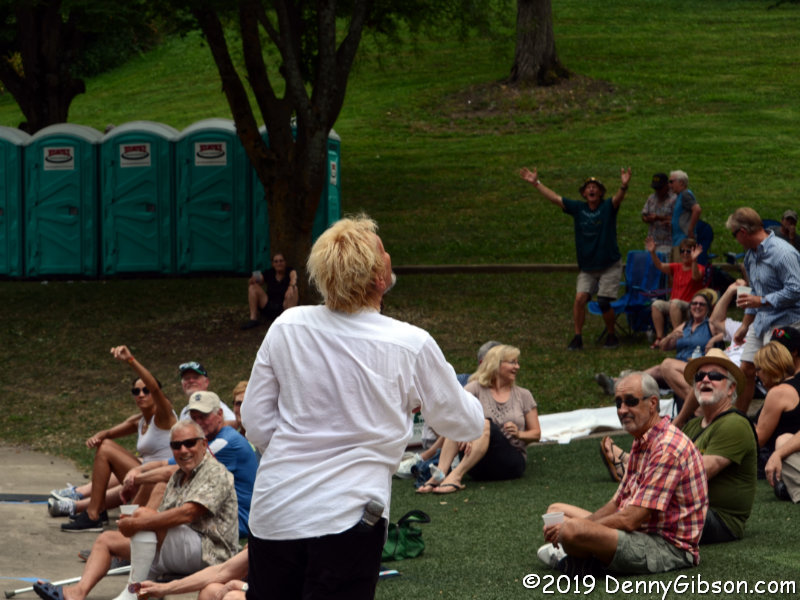
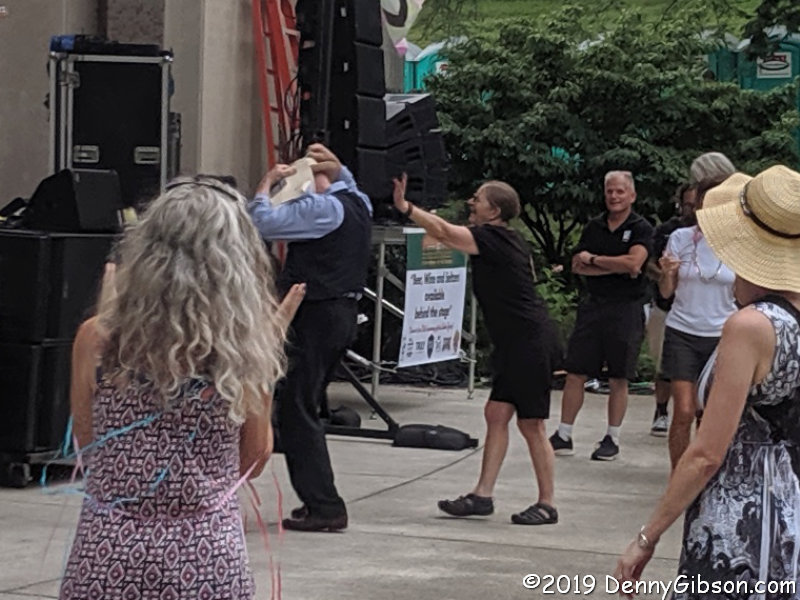
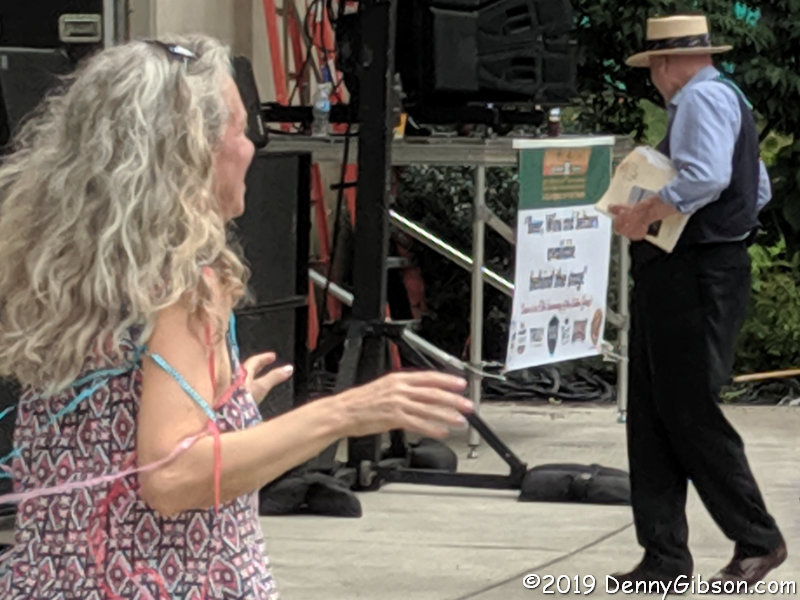
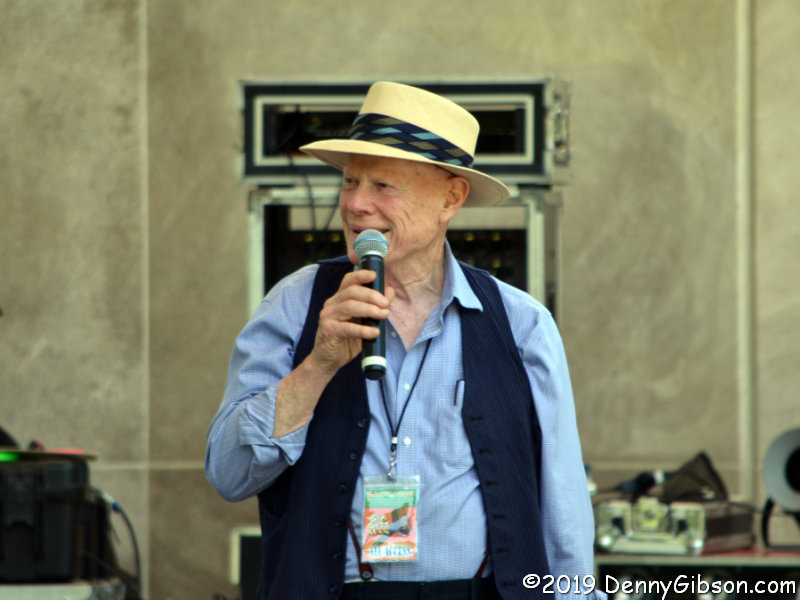
I’m pretty sure everybody did have fun, and that includes Mr. Tarbell. Here we see him catching a strand of thrown beads, struggling a bit to get them over his hat, then casually tossing off a few dance moves before continuing his walk to the opposite side of the stage.

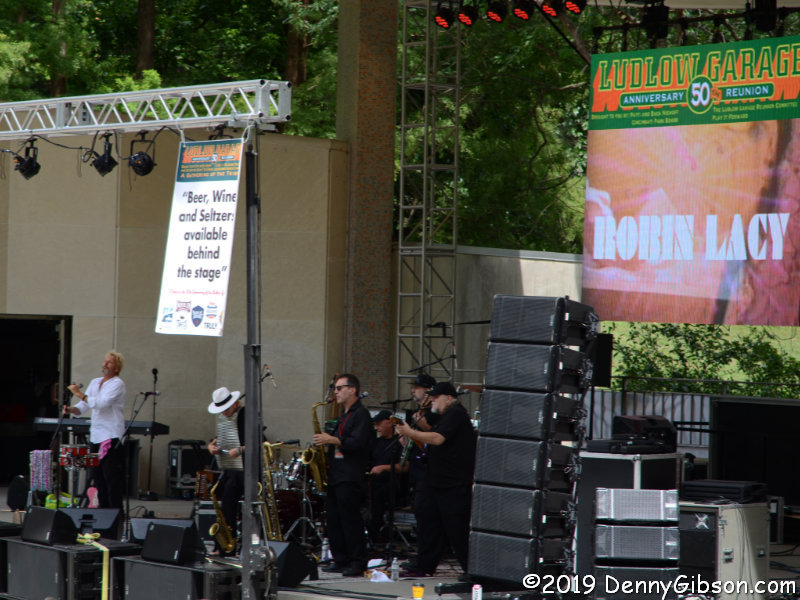
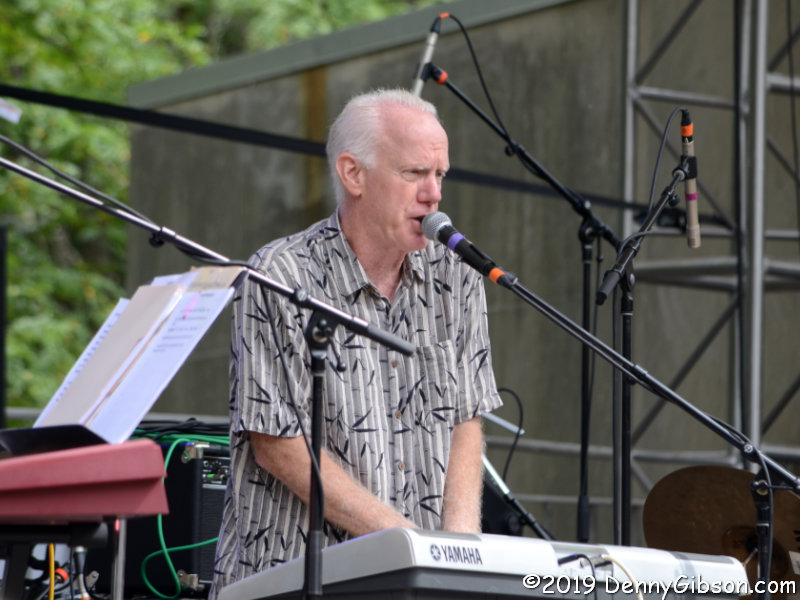
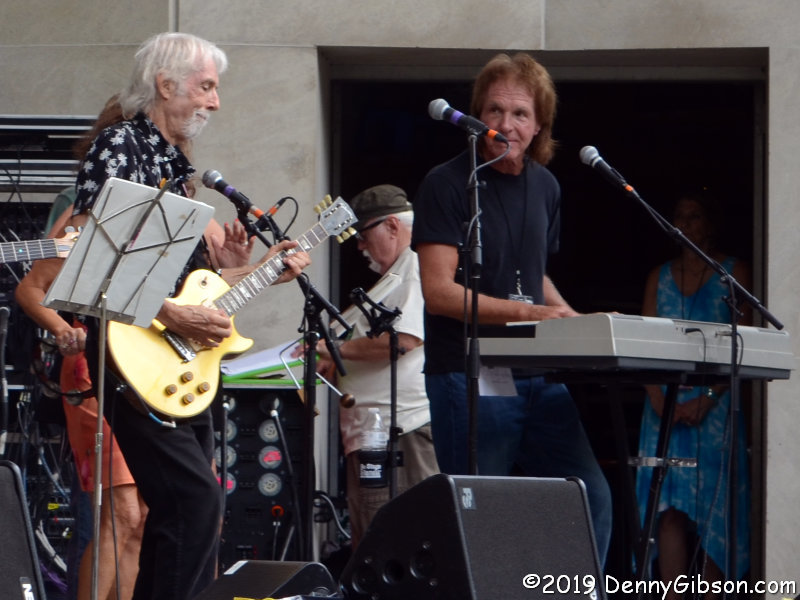
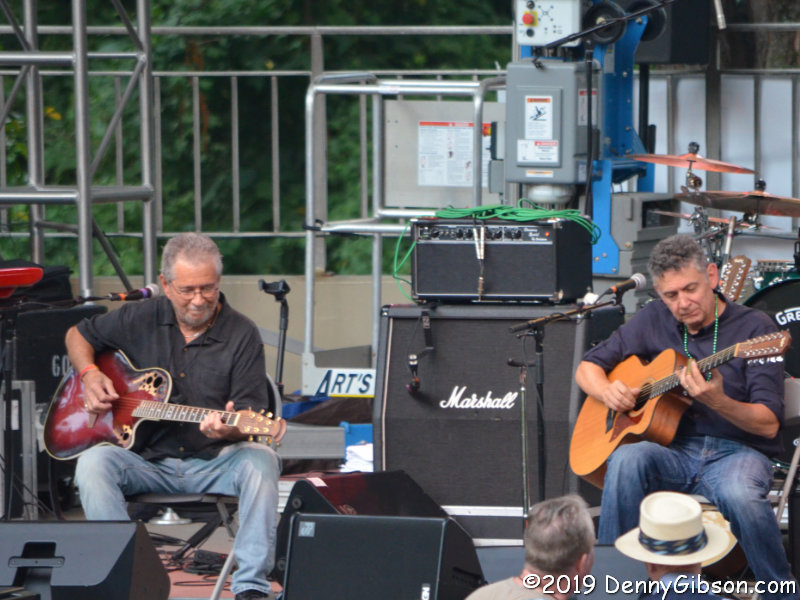
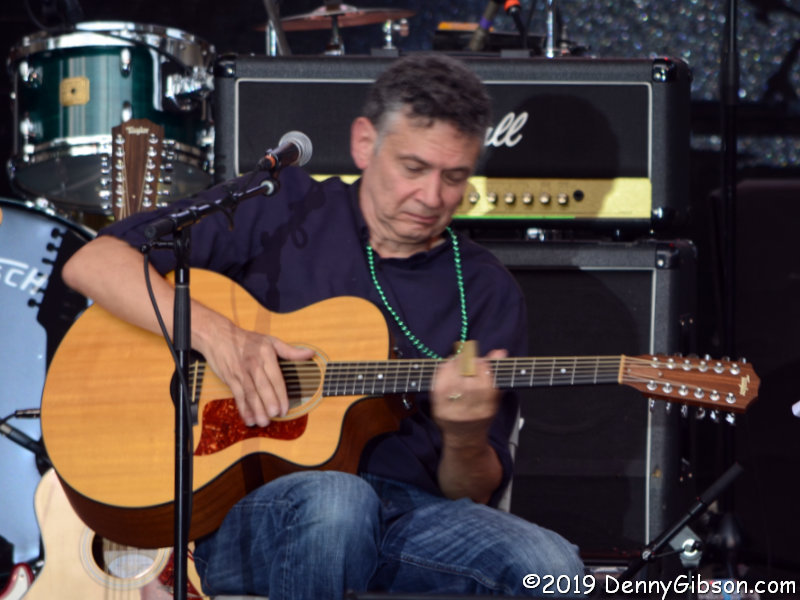
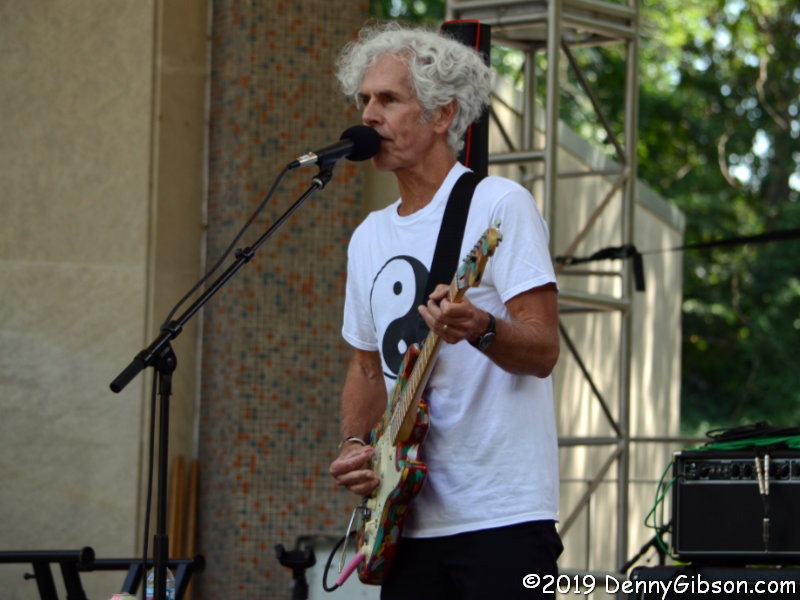
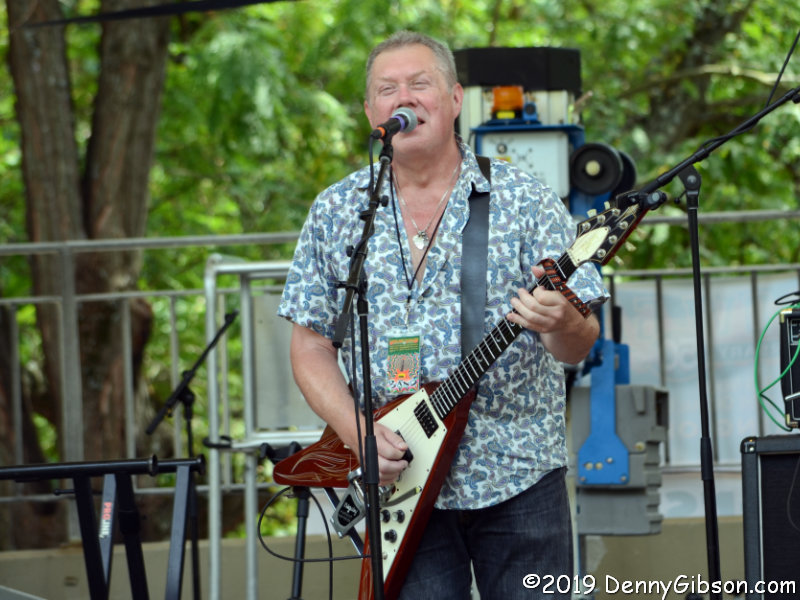
The members of Haymarket Riot nearly exceeded the space available on the stage and the name apparently did exceed the space available on the behind stage screen. That screen, by the way, showed a recorded Ludlow Garage light show in addition to each performer’s name. The band was started in 1965 by the two guys in the second picture, G. Parker and Steve Helwig. They did play at the Ludlow Garage. Over the years, quite a few members have come and gone around Parker and Helwig, and one was in town to help them with a song today. Gary Griffin left Haymarket and Cincinnati in the late 1970s then spent the ’80s and ’90s recording and touring with the Beach Boys and Jan & Dean. He is currently touring with Brian Wilson but had some time off to help his former bandmates perform Good Vibrations.

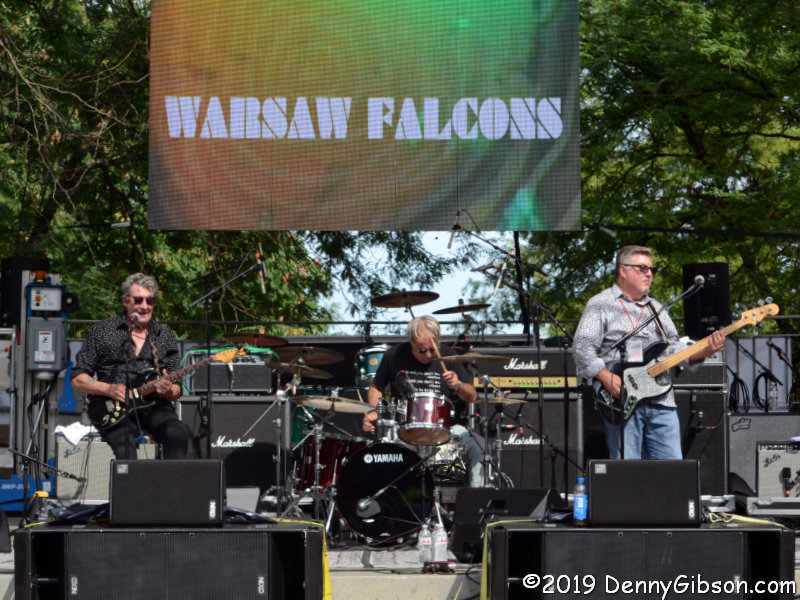
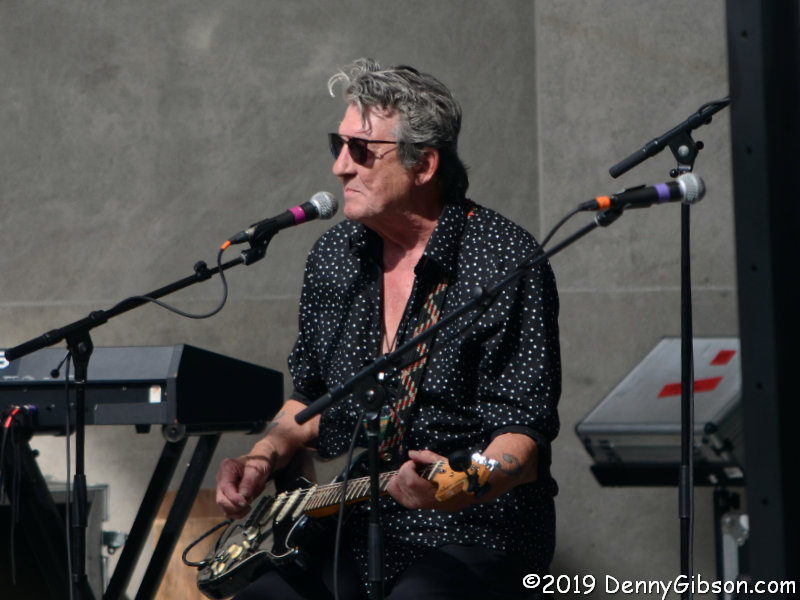
The Warsaw Falcons arrived a little too late for the Ludlow Garage. Originally forming in 1981, the band has deformed, unformed, and reformed multiple times with the only constant being guitarist David Rhodes Brown. The current three-piece lineup came together in 2014 and has continued the legacy of solid live music with a tinge of rockabilly.

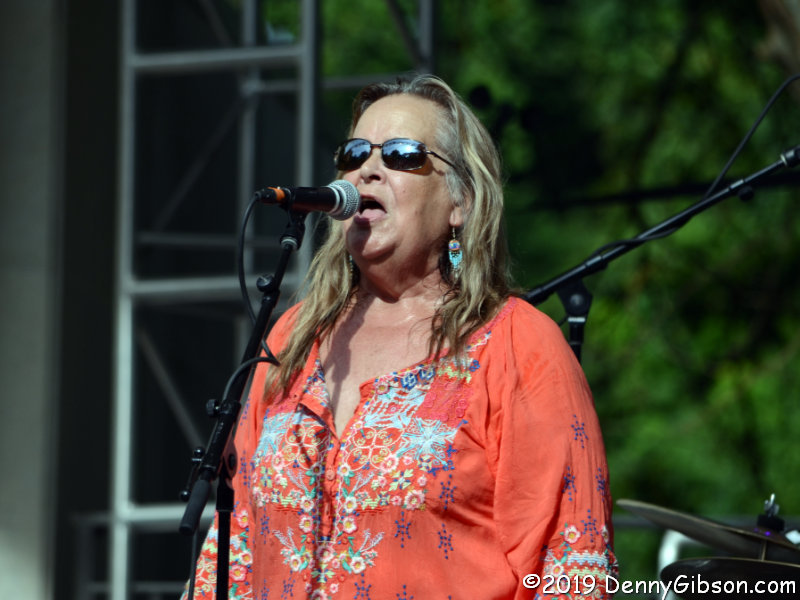
It’s possible that I saw Tracy Nelson at Ludlow Garage fronting Mother Earth. As mentioned earlier, that’s based on the fact that I recall seeing openers East Orange Express but I doubt that was the only time they played there. Today, she had wonderful backing from Cincinnati’s Bluebirds. Great voice and great performance.
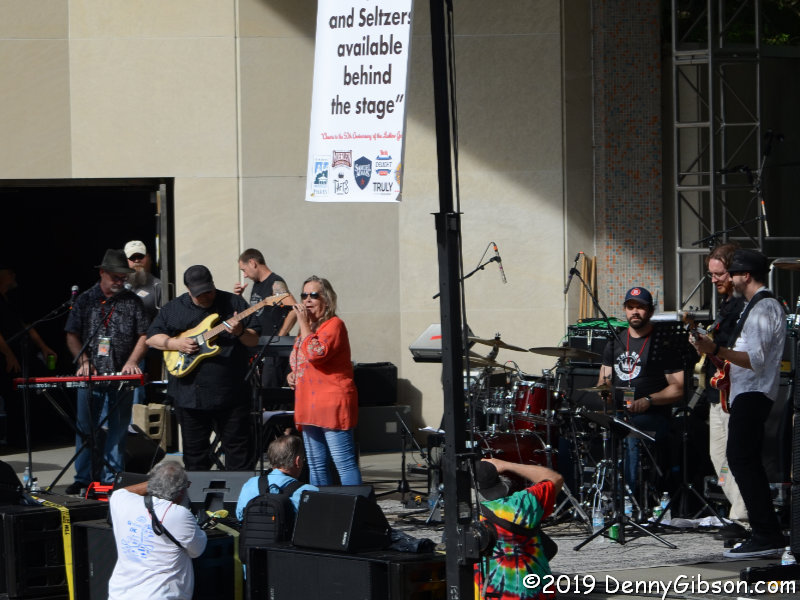
As stated, Nelson’s backing band was the Bluebirds. There were a few members I didn’t recognize, but that wasn’t particularly unusual. The band has been around a long time, and I’ve lost count of the various lineups I’ve seen. The schedule called for the Bluebirds to perform their own set, including an Allman Brothers tribute, following Nelson’s set. I expected Nelson to just walk off and the band stay in place. Instead, a full onstage shuffle commenced and when it ended a more familiar lineup was on stage. Both groups were, of course, the legitimate Bluebirds. It’s kind of like whatever plane the President is on being Air Force 1. Whatever musicians accompany guitarist Marcos Sastre are the Bluebirds. And they’re always fantastic.

Although Jeffrey Seeman did not perform at the Ludlow Garage, his musical career is inextricably tied to the venue. Seeman was one of the neighborhood teenagers who helped create the place during the summer of 1969 and who worked there after it opened. Much about the experience made long-lasting impressions, but none like being the only person to witness the Allman Brothers rehearsal on the eve of their first Ludlow Garage appearance. The teenager was already playing guitar, but watching Duane Allman’s slide work inspired Seeman to master the technique, which he has done incredibly well. Today he performed on both acoustic and electric and had Skip Cason join on guitar and vocal for one song.

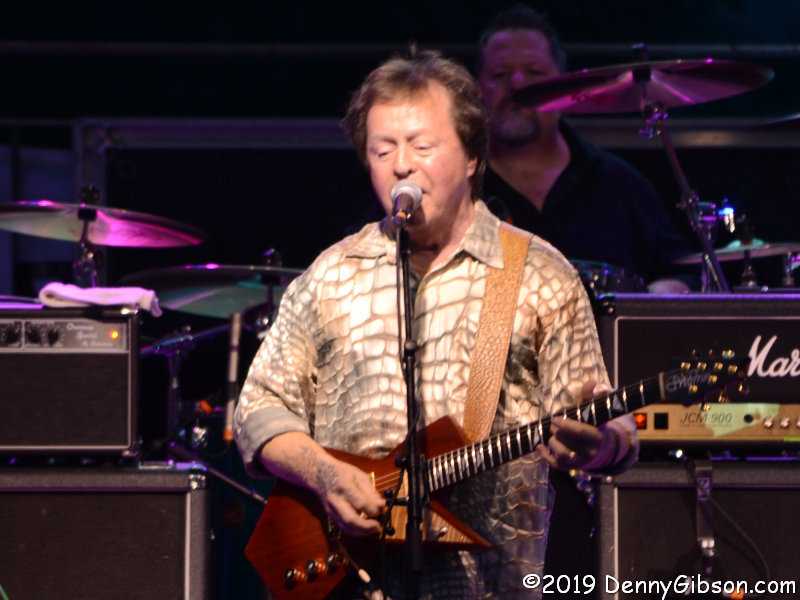
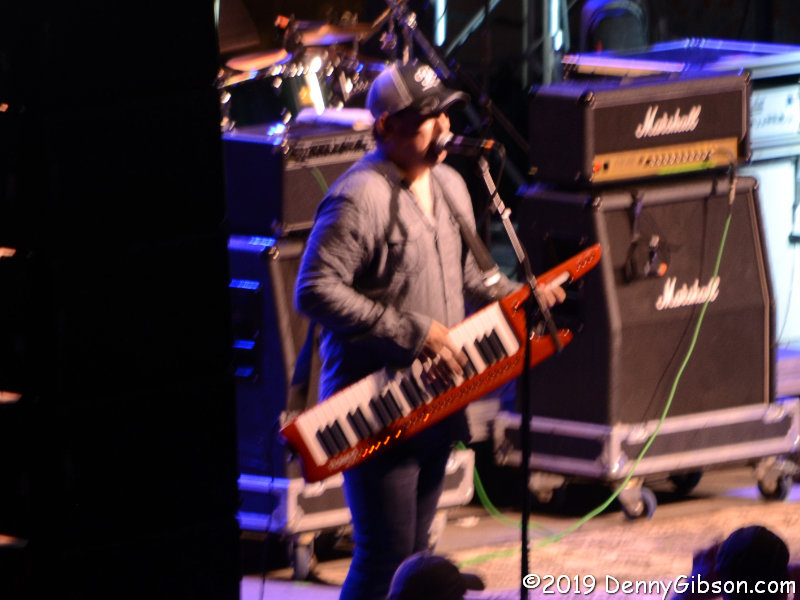
I’d been there when the music started at noon and sort of surprised myself by still being there when headliner Rick Derringer took the stage more than eight hours later. Rick played the Ludlow Garage in 1970 as a member of Johnny Winters’ band. I stayed for a few songs, including Hang on Sloopy, before starting the climb to my car. I saw Rick most recently back in his hometown when Sloopy was turning 50. The band had been a trio then, but now contained a keyboard player whose gear included a keytar. I was parked in the Art Museum lot, which isn’t all that far from the concert pavilion, but the museum completely blocked the music. Only when I pulled out and cleared the building could I hear what was being played. I exited Eden Park to the sound of Frankenstein as a keytarist presumably did his best Edgar Winter. Maybe I should have stayed for that.


200 Breweries

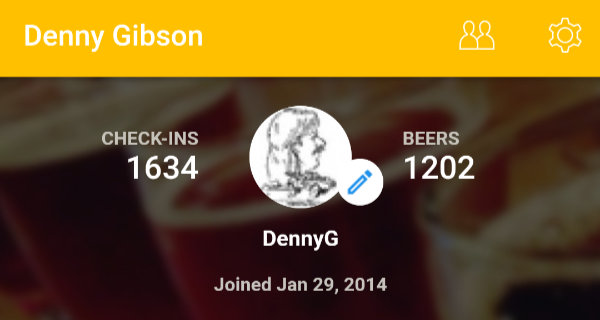
I like beer. I like beer well enough to be a Supreme Court justice, although my other qualifications are rather weak. I’ve had favorites from time to time. I was pretty much a Stroh’s guy in the 1960s and ’70s, then became a big fan of Christian Moerlein Select when Hudepohl introduced it in 1981. But I’ll confess to never being entirely faithful to a single brand. My roving taste buds would sometimes be led into temptation by an exotic label or a shapely bottle. Today, encouraged and aided by the craft beer explosion, I’m downright promiscuous. Several years ago, I began using Untappd, a phone app that allows me to track the various beers I’ve tried, and I’ve accumulated a decent score. I have, since January of 2014, consumed a measurable amount of 1202 different beers.
Yes, that’s decent, but it pales next to some others. Just within my small circle of Untappd cohorts, Brian is over 1600, Sara is pushing 1900 (and now only logs on special occasions), and Nick is well past 3000. I’ll never catch them, of course, and I’m OK with that. If nothing else, when someone accuses me of being too fickle in my drinking, I can point to Nick or Sara or Brian and say, “But not like them!”

Besides, as the title of this post indicates, I have other things to brag about. I enjoy logging different venues about as much as I like logging beers, and that goes double for breweries. In the beginning, I didn’t watch closely. I was almost halfway to the current count before it registered with me that logging breweries was something I was doing more than most. I completely missed the 100 brewery milestone but did note number 115 with a weak joke about Bob Dylan’s 115th Dream. I’ve been much more attentive as I approached completion of the second hundred, and my thoughts have been on Zappa rather than Dylan. It’s not only giving me an opportunity to brag but an opportunity to recount some of the breweries I’ve seen.

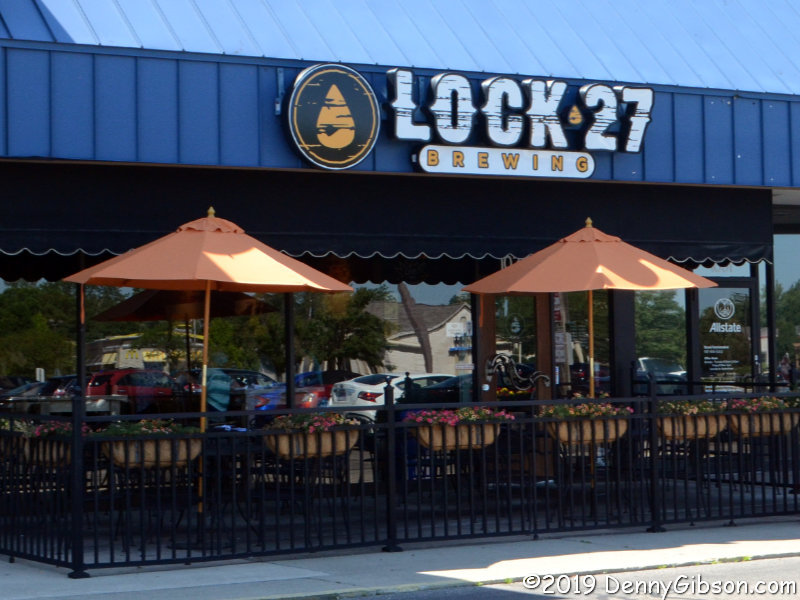
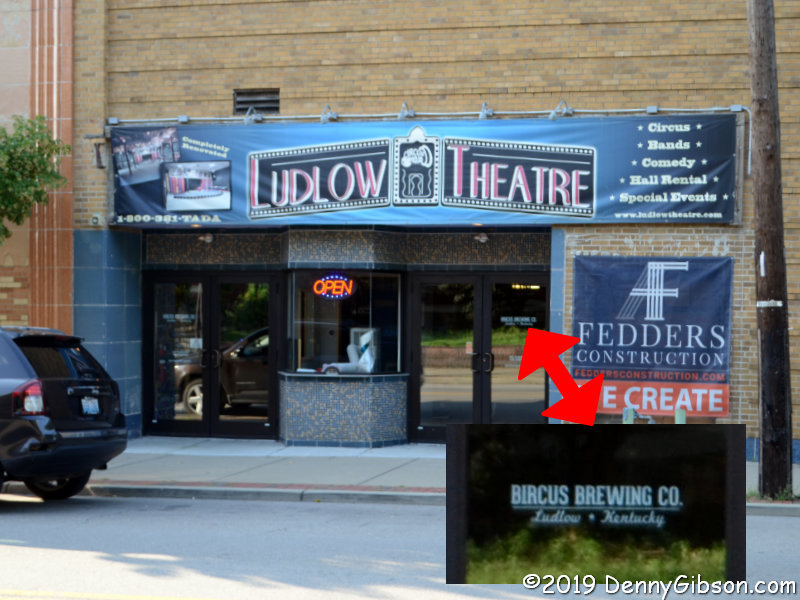
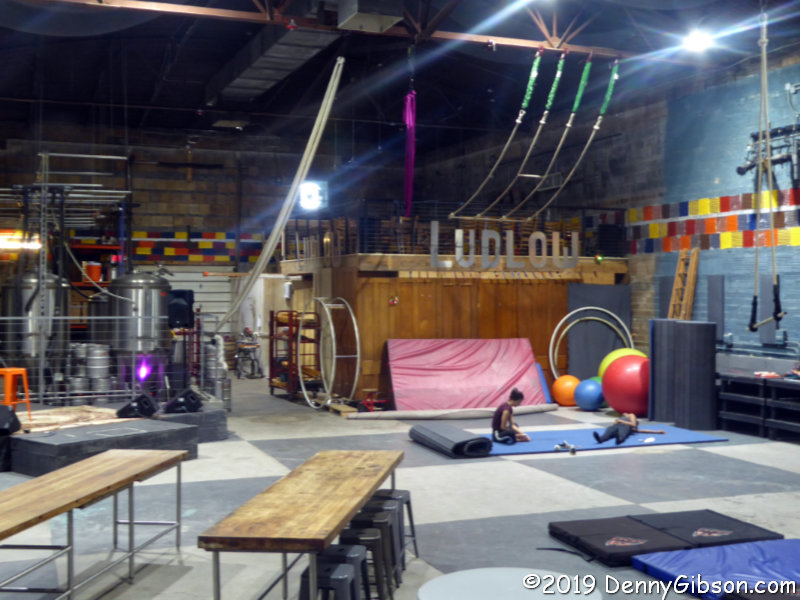
For starters, here are numbers 1 and 200. My first check-in of Lock 27 Brewing was on January 31, 2014. It was not, of course, the first brewery I ever visited. I have vague memories of being inside the recently departed Hudepohl brewery several decades ago, and I toured the oldest brewery in the US, Yuengling, back in 2005. A blog post from just about a year before I joined Untappd (Something’s Brewing in Cincy) describes visits to five breweries and mentions a couple more. And there were others. Lock 27 was simply the first brewery I visited after joining Untappd. My 200th brewery was the part-circus part-brewery Bircus. It’s in a converted movie theater just across the river in Kentucky and is more upfront about their tumbling and juggling than most breweries.
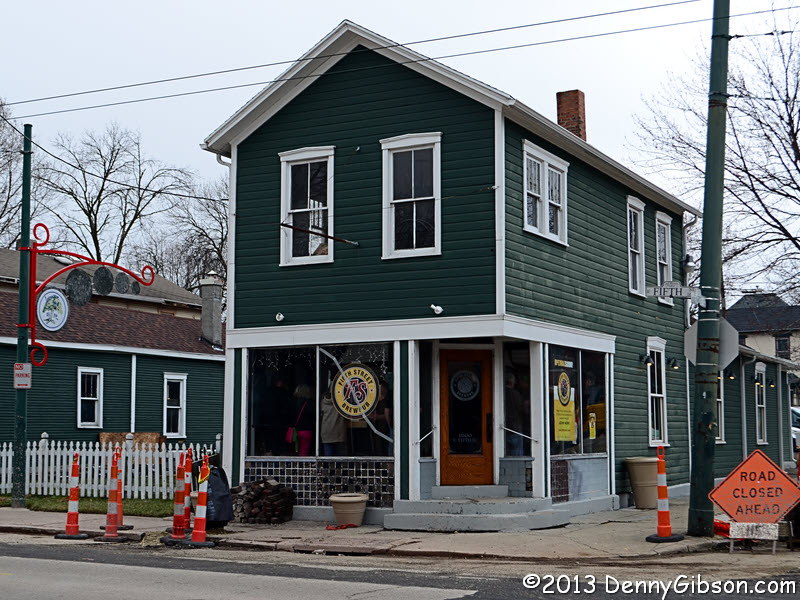
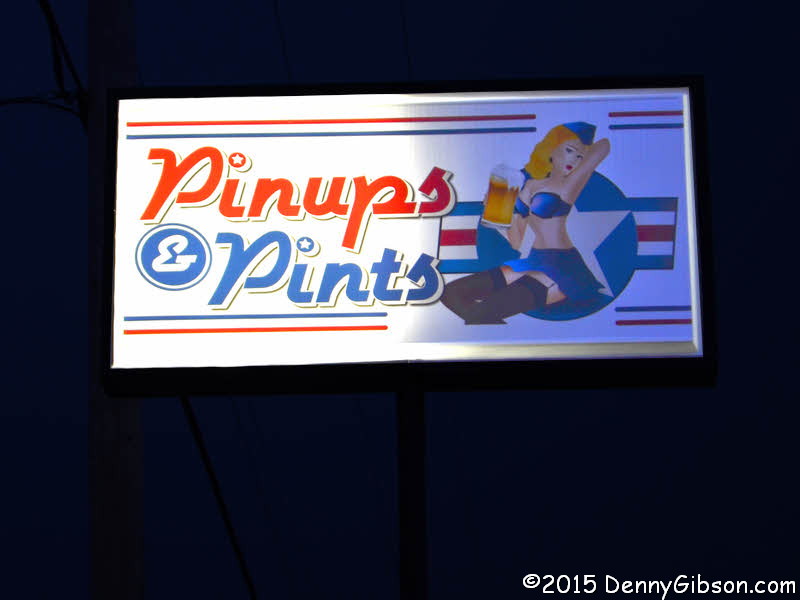
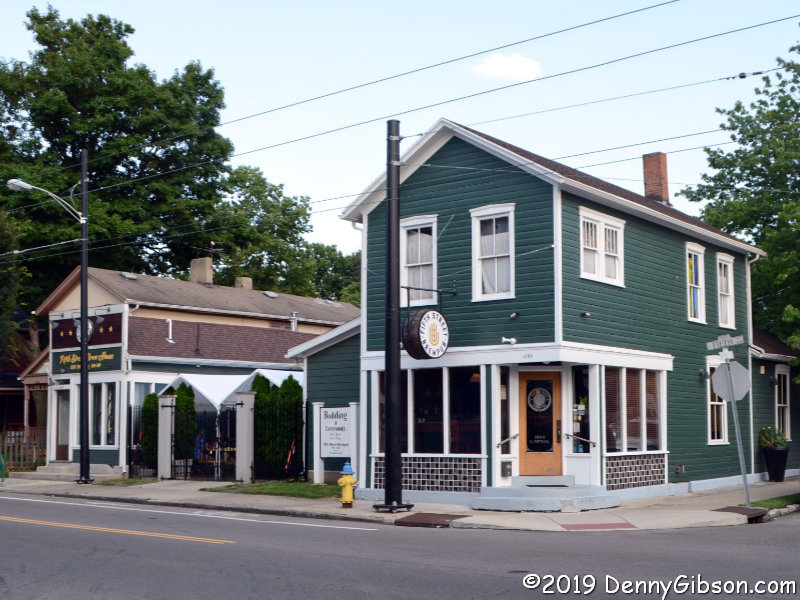
Dayton, Ohio, where Lock 27 Brewing is located, is also home to some truly unique producers of beer. Carillon Brewing Company (#24 12/8/14) is part of Carillon Historical Park and brews beer the old-fashioned way. I mean the 160-year-old-fashioned way. With the exception of piped-in water, the operation duplicates a brewery of the 1850s. I did a full blog post, History by the Pint, on my first visit. Pinups & Pints (#– 4/8/15) is a tiny 15-gallon operation that offers one choice of beer at a time. Unfortunately, Untappd had not yet identified it as a brewery when I was there, so it is not one of my 200 (It would have been #30). Even so, how could I not include “The World’s Only Strip Club – Brew Pub” in this post? And Untappd does now recognize it as a brewery. The third picture is of Ohio’s first and the nation’s second co-op brewpub shortly before it opened. Fifth Street Brewpub (#3 2/12/14) is the only brewery I currently “own” a tiny piece of (it’s a co-op!) and the one with the most Untappd check-ins. Here‘s a picture from the most recent of those check-ins.

I used the word ‘currently’ in the preceding paragraph because I once owned a few shares of the ahead-of-its-time Oldenberg Brewery in Fort Mitchell, Kentucky. Somewhere I have a beautiful and totally worthless stock certificate for the brewery that closed in 2001.

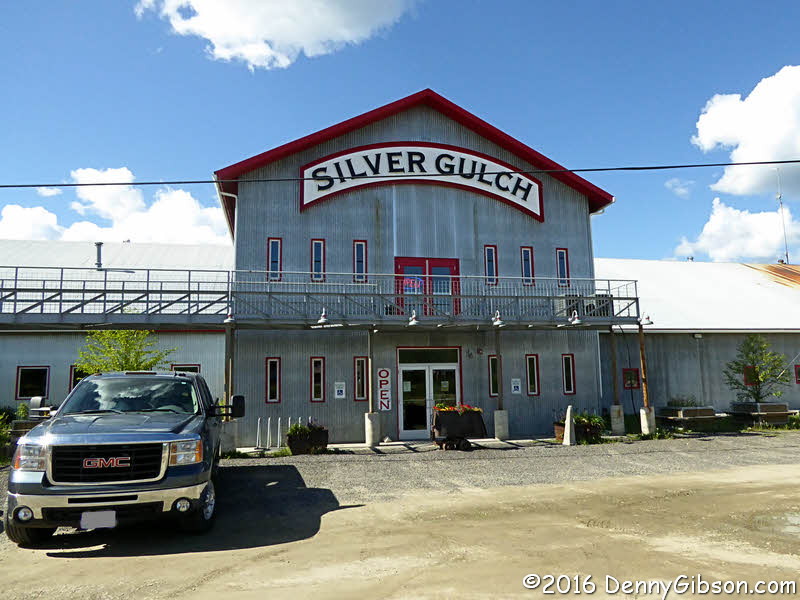
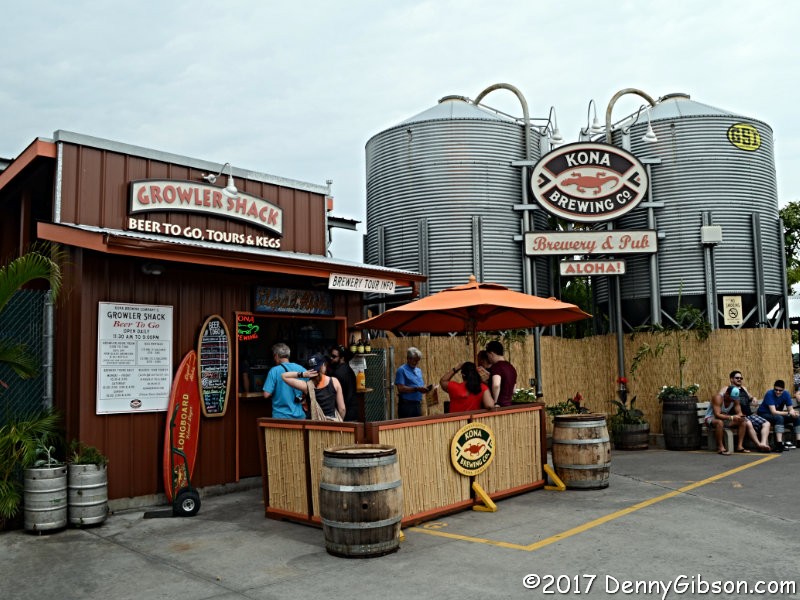
Two other visited breweries deserve shout-outs because of their locations. Silver Gulch Brewing (#79 6/29/16) and Kona Brewing (#123 4/7/17) are, respectively, the USA’s northernmost and southernmost breweries. I claim a bonus point for reaching these outposts within a year of each other. I have yet to reach the westernmost (Kauai Island) or easternmost (Lubec) breweries in the US.

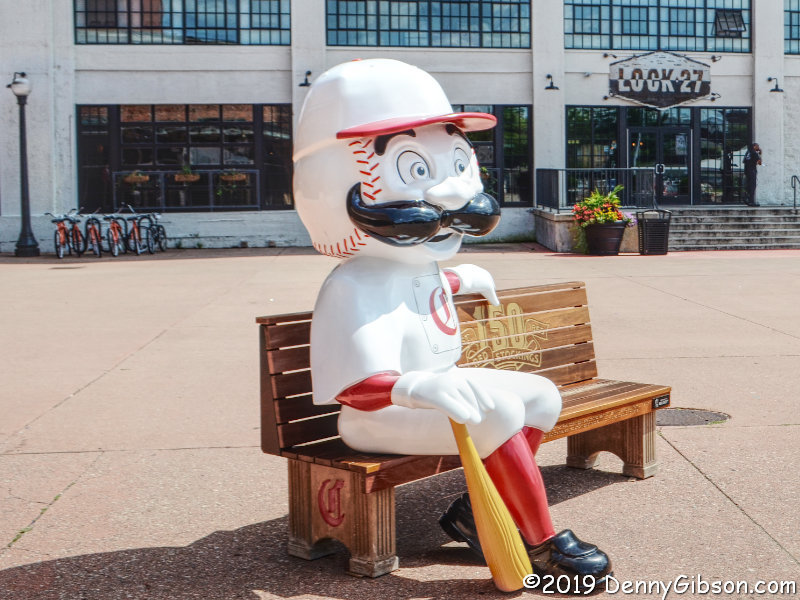
Maybe I’ll make it to three or four hundred or beyond. I’ve started the second 200 like I started the first, with Lock 27. In 2017, a second location, which Untappd counts as a separate brewery, was opened just outside the Dayton Dragons ball field. The Dragons are an affiliate of the Cincinnati Reds, who are celebrating 150 years of professional baseball this year. A few months ago, Cincinnati.com published an article listing fifty-one breweries in the area, including fifteen I’ve yet to visit. There is also an unvisited-by-me brewery in the ten listed by the Dayton CVB. The Ohio Craft Brewers Association reports that there are now more than 300 breweries operating in the state, which means I could reach the next multiple of a hundred without crossing a state line — but I doubt I will.

More Man at CAM

I visited Phase 1 of the Cincinnati Art Museum’s Burning Man exhibit about two weeks after it opened (Burning Man at CAM). It took me more than a month, however, to take in Phase 2. Phase 2 adds three galleries to “No Spectators: The Art of Burning Man” while leaving everything that was part of the first phase in place. The pictured quote — and line — went unnoticed on that earlier visit although they were certainly there. I was probably looking only at the structure that stands above the line. It represents the Burning Man Temple which, like the man itself, is turned to ashes before the festival ends. It’s a fraction of the size of the real temple but is still much too large to fit into my lens inside the museum. Here are shots of the top half, of one of the panels, and through one of the peepholes.

Christopher Schardt’s Nova was actually part of Phase 1 but, like the line at the entrance, I somehow missed it on my visit in May. Images in the ceiling-mounted LED panel are coordinated with classical music. The last photo was taken while I lay on the floor. I kind of wish I had waited for the skull to come around again.

One of the galleries added for Phase 2 is filled with three polyhedral sculptures from Yelena Filipchik and Serge Beaulieu. There’s a direct view of the suspended polyhedron here. One of the sculptures, with yet another polyhedron inside, can be entered.
This is a part of Phase 1 that I definitely did not miss. In fact, I ended that first post with a promise “to listen to those gongs some more.” I very much kept my promise and am now pretty much convinced that living inside Gamelatron Bidadari would make me a nicer person.

This is the largest of the Phase 2 additions. It consists mostly of two-dimensional art including photographs. I took the picture of the bicycle seat primarily to show the tag but I didn’t do a very good job. It is slightly more readable here.
The third Phase 2 gallery is the balcony above the temple replica and the museum’s main entrance. The central space is filled with clothing created for and worn at Burning Man. Photographs showing the many aspects of Burning Man fill most of the wall space but some of that space holds Candy Chang “Before I die…” chalkboards. Apparently, more than 4000 of these have been erected around the world giving people an opportunity to “pick up a piece of chalk, reflect on death and life, and share their personal aspirations in public.” Some truly deep and personal thoughts have appeared on the walls and the Cincinnati board contains some noble sentiments such as “Help others” and some fairly modest goals like “Go whale watching”, but “Travel” is a very common theme. Pay attention, people.

My post on Phase 1 opened with a photo of the smallish Truth is Beauty standing above the museum’s Great Hall. This one is closing with a photo of it taken from the balcony across the way. There are pictures on display that show the original 55-foot sculpture at Burning Man with no roofs or walls penning it in. It’s obvious that seeing this one third scale copy in climate-controlled comfort is a very poor substitute. I’m guessing that seeing reproductions of or even some of the actual pieces that were once part of Burning Man is just about as much like the experience of being there as my tapping on the steering wheel is like manning the riser behind Mick and Keith at Wembley Stadium. But it’s as close as I’m likely to get. I’ll take it. 

Butterflies at Krohn Conservatory

I’ve been meaning to stop by Krohn Conservatory to see “Butterflies of Ecuador” ever since it opened in March. I know I’ve missed much better opportunities than a crowded Friday afternoon but those opportunities aren’t going to come again. The exhibit ends June 16 and I’ll be out of town or otherwise engaged between now and then. It really was kind of now or never. Even though it was not the best time to photograph the colorful butterflies, it was a good time to see lots of people, including many of elementary school age, enjoy watching them.

I took the people picture shortly after I arrived. The crowd seemed to slowly but steadily grow from there. Visitors were provided with scratch-and-sniff (vanilla) landing pads as an aid to getting the butterflies to park where they could be studied although it was an assist not needed by everyone and not always successful.
Bright bowls, fabric, and imitation fruit were placed around the area to spice up the background. I overheard one of the attendants telling someone who asked that the colored liquid that was much better at attracting the butterflies than the scented cardboard was Gator-Ade.

I made no attempt to identify the butterflies I saw but just enjoyed watching them flit around, take long pauses on the various plants, and refuel at the Gator-Ade dispensers. Now and then, between flits and sips and the bodies of other watchers, I snapped a photo.

Memorial Day Eve

I know the difference between Memorial Day and Veterans Day and I’ve sometimes been critical of those who don’t. The publication date for this article is the day before Memorial Day which means it’s my official Memorial Weekend post. The article’s primary focus is the funeral of a U.S. Army veteran who died peacefully at the age of ninety. He clearly does not fit the definition of the folks that Memorial Day was created to honor. On one hand, I’m not completely comfortable having the subject of my Memorial Weekend post be someone who should not be connected to the holiday in any way at all. On the other hand, there’s a very good chance that I would not have attended Hezekiah Perkins’ funeral if it did not take place during Memorial Weekend. That statement is quite possibly true of almost everyone who did attend his funeral on Saturday.

I first saw his name on Friday afternoon. I’d been looking for Memorial Day related activities when local news sources posted a story from Spring Grove Cemetery. The Korean War veteran had purchased a plot and paid for his funeral twenty years ago. Arrangements were progressing to assure that the ceremonies included military honors. There was no question about a proper funeral and burial taking place; There was a big question about who would attend. None of Perkins’ family lived close enough or were healthy enough to come. The cemetery was asking people to join their employees and a small detachment of soldiers in saying a final farewell.

The response was impressive and heartwarming. I arrived about fifteen minutes before the scheduled ceremony and had to park roughly half a mile away. Others parked much farther away than that. Not only was the crowd large, it was racially and generationally diverse. As might be expected, the largest single category was definitely military veterans

Many of those veterans arrived on motorcycles in parade formation. My unscientific guess is that somewhere between fifty and a hundred motorcycles rolled by the grave site. The motorcycles were parked and their riders walked back to where the hearse that had followed them now stood. Friday’s announcement had said the Spring Grove employees would act as pallbearers but that was very much unnecessary. That chore was quite willingly handled by a pre-selected group of motorcyclists.

The ceremonies were brief but meaningful. A detail from Fort Knox removed and folded the flag that covered the coffin. Although the word “thousands” has slipped into a headline or two, most references to the crowd say “hundreds”. My own guess as to crowd size, made while I was part of it, is 400-500. A few, such as workers at the nursing home where he lived most recently, actually knew Hezekiah Perkins but the vast majority were complete strangers. There is certainly no reason to get too puffed up about standing in the grass for a few minutes on a nice spring day, but it’s an unquestionably nice thing that so many Cincinnatians did just that and made that final farewell quite a bit louder than it would have been otherwise.


The Spring Grove visit occurred in the afternoon. I started the day with the Butrims and breakfast at the Anchor Grill followed by traipsing around my favorite bridge. A previous visit had left the couple firmly split on Cincinnati chili but I got a 2-0 favorable vote on goetta. We have been digital friends for a while but this was our first meeting in the analog world. The visit came in the middle of a Kentucky focused trip which, like all of their many road trips, is being reported semi-realtime on Facebook. See Anna’s version here and Joe’s here.
Burning Man at CAM

I have never been to Burning Man but I’ve a son who has. I texted him while attending the recently opened “No Spectators: The Art of Burning Man” at the Cincinnati Art Museum. “Those things aren’t supposed to make it off the playa”, he said. “Burn it. It’s in the frickin’ name.” Those aren’t angry words. They’re amused words. In context, he seemed to be chuckling at the idea of people trying to understand the annual gathering by looking at some things that had once been there. I’d already picked up some sense of how silly this was from the exhibition’s title. “No Spectators” comes from Burning Man’s “radically participatory ethic”. “Participation” is one of the community’s ten principles. No one attends the actual event as a spectator. The joke (possibly even intentional) is that, regardless of the name, the majority of people viewing the objets d’art at the museum are 100% spectators. Silly or not, I spectated profusely.
As is apparent from the first photo, the Burning Man pieces are not shuttered off in an isolated gallery but share space with the museum’s permanent displays. The Truth is Beauty standing at the top of the main staircase is a third the size of the original 55-foot tall sculpture that appeared at Burning an in 2013. A description is here; Another view here.

Although several examples of the art of Burning Man are unavoidably encountered on the way, there is a gallery devoted to Burning Man history which is a good place to visit before actively seeking out the rest. Burning Man of today bears little resemblance to the original 1986 event. Today it is well organized and scheduled far in advance. The “city” that is created annually in the Nevada desert now has a population near 70,000. Given the name Black Rock City, a Department of Public Works exists to operate the city and a group called the Black Rock Rangers patrols it. A large part of the Ranger’s success is credited to the fact that they are not outsiders but participant volunteers helping keep other participants safe and enjoying themselves. There is a brief description of the DPW and BRR here. The jacket belongs to DPW founder Will Roger Peterson.

The history display includes some actual artifacts from past events. Starting in 1998, Crimson Rose, one of the organizers, has collected remnants of the Man on the morning after the burning. The keys were found on the playa by organizers Michael and Dusty Mikel between 2005 and 2012.

The guy on the right of the first picture is Thorax, Ambassador of the Insects. The mutant vehicle in the center picture is from 2008. It is named Tin Pan Dragon. I liked it so much that I grabbed a full side view and a shot of the video playing nearby. The big screen visible beyond the dragon show a loop of various Burning Man scenes with seating for a small audience.

The capacity of this theater is much higher with three rows of four seats each. Although No Spectators officially opened on April 26, several items, including this self-propelled theater were in place when I visited another exhibit just about a month ago. On that occasion, I took this picture of the screen with my phone. This time I took no screenshots but did sit through the entire presentation of silent shorts.

While some of the Burning Man pieces appear a little bit awkward in makeshift settings, this piece and this circular room seem made for each other. Gamelatron Bidadari is comprised of 32 bronze gongs played by computer-controlled mallets. There’s a better explanation here.  The few minutes I spent in this room were the most pleasant of my entire day.

Photos of Shrumen Lumen appear in promotional materials for this exhibit including the program cover. It is one of the few items that require a little participation and at least slightly supports the “no spectators” idea. As explained here, each ‘shroom is activated by stepping on a pad at its base. In the third picture, a non-spectator steps on a pad then steps back and back again to watch the show.

Phase 1 of “No Spectators: The Art of Burning Man” opened on April 26. Phase 2 additions will be made on June 7 and everything will remain through September 2. I’ll be back for Phase 2 and to listen to those gongs some more.

ADDENDUM 4-Aug-2019: As promised, I returned to the museum for Phase 2 and reported on the visit here.

Wonderful Day, Pitiful Timing

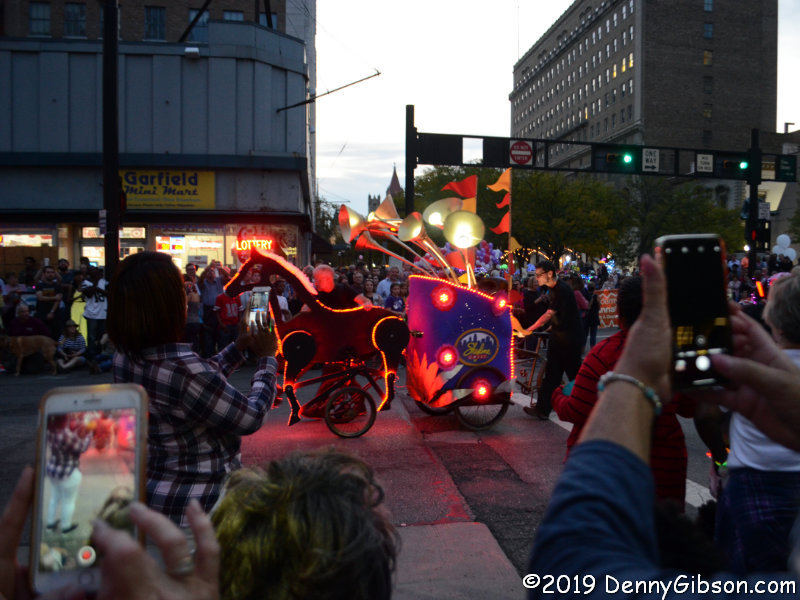
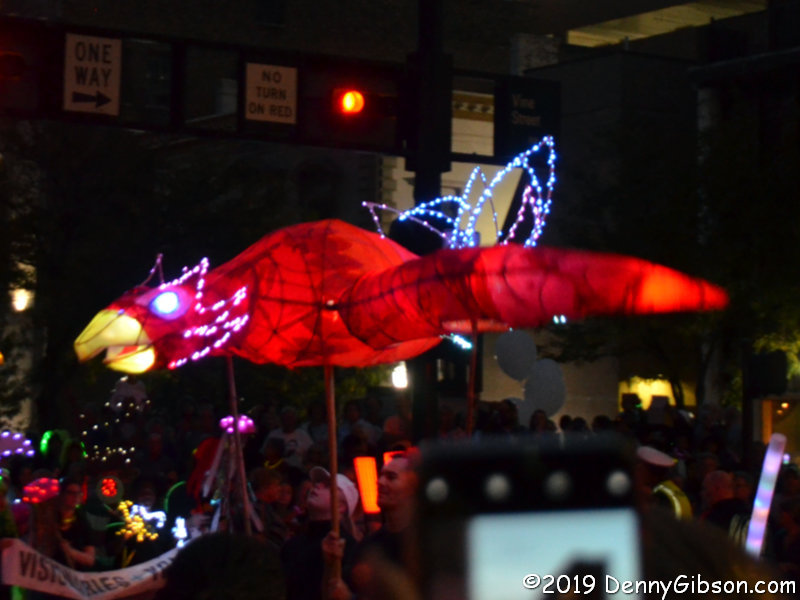
I’m embarrassed, angry, and disappointed. I missed the 2019 Findlay Market Opening Day Parade. I was close but no cigar. More accurately, no parking place. I left home slightly before 10:00. Traffic was a little heavy on the expressway but not really an issue. I was where I wanted to be around 10:30. It’s a spot a few blocks from the parade start point where I intended to grab a breakfast sandwich before walking to and strolling around the parade staging area.

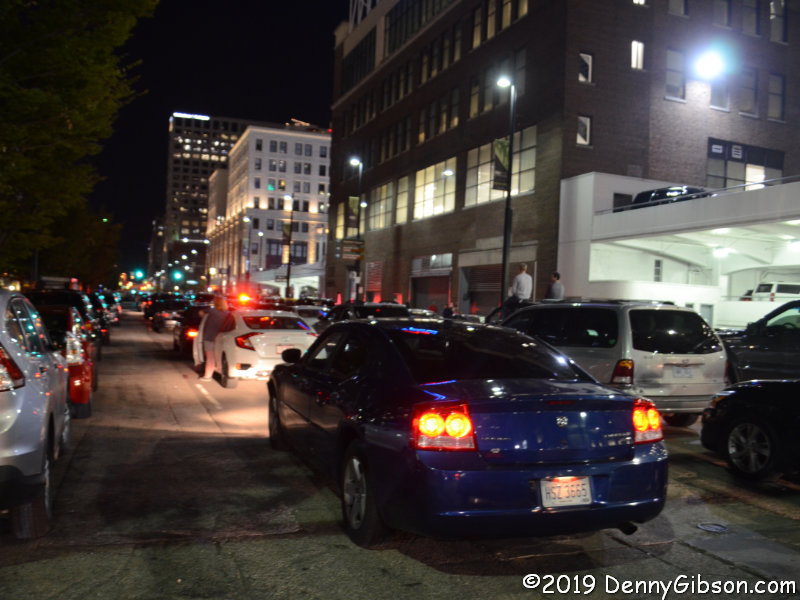
In prior years, I’ve found street parking within a couple of blocks at this time of day. Not this year. I started checking parking lots and struck out there, too. The few that weren’t completely packed had “Monthly Only” or “Permit Only” signs with guards posted. I slowly expanded my search range with no luck. A big reason for expanding my range so slowly was that congestion was really starting to be felt. Those filled lots were bordered by rapidly filling streets. I eventually headed to an area east of downtown where I’d managed to snag a spot in years gone by. It is far enough from the city center that spaces were once plentiful and cheap. I only recently learned that this area has a name. I’ve heard that name, Pendleton, quite a bit recently because it has become home to several restaurants and a brewery. Apparently, other employers have moved in too, because even lots signed by the restaurants for evening use are monthly or permit only until 4:00. Congestion was now severe. Downtown Cincinnati was about one Honda away from gridlock. I finally accepted that there would be no parade for me and escaped at the earliest opportunity which wasn’t very early at all.

Escaping from downtown Cincinnati, when you are nowhere near a bridge or expressway ramp, means north toward the Clifton neighborhood. Happily free of bumper-to-bumper traffic, I headed to a bar I once frequented. The small parking lot was completely empty. I walked to the door but the empty lot and somewhat dark interior convinced me it was closed. A sign on the door said, “Open at 1:00”. I turned back toward my car and checked the time on the way. 1:03. I’d been in my car for three hours!

I returned to the pub door, actually tried it, and became the day’s first customer. I’d found my parade-watching spot, and I’d soon learn something very cool. There were numerous reasons for the extra large crowd downtown. It’s the 150th anniversary of professional baseball which began with the Cincinnati Red Stockings in 1869. That fact has been talked up around here along with the fact that today’s was the 100th Findlay Market Parade. Those don’t line up as nicely as it might initially seem, but that’s OK. The first parade was in 1920. This is the 100th parade. The 100th anniversary of that first parade will be celebrated next year and maybe I’ll get to see it.

Now for that cool thing I learned. Back when I expected to actually see the parade and anticipated it being the complete focus of this post, I tried to come up with something that started in Cincinnati in 1969. I figured I’d throw in some line about 50, 100, and 150. I almost immediately hit on the Ludlow Garage and went no further. Ludlow Garage was the concert venue operated by Jim Tarbell that hosted national acts like Santana and the Allman Brothers. As I sat at the bar, I saw a shirt advertising the fact that the recent Saint Patrick’s Day was Murphy’s 50th. Murphy’s Pub also opened in 1969 and I have a lot more memories of Murphy’s than the Garage.

Doug Bailey, who changed a neighborhood bar named Mahoney’s into Murphy’s, was a very close friend of John Nawrocki, a very close friend of mine. I became pretty good friends with Doug and even met Noel Murphy a few times. I remember when the bar first opened and some of the changes since then. Although my visits have hardly been frequent in recent years, they do continue.

I wasn’t Murphy’s only customer for long. Among the later arrivals was a group of three guys whose reason for being there was nearly the same as mine. They were in town for the 4:10 game, and thought they might as well take in the parade, too. They too escaped the near gridlock to recover at the first bar they came to. They left their car in the lot and took an Uber to the game.

I really am happy about the massive turnout for the parade. Sorry I missed it but that was my own fault. I can deal.  

More Museum Returns

I’m sure there was at least one occasion when Ooola pulled Alley Oop into a major cave cleaning project. Among all the other repairs and additions, something very much like that must have occurred with the popular cave attraction at the Cincinnati Museum Center. The artificial limestone cave has been touched up and cleaned while retaining the appropriate level of dim damp caveiness.

I remember when the Natural History Museum moved to Union Terminal from Gilbert Avenue and the cave went missing for a while. My memory may be in error, there is no doubt that it’s foggy, but my recollection is that the cave was different after the move. Bigger, perhaps. Improved, maybe. I believe that the cave I saw Friday was pretty much the same cave I saw before the 2016 closing. The subtle wear and tear of twenty-five years of traffic have been dealt with but the pools, stalagmites, and narrow passages visitors have become familiar with over the years are all right there. They are simply a little cleaner and fresher.

In addition to the reopened cave, Friday’s members only “preview” saw the return of Cincinnati in Motion, another museum favorite. This 1/64 scale model of the Queen City presents different sections in different decades from the 1900s to the 1940s. Both of the first two pictures contain the Roebling Bridge and those who look close enough might see street cars entering the Dixie Terminal Building after crossing the bridge. There’s a closer look here.

Friday’s event was just the latest in a series of reveals following the Museum Center’s two year long renovation. It has been and will continue to be a mix of old and new starting with November’s “grand reopening” which included a brand new Dinosaur Hall and the refurbished Public Landing. I’ve no doubt that more new exhibits await and the list of previously displayed items yet to be unpacked is a mile long. Unwrapping this present is going to take a while and it’s going to be a lot of fun.

Cincinnati in Motion once again welcomes visitors to the history museum but there’s not yet a lot beyond it. There is a possibly temporary display of Cincinnati related vehicles called Engines of Growth with a literal bright spot in this 1951 Crosley Super Sport. As noted on a nearby plaque, the car was a gift from Michael C. Warmbier in memory of his grandson Otto Frederick Warmbeir. Otto Warmbeir was the college student who died in 2017 shortly after being released from a North Korean prison. It’s a very nice car and a very sad story. The phrase “in memory of his grandson” is heartbreaking in any context. 

I came. I saw. I’m sorry.

Saturday’s weather was quite nice. Temperature in the mid-40s. Dry. Lots of sun. It was a great day for a parade so I went to one. Back in 2013 when the anti-LGBTQ slant of Cincinnati’s Saint Patrick’s Day Parade first surfaced, I noted that, “I hadn’t been paying attention.” I can honestly make the same claim this year, but I cannot claim the same ignorance I possessed six years ago. The post where I spoke about not paying attention is here. I returned the next year although I paid a lot more attention to events leading up to the parade. I think I hoped that 2013 was an anomaly but by the day of the parade I knew it wasn’t. I wrote a fairly normal post about the actual parade, but it had become apparent that the parade’s organizers, the Ancient Order of Hibernians, had views different than me and a lot of other people. My 2014 post is here.

I hadn’t forgotten my 2013 and 2014 thoughts, but I did kind of push them aside. The Saint Patrick’s Day Parade used to be one of my favorite Cincinnati events. I attended Saturday’s parade with a certain amount of curiosity but I also had some hope of just enjoying things like I used to. There was plenty of the familiar like pipe and drum groups and people being silly. I did not see any of the protests I saw five and six years ago. They may have been some — I did not go to the parade’s start point and there was a lot of the route I did not see — but I didn’t see any.

There were also plenty of differences. A shifting of the route had been a topic of discussion in 2013. It is now even farther from the city center and closer to the river on Mehring Way and Freedom Way. Some of the other changes can be measured. In 2013 and 2014 at least fifteen Irish built DeLoreans had participated. This year there were four. Multiple groups of Shriners in miniature cars have appeared in past parades. Each group might have ten or so cars of the same type such as Model Ts, Mustangs, or racers. This year there was only one group with just a few of each type and a total of ten or or so. Maybe that’s just normal attrition or maybe car owners are staying away on principle. I have no way of knowing.

I could not put numbers on other changes and can’t even say with certainty that they were real. I had a sense of fewer commercial entries and more informal groupings. There were quite a few families like the Donnellons and the Flynns. I think that their number was increased but I can’t be certain. Even if it’s true, I can’t say whether it comes from a desire to promote families and family values or a desire to maintain the size of the parade. It remains a respectably sized event with a length of about an hour. Maybe I’ll check on it again in five or six years. Maybe not. Articles like this make me sorry I was there this year.

My after parade activities included catching a little of the entertainment on Fountain Square, briefly watching a street juggler, and downing my annual Guinness at Arnold’s. As you can see, the parade day crowd at Arnold’s has not diminished even the slightest.


I also visited a place where the crowd has temporarily, I believe, diminished. Following Terry Carter’s, retirement amid some unpleasant publicity, Terry’s Turf Club has become The Turf Club and has been stripped of almost all of the neon signs that covered the building and the lawn beside it. When Terry sold his previous business, the very appropriately named Neons, all of its electric trim went with him and it became Neons Unplugged. It’s tempting to think of this place as Turf Club Unplugged, but that would be quite wrong. Including all those outdoor signs would have made the purchase financially impractical for new owners Tom and Marc Kunkemoeller, but that’s pretty much where the changes end. Inside all of the eye catching decor remains along with the menu and most of the staff. I was torn between a ‘burger or the ham sandwich I’ve come to love on my first post-Terry visit, but ultimately decided to test what they’re best known for. The Kunkemoellers know what they’re doing and retaining staff was crucial. The neon will be missed; The quality’s still there.