HBD2Me

Weber's CafeI turned sixty-six on Friday. Had I waited, I would now be eligible for full Social Security benefits. Sixty-six is what the Social Security Administration calls “full retirement age” for folks born between 1943 and 1954. But I started drawing my monthly payment about three years ago so nothing about that changed on Friday. Sixty-six is not a particularly exciting birthday. At sixty-two I became eligible for reduced Social Security and sixty-five brought me Medicare but there are no more birthdays with benefits in my future. There was a period, in the distant past, when every couple of birthdays brought something new and wonderful. Turning thirteen made me a teenager, I could drive when I reached sixteen and buy 3.2% beer at eighteen. Twenty-one brought the possibility of buying whiskey and voting. Twenty-two brought nothing. Thirty, forty, fifty, and sixty were all big deals with the first three being celebrated mightily but not one birthday between twenty-one and sixty-two brought new privileges and neither will any in the future. Sixty-six is like twenty-two with more aches and pains and a much earlier bedtime.

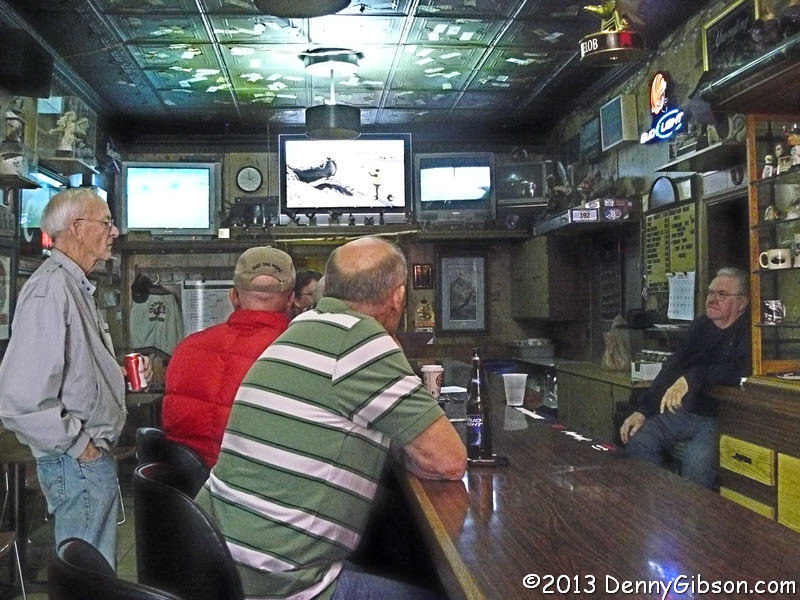
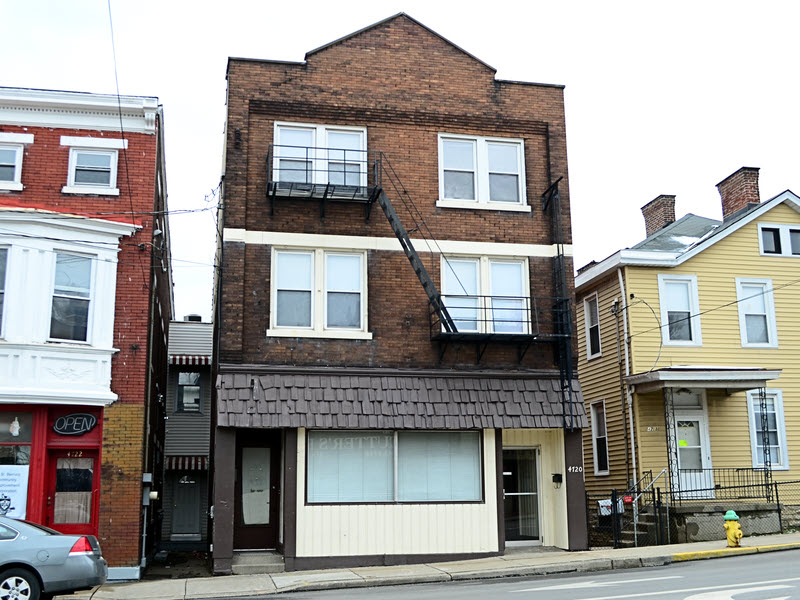
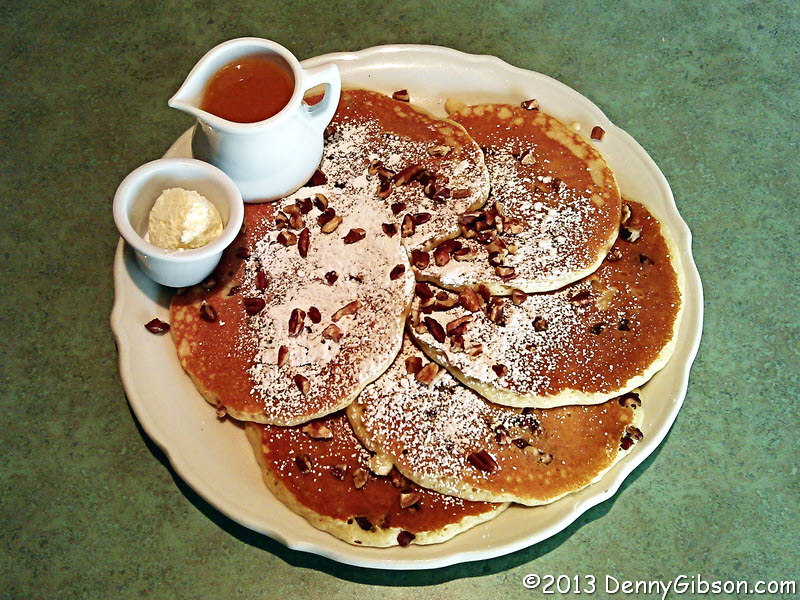
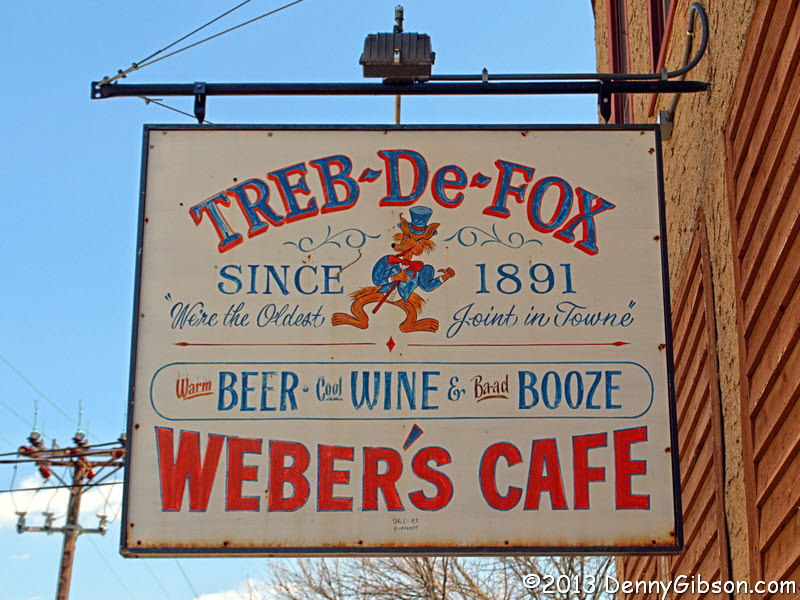
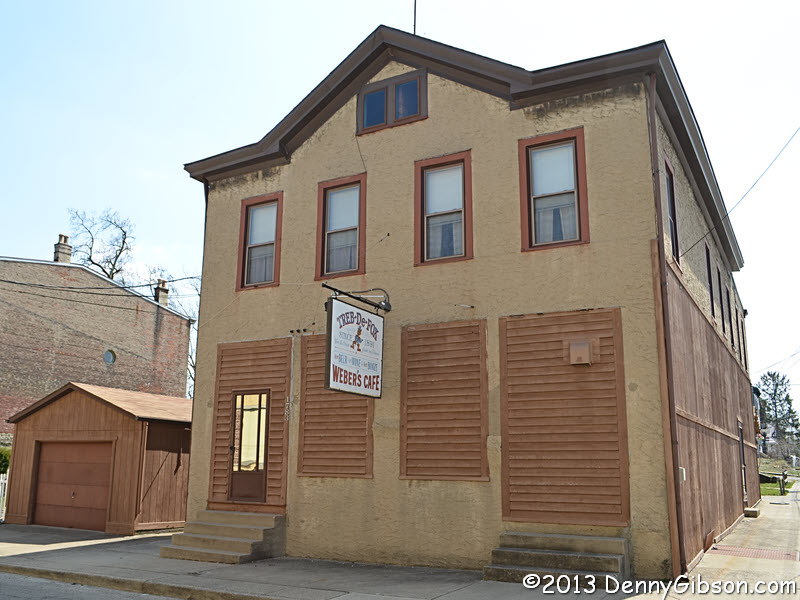
Weber's CafeWeber's CafeOf course the lack of new privileges did not keep me from enjoying the day. I got it started with some phenomenal pecan pancakes at one of my favorite breakfast spots, The Original Pancake House. I hung out at home for a bit then headed out again in the early afternoon. My first stop was at the place pictured to the left and at the top of this post. Not only was it my first stop of the afternoon, it was my first stop ever at Weber’s Cafe and, unless I get back there one of three days next week, it will be my last. Weber’s is closing next Wednesday and it was a news article about the closing that brought the neighborhood bar to my attention. The place couldn’t have been more friendly and welcoming but it really is a place where friends gather. I drank a couple of PBRs and had delightful chats with both George and Nancy (who appear in the article and accompanying video) but in the end I was a tourist who could admire the comradery of the regulars but who was certainly not part of it. Those guys are really going to miss this place. Heck, I’m going to miss the place and I was only there once. There’s a nice blog post from a few years back here.

Next up was a drive to Wilmington to meet buddy John. We met at Daluca’s Dugout and I really should have grabbed some pictures there because Deluca’s (perhaps better known as Sal’s) is a blue collar place with its own set of regulars and its own set of sports memorabilia though its memorabilia isn’t quite in the same class as that at Weber’s. John is a regular and I’m becoming a semi-regular and it’s a very comfortable place to down a few brews. From there we headed to MacD’s Pub with intentions of having one beer and ended up splitting a pitcher while chatting with John’s boss, Norm, who graciously bought a round of Woodford for the three of us. This had developed into a bit more of a celebration than I had anticipated.

My next move was partly, but not entirely, spontaneous. John and I had devoured a couple of baskets of chips at Sal’s but the idea of seeking out some real food seemed a good one. Over the last several days, the thought of a special meal for my birthday had occurred a time or two. One of the places I’d thought of is in Dayton. I can reach Dayton from Wilmington in about the same amount of time as I can reach home. Of course I’d still need to get home from Dayton but I saw that as a detail that could be dealt with later. Dayton was where I headed.

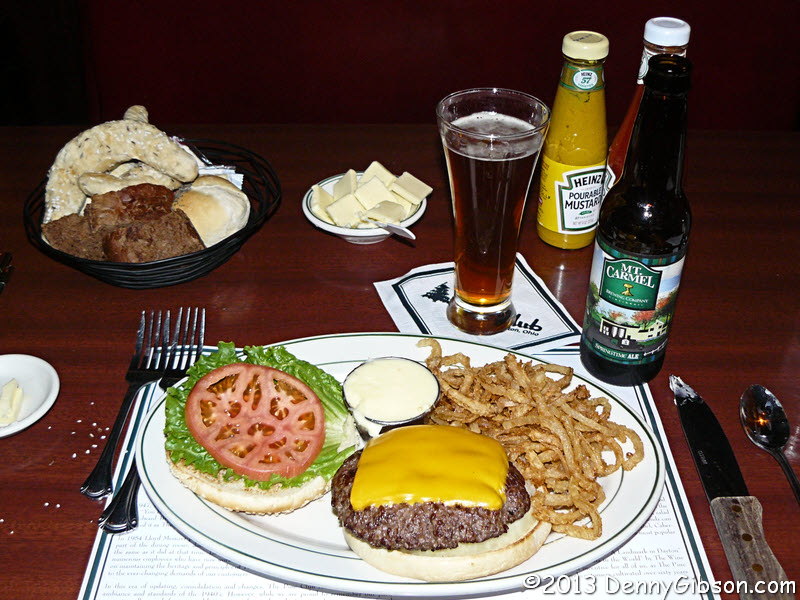
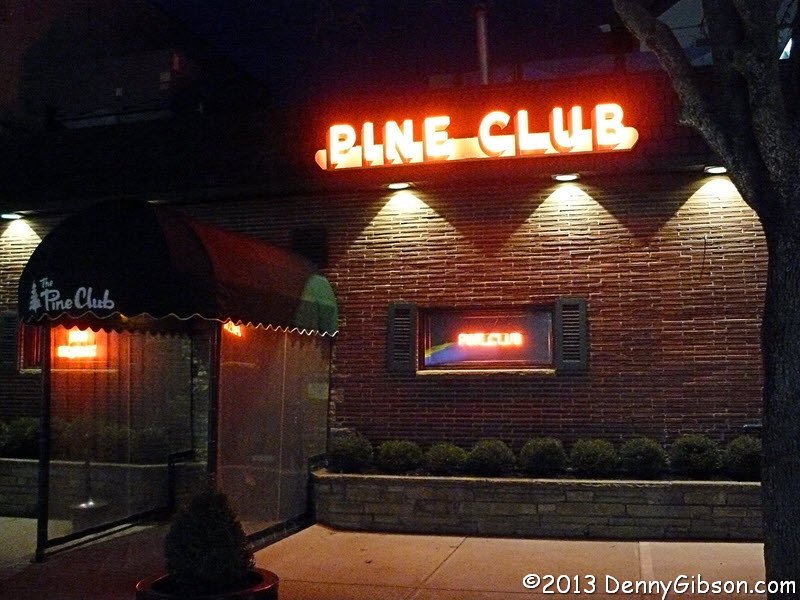
Pine ClubPine ClubThe Pine Club is an old school steakhouse with a mile high reputation. Though the restaurant and I are the same age, I’d eaten there just once. On that one visit, however, I was served what I believe was the best steak I’ve ever eaten. I certainly do intend to enjoy another one someday but that’s not what was on my mind this time. In addition to a variety of steaks, the Pine Club offers a nice seafood selection and some sandwiches including hamburgers. I really was surprised when I first saw Pine Club and hamburger mentioned together but it seems the restaurant has been showing up on best ‘burgers lists for quite awhile. I’ve lusted after one of these babies for a long time. The lust was justified and the drive rewarded. This is a high quality and tasty hamburger that is neither over-priced nor over-hyped. Happy Birthday to me.

Chili All Week and It’s Cold, Too.

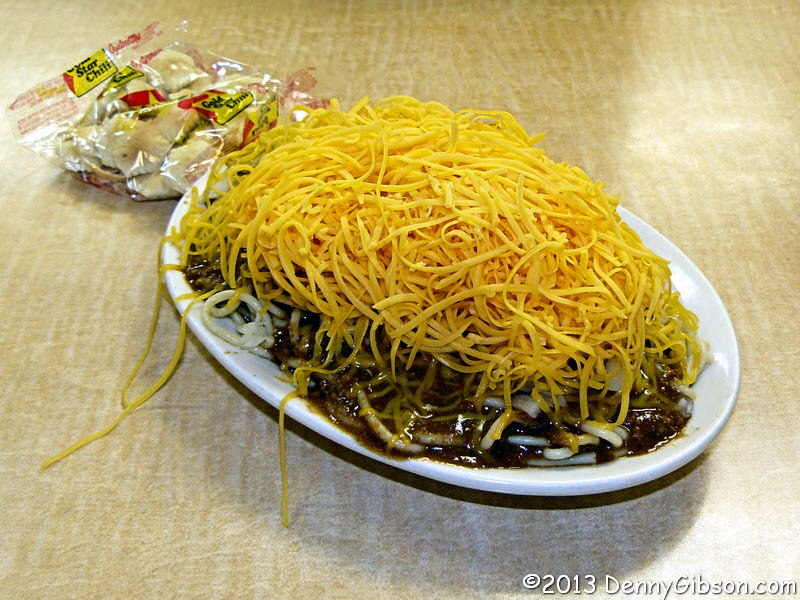
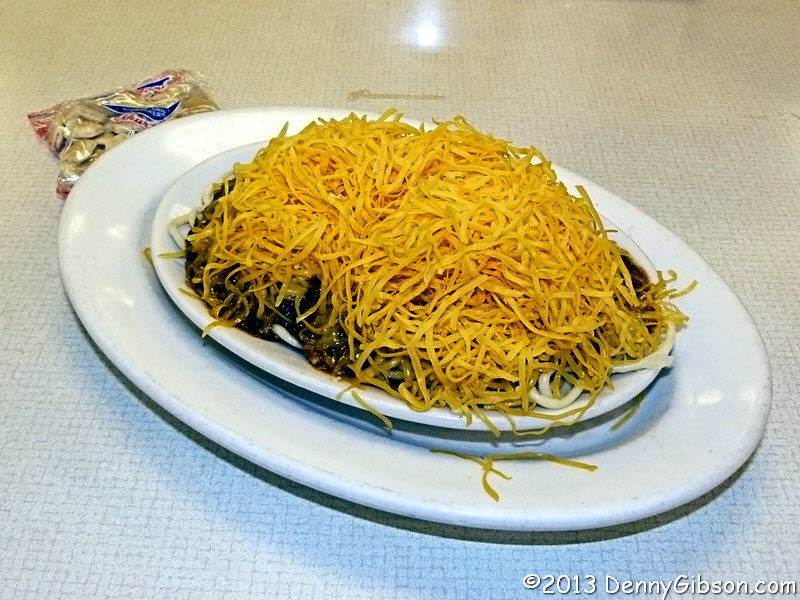
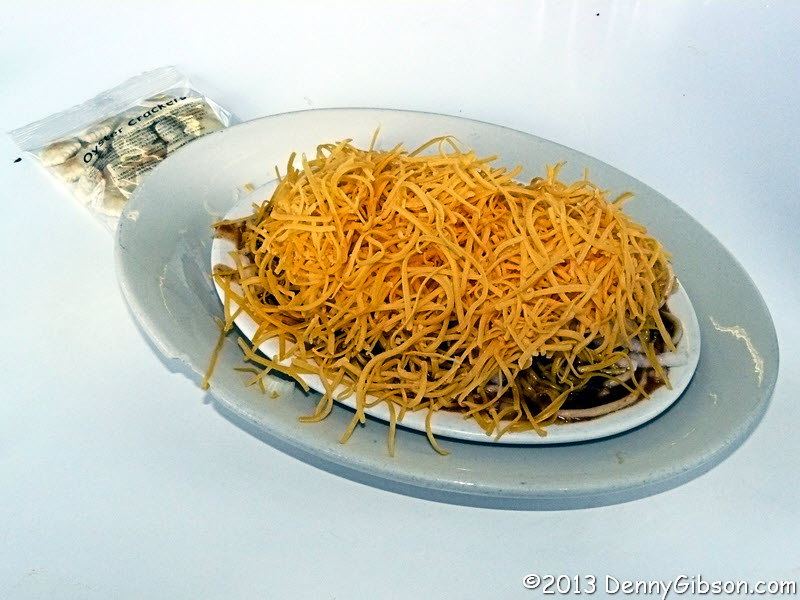
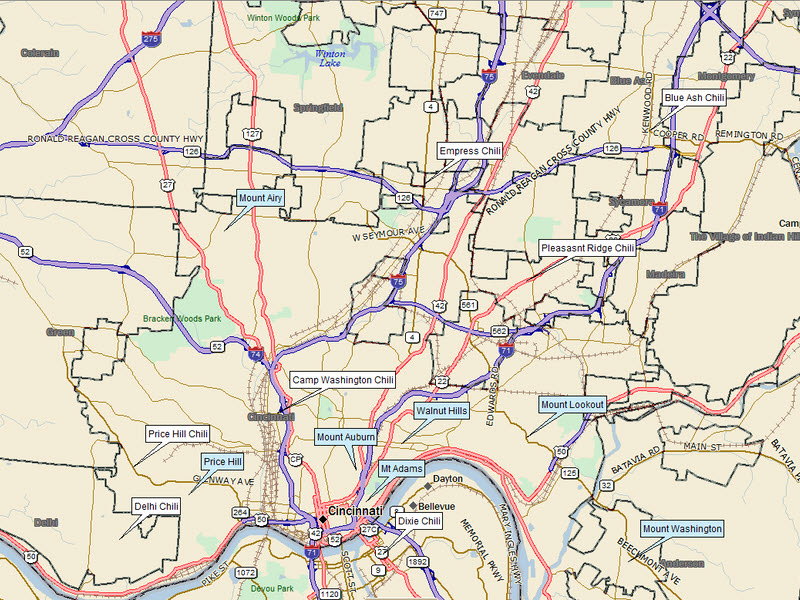
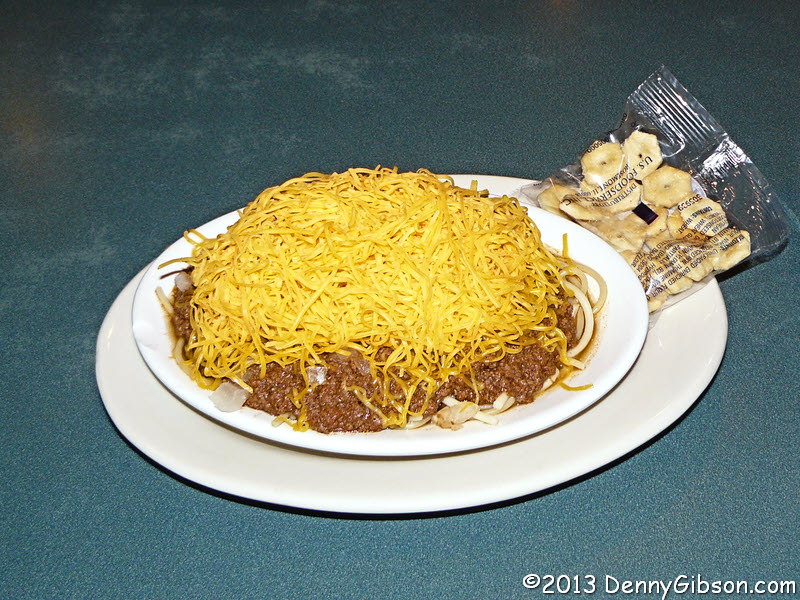
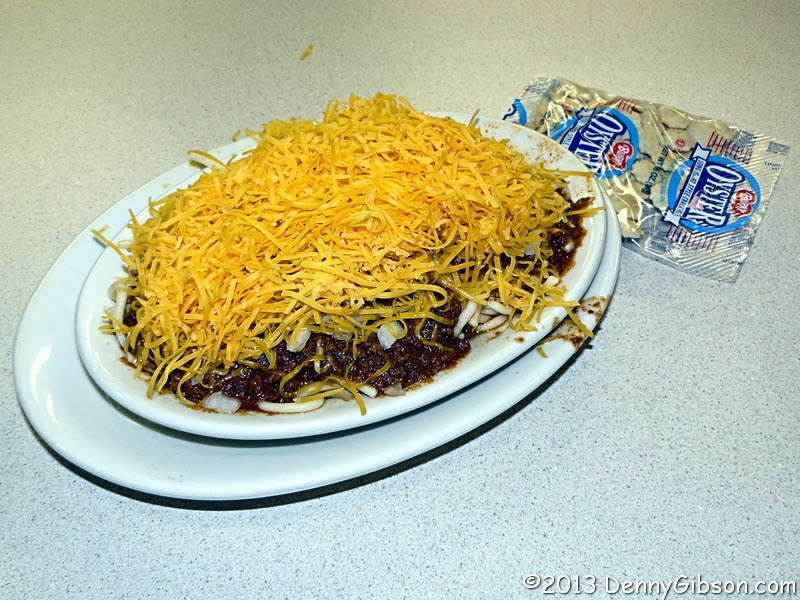
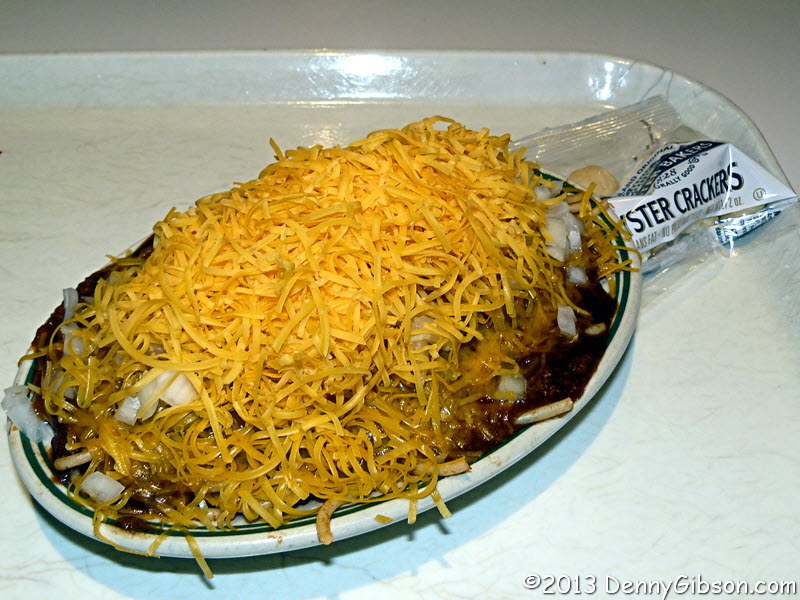
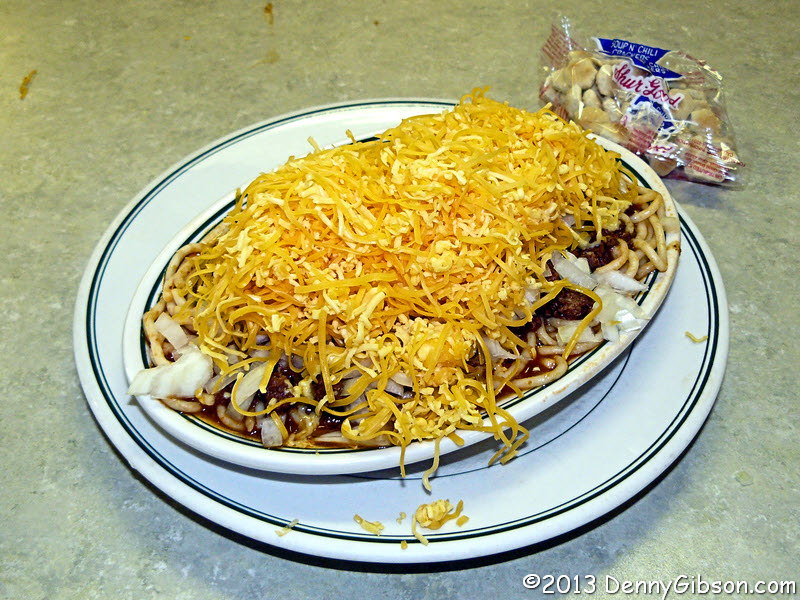
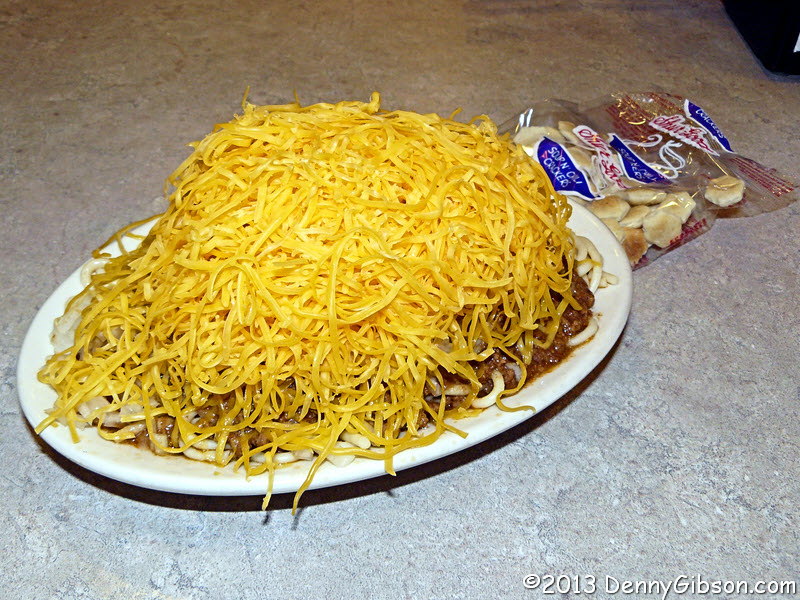
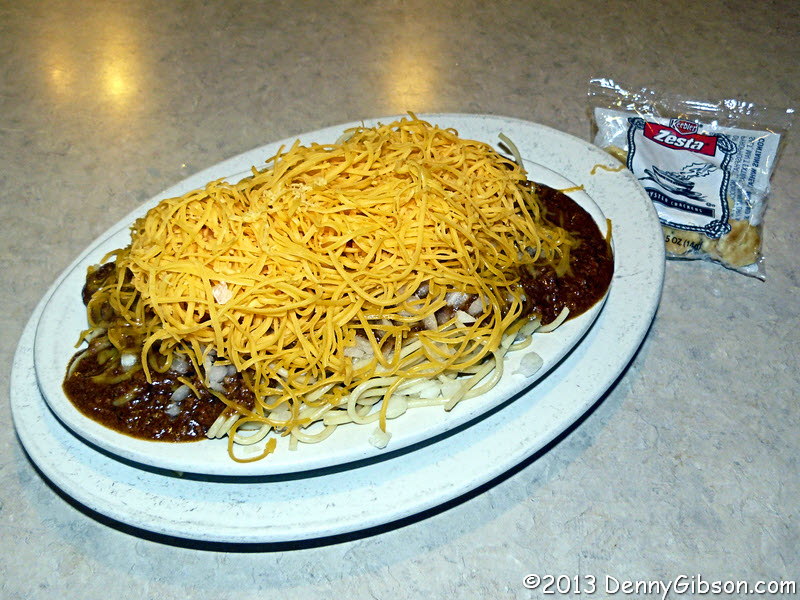
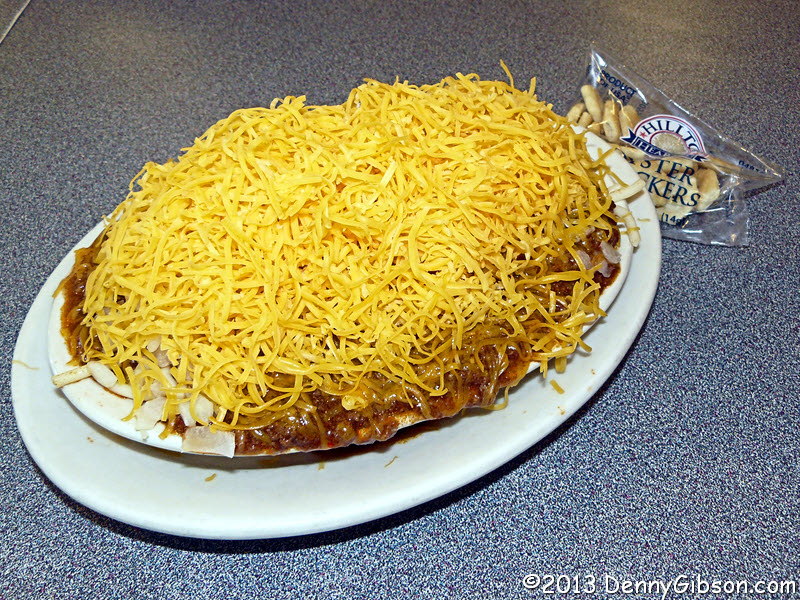
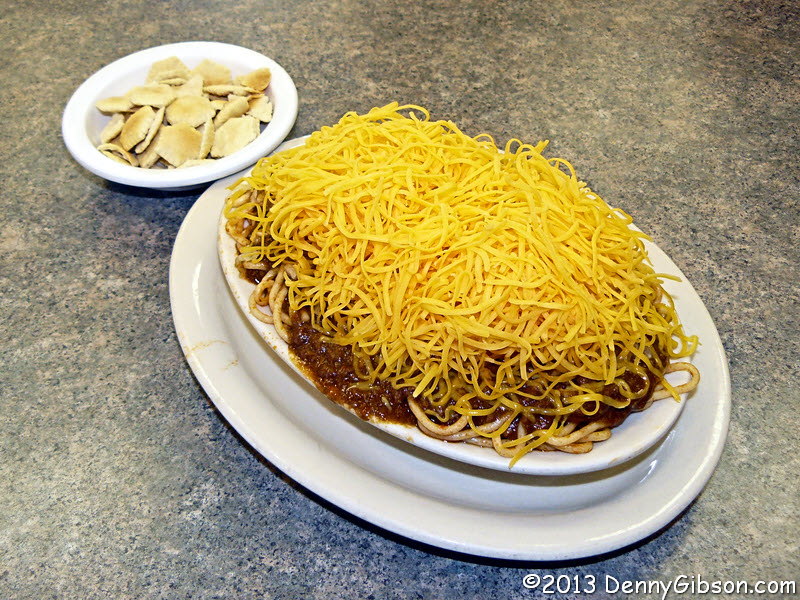
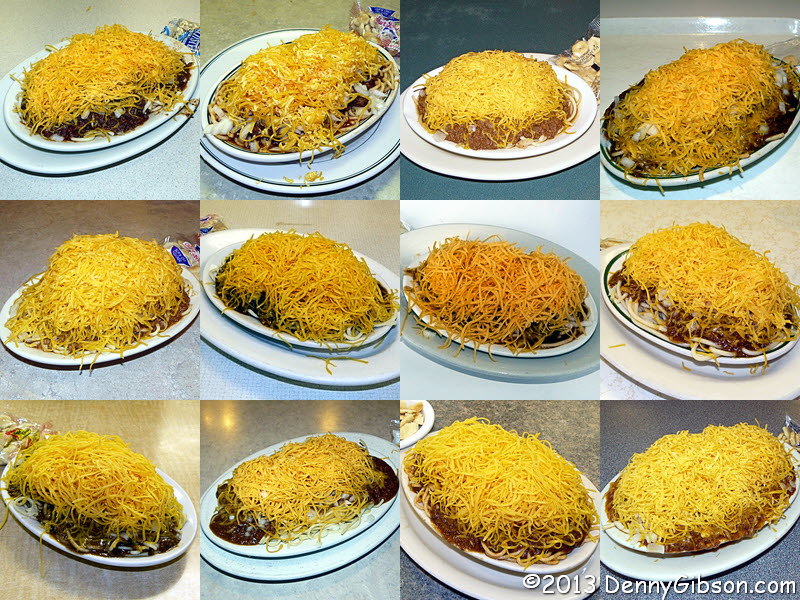
Cincinnati Hills and ChiliThe most recent AAA magazine contains an article titled Cincinnati’s Seven Hills. There are a lot more than seven hills around here but Cincinnati gets its name from Rome and likes to connect with it in other ways, too. So, like that ancient city, Cincinnati is said to be built on seven hills although there is no universal agreement on which seven those are. AAA picked Mount Adams, Mount Auburn, Mount Lookout, Mount Washington, Mount Airy, Price Hill, and Walnut Hills and the article contained a brief description of each one. Price Hill’s description included mention of Price Hill Chili. There are even more chili parlors than hills in Cincinnati and everyone has their own favorites. Not only was Price Hill Chili not on my personal favorites list, I’d never even been there. I can’t reproduce the exact thought sequence but I seemed to naturally move from seven hills to seven chili parlors to seven days between my planned Sunday posts. So, when the next Sunday afternoon rolled around, I set out for the first of seven daily 4-ways. In Cincinnati, chili is commonly eaten over spaghetti with shredded cheese piled on top. That’s a 3-way: spaghetti, chili, cheese. Add onions or beans and you’ve got a 4-way. Add both for a 5-way. I’m a 4-way with onions sort of guy.

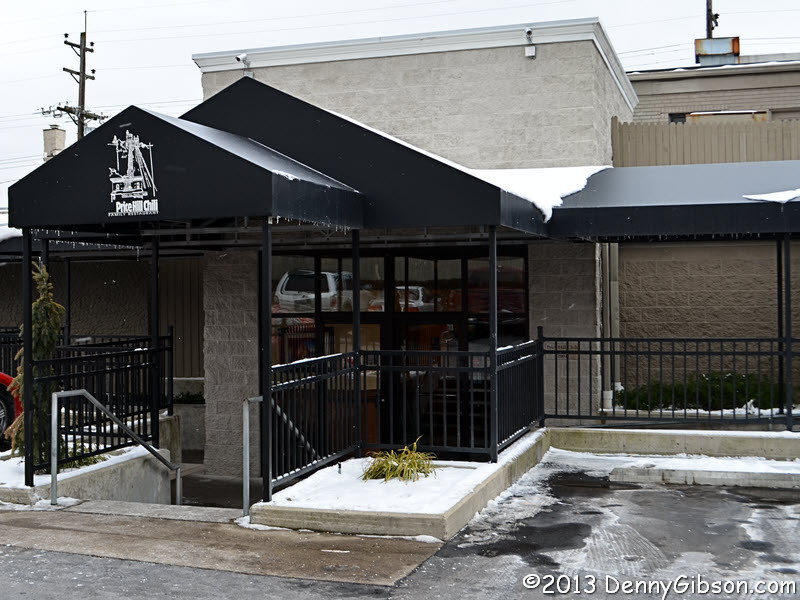
Price Hill ChiliPrice Hill ChiliSunday: I started with Price Hill Chili, the place mentioned in the article. It calls itself a “family restaurant” and there is a lot on the menu besides chili. There is also a bar area and a big patio that I’m sure is an attraction in the summer but not so much in February. It’s been in business since 1962. The place was certainly busy though not so full that I had to wait for a seat. It didn’t take long for my 4-way to appear and it disappeared rather quickly, too. The chili is plenty meaty and tastes quite good but not good enough to dethrone my favorite. It does, however, top the lists at both Urban Spoon and Metromix.

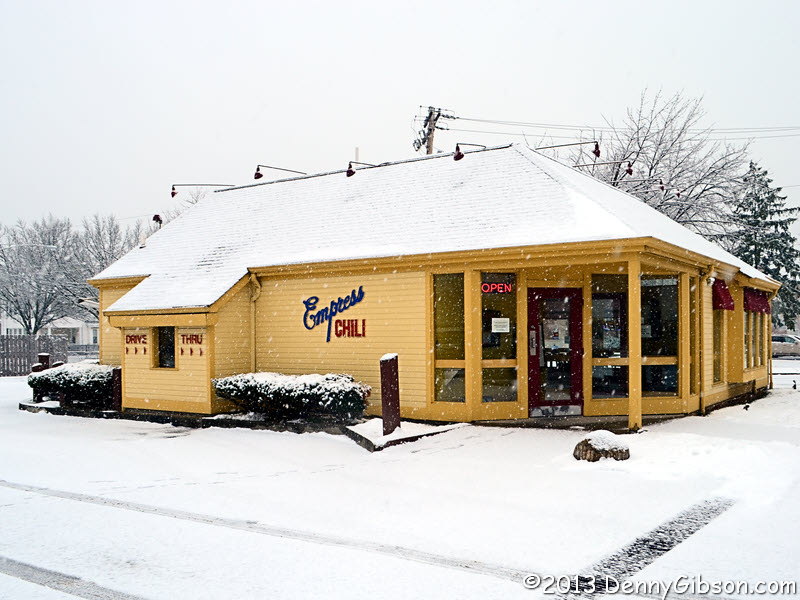
Empress ChiliEmpress ChiliMonday: This might be as close as you can get to the “big bang” of Cincinnati chili. Cincinnati style chili is said to have been born when Tom and John Kiradjieff started serving a modified Greek stew on hot dogs and spaghetti in their stand next to the Empress Theater. The brothers adopted the theater’s name for their restaurant and the whole city adopted the stew and the style of serving it. Ninety years later, Empress Chili is still very much around although details of the “empire” are foggy. There are several restaurants in the area that advertise and serve Empress Chili without being Empress restaurants and the product can be purchased in many area supermarkets. There are somewhere between two and four official Empress Chili parlors and Empress Chili in Hartwell, where I stopped, is one of the two “for sures”. The other is in Alexandria, Kentucky. The employees on site when I was there were friendly and competent but didn’t really know how it all fits together either. This was the first I’ve had Empress Chili in several years and, while it’s not my own favorite, it is quite good and is the favorite of bunches of people.

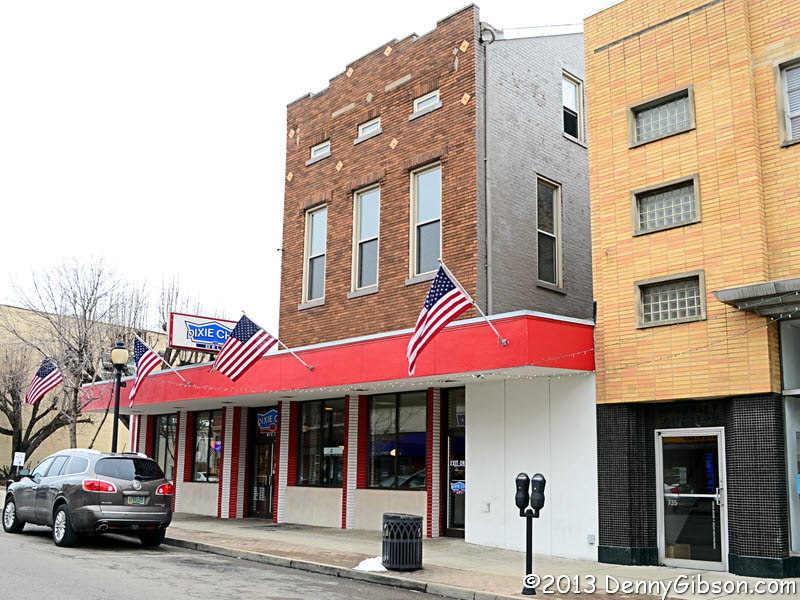
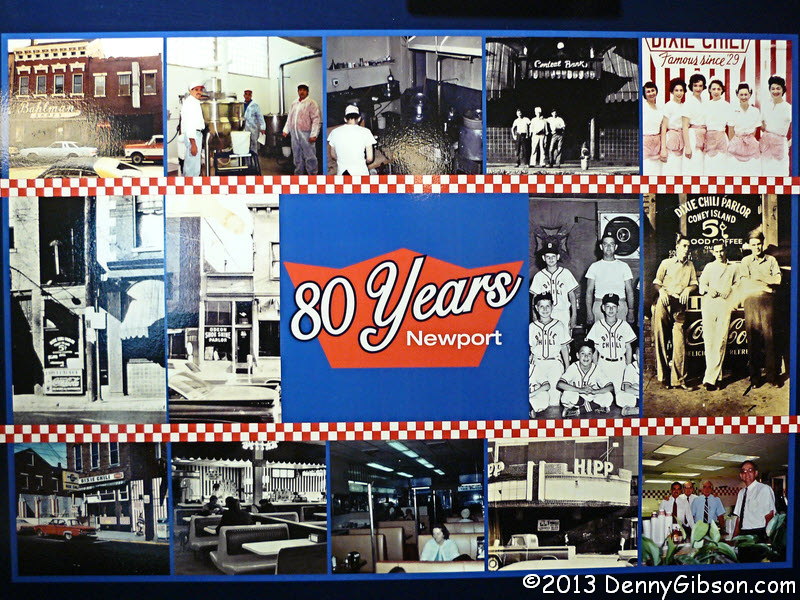
Dixie ChiliDixie ChiliTuesday: Some of the oldest evidence of the Empress “big bang” can be seen at Dixie Chili in Newport, Kentucky. Greek immigrant Nicholas Sarakatsannis worked at Empress for awhile before moving on to start his own restaurant. Not wanting to compete with his former bosses, Nick picked a spot across the river. That was in 1929 and the restaurant, though greatly enlarged, is still there and there are two more. All are in Kentucky. The phrase “greatly enlarged” may be a little weak to describe growing from the original 8 x 30 foot store. It’s that white covered area between the buildings and is shown left center in an array of photos displayed at the restaurant. With all that history, it’s kind of hard to believe that this was my first visit. Sad but true. However, it’s a place I liked well enough to assure a return visit.

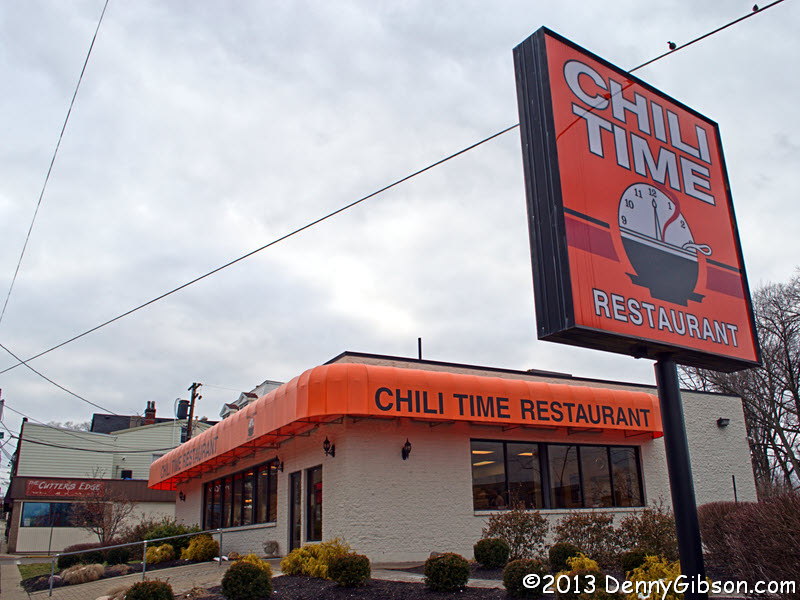
Delhi ChiliDelhi ChiliWednesday: This was the last place to be added to my schedule. Picking six chili parlors was fairly easy. Picking seven was much tougher and it sure wasn’t due to a lack of candidates. As I read about the various places that internet searches turned up, Delhi Chili worked its way to the top of my list. Everything I read about Delhi Chili made it sound like the independent neighborhood parlor I was looking for. Eating there clinched it. The restaurant has been there since 1963 and features chili but operates like a diner with daily specials and other non-chili offerings. Plus, you can’t get much friendlier. There’s not even a decent Facebook page let alone a real website but you can find the place with this and once you find it I think you’ll like it. I like it a lot — especially the cheese — and will definitely be back. Wish it was closer.

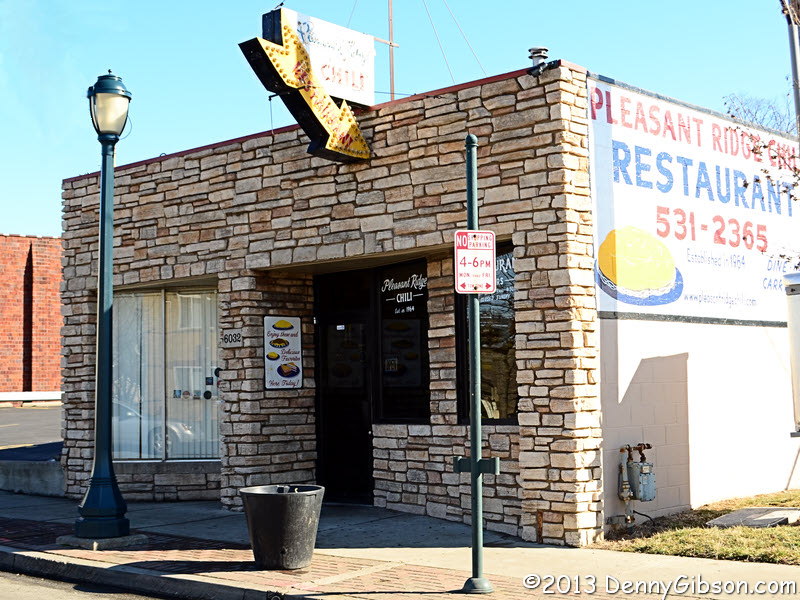
Pleasant Ridge ChiliPleasant Ridge ChiliThursday: Pleasant Ridge Chili began in 1964. It looks and feels like a neighborhood chili parlor should and, like Delhi Chili and just about every other non-chain chili joint in the city, its menu includes much more than chili. Although there are 4-ways I personally like a little better, those at PRC are certainly good and the place is definitely comfortable with friendly staff and customers, too.

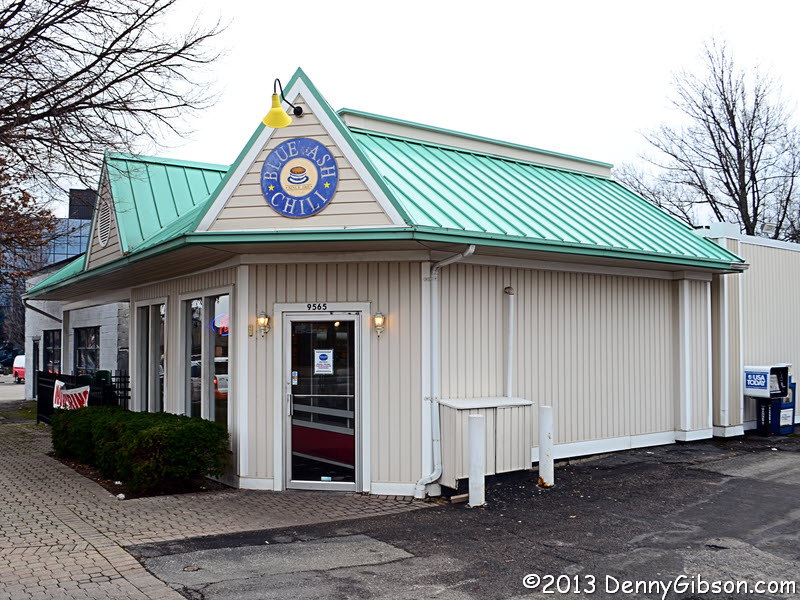
Blue Ash ChiliBlue Ash ChiliFriday: I was just a little surprised when Guy Fieri selected Blue Ash Chili for an episode of Diners, Drive-Ins, and Dives. I’d eaten here several times but had always ordered one of their over-stuffed double-decker sandwiches. I had never tried the chili but that was something I soon corrected and decided that Guy had made a pretty good choice. Blue Ash Chili started in 1969 and recently added a second restaurant that’s actually just a little bit closer to me but it had to be the original for this visit.

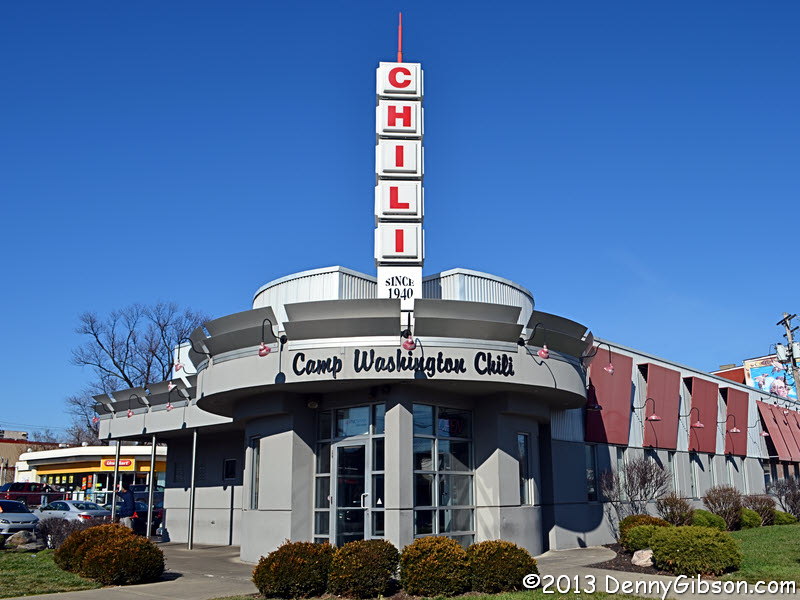
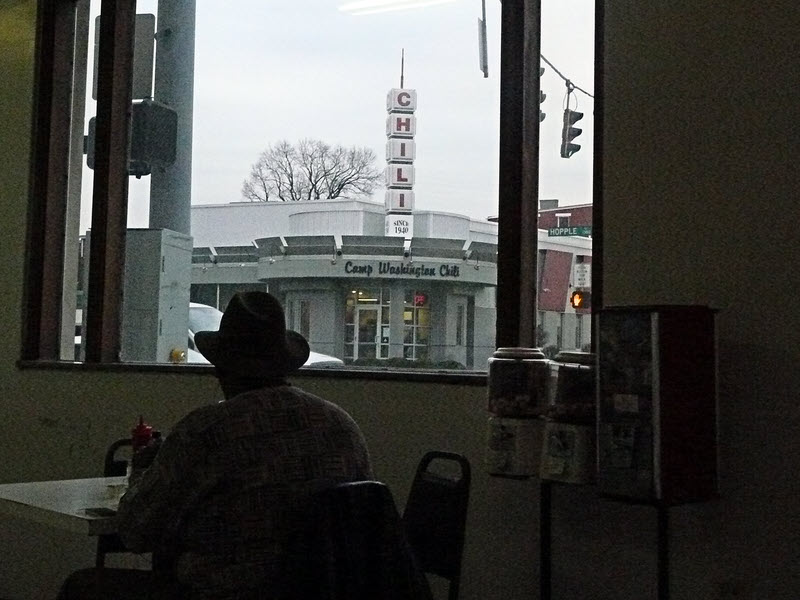
Camp Washington ChiliCamp Washington ChiliSaturday: Camp Washington Chili moved a couple of notches up the street and built a new building in 2000 when street widening took the brick structure it had occupied since 1940. It’s open 24 hours a day 6 days a week and serves breakfast and sandwiches in addition to chili. I can’t deny that the around the clock diner image is part of the reason I like the place but I really do like the meaty chili. I want to say it has more flavor than most but maybe they all have the same amount of flavor and this just has more of the flavor I like.

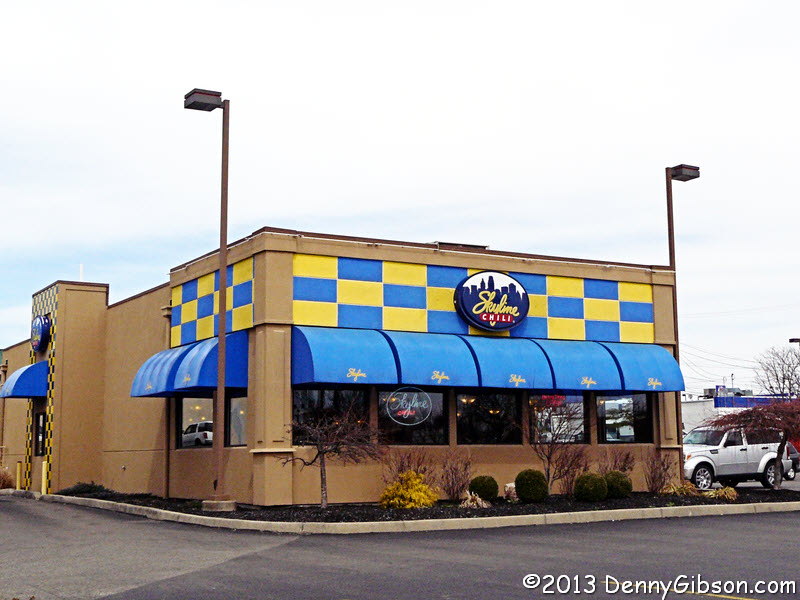
The Cincinnati chili giants, Skyline and Gold Star, are, I suppose, conspicuous by their absence. That’s not because they’re no good or that they’re not genuine Cincinnati chili parlors. They are both very good and very Cincinnati. Skyline was started by a former Empress employee in 1949 on Price Hill and four brothers launched Gold Star in 1965 on Mount Washington. But I wanted to eat at independent parlors and came pretty close to succeeding. Dixie and Blue Ash do have multiple locations but they are few and not far between. Empress is the closest of the seven to being a chain but its unique spot in Cincinnati chili history would warrant a stop no matter what.

None of my week’s worth of 4-ways was less than good and none were expensive. Not one stop required more than a ten dollar bill for a 4-way, iced tea, and tip. Camp Washington and Blue Ash remain my number one and two choices respectively but Dixie and Delhi are both credible challengers. More data is needed. While the others are left at the bottom of the list, it’s a pretty short list and I’d happily scarf down another 4-way at any of them… after a little break.

Addendum 10-FEB-18: I did scarf down more 4-way after a little break but I did it at some different parlors before returning to any in this set. The report on the second round is here.  


Common Ground Veterans Initiative Scholarship Fund

I’ve mentioned musician Josh Hisle in a couple of trip journals and in an earlier blog post. I very much like his music but there’s a lot more to Josh than meets the ear. He has been involved in Common Ground on the Hill for several years and now, as a veteran himself, is very active in their current effort to increase veteran involvement even more. That effort includes an Indiegogo fund raiser here. Check out the video, tell your friends, and chip in a few bucks if you can.

Something’s Brewing in Cincy

Blank Slate BreweryCincinnati has breweries. It used to have a lot of breweries and they used to be bigger. Maybe the glory days when more than twenty breweries operated in the Queen City won’t be returning but the count is definitely increasing. Most of those 20+ breweries simply didn’t recover from the Eighteenth Amendment. A few — Hudepohl, Shoenling, Wiedemann, Burger — did and were going strong when I came to town in 1965. But one by one they closed and all were gone by the end of the century. An exception of sorts is the former Shoenling Brewery now owned by Boston Brewing and used to produce Samuel Adams and other brands for a company headquartered nearly 800 miles away.

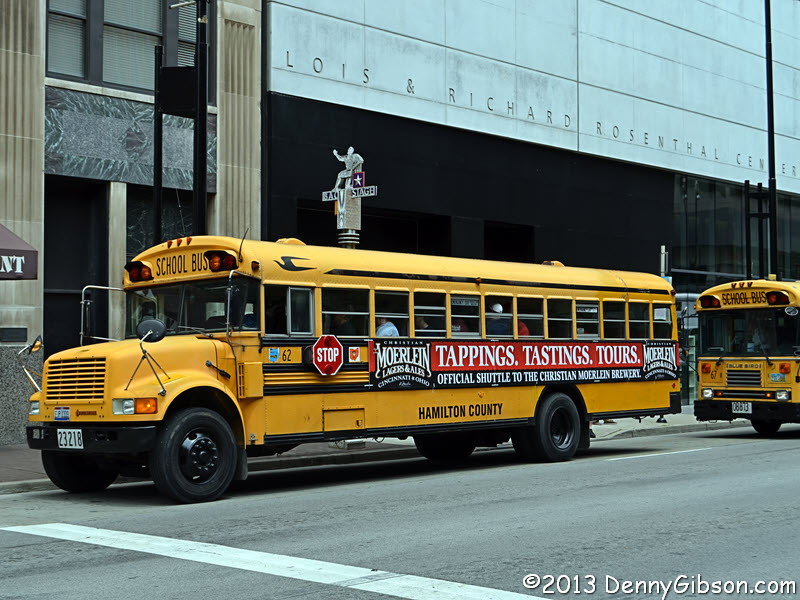
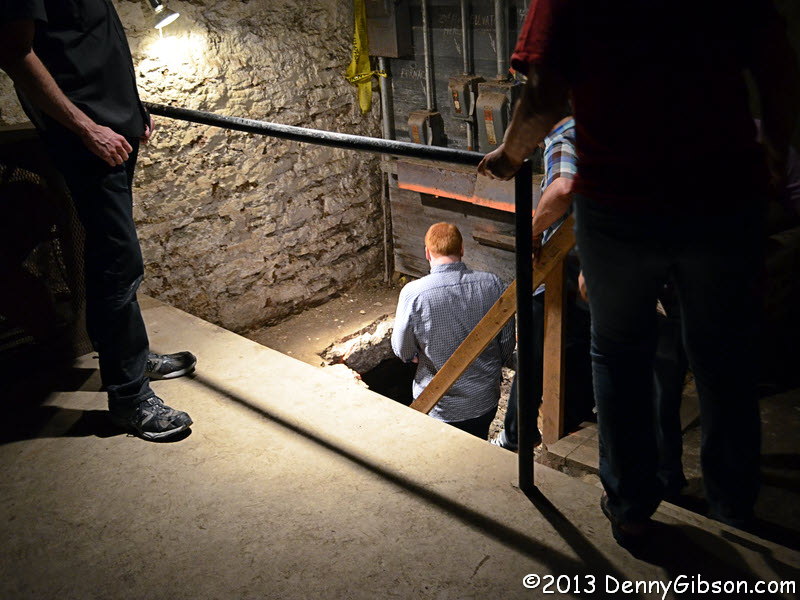
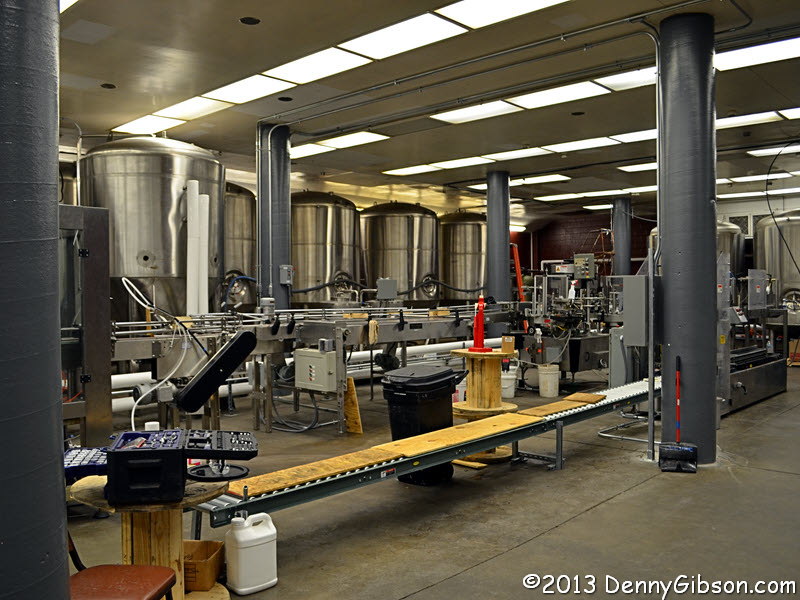
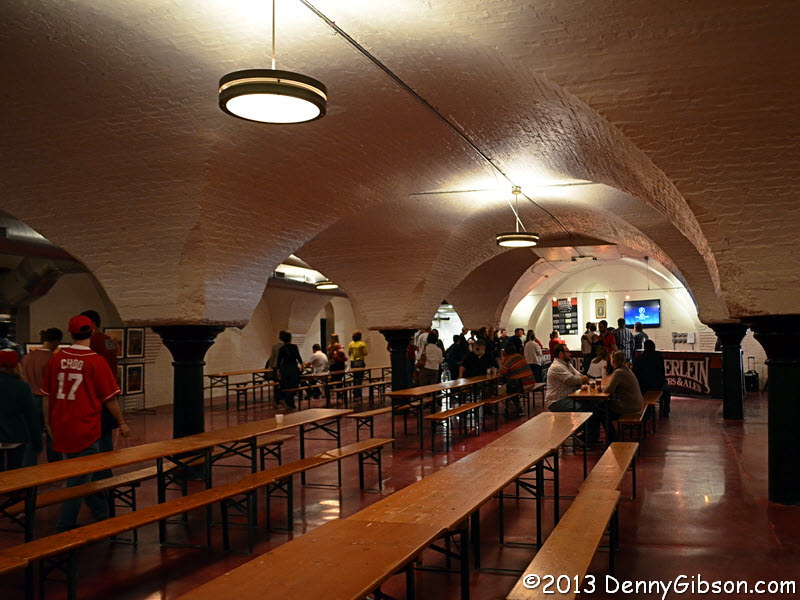
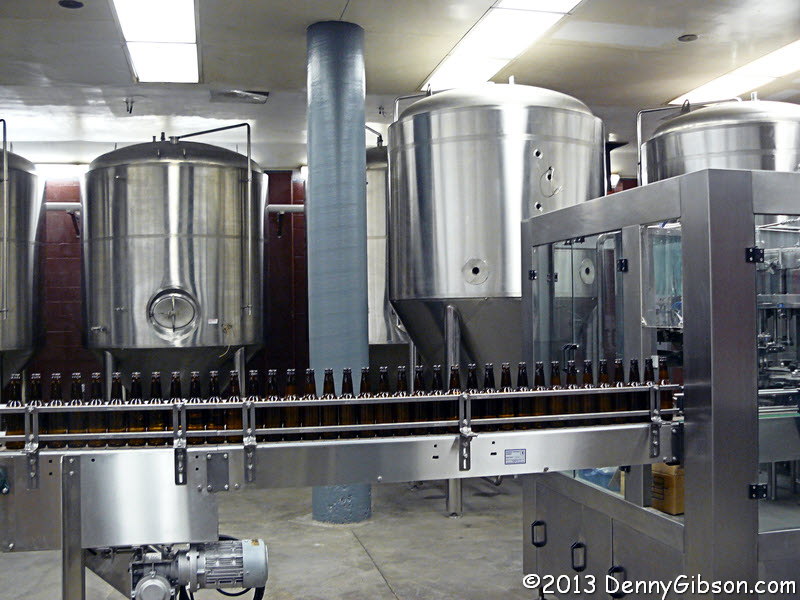
Christian Moerlein BreweryIn 2004, Greg Hardman started putting his money and his considerable energy where his heart is. Using contract brewing, he brought brands like Christian Moerlein, Hudepohl, and Shoenling back to Cincinnati shelves and taps. A major goal was reached in February of 2012 with the opening of the Moerlein Lager House on the banks of the Ohio River right next to the Roebling Suspension Bridge. An even bigger goal is about to be reached when beer starts rolling out of the Moerlein Brewery in Cincinnati’s Over The Rhine. The building on Moore Street began life as part of Kaufmann Brewing Company, spent many years as a Husman’s Snack Foods potato chip plant, and more recently served as the Great Hall for the annual Bockfest. The photo at left was taken during an open house in late November as things eased ever closer to an actual opening. As I stood in the full and noisy hall, I planned this post — sort of.

My actual thoughts on that day were of a brewery that had been operating in the Cincinnati area for several years but which I’d never visited. Visiting that brewery became a priority. There were issues, however. Tours are offered but only on Saturdays. My December Saturdays were already filled so it wasn’t until the new year started that I could get serious. By then my thought had expanded to include other breweries in the area. In fact, the brewery that had triggered the plan would actually be the last one I would visit during three days of peace and brewski.

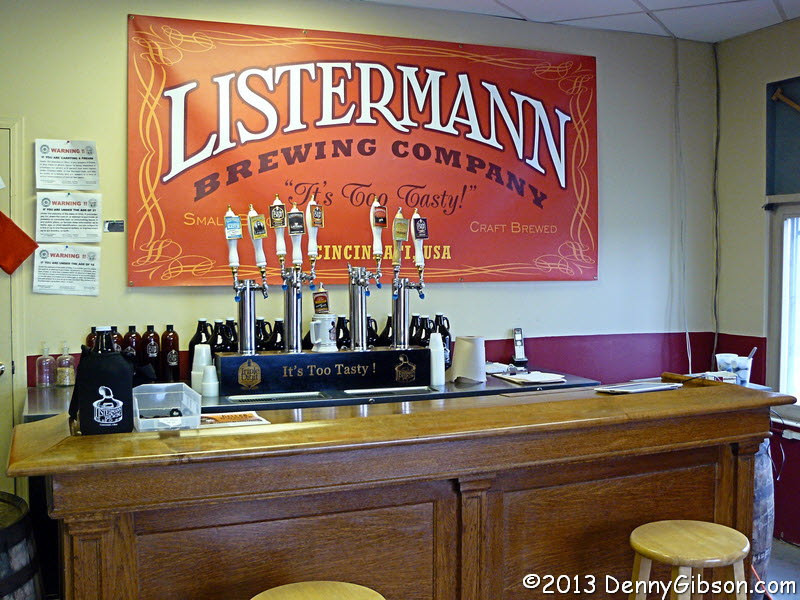
Triple Digit BreweryTriple Digit BreweryI started on Thursday with a stop at Triple Digit on Dana Avenue. The brewery is part of Listermann Manufacturing who has been supplying home brewers since 1991. They have been brewing themselves for several years and I’ve enjoyed some of their product in local restaurants. The taproom is rather new, though. Until last spring, an Ohio taproom required its own licence in addition to the brewery license. Removal of that requirement was a real boon to smaller operations like Triple Digit. I tasted a few brews and walked out with a couple of bottles of Chickow! Very good stuff.

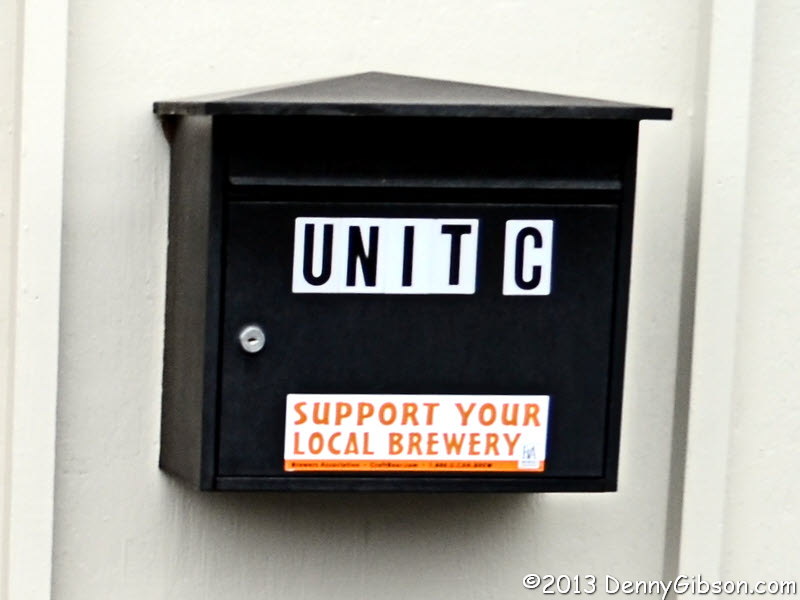
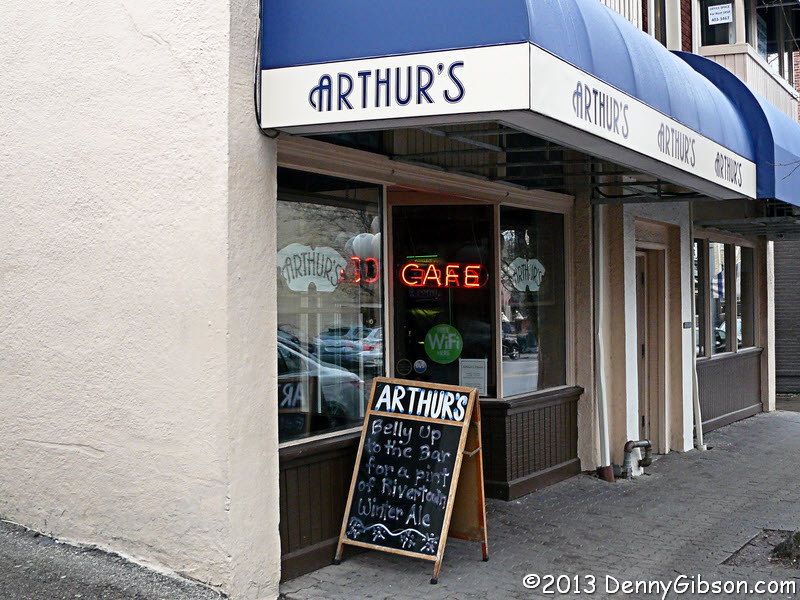
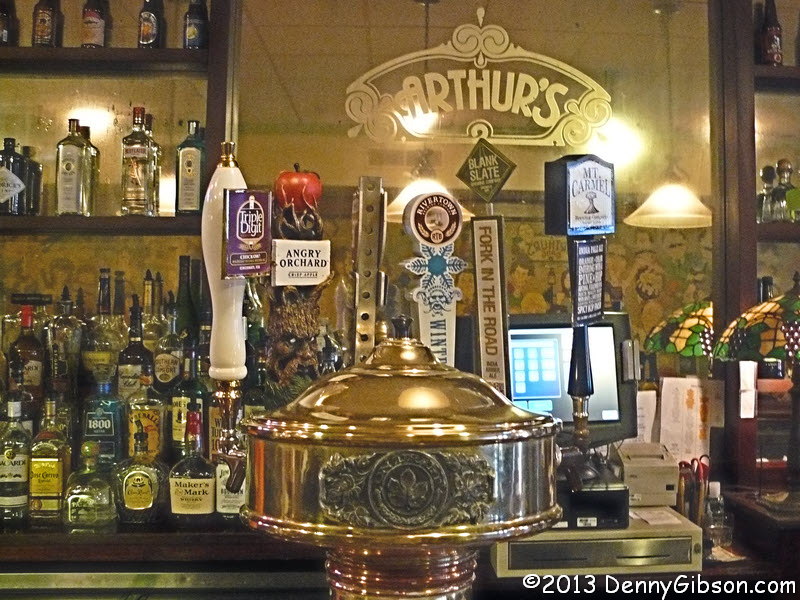
Arthur'sArthur'sLunch at Arthur’s was next. That it was fairly close and more or less on my path were good reasons but there were two better ones. One is that on October 23, Arthur’s began “Proudly serving only Local Draft Beer!!!”. Most of the nationally distributed stuff is still available in bottles as is a wider range of local brews but each of the six permanent taps dispenses only beverages brewed in the Cincinnati area. A very cool and classy move in my opinion. The long standing Tap Tuesday’s could be construed as a technical violation of the “local only” rule but it is certainly a reasonable one. There is a single standalone tap that gets a keg from some smaller brewery every Tuesday. As it has been in the past, this will sometimes be a local product and sometimes not. This week it had been from a small brewery in Portland, Oregon. Hard to fault them for that. The second “better” reason was to try the beer coming from the tall diamond shaped tap. It’s Fork in the Road, an India Amber Ale from Blank Slate Brewing Company. That would be my next stop but I knew there was no tasting room or much chance of seeing anymore of the brewery than the mailbox. That’s it at the top of the article. More good beer. If you find Fork in the Road on tap, take it.
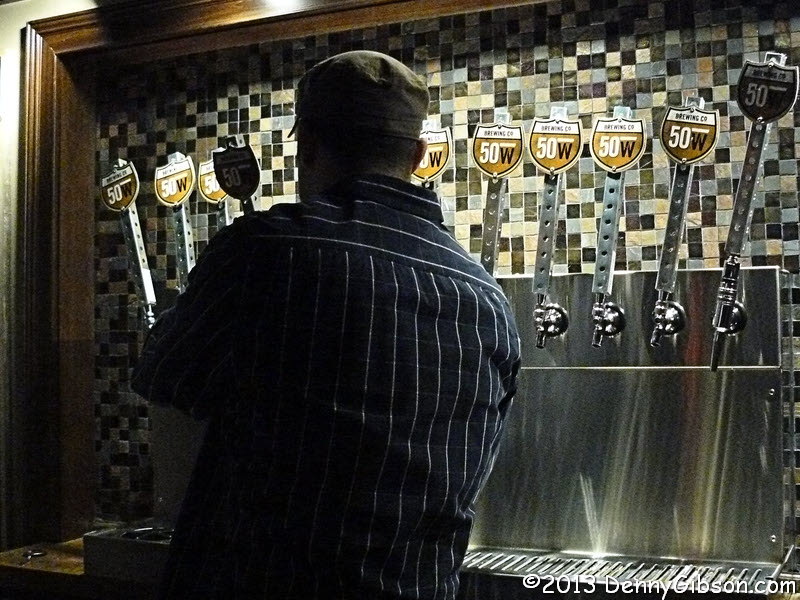
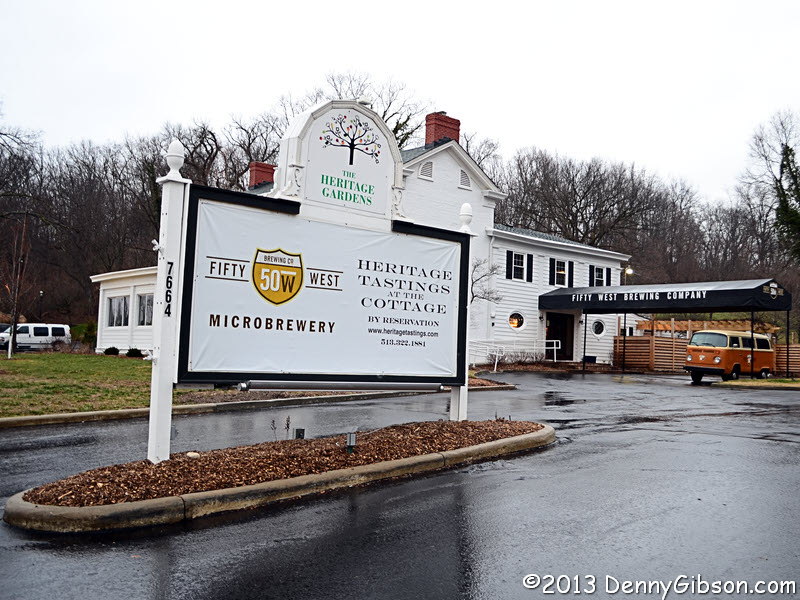
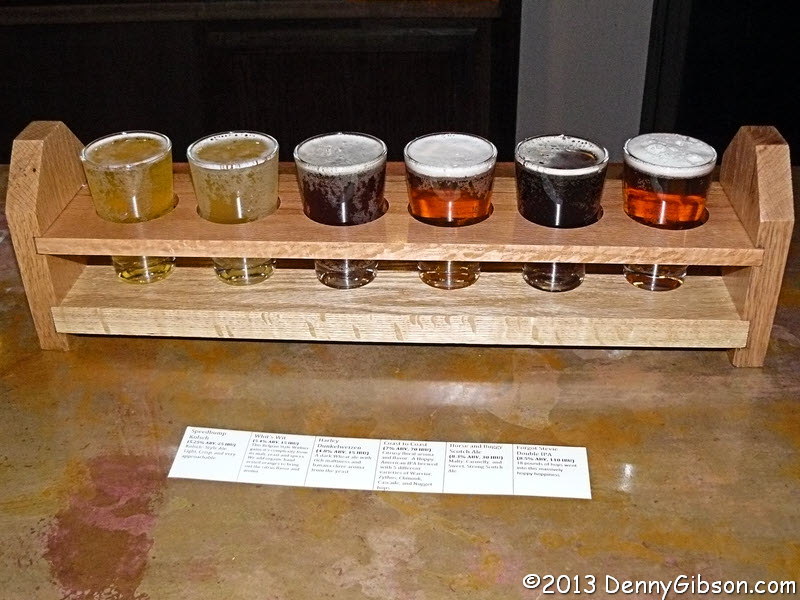
Fifty West BreweryFifty West BreweryThursday’s last stop was at the Fifty West Brewing Company on Wooster Pike, a.k.a. US Highway 50. Anyone who looked for the six taps in the picture from Arthur’s may have come up one short because the Fifty West handle is sideways and hard to see. The company is pretty new. The taproom is just seven weeks old but going gangbusters. I started with a Brewmaster’s Choice flight then, on a neighbor’s recommendation, did a pint of something else. My favorite was the Horse & Buggy Scotch Ale but, at 8.3% ABV, it wasn’t something I could just guzzle.

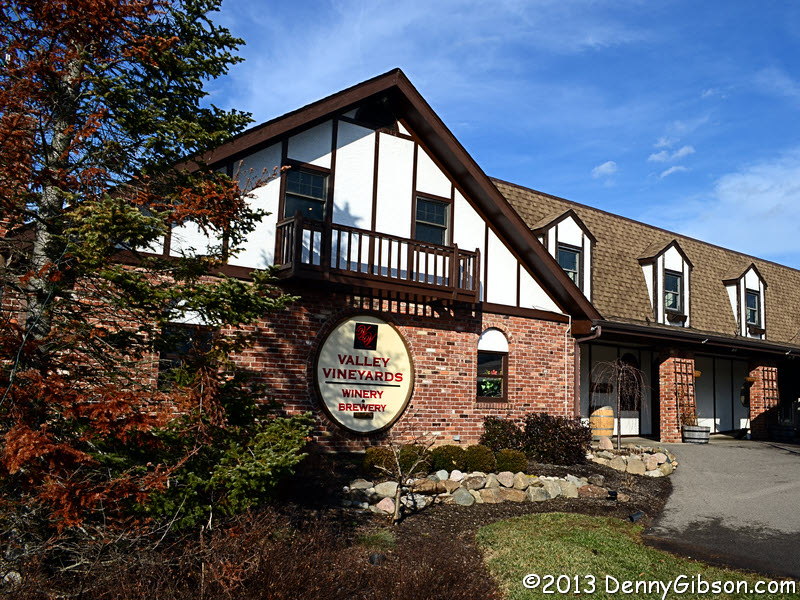
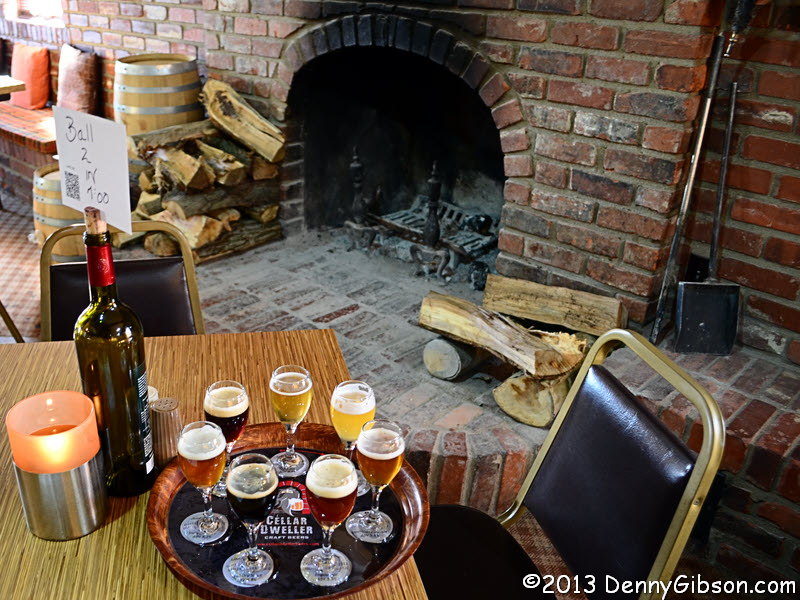
Valley VineyardsValley VineyardsOn Friday afternoon I drove up to Valley Vineyards near Morrow, Ohio. They’ve been making some well respected wine here for over forty years. I’m not much of a wine drinker but did attend some of their earliest wine festivals when I lived near by. I’ve been wanting to revisit the place ever since they added the Cellar Dweller nanobrewery a little over a year ago.  The one word description “refined” came to mind as I worked through the seven member flight and the word seems fitting for an operation with the experience behind it that this one has. Although the offerings fill the full range from an American Light to an Irish Stout each is rather middle-of-the-road for the type. That’s not at all a bad thing. I’m sure Valley’s goal was to provide a range of high quality and pleasant brews without jarring palettes. Well done. Perhaps it is also fitting that my favorite was the middle of the lineup Dead Dweller English Ale.

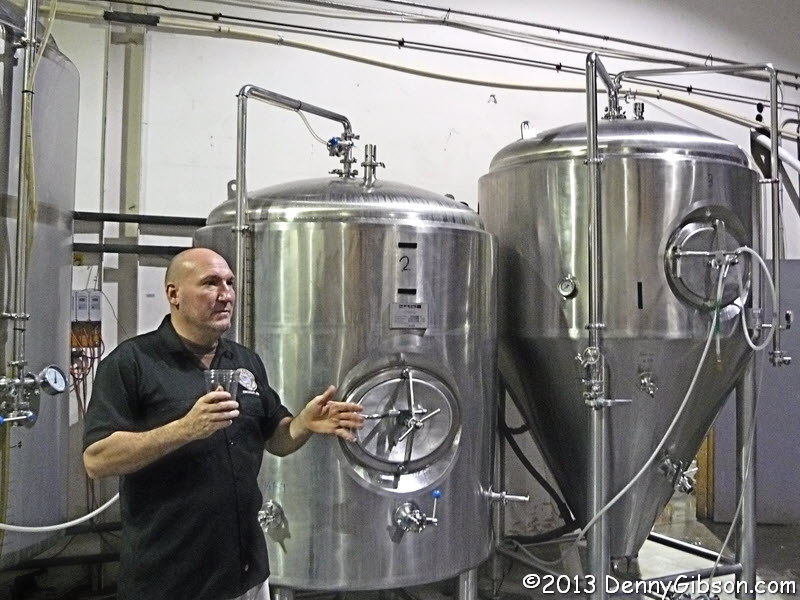
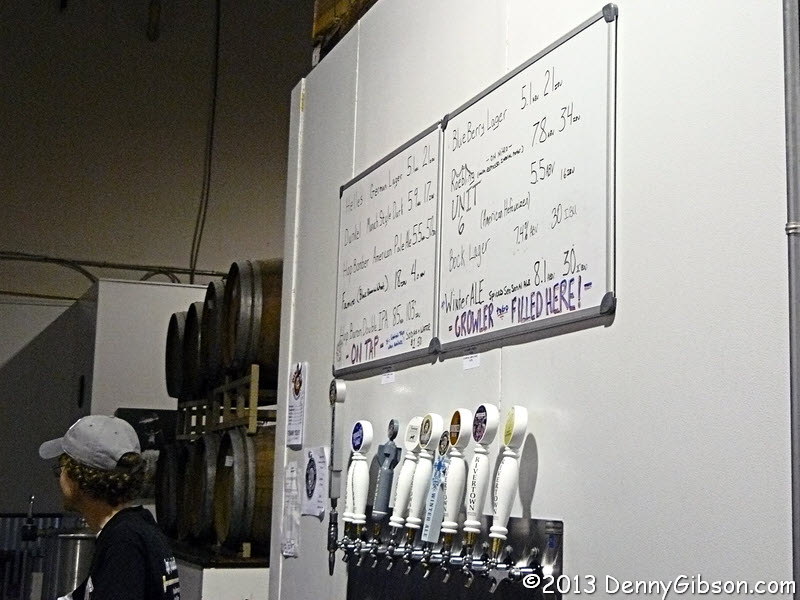
Rivertown BreweryRivertown BreweryFriday’s second and last brewery was Rivertown in Lockland, Ohio. The taproom is open only on Thursday, Friday, and Saturday with tours available Friday and Saturday. They charge five bucks for the tour but it includes a beer and a souvenir glass. Since most beers are $5, they’re really giving you a glass to take the tour. Rivertown Brewery is only a couple of years old but quickly overcame some early quality problems to become one of the area’s more successful breweries. One of the beers I’ve tried and liked in the past is Roebling Porter. At the brewery I got to try it the “right way” with nitrogen delivery and liked it even more.
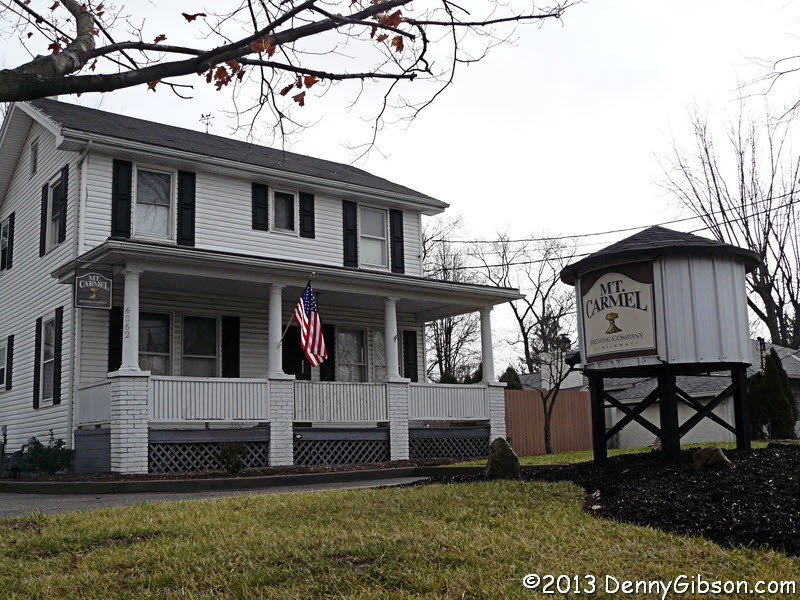
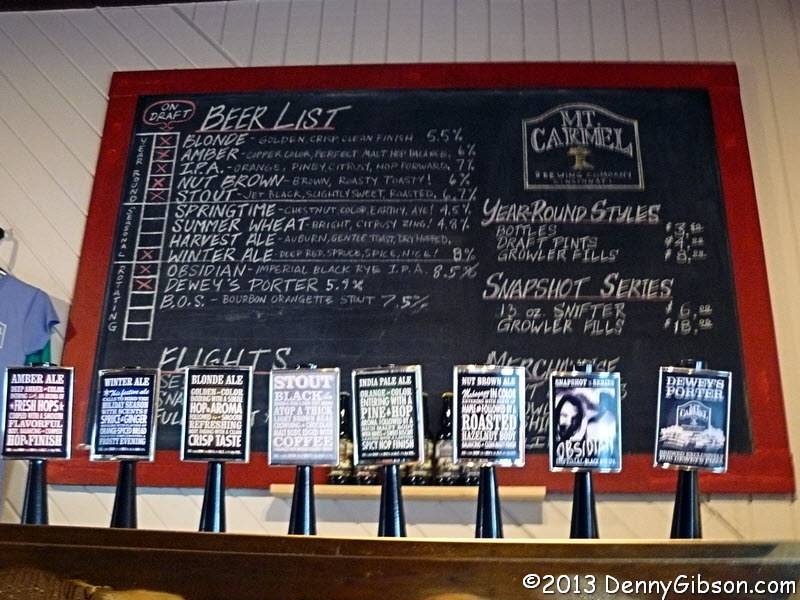
Mt Carmel BreweryMt Carmel BreweryOK. Here it is. The place that got me thinking about visiting local breweries last November. Mt Carmel Brewing  has been producing beer in this 1924 farm house since 2005. They have been offering tours on a regular basis since that change in Ohio law allowed them to open a taproom last spring. It’s not a big place so a tour doesn’t take long but it does provide a good feel for how the place operates. Improvements and expansions have occurred as the business grew and more are planned. Production is the top priority but things like more parking for taproom patrons are also in the works. As Mt Carmel brews have appeared on an increasing number of area shelves and taps, their Amber Ale has become a favorite of mine.

Visiting these five taprooms made it clear to me that brewing is pretty healthy in Cincinnati. Although my timing was accidental, it was also extremely appropriate. Next Saturday, as a prelude to Cincinnati Beer Week, six sold out “Taproom Trolleys” will visit most of the same places. The buses will not go to the remote Valley Vineyards but will stop at the Moerlein Lager House and Rockbottom Brewery. I beat the crowd but just barely.

Dead Sea Scrolls in Cincinnati

Dead Sea Scrolls exhibit at Cincinnati Museum CenterSeveral Dead Sea Scrolls form the centerpiece of and lend their name to a major ongoing exhibit at the Cincinnati Museum Center. The full name of the exhibit, which I attended on Monday and which runs through mid-April, is Dead Sea Scrolls: Life and Faith in Ancient Times. The “scrolls” are in that circular table whose edge is near the center of the photograph at right. They’re not really scrolls, though. Not many of the things comprising what we call the Dead Sea Scrolls are. The first manuscripts pulled from caves near the Dead Sea in 1947 were actual scrolls — seven of them — but not so most of the items found since then. Those first scrolls have been described as “relatively intact”. Subsequent finds have largely been fragments of varying sizes. Pieces of parchment and papyrus containing writing were found in a total of eleven caves in the area, and by 1956, when somebody decided they had found all there was to find, some 15,000 to 30,000 fragments of what are estimated to be more than 900 manuscripts had been retrieved. About 40% of the manuscripts are copies of books in the Hebrew Bible (a.k.a. Old Testament), 30% are religious documents not part of the canonized Bible, and another 30% are secular.

Ten of those manuscripts are represented in that big circular table. To help preserve them, they will be swapped out for a different ten halfway through the exhibit. The actual bits of ancient writing are inside sealed climate-controlled compartments. Enlargements, notes, and English translations are on the table’s surface. Attributed to the period between roughly 250 BCE and 100 CE, most of the Dead Sea Scrolls are written in Hebrew, with a respectable number in Aramaic and a few in Greek or Nabataean. All those in the exhibit are either Hebrew or Aramaic. I can’t read one word. Studying the scrolls doesn’t do much for me in practical terms, but gazing on documents produced two millennia ago is downright awesome.

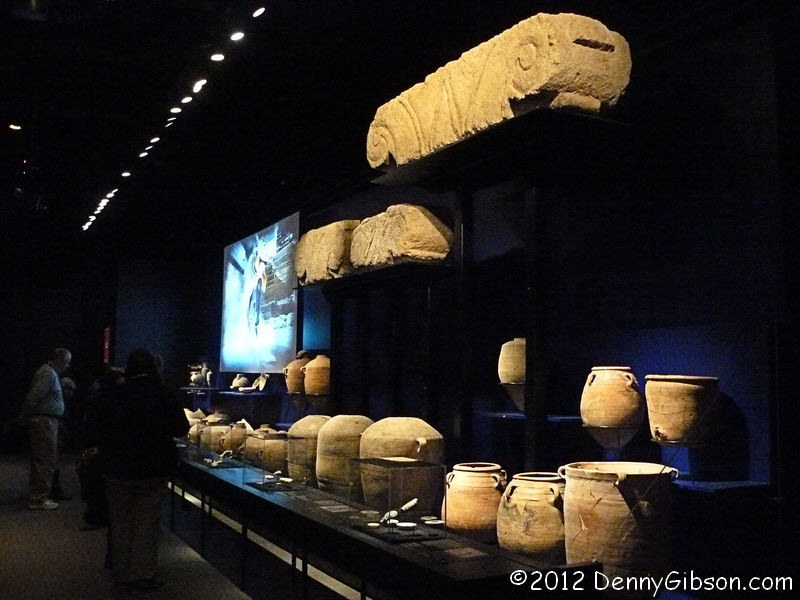
Dead Sea Scrolls exhibit at Cincinnati Museum CenterDead Sea Scrolls exhibit at Cincinnati Museum CenterThe scrolls are the big draw but by the time most people buy their tickets, they are aware that there is more — a lot more — on display. I regret getting no pictures in the first room of the exhibit, where a museum guide uses three ancient jars and walls filled with changing pictures of the region to illustrate an overview of the scroll’s discovery and a little history. From there, visitors enter a long hall with dates on the floor and some seriously old artifacts displayed along one wall. Some sense of the world that preceded the writing and hiding of the scrolls can be obtained here.
Dead Sea Scrolls exhibit at Cincinnati Museum CenterDead Sea Scrolls exhibit at Cincinnati Museum CenterNext up are some newer and larger artifacts. An accurate count of artifacts displayed is elusive but something above 600 is probably close. This is reportedly the largest exhibit ever mounted in Cincinnati. The 2011 Cleopatra exhibit had about 150 items, and the Pompeii exhibit from earlier this year was just over 250. The rightmost picture is of pottery shards with writing on them. Waste not, want not.

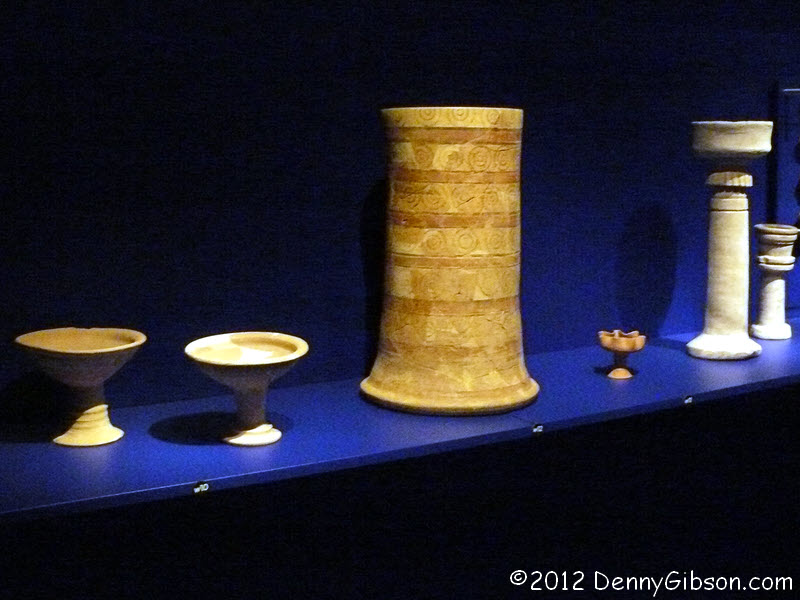
Dead Sea Scrolls exhibit at Cincinnati Museum CenterDead Sea Scrolls exhibit at Cincinnati Museum CenterAs visitors get nearer the scroll display, artifacts seem to become a bit more involved with religion. Holders of incense and offerings are well-represented, and there are hints of a bit more idolatry than I might have suspected. The tall painted cylinder in the second photo is called a cult stand. It’s thought that a bowl with incense or other offerings would have been placed atop it.

Not surprisingly, no photos are permitted in the area where the scrolls are displayed. What was at least a little surprising to me was that the scrolls are not displayed in isolation. They are surrounded by more artifacts, descriptive texts, a short movie, and a stone wall. The movie and texts present some of the facts and theories about who wrote the scrolls, the circumstances of their hiding, and their relationship to the three Abrahamic religions: Judaism, Christianity, and Islam. The wall is basically a replica of a section of the Western/Wailing Wall in Jerusalem, but it frames what is believed to be a stone from the actual wall. The three-ton cube was not ripped from the wall for the exhibit. Roman soldiers of about 70 CE get the blame for that. Touching the stone is permitted, and this can be a very emotional experience for some. Visitors may also insert written prayers into crevices in the replica, just as is done at the real Wailing Wall. These prayers are collected periodically and sent to Israel. A nearby video screen displays a live feed from the real wall.

Dead Sea Scrolls exhibit at Cincinnati Museum CenterThe last part of the exhibit is, I believe, a Cincinnati exclusive. The Hebrew Union College here has been involved with the scrolls from shortly after their discovery. A HUC professor played a key role in the purchase of four of the first seven scrolls in response to a 1954 classified ad in the Wall Street Journal. In the 1970s, HUC secretly stored many photographic negatives of the scrolls for safekeeping. When publication of translations dragged on and on, another HUC professor published his own interpretation of many scrolls in 1991. That exposed him to being sued over copyright violations, and he lost. Any 250 BCE copyright on the actual scrolls had most likely expired, but the suit involved some intermediate translation work. Despite a courtroom defeat, a lot of the scrolls were now out of the bag, and things have been a lot more open since then.

Pnina Shor - The Conservation and Preservation of the Dead Sea ScrollsAnd they’re about to become even more open. The picture at left was taken at a free lecture I attended at the Museum Center in November. The speaker is Pnina Shor of the Israel Antiquities Authority. The screen behind her is demonstrating a digitization project that the IAA has undertaken in partnership with Google. This is not the first time that some Dead Sea Scrolls have been digitized. The scrolls are not all owned by one entity though reporting who and where is way beyond anything I want to deal with. Lots of people have some, and some are already available online. But the IAA has a bunch, and their digitization project is a big one. Estimated completion is 2016, with the first phase, consisting of a few manuscripts, going live in mid-December. The images are being recorded at 1.2 gigapixels. You’re going to need a bigger screen.

Hats Off to Larry

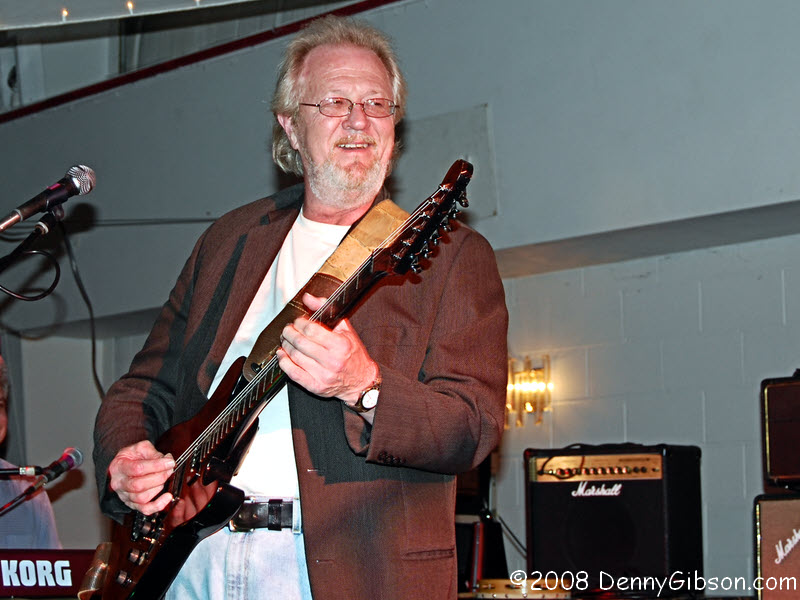
Larry Goshorn Farewell ConcertGuitarist Larry Goshorn “retired” this week. Of course, musicians don’t retire the way some folks do. A guy who retires from Ford will probably never build another car and a retired assassin can be perfectly happy not killing anyone ever again. But no one believes that, just because a musician does his last concert and stops actively looking for gigs in clubs and bars, they quit being a musician. Following Wednesday’s “farewell” concert, Larry may not be as prevalent on the local music scene as he has been but neither will he vanish completely.

Sacred Mushroom album photoLarry, along with brothers Dan and Tim, has been a big part of Cincinnati’s music for pretty much as long as I’ve been here. I moved to the big city in the fall of 1965 and evolved from visitor to resident over the next couple years. I don’t know when I first became aware of the Sacred Mushroom or even when the Sacred Mushroom first came into existence but I do remember Sunday afternoons in Eden park with the Mushroom in the band shell and nights in a dump called the Mug Club with the Mushroom on stage. Dan Goshorn did most of the singing but Larry also sang a bit along with doing all the lead guitar work. I fondly recall a couple of break time conversations with Larry at the Mug Club. I don’t recall their content; Only that they happened. No reason for Larry to remember them at all.

The Sacred Mushroom was a different sort of band. There was, of course, the Mushroom House and a life style that said “we are musicians, dammit” but their music was different, too. There were other good bands in Cincinnati including several that, like the Sacred Mushroom, did a mix of covers and originals. But the Mushroom’s covers were from guys like Willie Dixon and Paul Butterfield and their bluesy originals (actually Larry Goshorn originals) were not exactly formula top 40.

The peak and the crash were not far apart. In October of 1968, they opened for Big Brother and the Holding Company. I was there in the last row of the last balcony with a ticket I’d bought at the last minute. Their one and only album was released the following summer but the band was already disintegrating. It was kind of like the Beatles and Let It Be minus the long string of million selling albums in front of it.

Larry didn’t stop playing, of course. I may have even seen him a time or two before he went off to help put Pure Prairie League on the charts but I really don’t remember. My memories of his days with PPL are pretty spotty, too. Even though I liked several of their tunes, I never became a big fan. I saw them perform just once.

Pure Prairie LeagueLarry didn’t write the song that put Pure Prairie League on the charts. That song, Amie, was written and recorded by Craig Fuller before he left to deal with draft obligations. What Larry did do, after replacing Craig, was sing play (see Tom Sheridan’s informative reply below) Amie in a couple of hundred concerts that got the song enough airplay to make it a hit. He then went on to write a number of the band’s songs including my favorite, Two Lane Highway. As much as I like the song, I don’t dare dwell on the lyrics. Just like Springsteen’s Born in the USA is not (despite what some politicians apparently believe) exactly glorifying the country, Two Lane Highway is not an ode to back roads. I never thought to ask but was there when a friend did and learned that Larry wrote the song in the back of a GMC motor home as the band rolled through a Pennsylvania night and he really did want to “get off this two lane highway”. He’s got a front row spot in the picture at right.

The Pure Prairie League story is a convoluted one and quite a few web pages offer up pieces and variations of it. Today, a four piece group with a couple of original members keeps the name alive. The official Pure Prairie League website makes no mention of Larry at all. A careful scan turned up one tiny uncaptioned picture that has Larry in it but that’s all. The closest the site’s text comes to mentioning him is in an almost comical reference to the “departing Gorshorn [sic] brothers”. Along with ignoring his contributions, they’ve forgotten how to spell his name. Larry’s younger brother, Tim, had joined him in the group around 1977 and they did leave together around 1978. Tim later rejoined for a second stint.

Between PPL and the 1994 opening of a certain bar on Main Street, I have no personal knowledge of Larry’s activities. I heard ads for The Goshorn Brothers Band on radio and I may have even had a beer or two somewhere they were playing but I wasn’t paying attention. When I saw Larry and Tim at what I believe was the opening night for Tommy’s on Main, I was reminded of how much I enjoyed his playing and I’ve not lost sight of him since.

I probably irritated some folks when I said I was never a big fan of PPL. I liked them well enough and I certainly appreciated their talent but they weren’t one of my top tier groups. That tier was filled with the Moody Blues, the E Street Band, Yes, and others. I liked PPL the same way I liked the Eagles and there are more similarities between the two than my level of fandom. Of course, they sound somewhat alike but there was another connection that maybe only I cared about. PPL had sucked up Larry Goshorn; The Eagles had sucked up Joe Walsh. I was much more a fan of the James Gang and Sacred Mushroom than of the Eagles and Pure Prairie League. On one of those very first nights at Tommy’s, I mentioned to Larry that I had thought of his time with PPL as a “day job”. He smiled and said, “Me too.” I don’t know if he meant it the same way I did or if he even meant it at all.

The Tommy’s gig started as an “acoustic” duo then one night ex-PPL drummer Billy Hinds showed up with a snare drum. From there, it wasn’t long until a five piece Goshorn Brothers Band had taken up residency at Tommy’s. Billy was behind a full drum kit with Michael Baney and Steve Schmidt taking care of bass and keyboards. Other top notch musicians would sit in or perform their own shows. Wonderful music poured out of Tommy’s for the next couple of years with GBB typically playing three nights a week and me being there for at least one of those nights more often than not. Tommy’s eventually closed but the Goshorn Brothers rolled on. The lineup wasn’t particularity solid so you were never quite sure who would be backing up the brothers on a band date but you knew they would be good. The two Goshorns could probably make anybody sound good but it’s a plain fact that they attract the best. Many different combinations have appeared as the Goshorn Brothers Band over the years and every one that I’ve heard sounded great.

Larry Goshorn - Cincinnati Summer of Love Reunion 2007Larry Goshorn - Cincinnati Summer of Love Reunion 2008I have no pictures from Tommy’s. Those at left are from the 2007 and 2008 Summer of Love Reunions. A big part of celebrating the Cincinnati music scene of four decades ago was the current Goshorn Brothers Band playing the role and the songs of the Sacred Mushroom. Both years, Mushroom bassist Joe Stewart (in the first picture) was coaxed into performing a couple of those tunes with his old bandmate.

Goshorn Brothers Band - Larry Goshorn Farewell ConcertGoshorn Brothers - Larry Goshorn Farewell ConcertThe photo at the top of this post is from Wednesday’s concert as are the two at right. The evening began with a Larry and Tim acoustic set and ended with the brothers fronting a hard hitting five piece. The time between was filled by the same group minus Larry. Larry broke his ankle early in the year and Tim has been performing without him in a quartet sometimes called Whistle Pig and sometimes called Friends of Lee. Members are Lee Everitt on keys, Bam Powell on drums (no, his head doesn’t really look like a cymbal), and Mike Fletcher on bass. This was the group that filled in the middle and by definition became the Goshorn Brothers Band when Larry joined them.

The music was great and the event well attended. The only surprises were things that didn’t happen. I had expected some comments or jokes about retirement and there was absolutely nothing of the sort from the stage. I had also expected something like an all star jam but, despite there being a number of well known and talented musicians in the house, nothing of that sort happened either. I really shouldn’t have been surprised though. The “we’ll never see Larry again” shock of the first announcement had become a more realistic “we’re going to see Larry less”. The shift was made official with an “or is it?” appearing on posters and tickets. It was a great show and it brought a lot of old (in every sense of the word) friends together. But I think we were all rather relieved to realize that Larry is only mostly retired.

Veteran’s Day Eve Concert

Hamilton County Memorial BuildingI thought I might turn up a parade or two when I went looking for Veteran’s Day events but I found not a one anywhere nearby. What I did find was a concert in a building that seems almost made for the occasional and that I’ve been curious about for some time. On the afternoon before Veteran’s Day, I headed downtown for the Veterans Salute at the Hamilton County Memorial Building.

Hamilton County Memorial BuildingThe building, commonly called simply Memorial Hall, was erected in 1908 as something of a joint venture between the county and the Grand Army of the Republic (GAR). It was designed by noted architect Samuel Hannaford. Hannaford designed many buildings in Cincinnati including the nearby Music Hall which tends to overshadow Memorial Hall. Even when the building is noticed, it is easy to miss the six Clement J. Barnhorn statues high above the entrance. Representing each of the nations’s conflicts at the time of construction, they are a soldier from the Revolution with a frontiersman from the Indian conflicts here, a sailor from the War of 1812 here, an artilleryman from the Mexican-American War here,  and an infantryman from the Civil War with a “Rough Rider” sort of fellow from the Spanish-American War here.

Hamilton County Memorial BuildingHamilton County Memorial BuildingHamilton County Memorial BuildingThe doors opened in time for me to do a little exploring before the concert and that’s just what I did. Although most of the artifacts from the building’s GAR days are gone, many pictures remain. The wreath in the first photo is believed to have been at Lincoln’s funeral. There is lots of marble in the building. The marble arches in the second photo are entrances to the somewhat circular auditorium. After the concert, a pair of fellows from American Legacy Tours led a tour of the building which included the area above and behind the stage. Many of the men who constructed the building were craftsmen from the surrounding area and many of those were Civil War veterans. As the guides pointed out, it would be almost impossible to recreate this building, with extensive hand work like the GAR motto on the proscenium arch, today. Plus a much wider building would be required to hold the additional statues out front.

Cincinnati BoychoirAt the start of the concert, I had one miss and a near miss. I was in the balcony so as to get a clear view of the stage and that turned out to be a not so good spot to photograph the Xavier University Honor Guard as they brought in the US and Ohio flags. It did turn out to be a good spot to photograph the Cincinnati Boychoir but I almost blew that. I had not studied the program and expected them to perform at least a few songs. I stood in my spot as they sang the national anthem intending to get a picture from a better location later. Fortunately I grabbed this not so great shot during The Star Spangled Banner since that would be all they sang. It was beautiful.

Otto M. Budig, JrQueen City Concert BandThe actual concert was in the capable hands of the Queen City Concert Band with a short speech from retired USAF Captain and all around Cincinnati arts benefactor Otto M Budig, Jr, in the middle. Beginning with the ultra-appropriate Battle Hymn of the Republic, the band performed marches and hymns and a few things in between. I particularly liked the collection of mid-nineteenth century tunes called American Civil War Fantasy and The Armed Forces Salute medley gave veterans an opportunity to stand and be applauded and maybe do a little singing.

Stars and Strips Forever at Hamilton County Memorial BuildingJohn Philip Sousa is among the many musicians who have performed in this building during its long life. A couple of his marches were played here today with Stars and Stripes Forever as the stirring finale. US flags, given to attendees on entry, were waving throughout.

The concert, presented by the Cincinnati Memorial Hall Society, was free. So was the punch and cookie reception provided by Fantasy in Frosting, portraits of veterans by Christopher Lowry, and the previously mentioned tour by American Legacy Tours.


American Classical Music Walk of FameThe Hamilton County Memorial Building houses the American Classical Music Hall of Fame but its modest exhibits were removed today to make room for cookies and cookie eaters. However, just across the street in Washington Park, the associated American Classical Music Walk of Fame is always available. Engraved bricks identify inductees.

Phirst FotoFocus Phinished

Paul Briol exhibit at FotoFocus 2012It’s officially over and I pretty much missed it. The inaugural FotoFocus festival ended along with October and, despite some good intentions, I barely caught a whiff. Of the over fifty exhibits that were part of the event, the only one I actually saw during regulation time was the “The Photographic Legacy of Paul Briol, 1909-1955” at the Cincinnati Museum Center. Briol’s photographs of Cincinnati in the first half of the last century are both documentation and art. He was a master in the dark room and learned to combine images to enhance the finished product. For example, a blank sky might be turned into a pleasant background by adding a few clouds. That was neither common or easy in those pre-PhotoShop days.

FotoFocus is the name of a a Cincinnati nonprofit that “champions the ubiquity of photography and its important role in contemporary culture.” It is also the name of the just concluded month long series of exhibits, presentations, and lectures. There were a couple of receptions and at least one lecture that I wanted to attend but each of those encountered a conflict. I had a whole month to take a look at the many exhibits but just kept putting it off. When I finally panicked and got serious, it was too late. I managed to get to the Briol show at Cincinnati Museum Center on Monday and two others on Friday. Of course, Friday was November 2 and the majority of exhibits were history. The two I visited on Friday were fairly major productions whose runs extend beyond FotoFocus.

Herb Ritts exhibit at FotoFocus 2012Herb Ritts exhibit at FotoFocus 2012On Friday, I headed first to the Cincinnati Arts Museum in Mount Adams to see “Herb Ritts: L.A. Style”. Since I do stop by here once in a while and wouldn’t feel the need to see all of the permanent displays, I thought my visit would be fairly brief. Though I did essentially limit my viewing to the Ritts exhibit and a traveling Toulouse-Lautrec exhibit at its entrance, it wasn’t exactly a dash in and out. For one thing, Friday was the first of three days of an expanded “Holiday Expressions” gift shop that filled the lobby. Secondly, several bus loads of students were touring the museum in groups of twenty or so. I love seeing kids in museums. They can be a little noisy and can sometimes block an intended path but they deserve to be there a lot more than I do. Kudos to the schools and teachers who get their kids out to see “stuff”. There also happened to be two musical performances going on. In the lobby, a string trio played on a balcony for the benefit of “Holiday Expression” shoppers and two fellows played and discussed some “old timey” music for the benefit of the students in the main hall.

“Herb Ritts: L.A. Style” was curated by Paul Martineau for the J. Paul Getty Museum. Although I was not familiar with Ritts by name, I definitely recognized some of his photos including the cover of Madonna’s True Blue album. Not all of Ritts’ assignments were successful from the client’s point of view. Several examples of his most impressive work came from assignments that were rejected because they matched Ritts’ vision a lot more than the client’s. Ritts’ vision was darned good.

Even now. it seems, Ritts doesn’t please everyone. There are some stunningly beautiful nudes in the exhibit. A sign at the entrance states this and suggests parents check out things and decide for themselves whether their children should see them or not. After I had viewed the exhibit, I stopped for a while just outside the entrance and listened to the musicians below. As I stood there, a fellow I guessed to be about sixteen or seventeen exited the exhibit and approached me. “My male instincts told me to go in there”, he said. “They were wrong.” There are nudes of both genders on display and I’m guessing that this was the teenager’s problem. I doubt he had ever before considered that the word “nude” was not synonymous with “naked woman”. Ah, the insecurity of youth.

“Herb Ritts: L.A. Style” runs through December.

Edward Steichen exhibit at FotoFocus 2012Taft Museum of ArtThe other exhibit I saw on Friday was “Star Power: Edward Steichen’s Glamour Photography” at the Taft Museum of Art. To my shame, this was my first visit to the Taft since its major expansion and renovation in 2004. That meant I needed to look over the whole place and not limit my visit to the Steichen display. Christmas season is starting here also with Friday being the first day of “Antique Christmas”. This consists of a number of decorations, toys, and other Christmas related items from holidays far in the past spread throughout the museum.

Edward Steichen was a name I half recognized but couldn’t connect with anything in particular. It turns out that, had I made any sort of guess, there’s a good chance I’d have been right. He did a lot. He painted, directed movies, and played a key role in the publication of books and magazines and in the running museums. And he was a photographer. In World War I, he commanded the photographic division of the American Expeditionary Forces. In World War II, he was Director of the Naval Aviation Photographic Unit. His many activities between the wars included a fifteen year stint as photographer for Vogue and Vanity Fair magazines. That stint ran from 1923 to 1938 and I believe that most, if not all, of the photographs in this exhibit are from that period.

The title refers to “Glamour Photography” and his work for the world of fashion is well represented. It also mentions “Star Power” and the stars are all there: Greta Garbo, Katherine Hepburn, Joan Crawford, and many others including my fav, Claudette Colbert. The way Steichen handles light in these black and white images is remarkable as is his frequent use of stark high-contrast backgrounds. His lighting often adds a 3-D quality and both it and the composition automatically and consistently focus the viewer right where Steichen wants.

“Star Power: Edward Steichen’s Glamour Photography” runs through January 27.

Even though I missed the majority of FotoFocus exhibits, I did see three of the bigger ones. With the Annie Liebovitz exhibit I visited a couple of weeks back, that means I’ve been exposed to some of the best lens based art of the last century in a fairly short span of time. I’ve never called myself a photographer. In fact, after seeing what can be done, I’m almost embarrassed to even be seen with a camera. I’ll get over it and I won’t stop snapping pictures but it was a clear reminder of just why I never call myself a photographer.


On Friday morning, I wanted to check out something about FotoFocus via my phone but I misspelled FotoFocus. I did it by correctly spelling Photofocus. Photofocus is a long running website that I was aware of though not one I can claim to be familiar with. By coincidence Friday was Photofocus’ fourteenth anniversary. It was also the day that founder Scott Bourne announced his retirement. He is not retiring just yet. That will occur in exactly one year and the website will continue. Scott has already made arrangements to assure that. Accident, coincidence, and the reading of a couple of interesting articles made me think that maybe I should become familiar with Photofocus so I’ve subscribed to its RSS feed.

Controversy, Photos, and Inclines

I long ago reserved a seat on a bus tour of Cincinnati incline sites and had in mind that the Saturday outing would be the subject of this Sunday’s blog entry. But not only did Thursday’s visit to the Pumpkin Show result in an unscheduled post, it led to me visiting a couple of exhibits that I think worth mentioning. So, before getting to today’s feature, I’m presenting a couple of short subjects.


Ohio History Center Controversy 2Short subject one is Controversy 2. Rather than driving home from Circleville in the dark on Thursday, I drove just a few miles toward Columbus and grabbed a motel room then headed on to Ohio’s capital in the morning. My first stop was at the Ohio History Center where the second exhibit of controversial items in the Ohio Historical Society’s collections is in progress. The photo at the right is of an area at the end of the exhibit. Large pads of paper hang next to photos of the five items on display. Presumably the pads were there for comments but they were entirely blank when I saw them. Around the corner, several comments made on smaller cards were displayed. Most were positive regarding the exhibit and thoughtful regarding the items in it but a few were unhappy that the objects have been allowed into the light.

Ohio History Center Controversy 2Ohio History Center Controversy 2The first Controversy exhibit, which I missed, included a hooded KKK costume and a nineteenth century condom. Controversy 2 contains an original Cleveland Indians Chief Wahoo jacket from 1946, children’s toys depicting ethnic stereotypes, degrading racial caricatures, a poem written in dialect, and a Nazi flag. The cloth bowling pins were made sometime before 1914. An adjacent description is here. The prints were published by none other than Currier and Ives between 1882 and 1893. A dozen or so are displayed. Their description is here. The line at the bottom of the print shown here is “De gals all mire me so much dey makes me blush.”


Wexner Center, Columbus, OhioNot surprisingly, no photos were allowed at my next stop, an exhibit of Annie Leibovitz photographs at the Wexner Center. I’m not at all bothered by that since I am not all that fond of taking pictures of pictures and, in this case in particular, doing anything near justice to the subject was clearly out of the question. The exhibit includes all of Master Set and much of Pilgrimage. Master Set consists of 156 images hand picked by Leibovitz to represent four decades of work. Most are from professional assignments but there are some family shots in there, too. Pilgrimage is made up of photos that Annie took for herself. There are no people in these photos but every object and location is firmly associated with an historical figure.

The walls are filled with remarkable images but I’m going to comment on just two. My favorite in Master Set is a 2001 picture of Pete Seeger standing at the edge of the Hudson River wearing hip-high waders and a banjo. It can be found online with a search for Leibovitz and Seeger. I want to grow up to be as happy as Pete Seeger looks in that photo. In Pilgrimage, I was drawn to a picture of Annie Oakley’s boots taken at the museum in my home county. I’ll certainly look at those boots, that I can now connect with two sharpshooting Annies, a bit differently on my next visit.


Inclines and Overlooks Tour, CincinnatiThe Cincinnati Museum Center conducts a number of Heritage Tours each year including several that are repeated every year. One of those is Inclines and Overlooks. I’ve signed up for this in the past but didn’t get to attend because of a schedule overload. This year I made it as the feature event of a busy weekend. Unfortunately, a lot of clouds were also able to attend this year and there was even a little rain but that did little to dampen spirits on the sold out tour.

Inclines and Overlooks Tour, CincinnatiInclines and Overlooks Tour, CincinnatiOur first stop was in Kentucky’s DeVou Park which provides a great view of Cincinnati. From here our guides could point out where the city’s five inclines were and explain why they were needed. There were four guides on the tour; All excellent and all of who’s names I’ve forgotten.

Inclines and Overlooks Tour, CincinnatiInclines and Overlooks Tour, CincinnatiThen it was back to Ohio where we would eventually visit all five incline sites. The first was the Price Hill Incline on the west side of the city. This was the second incline built in Cincinnati and the next to last to die. Constructed in 1874, it operated until 1943. A turn to the right yields a nice view of the Ohio River and the Southern Railroad Bridge.

Inclines and Overlooks Tour, CincinnatiInclines and Overlooks Tour, CincinnatiI make multiple goofs in preparing every blog post and journal entry. Most I can simply ignore but some, like forgetting all the guides’ names and not getting a skyline shot from the Mount Adams overlook are hard to conceal. Instead, I’ve got a shot of some of the piers from Cincinnati’s last incline and an overhead view of one of my favorite taverns. I briefly thought of trying to cover my oversight by claiming that I intentionally omitted a view of the city because I wanted you to visit the City View Tavern so you could experience the view for yourself. I quickly realized that it wouldn’t fly as an excuse but it’s still a great suggestion. The Mount Adams Incline opened in 1876 with two enclosed passenger cars. Three years later the incline was converted to open platforms which would carry horse cars, and eventually electric street cars, to and from down town. The Mount Adams Incline is shown in the picture at the top of this section. It closed in 1948.

Inclines and Overlooks Tour, CincinnatiInclines and Overlooks Tour, CincinnatiInclines and Overlooks Tour, CincinnatiThere was a little rain at the Mount Adams stop and that may have contributed to my failing to get a proper overlook view. It definitely contributed to my failure to get one from the top of the Mount Auburn Incline route. It was also a deterrent to walking the stairs that essentially trace the route but that was outweighed by the fact that the bus would meet all walkers at the bottom. A chance to de-climb 355 steps without also climbing them doesn’t come along every day. The overlook views are from the top of the Bellvue Incline and near the midpoint of the Fairview Incline. Operating between 1871 and 1898, The Mount Auburn Incline was the first and shortest lived of the Cincinnati inclines. It was also the only one with fatalities. In 1889 a car plunged down the track killing six of eight passengers. The Bellvue Incline operated between 1876 and 1926; The Fairview Incline between 1892 and 1923.

I learned quite a few things on this tour including the fact that, while San Francisco was first and last with cable cars, Cincinnati had them, too. Between 1873 and the end of the century, as many as three cable car lines operated here. The power house for one of them still stands and is used for office space. Another surprise was getting a copy of Cincinnati Streetcars No. 2 The Inclines at the end of the tour. This was a gift from the Ohio Book Store and a reminder that it has been entirely too long since I’ve been inside that wonderful place.

This was an extremely well done tour. As I write this, I’m feeling guilty that I didn’t praise it more on the evaluation form. I’m also thinking that I just might try to sign up again next year and hope for better weather.

MPMF Lite

Washington Park & Music Hall at MPMF.12Some consider Cincinnati’s Mid Point Music Festival second only to Austin’s South by Southwest and some concede even that grudgingly  The eleventh coming of MPMF has just concluded and it was only the third I’ve attended at all. I think I was there the first year and again for the second or third but I’m not at all certain. Whichever ones they were, I know they were pretty early on and know that I’ve spent many years since feeling guilty about not going. Sometimes I was out of town or had another legitimate reason but mostly I was just too lazy. The effort that I shied away from was not the driving downtown or the hiking between venues; It was the effort of determining which venues to hike between.

This year is typical. There are 180 bands playing at 16 venues over 3 days. Unlike most music festivals, MPMF doesn’t book the world’s most well known bands to get you to attend. It books lesser known but highly talented bands to get them and you some exposure to each other. Unless you are an industry pro, you’re not likely to be familiar with many of those 180 bands. You can either show up and hope you stumble upon a couple of performers that you like or you can spend time planning your visit in hopes of not missing your next big favorite. Or you can do what I’ve been doing and dodge the whole thing.

Washington Park at MPMF.12Maybe the feelings of guilt finally caught up with me or maybe it was the addition of the recently redone Washington Park as a venue or maybe it was actually recognizing the performer who would be headlining one of the Washington Park shows. It was probably all the above and more that prompted me to at least dip a toe — or ear — back into the Midpoint Music Festival. I decided to attend one night of the three day festival and partake of only the Washington Park offerings. The photo at the top of this post is of Washington Park a couple of hours before the official opening of the festival. That is the glorious Cincinnati Music Hall in the background. At what I believe was the first concert at Washington Park in July, the bands had played from the permanent stage where I stood to take the picture at left. Yes, the music has started but the crowd is almost non-existent. The opening crowd at festivals, especially those with sixteen stages, is often like that and rain & rumors of rain didn’t help. As it turned out, not a drop fell on Washington park during the entire concert.

Here We Go Magic at MPMF.12Pomegranates at MPMF.12 Bonesetters at MPMP.12The group that opened the show and is playing to a lot of grass in the previous picture was the Bonesetters from Indianapolis. The crowd was significantly larger, though far from large, by the end of their set. With a good performance of very solid original material, they deserved more but, being both new and semi-local, the exposure was still no doubt good for them. Next up was the even more local but well established Pomegranates. I’d heard of them but don’t believe I’d ever heard them and know I’d not seen them. From the white clothes and dyed hair to the Fender Mustangs, there is plenty of formula and gimmickry here but it’s backed with solid music, lots of energy, and impressive vocals. The next band, Brooklyn’s Here We Go Magic, seems to basically be a group of talented musicians delivering singer-songwriter Luke Temple’s well crafted tunes. They sounded good and I liked the material but there didn’t seem to be a whole lot of energy or conviction coming from the stage. It appears that band personnel may vary from time to time so maybe there’s a killer …Magic lineup out there somewhere.

That headliner I recognized was Andrew Bird. I surprised myself by recognizing the names — not necessarily the sounds — of at least eight performers. Eight of one-eighty! I doubt many attendees would brag about a 4% recognition rate but this old man is doing exactly that.

Andrew Bird at MPMF.12Andrew Bird at MPMF.12It was full on dark when Bird took the stage and, while that didn’t help me get crisp photos, it did show just what those overhead spirals were there for. Spinning slowly and lit by frequently changing colored spot lights, they were a nice visual backing for Bird’s music. I had heard a few recorded tunes so was aware of Bird’s whistling ability but did not realize just how good it was or how much he used it. Where another musician might blow into a harmonica for a little non-verbal music, Bird just purses his lips and blows into the microphone. It might seem like a gimmick for a few seconds but it quickly becomes just another instrument in the mix. That mix includes a bassist, guitarist, and a drummer that plays keyboards. And then there’s Bird. Seemingly equally proficient on guitar and violin, he usually plays one or the other but sometimes uses both in the same song. In the close up, he’s playing a glockenspiel while holding a violin which he will pick or bow then lay down to play the guitar hanging at his side.

Andrew Bird at MPMF.12Music Hall’s circular stained glass window sure looks good hanging above Andrew Bird’s lighted spirals and there was a nearly full moon floating behind me. I truly enjoyed my one venue return to MPMF. I’m sure Thursday is the least crowded of the festival’s three nights and the threat of rain may have also played a role. The crowd at Washington Park grew steadily as the first three bands performed then took a big jump as Bird’s slot approached but it never reached the shoulder to shoulder mass that I feared and the promoters hoped for. I hope it was enough and I hope to be back next year. Sorry I’ve been away so long.


Island Noodles at MPMF.12Not all of the entertainment in Washington Park was musical. Among the food vendors was new-to-me Island Noodles. I happened to be Brad’s first customer of the day which meant I had to wait awhile for dinner but I got a great show and absolutely fresh food in return. Although it’s hard to beat a huge flame, it was also fun to watch the veggies get chopped into the big wok. Before I even finished paying for my noodles, the next customer was beside me and business picked up from there. This is good eating.

This particular operation is based in Florida. That’s where Brad lives but he is originally from Toledo and has spent the summer staying with his parents and working festivals around the state. Events included July’s Bunbury Festival which was also in Cincinnati. As he cooked, we chatted, and Brad said he wished he had learned more about Cincinnati when he was growing up near the other edge of Ohio. “This”, he says, “is the friendliest city I’ve ever been in.” That’s nice to hear. I think so, too.


Montgomery Inn ribs & shrimpI was in Indianapolis last week and in my trip journal I raved about a bar-b-que joint named Squealers. It deserved the raves but it reminded me of two things. One, I hadn’t eaten in my favorite ribs joint in quite some time and, two, I had a gift card that would let me do it for for free or close to free. I made use of that card on Wednesday. If I am ever convicted of a capital crime in a country that honors the last-meal-for-a-condemned-man convention, this is what I want; Montgomery Inn ribs, shrimp, and Saratoga chips. Being warned about stirring the sweet plum sauce and hot mustard is as reliable as death and taxes. I kidded the waitress about it and she shrugged. “You don’t know what they do to us if we don’t tell you”, she said.

RoadDog Day Afternoon

Don Hatch at American Sign MuseumI get to be part of somebody’s road trip again. Don Hatch is a roadie whose nickname and online handle is RoadDog” and that is the source of my not particularly clever title. He stopped in Cincinnati today on his way back from relatives in North Carolina to his home in Illinois. Unlike Fred Zander, whose road trip I got to be part of last month, Don has been to Cincinnati before and even visited the American Sign Museum in its original location. In spite of that, or more likely because of it, seeing the new and improved set up was high on his list of goals for the visit.

American Sign MuseumTo save time and make sure we didn’t miss the four hour (noon-4:00) Sunday window, we met at the museum. We arrived a little after 1:00 and roamed the museum on our own for awhile then hooked up with about a dozen others for the 2:00 tour. This was my first “official” tour of the museum in the new location. Museum founder Tod Swormstedt did his normal excellent job job while RoadDog took notes.

Neonworks at American Sign MuseumNeonworks at American Sign MuseumNeonworks at American Sign MuseumI experienced another first by going inside Neonworks, the independent sign shop that occupies some of the museum’s space. The shop can be seen from the museum proper through large windows but is usually idle on weekends. Today craftsman Tom Wartman showed up near the end of the tour and we were allowed into the shop for an up-close look and a little demonstration. As we watched, Tom sealed and filled then brought to life a length of neon text.

Zip's CafeRoadDog and ZipburgerAnother of Don’s Cincinnati goals was grabbing some chili but, as I’ve noted before, all the independent chili parlors are closed on Sundays. The two big chains, Skyline and Gold Star, have plenty of stores open and both turn out some very fine Cincinnati chili but I talked Don into waiting until Monday for his chili fix and trying out a ‘burger joint today. Probably the currently best-known Cincinnati ‘burger joint is Terry’s Turf Club and that’s where Fred and I went. However, Don has experienced — and loved — Terry’s in the past so I led Don to someplace “new”. That “new” is in quotes because, while Zip’s Cafe may be new to Don, but it has been turning out award-winning “Zip Burgers since 1926.

Aglamesis ice creamAglamesis ice creamFor dessert, we did exactly what Fred and I had done and ate delicious ice cream at one of the 98-year-old marble tables at the Aglamesis Brothers shop on Madison Road. Most people who think of Cincinnati ice cream think of Graeter’s and I don’t want to demean it in anyway. Like Skyline and Gold Star chili, it is an excellent product and I’m proud to live near its source. All three brands are Cincinnati to the bone, if any of them had bones, but they can now be found in other cities in the region. Camp Washington and Blue Ash Chili (which is in tomorrow’s plans) are among a number of independent one-location Cincinnati-only chili dispensaries. Aglamesis does have two stores but all of their ice cream is made on Madison Road. Fred actually had Graeter’s on his list when he arrived but I steered him to Aglamesis. I was happy to learn that he did get to sample their product in Columbus, Ohio, and sent this picture to prove it.

Jake Speed and the FreddiesOver the RhineWe wrapped up the day at Washington Park. The park, which originally opened in 1855, had become a somewhat scary place in recent years but an extensive makeover has just been completed. The ribbon cutting was July 6 and tonight a sort of grand reopening celebration took place with a free concert featuring Jake Speed & the Freddies and Over the Rhine. You can’t get much more Cincinnati than that.

The reverse road trip continues tomorrow with stops planned for Blue Ash Chili, Pompilio’s, and Mansion Hill Tavern.