Veteran’s Day Eve Concert

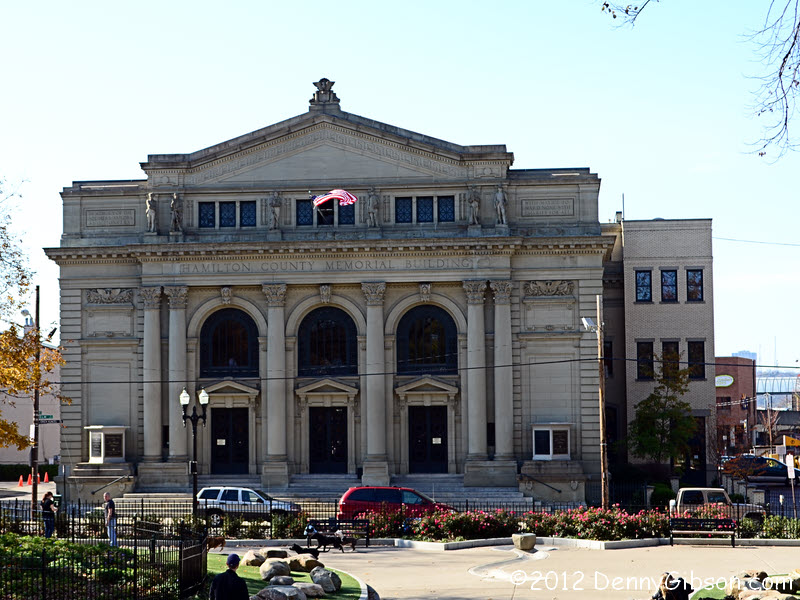
Hamilton County Memorial BuildingI thought I might turn up a parade or two when I went looking for Veteran’s Day events but I found not a one anywhere nearby. What I did find was a concert in a building that seems almost made for the occasional and that I’ve been curious about for some time. On the afternoon before Veteran’s Day, I headed downtown for the Veterans Salute at the Hamilton County Memorial Building.
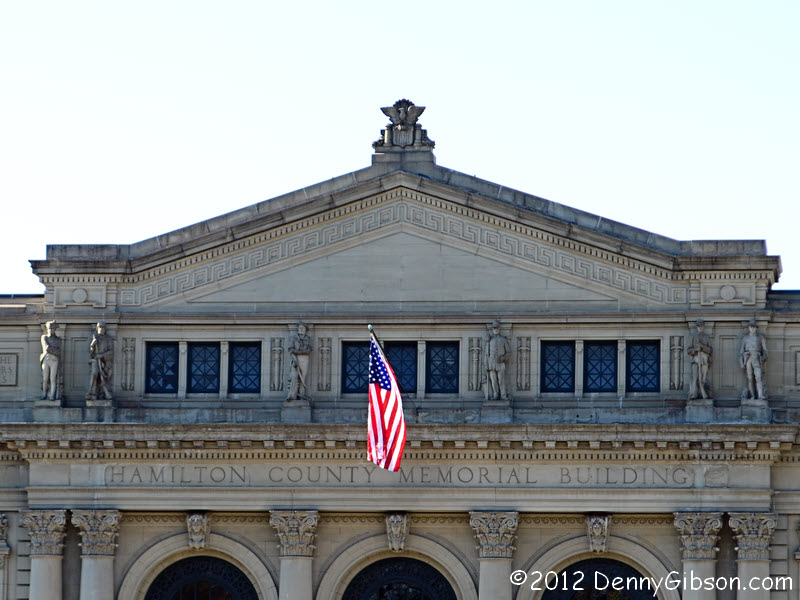
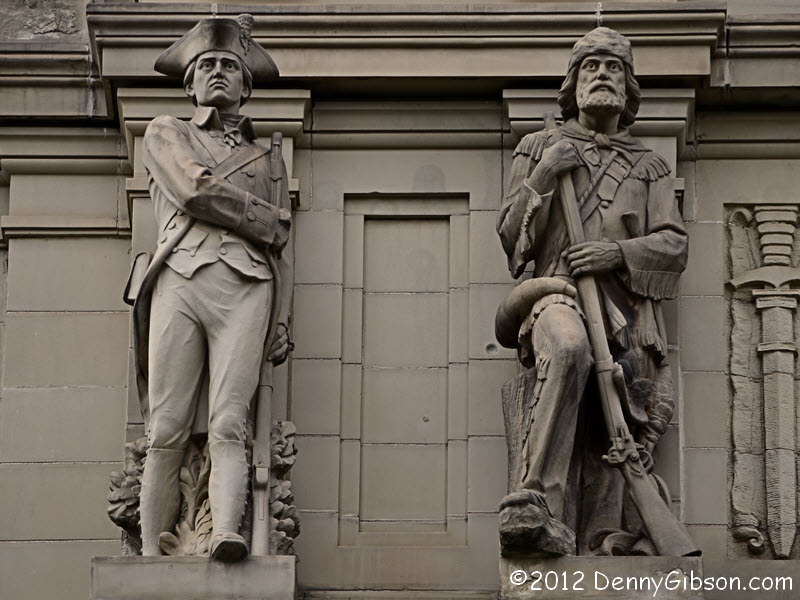
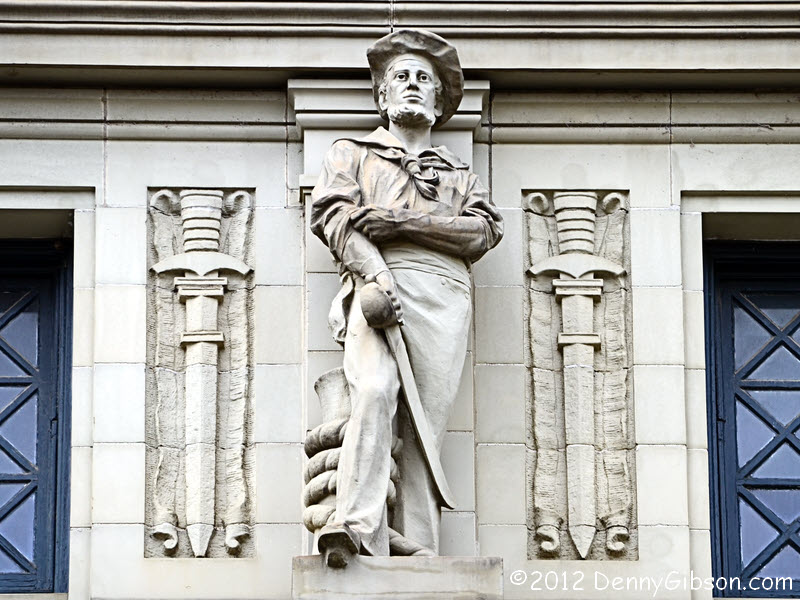
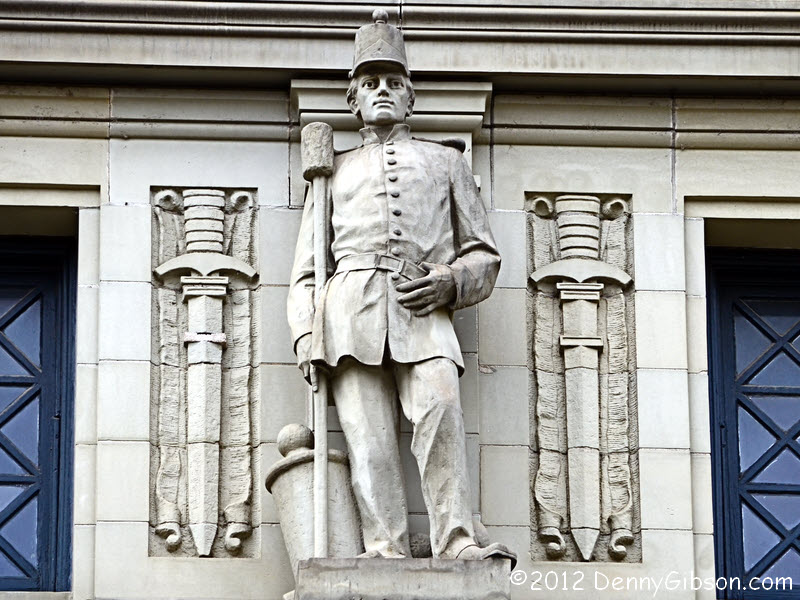
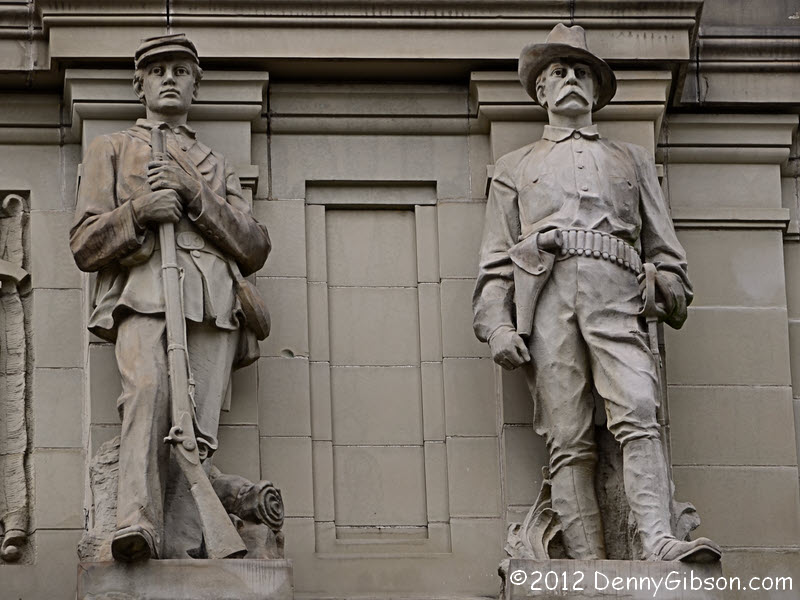
Hamilton County Memorial BuildingThe building, commonly called simply Memorial Hall, was erected in 1908 as something of a joint venture between the county and the Grand Army of the Republic (GAR). It was designed by noted architect Samuel Hannaford. Hannaford designed many buildings in Cincinnati including the nearby Music Hall which tends to overshadow Memorial Hall. Even when the building is noticed, it is easy to miss the six Clement J. Barnhorn statues high above the entrance. Representing each of the nations’s conflicts at the time of construction, they are a soldier from the Revolution with a frontiersman from the Indian conflicts here, a sailor from the War of 1812 here, an artilleryman from the Mexican-American War here,  and an infantryman from the Civil War with a “Rough Rider” sort of fellow from the Spanish-American War here.
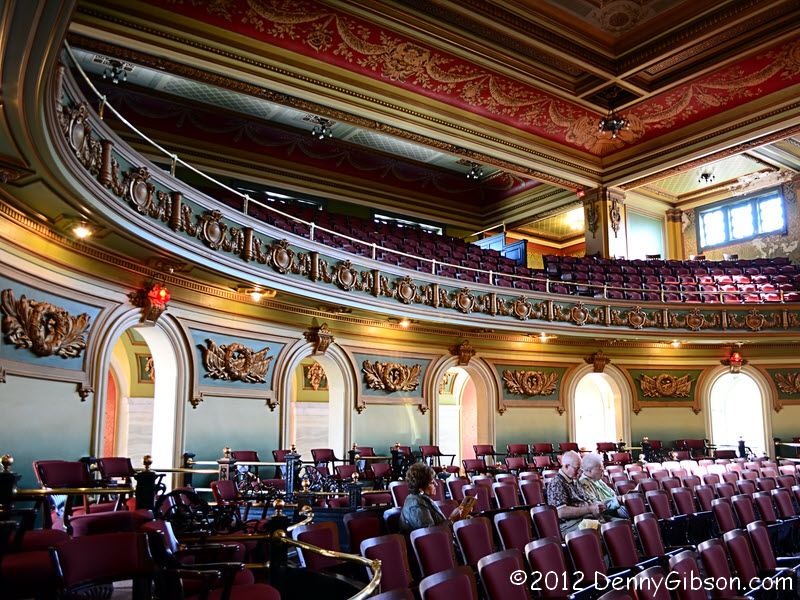
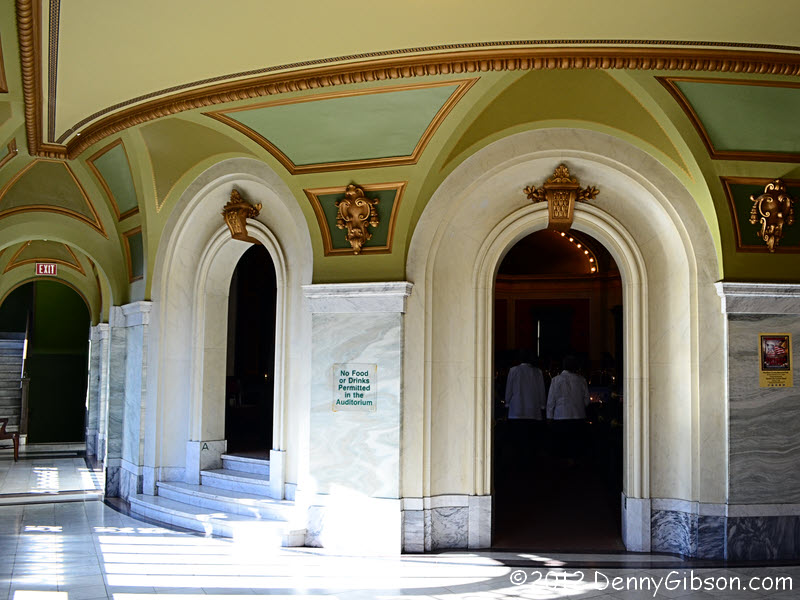
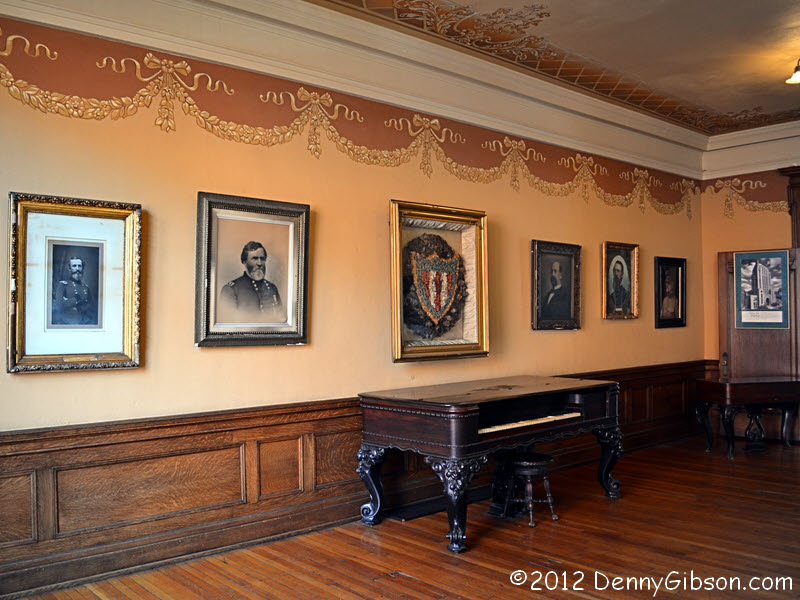
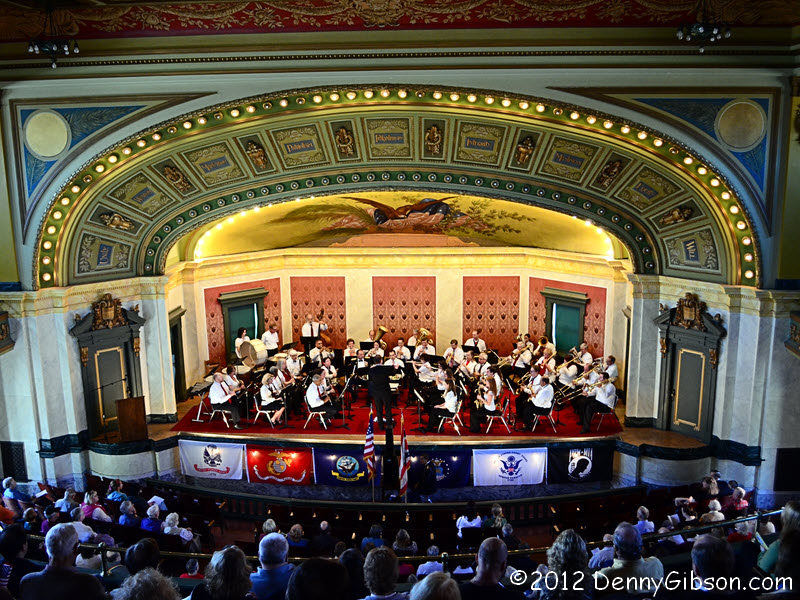
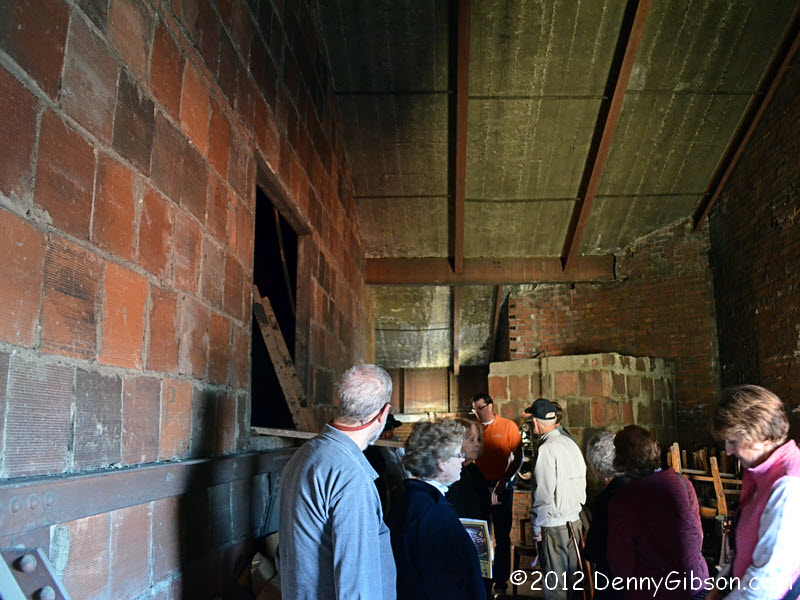
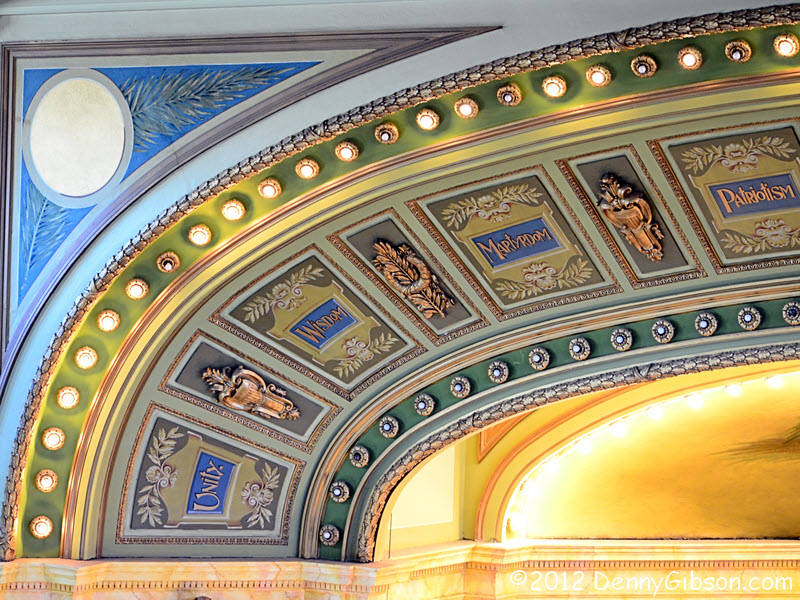
Hamilton County Memorial BuildingHamilton County Memorial BuildingHamilton County Memorial BuildingThe doors opened in time for me to do a little exploring before the concert and that’s just what I did. Although most of the artifacts from the building’s GAR days are gone, many pictures remain. The wreath in the first photo is believed to have been at Lincoln’s funeral. There is lots of marble in the building. The marble arches in the second photo are entrances to the somewhat circular auditorium. After the concert, a pair of fellows from American Legacy Tours led a tour of the building which included the area above and behind the stage. Many of the men who constructed the building were craftsmen from the surrounding area and many of those were Civil War veterans. As the guides pointed out, it would be almost impossible to recreate this building, with extensive hand work like the GAR motto on the proscenium arch, today. Plus a much wider building would be required to hold the additional statues out front.
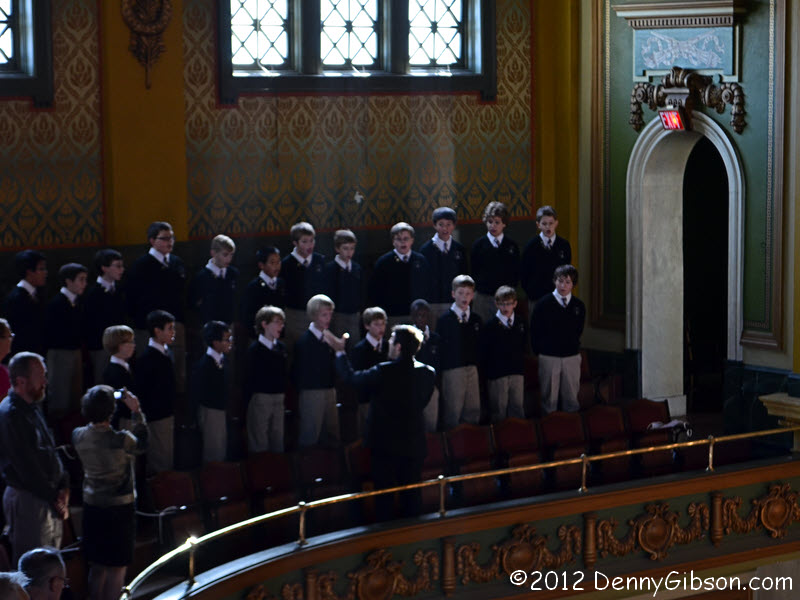
Cincinnati BoychoirAt the start of the concert, I had one miss and a near miss. I was in the balcony so as to get a clear view of the stage and that turned out to be a not so good spot to photograph the Xavier University Honor Guard as they brought in the US and Ohio flags. It did turn out to be a good spot to photograph the Cincinnati Boychoir but I almost blew that. I had not studied the program and expected them to perform at least a few songs. I stood in my spot as they sang the national anthem intending to get a picture from a better location later. Fortunately I grabbed this not so great shot during The Star Spangled Banner since that would be all they sang. It was beautiful.
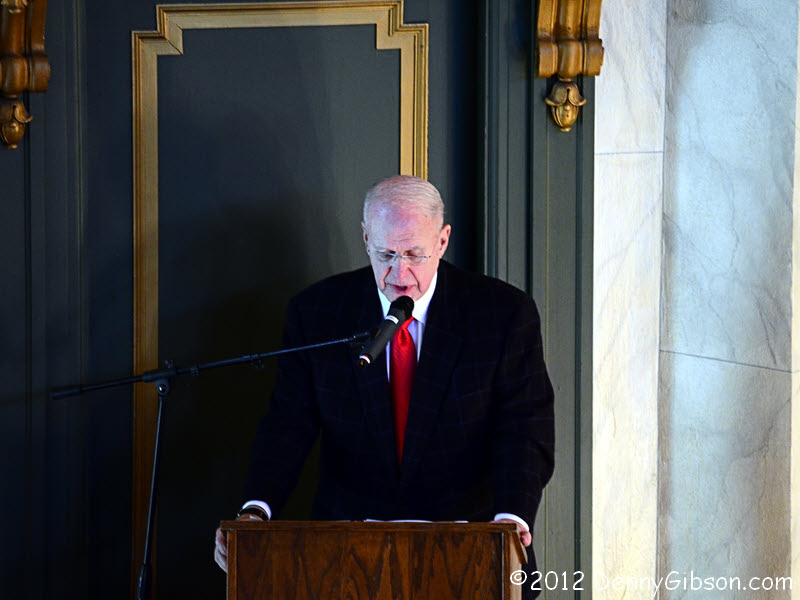
Otto M. Budig, JrQueen City Concert BandThe actual concert was in the capable hands of the Queen City Concert Band with a short speech from retired USAF Captain and all around Cincinnati arts benefactor Otto M Budig, Jr, in the middle. Beginning with the ultra-appropriate Battle Hymn of the Republic, the band performed marches and hymns and a few things in between. I particularly liked the collection of mid-nineteenth century tunes called American Civil War Fantasy and The Armed Forces Salute medley gave veterans an opportunity to stand and be applauded and maybe do a little singing.
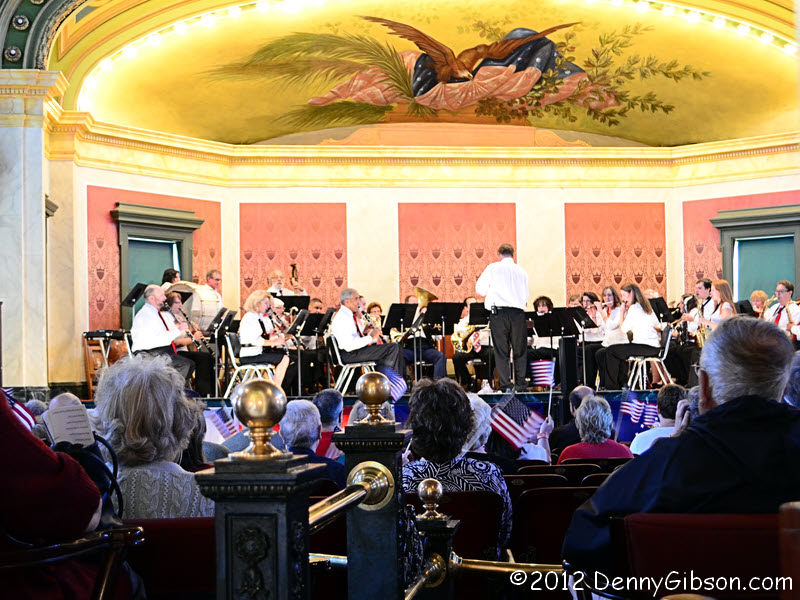
Stars and Strips Forever at Hamilton County Memorial BuildingJohn Philip Sousa is among the many musicians who have performed in this building during its long life. A couple of his marches were played here today with Stars and Stripes Forever as the stirring finale. US flags, given to attendees on entry, were waving throughout.

The concert, presented by the Cincinnati Memorial Hall Society, was free. So was the punch and cookie reception provided by Fantasy in Frosting, portraits of veterans by Christopher Lowry, and the previously mentioned tour by American Legacy Tours.
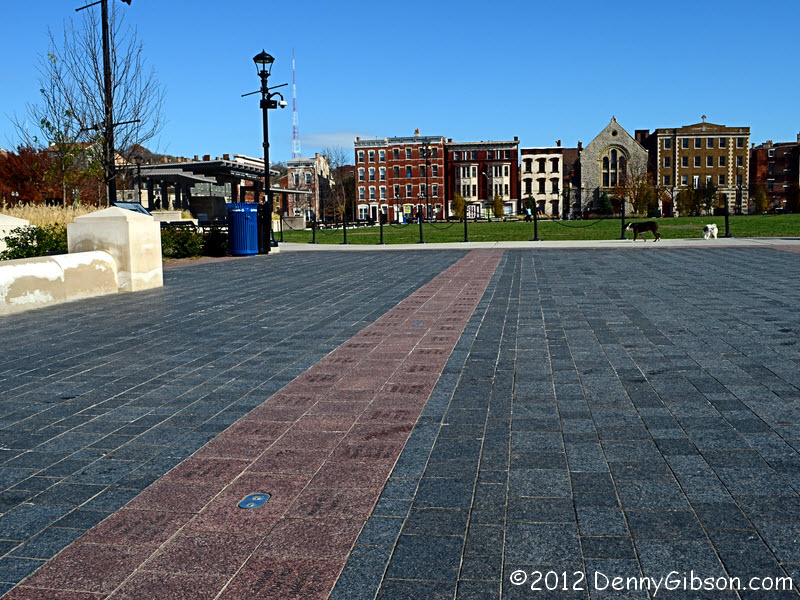

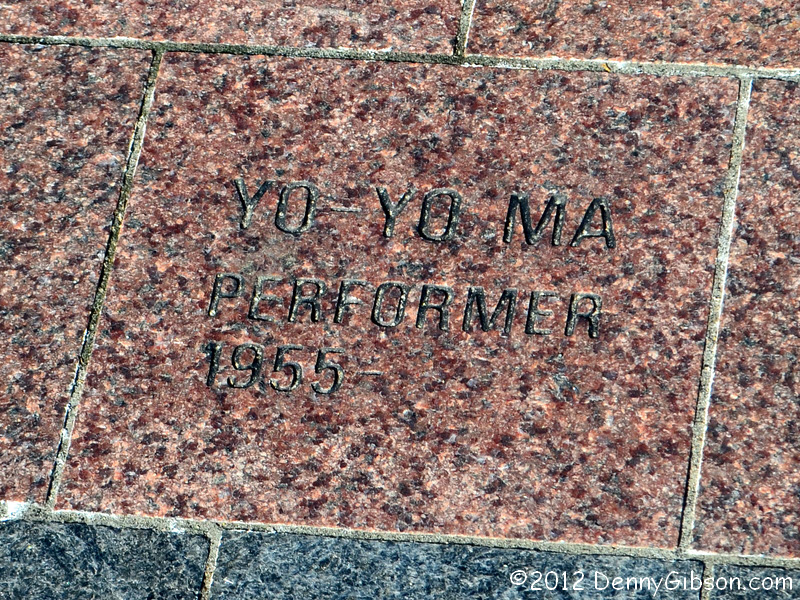
American Classical Music Walk of FameThe Hamilton County Memorial Building houses the American Classical Music Hall of Fame but its modest exhibits were removed today to make room for cookies and cookie eaters. However, just across the street in Washington Park, the associated American Classical Music Walk of Fame is always available. Engraved bricks identify inductees.
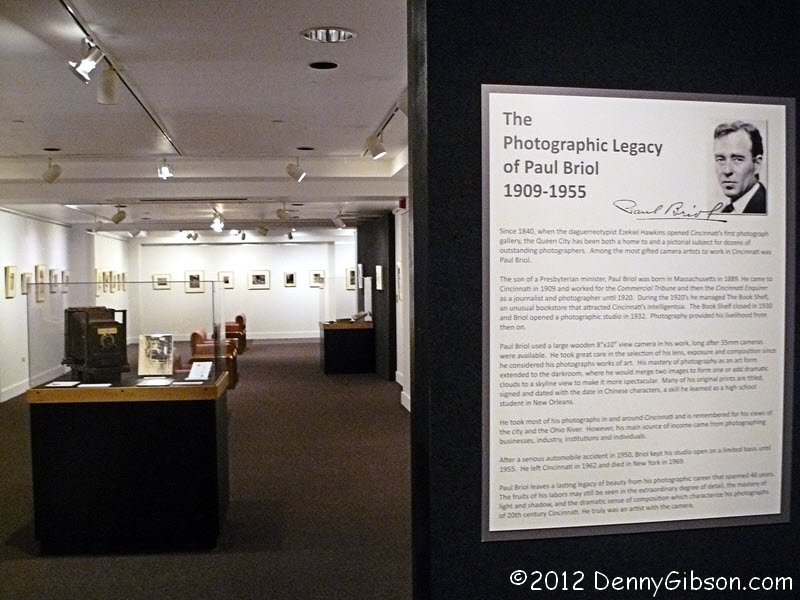
Phirst FotoFocus Phinished

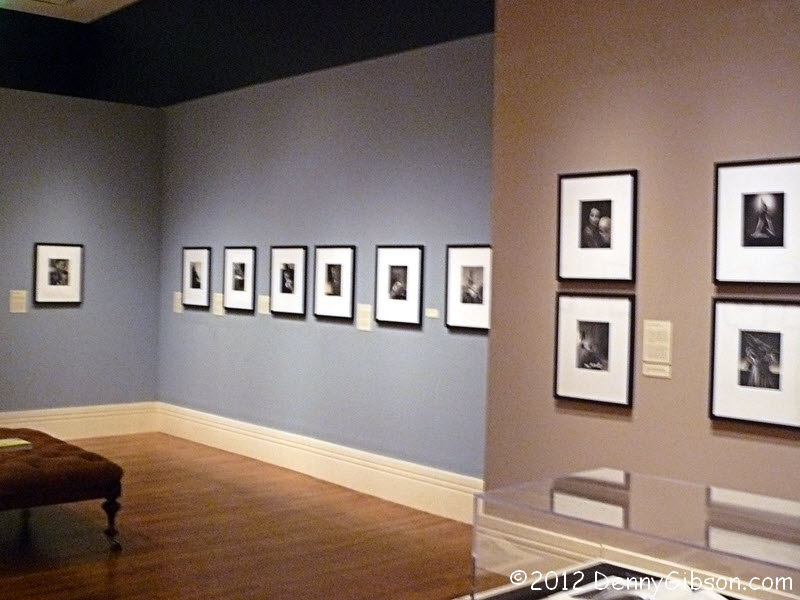
Paul Briol exhibit at FotoFocus 2012It’s officially over and I pretty much missed it. The inaugural FotoFocus festival ended along with October and, despite some good intentions, I barely caught a whiff. Of the over fifty exhibits that were part of the event, the only one I actually saw during regulation time was the “The Photographic Legacy of Paul Briol, 1909-1955” at the Cincinnati Museum Center. Briol’s photographs of Cincinnati in the first half of the last century are both documentation and art. He was a master in the dark room and learned to combine images to enhance the finished product. For example, a blank sky might be turned into a pleasant background by adding a few clouds. That was neither common or easy in those pre-PhotoShop days.
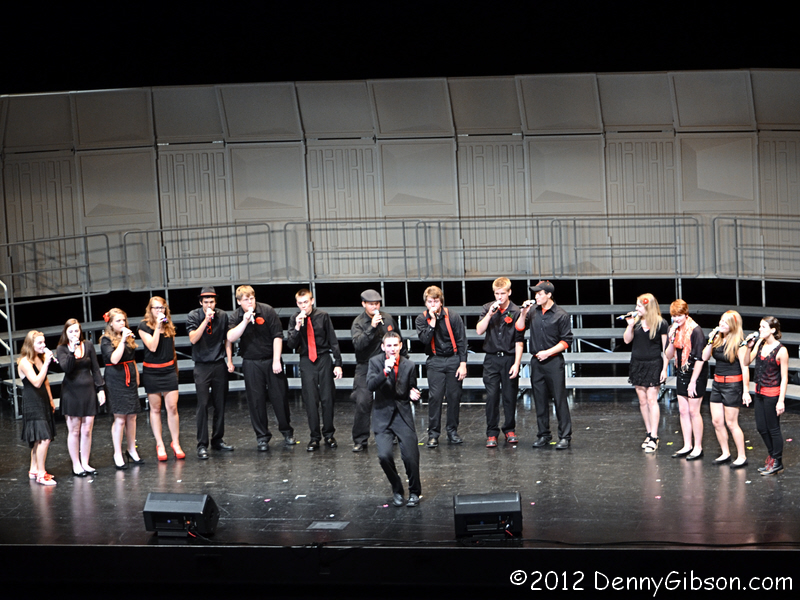
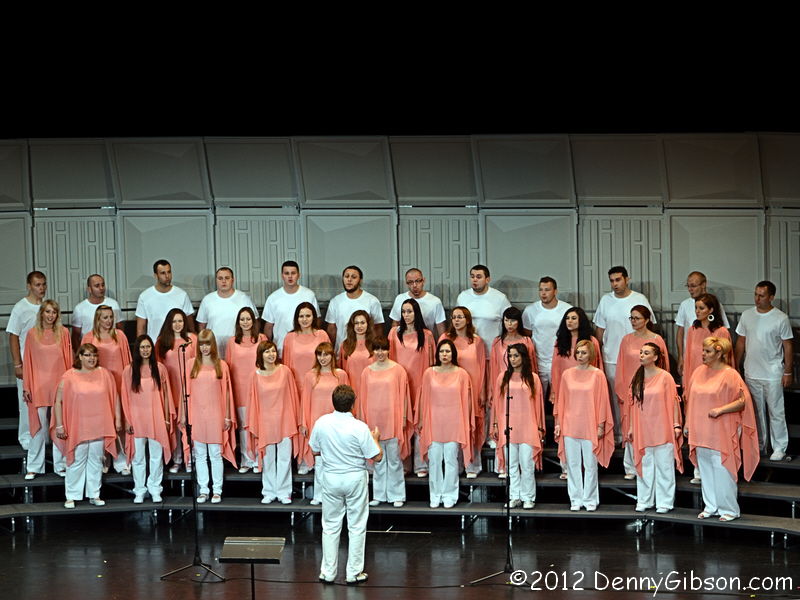
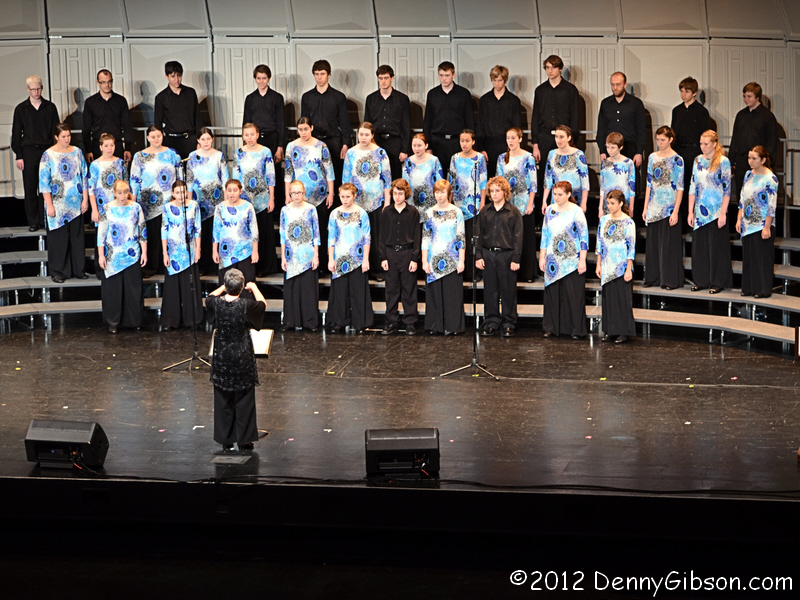
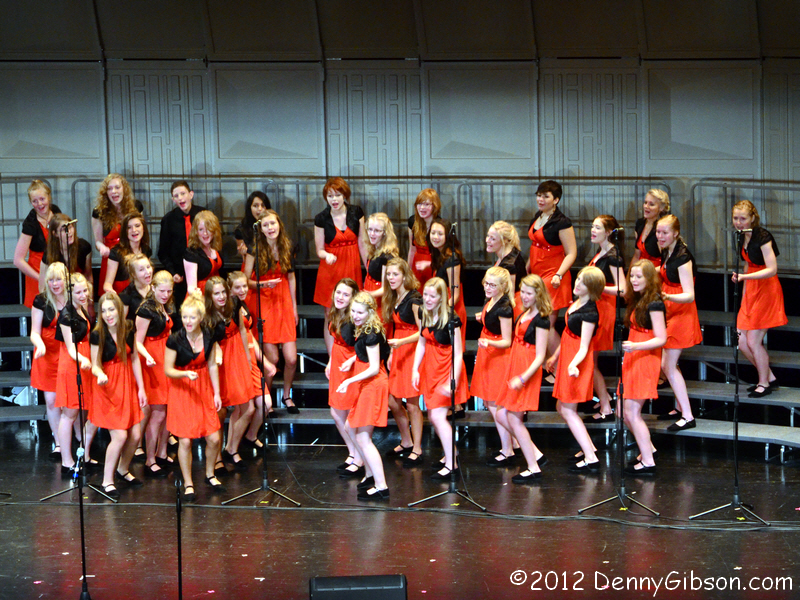
FotoFocus is the name of a a Cincinnati nonprofit that “champions the ubiquity of photography and its important role in contemporary culture.” It is also the name of the just concluded month long series of exhibits, presentations, and lectures. There were a couple of receptions and at least one lecture that I wanted to attend but each of those encountered a conflict. I had a whole month to take a look at the many exhibits but just kept putting it off. When I finally panicked and got serious, it was too late. I managed to get to the Briol show at Cincinnati Museum Center on Monday and two others on Friday. Of course, Friday was November 2 and the majority of exhibits were history. The two I visited on Friday were fairly major productions whose runs extend beyond FotoFocus.

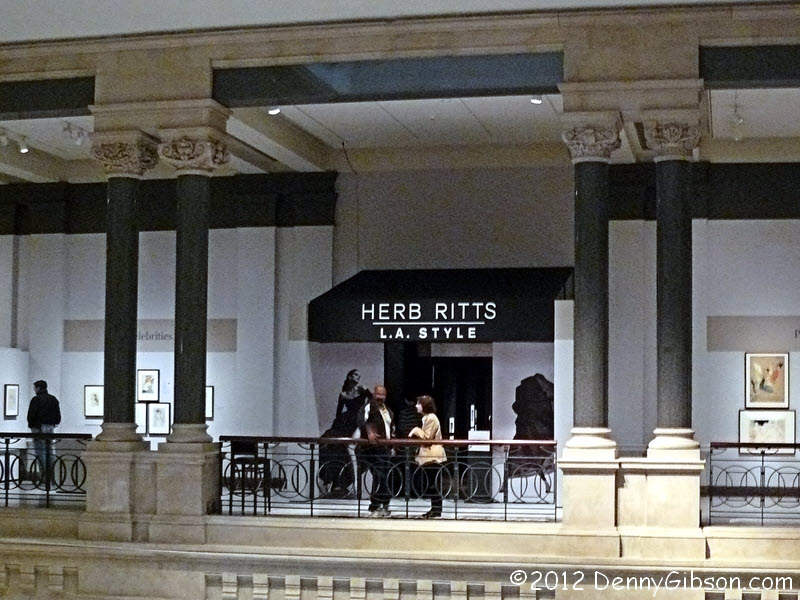
Herb Ritts exhibit at FotoFocus 2012Herb Ritts exhibit at FotoFocus 2012On Friday, I headed first to the Cincinnati Arts Museum in Mount Adams to see “Herb Ritts: L.A. Style”. Since I do stop by here once in a while and wouldn’t feel the need to see all of the permanent displays, I thought my visit would be fairly brief. Though I did essentially limit my viewing to the Ritts exhibit and a traveling Toulouse-Lautrec exhibit at its entrance, it wasn’t exactly a dash in and out. For one thing, Friday was the first of three days of an expanded “Holiday Expressions” gift shop that filled the lobby. Secondly, several bus loads of students were touring the museum in groups of twenty or so. I love seeing kids in museums. They can be a little noisy and can sometimes block an intended path but they deserve to be there a lot more than I do. Kudos to the schools and teachers who get their kids out to see “stuff”. There also happened to be two musical performances going on. In the lobby, a string trio played on a balcony for the benefit of “Holiday Expression” shoppers and two fellows played and discussed some “old timey” music for the benefit of the students in the main hall.

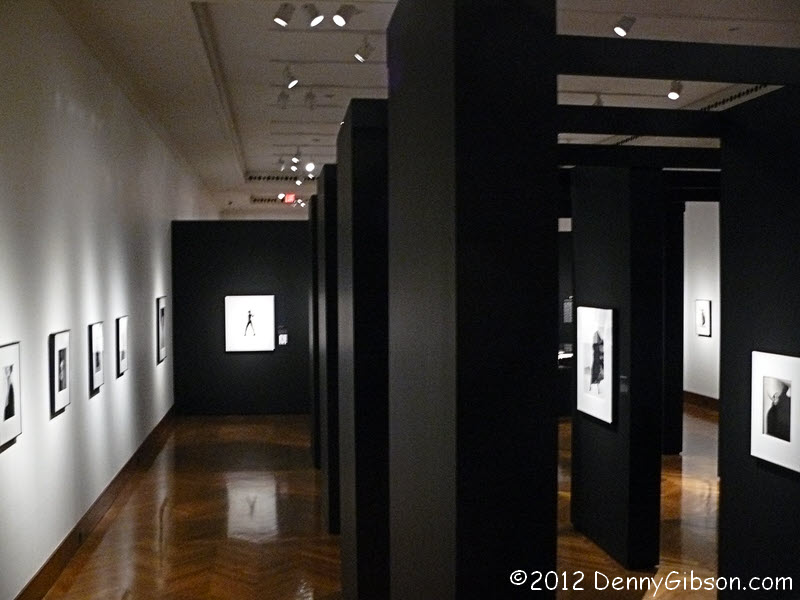
“Herb Ritts: L.A. Style” was curated by Paul Martineau for the J. Paul Getty Museum. Although I was not familiar with Ritts by name, I definitely recognized some of his photos including the cover of Madonna’s True Blue album. Not all of Ritts’ assignments were successful from the client’s point of view. Several examples of his most impressive work came from assignments that were rejected because they matched Ritts’ vision a lot more than the client’s. Ritts’ vision was darned good.

Even now. it seems, Ritts doesn’t please everyone. There are some stunningly beautiful nudes in the exhibit. A sign at the entrance states this and suggests parents check out things and decide for themselves whether their children should see them or not. After I had viewed the exhibit, I stopped for a while just outside the entrance and listened to the musicians below. As I stood there, a fellow I guessed to be about sixteen or seventeen exited the exhibit and approached me. “My male instincts told me to go in there”, he said. “They were wrong.” There are nudes of both genders on display and I’m guessing that this was the teenager’s problem. I doubt he had ever before considered that the word “nude” was not synonymous with “naked woman”. Ah, the insecurity of youth.

“Herb Ritts: L.A. Style” runs through December.

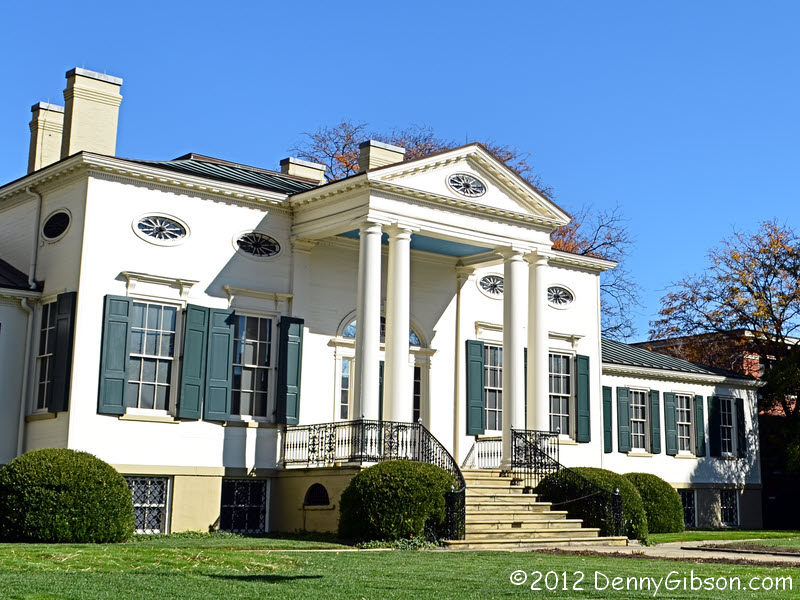
Edward Steichen exhibit at FotoFocus 2012Taft Museum of ArtThe other exhibit I saw on Friday was “Star Power: Edward Steichen’s Glamour Photography” at the Taft Museum of Art. To my shame, this was my first visit to the Taft since its major expansion and renovation in 2004. That meant I needed to look over the whole place and not limit my visit to the Steichen display. Christmas season is starting here also with Friday being the first day of “Antique Christmas”. This consists of a number of decorations, toys, and other Christmas related items from holidays far in the past spread throughout the museum.

Edward Steichen was a name I half recognized but couldn’t connect with anything in particular. It turns out that, had I made any sort of guess, there’s a good chance I’d have been right. He did a lot. He painted, directed movies, and played a key role in the publication of books and magazines and in the running museums. And he was a photographer. In World War I, he commanded the photographic division of the American Expeditionary Forces. In World War II, he was Director of the Naval Aviation Photographic Unit. His many activities between the wars included a fifteen year stint as photographer for Vogue and Vanity Fair magazines. That stint ran from 1923 to 1938 and I believe that most, if not all, of the photographs in this exhibit are from that period.

The title refers to “Glamour Photography” and his work for the world of fashion is well represented. It also mentions “Star Power” and the stars are all there: Greta Garbo, Katherine Hepburn, Joan Crawford, and many others including my fav, Claudette Colbert. The way Steichen handles light in these black and white images is remarkable as is his frequent use of stark high-contrast backgrounds. His lighting often adds a 3-D quality and both it and the composition automatically and consistently focus the viewer right where Steichen wants.

“Star Power: Edward Steichen’s Glamour Photography” runs through January 27.

Even though I missed the majority of FotoFocus exhibits, I did see three of the bigger ones. With the Annie Liebovitz exhibit I visited a couple of weeks back, that means I’ve been exposed to some of the best lens based art of the last century in a fairly short span of time. I’ve never called myself a photographer. In fact, after seeing what can be done, I’m almost embarrassed to even be seen with a camera. I’ll get over it and I won’t stop snapping pictures but it was a clear reminder of just why I never call myself a photographer.


On Friday morning, I wanted to check out something about FotoFocus via my phone but I misspelled FotoFocus. I did it by correctly spelling Photofocus. Photofocus is a long running website that I was aware of though not one I can claim to be familiar with. By coincidence Friday was Photofocus’ fourteenth anniversary. It was also the day that founder Scott Bourne announced his retirement. He is not retiring just yet. That will occur in exactly one year and the website will continue. Scott has already made arrangements to assure that. Accident, coincidence, and the reading of a couple of interesting articles made me think that maybe I should become familiar with Photofocus so I’ve subscribed to its RSS feed.

Controversy, Photos, and Inclines

I long ago reserved a seat on a bus tour of Cincinnati incline sites and had in mind that the Saturday outing would be the subject of this Sunday’s blog entry. But not only did Thursday’s visit to the Pumpkin Show result in an unscheduled post, it led to me visiting a couple of exhibits that I think worth mentioning. So, before getting to today’s feature, I’m presenting a couple of short subjects.


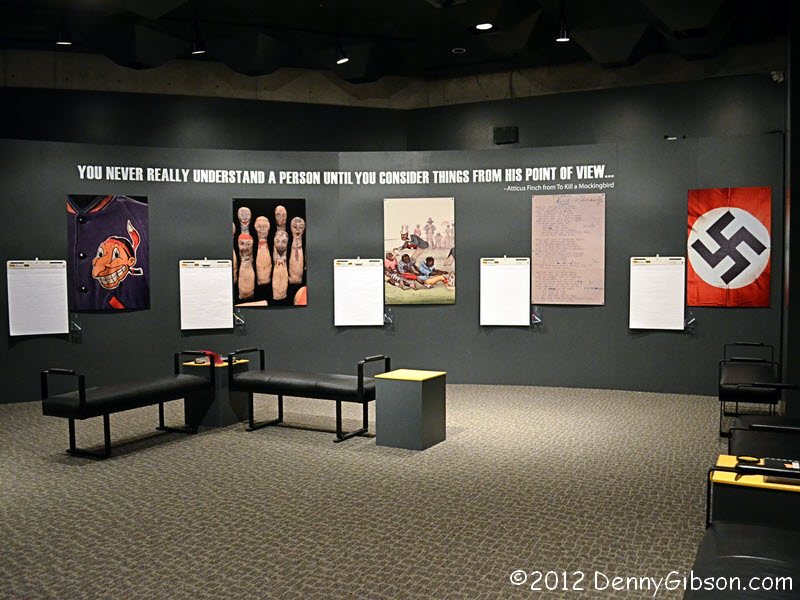
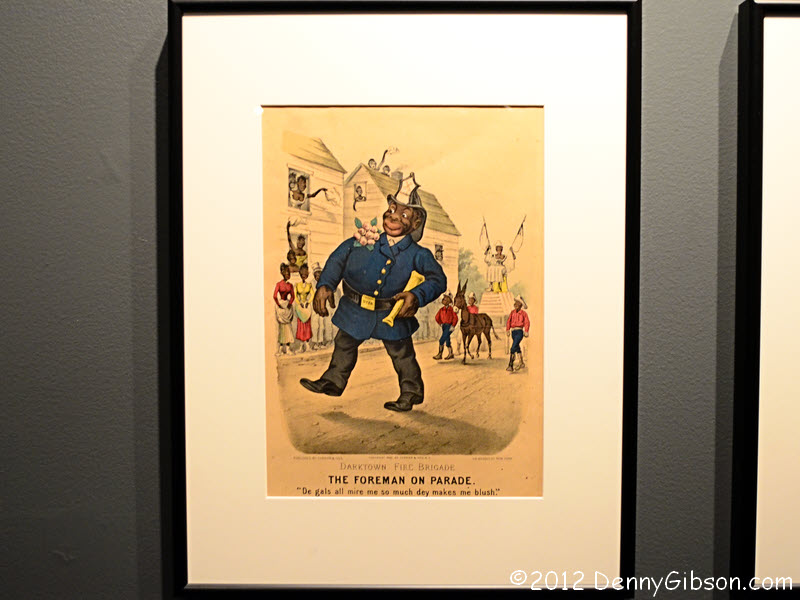
Ohio History Center Controversy 2Short subject one is Controversy 2. Rather than driving home from Circleville in the dark on Thursday, I drove just a few miles toward Columbus and grabbed a motel room then headed on to Ohio’s capital in the morning. My first stop was at the Ohio History Center where the second exhibit of controversial items in the Ohio Historical Society’s collections is in progress. The photo at the right is of an area at the end of the exhibit. Large pads of paper hang next to photos of the five items on display. Presumably the pads were there for comments but they were entirely blank when I saw them. Around the corner, several comments made on smaller cards were displayed. Most were positive regarding the exhibit and thoughtful regarding the items in it but a few were unhappy that the objects have been allowed into the light.

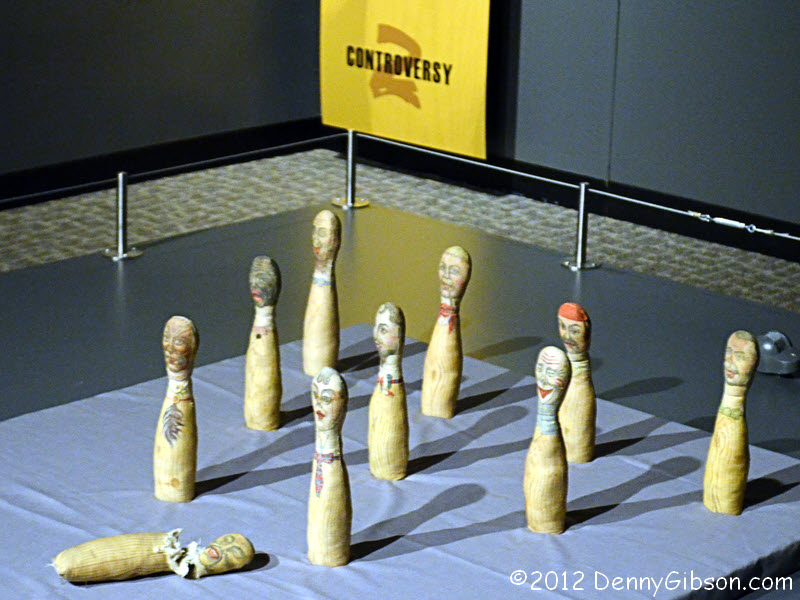
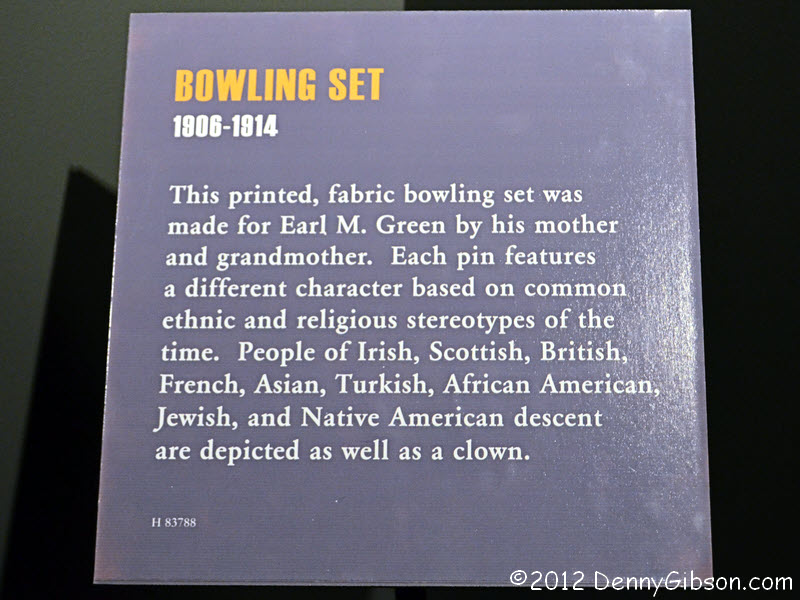
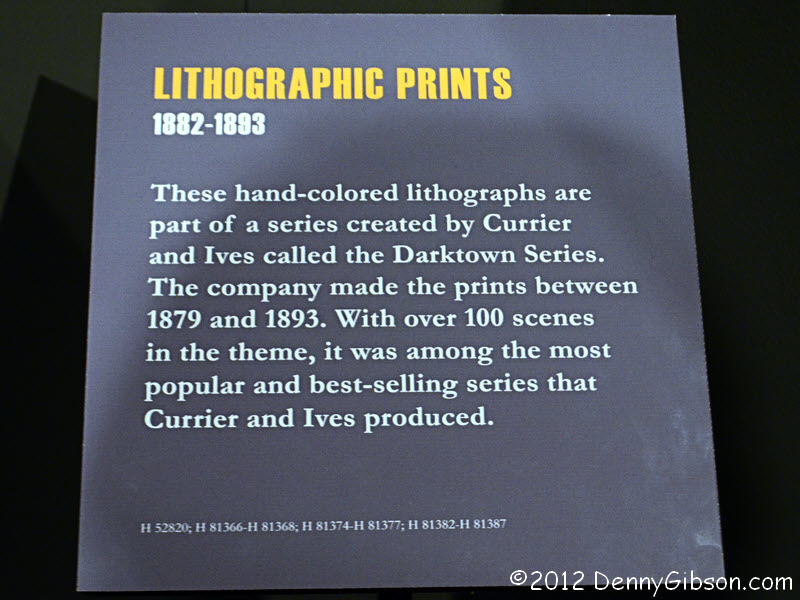
Ohio History Center Controversy 2Ohio History Center Controversy 2The first Controversy exhibit, which I missed, included a hooded KKK costume and a nineteenth century condom. Controversy 2 contains an original Cleveland Indians Chief Wahoo jacket from 1946, children’s toys depicting ethnic stereotypes, degrading racial caricatures, a poem written in dialect, and a Nazi flag. The cloth bowling pins were made sometime before 1914. An adjacent description is here. The prints were published by none other than Currier and Ives between 1882 and 1893. A dozen or so are displayed. Their description is here. The line at the bottom of the print shown here is “De gals all mire me so much dey makes me blush.”


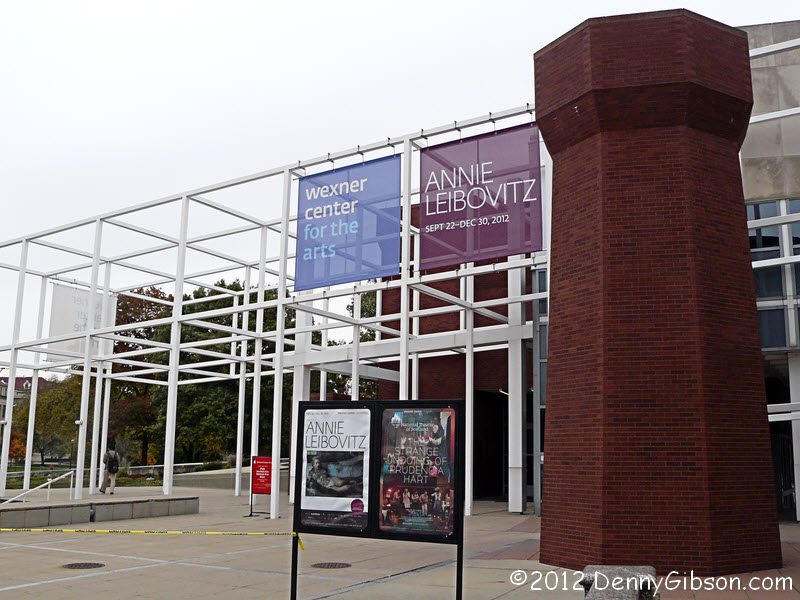
Wexner Center, Columbus, OhioNot surprisingly, no photos were allowed at my next stop, an exhibit of Annie Leibovitz photographs at the Wexner Center. I’m not at all bothered by that since I am not all that fond of taking pictures of pictures and, in this case in particular, doing anything near justice to the subject was clearly out of the question. The exhibit includes all of Master Set and much of Pilgrimage. Master Set consists of 156 images hand picked by Leibovitz to represent four decades of work. Most are from professional assignments but there are some family shots in there, too. Pilgrimage is made up of photos that Annie took for herself. There are no people in these photos but every object and location is firmly associated with an historical figure.

The walls are filled with remarkable images but I’m going to comment on just two. My favorite in Master Set is a 2001 picture of Pete Seeger standing at the edge of the Hudson River wearing hip-high waders and a banjo. It can be found online with a search for Leibovitz and Seeger. I want to grow up to be as happy as Pete Seeger looks in that photo. In Pilgrimage, I was drawn to a picture of Annie Oakley’s boots taken at the museum in my home county. I’ll certainly look at those boots, that I can now connect with two sharpshooting Annies, a bit differently on my next visit.


Inclines and Overlooks Tour, CincinnatiThe Cincinnati Museum Center conducts a number of Heritage Tours each year including several that are repeated every year. One of those is Inclines and Overlooks. I’ve signed up for this in the past but didn’t get to attend because of a schedule overload. This year I made it as the feature event of a busy weekend. Unfortunately, a lot of clouds were also able to attend this year and there was even a little rain but that did little to dampen spirits on the sold out tour.

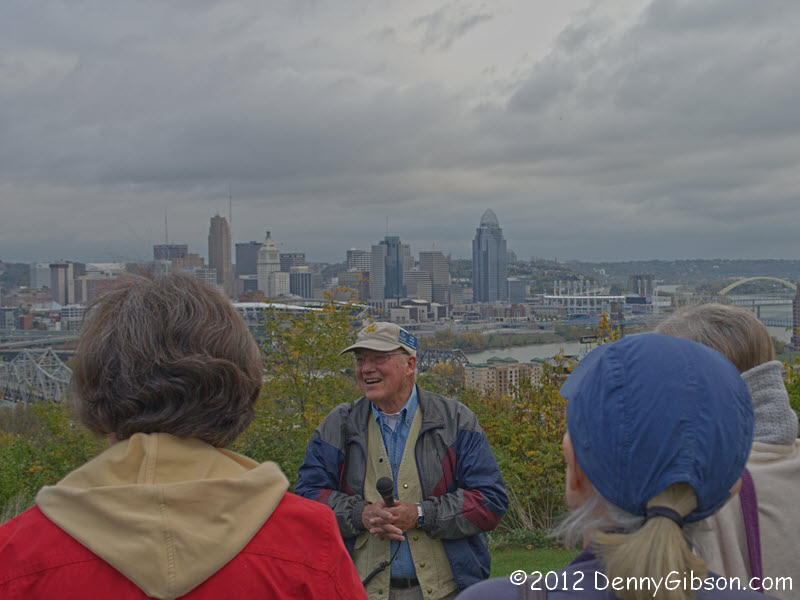
Inclines and Overlooks Tour, CincinnatiInclines and Overlooks Tour, CincinnatiOur first stop was in Kentucky’s DeVou Park which provides a great view of Cincinnati. From here our guides could point out where the city’s five inclines were and explain why they were needed. There were four guides on the tour; All excellent and all of who’s names I’ve forgotten.

Inclines and Overlooks Tour, CincinnatiInclines and Overlooks Tour, CincinnatiThen it was back to Ohio where we would eventually visit all five incline sites. The first was the Price Hill Incline on the west side of the city. This was the second incline built in Cincinnati and the next to last to die. Constructed in 1874, it operated until 1943. A turn to the right yields a nice view of the Ohio River and the Southern Railroad Bridge.

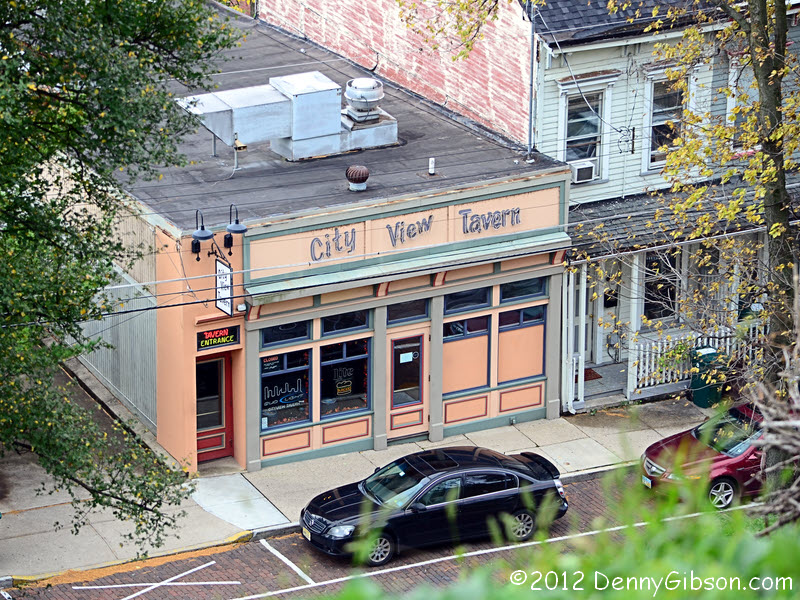
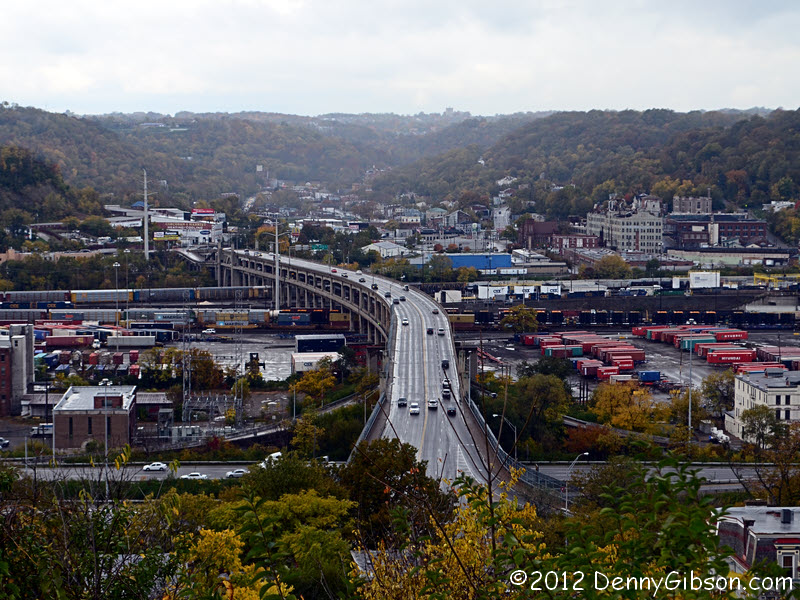
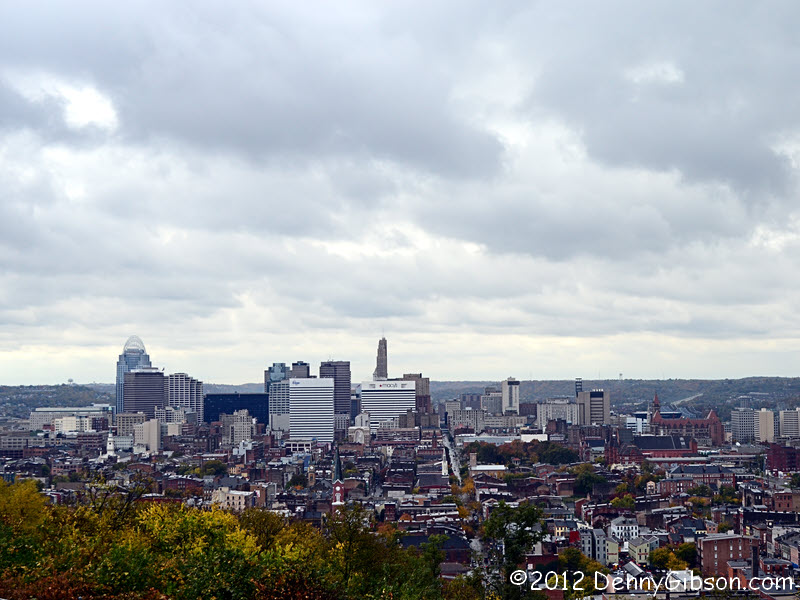
Inclines and Overlooks Tour, CincinnatiInclines and Overlooks Tour, CincinnatiI make multiple goofs in preparing every blog post and journal entry. Most I can simply ignore but some, like forgetting all the guides’ names and not getting a skyline shot from the Mount Adams overlook are hard to conceal. Instead, I’ve got a shot of some of the piers from Cincinnati’s last incline and an overhead view of one of my favorite taverns. I briefly thought of trying to cover my oversight by claiming that I intentionally omitted a view of the city because I wanted you to visit the City View Tavern so you could experience the view for yourself. I quickly realized that it wouldn’t fly as an excuse but it’s still a great suggestion. The Mount Adams Incline opened in 1876 with two enclosed passenger cars. Three years later the incline was converted to open platforms which would carry horse cars, and eventually electric street cars, to and from down town. The Mount Adams Incline is shown in the picture at the top of this section. It closed in 1948.

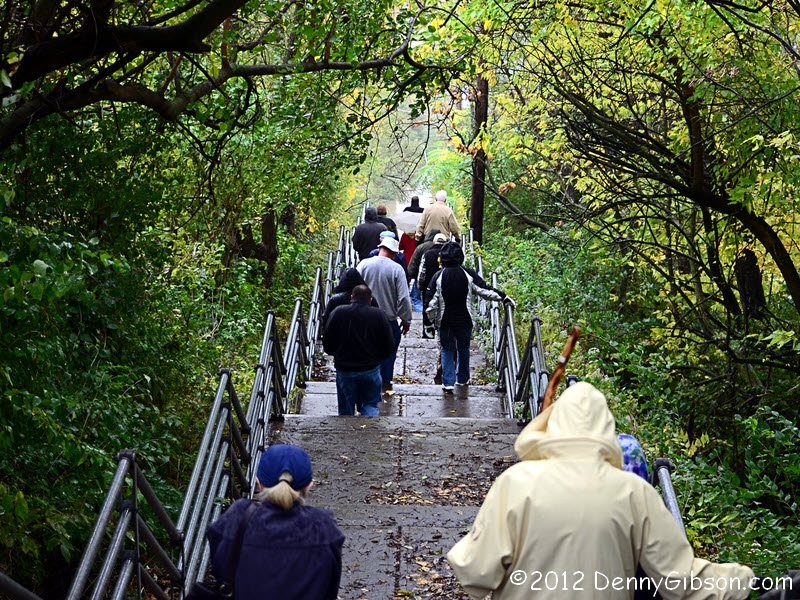
Inclines and Overlooks Tour, CincinnatiInclines and Overlooks Tour, CincinnatiInclines and Overlooks Tour, CincinnatiThere was a little rain at the Mount Adams stop and that may have contributed to my failing to get a proper overlook view. It definitely contributed to my failure to get one from the top of the Mount Auburn Incline route. It was also a deterrent to walking the stairs that essentially trace the route but that was outweighed by the fact that the bus would meet all walkers at the bottom. A chance to de-climb 355 steps without also climbing them doesn’t come along every day. The overlook views are from the top of the Bellvue Incline and near the midpoint of the Fairview Incline. Operating between 1871 and 1898, The Mount Auburn Incline was the first and shortest lived of the Cincinnati inclines. It was also the only one with fatalities. In 1889 a car plunged down the track killing six of eight passengers. The Bellvue Incline operated between 1876 and 1926; The Fairview Incline between 1892 and 1923.

I learned quite a few things on this tour including the fact that, while San Francisco was first and last with cable cars, Cincinnati had them, too. Between 1873 and the end of the century, as many as three cable car lines operated here. The power house for one of them still stands and is used for office space. Another surprise was getting a copy of Cincinnati Streetcars No. 2 The Inclines at the end of the tour. This was a gift from the Ohio Book Store and a reminder that it has been entirely too long since I’ve been inside that wonderful place.

This was an extremely well done tour. As I write this, I’m feeling guilty that I didn’t praise it more on the evaluation form. I’m also thinking that I just might try to sign up again next year and hope for better weather.

MPMF Lite

Washington Park & Music Hall at MPMF.12Some consider Cincinnati’s Mid Point Music Festival second only to Austin’s South by Southwest and some concede even that grudgingly  The eleventh coming of MPMF has just concluded and it was only the third I’ve attended at all. I think I was there the first year and again for the second or third but I’m not at all certain. Whichever ones they were, I know they were pretty early on and know that I’ve spent many years since feeling guilty about not going. Sometimes I was out of town or had another legitimate reason but mostly I was just too lazy. The effort that I shied away from was not the driving downtown or the hiking between venues; It was the effort of determining which venues to hike between.

This year is typical. There are 180 bands playing at 16 venues over 3 days. Unlike most music festivals, MPMF doesn’t book the world’s most well known bands to get you to attend. It books lesser known but highly talented bands to get them and you some exposure to each other. Unless you are an industry pro, you’re not likely to be familiar with many of those 180 bands. You can either show up and hope you stumble upon a couple of performers that you like or you can spend time planning your visit in hopes of not missing your next big favorite. Or you can do what I’ve been doing and dodge the whole thing.

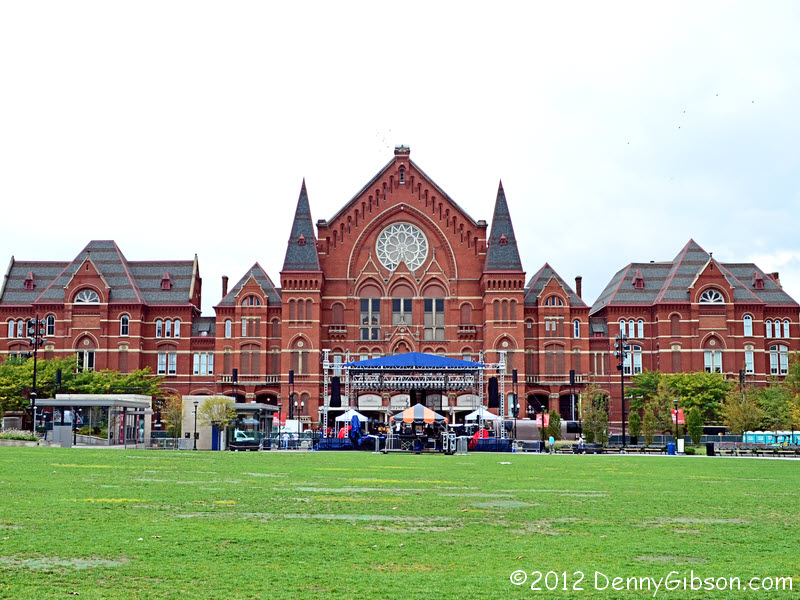
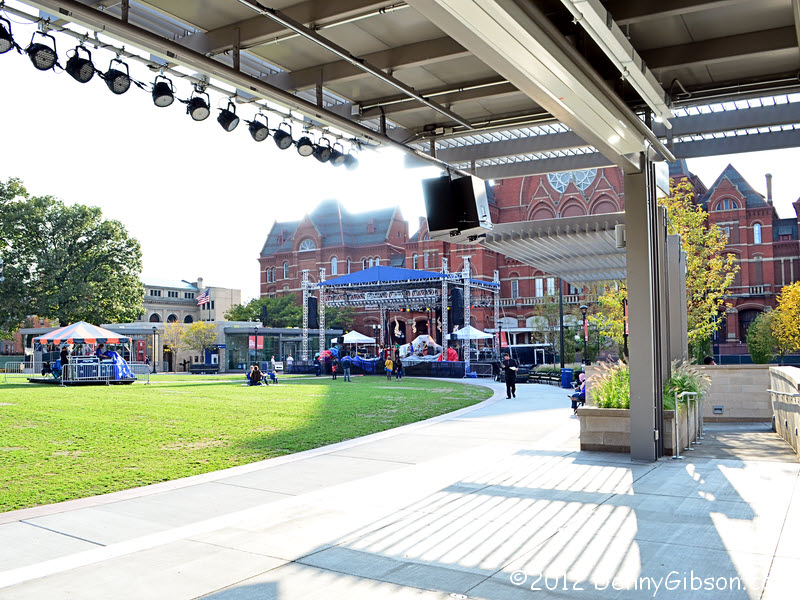
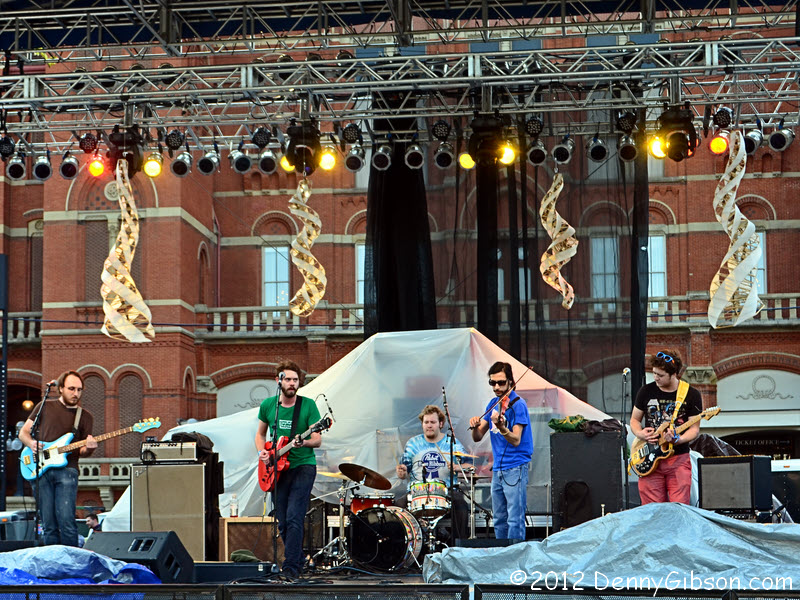
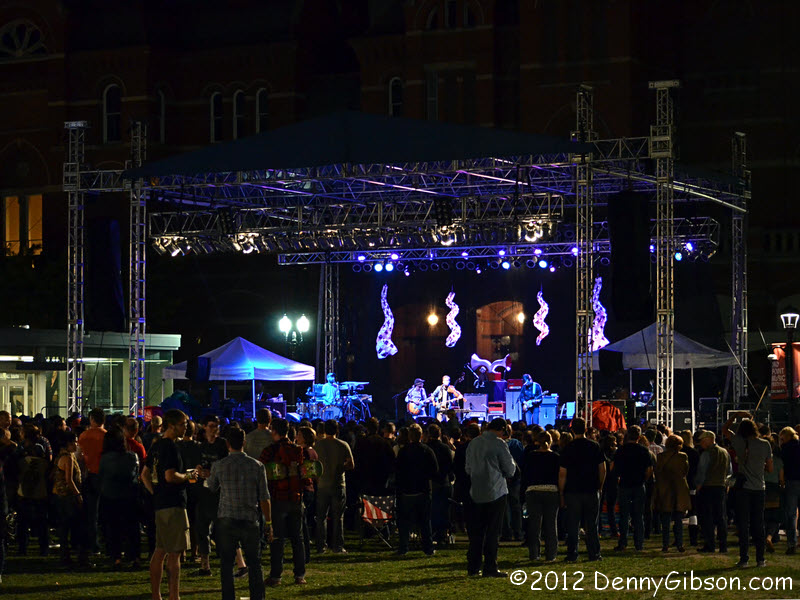
Washington Park at MPMF.12Maybe the feelings of guilt finally caught up with me or maybe it was the addition of the recently redone Washington Park as a venue or maybe it was actually recognizing the performer who would be headlining one of the Washington Park shows. It was probably all the above and more that prompted me to at least dip a toe — or ear — back into the Midpoint Music Festival. I decided to attend one night of the three day festival and partake of only the Washington Park offerings. The photo at the top of this post is of Washington Park a couple of hours before the official opening of the festival. That is the glorious Cincinnati Music Hall in the background. At what I believe was the first concert at Washington Park in July, the bands had played from the permanent stage where I stood to take the picture at left. Yes, the music has started but the crowd is almost non-existent. The opening crowd at festivals, especially those with sixteen stages, is often like that and rain & rumors of rain didn’t help. As it turned out, not a drop fell on Washington park during the entire concert.

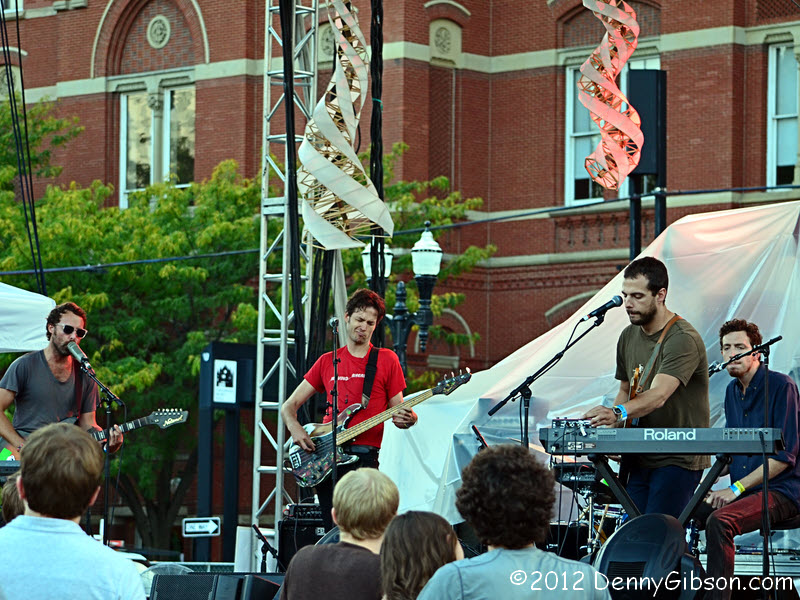
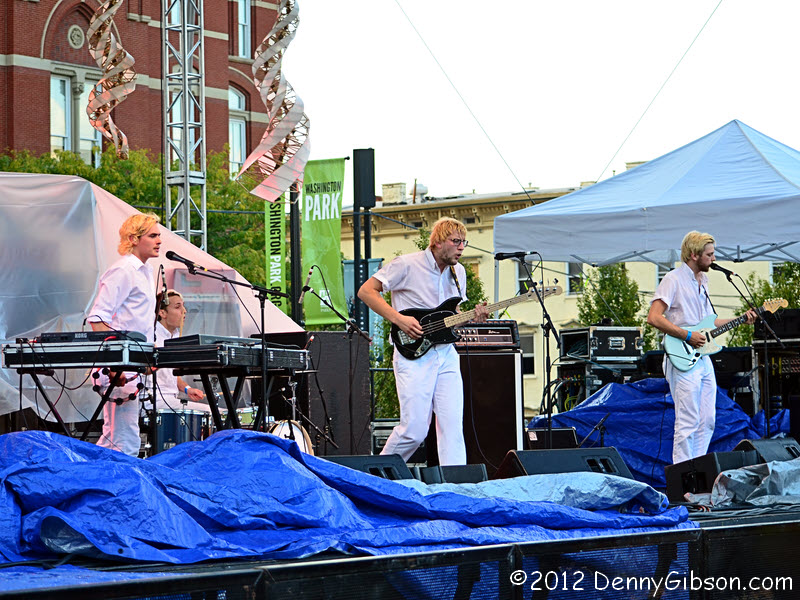
Here We Go Magic at MPMF.12Pomegranates at MPMF.12 Bonesetters at MPMP.12The group that opened the show and is playing to a lot of grass in the previous picture was the Bonesetters from Indianapolis. The crowd was significantly larger, though far from large, by the end of their set. With a good performance of very solid original material, they deserved more but, being both new and semi-local, the exposure was still no doubt good for them. Next up was the even more local but well established Pomegranates. I’d heard of them but don’t believe I’d ever heard them and know I’d not seen them. From the white clothes and dyed hair to the Fender Mustangs, there is plenty of formula and gimmickry here but it’s backed with solid music, lots of energy, and impressive vocals. The next band, Brooklyn’s Here We Go Magic, seems to basically be a group of talented musicians delivering singer-songwriter Luke Temple’s well crafted tunes. They sounded good and I liked the material but there didn’t seem to be a whole lot of energy or conviction coming from the stage. It appears that band personnel may vary from time to time so maybe there’s a killer …Magic lineup out there somewhere.

That headliner I recognized was Andrew Bird. I surprised myself by recognizing the names — not necessarily the sounds — of at least eight performers. Eight of one-eighty! I doubt many attendees would brag about a 4% recognition rate but this old man is doing exactly that.

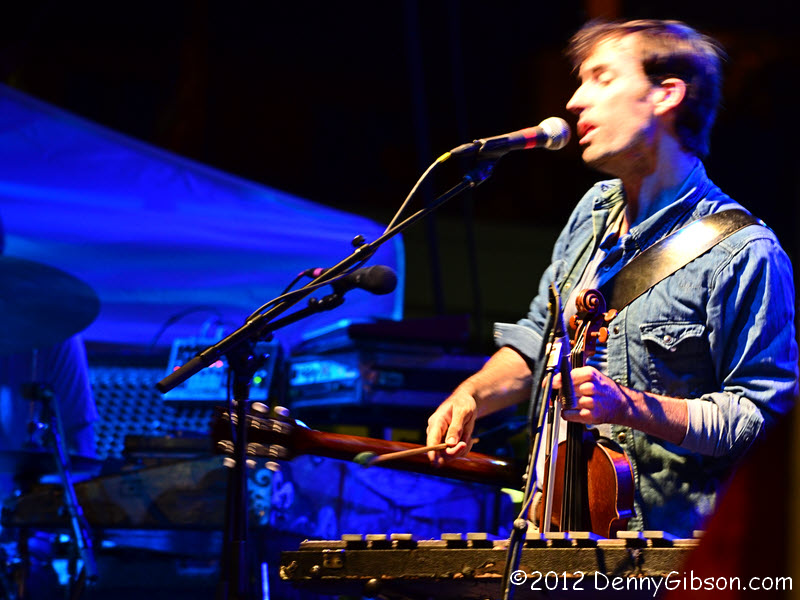
Andrew Bird at MPMF.12Andrew Bird at MPMF.12It was full on dark when Bird took the stage and, while that didn’t help me get crisp photos, it did show just what those overhead spirals were there for. Spinning slowly and lit by frequently changing colored spot lights, they were a nice visual backing for Bird’s music. I had heard a few recorded tunes so was aware of Bird’s whistling ability but did not realize just how good it was or how much he used it. Where another musician might blow into a harmonica for a little non-verbal music, Bird just purses his lips and blows into the microphone. It might seem like a gimmick for a few seconds but it quickly becomes just another instrument in the mix. That mix includes a bassist, guitarist, and a drummer that plays keyboards. And then there’s Bird. Seemingly equally proficient on guitar and violin, he usually plays one or the other but sometimes uses both in the same song. In the close up, he’s playing a glockenspiel while holding a violin which he will pick or bow then lay down to play the guitar hanging at his side.

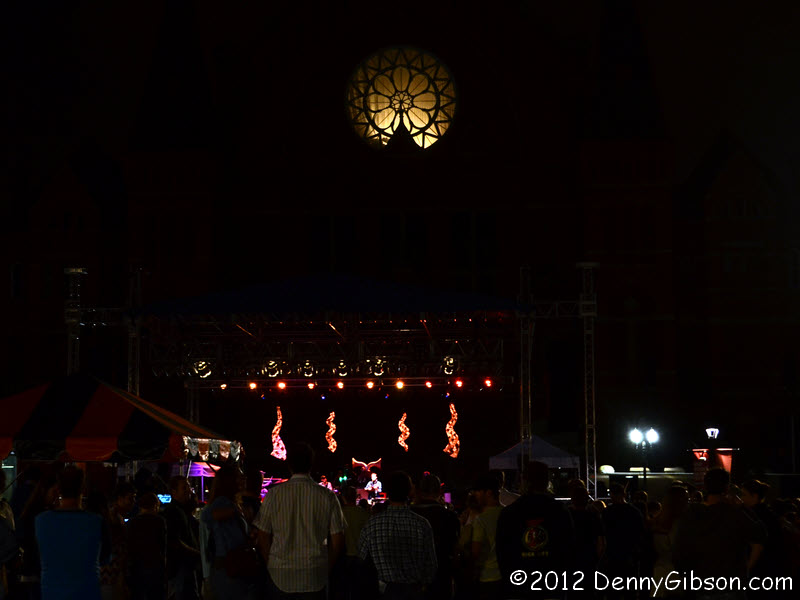
Andrew Bird at MPMF.12Music Hall’s circular stained glass window sure looks good hanging above Andrew Bird’s lighted spirals and there was a nearly full moon floating behind me. I truly enjoyed my one venue return to MPMF. I’m sure Thursday is the least crowded of the festival’s three nights and the threat of rain may have also played a role. The crowd at Washington Park grew steadily as the first three bands performed then took a big jump as Bird’s slot approached but it never reached the shoulder to shoulder mass that I feared and the promoters hoped for. I hope it was enough and I hope to be back next year. Sorry I’ve been away so long.


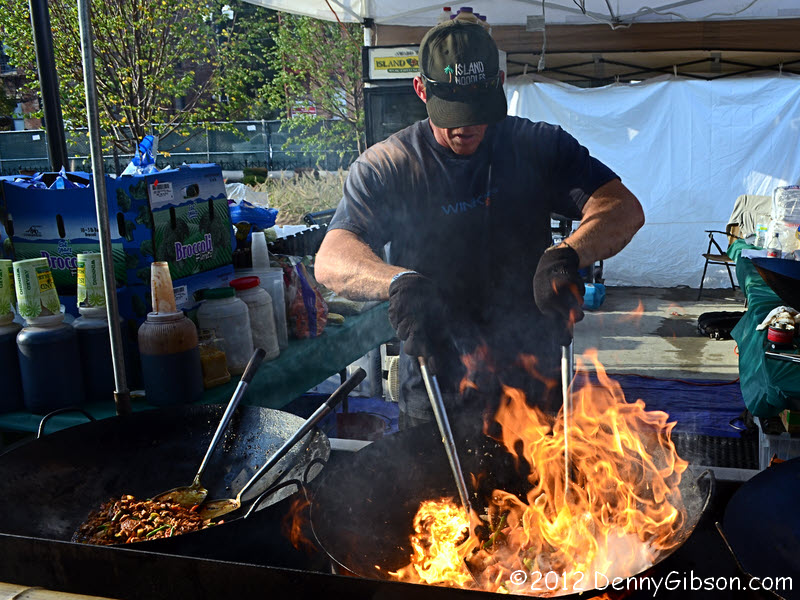
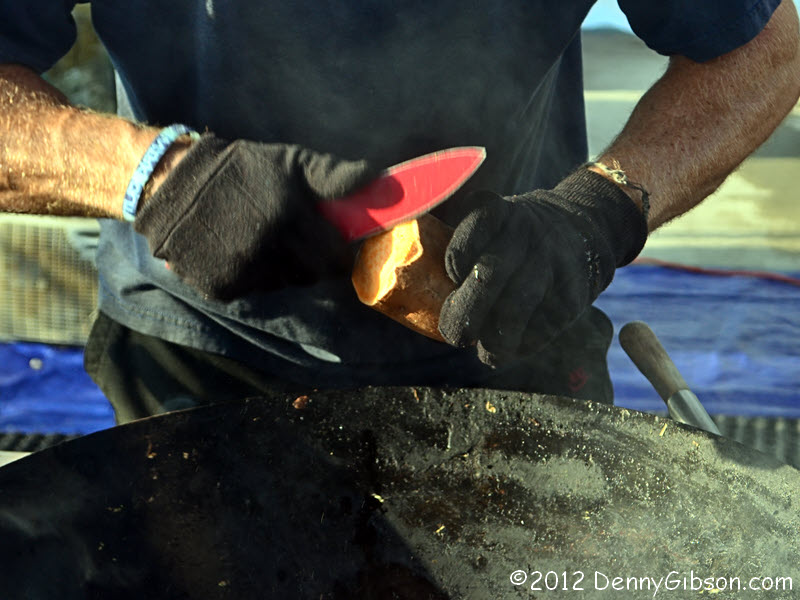
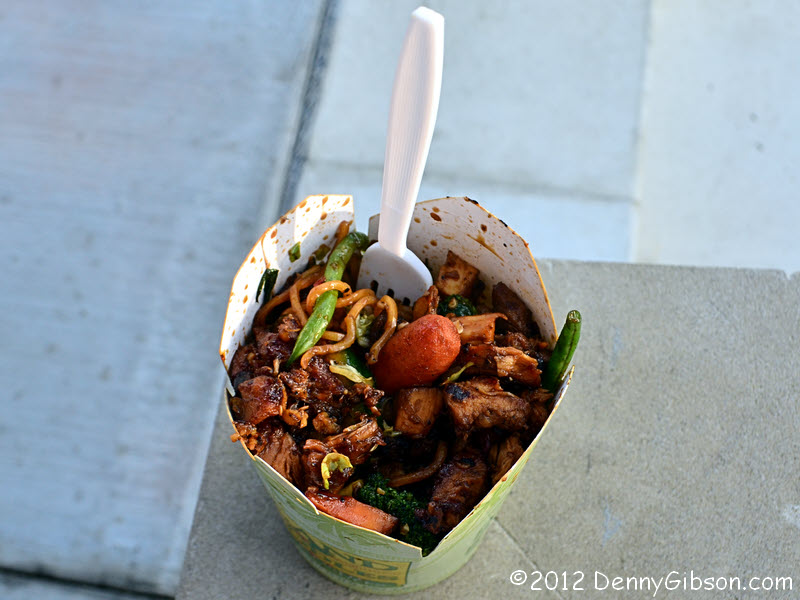
Island Noodles at MPMF.12Not all of the entertainment in Washington Park was musical. Among the food vendors was new-to-me Island Noodles. I happened to be Brad’s first customer of the day which meant I had to wait awhile for dinner but I got a great show and absolutely fresh food in return. Although it’s hard to beat a huge flame, it was also fun to watch the veggies get chopped into the big wok. Before I even finished paying for my noodles, the next customer was beside me and business picked up from there. This is good eating.

This particular operation is based in Florida. That’s where Brad lives but he is originally from Toledo and has spent the summer staying with his parents and working festivals around the state. Events included July’s Bunbury Festival which was also in Cincinnati. As he cooked, we chatted, and Brad said he wished he had learned more about Cincinnati when he was growing up near the other edge of Ohio. “This”, he says, “is the friendliest city I’ve ever been in.” That’s nice to hear. I think so, too.


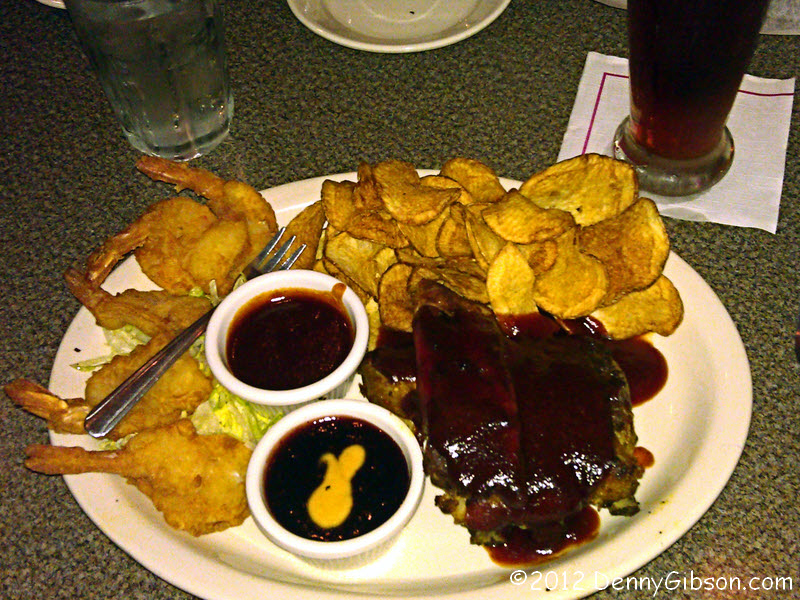
Montgomery Inn ribs & shrimpI was in Indianapolis last week and in my trip journal I raved about a bar-b-que joint named Squealers. It deserved the raves but it reminded me of two things. One, I hadn’t eaten in my favorite ribs joint in quite some time and, two, I had a gift card that would let me do it for for free or close to free. I made use of that card on Wednesday. If I am ever convicted of a capital crime in a country that honors the last-meal-for-a-condemned-man convention, this is what I want; Montgomery Inn ribs, shrimp, and Saratoga chips. Being warned about stirring the sweet plum sauce and hot mustard is as reliable as death and taxes. I kidded the waitress about it and she shrugged. “You don’t know what they do to us if we don’t tell you”, she said.

RoadDog Day Afternoon

Don Hatch at American Sign MuseumI get to be part of somebody’s road trip again. Don Hatch is a roadie whose nickname and online handle is “RoadDog” and that is the source of my not particularly clever title. He stopped in Cincinnati today on his way back from relatives in North Carolina to his home in Illinois. Unlike Fred Zander, whose road trip I got to be part of last month, Don has been to Cincinnati before and even visited the American Sign Museum in its original location. In spite of that, or more likely because of it, seeing the new and improved set up was high on his list of goals for the visit.

American Sign MuseumTo save time and make sure we didn’t miss the four hour (noon-4:00) Sunday window, we met at the museum. We arrived a little after 1:00 and roamed the museum on our own for awhile then hooked up with about a dozen others for the 2:00 tour. This was my first “official” tour of the museum in the new location. Museum founder Tod Swormstedt did his normal excellent job job while RoadDog took notes.

Neonworks at American Sign MuseumNeonworks at American Sign MuseumNeonworks at American Sign MuseumI experienced another first by going inside Neonworks, the independent sign shop that occupies some of the museum’s space. The shop can be seen from the museum proper through large windows but is usually idle on weekends. Today craftsman Tom Wartman showed up near the end of the tour and we were allowed into the shop for an up-close look and a little demonstration. As we watched, Tom sealed and filled then brought to life a length of neon text.

Zip's CafeRoadDog and ZipburgerAnother of Don’s Cincinnati goals was grabbing some chili but, as I’ve noted before, all the independent chili parlors are closed on Sundays. The two big chains, Skyline and Gold Star, have plenty of stores open and both turn out some very fine Cincinnati chili but I talked Don into waiting until Monday for his chili fix and trying out a ‘burger joint today. Probably the currently best-known Cincinnati ‘burger joint is Terry’s Turf Club and that’s where Fred and I went. However, Don has experienced — and loved — Terry’s in the past so I led Don to someplace “new”. That “new” is in quotes because, while Zip’s Cafe may be new to Don, but it has been turning out award-winning “Zip Burgers since 1926.

Aglamesis ice creamAglamesis ice creamFor dessert, we did exactly what Fred and I had done and ate delicious ice cream at one of the 98-year-old marble tables at the Aglamesis Brothers shop on Madison Road. Most people who think of Cincinnati ice cream think of Graeter’s and I don’t want to demean it in anyway. Like Skyline and Gold Star chili, it is an excellent product and I’m proud to live near its source. All three brands are Cincinnati to the bone, if any of them had bones, but they can now be found in other cities in the region. Camp Washington and Blue Ash Chili (which is in tomorrow’s plans) are among a number of independent one-location Cincinnati-only chili dispensaries. Aglamesis does have two stores but all of their ice cream is made on Madison Road. Fred actually had Graeter’s on his list when he arrived but I steered him to Aglamesis. I was happy to learn that he did get to sample their product in Columbus, Ohio, and sent this picture to prove it.

Jake Speed and the FreddiesOver the RhineWe wrapped up the day at Washington Park. The park, which originally opened in 1855, had become a somewhat scary place in recent years but an extensive makeover has just been completed. The ribbon cutting was July 6 and tonight a sort of grand reopening celebration took place with a free concert featuring Jake Speed & the Freddies and Over the Rhine. You can’t get much more Cincinnati than that.

The reverse road trip continues tomorrow with stops planned for Blue Ash Chili, Pompilio’s, and Mansion Hill Tavern.

The World is Singing in Cincy

The Seventh World Choir Games are happening in Cincinnati right now. Austria, South Korea, Germany, and China have previously hosted the biennial event but this year it’s our turn. The opening ceremony was Wednesday, competition started Thursday, and I got a small taste of the event on Friday. I could have prepared for my visit a little better but I had a great time anyway.

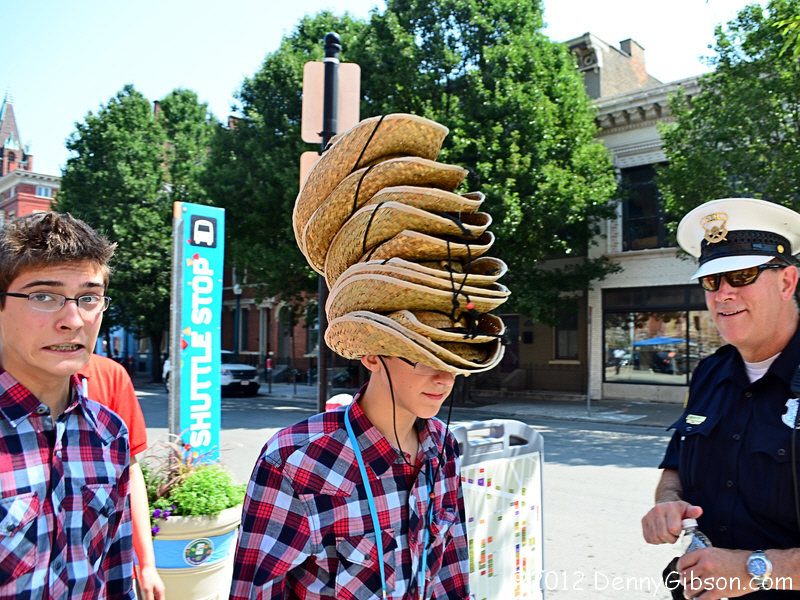
World Choir Games CincinnatiThere are ticketed events, which include the big opening and closing ceremonies, and there are free events. The competition is divided into Open and Champions. The Champions participants are selected by a panel while any choir that meets certain requirements can enter the Open competition. Tickets can be (or at least could have been) purchased for specific events and there are daily Competition Flex Passes available. A Flex Pass will get you into any of the competitions “as seating is available”. Part of my poor planning included deciding on Friday that I was going on Friday. For some reason I thought I had to get my Flex Pass at the Aronoff Theater ticket office which opened at 10:00 or exactly the same time as the day’s first concerts. I had picked a Folklore Champions Competition to attend first. By the time I got my pass and walked to the venue (and discovered that I could have bought my pass there), the choirs and been performing to a packed house for half an hour. The doors opened briefly between each performance, a few people exited, and their replacements were allowed in. I evaluated my chances of getting in before it was over and they weren’t all that good. I slipped away and sought out the shuttle running between the venues. The shuttle stop was near where the choirs entered and exited. A group from the Czech Republic came by then some stragglers from a group that had apparently included some “down on the farm” material in their performance. One trustworthy member had been entrusted with an abundance of their props.

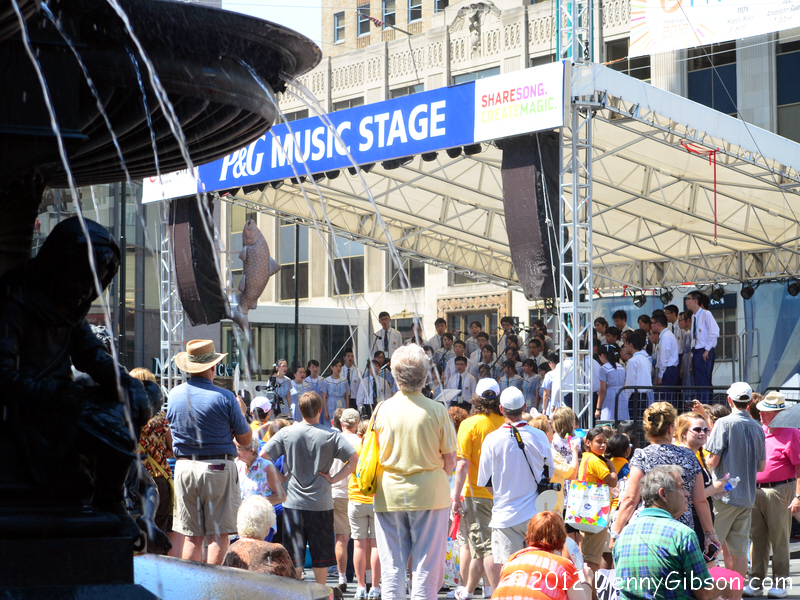
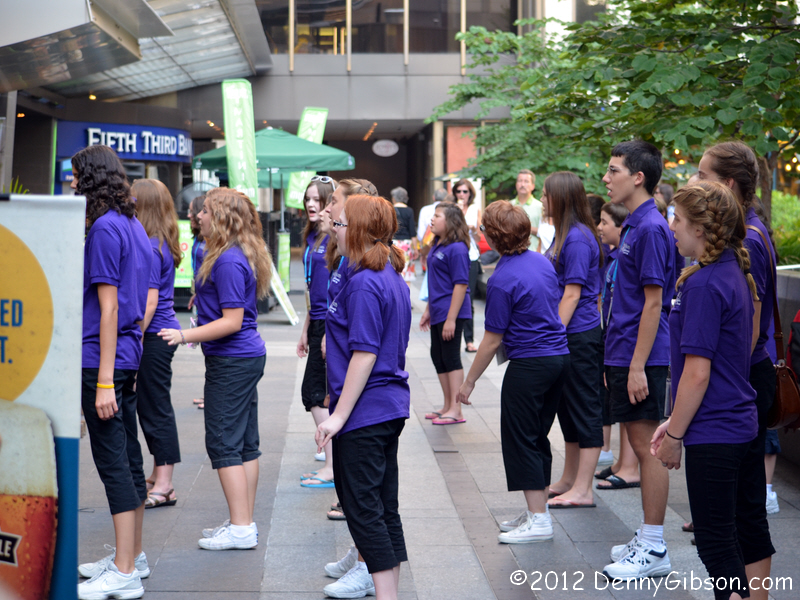
World Choir Games CincinnatiWorld Choir Games CincinnatiI rode the shuttle to Fountain Square where a free Global Village concert was in progress. That’s a choir from China on stage in the picture. In addition to the full slate of scheduled activities, impromptu musical outbursts can occur just about anywhere at anytime. The energetic group performing in front of the Rock Bottom Brewery is the Bel Canto Children’s Chorus from Red Hill, Pennsylvania.

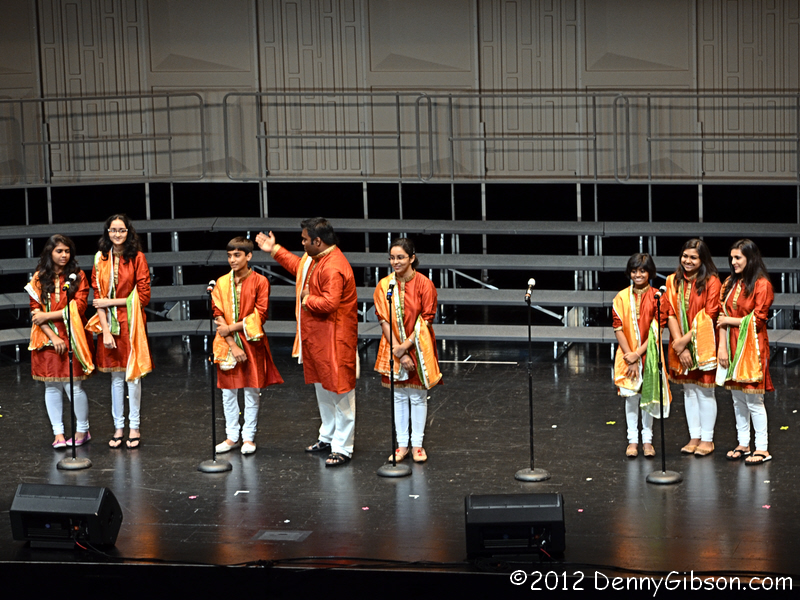
World Choir Games Cincinnati - India

Bombay Cambridge School Choir, India

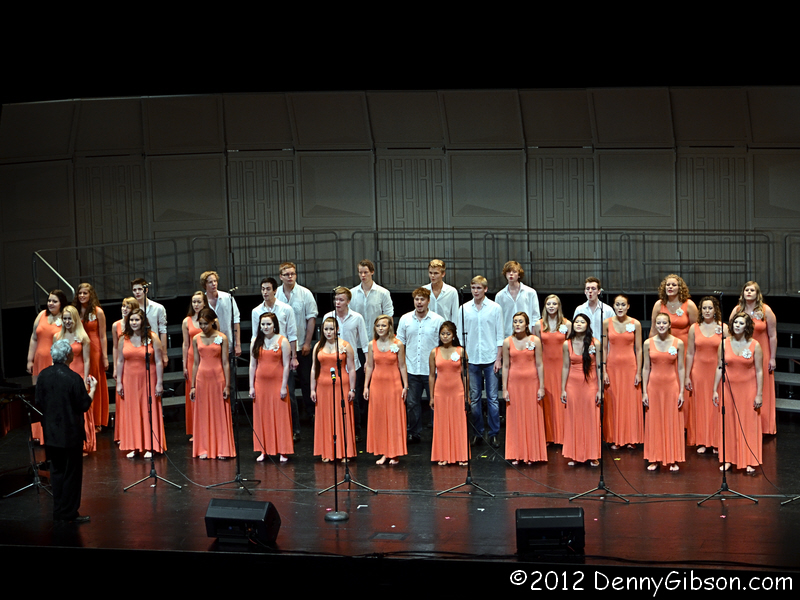
World Choir Games - Norway

EDTChoir,
Norway

World Choir Games - Wisconsin

Vocal Point, Galesville, WI, USA

World Choir Games - Poland

Vox Juventutis, Poland

World Choir Games - Australia

Hunter Singers, Australia

World Choir Games - Denmark

Morten Boerup Choir, Denmark

In the afternoon, I easily made it inside for a Popular Choral Music Open Competition at the Aronoff. The theater’s size might be partly responsible for the large number of unfilled seats but I’m sure that the perceived quality has much more to do with it. These may not be the hand-picked cream-of-the-crop choirs of the Champions Competition but they’re pretty darned good. I thought that all six choirs I heard were very good, four were great, and that outfit from Poland was something above excellent.

I have, of course, absolutely no qualifications for offering anything close to a real evaluation of these groups.  I can’t even make an untrained comparison between the Open and Champions Competition since the Popular Choral Music Open Competition was the only competition of either sort I actually saw. It started at 1:00 and ended about 3:15. I wandered back to Fountain Square and even popped into Rock Bottom Brewery for a cold one. Yes, I had just been sitting in air conditioned comfort for a couple of hours but at 100+ it doesn’t take long to get hot. As I sipped, I did something I should have done much earlier and looked a little more thoughtfully at the schedule. A Champions Competition was slated for 3:30 just a few blocks from the Aronoff. Had I headed there when the Popular Choral Music thing ended, I could have at least been in line when the doors opened. I walked on over but the line that existed at 4:15 was clearly enough the keep the event filled and then some.

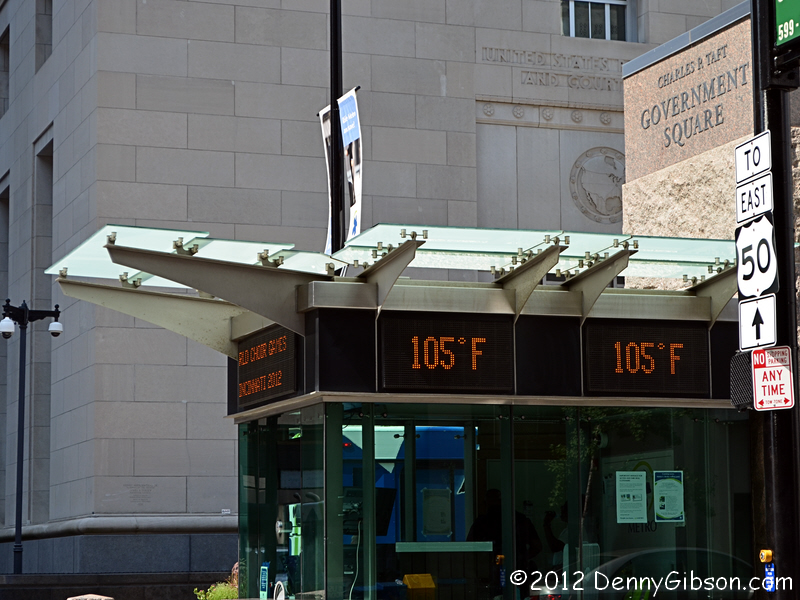
Cincinnati 105 degreesThe official temperature in downtown Cincinnati was a record breaking 104 Fahrenheit. As I walked back to Fountain Square, I snapped a couple of pictures of the kiosk at the bus plaza. It showed a solid 104 and I got a picture of that. Then, just as I was lowering the camera, a 105 appeared and I grabbed another shot. On the next cycle it was back to 104. Maybe it was just showing off for the camera. I have evidence of a 105 reading but, to be honest, I couldn’t tell the difference.

Fountain Square - CincinnatiWashington Park - CincinnatiTemperature has certainly been a big story around here lately. Keeping residents and visitors safe is a real concern that Cincinnati is taking seriously. Although a big reopening celebration is a couple of weeks away, there was a ribbon cutting and dedication at the totally reworked Washington Park and its several fountains were clearly appreciated. The park is near Music Hall and the School for Creative & Performing Arts which are both being used for the Choir Games. Some large misters are operating on Fountain Square and, of course, there is always the Tyler-Davidson Fountain itself.

Maybe it was the heat that kept me from thinking clearly and organizing my day better. The Games are here through next week so maybe I’ll try again. Haphazard bouncing around was certainly enjoyable but actually hearing at least one Champions Choir seems like a worthwhile goal.


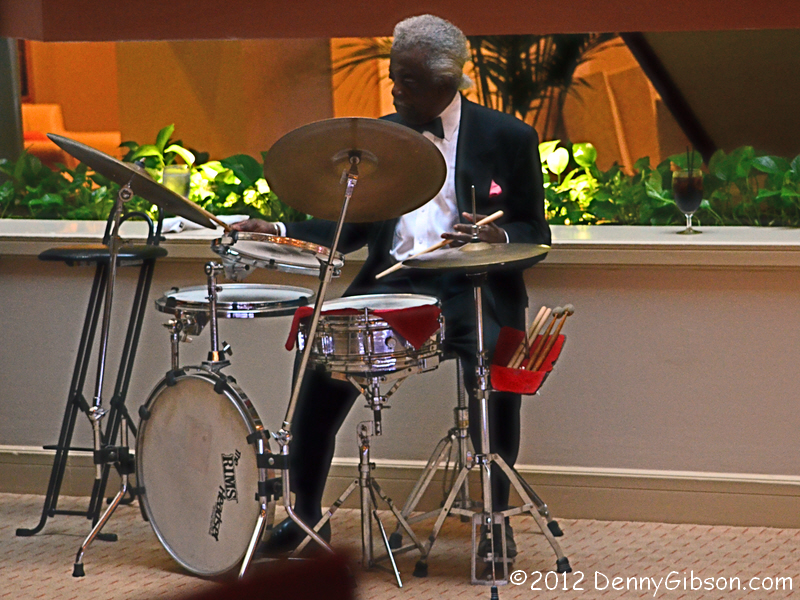
Philip PaulOddly enough, the World Choir Games were not the reason I first marked July 6 on my calendar. I marked it when I heard that a favorite musician would be visiting Cincinnati and playing on the square. This isn’t him. This is a favorite musician but he doesn’t have to visit Cincinnati; He lives here. This is 86 year old Philip Paul. Remember Tiny Bradshaw’s Train Kept a Rollin’ or Hank Ballard’s The Twist or Freddie King’s Hideaway? All those recordings and a whole lot more had Philip Paul’s drums on them. He was pretty much the session drummer for King Records during their heyday. He still performs on weekends at the Cricket Lounge. When I realized that hanging around to see that out-of-towner would keep me in the area and that actually seeing him would keep me from the late Choir events, it seemed a perfect time to see the Phillip Paul Trio again. It’s good jazz from a rock ‘n’ roll and blues legend who happens to be a really nice guy, too.


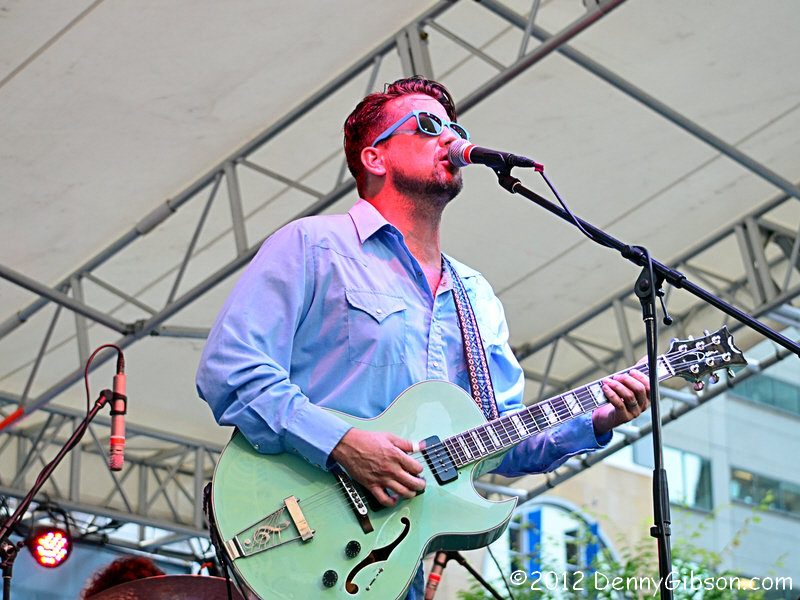
Patrick Sweany - Fountain Square - CincinnatiThis is the guy I’d marked my calendar for and was hanging around to see. Patrick Sweany is originally from Ohio but now lives in Nashville, Tennessee. In a way, I think the move may have been good for Cincinnati fans. Patrick occasionally returns to the Alliance, Ohio, area to visit family and play a few gigs in the ‘hood. Since Cincinnati is along one of the possible routes, we get to see him now and then, too. His music is a little bit blues, a little bit roots, a little bit soul, and a little bit rock ‘n’ roll.

Patrick Sweany - Fountain Square - CincinnatiPatrick Sweany fan - Fountain Square - CincinnatiStrangers may have been fooled by the perfectly combed hair and the shades that you can only buy in Nashville and then only with a prescription from your manager but us regulars know what happens when the music starts. And it looks like those great tunes and nothing-held-back performances may be winning over some new Cincinnati fans, too.

Reverse Road Trip

American Sign MuseumI was part of a road trip today but it wasn’t mine. Roadie Fred Zander from Topeka, Kansas, is in Ohio visiting family north of Dayton and came down to Cincinnati for the day. Like many others, Fred has wanted to visit the American Sign Museum but its limited hours made him put it off. The ribbon cutting was yesterday. Today was the first “normal” day and Fred was among the first “normal” customers.

Although it was the Sign Museum that prompted the trip and Fred even commented that the museum alone would have made the trip worthwhile, this was also Fred’s first visit to the Queen City and an opportunity for me to do a little boostering. I think I did OK in that regard but really fell down in the picture-taking department. I had good intentions and almost always had a camera nearby but, presumably since everything was familiar to me, whatever it is that makes me want to click rarely appeared. So, while I showed Fred what I believe is some Cincinnati “good stuff”, I’m going to have to tell about it with few visual aids.

Fred Zander at Roebling BridgeI met Fred at an I-75 exit a little north of the city where he could leave his car. We headed directly downtown from there and drove by Music Hall, Fountain Square, P & G headquarters, and Cincinnati’s oldest bar, Arnold’s. On the way to the 1867 Roebling Suspension Bridge, we got a glimpse of the football and baseball stadiums and the National Underground Railroad Freedom Center. On the Kentucky end of the bridge, we pulled into a small lot beneath it that offers a good view of the bridge, the river, and the Cincinnati skyline. I even thought to get a picture of the skyline in addition to the picture of Fred backed by the Roebling Bridge. Before moving on, we took a look at the scenes from area history captured by large murals painted on the flood wall.

Fred and Tod at American Sign MuseumInformation panel at American Sign MuseumThen it was time for the sign museum to open so we headed back to Ohio. I actually remembered to take some pictures there. One reason may have been that the explanatory panels that stand near most signs were new to me. The text had been ready for the sneak previews but not the stands. I wish I had taken a picture of the face of one of the panels as an example. Tod wrote most or all of these and it’s no surprise that they are quite informative. Sharp eyes may have noticed the American Sign Museum sign at the museum entrance in the photo at the top of this article. That’s also been added since the previews as have some plaques and section signs inside. We were not on an official tour but Tod was always nearby answering questions and pointing out things so it was an “almost tour”.

First Sign Museum tourReal tours, which are free, are given at fixed times. Space permitting, walk-ups are welcome but tours may be scheduled and tickets purchased through the museum’s website. The picture is of the first official tour at the new location. Most of the group is on the other side of the wall.

Fred and his favorite signFred's favorite signI also got a picture of Fred’s favorite sign and a picture of Fred taking a picture of Fred’s favorite sign.

After a couple of hours at the sign museum we drove a couple of miles south to the Cincinnati Museum Center. The museum center is in the 1931 Union Terminal and the art deco building with its murals and other decorative features is something of a museum itself. We did not visit any of the three real museums there.

It was beginning to get a little hungry out so we headed over to Terry’s Turf Club. I had originally wanted to stop at Camp Washington Chili which is just a few blocks from the Sign Museum but it’s closed on Sunday. Terry’s is known for its fantastic hamburgers and huge collection of working neon signs. It’s definitely a fitting place to eat after an American Sign Museum visit. Dessert was ice cream at the 1913 Aglamesis Brothers shop just a few miles north.

Although I didn’t do a very good job of recording the reverse road trip, I did enjoy the chance to show someone a little bit of my town. Fred clearly enjoyed his first visit here and declared his intentions to return. I’m looking forward to it.

Book Review
Fips, Bots, Doggeries, and More
Tracy Lawson

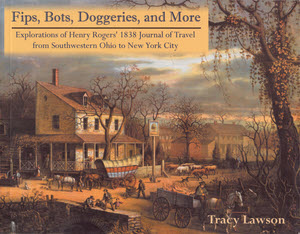
Fips, Bots, Doggeries, and More coverIn 1990, Tracy Lawson’s parents gave her a stack of twenty-one photocopied pages as a Christmas present. Transcribed onto the typewritten pages was the journal of her third great-grandfather’s 1838 trip from a Cincinnati suburb to New York City. In 2012, Lawson is sharing those pages and the experiences they triggered, in Fips, Bots, Doggeries, and More. The book is comprised of two sections. “Section I — 1838” contains the journal along with Lawson’s illuminating comments and notes. “Section II — 2003-2009” contains accounts of the author’s own trips along the route. Both sections are liberally illustrated with black and white photos and drawings.
The writer of the 1838 journal was Henry Rogers, who operated a successful mill in Mount Pleasant (now Mount Healthy), Ohio. Traveling with the 32 year old Henry were his wife and her parents. The miller was both literate and observant and he sets out to record “…all interesting subjects and things that come under my observation”. The journal provides a most interesting look at nineteenth century road-tripping. Henry recorded expenses and named names so we know, for example, that the group spent a night at Winchester’s hotel in Jefferson (now West Jefferson), Ohio and paid $2.50 for the privilege. That $2.50 covered bed and board for four people and two horses. Along the way, he records expenses for tolls, horseshoes, wagon tyres, and “face barbering”, etc..

The travelers picked up the National Road in Jefferson, Ohio, and followed it and its extensions to Hagerstown, Maryland. As a fan of the National Road, I enjoyed reading Henry’s descriptions and found his pre-bridge entry to Wheeling, Virginia, which required a ferry over each of the two Ohio River channels at costs of 25 and 37.5 cents, especially interesting. They passed through Brownsville, Pennsylvania, during construction of the first cast iron bridge in the United States. It doesn’t appear as if Henry realized that the bridge that would soon carry the National Road over Dunlap’s Creek was the first of its kind but he described it as “splendid” while being forced to cross on an “..old narrow bridge that looked as though it would scarcely bear its own weight.” At Hagerstown, the group turned northeast and headed toward Gettysburg, Pennsylvania, then through Abbottstown and York to Lancaster. Roadies will recognize the Gettysburg to Lancaster route as the future path of the Lincoln Highway. From Lancaster, they continued northeast to Trenton, New Jersey, where they spent a little time and made a visit to Philadelphia before moving onto New York City.

The 1838 journal is accompanied by sidebars that explain unfamiliar terms or provide background for certain passages. The journal’s text is cross referenced to a set of end notes. A subsection titled “Expansions” contains short dissertations on subjects that were part of Henry Rogers’ world. These include mills, finances, politics, medicine, fashion, and more.

The author made three trips specifically to experience and research the route her great-great-great-grandparents had followed. Two were driving trips with her daughter and one was a solo fly-and-drive outing. These trips are covered in “Section II” with a blend of genealogy, personal discovery, and general history. It’s fun reading that mirrors Henry’s journal in the sense that both are straight forward reports of some relatively unscripted travel. Henry’s journal held my interest more but there is a good chance that this was because his travel was so much different from today’s. Lawson describes some of the places she stayed and ate much as Henry did and there is even an encounter with a less than savory character that is reminiscent of some of the “scoundrels and topers” encountered by Henry. But Ramada and Cracker Barrel don’t have the same zing as names like Sign of the Bear and Cross Keys Tavern.

Lawson does locate and visit several of the places mentioned in the journal including a few, such as Pennsylvania’s 7 Stars Inn, that are still operating. She also picked up some information at libraries and local historical societies though the trips were not as rich in field research as she had hoped. They were more successful, it seems, on a personal level. She was able to familiarize herself with the path her ancestors traveled and the world they lived in. The mother-daughter time was, as the ads say, priceless.

That personal connection won’t be there for most readers of Fips, Bots, Doggeries, and More, but it is still an entertaining and informative look at a road trip back when thirty-one and a half cents fed a family of four and two horsepower was plenty.

There are some minor errors. Perhaps I’m just sensitized to this sort of thing but referring to US 36 as State Route 36 and saying the Madonna of the Trail Monuments were “erected … on US Route 40 and US Route 66” with no mention of the National Old Trails Road bothered me. Aside from increased knowledge of her own ancestors and the world of 1838, it seems Tracy Lawson gained some insight into heritage road trips. In the Epilogue she says “And if I were driving the National Road again, I would eat at all the restaurants that were once taverns Henry mentioned in his journal!” I hope she makes that happen.

Fips, Bots, Doggeries, and More, Tracy Lawson, The McDonald & Woodward Publishing Company, April 2012, paperback, 9.1 x 7.1 inches, 156 pages, ISBN 978-1935778196
Available through Amazon.

Roads, Women, and Cars

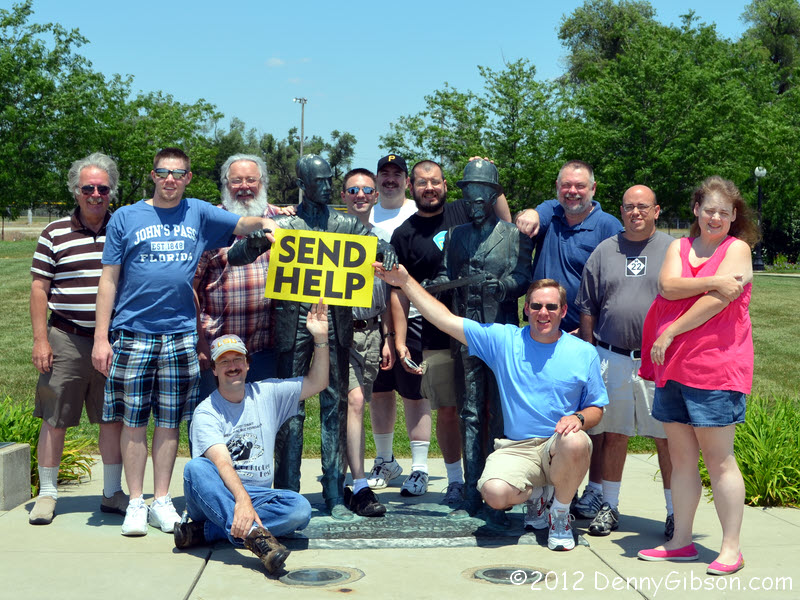
Dayton Road MeetI’d have probably been overpowered if they had all been present at the same time, but, over the course of the weekend, I managed a “road meet”, an all-female concert, and a gathering of killer cars. The photo at the right is of the “road geeks” who participated in the “road meet” which was in Dayton, Ohio.

“Road geeks” are different from “roadies”. “Roadies” are attracted to old roads and the culture around them. “Road geeks” are attracted to newer roads and to their design and construction. Neither definition is perfect and the groups certainly overlap. I’m a mainstream “roadie” and a fringe “road geek”. Most in the picture tend to be the other way ’round.

The difference is illustrated by a couple of events from Saturday. One of the participants is planning a drive to and from California in the near future. It was one of the things we chatted about over lunch. He mentioned that the return trip would be more leisurely and relaxed since they would be covering only 500-600 miles instead of the 700-800 of some of the westbound days. My target range is something like 150-200 miles a day. The other event was the “clinching” of a road. “Clinching” means traveling the full length of a road. I’ve clinched a few; Route 66, Lincoln Highway, US-62. I-675 is a quarter-circle expressway on the southeast edge of Dayton that the whole group “clinched” on Saturday. I believe that’s the first interstate I’ve ever “clinched” and am certain it’s the first I’ve done intentionally.

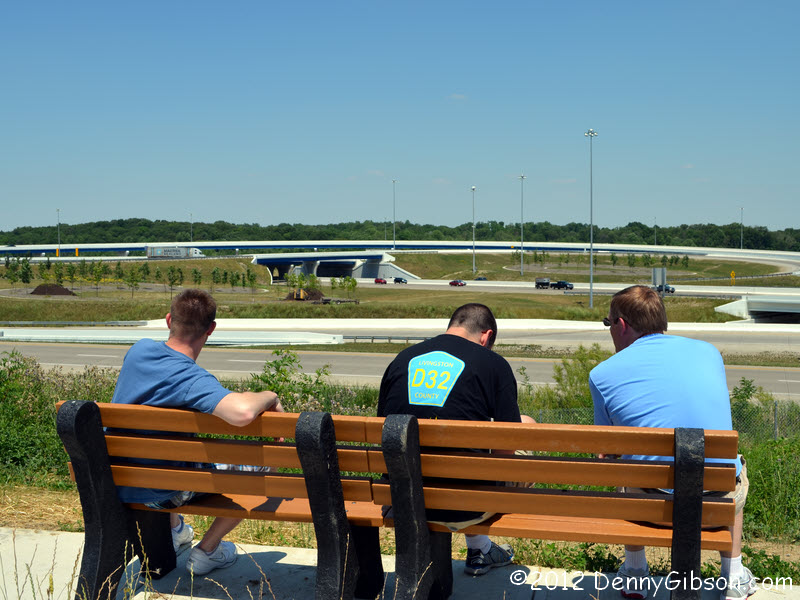
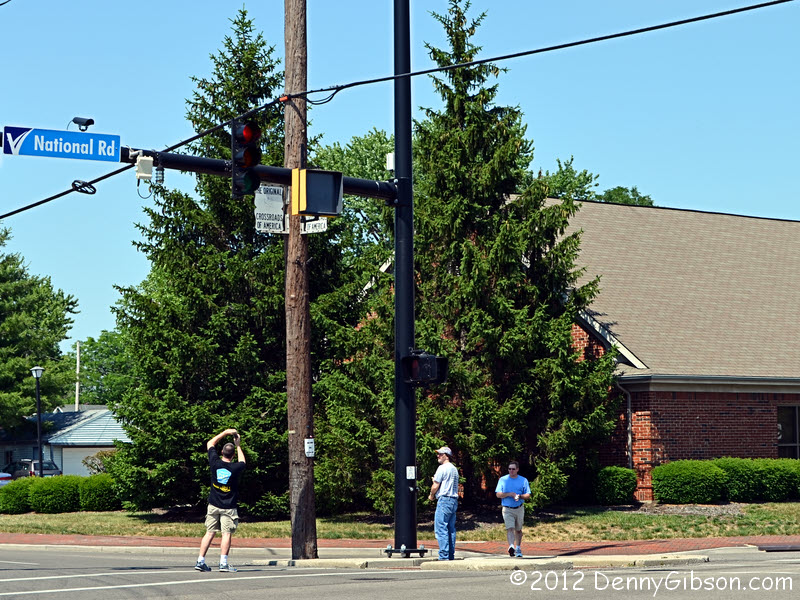
Dayton Road MeetDayton Road MeetFor the most part, though, the differences are a matter of degree and both “roadies” and “road geeks” are very friendly people who enjoy roads and each other. There are certainly some “roadies” who would cringe at the thought of looking over the recently reworked I-70 & I-75 interchange from a park bench but I’ve now seen members of both groups roaming around the former Dixie Highway & National Road intersection with cameras clicking. The sign being photographed is the “Crossroads of America” sign. The title has no shortage of claimants but both of these intersections are legitimate contenders. The DH and the NR, clearly major highways of their day, morphed into US-25 and US-40 respectively. I-75 is the interstate era successor to US-25 and I-70 is the successor to US-40.


EG Kight at Big Song Music HouseFrom Dayton I headed over to Oxford, Ohio, for another show at the Big Song Music House. This one featured “The Georgia Songbird”, EG Kight. As she has for the other shows I’ve attended here, Lisa Biales, who owns Big Song Music House with her husband Marc, opened with a few tunes. Then EG  took the stage and, in the intimate setting that seemed to fit her perfectly, entertained us with both music and conversation that triggered many smiles and several chuckles. Of course, smiles were not restricted to the time between tunes. EGs humor frequently shows up in her songs, too.

EG Kight at Big Song Music HouseEG Kight at Big Song Music HouseLisa is close friends with both acts, Ricky Nye and Ronstadt Generations, that I’ve seen here in the past and she joined each of them a few times during their performances. EG and Lisa are certainly friends and EG produced and contributed to Lisa’s most recent CD, Just Like Honey, but it’s probably the musical similarities that makes their performing together something special. Both have powerful and clear voices, they both know their way around a guitar, and both are capable of delivering both real and lyrical winks. Lisa joined EG several times, both with and without her guitar, and the two powerful voices combined to produce some pow-pow-powerful harmonies.


Ault Park Concours d’EleganceI took an overnight break before heading out to my third event of the weekend, the 35th Ault Park Concours d’Elegance in Cincinnati. In years past, I’ve parked as close as I could (which never seemed to be very close) and trudged up the hills to the Concours. This year a friend and I took advantage of the free offsite parking and shuttle. Not a bit of trudging and the fact that the shuttle buses were air-conditioned was deeply appreciated after we had walked all over the grounds and were heading back to the car.

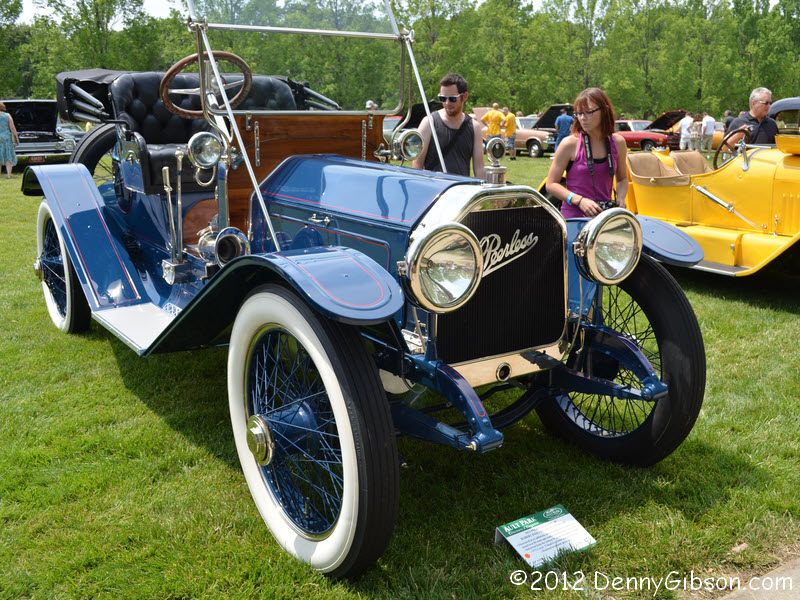
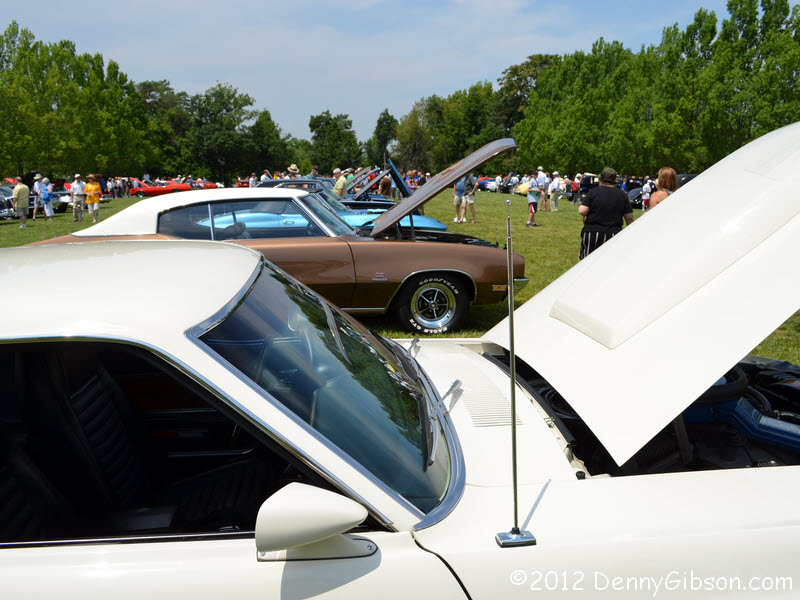
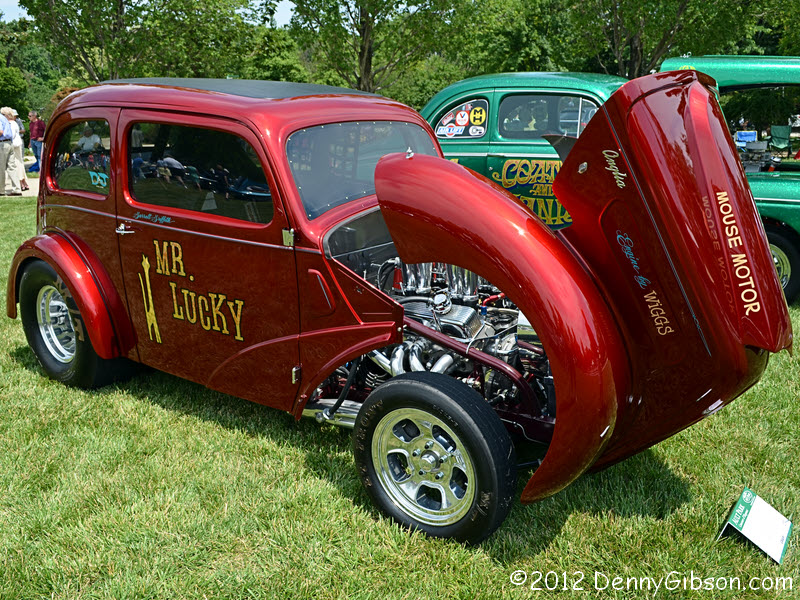
Ault Park Concours d’EleganceAult Park Concours d’EleganceThere were plenty of “normal” concours vehicles like Duesenburgs, and Hudsons and brass era cars such as the 1914 Packard above, but the title of this year’s event was A Century of American Power so there were also some cars on display that you might not immediately think of when you hear Concours d’Elegance. Prominent among these were 1960s & ’70s muscle cars and dragsters from the same period.

Ault Park Concours d’EleganceAult Park Concours d’EleganceAult Park Concours d’Elegance


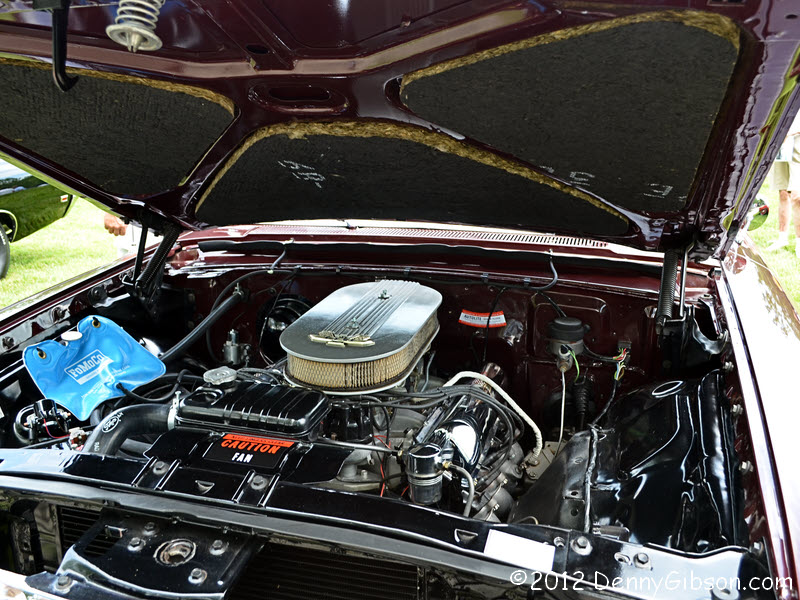
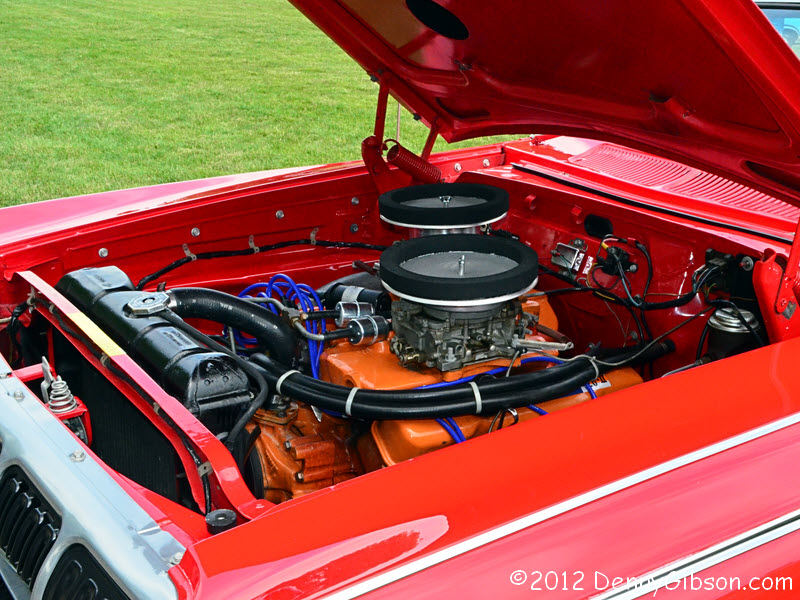
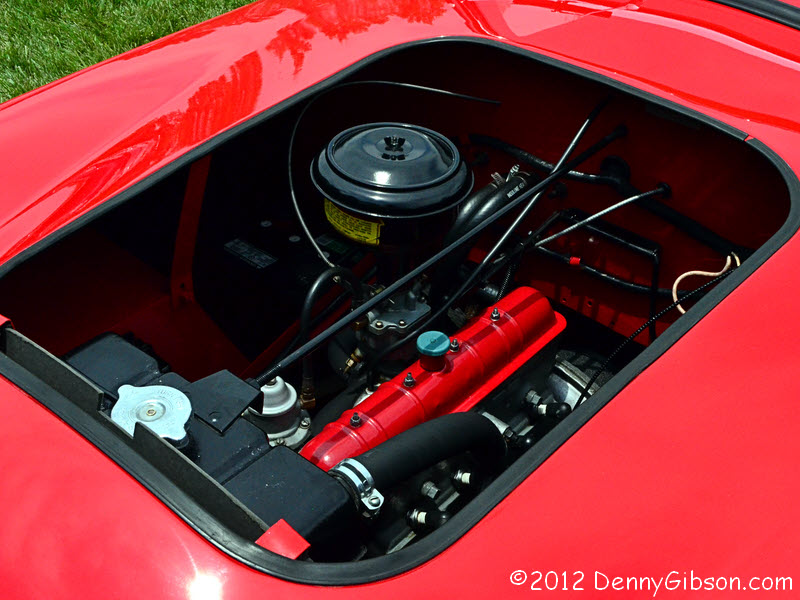
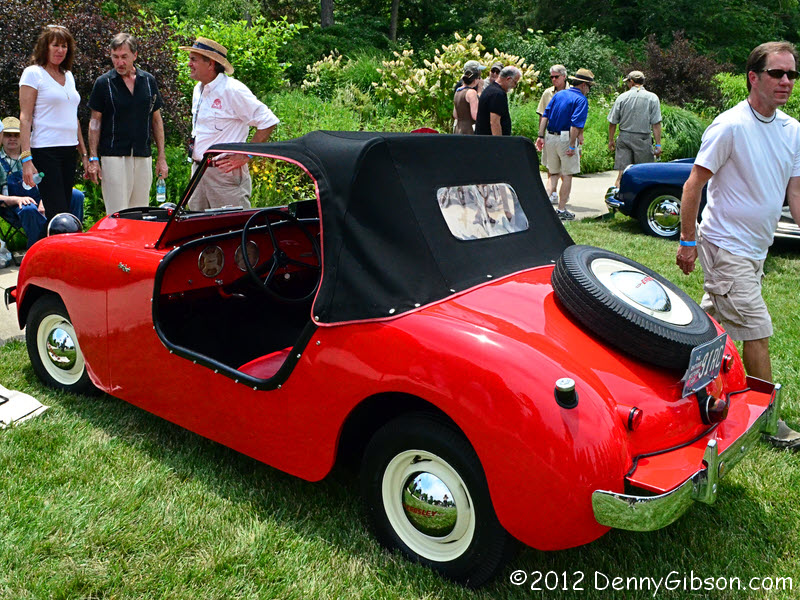
Prime examples of Detroit muscle are the 427 CI 425 HP V8 in a 1964 Ford Galaxy and the 426 CI 425 HP (for insurance purposes) V8 in a 1963 Dodge Polara. That’s Cincinnati muscle in the third picture. The 44 CI 26.5 HP I4 in a 1951 Crosley Hotshot might not seem like a symbol of …American Power but it was a Hotshot that won, through handicapping, the first Sebring Endurance Race in 1950.

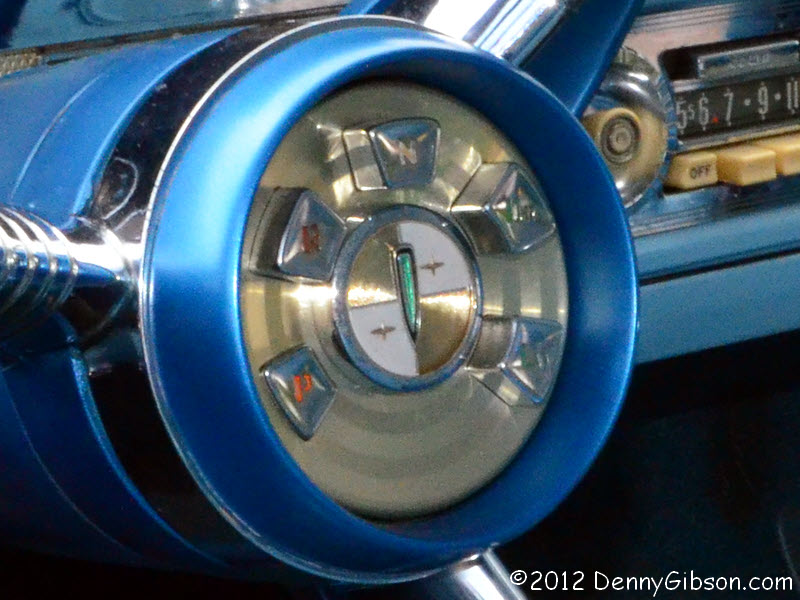
Ault Park Concours d’EleganceThis picture might make you think that texting while driving was encouraged back when the alphabet was smaller but it is actually the push-button transmission controls in a 1958 Edsel Citation.


Carey Murdock Mansion Hill TavernThis is something of a bonus. Carey Murdock is another singer-songwriter I learned of through Josh Hisle. He lives in Nashville, Tennessee. I came close to connecting with him there last Christmas but missed and actually met him for the first time tonight as we both walked across the street to Mansion Hill Tavern. Carey had prearranged a stop at Mansion Hill as a “featured guest” which essentially means a half hour slot at a regularly scheduled blues jam with lots of musicians waiting to form groups and get some stage time. This is obviously not the best showcase situation but Carey handled it well and the crowd seemed to like him. I definitely did.

American Sign Museum Reopening

American Sign MuseumMark your calendars. On June 23, the American Sign Museum begins full five-days-a-week operation at its new bigger and taller location just a few blocks from Camp Washington Chili. There were previews on Friday & Saturday and I assure you that seeing an entire Mail Pouch barn side in a museum is not the same as seeing pictures. I’ve created an Oddment page for those previews and this blog entry simply points to that page and provides a place for comments.

This way to the Oddment.