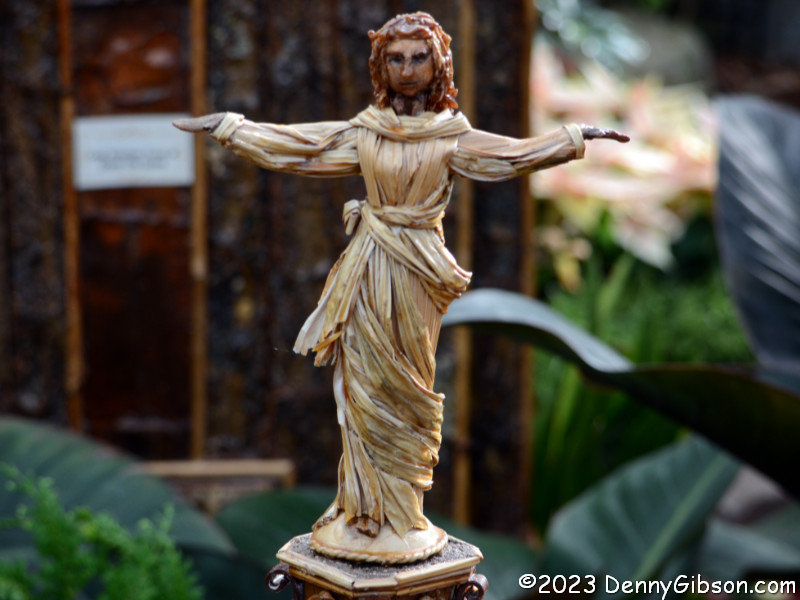
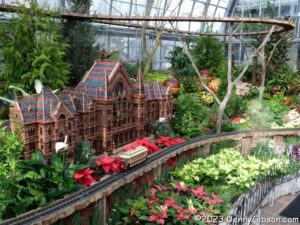
 On Thursday, I got a double dose of holiday hoopla. The first dose was administered at Krohn Conservatory in Cincinnati’s Eden Park. The second came at Thomas More Stadium in Florence, KY.
This year’s holiday show at Krohn is called “Golden Days of Yule”. That name, coupled with my improved understanding of Yule (the subject of next week’s post), was one reason I wanted to visit Krohn this month. Another was that I realized it had been ten years since I’d seen the holiday display at the conservatory. All of my visits since 2013 were to see butterflies.
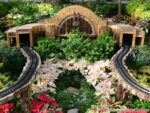
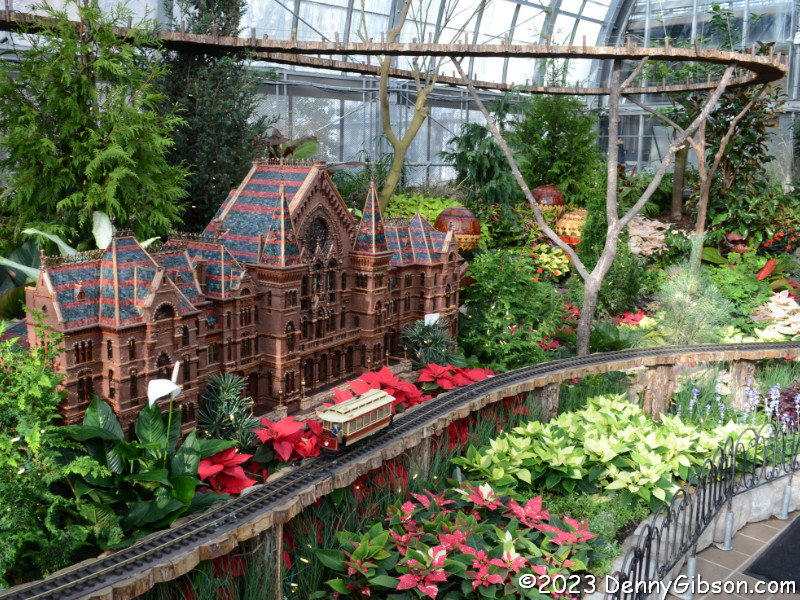
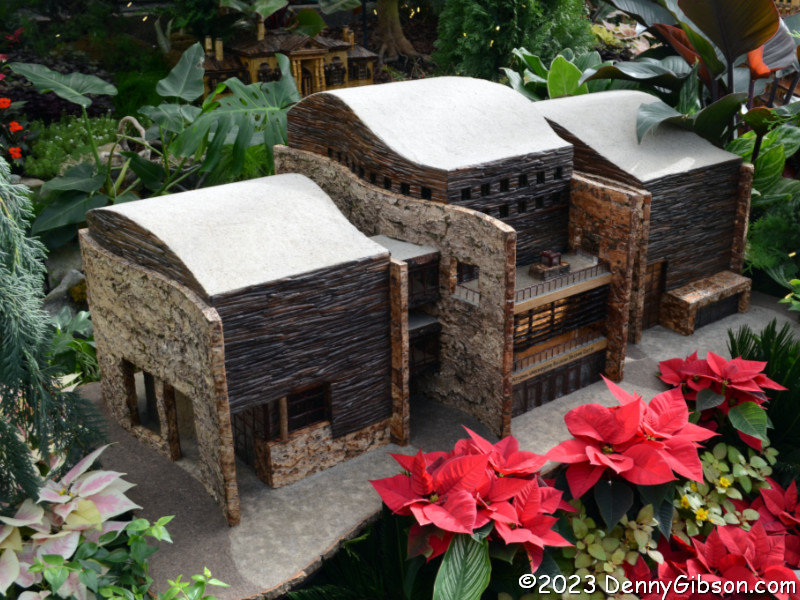
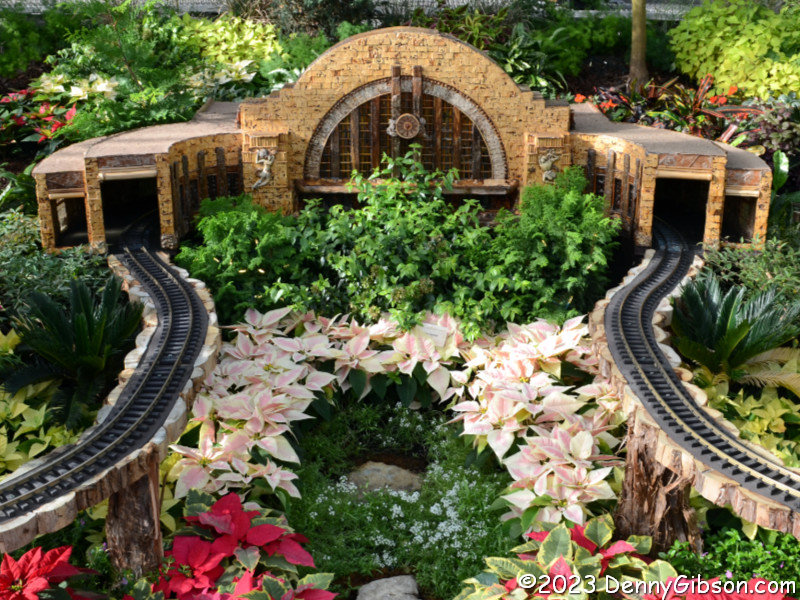
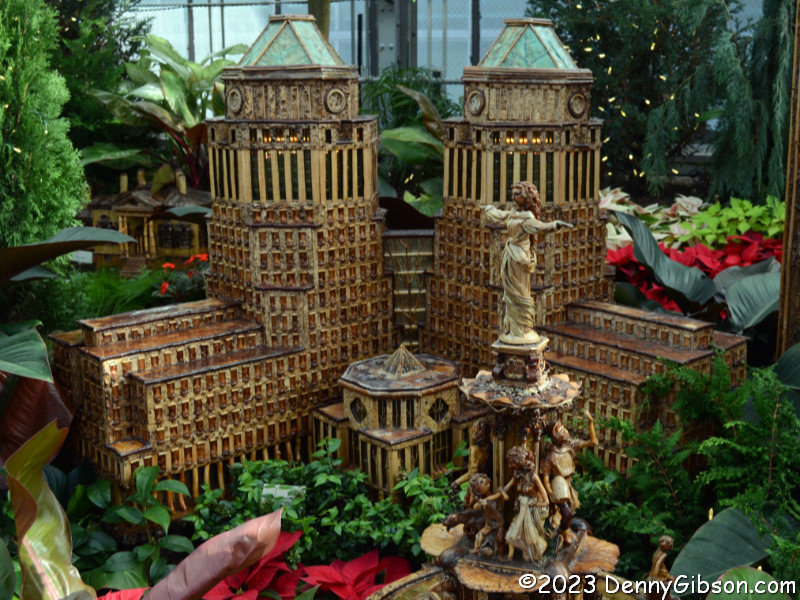
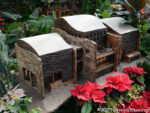 “Golden Days of Yule”, like previous holiday shows at Krohn, has lots of Cincinnati landmarks such as Music Hall in the opening photograph. All are made of locally sourced plant material and most return year after year. New this year is the National Underground Railroad Freedom Center pictured at left.
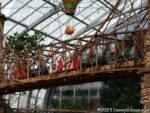
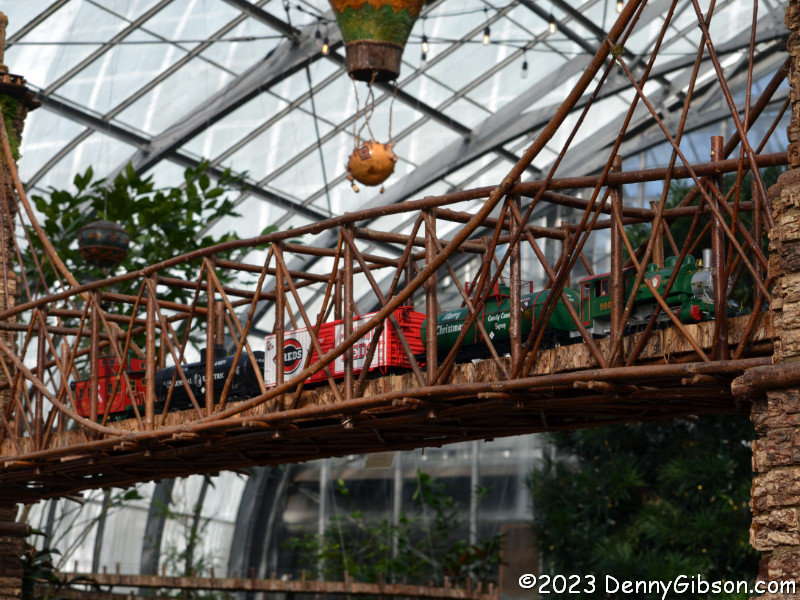
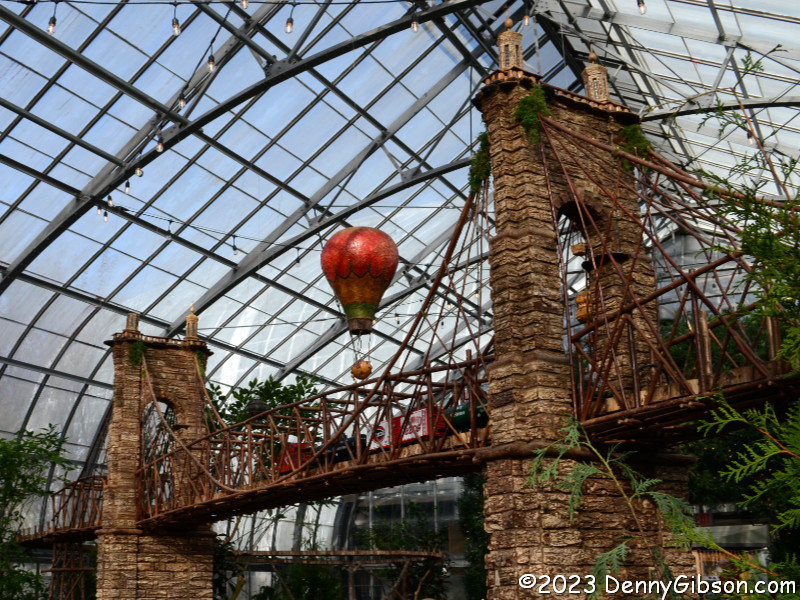
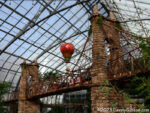 Numerous model trains travel among the landmarks and the conservatory’s normal display of plants. Even though no train has ever crossed the real John A. Roebling Suspension Bridge, this version has a double set of tracks so that a train with a Cincinnati Reds boxcar can cross it in both directions.
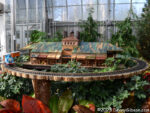
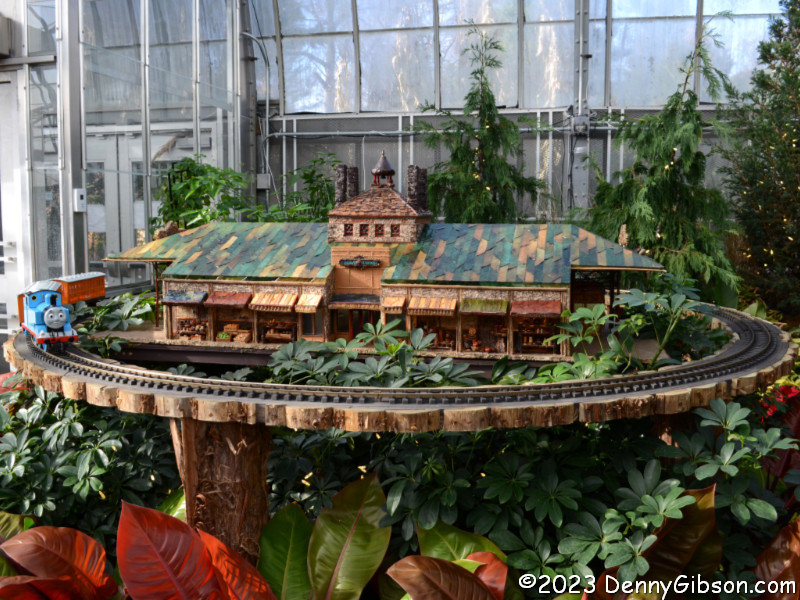
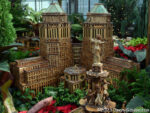 Other returning favorites include Union Terminal, now the Cincinnati Museum Center, and Findlay Market, which is encircled by Thomas the Train. Procter & Gamble’s Twin Towers and the Tyler Davidson Fountain, featuring The Genius of Water, appear together in the third photo although the relationship between the two is nowhere near accurate in either size or location.
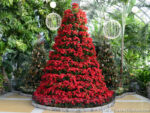
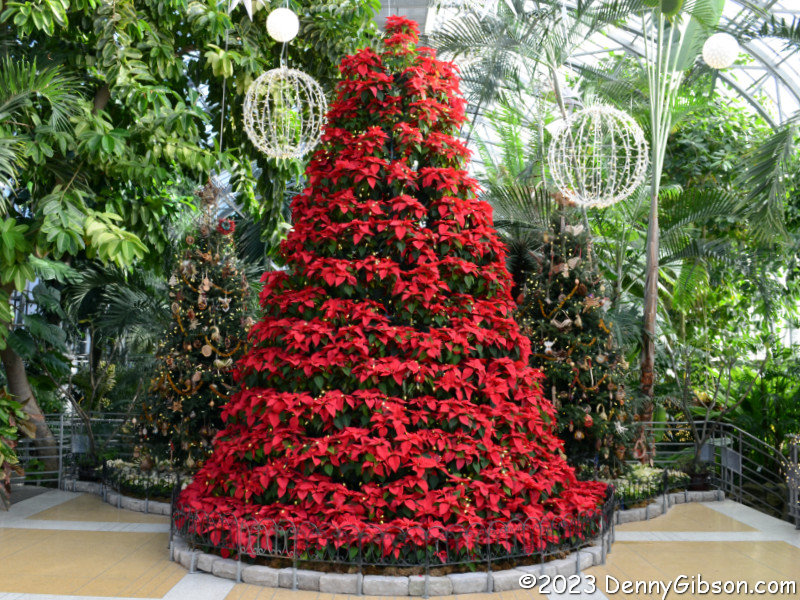
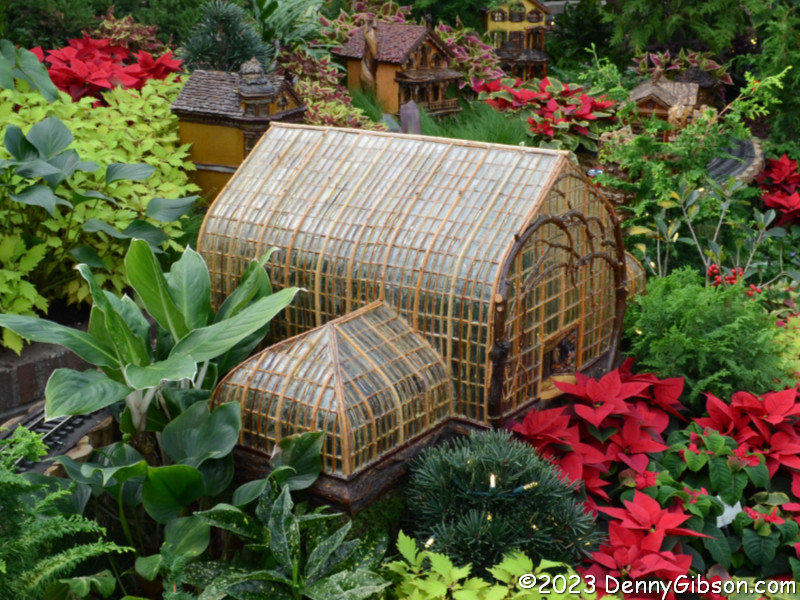
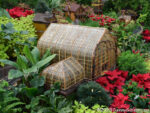 It somehow makes sense that the Krohn Conservatory contains a model of the Krohn Conservatory and there might be nothing more natural for a conservatory to hold at Christmas time than a giant poinsettia tree. “Golden Days of Yule” runs through January 7 with live music on weekends.
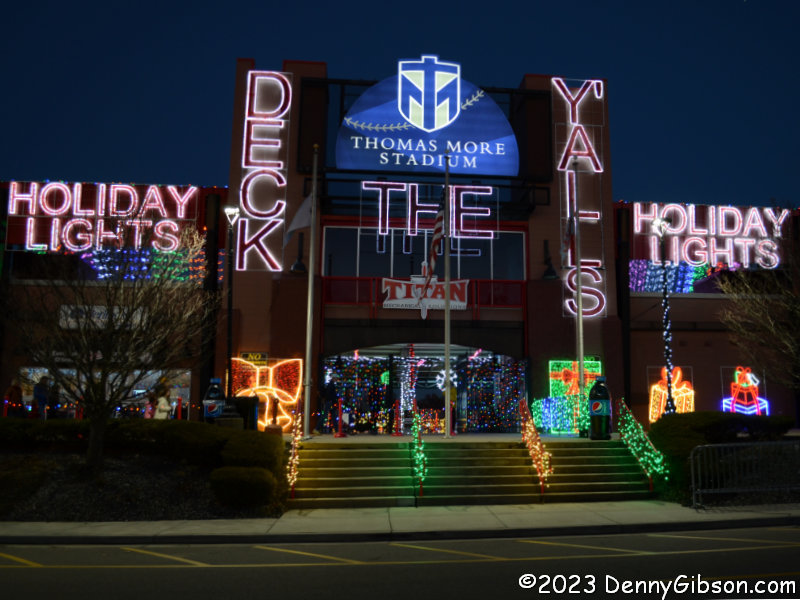
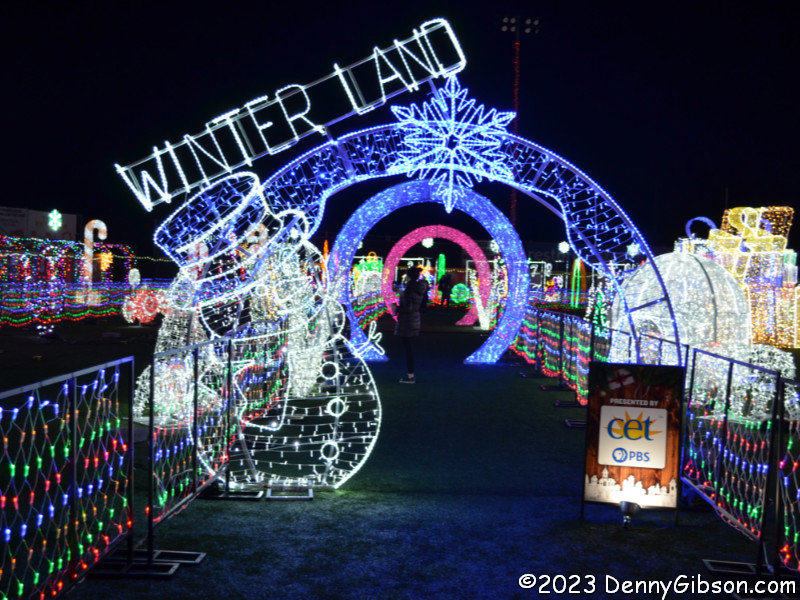
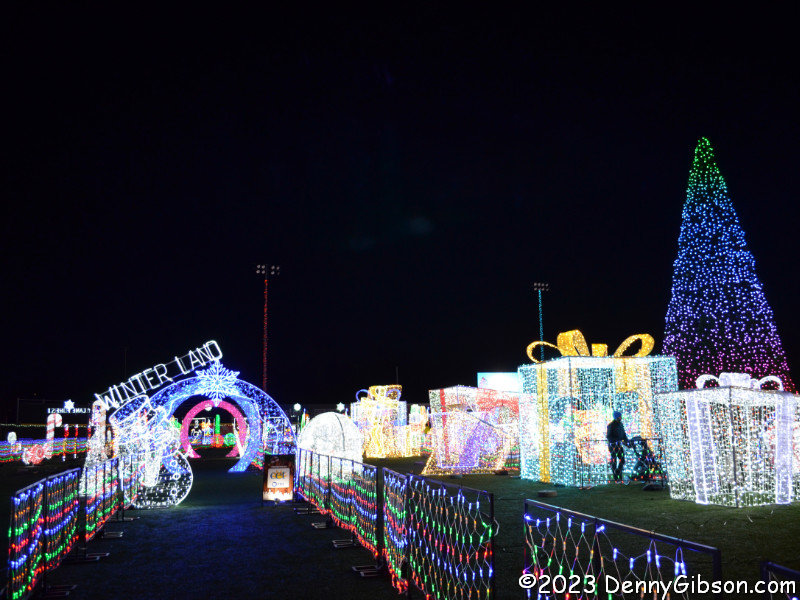
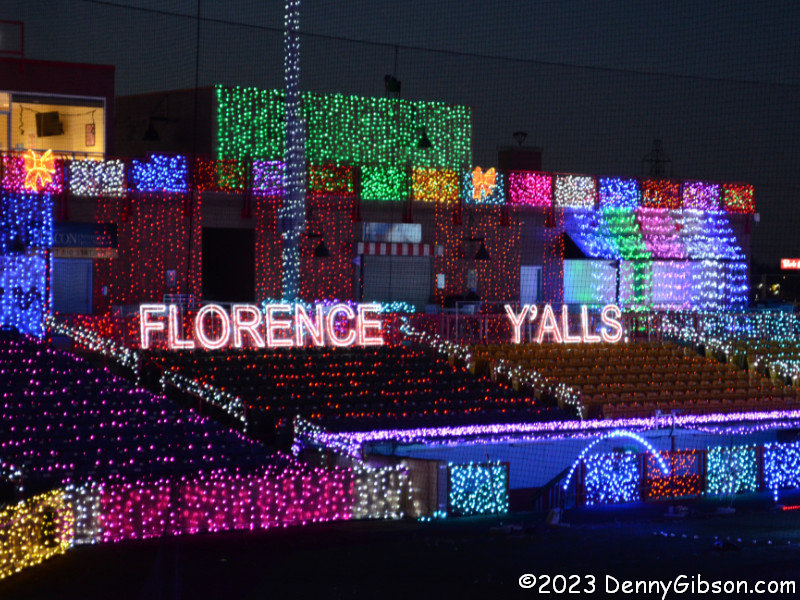
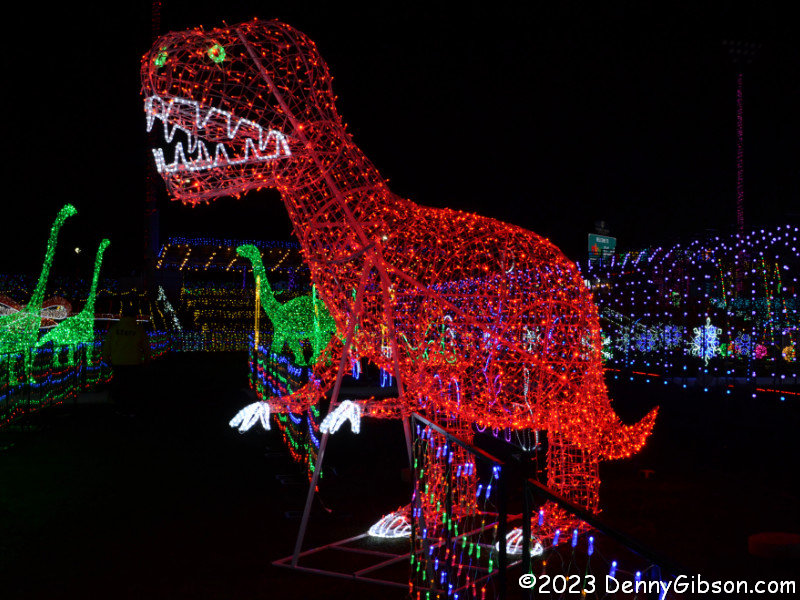
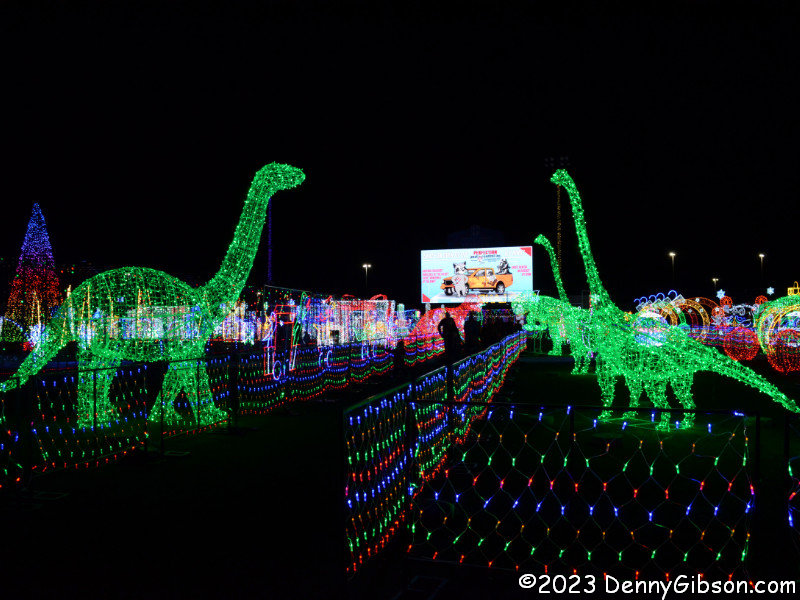
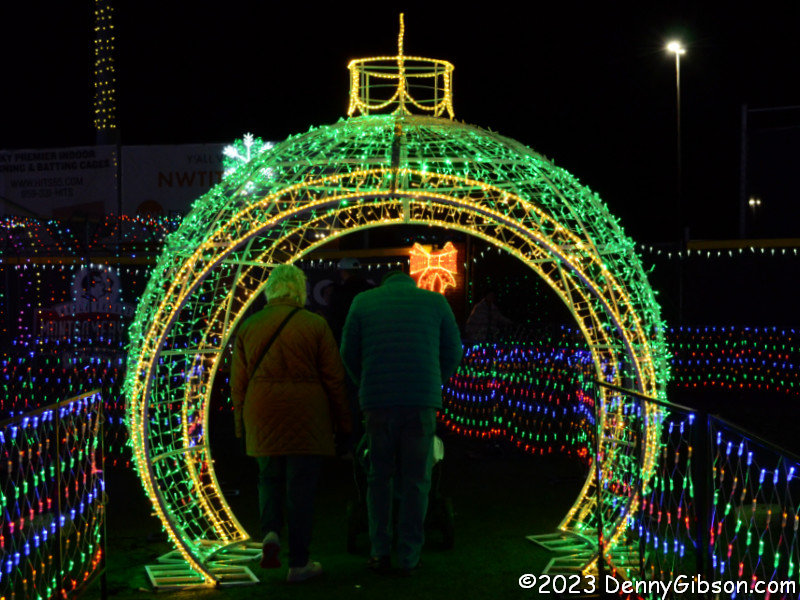
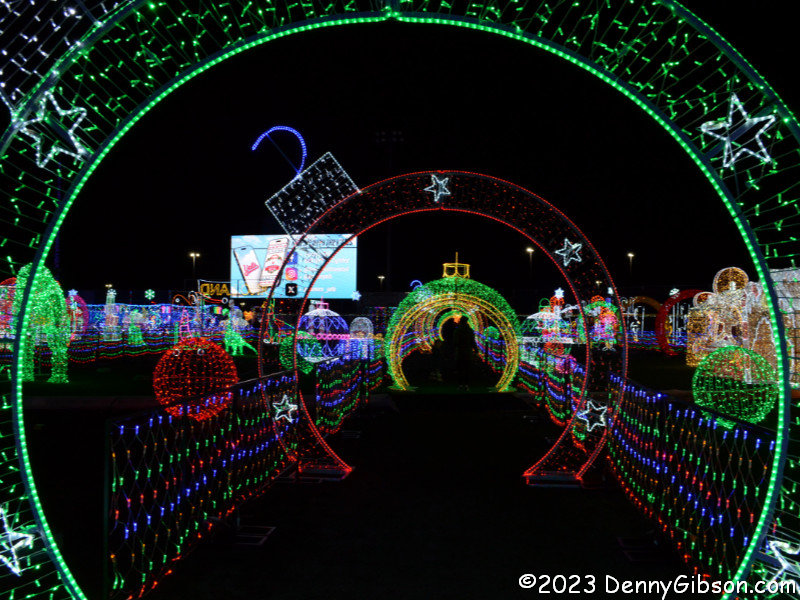
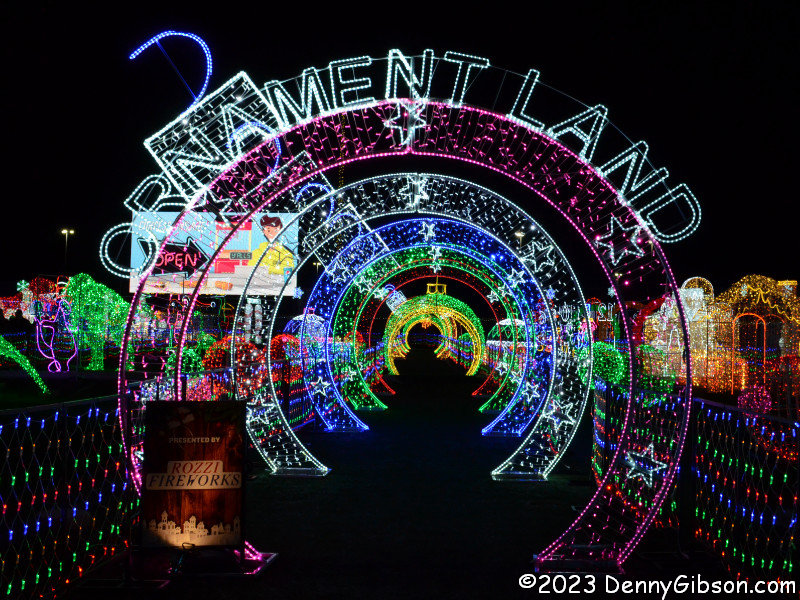
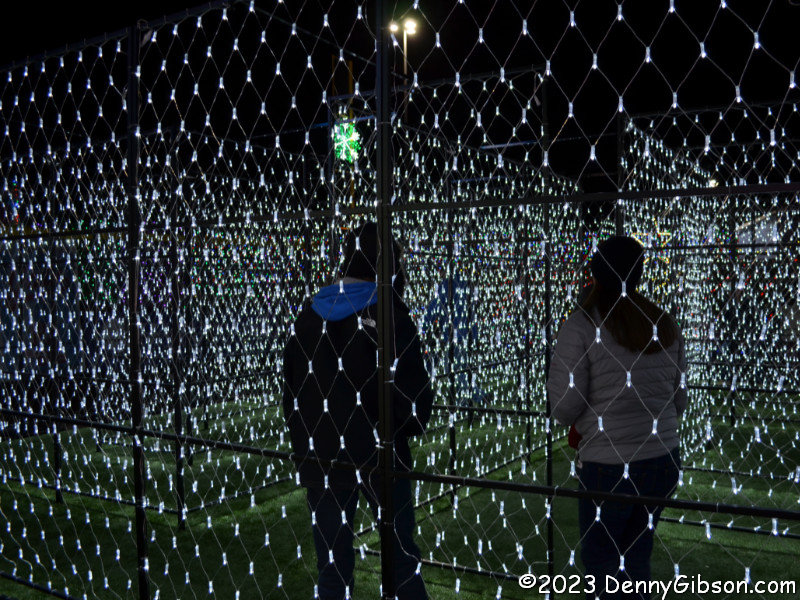
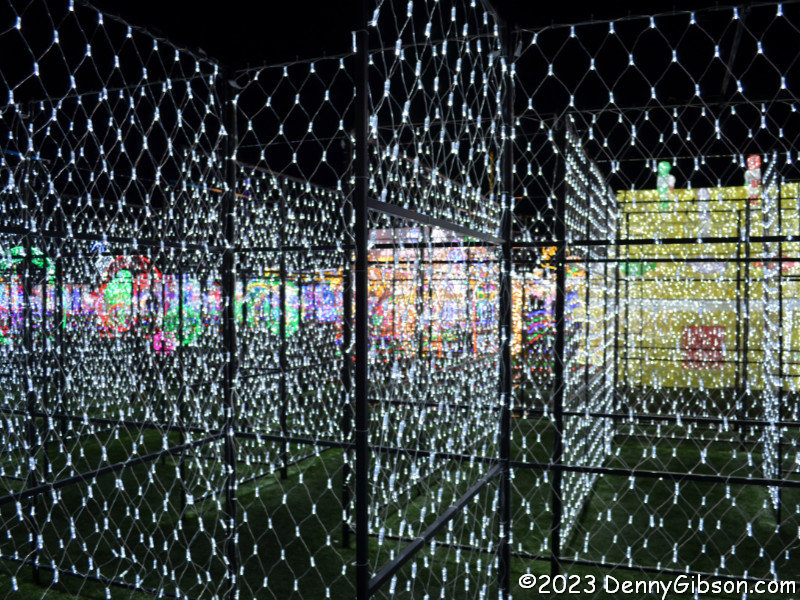
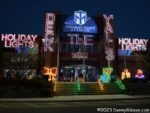 Thomas More Stadium, on the other side of the Ohio River, is home to the Florence Y’alls Class A baseball team. Winters here are way too cold for baseball so, for the second year in a row, a skating rink and 2.5 million lights have been moved in for Deck the Y’alls.
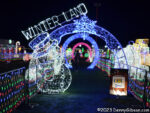
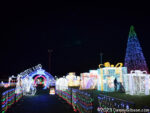
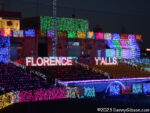 There are lights everywhere both inside and outside the stadium. They are impressive to look at from just about anywhere but following a path through the displays at field level is the main attraction.
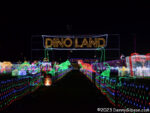
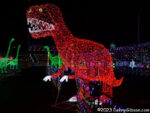
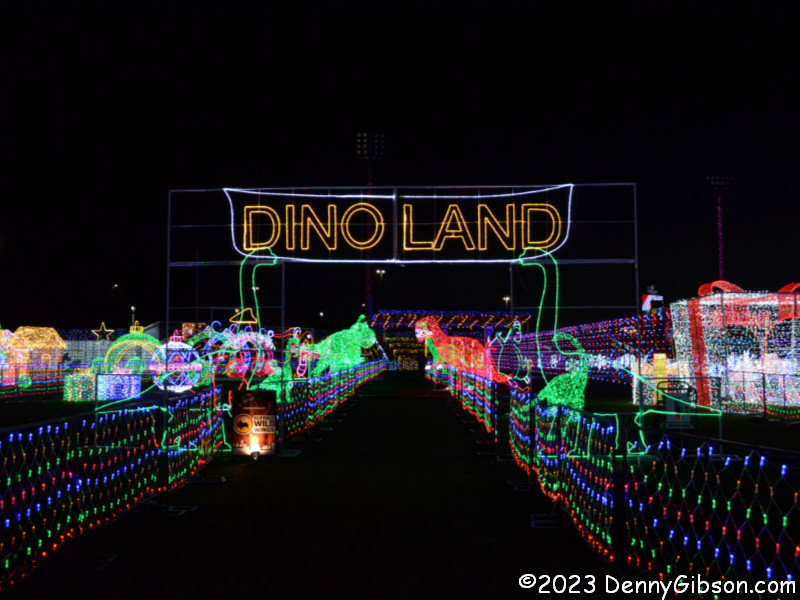
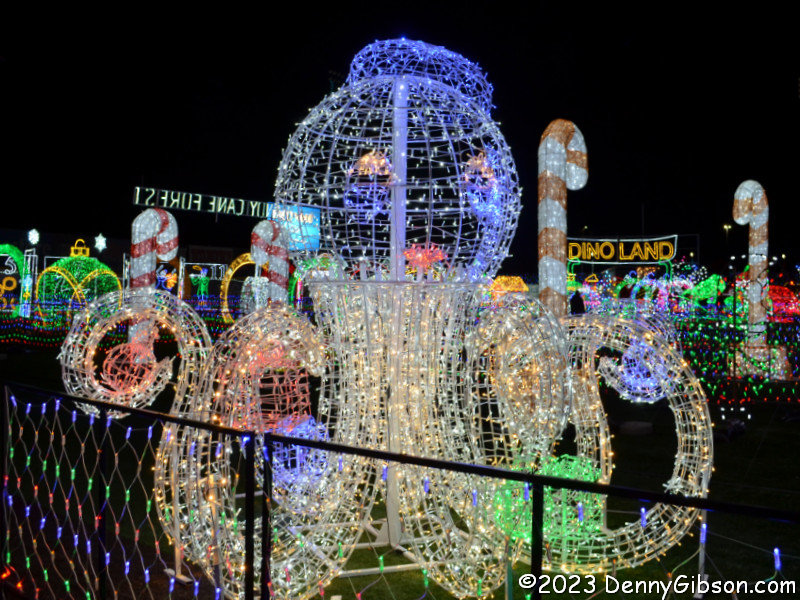
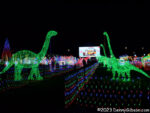 A family of four was near me during the early part of my walk and the youngest child asked her mother to read the lighted signs that marked each section. As soon as she heard “Dinoland”, she announced that she was not going in there. I’ve a hunch that it was what she saw and not what she heard that prompted her reluctance. The family hung back at the arch but after a few minutes, I saw them move ahead slowly. Before long they were back at their normal pace. Up close, dinosaurs made of electric lights just aren’t that scary, it seems.
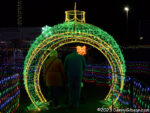
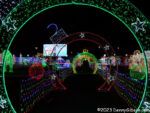
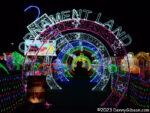 And “Ornament Land” just wasn’t scary at all.
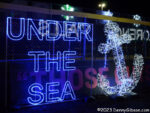
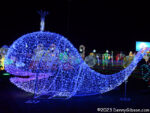
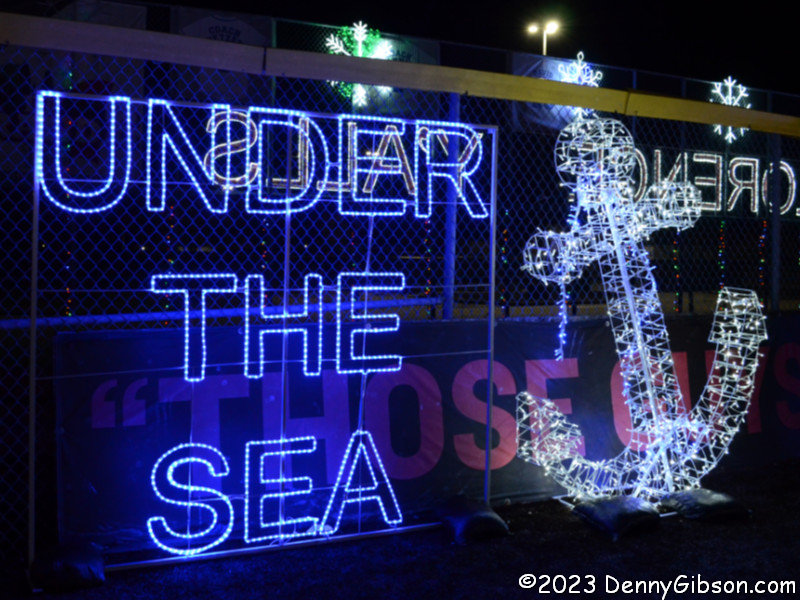
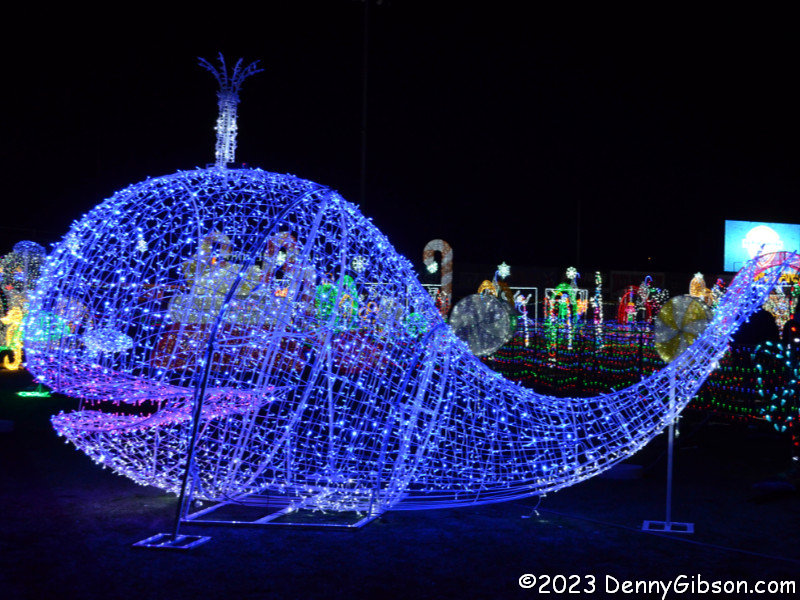
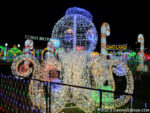 Apparently, neither was “Under the Sea” although I lost track of the family somewhere around The Blue Whale of Florence.
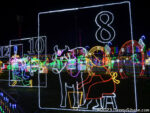
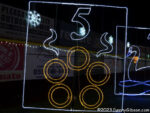
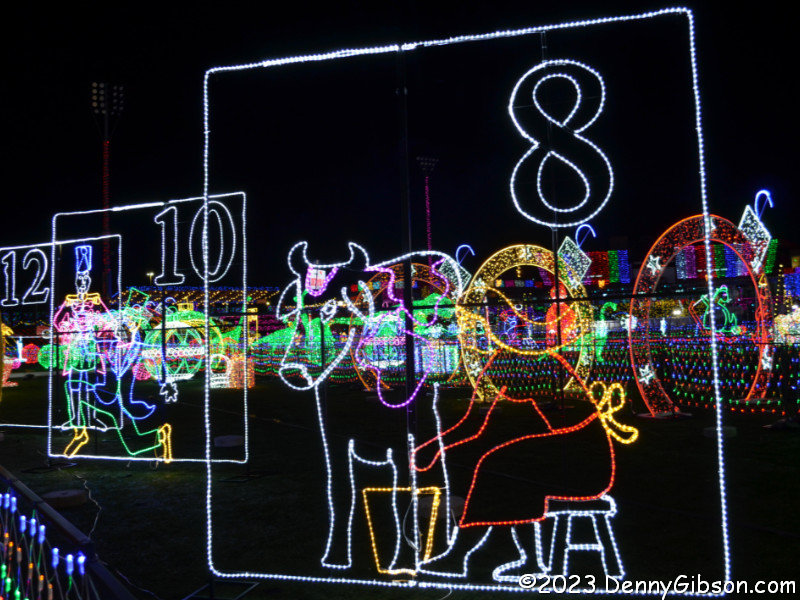
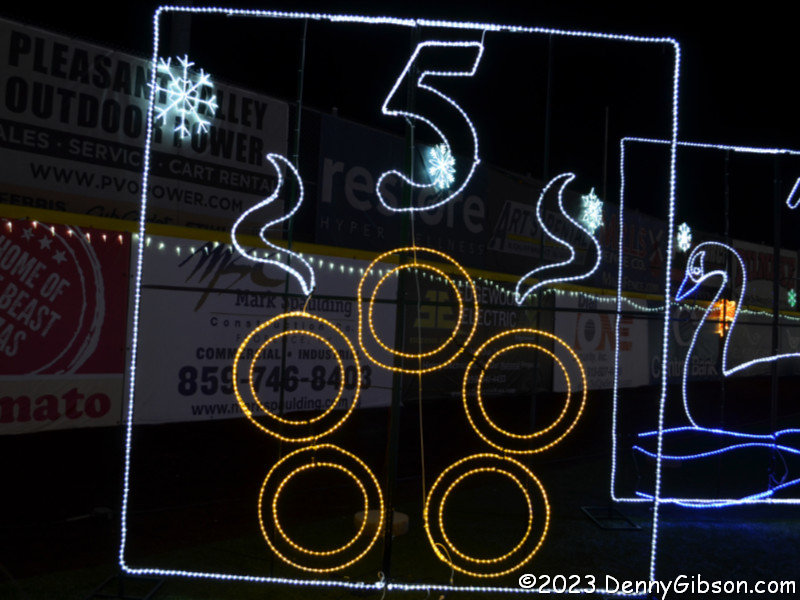
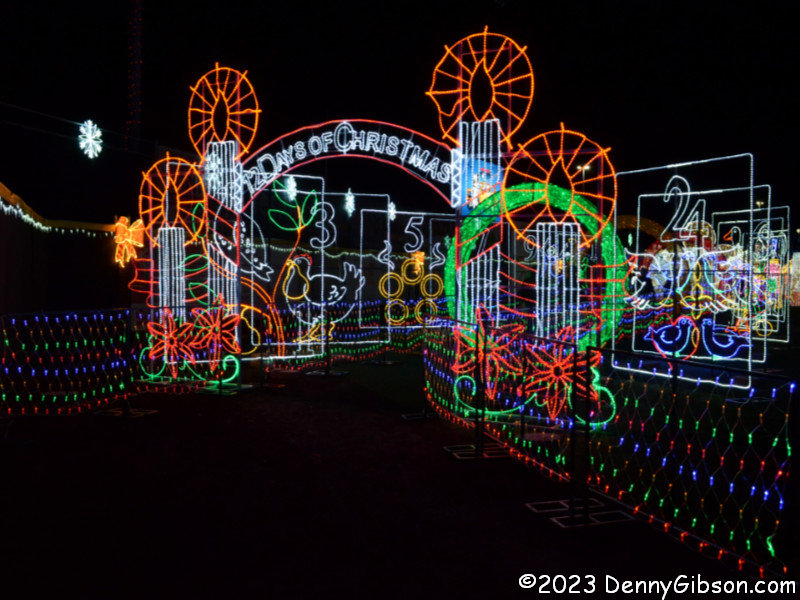
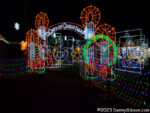 Here’s a sampling of the “12 Days of Christmas”. In reality, this whole post is just a sampling. There’s a lot more here than what I’ve shown.
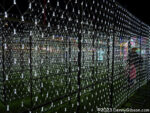
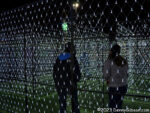
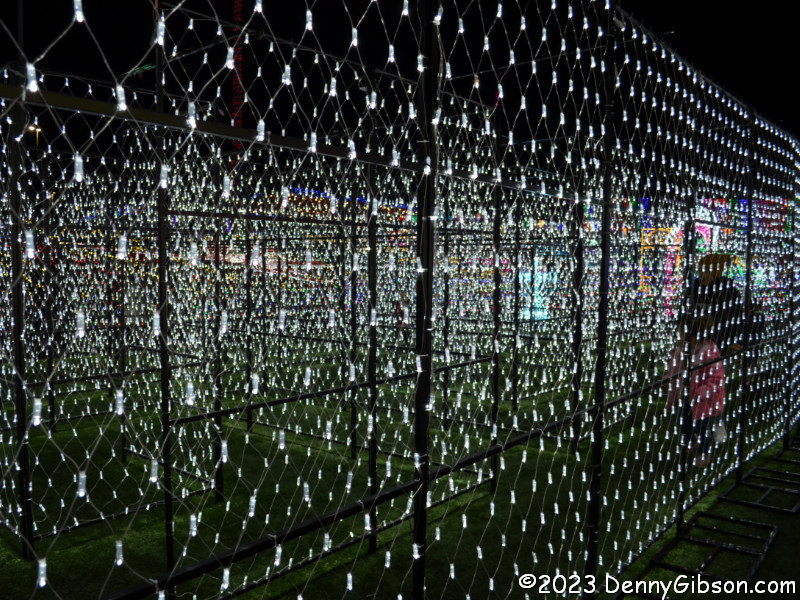
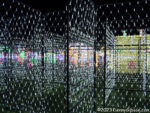 This is the exit. I hung back to take some pictures — and watch and learn from the people in front of me — then passed through the maze and headed for a cup of hot coffee.
 As I sipped that coffee, I captured a short overview video. Deck the Y’alls runs through New Year’s Day with fireworks on New Year’s Eve.
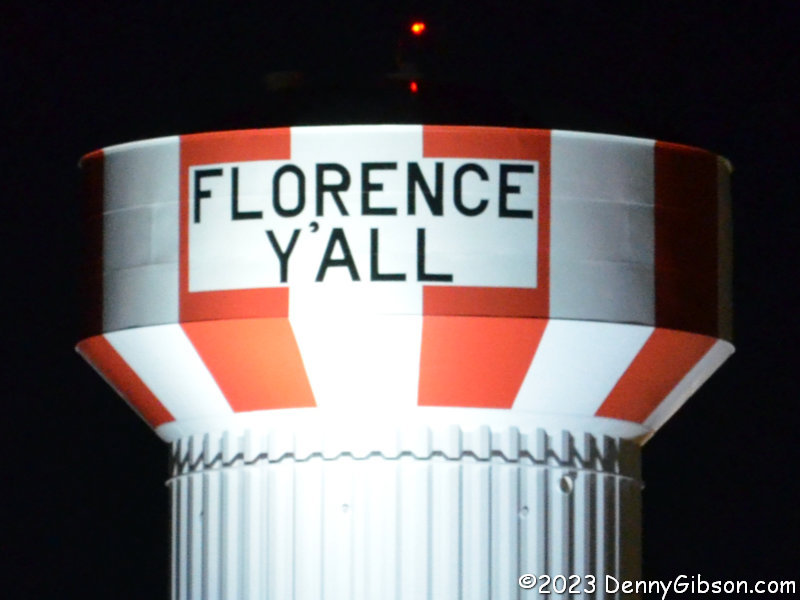
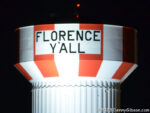 For anyone wondering about the team name, it comes from a water tower. The short story is that while Florence Mall was in development, a water tower advertising it was erected nearby. Because the mall did not yet actually exist, that led to some legal issues which were resolved by hastily converting the “M” to “Y'”. This was supposed to be temporary but proved so popular that it remains today even though the mall has now been in operation for decades. A fuller version of the story is here. The team was founded as the Florence Freedom in 2004 but changed its name to Y’alls in 2020.
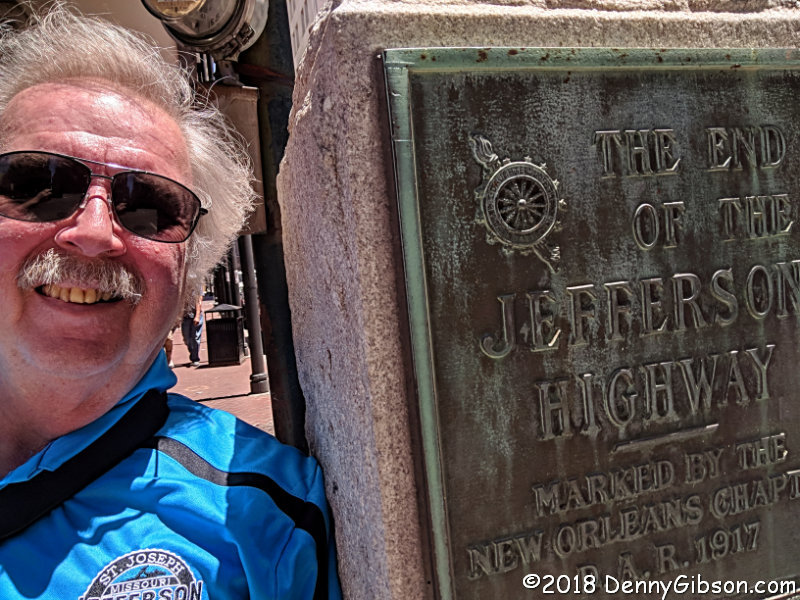 This picture is from my 2018 Jefferson Highway Association Conference trip. It shows me standing beside the JH terminus marker in New Orleans following a full-length drive of the highway that resulted in the book Jefferson Highway All the Way. The conference named in the trip title took place in St. Joseph, Missouri, near the midpoint of the highway, and was the anchor point for scheduling the trip.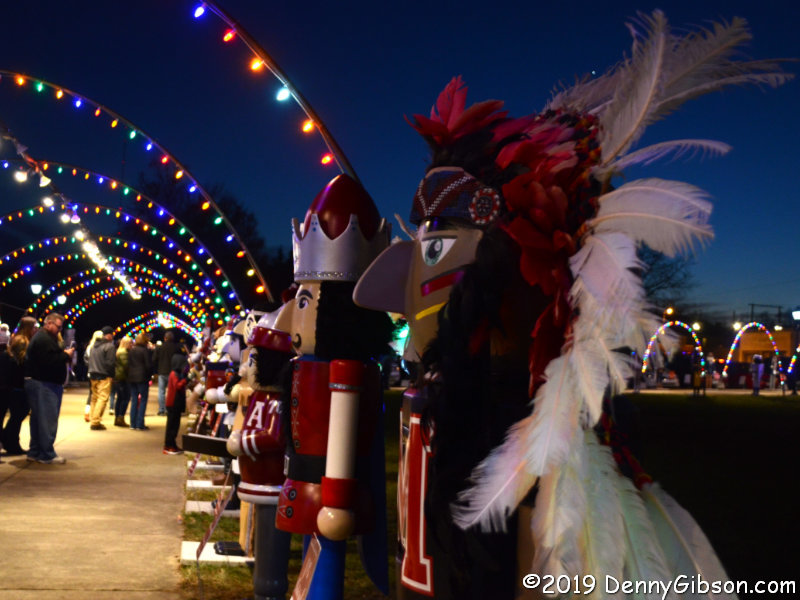
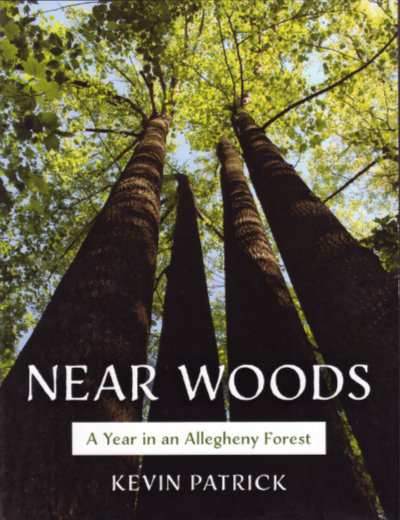 The year Kevin Patrick spent “connecting with White’s Woods” may have been, as a blurb on the back of Near Woods says “In the spirit of Walden” but the resulting products are not the same. Thoreau’s time at Walden Pond was an experiment in self-sufficiency and the book he wrote some years later documented its success. His observations of nature and seasons were generally used to support some aspect of his minimalist lifestyle and not to educate the reader. I suppose some of Patrick’s observations are also made to reinforce some philosophical viewpoint, but he is a lot more subtle and he helps the reader share the raw observation as near as possible. Exactly one-half of this book’s pages are filled with some excellent photographs.
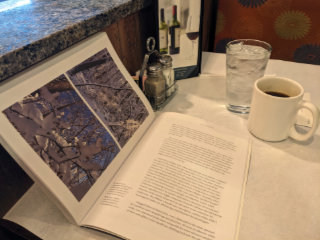 Of course, Near Woods is better looking than either Walden or PrairieErth. To some degree, that’s just something that color photographs do for a book. But these high-quality and well-chosen photos do more than make the book pretty. They are the “raw observations” mentioned in the first paragraph of this article. The book’s design incorporates the photos wonderfully and helps make reading the book a pleasure. Every lefthand page contains one or more photographs. Righthand pages are all text. Captions are in the extra wide inner margins of the text pages. It didn’t take me terribly long to recognize the beauty of this. Every page turn resulted in a new image that could be studied as quickly or slowly as desired before tackling a new page of text.
 A ten-year-old blog post recently appeared in this site’s traffic statistics. The post told about the last issue of a publication devoted to a veteran’s organization to which my father had belonged. It isn’t terribly unusual for ten-year-old posts to get hits but I really can’t remember the last time this particular post appeared. The hit prompted me to reread the post and even update it a little. In the process, I was also prompted to let my thoughts wander down several of the many paths uncovered by my reading. Whoever clicked on the search result that took them to this old post missed Veterans/Armistice Day by a couple of weeks and this post misses it by even more but my mind — and maybe yours too — is still in a slightly reflective mood. So this week’s post consists of just this paragraph and a link to that ten-year-old post. Reflect as much or as little as pleases you: