I Care Less About How You Vote Than If. (2018)

This post has appeared four times under the title “I Care Not How. Only If.” and each appearance after the first started off with a defense of that title. The defense was basically, “Yeah, I do care how you vote but, even if you’re doing it wrong, I think you should.” This year I changed the title so I can skip the defense. Next year I hope to skip the explanation, too.

On January 30, the day of President Trump’s first State of the Union speech, NPR aired a Mara Liasson article entitled “The State Of Our Politics Is Divided, Mistrustful And Engaged“. The text of the article simplified this to “tribal” and “engaged” which I think would have been a better title. Those two words registered with me as I listened and they’ve stuck with me ever since. One’s bad and one’s good. One negative and the other positive. I’d long been painfully aware of the tribalism which pushed Liasson to note that “More than ever before voters and politicians seem to be taking sides not according to issues or principles or ideology but according to their political tribe.” I was much less aware of the increased engagement she saw but I have noted, with great hope, some since then. Some analysts, in fact, predict record voter turnout for a midterm election. Liasson ended her article with, “Whether you’re a woman or from an immigrant community running for the first time or a white working-class Trump supporter who voted for the first time two years ago, this renewed sense of civic responsibility is the first step to making the state of our politics less broken.” I like the way she thinks. I hope she’s right.


yvyvWe fought a war to get this country going then gave every land owning white male above the age of twenty-one the right to vote. A little more than four score years later, we fought a war with ourselves that cleared the way for non-whites to vote. Several decades of loud, disruptive, and sometimes dangerous behavior brought the granting of that same right to non-males a half-century later, and another half century saw the voting age lowered to eighteen after a decade or so of protests and demonstrations.

dftv1Of course, putting something in a constitution does not automatically make it a practice throughout the land and I am painfully aware that resistance followed each of those changes and that efforts to make voting extremely difficult for “the other side” are ongoing today. I don’t want to ignore partisan obstructions and system flaws but neither do I want to get hung up on them. I meant my first paragraph to be a reminder that a hell of a lot of effort, property, and lives have gone into providing an opportunity to vote to a hell of a lot of people. Far too many of those opportunities go unused.

There are so many ways to slice and dice the numbers that producing a fair and accurate measure of voter turn out may not be possible. A Wikipedia article on the subject includes a table of voter turnout in a number of countries for the period 1960-1995. The United States is at the bottom. The numbers are more than twenty years old and open to interpretation so maybe we’re doing better now or maybe we shouldn’t have been dead last even then. But even if you want to think we are better than that, being anywhere near the bottom of the list and having something in the vicinity of 50% turnout is embarrassing… and frightening.

dftv2In the original title I claimed to not care how anyone votes. That was never entirely true, of course. I have my favorite candidates and issues. I’ll be disappointed in anyone who votes differently than I do but not nearly as disappointed as I’ll be in anyone who doesn’t vote at all. I’m reminded of parents working on getting their kids to clean their plates with lines like, “There are hungry children in China who would love to have your green beans.” I’m not sure what the demand for leftover beans is in Beijing these days but I’m pretty sure some folks there would like to have our access to ballots and voting booths.

Trip Peek #76
Trip #52
Blues, Books, & Battles

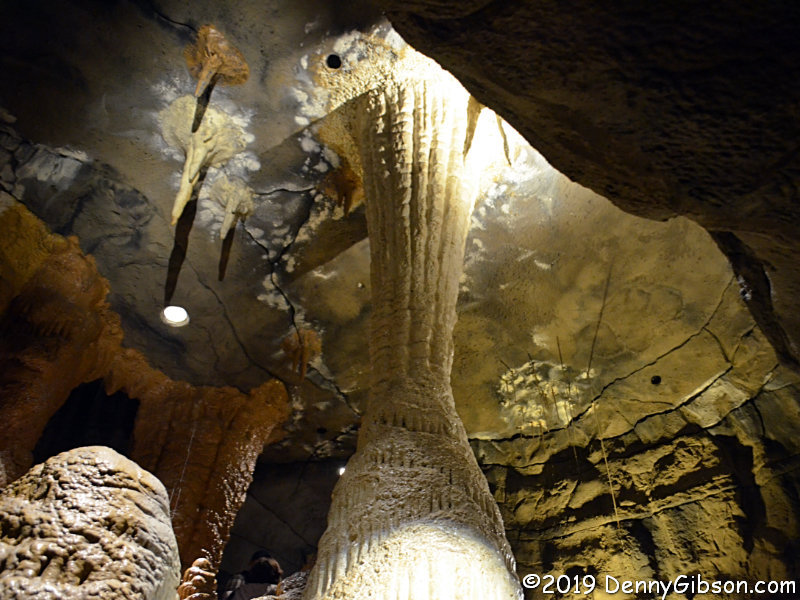
This picture is from my 2007 Blues, Books, & Battles trip. It was, as indicated by the title, a three parter. The blues part was a Patrick Sweany show at The Purple Fiddle in Thomas, West Virginia. I got there on the rather scenic US-50. Following a night in Thomas, I headed to Pittsburgh, Pennsylvania, for the book part. The target was a promotional event for a new book, The Lincoln Highway: Coast to Coast from Times Square to the Golden Gate, from Michael Wallis and Michael Williamson. I’ve met Wallis several times before and since but this was my first and only time meeting Williamson. Although I enjoyed that and wandering through the Heinz History Center, the real highlight was meeting Brian Butko and Bernie Queneau for the first time. I did not charge into battle for part three; I visited the Soldiers and Sailors Memorial where lots of military history is on display. Of particular interest and the reason for my visit, was a section devoted to the 78th Infantry Division. That’s the unit my dad was with in World War II.


Trip Peeks are short articles published when my world is too busy or too boring for a current events piece to be completed in time for the Sunday posting. In addition to a photo thumbnail from a completed road trip, each Peek includes a brief description of that photo plus links to the full sized photo and the associated trip journal.

Only Rock and Roll

In getting in position for my personalized three ring rock and roll circus, I passed through a town whose name has a rock and roll connection even if it’s actually just a stand-in for the place Credence Clearwater Revival made infamous. The circus starts with the Rock and Roll Hall of Fame on Friday, then The Tubes on Saturday. On Monday, Little Steven and the Disciples of Soul will be in ring #3, and I predict a little Lincoln Highway and other stuff in between.

This entry is to let blog only subscribers now about the trip and to provide a place for comments. The journal is here.

The Growing Season

In 1968, it took a full seven games to determine a MLB World Series champion. The seventh game, which saw the Tigers top the Cardinals, was played on October 10.

Last night, just a little before 11:30, the teams participating in the 2018 World Series were finally determined. It will be the American League Red Sox versus the National League Dodgers in the best of seven contest that starts next Tuesday. If somebody sweeps the series in four games, it will be over on Saturday. If all seven games are required, it won’t be over until the following Wednesday. That’s Wednesday, October 31. Halloween. The last day of the month. The game is scheduled to start at 8:09 ET so it’s conceivable that extra innings could push it past midnight and into November. That’s exactly what occurred in game #4 in 2001. That series was delayed due to the September 11 terrorist attacks. The game went to ten innings and ended at 12:04 AM November 1 marking the first time Major League Baseball was played in November. The series went to seven games meaning three were played entirely in the eleventh month of the year. In fact, between that first extra-inning slip into November and this year’s potential for doing the same, a total of nine games have started and ended beyond October. What the heck — besides color cameras everywhere — happened?

Expansion, with maybe just a touch of Participation Trophy mentality, happened. From 1903 through 1960, the top tier of professional baseball was comprised of sixteen teams divided into two eight team leagues. Two teams were added to the American League in 1961 and two more to the National League in 1962. The regular season became a little longer, meaning the post season started a little later, but it still looked the same. The team with the best record in one league went off to battle the team with the best record in the other league. Simple, straight forward, and easy to understand. Your top outfit plays our top outfit and the winner takes all.

Then the expansion of 1969 added two more teams to each league. Someone decided that the dozen teams in each league was too many to simply play each other and compare end of season records, so the leagues were divided into two divisions each and the league playoff series was invented. In 1977, the American League once again took the lead in number of teams by adding two more. The National League didn’t catch up until 1993.

Two more teams were added in 1998. Some strange shuffling took place but things eventually settled down to today’s arrangement of two leagues with three five team divisions each. When the regular season ends these days, ten teams, a full third, have a shot at the World Series. Each of the two leagues has a Wild Card Game, two Division Playoff Series, and a League Championship Series to figure out who gets to play in the final games of the year.

Incidentally, the shuffling that occurred in the wake of adding the 29th and 30th teams led to teams playing across the league boundaries to help with scheduling. Before that, no American League team ever faced a National League team in a real game before the World Series.

Roger Maris hit 61 home runs in 1961 to top Babe Ruth’s record of 60 for a season. Because Maris played 162 games versus Ruth’s 154, there was talk of marking his record with an asterisk. The asterisk never actually existed but the two records were kept separate. I know not everyone agrees, but that more or less made sense to me at the time. What would make even more sense to me is to put an asterisk on every post season game since that playoff stuff started in 1969. And maybe two asterisks on games with a designated hitter.

Book Review
Unlikely General
Mary Stockwell

Anthony Wayne gave Fort Greene Ville and Fort Recovery their names. They were significant in both his life and mine although the level of significance is severely tilted toward Wayne. Fort Recovery is where the army led by Arthur St. Clair was nearly annihilated in 1791. It got its name when soldiers under Wayne’s command built a small fort there in 1793. Also built in 1793, Fort Greene Ville stood twenty some miles to the south and was Wayne’s home base during the Northwest Indian War. The treaty ending that war was signed there in 1795. The town that developed on the site of the abandoned fort adopted the shortened name Greenville. I grew up near the midpoint between Greenville and Fort Recovery and adopted Anthony Wayne as a hero at a very early age. I eventually figured out that much of the initial attraction was due the the cool bicorne hat he was commonly shown in, but the fact remains that I’ve known of General “Mad” Anthony Wayne nearly all of my life.

When I learned that Mary Stockwell would be discussing her new book about Wayne in nearby Lebanon, I jumped at the chance to attend. At a minimum, I hoped to learn what the word “unlikely” was doing in her book’s title. With what I knew of Wayne, he seemed the most likely of generals to attempt a turn around following St. Clair’s disaster. Turns out there was a lot I didn’t know.

I knew about his time in Ohio with a fair level of detail, but I knew only highlights and generalities about his Revolutionary War days. I knew that he had been successful in several battles and that his biggest claim to fame at that time was taking Stoney Point, New York, from the British. I did not know that his personal life and lack of success in business meant that many of those in power did not have much confidence in the man. There was plenty of opposition to putting him in charge of what was essentially the entire army of the United States, and he was not at all the likely choice for the role I’d long assumed.

Some attending the presentation knew even less than I about Wayne’s pre-Indian War days. It was rather common, Stockwell noted, for people living in the east to know all about his Revolutionary War exploits and little or nothing about his post-revolution accomplishments and for the opposite situation to exist in our part of the country. Her book fills in details from both phases of his military career and the rest of his life as well. In doing that, she also provides glimpses of the birth of the United States of America and of the beginning of its westward expansion.

Much of Stockwell’s information on Wayne comes from reading actual letters written by and to him. This provides insight into his relationship with some of the most prominent figures of the day, such as Washington, Knox, Lafayette, St. Clair, and others, and with his friends and family. That last group, friends and family, was one I previously knew very little about. That personal life I referenced earlier included numerous involvements with women other than his wife, Polly. Correspondence between the two varied from frequent and loving to seldom and formal. His long absences and his womanizing were certainly related but which was the cause of the other isn’t really consistent. There is little doubt that he sometimes used his military activities as an excuse for staying away from home, but there is no doubt that his devotion to the new nation was completely genuine. The United States of America was something he was never anything but faithful to during its birth and infancy.

Stockwell skillfully weaves Wayne’s two wars together. There are some similarities, of course, such as the constant struggle to get government officials to feed and cloth the men they sent off to fight. But there are big differences in Wayne himself. He experienced periods of deep depression in both but during the Revolutionary War he was young, energetic, enthusiastic, and uncommonly handsome. By the time he set out to create the Legion of the United States from virtually nothing, old war wounds and severe gout might incapacitate him for days at a time. During that final campaign, his staff often wrapped his limbs in flannel and lifted him onto his horse out of sight of the troops.

It was probably about sixty-five years ago that I was hooked by that super groovy hat and decided that the dude under it was my hero. It was only a few years later that I saw a painting of a hat-less Wayne and was shocked to learn it was the same person. That painting might even be the same one that appears on the cover of this book. It was at least similar. I recognized that there was more to a man than his hat and Wayne survived as a childhood hero. Inside Unlikely General, Mary Stockwell reveals a lot more than a high forehead. Anthony Wayne was not, as some have interpreted his nickname, insane, but he was a long way from perfect. Perhaps the fact that I’m much older now explains why I was less shocked at learning of the imperfections than I had been at my first sight of Wayne bare-headed.

Anthony Wayne was once the most honored and well known military man in the country. Today, despite being on towns, streets, and other items, his name seems to be be barely recognized outside of Pennsylvania, Ohio, and Indiana. Hopefully this book will make his name a little better known. On the other hand, part of me can’t help but think he might never have fallen from the public consciousness if only he’d kept that hat on.

Unlikely General: “Mad” Anthony Wayne and the Battle for America, Mary Stockwell, Yale University Press, April 24, 2018, 9.2 x 6.1 inches, 376 pages, ISBN 978-0300214758
Available through Amazon.

Rabbit Hash via Ferry

The town of Rising Sun, Northwest Territory, was laid out on the north bank of the Ohio River in 1814. A couple of years later, the area containing the town was included in the new state of Indiana. Folks were also settling on the south bank about that time, and a ferry operated in the vicinity as early as 1813 to connect the two communities. In 1831, a large building was constructed on the Kentucky side to store cargo before and after being transported on riverboats, and a small village called Carlton grew up around it. Eventually, Carlton became Rabbit Hash and that 1831 building became the Rabbit Hash General Store.

A series of ferries operated here until 1945 when the Mildred was crushed by ice. The 73 year gap in service came to an end on September 29 when the MS Lucky Lady began carrying cars and people between Rising Sun and Rabbit Hash. I headed over to check it out on Tuesday and my first view of the new ferry is recorded in the opening picture which shows her leaving Kentucky. The picture at left shows her arriving in Indiana. I wasn’t ready to leave the state just yet so did not catch the next crossing. I would be back.

One of the things I wanted to do before departing Rising Sun was visit the Rising Star Casino. As many times as I’d visited and even stayed in Rising Sun, I had never been inside the casino. When it originally opened (as Grand Victoria) in 1996, the riverboat housing the casino was required to “cruise” so it hauled patrons a few hundred feet into the river and back on a regular schedule. Somewhere along the way, that requirement vanished. I passed through the building to which the boat is now permanently moored and onto the casino. It’s mostly slot machines with one area filled with some table games such as poker, roulette, and craps. The thing at least still looks like a boat and the top deck is accessible. On the far left of the third photo, the ferry (enlarged here) is approaching its Kentucky landing.

Crossings at fifteen minute intervals are advertised and that seems about right to me. I snapped that first picture just as the ferry approached the dock. Capacity is ten cars and one of the crew told me they were pretty much at capacity throughout both of the two weekends they have been open. I saw loads of four to six today. I was the last of five cars to board for my trip, but they split the first four and put me front and center. A round trip costs $8. I traveled one-way for $5.

This is the Kentucky side dock with a decent sized staging area. The crew member I spoke with said that travel had been pretty steady in both directions with a slight edge to Indiana, i.e., casino, bound traffic. I’m sure that’s what was hoped for when Rising Star decided to spend $1.7 million on the ferry and access roads. Play at the casino can earn free ferry rides.

In February of 2016, that building erected in 1831 caught fire and burned to the ground. It was rebuilt using pieces of other old buildings in the exact image of itself. My comment on walking in the door was, “It’s like you never left.” It really wasn’t gone very long. It reopened in May of 2017, less than fifteen months after the fire. I visited Rabbit Hash twice while the rebuilding was in progress but this was my first time there after the reopening. It’s rather embarrassing to realize that it took me longer to get inside the new store than it took to build it. The rebuild is a phenomenal accomplishment in not just time but in attention to historic accuracy. The town has a fascinating history and a very interesting present. A lot about both can be learned at the Rabbit Hash General Store website.

The Rising Star Casino is quite visible from Rabbit Hash although the two are not directly across the river from each other. Rabbit Hash is directly across from the heart of Rising Sun. The ferry does not connect precisely to any of the three. The Indiana landing is just under a mile from the casino and the Kentucky landing is about a mile and a half from Rabbit Hash. That latter measurement is along the narrow Lower River Road. The road is well maintained but not wide enough to support heavy two way traffic. The signed route to and from the ferry is longer but safer.


This is not associated in any way with the ferry or either of the towns it connects. It’s where I stopped for breakfast on the way to Rising Sun and I think it deserves a mention. The State Line Restaurant appeared in an online search and sounded interesting. It’s on US-50 on the Indiana side of the state line it is named after, and every bit as interesting as I’d hoped. The breakfast menu offered plenty of variety but listed a single “special” at the top. The special included goetta. Not “choice of goetta, bacon, or sausage”. Just goetta. No substitutions. That seemed significant and it was.

When I asked, my waitress said yes, they do make their own goetta. Goetta is an oatmeal and pork concoction served by most restaurants in the Cincinnati area but few make their own. Glier’s Goetta Company (formerly Glier’s Meats) has a near monopoly on the rest. The fact that the State Line Restaurant strongly featured the local breakfast staple told me it must be something special.

“It’s my grandfather’s recipe”, my waitress, who is also running the place at present, told me. The restaurant has been in operation since 1952. Her mother bought it twenty-two years ago. Mom is currently experiencing some health problems so the next generation is temporarily in charge. The State Line Special, minus an already downed glass of orange juice, is shown at left. It’s $7.50 including the coffee. In addition to the goetta, the excellent strawberry jam beside the toast is made on site. A tray of those little containers was being filled from a fresh batch at the other end of the counter. They also make their own blueberry jam and I was offered a sample to take with me but declined. Yes, I can be very stupid. I’ve already spent five days wondering if the blueberry jam is as good as the strawberry.

Trip Peek #75
Trip #78
Chattanooga Queen

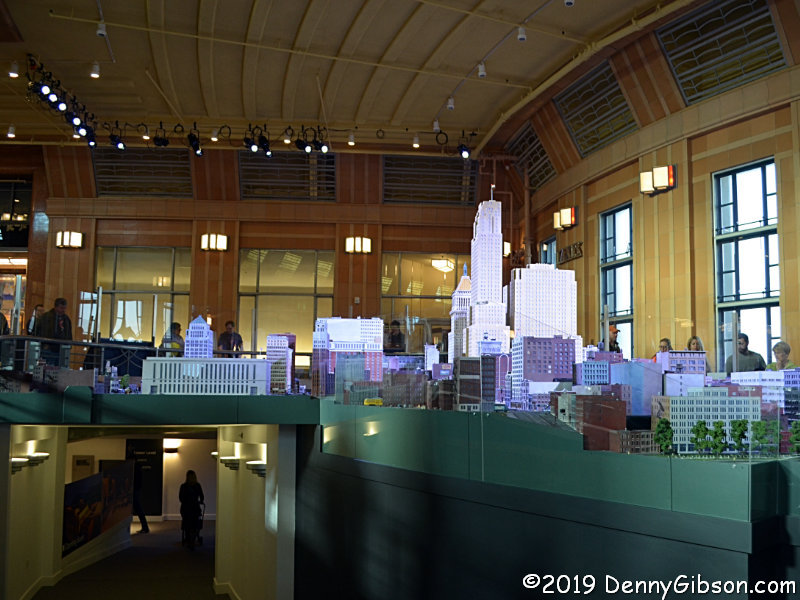
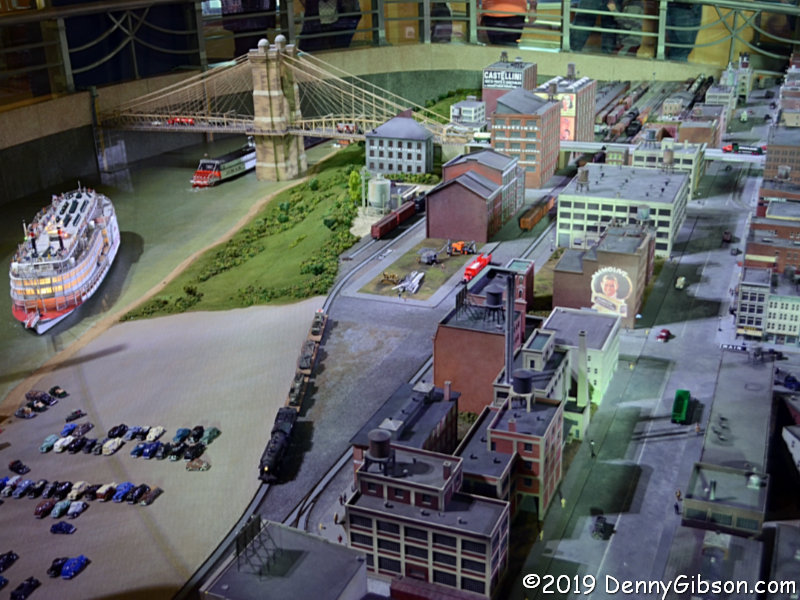
This picture is from my 2009 Chattanooga Queen trip. The Delta Queen steamboat had been forced to stop cruising about six months before and was docked in Chattanooga, Tennessee, as a stationary hotel. I’d never felt like I could afford a cruise on her, and the odds that I ever will get an opportunity are not good. This might very well be the closest I’ll ever get. The minimum stay was not determined by the length of a cruise , and rates for the non-moving rooms were less than they had been for the moving ones. I reserved one of the cheapest rooms for two nights over Independence Day.

The experience was far better than I had any right to expect. Even though hopes of a reprieve from the cruising ban were dimming, they weren’t entirely extinguished when the Queen first arrived in Chattanooga. Although virtually all of the existing crew/staff had or were working on plans to leave, the majority were still in place during my July stay. I was treated to food and lounge service, and even entertainment that differed little from that offered during cruises a few months prior. I stayed twice more on the Delta Queen while she was in Chattanooga, and, while I truly enjoyed both of those stays, neither compared to that first one.


The photo used as this blog’s banner was taken on the Delta Queen‘s next to last stop (so far) in the Queen City. She paused in Cincinnati, her home port, twice during the wind-down to docking in Chattanooga, and I was at both. My report on those visits is here.
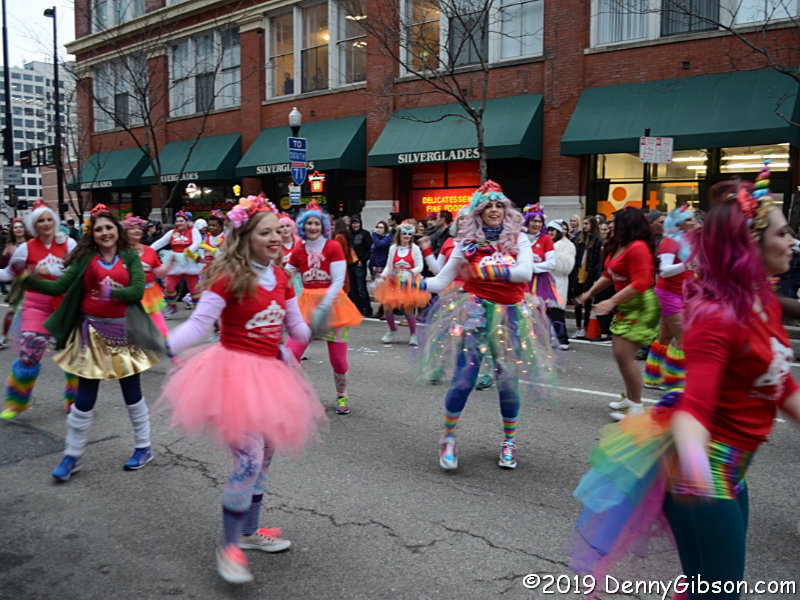

Trip Peeks are short articles published when my world is too busy or too boring for a current events piece to be completed in time for the Sunday posting. In addition to a photo thumbnail from a completed road trip, each Peek includes a brief description of that photo plus links to the full sized photo and the associated trip journal.

Riverside Rotator

There’s a big wheel standing on edge near the Cincinnati waterfront. Its owner, Skystar, officially calls it America’s Largest Portable Observation Wheel, but even they know that it’s a Ferris wheel to most folks. The 137 foot wheel opened in Cincinnati on September 1 and will be spinning daily through December 2. It arrived in Cincinnati from Norfolk, Virginia, and before that was in Louisville, Kentucky. A friend and I went for a ride on Friday.
I parked on the Kentucky side and walked across the John A Roebling Suspension Bridge. Before heading to Ohio, I slipped down to the water’s edge to take a few pictures. I’m pretty sure that the bronze Mr. Roebling is gesturing toward his very permanent bridge but the sweep of his hand also takes in the temporary Ferris wheel positioned at its northern end.

The maze to the ticket booth and beyond would clearly accommodate a lot more people than were on hand early Friday evening. So would the wheel itself. Each of the 36 gondolas has room for six passengers which means 216 people could be simultaneously spinning in circles if the thing was filled to capacity.

There are a couple of things at play that make full occupancy unlikely. One is the policy of promising “a private experience for passengers” by not putting strangers together in a car. While I personally find chatting with strangers in this sort of situation to often be interesting and fun, that’s evidently not the case for most. Another thing I suspect will help fend off worries about filling every seat is the $12.50 ticket price for a fifteen minutes or so ride. I’ve seen a minimum of four revolutions advertised and we got six… or maybe seven. It’s a cool experience and one that individuals and couples will likely consider worth the cost. Families of any size with kids over two (under two ride free) likely won’t.

Addendum: A friend tells me that on the opening weekend the wheel was full, there were long lines, and strangers did indeed ride together. Here’s hoping that happens again someday.

With virtually no line, we were soon on board and in motion. The wheel stands between Cincinnati’s two stadia. That’s Great American Ball Park in the background of the second picture and Paul Brown Stadium in the background of the third. Yes, it is possible to see and photograph both of them without the arms of the wheel in the way. GABP (with cohort Great American Tower) is here, and PBS is here. The timing of our ride was such that the setting sun was aimed directly at us as we faced west. That’s why I used the neighboring gondola as a sun-shield and why the picture’s still extra crappy.

The most scenic views were away from the city and generally involved the river and the Roebling Bridge. The bridge was almost lined-up straight-on for the second photo. In the third, it’s in the background as we duck behind the “Sing the Queen City” sign.

As sometimes happens when your view is greatly expanded, we were witnesses to a bit of drama. In the first picture, the grey car on the left side is clearly facing the wrong way for the lane it is in on the two way bridge. A trailing black streak across the yellow stripe can be seen with a close look. We spotted the incident near the end of our ride and before long were walking past it. Apparently the right front wheel had let go and threw the car into the opposing lane. A head on collision was somehow avoided.

We ate dinner in Kentucky as the sun continued to set which made a brief stop near where I’d taken my first Ferris wheel pictures more than worthwhile. I had a tripod in the car and using it would have also been more than worthwhile but I was too lazy. Several photographers who weren’t too lazy were standing nearby and no doubt taking superior photographs. I put these here so that you’ll immediately know what those superior photos are superior to when you see them.

Fish Farm Fun

I like fish… and I like shrimp… and I’ve lived my entire life in Ohio. Why, then, did it take me 17 years to get to the Ohio Fish & Shrimp Festival? Is a puzzlement. It becomes an even bigger puzzlement when you add in the fact that I like music and this is a festival with a reputation for putting some of the best local and regional entertainment available on its stage.

I don’t know about previous festivals but this year’s event covered three days. I made it on Saturday, the middle day, and I made it in time to catch part of the day’s opening performance. The very impressive Devil Doves are based in Columbus, Ohio.

I hung out near the stage until the set was finished then headed up the hill to check out the festival’s reason for being. There are multiple food vendors present but the Fresh Water Farms is the host and naturally has the biggest stand in the best location. I’m a sucker for coconut shrimp so that’s what I picked from an extensive bill of fare. That’s kale Caesar salad in the box and it was delicious. So was the shrimp.

I was eating at one of the tables when Mustards Retreat began their set. The group from Michigan served up some excellent vocal harmonies. This would be the last group I saw. The next group was still on their way when Mustards Retreat finished and I decided not to wait out the delay although I’m sure it was a short one. There would be a total of five bands on Saturday ending with the outstanding Teeny Tucker. Check out the full festival lineup here.

Beer and wine are available but there is an alcohol free zone that includes some of the food vendors and a children’s play area. Speakers at the back of the stage means the live music can be heard through much of this area.

Some of the actual farm facilities lie just beyond the play area and were open for exploring.

On the way back to the festival’s main area, I grabbed some pistachio gelato for dessert. I finished it as Mustards Retreat finished their set. Then, as mentioned earlier, I headed home happy to have added another fine Ohio festival to my experience.

Boats, Bikes, and Biplanes

Just about the time that last week’s post was being automatically published, I set out to join some friends at a floating house on Norris Lake in Tennessee. I hit rain shortly after leaving home and it pretty much stayed with me through the first half of the drive. It was dry when I reached the lake although a large portion of the sky was cloud covered. The clouds would be present for almost all of the two days I was there. No so the dry.

But, even though a dry sky was not a constant, neither was it completely absent and we did get in a couple of waterbourne cruises. And we got in plenty of relaxation and scenery study with very pleasant temperatures.

On Tuesday, I left ahead of the others and headed to Bowling Green, Ohio. When the first Motorcycle Cannonball passed through Tennessee in 2010, I was there as vintage bikes carried their riders over the Cherohala Skyway and on to an overnight in Chattanooga. The 2012 and 2014 events eluded me completely, but I did get a look at the 2016 group during its scheduled lunch stop at a Harley Davidson dealership near my home. My drive to Bowling Green was to connect with this year’s group. Timing was tight, but I was on pace to get there during the evening display period — until I hit Cincinnati. Traffic slowed, slowed some more, crept along fitfully, and finally came to a halt. Men appeared about three cars in front of me and began placing cones across I-75 while directing traffic onto Ronald Reagan Cross County Highway. Cars just a few yards ahead of me were trapped on the other side of those cones. I later learned that the closure was triggered by an overturned truck. Heavy traffic and surface street construction didn’t help one bit, but I did eventually make it back to the expressway about four miles and an hour and a half later. I considered simply heading home but didn’t. Of course, none of the Cannonball motorcycles were on display when I reached Bowling Green and even the vendor and organizer tents were being emptied. I found a cheap motel to roost in for the night.

It was an entirely different scene when I returned for the morning launch. The Cannonball website lists 123 entrants and it looked like almost all were ready or getting ready to roll. Only motorcycles built before 1929 were permitted in this year’s event. The trio of Nortons consists of a 1915 model sandwiched between a 1923 (#115) and 1925. The website lists #32 as an Indian but that’s obviously a Henderson in the second picture. Beyond it are two 1911 Excelsiors. The third picture shows 1928 and 1927 Indians followed by a 1928 BMW.

And of course they made sidecars before 1929. Here we have Gene Harper with his 1924 Indian Chief and Doc Hopkins’ 1916 Harley Davidson. You just can’t get much cooler than traveling coast to coast in a wicker basket.

I don’t know who this gal is but I do know that the event simply could not function without her. She jumped in the air, waved the starting flag, and shouted encouragement as each bike departed. This was the beginning of Stage #5 which ends in Bourbonnais, Illinois. The ride will end in Portland, Oregon, on the 23rd.

On Saturday I made it up to the WACO Fly-In in Troy, Ohio. WACO airplanes were manufactured in Troy between 1920 and 1947. My first time attending was in 2006. I also documented a 2014 visit and I made a couple of undocumented stops between 2006 and ’14. Both my memory and notes support the idea that there were more WACO airplanes there on my first visit than at any of the others. My memory, without any notes to support it, thinks there might have been more non-WACO airplanes there this year than on previous visits.

But regardless of numbers, seeing these beautiful airplanes up close and watching them fly overhead is always a thrill and the day’s perfect weather made it even better.