Star Wars Costumes

I may have missed attending a traveling exhibit at the Cincinnati Museum Center in the last several years but, if I did, I don’t remember what it was. The museum brings in world class exhibits which I very much appreciate and enjoy. I was, however, rather wishy-washy about Star Wars and the Power of Costume. Still am to some degree. My initial lack of desire came from a lack of familiarity. I guess I’ve been sort of wishy-washy about the whole Star Wars movie franchise beyond the first one. I feared that not knowing all the details of the full story would make it impossible to appreciate the exhibit. That turned out not to be the case at all. My current wishy-washiness comes from the price. As a museum member, attending the exhibit on Friday cost me $17. The regular adult admission is $24 or $16 for age twelve and under.

As I purchased my ticket, a fellow who had just emerged from the display and the fellow printing my ticket, had a brief discussion about how much they had each enjoyed it. One aspect they both liked was that the organization is by “type” rather then chronological. Once inside I very much appreciated that too. Having things displayed chronologically either by story line or movie release sequence (They’re different, you know.) wouldn’t have helped me at all and would likely have confused me.

There are small clusters of similar characters such as androids, empire soldiers, and rebel fighters.

Sometimes a single pair of related costumes are displayed together. Here a couple of different Princess Leia outfits are combined and Chewbacca and Han Solo stand side by side in front of a hyperspace image.

And, of course, some characters seem to just belong alone. Darth Vader masks used for specific scenes are displayed nearby. Bits of Jedi wisdom are projected on the wall behind Yoda.

The last room in the exhibit contains many of the Star Wars toys manufactured by Kenner and tells the story of how the Cincinnati based company ended up with the contract that nobody wanted. The line was incredibly successful and revolutionized the marketing of movie based toys but did not keep the company from being merged into Hasbro in 2000.

I was honestly quite surprised that the exhibit actually made me want to see all nine Star Wars movies. I saw the first Star Wars movie and thought it was great despite feeling that George Lucas had really ripped off Dune author Frank Herbert. I also saw and enjoyed the second and possibly even the third but I don’t think so. Then the whole prequel/sequel thing made me lose interest completely. Now that the story exists in its entirety, my curiosity is coming into play. Besides the more than sixty costumes, the exhibit contains many informative panels and videos. They remind me of something I already knew which is that Lucas borrowed from and/or honored many more science fiction and adventure stories than Dune and he seems to have done a better job presenting the essence of Dune than anyone who has actually used the name. I don’t see myself doing an all day or more binge but maybe I’ll finally get around to watching what everyone’s been talking about for years.


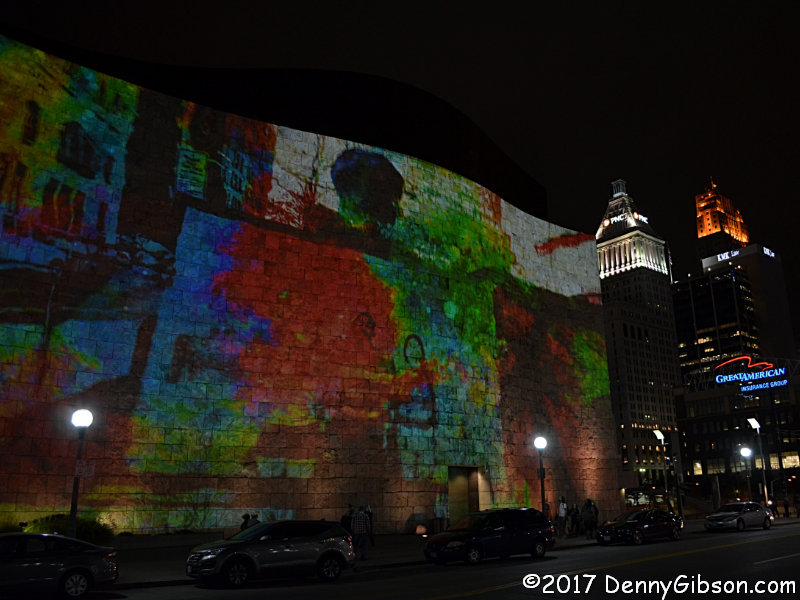
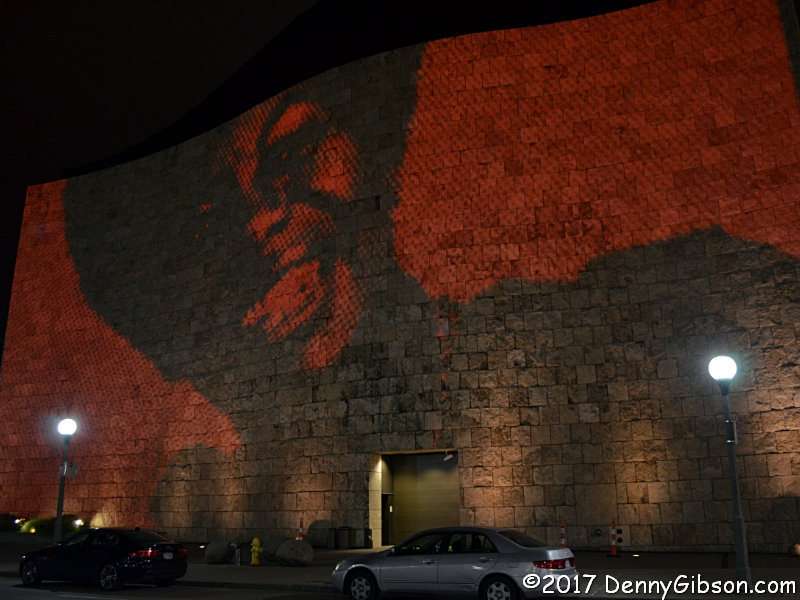
Now I’m going to invent a additional Cincinnati connection. A panel in the Star Wars exhibit states that some of the areas costume designers studied were World War II, Vietnam, and Japanese armor. Cincinnati is home to a serious collector of Japanese armor and the Art Museum has many pieces in its collection. Dressed to Kill, an exhibit of much of this armor, ended about a month ago and I’m going to turn this into an opportunity to post a couple of pictures I took there with my phone under less than ideal lighting. And now I’m going to turn this into an opportunity to mention that all the other pictures in this post were taken with my pocket Panasonic and the lighting for most wasn’t all that good either. Here’s hoping you won’t judge them too harshly.


Traveling exhibits like Star Wars the Power of Costume, are possibly even a little more important now than normal since they and the Children’s Museum are the only public spaces that remain open during the restoration of Union Terminal. Since my last visit. a large window has been opened into the rotunda that permits a view of a portion of the murals there. Reconstruction is scheduled to be completed in the fall of 2018.

I’m Not Moving Like I Used To
— Places I’ve Lived (Part 2)

The reason that I only began my sophomore year in that old apartment building that ended last week’s Part 1 post was that I got married the day after Christmas 1966 and the bride and I moved into an apartment at the rear of this building near campus. We had almost no furniture and I remember laying on the floor of the empty living room watching news of the Apollo I fire on the tiny black and white TV my wife brought from her home.

In the mid-1960s, the Forum was one of Cincinnati’s newest and fanciest apartment complexes with a bar and restaurant that attracted both residents and non-residents. It was definitely a rather posh address for a poor college student. My wife’s sister and her husband had been among the earliest lessees and had arranged a honey of a deal. The long term lease that was part of that deal became a big negative when the husband was offered a major promotion in New York. To avoid significant penalties, they arranged for my wife and me to take it over and we found ourselves in some pretty classy digs. The in-laws had literally gotten in on  the ground floor.

I finished my second year of college and started my third but the discovery of a pregnancy in the family made continuing unrealistic. I got a full time job and my wife started shopping for houses. I recall sort of dragging my feet and pushing for just a larger apartment but she found an offer I couldn’t refuse. A middle aged couple had just moved to their dream home and were dealing with two mortgages. We bought this three-bedroom house in Pleasant Ridge on land contract. After two years, we converted to a normal mortgage with payments of $137 a month. We spent about five years here and this was our home when both sons were born. The oldest was ready to start kindergarten when the marriage was ready to end.

I spent several weeks with friends then rented a trailer in a park near Morrow, Ohio. I figured that renting a mobile home was about as non-committal as you could get. I can’t be completely certain that this is the very trailer I lived in but I believe it is. There was no storage shed when I was there and the deck is much more substantial than the steps I climbed and it’s possible that another trailer has replaced the one I rented. That means it’s possible that a second of my homes is gone but this looks to be old enough and it seems quite likely that it’s my old home box.

A co-worker had found this place a few years back and when he moved out another moved in. When he moved it was my turn. First time visitors seemed to always have trouble finding it despite being told it was “right under the bridge”. They just didn’t believe it. The bridge passing overhead carries US-22 and OH-3. The address was on the Old 3C Highway which predated the bridge and its numbered routes. The Little Miami flows under the bridge and was our front yard and playground. The four apartments can be seen better in this view. The large one on the right is where the owner and eventually an onsite manager lived. I lived in the rightmost of two apartments on the second floor and there was another smaller apartment below. This is where I lived when my kids came to live with me and for a few weeks the four of us shared the suddenly tiny apartment. They got the bed and I got the couch and the last place in the line for the single bathroom. When we went looking for a place to move, the only thing I cared about was having my own bathroom.

This place in Loveland won me over with a bath in the master bedroom and decent rent. Like many rentals, it was adequate but nothing special. The location was close enough to my job to not be an issue. Although the bedrooms were small, everybody had one and, most importantly, I had a bathroom.

While living in the rental house, I left the corporate world and went to work for a startup. This would not ordinarily be the time to buy a house but there was Cincinnati Milacron stock in a profit sharing account that I had to do something with when I left. I decided that using it for a down payment on a house was the thing to do. After considerable shopping, we moved into this eleven year old split-level where everybody again had their own bedroom even though one was officially called a den. The boys’ early school years had been split between a number of locations and they didn’t like it. I also knew that my sister had not been overly pleased at changing schools for her last few years. That had been part of the discussion in moving to the rental but was an even bigger part of the purchase decision. I stayed here until the last kid was out of school which puts it in second place on my length of residence list. My second marriage started and ended here.

This is where I’ve lived for twenty years now. The kids and wives were gone and I was ready to stop mowing grass and raking leaves. A buyer appeared for the house and I bought the second unit in a condominium in the process of being built. Construction targets were missed and I had to negotiate with my buyer for a late departure from the house. The two week delay still wasn’t enough and I spent a couple of nights in a motel and a couple of weeks in the master bedroom with furniture stored in the garage while workmen completed the rest of the unit. There are two bedrooms and the second bedroom initially held a left over bed from the house. My daughter eventually reclaimed that and I’ve never replaced it. I do have a large airbed so guests can be accommodated but just barely. Condo fees take care of cutting the grass, raking the leaves, and clearing the snow. I have no pets to feed or plants to water so nothing dies if I’m gone for awhile. Works for me.

So, after having eight homes in twenty years, it took me nearly thirty years to add another eight and the count’s held steady since then. As things now stand my lifetime average is 4.375 years per location. I really don’t like to move so that number is pretty much guaranteed to increase. In fact, the odds are good that I’ll stay right here until I’m carted off to a nursing home or a crematorium.

I’m Not Moving Like I Used To — Part 1

I’m Not Moving Like I Used To
— Places I’ve Lived (Part 1)

“Of course not,” I can almost hear you say. “You’re a creaking old codger on the verge of decrepitude. You’re lucky you can move at all.” While that’s certainly true, it isn’t what the title refers to. The sort of moving this article is concerned with is the changing of residences and I recently realized that I’ve occupied my current domicile longer than any other. I moved in over the Memorial Day weekend of 1997 which means I’ve been here twenty years. That’s two decades, a full score, a fifth of a century. The times for second and third places are just thirteen and twelve years.

The photo at the top is of the first place I called home. It’s a house Mom bought in 1945 while Dad was overseas. I don’t know when it was built but it was old enough to need new siding when Mom bought it. She personally covered it with that fake brick tar paper that used to be fairly common. That covering remained through my high school years when a classmate lived there. Since then it has obviously had the siding replaced and it has been painted at least a couple of times. I recall it being blue for several years. The porch and garage were added long after I lived there and I’m sure there have been other upgrades as well. The house was never high class but it apparently is of pretty high quality. It looks better now, seventy-two years after Mom tacked on her tar paper, than at any other time in my memory. It’s in Woodington, Ohio, which is the birthplace of Lowell Thomas. Lowell’s former home has been moved to the grounds of the museum in the county seat. Plans to preserve and relocate my former home have yet to materialize.

While I was living in Woodington, my maternal grandparents were living on a farm just around the corner. Sometime before my third birthday, the generations swapped places. I doubt it was a real trade but some sort of family arrangement resulted in my grandparents and about five of my aunts and uncles taking our place in the village while we three moved into the house pictured at left. My sister arrived not too long after the move. The house is certainly no younger than the one I started out in and could be considerably older. The barn and other out buildings are gone and a large garage has been added. Like the house in Woodington, this one is looking better than it ever has.

We weren’t long at the farm. I recall Dad once reminiscing about the move with the comment “I guess I thought I wanted to be a farmer.” My sister was born in March and by winter we had moved to the house at right in the nearby village of Hill Grove. We were there for the “Blizzard of 1950”. The northeast corner of the state was hit the hardest but all of Ohio got lots of snow and frigid temperatures. In Columbus, Michigan won a trip to the Rose Bowl by beating Ohio State 9-3 in a game with 5° temperature, 40 MPH wind, and not a single first down by either team. During the worst of the cold snap, our whole family slept in the living room with my baby sister wrapped up in a dresser drawer. The Facebook “on the road” profile picture I use for wintertime trips was clipped from this photo taken in front of this house. A little more of the house — and sled — can be seen in this photo. It’s been well treated by subsequent owners and falls into line with the others by looking better now than then.

I think we only spent the one winter in Hillgrove before moving into the village of Ansonia. I’ve referred to both Woodington and Hill Grove as villages but they are technically “unincorporated communities”. Ansonia was a real official incorporated village. with a population of 877 in the 1950 census. Our house was directly across the street from the American Legion and the school athletic fields were at the end of the street. In high school I would march past this house on the way to and from every home football game. It was newer than my previous abodes and, while I don’t know that it looks better than when we lived there, it looks at least as good and has clearly had some caring owners including someone who added the garage and connector.

This is the place that’s currently in third on my length of residence list. It occupies a two acre plot in the midst of large farms about three miles west of Ansonia. We moved here in the summer of 1953 and Dad remarried (Mom died in 1959) and moved in the summer of 1965. Those dates exactly bracket my school years. Initially my sister and I shared one of the two bedrooms but that was quickly seen as a problem. Dad was both clever and handy and first divided the room with a wall that included storage with my bed on top. Step two was enclosing a porch area on the back of the house and moving me into it. It’s visible in this photo of the other end of the house. The third and final step was finishing the attic and squeezing in a stairway. I spent about seven years sleeping on the other side of that window near the peak of the roof.

2015 article on Dabney Hall talks about the faded bricks and old AC units hanging in the windows. It is now the oldest residence hall on the University of Cincinnati campus. When I lived there in 1965 it was, at five years old, one of the newest and there were no signs of air conditioning anywhere. Shortly after my 1974 divorce I dated a girl a few years younger than me who had a friend a few years younger than her who lived in Dabney and we attended a party there. By then what had been an all male dorm was co-ed with refrigerators and microwaves in every room. I marveled at the changes but it’s hard to say whether the presence of girls and fridges would have kept me in school longer or led to me dropping out sooner.

This is the house Dad moved to after remarrying when I was about to leave for college. I spent the summer between my freshman and sophomore years there and it is where my stepmother still lives. Not visible in the picture is an attached brick workshop, added in the 1970s, where Dad spent a lot of time re-caning and refinishing furniture.

This is the location but not the building where I began my second year at UC. The aging apartment where my friend Dale and I lived has the distinction of being the only one of the sixteen places I’ve lived that is no longer standing. This seems particularly astonishing in light of the fact that the three earliest of my homes were all pretty old when I lived there. The pictured building is a nursing home so it’s at least possible I could return there someday.

Because of its length, I’m spreading this subject over two posts. As mentioned in the first paragraph, I’ve called just one place home during the most recent twenty years of my life. The eight residences covered in this post filled the first twenty for an average of roughly two and a half years each. I’ll get to the second eight next week.

I’m Not Moving Like I Used To — Part 2

Fleetwood’s Mac

I’m sorry. I am a punster. I make puns on a regular basic. If you’re the sort of person who believes that good puns do exist, you would likely call them bad puns. Others think the phrase “bad puns” is simply redundant. Sometimes I try to defend my puns and sometimes I just ignore the groans as if the pun was entirely accidental. Sometimes I apologize.

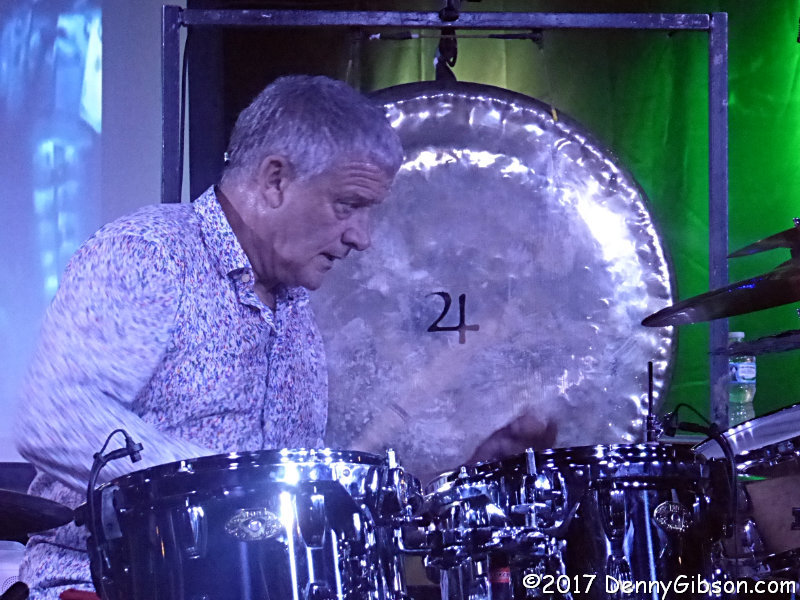
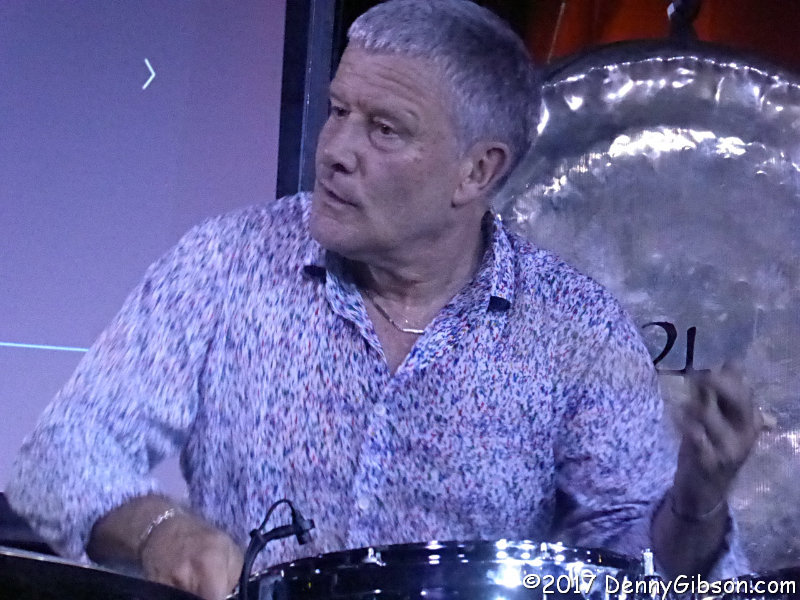
The “sorry” that leads off this post is not an apology. It describes the way I felt when I discovered that I’d missed one of the most obvious puns to ever come my way. I was catching up on Tripadvisor reviews earlier this week and pulled up my own trip journal to check dates and notes. It was close to two months ago that I stopped into Fleetwood’s on Front Street for a beer. The restaurant/lounge is owned by Fleetwood Mac’s drummer, Mick Fleetwood.

It was the day of the NCAA Championship game and I ended up watching the entire game there while listening to some very good live music. I got hungry. It was too early for the full dinner menu but a lounge menu was available with several very tempting items. I opted for the crab macaroni & cheese. It was terrific with small bits of crab meat in every bite. I praised it in my journal and I included a picture but somehow missed the pun that makes up today’s title. I didn’t miss it this time. I’m sorry.

Book Review
Sorry’s Run
Joani Lacey

I’ve not read a lot of fiction lately. I used to. There was a time when I sucked down a fair amount of science fiction and historical fiction along with a smattering of aged classics. Sorry’s Run is none of those. It is, however, just about everything else. If pressed to place it under a single heading, I guess I’d call it a mystery. It’s a mystery where learning what was done is at least as much fun as learning who done it. Beneath the book’s central plot is an intriguing layer of occult, a tolerable touch of romance, and frequent and appreciative glimpses of the Ohio River and the country it flows through. It is set in the real world of today although it’s a world whose edges are not always crisply defined.

I know Joani Lacy as a performer. She sings in a band fronted by husband Robin and can cover Patsy Kline as well as anyone I’ve heard. When her first novel was published in 2008, I was interested but not enough to seek it out. It was, after all, fiction and my reading stack was filled with the other stuff. When that first book turned into a trilogy it became a little more intimidating and slipped even farther down the “to read” list. Sorry’s Run is a standalone that got me to experience an author I’d been putting off for years.

I expected skillful writing and was not disappointed. Lacy’s words paint a clear picture of the fictional town of Sorry’s Run as well as provide views of multiple sides of New York City. The story’s main character was born in the small Kentucky town of the title, had a highly successful career in the big city, and gets this story started with a return to her roots. Cultural differences between the two locations are noted but not exploited. Skill is also evident in the pacing. Revelations, whether of some new insight into a character or of some sharp plot twist, seem to occur naturally and some of those twists are really quite sharp.

Even though I more or less expected Lacy’s writing to be skillful, I was impressed. I was even more impressed with her imagination. Skillfully relating a story is one thing; Creating a story worth telling is quite another. Sorry’s Run is a story worth telling. Not because it explains how to cure some disease or answers the question of life but because it’s entertaining. I’ll say no more because being surprised is a big part of enjoying this book. The reader isn’t bombarded with surprises (Pace is, as I said, one of this book’s strong suits.) but there are plenty and they never stop. The very last page both surprised me and made me very happy. That’s a mighty good way to end a book and it was, I think, no accident.

Sorry’s Run, Joani Lacy, iUniverse (April 21, 2016), 9 x 6 inches, 380 pages, ISBN 978-1491792971
Available through Amazon.

Trip Peek #56
Trip #17
Phoenix III

This picture is from my 2003 Phoenix III trip. This was the third of three business trips I made to Phoenix, Arizona, between September and November 2003. I extended each with a few days on my own. It was a technique I used whenever I could to get a little vacation far from home with the only costs being meals, motel, and car rental for the days I wasn’t working. I headed to Tombstone via Tuscon and checked out Biosphere 2 on the way. I was in Tombstone for the annual Clanton Rendezvous. On my return, serious traffic congestion prompted me to turn onto AZ-77 which led to AZ-79. In 1940, Tom Mix died in an accident on this road and the picture is of a nearby monument to the popular actor.


Trip Peeks are short articles published when my world is too busy or too boring for a current events piece to be completed in time for the Sunday posting. In addition to a photo thumbnail from a completed road trip, each Peek includes a brief description of that photo plus links to the full sized photo and the associated trip journal.

Hurrah for Cosmos (repeat)

Some of the blogs I follow repeat a post now and then. Until quite recently, with the exception of an article I’ve posted for the last three elections, I hadn’t. On Easter Sunday, with no ideas handy and no time to develop one if it appeared, I didn’t want to totally ignore the holiday so dug out and re-posted an existing article. This week, as I enjoyed and learned from the recent PBS series The Great War, I remembered another series I had enjoyed and learned from and even blogged about. That series had been about science and the memory made me think about the March for Science that occurred two weeks ago. I honestly can’t decide whether to be disappointed that the education that series provided was incomplete and the march was necessary or encouraged that enough people care about science to make the march possible. Hurrah for Cosmos was originally posted March 16, 2014.


Cosmos: A Personal VoyageBack in 1980, Dr. Carl Sagan wrote a book called Cosmos as a companion to a TV series named Cosmos: A Personal Voyage which he co-wrote and “starred” in. I watched the series and read (and still have) the book. Sagan was a smart guy and a darned good communicator. In the book and the program, he set out to share the scientific community’s knowledge of the universe — the cosmos — with the masses. It’s generally accepted that he did a pretty good job. Until Ken Burns came along with The Civil War series in 1990, Cosmos ranked as the most watched PBS series ever.

Cosmos: A Spacetime OdysseyNow another smart guy and good communicator, Neil deGrasse Tyson, is trying it again. We, the residents of Earth, have learned quite a bit in thirty-four years. The first episode of a new series, Cosmos: A Spacetime Odyssey, aired last Sunday, March 9, on the Fox Network and Monday, March 10, on National Geographic TV. Additional episodes will be shown on subsequent Sundays and Mondays until thirteen episodes — same as the original — have been broadcast.

The chances are good that nothing I’ve said so far is news. The original Cosmos is legendary and the new one has been getting a lot of press. That first episode was even preceded by an introduction from President Obama. But there is at least a small chance that, like me, you missed the premier and that’s my excuse for making this post. Here’s my Cosmos: A Spacetime Odyssey episode one story.

It was the first TV show I’ve really wanted to watch in years. I got home from Bockfest in plenty of time and was parked in front of the properly dialed in TV as showtime approached. At this point, the accomplishment of a timely return home was nullified by the thing I returned home from. Last week’s post was on the Bockfest Parade which I had attended on Friday evening. I was back at the festival on Sunday and sampled some of the namesake product. With the odyssey start just minutes away, I dozed off.

For many, that would not be a problem. They would have had their DVRs all programmed and the show would have been recorded for viewing later. I have no DVR nor do I have access to National Geographic TV so watching the Monday night broadcast was out. Thankfully, Fox has provided a Cosmos On TV website. where I was able to watch the first episode, “Standing Up In the Milky Way”, as well as the President’s introduction and other related videos. It looks like future episodes will also be available there which I certainly appreciate since I’m guessing I might miss another broadcast showing or two.

It is clearly too early to know if “Cosmos II” will equal “Cosmos I”. There are plenty of connections between the two including the fact that Carl Sagan’s widow, Ann Druyan, was a co-writer of the first and an executive producer of the second. And there is a Tyson-Sagan connection, too. They first met when the seventeen year old Tyson was researching schools and the world famous scientist gave the aspiring one a personal tour of Cornell. Near the end of his first Cosmos episode, Tyson talks about that day. “I already knew I wanted to become a scientist, but that afternoon I learned from Carl the kind of person I wanted to become”, he says. Tyson also spoke of that day in an interview with Bill Moyers where he recalls thinking “If I’m ever in a position of influence the way he is, then I will surely interact with students the way he has interacted with me, as a priority.” That excellent interview, spread over three shows, is here, here, and here.

The new Cosmos has already received some attention and generated some discussion. I’m confident there will be more and I have hope that it will also have some impact. I don’t believe in miracles but having something on commercial TV that I actually want to watch is mighty close.


Movie Review
From War to Wisdom
Daniel R. Collins & Josh Hisle

I might not even be aware of this movie’s existence if I didn’t know one of the directors. Maybe someone else will learn of it only because they know me. If so, that’s a good thing. And it’s also a good thing if someone learns of the movie by stumbling onto this blog post without knowing either of us. If either of those things happens and someone watches From War to Wisdom who otherwise would not, I’ll be a happy man. It’s a movie that deserves to be seen with a story that needs to be heard.

It is primarily a story of Afghanistan and Iraq combat veterans. To some degree it is a new version of the oft told tale of guys going off to war then having difficulty returning to the civilian world. It’s a view that the tagline “When the war ends, the real battle begins” encourages and the movie’s general organization supports. The film’s front end focuses on the war and the second half focuses on the return. The “off to war” part is made extra effective through the use of gripping footage shot by embedded journalists Mike Cerre and Mike Elwell. The “difficulty returning” part is made personal through excerpts from interviews with those having the problems. But excerpts from those interviews also appear in the film’s early scenes and create a solid connection between the two halves.

Creating a marker between the halves is a text only shot. In front of the shot we see returning soldiers marching between welcoming signs and banners then being dismissed to reunite with their families while veteran Hans Palmer describes the time as “the proudest I’ve ever felt in my life.” Following the text is a scene with Josh Hisle talking about needing a “place to decompress — every day.” He’s sitting outside his apartment waiting for everyone else in the complex — his “area” — to go to sleep. “It’s not insomnia,” he says. “It’s duty.”

Five panels fade from one to another in that near midpoint text shot. The number of troops killed and wounded in Iraq and Afghanistan is mentioned along with the average number of veterans — a gut-wrenching 22 — that commit suicide each day. The last phrase is “many veterans are taking it upon themselves to help their fellow warfighters to truly come home.” That’s what this movie is about. It’s what makes this more than another war sucks story.

War does suck and From War to Wisdom makes that clear. It also makes clear the serious damage that war can inflict on those who survive it and it tells the stories of some of the veterans who overcame that damage. Then the stories go a little farther. Some of those veterans not only overcame their own issues but have made major efforts and established ongoing organizations to help others overcome theirs.

There’s Common Ground on the Hill’s Veterans Initiative that Josh Hisle was instrumental in establishing after he personally benefited from the Common Ground experience. There’s The Battle Buddy Foundation that veterans Kenny Bass and Joshua Rivers created to help other veterans obtain service dogs like Atlas who makes a normal life possible for Kenny. There’s New Directions for Veterans that was established in 1992 by a pair of Vietnam veterans and is represented in the film by Iraq veteran Matthew Lorscheider. Matthew does a pretty good job of capturing the spirit of this film when he says “That’s what we did in the military. Help a buddy out. I’m not going to stop now.”

There are many other examples of veterans helping veterans both in the film and out. They are bright spots and their successes are to be celebrated but they aren’t enough to make From War to Wisdom a feel good movie. It is, however, an encouraging movie and an informative one. Most of the veterans that appear in the film fought in either Afghanistan or Iraq. There is one notable exception. He’s a Vietnam vet who’s legal name is now Ragtime. He is a stained glass artist who teaches at Common Ground and started 1,000 Points of Peace back in 2006. The warriors recorded in this film say many wise things; The “wisdom” in the title is there for a reason. But I found a couple of Ragtime’s utterances particularly memorable. I don’t really think it’s a generational thing but maybe. From Ragtime: “America forgot what it was supposed to be doing… but I remember.”

The movie’s website lists a number of ways to see it. They include purchasing a DVD or watching online as either a rental or purchase.
DVD Online


This is my third movie review. When I did the second, I had actually forgotten the first (which I called a video review) and repeated a line about being even less qualified to review movies than books. I had done a few book reviews before starting this blog so doing some here didn’t feel too awkward. I wasn’t quite as comfortable with music reviews. I remember the circumstances behind that first one. Josh Hisle was working on an album and I knew I wanted to review it when it came out. I reviewed other albums so it would not be the first. Josh got distracted. Not by something shiny but by this movie. Between it and his work with Common Ground and being a full time husband, father, and student there was no time left for an album. That’s OK. It’s a lot more than OK. The album still hasn’t been released but we instead have this movie which I have a hunch is going to do a whole lot of good for a whole lot of people.

Even though I’m still waiting for that album and this is the first chance I’ve had to review a Josh Hisle product it is not his first mention here. He was the subject of this blog’s ninth post (There’s Something Happening Here) in 2011 and appears in at least three trip journal entries: February 19, 2010, July 23, 2010, and October 10, 2011.

My Wheels — Chapter 25
1985 Buick Century

Apparently I wasn’t the only one who didn’t think the 1985 Century was particularly photo worthy. Not only have I no pictures of mine but the only internet picture I found of something similar is the one at right. Mine was new so had wheel covers and all its chrome bits but it may have looked much like the picture at some point in its life.

The Century was Buick’s member of the A-Body family which included the Chevrolet Celebrity, the Oldsmobile Cutlass Ciera, and the Pontiac 6000. I was drawn to the family by a company owned Celebrity that the service manager drove and praised. I found my car in a newspaper ad where I think it was the low-end come-on among pricier and more desirable LeSabres, Regals, and Rivieras. It had the inline 4-cylinder which was not, I’ve read, very popular. Neither was it, I soon learned, very peppy. It was hooked to a three-speed automatic. The car had power locks but not power windows. Nor did it initially have a right hand mirror.

The absent mirror is easy to remember because it was the last piece of the deal. I had come to really depend on mirrors on both sides and ended negotiations with, “I’ll take it if you include a passenger side mirror.” The factory installed mirror on the left side was flat black and in a day or so I had a matching one on the right of my new purchase.

Although it wasn’t very powerful, smooth, or quiet the 2.2 liter engine did an adequate job and delivered pretty good mileage. Actually, “adequate” is a pretty good description of the whole car. It once carried two adults and four kids, one a teenager, to and from Myrtle Beach. It wasn’t roomy or particularly comfortable. It was adequate.

The American auto industry was not known for its quality in the mid-1980s. The Century’s materials may have been slightly better than those used in the company’s Celebrity but the build quality was about the same. A couple pieces of interior trim were already falling off when I traded the car at about a year old.

My Previous Wheels: Chapter 24 — 1983 Renault Alliance
My Next Wheels: Chapter 26 — 1986 Acura Legend 

Book Review
Exceptional Ordinary
Jim Grey

The review of this book published in April 2017 has gone missing. Maybe I accidentally deleted it or maybe a slightly down level backup was restored and I didn’t notice. Whatever happened, I’m confident it was my fault. I’m not going to try to reproduce the whole review. I’m just trying to head off the “not found” errors — and encourage everyone to buy a copy.

Some of you may be here through a link in Jim Grey’s blog telling folks I thought the book was not crappy. I did indeed say that but there’s a little more to it. It was my first experience with Blurb and I was uncertain as to the quality of their printing. I was especially interested in how well they handled color photographs. I feared it would be crappy and was happy to see it wasn’t. Jim’s contributions, the photos and text, weren’t crappy either but I knew that before I even opened the book. That guy does good work.

The book is available here.