Twenty Mile’s Last Stand

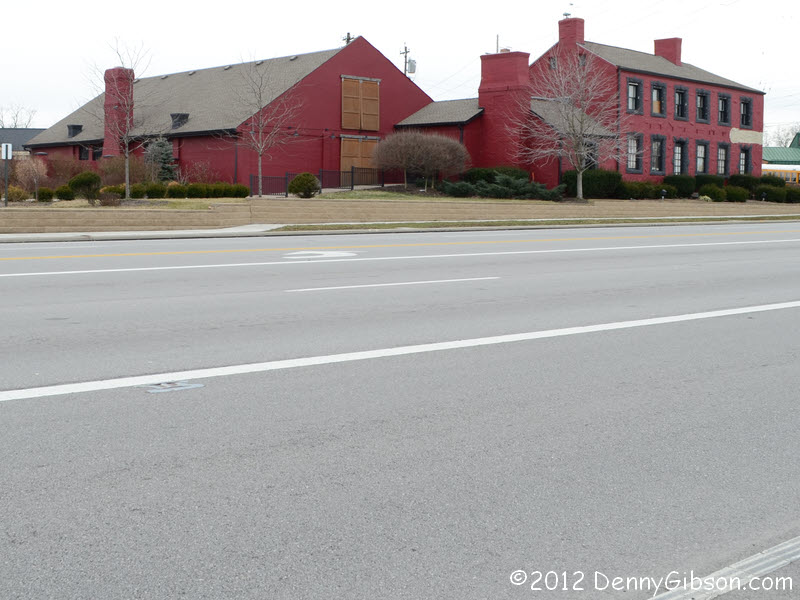
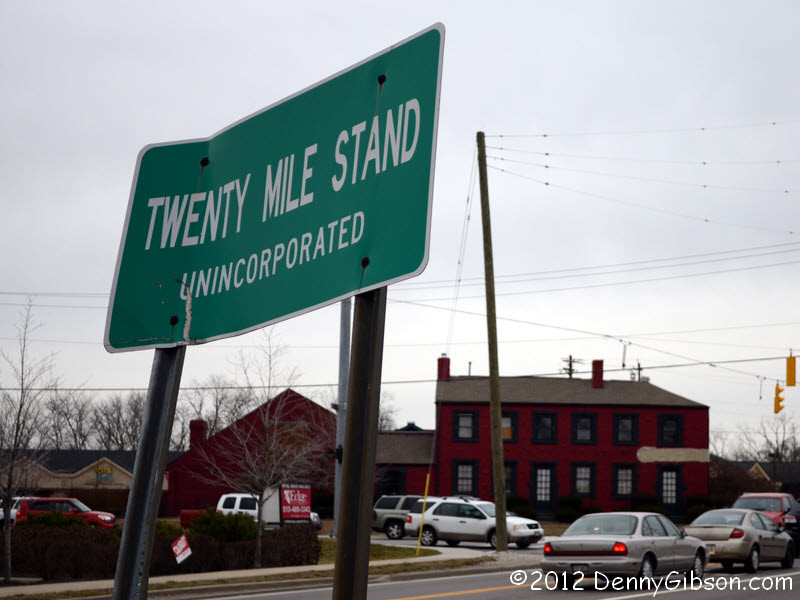
Twenty Mile House, Cincinnati, OhioThe first time I entered the Twenty Mile House it was smaller and younger and so was I. I was in my twenties so perhaps could even be considered young in absolute terms. Not so the building. The part on the right was built in 1822. Some or all of a building that stood here in 1804 might even be included in there somewhere. The road was smaller then too. It was small enough that cars parked between it and the building where those shrubs are now. The main entrance was through a street facing door that has long been locked and sealed. Some details of the first time I stepped through that door remain clear. The bar was against the far wall. I’m not entirely sure what was to my left; Probably some tables and chairs. I don’t recall the huge fireplace that I now know fills the east wall so am guessing that it was covered at the time. To my right was a jukebox and a hardwood dance floor that sat on top of the “normal” floor. Les Paul & Mary Ford’s version of How High the Moon was playing. That recording is almost as old as me.

Twenty Mile House, Cincinnati, OhioThe building started out as an inn and stagecoach stop some twenty miles from the center of Cincinnati. It seems to have been successful in that role. And it must have been somewhat successful as some sort of road side stop as the stage route became Montgomery Road and Ohio Route 3 and the 3C Highway and US Route 22. I don’t really know whether the outside of the building changed much during its first century and a half. I do know it hasn’t changed in any material way in the many years since. The inside, however, has changed considerably and additions have been made until the structure I remember from the early 1970s makes up maybe a third of the total. A recent sales flyer includes a diagram of the building in which I believe the area labeled “Bar & Lounge” is the original structure. Perhaps there is a version of the “Peter Principle” that applies to restaurants. Something like: “A successful eating establishment will expand to a size just beyond what the customer base can support.” This was an extremely successful restaurant and night spot through the seventies and eighties. That’s when the additions were made and every occupant since then has had that huge capacity — and overhead — to deal with.

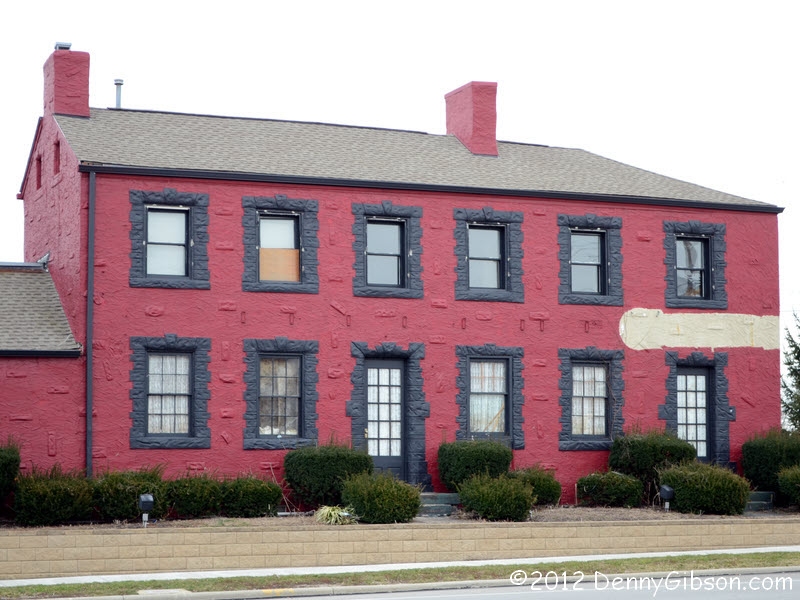
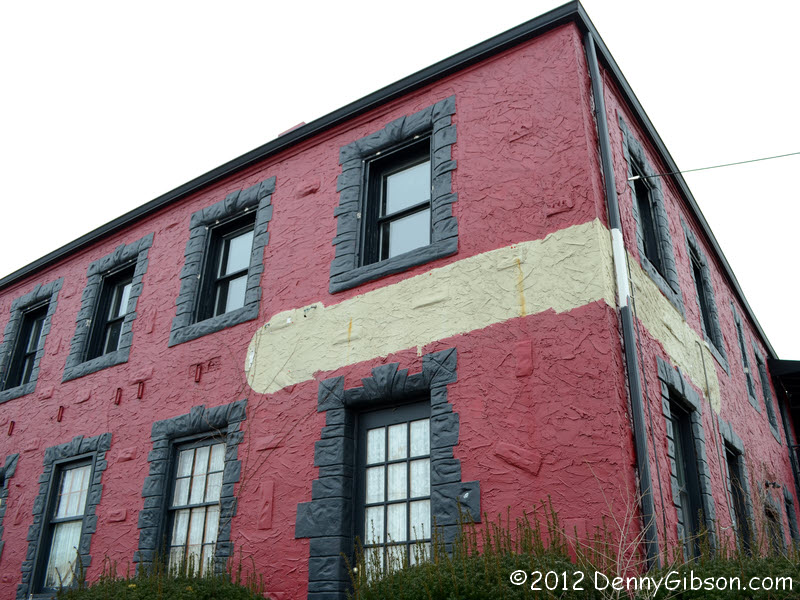
Twenty Mile House, Cincinnati, OhioIn my mind, the sprawling additions have been a factor in the failure of various restaurants to make a go of it but it’s hard to say just how big a factor. The most recent tenant may have actually found all that space attractive. That was a business called Red Rock Tavern and it advertised itself more as a music venue than as a restaurant. It didn’t last long but it left its mark. They painted the building red. Some previous tenant had mounted a scrolling electric sign board on the corner of the building. It’s still there in the picture in the real estate flyer. The Red Rock folks painted around it so that removing it left a scar like stripe. Rumor has it that the kitchen was pretty much stripped at the same time.

The red paint and the grey “scar” provide an ugly building to go along with an ugly situation. Speedway, the gas station chain, found the location, if not the building, attractive. They want to demolish the building and put in a gas station and convenience store. An offer was made but there was a hitch. The property is at the corner of Columbia Road and US 22. There is an entrance on both roads but Speedway stated that it needed an entrance from Columbia much closer to the corner than the existing one. That would be a violation of Warren County access management regulations. The existing entrance is, in fact, closer than current regulations permit but was grandfathered in. This is truly a safety concern in the minds of many and the county engineer has refused to grant an exception.

Beyond this it gets pretty muddled. Apparently the county commissioners and possibly even the Deerfield Township commissioners have the power to overrule the engineer. They haven’t done so and have become the target of a lawsuit by Jeff Black, the building’s owner. They have also become the target of many local residents who feel they should buy the building to preserve it or somehow otherwise firmly block the development. I have no idea how all this fits with the fact that, late last year, Speedway submitted plans that omitted the entrance change.

I’ve come to the game embarrassingly and frighteningly late. I heard of the situation months ago but did nothing other than sign an electronic petition. I marked my calendar for a zoning committee meeting a couple of weeks ago but blew it off for something else. On Tuesday I did attend a township commissioner meeting but it was almost immediately apparent that the meeting was rather meaningless in regards to the fate of the Twenty Mile House. It was a chance for residents to relate how much they liked the old building and tell how its destruction would be a great loss but the commissioners had already come out firmly against buying the property which seemed to be the only method available to them to actually prevent the proposed demolition. For the record, I am not a resident of the county or township involved. I live at the edge of Hamilton County. Warren County and Deerfield Township are two streets and 300 yards from my front door.

Twenty Mile House, Cincinnati, OhioI can’t even guess at what might happen next. I only know that I’ll be watching. I suppose that part of the reason for making this post is the hope that it might get a few more people watching, too. Several articles here offer glimpses of what has already transpired and the post and replies here offer glimpses of what once was. The petition I mentioned is here though, like almost all online petitions, it has no legal standing. I am aware of two Facebook connections. One is a fan page which may signal its attitude in its title, Save 20 Mile House – Boycott Speedway. The fact that there has so far been only something to be against and nothing to be for can be seen in the name. The other is a group whose name, Friends of 20 mile house, is less abrasive. Fans of the page and members of the group overlap heavily. Hopefully someone will come up with a better plan than lying down in front of bulldozers. On the other hand, I attended that commission meeting with a sixty year old Deerfield Township resident whose mother, knowing his feelings on the matter, cautioned him to “not get arrested”. It could happen.

UPDATE: 27-Mar-2012 – As reported here, Speedway has withdrawn its offer to purchase the 20 Mile House. That is merely a short reprieve as the historic building is still for sale and financial pressures on the current owner have not gone away. Taking advantage of the breather, the previously mentioned Friends of 20 mile house Facebook group has formed a non-profit corporation using the name Friends of The Twenty Mile House. This will allow fund raising and provide focus for locating and assisting preservation minded purchasers.

UPDATE: 1-May-2013 – Time ran out for the Twenty Mile House. The property was sold in March, a demolition permit issued, remaining fixtures were sold in an online auction, and, on April 16, the building was leveled. A blog entry on the demolition was posted here the next day. The order for destruction came from Henkle Schueler & Associates who plan to build a Big Mike’s Gas n Go at the location. In justifying the unpopular action, the company has used silly phrases like “its historical significance can be measured in the physical location, not in its structure” and referred to the gas station as “a place for those traveling through the area to refuel and gather provisions” and called this a continuation of past use. I think they may have invented the phrase “functionally demolished” to describe a building with furniture and fixtures removed. The idea that Henkle Schueler thinks people who cared about the place believe this is insulting. The idea that they may actually believe it themselves is frightening.

UPDATE: 20-Jan-2018 — Two years after the demolition, a third post (Twenty Mile Stand Two Years On) was written that includes a look at how the new structures relate to what was destroyed.

Tricked into Breakfast

I was tricked (probably by myself) into going downtown on Thursday. A story on the morning news told of artifacts unearthed by an ongoing major development of the Cincinnati riverfront, The Banks. It mentioned the articles being transferred to the Cincinnati Museum Center’s Research Center and gave a time of 9:30. Somehow I read into that the idea that the artifacts would actually be on display for the day. By the time I learned I was wrong, I had enjoyed a delightful breakfast,

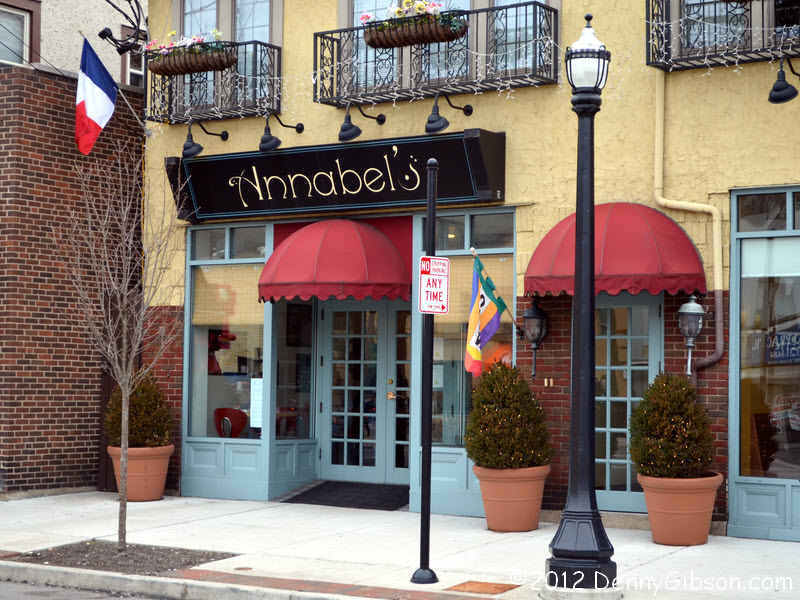
Annabel's Restaurant I thought seeing the artifacts would be good and decided that, if I was making an earlyish trip downtown, I ought to take in a new breakfast spot. Annabel’s doesn’t have its own website but has been getting rave reviews at places like Yelp and Urban Spoon. In addition to praising the food, almost all of those reviews mentioned a crowd and a long wait. But many also mentioned brunch and quite a few also mentioned Sunday. Although brunch is certainly not restricted to Sundays or even weekends I hoped that the reviews were and I now think that likely.

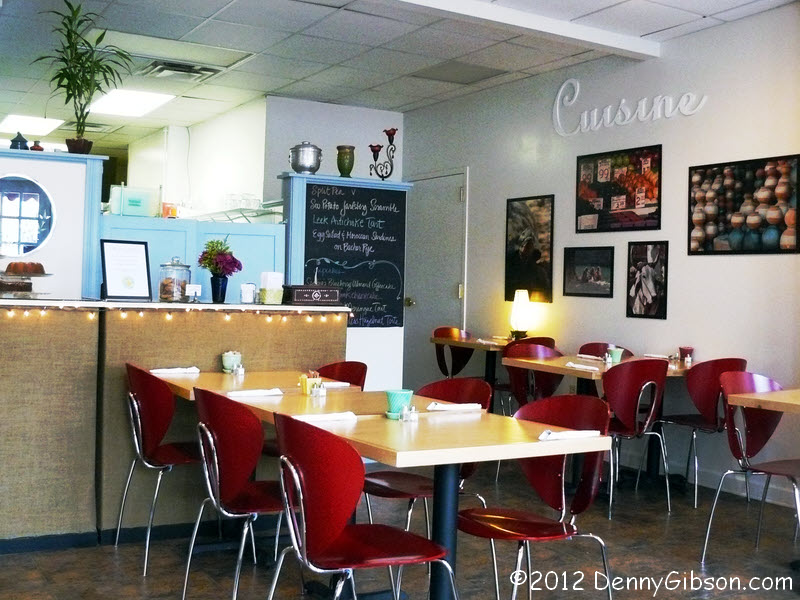
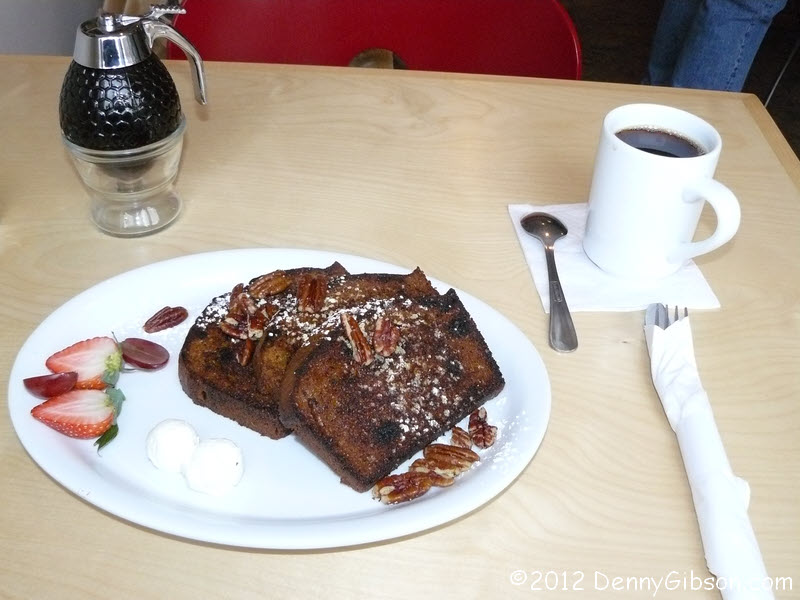
Annabel's Restaurant Annabel's Restaurant - Faux ToastAnnabel’s is small. Reviews that talked of a wait almost always mentioned this. There is seating for exactly two dozen people. Today, three two-tops to the left of the picture were full or, in the case of mine, half full, as was a two-top to the right. The restaurant is open 9:00 to 2:00 Thursday through Sunday. One of those reviews suggested getting there at 8:00 AM on Sunday to be sure of a seat. I suggest getting there just about whenever you feel like it on Thursday. No long wait for me but the food was just as awesome as the reviews claimed. I had the Carrot Cake Faux Toast which the menu describes as “French toast without the French” and which I describe as delicious. As I told the waitress, I was almost as impressed with the honey/syrup server as I was with the food. The top bit lifts off of the bottom bit and pressing the lever dispenses syrup through a hole in the bottom. Even if it dripped, which it didn’t, it would drip into the base and not in your lap. Brilliant!

The Thursday evening news also had a segment on the artifacts. Some of the items, such as nineteenth century bottles, were shown but the segment ended with a clear message that, though a public display of the artifacts is planned, that’s not yet the case. The morning version might have been somewhat misleading or I might very well have mislead myself. In either case, on Thursday morning I found myself on the west side of downtown Cincinnati in need of a new plan. Not a problem. Some conflict had interfered with recent plans to visit an exhibit at the nearby Betts House so that became a perfect substitute.

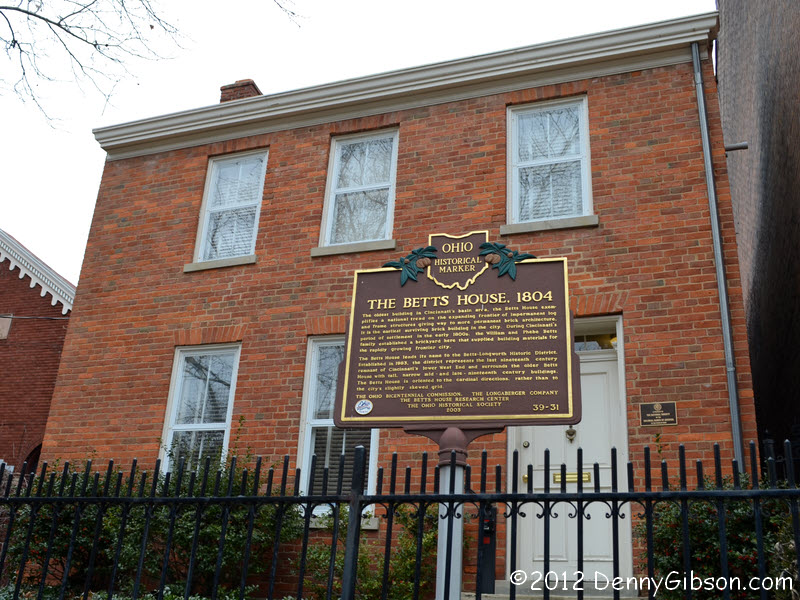
Betts HouseThe Betts House was built in 1804 using brick made on site. It started as a two-room farm house and grew to a two-story eight-room residence as the city grew around it. The house that was once far beyond the settlement’s boundaries, now has to include the qualifier “downtown” in its claims. The website identifies it as “the oldest residential structure in the downtown Cincinnati area”. The house was restored in the 1980s and opened as the Betts House Research Center in 1996. The “Research Center” part of the name came from plans to establish a reference library in the house but that turned out not to be feasible. Director Julie Carpenter calls the Betts House a “museum without collection”. The house itself is certainly a worthwhile exhibit and it usually has something else, like a photo or painting exhibit, going on, too.

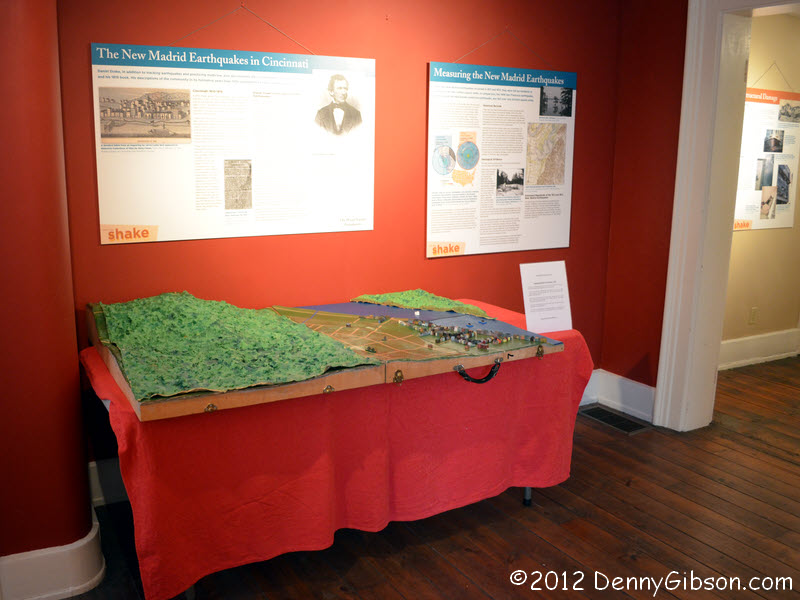
Betts House - Big Shake ExhibitIts current exhibit is The Big Shake – How the 1811-1812 New Madrid Earthquakes Rocked the Ohio River Valley. When I first read about the exhibit I wanted to see it but I really didn’t make any particular connection with the house. I thought of it as simply a display and a space coming together. The exhibit — and Carpenter, who organized the exhibit and provides an introduction — soon straightened me out. Though the series of earthquakes was centered more than 300 miles away near what is now New Madrid, Missouri, they were huge. The tremors were not just felt in Cincinnati; They did some damage. No large structures were destroyed but houses were severely shaken and chimneys were toppled. A brick summer kitchen behind the Betts House was made unusable and it’s felt that a toppled chimney was the likely cause. So the house is a survivor and a rare one. Other area structures certainly survived the earthquake but they didn’t survive the two centuries of progress that followed. In that, the Betts House is alone. It is a most appropriate setting for this exhibit which provides information on earthquakes in general and the New Madrid Earthquake in particular including its connection with the Betts family.


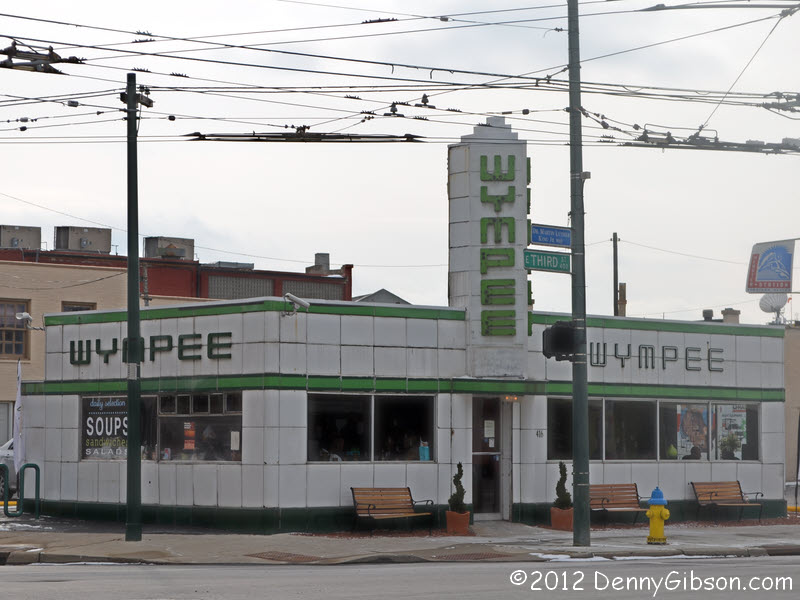
Olive, an urban diveOlive, an urban diveOn Saturday the 14th, I stopped in another new eatery that had been on my list for awhile. It’s Olive, an urban dive in Dayton, Ohio, and, yes, it really was once a Wympee’s. I never ate there when it was actually part of the Wympee empire but I did eat there a few times while it was an independent diner/’burger joint. The outside may look the same but the inside, as photos on the restaurant’s website show, has been totally redone. The menu is slightly Mediterranean but everything else is local. “local over import, labor over convenience and service over everything else” is their published motto and I can vouch for the service part. The service was excellent, the food quite good, and the prices OK. That local streak extends through the music, too. It comes, at an unintrusive volume, from an iPod (or something similar) that contains nothing but local performers. A nice touch that I particularly liked.

Signs on the Move

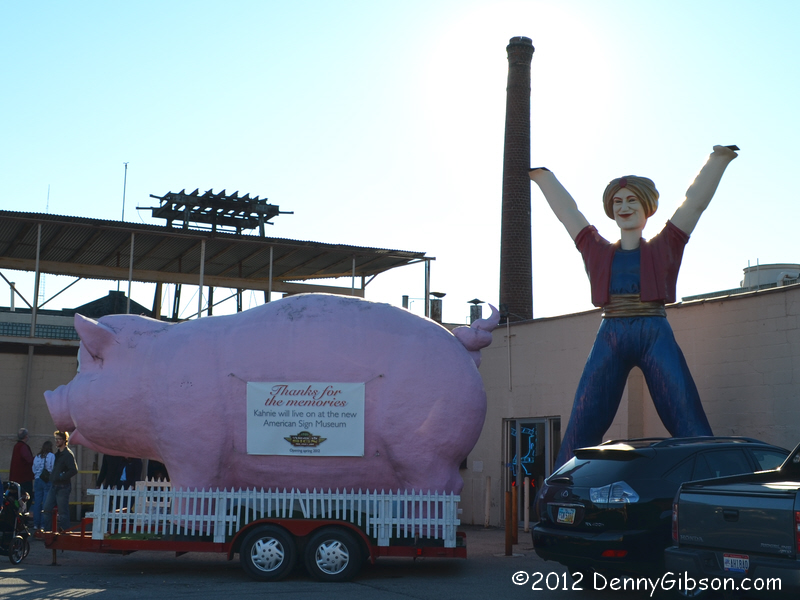
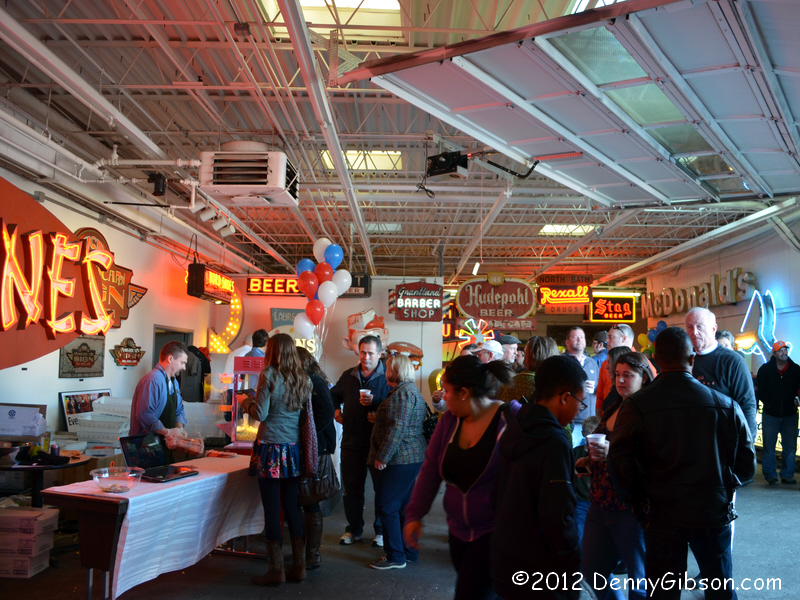
Sign Museum Entrance - pig and genieOne phase of Tod Swormstedt’s dream came true in 2005 when the American Sign Museum moved into a warehouse on Essex Place in the Walnut Hills section of Cincinnati. The next phase is coming true as it gets ready to move out. The warehouse was not the ideal location but it did its job and provided a home for lots of signs and a shrine for lots of sign lovers. Signs come in all sizes and one of the site’s shortcomings was a lack of height for some of the larger specimens. Many sat in a parking lot across the street exposed to weather and vandals. That’s not a problem at the museum’s new home about 2 1/2 miles away in Camp Washington. The former factory’s 42,000 square feet will accommodate many more signs in general and its 28-foot ceilings allow the tall guys to get out of the rain. In addition to “normal” museum exhibits, visitors will get to see the sign restoration shop and a working neon shop. In fact, the neon shop, Neon Works of Cincinnati, is already operating there and has been for roughly two years.

The Camp Washington site was initially acquired in 2007. Renovation of the building and installation of new exhibits progressed while the existing museum operated as usual. No more, though. It’s time to start moving. Yesterday, January 7, was the last hurrah for the Essex Place location and a grand hurrah it was.

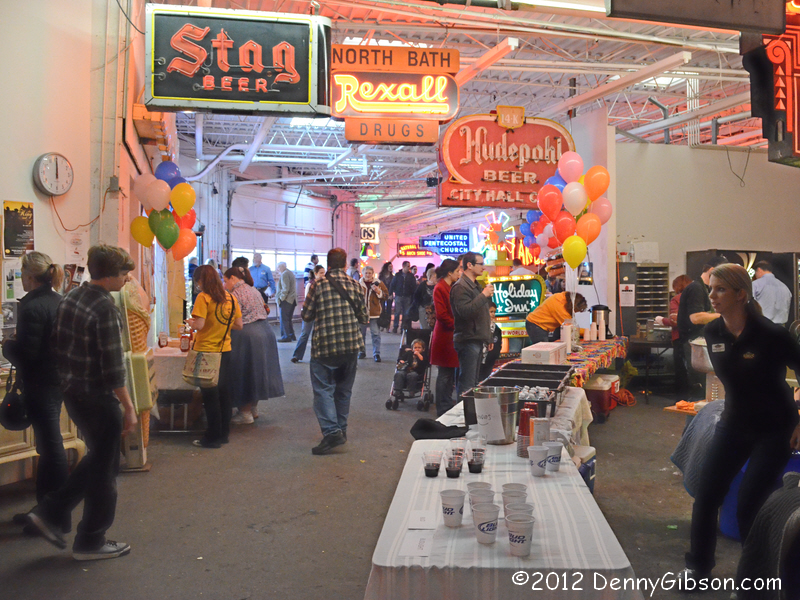
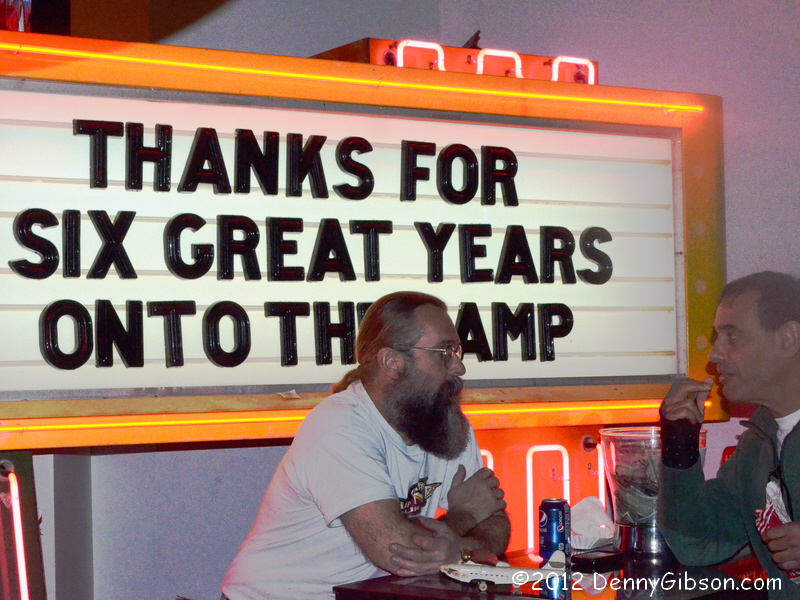
American Sign Museum Open HouseAmerican Sign Museum Open HouseThe museum announced the closing and accompanying “Done with the Old. On to the New” open house about three weeks ago through its email list and a week ago through Facebook. Apparently a couple of hundred people responded by registering for the event. Then, on Friday, the Cincinnati Enquirer ran this article and registrations skyrocketed. Registration was not required and no really accurate counting took place but it’s safe to say that over a thousand people visited what many consider Cincinnati’s best-kept secret on Saturday. These photos were taken after 4:00 when things were thinning out. (The Cincinnati Bengals lost last week but, because some other teams lost, too, backed into the playoffs and a 4:30 game. Football fans left the museum to position themselves in front of a TV. The Bengals backed out of the playoffs by losing again.)

Sign Museum Director Tod SwormstedtIt takes more than two men and a truck and a weekend to move a museum but Tod and crew think a couple of months should be enough. They have targeted April 28 for the Camp Washington Grand Opening which will be exactly seven years after the Essex Place Grand Opening. I was there at the original and I fully intend to be there for the sequel. With the new location, the huge jump in space, and increased hours, I don’t think this place will be a secret much longer.


Even though this was my last visit to the sign museum on Essex Place, I’ll probably be back to the building. The museum’s co-tenants, Essex Studios, remain and their Art Walks will resume in the spring. A large number of talented artists from a wide range of disciplines fill the studios and make the Art Walks a cross between a visit to a museum and a festival. It’s another Cincinnati secret I recommend.

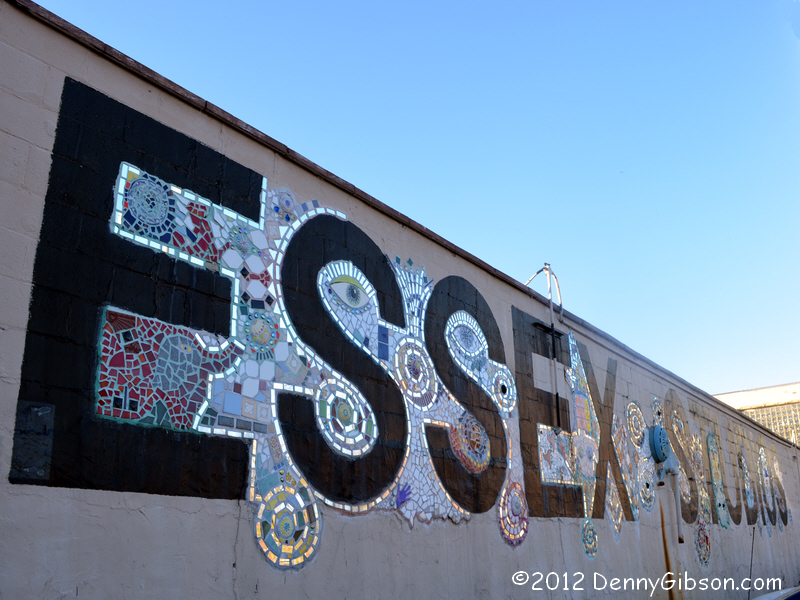
Essex Studios SignEssex Studios SignThe Art Walks are in the evenings, however, so it may be a long time before I again see the building in sunlight. Therefore, I figured this was a good time to present this lesson on how a small difference in perspective can make a big difference in perception.


Me with Karen & Bill McKibbonAfter the museum, I met Canadian roadies Bill and Karen McKibbon for dinner at their hotel. The McKibbons both work in the school system which gives them a great chunk of time off in the summer and a pretty decent one around Christmas. They use that time in well-planned road trips documented here. We’ve followed each other’s travel online for quite a while but had never met. The closest we came was when I chased them out of the country in August but they crossed the border at Sault Ste Marie five days before I did. Today they were passing through Cincinnati on the way home from the sun and sand of South Padre Island, Texas. It’s always good to turn cyber-friends into real friends.