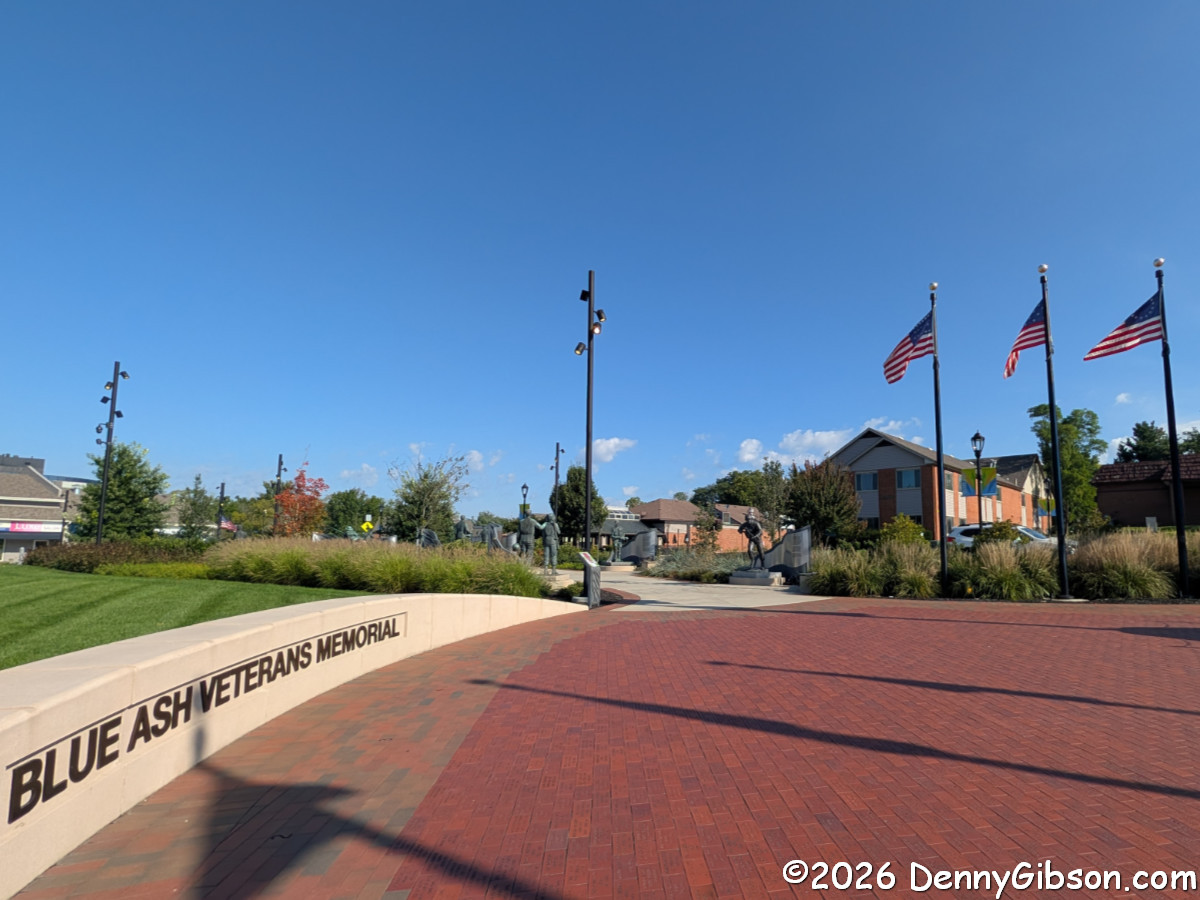
Happy Birthday U.S. Numbered Highways

The eleventh of November is a very important day for a bunch of reasons. Most importantly, it is Veterans Day. We still observe a minute of silence at the eleventh hour of the eleventh day of the eleventh month, when the armistice ending the Great War (World War I) took effect in 1918, even though the name changed from Armistice Day to Veterans Day in 1954.

November eleventh is also my daughter’s birthday. (Happy Birthday, Meg!) This might not be her most recent photo, but it’s a favorite. She is nowhere near as old as Armistice Day or even Veterans Day, but I am. The name change happened near the beginning of my second grade. That previous summer, “under God” was added to the Pledge of Allegiance. It was a confusing time for seven-year-olds.
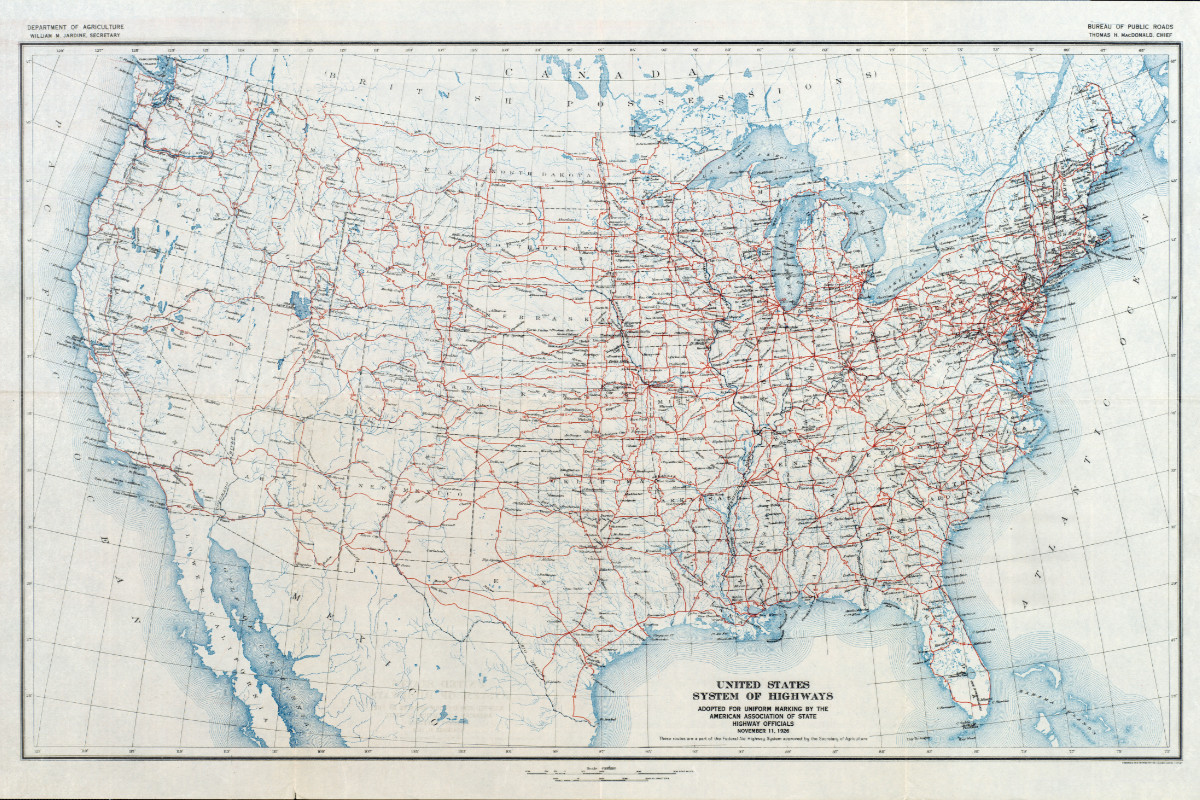
A third reason the date is important is that it is the day in 1926 that the American Association of State Highway Officials (AASHO) adopted the United States Numbered Highway System. “Numbered” and “System” are really important words in that name. Of course, “United States” is pretty significant, too. It was the first time a collection of highways running throughout the entire nation was organized systematically.
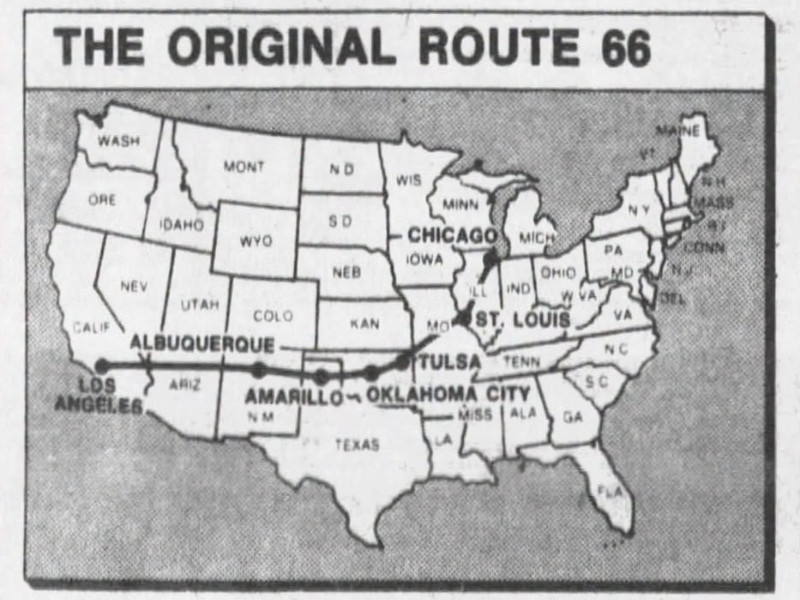
Chances are that if you are aware of that at all, it is because fans of one of those highways are enthusiastically celebrating their favorite’s centennial in numerous ways. In 2020, the U.S. Congress created a Route 66 Centennial Commission to study and recommend “activities that are fitting and proper to honor Route 66 on its 100th anniversary in 2026”. That commission is responsible for a website (Route66Centennial.org) that, among other things, serves as a clearinghouse for a wide range of activities organized by individuals and organizations connected to the route.
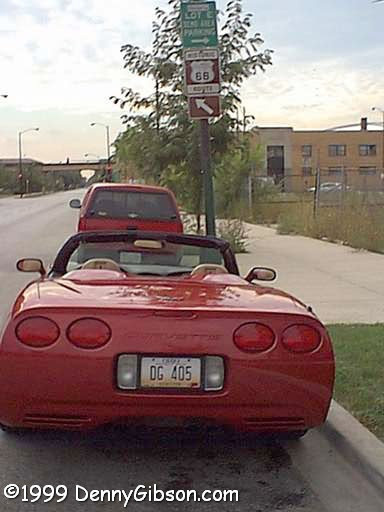
That makes sense in many ways. US-66 is certainly the most famous of all those highways created a hundred years ago today. It really is the most famous road in the United States and possibly in the world. For many, including me, it was the gateway drug that led to an addiction to driving old roads, and it is a widely recognized symbol of heritage travel in general. For some, it is itself the ultimate addiction. Quite a few lifetimes have been devoted to documenting, exploring, or simply cruising the Mother Road.
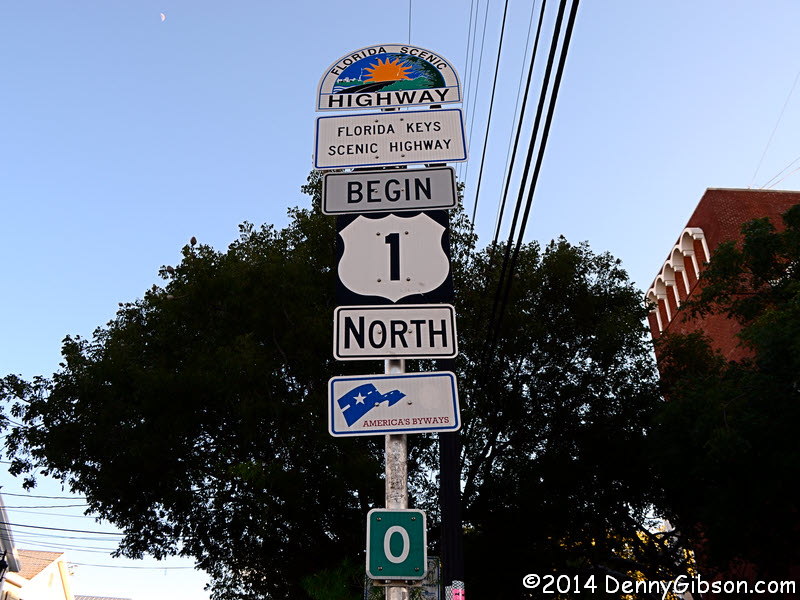
Yet, I’m a little bothered by the intense focus on a single road. It’s not so much that the rest of the nearly two hundred U.S. Numbered Highways that sprang into being on November 11, 1926, don’t get an equal chance to celebrate their own birthdays. It’s that it leads to us ignoring what was actually the big accomplishment on that date. The AASHO didn’t just create an easier means for finding your way between two big cities. It created a system for identifying a path between virtually any two points in the country. To quote myself: Making it all about a single road is “Sort of like New Hampshire celebrating its independence — and only its own independence — on the Fourth of July.”
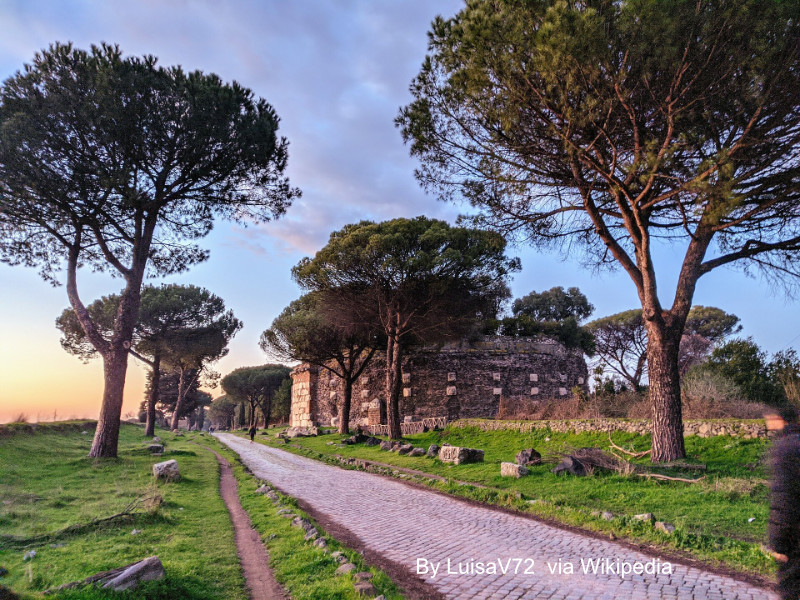
The saying “All roads lead to Rome” implies that multiple Roman roads existed, but if pressed for names, the best most of us could come up with is the Appian Way. Maybe someday, when we’re all being teleported here and there or at least flitting around in flying cars, the only automobile roadway anyone will be able to name will be Route 66. Until then, I’m going to keep reminding folks that a whole bunch of roads were born a hundred years ago today, and that the big accomplishment wasn’t any one of them, or even all of them. It was the system.

When this blog does have a post on Wednesday, it is almost always some sort of review. This post is special because it was obviously meant to be seen on November 11, and by chance that’s a Wednesday. I’m spending the day on a U.S. Highway in support of my regular weekly post. I’d love for that to be US-22, which I’ve lived near or under for nearly 60 years, but that’s a fairly major undertaking. Instead, I’m tackling a shorter U.S. Numbered Highway with an endpoint in Ohio. I plan to celebrate the day by driving the entire length of US-42 from north to south. Hopefully you can read about it Sunday.
Book Review
Just 20
Patricia Foster

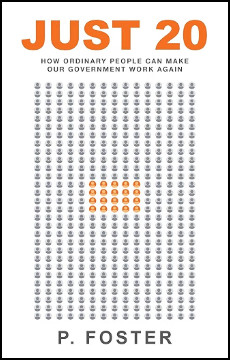
It was election day. I’d voted just about sunup, then ate breakfast by dawn’s early light. A doctor’s appointment and a pause that refreshed followed, and I was on my way home when WVXU’s Cincinnati Edition with Lucy May came on the radio. I’m an occasional, not regular, listener, and I’ve probably heard more evening repeats than live noontime broadcasts, but the show’s guest that day quickly snagged my attention. It was a retired local constitutional attorney talking about her recently published book. I was home and the radio off before the interview ended, but I had heard enough to prompt an online visit to the local library and the downloading of an electronic copy of Just 20: How Ordinary People Can Make Our Government Work Again. It is only 146 pages long and written in plain easy to understand English. I read it over the next couple of days. I have also now listened to that full Cincinnati Edition interview. It’s here.

The thing that author Patricia Foster said that grabbed my interest the most was that the rule giving the Speaker of the House nearly absolute control over what bills the House works on is not in the Constitution or any law. It is in the Rules Package that is voted on by the full House every two years when a new congress is formed. Said another way, one of the first things a newly elected or reelected Representative does is hand over their authority to introduce legislation to be discussed and voted on to somebody else.

I believe I knew at some level that it had not always been that way, but I forgot, if I ever knew, how it happened. Foster knows and recounts the steps that did it. The books first two chapters are essentially history. Chapter 1, “What Congress Was Meant to Be”, does what its title promises. It explains the founders’ careful design of a government with three equal branches: one to legislate, one to interpret, and one to execute. The second chapter, “Who Killed Congress”, identifies those steps I mentioned that brought us to the current situation where Congress does nothing that doesn’t benefit the team that that one guy belongs to. Those steps are interesting and informative. They are summed up in a single sentence near the chapter’s end, “Congress slowly rewrote itself into dysfunction.”

I’m guessing that we all have favorite examples of congress triggered frustration. One of mine is when a single individual prevented a Supreme Court appointee even being considered and gloated about it being a win for his team. More recently, another stopped a bipartisan immigration reform bill from seeing the light of day so the problem could continue to be touted as an issue by his team. The team in both of those examples is the same and easily identified, but I have no doubt that equally frustrating examples involving the other team are easy to find.

Those frustrations are not the result of something I favored being defeated by congress. They are the result of one person deciding something would not benefit their team then suppressing that something. They are the result of disruptions in the four steps that Foster repeatedly identifies as the basic original job description for congress: Propose, Debate, Amend, Vote.

As you probably know, I simply won’t waste energy reviewing something I don’t enjoy. If I hint at recommending something, it’s generally because I think you will enjoy it, too. I’m strongly recommending that you read this book and/or listen to the Lucy May interview partly because I think most of you would enjoy it, but also because I think you may benefit from it and in turn you might benefit the world. Foster doesn’t just describe the dysfunctional congress, she describes some steps to initiate repairs. They basically involve attempting to convince your representative to try to hang onto the power he has on day one of a new congress. In suggesting this, she reminds us that each representative is beholden to approximately just 0.2 percent of the population making them our most intimate contact with the Federal government. I obviously missed out on making the suggestion to my congressman while I still had my vote in my hand, but I made it anyway.

In support of the ideas in her book, Foster maintains a website and a Facebook page. Check ’em out.

Just 20: How Ordinary People Can Make Our Government Work Again, Patricia Foster, Gatekeeper Press (August 21, 2026), 8.5 x 5.5 inches, 146 pages, ISBN 978-1662976988
Available through Amazon.

Your Bank Account Won’t Get You Into Congress Anymore

Oh, how I wish that were true. In fact, I’m having trouble resisting the urge to hope that it is. From buying votes to buying drinks to buying airtime, money has always played a role in elections. That role was greatly expanded by the Supreme Court’s Citizens United decision of 2010, and until that’s reversed, I fear corporations and political action committees will have an outsized presence in our elections. However, for at least one glorious round of voting, more U.S. citizens seemed repulsed by the existence of oligarchs than influenced by their spending.

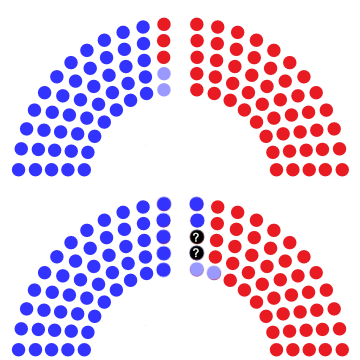
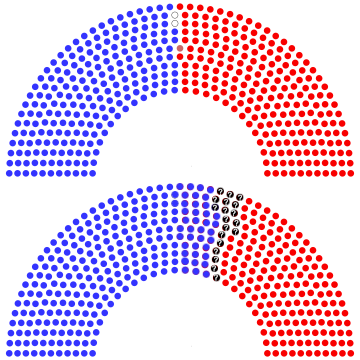
No matter how much or how little voters were influenced by the $12 billion spent on the 2026 campaign by Musk, Soros, and others, it is undeniable that they were not voting to support the current administration. Both chambers of congress were flipped from slim Republican majorities to less slim Democratic majorities. It’s been a while. Democrats did control both chambers in the 117th Congress (2021 & 2022), but the margin in the house was much slimmer (218-214) and the Senate was evenly split with the Vice President, a Democrat, breaking ties.

This is the largest rebuke of the incumbent party since the Watergate Scandal impacted the 1974 election. It’s good to know when you’ve been scammed. It’s even better when, like so many voters in this election, you let others know that you know.

Read, Listen, Question, Think, Vote

I believe the title of my first election day-oriented post, “I Care Not How. Only If.” , was accurate when it appeared in 2014, but it certainly would not be now. I backed off from my sincerely held “every vote’s a good vote” stance in 2018 by changing the title to the embarrassingly unsatisfying “I Care Less About How You Vote Than If”. Here’s hoping I can stand behind and be comfortable with this new title for a while.


yvyv

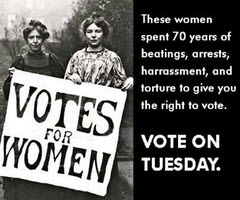
We fought a war to get this country going, then gave every land-owning white male above the age of twenty-one the right to vote. A little more than fourscore years later, we fought a war with ourselves that cleared the way for non-whites to vote. Several decades of loud, disruptive, and sometimes dangerous behavior brought the granting of that same right to non-males a half-century later, and another half-century saw the voting age lowered to eighteen after a decade or so of protests and demonstrations.

dftv1

Of course, putting something in a constitution does not automatically make it a practice throughout the land, and I am painfully aware that resistance followed each of those changes and that efforts to make voting extremely difficult for “the other side” are ongoing today. I don’t want to ignore partisan obstructions and system flaws, but neither do I want to get hung up on them. I meant my first paragraph to be a reminder that a hell of a lot of effort, property, and lives have gone into providing an opportunity to vote to a hell of a lot of people. Far too many of those opportunities go unused.

My 2014 election post was triggered almost entirely by the USA’s abysmal record on voter participation. Subsequent posts have suggested that we might be getting better, but that’s not holding up. A smaller percentage of eligible voters participated in the 2024 presidential election than the one previous — 64% vs. 66%. Same with the 2022 and 2018 midterms — 46% vs. 50%. In the 2024 version of this post, I noted that the real problem appeared to be registration rather than voting. The gap between the number registered and the number voting is much smaller than the gap between the voting-age population and those registered. I’ve not found updated numbers for all that, but there are solid indications that the situation has not changed. This post goes up too late to include “Register” in the checklist in the title. The things in that list can all be practiced right up to the point you mark your ballot. “Question” and “Think” are clearly the most important, and they apply to everything that you “Read” or “Listen” to. Maybe they apply to campaign ads more than anything else. The purpose of campaign ads is not to inform or even misinform, although it sometimes seems like it. Their purpose is to persuade. Question them. Think about them.

dftv2

I first posted the core of this article in 2014. In the original title, I claimed to not care how anyone votes. That was never entirely true, of course. I have my favorite candidates and issues. I’ll be disappointed in anyone who votes differently than I do, but not nearly as disappointed as I’ll be in anyone who doesn’t vote at all. I’m reminded of parents working on getting their kids to clean their plates with lines like, “There are hungry children in China who would love to have your green beans.” I’m not sure what the demand for leftover beans is in Beijing these days, but I’m pretty sure some folks there would like to have our access to ballots and voting booths.