 I’m sure everybody is familiar with the joke about someone having “a face for radio.” It’s based on the idea that you do not have to look good to sound good. That’s an idea that often applies doubly to buildings. I’ve not been in a lot of radio stations, but I have been in enough to know that the people behind the microphones are frequently speaking in a dark cubicle far from prying and non-prying eyes, with little for their own eyes to take in as they work. That description has applied to Cincinnati’s WVXU and WGUC, but will no longer. Cincinnati Public Radio is letting the public see its new building this weekend. The bulk of personnel are already operating in the new space, and the plan is to switch broadcasting activity at noon on Tuesday.
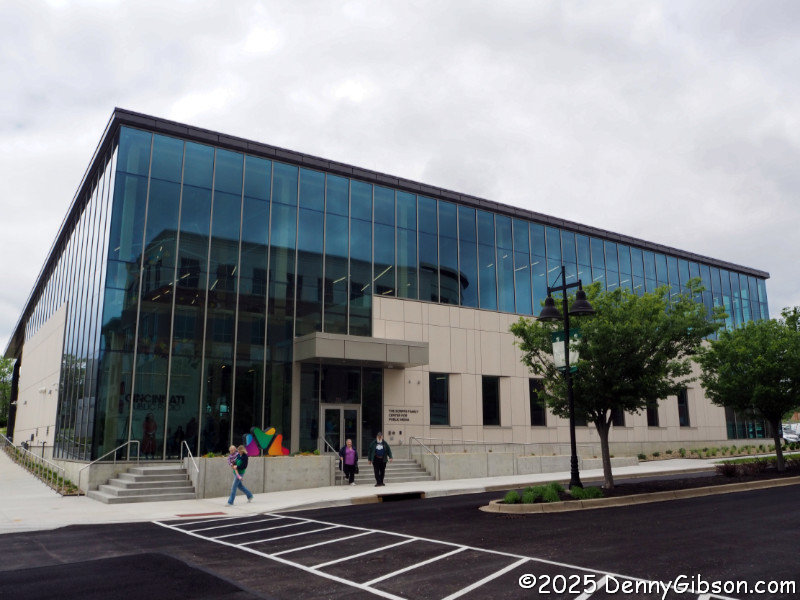
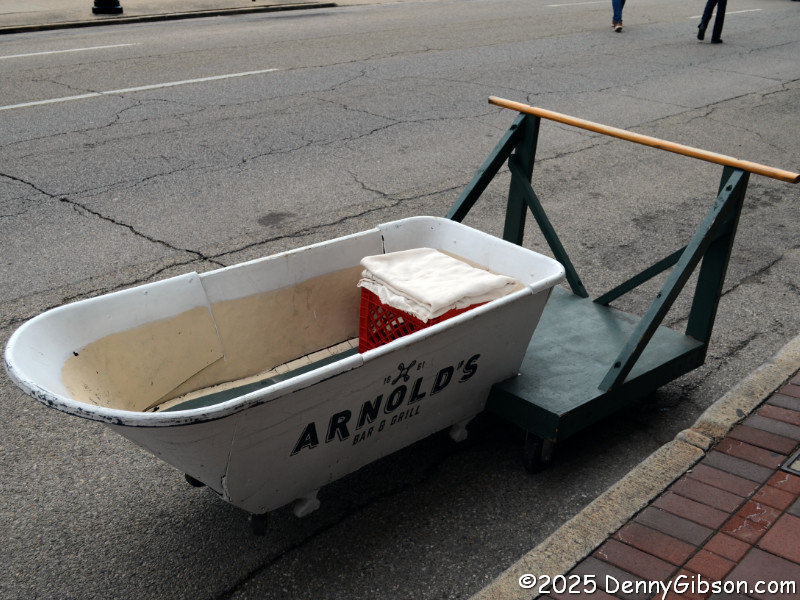
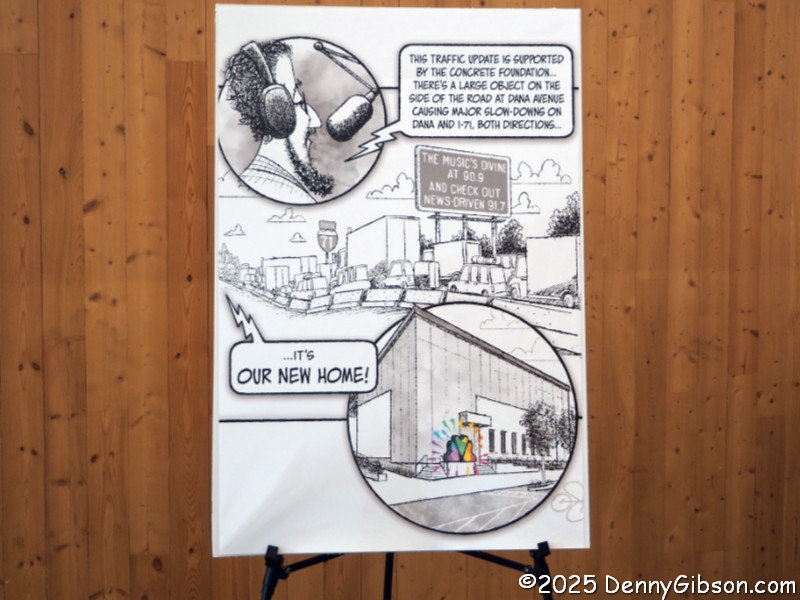
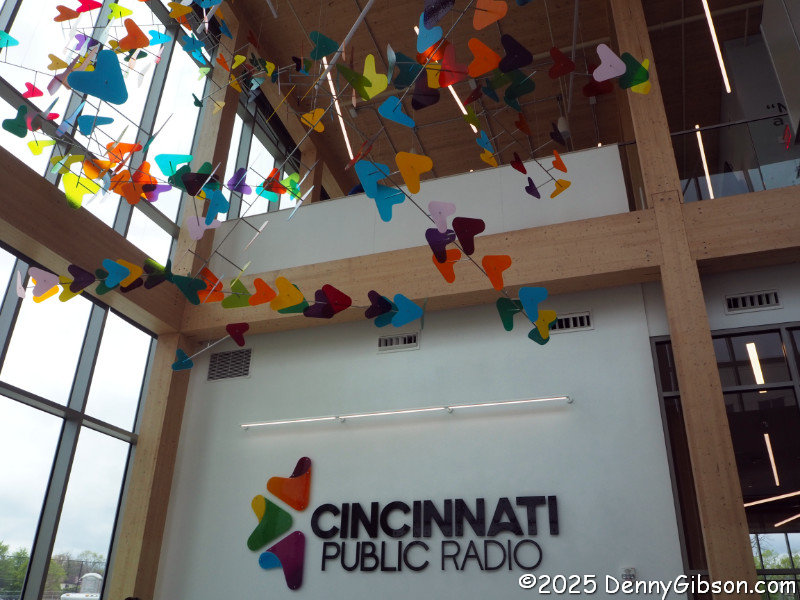
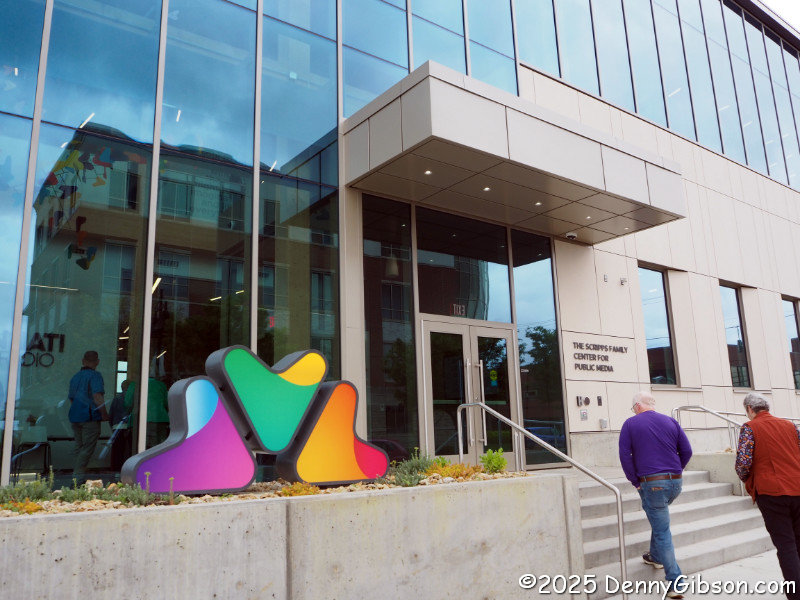 I attended Saturday’s open house, which repeats today, April 27, 2025, from 1:00 to 5:00. Directions and other details are here. The cartoon in the opening photo stood not far from the entrance. The distance between speech balloons represents reporter Bill Rinehart’s signature pause when identifying debris on the roadway. I got my first view of the building from a drive by a few weeks ago, but this was my first up-close and stationary look.
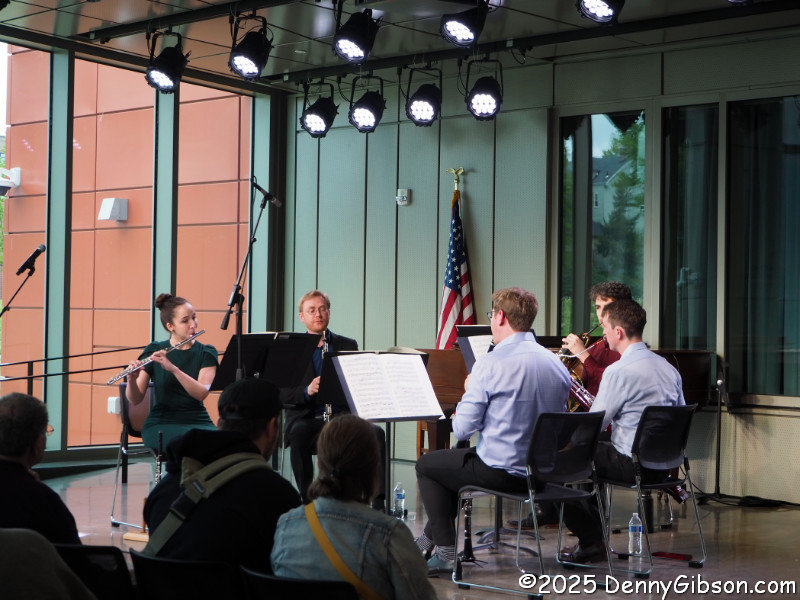
 And it was obviously my first look inside. That is the Cincinnati Symphony Orchestra Woodwind Quintet on stage in an area dubbed The Gathering Space. There is also a Performance Studio. With spaces such as this, dare we hope that live music performances — possibly featuring local talent — might be in CPR’s future?
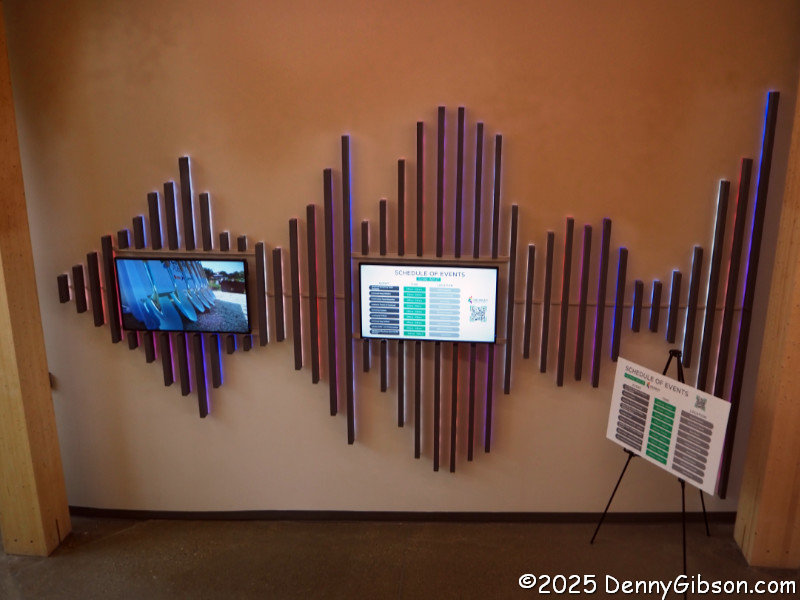
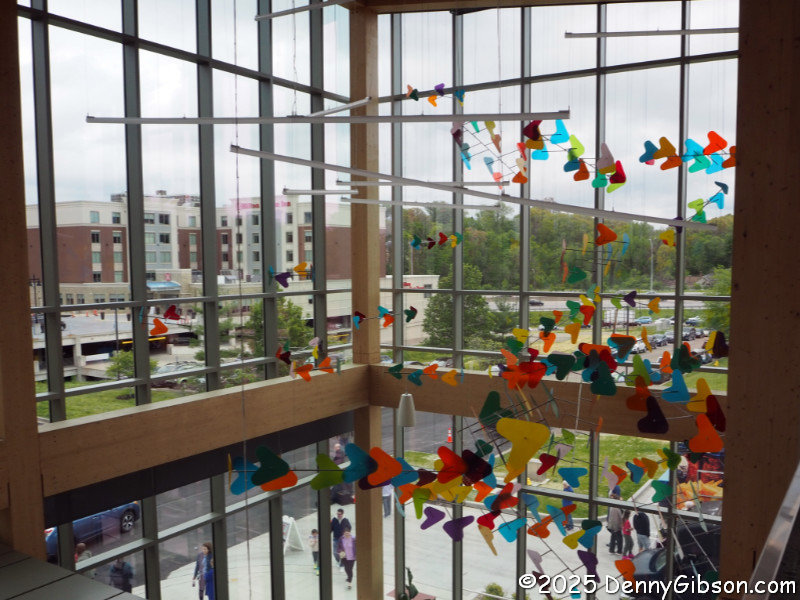
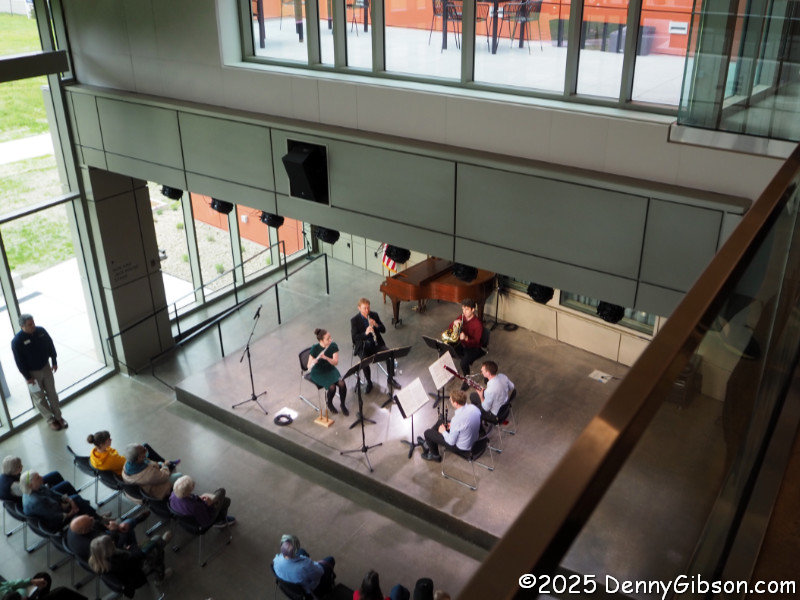 Pictures from the upper floor, including subjects from the preceding paragraph, show how open the building is.
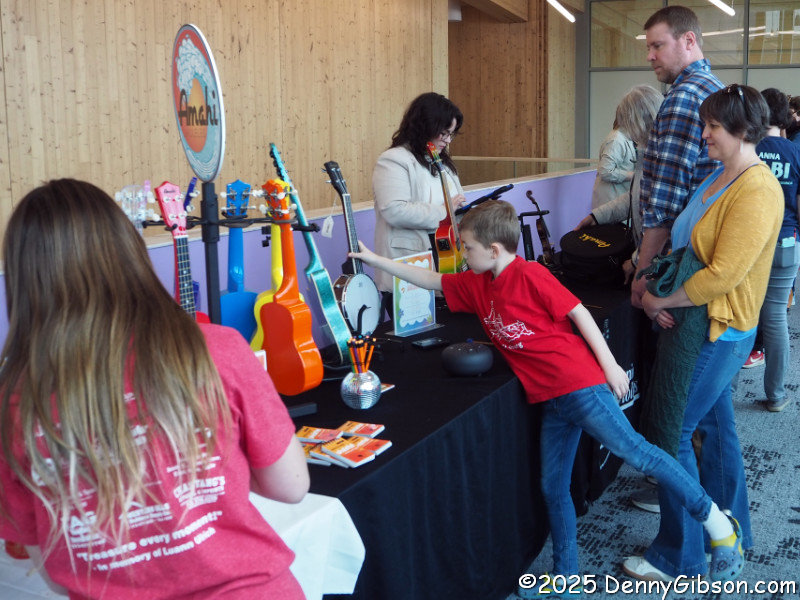 The Instrument Petting Zoo, which seemed to be a big hit, was a new one on me. A more traditional petting zoo was also on the agenda, but the pettees had not yet arrived when I was there. After I walked to my car and worked my way back through the traffic to exit, I saw a Cincinnati Zoo van parked near the front door. I’m pretty sure that meant additional petting was happening or about to.
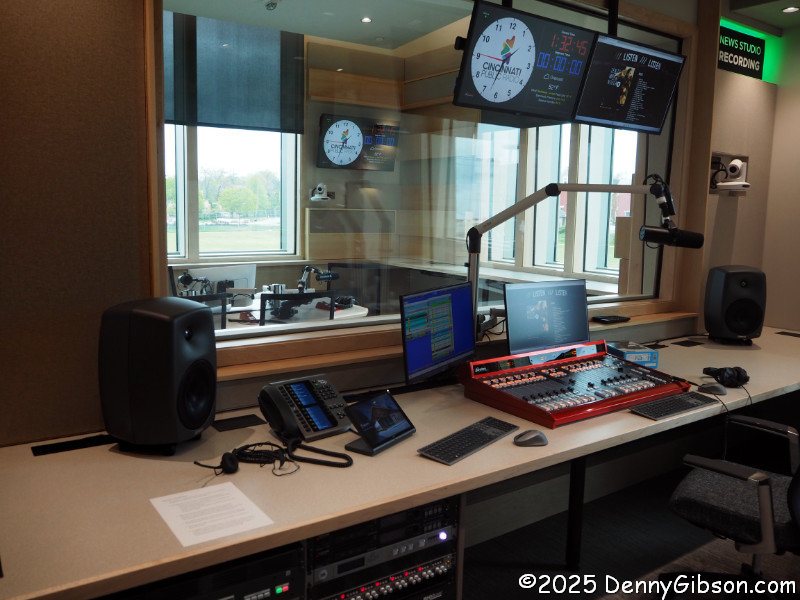
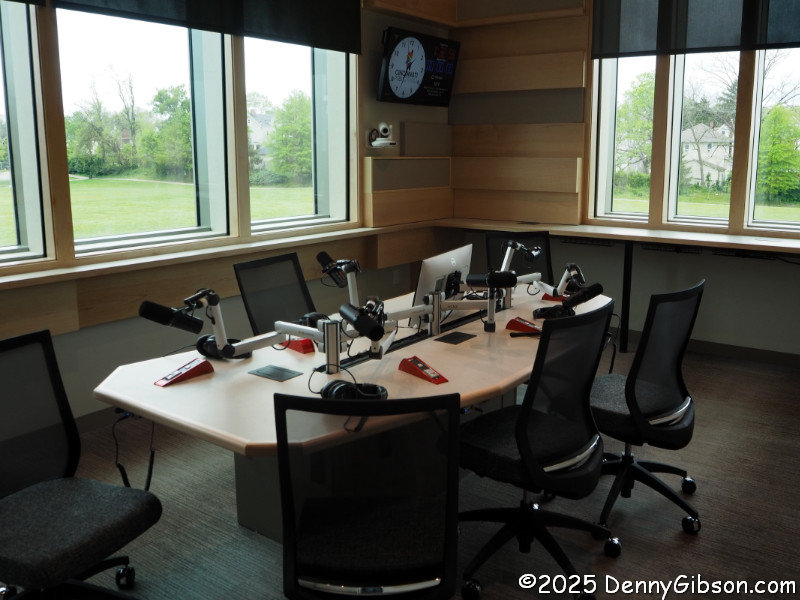
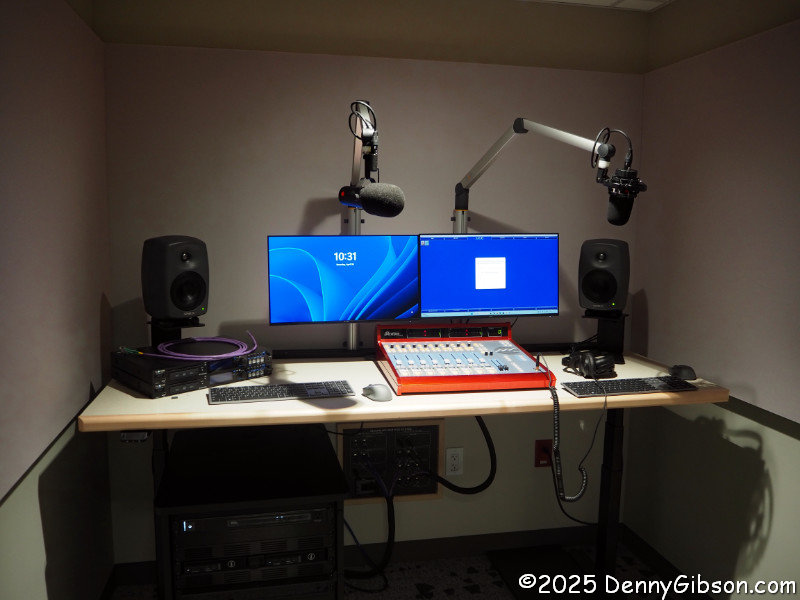 There are a number of smaller work areas, including some without windows. Most, if not all, of these are mixing and editing stations where a little isolation is a good thing.
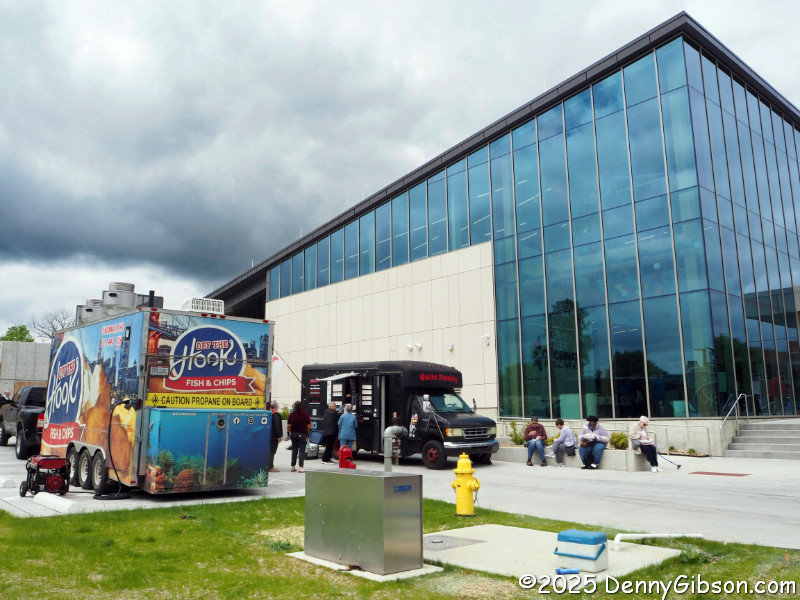 As far as I know, the food trucks will not always be there, but they were certainly welcome on Saturday and will be there on Sunday if you want to grab a meal or some Graeter’s ice cream while checking out the building. The CSO quintet was piped outside to a nice park-like area, so I assume Sunday’s Gathering Space performances will be as well. That is where I listened while enjoying some black raspberry chocolate chip. The new place is finished, and the Welcome Weekend is half over. Cincinnati Public Radio is just about done packin’ and unpackin’.
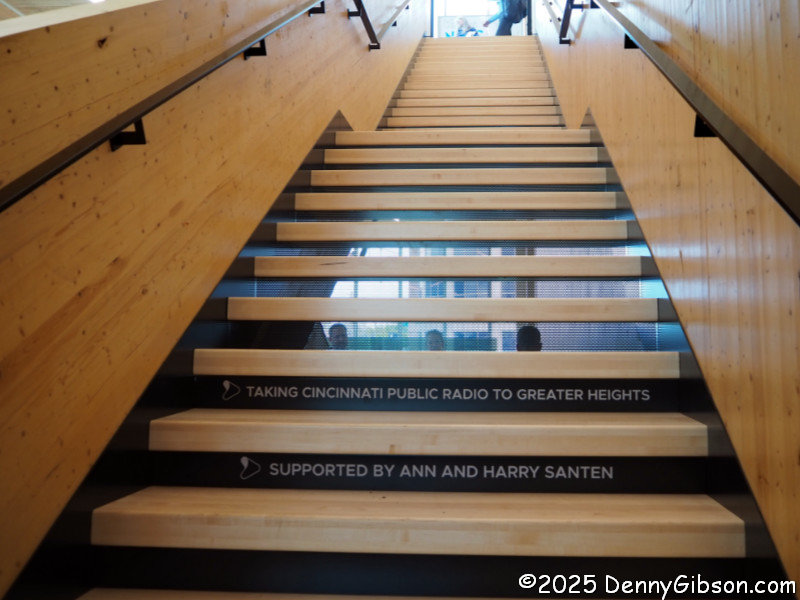
ADDENDUM 29-Apr-2025: Although I was aware of the building’s forward-thinking mass timber construction and actually had it in mind as something to point out when I snapped the picture of the stairway, it completely got away from me during the writing phase. I was reminded of my glaring oversight as I listened to the official throwing of the switch at noon today. The core of this building is not steel or concrete. This is the first mass timber building in Cincinnati. Learn about mass timber here and watch a video about why Cincinnati Public Radio chose it here.
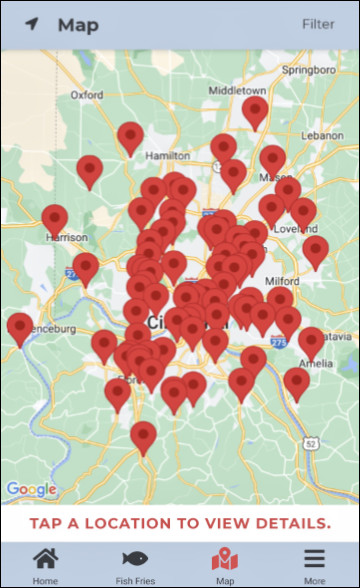 Yes, that image at right looks pretty much identical to the opening image in last year’s Lenten wrap-up post (