
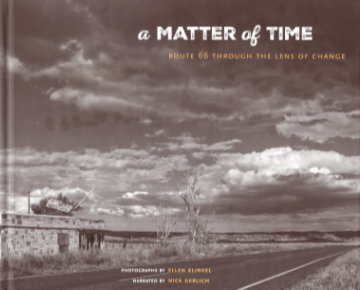
 There’s not much point in counting the number of books published about Route 66; The likelihood that the count would increase before you were done is just too great. An Amazon search simply says “over 2,000”. So why review this one? What sets it apart from the others? The most obvious reason for reviewing it is a simple one: I know one of the people whose name is on the cover. The things that set it apart are not as obvious (or benignly biased). In fact, I’ve only found one thing about the book that I think is actually unique, and I’m not really sure about that. The book has no author; It has a narrator.
Nick Gerlich’s role choice is significant. This is a photobook. Its reason for being lies in Ellen Klinkel’s photographs. They could exist without any accompanying words at all and still tell a story. That certainly doesn’t mean that Gerlich’s words aren’t welcome and useful. It’s simply an observation that the words are narrating a story — really just one of many — present in the pictures. Gerlich, whose day job is as a college marketing professor, is extremely knowledgable on Route 66. In the past, he has filled the role of narrator, in the more traditional sense, for KC Keefer’s series of Unoccupied Route 66 videos. Regardless of whether he is narrating on screen or in print, he writes and researches his own scripts.
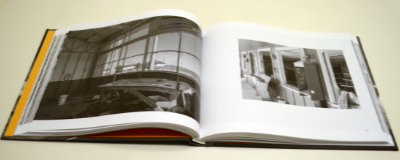 The photos are black and white, which is unusual but not unique. What may be unique is how they came to be at all. Klinkel tells that story in the book’s preface. It begins in 2013. She lives in Germany and was in the western U.S. with her husband for a four-week vacation which she describes as “the first time I ever had a serious camera in my hands”. Planned visits to several national parks fell victim to the sixteen-day government shutdown in October of that year and driving a portion of Route 66 was substituted. Klinkel credits this very first time on the historic highway coupled with the “serious camera” as having “instantly sparked my passion for photography”.
No pictures from that 2013 trip made it into A Matter of Time. All photos in the book were taken between 2015 and 2017. Klinkel refers to the images as “fine art photography”. It is a phrase I tend to associate with wall mounted prints or coffee-table-sized books with extra thick pages, but that’s wrong. A piece of the definition of fine art photography is something “in line with the vision of the photographer as artist”, and that fits the images in A Matter of Time very well. They are not artsy in an abstract pattern of shadows way, but in a way that works to capture a “vision of the photographer” and encourages the viewer to mentally reproduce that vision.
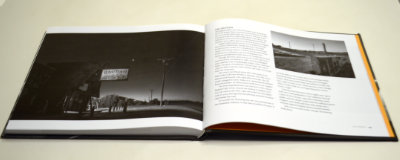 Most, but far from all, of the photos are of places I recognize from my own travels on Sixty-Six, and some of those nearly reproduce visions I’ve had myself. There are plenty of pictures of places I do not recognize. Sometimes that’s because they are from a location where I’ve never stopped or maybe even passed, but sometimes it’s because Klinkel sees and shares a vision that never occurred to me even though I’ve stood at or near the very spot she did. I don’t mean to imply that I expected anything else. It’s great to be shown something you’ve never seen, but it can be even better to be shown something known in a new way. Although it is a place I instantly recognized, a favorite example of being shown something in a new way is the early morning shot of the Bagdad Cafe with the coming sun just a tiny but significant twinkle. Another is the low-level shot of a protective wall of tires at a long-abandoned gas station at Texas Exit 0 of I-40.
I confess to initially not understanding the meaning of the word “time” in the title. I guess my first thought was of the elapsed time covered by the popular technique of using old and new images in “then and now” pairings. There is none of that here where no photo is more than five years old. Despite having read Klinkel’s preface, I early on settled on the time element being Gerlich’s words that placed the images in their proper time in history. Those words are certainly important. The often detailed and always accurate telling of how the subject of a picture came to be and where it is located provides both education and mooring.
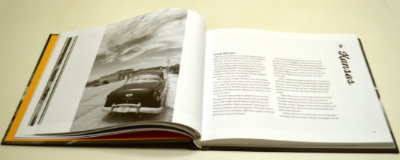 However, something clicked on a rereading of that preface that hadn’t quite registered on the first pass. Klinkel explains the title quite clearly:
It is a matter of time in a historic and photographic sense; a mattter of being in time before a location fades away; a matter of being in time to capture the sunrise or sunset; a matter of having enough time and patience to wait for the right light and moment.
The historic sense is fairly common. Capturing things fading but not yet completely faded is something that many photographs do. The photographic sense is less so. Being in time and having enough time is not unique but it’s not all that common and it sure is refreshing. And it explains the impressive percentage and variety of truly interesting skies in A Matter of Time.
A Matter of Time: Route 66 through the Lens of Change, Ellen Klinkel and Nick Gerlich, University of Oklahoma Press, October 10, 2019, 10 x 8 inches, 272 pages, ISBN 978-0806164007
Available through Amazon.
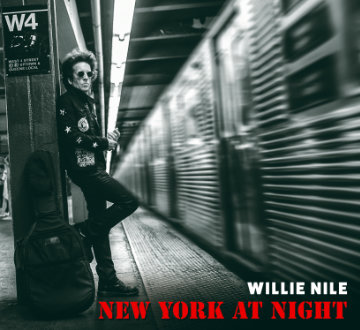 I didn’t actually try to produce a flashback last week but I thought about it. Because I’d pre-ordered the CD, when Willie Nile released World War Willie back in 2016, I got a digital copy before the actual CD arrived. It was early spring and I took a nice walk around the neighborhood with the new music playing in my ears. The walk and the songs both made an impression. A similar situation existed with New York at Night. A digital version became available before the physical version arrived. My World War Willie introductory walkabout was powered by a 2011 vintage iPod. It still works fine but I no longer have any way to maintain its contents. This time I downloaded the music to my phone and set out to enjoy some fine weather and new music.
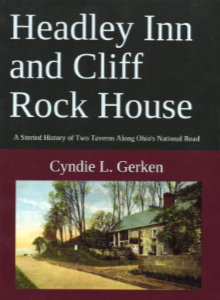 Cyndie Gerken’s third big helping of National Road knowledge was served up a bit more than a year ago, and I have no good excuse, or even enough bad ones, to account for waiting so long to take a look. Of course, once I did, the same accuracy and thoroughness that marked her earlier books were instantly apparent in this one. In 2015, she documented Ohio’s National Road mile markers with
 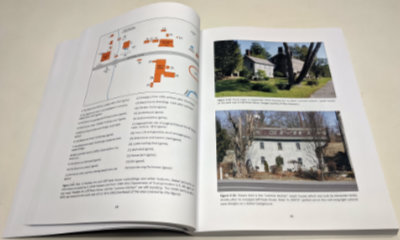 Both of the book’s subjects appeared almost immediately after the National Road passed by the land they would occupy. The first section of the Cliff Rock House was completed in 1830 and the Headley Inn’s first section in 1833. Other dates have appeared in articles and even on signs but Gerken sorts through the various claims and presents a solid case for these dates. Both structures have been enlarged and modified over the years. Despite their nearness to each other, the inns were constructed and operated independently by two separate families. That has not always been the case although it is again today.
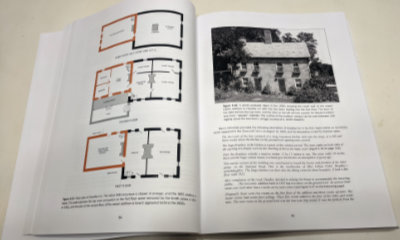 It is generally thought that the Headley Inn initially served as a stagecoach stop while the larger Cliff Rock House catered more to drovers herding sheep and other animals to market. That sort of division was never iron clad, of course, but that kind of thinking does serve to justify the two businesses being so close.
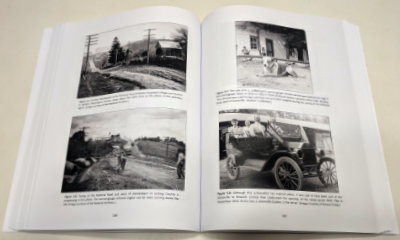 Living memory provides even more input to the post-tearoom era and here the living memory is sometimes Gerken’s own although it is more often her personal interviews with the short series of owners. The book is heavily illustrated with historical photos, maps, diagrams, newspaper clippings, and more. Modern photos include many taken by the author herself.
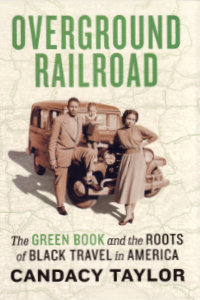 “This is not a book about the history of road-tripping and black travel”, is the first sentence of the last paragraph of the introduction. That’s something I knew long before I read it. It was something Candacy Taylor said early in the presentation I attended in Indianapolis back in February. It may even have been something she said during another presentation of hers I attended back in 2016. I discovered Taylor the same way she discovered the Green Book. Well, not exactly the same way. She learned of the Green Book while doing research for a Moon Travel Guide on Route 66. I learned of Candacy Taylor as a mere attendee at a conference on the historic road. Research for the book was well underway when Taylor spoke at that conference in Los Angeles but Overground Railroad: The Green Book and the Roots of Black Travel in America was still a concept. It was a reality when she spoke in Indianapolis, and that’s where I acquired my copy.
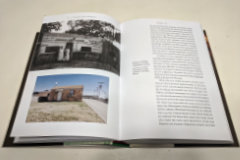 Overground Railroad is heavily illustrated. Taylor’s research for this project included cataloging and visiting businesses listed in the Green Book, and several of her photographs of sites that remain appear throughout the book. She also includes some personal photos. Numerous historic photos along with reproductions from the Green Book accompany the text. A section in the back of the book lists surviving “Green Book sites” and includes Taylor’s photos of many. It is followed by a section with reproductions of every known Green Book cover other than the very first edition of 1936.





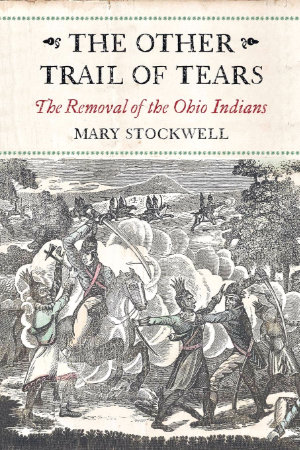 I read this book by accident and belatedly. The accident comes from a spontaneous purchase. The belated reading comes from me not realizing how good it is. I picked the book up back in June of 2018 when I went to hear Mary Stockwell talk on her just-published
 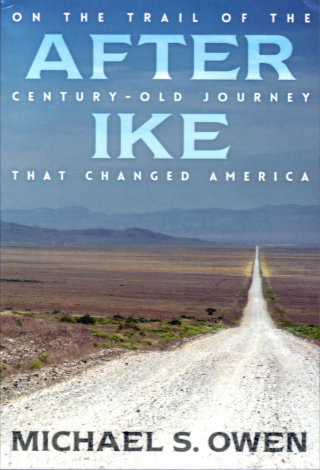 There are things that fans of old roads or of transportation history in general falsely assume that everyone knows about. One such item is the continent crossing Motor Transport Corps convoy of 1919. In the summer following the end of the first World War, a group of military personnel and vehicles set off from Washington, DC, to test the nation’s roads all the way to San Francisco. Although he was primarily an observer on the trip, his future accomplishments make Dwight Eisenhower the member of the convoy best-known today. Michael Owen uses the future president’s nickname in naming this telling of his own retracing of the 3,250-mile-long path that some 300 men and 81 vehicles of all shapes and sizes followed a century ago.
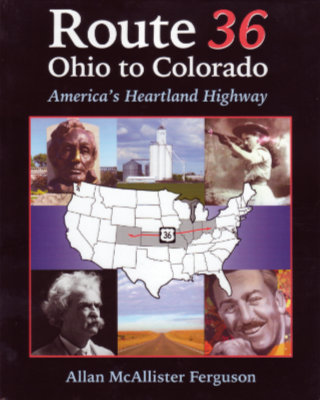 US-36 is kind of special to me. It is one of just a handful of US highways with an endpoint in my home state and one of just two that pass through my birth county. It’s even more special to Allan Ferguson. He grew up near the route in Illinois, has ancestral connections to the eastern end in Ohio, and currently lives near its western end in Colorado. It has had a role in much of his life from childhood vacations and visits to relatives to business trips and drives between old and new homes as an adult. Not all of his travels between Colorado and Illinois have been on Route 36. Not surprisingly, his early trips back home were on expressways. At some point, he tried US-36 and came to realize three things. The first was that it took no more time than driving the interstates. Between Denver and central Illinois, the US-36 is quite straight and about 100 miles shorter than either I-70 or I-80. Secondly, it was relaxing rather than stressful. The third thing he realized was that the drive was actually interesting and that realization eventually led to this book.
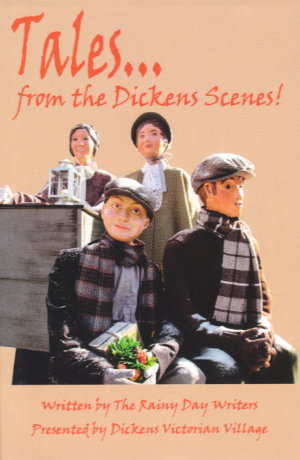 This book is unusual and unusually good. The Dickens Scenes of the title are those in Cambridge, Ohio, that starred in this blog’s most recent regular weekly post. There are currently 94 of those scenes and each began life as a sketch by a fellow named Bob Ley. Bob is one of a group of writers, known as
 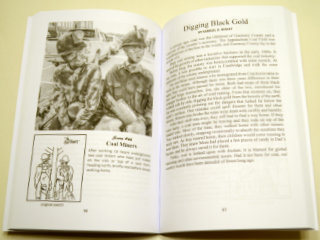 The individual photos are not credited but acknowledgments at the front of the book identify Tom Davey and Lindy Thaxton as the photographers. The photos are all quite good and do a nice job of capturing each scene from its best vantage point. Together, the book’s even-numbered (i.e., lefthand) pages make up the sort of catalog often prepared for a museum display. The village really is such a display with the sidewalks of Cambridge forming the museum.