 On the day following this year’s elections I arrived in Los Angeles to attend a Route 66 conference. Los Angeles was one of the cities where people, predominantly college aged, took to the street to express their displeasure with the results. They were nowhere near where I was staying and at first I thought them just silly. As reports of scattered violence and destruction came in I begin the see them as counter productive or worse. On Thursday I was in the back seat of a car rerouted by police because protesters were blocking our original path. Protests continued through the weekend and I saw some of the participants on a couple of occasions. It was seeing a group of them arrive downtown on Saturday that planted the seed for this article. To be accurate, it wasn’t the sight of the protesters that planted the seed, it was something one of “my people”, the Route 66 enthusiasts, said that did it.
Two conference related events, a breakfast and a tour, were planned for Saturday morning. They were not conflicting but both had limited capacity. Some had signed on early enough to be included in both. Others had not. I was part of the breakfast only group. Following breakfast, as we headed for the train to return to our motel, the train carrying the tour only group arrived. A fairly large number of protesters were on the same train. The two groups of 66ers exchanged greetings and the tour only folks made a couple of comments about riding the train with the protesters. “They’re just really scared,” someone said.
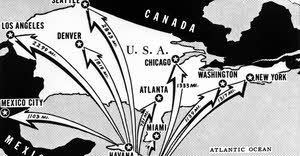 A few days later I was in San Diego touring a collection of ships maintained there by the Maritime Museum. One was a Soviet submarine of the type that came quite close to North America during the Cuban Missile Crisis. Audio and video recordings are used to give some sense of what things were like during that crisis. I have strong memories of my own. I was a high school sophomore and remember being seriously scared during those tense days in October 1962. It wasn’t a horror movie scared or a sudden loud noise scared or a that car’s coming at me scared. It was so much bigger and longer lasting and simultaneously unimaginable and imagination driving. Maybe it was the kind of scared that some of those kids with the signs were feeling.
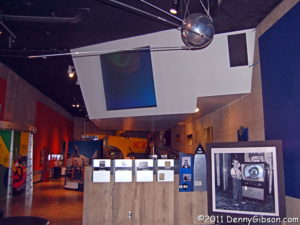
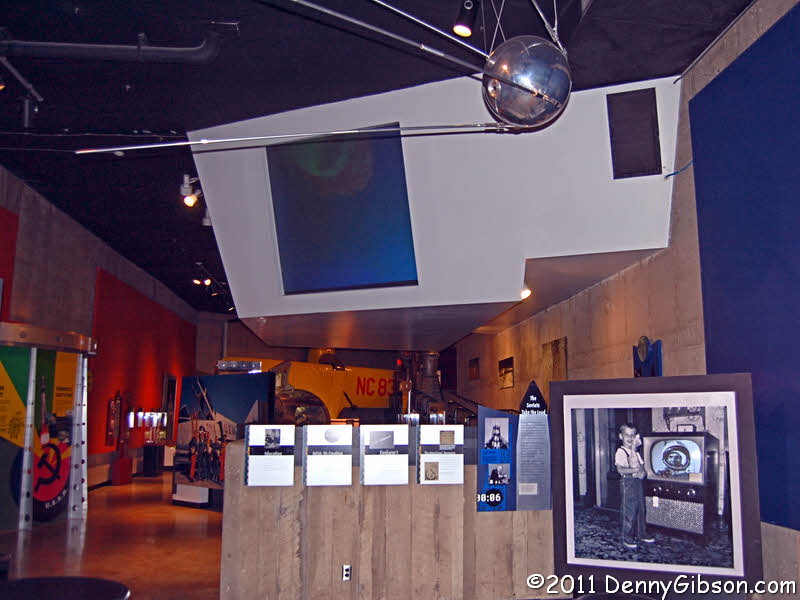
It wasn’t the first time I’d felt that kind of scared. The first was in 1957 when Sputnik I was launched. I was ten and personally thought it one of the coolest things ever. But I began to sense real concern in my parents. Barely a decade had passed since World War II ended plus many were far from certain that the fighting in Korea was really over. Now our nation’s greatest enemy had an object crossing our borders and passing over our heads on a regular basis. The two huge oceans on our coasts simply weren’t big enough to protect us anymore. At the time I didn’t completely understand their fear but I was very aware of it and shared it just a little. The picture at the top of this article is one I took a few years ago at the Armstrong Air & Space Museum. A full size replica of Sputnik I hangs from the ceiling. When the real one flew overhead, I looked a lot like the young Neil Armstrong in the framed photo at lower right and the TV I saw the news on looked almost identical to the one he’s standing next to.
I still thought of Sputnik more as a human accomplishment than a Soviet threat but my innocence was chipped. By the time missiles were discovered in Cuba just five years later, phrases like “Soviet threat”, “nuclear war,” and “mutual assured destruction” were all too familiar and the fear I felt as Kennedy and Khrushchev bluffed and bartered was my own and it was real. Thirteen months later, Kennedy was dead.
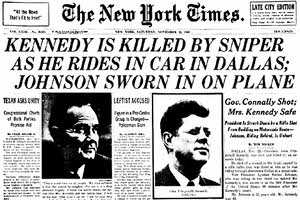 I’ve sometimes said that the Cuban Missile Crisis was the scariest time of my life and that’s true in the sense that there was a very real possibility that the world would be completely destroyed before Walter Cronkite even had time to announce it. But in other ways, the fear that followed Kennedy’s assassination was probably worse. Until it was proven otherwise, it was natural to assume that it was the work of our Cold War adversaries. Flying a silver ball over our cornfields was intimidating and pointing loaded rockets our way was a clear threat but eliminating our leader was the real thing. If the USSR had a hand in the assassination then the Cold War wasn’t very cold anymore. What would be our response? What would be their next step?
In hindsight I think that what happened after the president was killed was actually reaffirming. There were bumps and missteps and unanswerable questions and even today the word conspiracy is usually lurking nearby when the words Kennedy assassination are used but the rules basically worked and the United States of America survived and continued on it’s often lurching but generally hopeful path.
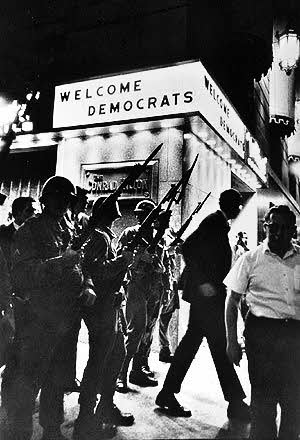 1968 was the first election I was old enough to participate in and there are indeed some similarities between it and the one just past. Then many wanted McCarthy or McGovern but got Humphrey. This year many wanted Sanders but got Clinton. Humphrey and Clinton both lost and maybe for some of the same reasons. I suspect it’s a much older joke but I first heard it applied to the 1968 victor. “If Nixon ran unopposed he’d have lost.” It’s possible the same thing could be said this year regardless of whether it was Trump of Clinton who came out on top. I believe I heard just as many people proclaim who they were voting against as who they were voting for. The convention that nominated Humphrey was preceded by the assassinations of Martin Luther King and Bobby Kennedy and accompanied by police violence directed at protesters. The latter was, to me, the most frightening occurrence of a very frightening year. Things aren’t the same today but they’re not entirely different either.
Although our perspectives can’t possibly be the same, some of those LA protesters and I share memories of the incredibly frightening events of September 11, 2001. I know I had many of the same fears and questions then as I had back in 1963 when President Kennedy was shot. Maybe they, at least the oldest among them, did too. But I doubt their 2016 fears have the same relationship to their 2001 fears as my 1968 fears had to my fears of 1963. I doubt even more that their fears are very much like mine. I cannot, in fact, claim to even understand or appreciate all of their fears.
I may have started writing this because of those sign carrying California kids but I did not write it for them. The chances of any of them even seeing this article are pretty much nil. No, I wrote it for me. There is a certain amount of John Barth scriptotherapy involved where the mere act of writing is therapeutic and there is no question that putting words into a structure makes your thoughts a little more structured as well. But I think the main reason was to remind myself that I’ve seen the world survive some pretty deep piles of doo doo in the past. Today’s doo doo is different and may even be deeper in spots but history suggests that there’s a pretty good chance that the world will survive it too.
As would any Cincinnatian around my age constructing a title with the word “fear” in it, I seriously considered simply stealing the title of the Raisins’ 1983 regional hit song. Even though I ultimately decided it wasn’t entirely appropriate, revisiting the song convinced me that anyone who hasn’t heard it needs to and anyone who has wants to again. Here you go:
Fear Is Never Boring

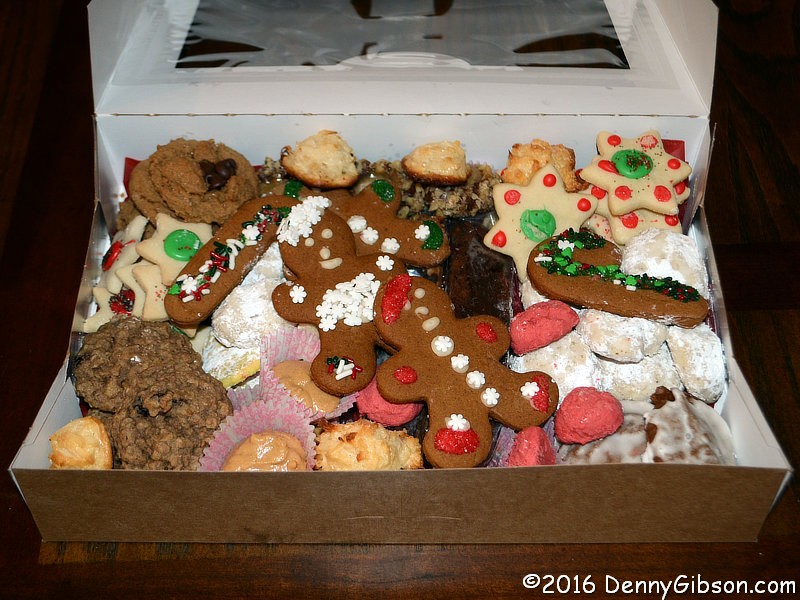 The goodies at right are what Oven Master Mary calls “a few cookies”. They certainly added some color and sweetness to a gray first day of my 2016 Christmas Escape Run. That first day ended in Athens, Ohio, and is now posted. The next two nights will be spent in Burr Oak State Park near Ohio’s version of Rim of the World.
  I’ve never met Jaimie Vernon but we’re friends. We’re the kind of friends that didn’t even exist a dozen years ago. Yes, we’re Facebook friends. It’s because of music. Vernon runs Bullseye Records which represented the band Klaatu through part of their career. I’m a Klaatu fan and stumbled onto a related online group in which Vernon played an active role. The e-group eventually became more or less dormant but we remained e-friends in the Facebook world. I’m sharing this, not because it has anything to do with the contents of this book, but to explain how I even know of the book’s existence. I am not in the habit of chasing down either cop books or cemetery stories.
 DeLorme Street Atlas is one of my oldest tools. I started using it in 2001. I’ve talked about it in a few posts but was surprised to see that it has never been the primary focus of a post. The reason, I suppose, is the old story of taking something for granted until you lose it. The first version I used was 9.0. There were a few more numbered revisions and a misstep into a Road Warrior version before the numeric year was used in the product name and a string of annual releases began. I didn’t grab every one. I more or less fell into biennial mode and upgraded just every other year. 2016 was to be my next planned update but plans changed. In early 2016 Garmin closed a deal to acquire DeLorme and all Street Atlas development was stopped. 2015 was the final version produced. This first post with DeLorme in the title will also be the last.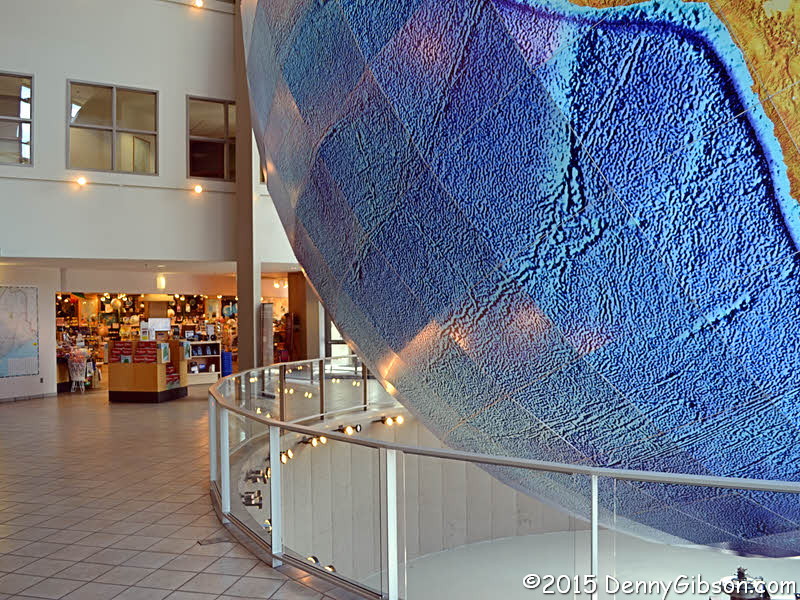
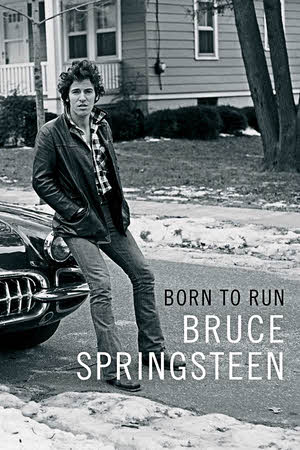 It’s exactly what you’d expect. That’s not to say that there is no new information and no surprises but the sometimes almost poetic writing style is exactly what I expected from a man who has produced some of the most notable English language lyrics of the last four decades. It’s no secret that some of those lyrics were just a bit autobiographical so it’s possible to think of this as sort of a much longer and more detailed version of the story he’s been singing since he first greeted us from Asbury Park.
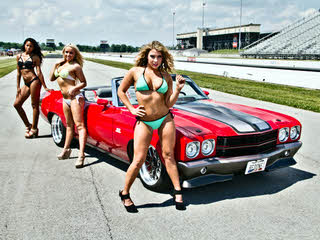 Unfortunately I’ve found no photos of my 1970 Chevelle. Fortunately the internet is absolutely filled with photos of 1970 Chevelles. Unfortunately not many of those look very much like mine. The era of the Chevelle and the era of the muscle car are pretty much one and the same. As I’ll demonstrate shortly, non-muscular Chevelles existed but it’s tire smokers like the big block Super Sport at right (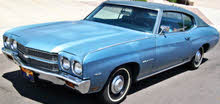
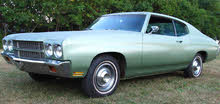 My Chevelle looked more like a composite of the two at left (also snatched from the internet) than the one at top. It was a blue 2-door hardtop but without the vinyl top. I think it had full wheel covers like the green car but I admit I’m less than certain. Like the Chevy II before it, the Chevelle had spent its life outside in an apartment complex parking lot and was seriously dinged and dinghy. It was not a rusty wreck, however, and was mechanically sound. With its 307 V8 and automatic transmission, it was neither as economical or as fun to drive as the Audi but it wasn’t bad. I suspect new shocks would have helped considerably.
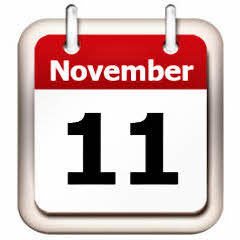 Friday’s date was eleven eleven. I spent the day at the 2016 Los Angeles Route 66 Festival where the ninetieth anniversary of Route 66 was celebrated. November 11, 1926, was when the United States Numbered Highway System was officially approved so US 66 did indeed come into being on that date but so did another 188 routes. I’ve always thought the big deal some folks make of Sixty-Six’s “birthday” to be somewhere between silly and chauvinistic. Sort of like New Hampshire celebrating its independence — and only its own independence — on the Fourth of July.
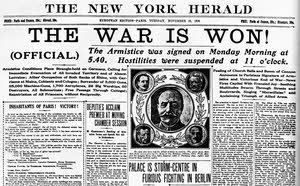 But November 11 was an actual national holiday well ahead of the creation of the United States Numbered Highway System and it marked something more meaningful than identifying one nation’s roads. When I started to school in 1953, November 11 was known as Armistice Day. During the next year, the name was officially changed to Veterans Day although people around me didn’t start using the new name immediately. Nor did they immediately embrace the new definition. Armistice Day marked the anniversary of the end of The Great War on November 11, 1918. It began in England but soon spread to virtually all the allied nations. Two minutes of silence — one minute to remember the 20 million who died in the war and a second minute to remember those left behind — at the eleventh hour of the eleventh day of the eleventh month was an important part of the day. Things started changing when the world had another “great war” and had to start numbering them. England and many other nations changed the name to Remembrance Day to include those lost in both conflicts and, as I mentioned, the United States changed the name to Veterans Day. This may be when we began observing a single minute of silence on the day or maybe it was always that way in the US. We observed one minute of silence at the festival.