Movie Review
Cuba
Golden Gate 3D

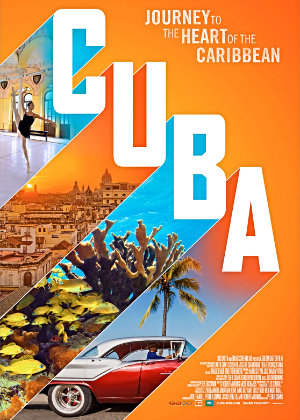
A new film will open in the reworked all digital Robert D. Lindner Family OMNIMAX Theater on June 7. A few previously shown films have appeared as part of the theater’s classic series but Cuba: Journey to the Heart of the Caribbean is only the second new production to be shown since the theater reopened in December following a long closure. A post on the reopening and the first film, Volcanoes, is here. There were two members-only showings of the new movie on Saturday and I jumped at the chance to attend. Volcanoes is an awesome movie; Cuba might be even better.

It’s the work of Golden Gate 3D, which I’ve now learned was responsible for two of my favorite 70-millimeter real film IMAX movies: Jerusalem and National Parks Adventure. The images are superb, from scenic panoramas to the microscopic; From world stopping slow motion to the super acceleration of time-lapse. The three storylines do a fine job of holding the film together and moving it along. Then there’s the music. ¡Ay caramba, the music! It grabbed me from the start and never let go through slow soaring overhead shots to frantic-paced dance scenes. I expected to see a long list of contributors when I scanned the credits but it appears that just two men composed all the original music: Andres Levin, who was also the film’s music supervisor, and José María Vitier. Wonderful stuff, fellows.

The storylines involve Havana’s official historian, an aspiring ballerina, and a pair of scientists. Eusebio Leal doesn’t just study history, he preserves it. He is responsible for saving and renovating many of the city’s numerous endangered buildings. He is also responsible for the only direct quote I recall from the movie: “Architecture is frozen music and we are a people who love music”.

It was a major surprise to me to learn that the world’s largest ballet school is in Havana. The movie follows Patricia Torres, one of the Cuban National Ballet School’s approximately 3,000 students, as she works to realize her dream of joining the Cuban National Ballet Company. Fernando Bretos and Daria Siciliano study Cuba’s coral reefs to discover why they are actually recovering while those in other parts of the world continue to decline. Their work provides the filmmakers an opportunity to show off their considerable underwater skills in recording some beautiful scenes.

Two of my favorite scenes are the result of underwater microscopic time-lapse recording. Siciliano tells us that the coral is not inanimate stone but is simply living at a different pace than us. The cameras then demonstrate. The scenes instantly reminded me of liquid light shows I saw in the 1960s. The great music certainly encouraged the idea that I was watching a brilliantly colored high-def high-tech version of hippy era stagecraft.

There was another flashback of sorts in plenty of shots of the legendary 1950s American automobiles that resourceful Cubans have kept in operation despite the long-standing complete embargo on parts. Of course, keeping the mostly brightly colored vehicles running is not the only place where the embargo and generally poor economy have led to uncommon ingenuity. Agriculture is one such area that is highlighted in the film.

The lack of money and materials is evident in the film from the aforementioned “classic” cars to the deterioration of buildings. Cuba: Journey to the Heart of the Caribbean doesn’t avoid or downplay this aspect of the politically isolated island but the bright and crisp images somehow make it less sad. The music might also have something to do with that. The faces certainly do.

The movie is filled with smiling faces, dancing feet, and drum pounding hands. Most of the people seen in the movie are happy. Of course, this is partly due to the fact that parades and other celebrations are frequent subjects. Not every face is smiling and not every scene is a happy one but there are a lot more grins than grimaces. Somewhere near its beginning, the film talks of Cuba existing in three different periods. There is its glorious past, its uncertain but promising future, and the present. The present is what it is. This movie might make things look a little better than they actually are but I don’t think that’s an intentional misrepresentation. I think its creators wanted to make a joyful and entertaining movie that included some seriously representative images. They used some of the best of the present and included a little bit of both the past and the future. When you see it, and I really recommend you do, be prepared to tap your toes and maybe dance in your seat a little. It’s gonna be hard not to.

Movie Review
The Vietnam War
Ken Burns & Lynn Novick

This isn’t a very deep review. It is, however, a very deep and sincere recommendation. The eighteen hour documentary is simply the best thing I’ve seen in years. PBS broadcast the first of ten episodes on September 17. I watched it and the next one, and was hooked. Circumstances kept me from watching the remaining episodes when broadcast, but I did eventually see them all via online streaming. It was announced that the stream would only be available through October 15 but it still appeared to be functioning on the 17th. Check The Vietnam War for details and other sources.

There’s no question that one reason I found this production so engaging is its familiarity. I recall many of the described events from when they happened in the 1960s and early 1970s. There was both a refreshing of memories and a filling in of unknown details. But there was also plenty of totally new information, particularly concerning the earliest years, that made me realize things were even more screwed up than I thought they were; And I thought they were really screwed up.

Burns and company pulled together a lot of sources in an attempt to present every aspect from every angle. The result probably isn’t perfect but it’s mighty close. Recent interviews with a variety of participants help illuminate some of those angles and add insight and credibility.

I was more on the sidelines than not, but I was there. Watching this movie made me remember some of the clearly stupid and arguably evil things my country did. Someone in their 20s or 30s for whom the Vietnam War is more ancient than World War II was for me, won’t have those memories to be reawakened. We will see the history telling aspect of the movie differently. But I can’t imagine anyone watching this epic and thinking of it as nothing but a history report. Seeing the divisiveness associated with the Vietnam War in the divisiveness of today seems unavoidable to me. I believe that the twentysomethings of both the 1970s and the 2010s can’t help but see some similarities.

If you’re looking for a little entertainment that will take your mind off the world, this ain’t it. This will, in fact, press your mind firmly against the world of fifty years ago and help it remember and/or understand that world. I’m betting it will also get your mind thinking about the world of today although it probably won’t help in understanding it.  

Movie Review
From War to Wisdom
Daniel R. Collins & Josh Hisle

I might not even be aware of this movie’s existence if I didn’t know one of the directors. Maybe someone else will learn of it only because they know me. If so, that’s a good thing. And it’s also a good thing if someone learns of the movie by stumbling onto this blog post without knowing either of us. If either of those things happens and someone watches From War to Wisdom who otherwise would not, I’ll be a happy man. It’s a movie that deserves to be seen with a story that needs to be heard.
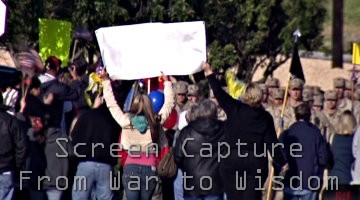
It is primarily a story of Afghanistan and Iraq combat veterans. To some degree it is a new version of the oft told tale of guys going off to war then having difficulty returning to the civilian world. It’s a view that the tagline “When the war ends, the real battle begins” encourages and the movie’s general organization supports. The film’s front end focuses on the war and the second half focuses on the return. The “off to war” part is made extra effective through the use of gripping footage shot by embedded journalists Mike Cerre and Mike Elwell. The “difficulty returning” part is made personal through excerpts from interviews with those having the problems. But excerpts from those interviews also appear in the film’s early scenes and create a solid connection between the two halves.

Creating a marker between the halves is a text only shot. In front of the shot we see returning soldiers marching between welcoming signs and banners then being dismissed to reunite with their families while veteran Hans Palmer describes the time as “the proudest I’ve ever felt in my life.” Following the text is a scene with Josh Hisle talking about needing a “place to decompress — every day.” He’s sitting outside his apartment waiting for everyone else in the complex — his “area” — to go to sleep. “It’s not insomnia,” he says. “It’s duty.”

Five panels fade from one to another in that near midpoint text shot. The number of troops killed and wounded in Iraq and Afghanistan is mentioned along with the average number of veterans — a gut-wrenching 22 — that commit suicide each day. The last phrase is “many veterans are taking it upon themselves to help their fellow warfighters to truly come home.” That’s what this movie is about. It’s what makes this more than another war sucks story.

War does suck and From War to Wisdom makes that clear. It also makes clear the serious damage that war can inflict on those who survive it and it tells the stories of some of the veterans who overcame that damage. Then the stories go a little farther. Some of those veterans not only overcame their own issues but have made major efforts and established ongoing organizations to help others overcome theirs.

There’s Common Ground on the Hill’s Veterans Initiative that Josh Hisle was instrumental in establishing after he personally benefited from the Common Ground experience. There’s The Battle Buddy Foundation that veterans Kenny Bass and Joshua Rivers created to help other veterans obtain service dogs like Atlas who makes a normal life possible for Kenny. There’s New Directions for Veterans that was established in 1992 by a pair of Vietnam veterans and is represented in the film by Iraq veteran Matthew Lorscheider. Matthew does a pretty good job of capturing the spirit of this film when he says “That’s what we did in the military. Help a buddy out. I’m not going to stop now.”

There are many other examples of veterans helping veterans both in the film and out. They are bright spots and their successes are to be celebrated but they aren’t enough to make From War to Wisdom a feel good movie. It is, however, an encouraging movie and an informative one. Most of the veterans that appear in the film fought in either Afghanistan or Iraq. There is one notable exception. He’s a Vietnam vet who’s legal name is now Ragtime. He is a stained glass artist who teaches at Common Ground and started 1,000 Points of Peace back in 2006. The warriors recorded in this film say many wise things; The “wisdom” in the title is there for a reason. But I found a couple of Ragtime’s utterances particularly memorable. I don’t really think it’s a generational thing but maybe. From Ragtime: “America forgot what it was supposed to be doing… but I remember.”

The movie’s website lists a number of ways to see it. They include purchasing a DVD or watching online as either a rental or purchase.
DVD Online


This is my third movie review. When I did the second, I had actually forgotten the first (which I called a video review) and repeated a line about being even less qualified to review movies than books. I had done a few book reviews before starting this blog so doing some here didn’t feel too awkward. I wasn’t quite as comfortable with music reviews. I remember the circumstances behind that first one. Josh Hisle was working on an album and I knew I wanted to review it when it came out. I reviewed other albums so it would not be the first. Josh got distracted. Not by something shiny but by this movie. Between it and his work with Common Ground and being a full time husband, father, and student there was no time left for an album. That’s OK. It’s a lot more than OK. The album still hasn’t been released but we instead have this movie which I have a hunch is going to do a whole lot of good for a whole lot of people.

Even though I’m still waiting for that album and this is the first chance I’ve had to review a Josh Hisle product it is not his first mention here. He was the subject of this blog’s ninth post (There’s Something Happening Here) in 2011 and appears in at least three trip journal entries: February 19, 2010, July 23, 2010, and October 10, 2011.

Movie Review
National Parks Adventure
MacGillivray Freeman

npa_01 On Thursday, I made a nighttime visit to the Cincinnati Museum Center. It wasn’t the first, but they’re not at all common. Most of my visits take place in the light of day. A new IMAX film had premiered at the National Museum of Natural History in Washington, DC, on Wednesday. On Friday, it would open in about forty theaters across the USA. A handful of theaters were permitted to hold screenings on the day in between. Cincinnati’s Robert D. Lindner Family Omnimax Theater was among them, and, by accident or an act of kindness, I was invited to be among those attending.

Immediately after seeing National Parks Adventure, I sent a Tweet calling it spectacular. “Spectacular” is a word that fits virtually all Omnimax presentations. The screens that wrap around the viewers are huge. Quite often so are the subjects. Mountains, canyons, oceans, and starry skies are popular and fitting. National Parks Adventure is certainly spectacular in the immense-scale grandiose sort of way naturally associated with the word. There are plenty of mountains and canyons, but early in the film I was struck by not just the size of the images but of their beauty and technical quality as well. I believe it was a shot of mountains reflected in a lake that first triggered the thought that many of the images I was seeing did not require a five-story dome to be spectacular. Printed on flat and comparatively tiny pieces of paper, scenes from the movie could yield a very impressive coffee table book. Even six-inch postcards made of images from the film would probably be stunning. I can’t quantify the difference or even prove it exists but I thought the images in National Parks Adventure had sharper focus, more vivid colors, and better composition than those of any of the many Omnimax features I’ve seen.

Stunning visuals are the reason that Omnimax theaters exist, but a little storytelling never hurts. National Parks Adventure tells a couple that help put things in perspective. Some historical perspective comes from the inclusion of old photos and some well-done recreations. Without getting in very deep, the movie offers glimpses into some of the threats to our nation’s natural treasures and into the role of John Muir and Teddy Roosevelt in protecting them.

Size perspective is provided by following three friends as they visit several national parks. The trio is not plucked randomly from tourists at a park entrance. Renowned climber Conrad Anker leads the group, which includes step-son Max Lowe and family friend Rachel Pohl. Max is a photographer and Rachel is an artist. Both are experienced climbers. As you might expect, the group climbs just about everything from seemingly bare rock faces to vertical sheets of ice. They also go biking, hiking, skiing, and probably do some other things I’ve forgotten. This is, I assume, the “adventure” of the title, and it is all captured beautifully by an IMAX camera that is often high above the adventurers.

I could ramble on and on, but I’m even less qualified to review movies (This is my first attempt.) than to review books and CDs. Using the universally accepted “a picture is worth a thousand words” exchange rate and assuming 24 frames per second, the movie’s trailer provides the equivalent of 171,360,000 words.

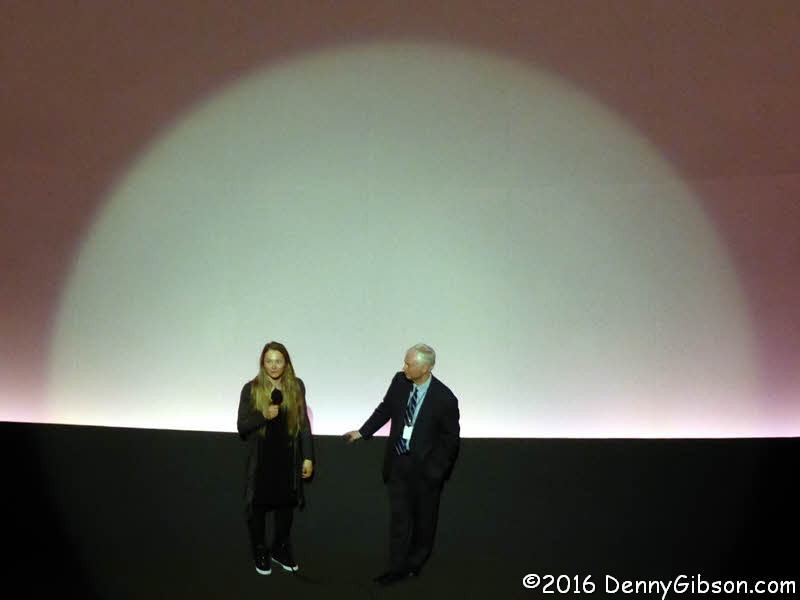
npa_02Cincinnati Museum Center is a founding member of the seven-theater Giant Dome Theater Consortium, which was a major supporter of the film’s production. Not only did that allow them to be one of the theaters hosting advance screenings, it undoubtedly played a role in having one of the film’s stars, Rachel Pohl, in town during the opening week. Following Thursday’s screening, she was introduced by the museum’s Vice President of Featured Experiences and Customer Services, Dave Duszynski, and happily — nay, joyfully — answered a number of questions from the audience.

npa_05npa_04npa_03On Friday morning, Rachel rappelled down the front of Union Terminal, a.k.a. Cincinnati Museum Center, to draw local attention to the film. It’s pretty obvious that the happy adventurer seen in the film is not an act. Her artistic side gets all the attention at RachelPohlArt.com. On Saturday, Rachel put her recently obtained fine arts degree to use working with even younger artists at the Children’s Museum inside the Cincinnati Museum Center. Sorry I missed it.

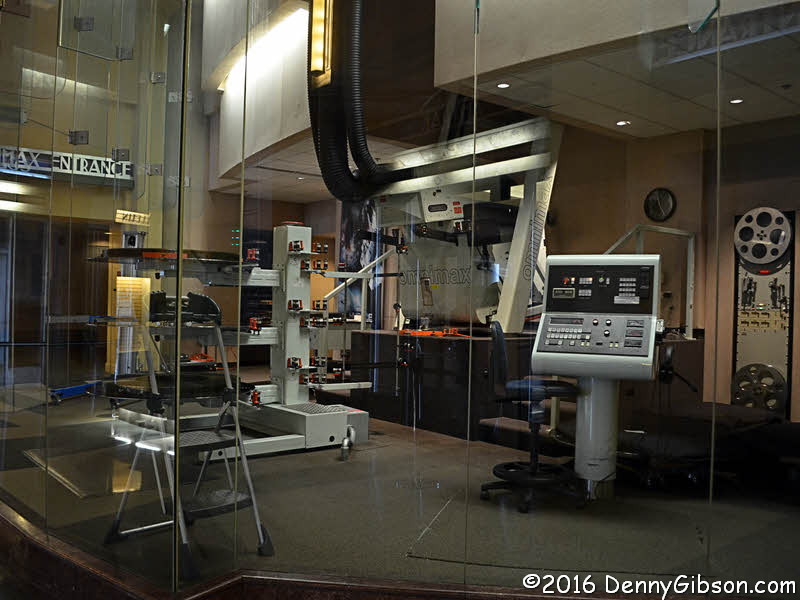
omnifilmThe Lindner Family Theater will be temporarily closing this summer as part of a $212 million Museum Center renovation. Older films will be shown as part of the classics series, but this is the last new film to be presented before the closing. It is anticipated that when the theater reopens after a couple of years, it will be with a new state-of-the-art digital system. That means that National Parks Adventure is probably the last new film to be shown here ever.