Celebrating Diana

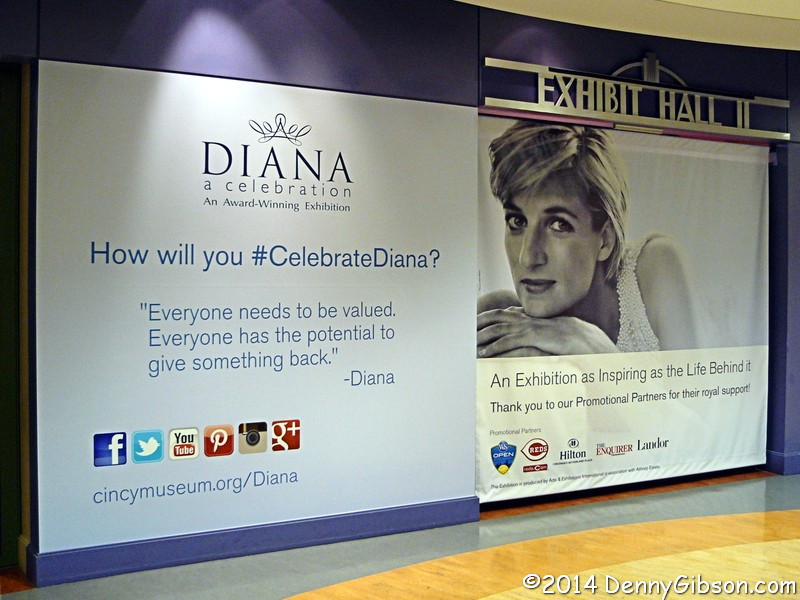
diana-1I wavered on going to see Diana: A Celebration at the Cincinnati Museum Center. The Center attracts some of the world’s best traveling exhibits and I generally make a point of taking them in. Some, like the Dead Sea Scrolls, I start planning to see as soon as I learn of them. Others, even though I fully intend to see them, I just sort of work in “whenever”. Until something reminded me of it on a rainy and idle day, I wasn’t even sure that I would be attending this particular exhibit.

My lack of commitment was not due to any dislike for Princess Diana. In fact, I think she probably did as much for the good of the world as any public figure of her time and a lot more than most. I simply don’t have much interest in royalty in general and nothing in the description of this exhibit aroused much interest in it. Gowns and jewels were not the only things on display but they are what advertisements and descriptions mentioned the most. To be fair, the relatively small amount of time that separates Diana’s life from the present no doubt has a lot to do with my lack of interest. I couldn’t wait to attend the Cleopatra exhibit in 2011 and I’m sure I’d eagerly work a display based on Queen Victoria or Catherine the Great. Of course, those women were all rulers while Diana was not and that may have as much to do with it as time.

I think a desire to not regret not going was a large part of my decision to go. I went and enjoyed it enough to not regret going. The exhibit and my level of enjoyment were pretty much what I expected. The only surprise was the demographics of the other attendees. A young man scanned my ticket at the entrance. About halfway through, I encountered an older fellow wearing a museum ID badge who seemed to be doing some sort of status check on some of the displayed items. At roughly the same time I spotted a guy listening to one of the optional audio guides along with a woman I took to be his wife. I saw something on the order of fifty attendees as I made my way through the exhibit. Only two of approximately half a hundred patrons were male and only one — me — was certifiably there of his own volition. In hindsight, perhaps I should have anticipated that but I hadn’t. Clearly, the trappings of a princess are of much greater interest to those who are at least physically qualified to become one than to those who are not.
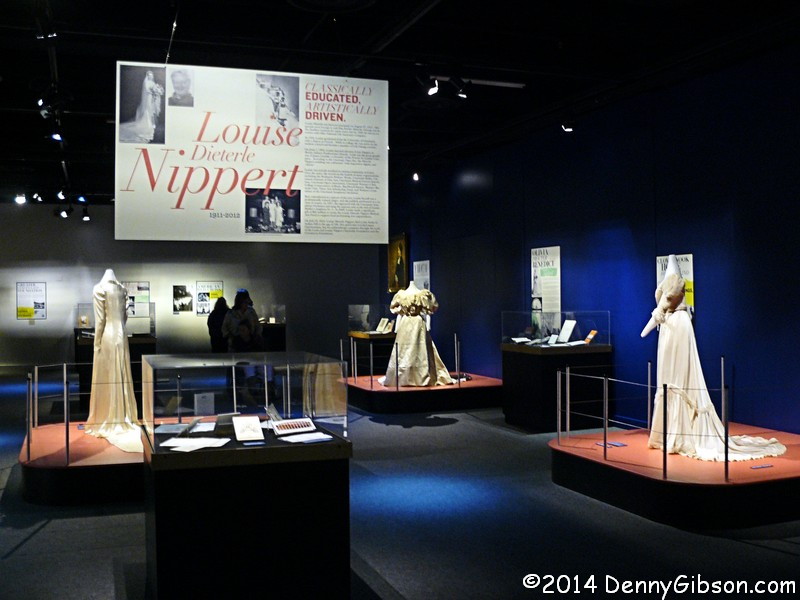
diana-2No photos are allowed in the Diana exhibit. The picture at left is from the companion exhibit, Daughters of the Queen City, which honors women noted for their charitable work in and around Cincinnati. Among the women featured were Louise Nippert, Mary M. Emery, and Patricia Corbett whose names even I recognize. Diana: A Celebration and Daughters of the Queen City continue through August 17.
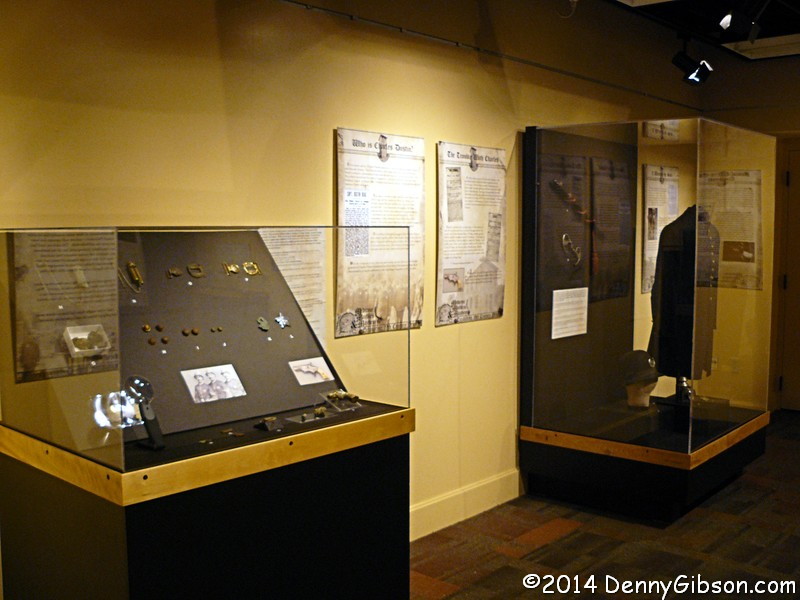
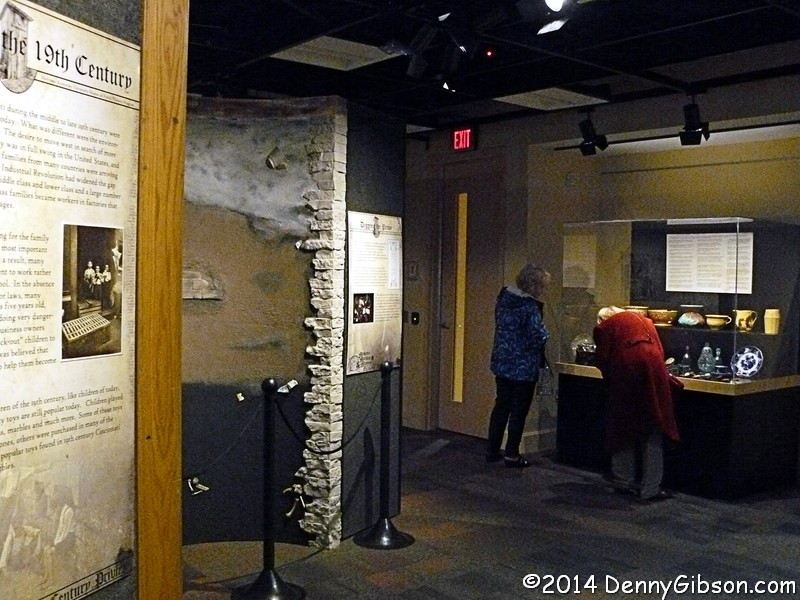
diana-4diana-3While at the museum, I took in two other temporary exhibits. Medicine, Marbles and Mayhem displays items retrieved from 19th century privies. Aside from their intended purpose, privies were used to dispose of just about anything and many details of life in in the good old days can be learned through “outhouse archaeology”. Medicine, Marbles and Mayhem runs through May 26.
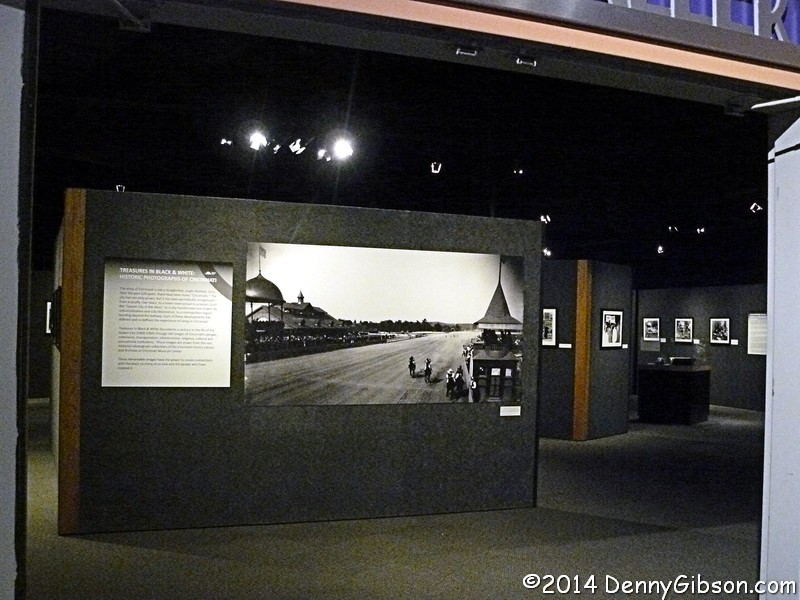
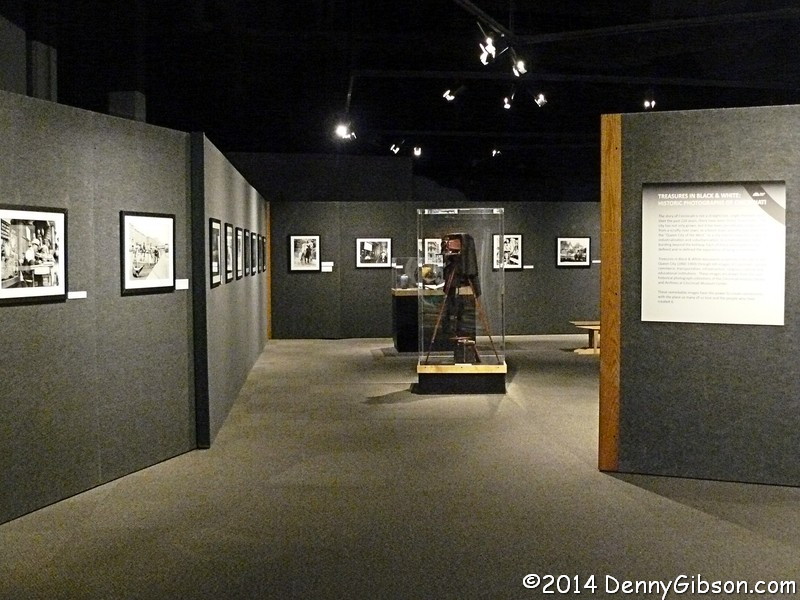
diana-5diana-6Treasures in Black & White: Historic Photographs of Cincinnati is quite accurately described by its title. At the risk of angering princesses everywhere, I have to say that this is what I enjoyed most on this museum visit. Every photo depicts something important from Cincinnati’s past plus many of them work as pure art. Some artifacts, such as a Ruth Lyons guest book, augment the photographs. The book is displayed near a photograph of Liberace signing it and opened to show his entry. Treasures in Black & White runs through October 12.
Planes and Things

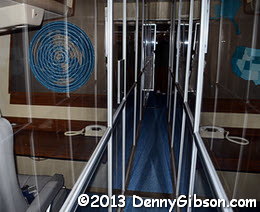
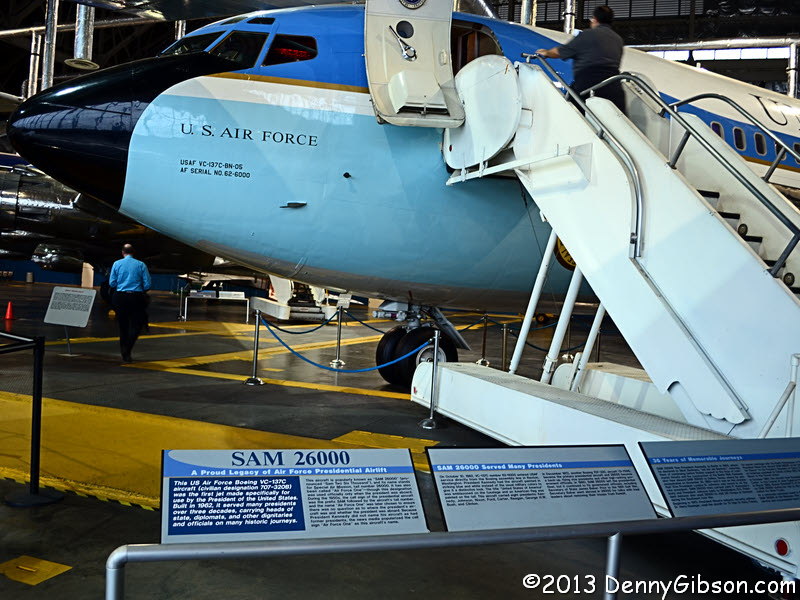
sam26000_extOn Friday, November 22, 2013, a friend and I visited the National Museum of the US Air Force near Dayton, Ohio. Among the many historic items on display is the Boeing VC-137C that carried John F Kennedy to and from Dallas, Texas. The two pictures below were taken of the same general area of the plane just a few hours shy of fifty years apart.

johnsonsisam26000_int

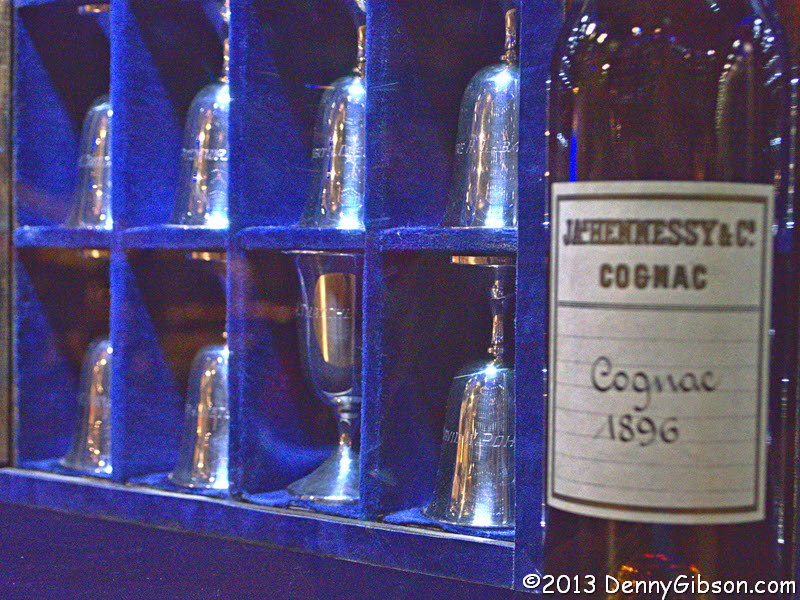
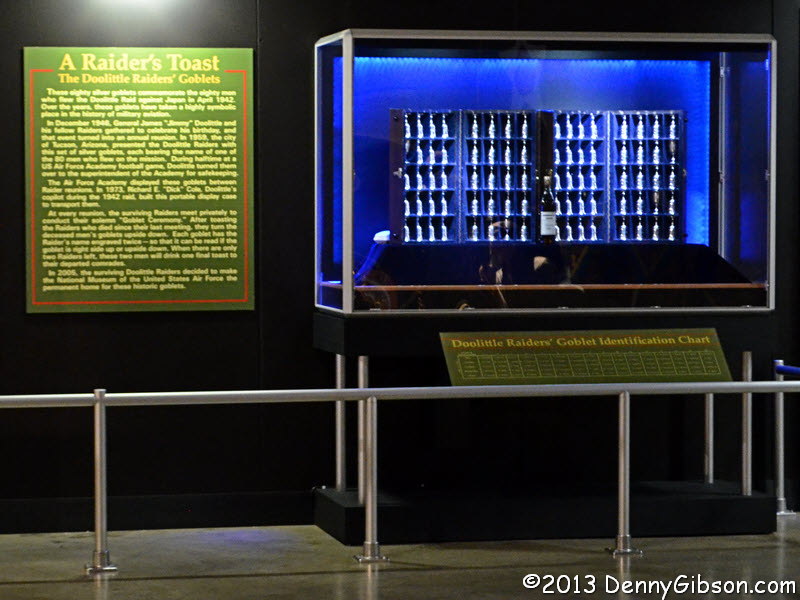
drgobs-2drgobs-1Another museum display recently in the news is associated with the Doolittle Raiders. A “Last Man Standing” pact had been established in which the last surviving Raider would drink a toast to all those who had gone before him.On the most recent anniversary of their 1942 bombing run over Toyko, the last four living Raiders decided not to wait but to have their final public reunion and drink their toast now. That toast took place at the museum on November 9 and can be seen here. Their eighty silver goblets, with the seventy-six belonging to diseased Raiders standing up side down, are displayed at the museum. My report on last year’s 70th reunion is here.

Trip Peek #12
Trip #75
Madonnas and Signs

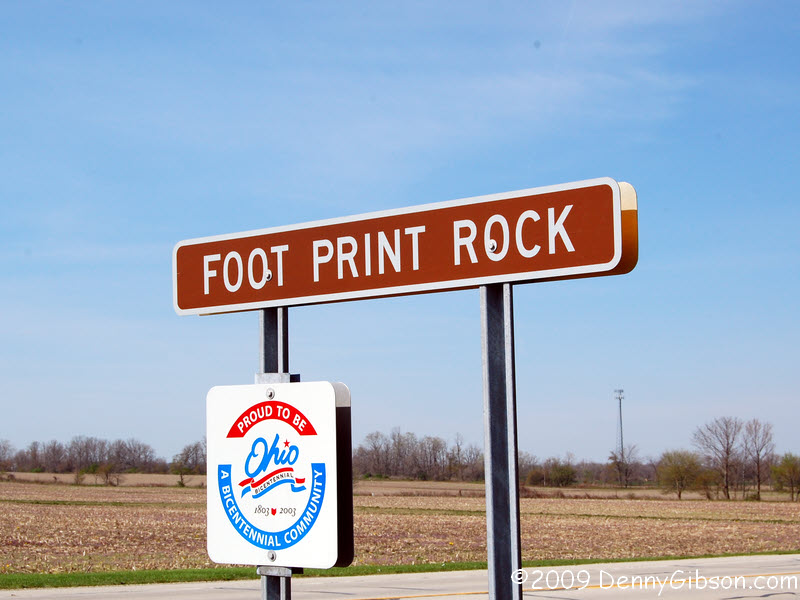
Foot Print Rock, National Road, OHThis picture is from my 2009 Madonnas and Signs road trip. This was a short trip organized for a small group of friends. On the first day, we drove from Richmond, Indiana, to Springfield, Ohio, on the National Road then to Lebanon, Ohio, primarily on US-68 and US-42. The “Madonnas” in the title refers to the Madonna of the Trail monuments in Richmond and Springfield. The “Signs” in the title comes from the American Sign Museum which we visited on the second day. Since I was acting as a guide and the places we stopped were familiar to me, my journal for the trip is fairly sparse. Other folks on the trip took a lot more pictures than I did.


Trip Pic Peeks are short articles published when my world is too busy or too boring for a current events piece to be completed in time for the Sunday posting. In addition to a photo thumbnail from a completed road trip, each Peek includes a brief description of that photo plus links to the full sized photo and the trip journal it is from.

Trip Pic Peek #11 — Trip #24 — East End of 62

1940s Flashback

Cincinnati Museum Center 1940 WeekendCincinnati Museum Center held its first “1940s Day” in 2011. It became “1940s Weekend” in 2012 and is again a two-day (Aug 10 & 11) event this year. The Museum Center occupies Union Terminal, which saw its heaviest use in the 1940s. It opened in 1933 with a capacity of 17,000 passengers per day; A number that not only seemed adequate but, with rail travel already on the decline, major overkill. It was World War II, of course, that changed that. The terminal became a hub for the movement of troops, and as many as 34,000 passengers, twice as many as it was designed for, passed through it daily.

Cincinnati Museum Center 1940 WeekendCincinnati Museum Center 1940 WeekendThough it doesn’t completely ignore them, “1940s Weekend” doesn’t focus on the horrors and hardships of the war years but on the bright spots they contained and the brighter years that followed. Music figured into many of the bright spots both then and now. The Jump ‘n’ Jive Show Band and several guest vocalists kept energetic attendees jumping, and the Sweet and Lows roamed the building with their wonderful harmonies. The picture shows an “on location” performance of The Trolley Song (a.k.a., Clang Clang Clang went the Trolley). The Sweet and Lows perform both days, but the Jump ‘n’ Jive Show Band gives way to the P & G Big Band on Sunday.

Cincinnati Museum Center 1940 WeekendCincinnati Museum Center 1940 WeekendCincinnati Museum Center 1940 WeekendThe rotunda was filled with vendors of, mostly, railroad memorabilia, and there were demonstrations of some of the grooming procedures of the day. The theater showed newsreels that were post-war or at least post-V-E Day. The picture I’ve posted is of General Eisenhower praising the rank and file members of every military branch for their war contributions. I also attended two live presentations in the theater.

Cincinnati Museum Center 1940 WeekendCincinnati Museum Center 1940 WeekendThe first was a recreation of an episode of the Seckatary Hawkins radio program. Seckatary Hawkins was the creation of Covington, Kentucky, native Robert Franc Schulkers. The mystery-solving character first appeared in 1918 in the Cincinnati Enquirer, then in novels and a radio program. Initially, the show was done in Cincinnati by Schulkers and friends and family, but it soon moved to Chicago, where professional actors filled the roles. Following the presentation of a little history, a volunteer cast was assembled and a fine performance delivered. The once huge Seckatary Hawkins Fair and Square club has been revived, and you can join for free. I did.

Cincinnati Museum Center 1940 WeekendThe second presentation stepped away from music and laughter. For the first time, each day of the weekend will feature a Holocaust survivor presenting their own story. Today’s speaker was Werner Coppel, who had been sent to Auschwitz-Buna as a teenager. He subsequently escaped during a death march. I have seen movies and read books and have had other personal Holocaust stories told to me directly, but none more insightful or delivered as articulately as what I heard today. Calling it a highlight may seem strange, but that’s what it was for me. There is a short video of a previous Werner Coppel talk here. Henry Fenichel will share his story on Sunday. He can be seen in a video here.

The Annie Gathering

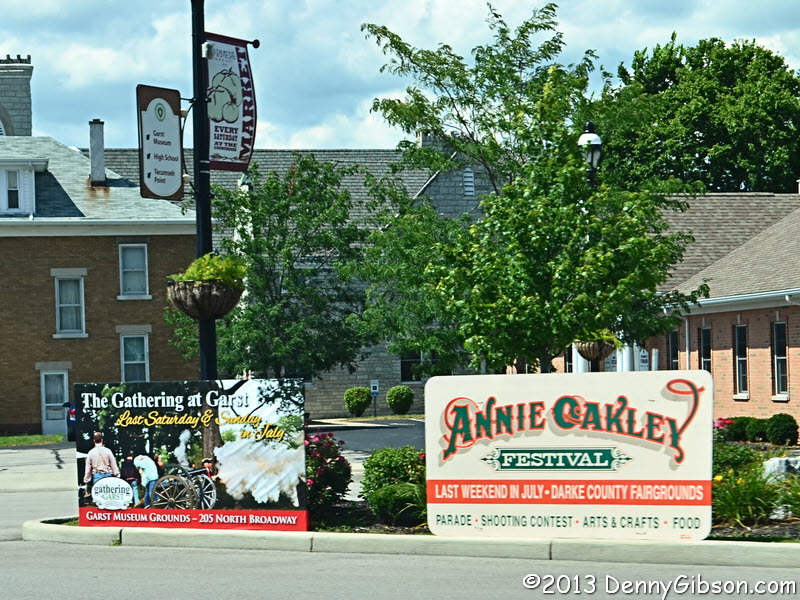
Greenville signsThere are big doings in Greenville, Ohio, this weekend. Some are associated with the Annie Oakley Festival and some are associated with the Gathering at Garst. The Festival includes a parade through downtown but essentially takes place at the Darke County Fairgrounds on the south side of town. The Gathering takes place on the grounds of the Garst Museum towards the north side of town. Since the museum houses something called the National Annie Oakley Center, you might think the Festival and the Gathering are just two aspects of a single event but that’s hardly the case.

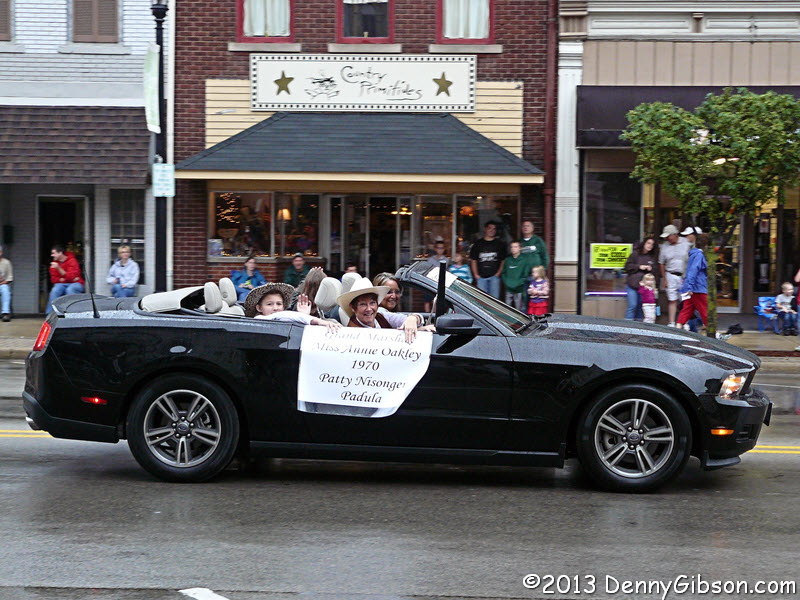
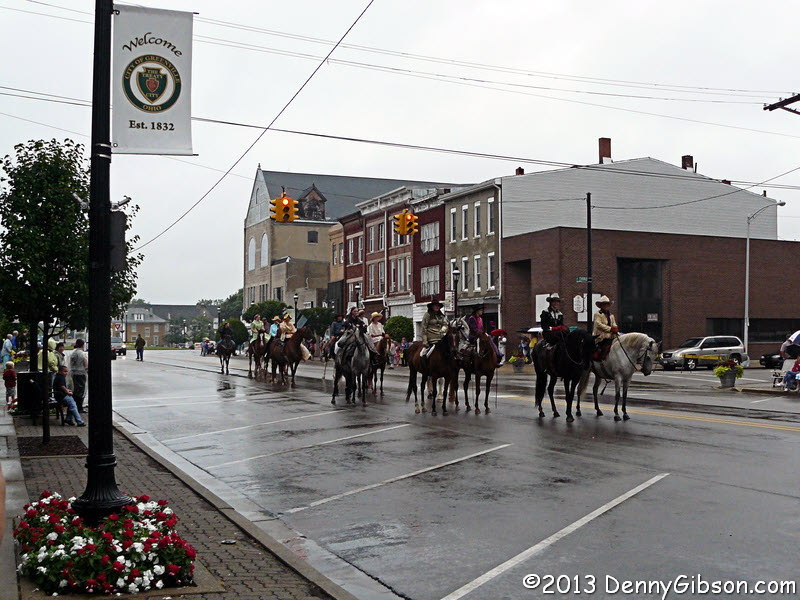
Annie Oakley Days ParadeAnnie Oakley Days ParadeThe parade is completely the responsibility of the Annie Oakley Festival as is a shooting competition, using air rifles, whose winner earns the title Miss Annie Oakley. In the lingering drizzle, I failed to get a picture of this year’s winner, Courtney Osborne, but I did get a picture of the 1970 winner, Patty Nisonger Padula, who was this year’s Grand Marshall. I was watching the parade with my uncle in front of his store and he told me that Patty had been an employee when she won in 1970. He had been her driver in the parade in another black convertible, his 1962 Corvette. The parade included a couple of high school bands, several classic cars, many Shriner units, and much more. A most appropriate entry was the group of female horseback riders most of whom were riding on side saddles.

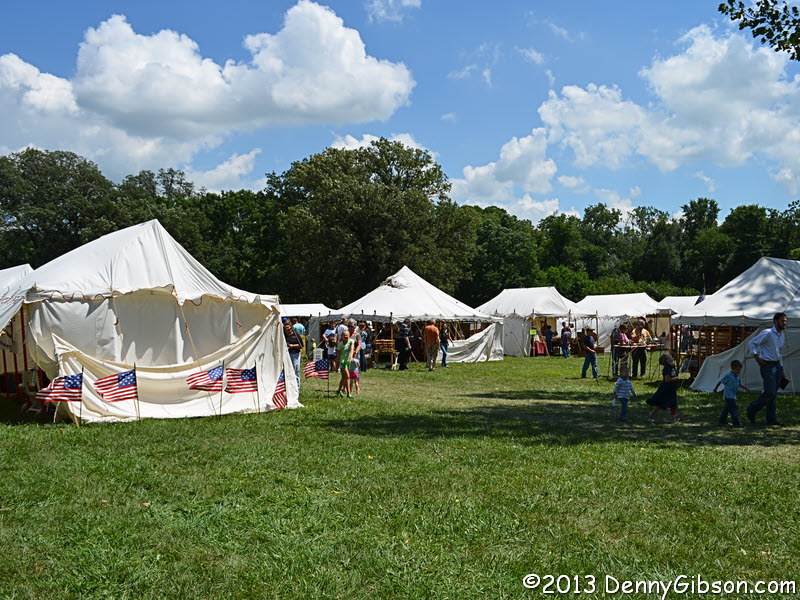
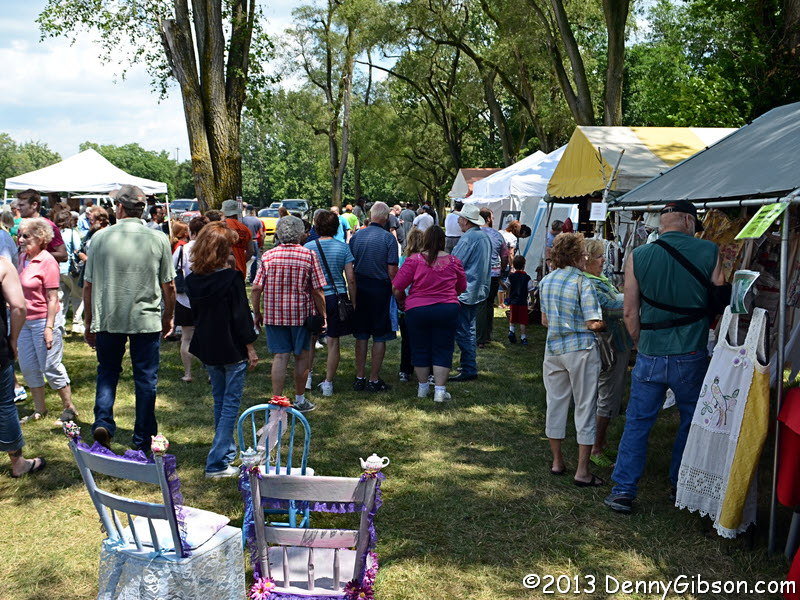
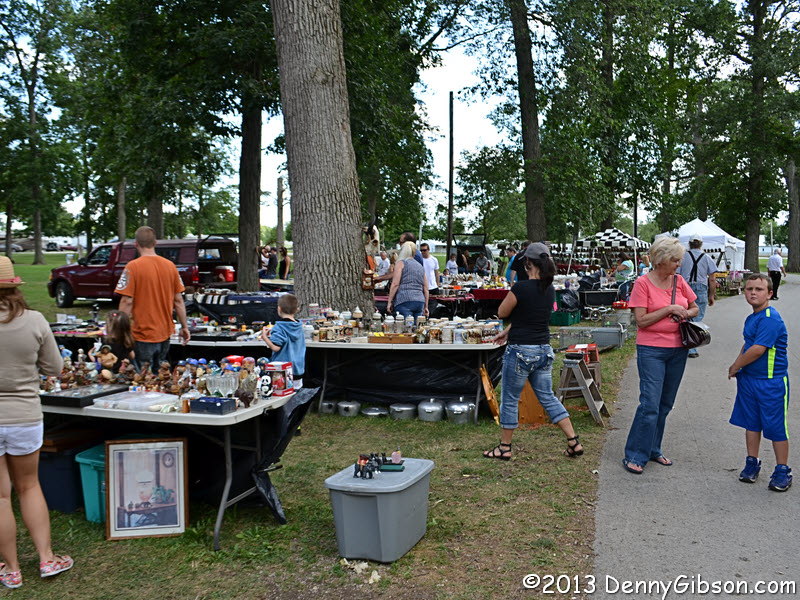
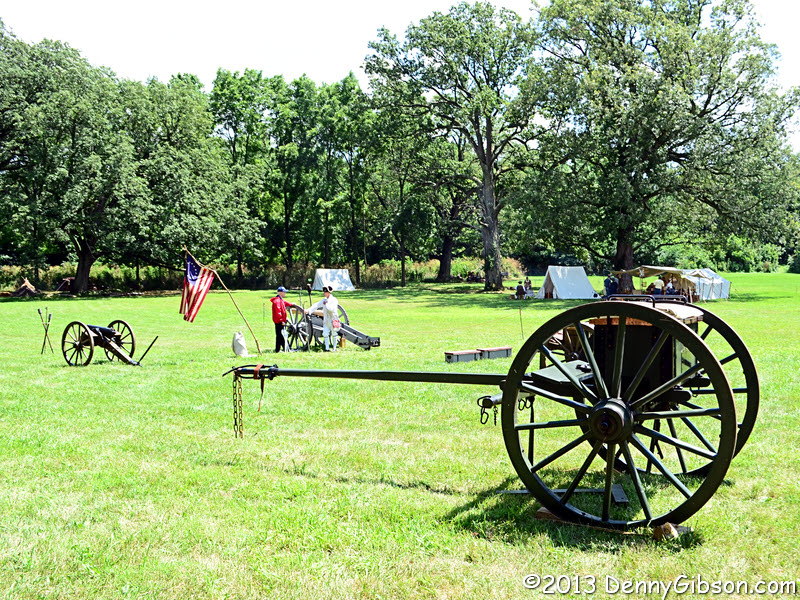
Gathering at GarstGathering at GarstThe rain had moved on and the sun was shining by the time I made it to the Gathering at Garst. The museum was surrounded by tents selling various craft items and small antiques and there were a number of food tents as well. A field across the street was filled with “living history”. It included some additional vendors and some big guns which were fired once in a while.

Annie Oakley FestivalAnnie Oakley FestivalI also stopped by the fairgrounds to check out the Annie Oakley Festival. There were vendors selling food and other items including some crafts. There was a small car show and bus tours, included in festival admission, depart from the fairgrounds to visit related sites such as Annie’s grave.

In the beginning (1963), the home of Annie Oakley Days, as the festival is commonly called, was the museum and its grounds. That lasted for thirty-some years until the festival moved to the fairgrounds for a number of reasons including more space and access to electricity. It had the last weekend in July all to itself until the first Gathering was held in 2011. A Bob Robinson article, written shortly after that inaugural Gathering, indicates that, while both were calling themselves successful, neither was completely comfortable with the other.

The Gathering is free but parking is $4. There is a fair amount of parking available on nearby streets so some (like me) avoid the charge by walking a bit. Parking is free at the Festival but admission is $3. Advance $2 passes were available from some area merchants. Both events offer various forms of entertainment including concerts.

I’m guessing that both can call themselves successful again this year. However, as someone who attended the first Gathering and several Festivals, I have little doubt that the Gathering is getting bigger and better attended while the Festival is shrinking along with its crowd. Only time will tell whether both can survive. I hope so. I like that living history stuff but I like even more the parade and the Miss Annie Oakley contest. Is “The Annie Oakley Gathering at the Garst and Darke County Fairgrounds” too long to fit on a tee-shirt?


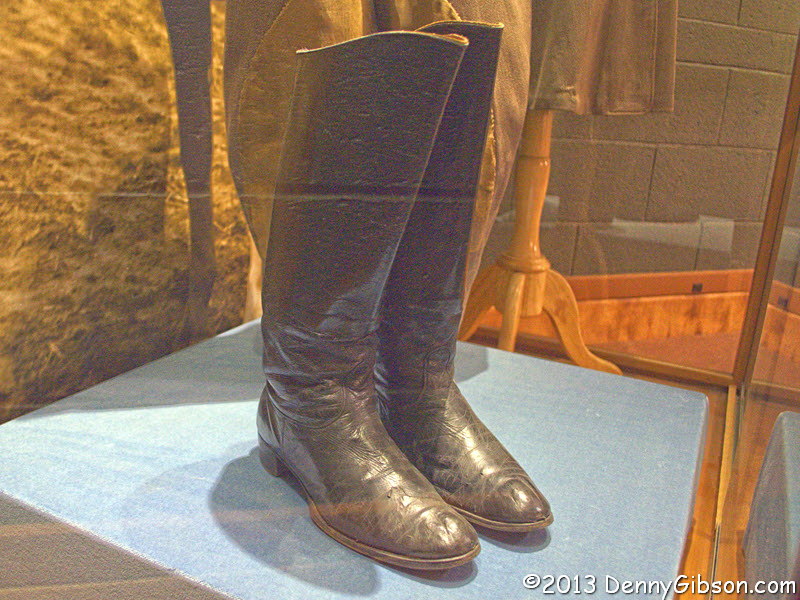
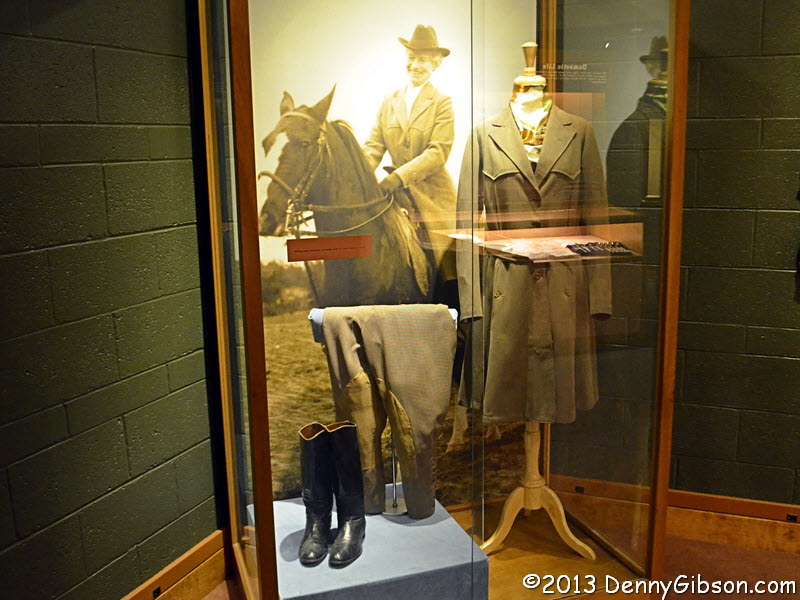
Annie Oakley's BootsAnnie Oakley's BootsEven with its $8 admission fee, the museum gets a lot of traffic during the Gathering and Festival. I’m a member but had not been inside for awhile. In fact, it seems that I’d not been in the museum proper since sometime prior to attending an Annie Leibovitz exhibit in October. That exhibit included a photograph Annie L had taken of a pair of boots at the Garst Museum. I resolved to look at the boots, made for Annie O around 1915, a little closer on my next visit. I expected it to be sooner than this but doing it in the midst of the Gathering/Festival is more than alright. Taking a photo of Annie L’s photo was not permitted but I will admit it’s a wee bit better than mine. Hers was helped by getting the boots out from behind the glass but I think there might be a little more to it than that.

Dayton Remembers

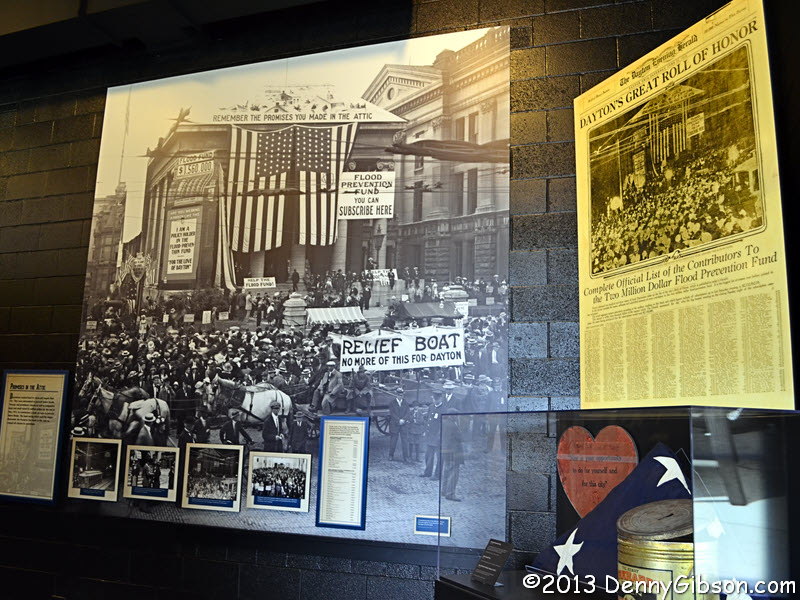
Great 1913 Flood Exhibit at Carillon Historical ParkAt right is a very old light bulb with some very old water inside. The bulb was in a Dayton, Ohio, high school during the 1913 flood, and a microscopic hole allowed water to get inside. The worst natural disaster in Ohio’s history struck on March 25, 1913. On March 23, 2013, a permanent display devoted to the flood opened at Carillon Historical Park. I saw the exhibit for the first time yesterday.

Great 1913 Flood Exhibit at Carillon Historical ParkGreat 1913 Flood Exhibit at Carillon Historical ParkAn existing building was greatly enlarged to house the display though it’s almost impossible to tell the new from the old. The original building was nearly filled by the Rubicon fireless steam engine. The NCR (National Cash Register) owned engine had been a big help in the flood recovery so adding the display to its home seems appropriate.

Great 1913 Flood Exhibit at Carillon Historical ParkGreat 1913 Flood Exhibit at Carillon Historical ParkThe 1913 flood wasn’t the first for Dayton. The city stands at the convergence of three rivers and a creek so flowing water is ever present. Some actual photographs of the 1866 flood are on display with a larger image of from the 1898 flood as background. There were also major floods in 1828 and 1847. The TV screen with modern style reporting of 1913 weather may look a little corny but it is an effective way of describing the wind, rain, and temperatures that gave rise to the flood.

Great 1913 Flood Exhibit at Carillon Historical ParkGreat 1913 Flood Exhibit at Carillon Historical ParkMany personal stories and artifacts help make up the exhibit. Katherine Kennedy Brown’s diary, with a large “The Flood” headlining the record of her experiences, is one. Another is the dress Grace Hall had made for her wedding. Trapped by the flood, Grace was rescued by her fiancé, but the dress was left behind. Read the placard here. The three-dimensional map beyond the dress was made by NCR in 1914 to show the extent of the flood. About fourteen square miles of the city were under water at the flood’s peak.

Great 1913 Flood Exhibit at Carillon Historical ParkAttics often figure prominently in floods, and they certainly did in this one. “Remember the promises you made in the attic” became something of a rallying cry after the flood. A recreated attic is part of the exhibit, but I didn’t expect much when I stepped into it. The moving light patterns on the solid floor looked about as corny as the derby-wearing weatherman. Maybe so, but it is also just as effective. As I stood in the small space listening to the sounds of water coming from the dark hole that led the lower parts of the house and the creaking of the structure as water pressed against it, that concrete floor became a lot less solid and I had just a tiny sense of what it was like fearing that one of those creaks would change to a crack.

dayflood9The exhibit loops back to the Rubicon, where the story of the birth of the Miami Conservancy District is presented. Many also consider this the birth of modern flood control. Under reminders of those “promises made in the attic”, Daytonians organized and financed a project that has succeeded in keeping Dayton dry to this day. It’s impossible to say just what this hotbed of invention would have become without the flood but it’s fairly easy to guess what it would have become without the MCD.

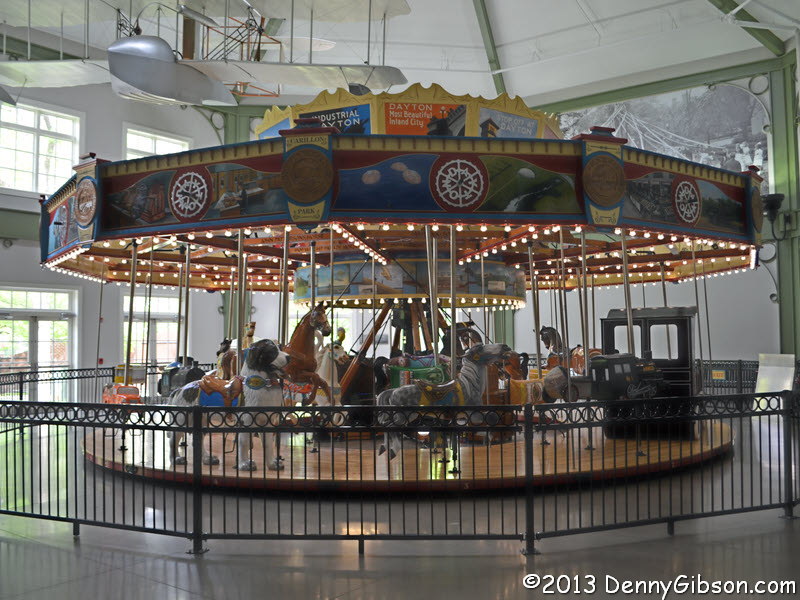
Carillon Historical ParkCarillon Historical ParkCarillon Historical ParkAlthough the carousel and 4-D theater were here when I visited last year, I didn’t actually see them. The carousel is filled with Dayton icons such as the Wright brothers’ dog and a Huffy bicycle. The animatrons in the theater tell of Dayton history with the help of some seat shaking, wind blowing, and a few dashes of water. The Wright brothers are there along with John Patterson, Charles Kettering, and Colonel Deeds. One of the reasons I’ll be coming back next year is shown in the third picture. Work has just begun on the Carillon Brewing Company, which should open by the end of 2013. The brewery will produce and sell beer using historic tools and methods.

The flood was also the subject of an earlier blog entry, a guest post from HistoricNaturalDisasters.com.

Sappy Ohio

Hueston Woods Maple Syrup FestivalI really goofed last week. I was in Greenville on Saturday, but didn’t realize it was syrup-making time at the Shawnee Prairie Preserve with demonstrations and a waffle! breakfast. It would have been perfect, but in my ignorance, I dawdled, ate breakfast in Dayton, and only reached town and learned of the event long after breakfast was finished and the whole shebang was pretty much over. I cast about for a way to make up for this missed opportunity and even briefly considered returning to Hinckley with the buzzards for one of the area’s big maple sugaring weekends as I did in 2011. But, in the end, I decided to stay closer to home and yesterday checked out the 47th Maple Syrup Festival at Hueston Woods.

sapo2Hueston Woods Maple Syrup FestivalI started out by standing in line for the very popular pancake breakfast at the park lodge. I realize that the breakfast isn’t all that photogenic, but it sure tasted good. Pure maple syrup does that.

Hueston Woods Maple Syrup FestivalThen I headed over to the Pioneer Village area to stand in line for a “hay ride”. Trucks pulling trailers with seats made of straw bales carried people to the start of a short trail leading to the “sugar shack”. A guide would then lead the way down the trail while providing information about the area and the syrup-making process. In chatting with some of the volunteers, I learned that a shortage of guides had resulted in a minor bottleneck. Even though our departure was delayed as long as practical and the ride to the trail was as slow as possible, we still reached the trail several minutes ahead of our guide.

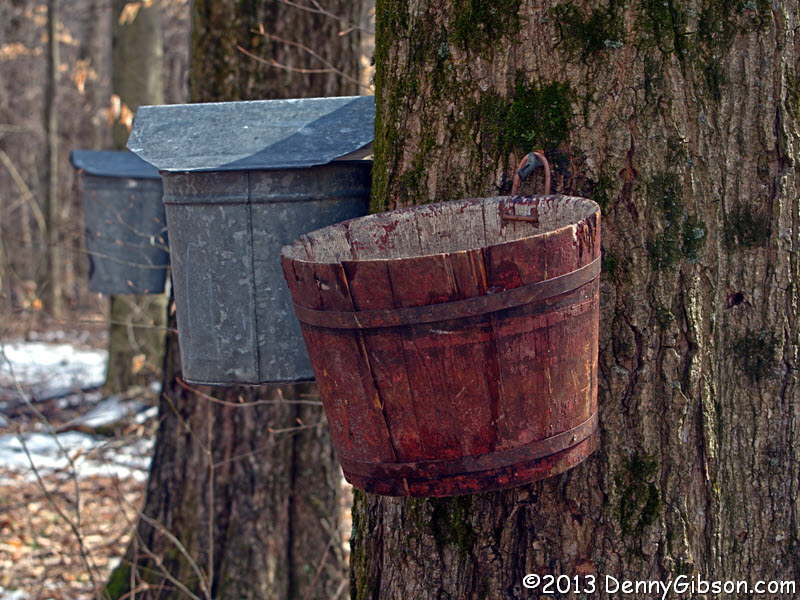
Hueston Woods Maple Syrup FestivalHueston Woods Maple Syrup FestivalHueston Woods Maple Syrup FestivalThe wait was worth it. I feel extra bad about not learning our guide’s name because he sure was an extra good guide. He spoke, in a most entertaining way, about both the natural and human history of the area and he talked of the social as well as technical aspects of sugaring. He explained that, since the sap contains only a percent or two of sugar when it comes from the tree, it doesn’t taste very much like syrup. At the guide’s invitation, several young tour members personally verified this by licking fingers that had caught a few drops.

Hueston Woods Maple Syrup FestivalHueston Woods Maple Syrup FestivalThere was another line at the sugar shack, but it wasn’t a long one. The original Hueston family shack burned in the 1980s, but the current one looks much the same and is on the same foundation. Maple syrup must be about two-thirds sugar, which means an awful lot of water has to be removed. This is accomplished by the wood-fired evaporator. The fog makes it hard to see, but the warmth is certainly welcome. After hearing an explanation of the evaporation process, there was one more short line for the shuttle back to the car at Pioneer Village. The well-run free festival is great fun and educational, too.


McGuffey MuseumMcGuffey MuseumNot far from Hueston Woods, the home of William Holmes McGuffey, the man behind the incredibly successful McGuffey Readers, is now a museum. It’s owned and operated by Miami University in Oxford, Ohio. McGuffey was part of the university faculty when he had the house built in 1833, then took on creating the first reader, published in 1836, as a way to augment his professor’s salary. The house is filled with wonderful period furnishings including several of McGuffey’s own pieces. Among these are the eight-sided rotating table and the tall desk behind it. I was accompanied as much as guided by a fellow named Steve who thoroughly answered every question I had. Like the festival, the McGuffey Museum is free and fun and educational.

The Future is Rosie

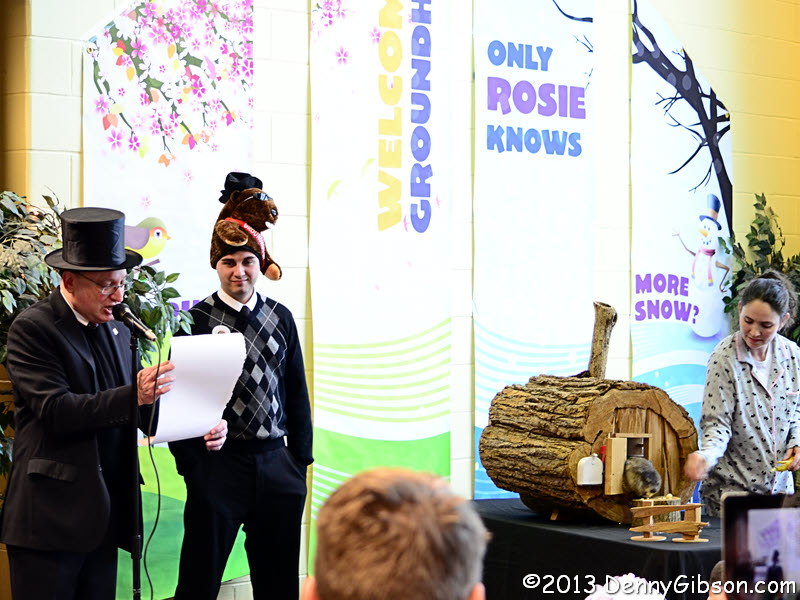
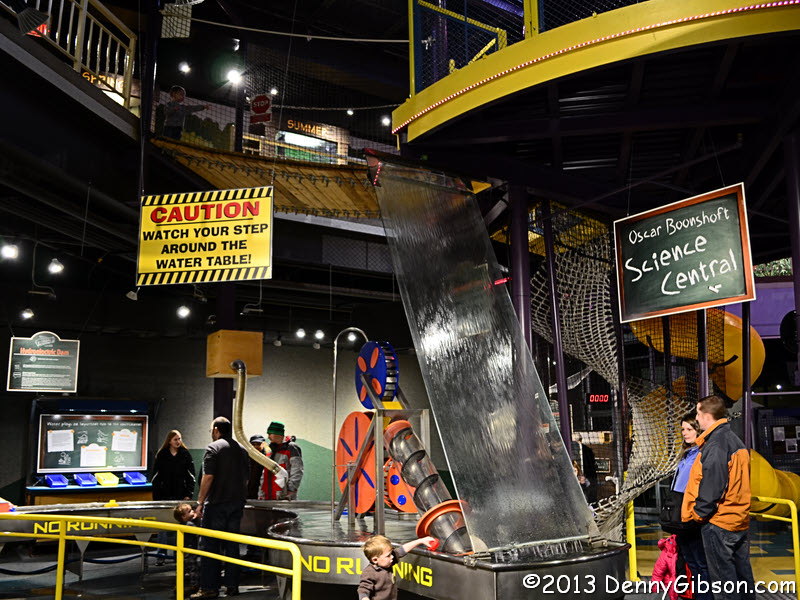
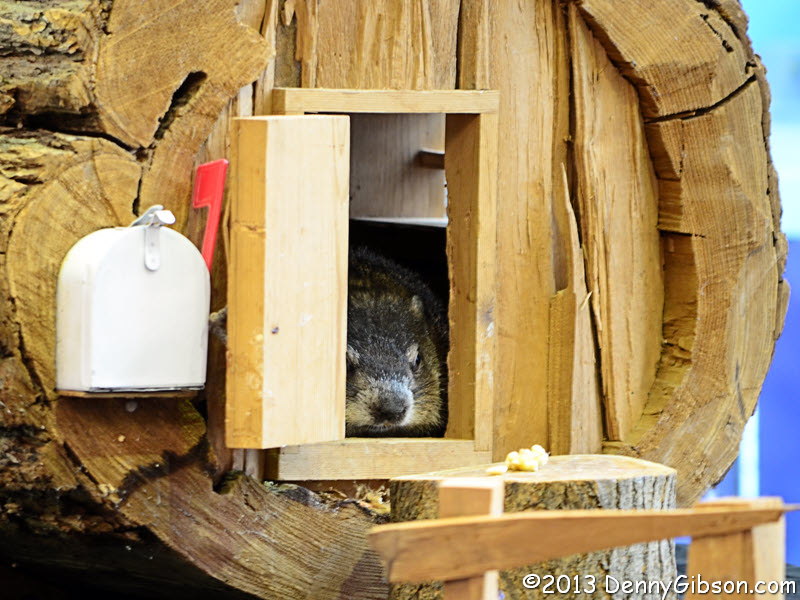
Groundhog Day Boonshoft Museum of DiscoveryA far as I know, not a single marmota monax in the city of Cincinnati has shown any propensity for prognostication. That means I have to go to Dayton if I want my Groundhog Day predictions live. But not only is Dayton, OH, a much shorter drive than Punxsutawney, PA, watching the Boonshoft Museum of Discovery‘s Rosie do her thing is a lot less effort and a lot more comfortable than watching Punxsutawney Phil, which I did once, do his. It was even a little more comfortable this year than most. Normally the resident groundhog works in an open wooden shelter beside the museum but, when single digit temperatures were predicted, museum staff decided to move it inside. There is no doubt that both Rosie and the kids (who are very much the target audience) appreciated this. The predicting took place next to a solid wall of windows so that any shadow making stuff that showed up outside could make shadows inside, too. It took a few banana slices from the museum’s Melissa Proffitt to entice a reluctant Rosie to poke through the door but she eventually came out and took a look. There wasn’t a hint of a shadow and Rosie confidently predicted an early spring. Museum President and CEO Mark J. Meister read the proclamation with TV weatherman Chris Mulcahy, who served as MC, looking on.

Boonshoft Museum of DiscoveryBoonshoft Museum of DiscoveryAfter the big event, many of us kids headed off to check out the museum though quite a few did hang around to get a closer look at Rosie. It’s no accident that the museum feels like a combination children’s museum and natural history museum. In 1993, one century after the Dayton Museum of Natural History began, some community leaders got together to explore starting a children’s museum. The philosophies of the new group and the existing one were so similar that the Children’s Museum Board and the Board of the Dayton Society of Natural History merged in 1996 and this is the result. The phrase “…to be the premier regional provider of interactive science learning experiences which enrich the lives of children and adults…” is from the Boonshoft’s mission statement and I think they may have already done that. This is one really cool place. Every single employee I had contact with was extremely friendly and helpful. On top of that, they all seemed to be having a really good time and spoke about the museum with genuine enthusiasm. Seems like this is a good place to work as well as visit.

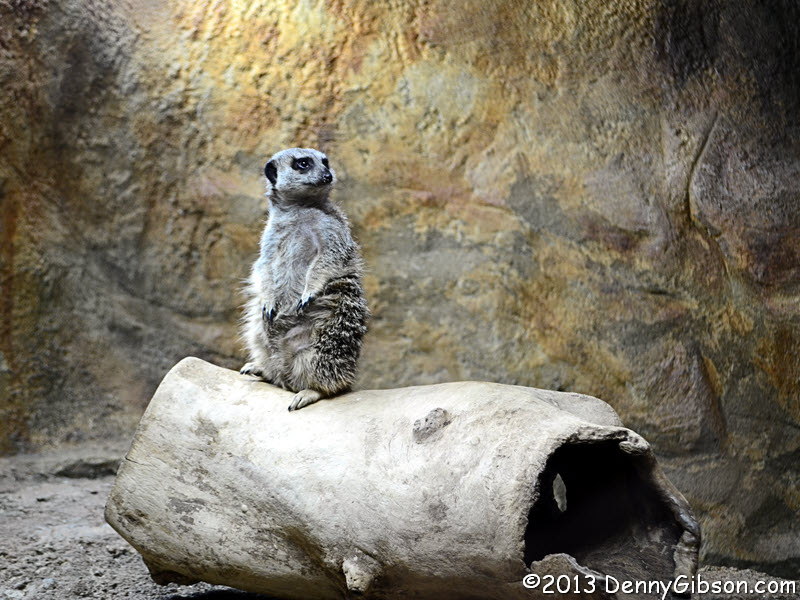
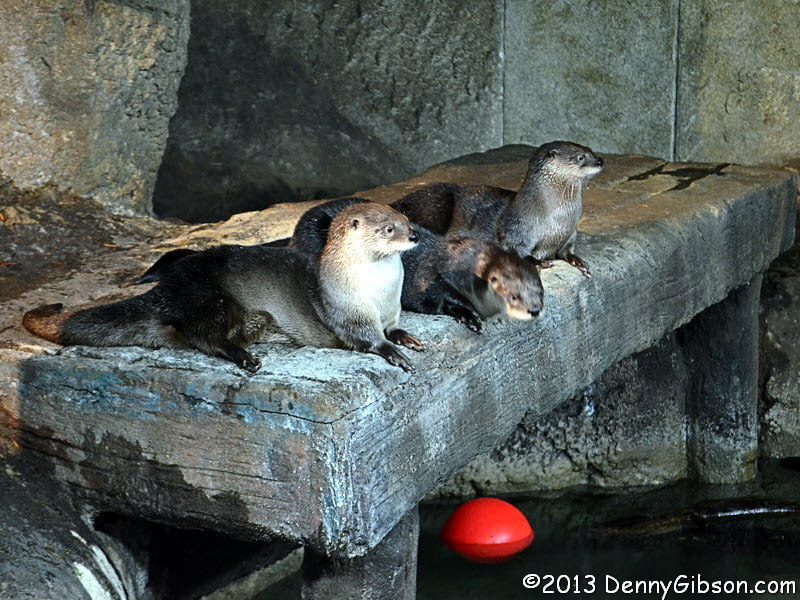
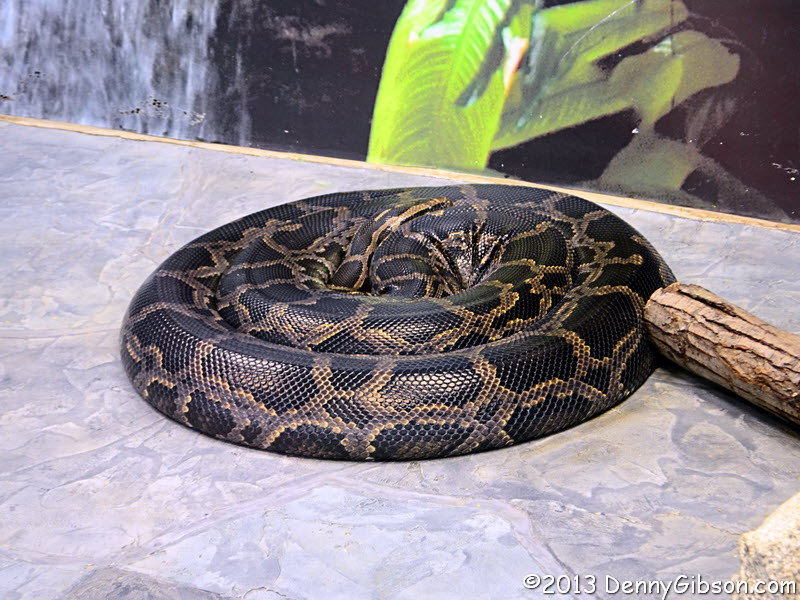
Boonshoft Museum of DiscoveryBoonshoft Museum of DiscoveryRosie isn’t the only resident of the museum. The Discovery Zoo contains quite a few animals, birds, and other smallish critters. Otters and meerkats are representative of the size of animals on display although the largest resident is a Burmese python that’s nearly 16 feet long and 180 pounds in weight. I understand that he almost never sees his shadow.

Boonshoft Museum of Discovery

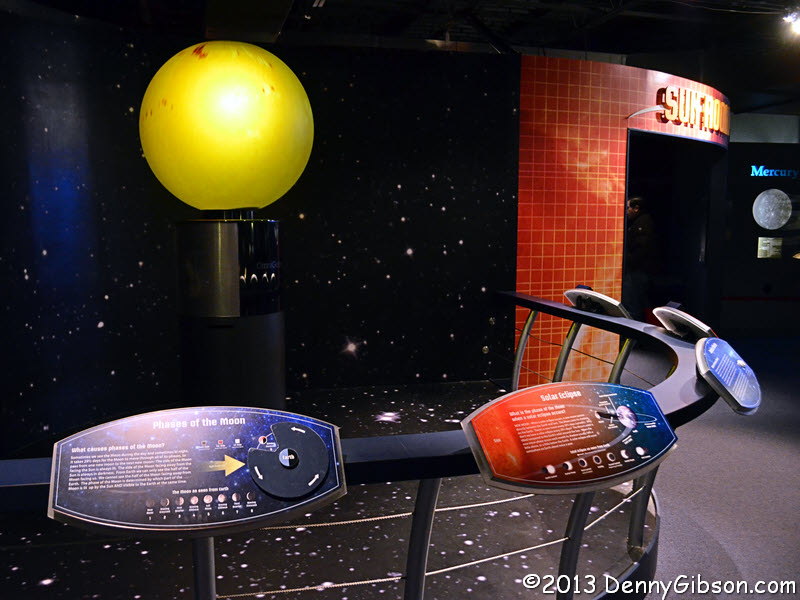
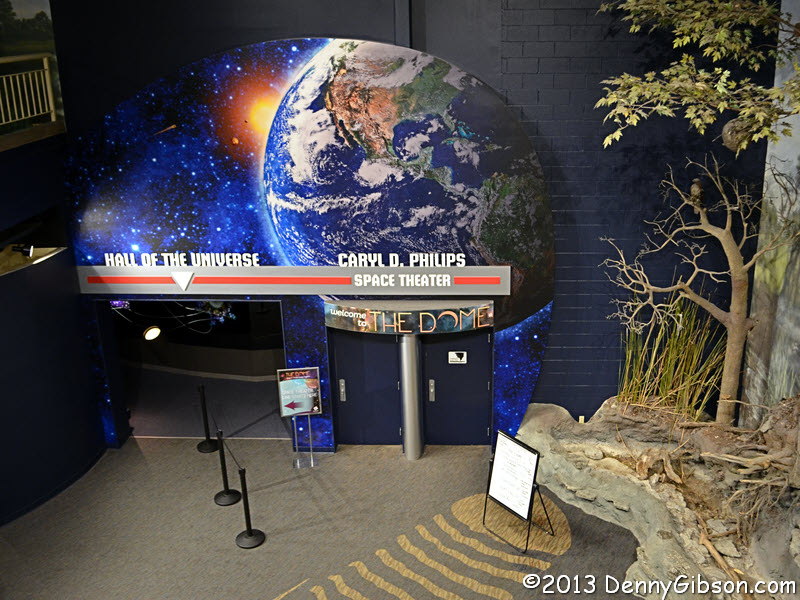
Boonshoft Museum of DiscoveryI think my personal favorites were The Dome and Science on a Sphere. Both are pretty much what they sound like. The Dome is a full-dome screen on which planetarium programs and movies, including some in 3D, are projected. Science on a Sphere is a large ball which can display images on its entire surface. The picture here shows a color coded image of the height of waves during the 2011 Japanese tsunami.

This was Rosie’s second year of handling Groundhog Day duties. She was found injured in Minnesota and is believed to be about three years old. Although she has essentially recovered from her injuries, she is partially blind in one eye so returning her to the wild would not be wise. Ivy, Rosie’s predecessor retired last year then died just a month after Groundhog Day. The average lifespan of a groundhog in the wild is two to four years; In captivity it’s eight to ten. Ivy was right at eleven. Of course, regular meals and good shelter had a lot to do with Ivy’s long life but I’ve a feeling that having a purpose helped a little, too.


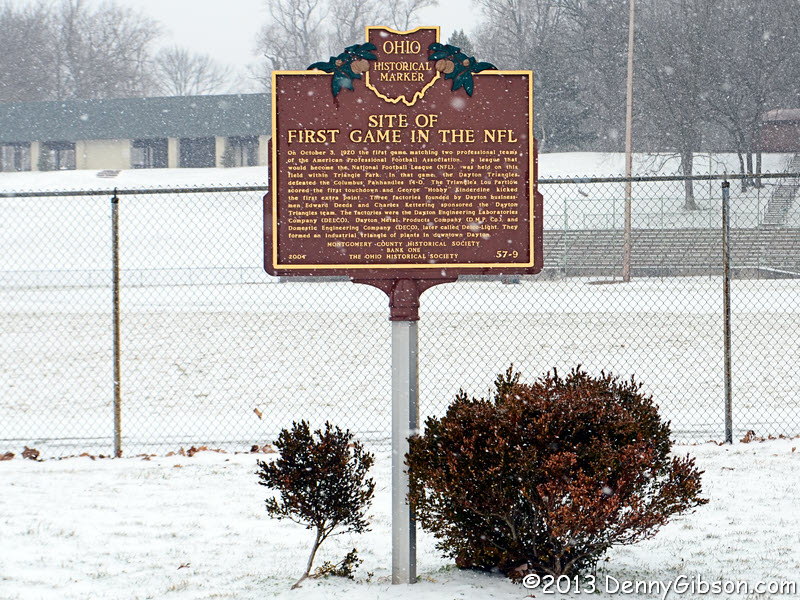
Triangle Park - First NFL GameThe Boonshoft Museum of Discovery is in Triangle Park a little north of downtown Dayton. It seems somehow fitting that my visit to Rosie and the park occurred on the eve of this year’s version of the National Football League’s Game of the Century. Until I started putting this post together, I simply assumed that Triangle Park took its name directly from its location in the triangle formed by the joining of the Stillwater and Great Miami Rivers. Turns out that had nothing to do with it. The name comes from a trio of Dayton companies who sponsored a professional football team and gave them the name Dayton Triangles. This was their home. The Triangles were charter members of the American Professional Football Association (APFA) which changed its name to the National Football League (NFL) in 1922. Not only was professional football played here for several years, there is at least a 50/50 chance this is where the very first APFA/NFL game took place. Read the story here then imagine an all Ohio Super Bowl between the Dayton Triangles and the Columbus Panhandles.

Dead Sea Scrolls in Cincinnati

Dead Sea Scrolls exhibit at Cincinnati Museum CenterSeveral Dead Sea Scrolls form the centerpiece of and lend their name to a major ongoing exhibit at the Cincinnati Museum Center. The full name of the exhibit, which I attended on Monday and which runs through mid-April, is Dead Sea Scrolls: Life and Faith in Ancient Times. The “scrolls” are in that circular table whose edge is near the center of the photograph at right. They’re not really scrolls, though. Not many of the things comprising what we call the Dead Sea Scrolls are. The first manuscripts pulled from caves near the Dead Sea in 1947 were actual scrolls — seven of them — but not so most of the items found since then. Those first scrolls have been described as “relatively intact”. Subsequent finds have largely been fragments of varying sizes. Pieces of parchment and papyrus containing writing were found in a total of eleven caves in the area, and by 1956, when somebody decided they had found all there was to find, some 15,000 to 30,000 fragments of what are estimated to be more than 900 manuscripts had been retrieved. About 40% of the manuscripts are copies of books in the Hebrew Bible (a.k.a. Old Testament), 30% are religious documents not part of the canonized Bible, and another 30% are secular.

Ten of those manuscripts are represented in that big circular table. To help preserve them, they will be swapped out for a different ten halfway through the exhibit. The actual bits of ancient writing are inside sealed climate-controlled compartments. Enlargements, notes, and English translations are on the table’s surface. Attributed to the period between roughly 250 BCE and 100 CE, most of the Dead Sea Scrolls are written in Hebrew, with a respectable number in Aramaic and a few in Greek or Nabataean. All those in the exhibit are either Hebrew or Aramaic. I can’t read one word. Studying the scrolls doesn’t do much for me in practical terms, but gazing on documents produced two millennia ago is downright awesome.

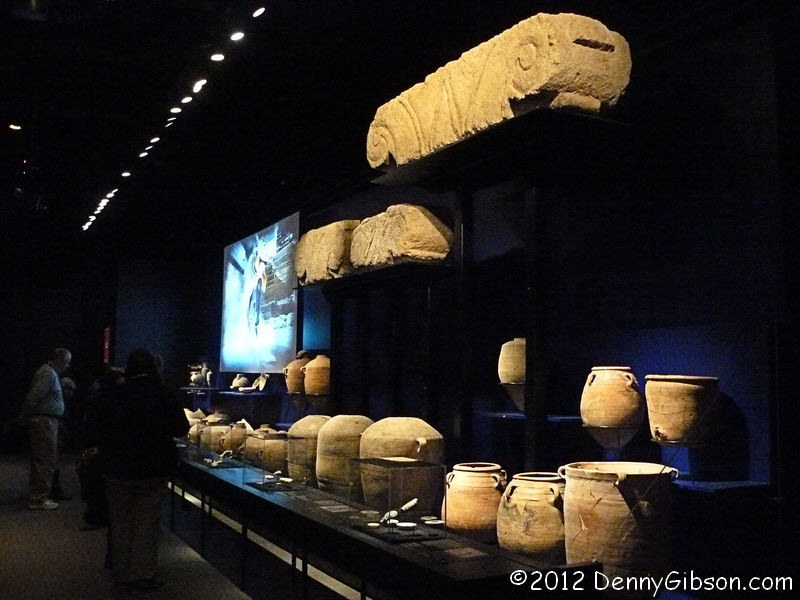
Dead Sea Scrolls exhibit at Cincinnati Museum CenterDead Sea Scrolls exhibit at Cincinnati Museum CenterThe scrolls are the big draw but by the time most people buy their tickets, they are aware that there is more — a lot more — on display. I regret getting no pictures in the first room of the exhibit, where a museum guide uses three ancient jars and walls filled with changing pictures of the region to illustrate an overview of the scroll’s discovery and a little history. From there, visitors enter a long hall with dates on the floor and some seriously old artifacts displayed along one wall. Some sense of the world that preceded the writing and hiding of the scrolls can be obtained here.

Dead Sea Scrolls exhibit at Cincinnati Museum CenterDead Sea Scrolls exhibit at Cincinnati Museum CenterNext up are some newer and larger artifacts. An accurate count of artifacts displayed is elusive but something above 600 is probably close. This is reportedly the largest exhibit ever mounted in Cincinnati. The 2011 Cleopatra exhibit had about 150 items, and the Pompeii exhibit from earlier this year was just over 250. The rightmost picture is of pottery shards with writing on them. Waste not, want not.

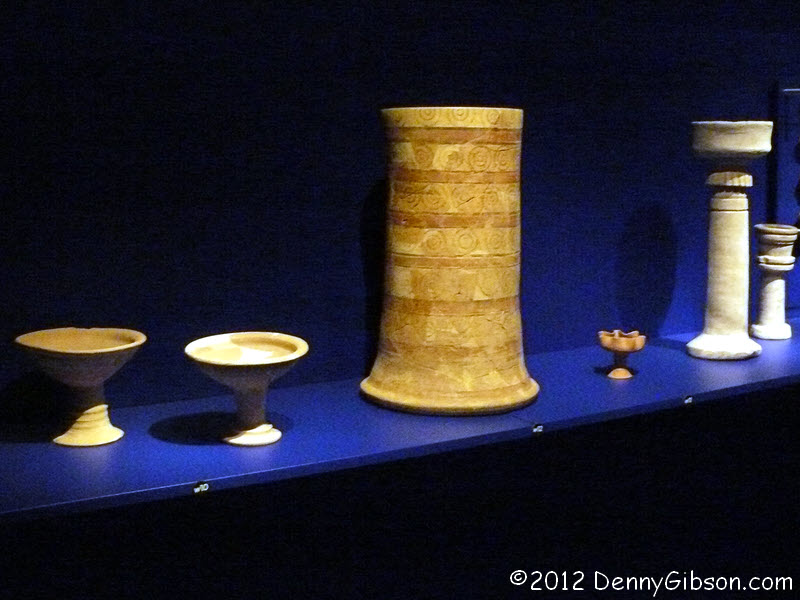
Dead Sea Scrolls exhibit at Cincinnati Museum CenterDead Sea Scrolls exhibit at Cincinnati Museum CenterAs visitors get nearer the scroll display, artifacts seem to become a bit more involved with religion. Holders of incense and offerings are well-represented, and there are hints of a bit more idolatry than I might have suspected. The tall painted cylinder in the second photo is called a cult stand. It’s thought that a bowl with incense or other offerings would have been placed atop it.

Not surprisingly, no photos are permitted in the area where the scrolls are displayed. What was at least a little surprising to me was that the scrolls are not displayed in isolation. They are surrounded by more artifacts, descriptive texts, a short movie, and a stone wall. The movie and texts present some of the facts and theories about who wrote the scrolls, the circumstances of their hiding, and their relationship to the three Abrahamic religions: Judaism, Christianity, and Islam. The wall is basically a replica of a section of the Western/Wailing Wall in Jerusalem, but it frames what is believed to be a stone from the actual wall. The three-ton cube was not ripped from the wall for the exhibit. Roman soldiers of about 70 CE get the blame for that. Touching the stone is permitted, and this can be a very emotional experience for some. Visitors may also insert written prayers into crevices in the replica, just as is done at the real Wailing Wall. These prayers are collected periodically and sent to Israel. A nearby video screen displays a live feed from the real wall.

Dead Sea Scrolls exhibit at Cincinnati Museum CenterThe last part of the exhibit is, I believe, a Cincinnati exclusive. The Hebrew Union College here has been involved with the scrolls from shortly after their discovery. A HUC professor played a key role in the purchase of four of the first seven scrolls in response to a 1954 classified ad in the Wall Street Journal. In the 1970s, HUC secretly stored many photographic negatives of the scrolls for safekeeping. When publication of translations dragged on and on, another HUC professor published his own interpretation of many scrolls in 1991. That exposed him to being sued over copyright violations, and he lost. Any 250 BCE copyright on the actual scrolls had most likely expired, but the suit involved some intermediate translation work. Despite a courtroom defeat, a lot of the scrolls were now out of the bag, and things have been a lot more open since then.

Pnina Shor - The Conservation and Preservation of the Dead Sea ScrollsAnd they’re about to become even more open. The picture at left was taken at a free lecture I attended at the Museum Center in November. The speaker is Pnina Shor of the Israel Antiquities Authority. The screen behind her is demonstrating a digitization project that the IAA has undertaken in partnership with Google. This is not the first time that some Dead Sea Scrolls have been digitized. The scrolls are not all owned by one entity though reporting who and where is way beyond anything I want to deal with. Lots of people have some, and some are already available online. But the IAA has a bunch, and their digitization project is a big one. Estimated completion is 2016, with the first phase, consisting of a few manuscripts, going live in mid-December. The images are being recorded at 1.2 gigapixels. You’re going to need a bigger screen.

Phirst FotoFocus Phinished

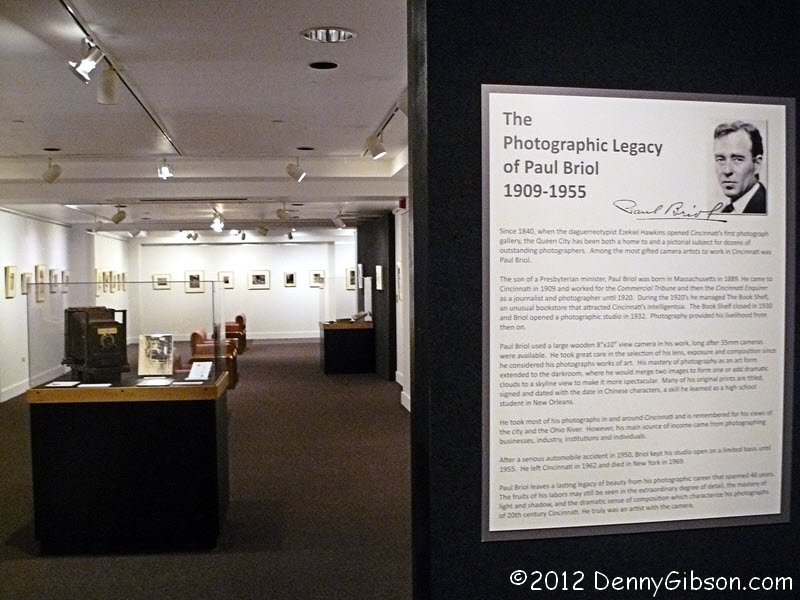
Paul Briol exhibit at FotoFocus 2012It’s officially over and I pretty much missed it. The inaugural FotoFocus festival ended along with October and, despite some good intentions, I barely caught a whiff. Of the over fifty exhibits that were part of the event, the only one I actually saw during regulation time was the “The Photographic Legacy of Paul Briol, 1909-1955” at the Cincinnati Museum Center. Briol’s photographs of Cincinnati in the first half of the last century are both documentation and art. He was a master in the dark room and learned to combine images to enhance the finished product. For example, a blank sky might be turned into a pleasant background by adding a few clouds. That was neither common or easy in those pre-PhotoShop days.

FotoFocus is the name of a a Cincinnati nonprofit that “champions the ubiquity of photography and its important role in contemporary culture.” It is also the name of the just concluded month long series of exhibits, presentations, and lectures. There were a couple of receptions and at least one lecture that I wanted to attend but each of those encountered a conflict. I had a whole month to take a look at the many exhibits but just kept putting it off. When I finally panicked and got serious, it was too late. I managed to get to the Briol show at Cincinnati Museum Center on Monday and two others on Friday. Of course, Friday was November 2 and the majority of exhibits were history. The two I visited on Friday were fairly major productions whose runs extend beyond FotoFocus.

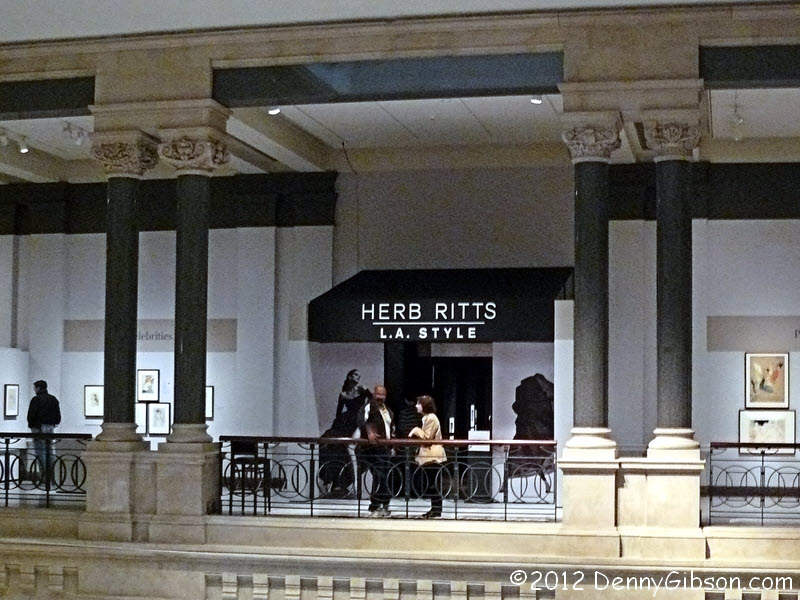
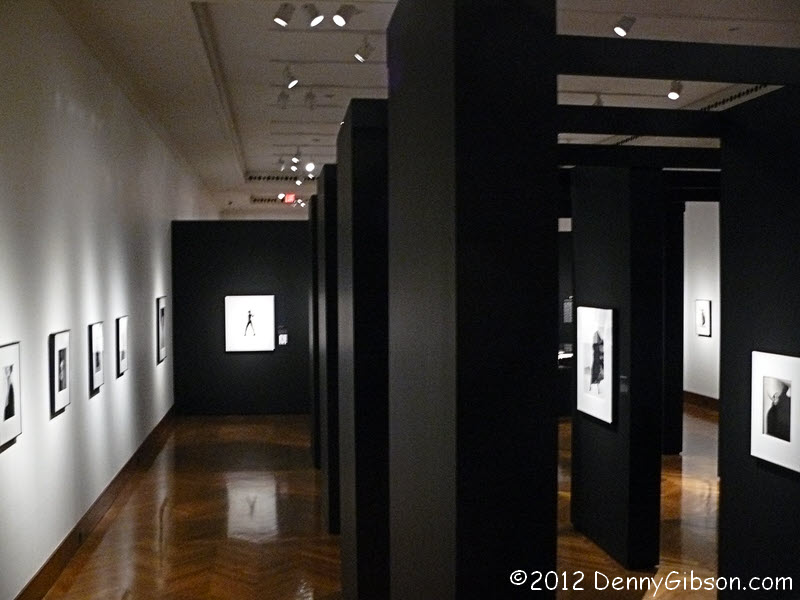
Herb Ritts exhibit at FotoFocus 2012Herb Ritts exhibit at FotoFocus 2012On Friday, I headed first to the Cincinnati Arts Museum in Mount Adams to see “Herb Ritts: L.A. Style”. Since I do stop by here once in a while and wouldn’t feel the need to see all of the permanent displays, I thought my visit would be fairly brief. Though I did essentially limit my viewing to the Ritts exhibit and a traveling Toulouse-Lautrec exhibit at its entrance, it wasn’t exactly a dash in and out. For one thing, Friday was the first of three days of an expanded “Holiday Expressions” gift shop that filled the lobby. Secondly, several bus loads of students were touring the museum in groups of twenty or so. I love seeing kids in museums. They can be a little noisy and can sometimes block an intended path but they deserve to be there a lot more than I do. Kudos to the schools and teachers who get their kids out to see “stuff”. There also happened to be two musical performances going on. In the lobby, a string trio played on a balcony for the benefit of “Holiday Expression” shoppers and two fellows played and discussed some “old timey” music for the benefit of the students in the main hall.

“Herb Ritts: L.A. Style” was curated by Paul Martineau for the J. Paul Getty Museum. Although I was not familiar with Ritts by name, I definitely recognized some of his photos including the cover of Madonna’s True Blue album. Not all of Ritts’ assignments were successful from the client’s point of view. Several examples of his most impressive work came from assignments that were rejected because they matched Ritts’ vision a lot more than the client’s. Ritts’ vision was darned good.

Even now. it seems, Ritts doesn’t please everyone. There are some stunningly beautiful nudes in the exhibit. A sign at the entrance states this and suggests parents check out things and decide for themselves whether their children should see them or not. After I had viewed the exhibit, I stopped for a while just outside the entrance and listened to the musicians below. As I stood there, a fellow I guessed to be about sixteen or seventeen exited the exhibit and approached me. “My male instincts told me to go in there”, he said. “They were wrong.” There are nudes of both genders on display and I’m guessing that this was the teenager’s problem. I doubt he had ever before considered that the word “nude” was not synonymous with “naked woman”. Ah, the insecurity of youth.

“Herb Ritts: L.A. Style” runs through December.

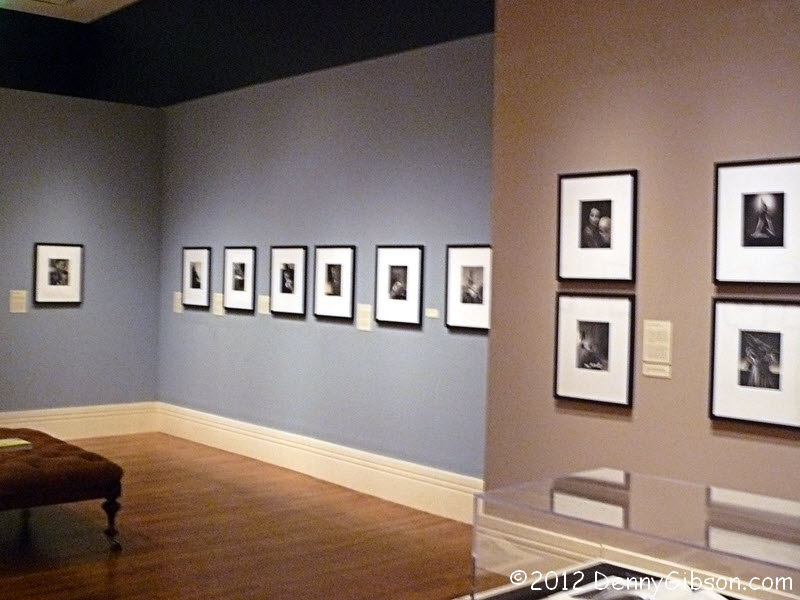
Edward Steichen exhibit at FotoFocus 2012Taft Museum of ArtThe other exhibit I saw on Friday was “Star Power: Edward Steichen’s Glamour Photography” at the Taft Museum of Art. To my shame, this was my first visit to the Taft since its major expansion and renovation in 2004. That meant I needed to look over the whole place and not limit my visit to the Steichen display. Christmas season is starting here also with Friday being the first day of “Antique Christmas”. This consists of a number of decorations, toys, and other Christmas related items from holidays far in the past spread throughout the museum.

Edward Steichen was a name I half recognized but couldn’t connect with anything in particular. It turns out that, had I made any sort of guess, there’s a good chance I’d have been right. He did a lot. He painted, directed movies, and played a key role in the publication of books and magazines and in the running museums. And he was a photographer. In World War I, he commanded the photographic division of the American Expeditionary Forces. In World War II, he was Director of the Naval Aviation Photographic Unit. His many activities between the wars included a fifteen year stint as photographer for Vogue and Vanity Fair magazines. That stint ran from 1923 to 1938 and I believe that most, if not all, of the photographs in this exhibit are from that period.

The title refers to “Glamour Photography” and his work for the world of fashion is well represented. It also mentions “Star Power” and the stars are all there: Greta Garbo, Katherine Hepburn, Joan Crawford, and many others including my fav, Claudette Colbert. The way Steichen handles light in these black and white images is remarkable as is his frequent use of stark high-contrast backgrounds. His lighting often adds a 3-D quality and both it and the composition automatically and consistently focus the viewer right where Steichen wants.

“Star Power: Edward Steichen’s Glamour Photography” runs through January 27.

Even though I missed the majority of FotoFocus exhibits, I did see three of the bigger ones. With the Annie Liebovitz exhibit I visited a couple of weeks back, that means I’ve been exposed to some of the best lens based art of the last century in a fairly short span of time. I’ve never called myself a photographer. In fact, after seeing what can be done, I’m almost embarrassed to even be seen with a camera. I’ll get over it and I won’t stop snapping pictures but it was a clear reminder of just why I never call myself a photographer.


On Friday morning, I wanted to check out something about FotoFocus via my phone but I misspelled FotoFocus. I did it by correctly spelling Photofocus. Photofocus is a long running website that I was aware of though not one I can claim to be familiar with. By coincidence Friday was Photofocus’ fourteenth anniversary. It was also the day that founder Scott Bourne announced his retirement. He is not retiring just yet. That will occur in exactly one year and the website will continue. Scott has already made arrangements to assure that. Accident, coincidence, and the reading of a couple of interesting articles made me think that maybe I should become familiar with Photofocus so I’ve subscribed to its RSS feed.